Bonus! 3 pm workshops, 8/18/26

(I combined the 3 pm public comment with the 6 pm public comment, in the first post.)

Workshop 1: The Budget

It is heavy-duty budget season!

July 25th is the day that City staff finds out exactly how much tax money we’ve received. This is the first concrete draft budget that Council has looked at.

The whole thing has to be approved in the next month.

….

Background: How’s San Marcos these days?

We’re growing:
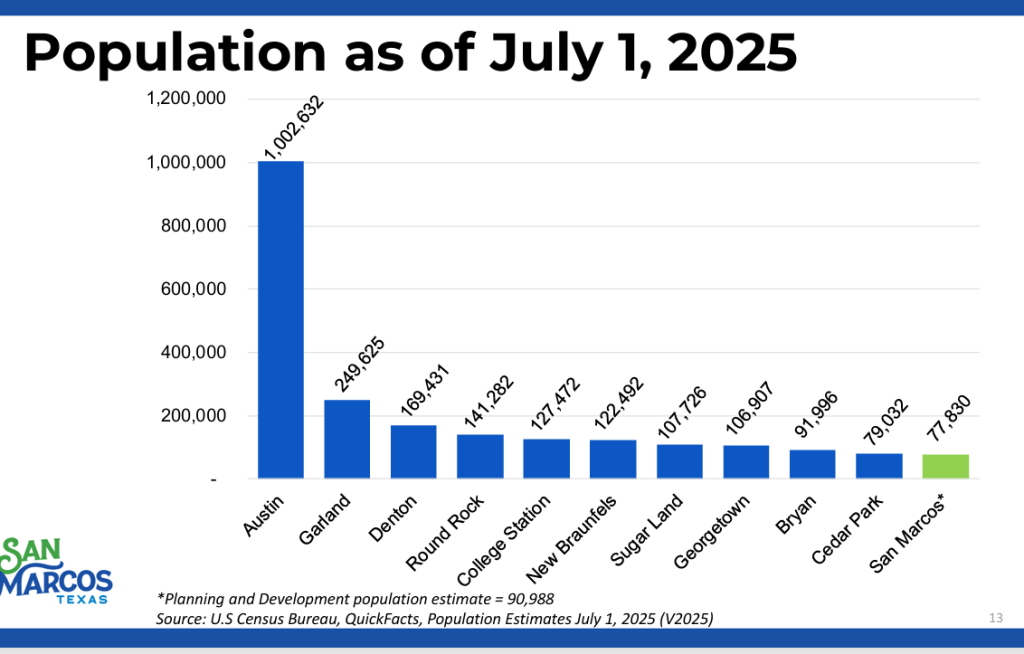
That’s probably an undercount. The city thinks we’re more like 90,000 people.

The next two slides take some thinking.

First: here’s how much the median home owner pays in property taxes to the city:
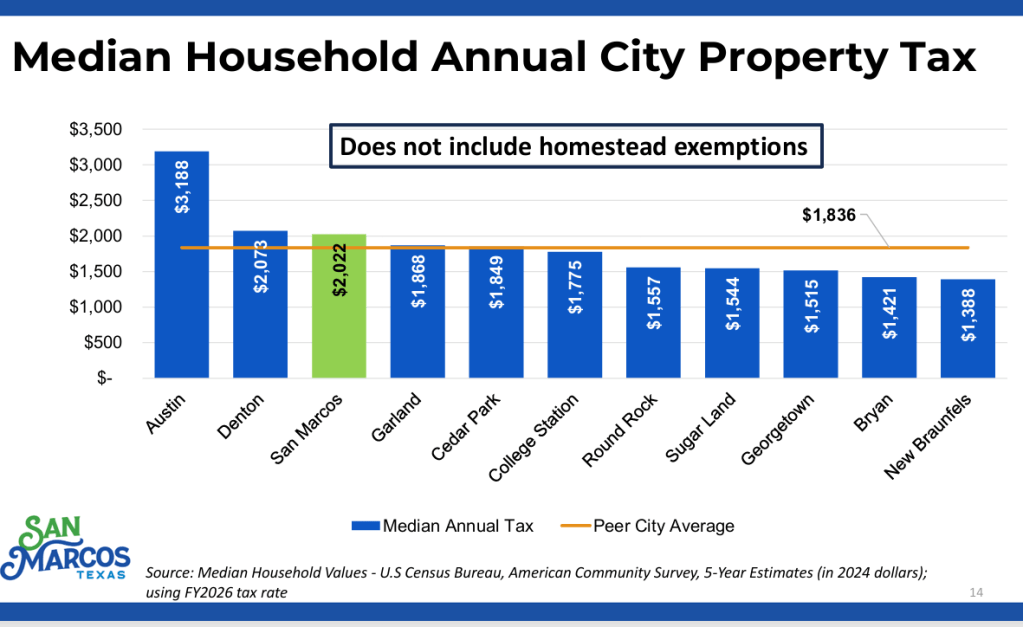
So home owners pay more here than elsewhere.

However:

the city spends less per resident.

This is because the deck is stacked against San Marcos in some key ways. The only one they mention in this presentation is this, though:

We’ve got more tax-exempt land than most places, in part because the university is our central giant business, but they don’t pay taxes.

You all know about inflation. The city knows about it, too:
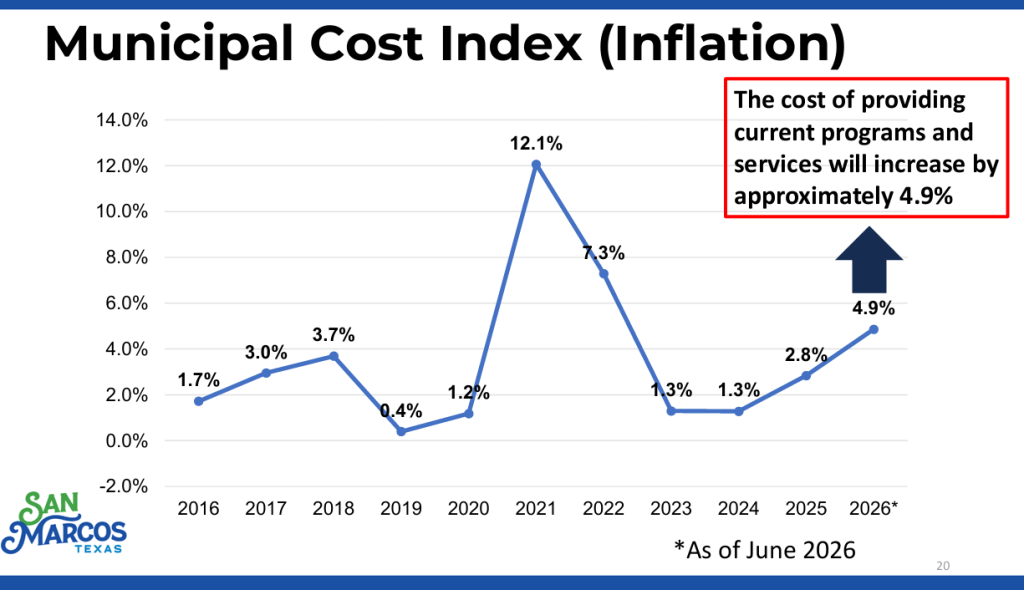
However, the city has not increased taxes to keep up with inflation. Department budgets have not changed in 3 years. This year it would take roughly $720K extra to keep up with inflation.

Note: Apparently many cities are going through layoffs and budget cuts right now. Here’s a bunch of major Texas cities with budget problems and here’s a story on Kyle.

We’ve been extremely careful in watching our pennies, and we are weathering this economy in a stable way. So that’s nice.

Onto the budget!

There are actually many different independent budgets. Each one has its own revenue and spending. So the Electric Fund is funded by utility rates and impact fees, the General Fund is funded by taxes, etc.

Here’s all of them:

The big one is the General Fund. Here’s how it gets funded:

Here’s some of the major pressures on it:

SMPD gets 5% raises and SMFD gets 4.5% raises, because they’re allowed to unionize. That’s what collective bargaining gets you. Texas outlaws all other public unions besides those, though. So everyone else gets 3% raises. It’s not the slightest bit fair.

Also: this year we had our first round of Participatory Budgeting experiment. The public was asked to submit project ideas, and then we all got to vote on which projects to fund.

Here’s how it went:

Lorenzo: That’s pretty sad. Only 117 votes?
Answer: It was our first rodeo! We’ll promote the projects and try to drum up more enthusiasm.

Back to the General Fund:

Basically, things are less grim than they feared.

We’re going to have a balanced budget this year, without raising taxes:
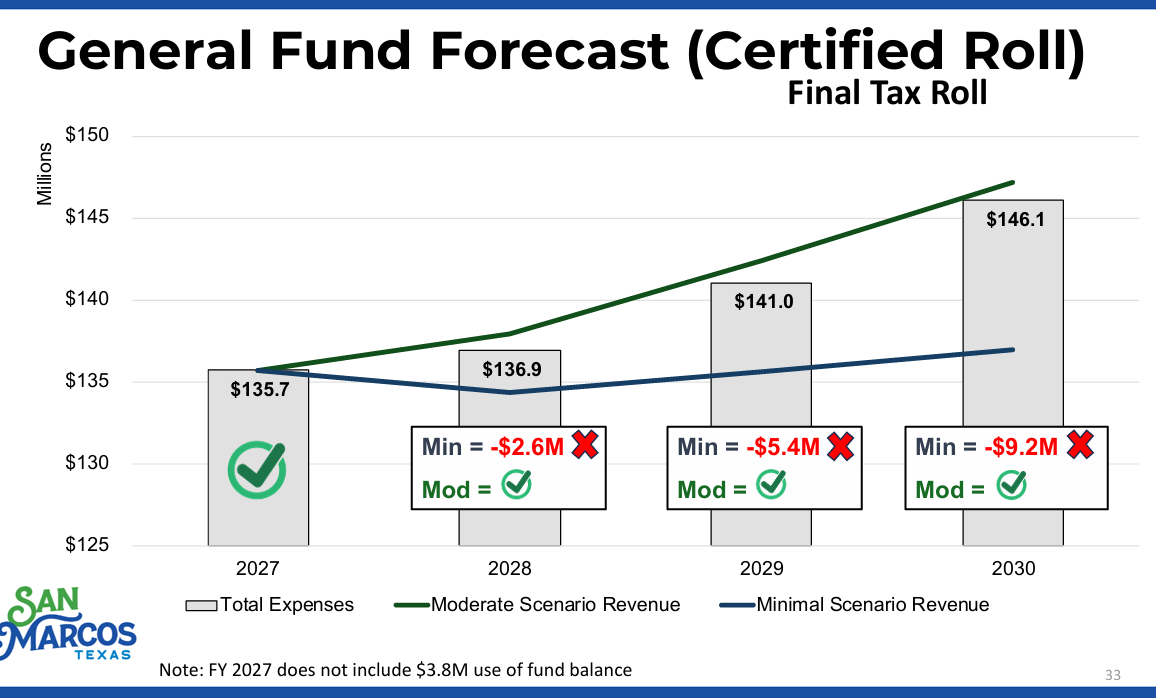
Graph showing that between 2027 and 2030, our budget should be between the minimal scenario revenue and the moderate scenario revenue.

For the next three years, we might be on track to have a balanced budget, or we might get unlucky.

The new property tax rate

Last year, staff presented three different options to Council. Councilmembers all said which one they liked best. City staff went and finalized a bunch of details before the final vote. Then half the council members changed their mind at the last second.

This year, staff did not outline multiple options. They just said, “Hey, we don’t need to raise taxes to make the budget work.”

[Note: I actually think this is a bad idea. The budget is not working! We are not keeping up with inflation. Small incremental tax hikes are much better than having to occasionally lob giant tax hikes at the public.]

Anyway:

Note on inflation and how Governor Abbott is going to try to screw over cities further next session.

They’re not actually voting on the tax rate until September. But for planning purposes, staff is working with the same tax rate as last year, ¢65.15. On a $300,000 house, that works out to about $1,950.

Question: Is Council okay with setting a maximum tax rate of ¢65.15? This is the tax rate we had last year.

Everyone is on board with this.

Note: This is just the tax rate cap. They’re just saying the tax rate won’t be higher than ¢65.15.

The rest of the budget

The other major funds are:

  • Hotel Tax Fund: this has to be used for tourism and museums and things like that.
  • Community Enhancement Fund: there’s a big discussion about streetlights, maintenance, and who keeps track of where they should be located.
  • Electric Utility Fund: your electricity supplier
  • Water and wastewater: ie all your water hook-ups to get fresh water and get your toilet waste taken away and cleaned
  • Stormwater: major projects to keep people’s homes from flooding when it rains
  • Resource Recovery Fund: think trash and recycling
  • Transit Fund: busses and bike lanes
  • Airport Fund: airport repair, etc.

Council has a big discussion about a lot of rate hikes:
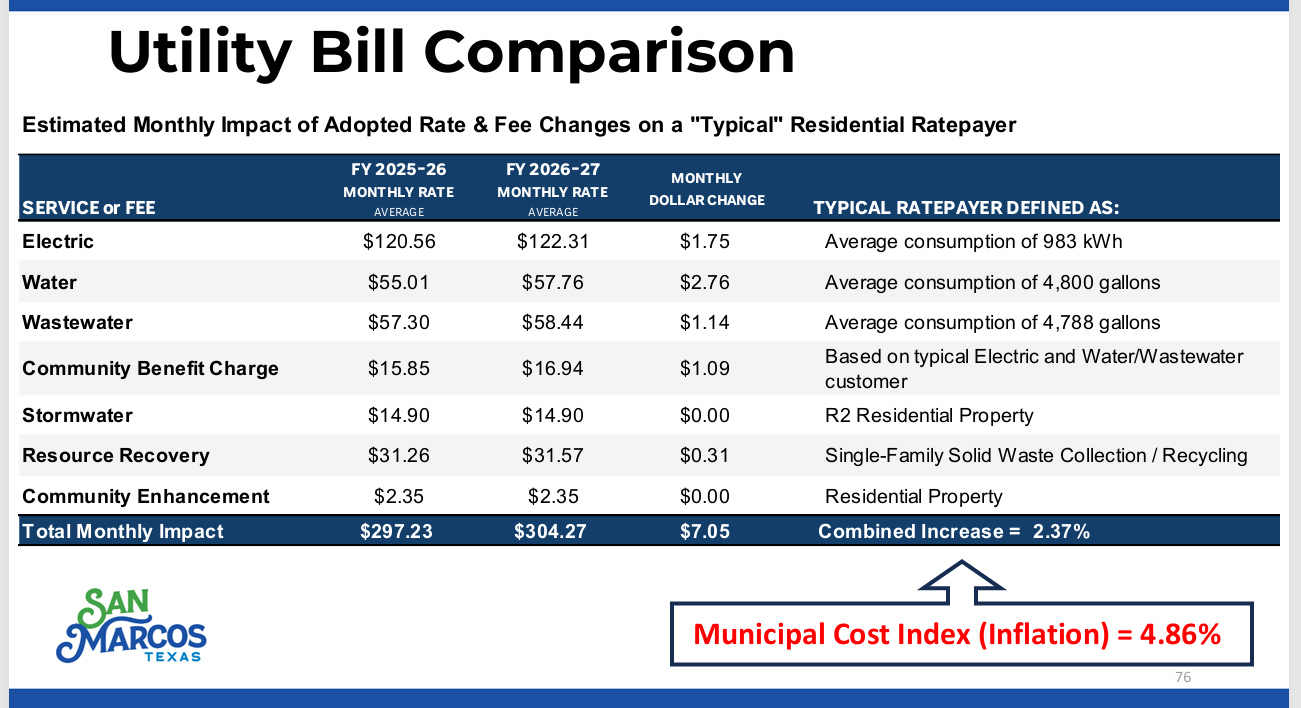
Chart showing proposed increases of each utility service or fee.

So the average house would see a $7 increase in their monthly bills.

They spend a lot of time discussing the pros and cons of all these. For example:

The Community Benefit Charge: It’s supposed to cover streetlights and lighting. How do we decide which streets need streetlights? Who is being neglected because the city hasn’t installed their lights or repaired them?

The Electric fund: our bond rating got downgraded a few years ago. This means that it costs more for us to borrow money to complete electric projects. Can we fix this by raising rates? Would it save tax payers money in the long run? (Yes, it would.)

The Stormwater fund: it shows a $0 increase above, but that’s a mistake. This fall, they’re going to roll out a stormwater master plan, and it’s going to take a rate hike to pay for projects in the Wallace Addition and Bishop/Belvin. We have a lot of flooding in town, just from ordinary thunderstorms.

Bottom line: pretty much everyone says “Yes” to all of these increases (besides Alyssa), but none of this is binding yet. They’re just telling staff that they’re open to these rate increases.

……

Workshop 2: EMS billing

San Marcos-Hays County EMS was dissolved last year because they had decided to unionize. Police and fire can unionize, and private EMS companies can unionize. But the leaders in Hays County lost their fucking minds when their private EMS company decided to unionize. So Kyle and Dripping Springs each split off to form their own EMS, and San Marcos was stuck holding the bag.

We’re in the process of building San Marcos EMS now.

Question: How much should EMS charge for a ride?

The problem – of course – is that health care is super broken in the US. How do you set rates that are fair within a system that is a hopeless mess?

In San Marcos:

  • About half of all EMS calls are Medicare patients
  • About 6-12% more calls are from people covered by Medicaid
  • About 25% have insurance
  • The rest – 13%-19% – don’t have insurance and can’t really pay.

You make up astronomical rates in order to get payments from insurance. Then insurance covers some of it, or none of it, and then people are screwed over for the rest. It’s a terrible system.

(Obviously socialized healthcare is the way to go. You get much better health outcomes in your country for far cheaper.)

San Marcos cannot solve the real, underlying problem.

Here is what’s proposed:
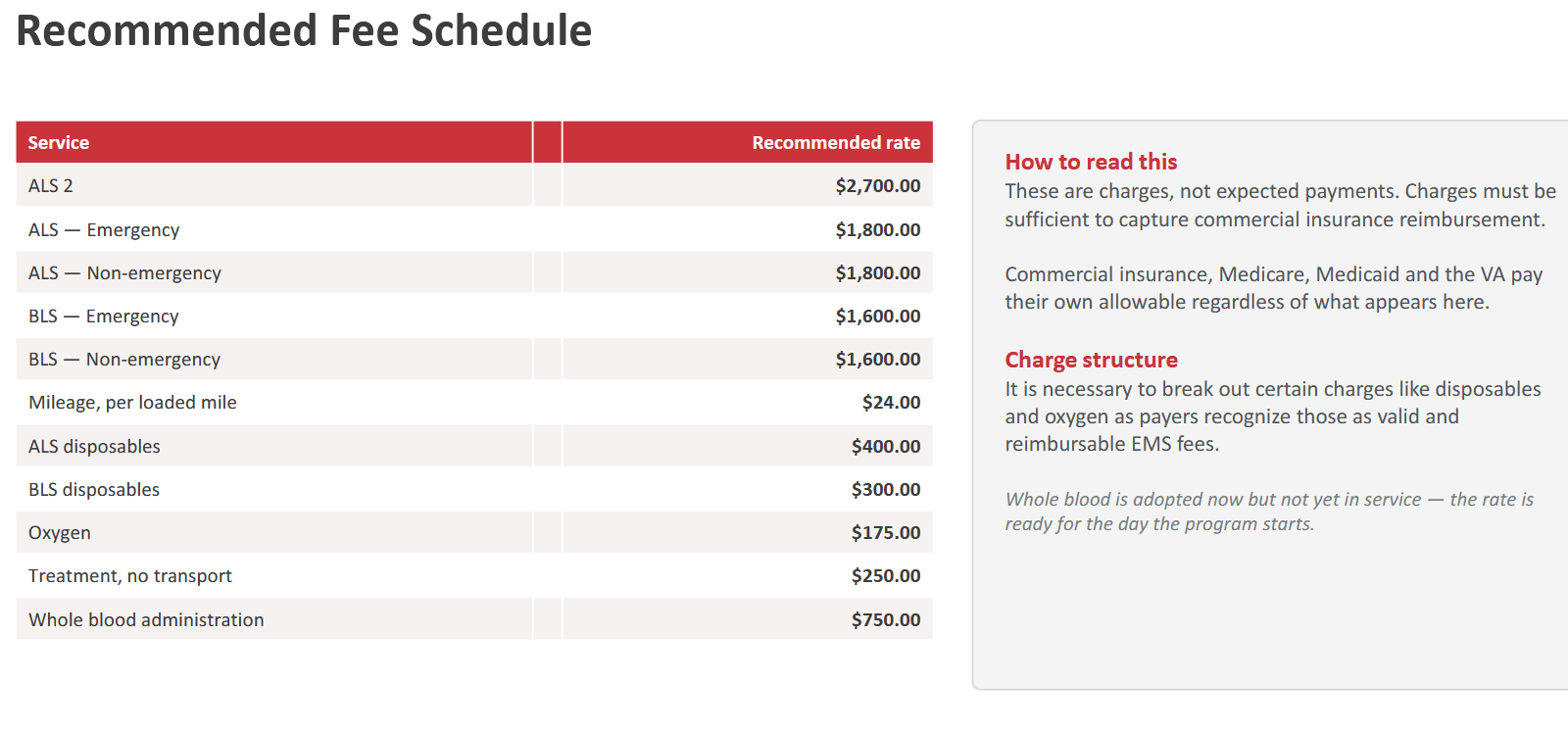
Lots of acronyms without explanation.  ALS 2 is recommended to be $2700
ALS Emergency, non-emergency, $1800.  BLS: 1600. Plus some smaller charges, like oxygen, disposables, and blood administration.

The city can offer certain discounts to help residents:
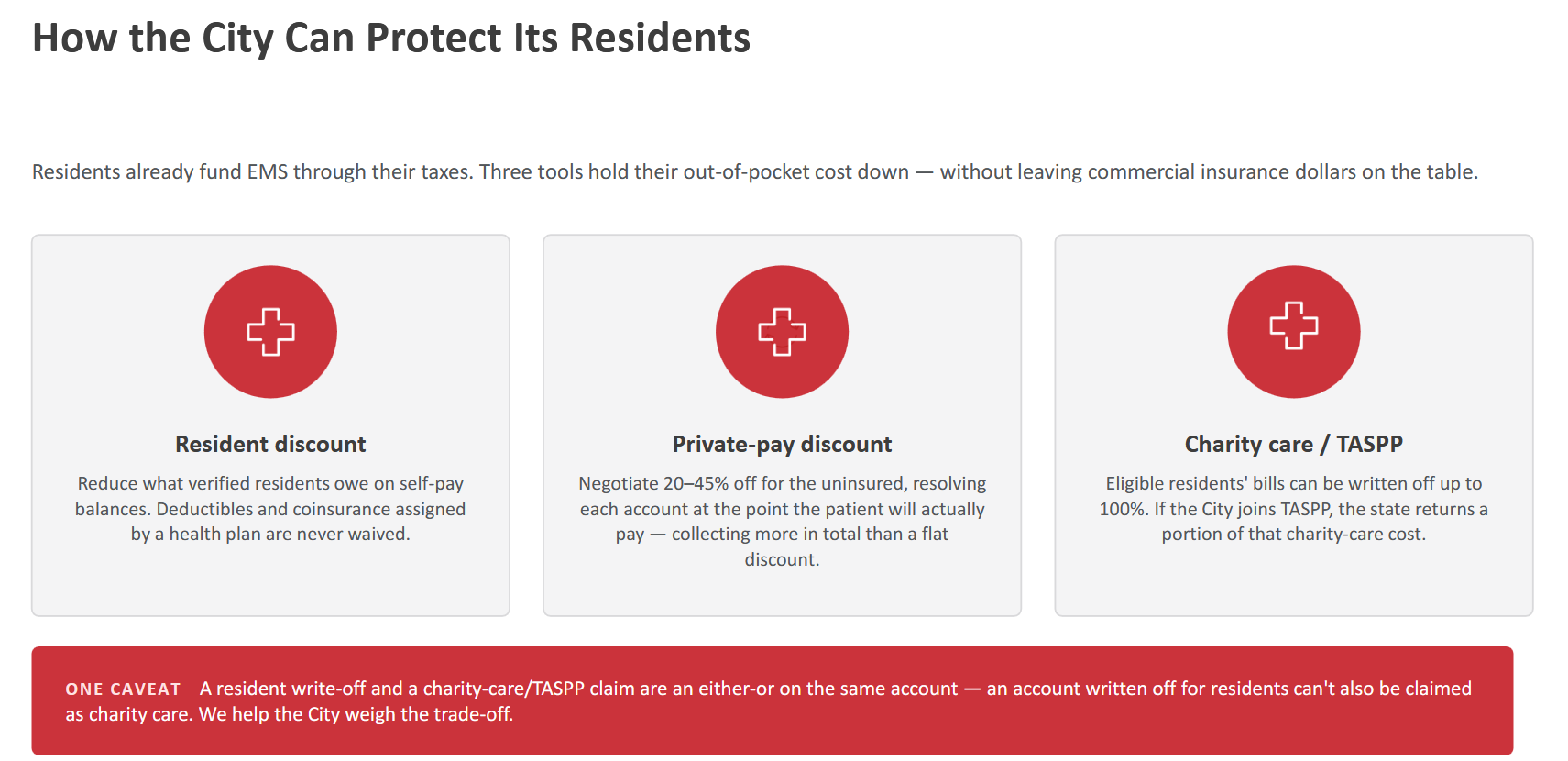
How the City Can Protect its Residents: Resident Discount, Private-pay discount, charity care/TASPP

The other major problem is the time crunch. If Council doesn’t approve something, then the new San Marcos EMS can’t start the paperwork with insurance companies and Medicare and Medicaid, so that they can be operating by October 1st.

Everyone on Council was uncomfortable with everything. It was super rushed – they only had 15 minutes – and no one had time to thoroughly understand the details.

They did give it the thumbs up, so that EMS could make its October 1st opening deadline, but the plan is to revisit these decisions.

We’ll see!

Bonus! 3 pm workshops, 12/16/25

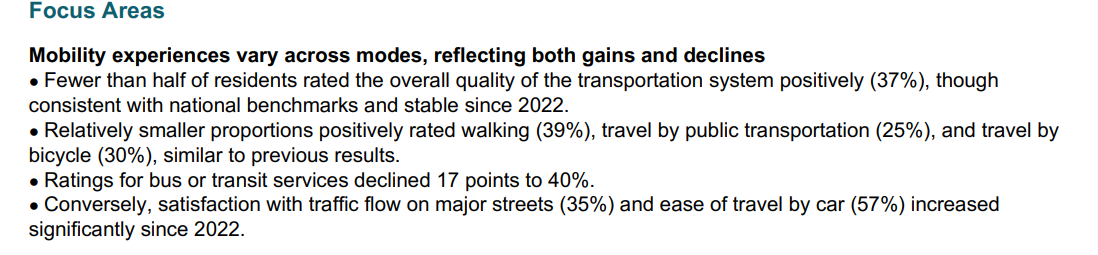
Workshop #1: San Marcos Community Survey

Every three years, we run a community survey. The first one was in 2022, and so 2025 is the second.

Methods:

They try to get a random sample of people by sending mailers out to households. They also open the survey up to anyone, online.

The responses are overwhelmingly older white homeowners in Kissing Tree.

I’m really not kidding:

where “Charlie” is the blue #3 area below:

and yes, they are mostly white home-owners:

This is a well-understood phenomenon by people who run surveys – different groups of people respond to surveys with different participation rates.

So they correct for it. What you do is you take the actual composition of San Marcos, based on census data. Then you weight your survey responses until they match the actual proportions.

For example:

Loosely speaking, if you’re 18-34 and you filled out the survey, your answers will get multiplied by 3. If you’re 35-54, your answers will get multiplied by 1/2, and if you’re 55+, your answers will get multiplied by 1/3.

So how’d we do?

Oh, fine! It’s all fine.

and

I don’t have any big, glorious conclusions.

Full data here.

Workshop #2: Office of Community Support and Resource Navigation, and Participatory Budgeting.

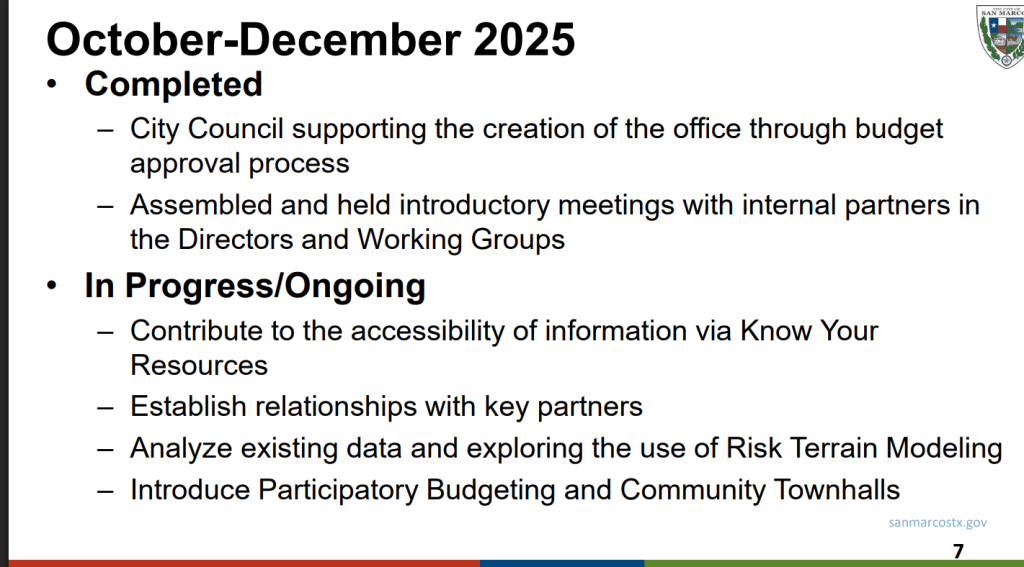
We’ve got things in progress! Here’s two new things that Council put into this year’s budget:

  1. Office of Community Support and
    Resource Navigation
  2. Participatory Budgeting.

Office of Community Support and Resource Navigation

That name is a mouthful and doesn’t really capture the gist of it? To me, it sounds like a helpline.

This is actually about safety from a non-policing framework:

This is basically catnip for me. Yes, please, all of that.

Here’s the basics:

It’s still in the baby stages.

Keep an eye out for Town Hall meetings as this ramps up!

Participatory Budgeting

We’ve got $200,000 with YOUR name on it!

Here are some sample ideas:

So, y’know, look around and see what annoys you!

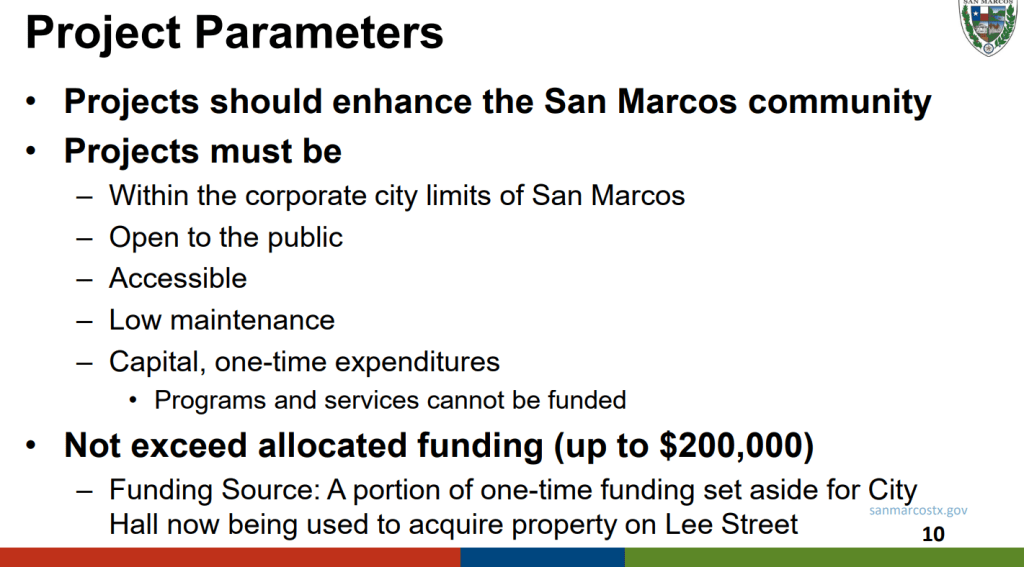
Some details:

So, sadly we cannot submit “Open the Activity Center on Sundays!” because that would be a recurring cost. But that’s one of my fondest wishes.

Anyway, start brainstorming! Ideas are due in February.

You don’t have to know all the details. They’ll help build your spark into a flame. You just dream big, kiddo. (Well, dream medium. It’s only $200K.)

Workshop #3: Airport updates

Our little airport is growing?

First off, we have a cute old air tower. Would Council mind if we move it?

Here’s the journey it will go on:

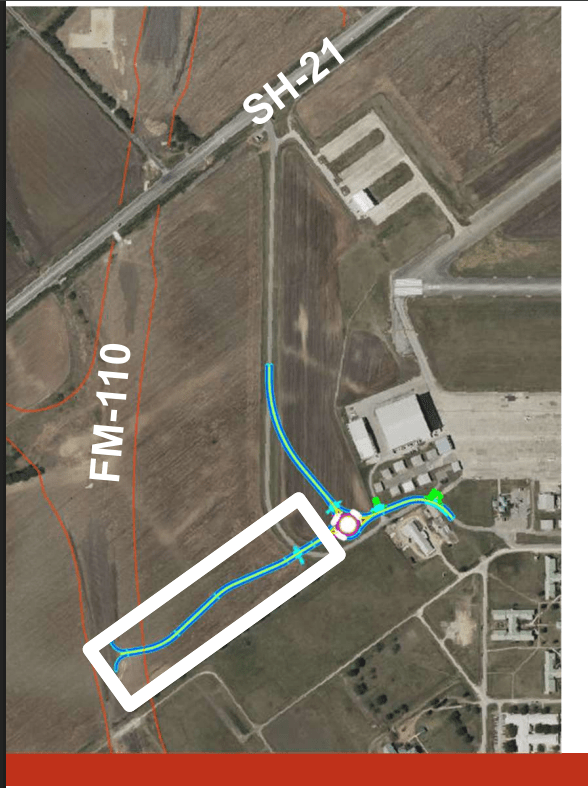
Second, there’s a new road that needs named:

We’re going to name it after this guy:

He was a POW in WWII, among other things. Sounds good to me!

Hours 0:00 – 1:15, 10/8/25

Citizen Comment:

There were eight speakers, on diverse topics:

  • The first amendment is being trampled in the US right now.  (True!)
  • We need to be mindful of our budget and run San Marcos like a business.
  • Austin Apartments Association represents a bunch of landlords as members. They’re mixed on Tenant’s Right to Organize.
  • San Marcos Civics Club is holding their candidate forum on Thursday, and they also have their questionnaire available: Place 1 and Place 2.
  • Council candidate Chris Polanco echoes the first amendment crisis, and also talks about having a disability in San Marcos
  • Global issues – Ceasefire in Gaza and fascist tendencies of the state government.
  • The DR Horton homes in Cottonwood Creek were built so shoddily that foundations are cracking in the first three years. People up and down their street are finding themselves trapped financially because these homes are built so poorly. Can the city prevent DR Horton from building new homes until they stabilize the existing ones? Or something else?

That last one feels like lawsuit territory. This sounds awful. (Maybe this is a good candidate for participatory budgeting – see below.)

Item 9: Tenant’s Right to Organize

This is nearing the finish line! What should you do if you’re a tenant, and there’s mold in your bedroom, or your AC goes out, or you have no hot water, and your landlord refuses to fix it?

In Texas, you have very few options besides suing. You can talk to your landlord, of course. If they start to see you as a problem, you might be evicted. Filing a lawsuit is expensive, of course, and if you try to sue, you might be evicted anyways.

This is the point of this ordinance: tenants should be able to talk to each other about their landlord problems, and form tenant organizations, and bring issues to their landlords as a united front, without worrying that they’ll get evicted or face retaliation. (Discussed previously here and here.) 

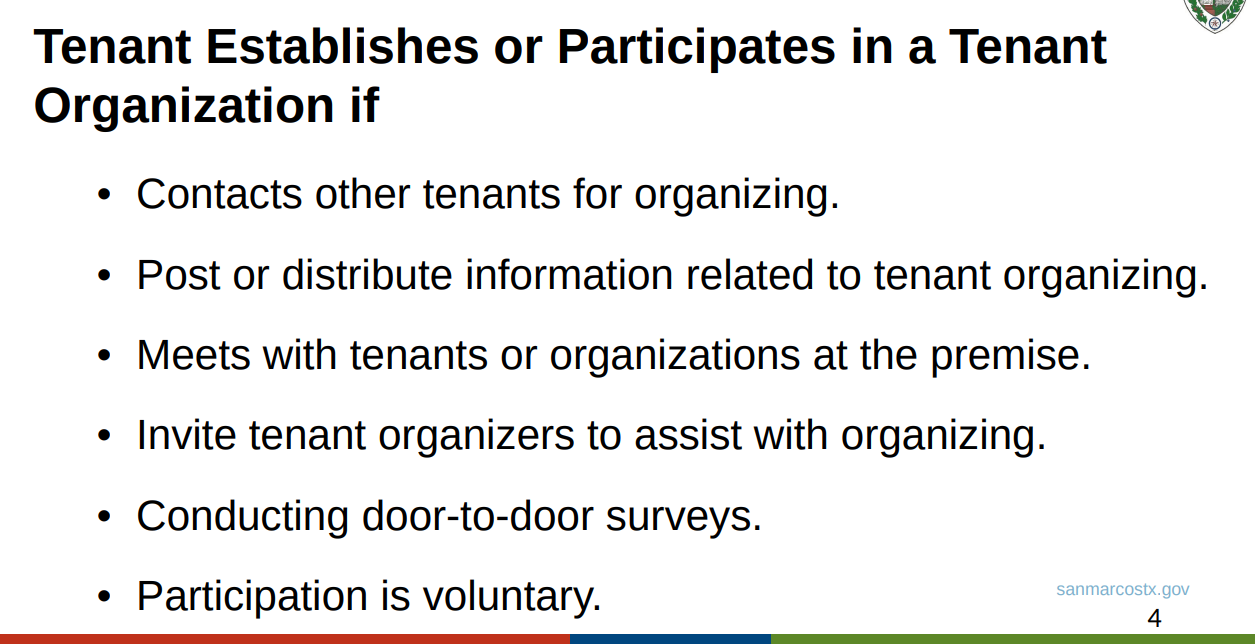
Under the ordinance, here’s what’s protected:

(These are old slides from last month.)

Here’s what landlords are NOT allowed to do:

But they’re still allowed to do some things! Like so:

This is great! No tenant should fear eviction when they’re fighting for clean and safe housing.

Council Discussion

There’s one small discussion point: property managers.

Suppose property managers are the ones doing the intimidating, and the landlord lives 1000 miles away. Should the property manager be held liable? Or does it go to the landlord, since they are responsible for their employees?

Lorenzo proposes an amendment to exempt property managers. Unfortunately, this ship has sailed – employees are already held liable in similar situations. Even if we adopt Lorenzo’s amendment, it doesn’t really protect them. (The amendment fails.)

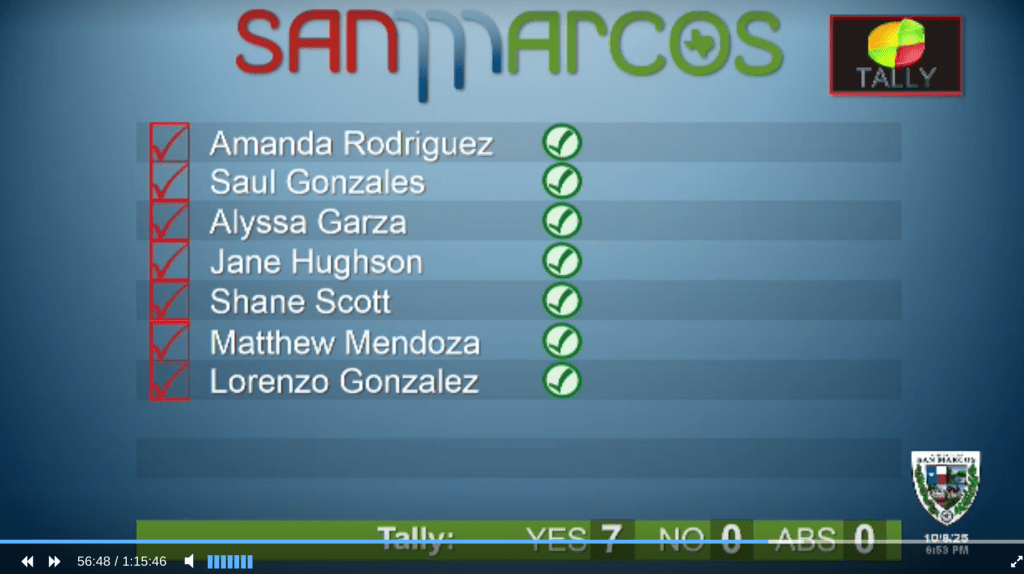
The vote on the Tenant’s Right to Organize ordinance: 

Hooray! (Lots of hard work on this from the San Marcos Civics Club and TAG, so thank you to both of them.)

This is just the first vote. It will come through for a final vote at the next meeting. 

Item 13: Participatory Budgeting

Participatory Budgeting is a specific thing. It doesn’t just loosely mean “survey the people or invite them to watch the budget process”.

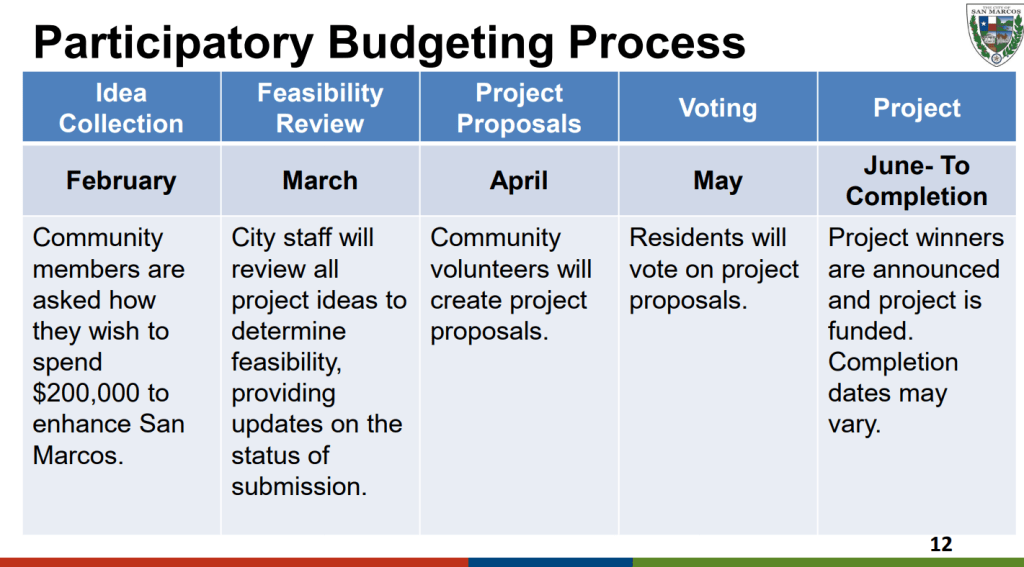
It works like so: a city sets aside a pot of money, and asks for ideas from the public. The community develops proposals, and then the public votes on which project to fund.

Here’s the graphic from the website:

One of their taglines is “It gives people real power over real money.”  

Alyssa (and Max Baker, back when he was on council) have brought this up for years. It gained a little more traction at the visioning workshop back in January, and then was included in the budget that we tried to pass in September.

But then – I’m still cranky about it – Council sabotaged the budget at the last meeting.  One of the items that got axed in the carnage was $250K for participatory budgeting.

Apparently Lorenzo felt a pang of regret for driving us off the cliff? Maybe Alyssa was extra-furious about this part?  (I shouldn’t speculate, because I have no clue.) All I know is that Lorenzo went to the city manager and asked if there was any way to fix this. Can she find some money to restore funding for participatory budgeting?

And lo: she found some!  It’s displaced City Hall money.

In theory, we’re trying to sock away $1 million each year for that project.  But this year, we’re using the most of that $1 million to put an offer in on the land next to Centro

We’re expecting to have a little bit left over, and that’s going to be the Participatory Budgeting Pot of Money. Hooray! 

Gentle readers: this is your call. Start brainstorming ideas!

  • Is there something in your neighborhood that could be transformed?
  • Do the kids in your neighborhood need a place to play?
  • Or a community gardens?
  • What about opening up the Activity Center on Sundays, or having longer front lobby hours for the library?
  • Or hey: a coordinated lawsuit or mobilization against DR Horton?

Go think up great things! Your mom tells me you’re very clever.

….

Note #1: This was just a preliminary discussion.  Participatory Budgeting will come back around as a formal proposal.

Note #2: Since we mentioned the new city hall, let me say again that I hate this plan. They want to relocate City Hall across the street, and into our parks.

Don’t use up your park land! They’re not making more land.

There were a few tiny other items – scheduling the election, filling some commission vacancies, appointing a municipal judge. And that’s all! It was an extremely short meeting.

However! Keep reading, to hear about the river. The action was all in the 3 pm workshop.