
Citizen Comment:
9 speakers. Main topics:
1. Human Service Advisory Board funding: speakers from three nonprofits – Hays Helping Hands, Southside, and BR3T. (I’ll save their comments for Items 31-32.)
2. Accessibility and San Marcos: one speaker, he’s available to support the city as they start to implement accessibility measures.
3. Subdivision coming on 123 and FM 1978: three speakers.
Two neighbors who are concerned about changes coming, and one representative from Redwood who is interested in the wastewater treatment plant. (I’ll save their comments for Item 22.)
4. Thank you for the ban on data centers. Don’t let developers build student housing and flip it to university. Hold the university accountable for supporting the city. (1 speaker)
5. We need to bring more businesses to San Marcos, to grow the budget. We need Texas State to help staff police downtown. They should be responsible for their students. (1 speaker)
On to the meeting!
…
Consent Agenda
The consent agenda is about 10-20 items that get voted on as a group, without discussion.
One item of note – SMPD officers in schools:

This is not new, of course. But that doesn’t mean it’s a good idea.
There was no discussion, but Alyssa and Amanda both voted “no” on this item.
….
Item 21: HOT and STR fees
“HOT” stands for Hotel Occupancy Tax, and “STR” stands for Short Term Rentals. We charge a tax on hotels, and use the money to promote tourism.
Sometimes the hotels and short term rentals pay the city using a credit card. Credit cards come with a 3% surcharge. So the city has been paying 3% to the credit card companies every time the hotels pay by credit card.
This adds up to about $40K/year.
Today: Should we make the hotels and short term rentals pay the credit card fees?
The vote: Yes, we should. It’s unanimous – pass the cost on.
……
Item 22: Sedona South
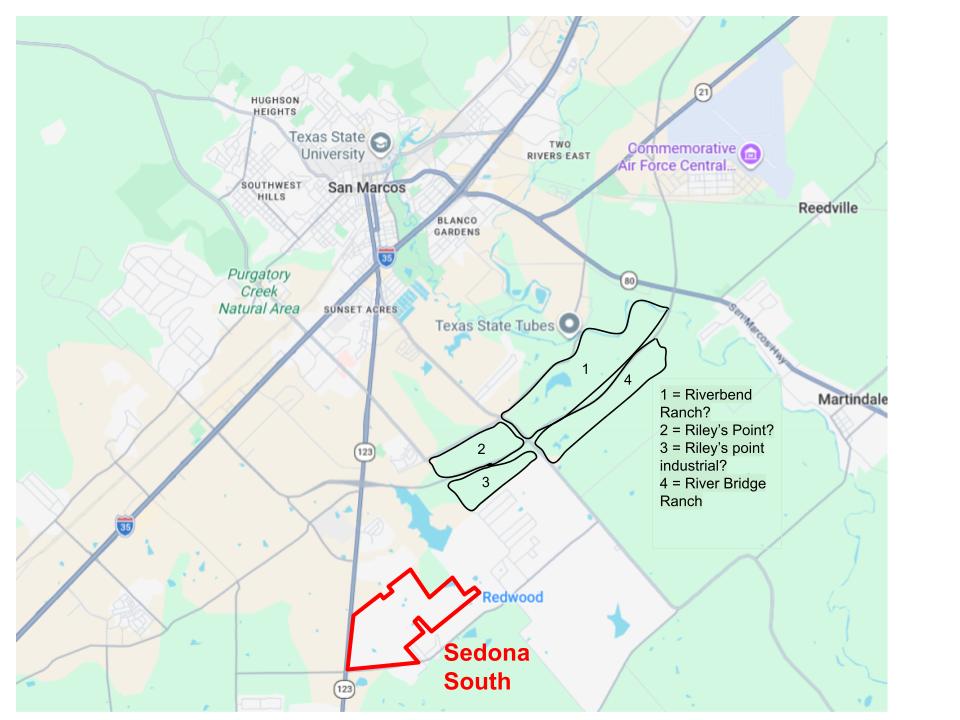
There is a huge tract of land southeast of San Marcos which has gotten kicked around for years:

Someday, this is mostly going to be a massive amount of single family housing sprawl. (Why not include 4-plexes and townhomes and stores throughout these developments?)
Now we’re adding in this one:
And if I’m reading things correctly, this one is also coming soon:
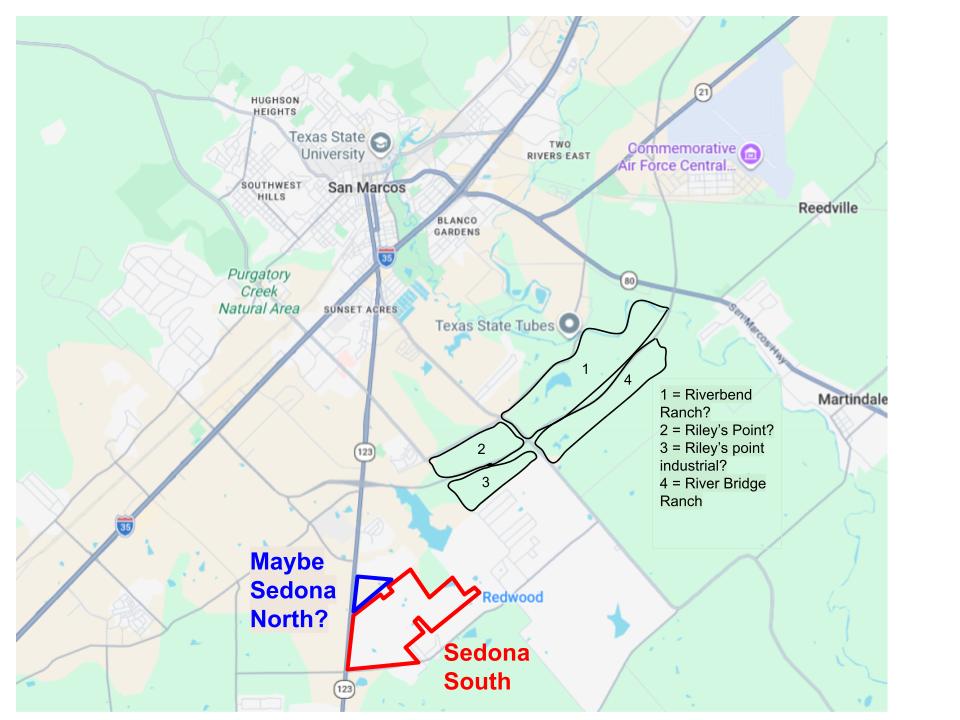
But for right now, we’re talking about Sedona South.
We’re going to talk about the reasons I don’t like it, and the reasons I do like it.
Here’s the main reason I don’t like it:
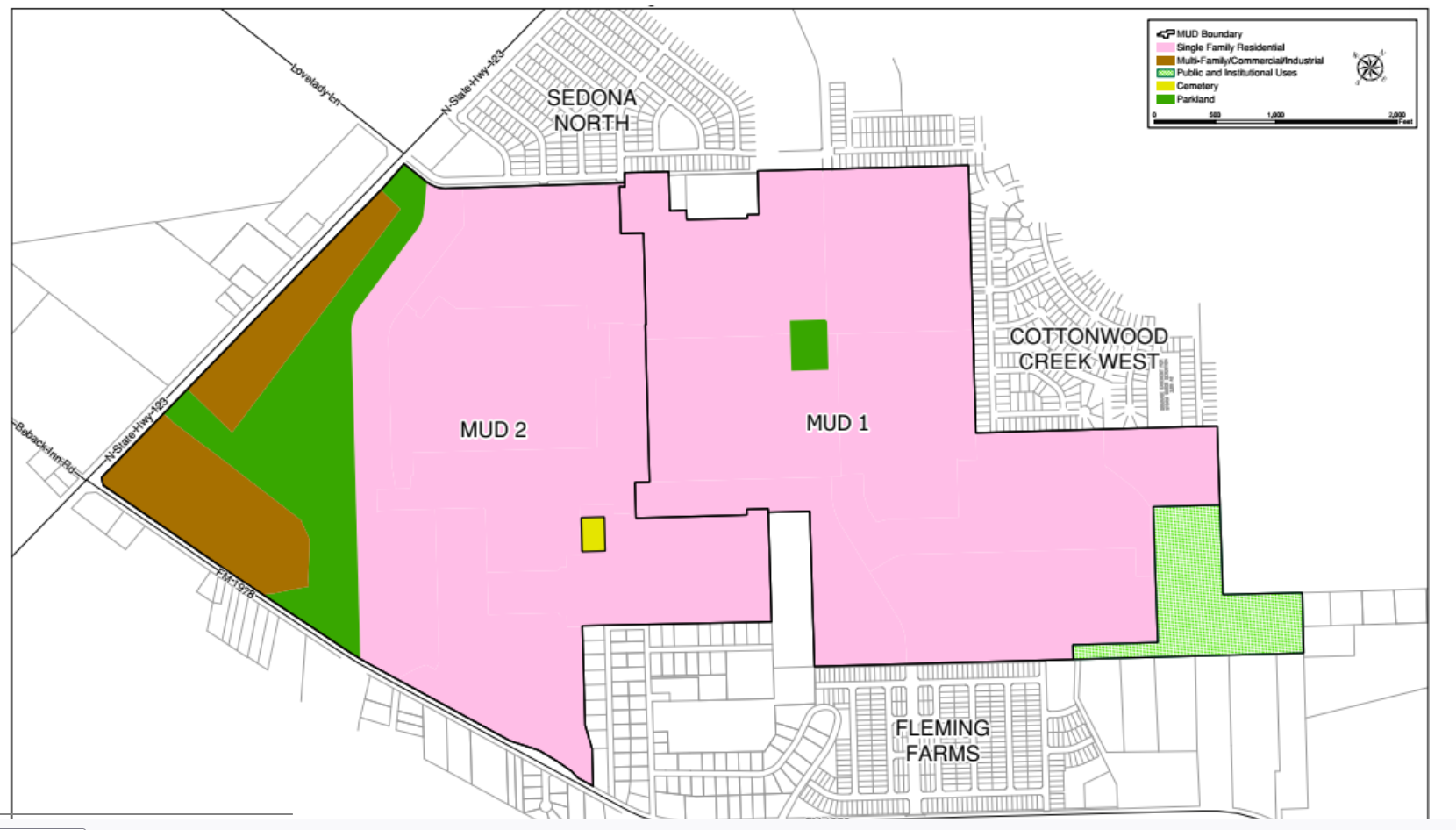
All that pink is going to be single family housing. The brown on the left is going to be half apartments, and half commercial.
- I don’t like how we segregate apartments out. Why not have 4-plexes and townhomes throughout all of the pink? You could put a lot more people in there, and not segregate by wealth.
- Why not put corner stores and commercial in that pink? Developers don’t like to set aside land for corner stores, because stores don’t get built until the people have all moved in.
This is not walkable at all. This is not a 15-minute neighborhood. This would not fly under the Comprehensive Plan. But it doesn’t have to, because they’re not asking to be annexed into the city.
Here’s the main reason I do like it:

We’ve discussed this wastewater treatment plant before, in March 2025, July 2025, and in June 2026
This new wastewater treatment plant is very important, because of this:
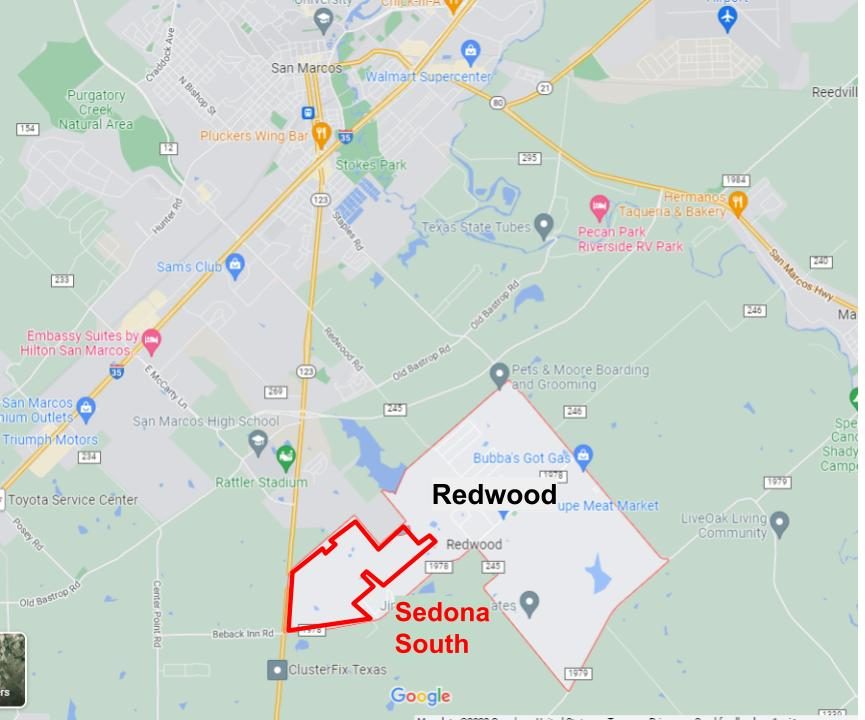
That wastewater treatment plant is crucial for the people living in Redwood.
Some backstory
Back in 2019, a researcher from UT Austin came to Redwood, and started testing people, and found that a lot of people there had the parasite strongyloides. This was living in the soil because the septic systems were failing, mostly because the soil there is incompatible with septic systems and causes them to break and leak. So even if there was money for everyone to fix their septic systems, they would break and leak all over again.
The only solution is to get on a wastewater system.
So Redwood and Rancho Vista organized. They connected with a group called Water Finance Exchange. They formed a nonprofit, the Redwood-Rancho Vista Water Supply Corporation, and they applied for the Closing America’s Wastewater Access Gap grant. They were selected to receive assistance, and they’re now working with some engineers to find a solution.
The solution: connect to a wastewater treatment plant.
OMG look!
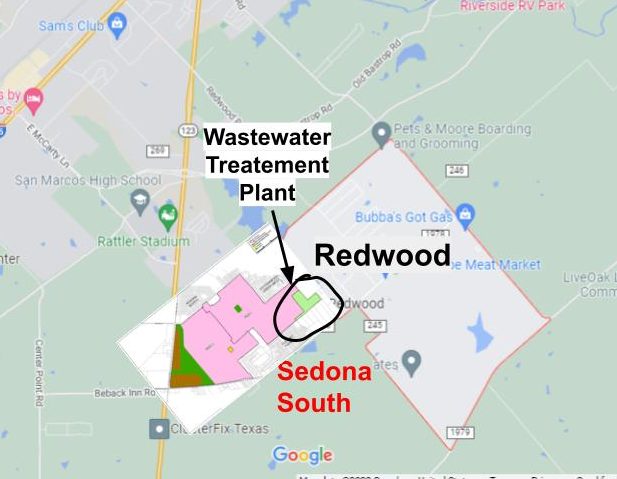
IT’S RIGHT THERE. How could we not?
Confidential to Council: You hold the power! From your lips to God’s ears!
….
What else?
Two neighbors spoke – they’re not exactly thrilled that this massive development is going in across the street, but they said the city staff has been super helpful in talking with them. (The third speaker talked about the water treatment tie-in stuff with Redwood, from above.)
Council mildly made comments fiddling with the details:
- Can we ban car washes, to conserve water?
- Can we ban waste services?
Answer: Maybe! Sure!
The vote: unanimous. Everyone is in favor.
Note: I couldn’t find anything on how much money the city gets from this agreement. Seems like an important detail, though.
….
Items 23-24: Riverstone Apartments
Riverstone Apartments are located here:

It opened in 2024.
Riverstone Apartments is a LIHTC complex, which stands for “Low Income Housing Tax Credit”.
Their LIHTC project works like this:
- They get a tax break from the state.
- They still pay full taxes to San Marcos.
- They had to make all 336 units “affordable”.
“Affordable” means it’s priced for families earning $67K – $80K, or individuals earning $47K – $56K. These rates are based on what people earn in Austin, because San Marcos is in the Austin metro area.
That might be poor for Austin, but that’s pretty mid for San Marcos. It excludes a lot of poor San Marcos residents who need affordable housing.
Here’s the problem: the LIHTC deal was made in 2019. Then Covid and inflation happened.
They thought they’d be paying about $100K in property taxes, but their project ended up getting appraised three times higher than they estimated. So their property taxes are actually closer to $300K. Now they can’t afford their local taxes.
Today’s question: Are we willing to cut a deal with them and waive their local taxes?
They’re offering to set aside 51 of the 336 units for extremely poor families with income under $40K, or individuals earning less than $28K. In exchange, they wouldn’t pay county taxes or SMCISD taxes, and only $100K/year to the city.
The argument against it:
- The city really can’t afford this – this would eat almost 1/3 of the entire Social Services grant budget.
- This would cost SMCISD about $400K in taxes. And they don’t have a say in this deal.
- The county would also lose money. (I don’t know how much)
The argument in favor:
- We really do need more affordable housing, and this is at least a little bit.
- There are also residents living there currently. If this complex gets sold, their rent will go up.
What does Council say?
Everyone is pretty grim. It’s just too much money, compared to how other nonprofits could stretch that money.
The vote
Yes, give them the tax break: nobody
No, sorry: all seven council members
So the apartment complex will probably get foreclosed and they will have to sell it off.
……
Items 25-27: Back down by Redwood again:
This time we’re focused on region 4, River Bridge Ranch:
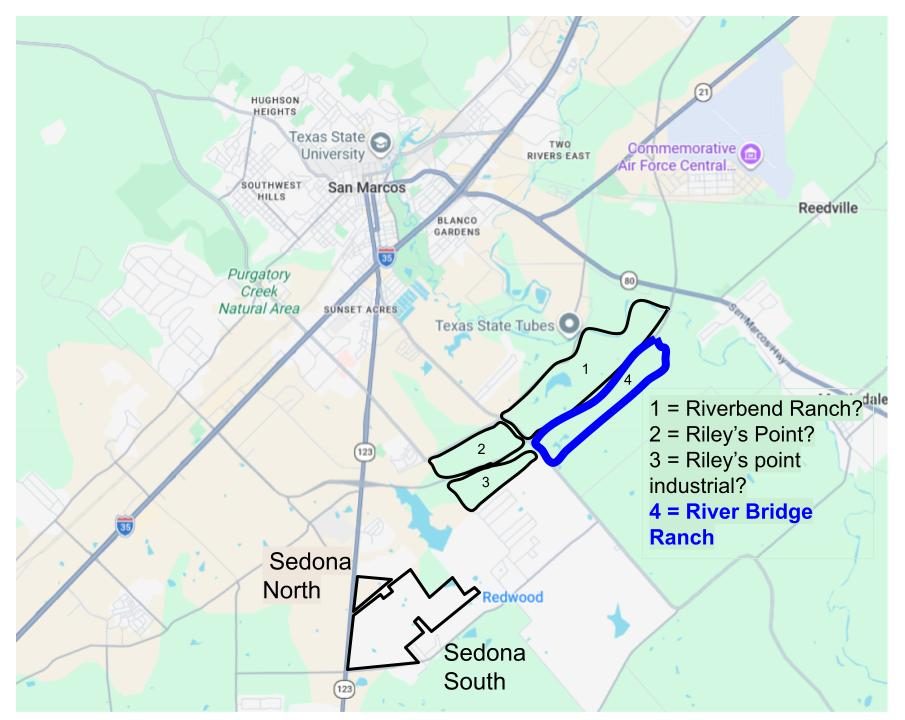
(We’ve talked about this before: November 2024, Marcos 2025, and December 2025.)
River Bridge Ranch is a different kind of development than Sedona South. First, it’s inside the city limits. Second, it’s a PID, which stands for “Public Improvement District”.
What’s a PID?
If you buy a home in River Bridge Ranch, you’re going to pay an extra $1300-$2800 on your tax bill. This extra money will just go to pay for streets and infrastructure in River Bridge Branch.
My $0.02: I do not like PIDs! (In fact, I just complained about the La Cima PID in May.)
The developer gets to artificially lower the price of the homes, and hides the extra cost in yearly taxes. Residents feel extra burdened by taxes. They blame the city, and pressure the city to lower taxes. If the city lowers property taxes, it hurts vulnerable people. So we’re helping the developer out, at the expense of people who depend on city services.
Is it the worst crime in the world? No, of course not. But it still makes me cranky.
Back to River Bridge Ranch
It will be all single family sprawl:
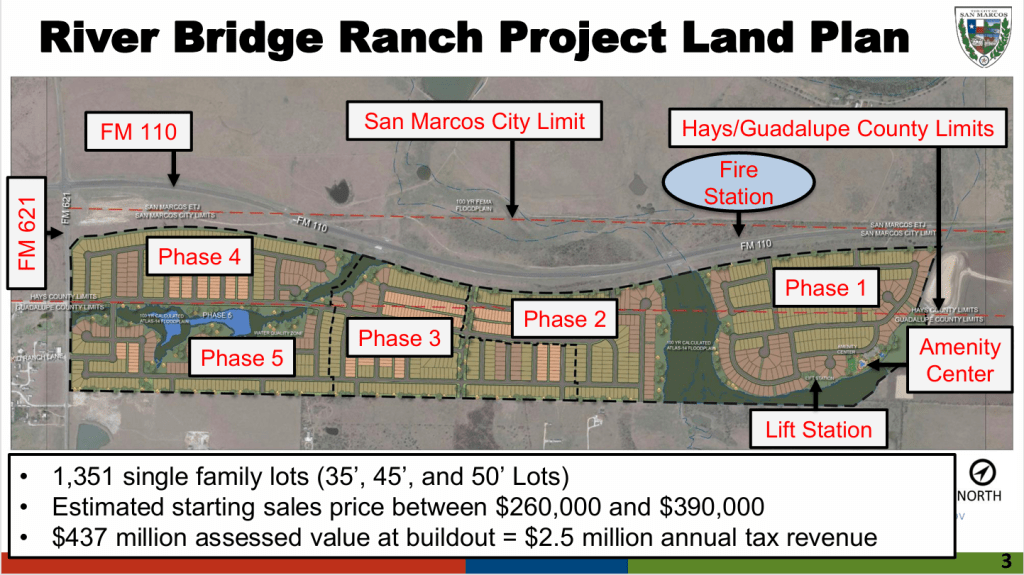
SIGH. Can’t we put some 4-plexes and townhomes throughout this? Can’t we ever have some stores?
So what brings us here today?
Before, the PID was for $10 million.
- The developer gets to knock about $7K off the price of each house,
- Instead, each resident would pay a yearly PID fee of ~ $250 every year, rolled into the tax bill.
Now the developer now wants to make the PID worth $60 million:
- Now the developer gets to knock $40K off the sale price of every house.
- Each resident will pay a yearly PID fee of ~$1480 every year, rolled into the tax bill.
The reason is because construction costs have gone up so much since 2020. Sure, that’s understandable. But I still resent the PID.
The vote: unanimous and in favor. Oh well.
….
Item 9: Berry Aviation
We lease part of the airport to a company called Berry Aviation.
If you’ll recall, Governor Abbott and Governor DeSantis got into a little pissing match back in 2022 and 2023. They were both trying to be the most ostentatiously cruel to immigrants, for shits and giggles.
- Abbott promised jobs to immigrants, and then bussed them off to various northern cities where there were no jobs, no connections, nothing waiting for them. Just for the sheer sport of making their lives harder. He has done this to roughly 100,000 immigrants.
- Then DeSantis joined in. He started flying immigrants all over the place, to cities where they have no connections and no support.
Importantly, DeSantis used Berry Aviation for some of this.
So at today’s meeting, Amanda asked them, “Are you involved in any immigration activity?”
They said no. They do some airplane maintenance and parts sales to DPS, and everything else is international.
Hopefully they’re done with the “abuse immigrants for kicks” business forever.
…
Items 29-30: That water treatment plant again.
Now we’re back here again:
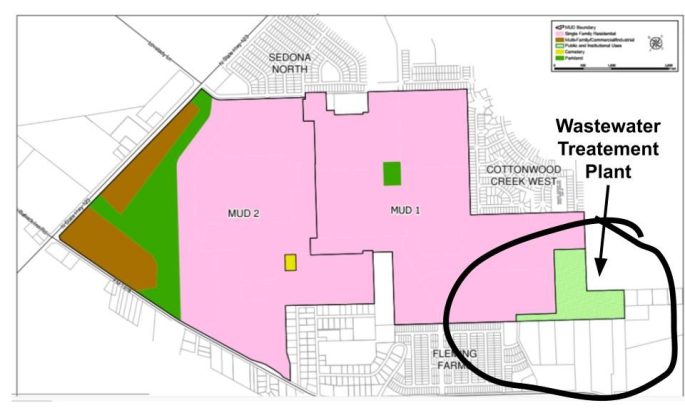
We’re allocating $42 million for the next phase of the water treatment plant, and another $2.5 million for the electrical stuff. Great.
…
Items 31-32: CDBG and HSAB
CDBG and HSAB are the grants to local social services:
- CDBG stands for “Community Development Block Grants”. This is federal money that comes with a lot of paperwork and restrictions.
- HSAB stands for “Human Services Advisory Board”. This is city money that is completely flexible.
Each pot of money are about $750K, so there’s a total of about $1.5 million. (Past CDBG allocations, past HSAB allocations)
In the past, we allocated these two pots out separately, which was tricky for the nonprofits. Should they apply to both? Is one a better fit than the other? If they apply to the lesser, does it make it harder for them to get awarded the better fit one? etc.
This year, we’re discussing both pots together at the same time.
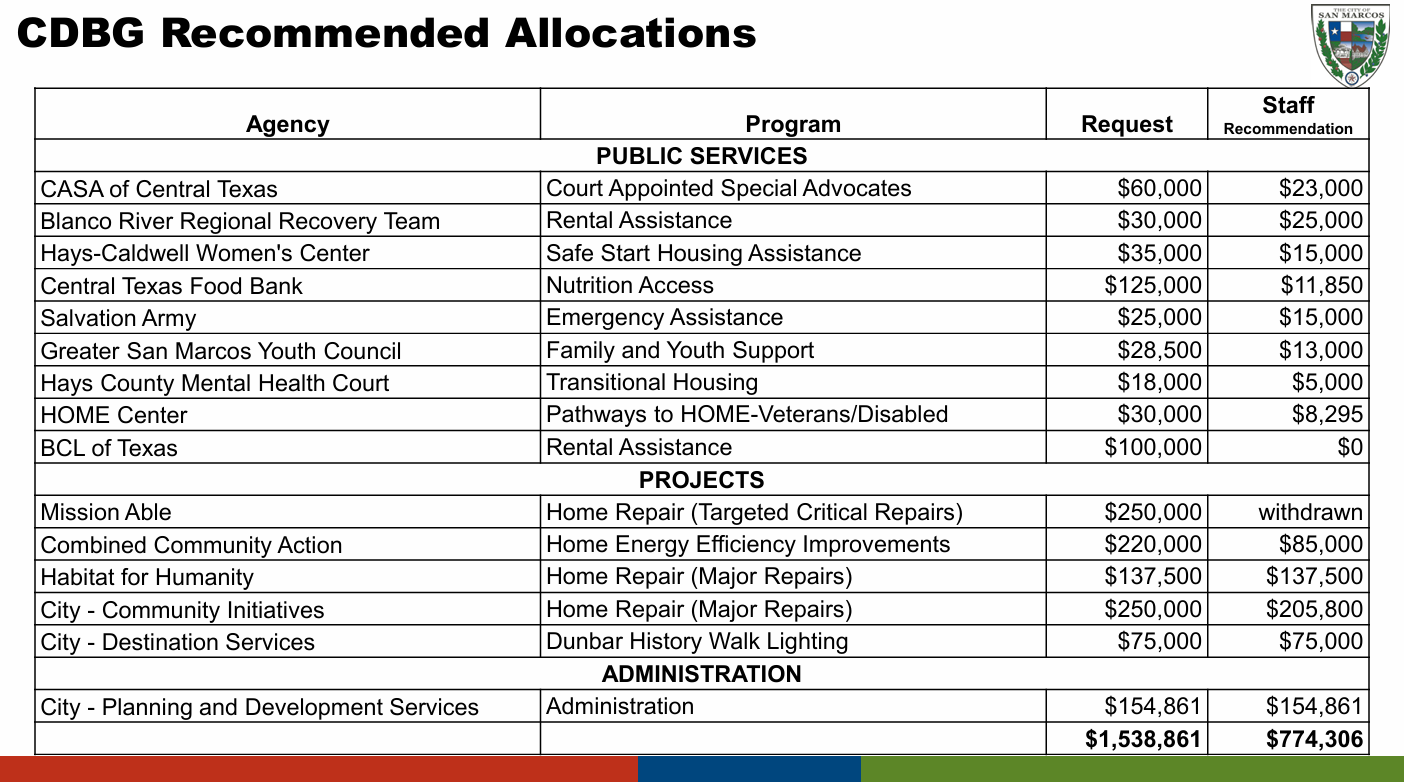
Here is what staff is recommending for the CDBG money:
Here is what staff is recommending for the HSAB money:
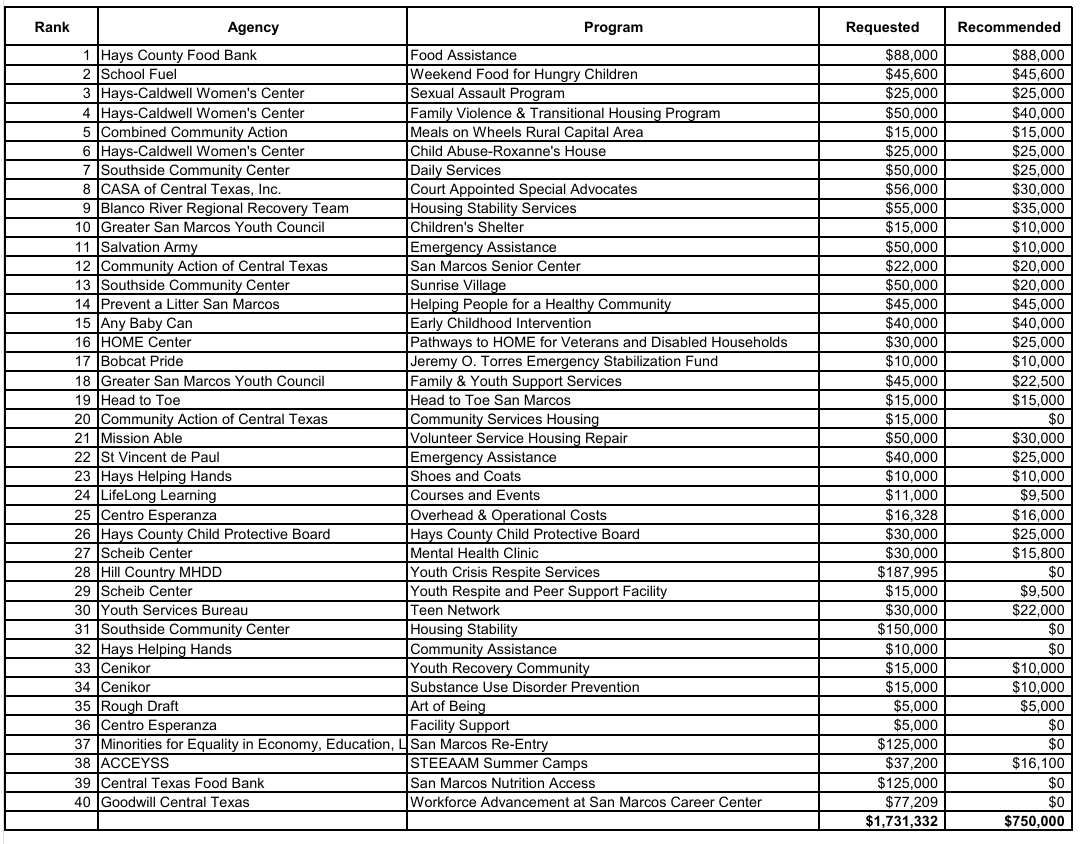
(If you want to read why things did not get funded, I could only find it in the gigantic meeting packet. Go here and read pages 1380-1382.)
Between the two pots of money, the total amount requested is $3.3 million. We only have $1.5 million to give out. So that’s a bummer.
…
The actual answer is to increase state funding.
Good news!
- In the 2023-2024 two year cycle, Texas had a budget surplus of $33 billion.
- In the 2025-2026 two year cycle, Texas had a budget surplus of about $24 billion.
This is a rich state! There is plenty of money to solve a lot of humanitarian problems.
Bad news!
- Our elected officials are ruthless asshats who will not spend money to solve humanitarian problems.
The problem with San Marcos is Texas, as always.
…
Citizen Comment
At the beginning of the meeting, people from several nonprofits spoke to Council:
Hays Helping Hands (formerly Nosotros Los Gente): why $0 for the one program? Can you combine our applications and let us shift money around?
Southside: We knew we would not receive our full amounts, but the ask was real. The need is beyond our current capacity.
- In the past 6 months, we could only provide 20% of eviction prevention aid
- We provided 16K meals in 2025, but we’re projected to provide 20K meals in 2026, on same budget
- The waitlist for shelter 250 people long.
All our partners are also underfunded. Feeding programs have gotten full funding but other parts of funding children and elderly have not. City leadership needs to put together an action plan to find more funding for nonprofits. Less than $1 million could fund every request.
BR3T: BR3T started off using a lot of covid money to provide emergency shelter.
- Currently in Hays county, 59% of renters are rent-burdened, which means spending >30% of their income on housing.
- Eviction rates have doubled since pre-covid.
Our partners are equally underfunded. The need has outgrown HSAB funding. HSAB needs more funding.
…..
What does Council say?
Lorenzo: HOME Center applied to both pots of money for the same project. Can we consolidate them to one application?
This does not go anywhere, since he didn’t consult HOME center ahead of time.
Amanda: I’d like to move $5K from Hays Mental Health Court to HOME Center.
The vote on Amanda’s motion:
Yes, give HOME Center the extra $5K: Shane, Amanda, Alyssa, Josh
No, don’t: Lorenzo
Jane abstains because she is on the Mental Health Court board. Matthew is absent.
Then the overall vote on CDBG funding:
The vote on all staff CDBG recommendations:
Yes: Jane Shane, Amanda, Alyssa, Josh
No: Lorenzo
I have no idea why Lorenzo is being ornery.
Note: HSAB funding will be rolled into the budget in September, so we don’t vote on that now.
….
Since Texas is not going to step up…
Could San Marcos afford to spend more money on social services?
Sort of! We do not have much extra money laying around. But we could have made different decisions in the past.
Have you ever heard this Jar of Life rocks-and-sand thing? Here’s a typical explanation:
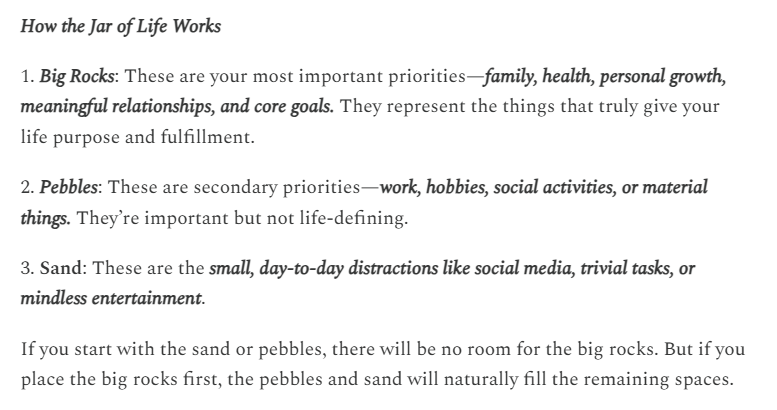
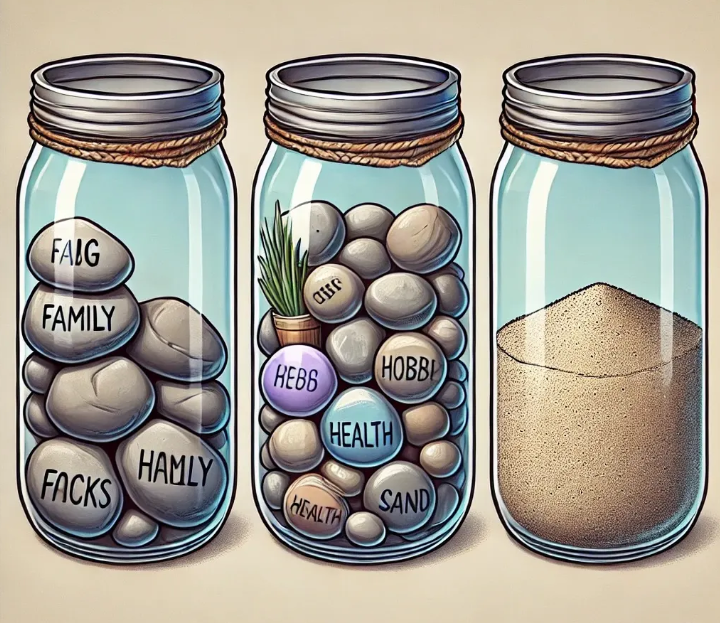
The City Budget Is a Jar
Our city budget works like this, too:
Big rocks: things that tie up millions of dollars for 30 years
- Bonds for construction projects. (Like the $44 million for the wastewater treatment plant that we approved a few minutes ago.)
- Development agreements for things like Embassy Suites/Conference Center, or Amazon, or Buccee’s
- Developments like Kissing Tree, which gets $1.8 million per year. (They have a deal known as a TIRZ, Tax Increment Reinvestment Zone.)
These guys are all set for 30 years! No yearly proposals. No justifying their pennies. No unexpected cuts when budgets are lean. Once they get approved, they’re golden.
Medium rocks: Departmental funding
- Salaries and benefits for city employees
- Basic maintenance and supplies
These departments do have to grovel every year, but there’s an expectation that budgets won’t be drastically slashed without warning. It gets incrementally squeezed, little by little.
Sand in the crevices:
- All the social services.
- Anyone’s pet project
Imagine if social services was a big rock! Imagine if they were guaranteed $1.8 million a year, for the next 30 years, like Kissing Tree. Imagine if we took out a bond to fund social services.
Note: I am not recommending this. Funding should come from Texas and the US federal government. We are not a rich town!
My point is how choices have been automatically baked into the budget, for decades. No one has to consciously choose an unfair thing for it to perpetuate itself. (This is called an accountability sink.)
….
Item 33: Hays Central Appraisal District
If you’re a home owner, your home gets appraised every year, and then you get taxed on that value.
The magic happens up in Kyle:
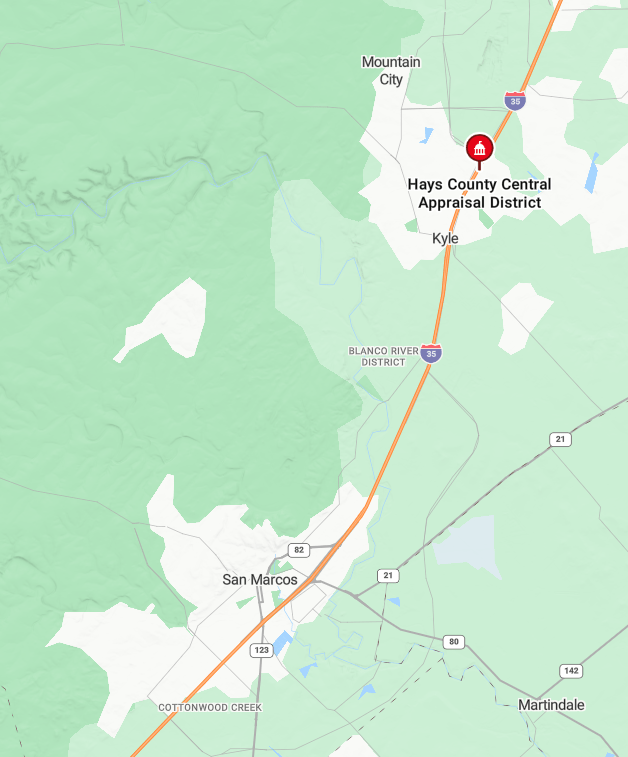
Apparently they’ve outgrown their building.
The main problem is that they need to be able to handle protests. To quote the packet:
Since 2019, the number of protests filed has increased from 22,000 to more than 55,000. To address this growth, the Board of Directors expanded the number of members of the ARB, but the District office does not have the capacity to house more than three panels per day. Even with these efforts, the increasing volume of protests continues to place significant demands on District facilities and resources.
The current District office does not adequately support our public visitors, staffing levels, operational needs, or future growth. Parking shortages create ongoing logistical and safety concerns for staff and visitors alike. We must be better positioned to serve the public, support the ARB process, and produce timely appraisal rolls for all taxing units.
Here’s what it looks like:
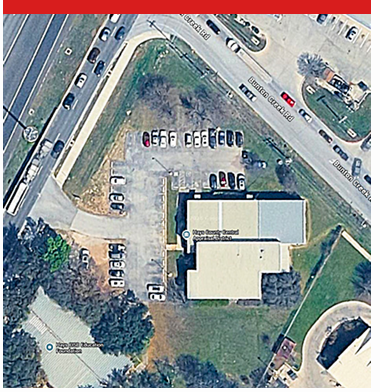
In order for the new building to get going, the county has to get permission from all the cities. Council was fine with this.
This means that our payments will go up in the future. But not today.
….
Item 37: Homelessness Committee and Criminal Justice Reform Committee
These two committees are getting merged to one Safety Committee.
Seems fine. There are a lot of solutions that affect both of these.

