Citizen Comment:
One speaker, but he hits a lot of topics:
- We need more tax from businesses, we could put them south of town.
- Promote river tourism.
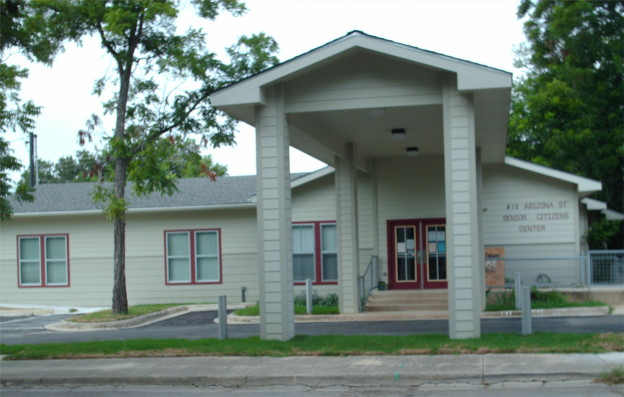
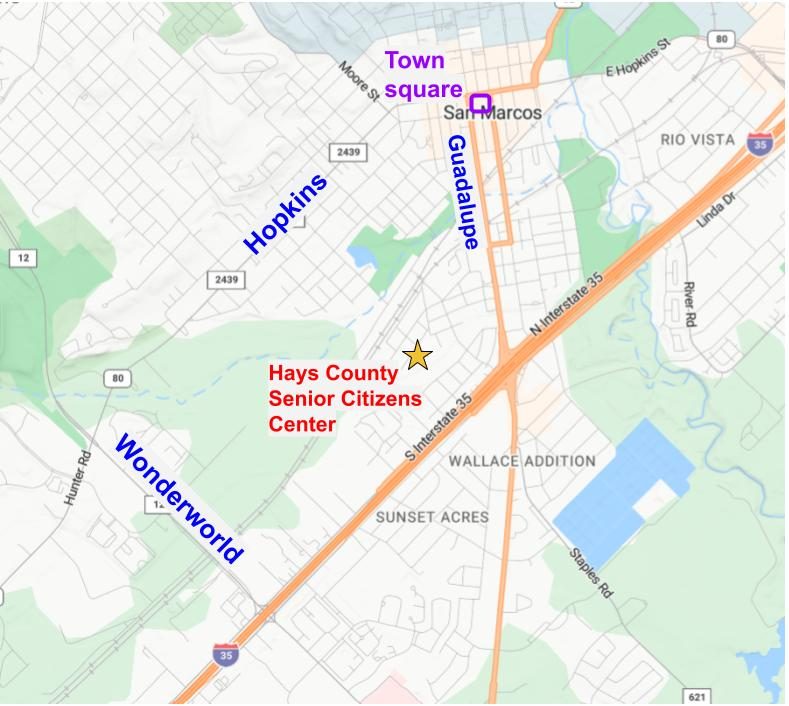
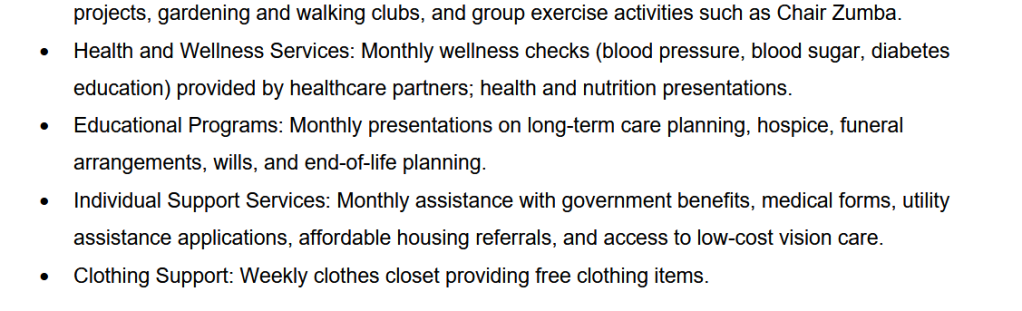
- Provide services for elderly.
- Support Chief Standridge and law enforcement.
- THBC issues liquor licenses: why does San Marcos require a CUP? It’s redundant.
- We should position ourselves as a major player on I35.
Onto the meeting!
…
Item 7: Riverbridge Ranch PID
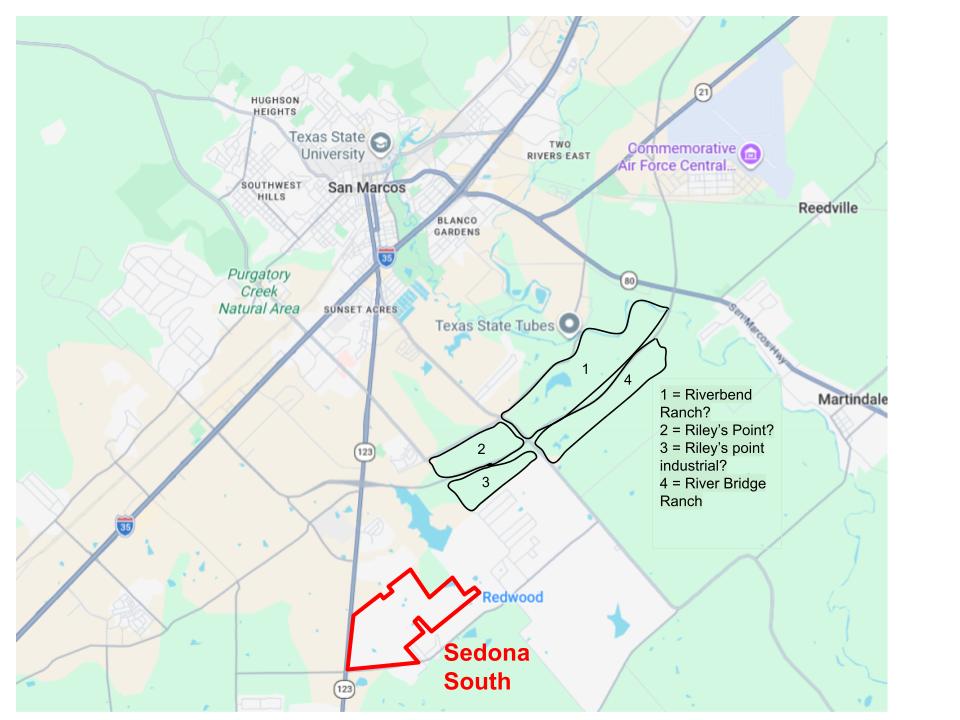
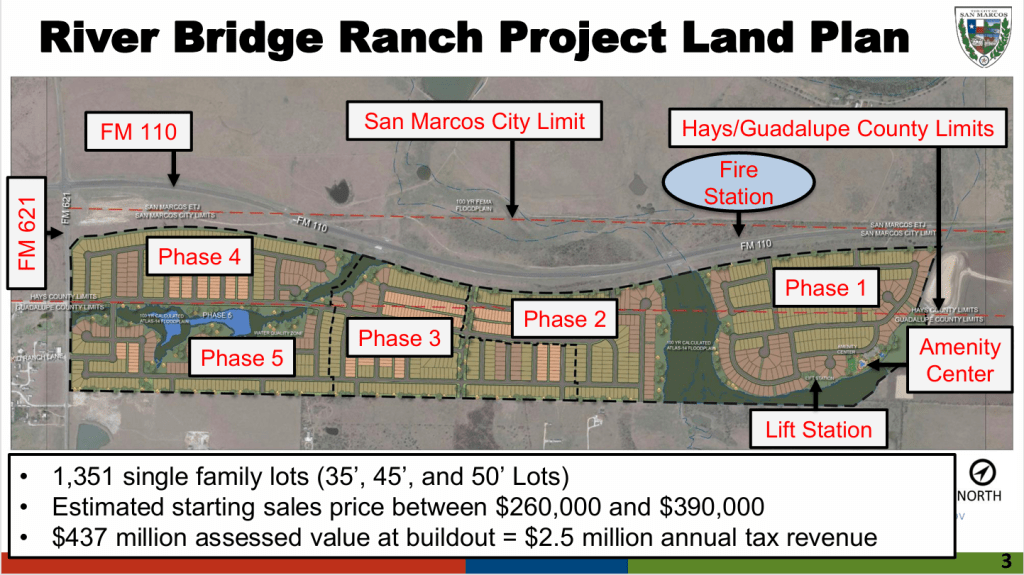
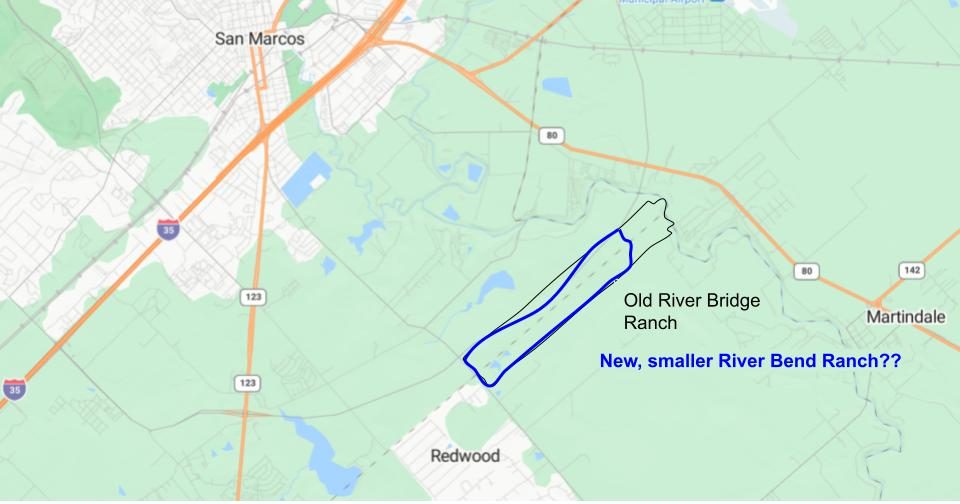
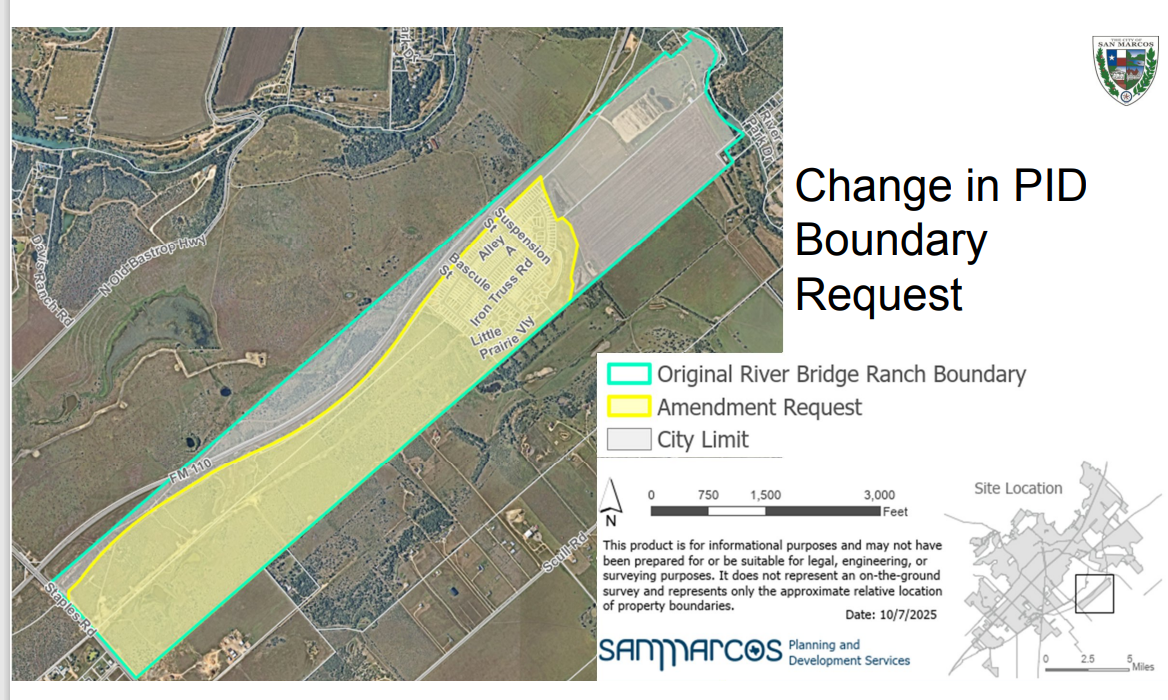
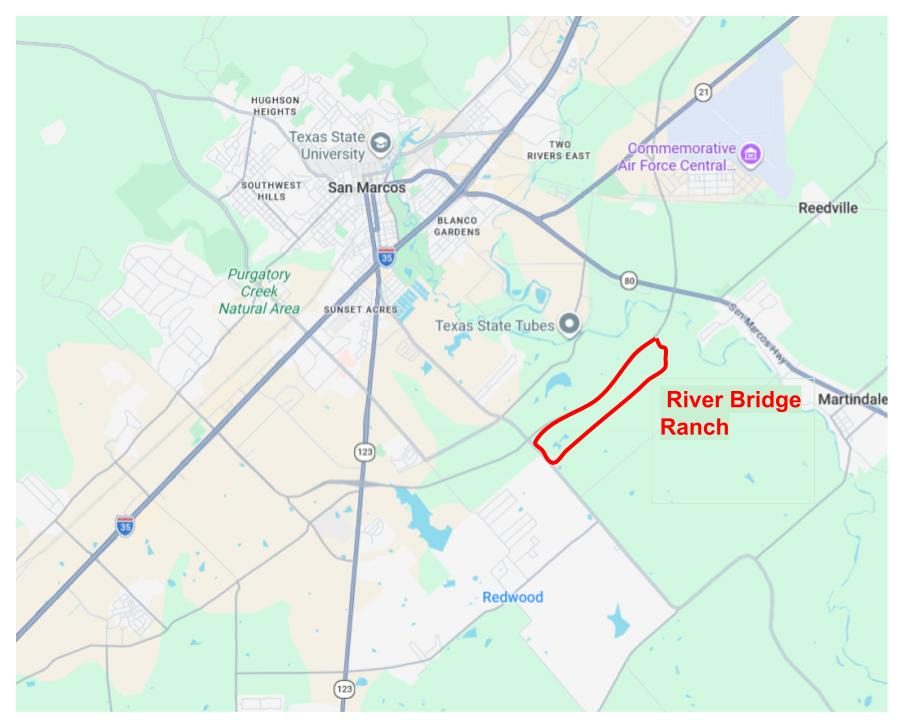
River Bridge Ranch is a development going in way east of I35.
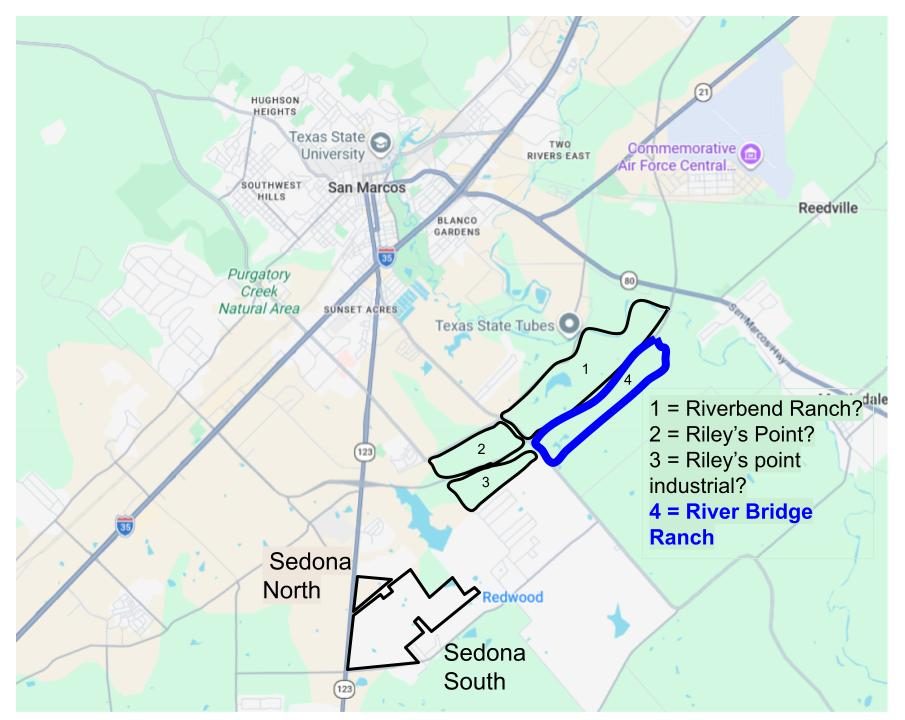
This is where River Bridge Ranch will be:
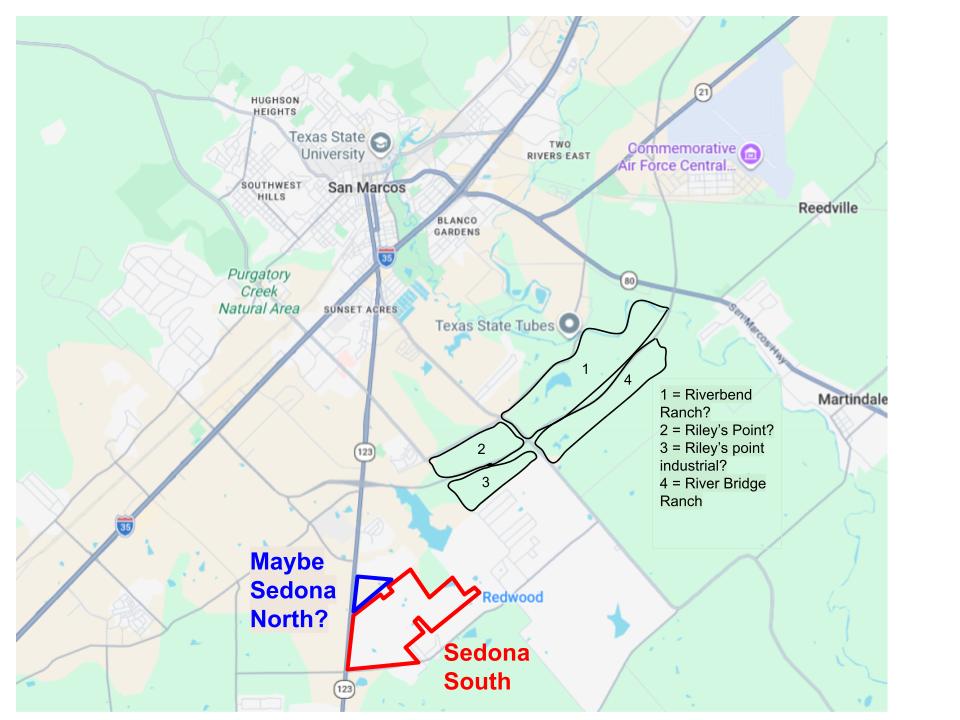
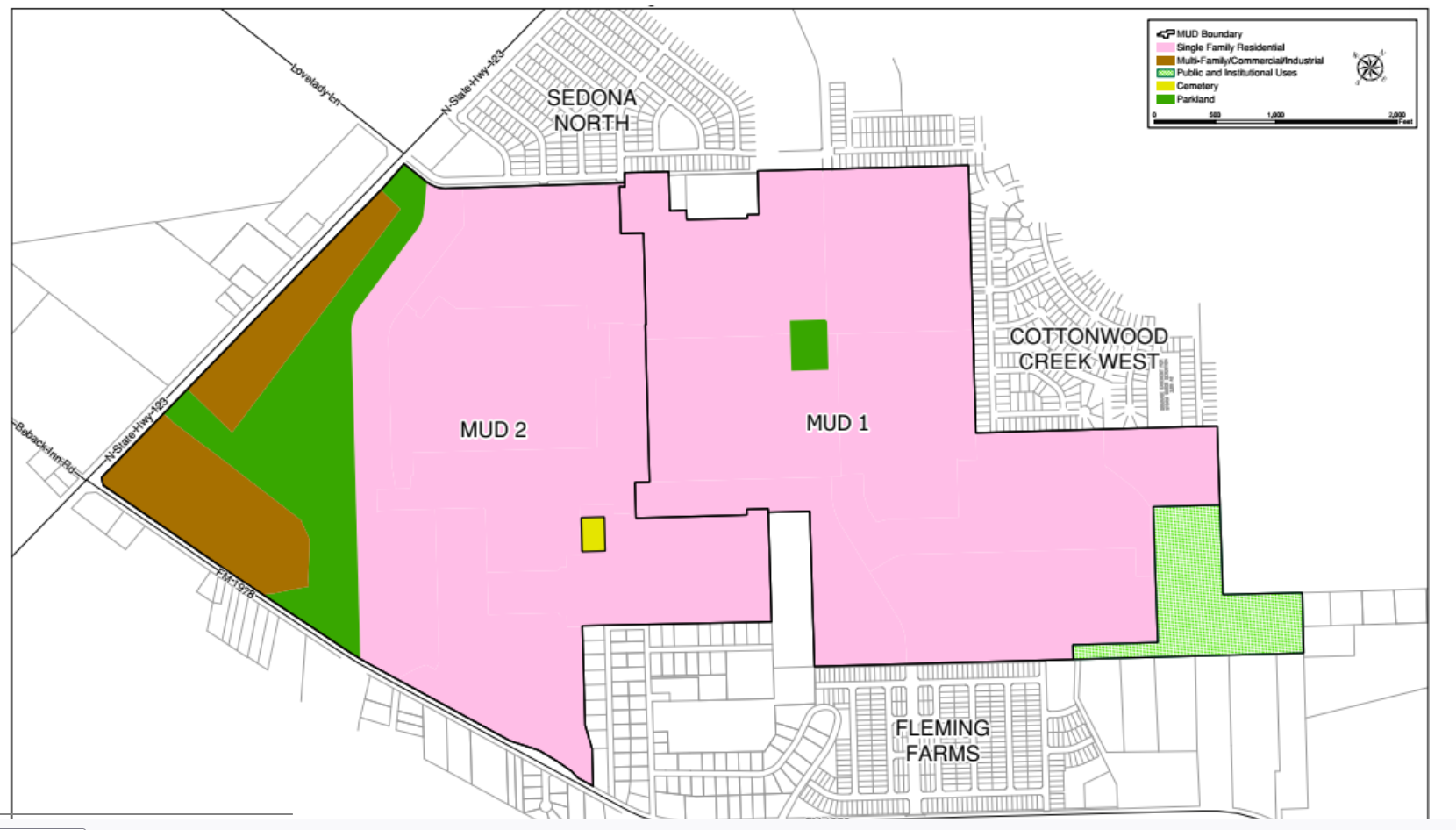
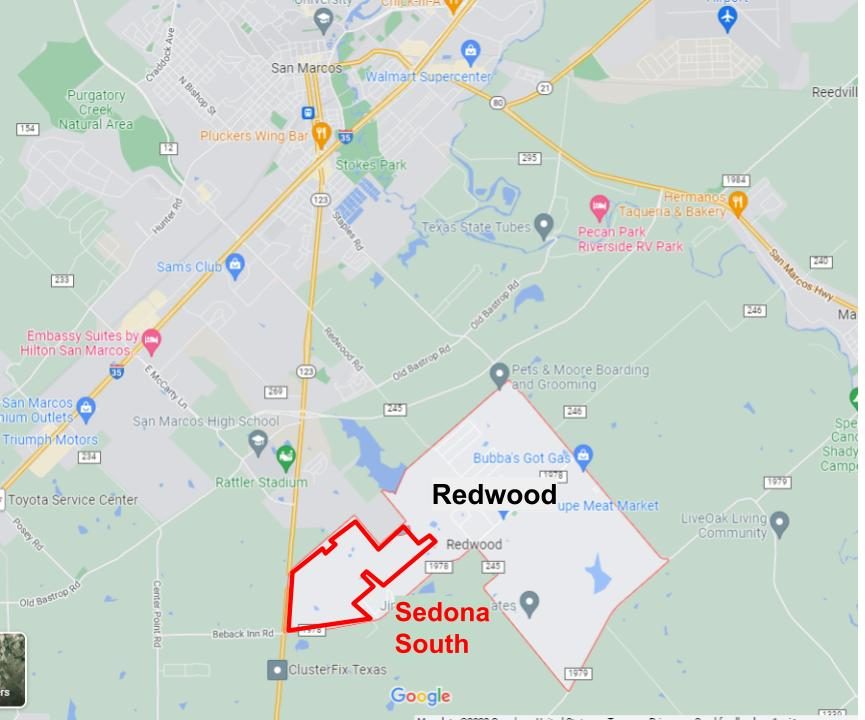
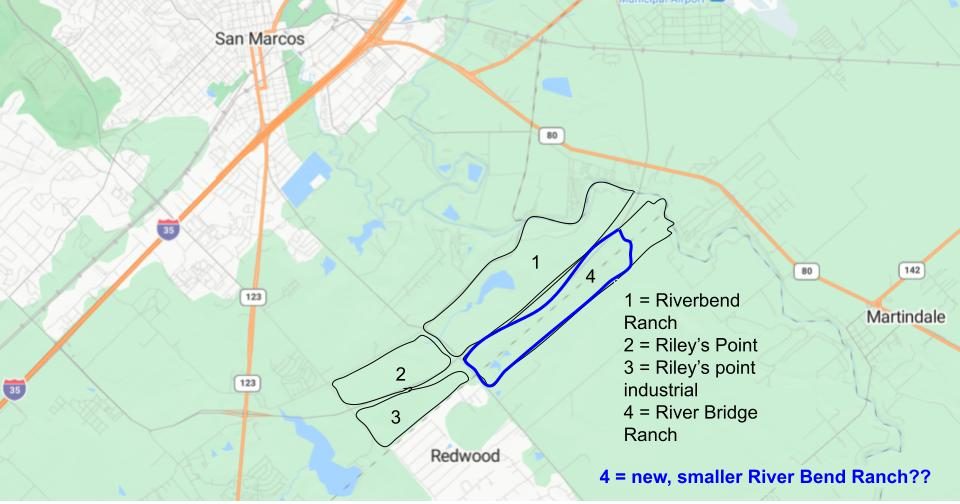
It’s one of MANY that are going in around Redwood:
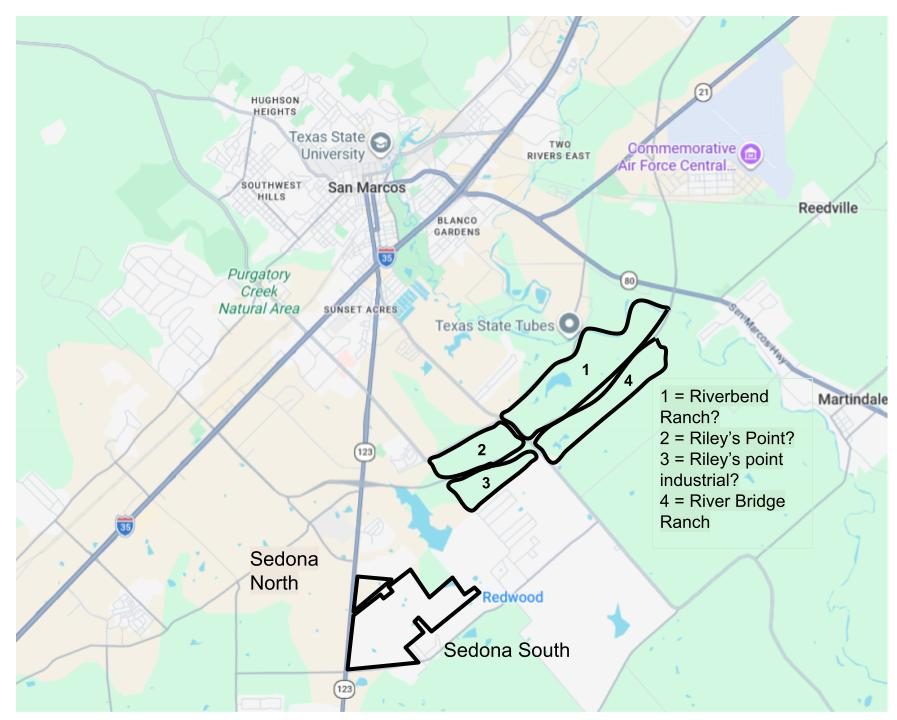
Those are just the ones that have come up in the past year or two. There are way more that are already being built.
In general, I’m not a fan of any of these! This is sprawl. There is no commerce planned. There is not significant density being planned. This will require lots of driving for all residents. It costs the city more support to sprawl than the city gains in new property taxes.
(Note: back in 2023 the plan was for plenty of stores and dense housing:
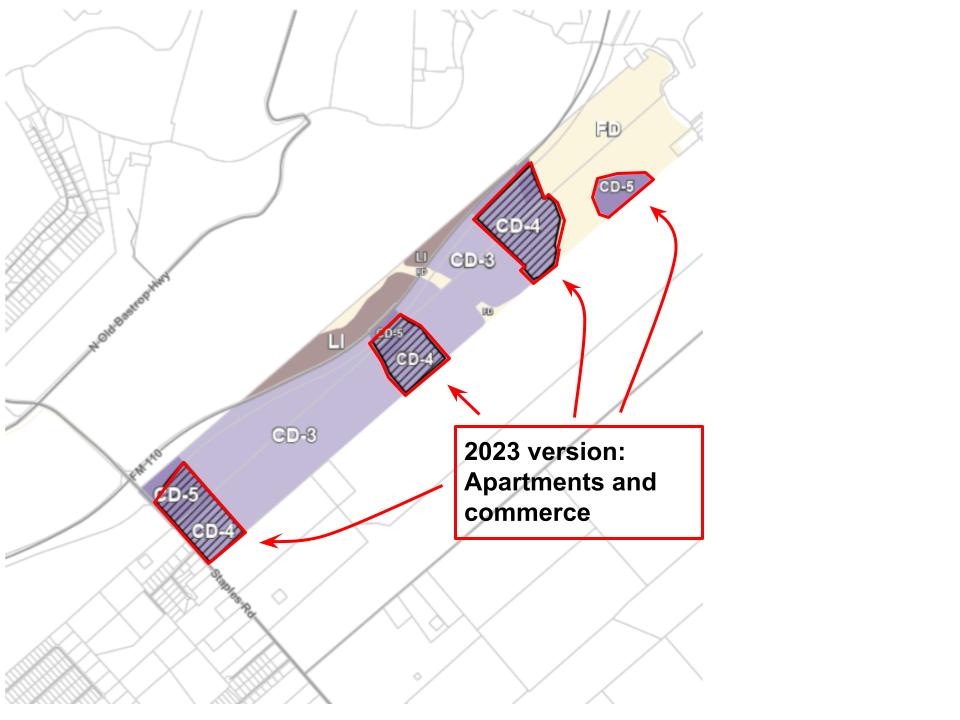
The 2023 Council agreed to let the developer kill all that, in favor of more single family housing. It still would have been far away from town, but at least it would have had some redeeming features.
I was pretty cranky about council rolling over like that!)
…
We’ve talked about this development several times over the past year: December 2025, January 2026, July 7th.
A lot of that – especially July 7th – is me complaining about how PIDs are a shell game. I guess I’ll spare everyone yet another rambly rant on the same topic, but feel free to click through if you’re curious.
…
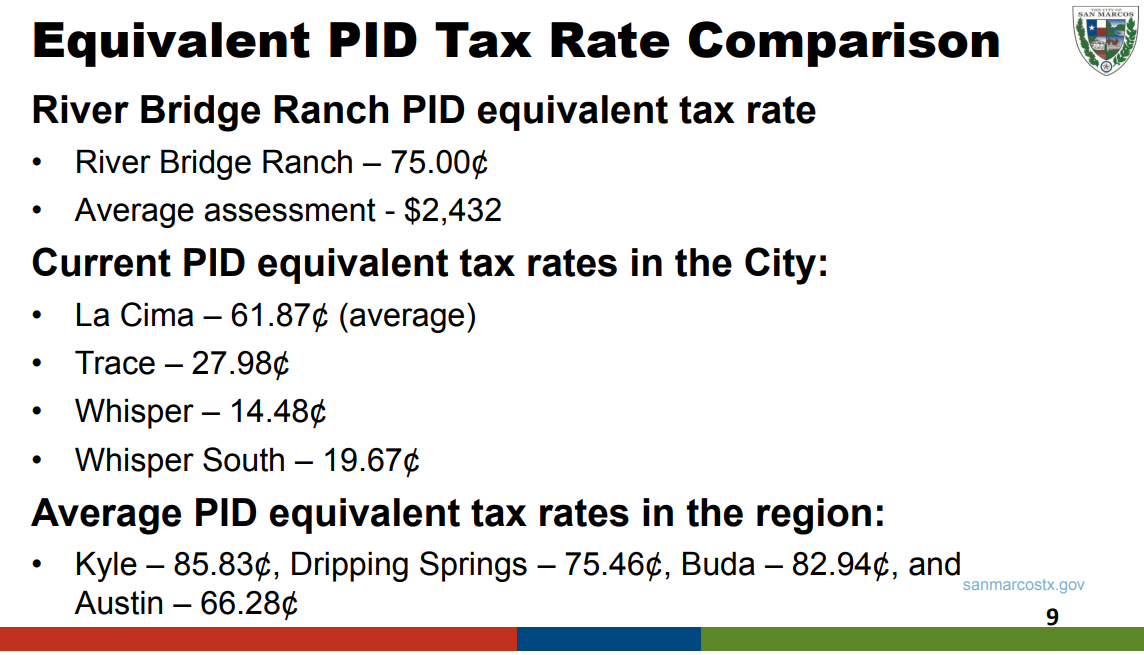
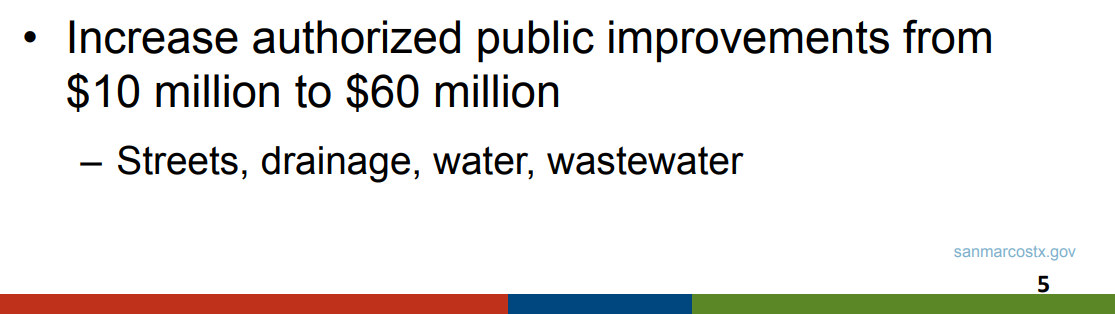
Since January, the city negotiated for some extra perks: an amenity center that is open to the public, some shade trees, various financial details. Those are fine.

Still all sprawl!
Still, the 2026 Council is very enthusiastic about how much better this deal is than what was proposed in January.
The vote:

Oh well! It’s coming!
….
Items 9-10: Water and wastewater impact fees
Here’s the scenario: when these developments get built far away from town, the city has to run utility lines and SMPD and EMS service out to them.
This is cheaper when it’s close, and more expensive when it’s far away. Makes sense!
Today we’re focusing on water and wastewater. Think about all the people who will live in all these developments:
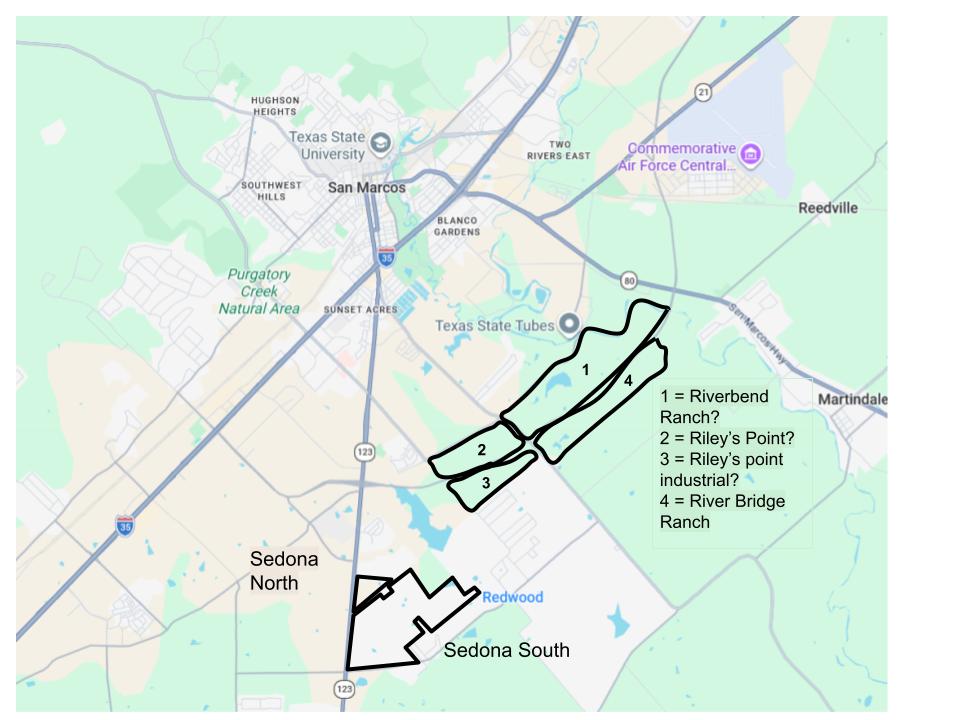
They all need plumbing that connects them to water. None of them will be on septic, so the developers are all arranging ways for wastewater plumbing to leave their house and take it to a wastewater treatment plant.
These costs are set. There’s no reducing it, because we already approved the sprawl.
…
Side bar: why do people hate sprawl?
In a nutshell:
- Cities lose money on suburban sprawl. Sprawl costs a city more money than the taxes paid by the people who live there.
- Sprawl is terrible for communities and your health. You can’t walk or bike anywhere, you can’t access public transportation, and there’s no commerce nearby. So you’re forced to drive everywhere.
- Environmental impact: there’s a lot of wasted habitats and lost drinking water when you convert undeveloped greenspace to big green lawns. There’s a lot of carbon emissions from the extra driving.
Gentle density – think 1940s mainstreet, not New York City – solves a lot of problems.
- The city brings in enough tax money from each block to cover the costs of infrastructure.
- Cars are really expensive to own – about $11K per year. But you can’t have functional public transportation until people are living more closely together. Shops, schools, and jobs are easier to walk or bike to. Etc. Gentle density allows people to get by without owning a car.
- Saving greenspace and wildlife habitats, and not pouring out our clean drinking water to water people’s lawns, etc. Win-win.
Sprawl is bad! Gentle density is good. Go tell it on the mountain.
….
But the developments are coming. Who should pay for the infrastructure?
So who is going to pay to run drinking water out to all these houses, and run their wastewater over to a treatment plant?
There are two sources of money:
- Raise rates on everyone’s water and wastewater bill. Everyone in the city pays a little bit, and the infrastructure gets built.
- Charge the developers an impact fee, which covers the cost of the new infrastructure. This raises the cost of the houses in those developments.
Which is more fair?
They both seem unfair!
- Raising everyone’s rates seems unfair, because the regular residents didn’t ask for ridiculous faraway sprawl.
- Putting it all on the home buyers who buy new homes also seems unfair – we know the population is growing. It’s much harder for millenials to afford a home than it was for boomers. Communities should support younger generations.
Fortunately, you can do a little of each.
The real answer is:
- Charge big impact fees for sprawl that doesn’t serve the next generation
- Split the cost with rate payers to cover the costs of infill, affordable housing, and environmental housing that make San Marcos better for everyone.
Let’s dive in and see what we decided.
…
Today’s topic: Should we raise water and wastewater impact fees?
First off, we already have impact fees. This isn’t a brand new idea. We last updated them in 2018.
Here’s the 2018 rates and what’s being proposed for 2026:
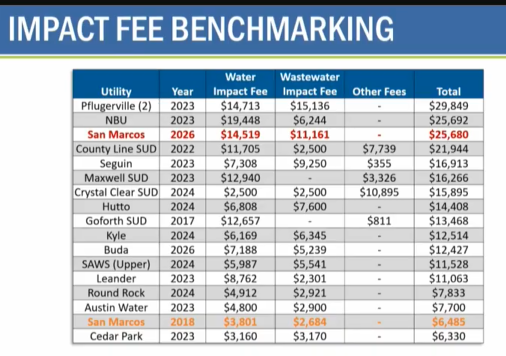
(The resolution is crappy because these weren’t in the packet. I had to screenshot them from the video.)
Let me point out a few things:
- These are the fees on a typical house. It would scale up for an apartment or a large business, etc, according to how much water you use.
- Going from $6,485 to $25,680 is a huge jump!
- It puts us right in the middle of all these other towns that have increased their fees since the post-covid inflation price spike
This is why it’s better to do smaller rate hikes more frequently – less sticker shock.
What does this chart mean in terms of the two sources of money?
If we adopt the proposed fees, what’s the split between rate-payers and people buying new homes? Is it 50-50? Is it 60-30? What’s the split?
Answer: the rate chart above puts 100% of the new infrastructure costs on developers and people who buy new homes.
…
What does the public say during public comment?
It’s mostly developers and real estate folks:
- Don’t charge the same fee for infill as for sprawl! [Note: I totally agree]
- Can the city double-check it’s math? Are you sure you’re going to build that much infrastructure in ten years
[Answer: yes, they are] - This will have a major impact on new-build home prices. They’ll go up by $20K. [I think this is correct.]
…
What does council say?
Jane: when would these new rates kick in?
Answer: All homes that are platted by October 1st would get 2018 fees. Anything that gets platted after that would get charged the new rates.
Amanda: can we lower these impact fees for good kinds of development? Infill, green development, affordable housing, etc?
Answer: Yes. The best way to do that is through credits and rebates. You’d set these rates now as the upper bound for bad sprawl, and then create incentives.
Informal poll: who wants a future discussion of credits/rebates for good development? (ie affordable housing, environmental sustainability, and infill housing)
Yes: Alyssa, Amanda, Jane, Lorenzo, Josh
No: Shane, Matthew
(Shane and Matthew are so weird. “Hell no! We hate affordable housing, environmental sustainability, and infill!” Ok punks.)
Anyway: great. Credits/rebates for good development will come back in a future meeting.
Josh addresses the developers who showed up for the public comment.
Josh: Hey developers, what would help you all with these impact fees?
Kissing Tree Developer: There’s a number of things you could do:
- Divide the city into districts, and charge Kissing Tree less than you charge developers east side of I35
- At Kissing Tree, we purchase reclaimed water. You could give us a rebate for that.
- You could roll this out slowly, let us get more building in under the old rates.
- You could double-check your math and really make sure you’re going to build this much infrastructure.
City staff:
- The costs are the costs. This was audited by an independent 3rd party. If you take the heat off developers, you are passing it on to everyone else.
- Our treatment facilities take pressure off each other. We’re not big enough to justify districts.
- Giving rebates for reclaimed water is exactly the kind of thing that Council can do.
Matthew: I’m a no. These costs are too high! I’m thinking of my friends without college educations. This isn’t family-friendly!
Jane: So you want rate-payers to pay?
Matthew: That’s the hard part. But we need to listen to developers – their livelihoods depend on it!
The vote: should we adopt the fees in the chart?
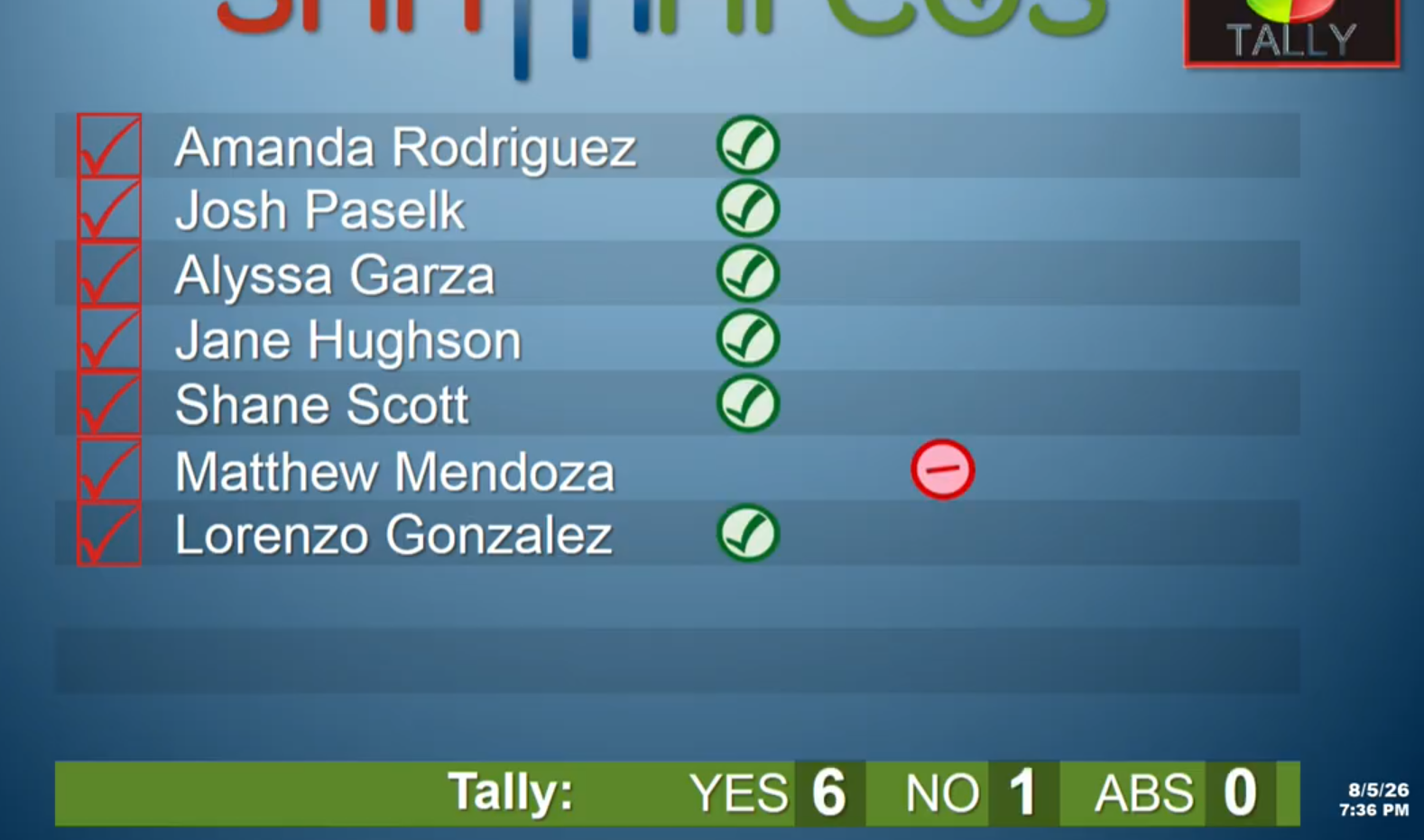
So there you have it.
Note: Like I said, these rates put the infrastructure costs 100% on developers and people who buy new homes. We are trusting Council to bring this back and offer credits/rebates for good development.
(Good development = affordable housing, environmentally sustainable, and infill.)
…
That’s basically the whole meeting! There’s some formalities around Whisper and Trace developments, and some committee appointments, and allocating money for airport construction. But basically it was a very short meeting.