Bonus! 3 pm workshops, 9/6/26

Two workshops this week:

  • CIP Projects for 2027 and
  • The next draft of the River Parks and Quail Creek Park plans.

Let’s go!

Workshop 1: CIP Projects

CIP stands for “Capital Improvement Projects”.
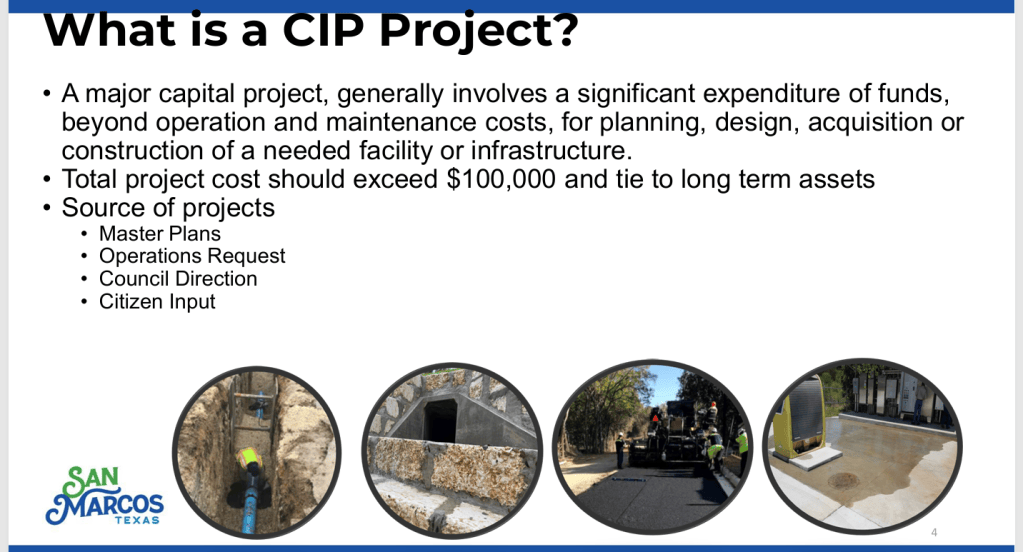
These are the major construction projects that need planning over 5-15 years.
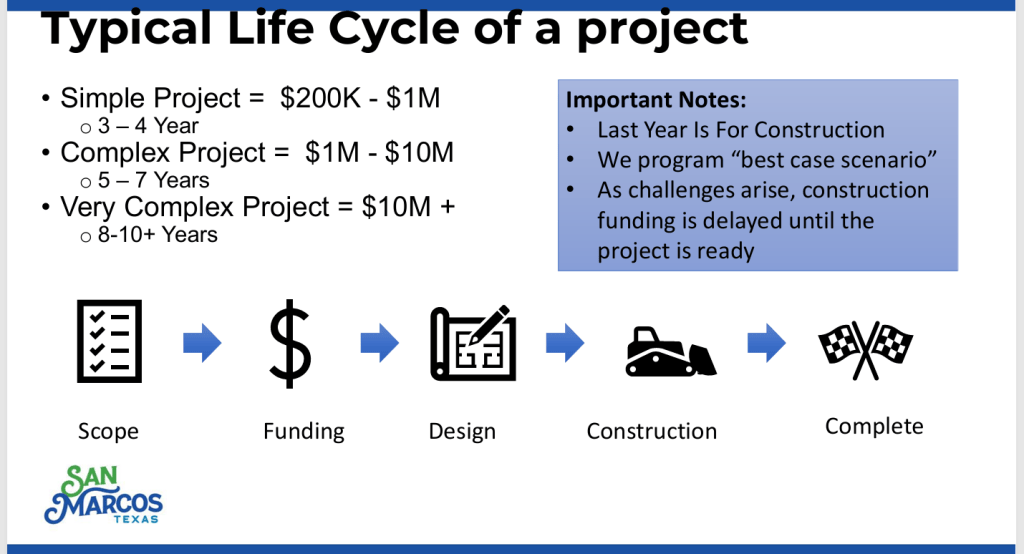
These are SLOW. These are the projects where everyone asks, “Why does it take so long?!”

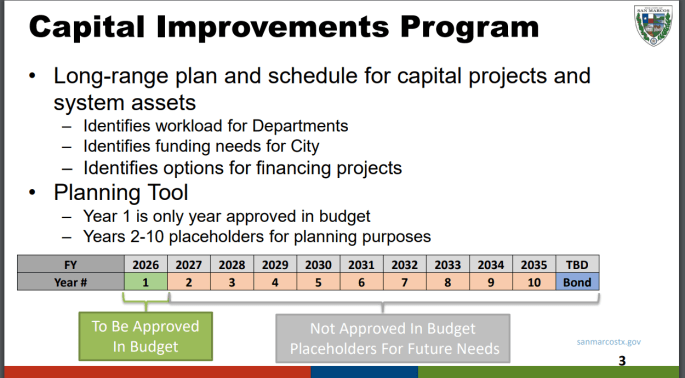
They get planned 10-20 years out, but the funding comes one year at at time.
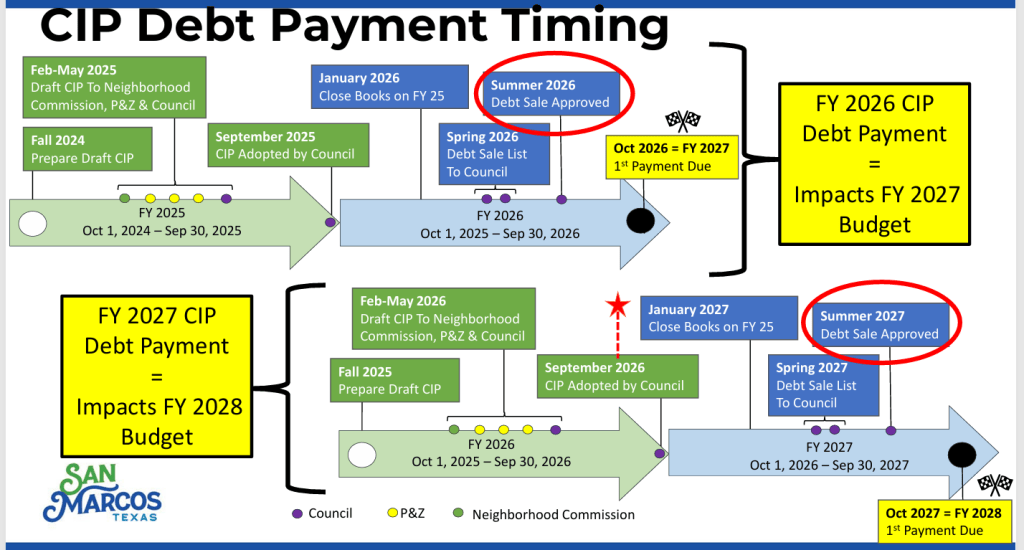
So in September, 2026, we are approving the projects that we’ll work on during 2027, and we’ll start paying the debt on this starting next fall.

Here’s some of our biggest projects right now:
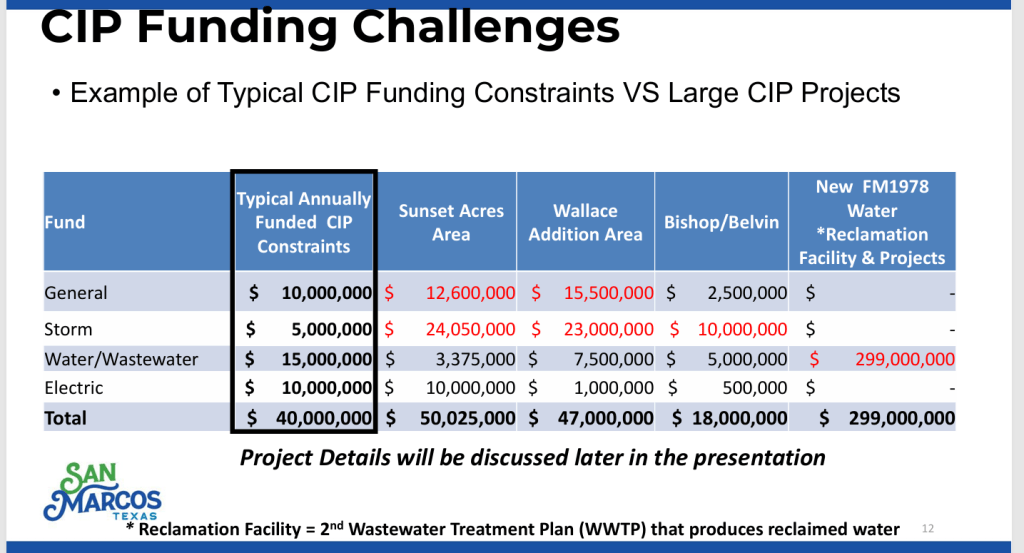
They are constantly trying to figure out how to fund these projects:

  • Sunset acres stormwater
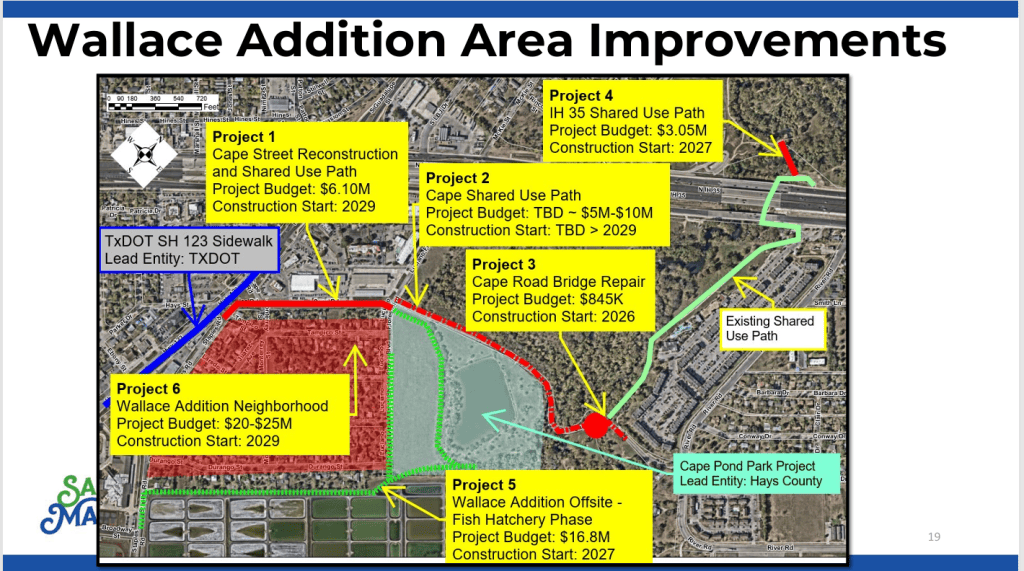
  • Wallace Addition stormwater
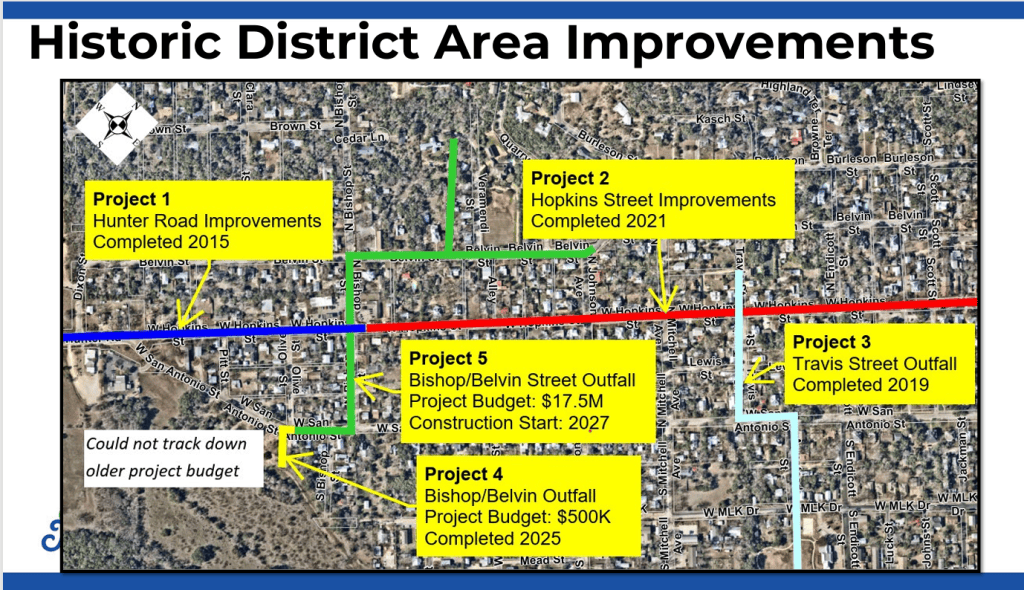
  • Bishop/Belvin
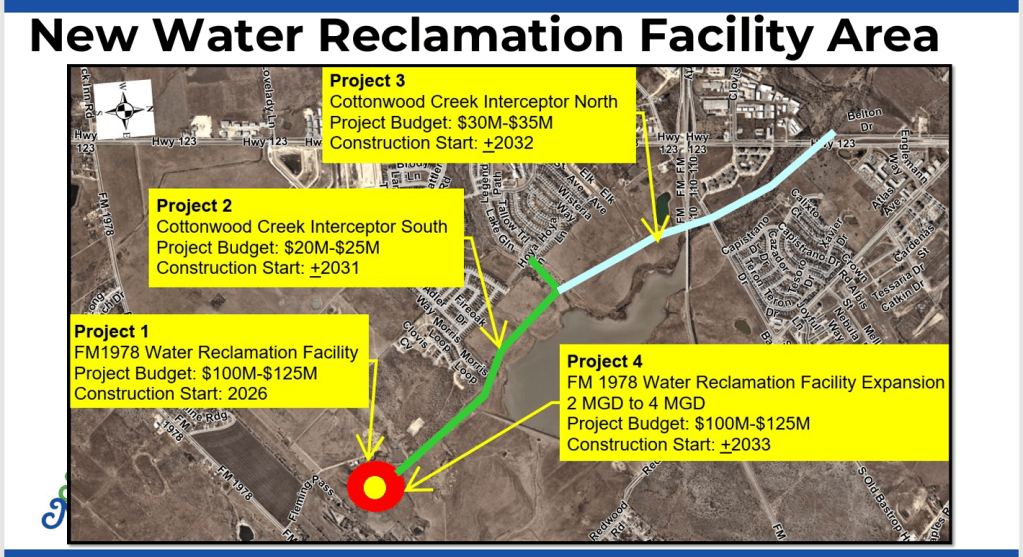
  • The new water reclamation facility by Redwood

Also construction costs have roughly tripled since 2018. In 2018, a $33 piece of PVC pipe might cost $100 now. If something has been planned for a decade, this is going to mess up your plans.

….

We can – and do – apply for grant funding:
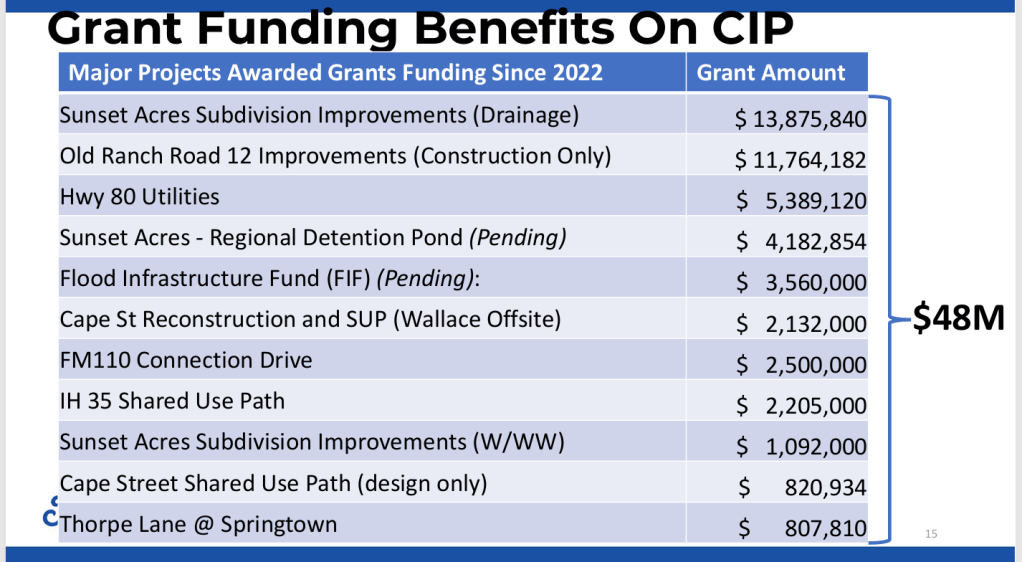
Grants help a LOT with the costs.

However, grants slow down construction. You might get awarded $5 million, and told that it will be available in 2029. So this is the tradeoff – cheaper for tax payers, but slower for people who need the project completed.

Just for funsies, have we been doing a lot of these projects?
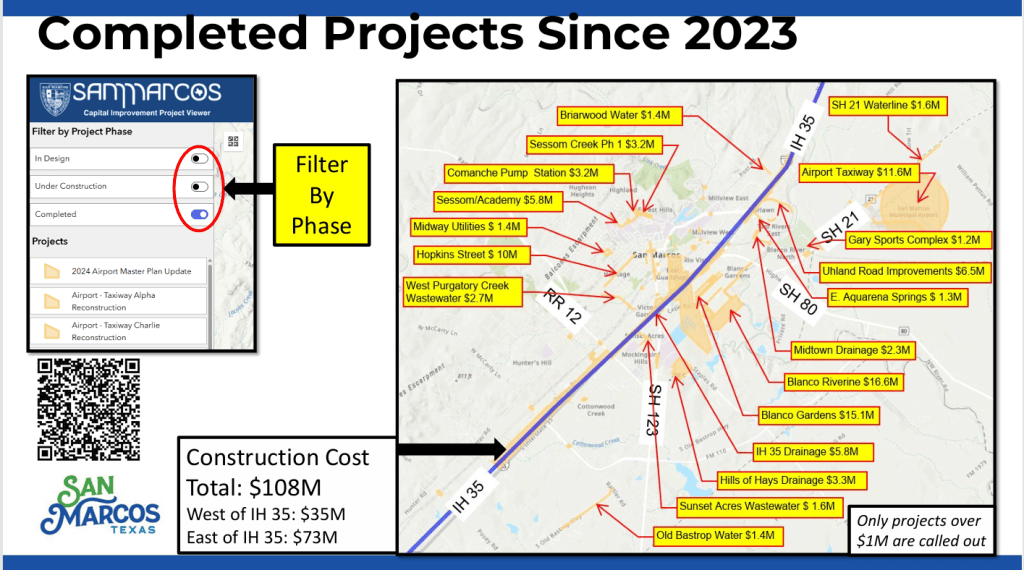
Yessir! These are just the big projects from the past 3 years.

They stop to focus on those four big projects in a little more detail:
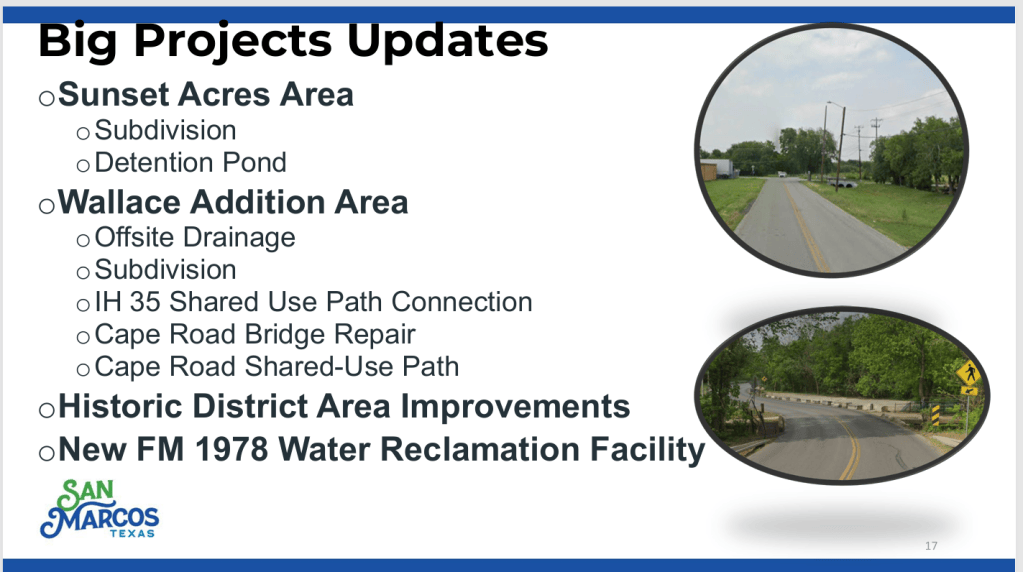
Each of these is phased in over time:
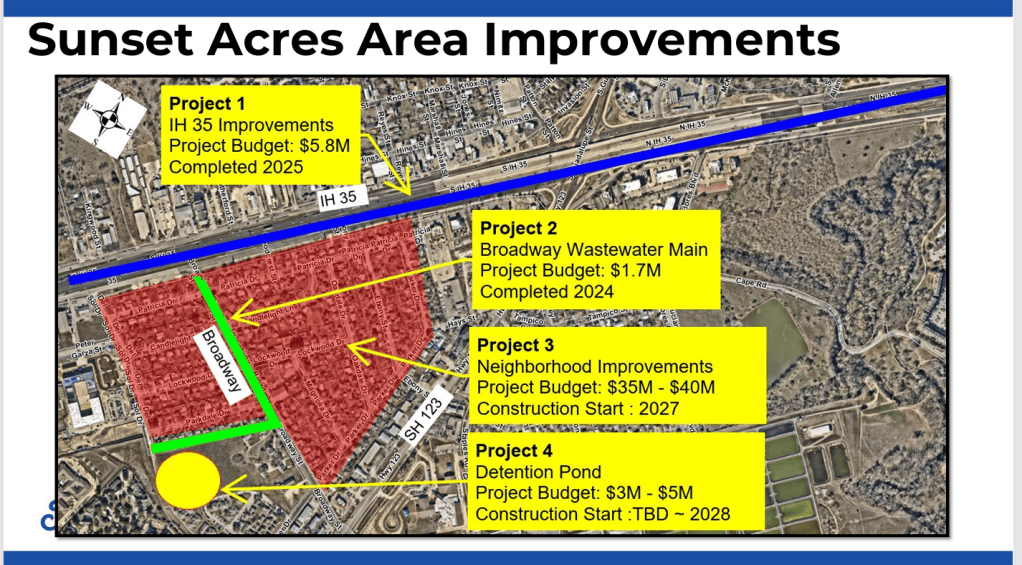
Sunset Acres has had awful flooding for years and years.

Wallace Addition:
Historic District is mostly done:
This is to deal with all the sprawl we were talking about, and why we need impact fees.
great.

What does Council say?

Amanda: Highway 123 is super dangerous, especially to pedestrians. What can we do?

Answer: It’s hard because it’s a highway. We have to work with TxDOT. We meet quarterly and tell them our concerns. Eventually we want to put in sidewalks and put in a median. We’re having trouble with TxDOT because they’re so focused on I35.

Everyone is happy with all the grant funding, although the tradeoff is that it slows things down.

….

Workshop 2: River Parks and Quail Creek Park

We’ve discussed these parks before, back in July. If we were to overhaul these parks, what would we want to do?

City staff has met with more community members and implemented Council opinions, and come back with the next draft.

First up is the parks along the river, in the center of town.
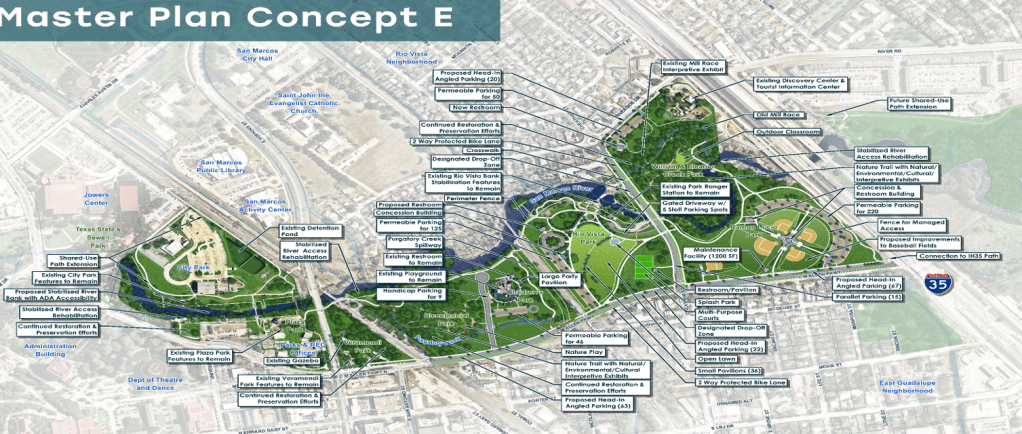
Starting at the Children’s Park:
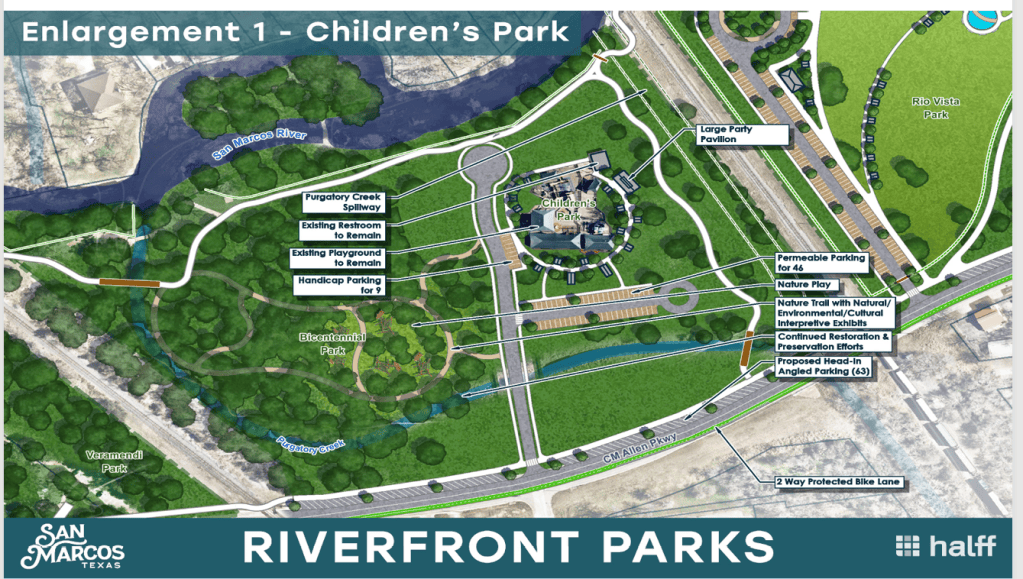
The Children’s Park playscape would stay put. They’d change the parking lots all around, and add a bunch of spaces.

Over by the dirt bike trails in the woods, they’d add some “natural play”, which I think means this kind of thing:
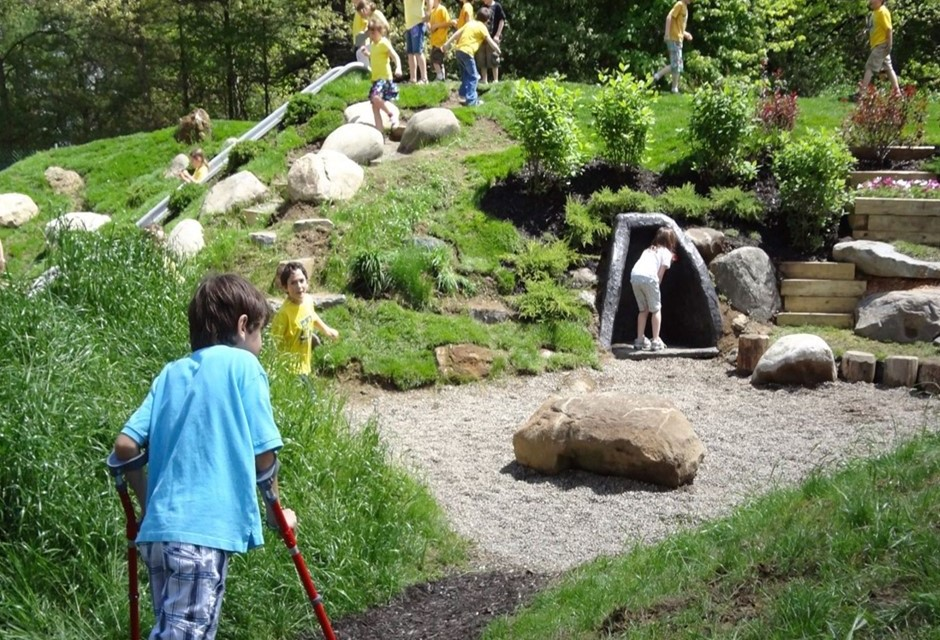
via

Council talks about adding game tables? And connecting some of the paths to the parking lot, for accessibility?
Answer: No problem!

Amanda: What about volleyball courts?
Answer: Maybe! We’ll price them out.

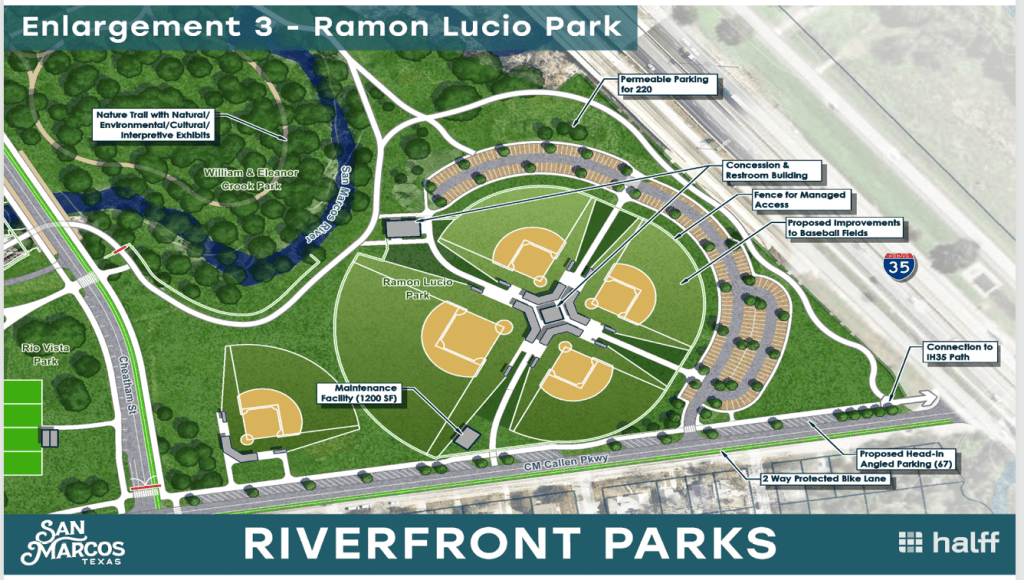
Moving on to Rio Vista park:
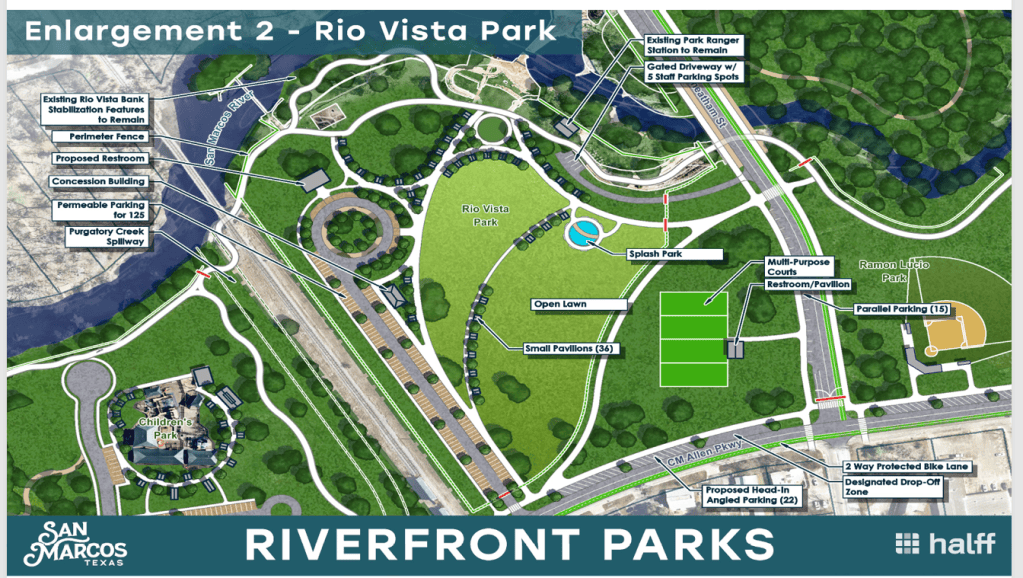
They’d add a concession stand. They’d get rid of the pool, but keep the splash pad. The pool would go way out east, to Quail Creek park.

Everyone hates this idea!

Amanda: Keep the pool.

Jane: We should keep the fun pool centrally located. Don’t put it out at Quail Creek.

What should we do with the pool?

Jane is right: move the pool, but keep it central.

The current location is a terrible location for the pool! Nobody swims in both the river and the pool in the same visit. The current location is competing with the river, instead of complementing it. But it should stay in the center of the city!

Here’s where it should go:

  • If City Hall ends up moving, move the pool to the current City Hall location.
  • If City Hall stays put, move the pool next to the dog park and skate park, across from City Hall.

Both of these places have plenty of parking, are big and central, and the pool would be very heavily used.
Other stray comments:

Amanda: Can we add more water refill stations? And trees?
Answer: Yes!

Amanda: What about cool concrete, to reduce the heat island effect in the parking lots?
Answer: Maybe!

Onto Quail Creek Park, which is way out east:
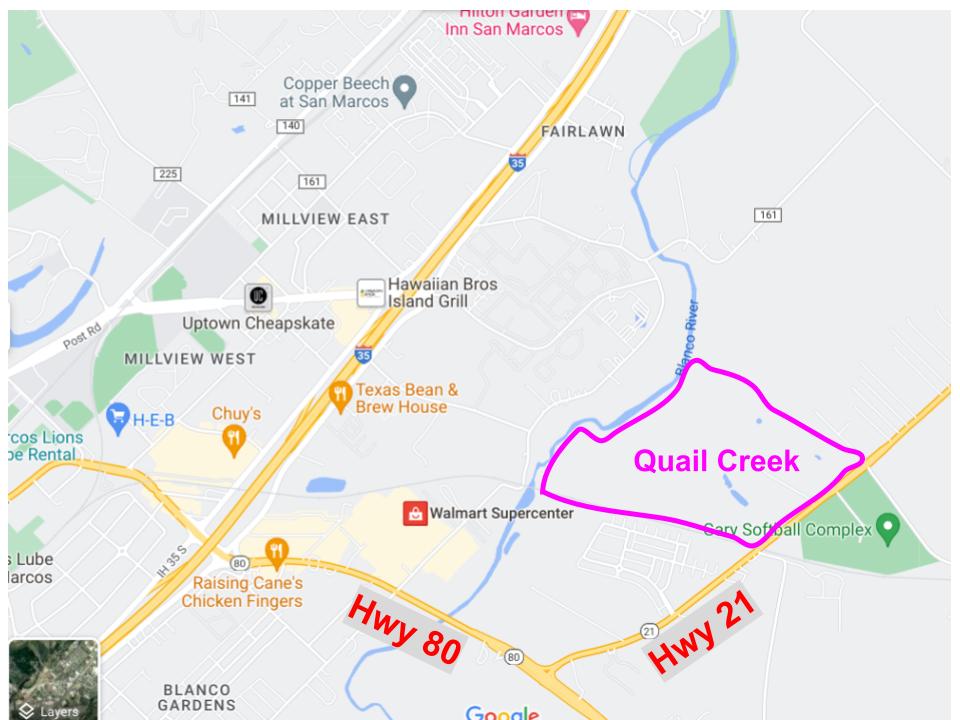
It used to be a golf course.
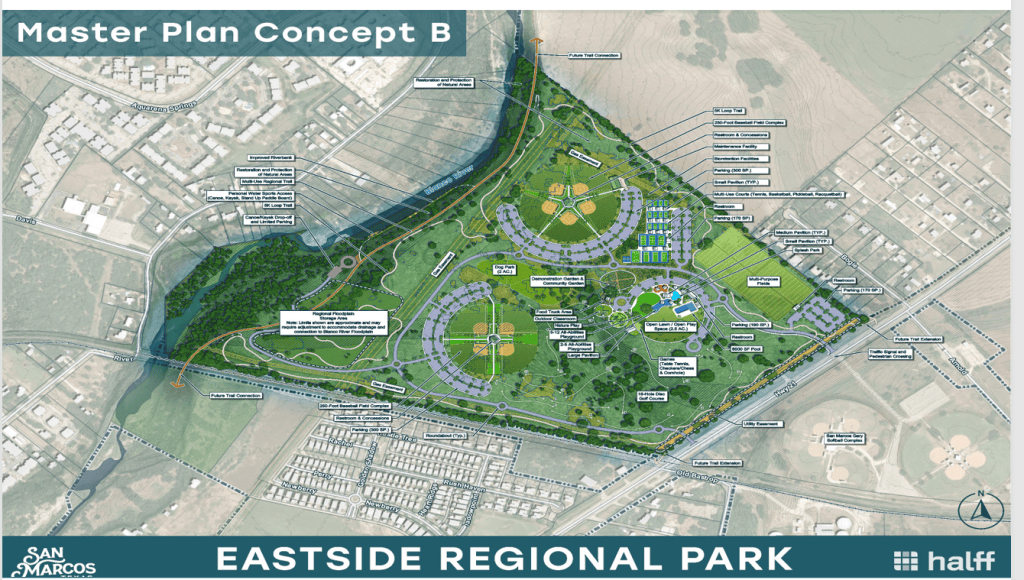
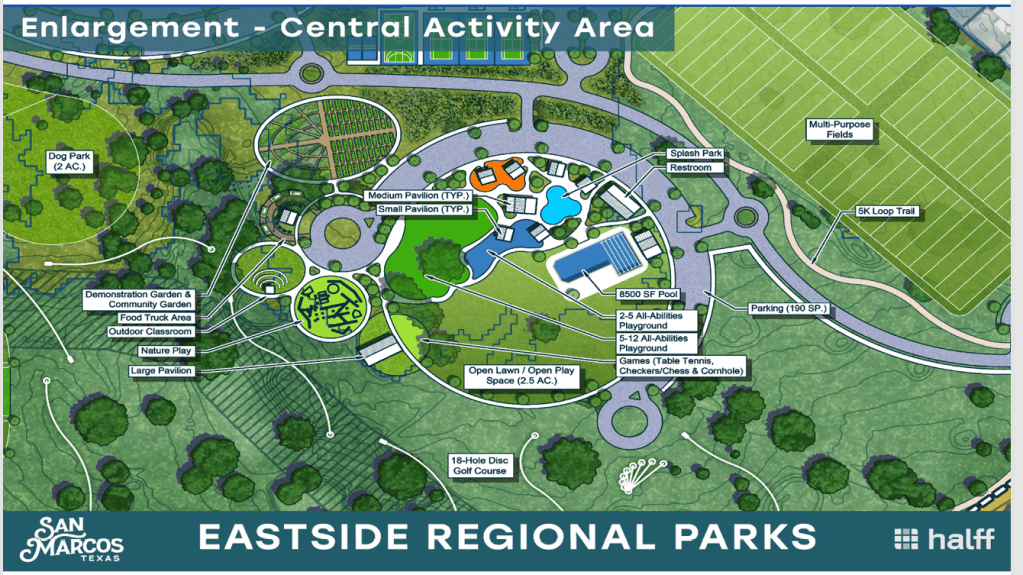
It wouldn’t have a pool anymore, since we’re keeping a pool in town. But it would have a splash pad. (Maybe someday we’d add in a pool there, too.)
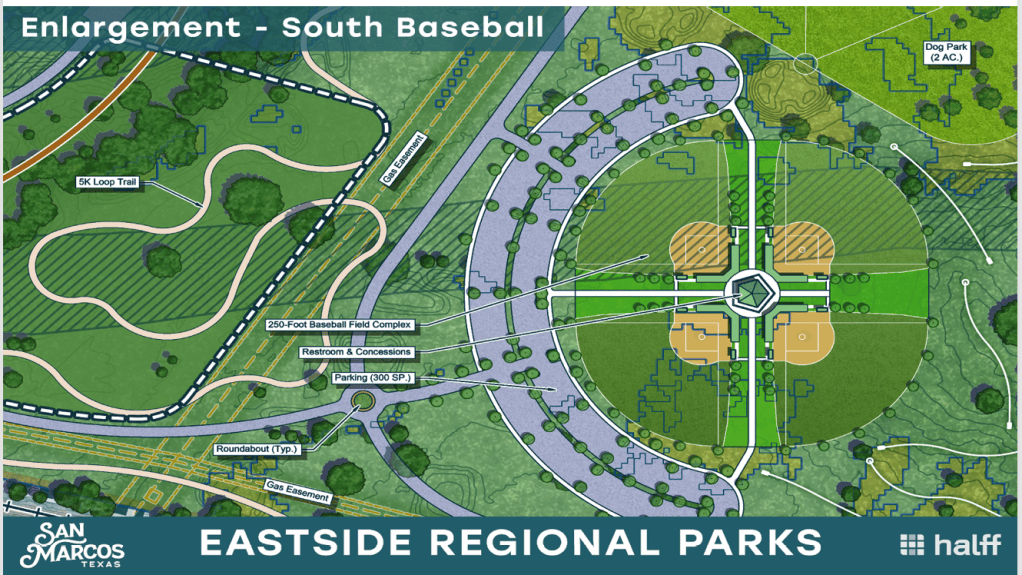
They also discuss moving the baseball fields and parking lots further away from residential areas.
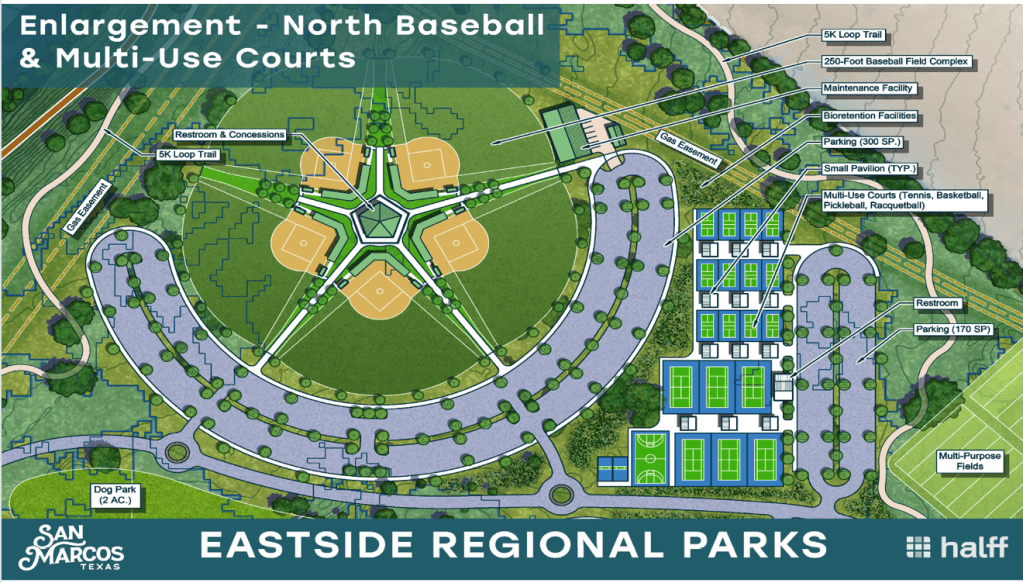
Virginia Parker, the director of SMRF, requested that we keep baseball fields out of the flood retention zone, and put grass fields there, instead.
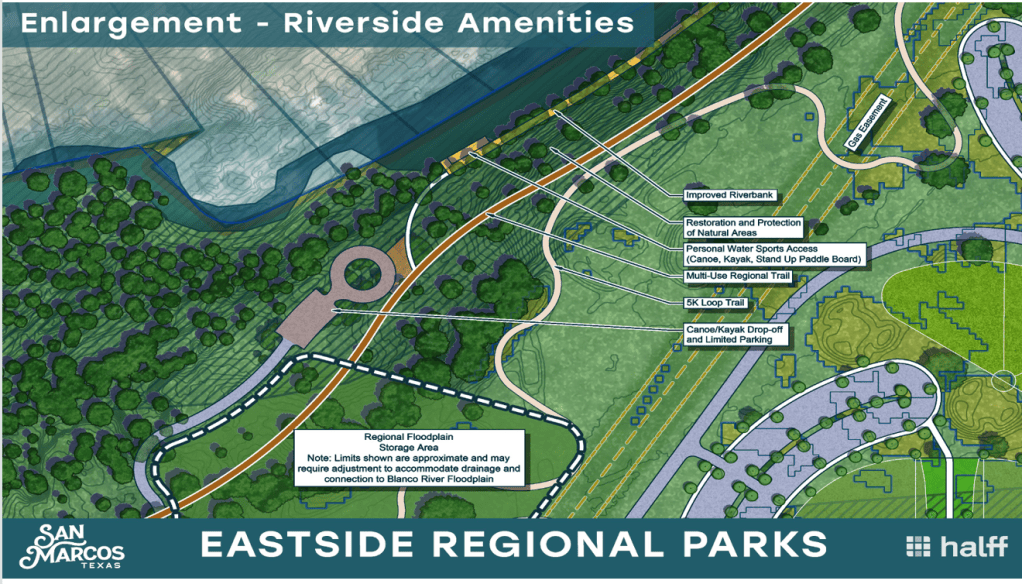
There will be river access, though. Apparently the Blanco does have water here, as opposed to how it’s underground at Five Mile Dam.

Here you could swim in it:
All of this is a fantastic, amazing plan, with no funding! None of this will happen soon.

Eventually, we’ll probably need a bond election. If it passes and this all gets funding, it will slowly get built, in phases.
Bonus! 3 pm workshops, 6/3/25

Workshop 1: CIP List

CIP stands for Capital Improvement Plan. These are all the big city projects – like, more than $100K – where you have to cover them with a bond and they span multiple years.

There’s basically a fuzzy 10 year plan, a better 5 year plan, a focused 3 year plan, and then an actual budget for the next year.

There are quick easy projects, long difficult projects, and some that are mid:

Loosely speaking, these are the categories for the projects:

Look, here’s some nice photos of projects that have gone great!

woo-hoo!

Here’s some of the bigger upcoming projects:

The hard part is wading through the hundreds of projects, and figuring out what you think about them. That’s what Council has to do.

So what does Council think about them? Not much! They’re eager to get to Workshop #2.

Workshop #2: SMPD Vehicles

How do police vehicles work when officers are off-duty? How much wear-and-tear gets put on them? What about when the officer picks up a second job?

Basically, we’ve been letting officers take their vehicles home since 1983:

What’s the benefit of letting police officers take their vehicles home?

I found the slides confusing, so I’m just going to summarize Chief Standridge’s arguments:

1. “If it ain’t broke, don’t fix it!” We’ve had a drop in crime since Covid, so don’t meddle with things that work.

2. 79 of SMPD employees are on-call sometimes, so it makes sense for them to have a vehicle at home. Otherwise they’d have to re-route to the station, check out a car, and go from there, which is a big delay.

Officers are supposed to keep their radios on, when they’re driving to or from work. He gives a lot of examples of cops that respond to calls nearby, when they happen to be commuting home.

3. Financial considerations:

a. If we tried to park all the vehicles in our lot, we’d run out of parking lot space at the station.

b. If we had cars in use 24 hours a day, we’d have to replace them every 3 years, instead of every 5 years, because they’d wear out more quickly. (This is kind of silly. The force is driving the same number of hours either way. Replace one car after 3 years, or replace two cars every 6 years – you aren’t changing anything.)

c. This slide:

I’ll definitely give the Chief this point. Having vehicles spread out over town is good when the station gets flooded in, which happens semi-frequently.

4. So much time would be wasted checking vehicles in and out. It would take an officer 30 minutes to do a check-out vehicle inspection, and then 30 minutes to do another check-in vehicle inspection at the end! That extra hour would add up to $25,000 in hourly pay per year.

(This one also seemed silly. Maybe check with the Parks Department or Maintenance Department, and see how they manage to make it work.)

5. Officers are a little kinder to the vehicle if they know they’re stuck with it for five years, instead of getting rid of it after each shift.

This one is easy to believe.

Chief Standridge never answers the main question: Is this cost-neutral? On the whole, if you compare a take-home fleet vs an on-site fleet, how does the total cost compare?

Here’s what I personally care about: Is this policy similar to the kind of frugality we expect from other departments? Are we keeping SMPD as lean as we keep Parks & Rec, or the library, or maintenance, or anyone else?

We never really got an answer to that, either.

….

Part 2, same workshop: SMPD Vehicles being used when cops have second jobs.

This is what Council cares about more. How much wear-and-tear is getting put on the vehicles when officers go on second jobs? Like SMCISD hires them to work a basketball game, or Amazon hires them to direct traffic? What about the wear and tear on the cars that occurs then?

This is pretty common:

The problem is the jobs that need the cop to keep his vehicle on and idling. For example, you get hired to direct traffic at Amazon. That ages a vehicle, and means that SMPD has to replace the car sooner.

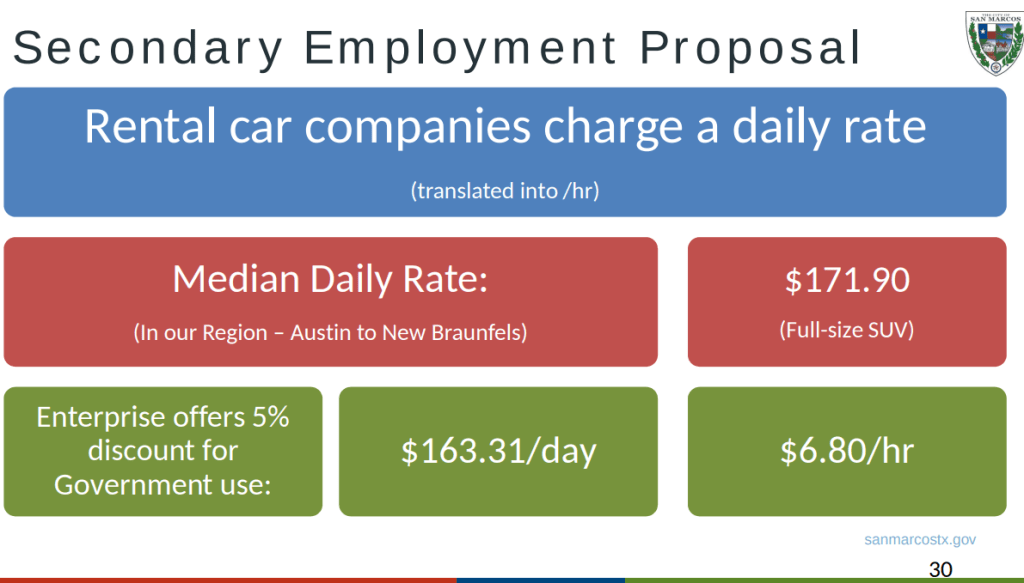
So they’re going to charge officers a little rental fee:

They figured that a rental car company would charge them $163 for 24 hours, so that works out to $6.80 per hour.

Here’s what we’re going to do:

Council is fine with this. They’re going to draw up a formal policy and go from there.

My two cents: Two hours of discussion was way too much for this topic. I lost interest in the finer details of which officer stops for an iced tea on the way to HEB or whatever.

Workshop, 5/17/22

I did also listen to the 3 pm workshop, mostly on Capital Improvement Projects, or CIP projects. 

There are a group of five houses or so on San Antonio street, right where Bishop meets San Antonio, and they all flood regularly.  This has been going on for years and years.  Several people spoke and asked if their project could be accelerated.

The answer was “no, not really.” Basically the CIP list gives the wrong impression on timelines. It only tracks how much money will be dedicated to each project in each year.  But that is not the actual timeline of the project, because the design phase doesn’t need a big allotment of money. What that means is that the project is already in progress, even though it doesn’t look like it has started yet according to CIP funding. When it’s time to spend money, the money will appear as scheduled. However, the projects can’t be sped up, because they’re already in motion and each step holds up the next step.

To me, this means something deeper: City Council and P&Z are being asked to put their input into a document that has very little flexibility.  Therefore their input is coming at the wrong stage. If the city staff were systematically biased in favor of certain parts of the city, that would not be visible from the CIP list, because we have no way of knowing which projects aren’t ever rising into the conversation about potential future projects. 

The answer has to be something about a supervised process to determine which projects are rising to attention in the first place, with attention to making it equitable. That’s the part that needs public scrutiny.