
Workshop #1: The Homeless PIT count
“PIT” stands for “Point in Time”. The PIT Count is a fixed day in January, where cities nationwide try to actually figure how many people are homeless in their communities. Each city assembles a team of people who go out into the community and try to actually count and talk to as many homeless people as they can find on that day. (PIT count 2024, PIT count 2025)
The rules are set by the Housing and Urban Development agency, (HUD). If you complete a PIT count, it helps you apply for federal funding.
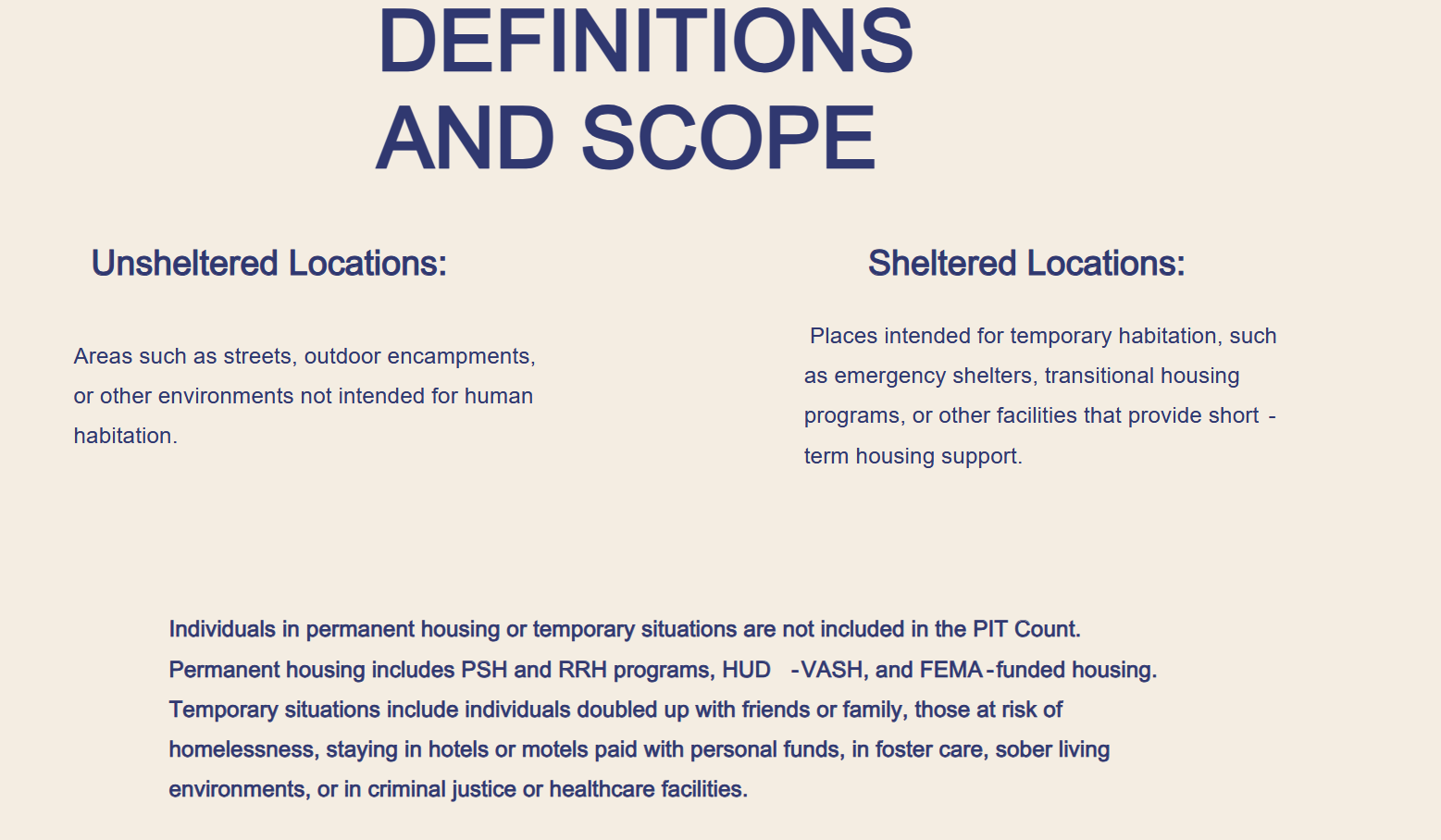
For unsheltered, think people in cars, and people outside.
For sheltered, think Hays County Women’s Shelter, Southside, Marla’s Place, but not people in hotels or motels.
The PIT count is not perfect. But it gives us useful information.
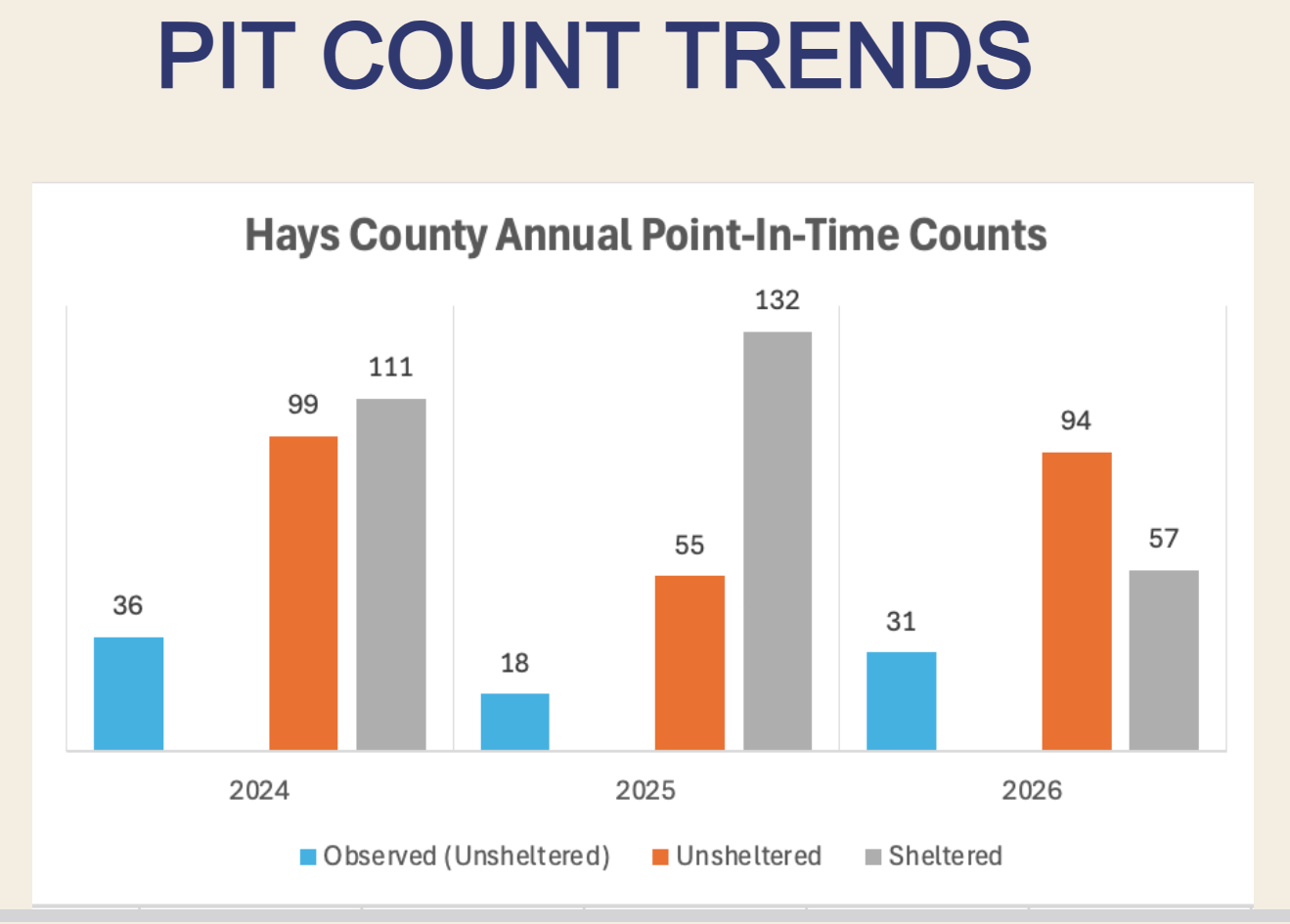
The blue column is people that they saw, but didn’t get to talk to. The blue is included in the orange group.
The gray column – Sheltered – is much smaller in 2026 than in 2025. This is because in 2025, the PIT count day ended up being a “cold weather night”, where Southside was open to everyone.
(I’m not sure why the chart has those weird gaps.)
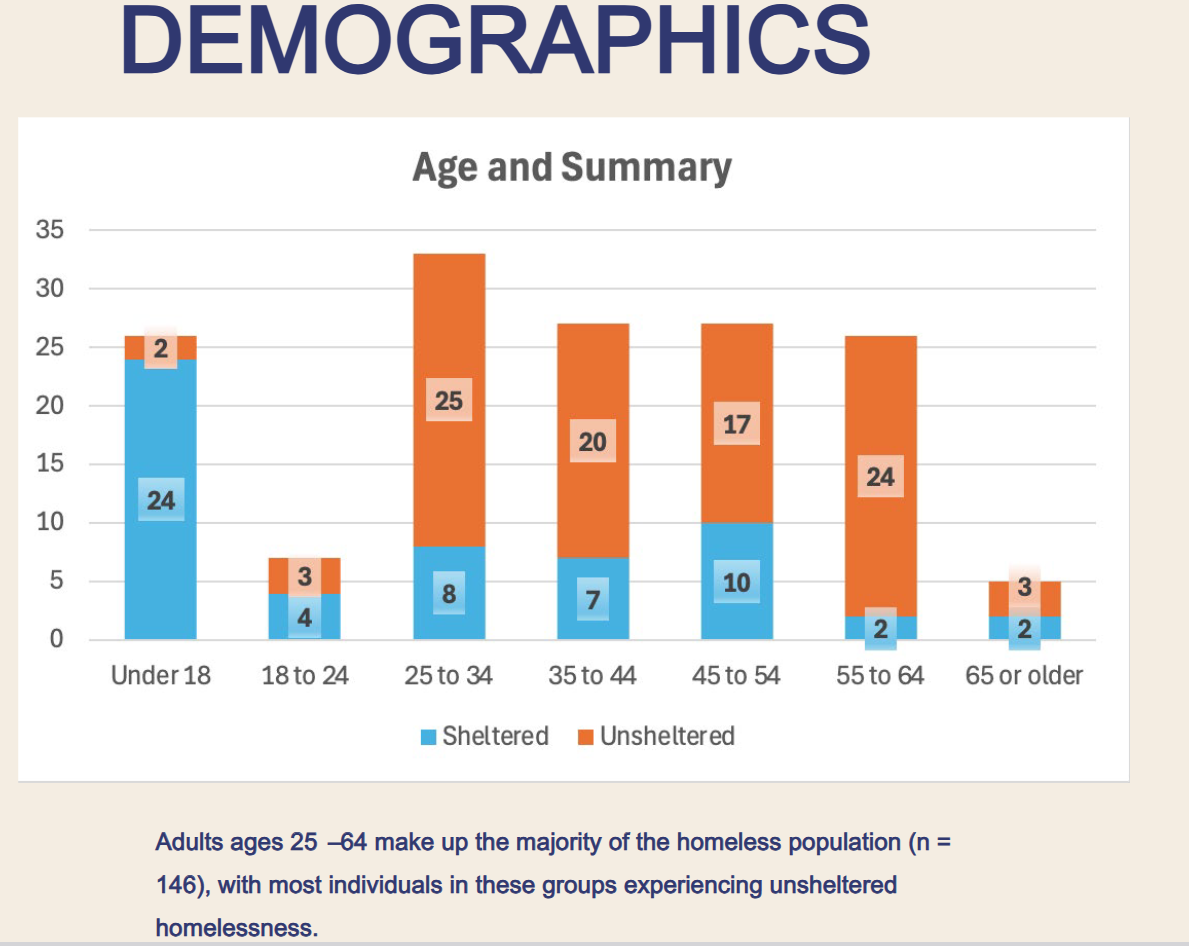
Ages of people they were able to talk to:
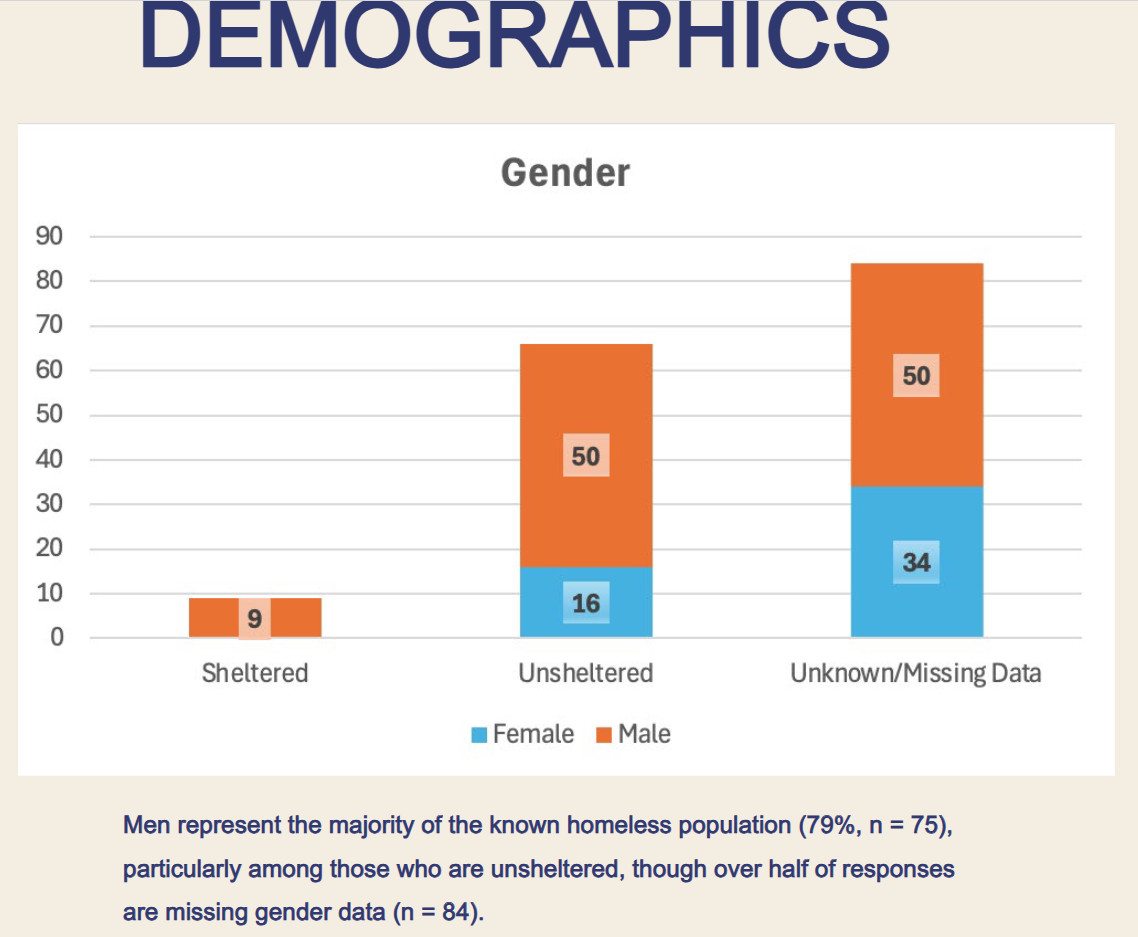
and gender:
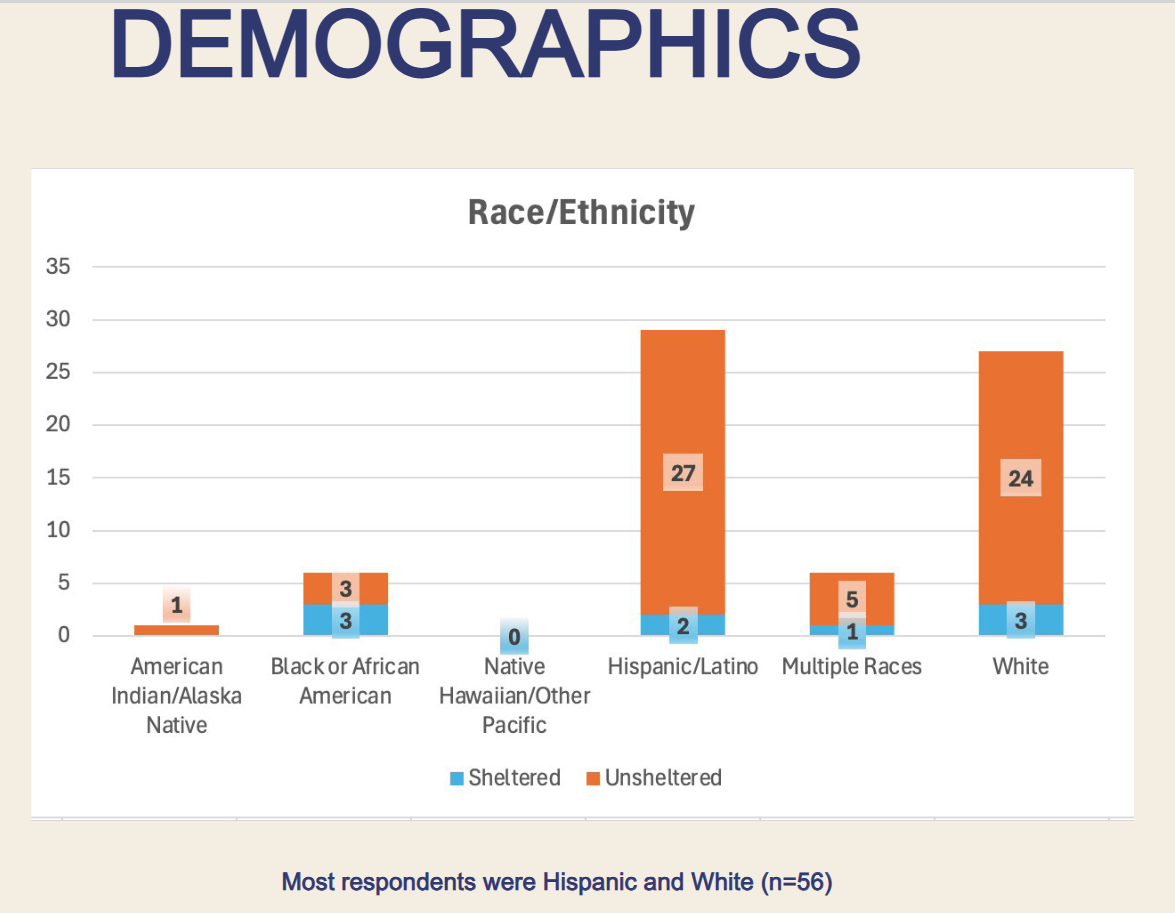
and race:
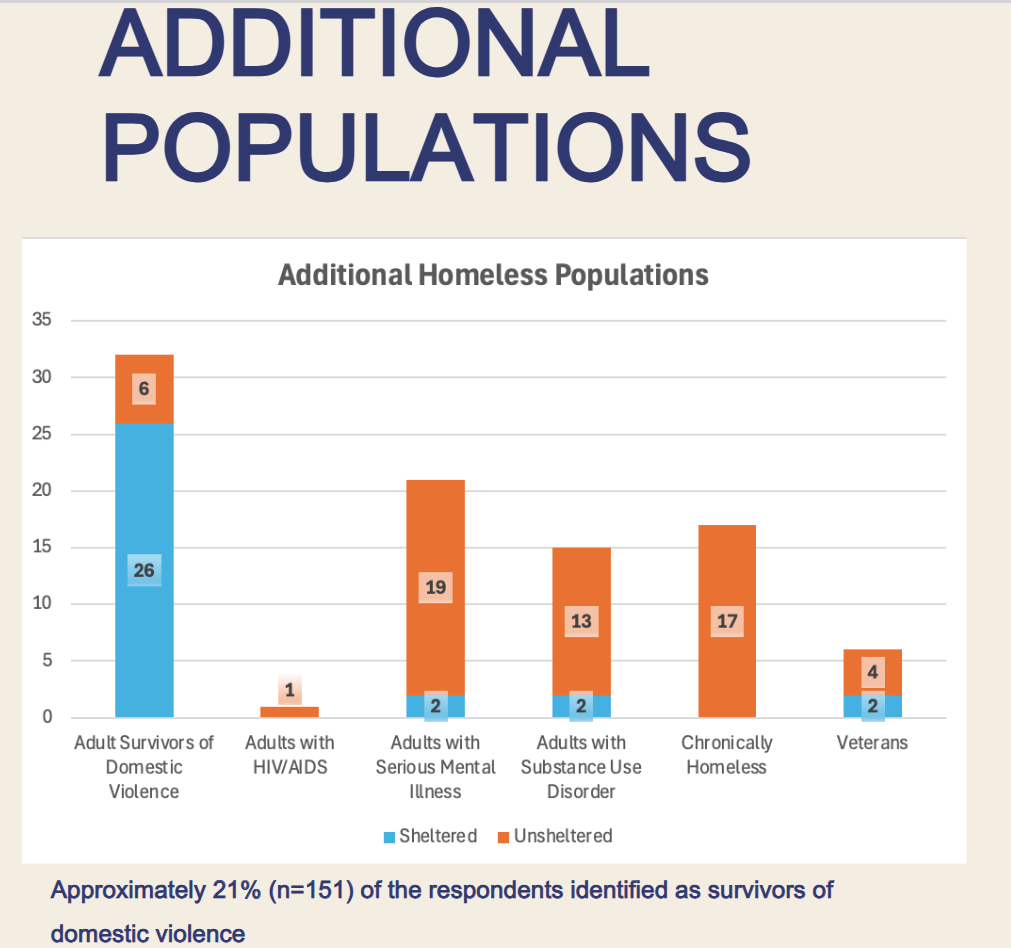
Generally homeless people have significant obstacles in their lives:
Almost all the homeless people in Hays County are in San Marcos:
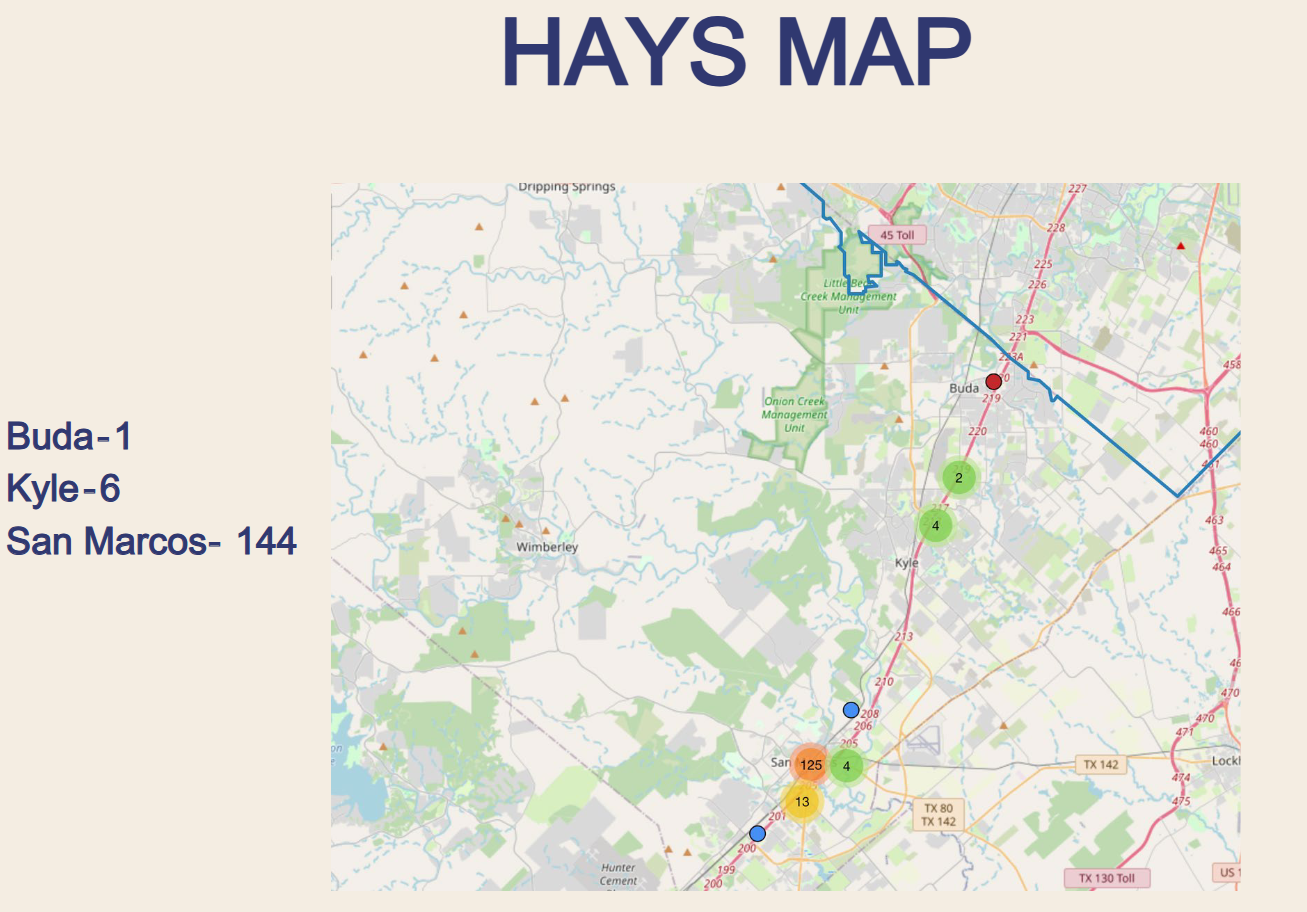
They drove out to Wimberley and Dripping Springs, but did not see any people there. In Wimberly, they saw evidence of encampments, but didn’t actually see any homeless people.
Here’s where we’ve landed over the past six years:
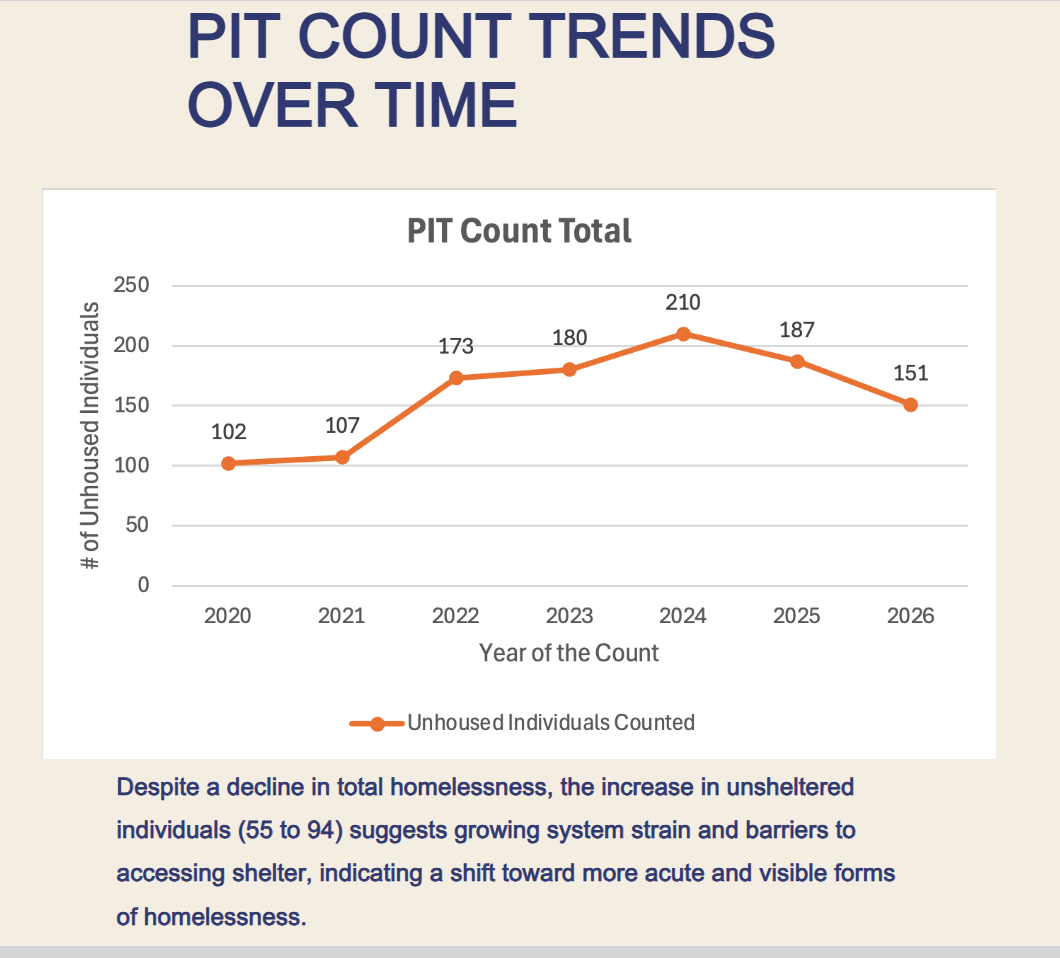
Again, PIT counts aren’t perfect. You have to be careful when you’re looking at data like this. You can’t conclude that we’re solving homelessness – it could be that people are hiding, because they’re worried about ICE.
One presenter says that whenever ICE rumors pop up on social media, the line at the Food Bank gets cut in half. (That is so deeply depressing on so many levels.)
…
We also have a second source for homeless data: the public schools.
All the school districts collect this data at the beginning of the school year:
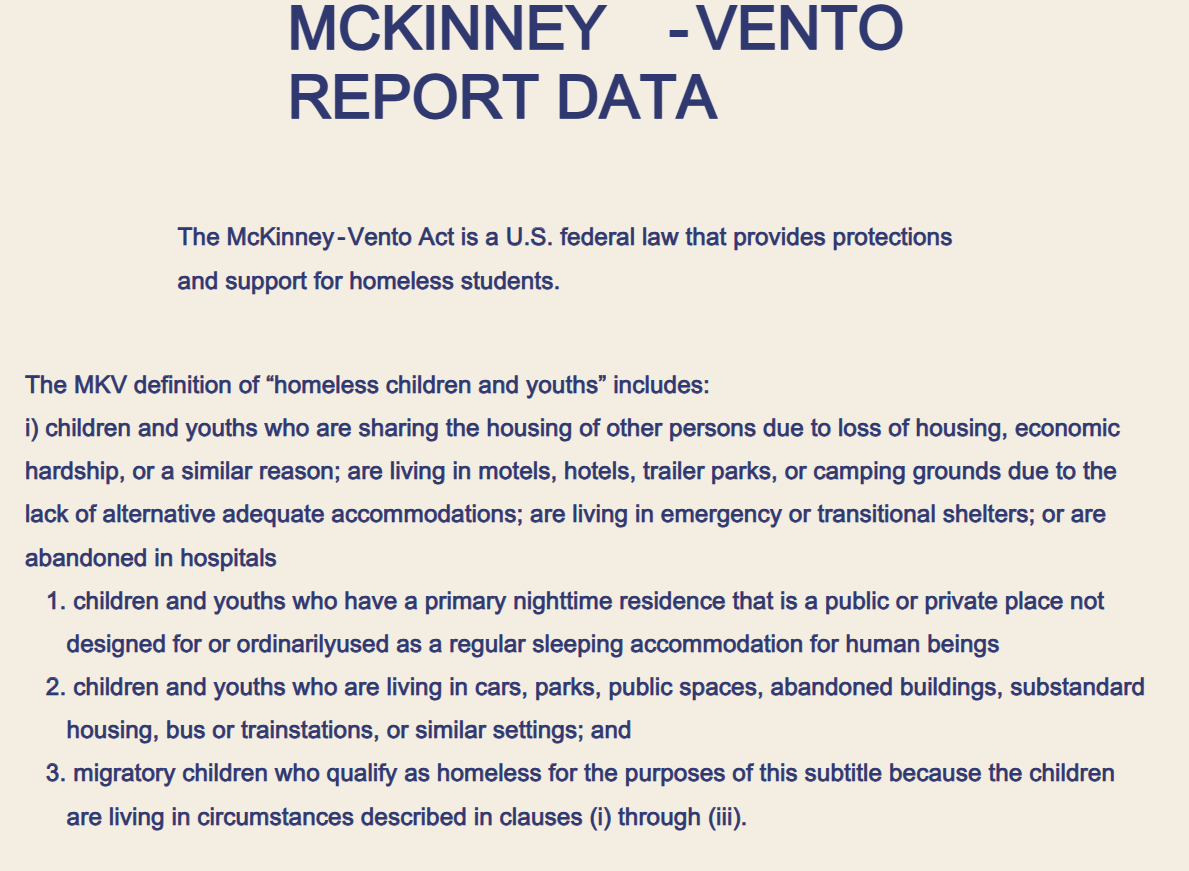
This year’s data:
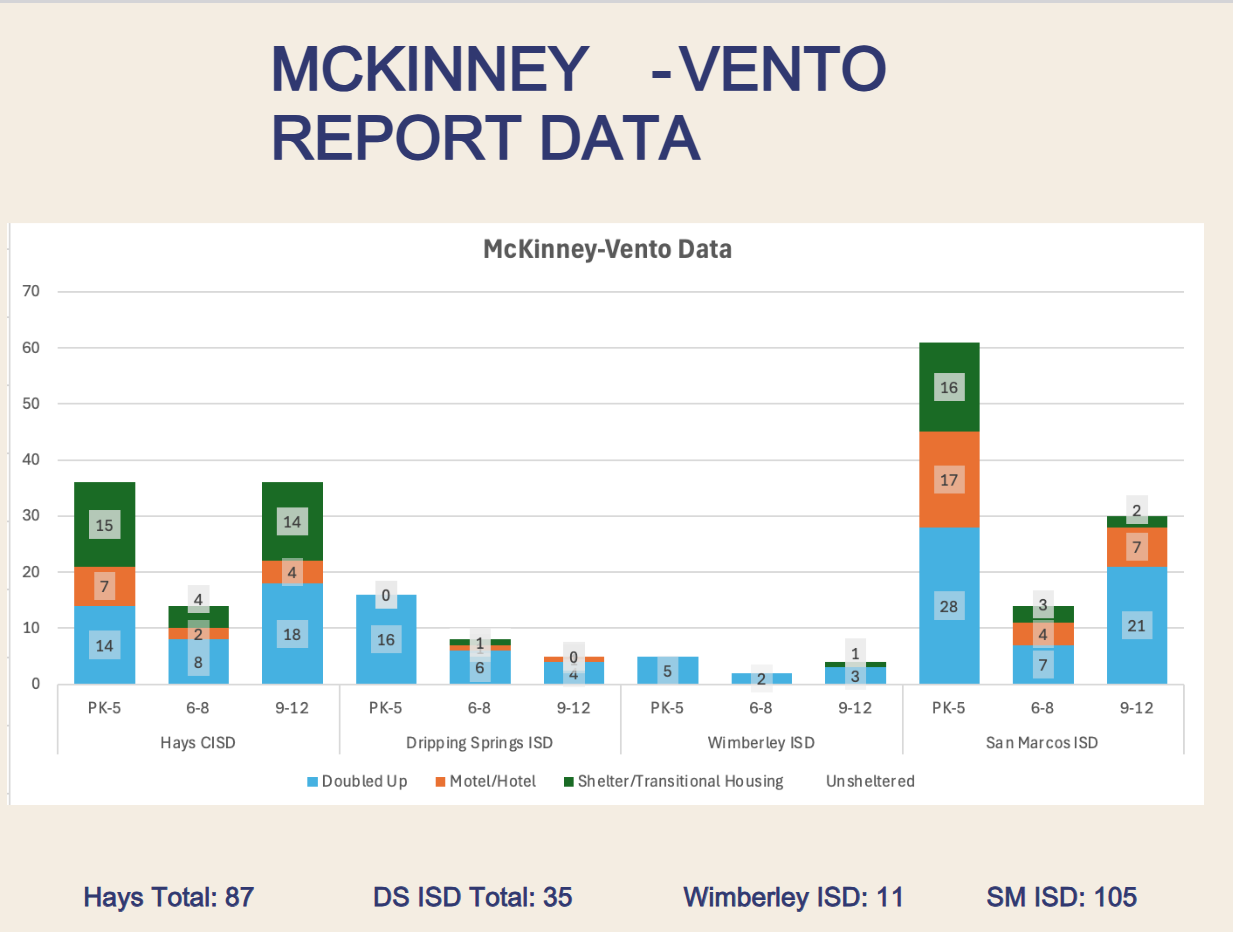
So SMCISD has an estimated 105 K-12 students who are housing insecure. This doesn’t include their parents or any baby siblings who aren’t yet in school.
One offhand comment by the presenter: Statistically, apparently babies are the age group most likely to be evicted, and children aged 2-5 are the next most likely to be evicted.
Pretty grim commentary on our society!
…
At last year’s presentation, they said there was an urgent need to include homeless people in emergency action plans. For example, if we have a winter storm, how do we keep homeless people safe? How do we prevent families from freezing in their cars?
This year: progress! Relevant groups have come together and are working on this.
This year’s ask: the Homeless Management Information System. (HMIS)
It’s extremely difficult for case managers to keep track of details of homeless people. Which doctors has this person seen? What medications are they on? Do we need to locate their birth certificate or social security card? Etc.
HMIS is the system run by the Texas Homeless Network, so that everyone can pool their data and coordinate care. It costs $450 per user.
Can San Marcos help pay for this?
Answer: You bet! We’re planning on putting $9000 towards this at the May Homeless Coalition meeting.
…
Workshop #2: Homeless Action Plan
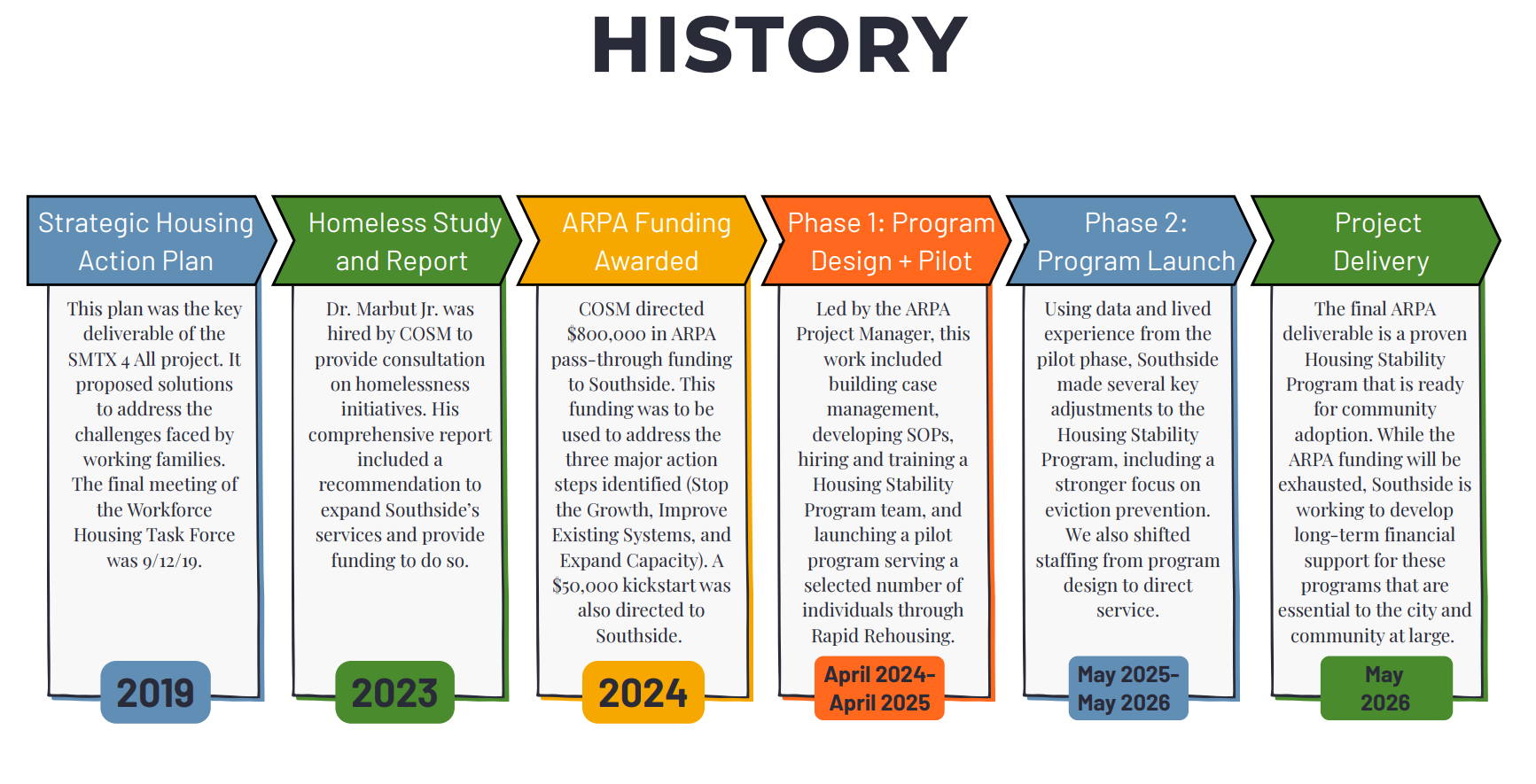
In 2024, we gave Southside $50K to come up with a Homeless Action Plan, and then another $800K to carry it out. This came out of federal Covid money, so it all has to be spent by December 31st, 2026.
This is their report on how it went!
Here’s the overview:
They focused on families primarily. Like we saw a moment ago, there are at least 105 kids in SMCISD who are housing-insecure.
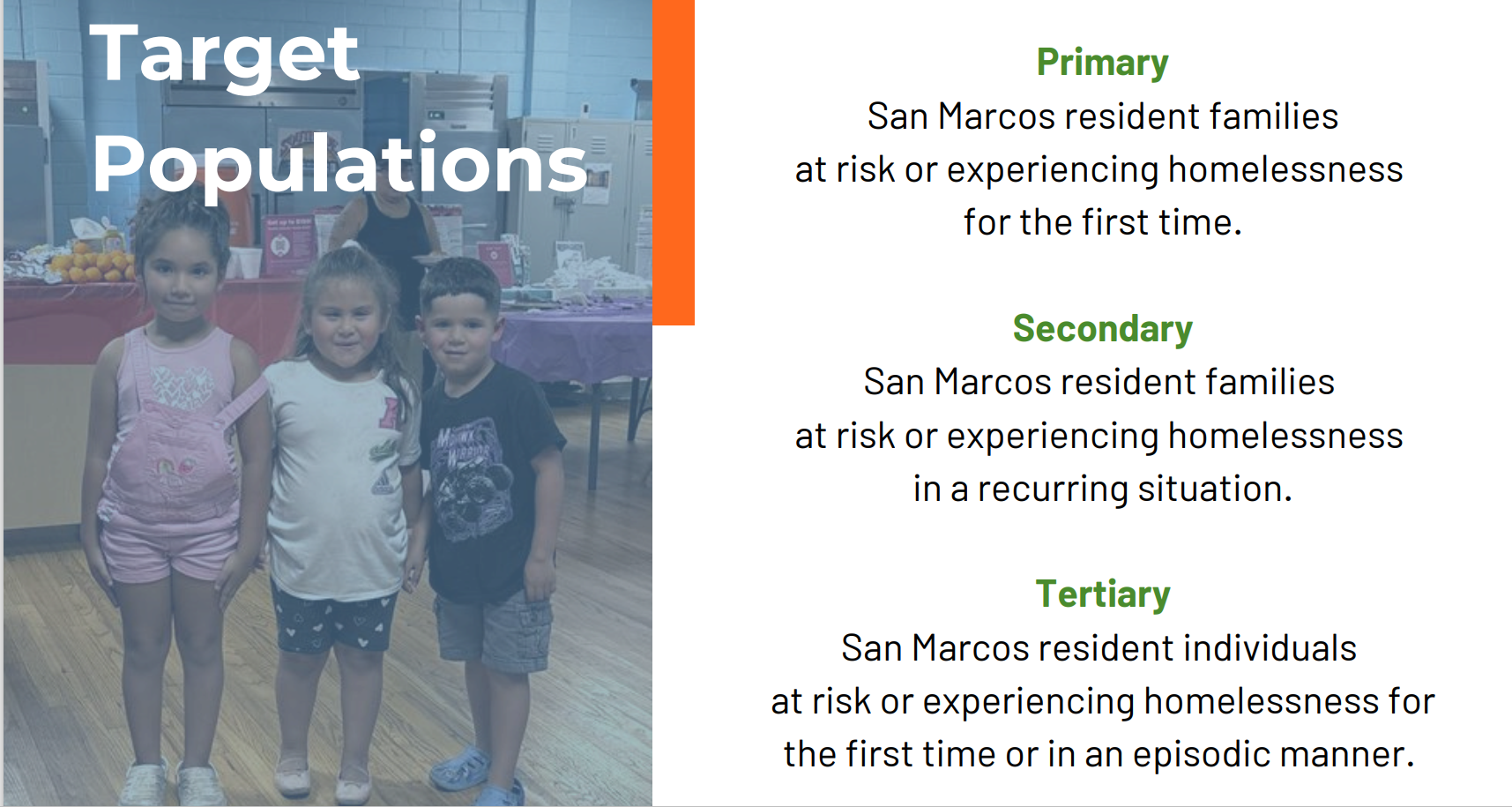
(But not exclusively – they did also help individuals.)
There are three main tentpoles to their plan:
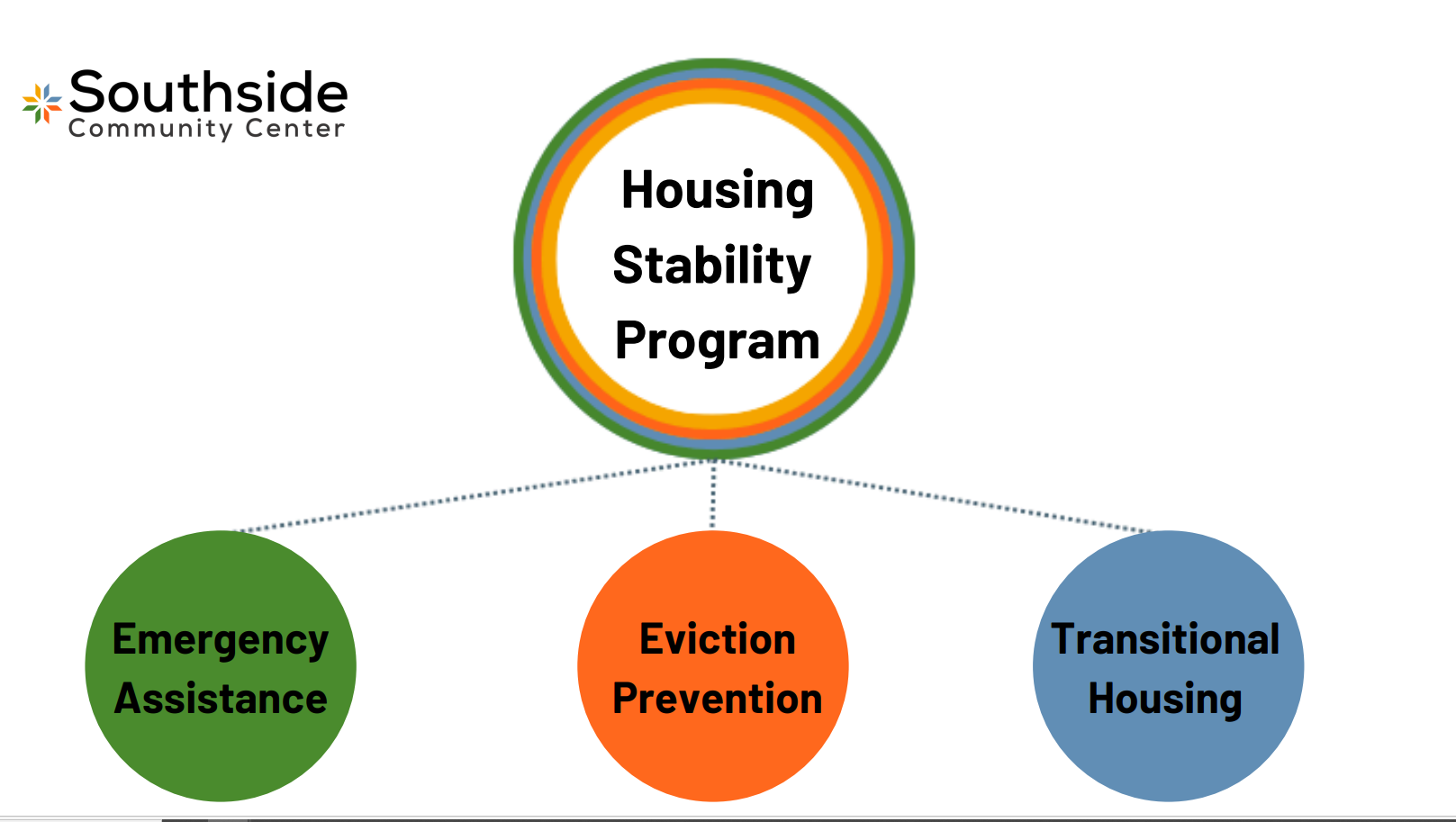
The presentation walked through each of the tentpoles individually.
So first, Emergency Assistance:
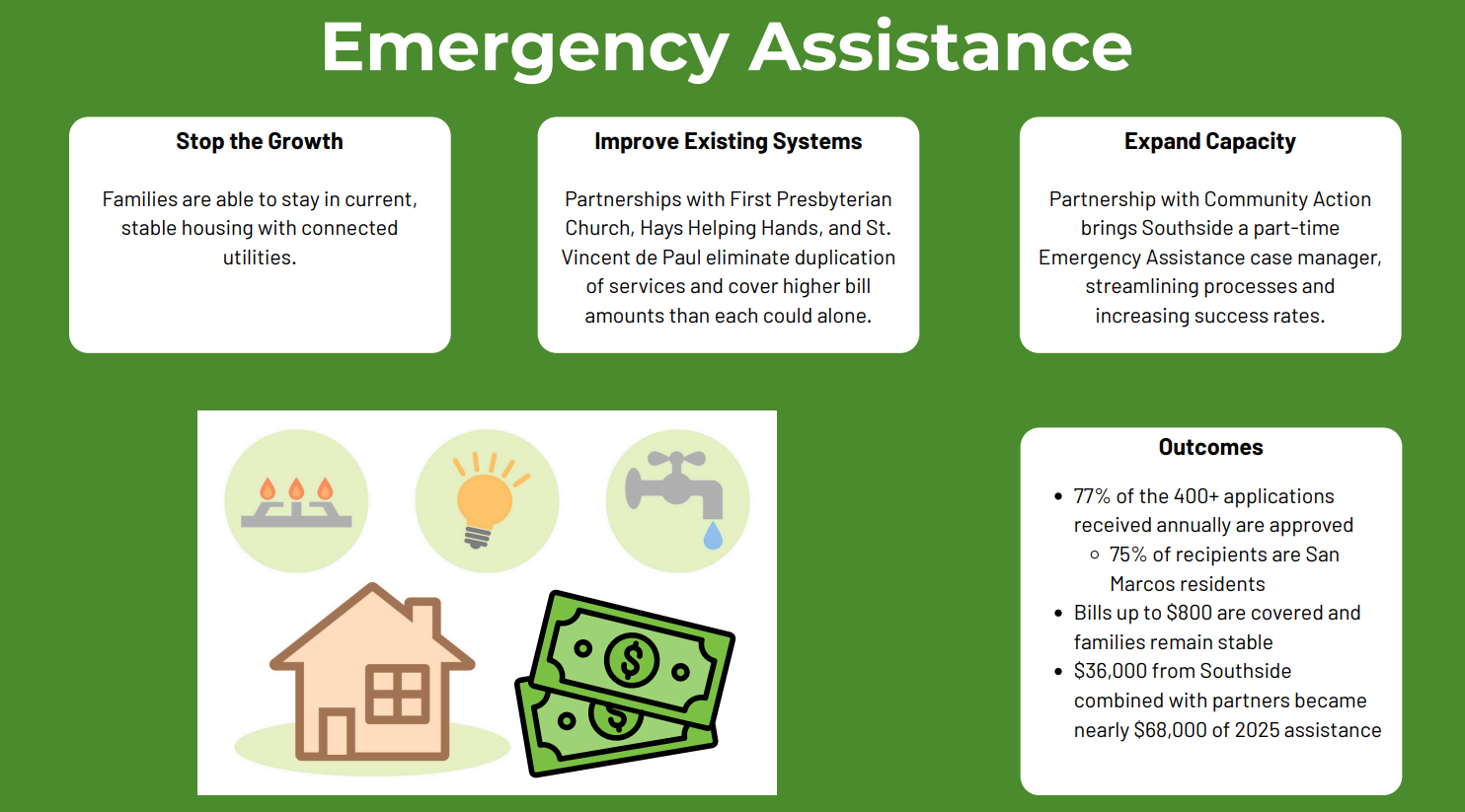
Think: car repair so someone can get to their job, or covering a two-week gap in pay when they get a new job, or covering part of a high electric bill, etc. You don’t want a small emergency to snowball into a big emergency.
Next: Eviction Prevention
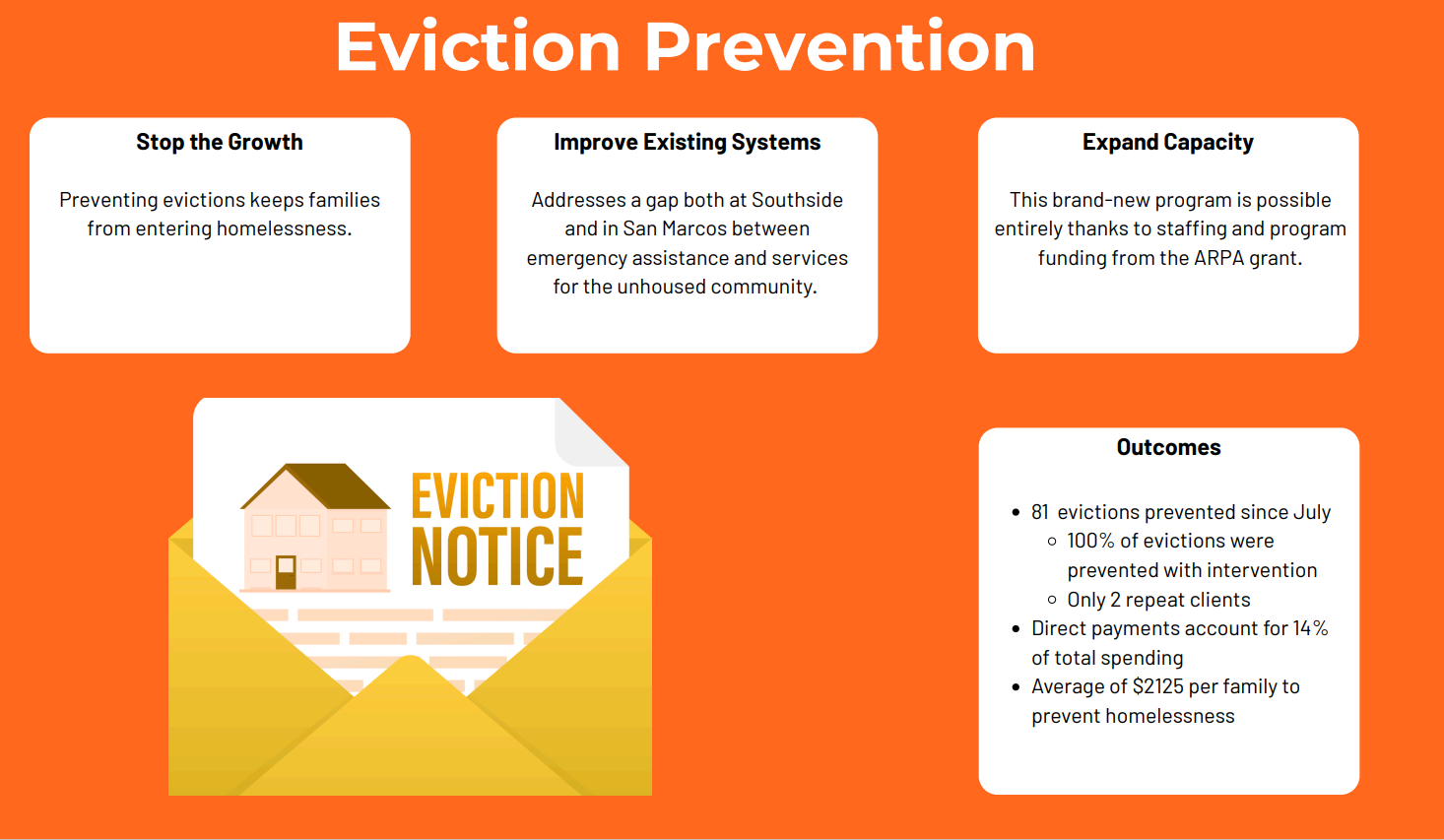
Both of those categories are where you see the most bang for the buck.
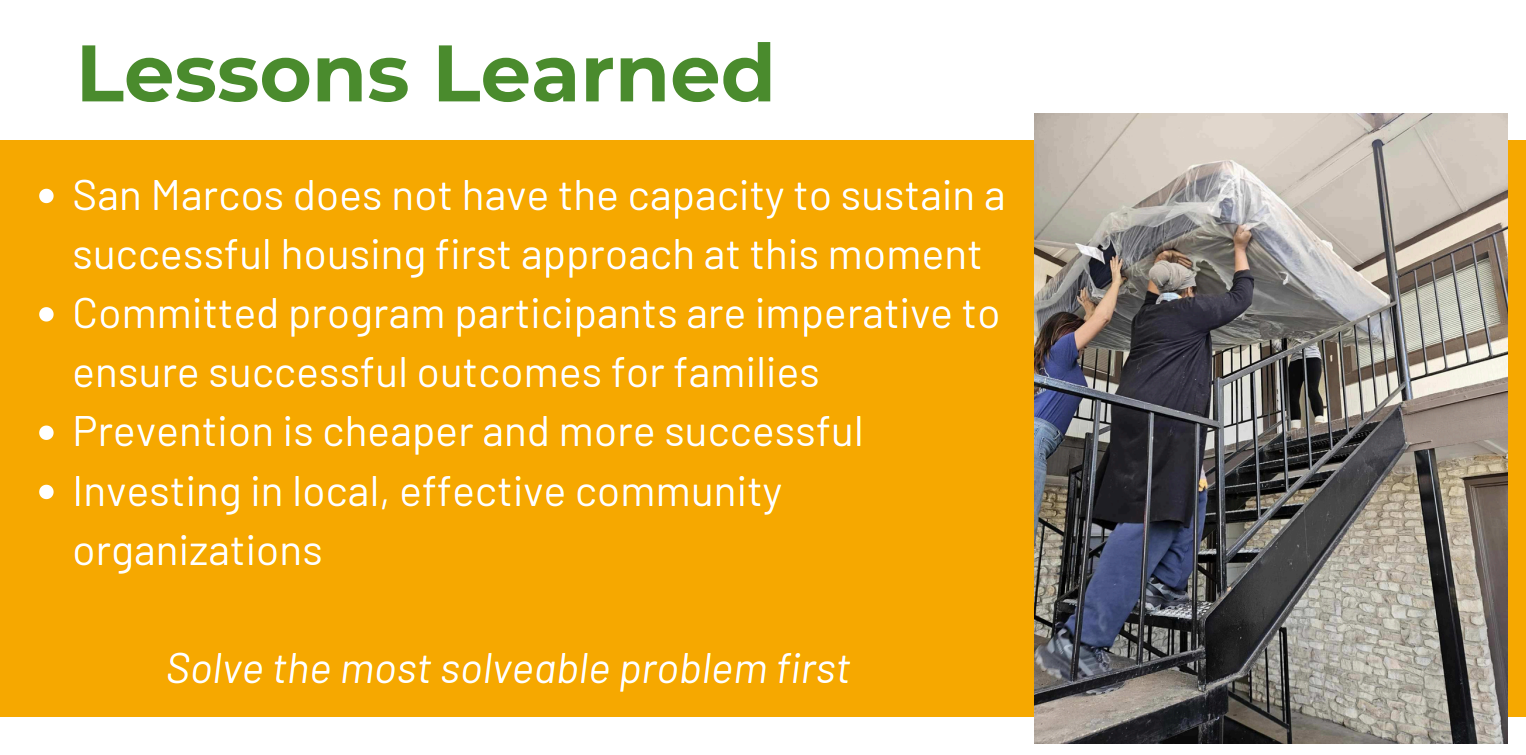
Being evicted is expensive, destabilizing, and sends families down a cascade of trauma. But preventing eviction can be quick, cheap, and help get someone through an isolated hard time. Win-win.
….
This last category morphed over time. This is for families who have lost their housing.
They started with Rapid Rehousing:
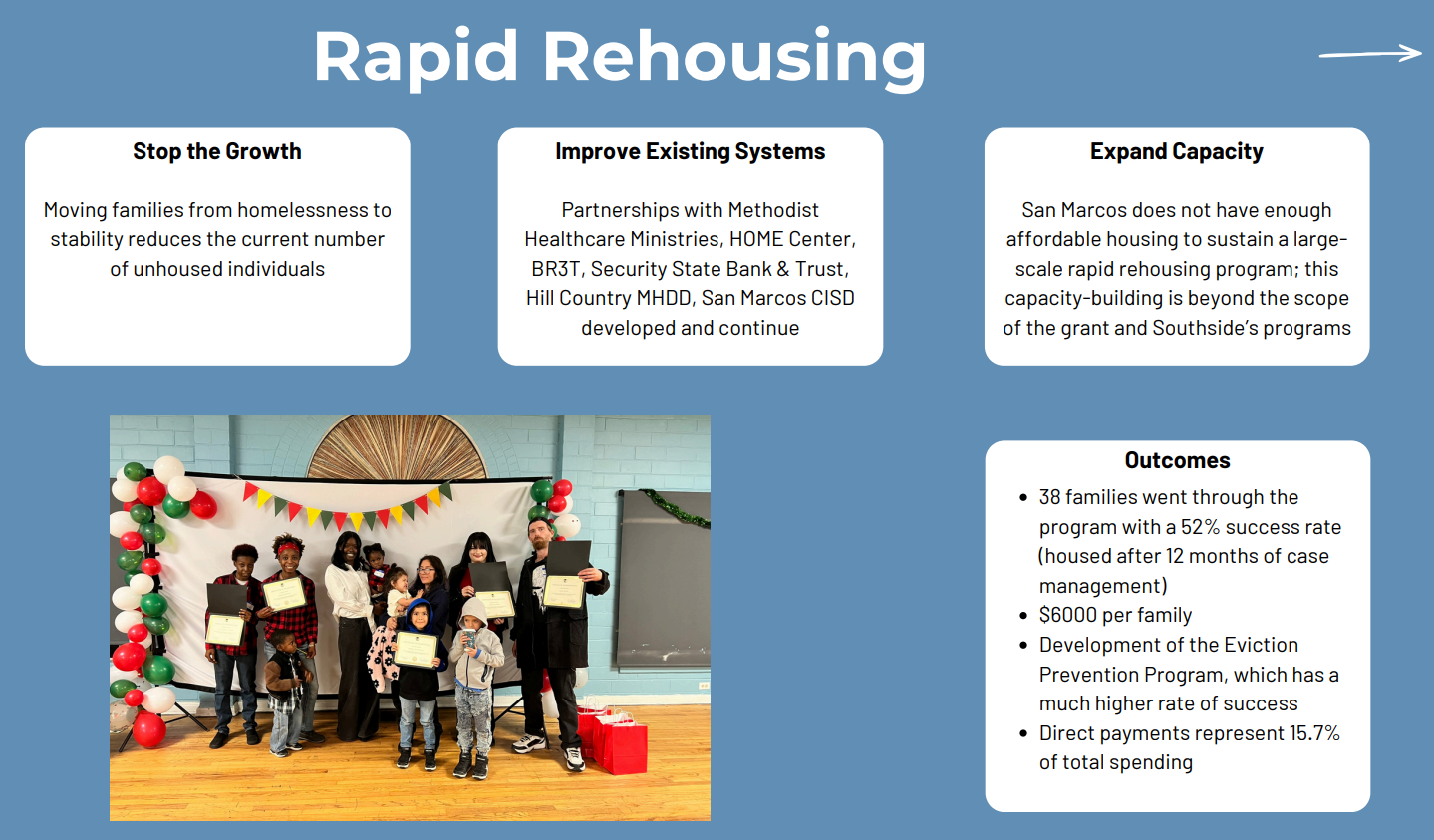
What they said was that San Marcos doesn’t yet have the infrastructure to carry out this kind of program. Also, HUD used to fund this kind of program under Biden, but of course now everything is a dumpster fire.
It was leading to staff burnout and having to turn away lots of families, and generally awful for everyone involved.
So for Phase II, they switched to Transitional Housing:
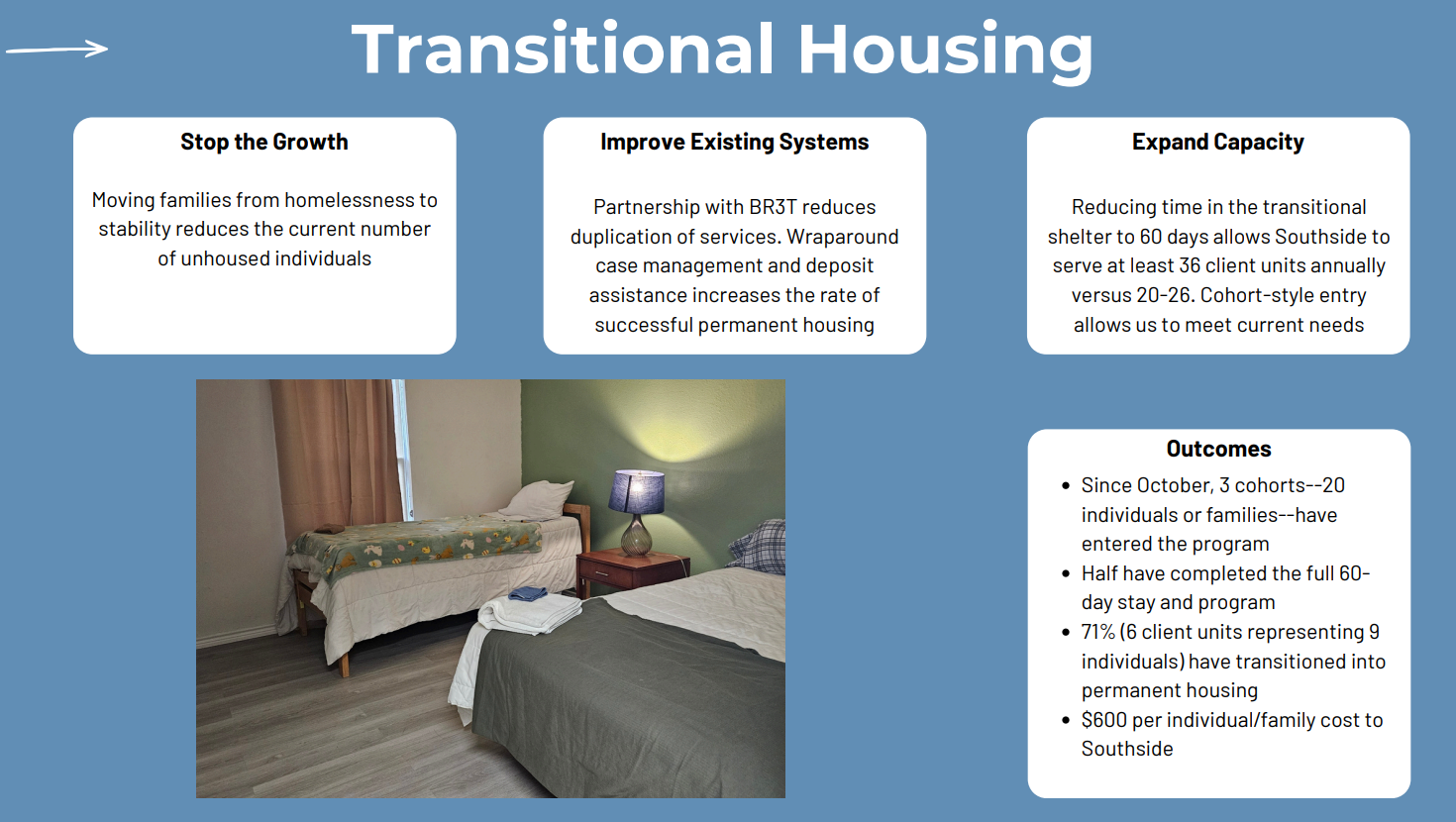
Basically, they’d have 20 families stay for 60 days at Southside, all together as a cohort. They’d work with these families really closely, bring in a ton of community partners, and try to transition them to permanent housing.
Here’s a bunch of partners they collaborate with:
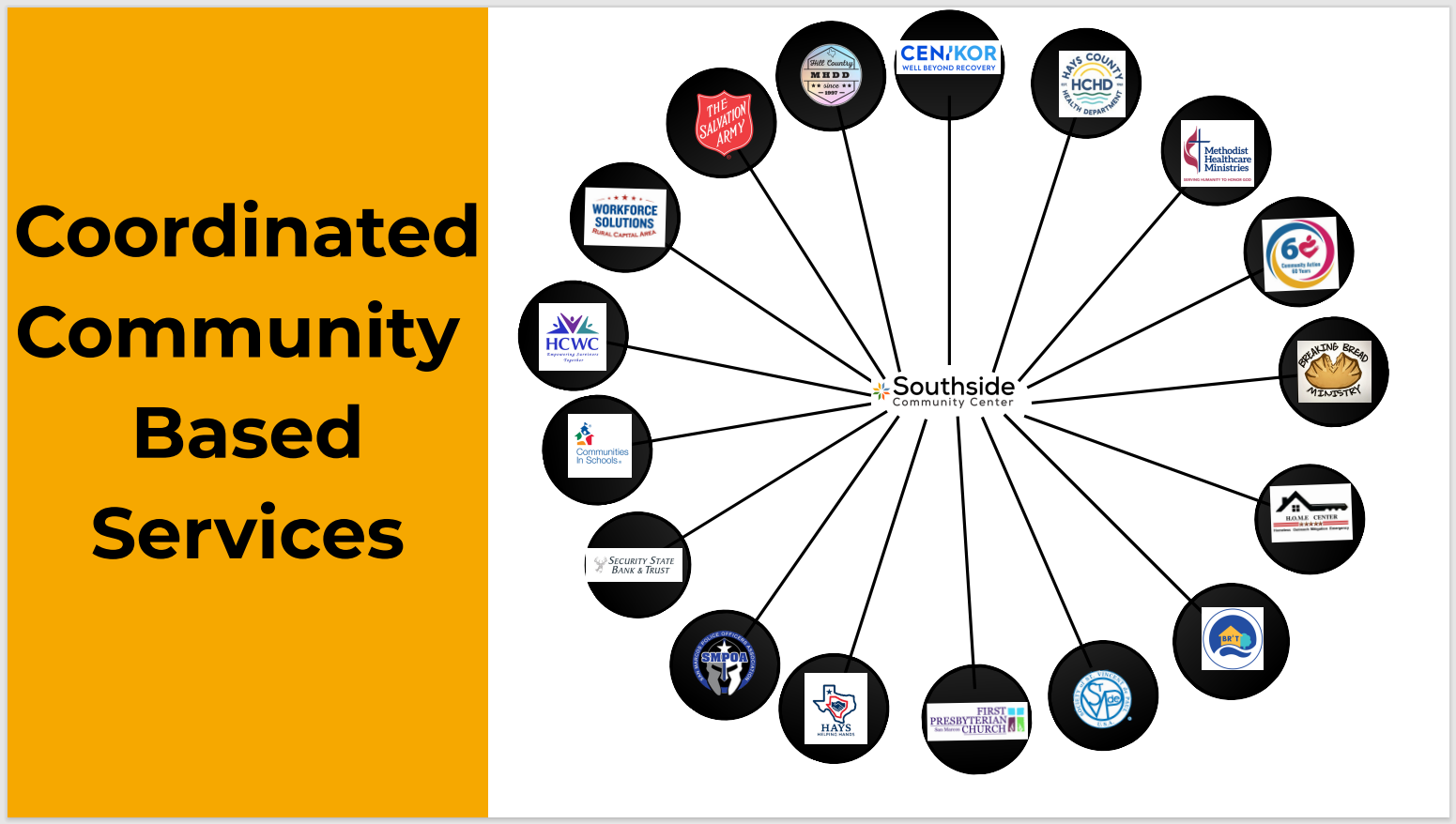
So that’s an outline of the main programs they implemented.
….
But wait! There’s more! With the $800K, they also spruced up Southside:
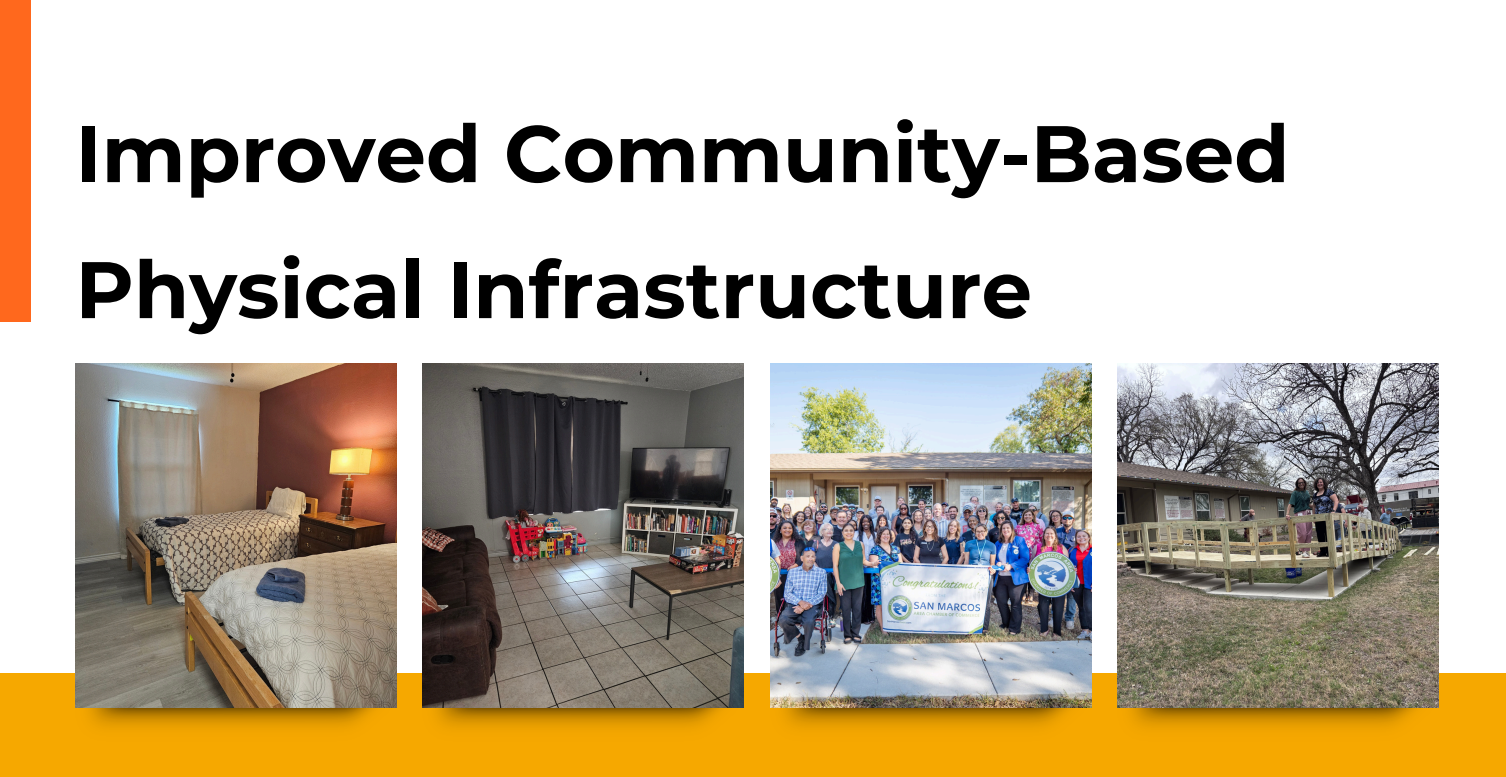
which is good.
Some budget details:
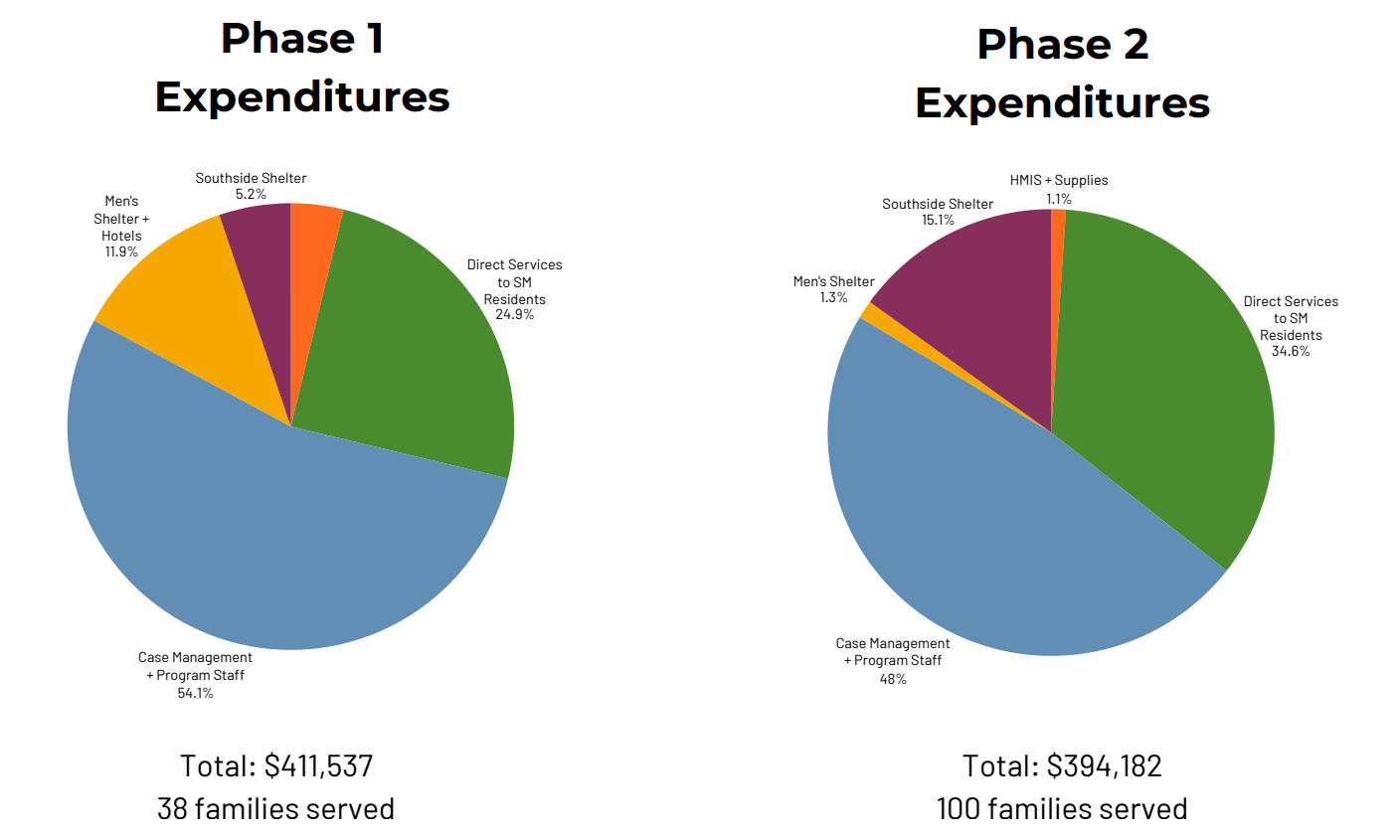
This shows how expensive the Rapid Rehousing was in Phase 1, and how many more families they were able to serve with the second model.
And here’s some general financial breakdown:
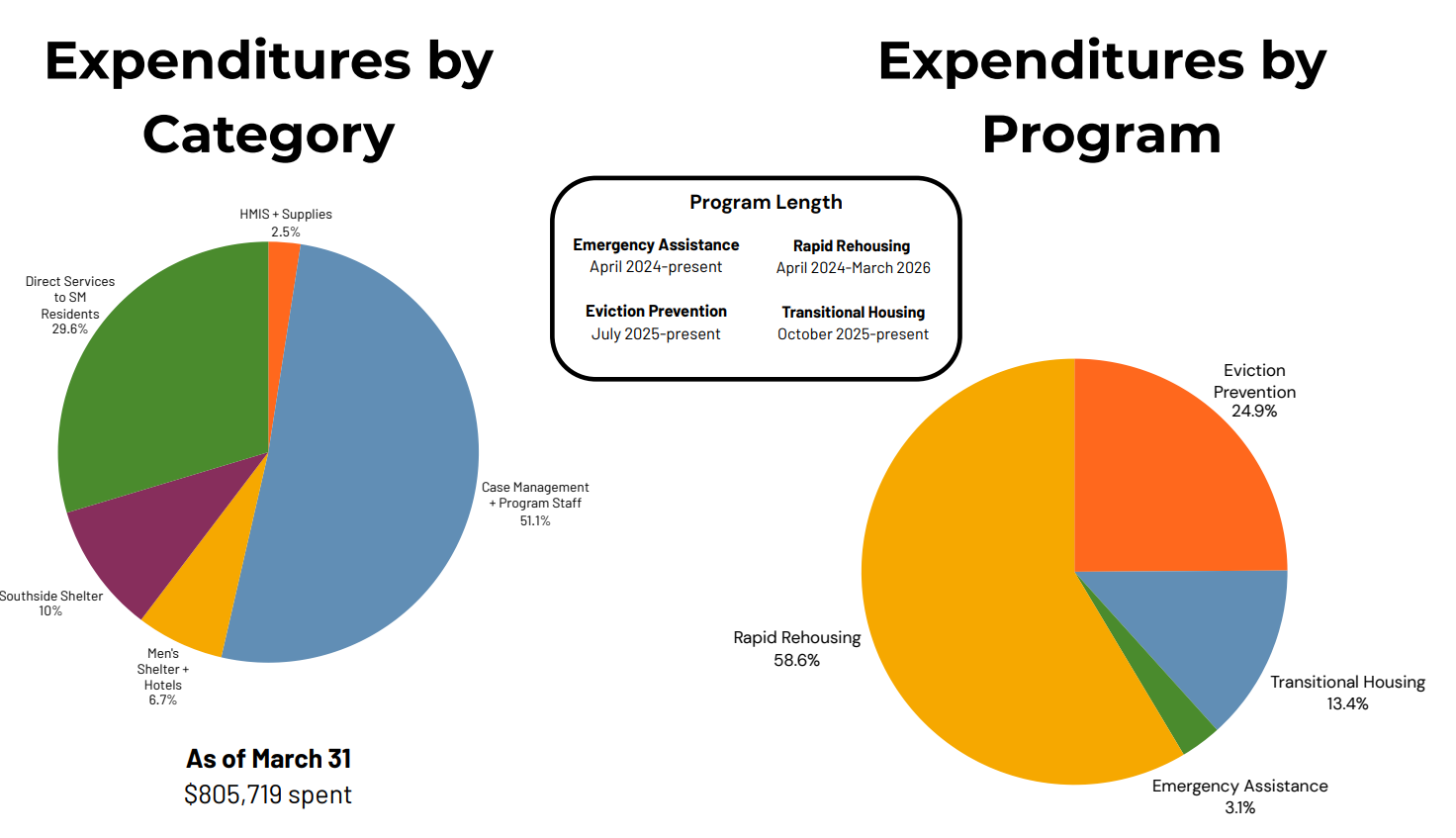
and some general takeaways:
…
What does Council say?
The million dollar question is: what happens when the Covid money runs out? Can we keep all this going?
They are working on it! They have enough money to keep it going through January 2027, and they are pursuing grants and stuff to keep these programs going.
…
Listen, let me be a moral scold for a sec:
We know how to solve homelessness. There is no mystery. We just aren’t willing to pay for it.
Nationally, it would cost under $10 billion to end homelessness. But homeless people cost over $11 billion each year, as is! Think ER visits, untreated mental illness and addictions, and jails.
It’s more expensive to be cruel to people! Isn’t that wild?
Again, there’s no mystery here. Republicans slash funding for homelessness programs, over and over again, and here we are.

