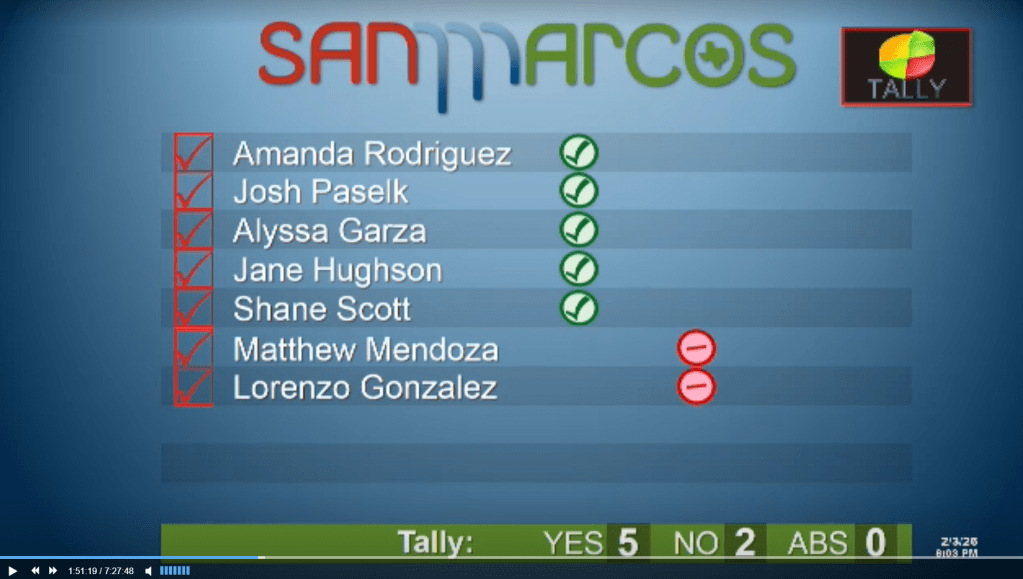
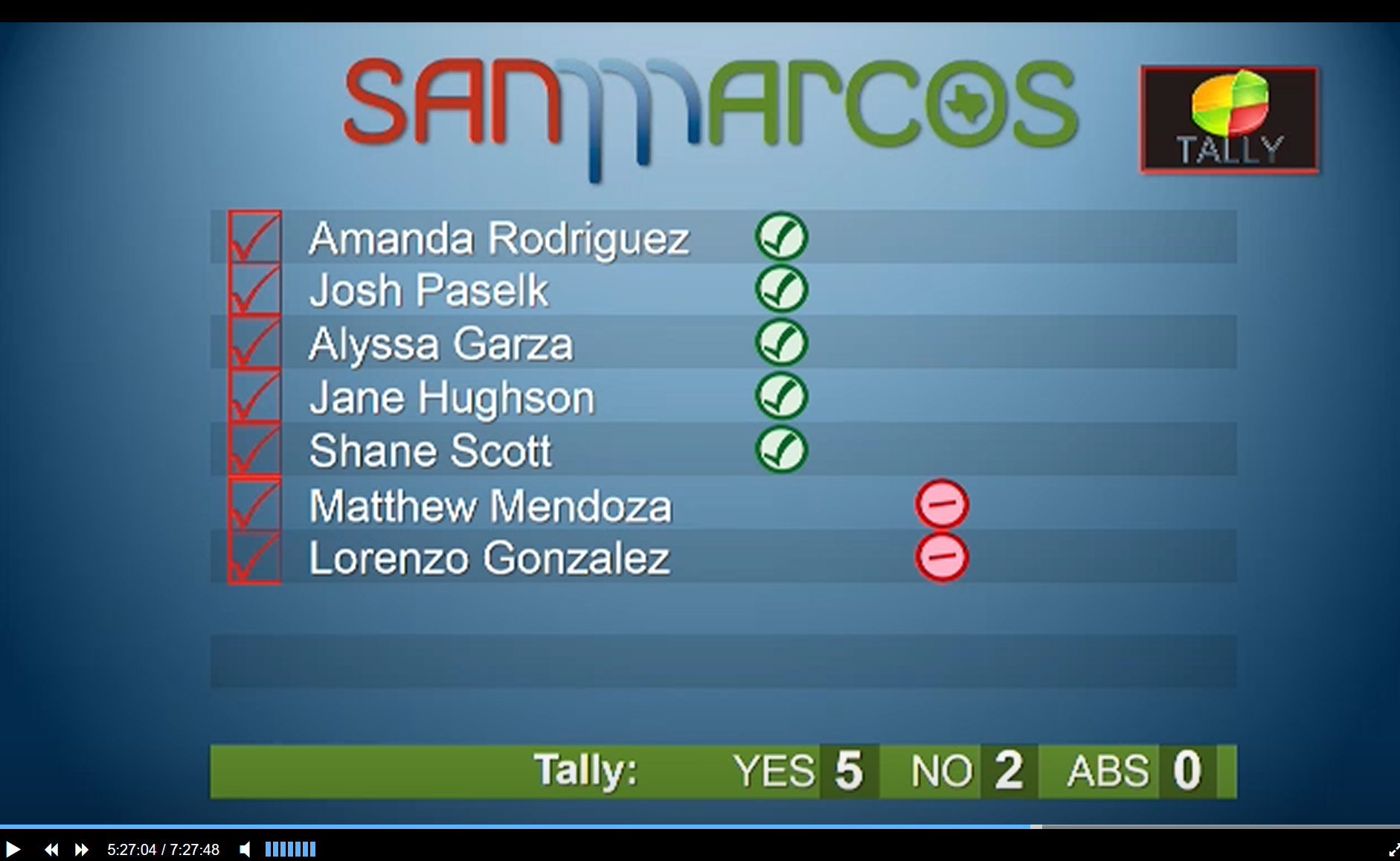
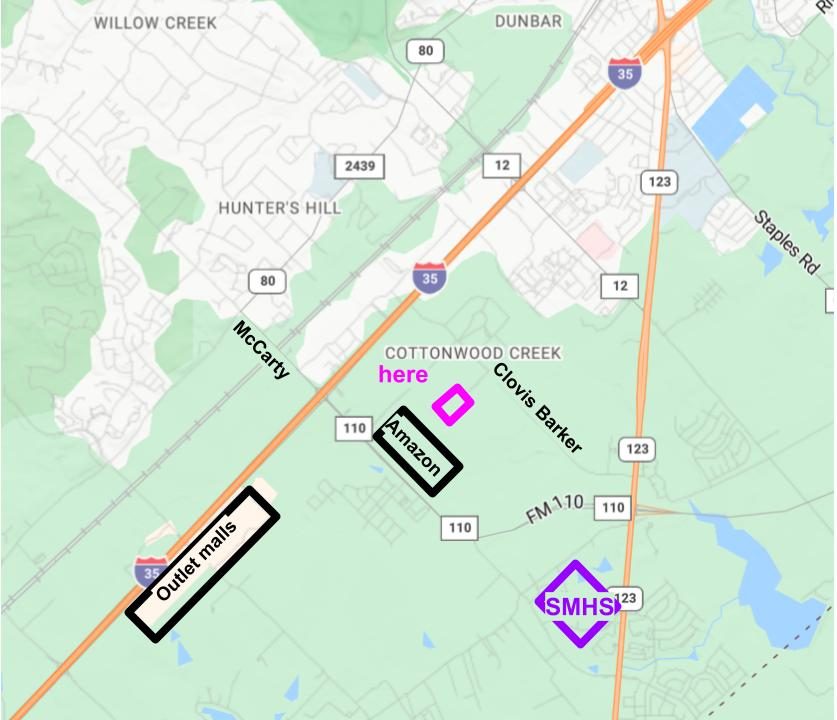
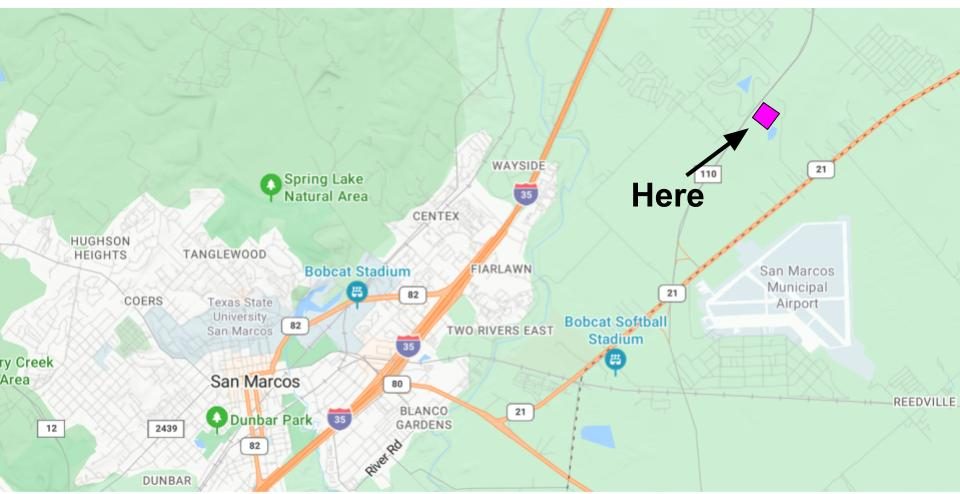
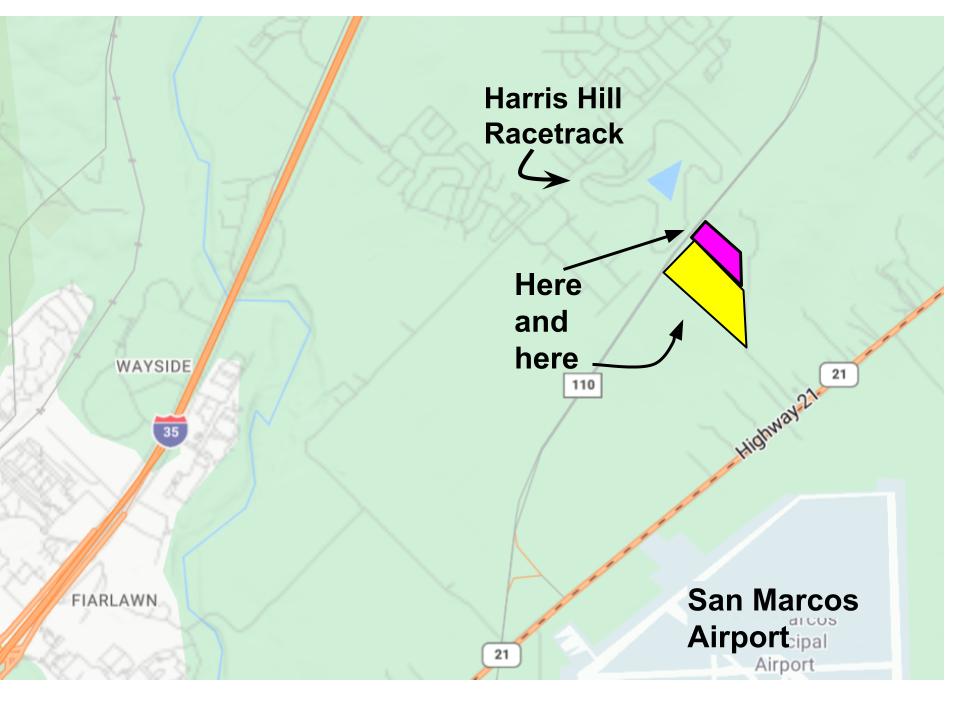
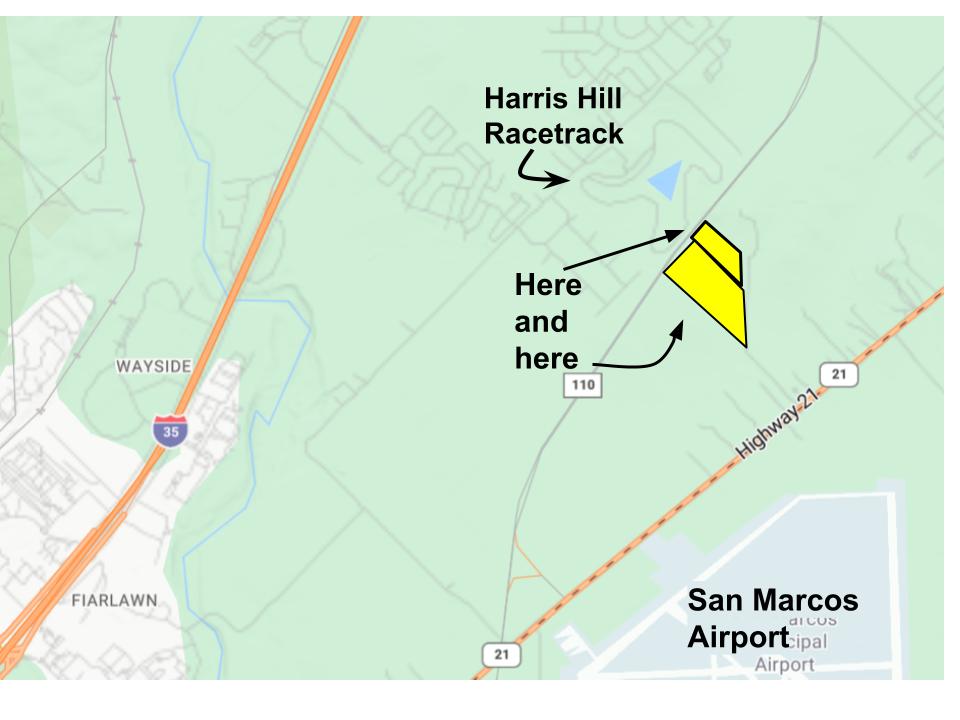
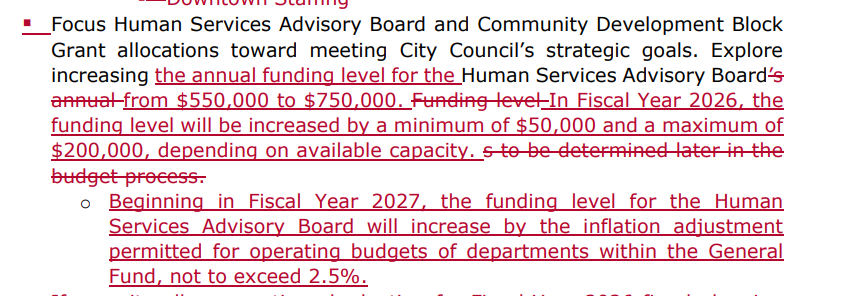
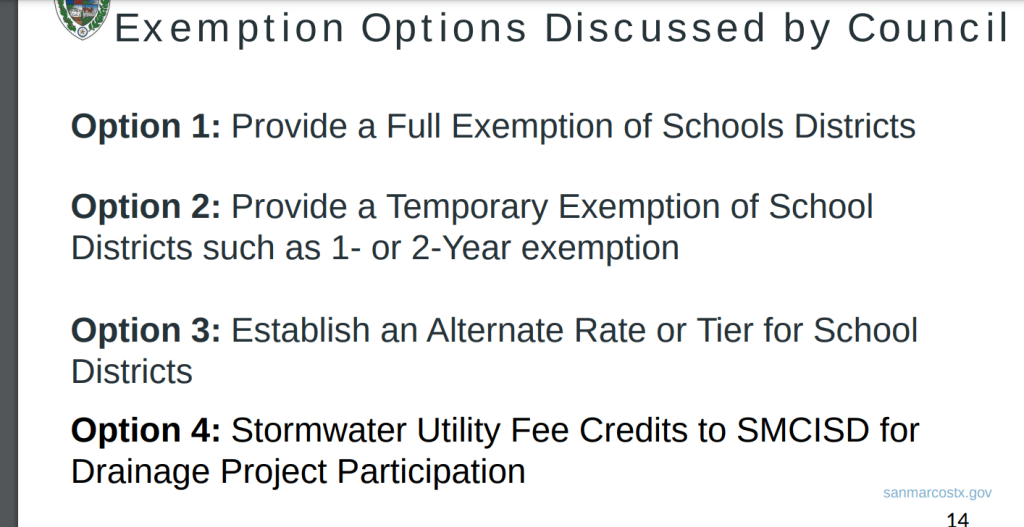
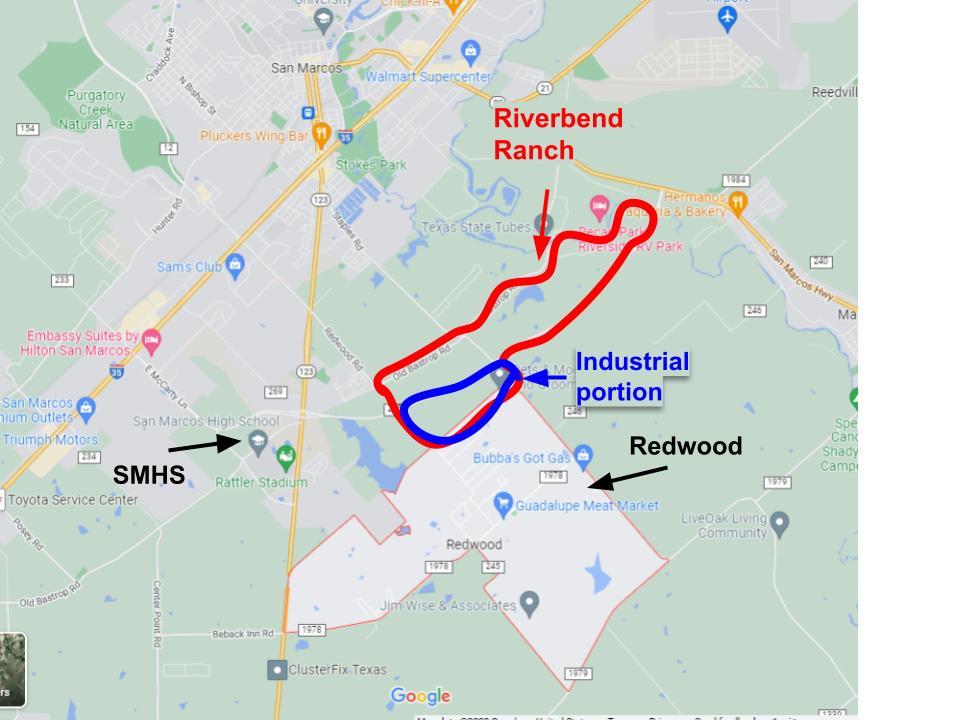
There were 12 speakers, and only one topic: Flock Cameras
10 people: they’re authoritarian and hijacked by ICE. Hard no.
2 people: they keep us safe! yay cameras.
Lots and lots of details when we get to that item.
…
Item 10: The Downtown TIRZ
TIRZ stands for “Tax Increment Reinvestment Zone”. What this means is that we’re going to put more resources into a fixed area. TIRZ #5 is the Downtown TIRZ.
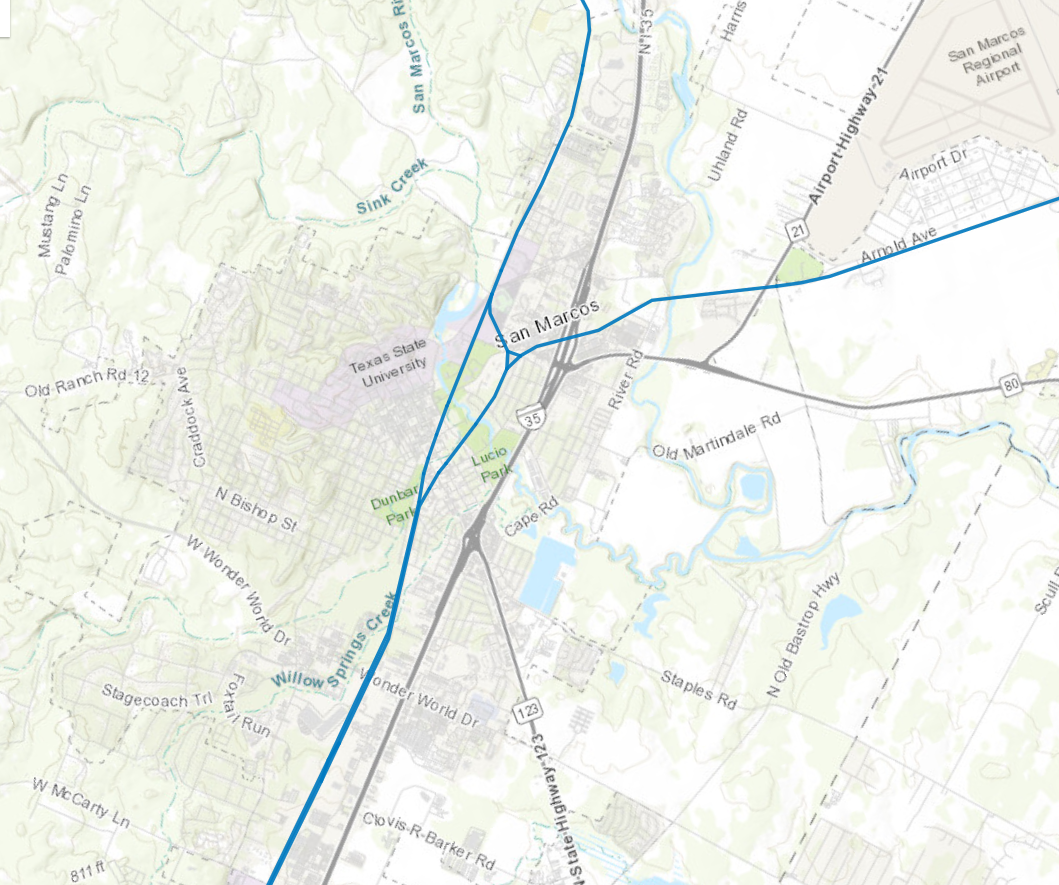
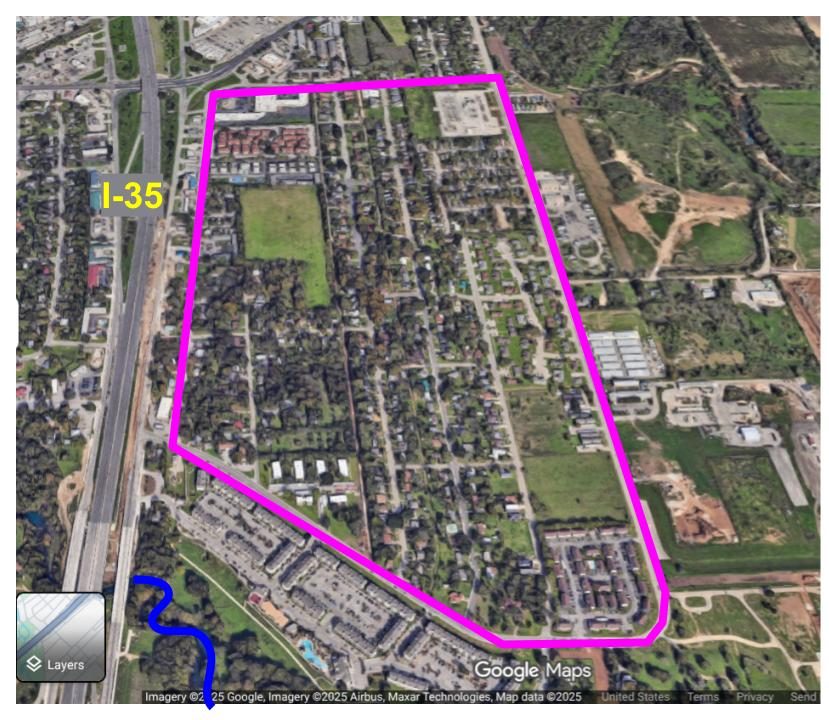
Here is the boundary of it:
Here’s how a TIRZ works: First, you fix a baseline year. For the downtown, it’s 2011. Back then, the whole region had a taxable value of $103 million.
San Marcos always gets to keep the taxes on $103 million. But the value of the land keeps growing. San Marcos agrees to split the taxes 70-30 on all the value added above $103 million, until the TIRZ runs out. (Hays County is also part of the deal.)
So in 2025, the land is now worth about $550 million. San Marcos keeps the taxes on the $103 million base, and then splits the taxes on the other $447 million. All told, the TIRZ gets about $1.2 million from San Marcos, and another $600K from the county, in 2025.
What does the TIRZ do with the money? The rules are that they have to spend it all on enhancing the downtown, which is supposed to increase its tax value all over again.
Today they’re adding a little bit extra to their plan. Here’s what they want to do:
The TIRZ expires in 2027. After that, the city keeps all the tax revenue on that district.
Fine! Everyone likes it.
…
Item 12: Rezoning 24 acres on Wonderworld and 123.
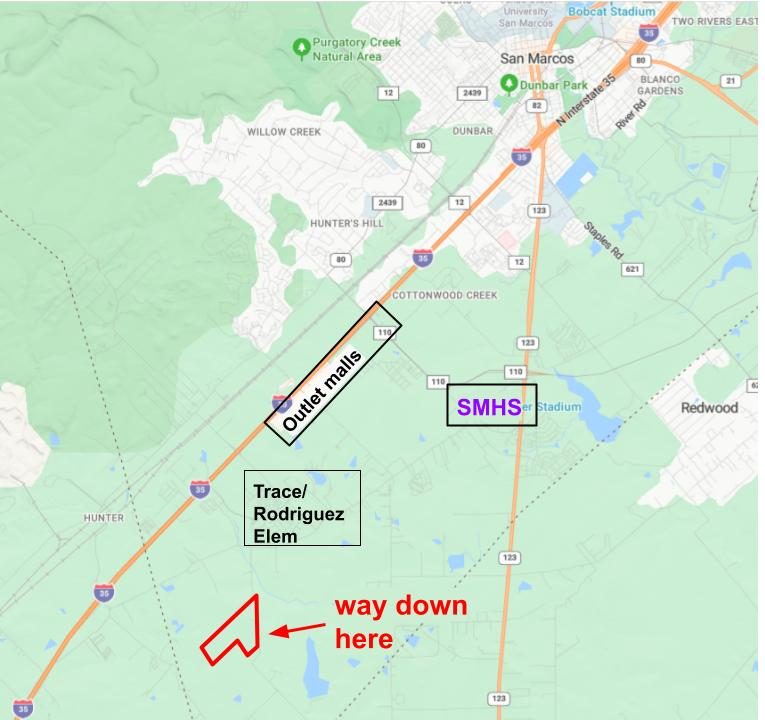
Here’s a little patch of land:
Here’s what it looks like if you’re going south on 123, on the Wonderworld overpass:
The developers want to make it CD-5.
What is CD-5?
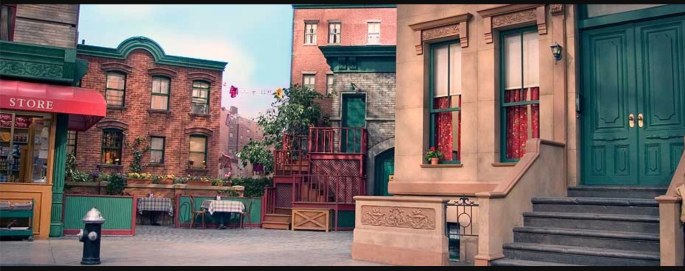
In theory, CD-5 is supposed to feel like a cozy, dense downtown area where you have shops and apartments and all kinds of nifty things, kinda like on Sesame Street:
But inevitably, it always ends up looking like this:
Relentlessly giant apartment complexes.
…
What about some stores and restaurants?
I’m not actually opposed to giant complexes! Housing is great. But this intersection is a great spot for some stores and commerce, no? It’s a constant drumbeat that the east side needs more commerce.
Jane brings this up: “Will you all put in some commerce?”
Developer: “Who can say? We’re so mysterious!”
Jane: “It would be really great.”
But then no one on Council actually does anything.
COUNCIL!! You have powers! There are zoning overlays and Planned Development Districts, where developers agree to make some portion of a development into commerce.
But here’s Council:
So Council just tells the developer, “Fingers crossed! Thoughts and prayers for commerce!” and leaves it at that.
….
Is this re-zoning a good idea? Let’s be a little systematic about it:
Price Tag to the City: Will it bring in taxes that pay for itself, over the lifespan of the infrastructure and future repair? How much will it cost to extend roads, utilities, on fire and police coverage, on water and wastewater?
There’s a lot of development around this already, and this will be dense. This is a good financially for the city. A+
Housing stock: How long will it take to build? How much housing will it provide? What is the forecasted housing deficit at that point? Is it targeting a price-point that serves what San Marcos needs?
We’re still in a housing deficit, and more housing is good. So I’m fine with this.
Environment: Is it on the aquifer? Is it in a flood zone? Will it create run off into the river?Are we looking at sprawl? Is it uniformly single-family homes?
Not environmentally sensitive, not a flood zone. And it won’t be sprawl, because CD-5 has to be dense. So doing well here, too.
Social:Is it meaningfully mixed income? Is it near existing SMCISD schools and amenities?
I doubt it will be meaningfully mixed income. Developers don’t care. It drives me crazy though – wealth segregation is a societal problem.
It is very close to two elementary schools, Goodnight middle school, and SMHS, and also Bonham pre-K. There are some restaurants near those schools.
The San Marxist Special: Is it a mixed-income blend of single family houses, four-plexes, and eight-plexes, all mixed together? With schools, shops, restaurants, and public community space sprinkled throughout? Is it walkable?
This is literally what CD-5 should be. A Marxist blogger can dream.
My $0.02: If I were on Council, I’d push hard for a zoning overlay that guaranteed some commerce. But if that was impossible, I’d vote yes, anyway.
…
The vote on rezoning:
Everyone: YES!
No one: no.
So there you have it.
…
Item 6: Mural at the Price Center. (Cousin to Panic! at the Disco.)
This item is peak ridiculous, in all the best ways. This is why I love local politics: everyone’s a regular person, and regular people are totally absurd.
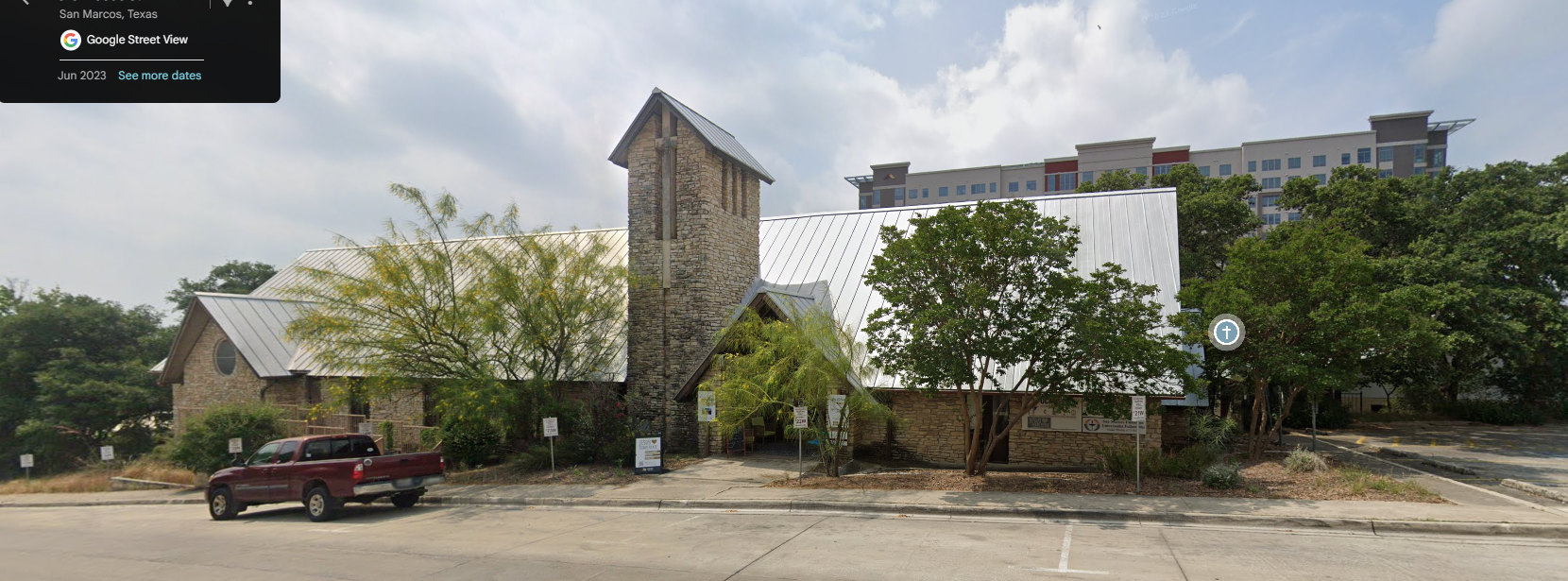
This is the Price Center:
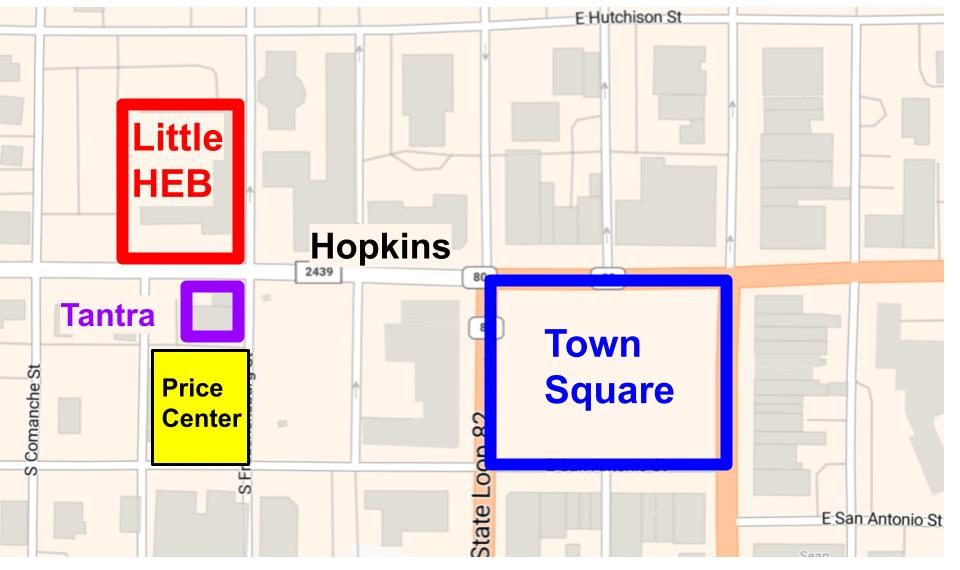
It’s right behind Tantra, facing San Antonio St:
It’s mostly a public event space – there are concerts and shows inside, people rent it out for parties, there are market days where you can buy stuff from vendors, etc.
Here’s the front steps:
No one ever uses this entrance. You walk around through the garden to go in.
Today’s item is about a mosaic mural to go on the front steps. In other words, it’s a single picture that will be cut into strips, and go on the risers, like this:
Maybe you’ve seen a photo of the proposed mosaic! If you haven’t yet seen it, I’m going to withhold it until the end of this item, for maximum comedic value.
Because this is what Jane Hughson posted to the message boards ahead of time:
This mosaic definitely involves cacti, and Jane is NOT a fan.
During the meeting, Jane brings up more points:
The mural is beautiful! But the cactus? Hard no.
We’re trying not to have spiky plants like yucca downtown, because they are hazardous if someone falls in them.
We’re not Arizona. Feh, Arizona!
Cacti are prickly and unwelcoming.
Lorenzo agrees: it does hurt to fall in a cactus.
City Staff: Some artists like cacti! It’s subjective.
Amanda: Cacti stand for our cultural heritage in Mexico!
Alyssa: I love ’em. Also they’re delicious.
Shane: If we asked the artist to take out the cactus and re-do it, and they said no, what are the sunk costs? Answer: $1000.
Saul: I guess I’m a yes, because I don’t want to waste $1000.
…
ARE YOU READY TO SEE SOME CACTI?
Pause for a second.
Before you see it, I want you to picture an unwelcoming, prickly mayor cactus. Get a good visual image in your head, before you scroll down. What kind of cactus would be too hostile for the front steps?
⋮
⋮
⋮
Ready??
⋮
⋮
⋮
⋮
⋮
⋮
⋮
⋮
READY??
⋮
⋮
⋮
Here’s the proposed artwork:
Guys. GUYS. It’s so beautiful. It’s mostly prickly pear flowers, more than anything else. There’s nothing remotely hostile here.
This is the mural that we almost killed for being too prickly! What a world.
….
The vote on the beautiful mural:
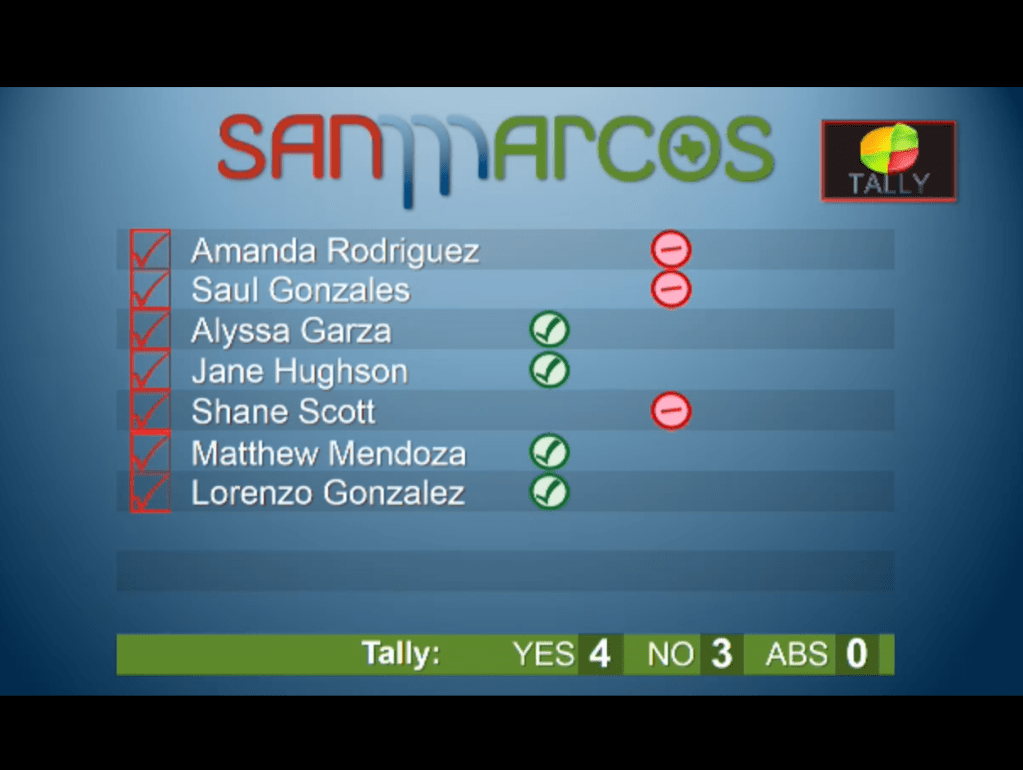
Yes, we love it!! : Amanda, Alyssa, Saul, Shane, and Matthew
Tonight’s the night that Council determines their HSAB grants, and so almost everyone speaking was representing nonprofits – one speaker from School Fuel, and three from Southside. I’ll save it for that item.
One last speaker talked about Meet and Confer, and whether or not it was okay for Council to make recommendations to the negotiators who represent the Council in the negotiations.
…
Item 13: Rezoning a little street in Blanco Gardens
Here’s Blanco Gardens:
It’s a very cute old neighborhood with gorgeous trees.
For an old neighborhood, there’s a surprising amount of undeveloped land in the middle of it:
(I wondered briefly if that was because homes had been torn down after the floods. But nope, you can see on the 2014 satellite image that there’s just always been space there for years.)
They would look and feel like duplexes, but they’re technically different, because of how they can be bought and sold. The property line runs through the two halves of the house, so you can purchase one half of it, while someone else owns the other half. (It’s called a “zero lot-line house”.)
Basically it’s a good way to fit more, smaller homes onto a street, and they tend to be a little cheaper, too.
What does Council say?
Question: will fit the character of the rest of the neighborhood? Developer answer: We have good intentions!
(One block over, there are some extremely modern houses. The neighborhood is salty about this.)
Question: Will the alley still exist? Answer: nope.
…
Nobody really asked about flooding. The 2015 floods are starting to fade from memory for the rest of San Marcos. But not in Blanco Gardens – they were the epicenter of the floods.
I would have liked to know what the 2015 flood water line was for nearby houses – I bet it was about 3-4 feet of water deep. How elevated will these houses be? Will they be above the 2015 water line?
My memory is that, in a 100-year flood plain, you have to build 1-2 feet above the Base Flood Elevation, based on FEMA flood maps. Does that get you to 3-4 feet off the ground? I just don’t know.
…
The vote on this cute row of sorta-duplexes:
Yes: Everyone No: nobody
The good news is that Council is enthusiastic about infill housing. (When I first started blogging in 2022, Council wouldn’t let a home owner build two small houses on a subdivided lot, on Lockhart street. That was crazy.) They’ve definitely gotten the message that San Marcos needs more housing.
As long as the homes are safely elevated, I’m okay with this project. But the flooding risk makes me very uneasy.
…
Item 14: HSAB Funding
HSAB stands for Human Services Advisory Board.
These are city grants to nonprofits, for things like food assistance, eviction prevention, domestic violence help, mental health services, etc. For the past few years, we’ve given out $500K in grants. This year, Council bumped it up to $750K. (Of course, federal funding has gotten slashed, so the need has also grown. THANKS OBAMA.)
It’s always a grueling process. All the nonprofits all do incredibly important work.
In the past, we kinda made non-profits cagefight against each other. [Read all the gory details for thepast few years.] The process was murky. The recommendations would come to council, and council members would start horse-trading around.
It was a bad look! It always seemed very fickle – “Oh, we’ll take $20,000 from those guys and give it to these guys!” It felt like the main criteria was being friendly with council members.
We’ve been working on tightening the process. It’s a super time-intensive:
the HSAB board meets weekly from August to October
They hear presentations from all 32 applications
Each one gets discussed and each board member ranks them on a bunch of different criteria
Eventually they recommend how much of each request to fund.
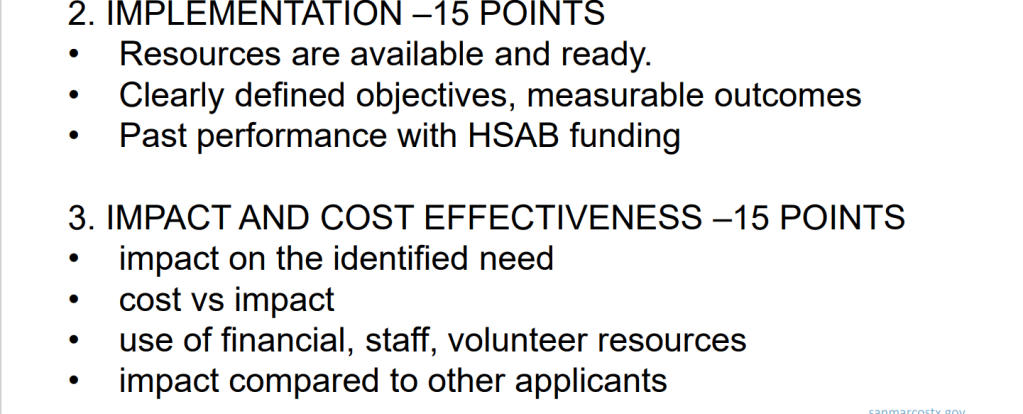
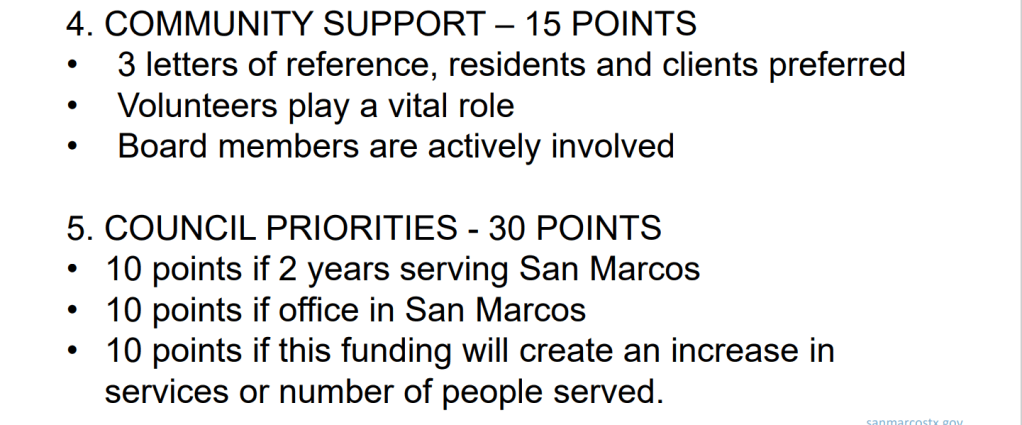
Here’s the criteria:
After all the ranking and discussion, they bring it to Council.
…
Just for funsies, let’s add up how much other non-HSAB money is getting allocated in this meeting!
All this was approved in one single vote, on Tuesday:
“On-Call Title Research Services Contract with Hollerbach & Associates, Inc., to increase the price by up to $200,000.00, resulting in a total contract amount not to exceed $299,999.00”.
“RMO P.C. for legal services associated with land acquisitions to increase the price by up to $300,000.00, resulting in a total contract amount not to exceed $699,000.00”.
“Change in Service to the agreement with Baker Moran Doggett Ma & Dobbs, LLP for legal services associated with land acquisitions to increase the price by up to $300,000.00, resulting in a total amount not to exceed $600,000.00”.
“STV Incorporated to provide On-Call General Engineering Services for various projects in the amount of $900,000.00”.
“Halff Associates, Inc. to provide On-Call General Engineering Services for various projects in the amount of $900,000.00”.
“a 2025 Ford F550 Crew Cab Chassis from Rush Truck Center, through a Sourcewell Purchasing Cooperative Contract, in the amount of $82,043.63, and outfitted by E.H. Wachs, through a BuyBoard Contract, in the amount of $156,865.65, for a total purchase cost of $238,906.28”.
“SHI Government Solutions, through Omnia Partners, for a City of San Marcos job application tracking software system in the annual amount not to exceed $112,000.00, and up to four one-year renewals with a total amount of $560,000.00”.
It comes to about $2.95 million. I’m not saying any of those were a mistake! I trust the city officials. Most likely, those are all totally reasonable.
I’m just pointing out who gets scrutinized, in society, and who doesn’t. We approved almost $3 million without blinking, when it goes to those contracts above. But if it’s hungry kids, homelessness, mental health emergencies, etc, we rigorously grind these applications into pulp.
…
Back to the grant grind!
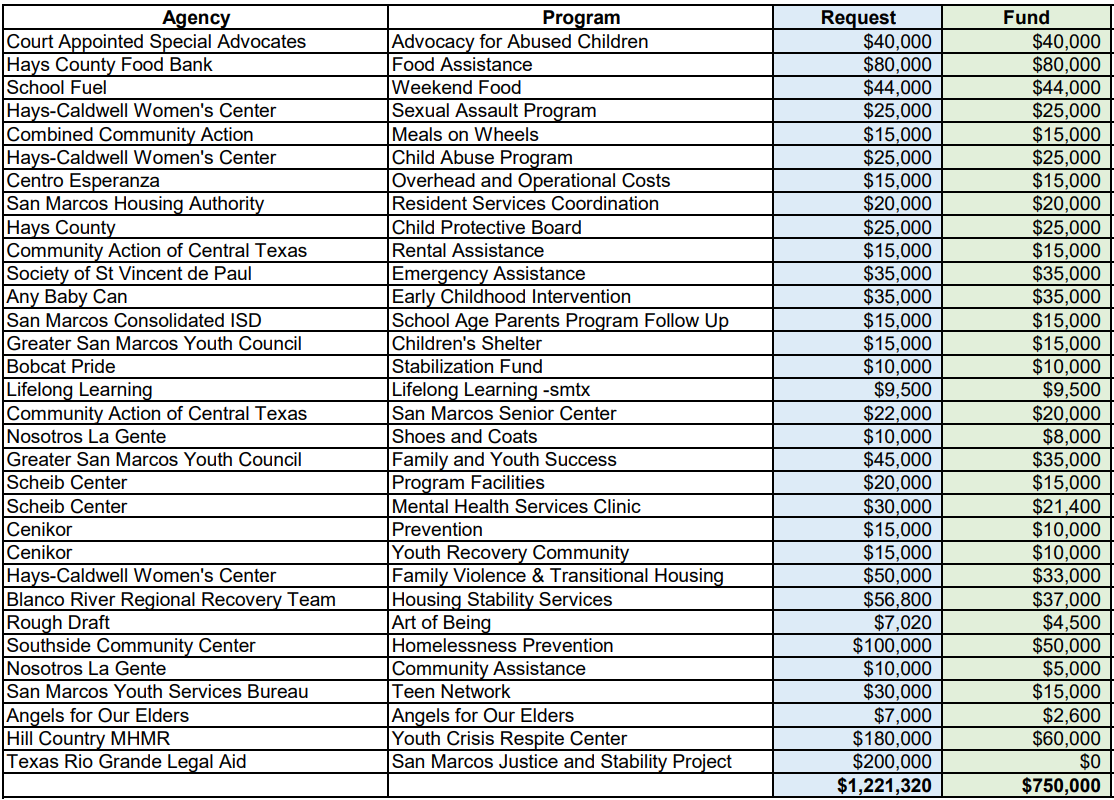
There were 32 applications, and the total amounts requested added up to $1.2 million.
Here’s the full list of scores and funding:
In the presentation, they went through all of them, and why the committee might not have fully funded the request.
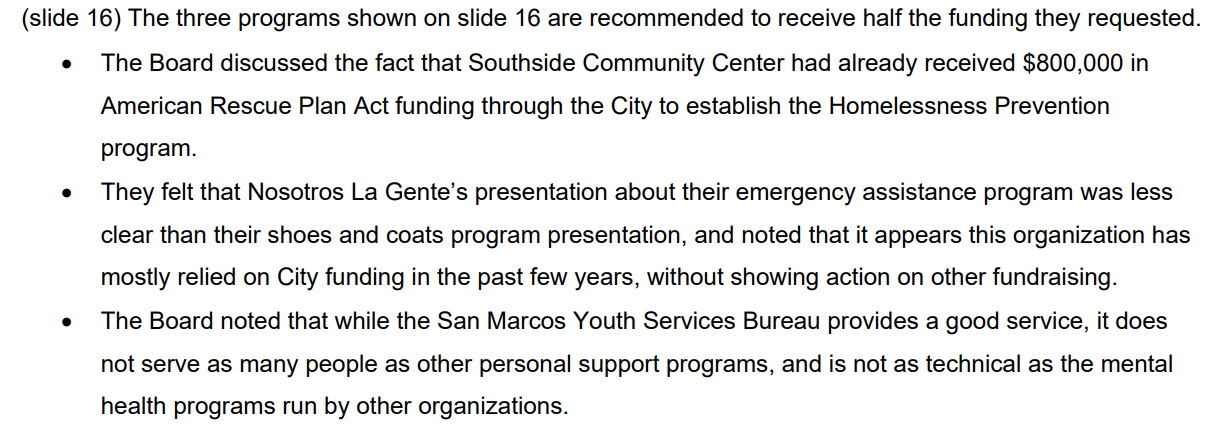
For example:
The rest of their thoughts are on pp 435-437, here.
They were very thorough.
…
Back to Citizen Comment
Three speakers from Southside show up to talk. Here’s what they say:
Southside is in a funny position. In 2024, the city gave Southside $800K of Covid money to implement a Homeless Action Plan.
They came up with a plan and put in all the work to get it up and running. Now they’re trying to sustain it over time. They asked for $100K from HSAB, but were only granted $50K.
The $100K is for their homeless prevention program – giving families $1000-2000 to get through a one-time financial crisis, so that they don’t get evicted.
…
Let the horse-trading begin!
Matthew kicks it off. He wants to try to get Southside back up to the full $100K that they asked for, for homelessness prevention.
Matthew proposes:
Take $4500 from Rough Draft
Take $5000 from Lifelong Learning
Take $10,000 from Hill Country MHMR
Give that $19,500 to Southside.
Ok, what are these things?
Rough Draft:
Their funding would go to $0.
Lifelong Learning:
Ok. Their funding would go from $9000 to $4500.
Hill Country MHMR
Their funding would go from $60,000 to $50,000.
….
What does Council think?
Question: How many people would Southside be able to help, with this $19K? Answer: About ten families. Average cost to stabilize someone after a financial emergency is $2k.
It’s actually a huge bargain. If they’d been evicted, it would cost $15-30K+ to stabilize a family once they become homeless. (Plus, y’know, becoming homeless is awful. This is way more humane for the families.)
Question: Are you all applying for other grants? Answer: SO MANY. Funding is scarce, and federal funds have been slashed.
Alyssa: The entire premise of horse-trading these dollars is problematic. Most agencies didn’t send someone here tonight to answer questions. We don’t have context and expertise. This is haphazard. I am not on board with any of this.
Amanda: Matthew, what about moving some money from the School Age Parents Program? They said they’d be able to keep the program open on $7,500, but they’re being awarded $15K.
Matthew: How dare you. Abso-fucking-lutely not!
[I’m paraphrasing. Matthew just said something like, “They do great work!”.]
Amanda: I’m trying to throw you a bone here!
Matthew: Hard no.
Amanda: Well, I’m a no on Hill Country MHMR especially. Their work is desperately needed. We are in a mental health services desert, and this program will fund teenagers without insurance.
Alyssa: I’m a NO on all of this, but especially NO on Hill Country MHMR. Homelessness and mental health are completely intertwined. There’s so much need here.
The votes are each held individually:
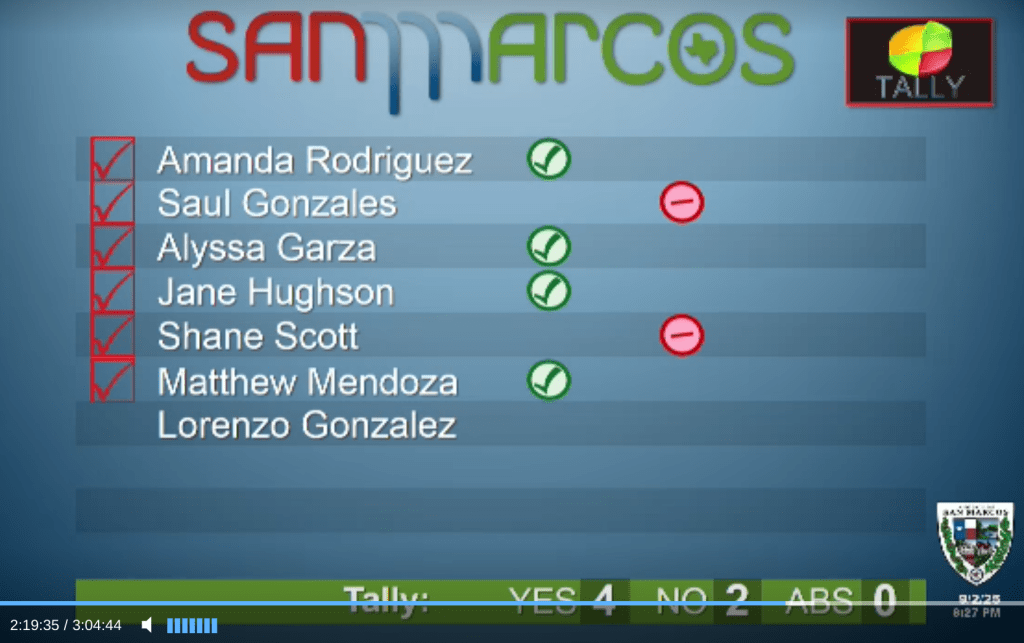
Move all $4500 from Rough Draft to Southside Homelessness Prevention?
Yes: Matthew, Jane, Amanda, Lorenzo, Saul
No: Alyssa, Shane
2. Move $5000 from Lifelong Learning over to Southside?
This motion dies without getting a second. So it never comes to a vote. That kinda surprised me.
3. Move $10K from Hill Country MHMR over to Southside?
Yes: Matthew
No: Everyone but Matthew
4. Amanda throws in a vote on the SMCISD School Age Parents Program:
They get $15K.
Should we take $5K from them, and give it to Southside?
Yes: Amanda, Saul
No: Matthew, Lorenzo, Alyssa, Jane, Shane
So that fails.
..
Me, personally: It’s an awful decision to make. I probably would have taken money from Rough Draft, Lifelong Learning, and maybe SMCISD School Age parents. But not Hill Country MHMR.
….
So that’s where it lands. Southside picked up $4500 more, and Rough Draft went to $0.
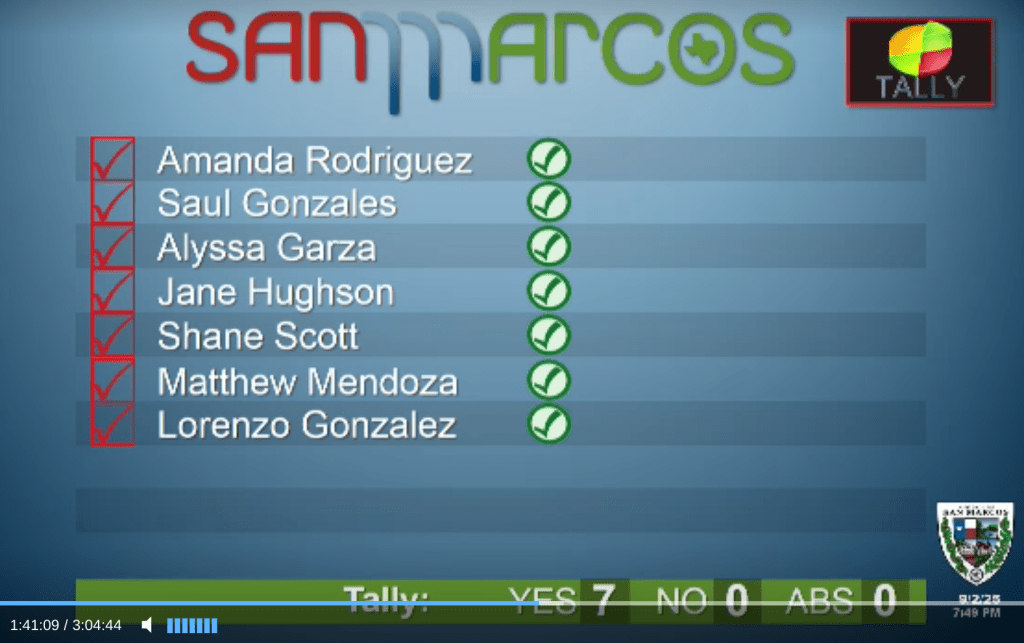
The final official vote on HSAB funding passes 7-0.
…
One more note!
We just spent $750K on the poor and vulnerable.
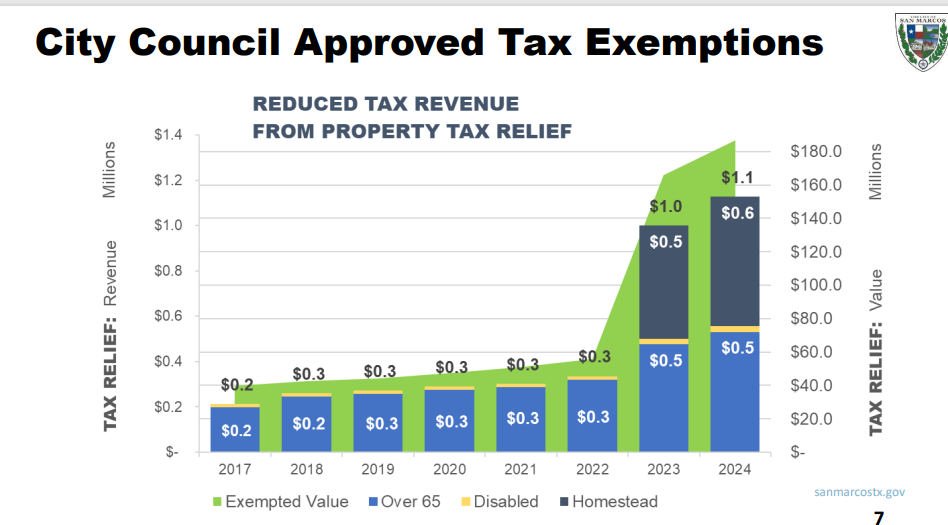
But we also spend $1.1 million on tax breaks to home owners every year:
About 30% of San Marcos owns their own home. That $1.1 million is just for them.
People who want to slash property taxes never seem to appreciate how much of their own lifestyle is being subsidized.
….
Item 19: Dunbar Recreation Center
Dunbar was named for Paul Laurence Dunbar. He was the first black poet to get widespread recognition. (He was not from San Marcos in any way. He’s from Ohio.)
Originally, the Dunbar neighborhood did not have a specific name, besides being called “the colored neighborhood”. The school was called The Negro School. In 1961, that was renamed after Paul Laurence Dunbar, and then gradually the whole neighborhood came to be known as Dunbar. So the Dunbar Rec Center just got the name “Dunbar”.
Would we like to include the poet’s full name here? Everyone says yes.
Great!
Lots of interesting history on the Dunbar neighborhood here and here!
….
Item 20-21: Jorge’s Mexican Restaurant.
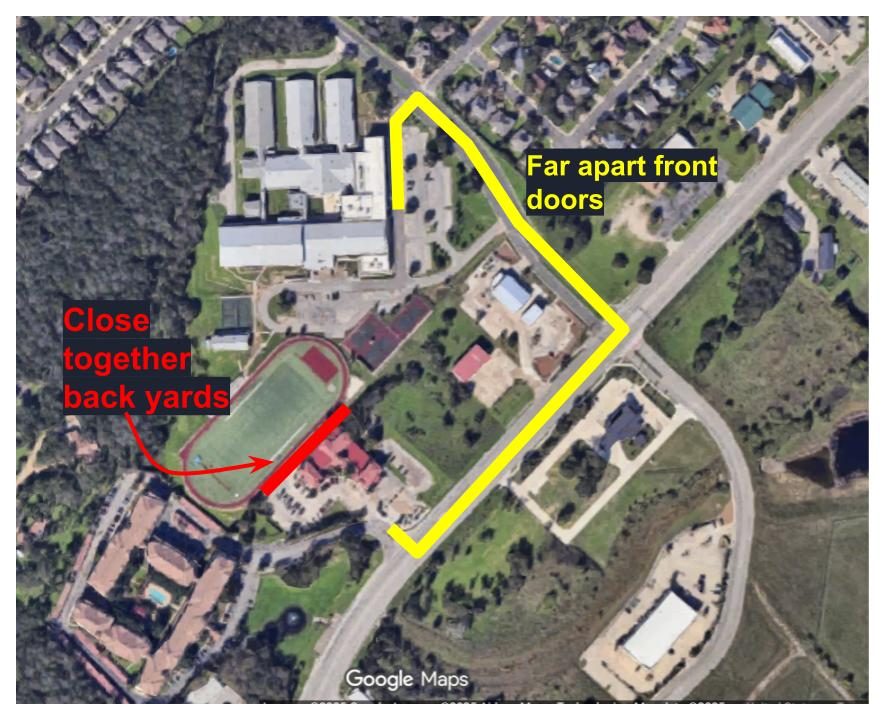
Jorge’s is on Hunter Road:
Separately, Miller Middle School is on Foxtail Road:
Their front doors are far apart:
…but they share a back fence.
This causes all kinds of problems for Jorge’s, because there are extra-strict rules for selling alcohol within 300 feet of a school.
This means that Jorge’s has to do a lot more:
Renew their alcohol permit every year, instead of every three years like everyone else.
Renew their distance variance every year, which grants them an exception to the 300 foot rule.
The main problem is the fees – both of those cost $750, so Jorge’s is paying $1500 every year.
Why is it so expensive?!
Mostly because of postage. The city has to notify everyone within 400 ft. The rest of the cost is to cover staff time, to process the paperwork.
Everyone wants to at least refund half of Jorge’s fees, since the city can save costs by processing both the alcohol permit and distance variance at the same time.
They’re going to try to come up with a long term solution, too.
Some years, citizens get fired up and angry at the budget. This year was the opposite.
Three people spoke on the budget, and they all praised council for increasing funding for the Human Services Advisory Board. (HSAB grants are how the city helps fund all the nonprofits that help kids, people in poverty, vets, the elderly, etc.)
It was pretty short!
…
Items 20-24: Welcome to our $371 million dollar budget!
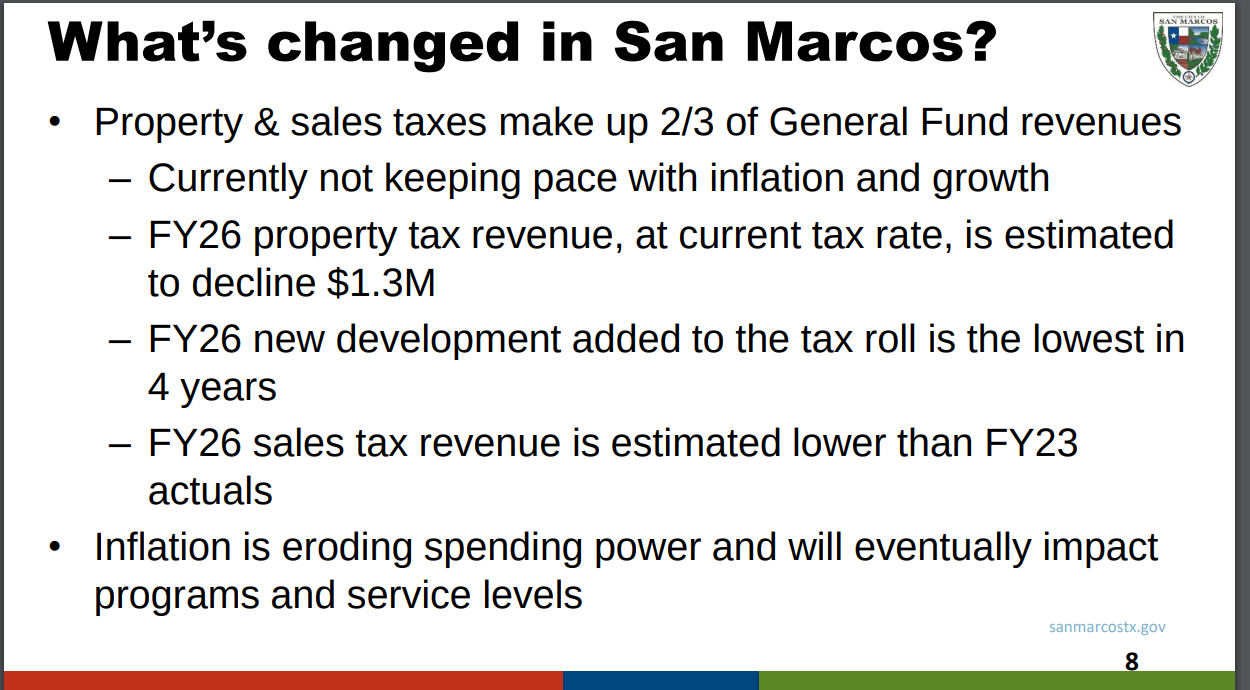
We’re bringing in less money from sales tax and property tax.
Sales tax peaked in 2023 and hasn’t returned. Property taxes have been flat. Actually, they’ve gone down on existing properties, but they’ve been propped up by new builds.
City department budgets were flat two years ago. This past year, they cut $100K collectively. But everything is getting more expensive, so even holding things flat means you have less purchasing power.
The State Legislature is always, always trying to knee-cap cities:
This past session it was House Bill 73 and Senate Bill 10. City staff implied that there were a few others. All of these cap city spending or cap city taxes.
The concept isn’t new – we already have caps on tax hikes. But these new bills are brutal in their severity.
All these bills were still up in the air last Tuesday, when city council met. Since then, the special legislative session ended. As far as I can tell, none of these passed? But Abbott could always call a 3rd session, or these could return in 2027. So this is always looming.
(Can you imagine how relaxing it would be if our state government wasn’t so hellbent on wrecking Texas cities?)
We’ve got three apartment complexes that were purchased by HFCs, and we’re losing about $630K in tax revenue from them. (They’re tied up in lawsuit appeals, so it could still tip our way.)
There are almost $4 million worth of new expenses that are kicking in soon, over the next 1-2 years.
The ones with the checkmarks were funded from federal Covid money, which is expiring next year.
6. Council also has some new priorities, which cost money:
Increasing HSAB funding by $200,000
Increased funding for tenants rights and tenants legal support
Start an office of community support and resource navigation.
Probably more that I’m not remembering
…
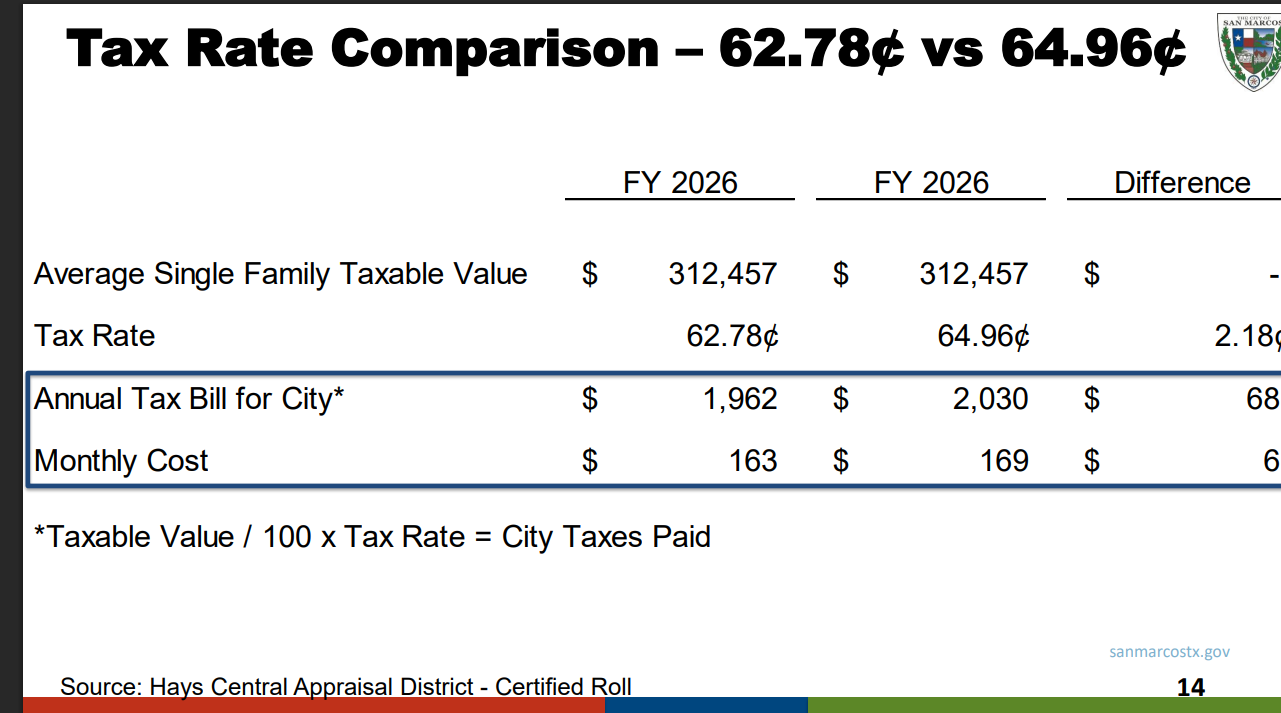
Because of all this, tax rates are going up.
I mean, we don’t really have a choice, right?
If you own a $365K house, here’s how it affects you:
If you own a smaller house – say $200K assessed value – then you’d pay like so:
Last year: $1,115 per year, or $93 per month. This year: $1,252 per year, or $104 per month.
We always focus on home owners here, because it’s easy to compute their tax costs. But rest assured: landlords cover the cost of property taxes by passing it on to their renters.
My back-of-envelope estimate is that an average renter pays about half as much: $640 per year towards their landlord’s property tax bill, or $53 per month.
…
Your utilities are also going up:
This is mostly based on CUAB recommendations. CUAB stands for Citizens Utility Advisory Boards.
Basically, if you don’t raise rates for a few years, you’ll get into a big financial hole. Then your bond ratings tank and it gets more expensive to borrow money, and you’re in even bigger financial trouble. To get out of it, you’d have to shock the community with a giant rate hike in order to right the ship.
So the idea is that it’s better to nudge prices up gently every year, to keep up with inflation. CUAB is the one that has to figure out the new rates. This is that.
…
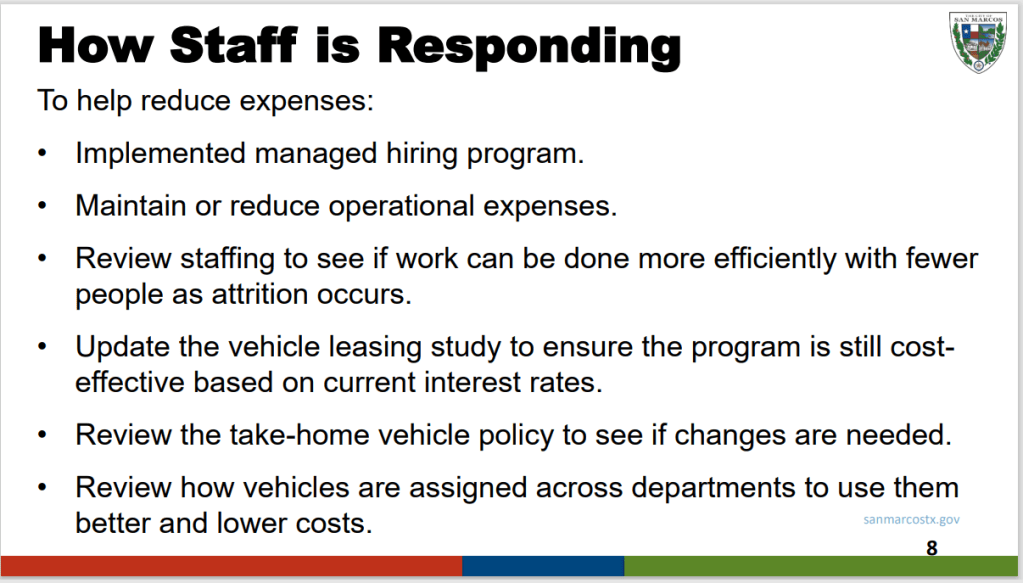
One funny detail: The goal is to stabilize our budget going forward. We could have scrapped by this year, but then we’d be in a big hole next year. The looming expenses will kick in, and we’d have to raise taxes a lot, or cut services significantly, to handle it.
But because we’re being proactive, we actually will have $1.3 million of breathing room in the meantime.
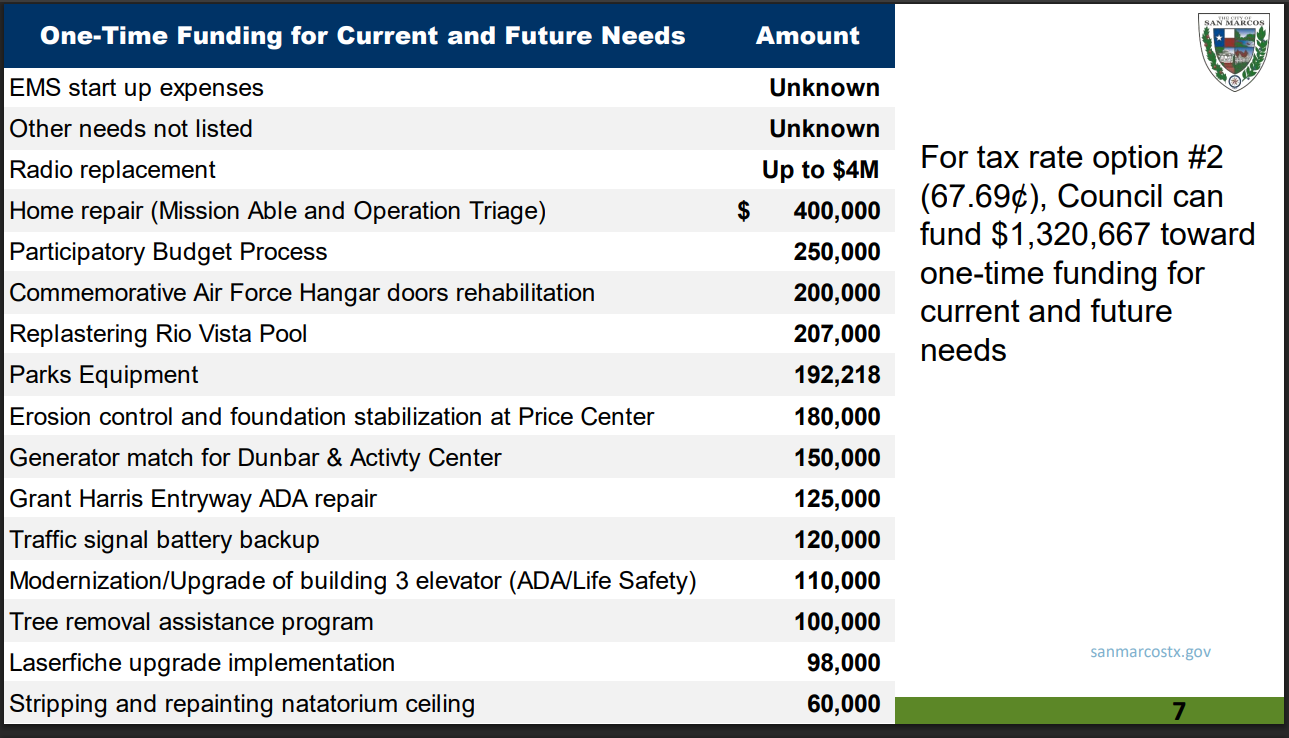
City staff went to all the city departments, and asked about things like deferred maintenance projects or other ongoing needs. Here’s some possible ways to spend the money:
Council will hash this out later.
…
Finally: my yearly rant about taxes.
Taxes are good! This is how we can take care of our most vulnerable people. This is how we can solve collective problems, without someone trying to extract as much profit as possible.
We do this in order to prove a point, or something? The feds can’t force us to feed our kids or get medical care when we’re sick, dadgum. )
Look, the United States can easily afford for every person to have a safe home, free healthcare, and access to healthy food and education. This country is extremely wealthy. Collectively, we can afford to lift everyone out of basic poverty. We just choose not to.
Stop electing Republicans who are in the pocket of extremely wealthy Texans.
(End of rant. Thanks for playing along!)
…
Back to council. How did the votes go?
The votes on the tax rate and the budget:
Lock step, baby!
The votes on the various utility funds:
That’s the votes on Trash & Recycling rates, Electric Utility rates, and Water and Wastewater rates, respectively.
The votes are dropping like flies! Hang in there, councilmembers! They all passed, though.
….
Saul asked some interesting questions about our water supply:
Q: How much water do we sell to other cities? A: We sell to Kyle, to County Line, and we sell reclaimed water to Buda and others.
(I don’t know what “County Line” means, and when I try to google it, I just get a bunch of BBQ joints and maps of counties. ¯\_(ツ)_/¯ )
Q: What happens if they don’t use the water they buy? A: Our contracts are “50% take or pay”. So they have to pay for at least 50% of the water we’re setting aside for them, even if they don’t use it.
Q: Were we ever in danger of not getting our water from Canyon Lake, due to drought? A: Both Canyon and Edwards water have tiered drought restrictions. So we always get some water, but they require us to use less water during a drought. Before the July floods, Canyon Lake was Stage 4, but now they’re Stage 1. Edwards Aquifer has been between Stages 3 – 5 all year long. They’re about to tip into Stage 5 again.
…
That’s all of the budget talk for today! The official, final vote will be at the September 16th meeting.
…
Item 25: Just one tiny rezoning!
This is 906 Chesnut St:
From the street, it looks like so:
That’s if you’re standing on Chesnut looking back towards LBJ. Vie Lofts is on the right.
The developer wants to rezone it as CD-4. (Basically, they want to tear it down and build small apartments.)
Everyone says okay.
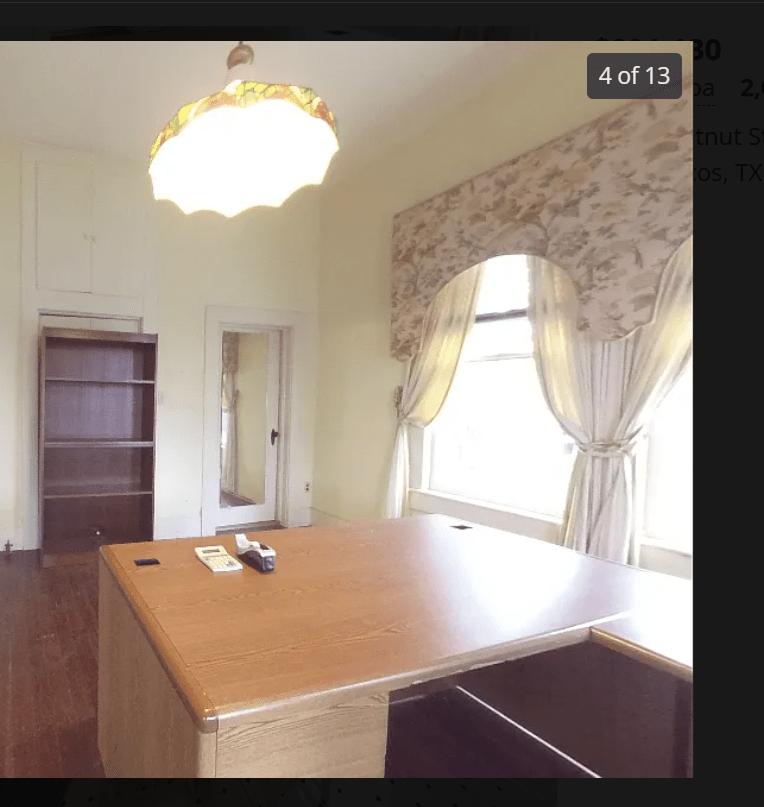
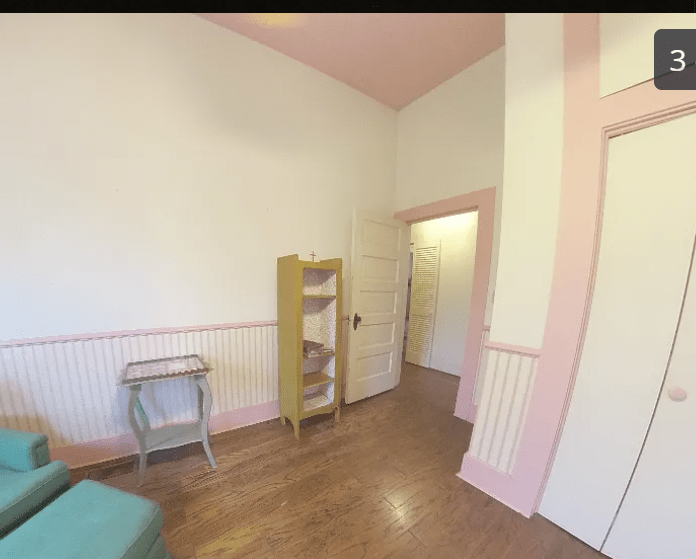
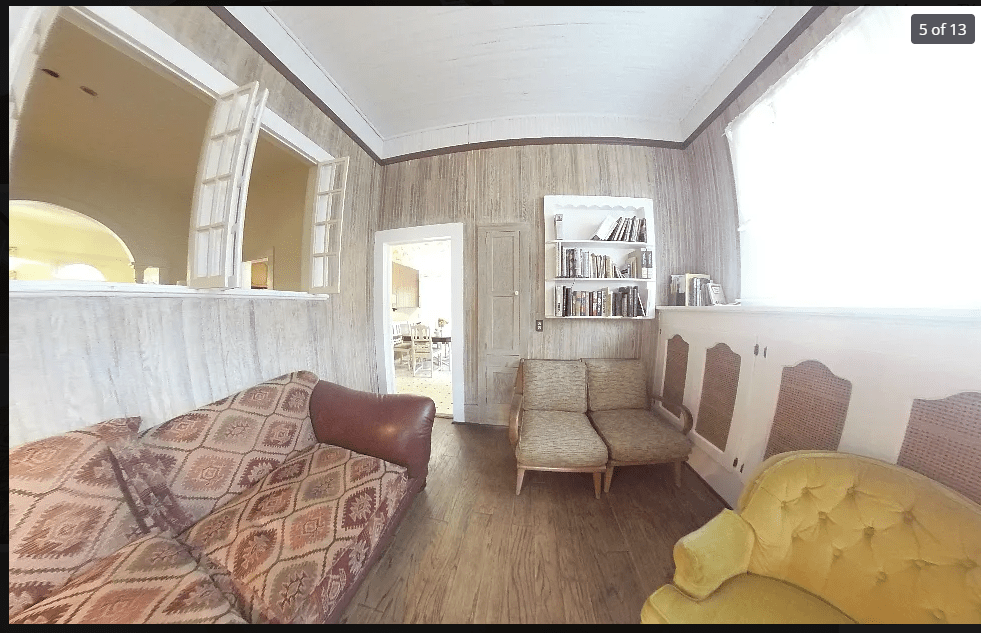
I’m okay letting it go, as long as we take a moment to pour one out for this wallpaper:
I mean:
I’m not made of stone, people.
Also this window treatment:
and maybe this pink trim:
ok, and this built-in cabinetry and paneling:
I take it back! Save this house! It’s too pure for this fallen world.
Honestly, the rest of the meeting was pretty zippy. A few quick items:
postponing the new development by the high school
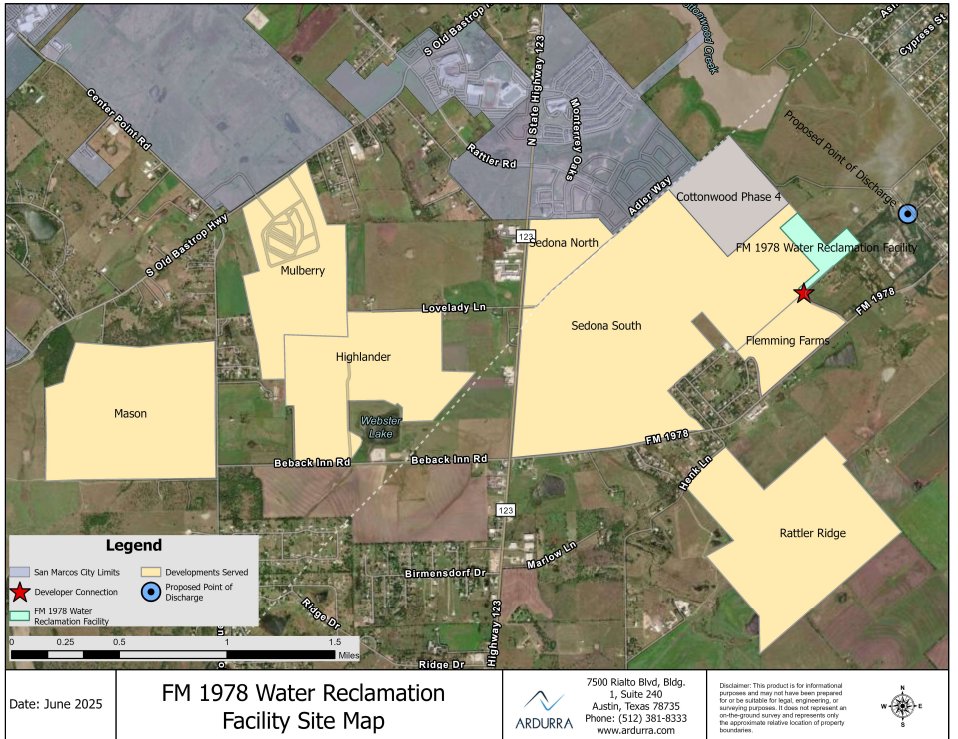
funding for the new water reclamation facility
funding for CARTS
setting some dates for elections and city council meetings next year.
On CARTS, we pay about $621K, and the federal and state government combined pay about $1.75 million. That’s great! Redistribution of wealth at work.
…
One last detail: Executive Session
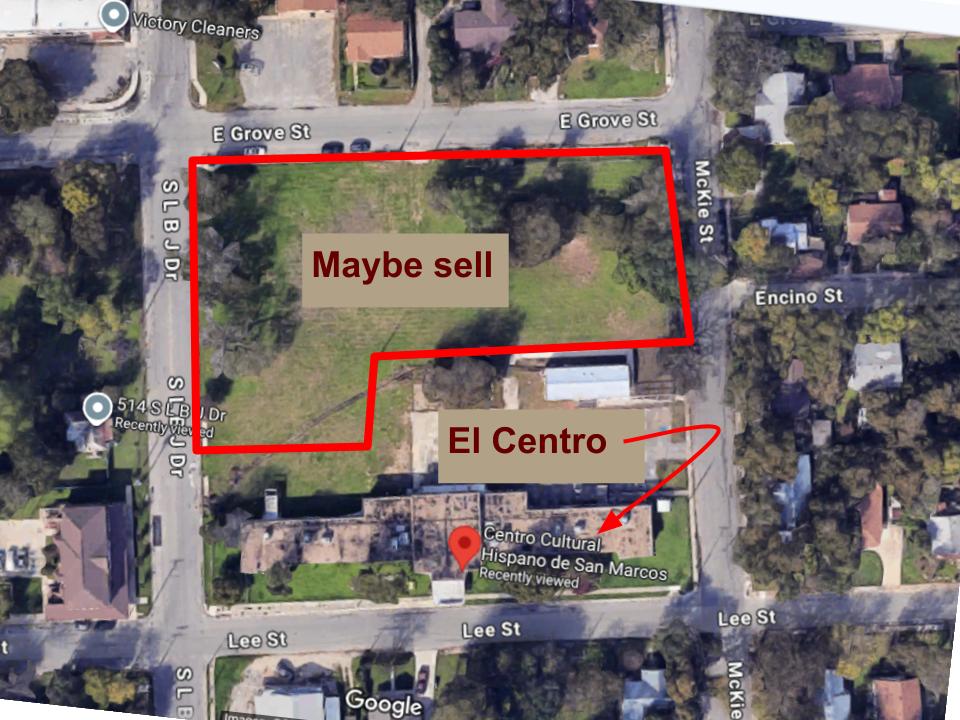
Finally, Council discussed this land in executive session:
That’s the land that SMCISD is selling. There’s a big petition and movement in the community for the city to purchase the land, so that they can dedicate it towards the Mexican American and Indigenous Heritage and Cultural District.
So I don’t know what happened in Executive Session (obviously), but afterwards Council directed city staff to ask SMCISD about delaying the deadline of the sale, so that the city can get its ducks in a row.
I think it all comes down to timing:
Can the city speed up enough to meet SMCISD’s budget crisis timeline?
Can SMCISD delay long enough to accommodate the city’s due diligence and bureaucracy?
Also Hays county is somewhere in the mix, too. We’ll find out the details eventually!
There is only one topic, but there are over two hours of comments. It’s all data center, baby.
There were 14 speakers in favor. Here are the main arguments made by the people who want us to approve it:
These are all over the place already.
San Marcos needs the tax revenue.
I am the property owner, or I’m going to work in some way on this project, and it sounds great to me
There were 29 speakers opposed. Here are the main arguments made by the people who oppose it:
We’re in a drought, and data centers use a massive amount of water.
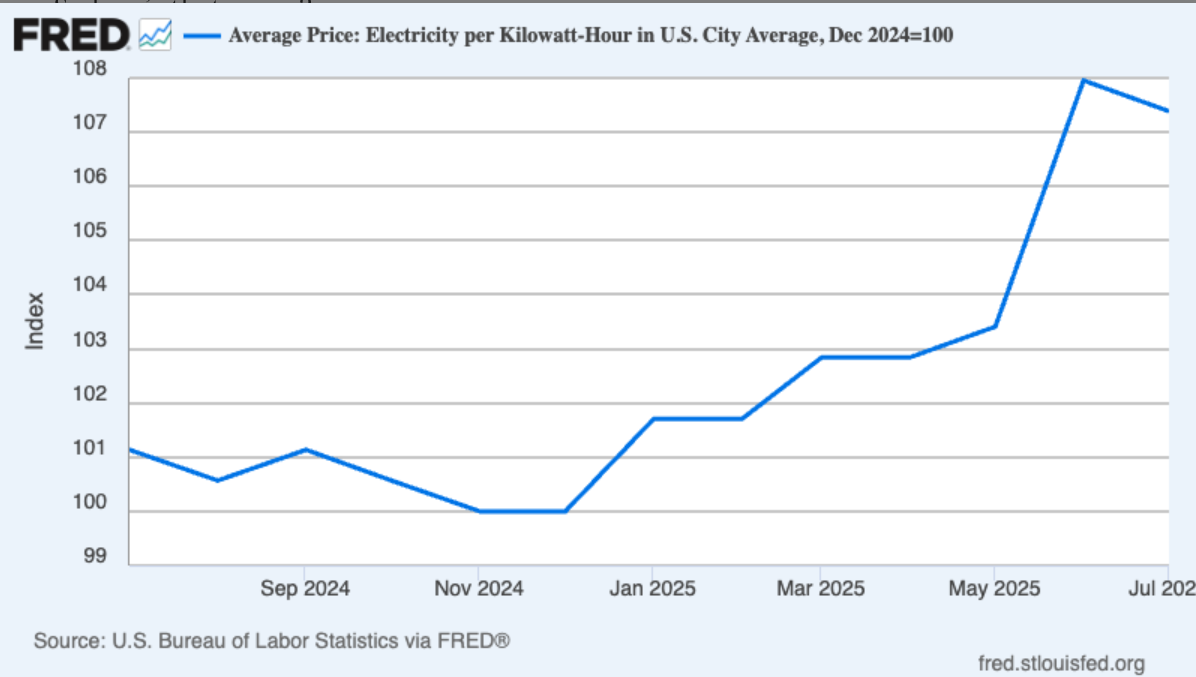
Data centers use a massive amount of electricity. Our rates will go up, this is bad for the environment, and the grid can’t handle it.
Don’t sell out the San Marcos river to greedy corporations
Cyrus One is secretive and unwilling to answer basic questions.
Anecdotally, people have stories of odd illnesses from living next to data centers.
There were another few speakers opposed at the 3 pm workshop, and then another 25 at the public hearings. (The vast majority were people speaking more than once, though.)
This will take up the vast majority of the meeting, so we’ll unpack all these points. Stay tuned.
…
Items 10-13: But first! we have the quickest little rezoning.
Have you ever been driving south on I35, towards New Braunfels, and noticed these guys?
They make concrete, and they’re here:
The owner wants to zone two little blocks of land, between Heldenfels and I-35:
He wants these to also be Heavy Industrial.
No one is fussed. Everyone says okay.
…
Items 14-16: Ok, it’s time for the AI Data Center. This is a doozy.
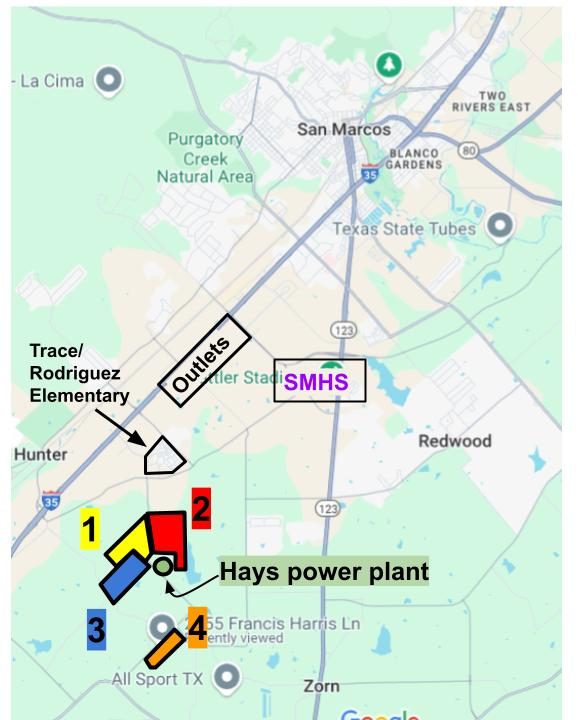
Background: We are talking about land here:
The property owner wants to zone this land Light Industrial, so that he can sell it to Cyrus One, a data center company.
Let’s talk about data centers
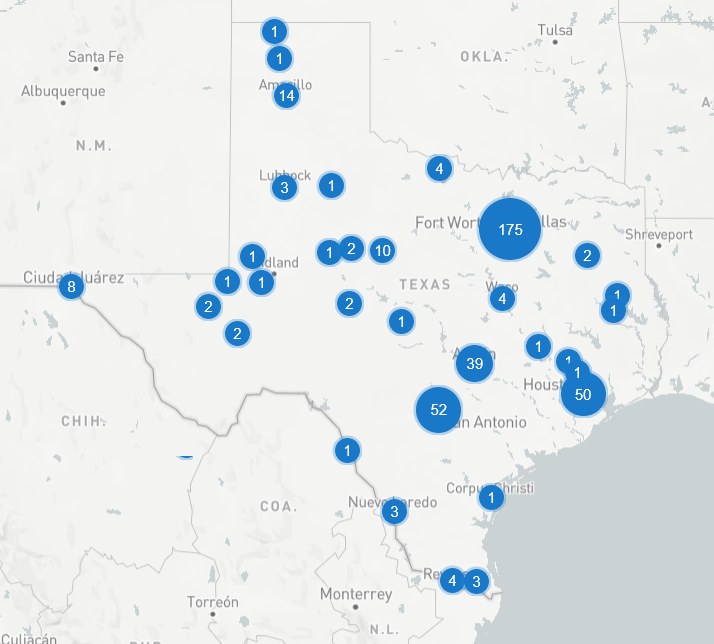
Apparently there are 300+ data centers already in Texas. Of those, 40 are in the Austin and 49 are in San Antonio:
Not counting the one on tonight’s agenda, there are apparently two being developed in Caldwell County and three more in Hays.
Data centers have two big problems: they use a lot of water and they use a lot of electricity. Texas makes this worse, because counties aren’t allowed to regulate use of natural resources. (Virginia Parker, director of the San Marcos River Foundation, said we’re the only state with this particular idiocy.)
So as long as data centers stay outside of cities, there is currently no way to regulate how many get built.
This specific data center
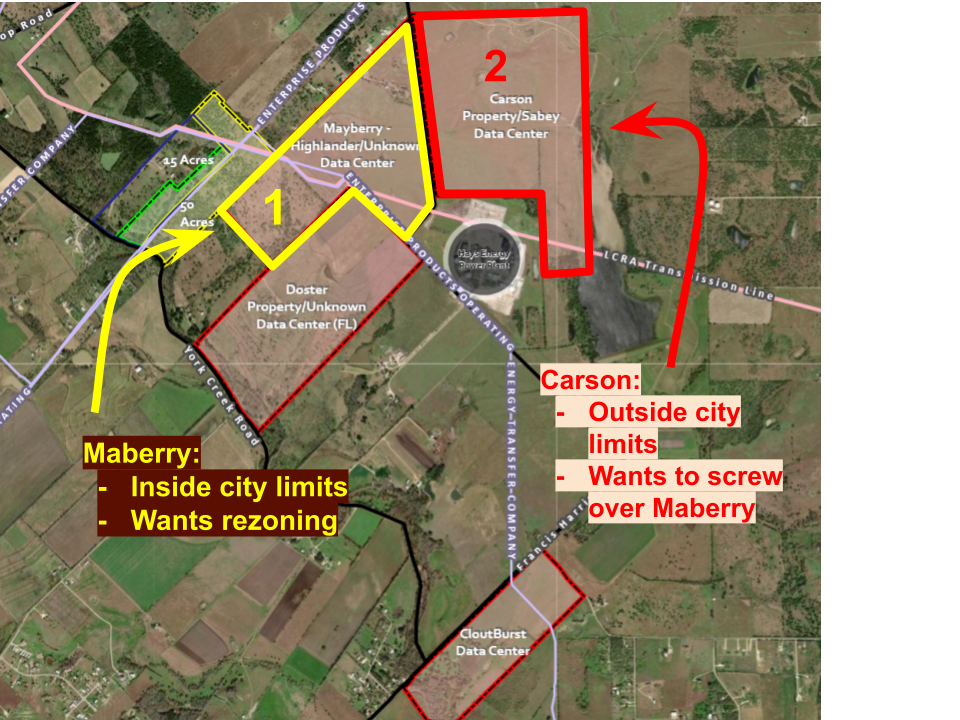
The owner is a guy named Mayberry, and the property has a funny history. (Not funny haha.)
Back in 2022, he asked the city to annex most of this land into San Marcos. He wanted to sell the land to a developer, to build single-family homes out there.
This was always a weird, terrible idea! First, the sprawl would be insane. It’s farm land out there, not close to anything.
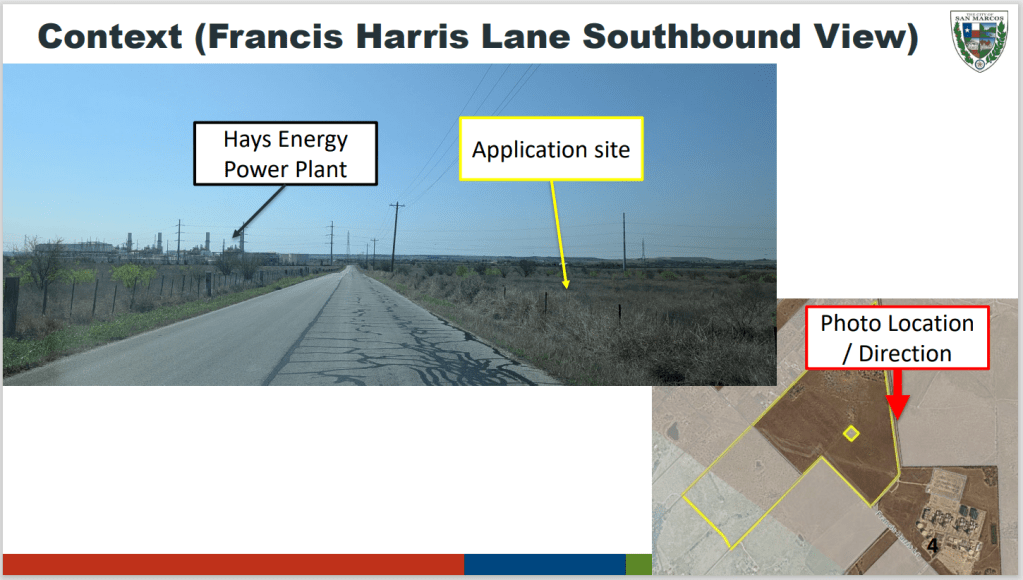
Second, there is a massive power plant next door:
Council had endless discussions about whether it was fair to build homes next to an extremely loud, bright, flashing power plant. In the end, they settled on a mandatory disclosure to potential buyers and some fencing.
It’s been three years, and clearly no one wants to build these houses. So Mayberry has moved onto the next idea, which is this Data Center.
But since most of the land has been annexed into San Marcos, he now has to get permission from the city to rezone.
In this one data center, and only this one, we now have a say.
Back in March, Planning and Zoning denied the rezoning. (In fact, this was Jim Garber’s last meeting.) Planning and Zoning had a ton of concerns.
When P&Z votes down a rezoning, it takes a supermajority at Council to overturn them. So tonight, the data center will need 6 votes out of 7, in order to pass.
We’re going to cover these topics next:
Noise and lights
Water
Electricity
Impact on San Marcos, and the Restrictive Covenant
Property taxes
Buckle up!
Noise and lights:
Staff basically says, “Look, plenty of data centers are in residential areas already and everyone seems to be chill with it. Look!”
“Isn’t that so close? See?”
“And also, what if Mayberry had built those homes! Wasn’t that an even worse idea?”
(For the record, Jane, Shane, Mark Gleason, Saul, Alyssa, and Jude Prather voted yes for those homes, in 2022. Max Baker voted no.)
The comparison to the imaginary, nonexistent homes is silly. The homes don’t exist.
…
Here’s the real argument the city should have made: this data center is next door to the Hays County Power Plant.
Seriously, the noise, lights, and weird vibes that come from this data center will be dwarfed by what’s already coming from the power plant.
2. Water:
Data centers run hot, and so they use a lot of water to keep the computers from overheating. A traditional, evaporative system uses maybe 550,000 gallons/day?
Technology has gotten better, and now they use a closed loop system. You fill up the building one time, and then it keeps re-using that water for the lifespan of the building. After that, the only water needed is for employee bathrooms and kitchens.
Mayberry says that the initial fill up will require 60K-70K gallons of water per building, and there are 5 buildings. So roughly 400,000 gallons will be needed to fill the buildings, one time.
After that, he says that each building will use about 4-7K gallons of water each day. That’s pretty normal for a business:
3. Electricity:
The electricity is insane.
Mayberry says that each building will use about 75 megawatts of power. So over five buildings, they will use 375 megawatts.
City staff says that all of San Marcos, at peak usage, is about 150 megawatts. Every single one of us, on the worst day in August! That’s insane. On a typical October day, all of San Marcos uses about 25 megawatts. So these data centers really do gobble up a ton of energy.
Two questions come up: – Will this drive up water use, indirectly? – Will this drive up rates?
Both answer are yes, sort of.
Producing electricity requires water. But it’s not using San Marcos water – it would be from any power plant, in the entire state. All the electricity from all of the power plants gets dumped in the grids, and it gets blended around. When you draw electricity, you’re getting a random blend of all those sources.
(Also, not all energy sources require water. Gas, coal, and nuclear all do, but wind and solar don’t.)
The same is true for electric utility rates: all 300 data centers are putting a huge strain on the grid. More power needs to be generated, and that is going to cost money. But that cost is going to get spread across the entire state.
4. Impact on San Marcos and the Restrictive Covenant:
This data center will not use San Marcos water or San Marcos electric. Water would be supplied by Crystal Clear water, and they’d get electricity from Pedernales.
All data centers in central Texas are harming all of central Texas. The bad effects are distributed pretty evenly. We’re all using the same water table and tapping into the same electric grid.
This specific data center does not specifically damage San Marcos or the San Marcos river.
The Restrictive Covenant: A restrictive covenant is a legal contract of all the hoops that the developer is willing to jump through, for the city.
Since getting knocked down at P&Z, Mayberry is trying to do whatever he can to get approved. Here’s his offer:
and
5. Why even do this?! (Property taxes)
Allegedly, it would bring in an enormous amount of money.
To put that in perspective: This past year, we’ve had a budget crisis, and city departments had to make cuts. Total, across all departments, we cut $100,000, and it was a huge strain. $9 million would go a very, very long way.
My two cents
I’m out of step with my readers here, and I apologize. I think we should take the money.
Data centers are run by greedy, irresponsible corporations that do not care about local resources. They will exploit and destroy all the beauty in this state, if they can. Texas desperately needs to regulate this industry and limit the number of data centers that are being built.
And yet!! I think we should hold our nose and let them pay us lots of money. There is so much need in San Marcos, and so much poverty.
Rejecting this does not move the needle on the actual problem. Take the money.
Here is what Council says:
Matthew Mendoza goes first, and he is fired up. He says:
I voted against putting houses by the power plant. Terrible idea.
We didn’t annex SMART/Axis because of local activism, and now they’re building anyway, except unregulated. I get complaints every day from people who live in Pecan Park. Annexation means regulation, and that’s good.
We cannot run this city on tax income from neighborhoods. It’s not sustainable. You all don’t pay enough in taxes for how much it costs to run a city.
We need opportunities in this town. My blood is in the river and soil! Jim Garber was my scout leader!
Jane Hughson goes next:
I have a ton of water cred. I was the first chair on the board of the Edwards Aquifer Authority, senior board member of ARWA, etc.
I’ve got some concerns, but I also am open to negotiation.
Listen up: you think you hate living next to a data center, but you would really hate living next to manufacturing. I’m trying to keep that from happening to you.
The amount of power needed is crazy. I have a lot of questions that we’ll get to.
Saul Gonzales goes next:
No. I’m a hard no. I listen to my constituents, and they know more than me. Everyone knows my reasons why. No.
I’m also a hard no. I’m not going to dismiss the voices of this many people.
…
Let’s pause and talk strategy:
This item needs 6 out of 7 votes to pass. Saul and Amanda are voting no. Therefore it can’t pass.
But everyone pretends like this didn’t just happen! We proceed to have a detailed discussion for the next hour. It was a little weird.
However: the ending is not black and white, so I’m going to force us to walk through all this slowly.
…
The nitty-gritty questions
Q: Can the restrictive covenant be changed? A: Yes. This is just a first reading. Staff can bring back changes for second reading.
Q: Is the property owner willing to make the covenant permanent, instead of expiring in 20 years? A: Sure.
Q: How can we enforce the covenant? A: A bunch of different ways:
1. The biggest items are how buildings are built. We withhold occupancy permits until it passes inspection. We have a lot of leverage there.
2. We can require them to submit their monthly water bill to the city, and make it publicly available.
3. We have an (overworked, underfunded) code compliance division who will make the rounds out there and check for things like noise violations.
4. For any other violations, we’d take them to court and get an injunction. Court orders them to stop doing whatever they’re doing.
Q: How do you end up using 4-7K gallons of water in each building, each day? A: That’s pretty standard for a regular office building with a bathroom and kitchen. Nothing major.
Q: If you ever had to drain the closed loop, what would you do with all that water? A: It’s got a ton of awful chemicals in it. It would need to be disposed of as a hazardous waste. That can’t go down the drain.
Q: Can they build their own gas power plant and get around ERCOT? A: Not if they’re in the city limits. They’d need approval from P&Z. If they’re outside the city, yes.
Q: Why does everyone have stories of how this will cause electric rates to rise? A: Electric rates will definitely rise, because of the 300 data centers across Texas. Whenever there are new grid costs, those costs are spread across the entire state. So we’re already facing this. This particular one doesn’t affect us any more than the rest.
Q: Can you use reclaimed water on all your landscaping and stuff? Will you be sustainable? A: Sure.
Q: Can you fill the original big amount of water using reclaimed water? A: Probably not worth it, to run pipe across the street for a one-time use. Q: but could we use a water truck? A: Yes, that would solve the pipe problem. We don’t know if it’s okay for a data center.
Q: Go back over the part about how much water it takes to make electricity. A: It does take water to make electricity, if you’re using non-renewable energy. But not for wind or solar. But all the electricity goes into a big mushpot. So data centers just draw a big blend of energy. It’s not coming from the San Marcos river or anything.
Also, if you’re starting a new power plant, you have to show ERCOT that you’ve purchased the water rights before you connect to the grid. You can’t just start using the Edwards Aquifer for your new power plant.
Q: Remember that KUT article about how we’re running out of water? It was factually incorrect and scared a lot of people. A: I know, right?! That was crazy. It was like the author missed the part of the presentation with the good news. We reached out to them, but they ignored us.
Q: Go back over the electricity usage again. A: Each building uses 75,000 MW of power, and there are 5 buildings. So they use 375K megawatts, altogether. On a typical day in October, San Marcos uses about 25K megawatts, and our peak usage is about 150K megawatts.
HOLY MOLY.
A: But keep in mind, they’re not on San Marcos power. But also keep in mind, the grid costs are shared by all Texans.
Q: How easy would it be for them to go through disannexation from the city, and build here anyway? A: It’s actually pretty hard to disannex. They’d end up having to sue us.
Q: So is Cyrus One backing out of the project? Why are they not here? A: No. They said they are “withdrawing from the zoning case.”
Translation: Cyrus One does not want to deal with San Marcos residents. To be super duper clear, they are 100% assholes who will screw over everyone and anyone. (I’m still okay taking their money.)
The vote
By this point, it’s well past midnight.
It’s finally time to vote:
So it fails! Remember, it takes 6 votes to override P&Z.
Remember an hour ago, when Saul and Amanda both said they were “no” votes? Lo! it hath come! As heralded.
The vote has failed.
…
SO IS IT DEAD???
No. This is where it gets murky.
Council dabbles in entertaining the notion to send it back to P&Z. The argument goes like this: “P&Z didn’t see the restricted covenant. Maybe they would have approved it, if they saw the current version! And if they approve it, then council only need 4 votes to pass this, and not 6 votes.”
However, Council cannot just send it back to P&Z. Either Saul or Amanda have to agree to reopen the issue. They both say no.
Amanda, in fact, is quite angry: “You lost a vote. Quit trying to find a workaround.”
(I mean, I’d be furious if I opposed the data center, as well.)
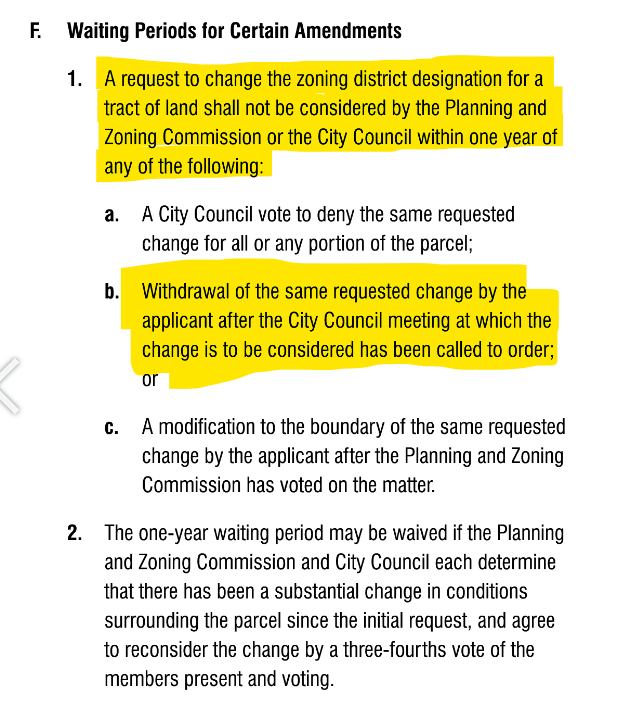
Council does not quit trying to find a workaround! They have a giant conversation about it. In fact, they break out the giant rule book of technicalities, to figure out what’s allowed and what’s not allowed. Will the developer have to wait 6 months or 12 months to re-apply? Or can they waltz in tomorrow with this exact paperwork, and re-apply, and go to P&Z for approval?
Answer: [This answer takes a while. Picture much shuffling of paper, scrutinizing all these detailed scenarios, double-checking what exact words were said. But eventually…] There is no waiting period. They can waltz in tomorrow.
So there you have it.
…
Bottom line: This application is dead. But Council left a trail of bread crumbs for the applicant to re-apply to P&Z and get a better outcome.
…
Item 19: Upcoming budget details!
We’re beginning budget season. At this meeting, Council sets an upper bound for the property tax rate for next year.
In many ways, this is a continuation of the 3 pm workshop conversation.
Normally there would be a big presentation. But it’s 1:30 am by now. I’m just going to zip through some key details.
Our property taxes are down:
If you add in newly built property, it’s a little better, but you can still see the problem:
Here are the different property tax rates that Staff proposes for Council:
and here’s what that means in terms of your property tax bill, if you’re a home owner:
Council ends up choosing ¢67.69 as their upper bound.
There is a really long discussion of how they got to this number at the 3 pm workshops. So if you’re curious, keep reading.
…
Item 20: Changes to the LDC
“LDC” stands for Land Development Code. All year long, staff makes notes about all the little improvements that anyone ever mentions. There are also things they have to change, based on the new laws passed by the legislature.
This is a big, long complicated process that will take months.
Everyone is exhausted, and they don’t go through the details. It’s going to come around a few more times, though, so we’ll unpack it before it passes.
…
The meeting was finally over at 3:11 am.
In other words, council members just spent TWELVE HOURS sitting in those chairs, up at the dais. That’s rough!
The big topic is the Data Center. It was postponed until August, though, so it’s not actually on the agenda for the meeting.
9 people showed up to talk against it. It is deeply unpopular!
Two people spoke in favor. They both happen to work for the developer.
Smaller topics:
Two people spoke in favor of Item 22, asking council for money to help fund veterans services in San Marcos
Two people spoke in favor of the Texas State hotel, in Item 20.
Two people spoke on general national and international political events. (Palestine, Trump’s BBB disaster of a bill, Adriana Smith, and more.)
…
Item 13: The Data Center proposal
It’s been postponed until August 19th.
😦
…
Items 14-15: We’re annexing and zoning 10 acres here:
They want to zone it Heavy Commercial.
A few years ago, we signed a Chapter 380 agreement with these guys. Part of the deal was that they get annexed and zoned when they’re ready to open. This is that.
…
Item 16: This is very close to the previous item!
It’s here:
It’s supposed to be this:
I mean, that’s super vague. But okay.
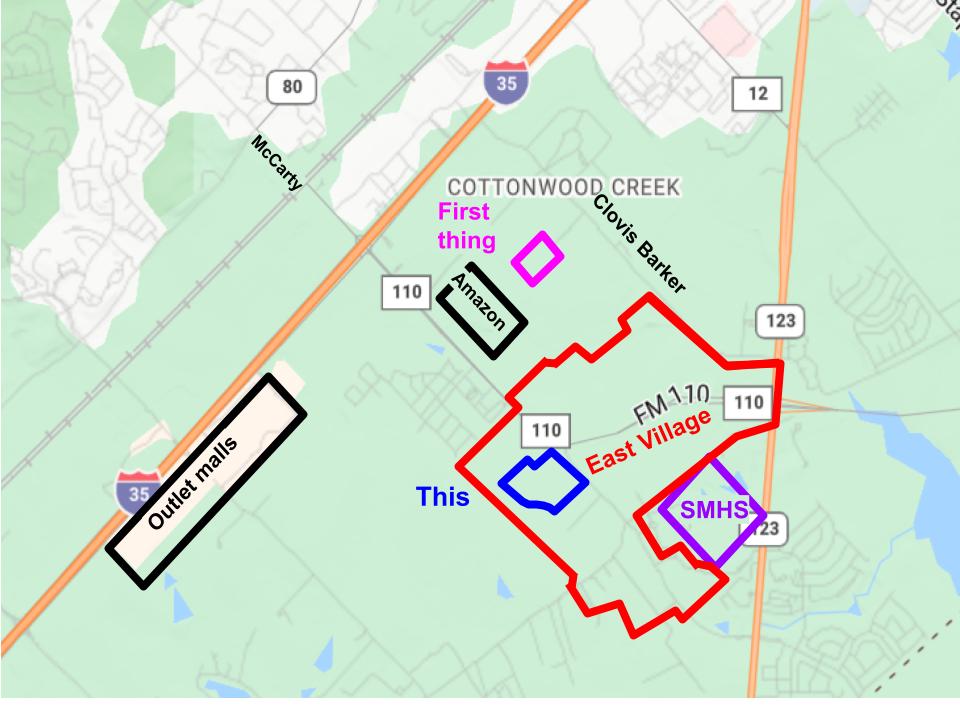
This is part of a whole bigger thing San Marcos is trying to do, called the East Village. It’s supposed to go here:
It’s supposed to be a dense shopping/living/working urban area. Read all about it, if you’re curious.
…
Items 18-19: There is a new wastewater treatment plant going in here:
There have been a ton of developments approved down this way lately.
We’ve talked about this one a bunch:
here and here, because of its impact on Redwood/Rancho Vista and flooding, and sewage problems.
Apparently there are a boatload more developments coming:
These areas are all contributing money to help pay for this wastewater treatment plant.
I don’t recognize most of those names! And I don’t think most of those are built yet? My guess is that they didn’t need city approval, because they’re outside city limits.
What it really is, is a massive amount of unchecked sprawl. That’s a big bummer.
(However, it’s not like it was caused by this wastewater treatment plant.)
…
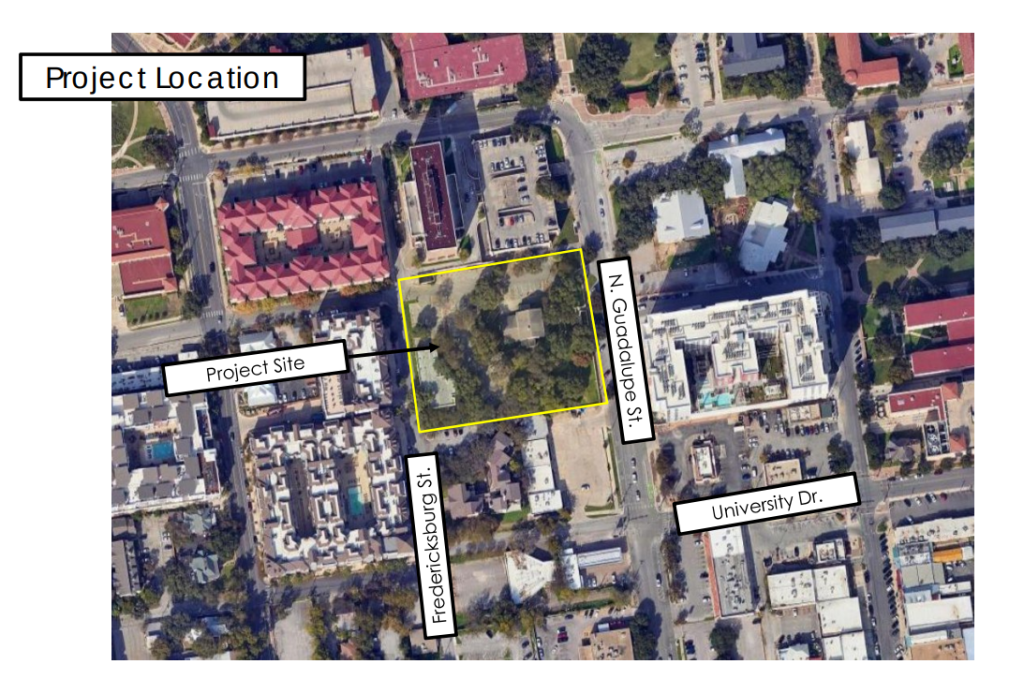
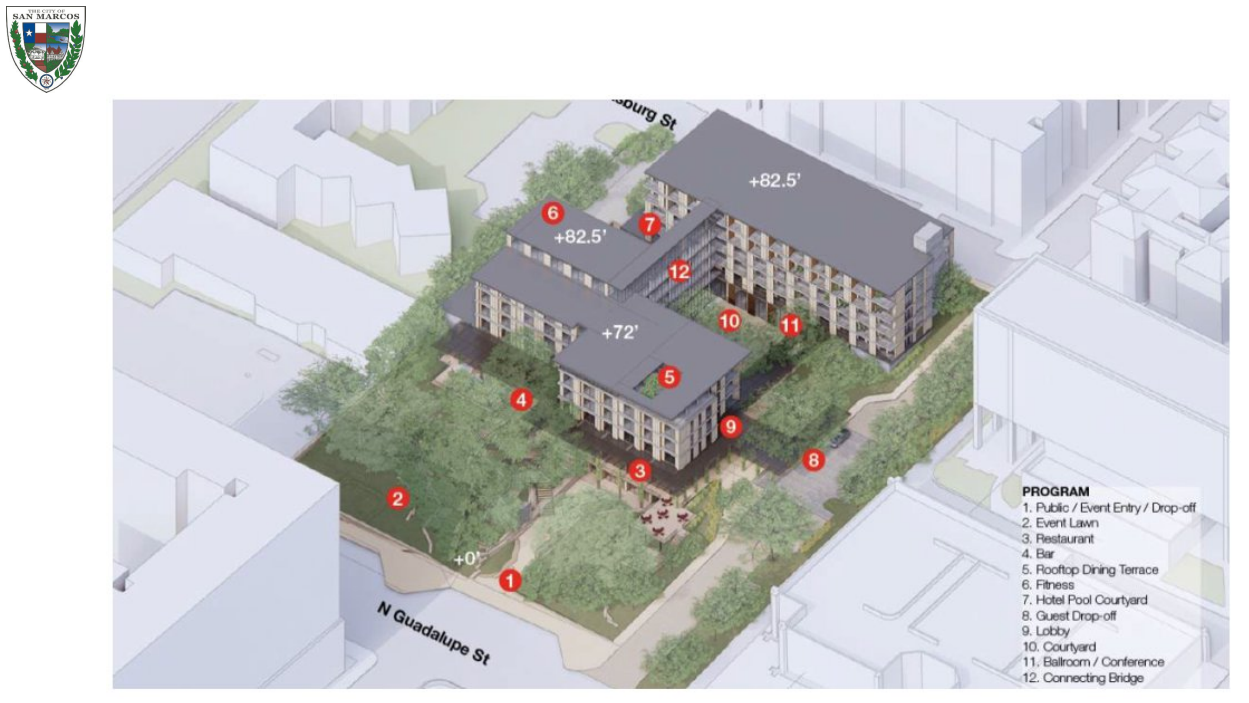
Item 20: The university wants to build a fancy new hotel.
They want to put it here:
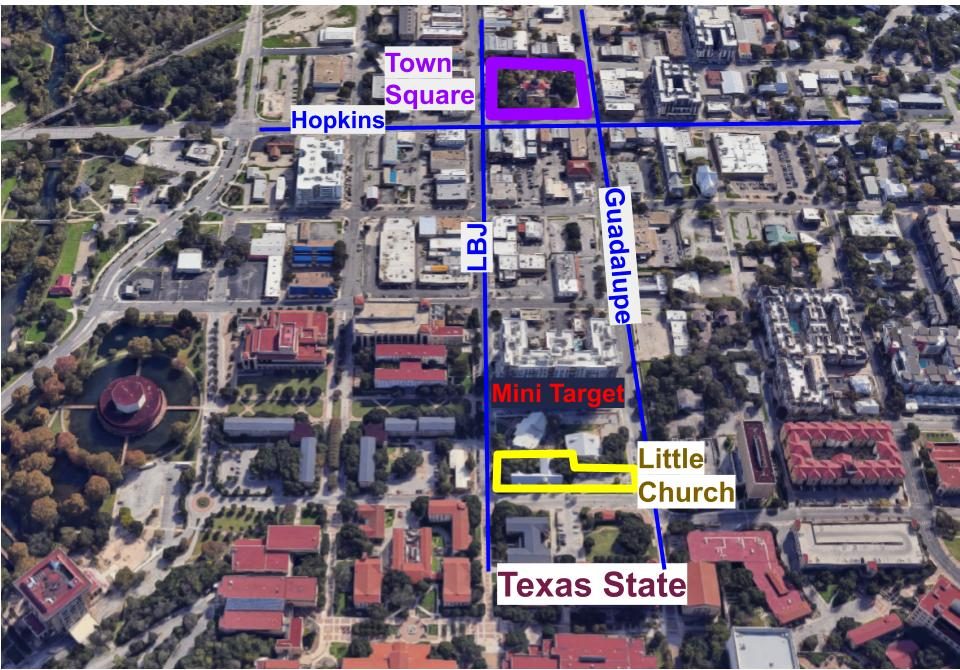
In other words, if you’re standing with Mini-Target on your right, facing the university, this location will be on your left:
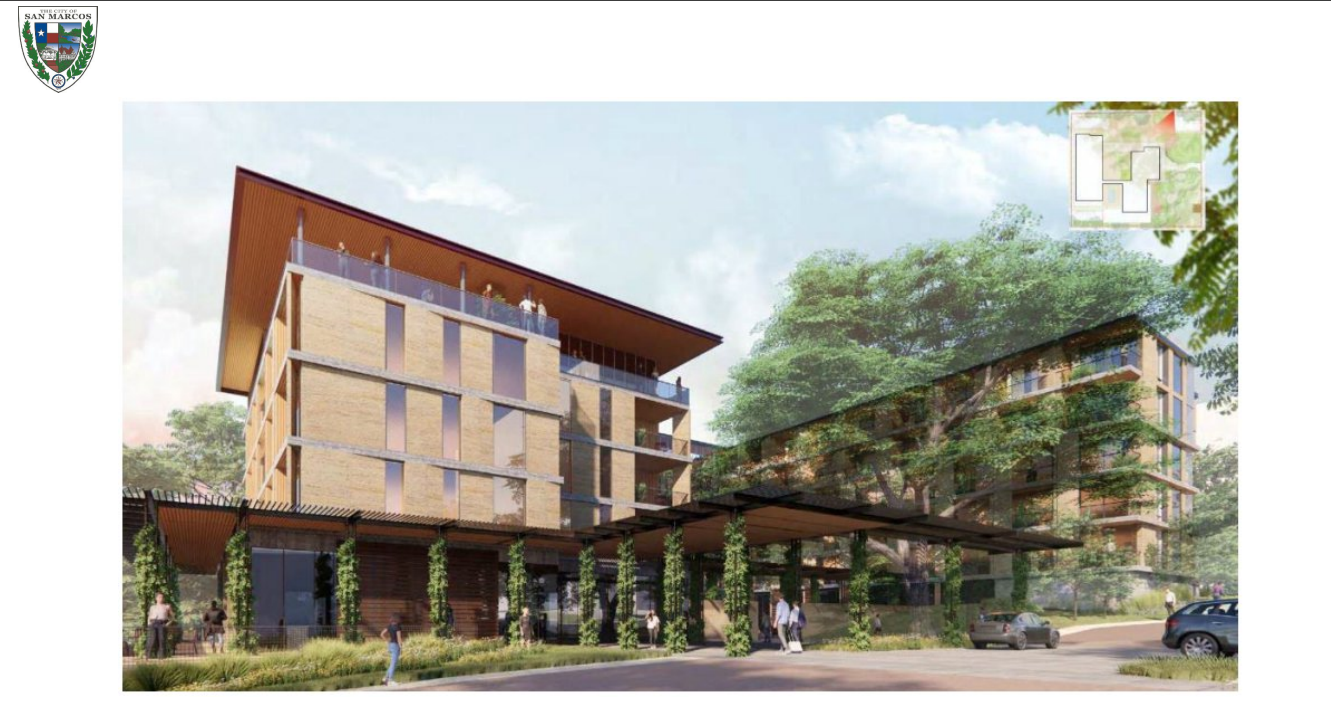
Here are a bunch of beautiful renderings from the presentation:
and
and
ooooooh! aaaaah!
Note: You should not trust beautiful renderings like these. They’re pretty pictures, not promises.
Here’s what they are willing to promise:
All this sounds great! I can see why the university wants a fancy hotel. This is also good for downtown businesses. Everything is great.
…
So why isn’t this great?
The issue is that they want a lot of tax breaks over the next ten years.
A hotel pays 3 kinds of taxes:
Property taxes
Sales taxes
Hotel Occupancy Taxes, or HOT Taxes.
Category 1: Property taxes. The actual ground under the hotel is owned by Texas State. Texas State does not pay property taxes. (This is why we lost $1.5 million in property taxes when Texas State bought Sanctuary Lofts and Vistas apartments.)
Texas State is going to lease the land to the hotel people. The hotel will pay property taxes on the physical bricks-and-mortar building, but not on the dirt underneath the building.
The estimated yearly property taxes will be $241K. We’re not offering any tax rebates in this category:
Ok, great.
My guess is that if the hotel owned the land, property taxes would be closer to $750K per year. But oh well.
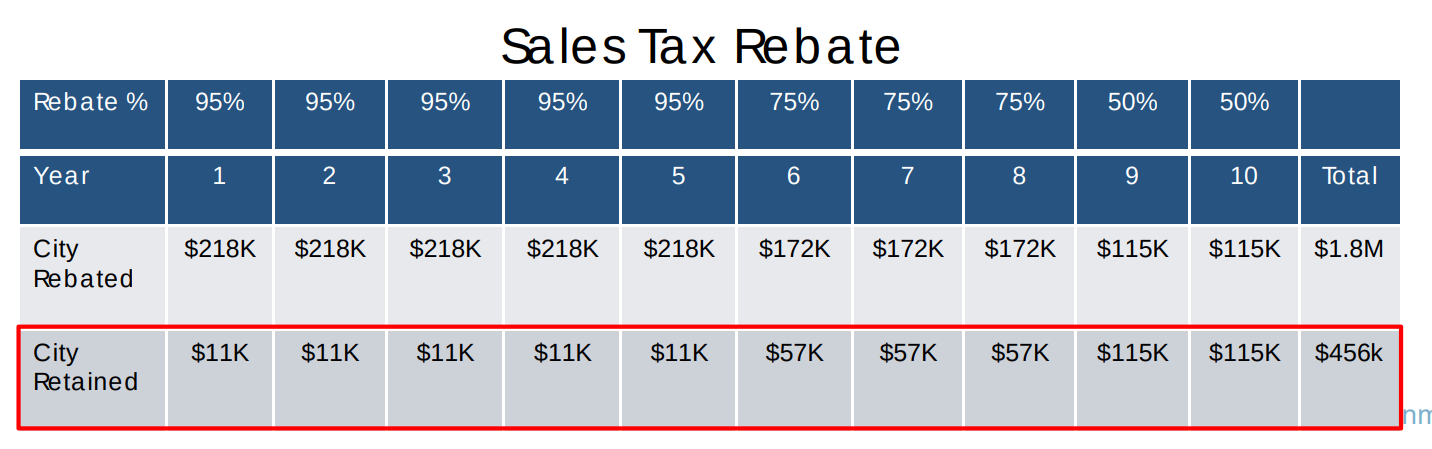
Category 2: Sales Tax: Here’s a big rebate.
For the first five years, they pay almost nothing. Then it steps up a little bit, over the next five years:
Ok, fine.
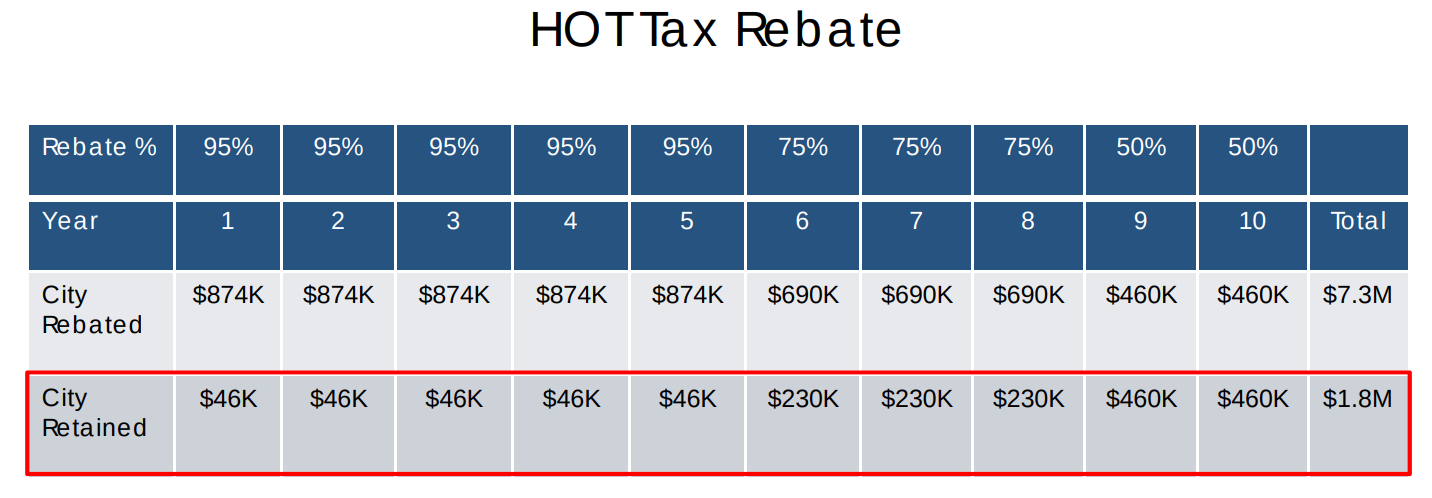
Category 3: HOT Tax: Also giving most of this category away:
Ok. This is starting to seem like a lot.
…
Total over 10 years:
If there was no deal in place, they’d pay $13.76 million in taxes.
Under this deal, they pay $4.66 million in taxes.
We’re refunding them about $9.1 million.
That seems like a terrible deal?
City staff says that unless we subsidize this hotel, they don’t have a viable business model. I think that means that… you don’t have a viable business model.
…
Listen: every time a luxury thing attempts to come to San Marcos, it goes out of business. This feels like wishful thinking. Like this bit:
In other words: “People will tube the river and then stay overnight in this hotel!”
Sir. SIR. We just spent months trying to keep the river free and affordable, because everyone who comes to tube is broke. A luxury boutique hotel is not going to keep any of them here.
I’m sure that there will be some fancy parents who pay full price, and I’m sure the University will put up lots of people (at a discount rate). Overall, I’m guessing the hotel struggles to turn a profit.
…
What’s in it for us?
Perk #1: They’re going to bring in some maybe-good jobs:
Amanda asks if these averages wages could be nudged up to $20/hour?
Answer: They’re open to running some numbers, and will come back with something definitive next time.
Perk #2: We’re protected if they sell the whole thing to Texas State. Since Texas State pays no taxes, the whole deal goes belly-up, and they have to reimburse us for the rebates:
But look: they could also just straight-up go out of business.
…
My 2 cents: There’s not much downside for the city, but I’m pessimistic anyway.
If we’re going to do this, we should:
Make the wages rise with inflation. Always. (We do this with every contract we sign with a vendor! This is common. We can extend this norm to low-wage workers.)
Get them to agree to be sustainable. Here’s some examples of sustainable University-affiliated luxury hotels.
Council votes on this, but it’s not the final vote. That will come at the next meeting.
…
Item 22: Veterans Funding
There’s a committee, the Veteran’s Affairs Advisory Committee. They undertook a big study over the past year, and concluded that there are four big needs in San Marcos:
A trained case worker specializing in veteran issues
Help figuring out transportation, especially when vets are trying to get up to Austin or down to San Antonio to the main office
Some money for the Veterans Memorial
Also ask the county to kick in money for the memorial
This item gets discussed for about an hour. Basically, the committee is making a very compelling case, but the city has very little money. It goes in circles.
…
Item 23: Gary Job Corps
What the hell is going on?!
Background: Job Corps are free job training sites, run by the federal government. You get free room and board, and get trained in some sort of vocation. You must be between 16-24 years old. Generally you’re there from 8 months to 3 years.
In general, the point is to give poor kids a path out of poverty, so that they can land a stable job.
Gary Job Corps is the one here in town:
Everyone always says it’s the oldest and biggest in the country! (I couldn’t actually verify this. This says the first job corps was opened in Maryland. This says that our site is 775 acres, which is probably the biggest because it’s an old air force base, but I can’t actually find enrollment by campus.)
On May 29th, the Trump administration announced that it was shutting down almost all of the Job Corps sites – all the ones run by contractors. This includes Gary Job Corps here in town. They gave everyone one month to shut everything down.
On June 5th, a judge ordered an injunction. Things are currently in limbo. It’s extremely hard to find good information on what’s going on. This is why Mayor Hughson wanted an update from someone involved.
There’s a representative from Gary Job Corps here today. He gives some information:
Currently there are 480 students enrolled at Gary.
When the May 29th order came, everyone was sent home.
About 400 students had somewhere to go, but the other 80 did not have anywhere to go. In other words, they were facing homelessness if Gary closed down abruptly.
When the June 5th injunction came out, Gary invited all the students back. About 25% have returned so far.
There are 99 sites nationwide, and 77 of them are being closed.
Jane’s big concern is these 80-90 students and families with nowhere to go. If Gary is shut down tomorrow, will they all become homeless? Very possibly, unless we work to secure some emergency housing.
Bottom line: they’re trying to work with the homeless emergency housing programs, in case Gary is in fact shut down, and 80 students and their families are abruptly turned on the street.
There was 3 hours of citizen comment, and another 45 minutes at the 3 pm workshops. Total, there were about 75 speakers across both meetings.
San Marcos turned out HARD this week.
The biggest topic: Proposed Resolution for a ceasefire in Gaza 37 people showed up to call for City Council to pass a ceasefire resolution, plus one more mentioning it at the 3 pm comments 17 people showed up to advocate against City Council passing a ceasefire resolution.
Both are pretty gigantic turnouts. Much to say. Stay tuned till this part of the meeting.
Next biggest topic: Will the new city hall stomp on the skate park and the dog park? – 12 people showed up to support the dog and skate parks at 3 pm, and two additional speakers at 6 pm.
Everyone loves the parks, and no one wants the city to stomp on them.
Topics with 1-4 people: – Opposed to the proposed apartment complex next to Little HEB, or at least advocating for some tenant protections to be included – Opposed to the proposed AI Data Center. (Not on the agenda tonight, but I think it was supposed to be discussed) – LULAC is holding their state convention in June, in New Braunfels, and you’re invited! Details here.
…
Here we go!
Items 9-10:
Background: About a year ago, there was a pretty big shitshow in town, regarding whether or not to approve some new apartments here:
It pissed off a lot of people! The main arguments against it were:
Student housing is exploitative
This will destroy a peaceful neighborhood
This will make traffic and parking worse
The university will buy it as soon as it’s built, and we’ll lose the tax income (There was a partial compromise to address this.)
It will displace the people who live in the smaller complex there currently. (Also a partial solution worked out here.)
The main arguments in favor:
We need more housing, period.
This will be walkable to campus for students
The tax money is needed, especially since Texas State just bought two giant complexes and they don’t pay taxes.
I was (and still am) in favor of approving these apartments. But I also think it’s urgent for us to address tenants’ rights with some meaningful ordinances.
Ultimately it passed, with some concessions. And it pissed off a lot of people along the way.
…
One final note: Shannon Mattingly was the director of the San Marcos planning department from 2015 to 2022. Then she went to work for the Drenner Group, which are some Austin developers.
Then she showed up back in San Marcos, on behalf of the Drenner Group, pushing for this apartment complex. It felt like a major conflict of interest – like she was using her inside-baseball knowledge to work the system. A bunch of people complained!
Shannon was such an insider on San Marcos codes that she knew she wasn’t technically breaking the rules. That also irritated everyone. Council sent the issues to the Ethics Review Board to make a new rule. I don’t think it’s come back from them yet.
….
Now Shannon Mattingly is back! With the same thing, in the same neighborhood! I found myself a little irritated.
(Different developer. She’s just been hired to get it through San Marcos.)
The new project
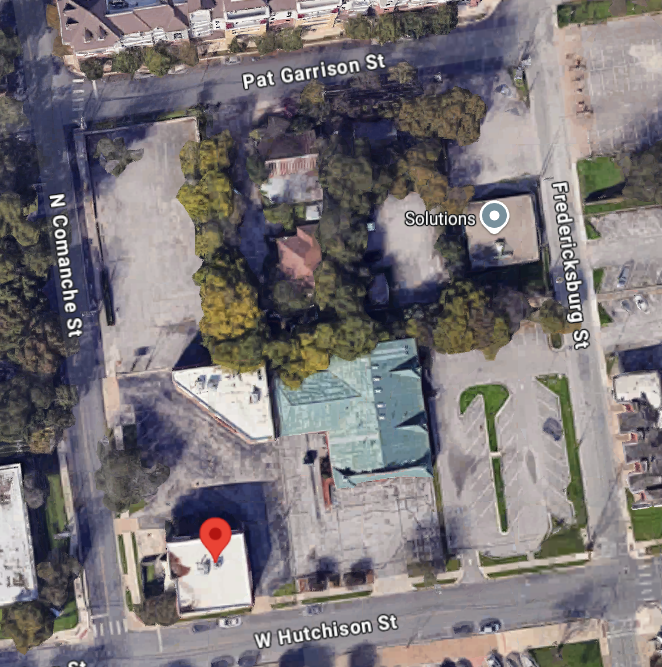
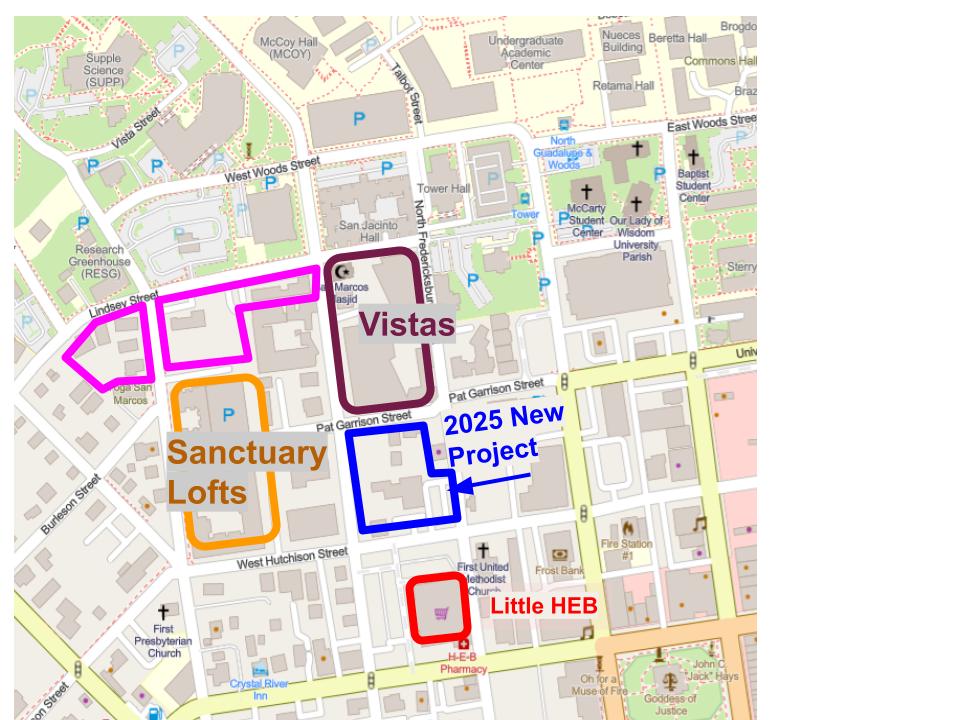
This new project is supposed to go here:
Right now it’s mostly parking lots:
But there are a few things.
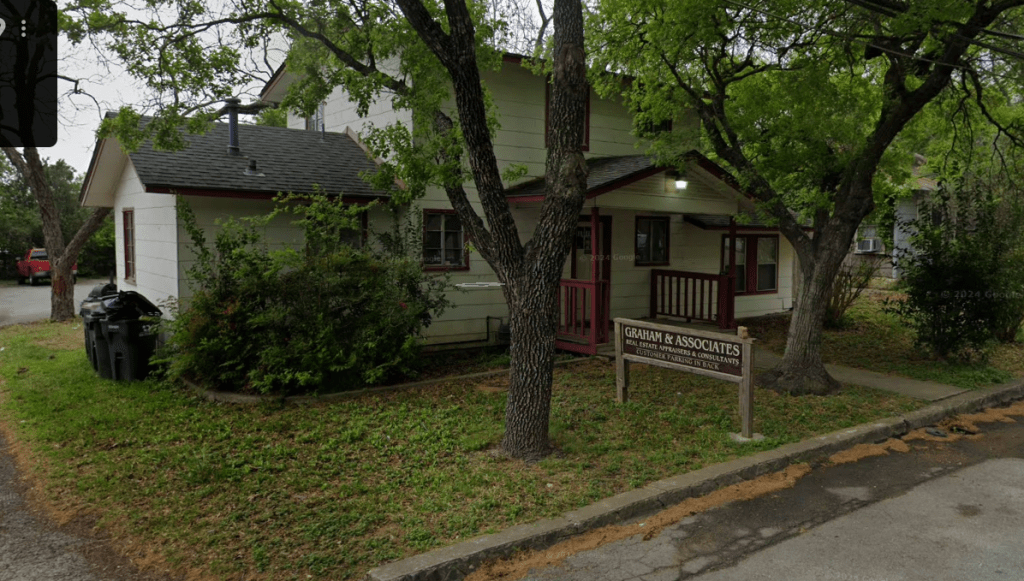
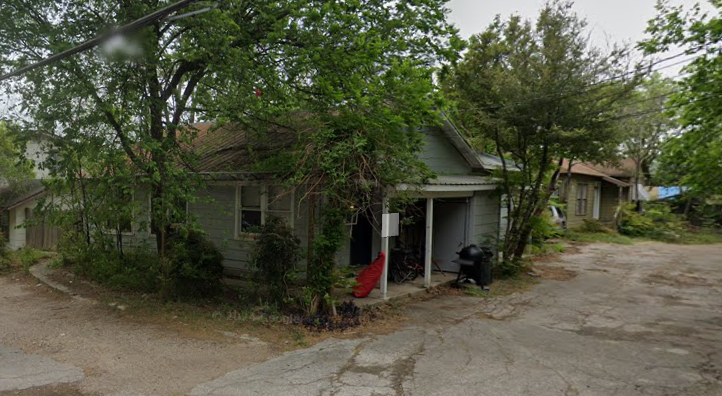
These cute little houses are on Pat Garrison:
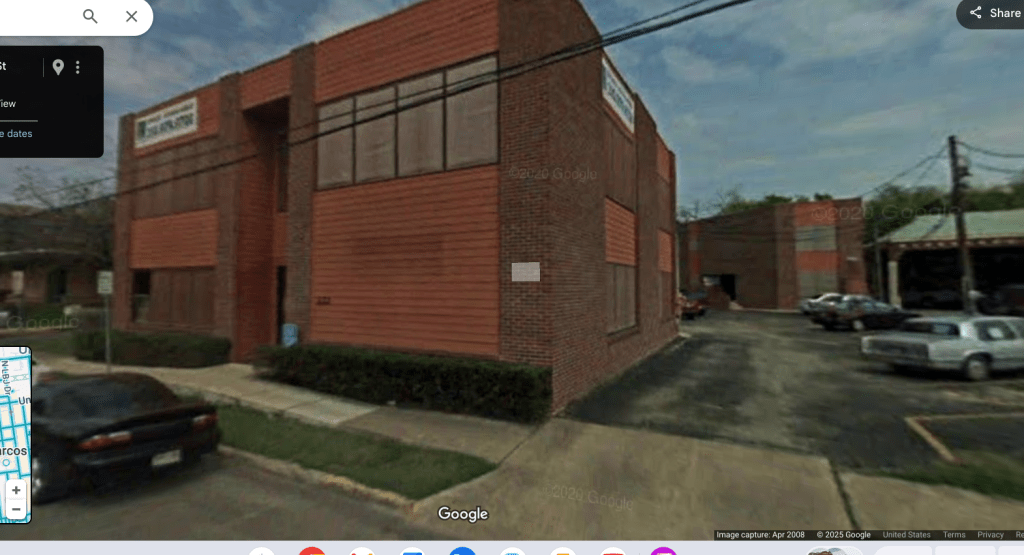
These dull buildings are on Comanche and W. Hutchison:
And this old D.R. Horton building:
which has since closed down.
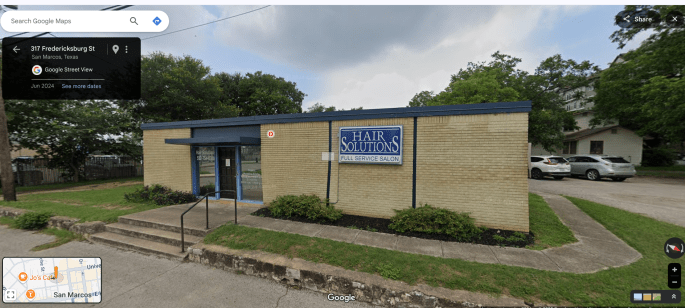
There’s also a little hair salon Hair Solutions is on Fredericksburg:
but it’s not part of the project:
So it will be staying.
…
Here’s the thing: it’s not a terrible place for apartments! It’s actually pretty good.
It’s just a little obnoxious to revisit the same exact neighborhood and push more change so quickly. Give us a moment to catch our breath, okay?
…
Onto tonight!
Three people opposed at citizen comment.
Four people spoke against at the public hearing. The main arguments are that student housing is bad for students. Other arguments were made about traffic and character of the neighborhood.
Seven people spoke in favor, but six of those are working with the developer.
Here’s a key detail: they do not need permission from council to build an apartment complex. Here’s what they’re allowed to build right now:
Five stories
75 feet tall
All units have 1, 2, or 3 bedrooms
1 parking space per apartment.
Rent-by-the-Bedroom leases are allowed
They’re here to ask permission for two specific things:
They want the “Purpose Built Student Housing” status. This would letd them put 4- and 5- bedroom apartments in.
They want seven stories instead of five.
Here’s what they’re offering up, by way of concessions:
They’ll double the amount of parking they offer.
The height would stay at 75 feet.
This is the developer’s explanation of how they’ll fit 7 stories into a 5 story building:
I guess? Here, you know you’re waiting for this meme:
mm-hmm.
…
One key detail: P&Z was not amused. They voted it down hard, 9-1. This means that Council needs a supermajority to overturn the recommendation.
…
One more complication:
These two apartment complexes were bought by Texas State back in 2023:
They were both converted to dorms. Texas State doesn’t pay city property taxes, so San Marcos lost a ton of money from this – probably well over a half million per year. Everyone was royally pissed off.
So now, any time one of these apartments gets proposed, council wants to make damn sure that the developer isn’t going to turn around and sell it to Texas State.
….
Questions from Council:
Question: Will these be affordable apartments? Answer: Not really. If we’re allowed 4- and 5-bedroom apartments, they’ll be cheaper than 1-3 bedroom apartments. But we’re not going for affordable here.
Question: Will you charge for parking spaces? Answer: Yes. Not all our students have cars, so it’s not fair to them to include it with the rent.
This is the wrong answer! The developer wants to charge for parking spaces, because if they include it with the rent, the rent will be higher. They want to advertise lower rents.
But Council wants parking spaces automatically included with the rent. If students have to pay extra for parking, many of them will say “screw it” and just park on the street. Council does not want the streets clogged with extra cars.
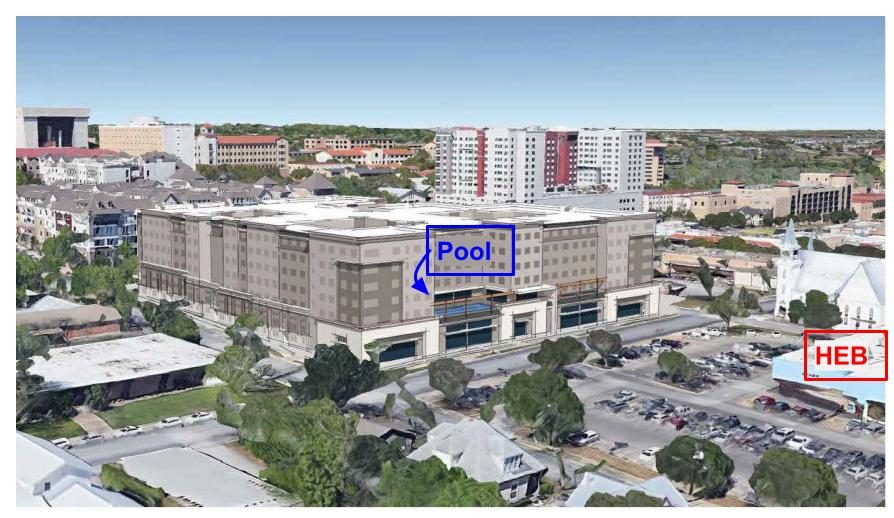
Matthew Mendoza: Will you put the pool somewhere else, so that people at HEB don’t have to see it?
Here’s what he’s talking about:
I mean, that’s not keeping me up at night, but okay.
…
Wheeling and Dealing:
Parking: Should they make the parking fee included, and students have to sign an affidavit that they don’t have a car, if they want it waived? (Similar to pets.) Council members said they wanted to, but then no one ever made an amendment. So no.
Selling to Texas State: Saul asks for 15 years, or even 10 years? The developer says absolutely not.
What if we say 7 years, but we don’t start clock once it’s built and open for business? The developer says okay.
How many bedrooms per apartment unit? It will be capped at 5 bedrooms. In theory, 4- and 5- bedroom units are “attainable” in price, even if they’re not “affordable” in price.
Can we require a certain number of affordable units, in exchange for the extra stories? This is called a density bonus, and it’s a common thing. But for some reason, in our code, we’ve specifically excluded Student Housing from this incentive. So we can’t.
Pool: You’ve gotta screen that thing in! For our eyes. Good lord. (This amendment passes.)
…
Final comments:
Jane: It’s very walkable. I’m not crazy about the 5 stories. It’s not going to be affordable. But okay.
Matthew: I love our single-family neighborhoods. This will help keep students out of them.
Saul: I’m a no, because of the sale after 7 years.
…
The vote:
Whoops. It FAILS!
Remember, P&Z denied this, so it takes 6 votes to overturn the P&Z vote. This ain’t that.
…
What happens next?
The developer pipes up: “I think we can agree to ten years after all!”
This makes Saul and Amanda both angry: “You’re playing games. You didn’t take us seriously when we asked if you could consider ten years. We’re still voting no.”
Finally it turns out that the developers misunderstood: they thought they weren’t allowed to sell the complex, period. But the city doesn’t care if they sell the complex – we just don’t want them to sell it to Texas State, or anyone else that is tax-exempt. The city just doesn’t want to lose the property tax income!
This is a much easier request! The developers are visibly relieved. “SURE!” they say. “10, 15 years, whatever. As long as we can close this out tonight.”
Council settles on 12 years from whenever it’s built and opens. So in practice, at least 15 years.
…
I’m combining two final votes into one here, but they went the same way:
So it will happen.
…
So: Are student housing complexes exploitative to students?
Basically, these companies play some legal ninjutsu. They avoid the word “lease”, because that’s a legal word with specific tenant protections. Instead, they offer “installment contracts”.
This is a big problem! This means that any time anything goes off-script, you’re still responsible for the entire 12 months worth of rent, ie $12k or $15K or whatever. Then, since they’ve got you over a barrel, they really do screw with tenants in ways that small-scale landlords just can’t do. Really, go skim through this post if you want to know the dirty details.
Nobody made any amendments regarding Tenant’s Rights, but it is on the strategic plan for this coming year.
…
Item 11: Speed limits!
This neighborhood is called the Wallace Addition:
They’re getting new speed limits!
Hopefully things are a little safer now for these folks:
It’s going from 30 mph to 25 mph.
Not that anyone is arguing with me on this, but here’s a nice graph showing how much safer pedestrians are when the car is going 25 mph vs 30 mph:
First, Texas state law says you have to do a traffic study if you want to drop the speed limit below 30 mph. So we did.
That last sentence is so interesting! So if cars were burning down these streets at 40 mph, we wouldn’t be allowed to drop it down to 25 mph? Maybe I’m misinterpreting it, or maybe Texas is dumb sometimes.
The Teacher Re-Use Center, a non-profit that is housed in a city warehouse, and sounds kind of gigantic in scope
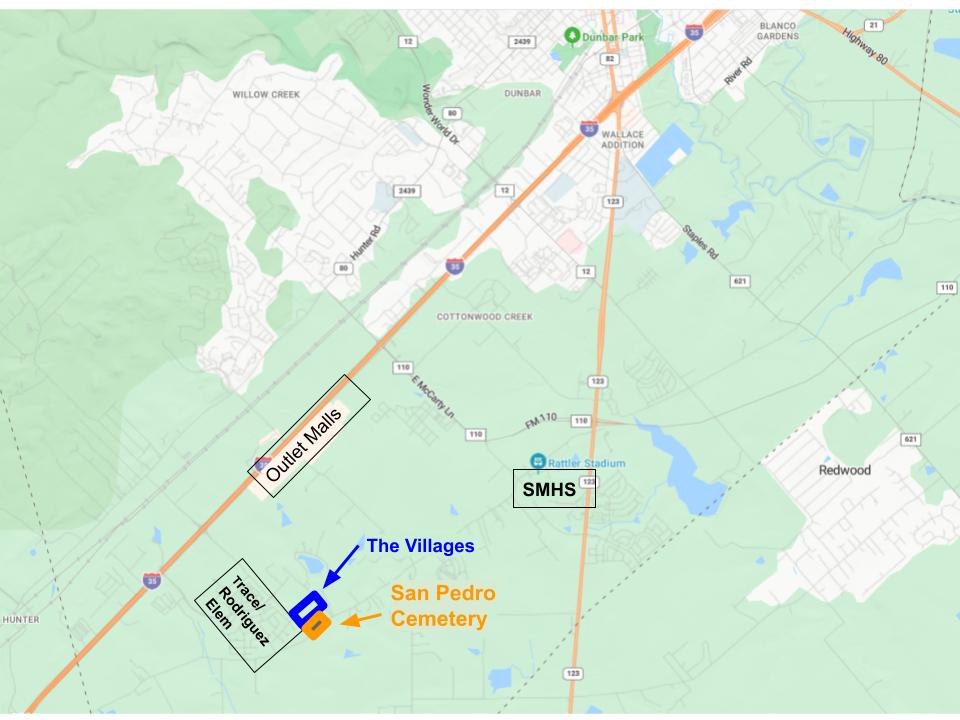
A potential new neighborhood: The Villages on Posey.
This had the most speakers. So, the San Pedro cemetery is right next to Trace Development. It was vandalized in 2003, possibly out of racism. Following that, some researchers at Texas State (like one of the speakers, Dr. Ana Juarez) started doing community-based research there, and the cemetery was designated historic cemetery a few years later.
Now some developers want to build a neighborhood next to it. But – plot twist! – they were good neighbors! They reached out to the cemetery board and made friends.
The developer has offered $5000 for the cemetery, to pay for restoration and damage from cars. The cemetery would be part of the plans moving forward. So these representatives from the cemetery board are here to speak in favor of the development.
More on this in Item 19!
…
Item 1: Charter Review Committee
Every four years, we form a Charter Review Committee. They’re supposed to comb through the City Charter with a fine-tooth comb, and offers up suggestions. Then Council decides which suggestions should go to the voters, and which suggestions should get deep-sixed.
The committee was formed in January. They’ve met weekly since then. Today we’re getting a soft launch of their suggestions. (The actual formal suggestions will come in May.)
Note: Jim Garber was the vice-chair of this committee. The chair, John Thomaides, took a moment to say a nice tribute to Garber, about his contributions and the difference he made here.
…
The Interesting Recommendations:
1. Mayor Term Length: Right now, the mayor’s term is two years long. They can serve four consecutive terms, and then they have to take a 2-year break before running again.
CRC Recommendation: – Mayor serves four year terms instead of two year terms. – After two consecutive terms, they have to sit out a cycle before running again.
Jane did not like this. She’s long been on record as saying that the mayor ought to have to get re-approval from the voters every two years.
2. Single Member Voting Districts.
CRC Recommendation: Neither yes nor no. Instead they recommend that council studies the issue and educates the public and take some time, instead of throwing it on the ballot.
This is a good approach. I’m also torn on this issue
3. Council members attending meetings over zoom. Right now council members can attend by zoom, whenever they want.
CRC Recommendation: Council members get a max of 3 times to zoom in, per year. (With some excused reasons, but I don’t know what those are.)
I don’t know. Are council members more effective in person? Absolutely. Is zooming in better than missing the meeting altogether? Also yes.
Look:
If you think council members are punks who sometimes zoom in for bad reasons, then yes, cap it at three.
If you think council members are legitimately constrained by second jobs, or kids, or illness, or responsibilities, then you should trust that they’re zooming in for good reasons.
We already have a lot of barriers to running for office. Parents, people with disabilities, people with difficult schedules: it’s almost impossible to be a council member. I don’t think we need more obstacles.
Plus, look: if we do have a punk council member who zooms in for funsies, we can vote them out. It’s a democracy. So I think I’m a no on this one.
4. City Council Meeting Minutes
CRC Recommendation: Meeting minutes from each council meeting must be approved in the following council meeting.
Ha. HA. HAAAA. Council has not approved any meeting minutes since May 2022. It’s been almost three years! (I’ve mentioned this before, and before that.)
It’s super annoying! Right now, if you want to find out what happened, you have to go listen to the actual meeting. It takes forever.
(I mean…maybe not having minutes posted has been a little good for this blog? I get to be the sole documentarian, in the absence of minutes.) But anyway, yes to this.
5. Referendum petitions
CRC Recommendation: – Increase the time allowed to file a referendum petition from 30 days to 90 days. – Increase the time for city to verify petitions from 45 to 60 days. – Require a form for financial disclosure for referendums and initiatives.
That last one is AMAZING. Yes, if we’re voting on something, I would love to know who is funding it.
(The first two are good, too.)
Less interesting, but still good
Public Notifications: Right now, the city must notify the public by placing a notification in a public newspaper. Recommendation: Let’s also put notifications on the city website and social media.
Council is required to meet at least 22 times per year. Recommendation: Reduce the minimum number of council meetings from 22 to 20 per year. This just builds in a little extra flexibility for November, December, and January.
Printed copies of city code or ordinance are available for purchase, at cost. (Or free online.)
Reduce residency requirement for P&Z from 5 years to 3 years.
Shuffle around the naming of sections to gather the ethics-things under an “Ethics” section.
Those all sound fine with me.
…
They only somewhat align with the Council suggestions for the committee:
But that’s good – it shows the committee was independent. And Thomaides promised that they really did unpack all those suggestions to death.
“Not so fast!” Council cried. “This has major privacy implications!”
Council decided to hold a review of the privacy policy first, and delay the purchase of the 30 new license plate scanners. Chief Standridge was peeved.
So in March, council reviewed the privacy policy. Chief Standridged tightened up a lot of the loose gaps. It’s not perfect, but it’s much better.
So now the camera purchase has come around again. May SMPD please purchase these 30 license plate scanners now? Pretty please?
“Not so fast!” cries Amanda. “We tabled this item until June. It’s only April.”
Everyone looks at the lawyer, who says, “Yes. I went and watched the video several times. You all voted to postpone until June.”
Lorenzo: “Who cares? We delayed for the privacy policy, and we got the new privacy policy. Why not just do it now?”
Amanda: “Well, the media picked it up, and so the public is under the impression that it will come back in June. If anyone wants to participate in the process, they’re operating under the assumption that they have two more months.”
Jane concedes that she also cares about this.
Question: Will the price go up in June? Answer: nope, same price.
The vote: Re-postpone the cameras until June, like we said we would?
Yes: Everyone
No: No one.
Let’s be frank: Is this really about the people who’ve penciled JUNE in their calendar to show up and protest these cameras? Or is this about slow-playing Chief Standridge?
Tomato/tomato! ¿Por qué no los dos?
…
Item 19: The Villages At Posey Road
This doesn’t exist yet, but it will go here:
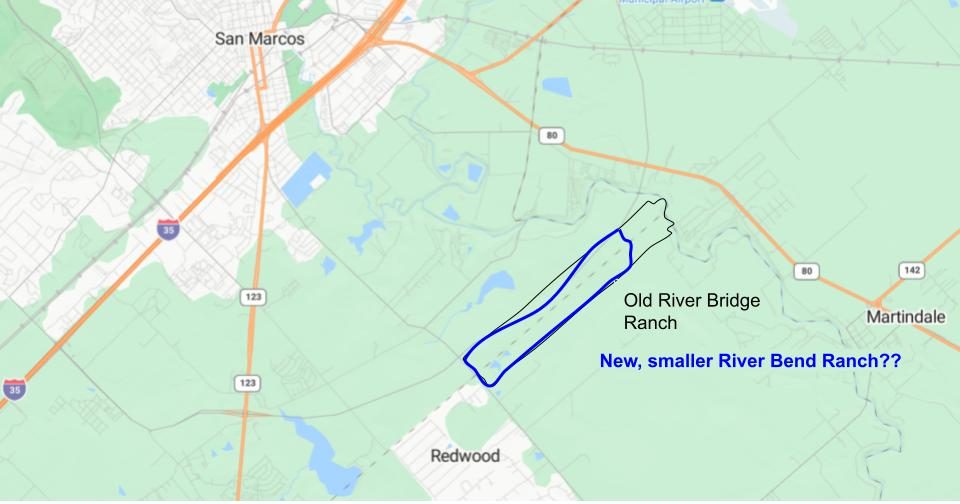
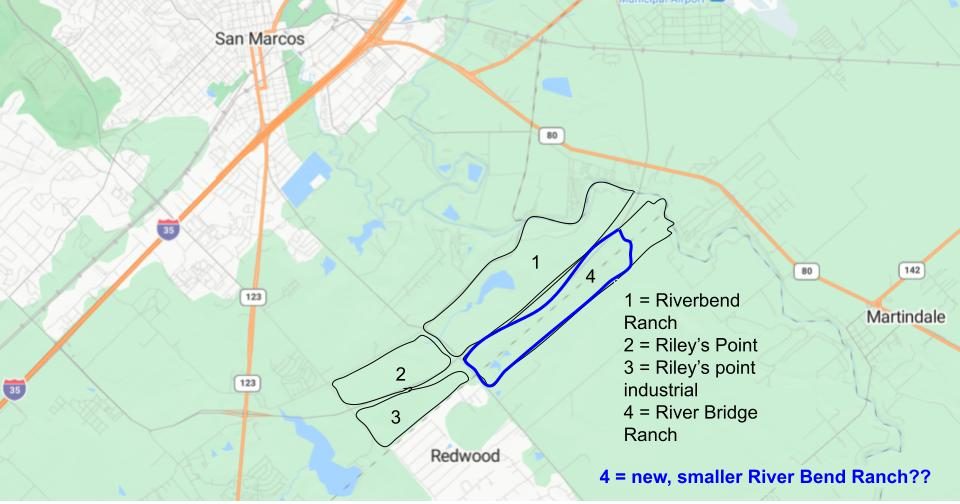
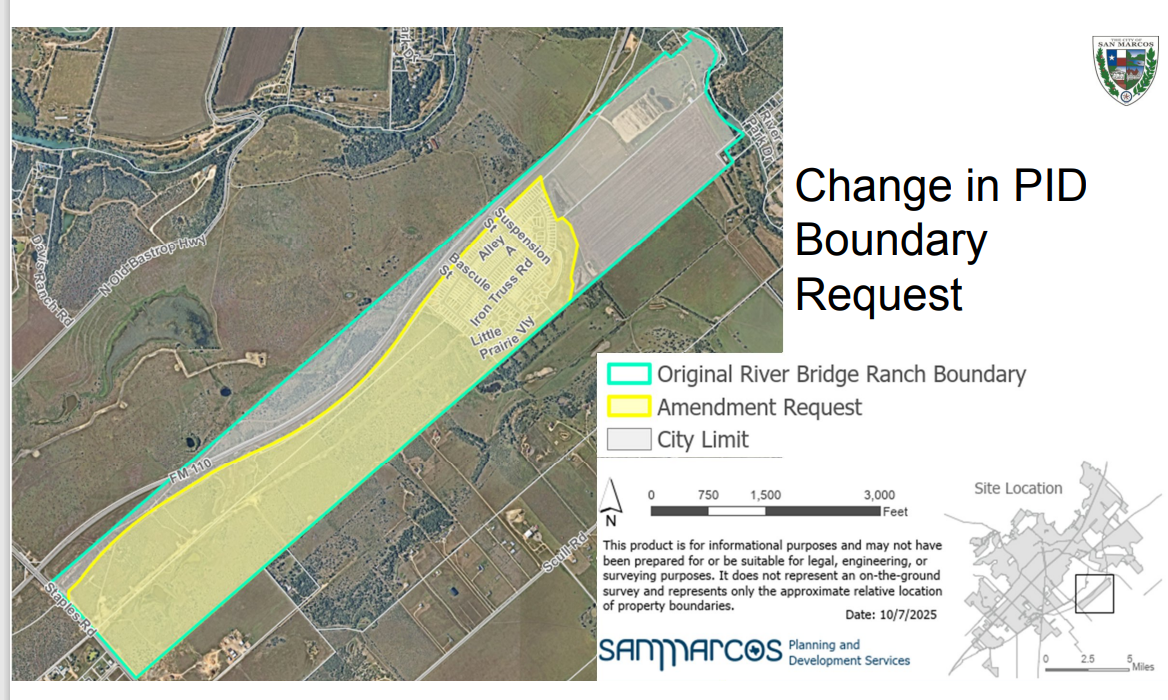
(We also saw this property back in 2022.) They want to be a PID.
What’s a PID?
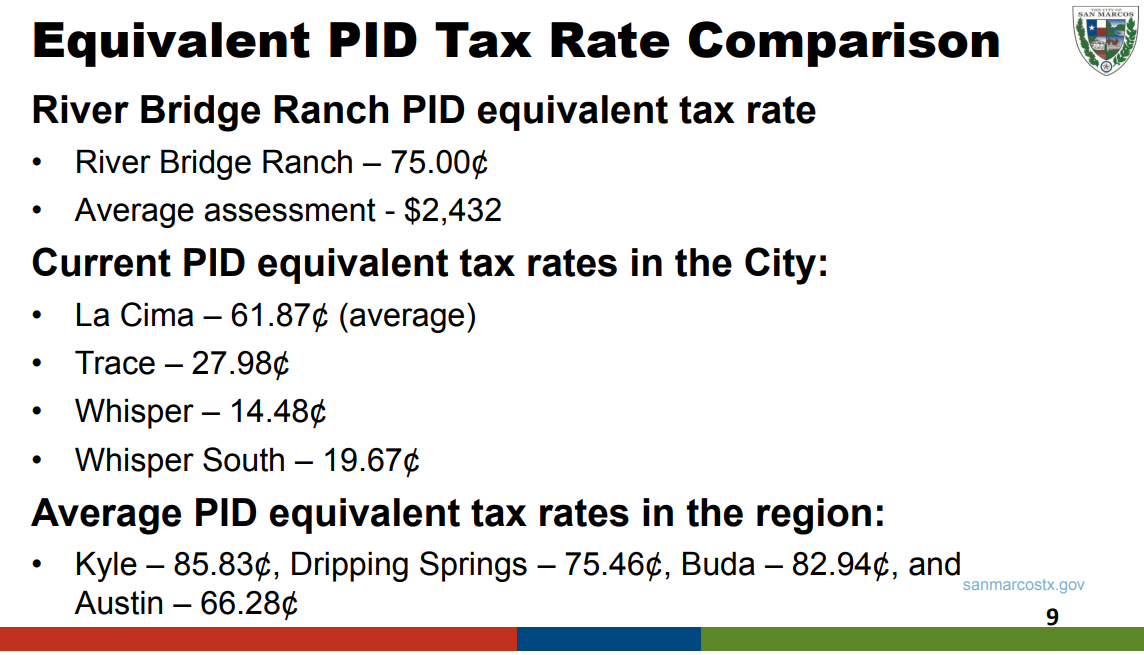
PID stands for Public Improvement District. The developers want to make this a PID. What that means is that the houses in the PID all pay a little extra tax money, and that money gets used on the roads and infrastructure for that specific neighborhood.
(This is WAY better than a TIRZ. Kissing Tree is a TIRZ, not a PID, which is why we are giving $1,288,406 to Kissing Tree this year. With a TIRZ, the developer basically says, “hey, what if the fanciest, wealthiest neighborhoods were subsidized, too? We could make them even fancier then.” I’m not kidding about how they work.) (TIRZ stands for Tax Increment Reinvestment Zone, if you care.)
We haven’t had any PIDs in a decade. Trace, Whisper, and La Cima were all approved for PIDS around 2014. After that, council decided not to make any new PIDS until two things happened:
Update the Comprehensive Plan
City decides there is a need for incentives for residential development.
The comprehensive plan (Vision SMTX) was finally approved last fall. Tonight they’re deciding if they want to reboot PIDs with these guys.
So what would this PID be?
Some sort of planned neighborhood community. The details haven’t been hammered out.
Price Tag to the City: Will it bring in taxes that pay for itself, over the lifespan of the infrastructure and future repair? How much will it cost to extend roads, utilities, on fire and police coverage, on water and wastewater?
Housing stock: How long will it take to build? How much housing will it provide? What is the forecasted housing deficit at that point? Is it targeting a price-point that serves what San Marcos needs?
Environment: Is it on the aquifer? Is it in a flood zone? Will it create run off into the river?Are we looking at sprawl? Is it uniformly single-family homes?
Social: Is it meaningfully mixed income? Is it near existing SMCISD schools and amenities?
The San Marxist Special: Is it a mixed-income blend of single family houses, four-plexes, and eight-plexes, all mixed together? With schools, shops, restaurants, and public community space sprinkled throughout? Is it walkable?
You know what I’d go for.
What’s this about a cemetery?
The San Pedro Cemetery is right next door:
This is an old cemetery that served the Hispanic community, especially when other cemeteries wouldn’t bury anyone who wasn’t white. Like I mentioned above, it was vandalized in 2003, and then kinda had a renaissance. It got designated as a historic cemetery and people care about it. (Saul has mentioned how most of his family is buried there.)
The developer wisely reached out to the cemetery board ahead of time.
Here’s how I imagine the conversation going:
Developer: “Hey there, San Pedro Cemetery Board! What would it take to get you on our side?” San Pedro Cemetery Board: “We’ve got a wish list of maintenance and restoration projects. Would you like to fund some of them?” Developer: “We sure would!”
But that’s good communication and collaboration! This is how you keep friction from developing in your working relationships. (Probably both sides were a little more polite about it.)
So the San Pedro Cemetery will be included in the PID.
Council decides to send the whole thing to a PID committee. More to come.
Malachi Williams: Seven speakers, including family members. They want justice for Malachi. Several of the speakers focus on the detail that Malachi ran because a cop pulled a gun on him. Before the videos were released, this detail wasn’t mentioned. It shows how the officer escalated the situation instead of de-escalating it, which then ended in tragedy.
Human Services Advisory Budget funding: Council is thinking about increasing HSAB funding for next year. Three speakers advocated for this.
Cape’s Dam and the Mill Race: Two people talk about how much they love the river, east of I-35 and want council to keep it. We’ll unpack all of this!
Tenants’ Bill of Rights: The San Marcos Civics Club made this a focus, and got Council to put this in their visioning statement. Now council will need to make it happen. Two speakers focus on this.
Ceasefire in Palestine: four speakers. They still want the city to pass a resolution calling for a ceasefire in Gaza.
…
Onto the meeting!
Items 1-4: A bunch of audits and investment reports.
We got the audit reports for CDBG funding and the 23-24 fiscal year. Plus the quarterly financial report and investment report.
Everything looks normal. No rude surprises. (Apparently we’ve gotten awards for excellence for the past 35 years, on our yearly fiscal audit. OH YEAH BABY.)
…
Item 18: Rezoning about 15 acres
This property is way up north:
Back in 2020, we annexed this yellow and pink bit:
The yellow was zoned Manufactured Home, and the pink was zoned Light Industrial.
There were some concerns then – do we really want to make the folks in the mobile home community live right against an industrial park? But we let it ride.
Now the pink part is coming back for a rezoning – they want to switch it from Light Industrial to Manufactured Home. In other words:
Great! Now nobody has to live near an industrial park.
…
Item 20: Budget Policy Statement
We’re working on the Fiscal Year 26 budget.
First: There was a two days Visioning workshop in January, which lead to approving the Strategic Plan.
The nex workshop was at the end of February. Today we’re approving the thing from that: the Budget Policy Statement.
What’s a Budget Policy Statement?
This is like the guard rails for building the budget over the summer. Most of it is pretty dry? Like “Do you want to budget to maintain 150 days worth of recurring operating expenses in the budget, or just 90?” “Are we okay using the General Fund for Stormwater projects over $5 million?” Etc.
There are two interesting bits:
Each year, the city sets the rate for electricity, water, sewer, trash, etc. To do this, they have to predict what their costs will be. Then they pick a rate that will cover all their costs.
From the Budget Policy Statement
What does this mean? If your utilities get turned off, you have to pay extra late fees to get your utilities back on. All of the late fees, taken together, add up to big chunk of revenue.
The question is: Suppose we are predicting that we’ll bring in $100K in late fees. (I’m making that number up.) Should we use that $100K to lower the rates for the rest of the customers?
Argument in favor: It’s more economical to include the late fees in your calculation. It allows you to set lower rates for the whole city.
Argument against: It’s kind of icky to count on late fees, for two reasons. First, you’re charging your most desperate customers – the ones who already can’t keep up – an extra fee, and then using that fee to help out all the other, less-desperate customers.
Second, it creates an incentive to creep up your late fees over time. When budgets are lean, it’s tempting to lean on late fees as an extra source of revenue you can tap, like cities that ticket their poorest residents into oblivion in order to balance their budgets.
The current council has already been going in the opposite direction. They are already trying to lower the late fees, to make it easier for residents to get their electricity turned back on.
To the original question: they decide that we are not going to use the late-fee revenue in computing utility rates. Then, when late fees come in anyway, they’ll put that money towards the Utility Assistance program.
It’s a small touch, but a good one.
2. Here’s the other one worth paying attention to:
This is what the speakers during Citizen Comment were talking about.
Last December and January, HSAB funding was a total mess. There was too little funding, and Council ended up pitting nonprofits against each other. It was clear that we need to significantly ramp up city funding of nonprofits.
Right now, HSAB gets $550K. Council sets a range of additional funding, between $50K-$200K. When we find out what kind of money we’re getting from property taxes this July, then we’ll determine where we land in that range.
This part makes me extra happy:
Yes!! Peg the HSAB budget to inflation. We do it in contracts with for-profit entities all the time. It should be universal.
(The failure to peg minimum wage to inflation was one of the greatest policy near-misses of the 20th century. Having a federal minimum wage of $7.25/hour is such a mockery.)
…
Item 21: Cut-and-fill in La Cima
Pedernales Electric wants to build a substation here:
But it’s on a hill. Like we saw last time, it’s hard to build on a hill. So they also want to do a cut-and-fill.
This time, no one is worried about flooding.
Matthew Mendoza is a little worried that the people in La Cima might have to look at a substation, though.
Staff reassures him that there is another building, and then the La Cima apartment complex, all separating the substation from the houses. So their eyes won’t be hurt by the substation.
Shane Scott proposed doubling the flex money and travel money, and he wanted it effective IMMEDIATELY. Like, something lit a fire under his butt.
Last time, they went in circles forever, but ultimately landed here:
Travel budget
There’s plenty of travel money already. The total council travel doesn’t go over budget.
Council members can lend each other travel money if one is going over.
If they STILL go over, there can be an extra $15K in a special travel fund that any of them can apply for.
AND, they each get an extra $2K for travel.
Flex budget
Double the Flex amount from $7.5K to $15K.
In other words: right now, a council member earns $24.9K a year, if they choose to take their flex pay as income. This would increase it to $32.4K.
…
The item was put on the consent agenda, which means, “Staff thinks this will sail through.” After all, they hammered out all the votes last time.
Jane said nope! and pulled it off the council agenda. She gives a speech about how none of this is needed, there’s plenty of money in the travel budget. And how we certainly shouldn’t be doing this mid-year.
Amanda agrees on the mid-year part. More responsible to start it with the next fiscal year. She makes that amendment: Delay this until next year’s budget?
The vote: Postpone changes until next year’s budget?
(This is when I first thought, “What the hell is happening? Was this whole thing a ploy to get some quick money?”)
Jane sees her chance and makes a motion to kill both the travel increase and flex spending increase.
On the flex spending, Amanda pleads, “But why?”
Amanda has been quite open about having to resign her state job to take this position, and the impossibility of surviving on $24.9K per year.
Jane: “We don’t need it. We already raised it in 2023.”
What she means is that before 2023, council members got $23.4K per year, if they took their flex money as pay. They gave themselves a raise of $1500 then.
Amanda: I agree on the travel. But on the living expense, who here – anyone? – can live on this little?”
Jane: “It’s not supposed to be a fulltime job.”
Amanda: “Fully agree. But we both know that it is actually a fulltime job.”
Jane: “For some people it is. Not everybody.”
Amanda: “Oh trust me, I understand that too. And I wish everybody shared full interest.”
Jane: “I do too.”
Amanda: “But again, please tell me, who can survive on this? Would anybody in this room?
<crickets>
Then conversation dies.
…
The key issues is this: Is being a councilmember a fulltime job? We pretend it isn’t, but in order to do it well, it definitely is.
If we pay poverty wages, then council members have three options:
Be independently wealthy or have someone who can support you.
Try not to neglect your council job as you juggle multiple jobs
Live in poverty
This is not how you get the best possible council members. This is how you get mostly wealthy and/or distracted council members.
…
But anyway, then they vote:
The vote: Should Councilmembers survive on $24.9K per year?
So yeah, no raise.
I’m so baffled. Two weeks ago, Shane and Lorenzo both thought it was reasonable to increase flex spending, and now they don’t? What the hell happened?
….
Then they vote to roll back the travel funds increase:
This one doesn’t bother me so much. There is plenty of travel money, if you allow people to donate funds to each other.
Bottom line: After all these meetings, everything is back where it started, aside from a special bonus travel fund.
Clearly I have no idea what happened, but it felt like petty bullshit, to be honest.
Statewide, the legislature is intentionally starving the school districts. This is not hyperbole. Abbott is hellbent force-feeding school vouchers down everyone’s throat. He’s denying funding to the public schools is a way of increasing the pressure on the state legislature to vote for his deal.
Funding hasn’t increased since 2019, but there have been several unfunded mandates that cost a lot. Plus inflation.
SMCISD is in a $9 million budget crisis. They’ve asked for the city for a stormwater waiver, which would save them about $350K.
Which brings us to today.
First there’s a presentation about the stormwater fund:
Immediately after San Marcos created the stormwater fund, Texas State University asked the State Legislature to grant them an exemption. They were the very first university in Texas to ask for one! What go-getters.
After that, all the other universities thought it was a pretty good idea.
Here’s the total list of state-wide exemptions:
So basically, empty lots, lakes, universities, and ….El Paso school district. Who knows.
…
The state law says that stormwater fees must be equitable. They go into a fair amount of detail about how we put ours together.
Basically, if we want to help out SMCISD, here are the four options:
Option 1 would cost a lot and open the door to other nonprofits asking for a waiver, too.
Option 2 would cost some, and open the door.
Option 3 might open us up to legal challenges of being non-equitable.
Option 4 is the one that Staff clearly favors. In fact, city staff and SMCISD staff have already met, and they’re both open to this.
Option 4 is about Mendez Elementary. Mendez is located in Sunset Acres, which has terrible flooding. The city wants to build a detention pond on Mendez property, to help with the flooding.
All the council members are on board with pursuing 4.
The only thing is that Mendez Elementary is being renovated. Until SMCISD knows the new footprint of the building, they can’t donate the land.
(Now, SMCISD has already submitted the Mendez plans to the city for permitting. So the city could literally go look right now at the Mendez plans. It’s not a mystery. We can see exactly how much space there might be for a drainage pond.)
…
There’s a long, weirdly circular conversation where Lorenzo and Amanda keep saying, “We should meet occasionally with the school board, just to stay informed on what we’re each up to.”
Jane keeps responding with, “It’s no use. Alyssa and I keep trying to think of a reason that all three entities – city, county, schools – should meet, and it’s very hard to think of issues that need attention from all three groups.”
Ok? That’s a different thing? That’s not what Amanda and Lorenzo are suggesting?
Anyway, they vote for 4.
…
Item 25: Redwood/Rancho Vista
Last time, we discussed this property, immediately north of Redwood and Rancho Vista:
We were trying to figure out if that industrial portion would make flooding worse in Redwood.
Redwood and Rancho Vista have severe septic and flooding issues, which leads to a parasite living in the soil. It’s a big health issue, and it usually only happens in developing countries. But the community is quite poor and vulnerable, so it’s happening here. Any solution is going to be very expensive.
Last time Council tried to have it both ways: “We’ll let this development through, but we promise to take action on Redwood.”
So tonight is that action: A strongly worded letter to Guadalupe County about how the septic issue and parasites is a public health and safety issue, which has been going on for years and years.
Jane suggests that we let them know about the Texas Water Development Board, which has a specific Economically Distressed Areas Program. Maybe Guadalupe County could get some money from there.
City Manager Stephanie Reyes mentions looping in SMCISD – after all, these families go to our schools and are part of our community.
So staff will draw something up, and it will come back.
My two cents: this is fine as a first step, but not as a last step.
I went hunting for photos of the old Bismark Filling Station back in its heyday, but came up empty handed. I did find this deep dive on the history it, though.
…
Q: Are there any concerns about flooding?
Answer: It’s partially in the floodplain, and it is near the headwaters, which is very sensitive. But the land is actually angled so that the water runs away from the sensitive stuff. The water runs away from other houses on Post Road, and towards the stadium.
Q: Are there any concerns about buried gas tanks?
Answer: no, the station is too old. They checked the records. They didn’t bury tanks back then.
Q: Are you going to preserve the gas station?
Answer: We are working with the Historical Preservation Committee on this! Hoping to save the facade and columns, and put it somewhere where it can be memorialized.
Note: This is how you make best friends with Council. Who knows if it will actually happen or not, but Old San Marcos is happy to hear this guy say the right things.
One other note:
The developer is asking for CD-4 zoning. He’s saying he wants to build townhomes:
Ok, maybe not quite that beautiful. But maybe like these, near Wonderworld:
But CD-4 zoning can also mean large scale apartment complexes like so:
When you zone land, you don’t get to pick and choose which use the developer ends up doing. The developer can do anything included in the zoning.
Now, this particular lot isn’t very big:
So my guess is that he will probably build townhomes or condos. But he is allowed to sell it to someone else, and that other person can do anything allowed under CD-4 zoning.
Should the city spend $124K for SMPD to have cameras that read license plates for one year?
Maybe! We need to unpack some stuff first.
Backstory:
Budgets get approved in September. But the planning starts nine months earlier. So at the end of January, Council had a two day workshop where they started laying out big ideas.
They go into great detail on the strategic goals:
Under each goal, Council decides what they want to prioritize for the next year.
On Day 2, they tackled Public Safety. Amanda proposed the following outcome:
Establish clear guidelines and protections governing the use of technology to ensure transparency, accountability, and respect for the personal privacy and civil rights of the public.
A little-noticed surveillance technology designed to track the movements of every passing driver is fast proliferating on America’s streets. Automatic license plate readers—mounted on police cars or on objects like road signs and bridges—use small high-speed cameras to photograph thousands of plates per minute.
The information captured by the readers—including the license plate number and the date, time, and location of every scan—is being collected and sometimes pooled into regional sharing systems. As a result, enormous databases of innocent motorists’ location information are growing rapidly. This information is often retained for years, or even indefinitely, with few or no restrictions to protect privacy rights.
We don’t find every use of ALPRs objectionable. For example, we do not generally object to using them to check license plates against lists of stolen cars, for AMBER Alerts, or for toll collection, provided they are deployed and used fairly and subject to proper checks and balances, such as ensuring devices are not disproportionately deployed in low-income communities and communities of color, and that the “hot lists” they are run against are legitimate and up to date.
Unlike a targeted ALPR camera system that is designed to take pictures of license plates, check the plates against local hot lists, and then flush the data if there’s no hit, Flock is building a giant camera network that records people’s comings and goings across the nation, and then makes that data available for search by any of its law enforcement customers. Such a system provides even small-town sheriffs access to a sweeping and powerful mass-surveillance tool, and allows big actors like federal agencies and large urban police departments to access the comings and goings of vehicles in even the smallest of towns.
And yes, Flock is exactly the company we’re buying cameras from. And it’s not just the ACLU: other folks also don’t like Flock Safety one bit.
Look, ICE raids have already started. (Not as intensely as Trump would like, but they’ve started.) Do we really think this universal surveillance data will be off-limits? It wasn’t off-limits back in 2019.
Sure might be nice to have a clear policy! Maybe we should “Establish clear guidelines and protections governing the use of technology to ensure transparency, accountability, and respect for the personal privacy and civil rights of the public.”
This brings us to Tuesday’s meeting
Amanda makes a motion: Postpone the purchase of the cameras until we’ve established the policy that focuses on privacy and civil rights when it comes to the public. (After all, it was literally five days earlier that Council agreed this is a priority!)
Chief Standridge says, “No worries! We already have such a policy! It’s four pages long and follows all the best practices in Texas! This is what all the departments across Texas are doing.”
Amanda: “I’ve read the policy. Those may be the best practices in Texas, but they’re not the best practices nationwide. Things like data usage, data retention, data sharing – we should address those things, and then we can bring back the vote on the cameras.”
They get into it a little bit, over how long data should be stored. Is 30 days too long? Just right? (That same article on Flock Safety has recommended legal language specifically for this kind of situation.)
“Furthermore,” Chief Standridge says, “this is already underway. We got the first batch of cameras in 2022, and then we got a grant for some more…” he kind of trails off.
Amanda: “The cameras have already been purchased? The cameras that require council approval?”
Chief Standridge: “The Flock representative is here online, they can confirm or deny if the cameras have been purchased.”
Jane tries to smooth it over: “It was probably something like it was initiated because they thought they’d be under 100K, and then it turned out to be over 100K, so they need needed approval!”
Standridge: “Close enough!”
Note: I think it was because of this:
The original contract was not discussed when Council approved it, in April, 2022. Later on, SMPD applied for some grants, and Council didn’t discuss those, either. My guess is that since the grants were in motion, SMPD assumed it was fine to move forward with the cameras.
(This also happened with the Total Bullet Containment System. It had been purchased before Council actually authorized the purchase.)
…
Back to the conversation:
Jane: I’m game to have a work session on this policy, but I don’t want to hold up the purchase of the cameras in the meantime.
No one else (besides Alyssa) weighs in.
The Vote: Should we postpone the purchase of these cameras?
WHOA! I was not expecting that, but I’m thrilled to see it!
…
Items 10-13: An enormous number of appointments.
The vast majority of the meeting was spent making appointments:
Those are all boards where they appoint community members.
The most public of these is P&Z. P&Z had three open spots. David Case and Maraya Dunn were both re-upped for a second term, and “Rodney” got the last spot.
No one in the meeting ever used Rodney’s last name, and I don’t have access to the applications, so I guess we’ll all find out which Rodney in a few weeks, when he starts attending the meetings.
…
Item 14: Attendance on External Boards
There are a bunch of committees in the city and county that have a representative from city council.
Sometimes you have one of these external boards with a city council rep, but that council member never shows up to any of the meetings, and sometimes his name is Shane Scott.
Jane: Do we want some sort of attendance policy for these situations? Like you can’t have more than three unexcused absences in a row? That’s the policy for the rest of our boards and commissions.
Everyone is on board. So this will come back around.
As you use more water, the water gets more expensive. This is good! It incentivizes people to use less water.
Right now, we’re raising utilities 5% across the board. If Council had wanted to, they could have tinkered with these marginal rates. But I bet it gets complicated, fast.
Not exactly Citizen Comment, but a general concern from a community member: the San Marcos Housing authority put out a statement saying that they were going to open up the waitlist for housing vouchers on Wednesday morning.
So everyone showed up! Apparently something like 250 people turned in pre-applications for housing vouchers that were supposed to open up on Wednesday morning. A bunch of people even spent the night outside the Housing Authority, in order to be there when the doors opened at 8:30. There was supposed to be a lottery to accept new applications.
And…. it just didn’t happen. The Housing Authority did not actually accept any applications. All the people needing housing just got sent away.
I don’t know what went wrong, but I guarantee there’s a throughline between having chronically underfunded housing assistance for decades, and this kind of mess. And Texas especially relishes underfunding programs for the poor.
….
Item 1: New City Hall steering committee
Last time we had a big song and dance about the composition of the committee. Should we do things the way we always do them? Or should the DEI coordinator steer us in a more equitable direction?
Here’s what the DEI coordinator says at the beginning of the conversation:
A good general principle is that the composition of your committee should match the composition of San Marcos. So you look at things like race, gender, ethnicity, and try to match the overall population of San Marcos. (As your friendly marxist blogger, I’d toss wealth on that list, too. Socioeconomic status is should be included in DEI initiatives. Poor people are underrepresented!)
Here’s what Council settles on:
Each councilmember will pick two community members to be on the committee
The mayor and two councilmembers will be on the committee
The committee will have some specific roles filled:
Someone from P&Z
From the library board
Someone representing the disability community
SMRF representative
Texas State representative
Downtown association rep
Chamber of commerce rep.
Two people from Rio Vista neighborhood
So depending on how much overlap there is between 1 and 3, there could be as few as 17 members or as many as 26 members.
The DEI coordinator tentatively pipes up: “The more prescriptive we are with roles, the harder it will be to achieve the DEI goals.”
What she means is that the Library Board, P&Z, Texas State admin, SMRF, the Downtown organization, and Chamber of Commerce are generally less diverse than San Marcos as a whole. The more you stack your steering committee with folks from these organizations, the harder it will be to make the composition of your steering committee match with the composition of San Marcos.
Jane misunderstands what the DEI coordinator means, and says, “Inclusion of these partners doesn’t mean exclusion of others! We’re not excluding anyone.”
She also says (tellingly), “This just follows the pattern of how we do appointments in San Marcos.”
It does follow the pattern! Councilmembers pick people they know and put them on committees. This is how power perpetuates itself. This is why you have to deliberately not follow the pattern of how we do appointments in San Marcos, if you want change.
The plan is to collect applications, and then have councilmembers select their two special besties from the pool.
Anyone can apply! Would YOU like to give your two cents on the new city hall? Submit an application here, why dontcha? They’re due in 30 days. (The application is not up yet, but I’ll edit this when it goes live.)
The good people of Sturgeon are fed up with non-residents parking on their street.
Sturgeon is this street, in Blanco Gardens:
They filed a petition to make the street permit parking, so only residents could park there. This is the area they want permitted:
My guess is they’re either sick of college students or river-goers parking there.
To be honest, I hate this kind of thing. Everyone pays for roads! We don’t own the curb in front of our houses. It’s not yours.
Occasionally, there is an extreme situation puts an undue burden on residents. I can understand that. But here? Seven of those parcels are empty! Why are we banning the public from parking in front of empty lots? It makes me cranky. (All the tan lots are empty in the diagram above.)
I just don’t like the privatization of something that’s public. Public spaces belong to the public, end of story.
…
Items 21-23: 51 acres off McCarty and 123
This bit is getting annexed and zoned:
It’s right by the high school, here:
Everybody knows we need more commerce on the east side of town. For years, residents have asked for this.
(Quick sidebar: But don’t forget! Council removed commerce from Cottonwood Creek here, and then two months later Council removed commerce from the giant future development on 123 here. For Cottonwood Creek, residents wrote letters and showed up to say that they wanted to keep the commercial! And yet Council killed it anyway, because the developer asked nicely.)
Anyway, in general there’s very few stores east of I-35. These guys are committing to putting commerce on this corner:
It’s being zoned Commercial.
The rest of it is being zoned CD-4:
CD-4 is a Character District. That means that city staff is really hoping it will look like this:
Little shops mixed with apartments, and oodles of charm.
But it actually usually looks like this:
Not terrible, and the housing is needed, but not quite as charming as Sesame Street.
….
You know what would be fun? Dusting off our five criteria for zoning! C’mon, guys, let’s see if we agree with our councilmembers.
1. Price Tag to the City: Will it bring in taxes that pay for itself, over the lifespan of the infrastructure and future repair? How much will it cost to extend roads, utilities, on fire and police coverage, on water and wastewater?
Who knows! No one ever provides this information!
But my educated guess is yes. The main problem is with single family detached homes – they don’t pay enough taxes to cover their roads and services. Since this will have apartments and commercial, it should be fine. It’s also along existing roads with existing utilities and coverage areas.
2. Housing stock: How long will it take to build? How much housing will it provide? What is the forecasted housing deficit at that point? Is it targeting a price-point that serves what San Marcos needs?
We also have no info here! But it doesn’t sound like giant $500K McMansions. It sounds like apartments plus stores.
3. Environment: Is it on the aquifer? Is it in a flood zone? Will it create run off into the river?Are we looking at sprawl? Is it uniformly single-family homes?
Environmentally sound. Not near the river. Not sprawl. Not all single family homes.
Social: Is it meaningfully mixed income? Is it near existing SMCISD schools and amenities?
I doubt it will be mixed income. It is near schools, and hopefully near amenities.
The San Marxist Special: Is it a mixed-income blend of single family houses, four-plexes, and eight-plexes, all mixed together? With schools, shops, restaurants, and public community space sprinkled throughout?
I don’t know how charming this will be. We can hope.
So overall: I approve. It seems more good than not.
Council does, too. It all passes 6-0. (Shane Scott is absent.)
“YAY COMMERCE!” council cheers.
…
Items 24-27: All the budget and tax rate final details. (Discussed here and here previously.)
First things first! The good people at City Hall were able to give me the General Fund breakdown.
I put together this side-by-side comparison for last year and this year:
Budgets are complicated. I don’t have any great takeaways here.
…
Next: We’re taxing ourselves less than we thought we were. We made an error in an obscure tax computation, and just now fixed it.
Here’s the quick version: You’ve got your existing taxable buildings, and you’ve got your new builds. Texas state law cares about the total amount you’re getting each year from the existing taxable buildings. (So you’re ignoring tax revenue from new buildings, for now.)
Is the total revenue from existing buildings going up or down? Sometimes it goes up because you raised taxes. Other times it goes up because your housing prices are going up. Either way, you’ve got to jump through some extra hoops if that total is going up.
We drew up our budget, and we thought it was going up, but…. <drumroll> it turns out it’s going down! Hooray? Since we didn’t change our tax rate, that means home values are falling.
(Jude: THIS IS A REALLY BIG DEAL! THIS NEVER HAPPENS!
Mark: IT’S THE GROWTH!)
….
You know me: I just always have to rant a little bit about taxes. (I swear this will be a very tiny soapbox. Two minutes, tops.)
Taxes are good! That’s how you fund your government, and take care of your community. The problem is that we won’t tax wealthy people in Texas. First off, the poorest people are paying the most taxes:
And this is worse than in other states!
Notice that Texas is one of the states on the left part of that graph.
People complain about high property taxes, but those aren’t the unfair part. The unfair part is the sales tax. (Both state and local.) Sales taxes really are the worst! Poor people end up paying a much higher percentage of their income than wealthy people. Literally, it’s capitalism for the poor and socialism for the wealthy.
End rant! I promised you I’d keep it short.
…
Anyway: only one person speaks at citizen comment and nothing gets debated. The end! We have a new budget and next year’s tax rate.
The vote: 5-1. Alyssa Garza votes against everything, presumably because of the utility rate hikes.
…
Item 28: Mowing, landscaping, and litter around city buildings. It is a giant task.
We contract out parts of it to Easter Seals of Central Texas, to the tune of $1,432,702.54.
…
Item 29: Purgatory Creek Channel improvements
We had a whole workshop all about the Purgatory Creek channel improvements last time! This meeting, we’re kicking off $3,281,773.35 towards engineering for Phase 1.
Saul Gonzales asks, “There’s a bunch of stagnant water in the side channels through Dunbar. Will this help with that?”
Answer: Sort of yes! Part of the project is raising some of the low-water crossings. That is a major reason why water can’t drain downstream. But also sort of no! This is supposed to recreate natural channels, and they do pool some.
The city applied for grants to cover a lot of the costs. We should find out next month if we get them. If we get them, we’ll start construction next year.
….
Item 32: Filling a bunch of vacancies on different committees.
There was one moment that ticked me off. There’s a vacancy on the Animal Shelter Advisory Committee. We only had one application.
Matthew Mendoza pointed out that on the application, this volunteer stated that they have only lived in San Marcos for two months. Matthew is uncomfortable with this, and Jane agreed. Matthew likes it when people have lived here longer. They decided to re-open applications and see if anyone else applies.
GUYS! Stop this rudeness. First off, you should be welcoming to new people.
Second off, if this were a vacancy on P&Z or the new City Hall steering committee? Sure, require 5 year residency. You want people with some roots and community background. (I guess.)
But that’s not this. This is the ANIMAL SHELTER. A new person moved to town and wants to volunteer their time to help the doggos! We should be appreciative, but instead we’re crapping on them for not having roots in the area. That’s dumb.
…
Item 33: What night will city council meet, on election week?
The election is on a Tuesday. You don’t want to hold a council meeting the same day as an election. We don’t want to get in the way of anyone voting.
So should the council meeting be shifted to Monday or Wednesday? Historically we switch to the Monday. But Jane Hughson is suggesting that this year, council should meet on the Wednesday instead.
I want to emphasize two things:
When I say that Jane is good at details, this is a perfect example of what I mean. She explained her thinking: “Suppose I am a community member who doesn’t know that the meeting was moved, and I show up on Tuesday. If the meeting already passed on Monday, then I’m out of luck. But if the meeting is not till Wednesday, I can come back tomorrow.”
This is really thoughtful and detail-oriented. Jane Hughson is unusually good at this sort of thing.
It’s worse for me, your friendly blogger. I need every last minute to crank out these posts! If the meeting is on Wednesday, then I get crunched, which gives me a sad. But in my heart of hearts, I know Jane is right.