Hours 0:00 – 3:21, 12/16/25

Citizen Comment:

Two big topics! (I’m combining comments from 3 pm and 6 pm.)

Cape’s Dam nomination to be on the historic registry:

  • 5 people opposed
  • No one in favor

    The Data Center

    • 2 people (both developers) in favor
    • 10 people opposed.

    Details on what people actually said when we get to these!

    Other comments:

    • Update on the San Pedro cemetery: replacing historic pillars, repairing fences, surveying property bounds. Issues of drainage and erosion. We support low impact development nearby, but we’re concerned about something busier.
    • Kissing Tree gets called wealthy, but we worked for decades. We pay a lot in taxes. We need good jobs to fix poverty. Yay development!
    • San Marcos Civics Club is going to start issuing environmental score cards for each council member.
    • Support for naming the new airport road after Lieutenant Colonel George C Carruthers

    Item 8: Cape’s Dam

    This item was pretty infuriating!

    It’s also not the most important thing ever?  I’m trying to keep perspective? I was irritated, but this is small potatoes.  

    Backstory:

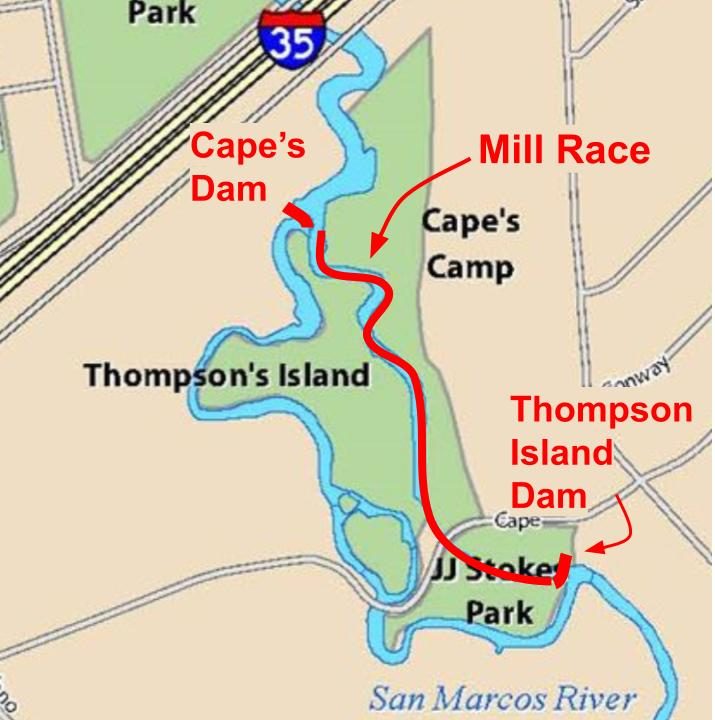
    From 1867-1942, Cape’s Dam was a functioning dam. The dam creates a calm little side channel to the river, called the Mill Race:

    Since the dam closed, the Mill Race has basically been treated as quasi-private property for kayak and paddling retreats.

    The Army Corps of Engineers often likes to remove old dams. In the 2000s, the folks at the Meadow’s Center started working on this study saying Cape’s Dam is bad for endangered species.

    Around 2015, Council is looking at whether they should remove the dam. But before they decide, Cape’s Dam is destroyed by the 2015 floods.  It’s now dangerous.  The Mill Race is also not usable anymore.

    2016: Council approves removing the dam and filling the Mill Race. The federal government will pay for it.

    This turns into a huge controversy. There’s a campaign launched – Save the SMTX River! – challenging the Meadow’s Center report and saying they’ve got different scientists who say different things. They basically want the Mill Race to be preserved for recreation, but they’re making an environmental argument? and a historical argument?

    (Incidentally, the Save the SMTX River guy is also one of the Brighter Future for San Marcos PAC guys.)

    Council backtracks on their decision. The federal funding expires.

    Everything grinds to a halt for a decade.  Council keeps passing the hot potato.

    Ten years go by. In the meantime:

    This past March, Council finally dusted this whole issue off. 

    They authorized a feasibility study, to answer these questions:

    1. What’s the current conditions of the dam and the whole area?
    2. What would it take to rebuild it? Or partially re-build it? Or just remove it?
    3. What’s the environmental situation? What’s the permitting process?
    4. Do a bunch of public outreach and get public feedback.

    I can already tell you some answers!

    • The current dam has to first be removed, whether or not it is rebuilt afterwards.
    • You cannot rebuild without permission from SMRF, because they own half the land, and they have said many times that they are a hard no.
    • You cannot rebuild without lots and lots of money, which we do not have.

    This will all come to a boil in the next few months! Exciting times. (Full backstory here.)

    Which brings us to tonight! Cape’s Dam has been nominated for placement on the national historical registry.

    Is there a legitimate historical claim? 

    Kind of yes!   The area was has a historical plaque with the Texas Historical Commission from 1979, in 1985 it was declared eligible for the National Register, and in 2017, it was included with a broader number of dams declared eligible for inclusion in the National Register. In addition, there’s credible evidence by a Texas State prof about the role of slave labor in building the dam.  

    So what’s new tonight?

    Preservation Texas is nominating the Thompson-Cape Dam and Millrace to actually be on the National Register of Historic Places.  

    Lots of things about this are irritating!

    1. This is a rush job. You can submit nominations every three months, but the nomination people are determined to submit by the January 16th deadline.  This one is URGENT, full stop, no flexibility.
    2. Whoever is behind this is keeping their name hidden*.  The nomination came from Preservation Texas.  No one with local ties has put their name on it in any way.
    3. The complex already has plenty of historical recognition! There is no new development.
    4. All land owners are supposed to consent, but SMRF was not notified, and has not consented.

    *Aren’t I the biggest hypocrite! I also love hiding out in shady anonymity. I’m a jerk.

    ….

    How does that long, tiring backstory affect Council’s thinking on this issue?

    Council: LALALALALALA WE CAN’T HEAR YOU!

    Basically, Council members all pretend to be brand new babies born yesterday, who have never heard of the 10 year fight I just told you about.

    The most generous interpretation: council members are willing to nobly set aside long-standing feuds, and consider this on its merits.

    The least generous interpretation: council members are gleefully taking part in a craven attempt to sway the larger outcome by miring it in bureaucracy.

    You be the judge!

    What did people say at Citizen Comment?

    • This is a ruse to force Council to rebuild the dam.
    • The dam is full of contemporary materials, like concrete sandbags
    • No effort has been made since 1950 to preserve the historic nature of the dam
    • This was a timber dam, which is a low cost, quick dam
    • There are 8 other dams on the river, and they’re also all super old

    And most importantly, the San Marcos River Foundation: Look, we own the land on one side of the bank, and we were not notified. The rules require that all owners give consent. We didn’t.

    Council discussion!

    Jane: What exactly do they need from us?
    Answer: The Texas Historical Commission (THC) wants two letters – one from Council and one from the San Marcos Historical Preservation Committee (HPC) – saying they support the nomination. 

    Jane: Can we postpone this?  It seems very rushed.  The State Board reviews these every three months. Can we just wait till March?
    Answer: The applicant specifically said they are not willing to postpone until March.
    Amanda: Yes, this seems very rushed.  What about just waiting until after the San Marcos HPC meets, and hear what they recommend?

    Answer: Usually yes.  We prefer to have committees present their recommendations to Council.  But the timing doesn’t work out.  SM-HPC will meet on Jan. 8th, and then you all don’t meet until Jan 20th. But the letter is due Jan 16.

    Saul: The dam is not even close to the original structure. It’s got cement sandbags. I’m a no.

    Lorenzo: I’m a yes!  Wouldn’t that be great for people to see SAN MARCOS on the national historic register, when tourists come to town? 

    Jane:  Why didn’t the people who nominated this reach out to the city?  Where are they? We have a priority list of historical places. This leap-frogged over a bunch of other places on our list.

    Saul: Would this prevent us from making a decision about whether to rebuild or remove the dam?
    Answer: It carries political weight, but not legal weight.

    In other words: this vote sends a message to the public about which side your bread is buttered on. But it’s not legally binding.  You’re allowed to tear down the dam. 

    Amanda: This nomination provides a specific historical narrative.  It was white-washed to make white people look like noble saviors of enslaved people. If we send a letter of support, then that’s the version that will end up in the national registry.

    Alyssa: Yes, they’ve romanticized it.

    Jane: That’s why I want to send a very minimal letter.  We won’t address the historical narrative part of the application. We’ll just say, “Yes, there is a historical element!”

    Alyssa: Omissions are just as bad! That’s how status quos continue to flourish!  Whatever is in this application will be the skeleton of the final narrative.  That’s how these things work.

    Jane: Then let’s just be vague!

    Alyssa: That doesn’t make sense as a response to what I’m saying.  We’re writing a letter in support of a nomination. 

    Jane: I’m trying to be minimal! 

    Alyssa: …which will be interpreted as support, unless we’re explicit about what we don’t agree with.

    Matthew:  None of this matters!

    Shane: What’s the harm? 

    Lorenzo: Surely the Historic Registry will do their due diligence.  Let’s just pass this and let them do the heavy lifting. 

    Amanda: I want the narrative to acknowledge the role of enslaved people. 

    Matthew: The Cape family did not own slaves!

    Jane: The whole slavery thing is very contentious. Different people think different things.

    Amanda: Slavery is actually in the nomination already.  Didn’t you guys read it? I just don’t like how they handled the topic.

    Amanda is correct:

    and

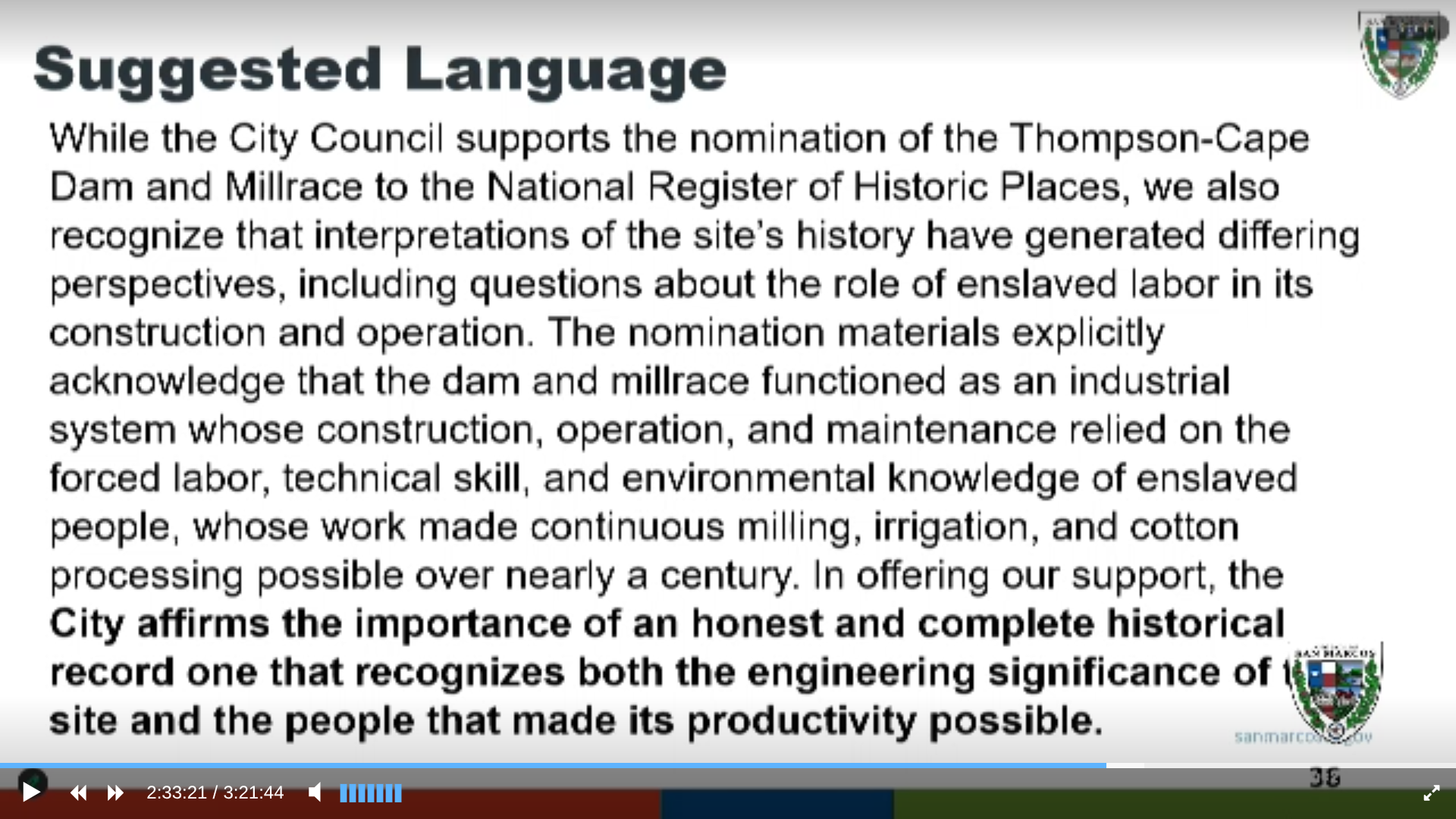
    Alyssa: Clearly this is going to pass, so I’m going to suggest some language for the letter. 

    Proposed language, after some tinkering:

    They also include a note about how SMRF wasn’t notified.

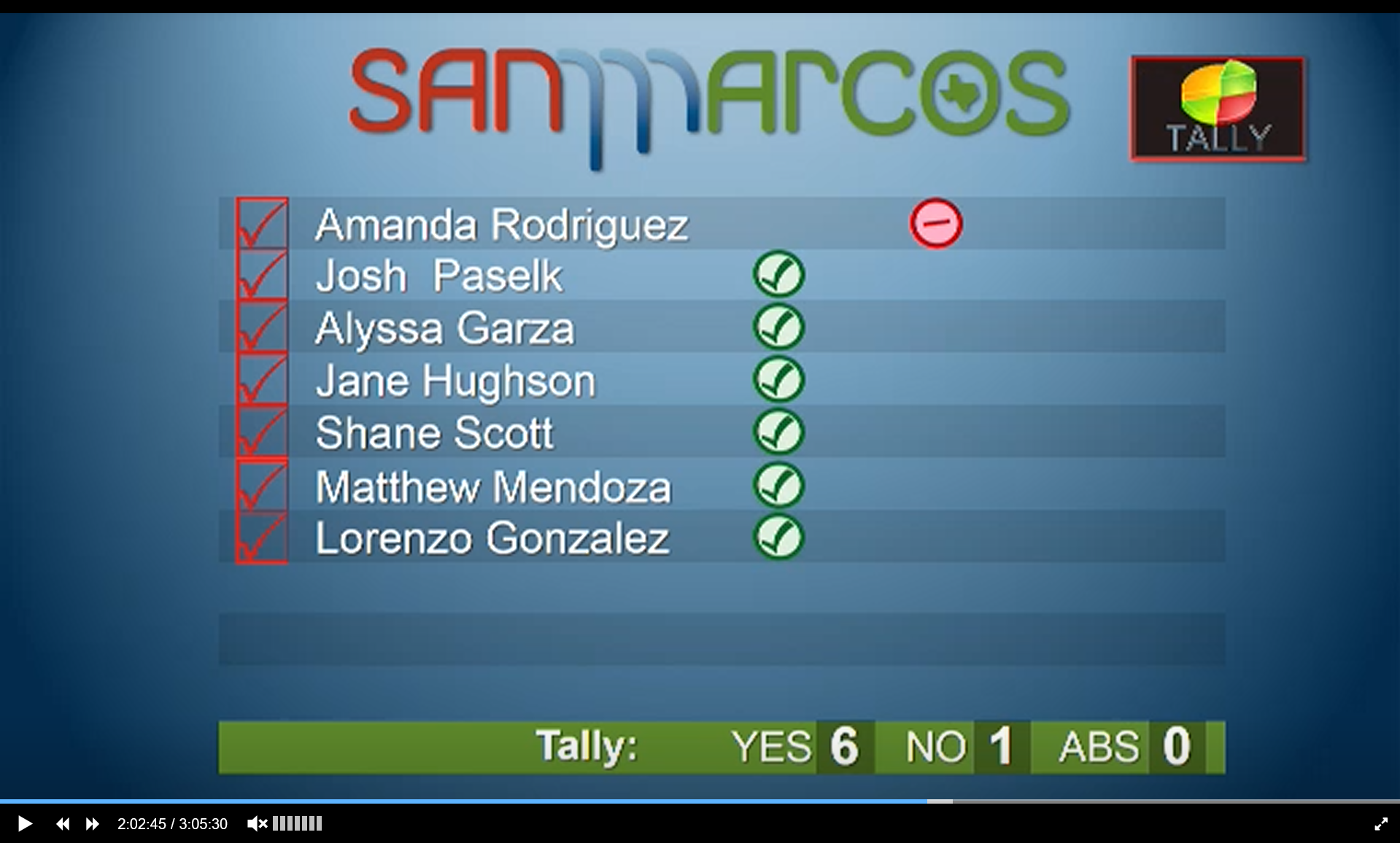
    The vote: Should we support the super urgent nomination that absolutely cannot wait until March?

    So there you have it.

    ….. 

    Finally, let’s have a little reality check!

    The national registry is a big deal. Currently there are four historic landmarks for central Texas on the national register:

    1. The San Antonio Missions
    2. LBJ’s childhood home
    3. El Camino Real trail
    4. Mammoth Caves in Waco
    via

    Will Cape’s Dam be the 5th most historic thing in the entire greater Austin-San Antonio corridor?!?

    Seems unlikely.  Like I said, this is small potatoes. 

    Item 9: The Data Center

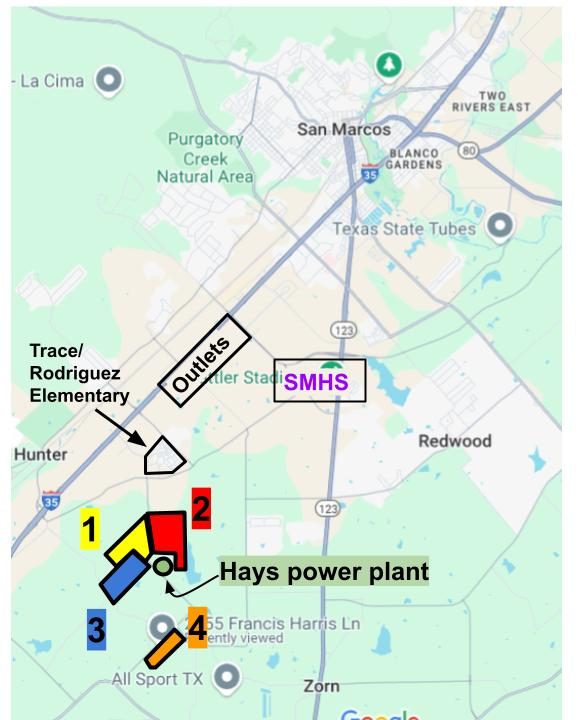
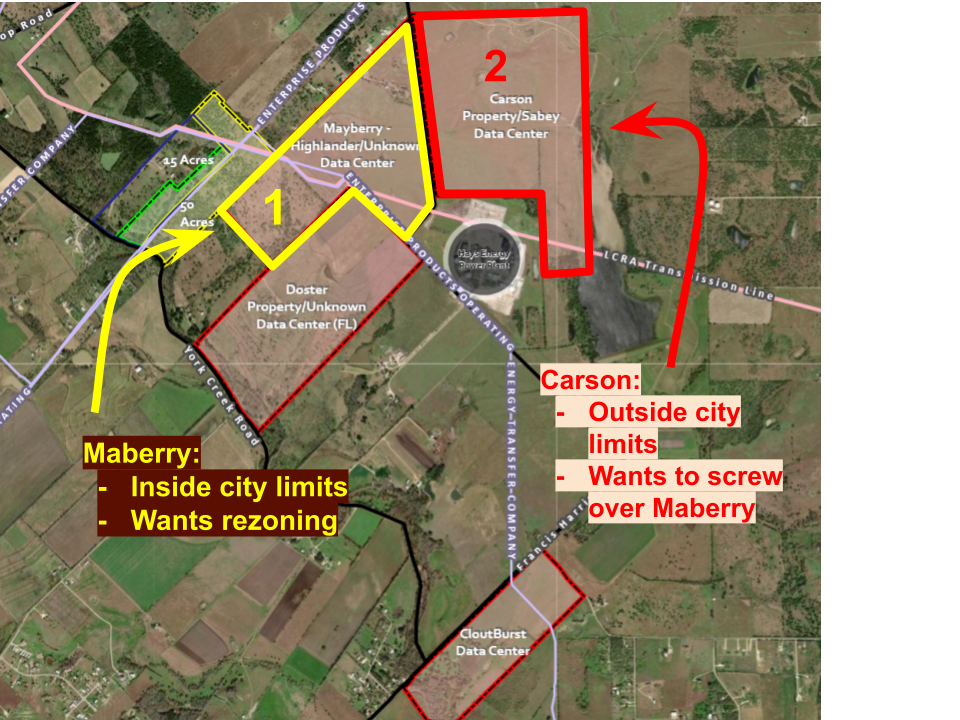
    Backstory: This developer, Mayberry, bought some land down here, a few years ago:

    Right next to the Hays County Power Plant:

    He wanted to build some homes. It turns out this was a terrible investment. Now he’d rather build a data center, instead. Could he please have a rezoning?

    The town responded HARD against this. People who live on nearby farms say it will ruin their way of life. People are worried about extreme water use during a drought and heavy electrical use from the shaky ERCOT grid. Tons of people have put in a lot of effort into fighting this data center.

    Last spring, P&Z turned him down. It went to Council in August, and Council didn’t have enough votes to overturn P&Z. So it failed.

    However, Council did not put the final nail in the coffin. They left a trail of breadcrumbs for Mayberry to come back.

    He dutifully followed the trail, and here we are. (Full version of the backstory here.)

    Tonight is just a presentation.

    Mayberry is back. Here’s the timeline:

    His pitch is going to be that he will sweeten the deal via a restrictive covenant.

    Here’s what he’s proposing:

    We don’t have the formal contract yet, though.

    The two big issues are water and electricity.

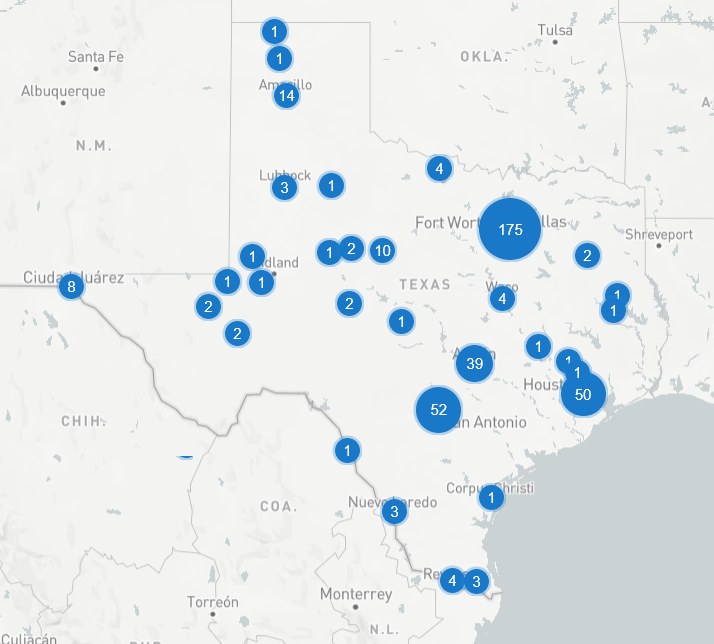
    Water: Texas has a big water shortfall. The 2022 State Water Plan projected big shortfalls, and everyone is working with those numbers. But ChatGPT didn’t come out until November 2022. There are now already over 400 data centers in Texas. The water use from these data centers is not included in the 2022 projections, but it’s all we’ve got.

    This data center would get their water from Crystal Clear. Crystal Clear gets their water from:

    • Edwards aquifer
    • Lake Dunlap
    • Carrizo-wilcox
    • SM River 

    By 2040, Crystal Clear is projected to be -40 acre-feet of of water. As in, they don’t have enough water rights to cover projected demand. And that’s using the 2022 pre-data center usage projections! Crystal Clear cannot deny service either. (This info was from an expert at citizen comment.)

    The proposal here is not the worst possible proposal. Evaporative cooling systems are the worst. This is a closed-loop cooling system. (I have no idea how many of the 400 data centers are evaporative.)

    Mayberry is estimating that they’ll use 25K-30K gallons of water per day, and they’ll put a hard cap at 75K gallons per day in the contract. That’s equivalent to the water used by about 235 homes. (Evaporative cooling centers are probably in the 100K-500K gallons per day range.)

    Electricity

    There’s a tradeoff between water and electricity. If you use less water, you’ll use more electricity. In addition, the Texas ERCOT grid uses water to cool the electrical generation plants.

    There is a longterm solution here – the more ERCOT switches to solar and wind-based energy, the less water needed to generate the electricity. (This is already cheap and available, if we want it.)

    Will utility rates rise? It depends on who you get your electricity from. This plant will be on Pedernales electric, so if you are too, then yes, it’s likely your rates will rise, too. But if you’re on San Marcos city utilities, your rates will not go up (yet).

    ….

    My $0.02: I’m conflicted, but I’m still basically in favor of this data center.

    Argument in favor: the data center industry is an absolute goddamn disaster for Texas. There are almost 100 between San Antonio and Austin. There are already four in the Hays-Caldwell area. This is catastrophic for the water shortage.

    But it is not a city fight. The heart of the problem is that Texas counties cannot regulate water and electricity usage. If we care about the water shortage and strain on the electrical grid, we have to fight that fight. Fight for county regulations of water and electricity use, and statewide data center regulation.

    In the meantime, we might as well take the tax revenue.

    Argument against: Maybe denying this one data center contributes momentum to a bigger movement against the other 400+ statewide?

    Listen, all you activists: You are on the right side of the issue, but you absolutely must join forces on a larger scale. The only meaningful answer is regional and statewide regulation.

    If I had to guess, good places to start might be:

    City Councils are much closer to everyday people than regional and state organizations are, but Council cannot move the needle on the problem. Any progress has got to deal with county land, outside of cities.

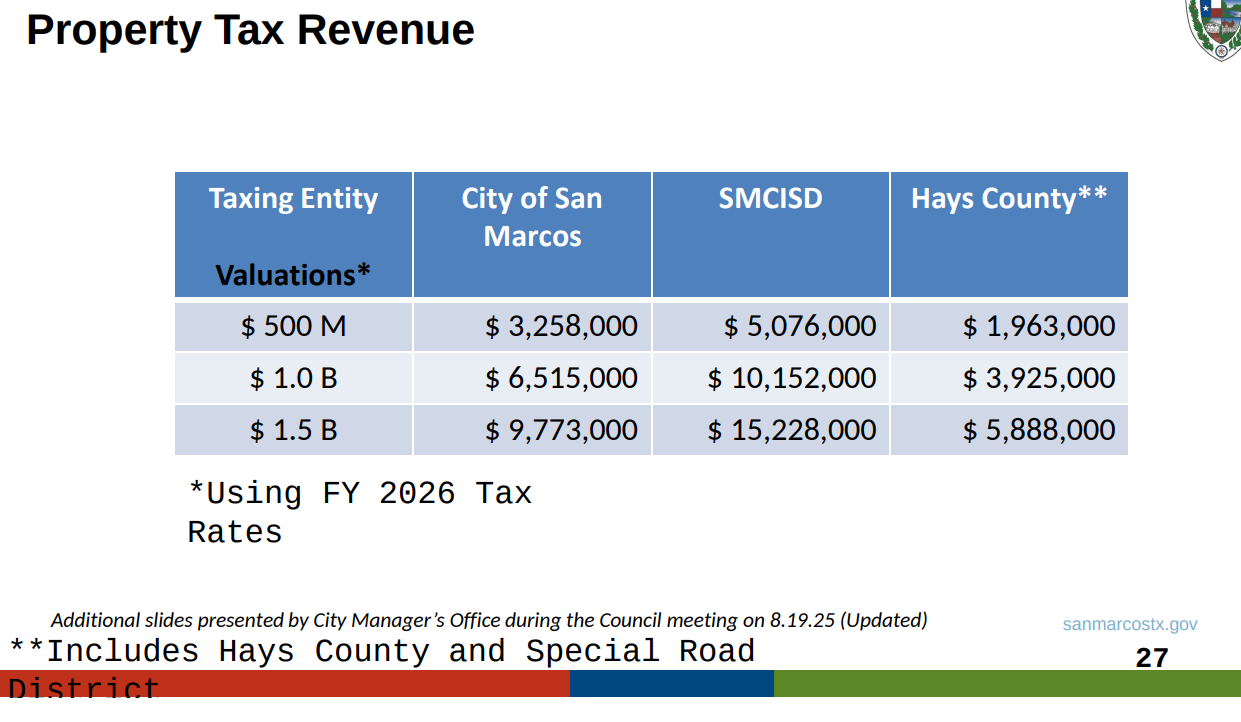
    Just for kicks, how much money are we talking?

    I don’t really believe those numbers. It takes years to build these things, markets can crash, etc etc. But still, a fraction of that tax revenue would be helpful.

    Hours 0:00 – 1:17, 12/2/25

    Citizen comment:

    There were 12 speakers, and only one topic: Flock Cameras

    • 10 people: they’re authoritarian and hijacked by ICE. Hard no.
    • 2 people: they keep us safe! yay cameras.

    Lots and lots of details when we get to that item.

    Item 10: The Downtown TIRZ

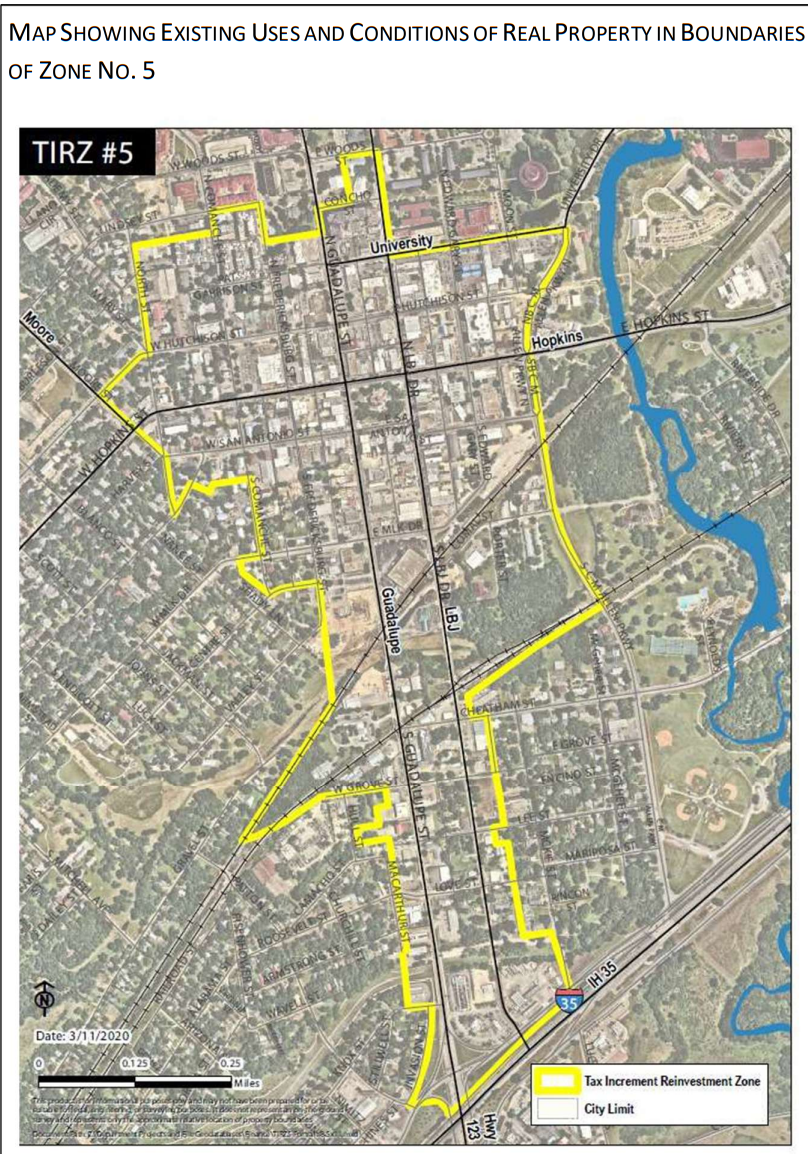
    TIRZ stands for “Tax Increment Reinvestment Zone”.   What this means is that we’re going to put more resources into a fixed area.  TIRZ #5 is the Downtown TIRZ.

    Here is the boundary of it:

    Boundary of the Downtown Tirz goes from Texas State, through downtown, to I-35

    Here’s how a TIRZ works: First, you fix a baseline year. For the downtown, it’s 2011. Back then, the whole region had a taxable value of $103 million.  

    San Marcos always gets to keep the taxes on  $103 million.  But the value of the land keeps growing. San Marcos agrees to split the taxes 70-30 on all the value added above $103 million, until the TIRZ runs out. (Hays County is also part of the deal.)

    So in 2025, the land is now worth about $550 million. San Marcos keeps the taxes on the $103 million base, and then splits the taxes on the other $447 million. All told, the TIRZ gets about $1.2 million from San Marcos, and another $600K from the county, in 2025.

    What does the TIRZ do with the money? The rules are that they have to spend it all on enhancing the downtown, which is supposed to increase its tax value all over again.

    Today they’re adding a little bit extra to their plan. Here’s what they want to do:

    The TIRZ expires in 2027.  After that, the city keeps all the tax revenue on that district.

    Fine! Everyone likes it.

    Item 12:  Rezoning 24 acres on Wonderworld and 123.

    Here’s a little patch of land:

    Here’s what it looks like if you’re going south on 123, on the Wonderworld overpass:

    The developers want to make it CD-5.

    What is CD-5?

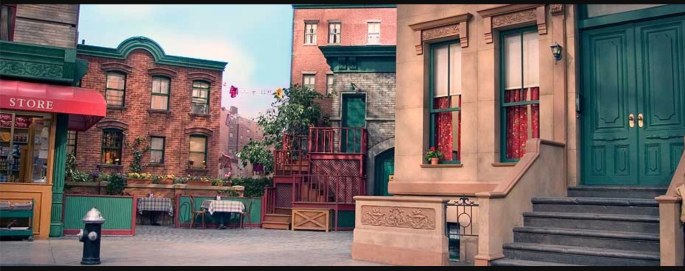
    In theory, CD-5 is supposed to feel like a cozy, dense downtown area where you have shops and apartments and all kinds of nifty things, kinda like on Sesame Street:

    But inevitably, it always ends up looking like this:

    Relentlessly giant apartment complexes. 

    What about some stores and restaurants?

    I’m not actually opposed to giant complexes! Housing is great.  But this intersection is a great spot for some stores and commerce, no? It’s a constant drumbeat that the east side needs more commerce.

    Jane brings this up:  “Will you all put in some commerce?”

    Developer: “Who can say? We’re so mysterious!” 

    Jane: “It would be really great.”

    But then no one on Council actually does anything.

    COUNCIL!! You have powers!  There are zoning overlays and Planned Development Districts, where developers agree to make some portion of a development into commerce.  

    But here’s Council:

    So Council just tells the developer, “Fingers crossed! Thoughts and prayers for commerce!” and leaves it at that.

    ….

    Is this re-zoning a good idea? Let’s be a little systematic about it:

    Five Questions For New Developments

    Price Tag to the City: Will it bring in taxes that pay for itself, over the lifespan of the infrastructure and future repair? How much will it cost to extend roads, utilities, on fire and police coverage, on water and wastewater?

    There’s a lot of development around this already, and this will be dense.  This is a good financially for the city. A+

    Housing stock: How long will it take to build? How much housing will it provide? What is the forecasted housing deficit at that point? Is it targeting a price-point that serves what San Marcos needs?

    We’re still in a housing deficit, and more housing is good.  So I’m fine with this.

    Environment: Is it on the aquifer? Is it in a flood zone? Will it create run off into the river?Are we looking at sprawl? Is it uniformly single-family homes?

    Not environmentally sensitive, not a flood zone. And it won’t be sprawl, because CD-5 has to be dense.  So doing well here, too.

    Social: Is it meaningfully mixed income? Is it near existing SMCISD schools and amenities?

    I doubt it will be meaningfully mixed income.  Developers don’t care.  It drives me crazy though – wealth segregation is a societal problem.   

    It is very close to two elementary schools, Goodnight middle school, and SMHS, and also Bonham pre-K.   There are some restaurants near those schools. 

    The San Marxist Special: Is it a mixed-income blend of single family houses, four-plexes, and eight-plexes, all mixed together? With schools, shops, restaurants, and public community space sprinkled throughout? Is it walkable?

    This is literally what CD-5 should be.  A Marxist blogger can dream.

    My $0.02: If I were on Council, I’d push hard for a zoning overlay that guaranteed some commerce. But if that was impossible, I’d vote yes, anyway.

    The vote on rezoning:

    Everyone: YES!

    No one: no. 

    So there you have it. 

    Item 6: Mural at the Price Center. (Cousin to Panic! at the Disco.)

    This item is peak ridiculous, in all the best ways. This is why I love local politics: everyone’s a regular person, and regular people are totally absurd.

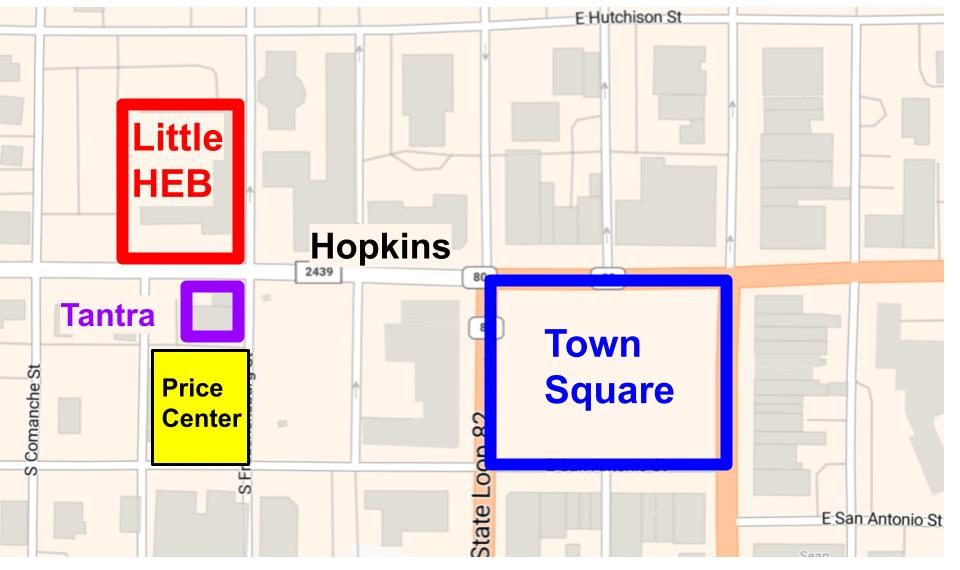
    This is the Price Center:

    It’s right behind Tantra, facing San Antonio St:

    It’s mostly a public event space – there are concerts and shows inside, people rent it out for parties, there are market days where you can buy stuff from vendors, etc.

    Here’s the front steps:

    No one ever uses this entrance.  You walk around through the garden to go in.

    Today’s item is about a mosaic mural to go on the front steps.  In other words, it’s a single picture that will be cut into strips, and go on the risers, like this:

    Maybe you’ve seen a photo of the proposed mosaic! If you haven’t yet seen it, I’m going to withhold it until the end of this item, for maximum comedic value.

    Because this is what Jane Hughson posted to the message boards ahead of time:

    This mosaic definitely involves cacti, and Jane is NOT a fan. 

    During the meeting, Jane brings up more points:

    • The mural is beautiful! But the cactus? Hard no. 
    • We’re trying not to have spiky plants like yucca downtown, because they are hazardous if someone falls in them.
    • We’re not Arizona. Feh, Arizona!
    • Cacti are prickly and unwelcoming.

    Lorenzo agrees: it does hurt to fall in a cactus.

    City Staff:  Some artists like cacti!  It’s subjective.

    Amanda:  Cacti stand for our cultural heritage in Mexico!

    Alyssa: I love ’em. Also they’re delicious.

    Shane:  If we asked the artist to take out the cactus and re-do it, and they said no, what are the sunk costs? 
    Answer: $1000.

    Saul: I guess I’m a yes, because I don’t want to waste $1000.

    ARE YOU READY TO SEE SOME CACTI?

    Pause for a second.

    Before you see it, I want you to picture an unwelcoming, prickly mayor cactus.  Get a good visual image in your head, before you scroll down.   What kind of cactus would be too hostile for the front steps?

    Ready?? 

    READY??

    Here’s the proposed artwork:

    Guys. GUYS. It’s so beautiful.  It’s mostly prickly pear flowers, more than anything else.  There’s nothing remotely hostile here.

    This is the mural that we almost killed for being too prickly!  What a world.

    ….

    The vote on the beautiful mural:

    Yes, we love it!! :  Amanda, Alyssa, Saul, Shane, and Matthew

    Ow, thorns: Lorenzo, Jane

    So there you have it. Small town politics, eh?

    Hours 1:17 – 3:50, 12/2/25

    Item 19:  Flock Cameras

    This is the biggie!  

    What are Flock Cameras? 

    Flock cameras are Licence Plate Readers, or LPR.  They sit at intersections like so:

    We have 14 of them in San Marcos, and they’re located here:

    (We also have 8 downtown cameras that are not Flock cameras.  The city owns these cameras.)

    What makes everyone so mad about Flock cameras?

    Every single time you drive by a Flock camera, your license plate gets tagged and recorded.  Then Flock takes all this data, and pools it all together across the nation, into one big, sloppy data fest. 

    When your police department agrees to share all their data , they are given access to all the data about everyone who drives anywhere in all of the US.

    And the network is HUGE:

    via

    Here’s just the I-35 corridor:

    ..

    Privacy and Data

    Privacy rights are a tricky thing to talk about, because of a few things:

    1. Our private lives started getting tracked extensively about 20 years ago. Now it’s like being mid-avalanche – we’ve all gotten used to things that are extremely abnormal.

    This is the frog in boiling water scenario – as a society, how do we claw our private data back? (Europe has passed laws.)

    2. The consequences are fuzzy and abstract for a long time…. until suddenly they’re really, really bad.

    Your data is out there. Corporations sell it. It spreads like smoke. Nothing happens until it gets into the wrong person’s hands. Right now, because Trump has weaponized ICE and the FBI, people who want to abuse Flock data know they probably won’t be punished for it.

    And ICE is constantly using Flock data to find people to snatch.

    3. Freedom and safety are always in tension with each other. If you want to end all crime, you could put every single young man between ages 14 and 35 in jail.  Your crime rate will drop to <1%. 

    But one of our core American ideals is freedom. Freedom is so important that we’re willing to accept some loss of safety.  (“Innocent until proven guilty” literally means that we think it is wiser to let some guilty people go free than to risk locking up someone innocent.)

    Where do you draw the line between freedom and safety? That is the heart of this discussion.  

      How did we get here?

      April, 2022: Original Council agreement with Flock. 

      It was actually never discussed at that council meeting.  It was put on the Consent Agenda with 15 other items.  That means all sixteen items get one single vote, unless a council member pulls an item for discussion. 

      December 29, 2023: The first contract ends, and city staff signs a second contract with Flock Cameras.

      This contract never went to Council for approval.  Alyssa is pretty salty about this!

      But honestly:  in 2023, council was very very pro-cop.  Jude Prather and Mark Gleason were still on Council, plus Matthew Mendoza. 

      Furthermore, there was a post-covid crime bump:

      via

      There was a lot of nervous energy around that.

      All taken together, Council was extremely deferential to expanding SMPD in 2023.  Hypothetically, if they’d voted on Flock Cameras, it would have been 6-1. I promise you, that’s what would have happened. (Alyssa would have been the only No vote.) 

      February, 2025: The winds change! This was the first time I ever heard “Flock Cameras” uttered in a City Council meeting. SMPD wanted 19 more cameras.  Council postponed the decision until June, and then voted no. No additional Flock Cameras.

      What changed since 2023?!

      Well, Trump, obviously.  Biden certainly deported a huge number of undocumented people! But he did not weaponize ICE with the kind of cruelty that we see from Trump. 

      This is what I meant above, about consequences. During the Biden administration, the loss of privacy didn’t feel as real to many people. Now we hear how Flock shares their data with ICE.  We hear how Flock data tracks women who are leaving the state.  The abuses are systemic.

      Which brings us to today

      The 2023 contract is up at the end of this year.  Renewal was due by December 1st.

      But city staff needs Council direction before they can renew, for two reasons:

      • All decisions over $100K go to council for approval
      • Clearly this has gotten contentious in a way that it wasn’t in 2023. 

      For unclear reasons, it did not get on the agenda in November.  That means that we missed our deadline to renew.  

      Tonight’s topic:  What is Council direction to staff?  Do we want to renew after all, or modify, or just shut down Flock in San Marcos all together?

      What does the public have to say?

      Two speakers were pro-Flock cameras.  Their main points:

      • SMPD implemented a new privacy policy back in May.
      • Flock cameras are victim-focused
      • LPR cameras helped solve the downtown murders
      • Everybody gets captured on camera constantly! 
      • What about other technology that helps capture criminals?  Do you want to ban that, too?

      Ten speakers were anti-Flock.  Their main points:

      • Flock cameras are reactive, not proactive. They respond to crimes that have already occurred, but they do not prevent future crimes.  (More on this below)
      • Their networks get hacked all the time. Their data is not secure. (True, true.)
      • Peter Thiel is one of the creepiest billionaires around, and has funded ⅓ of the flock network. (Yes)
      • There is no accountability for Flock.  
      • ICE has access to Flock data.
      • Anecdotes of stalking incidents and tracking women who are leaving states to get abortions (for example)

      Do Flock cameras help prevent crime? 

      Basically, no.  Cameras work when they are visible and aimed at the location of the crime.  In other words, if you put a big, obvious camera aimed at a parking lot, you can reduce the number of car break-ins. 

      But Flock cameras are aimed at intersections. They just record license plates. They don’t prevent the victim from being shot on the square – they just help find the shooter afterwards.

      However, it does appear that Flock Cameras help solve crimes.  Or as Chief Standridge puts it, we can solve the crime much faster, at least. It saves detective time.

      What does Council have to say? 

      First off, Lorenzo recuses himself due to employment conflict of interest.

      Next, Alyssa and the city manager go back and forth on the timeline for a while. (About the 2023 contract, discussed above.)

      Amanda goes next. Her main points:

      • We had a community town hall on public safety.  There were diverse opinions!
      • Opposing flock is a pretty mainstream opinion
      • Surveillance doesn’t prevent crime.
      • This is about Flock, not SMPD. Focus on Flock.
      • Lots of people would be okay with a strictly internal SMPD camera system.
      • Flock opens us up to expensive lawsuits. Lawsuits are way more expensive than the cost-savings from the cameras.

      Saul: Are the city-owned downtown cameras LPRs? Are they License Plate Readers?
      Answer: No, they aren’t.  You have to go and watch them to get information out.

      Saul: If the National Guard or martial law comes to San Marcos, can they access the data?
      Answer:  Legally, it would require a subpoena.  Illegally, yes, systems can always be hacked or accessed.  No guarantees against that.

      Jane: Data is stored for 30 days, and we don’t share data with the rest of the Flock network?
      Answer: Right, we stopped sharing after June. Now other agencies have to fill out a specific request and send it to us.

      Jane: How often do we get requests from out-of-town PD?
      Answer: We’ve gotten 20 since July. We denied two of them.

      Alyssa:  Hays County tried really hard to create some safeguards, and Flock is not interested.  The Flock representative laughed when Hays requested some mild modifications to their system.  They won’t do anything and won’t disclose anything. 

      Jane: I love Law & Order, but this one company makes me nervous.  

      Jane’s main points:

      • I’m okay with cameras, but not Flock.
      • Can we get some non-Flock cameras? 
      • Let’s renew with Flock while we source non-Flock cameras, so that we don’t have a gap in surveillance. Then we can switch in 2026.

      Matthew: Samesies!  No longterm Flock, but I’m okay with short-term Flock.  No gap in surveillance, please and thank you! 

      Amanda:  If we’re so focused on avoiding gaps, what about our major gaps in crime prevention? How about the gap on mental health care? How about the gap in homelessness prevention? Those would actually prevent crimes from occurring. Reacting does not make us safe.

      Question: How much does Flock cost?
      Answer: About $43K for a year. 

      They get into the nuts-and-bolts of transitioning to a different company. How long does it take to solicit proposals? Could we piggyback on an existing contract? Could we get a pro-rated or month-to-month contract with Flock in the meantime? (Answers: 12 months, maybe, and maybe.)

      Extra details:

      • Back in the spring, there were five cameras that may have gone live without Council approval.  They were definitely mounted up on poles.  Council is very interested to know whether or not they were turned on and recording data? Or just mounted up there? We never got a firm answer on this. 

      Question: Could we create our own, internal system?
      Answer: Maybe! Seems plausible.

      Jane:  The story about Evanston, Illinois is creepy.  If we’re signing a new contract, put in a clause to avoid that.

      What she’s referring to is this:  Evanston took down their Flock cameras due to privacy violations.  Then Flock put them back up again.  It took a court cease-and-desist order to get Flock to stop putting the cameras back up, on their own.

      Question: How do you measure the effectiveness of Flock?
      Answer: It’s mostly anecdotal, because Flock won’t share the information that you’d need to know this.

      Saul specifically says that he supports SMPD and his own son is an officer, but he’s a no because of the risk of lawsuits.

      THE VOTE:  

      Let’s sign a whole new contract!: nobody.
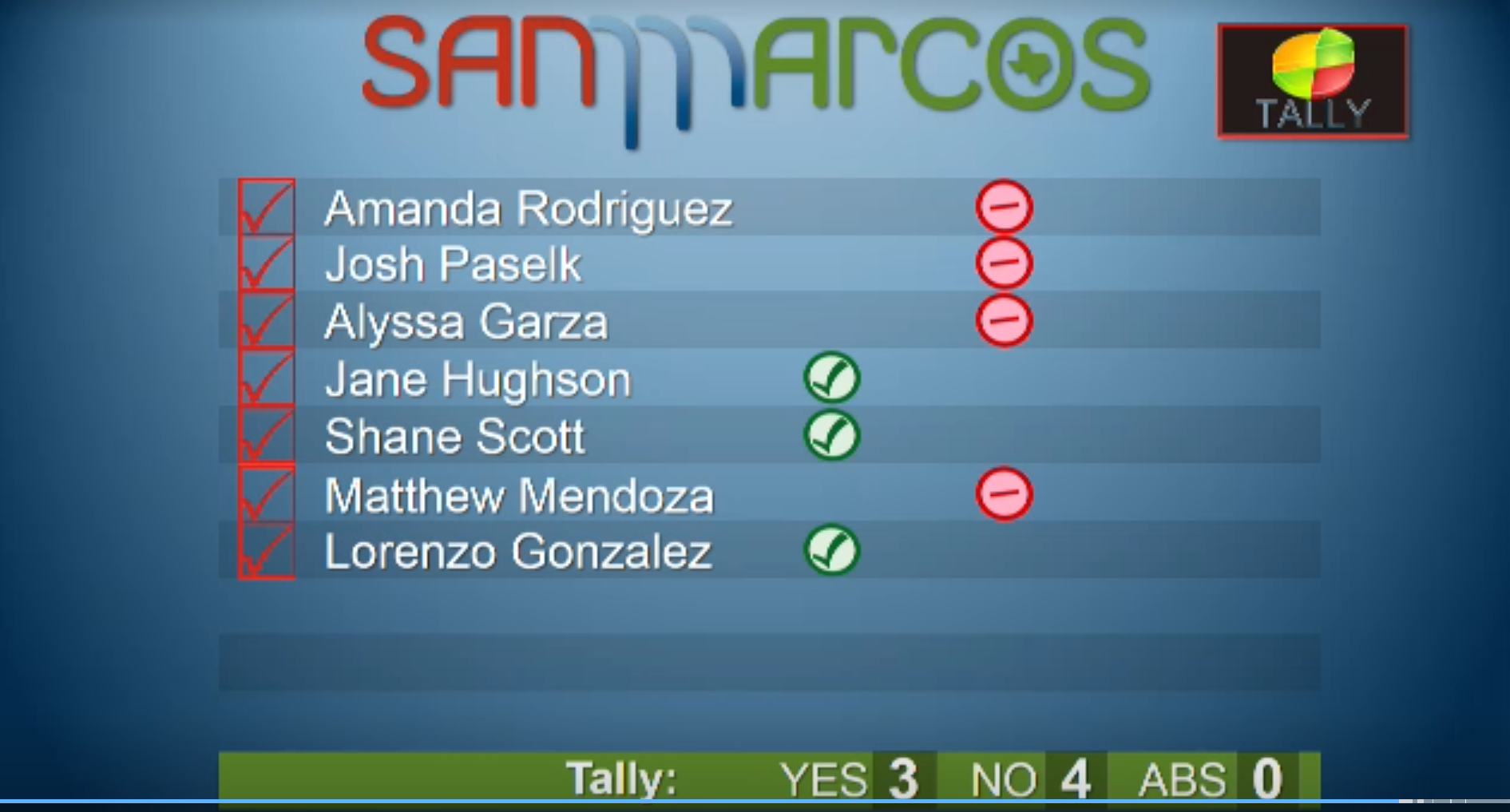
      We want a short term contract with Flock, while we hunt for new options: Jane, Shane, Matthew
      Absolutely no contract with Flock at all:  Amanda, Alyssa, Saul

      So it’s a 3-3 tie. 

      What does that mean??

      It takes a little bit of time to untangle this.  Basically, it takes 4 votes for Council to take action.  Neither side got 4 votes.  So nothing happens.  

      But what’s the outcome then? 

      We have to go back to the timeline.  December 1st was the deadline to renew, and we couldn’t renew without Council approval.  So that deadline came and went.  We did not renew.

      And now… nothing happens.  Which means we’re done with Flock! 

      ….

      Look, I loathe authoritarian microsurveillance and I think the threat from tech billionaires and ICE is far greater than the danger of unsolved crimes.  So I’m good with this!

      … 

      Item 15: Speed limits 

      Here’s the new FM 110, going east of San Marcos:

      On that red stretch, should we increase the speed limit from 60 mph to 65 mph?

      This is pretty nutty:

      Here’s what I think that means: TxDOT came to us and said, “We think your speed limit is too low. If too many people are speeding, you have to raise the speed limit.”

      So we had to do a study, and the study did show that too many people were speeding! So now we have to raise the speed limit, so that they’re not speeding anymore.

      How ass-backwards is that?

      (Also: when national speed limits went from 55 mph to 65 mph, fatalities rose by 20%. It’s the whole freedom vs safety trade-off, again!)

      Council votes:

      Stay at 60 mph: no one.

      Go up to 65 mph: everyone.

      I mean, I wouldn’t want to take on TxDOT either. 😦

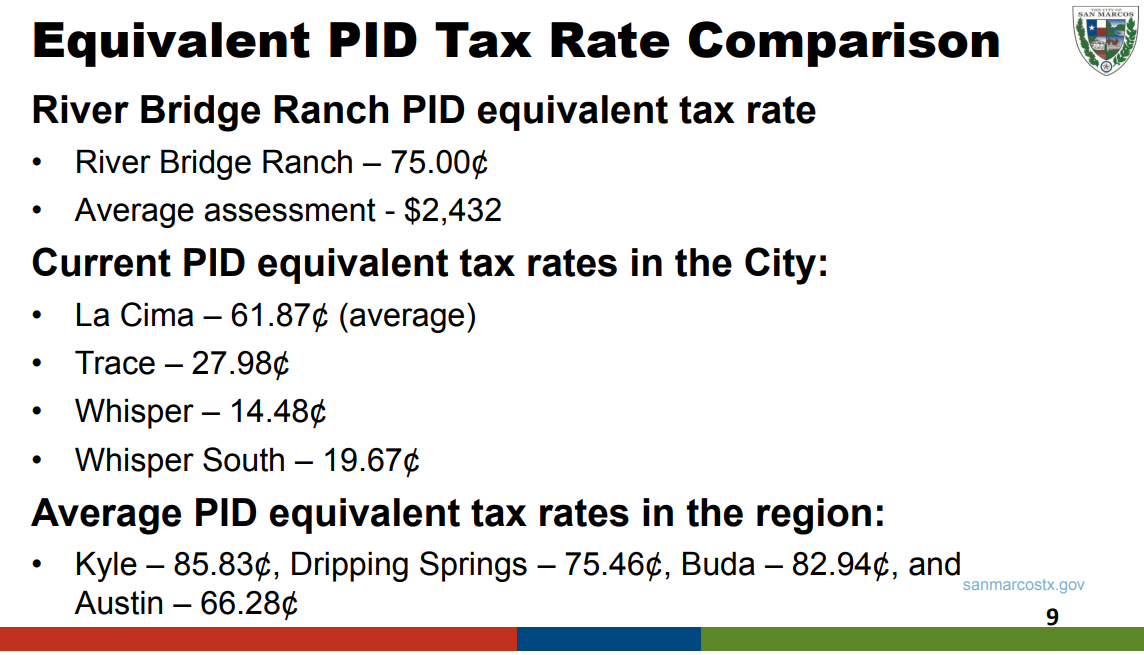
      Item 16: River Bridge Ranch PDD

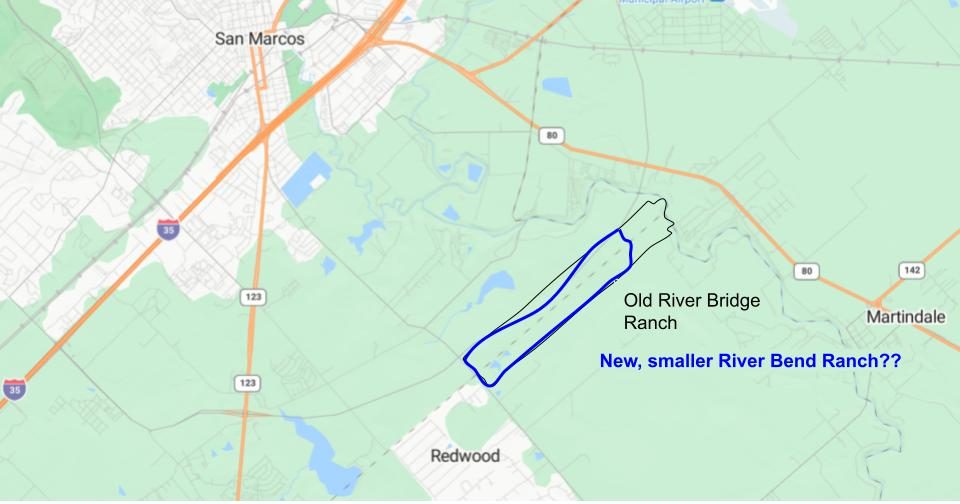
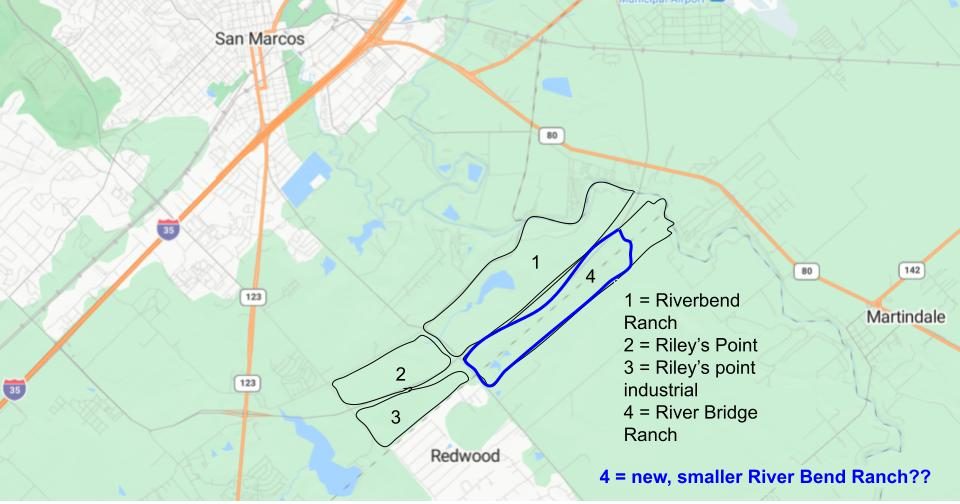
      River Bridge Ranch is always hopelessly confusing to me, because it is right next to Riverbend Ranch, and they both have had a hundred different names over the years. (Riley’s Point, The Mayan Tract, Baugh Ranch, etc etc)

      This is mostly for my benefit:

      For years I didn’t even realize these were separate properties.

      Anyway, I hate them all.

      Today is about #4, River Bridge Ranch.

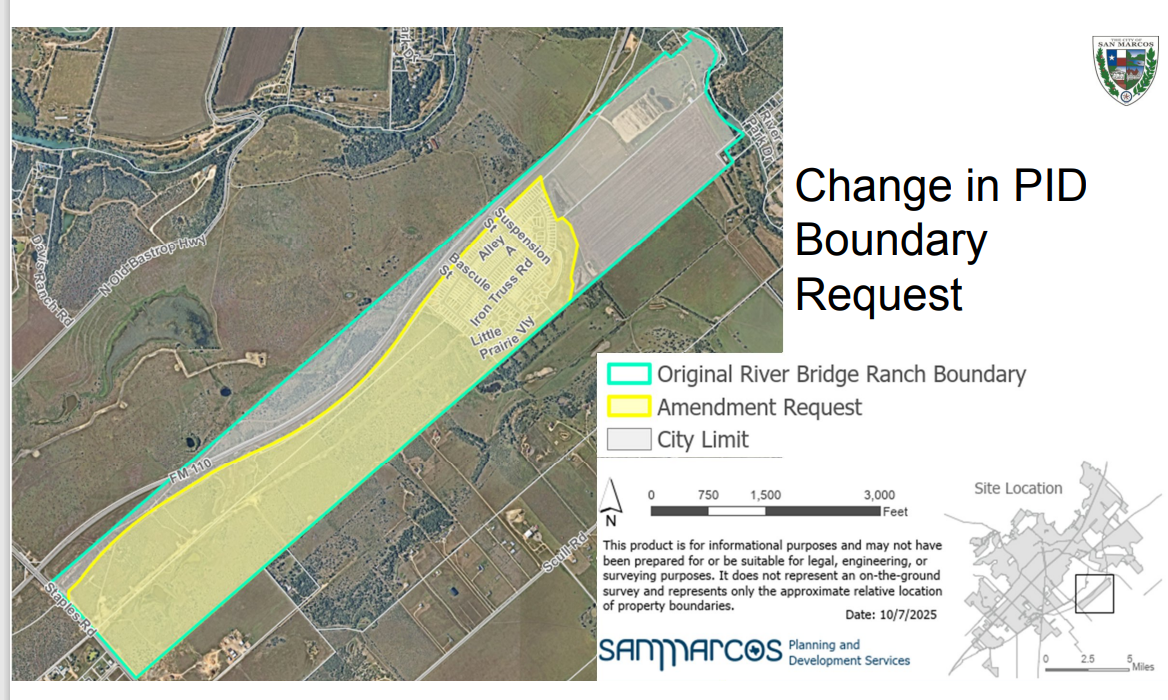
      It’s getting a little bit smaller, I think:

      Good.
      Hours 0:00 – 2:04, 11/18/24

      Citizen Comment:

      There were five people who showed up to talk.

      Tonight’s the night that Council determines their HSAB grants, and so almost everyone speaking was representing nonprofits – one speaker from School Fuel, and three from Southside. I’ll save it for that item.

      One last speaker talked about Meet and Confer, and whether or not it was okay for Council to make recommendations to the negotiators who represent the Council in the negotiations.

      Item 13: Rezoning a little street in Blanco Gardens

      Here’s Blanco Gardens:

      It’s a very cute old neighborhood with gorgeous trees.

      Here’s a close-up:

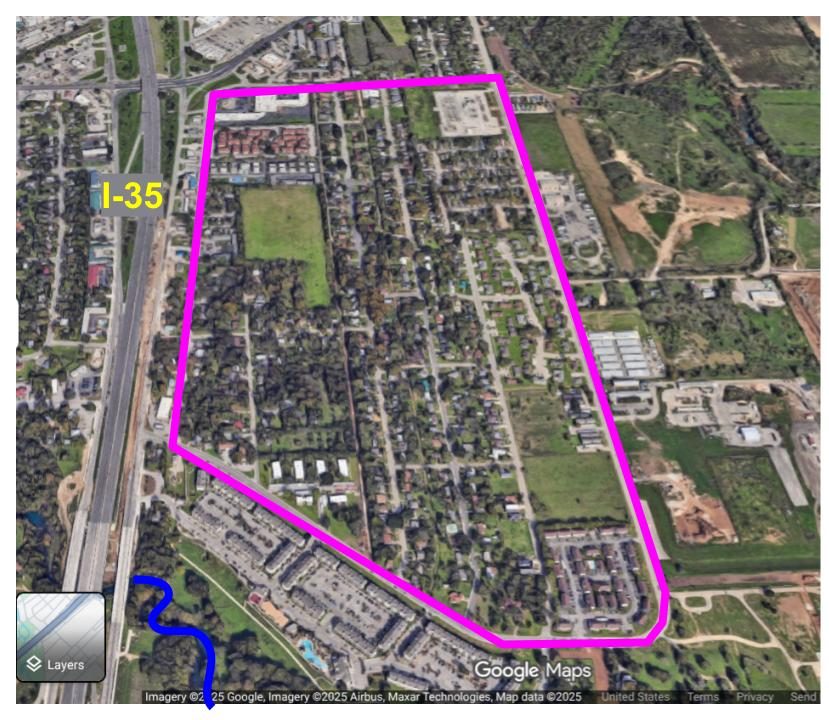
      Blanco Gardens has come up a lot over the years in the blog. They were ground zero for the 2015 floods, and they’ve gotten some some flood mitigation projects since then. They got some speed bumps and parking permits. Most recently, they were the first neighborhood to get its neighborhood character study. It’s also the closest neighborhood to Cape’s Dam.

      For an old neighborhood, there’s a surprising amount of undeveloped land in the middle of it:

      (I wondered briefly if that was because homes had been torn down after the floods. But nope, you can see on the 2014 satellite image that there’s just always been space there for years.)

      Over the years, developers have occasionally tried to put something in part of it, but so far it’s always gotten nixed.

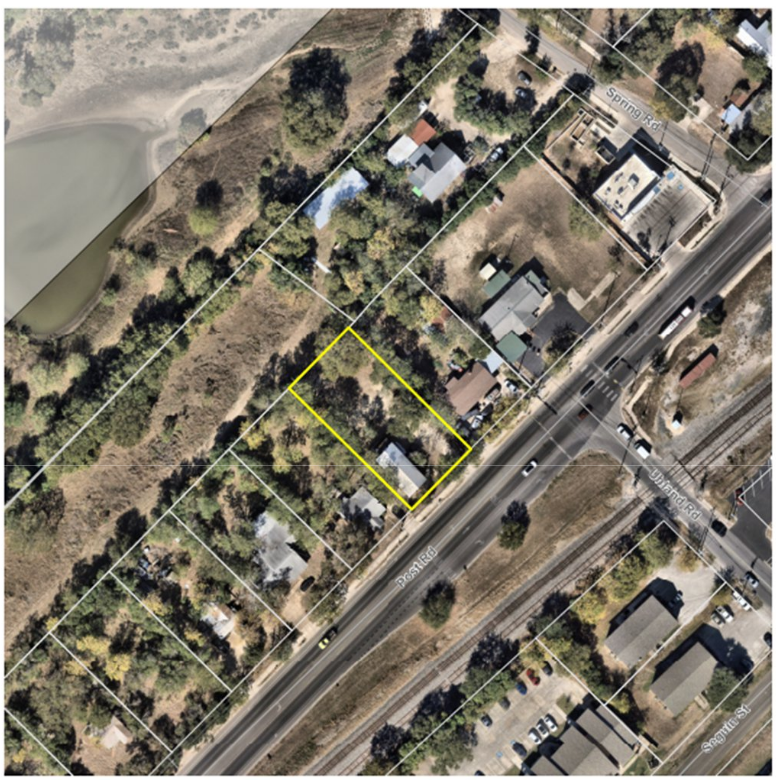
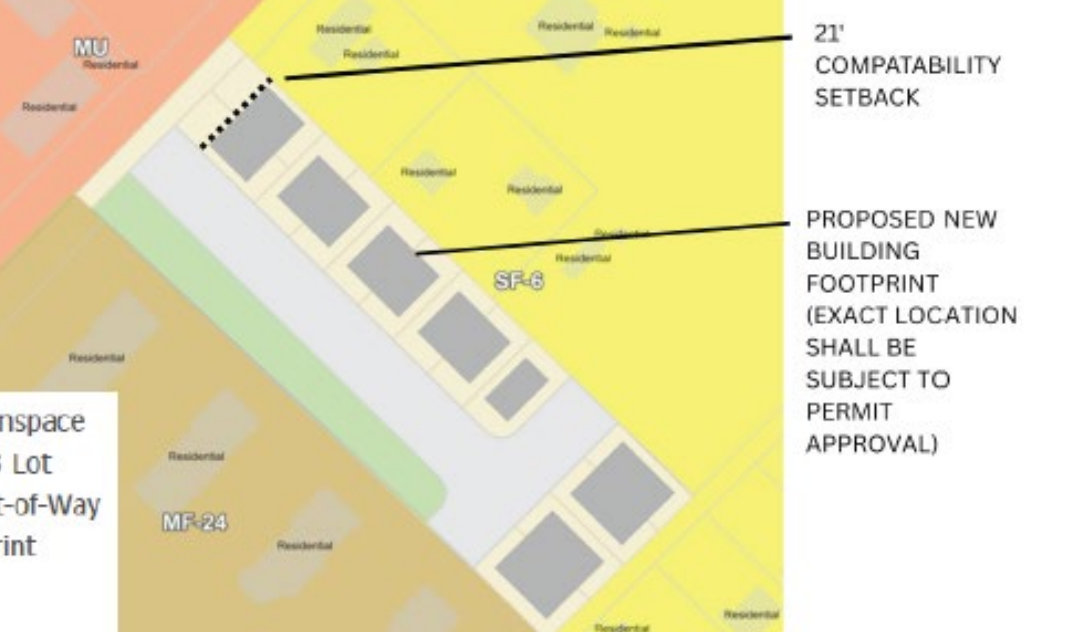
      Today’s proposal is about this bit:

      A developer wants to build houses on it.

      They would look and feel like duplexes, but they’re technically different, because of how they can be bought and sold. The property line runs through the two halves of the house, so you can purchase one half of it, while someone else owns the other half. (It’s called a “zero lot-line house”.)

      Basically it’s a good way to fit more, smaller homes onto a street, and they tend to be a little cheaper, too.

      What does Council say?

      Question: will fit the character of the rest of the neighborhood?
      Developer answer: We have good intentions!

      (One block over, there are some extremely modern houses. The neighborhood is salty about this.)

      Question: Will the alley still exist?
      Answer: nope.

      Nobody really asked about flooding. The 2015 floods are starting to fade from memory for the rest of San Marcos. But not in Blanco Gardens – they were the epicenter of the floods.

      I would have liked to know what the 2015 flood water line was for nearby houses – I bet it was about 3-4 feet of water deep. How elevated will these houses be? Will they be above the 2015 water line?

      My memory is that, in a 100-year flood plain, you have to build 1-2 feet above the Base Flood Elevation, based on FEMA flood maps. Does that get you to 3-4 feet off the ground? I just don’t know.

      The vote on this cute row of sorta-duplexes:

      Yes:  Everyone
      No:  nobody

      The good news is that Council is enthusiastic about infill housing. (When I first started blogging in 2022, Council wouldn’t let a home owner build two small houses on a subdivided lot, on Lockhart street. That was crazy.) They’ve definitely gotten the message that San Marcos needs more housing.

      As long as the homes are safely elevated, I’m okay with this project. But the flooding risk makes me very uneasy.

      Item 14: HSAB Funding

      HSAB stands for Human Services Advisory Board.

      These are city grants to nonprofits, for things like food assistance, eviction prevention, domestic violence help, mental health services, etc. For the past few years, we’ve given out $500K in grants. This year, Council bumped it up to $750K. (Of course, federal funding has gotten slashed, so the need has also grown. THANKS OBAMA.)

      It’s always a grueling process. All the nonprofits all do incredibly important work.

      In the past, we kinda made non-profits cagefight against each other. [Read all the gory details for the past few years.] The process was murky. The recommendations would come to council, and council members would start horse-trading around.

      It was a bad look! It always seemed very fickle – “Oh, we’ll take $20,000 from those guys and give it to these guys!” It felt like the main criteria was being friendly with council members.

      We’ve been working on tightening the process. It’s a super time-intensive:

      • the HSAB board meets weekly from August to October
      • They hear presentations from all 32 applications
      • Each one gets discussed and each board member ranks them on a bunch of different criteria
      • Eventually they recommend how much of each request to fund.

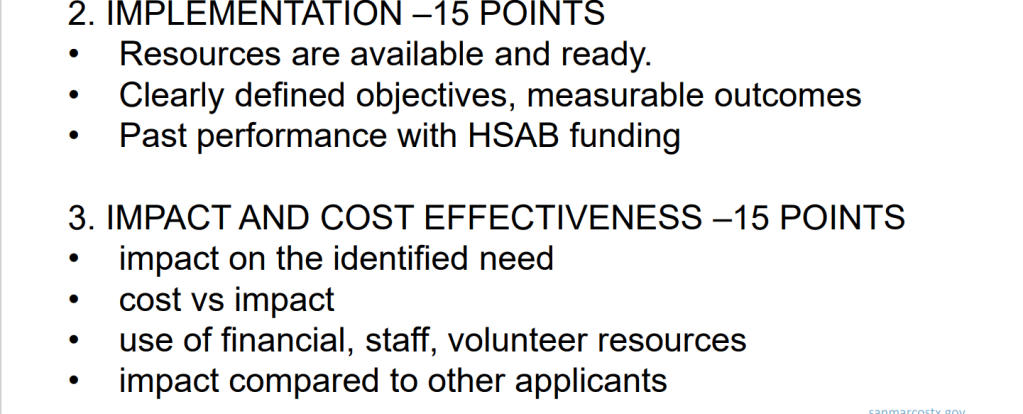
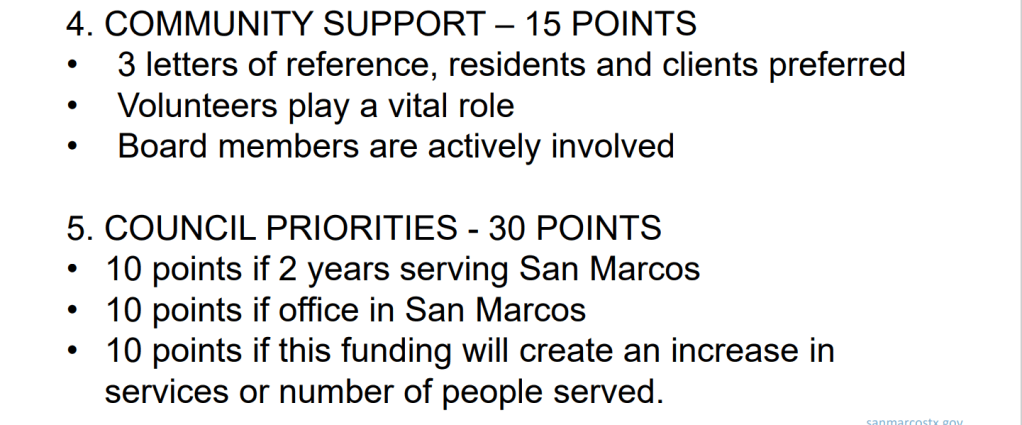
      Here’s the criteria:

      After all the ranking and discussion, they bring it to Council.

      Just for funsies, let’s add up how much other non-HSAB money is getting allocated in this meeting!

      All this was approved in one single vote, on Tuesday:

      • “On-Call Title Research Services Contract with Hollerbach & Associates, Inc., to increase the price by up to $200,000.00, resulting in a total contract amount not to exceed $299,999.00”.
      • “RMO P.C. for legal services associated with land acquisitions to increase the price by up to $300,000.00, resulting in a total contract amount not to exceed $699,000.00”.
      • “Change in Service to the agreement with Baker Moran Doggett Ma & Dobbs, LLP for legal services associated with land acquisitions to increase the price by up to $300,000.00, resulting in a total amount not to exceed $600,000.00”.
      • “STV Incorporated to provide On-Call General Engineering Services for various projects in the amount of $900,000.00”.
      • “Halff Associates, Inc. to provide On-Call General Engineering Services for various projects in the amount of $900,000.00”.
      • “a 2025 Ford F550 Crew Cab Chassis from Rush Truck Center, through a Sourcewell Purchasing Cooperative Contract, in the amount of $82,043.63, and outfitted by E.H. Wachs, through a BuyBoard Contract, in the amount of $156,865.65, for a total purchase cost of $238,906.28”.
      • “SHI Government Solutions, through Omnia Partners, for a City of San Marcos job application tracking software system in the annual amount not to exceed $112,000.00, and up to four one-year renewals with a total amount of $560,000.00”.

      It comes to about $2.95 million. I’m not saying any of those were a mistake! I trust the city officials. Most likely, those are all totally reasonable.

      I’m just pointing out who gets scrutinized, in society, and who doesn’t. We approved almost $3 million without blinking, when it goes to those contracts above. But if it’s hungry kids, homelessness, mental health emergencies, etc, we rigorously grind these applications into pulp.

      Back to the grant grind!

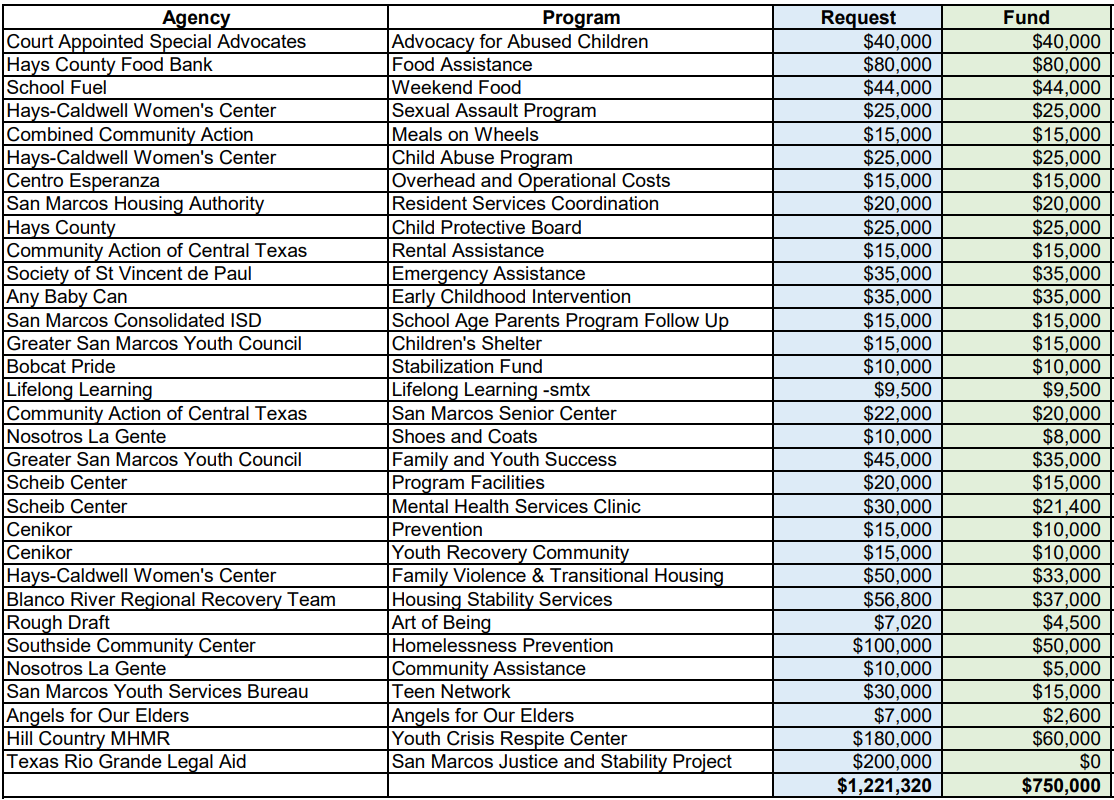
      There were 32 applications, and the total amounts requested added up to $1.2 million.

      Here’s the full list of scores and funding:

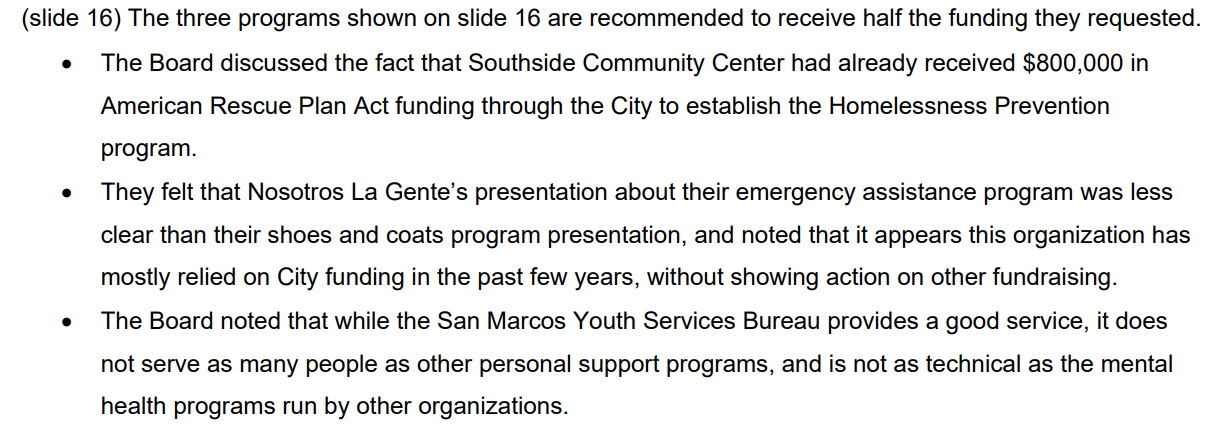
      In the presentation, they went through all of them, and why the committee might not have fully funded the request.

      For example:

      The rest of their thoughts are on pp 435-437, here.

      They were very thorough.

      Back to Citizen Comment

      Three speakers from Southside show up to talk. Here’s what they say:

      Southside is in a funny position. In 2024, the city gave Southside $800K of Covid money to implement a Homeless Action Plan.

      They came up with a plan and put in all the work to get it up and running. Now they’re trying to sustain it over time. They asked for $100K from HSAB, but were only granted $50K.

      The $100K is for their homeless prevention program – giving families $1000-2000 to get through a one-time financial crisis, so that they don’t get evicted.

      Let the horse-trading begin!

      Matthew kicks it off. He wants to try to get Southside back up to the full $100K that they asked for, for homelessness prevention.

      Matthew proposes:

      • Take $4500 from Rough Draft
      • Take $5000 from Lifelong Learning
      • Take $10,000 from Hill Country MHMR

      Give that $19,500 to Southside.

      Ok, what are these things?

      Rough Draft:

      Their funding would go to $0.

      Lifelong Learning:

      Ok. Their funding would go from $9000 to $4500.

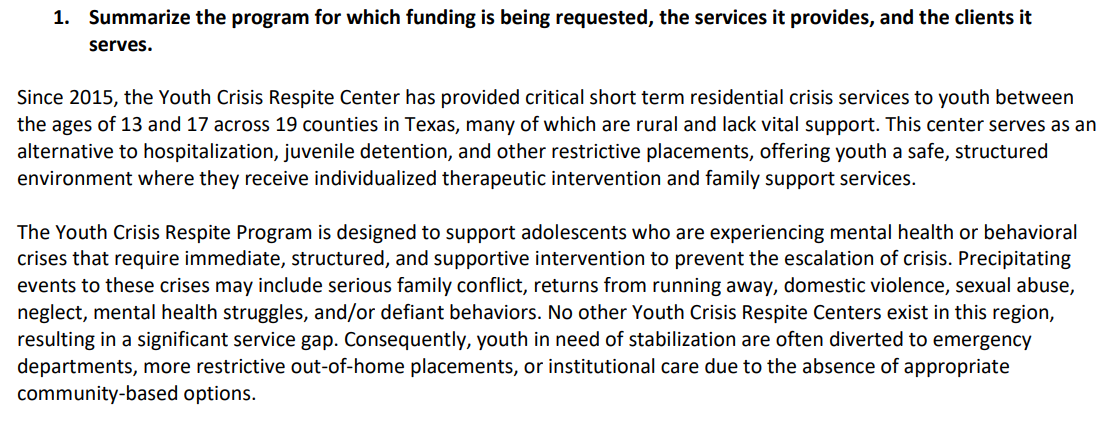
      Hill Country MHMR

      Their funding would go from $60,000 to $50,000.

      ….

      What does Council think?

      Question: How many people would Southside be able to help, with this $19K?
      Answer: About ten families. Average cost to stabilize someone after a financial emergency is $2k.

      It’s actually a huge bargain. If they’d been evicted, it would cost $15-30K+ to stabilize a family once they become homeless. (Plus, y’know, becoming homeless is awful. This is way more humane for the families.)

      Question: Are you all applying for other grants?
      Answer: SO MANY. Funding is scarce, and federal funds have been slashed.

      Alyssa: The entire premise of horse-trading these dollars is problematic. Most agencies didn’t send someone here tonight to answer questions. We don’t have context and expertise. This is haphazard. I am not on board with any of this.

      Amanda: Matthew, what about moving some money from the School Age Parents Program? They said they’d be able to keep the program open on $7,500, but they’re being awarded $15K.

      Matthew: How dare you. Abso-fucking-lutely not!

      [I’m paraphrasing. Matthew just said something like, “They do great work!”.]

      Amanda: I’m trying to throw you a bone here!

      Matthew: Hard no.

      Amanda: Well, I’m a no on Hill Country MHMR especially. Their work is desperately needed. We are in a mental health services desert, and this program will fund teenagers without insurance.

      Alyssa: I’m a NO on all of this, but especially NO on Hill Country MHMR. Homelessness and mental health are completely intertwined. There’s so much need here.

      The votes are each held individually:

      1. Move all $4500 from Rough Draft to Southside Homelessness Prevention?

      Yes: Matthew, Jane, Amanda, Lorenzo, Saul

      No: Alyssa, Shane

      2. Move $5000 from Lifelong Learning over to Southside?

      This motion dies without getting a second. So it never comes to a vote.  That kinda surprised me.

      3. Move $10K from Hill Country MHMR over to Southside?

      Yes:  Matthew

      No:  Everyone but Matthew

      4. Amanda throws in a vote on the SMCISD School Age Parents Program:

      They get $15K.

      Should we take $5K from them, and give it to Southside?

      Yes: Amanda, Saul

      No: Matthew, Lorenzo, Alyssa, Jane, Shane

      So that fails.

      ..

      Me, personally: It’s an awful decision to make. I probably would have taken money from Rough Draft, Lifelong Learning, and maybe SMCISD School Age parents. But not Hill Country MHMR.

      ….

      So that’s where it lands. Southside picked up $4500 more, and Rough Draft went to $0.

      The final official vote on HSAB funding passes 7-0.

      One more note!

      We just spent $750K on the poor and vulnerable.

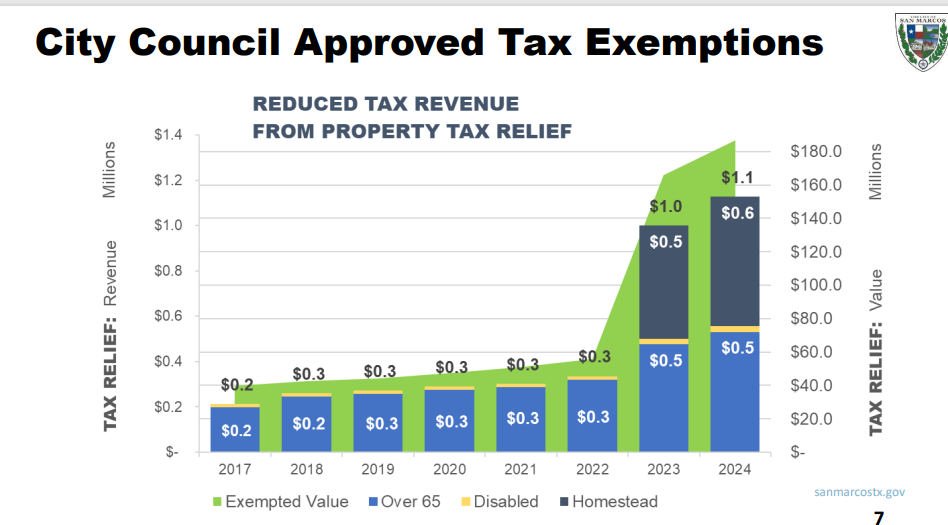
      But we also spend $1.1 million on tax breaks to home owners every year:

      About 30% of San Marcos owns their own home. That $1.1 million is just for them.

      Also, remember that Kissing Tree is keeping $46 million of San Marcos tax dollars, for nice streets and trees that are then gated off from the rest of San Marcos! You can’t go visit the tax dollars. Sorry.

      This is why I get cranky about this:

      People who want to slash property taxes never seem to appreciate how much of their own lifestyle is being subsidized.

      ….

      Item 19: Dunbar Recreation Center

      Dunbar was named for Paul Laurence Dunbar. He was the first black poet to get widespread recognition. (He was not from San Marcos in any way. He’s from Ohio.)

      Here’s one of his poems, from 1895:

      via

      Originally, the Dunbar neighborhood did not have a specific name, besides being called “the colored neighborhood”. The school was called The Negro School. In 1961, that was renamed after Paul Laurence Dunbar, and then gradually the whole neighborhood came to be known as Dunbar. So the Dunbar Rec Center just got the name “Dunbar”.

      Would we like to include the poet’s full name here? Everyone says yes.

      Great!

      Lots of interesting history on the Dunbar neighborhood here and here!

      ….

      Item 20-21: Jorge’s Mexican Restaurant.

      Jorge’s is on Hunter Road:

      Separately, Miller Middle School is on Foxtail Road:

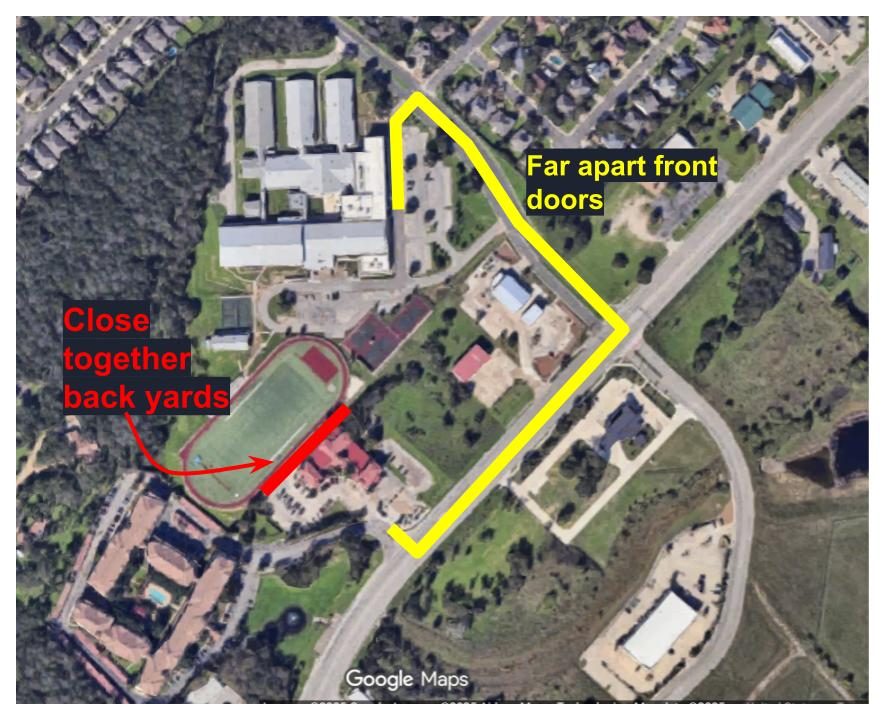
      Their front doors are far apart:

      …but they share a back fence.

      This causes all kinds of problems for Jorge’s, because there are extra-strict rules for selling alcohol within 300 feet of a school.

      This means that Jorge’s has to do a lot more:

      • Renew their alcohol permit every year, instead of every three years like everyone else.
      • Renew their distance variance every year, which grants them an exception to the 300 foot rule.

      The main problem is the fees – both of those cost $750, so Jorge’s is paying $1500 every year.

      Why is it so expensive?!

      Mostly because of postage. The city has to notify everyone within 400 ft. The rest of the cost is to cover staff time, to process the paperwork.

      Everyone wants to at least refund half of Jorge’s fees, since the city can save costs by processing both the alcohol permit and distance variance at the same time.

      They’re going to try to come up with a long term solution, too.

      Hours 0:00 – 2:29, 11/5/25

      Citizen Comment:

      Three people show up, plus one more at the 3 pm workshop. The basic themes are:

      • Yes on pay raises for police and fire fighters
      • What’s with the shootings and mayhem downtown?
      • If we’re so broke, why are we spending money on Kissing Alley and other frivolous things?
      • Remember, Mark Gleason got reprimanded by the Ethics Review Commission in 2023. This was because he received campaign contributions above the limit from SM fire fighters, but then didn’t recuse himself from the vote on their contract. Any council members need to recuse themselves?

      That last point is exactly the problem with the PAC!

      There’s also a short note from the city manager about the shootings downtown. Condolences to those grieving, thank yous to first responders, that sort of thing.

      ….

      Items 4-5: Contract Extensions and Raises for SMPD and Fire fighters

      Let’s start with some backstory!

      Backstory

      Unions are massively constrained in Texas. This is because:

      • Texas is a right-to-work state. You can’t make joining a union automatic. But unions are still required to represent all employees.
      • Texas allows at-will employment, so it’s easy to find a pretext to fire people

      Public sector unions are especially helpless in Texas. In addition to the constraints above, there are explicit laws:

      That all is a massive bummer. It means that public employees can’t speak in a coordinated, unified voice. (For a state that claims to worship freedom, it seems a bit off to outlaw employees from coordinating their actions, yes?)

      Anyway, there are two exceptions: Fire fighters and police departments are allowed full strength unions! They get a special carve out! How nice for them, and no one else.

      You’ll need some vocabulary:
      SMPOA: San Marcos Police Officers Association, which is their union.
      SMPFFA: San Marcos Professional Fire Fighters Association, the fire fighter union.

      “Meet and Confer” – the collective bargaining process. This is the negotiation process to come up with new SMPD and SMFD contracts.

      More backstory

      In 2021, SMPD officer Ryan Hartman blew through a stop sign and killed a woman, Jennifer Miller, in Lockhart. He was treated with kid gloves. He had an open container in his car, but wasn’t given a breathalyzer test. Etc. This all happened right when Chief Standridge was first arriving at SMPD. Hartman wasn’t indicted, and got right back on the force. (Hartman was later fired for excessive force in a separate incident.)

      [Updated to add correction: Hartman was later fired because he “failed to turn in incident reports under the required time limit for SMPD Officers“. That followed an incident where Hartman tased a compliant man, was lightly disciplined, and the city ended up settling with the victim for $125K. -TSM]

      Mano Amiga was FURIOUS at how poorly the Hartman investigation was run. In response, they came up with five Hartman Reforms that they wanted the city to adopt:

      In 2022, the SMPD contract was up, and it was time for Meet and Confer. The city ignored the Hartman Reforms and just passed a standard contract.

      So Mano Amiga fired up a petition to get the Meet and Confer agreement repealed. They were successful! Council agreed to renegotiate the contract. (It was either that, or they’d have to put Repeal Meet and Confer on a ballot for voters.)

      Spring 2023: Negotiations re-open. Some mild concessions are made towards the Hartman Reforms, and the contract is passed.

      That’s a breezy summary, but trust me – this was a huge production. Probably hundreds of hours of citizen engagement, all told.

      The 2023 contracts expire next October 2026. That means we should start Meet and Confer this spring.

      Which brings us to today!

      Should we sign a one year extension until October 2027? It includes a 4.5% raise for fire fighters, and a 5% raise for SMPD, effective in October 2026.

      City staff needs this extension, because they need to deal with the whole EMS mess, and also to deal with the fallout of how we sabotaged our own budget.

      Amanda proposes this amendment:

      Discussion ensues! Let’s break down the basics.

      Key points:

      • Meet and Confer meetings should be open to the public, recorded, and broadcast
      • There should be a citizen comment portion
      • Documents should be made publicly available.

      Question: How is this different from the current situation?
      Answer: Really, only the citizen comment would be new. We started recording and broadcasting meetings in 2023, and documents are always available under the Texas Open Records policy.

      Why do this?

      There are lots of good reasons!

      First off, legally there is a clause in Meet & Confer laws that requires transparency and openness to the public. So this is consistent with how these things are supposed to go.

      Second, this is public money! Here’s the General Fund breakdown for 2026:

      Those big blue and orange slices above are SMPD and SMFD. They make up about 36.7% of the General Fund, and combined, they are about $45 million. Citizens should get to speak up, just as they do for the rest of the budget.

      Third, this one-year extension is occurring with virtually no community discussion. It’s a good faith gesture by council to acknowledge the outcry in 2023, and make a move towards transparency.

      Finally, Austin has a similar resolution that applies to PD, Fire, and also their labor unions. It seems to work fine.

      How would this work?

      This is where conversation stalls out for about an hour. I’m going to give your the super abbreviated version.

      1. What would the details of the citizen comment actually be?

      Should each person who wants to speak get 1 minute? Should it be capped at 30 minutes? Should it be at the beginning and at the end of each meeting? Should it be on another night altogether, and recorded as a forum? Should there be an email address?

      Amanda’s pitch: Let’s leave these details to the negotiating team. Council does not need to micromanage.

      Jane is extremely uncomfortable leaving it vague. She wants to know how it will play out. She’s worried if the ground rules aren’t quite right, it will sabotage the collaborative spirit of the negotiations.

      2. How exactly does the timeline work?

      Does SMPOA and SMPFFA have to agree now, before the extension is approved? Or can this just be where our negotiators start, when Meet & Confer starts, in the spring of 2027?

      They settle on the latter. This is the starting point for the future discussion, where they lay the ground rules for the 2027 Meet & Confer contract. It got discussed a LOT, though.

      Here are the basic Council member reactions:

      Jane: I’m all for transparency but I’m allergic to leaving unspecified details like this.

      Saul: I’m all for it.  Sounds great.

      Shane: This is government overreach. I’m tired.

      Alyssa: This shows the community that we are responding to the activism of 2023. This is a good-faith gesture that makes progress towards transparency and community trust.

      Lorenzo: I have a lot of detailed technical questions about the legality and timeline, but I’m not exactly opposed to the premise.

      Matthew: <crickets>

      Time to vote!

      Here’s the official language they settle on:

      And here’s the vote on the amendment:

      Should City Representatives start negotiations with a request for transparency and citizen comment?

      It sails through.

      Hey look – there’s that Matthew guy! The one who was literally just re-elected the day before, with 57% of the vote. He absolutely does NOT want your input on SMPD and SMFD.

      (SMPFFA and SMPOA were two separate votes, but everyone voted the same way on both.)

      And then, the actual vote:

      Yes on a one year contract extension and pay increases?

      Great.

      (Again, there were separate votes for SMPOA and SMPFFA, but they went the same way.)

      That’s basically the whole meeting! There are some appointments to committees and things, but nothing big.

      Hours 0:00 – 1:17, 10/21/25

      Citizen Comment

      Just six speakers altogether. Main points made:

      • Four in favor of the Tenants’ Right to Organize ordinance.
      • But not the landlords from the Austin Apartments Associations. They want us to carve out protections for property managers.
      • Other speakers, in response: Please do not protect property managers. That would create a loophole. [Note: we didn’t.]
      • We need managed growth.
      • Update on the EMS thing?
      • You all need to stand for the pledge.
      • Excited for new City Hall proposal
      • How about making the new City Hall environmentally sustainable? Like a One Water approach?

      Pretty breezy and quick.

      Item 2: Tenant’s Right to Organize

      We’ve seen this here, here, and here. This is the final stretch!

      Lorenzo: Can tenant organizers go uninvited into apartment complexes?
      Answer: No, organizers are required to play by vampire rules. They must be invited in. 

      Lorenzo: Can we fix that?

      Amanda:  I don’t think we should fix that.  

      Amanda’s argument goes like so:

      • I wish this ordinance had more teeth
      • But Texas is a heavily pre-emptive state. (Meaning Texas micromanages its cities.)
      • Therefore I strongly recommend that we stick with the language that has held up so far in court.

      City Lawyer: It would be weird to meddle in this way.  Some apartment complexes let in Domino’s pizza to put out fliers, and others have gates.  Organizers are held to the same rules as Domino’s pizza, and it would be weird to carve out extra privileges for them.

      City Staff:  Plus, tenant organizers are not helpless. They can mail postcards to residents and see if one of the residents invites them in.

      So we end up not changing anything.

      The vote on Tenant’s Right to Organize:

      It’s official!

      Really great work by all the community activists! And I’ll single out Max Baker for kudos – he was really  the most visible driving force here.

      Educational fliers for sharing: in English and in Spanish. (Via Amanda Rodriguez on FB.)

      Item 10: Sights & Sounds

      Last year we didn’t see nor hear the Sights & Sounds of San Marcos.  

      But this year it’s back, baby!

      And we’re spending $100,000 on it.

      • Half of that comes from Hotel Occupancy Taxes, which are supposed to be spent on tourism.  So S&S is a good fit.
      • The other half is for the lights, which are kept up all month long.

      Sounds great.

      Pro-tip: if you’ve got a kid who wants to win a hot chocolate, they might want to find out what year S&S was founded, how many light bulbs there are, and what most popular food is. It’s all very cute.

      Item 17: ARWA

      ARWA stands for Alliance Regional Water Authority. These are the folks trying to arrange water sources for us, for the next 50 years. It includes San Marcos, Kyle, Buda, and also Canyon Region Water Authority.

      This started back in 2007, and it was a longterm plan to get water from the Carrizo-Wilcox aquifer. It came online this summer! So this is great. Almost 20 years of longterm planning!

      Currently we are dealing with this:

      That’s all I know!

      (I do worry that “stress on the ARWA participating water supplies” refers to things like Kyle Bass trying to pump 16 billion gallons of water out of Carrizo-Wilcox.)

      Item 18: New City Hall

      Look, this is a super short meeting. This is the last item. So I had a little fun with it. Be prepared for an enormous number of photos.

      Whaddya gonna do, go read some other local marxist city council blog?

      Background:

      Here’s the current City Hall location:

      and here’s what it looks like:

      via

      It was built in the early 1970s, when San Marcos had 18K people. So cute! Little baby San Marcos. Now we have about 70K people.

      Apparently in the past year, they’ve had to evacuate multiple times due to gas and water problems. And whenever something big comes up at Council, community members don’t fit in the chambers. People spill out into the lobby and listen from there.

      So the old building has run its course. We’re looking to build a new one.

      How is the Texas State Lege going to meddle?

      The state won’t let cities borrow money to build city halls without voter approval. This makes everything complicated.

      My pet conspiracy theory: this was done to deliberately manipulate cities into the loving arms of local private developers. This is called a Public-Private-Partnership, or P3.

      So here we are, being driven.

      The options:

      Last April, Council was given the choice of Option A or Option B.

      Option A:

      In other words, keep it in the current location. They’d tear down the existing site and rebuild. Council would have to relocate during construction.

      Option B:

      ie move across the street, onto park land.

      Option B was super unpopular! A lot of community members showed up to argue against it, because of this:

      Both of these are heavily used and very popular!

      City Council decided that they could keep the skate park where it is. They would just squeeze City Hall in immediately right up against the skate park, looming like a big shadowy Gotham City Headquarters over your rebel anarchist skater good time. (But the dog park would be relocated.)

      In the end, Council went with Option B.

      My $0.02: This is a terrible option and they got it wrong! Don’t use up your park land!

      Now, what if there was a Plan C?

      Intriguing! Over the summer, an unsolicited option came in.

      Here’s the new proposal:

      I love this location! There’s nothing particularly sentimental or historical there.

      Let’s check it out!

      This is the Hopkins view.

      Building 1 is this:

      No strong feelings from me.

      Building 2 is this:

      This is a cute old building! It’s been empty forever. It used to be an Ace Hardware store.

      Before that, apparently it was originally Moore’s Grocery Company Building and then King Feed Co:

      It’s cute! But it’s been empty for a long time.

      Number 3 is an empty lot. It used to be a Mr. Gatti’s Pizza:

      and then it briefly became this:

      ie a fever dream of a diner, painted all black with neon flowers. Did we collectively hallucinate this?!

      Anyway. Then it was food trucks:

      and since then it’s just been parking:

      Number 4 used to be where we had Tuesday Farmer’s Markets.

      Back then it looked like this:

      whereas now it looks like this:

      Progress!

      Back to why this location is great! It would be a really healthy for downtown businesses if our city employees all worked nearby.

      Until around 2011, the county employees used to work here:

      I liked to call it the Supermarket of Justice:

      That is now where Industry etc are:

      In 2011, Hays County built the new County Government building, out on Stagecoach.

      All the county employees emptied out of the downtown business area. This was hard on the local downtown restaurants and stores – they no longer had a steady stream of pedestrian foot traffic during weekdays.

      So moving City Hall downtown would replenish some of that.

      This is all great!

      ….

      What else?

      The developers are local. They’re all graduates of either SMHS or Texas State, or both. That’s nice!

      In 2020, they pitched an earlier idea to the city – a combination City Hall-hotel-workforce-housing. Jane Hughson says, “They wanted the hotel to face Hopkins and City Hall to go in the back, which was a nonstarter.”

      What other projects do they have? Well, they have ideas. They have plans with Hays ISD to build some sort of workforce housing thing, and Lockhart ISD is looking at it, too. But there aren’t any lots or conceptual plans or signs of progress on their website.

      As far as I can tell, they’ve never actually completed a project?

      I think this is location is a great idea, though!

      Two more bits that I want to note:

      1. We are paying them $767,970.00 for this conceptual plan. That is a hell of a lot of money for our broke government.

        Now, we’ve saved up about $12 million towards a new city hall, so that’s the source. It’s not displacing funding for something else. But it’s a lot.

      2. They’re actually drawing up plans for this whole area:

      Edited to add a corrected update: The map below is not the full scope of these developers. I got it wrong above! Sorry about that.

      This map below is just showing the full scope of Plan A, Plan B, and Plan C, all together. The Plan C developers are strictly drawing up plans for the downtown piece. – TSM

      WHAT IS GOING ON. Why is the Lion’s Club, and the stage area, the Veteran’s Memorial, the Activity Center, the library, the skate park, and the dog park all included??!

      Why would these (probably very nice) bozos have any say in what happens to ANY of those public facilities? They do not have any experience in that. What the hell.

      What does Council say?

      First off, they’re only asking questions about this part:

      and not the extended map above, that went through the parks and old City Hall.

      Q: What about impervious cover?
      A: It’s already all impervious cover. It can only get better.

      Matthew: The old hardware store is historic, and I’m worried about the elevation drop.
      A: Architects can handle the elevation drop.

      Q: What would happen to the alleys?
      A: We don’t know yet. Maybe some kind of open air space.

      Alyssa: I’m having deja vu of their old proposal.
      A: The 2020 proposal was much smaller.
      Jane: Plus they had the hotel out front and the city hall in back. No.

      Saul: I like it! But I need to see how much it costs.

      Jane: Love a hometown developer!

      The vote: Should we spend $768K on this conceptual plan?

      I probably would have voted yes, because the location is great. I’m just wary because these guys seem inexperienced.

      Final notes:

      Somehow, this City Hall project is going to go off the rails. Really. Not because of this Plan C option, but because the math on this next slide does not make any sense.

      This is from back in April:

      Let me see if I’m following: we’ve saved up $12.7 million. We think we can get $15-20 million more from private developers. That adds up to ~$30 million.

      But the whole project is supposed to cost $62-98 million! Where is this magical extra money going to come from?

      These are the only options I see:

      • Voters will have to vote to approve a bond to borrow the rest.
      • This project ends up being about half as big as they’re hoping.
      • This project takes 25 years to complete
      • We end up selling our souls to find an extra $50 million from private businesses

      In some way or another, reality is going to reassert itself.

      Hours 0:00 – 1:15, 10/8/25

      Citizen Comment:

      There were eight speakers, on diverse topics:

      • The first amendment is being trampled in the US right now.  (True!)
      • We need to be mindful of our budget and run San Marcos like a business.
      • Austin Apartments Association represents a bunch of landlords as members. They’re mixed on Tenant’s Right to Organize.
      • San Marcos Civics Club is holding their candidate forum on Thursday, and they also have their questionnaire available: Place 1 and Place 2.
      • Council candidate Chris Polanco echoes the first amendment crisis, and also talks about having a disability in San Marcos
      • Global issues – Ceasefire in Gaza and fascist tendencies of the state government.
      • The DR Horton homes in Cottonwood Creek were built so shoddily that foundations are cracking in the first three years. People up and down their street are finding themselves trapped financially because these homes are built so poorly. Can the city prevent DR Horton from building new homes until they stabilize the existing ones? Or something else?

      That last one feels like lawsuit territory. This sounds awful. (Maybe this is a good candidate for participatory budgeting – see below.)

      Item 9: Tenant’s Right to Organize

      This is nearing the finish line! What should you do if you’re a tenant, and there’s mold in your bedroom, or your AC goes out, or you have no hot water, and your landlord refuses to fix it?

      In Texas, you have very few options besides suing. You can talk to your landlord, of course. If they start to see you as a problem, you might be evicted. Filing a lawsuit is expensive, of course, and if you try to sue, you might be evicted anyways.

      This is the point of this ordinance: tenants should be able to talk to each other about their landlord problems, and form tenant organizations, and bring issues to their landlords as a united front, without worrying that they’ll get evicted or face retaliation. (Discussed previously here and here.) 

      Under the ordinance, here’s what’s protected:

      (These are old slides from last month.)

      Here’s what landlords are NOT allowed to do:

      But they’re still allowed to do some things! Like so:

      This is great! No tenant should fear eviction when they’re fighting for clean and safe housing.

      Council Discussion

      There’s one small discussion point: property managers.

      Suppose property managers are the ones doing the intimidating, and the landlord lives 1000 miles away. Should the property manager be held liable? Or does it go to the landlord, since they are responsible for their employees?

      Lorenzo proposes an amendment to exempt property managers. Unfortunately, this ship has sailed – employees are already held liable in similar situations. Even if we adopt Lorenzo’s amendment, it doesn’t really protect them. (The amendment fails.)

      The vote on the Tenant’s Right to Organize ordinance: 

      Hooray! (Lots of hard work on this from the San Marcos Civics Club and TAG, so thank you to both of them.)

      This is just the first vote. It will come through for a final vote at the next meeting. 

      Item 13: Participatory Budgeting

      Participatory Budgeting is a specific thing. It doesn’t just loosely mean “survey the people or invite them to watch the budget process”.

      It works like so: a city sets aside a pot of money, and asks for ideas from the public. The community develops proposals, and then the public votes on which project to fund.

      Here’s the graphic from the website:

      One of their taglines is “It gives people real power over real money.”  

      Alyssa (and Max Baker, back when he was on council) have brought this up for years. It gained a little more traction at the visioning workshop back in January, and then was included in the budget that we tried to pass in September.

      But then – I’m still cranky about it – Council sabotaged the budget at the last meeting.  One of the items that got axed in the carnage was $250K for participatory budgeting.

      Apparently Lorenzo felt a pang of regret for driving us off the cliff? Maybe Alyssa was extra-furious about this part?  (I shouldn’t speculate, because I have no clue.) All I know is that Lorenzo went to the city manager and asked if there was any way to fix this. Can she find some money to restore funding for participatory budgeting?

      And lo: she found some!  It’s displaced City Hall money.

      In theory, we’re trying to sock away $1 million each year for that project.  But this year, we’re using the most of that $1 million to put an offer in on the land next to Centro

      We’re expecting to have a little bit left over, and that’s going to be the Participatory Budgeting Pot of Money. Hooray! 

      Gentle readers: this is your call. Start brainstorming ideas!

      • Is there something in your neighborhood that could be transformed?
      • Do the kids in your neighborhood need a place to play?
      • Or a community gardens?
      • What about opening up the Activity Center on Sundays, or having longer front lobby hours for the library?
      • Or hey: a coordinated lawsuit or mobilization against DR Horton?

      Go think up great things! Your mom tells me you’re very clever.

      ….

      Note #1: This was just a preliminary discussion.  Participatory Budgeting will come back around as a formal proposal.

      Note #2: Since we mentioned the new city hall, let me say again that I hate this plan. They want to relocate City Hall across the street, and into our parks.

      Don’t use up your park land! They’re not making more land.

      There were a few tiny other items – scheduling the election, filling some commission vacancies, appointing a municipal judge. And that’s all! It was an extremely short meeting.

      However! Keep reading, to hear about the river. The action was all in the 3 pm workshop.

      Hours 0:00 – 3:25, 9/16/25

      Citizen Comment

      Just three speakers!  Topics:

      Nobody spoke about the budget.  Nobody complained about the tax increases being too high.  Can we just put a pin in this for later? Let’s remember this.

      Item 22:  Hazmat Routes

      You know these guys. You love these guys:

      via

      They live in our lovely river, but nowhere else.  It could be catastrophic if there was a crash on I-35 over the river, and a bunch of hazardous chemical were spilled into their habitat.

      What cities do in this situation is design a Hazmat route.  Here’s what we’re proposing:

      That’s along FM 150.  So you’d cross the San Marcos river well east of the habitats of those critters, if you were driving a truck full of something nasty.  

      A few notes: 

      • This is only for thru-traffic.  If you’re delivering somewhere in San Marcos, you can head there.
      • This is going to be a long process – it’s gotta go back and forth with TxDOT a few times.

      Kind of related: remember when the train derailed in East Palestine, Ohio, with all those toxic chemicals?

      (and they tried to get away with paying each person something like $5 for wrecking their lives?)

      We also have a lot of trains crossing our river! I doubt you can re-route trains quite so easily, but I wonder how environmentalists think about and plan for these risks.

      Items 23-25: The budget and the tax rate

      I’m sorry, this item gave me whiplash. This went off the rails. Not the good kind of roller coaster.

      We need a fair amount of backstory. The drama on Tuesday unfolded so fast that it will be incoherent, unless I bring you up to speed, first.

      I’ll try to keep it zippy!

      Background

      First thing to know: we have not raised our property tax rate since 2022.

      Politicians genuinely hate raising taxes. Politicians like being liked! They like being elected. I don’t know where we got this idea* that they rub their palms together and cackle about bilking tax-payers, but they don’t do this.

      Polititians love short-term easy decisions that make tax-payers happy! Raising taxes is the opposite of that.

      *It was Reagan.

      ….

      The budget process

      1. January-February-March-etc: they hold some giant two day workshops. Councilmembers develop their priorities for the next year. More workshops. Very slow grind.

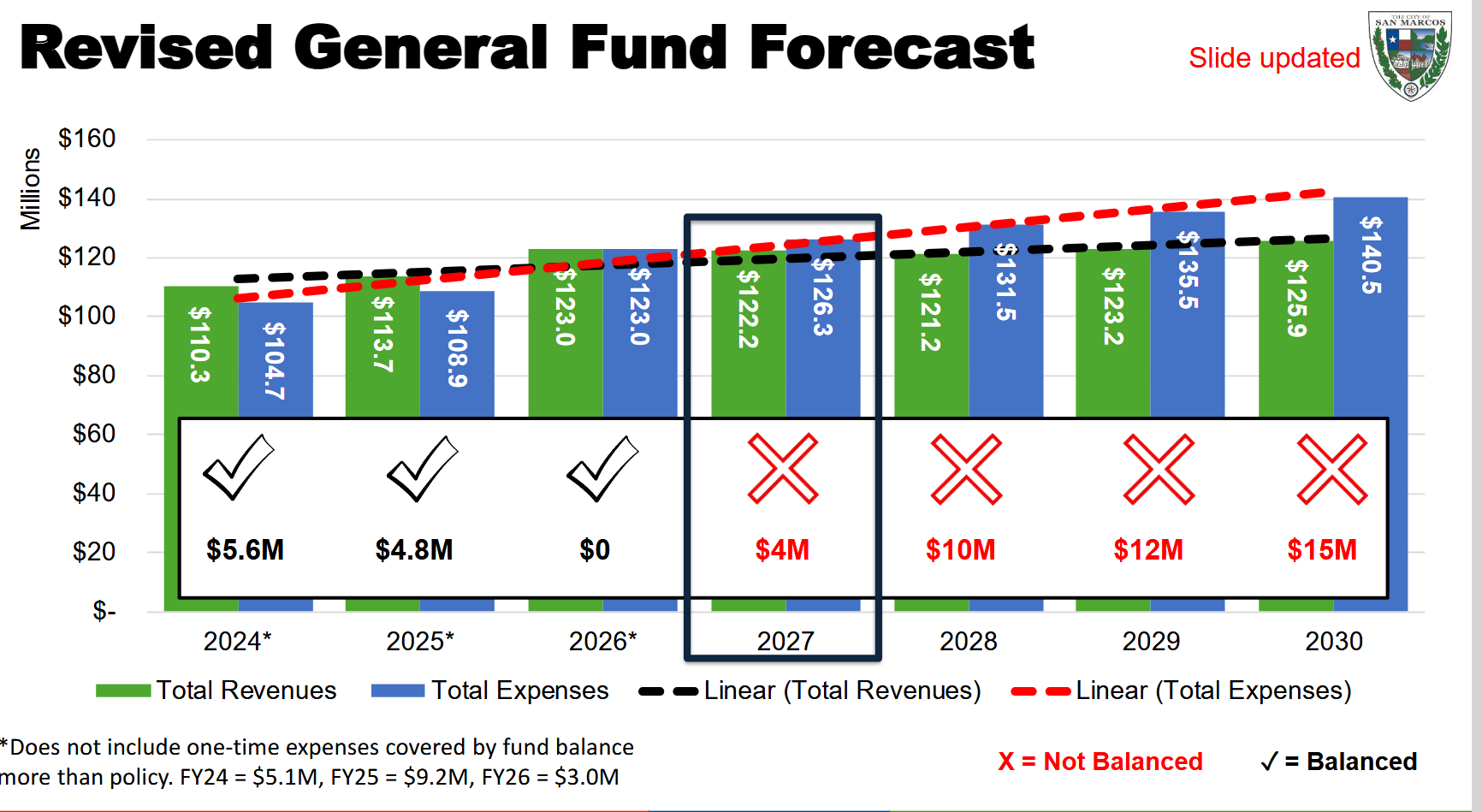
      2. May-June: The first tax estimates come in: we’re in a budget crisis. We can squeak by this year, but we’re facing a budget cliff.

      Roughly speaking, this is the problem::

      1.  Our sales tax is down.
      2. Our property taxes are down (because home prices are declining)
      3. Inflation is up.
      4. We are as lean as we can go. We have already cut $100K from departments.
      5. We’ve got some big expenses looming. (Covid money ending.)
      6. The state government is trying to strangle cities.

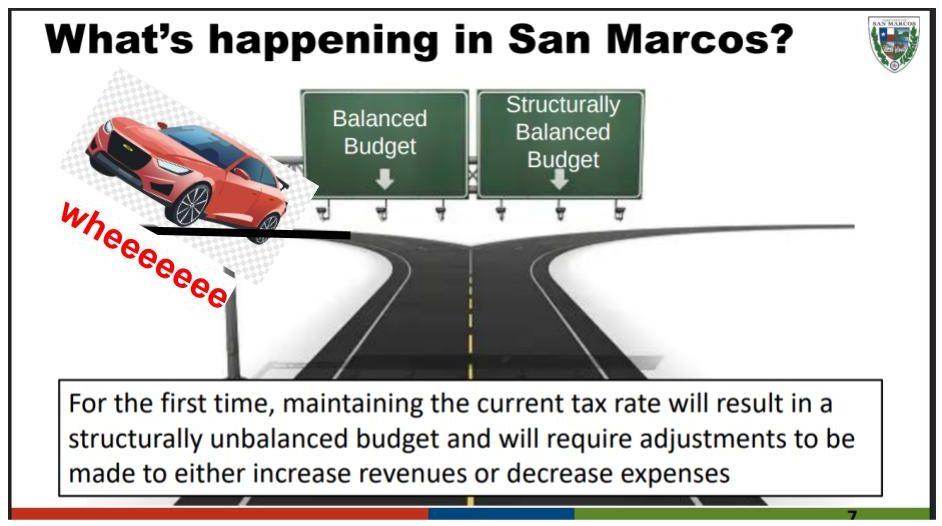
      Here’s the graphic that they showed:

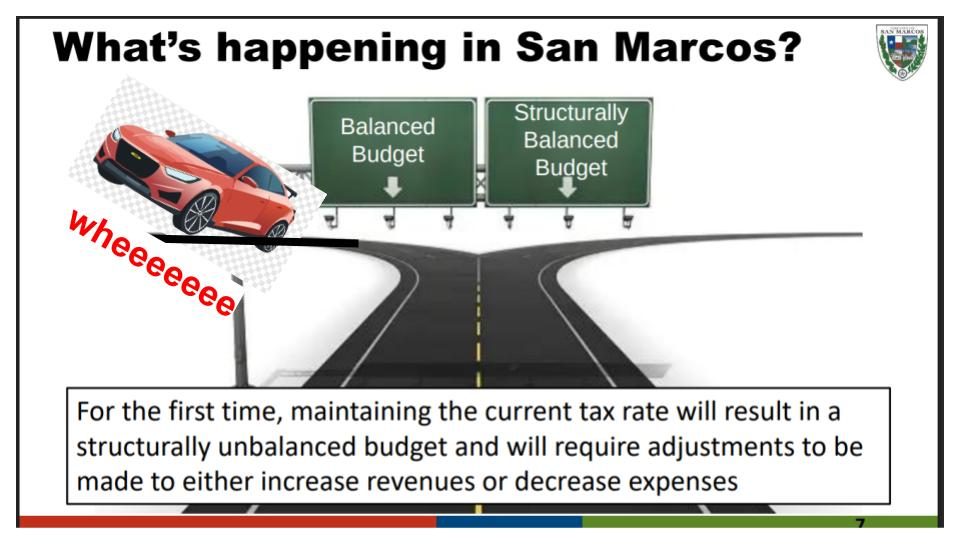
      It was a big Come to Jesus Moment. Council went to Jesus. They gave direction that they wanted to go with the Structurally Balanced side of that road.

      Bottom line: “Structurally Balanced” means raising the tax rate modestly over multiple years (instead of one big crazy future hike.) All of council agrees with it.

      June: In June, staff comes back with some Structurally Balanced tax estimates:

      Here’s what everyone said they wanted:

      Ok, great! We’re getting somewhere.

      ….

      August: Real numbers come in. (June was just an estimate.)

      By law, council has to set their own upper bound, in August. It’s a weird quirk.

      So staff lays out these possibilities:

      That’s in the afternoon, at the 3 pm workshop.

      Matthew and Saul are all willing to go up to the middle column now. The gravity of the budget crisis is evident to everyone.

      The Lorenzo changes things up: “I want to go between 64.96¢ and 70.49¢. I want to land on the number that gives a $0 in that last row. Neither a surplus or a deficit forecast for 2027.”

      Everyone is intrigued by this idea. He ends up successfully getting everyone on board with this! What careful planning we’re demonstrating!

      That night, at the 6 pm meeting, they vote on the tax rate cap:

      So we go with the 67.69¢.

      This is our max: the final tax rate cannot be higher than 67.69¢.

      Note: In August, they also mentioned something about an EMS study. It was another potential looming cost. This is going to become a very big deal, but it didn’t jump out at me then.

      Last background month! We’re now to September.

      September 2nd meeting:

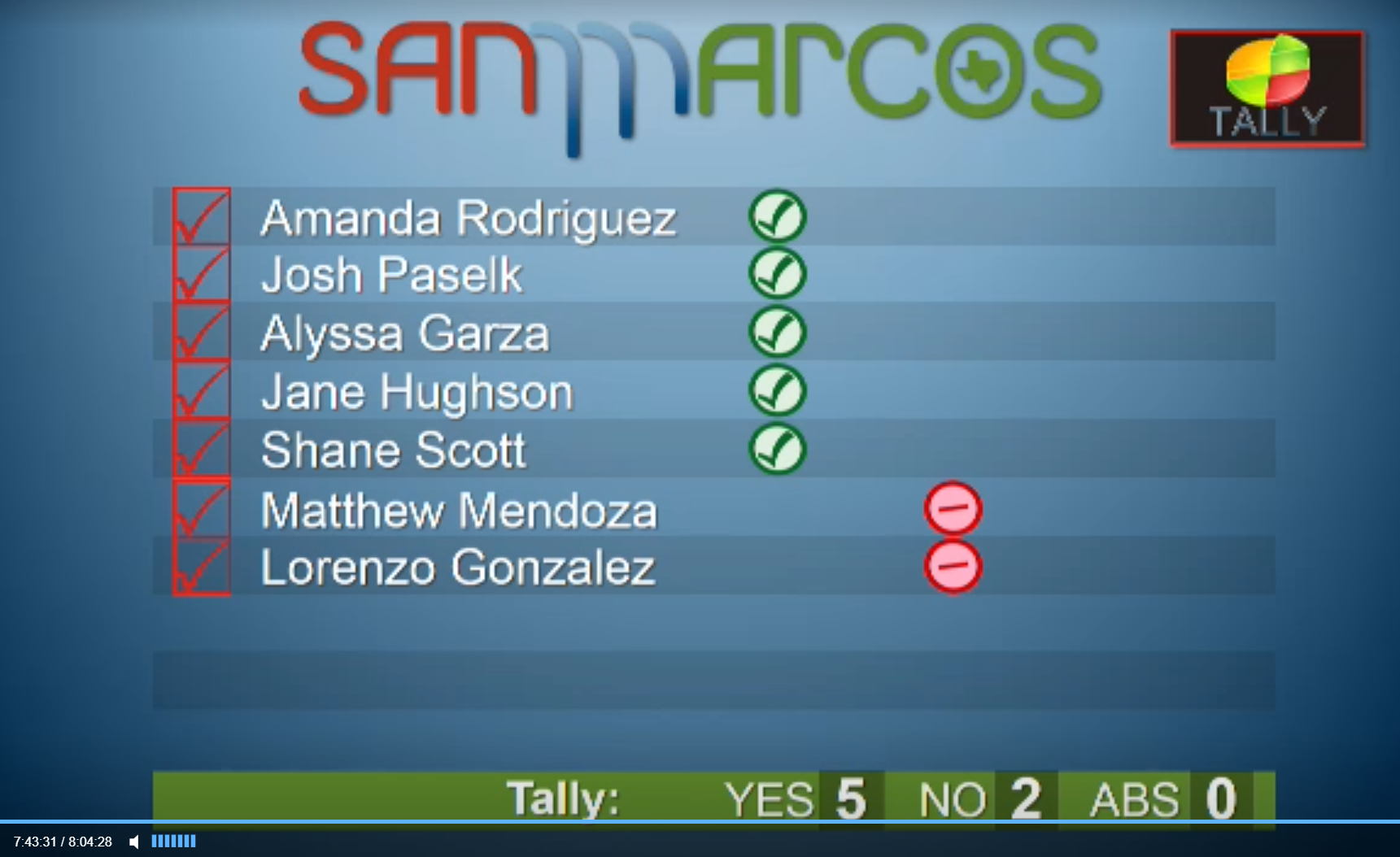
      They take the first official vote on the 67.69¢ tax rate:

      Now you’re all caught up.

      …..

      This current meeting!

      Here are the three scenarios we need to have on hand for this conversation:

      What would home owners actually have to pay, if we raised rates in these categories?

        • The “No New Revenue” rate, 62.78¢. (NNR)  Your tax bill goes up $0.
        • Option 1: 64.96¢.   The average tax bill goes up $72.46 per year, or $6.03 per month.
        • Option 2: 67.69¢.  The average tax bill goes up $163.21 per year, or $13.60 per month.

      ….

      Sidenote: Those amounts are based on an average house worth $347,398 (and $15K homestead exemption).

      Most of San Marcos rents! But for those who own homes, home value varies a lot.

      Here’s the average home price by neighborhood in San Marcos:

      The last column is the monthly increase, under 67.69¢.

      That chart has 40 rows. Only the last eight rows exceed the average home value! (Blanco Vista and Kissing Tree are both way bigger than they seem.)

      Point being: most neighborhoods would see smaller tax increases under these proposed hikes.

      ….

      The public outcry:

      <crickets> …. <crickets>

      There was none. I mean, I’m sure Council got phone calls. But I’ve watched these meetings for years now – compared to other years, this is nothing.

      Two people showed up to talk about the budget during the public hearing. They both made nuanced points about the good parts and bad parts of the budget.

      Contrast that to the big items this year:

      • Tantra: 50+ speakers showed up.
      • Gaza: 125+ speakers showed up (on the day of the vote)
      • Data Center: 14 speakers on August 19th

      People show up when they’re mad. This ain’t that. This is the wind at Council’s back, pushing them to make the responsible decision.

      And then suddenly there is a big curve ball: EMS.

      This came up in August, but it was uncertain. Now it’s certain.

      So, there’s something called the San Marcos-Hays EMS.  This is who you call when you need an ambulance.  It used to be a lot bigger.  Over time, Wimberly left. Then Buda left. Then Dripping Springs left.

      Since the August meeting, it’s now official: Kyle and everyone else is leaving.  So it’s just San Marcos.   (The cheese stands alone)

      This is a big problem! We don’t have a city-run EMS.  We’ve got fire fighters who may be trained paramedics, but they can’t take you to the hospital. We don’t have ambulances. We don’t have a facility to store ambulances.  We don’t have the infrastructure to run another department.  But because this partnership is dissolving, we’re going to have to figure it out. 

      This is going to cost about $2 million.  This will start getting dealt with in November.

      Bottom line: those tax rates all need to increase by about 2.4¢ to cover EMS.

      Council Discussion

      Council asked a lot of questions about the EMS situation. They also were asking about Council priorities – what had to be decided on Tuesday, and what stayed flexible. It was not a very long conversation.

      Lorenzo keeps acting squirrelly.

      Finally he says: “I don’t like the 67.96¢ anymore. The State legislature didn’t pass those crazy laws after all. We should have more economic development! I want to go back to 64.96¢.”

      Well, shit!

      A few things:

      1. “Economic Development”: I erased a big rant about this.  It’s not a magic bullet.

      This is like walking out onto the NFL sideline and telling the coach, “Hey, you should try to score more points than the other team! Then you’d win!”   City staff really does know about economic development. They are always working on it. 

      2. The State legislature will definitely do Abbott’s bidding, and Abbott wants those laws. If not 2025, then watch for them in the next session.

      3. The 64.96¢ isn’t an option anymore! It doesn’t include EMS!

      The City Manager responds with alarm: “Please, please don’t go with 64.96¢. That won’t even cover EMS. We need at least 65.15¢.”

      ….

      Listen: The rug just got yanked, suddenly, and nobody is prepared. Nobody has the presence of mind to call a time-out and fix all the numbers.

      Confusion reigns.

      But look how helpful I am! I made you a chart!

      This is what I think city staff would have put on a slide, if anyone had had advance warning.

      Here’s my theory: I think Lorenzo intended to go from the 3rd row to the 2nd row. After all, he said “64.96¢”. But since we now have an EMS crisis, he didn’t even cover the first row. The City Manager is asking him to please at least get to 65.15¢ in the first row.

      We’ve suddenly rolled back all the careful planning for the budget cliff. The budget cliff is still coming! We still did all the planning! But instead, we’re about to do this:

      I’m especially flabbergasted because Lorenzo himself was the one who promoted the 67.69¢. He literally picked it to leave us with a balanced budget in 2027 – neither deficit, nor surplus.

      Saul, Shane, and Matthew were always barely willing to make a difficult vote. So as soon as Lorenzo gives them permission, the coalition for 67.69¢ falls apart.

      The vote on 67.69¢:

      Yeah.

      Let’s have a time lapse:

      (Technically, I’m combining two separate votes in that last column. First they vote for 67.69, and it fails. Then separately, they vote for 62.78+EMS. This passes.)

      Anyway, that’s the whole saga! We had the wind at our backs, and instead we shot ourselves in the foot. It felt like someone whispered in Lorenzo’s ear at the 11th hour, and the whole thing unraveled.

      Honestly, I’m kinda salty about the whole thing. .

      One final note: $2 million for EMS is a bargain. That works out to 2 cents. By law, Emergency services is allowed to charge a special tax of up to 10 cents. That would bring in about $8.5 million.

      Nobody is trying to shake down tax payers here. They just want an ambulance to show up when your grandmother has a heart attack.

      Item 4-5: Electric and Water Rates.

      The next discussion is even goofier, if you can believe it. (But less destructive.)

      Your electric bill comes in two parts:

      1. a base rate ($14.31)
      2. a usage rate. (Based on how much electricity you use.)

      Usage rates are going up. (Discussed here before.)

      Shane Scott speaks up:”Let’s just cancel the base rate!” He wants everyone’s bill automatically lower by $14.31 every month.

      You can practically hear staff’s hearts all plummet through the floor as they try to grapple with this craziness. (Ten minutes ago, we tanked the budget over whether to raise taxes by $6 or $12 a month. And now Shane wants to throw away another $14?!)

      The director of utilities tactfully explains that this would blow a $3.4 million hole in our budget. The city manager gently mentions our bond rating and debt service coverage. We could get sued by bond holders.

      Shane withdraws his motion.

      The vote on electric rates:

      A little later, we have the vote on water rates:

      So water rates will not change.

      Listen: this is totally irresponsible. This is lazy, wishful thinking.

      The city is not turning a profit on water. You have to cover the costs of your water utility.

      If you want to save people money on their water bill, help them conserve water. Don’t strangle the department that has to fix the pipes and pay for the water rights.

      That’s basically it for the meeting. I know barely anyone cares, but this was super big bullshit.

      Hours 0:00 – 3:04, 9/2/25

      Citizen Comment:

      Some years, citizens get fired up and angry at the budget. This year was the opposite. 

      Three people spoke on the budget, and they all praised council for increasing funding for the Human Services Advisory Board. (HSAB grants are how the city helps fund all the nonprofits that help kids, people in poverty, vets, the elderly, etc.)

      It was pretty short!

      Items 20-24:  Welcome to our $371 million dollar budget!

      It’s budget time. So far this year, we’ve talked about this back in February, then in March, again in May, and just now in August.

      We’ve got several big problems:

      1. We’re bringing in less money from sales tax and property tax.

      Sales tax peaked in 2023 and hasn’t returned.  Property taxes have been flat.  Actually, they’ve gone down on existing properties, but they’ve been propped up by new builds. 

      (That slide is from the May workshop.)

      1. Everything is more expensive, due to inflation.

      City department budgets were flat two years ago. This past year, they cut $100K collectively.  But everything is getting more expensive, so even holding things flat means you have less purchasing power.

      1. The State Legislature is always, always trying to knee-cap cities:

      This past session it was House Bill 73 and Senate Bill 10. City staff implied that there were a few others. All of these cap city spending or cap city taxes.

      The concept isn’t new – we already have caps on tax hikes. But these new bills are brutal in their severity.

      All these bills were still up in the air last Tuesday, when city council met. Since then, the special legislative session ended. As far as I can tell, none of these passed? But Abbott could always call a 3rd session, or these could return in 2027. So this is always looming.

      (Can you imagine how relaxing it would be if our state government wasn’t so hellbent on wrecking Texas cities?)

      1. We have three HFCs that are tied up in the courts

      “HFC” stands for Housing Finance Corporations. These didn’t used to be scams, but they’ve become scams. For example: “Pissed” city leaders urge lawmakers to close loophole costing millions in tax revenue.

      We’ve got three apartment complexes that were purchased by HFCs, and we’re losing about $630K in tax revenue from them.  (They’re tied up in lawsuit appeals, so it could still tip our way.)

      1. There are almost $4 million worth of new expenses that are kicking in soon, over the next 1-2 years.

      The ones with the checkmarks were funded from federal Covid money, which is expiring next year.

      6. Council also has some new priorities, which cost money:

      • Increasing HSAB funding by $200,000
      • Increased funding for tenants rights and tenants legal support
      • Start an office of community support and resource navigation.
      • Probably more that I’m not remembering

      Because of all this, tax rates are going up.  

      I mean, we don’t really have a choice, right?

      If you own a $365K house, here’s how it affects you:

      If you own a smaller house – say $200K assessed value – then you’d pay like so:

      Last year: $1,115 per year, or $93 per month.
      This year: $1,252 per year, or $104 per month.

      We always focus on home owners here, because it’s easy to compute their tax costs. But rest assured: landlords cover the cost of property taxes by passing it on to their renters.

      My back-of-envelope estimate is that an average renter pays about half as much: $640 per year towards their landlord’s property tax bill, or $53 per month.

      Your utilities are also going up:

      This is mostly based on CUAB recommendations. CUAB stands for Citizens Utility Advisory Boards.

      Basically, if you don’t raise rates for a few years, you’ll get into a big financial hole. Then your bond ratings tank and it gets more expensive to borrow money, and you’re in even bigger financial trouble. To get out of it, you’d have to shock the community with a giant rate hike in order to right the ship.

      So the idea is that it’s better to nudge prices up gently every year, to keep up with inflation. CUAB is the one that has to figure out the new rates. This is that.

      One funny detail: The goal is to stabilize our budget going forward. We could have scrapped by this year, but then we’d be in a big hole next year. The looming expenses will kick in, and we’d have to raise taxes a lot, or cut services significantly, to handle it.

      But because we’re being proactive, we actually will have $1.3 million of breathing room in the meantime.

      City staff went to all the city departments, and asked about things like deferred maintenance projects or other ongoing needs. Here’s some possible ways to spend the money:

      Council will hash this out later.

      Finally: my yearly rant about taxes.

      Taxes are good! This is how we can take care of our most vulnerable people. This is how we can solve collective problems, without someone trying to extract as much profit as possible.

      The problem is that our taxes are not fair:

      via

      So yes: you do kind of pay way too much in taxes! We don’t charge our rich Texans their fair share.

      (Also we Texans turn down about $5 billion every year by refusing to expand medicaid, and we turned down $350 million this past summer that would feed hungry kids.

      We do this in order to prove a point, or something? The feds can’t force us to feed our kids or get medical care when we’re sick, dadgum. )

      Look, the United States can easily afford for every person to have a safe home, free healthcare, and access to healthy food and education.  This country is extremely wealthy.  Collectively, we can afford to lift everyone out of basic poverty.  We just choose not to. 

      Stop electing Republicans who are in the pocket of extremely wealthy Texans.

      (End of rant. Thanks for playing along!)

      Back to council. How did the votes go?

      The votes on the tax rate and the budget:

      Lock step, baby!

      The votes on the various utility funds:

      That’s the votes on Trash & Recycling rates, Electric Utility rates, and Water and Wastewater rates, respectively.

      The votes are dropping like flies! Hang in there, councilmembers! They all passed, though.

      ….

      Saul asked some interesting questions about our water supply:

      Q: How much water do we sell to other cities?
      A: We sell to Kyle, to County Line, and we sell reclaimed water to Buda and others.

      (I don’t know what “County Line” means, and when I try to google it, I just get a bunch of BBQ joints and maps of counties. ¯\_(ツ)_/¯ )

      [Updated to add: “County Line” is this special utility district. Thanks to Diane Insley for filling me in!]

      Q: What happens if they don’t use the water they buy?
      A: Our contracts are “50% take or pay”. So they have to pay for at least 50% of the water we’re setting aside for them, even if they don’t use it.

      Q: Were we ever in danger of not getting our water from Canyon Lake, due to drought?
      A: Both Canyon and Edwards water have tiered drought restrictions. So we always get some water, but they require us to use less water during a drought. Before the July floods, Canyon Lake was Stage 4, but now they’re Stage 1. Edwards Aquifer has been between Stages 3 – 5 all year long. They’re about to tip into Stage 5 again.

      That’s all of the budget talk for today! The official, final vote will be at the September 16th meeting.

      Item 25: Just one tiny rezoning!

      This is 906 Chesnut St:

      From the street, it looks like so:

      That’s if you’re standing on Chesnut looking back towards LBJ. Vie Lofts is on the right.

      The developer wants to rezone it as CD-4. (Basically, they want to tear it down and build small apartments.)

      Everyone says okay.

      I’m okay letting it go, as long as we take a moment to pour one out for this wallpaper:

      I mean:

      I’m not made of stone, people.

      Also this window treatment:

      and maybe this pink trim:

      ok, and this built-in cabinetry and paneling:

      I take it back! Save this house! It’s too pure for this fallen world.

      (Enjoy the full zillow tour here.)

      Honestly, the rest of the meeting was pretty zippy. A few quick items:

      • postponing the new development by the high school
      • funding for the new water reclamation facility
      • funding for CARTS
      • setting some dates for elections and city council meetings next year.

      On CARTS, we pay about $621K, and the federal and state government combined pay about $1.75 million. That’s great! Redistribution of wealth at work.

      One last detail: Executive Session

      Finally, Council discussed this land in executive session:

      That’s the land that SMCISD is selling. There’s a big petition and movement in the community for the city to purchase the land, so that they can dedicate it towards the Mexican American and Indigenous Heritage and Cultural District.

      So I don’t know what happened in Executive Session (obviously), but afterwards Council directed city staff to ask SMCISD about delaying the deadline of the sale, so that the city can get its ducks in a row.

      I think it all comes down to timing:

      • Can the city speed up enough to meet SMCISD’s budget crisis timeline?
      • Can SMCISD delay long enough to accommodate the city’s due diligence and bureaucracy?

      Also Hays county is somewhere in the mix, too. We’ll find out the details eventually!

      Hours 0:00 – 7:58, 8/19/25

      Citizen Comment:

      There is only one topic, but there are over two hours of comments. It’s all data center, baby.

      There were 14 speakers in favor. Here are the main arguments made by the people who want us to approve it:

      • These are all over the place already.
      • San Marcos needs the tax revenue.
      • I am the property owner, or I’m going to work in some way on this project, and it sounds great to me

      There were 29 speakers opposed. Here are the main arguments made by the people who oppose it:

      • We’re in a drought, and data centers use a massive amount of water.
      • Data centers use a massive amount of electricity. Our rates will go up, this is bad for the environment, and the grid can’t handle it.
      • Don’t sell out the San Marcos river to greedy corporations
      • Cyrus One is secretive and unwilling to answer basic questions.
      • Anecdotally, people have stories of odd illnesses from living next to data centers.

      There were another few speakers opposed at the 3 pm workshop, and then another 25 at the public hearings. (The vast majority were people speaking more than once, though.)

      This will take up the vast majority of the meeting, so we’ll unpack all these points. Stay tuned.

      Items 10-13: But first! we have the quickest little rezoning.

      Have you ever been driving south on I35, towards New Braunfels, and noticed these guys?

      They make concrete, and they’re here:

      The owner wants to zone two little blocks of land, between Heldenfels and I-35:

      He wants these to also be Heavy Industrial.

      No one is fussed. Everyone says okay.

      Items 14-16: Ok, it’s time for the AI Data Center. This is a doozy.

      Background: We are talking about land here:

      The property owner wants to zone this land Light Industrial, so that he can sell it to Cyrus One, a data center company.

      Let’s talk about data centers

      Apparently there are 300+ data centers already in Texas. Of those, 40 are in the Austin and 49 are in San Antonio:

      via

      Not counting the one on tonight’s agenda, there are apparently two being developed in Caldwell County and three more in Hays.

      Data centers have two big problems: they use a lot of water and they use a lot of electricity. Texas makes this worse, because counties aren’t allowed to regulate use of natural resources. (Virginia Parker, director of the San Marcos River Foundation, said we’re the only state with this particular idiocy.)

      So as long as data centers stay outside of cities, there is currently no way to regulate how many get built.

      This specific data center

      The owner is a guy named Mayberry, and the property has a funny history. (Not funny haha.)

      Back in 2022, he asked the city to annex most of this land into San Marcos. He wanted to sell the land to a developer, to build single-family homes out there.

      This was always a weird, terrible idea! First, the sprawl would be insane. It’s farm land out there, not close to anything.

      Second, there is a massive power plant next door:

      Council had endless discussions about whether it was fair to build homes next to an extremely loud, bright, flashing power plant. In the end, they settled on a mandatory disclosure to potential buyers and some fencing.

      It’s been three years, and clearly no one wants to build these houses. So Mayberry has moved onto the next idea, which is this Data Center.

      But since most of the land has been annexed into San Marcos, he now has to get permission from the city to rezone.

      In this one data center, and only this one, we now have a say.

      Back in March, Planning and Zoning denied the rezoning. (In fact, this was Jim Garber’s last meeting.) Planning and Zoning had a ton of concerns.

      When P&Z votes down a rezoning, it takes a supermajority at Council to overturn them. So tonight, the data center will need 6 votes out of 7, in order to pass.

      We’re going to cover these topics next:

      1. Noise and lights
      2. Water
      3. Electricity
      4. Impact on San Marcos, and the Restrictive Covenant
      5. Property taxes

      Buckle up!

      1. Noise and lights:

      Staff basically says, “Look, plenty of data centers are in residential areas already and everyone seems to be chill with it. Look!”

      “Isn’t that so close? See?”

      “And also, what if Mayberry had built those homes! Wasn’t that an even worse idea?”

      (For the record, Jane, Shane, Mark Gleason, Saul, Alyssa, and Jude Prather voted yes for those homes, in 2022. Max Baker voted no.)

      The comparison to the imaginary, nonexistent homes is silly. The homes don’t exist.

      Here’s the real argument the city should have made: this data center is next door to the Hays County Power Plant.

      Seriously, the noise, lights, and weird vibes that come from this data center will be dwarfed by what’s already coming from the power plant.

      2. Water:

      Data centers run hot, and so they use a lot of water to keep the computers from overheating. A traditional, evaporative system uses maybe 550,000 gallons/day?

      Technology has gotten better, and now they use a closed loop system. You fill up the building one time, and then it keeps re-using that water for the lifespan of the building. After that, the only water needed is for employee bathrooms and kitchens.

      Mayberry says that the initial fill up will require 60K-70K gallons of water per building, and there are 5 buildings. So roughly 400,000 gallons will be needed to fill the buildings, one time.

      After that, he says that each building will use about 4-7K gallons of water each day. That’s pretty normal for a business:

      3. Electricity:

      The electricity is insane.

      Mayberry says that each building will use about 75 megawatts of power. So over five buildings, they will use 375 megawatts.

      City staff says that all of San Marcos, at peak usage, is about 150 megawatts. Every single one of us, on the worst day in August! That’s insane. On a typical October day, all of San Marcos uses about 25 megawatts. So these data centers really do gobble up a ton of energy.

      Two questions come up:
      – Will this drive up water use, indirectly?
      – Will this drive up rates?

      Both answer are yes, sort of.

      Producing electricity requires water. But it’s not using San Marcos water – it would be from any power plant, in the entire state. All the electricity from all of the power plants gets dumped in the grids, and it gets blended around. When you draw electricity, you’re getting a random blend of all those sources.

      (Also, not all energy sources require water. Gas, coal, and nuclear all do, but wind and solar don’t.)

      The same is true for electric utility rates: all 300 data centers are putting a huge strain on the grid. More power needs to be generated, and that is going to cost money. But that cost is going to get spread across the entire state.

      Electric rates are spiking and will continue to spike, over the entire state.

      4. Impact on San Marcos and the Restrictive Covenant:

      This data center will not use San Marcos water or San Marcos electric. Water would be supplied by Crystal Clear water, and they’d get electricity from Pedernales.

      All data centers in central Texas are harming all of central Texas. The bad effects are distributed pretty evenly. We’re all using the same water table and tapping into the same electric grid.

      This specific data center does not specifically damage San Marcos or the San Marcos river.

      The Restrictive Covenant: A restrictive covenant is a legal contract of all the hoops that the developer is willing to jump through, for the city.

      Since getting knocked down at P&Z, Mayberry is trying to do whatever he can to get approved. Here’s his offer:

      and

      5. Why even do this?! (Property taxes)

      Allegedly, it would bring in an enormous amount of money.

      To put that in perspective: This past year, we’ve had a budget crisis, and city departments had to make cuts. Total, across all departments, we cut $100,000, and it was a huge strain. $9 million would go a very, very long way.

      My two cents

      I’m out of step with my readers here, and I apologize. I think we should take the money.

      Data centers are run by greedy, irresponsible corporations that do not care about local resources. They will exploit and destroy all the beauty in this state, if they can. Texas desperately needs to regulate this industry and limit the number of data centers that are being built.

      And yet!! I think we should hold our nose and let them pay us lots of money. There is so much need in San Marcos, and so much poverty.

      Rejecting this does not move the needle on the actual problem. Take the money.

      Here is what Council says:

      Matthew Mendoza goes first, and he is fired up. He says:

      • I voted against putting houses by the power plant. Terrible idea.
      • We didn’t annex SMART/Axis because of local activism, and now they’re building anyway, except unregulated. I get complaints every day from people who live in Pecan Park. Annexation means regulation, and that’s good.
      • We cannot run this city on tax income from neighborhoods. It’s not sustainable. You all don’t pay enough in taxes for how much it costs to run a city.
      • We need opportunities in this town. My blood is in the river and soil! Jim Garber was my scout leader!

      Jane Hughson goes next:

      • I have a ton of water cred. I was the first chair on the board of the Edwards Aquifer Authority, senior board member of ARWA, etc.
      • I’ve got some concerns, but I also am open to negotiation.
      • Listen up: you think you hate living next to a data center, but you would really hate living next to manufacturing. I’m trying to keep that from happening to you.
      • The amount of power needed is crazy. I have a lot of questions that we’ll get to.

      Saul Gonzales goes next:

      • No. I’m a hard no. I listen to my constituents, and they know more than me. Everyone knows my reasons why. No.

      (Ahem… everyone knows his reasons why)

      Amanda Rodriguez goes next:

      • I’m also a hard no. I’m not going to dismiss the voices of this many people.

      Let’s pause and talk strategy:

      This item needs 6 out of 7 votes to pass. Saul and Amanda are voting no. Therefore it can’t pass.

      But everyone pretends like this didn’t just happen! We proceed to have a detailed discussion for the next hour. It was a little weird.

      However: the ending is not black and white, so I’m going to force us to walk through all this slowly.

      The nitty-gritty questions

      Q: Can the restrictive covenant be changed?
      A: Yes. This is just a first reading. Staff can bring back changes for second reading.

      Q: Is the property owner willing to make the covenant permanent, instead of expiring in 20 years?
      A: Sure.

      Q: How can we enforce the covenant?
      A: A bunch of different ways:

      1. The biggest items are how buildings are built. We withhold occupancy permits until it passes inspection. We have a lot of leverage there.

      2. We can require them to submit their monthly water bill to the city, and make it publicly available.

      3. We have an (overworked, underfunded) code compliance division who will make the rounds out there and check for things like noise violations.

      4. For any other violations, we’d take them to court and get an injunction. Court orders them to stop doing whatever they’re doing.

      Q: How do you end up using 4-7K gallons of water in each building, each day?
      A: That’s pretty standard for a regular office building with a bathroom and kitchen. Nothing major.

      Q: If you ever had to drain the closed loop, what would you do with all that water?
      A: It’s got a ton of awful chemicals in it. It would need to be disposed of as a hazardous waste. That can’t go down the drain.

      Q: Can they build their own gas power plant and get around ERCOT?
      A: Not if they’re in the city limits. They’d need approval from P&Z. If they’re outside the city, yes.

      Q: Why does everyone have stories of how this will cause electric rates to rise?
      A: Electric rates will definitely rise, because of the 300 data centers across Texas. Whenever there are new grid costs, those costs are spread across the entire state. So we’re already facing this. This particular one doesn’t affect us any more than the rest.

      Q: Can you use reclaimed water on all your landscaping and stuff? Will you be sustainable?
      A: Sure.

      Q: Can you fill the original big amount of water using reclaimed water?
      A: Probably not worth it, to run pipe across the street for a one-time use.
      Q: but could we use a water truck?
      A: Yes, that would solve the pipe problem. We don’t know if it’s okay for a data center.

      Q: Go back over the part about how much water it takes to make electricity.
      A: It does take water to make electricity, if you’re using non-renewable energy. But not for wind or solar. But all the electricity goes into a big mushpot. So data centers just draw a big blend of energy. It’s not coming from the San Marcos river or anything.

      Also, if you’re starting a new power plant, you have to show ERCOT that you’ve purchased the water rights before you connect to the grid. You can’t just start using the Edwards Aquifer for your new power plant.

      Q: Remember that KUT article about how we’re running out of water? It was factually incorrect and scared a lot of people.
      A: I know, right?! That was crazy. It was like the author missed the part of the presentation with the good news. We reached out to them, but they ignored us.

      Q: Go back over the electricity usage again.
      A: Each building uses 75,000 MW of power, and there are 5 buildings. So they use 375K megawatts, altogether. On a typical day in October, San Marcos uses about 25K megawatts, and our peak usage is about 150K megawatts.

      HOLY MOLY.

      A: But keep in mind, they’re not on San Marcos power. But also keep in mind, the grid costs are shared by all Texans.

      Q: How easy would it be for them to go through disannexation from the city, and build here anyway?
      A: It’s actually pretty hard to disannex. They’d end up having to sue us.

      Q: So is Cyrus One backing out of the project? Why are they not here?
      A: No. They said they are “withdrawing from the zoning case.”

      Translation: Cyrus One does not want to deal with San Marcos residents. To be super duper clear, they are 100% assholes who will screw over everyone and anyone. (I’m still okay taking their money.)

      The vote

      By this point, it’s well past midnight.

      It’s finally time to vote:

      So it fails! Remember, it takes 6 votes to override P&Z.

      Remember an hour ago, when Saul and Amanda both said they were “no” votes? Lo! it hath come! As heralded.

      The vote has failed.

      SO IS IT DEAD???

      No. This is where it gets murky.

      Council dabbles in entertaining the notion to send it back to P&Z. The argument goes like this: “P&Z didn’t see the restricted covenant. Maybe they would have approved it, if they saw the current version! And if they approve it, then council only need 4 votes to pass this, and not 6 votes.”

      However, Council cannot just send it back to P&Z. Either Saul or Amanda have to agree to reopen the issue. They both say no.

      Amanda, in fact, is quite angry: “You lost a vote. Quit trying to find a workaround.”

      (I mean, I’d be furious if I opposed the data center, as well.)

      Council does not quit trying to find a workaround! They have a giant conversation about it. In fact, they break out the giant rule book of technicalities, to figure out what’s allowed and what’s not allowed. Will the developer have to wait 6 months or 12 months to re-apply? Or can they waltz in tomorrow with this exact paperwork, and re-apply, and go to P&Z for approval?

      Answer: [This answer takes a while. Picture much shuffling of paper, scrutinizing all these detailed scenarios, double-checking what exact words were said. But eventually…] There is no waiting period. They can waltz in tomorrow.

      So there you have it.

      Bottom line: This application is dead. But Council left a trail of bread crumbs for the applicant to re-apply to P&Z and get a better outcome.

      Item 19: Upcoming budget details!

      We’re beginning budget season. At this meeting, Council sets an upper bound for the property tax rate for next year.

      In many ways, this is a continuation of the 3 pm workshop conversation.

      Normally there would be a big presentation. But it’s 1:30 am by now. I’m just going to zip through some key details.

      Our property taxes are down:

      If you add in newly built property, it’s a little better, but you can still see the problem:

      Here are the different property tax rates that Staff proposes for Council:

      and here’s what that means in terms of your property tax bill, if you’re a home owner:

      Council ends up choosing ¢67.69 as their upper bound.

      There is a really long discussion of how they got to this number at the 3 pm workshops. So if you’re curious, keep reading.

      Item 20: Changes to the LDC

      “LDC” stands for Land Development Code. All year long, staff makes notes about all the little improvements that anyone ever mentions. There are also things they have to change, based on the new laws passed by the legislature.

      This is a big, long complicated process that will take months.

      Everyone is exhausted, and they don’t go through the details. It’s going to come around a few more times, though, so we’ll unpack it before it passes.

      The meeting was finally over at 3:11 am.

      In other words, council members just spent TWELVE HOURS sitting in those chairs, up at the dais. That’s rough!