Please don’t let city staff approve restaurant alcohol permits. (Item 9.)
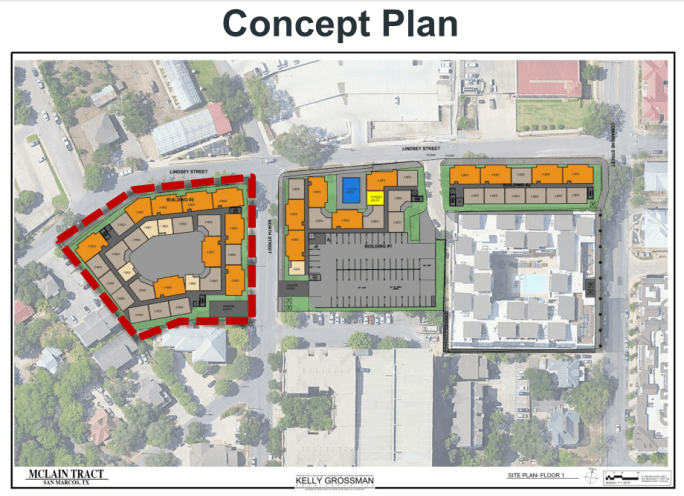
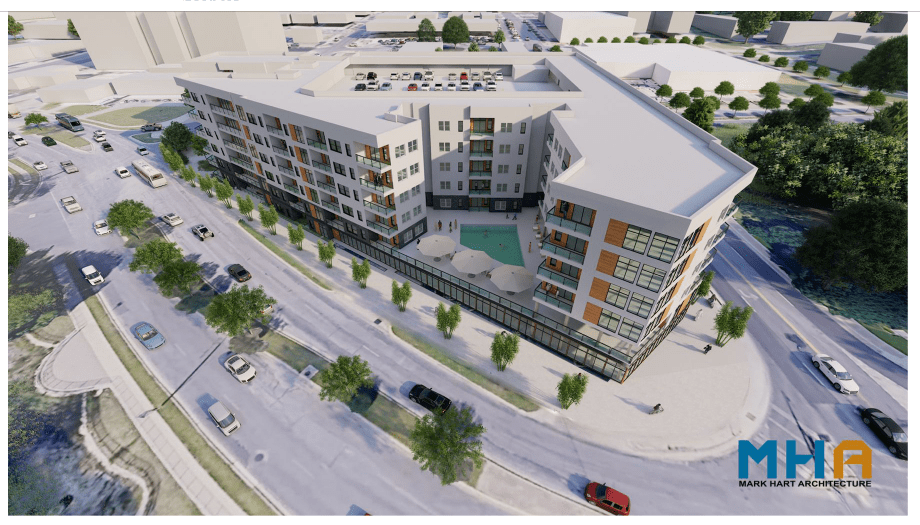
There are some apartments being proposed on Lindsey, between Academy and Comanche. (Item 17.) This gets a lot of traction:
Against it: Three students/former students represent a recently formed group called “Tenants Advocacy group”, to fight on behalf of tenants. (Be still my heart.) They’re strongly opposed to this complex.
Love it: The developer is all in favor of the Lindsey street apartments, and Shannon Mattingly – former director of San Marcos Planning Dept – is now working for this developer.
We’ll get into the details of all this, in due time!
Finally: one of the speakers (Kama Davis) brings up an item from Executive Session (Item 20):
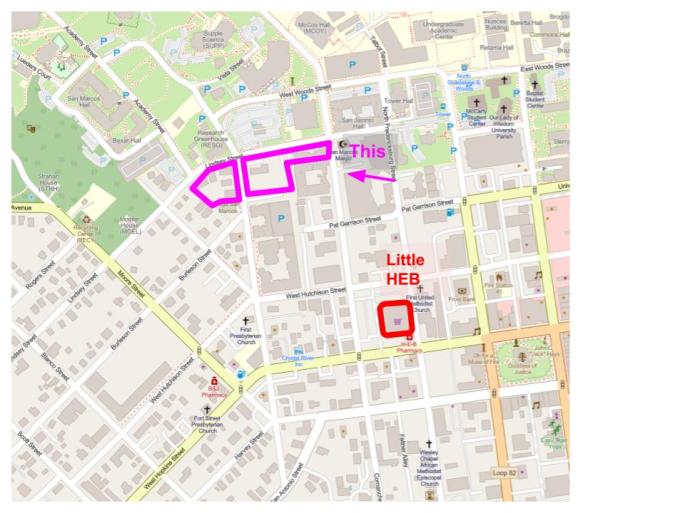
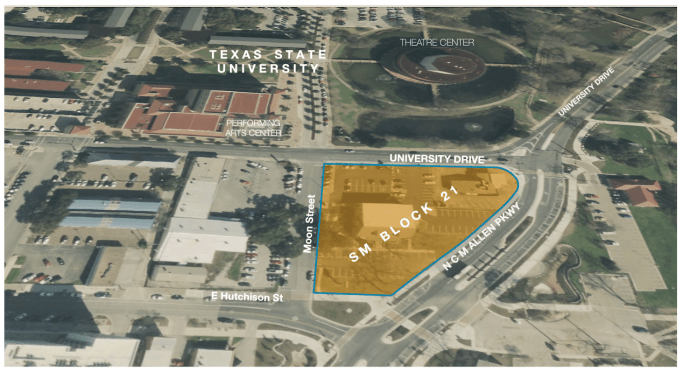
A developer wants the title of this alley, in purple:
The speaker wants it to stay with the city.
This taps into a much larger conversation about What To Do Along CM Allen. Should it be parks? Should it be apartment complexes? You just sit tight, we’ll get to all of this.
…
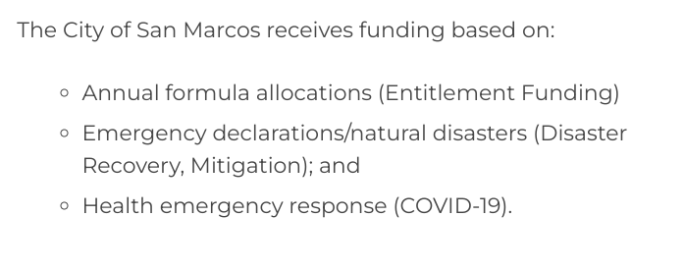
Item 1: We get CDBG funding from the federal government, specifically from HUD. We qualify on a few different points:
Tonight’s presentation is an internal audit, by Deloitte and Touche, on the $34 million we got after the 2015 floods. They’ve looked us over, and say everything was fine. Hooray!
Items 2-3: We get Q2 reports on the budget and our investments. Both seemed unremarkable. We’re a normal-amount of the way through spending and bringing in revenue. Our investments are doing middling-well.
…
Item 8: New airport zonings
So, the FAA and TxDot Aviation both want you to regulate two things:
Stay out of the airways where planes might be flying
Don’t build things right by airports that are going to cause problems later on.
However, neither the FAA nor the state actually control zoning, so they incentivize it. It’s a precondition for various grants and funding opportunities. The state of Texas also gives cities some extra leeway to regulate airports, beyond their city boundaries.
Over the summer, in Georgetown, a plane really did crash into someone’s house. So airport safety is a real thing. We’re all clear on the concept of plane crashes and why they’re bad, yes/yes?
So now it’s time to nail these things down.
Height Hazards: The city staff rep described all these abstract shapes in the air. There were pancakes floating 150’ in the air, cones beyond that, etc. You get the feeling that it looks like a giant invisible stadium around the airport. No one can build into the giant invisible stadium, but you can build below the bleachers, so to speak.
Here’s the bird’s eye view of the invisible stadium:
I don’t think anyone is too fussed by this part. Everyone understands that you need to stay out of the flight path of planes.
2. Compatible Land Use: this is the controversial part.
The main problem is houses and runways: you don’t want houses near your runways. But people already own this land, and no one likes to be bossed around. (Existing houses are grandfathered in.)
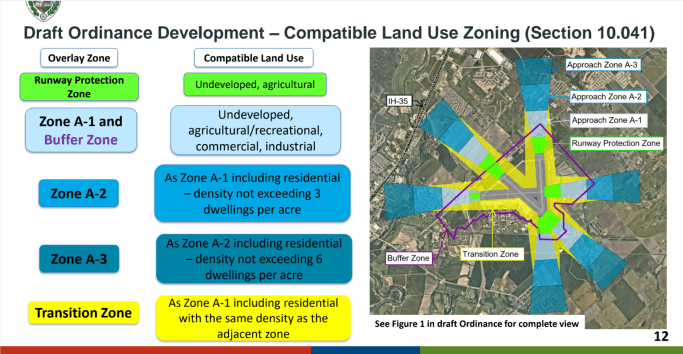
Here’s what’s being proposed:
Obviously all those rainbow-spokes are designed around either end of the runways.
So basically:
Bright green means absolutely nothing can be built.
The city owns almost all the bright green, but are some teeny green bits sticking out past the purple line.
The rest of the blues: feel free to build commercial, industrial, or anything else besides homes. Homes are restricted.
Like I said, anything that’s already built gets grandfathered in. The problem is: what if you own the land in those stripes, and you want to someday sell it to a developer? Or you wanted to build apartments yourself? Once those stripes are zoned, you’re out of luck.
Generally, the city is not allowed to downzone your property. If you own some land where you can build 7 stories, and the city wants to change the zoning to 2 stories, they may have to compensate you for the loss of potential revenue.
Here, they don’t, because airport zones are specifically carved out by the state of Texas for protection. Texas wants cities to make airport zones so that there will not be people living in a runway flight path. Makes sense.
So this decreases your land value, and land owners are mad about it. (On the plus side, your property taxes will go down.)
I’m trying not to sound like a total ass, because my initial reaction is, “You’re mad because you wanted to build homes that would be dangerous to the tenants and now you can’t? Fuck off.” (I guess I am a total ass.) But I mean, you can still build things. Just not homes.
Jane Hughson is more sympathetic to them than I am. She’s worried that we’re doing something to land owners, above what’s required by the state or federal government. She asks that the staff speak directly to the speaker who showed up.
Shane Scott says that he is a pilot, which I did not know, and he is pro-airport safety.
If one of these landowners wants to build something not allowed, they can ask for an exception! There’s a procedure for this:
Apply for a variance with the Zoning Board of Adjustments
If you don’t like what they say, you can appeal the decision to district court
The question is, is this sufficient? Or should we feel so bad for them that we do something additional, to show we care about the landowners who want to build homes in front of runways?
Jude Prather’s take: “I’m okay with the ZBOA and appeals procedure. Let the boards and commissions function like they’re supposed to.”
Alyssa Garza’s take: “I feel like there are more details I should understand.”
Saul: Property rights 4-ever!!
Matthew Mendoza: Can we say no to the feds?
I mean, sure. But it’s only going to get harder to make these airport zones, the longer you wait.
Look, this is common sense. The best time to prevent homes from being built is before the homes get built. Shane and Jude are the only ones willing to say this outright, and everyone else comes off as mealy-mouthed.
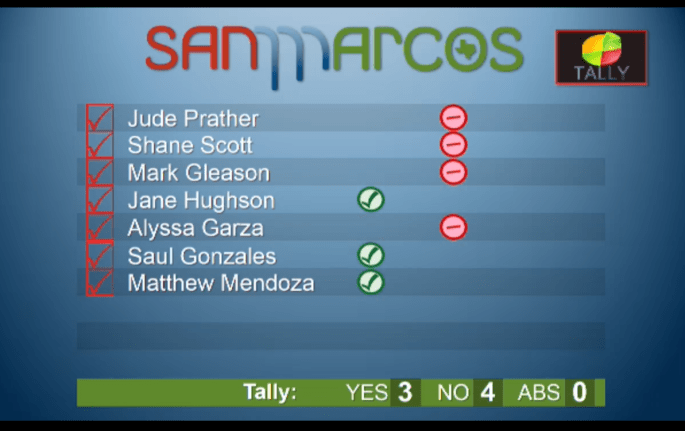
The vote:
I truly don’t know why Saul and Alyssa voted against it. I mean, I vaguely understand PROPERTY RIGHTS!! But allowing people to build houses in a runway path is a pretty big abdication of the whole point of government.
We discussed this in August and in September. There are just a few remaining issues to hash out. Here we go:
Should staff be able to approve the most mild, least controversial restaurant alcohol permits, or should they all go to P&Z?
For now, all restaurants and all bars will go through P&Z to get their permit. (Discussed here before.)
A subcommittee will look at carving out some exceptions. For example, hotel bars generally aren’t close to neighborhoods, and aren’t generally rowdy. Maybe City Staff can just renew those on their own.
2. Developers have to donate land for parks, or pay a fee instead. If you’ve got just a little infill development of 4 to 8 units, should you have to pay a fee towards the park system?
No one on council really felt strongly about this. They compromised at 6 units: if you’re building a little development with 6 or more units, you need to pay a fee towards the park system.
3. If houses are only allowed to be 2 stories in your neighborhood, and you’ve got a little rooftop patio, does that count as an extra story?
It used to be 25%. If 25% of your roof has a structure on it, it counted as an extra story. Now it’s any structure at all counts as an extra story.
(Discussed here and here before. I accused them of being killjoys.)
4. Should we continue beating a dead horse on this occupancy restriction thing?
Yes, yes we should.
Quick background: San Marcos has restrictions on how many unrelated people can live together. It’s been two. Back in May 2022, Council agreed to loosen them from 2 to 3.
Matthew Mendoza balked at this in August, and then tried to roll it back to 2 in September. The vote failed 4-3. But he’s still all heated up about it, and makes another motion to amend it back to 2.
So first, some facts:
In San Marcos, it’s only certain housing that has occupancy restrictions. Basically, single family neighborhoods.
In these neighborhoods, you can have any number of people, but only up to two unrelated people.
Here’s how we define unrelated: “A family is defined in the Land Development Code as any number of individuals living as a single housekeeping unit who are related by blood, legal adoption, marriage, or conservatorship.”
Here’s what city staff say:
Whenever neighbors complain, they’re not actually mad about the number of unrelated people. It’s always noise, or parking, or the trash, or yard not being kept up. We can deal with the noise/parking/yard complaint. It’s not literally the marital status of any of the tenants that’s the issue, so this ordinance is not needed.
Here’s what Matthew and Jane Hughson say:
Landlords want to be able to rent to three tenants. So if you increase this, landlords will buy up housing stock and let it crumble into shitty, ill-maintained housing that exploits tenants. It’s bad for renters, and decreases the available housing stock for people who want to purchase a home.
Here’s what I say:
Actually, I want to say two things. I want to refute Matthew’s argument, and I also want to make a separate argument on why you should get rid of occupancy restrictions all together.
Look at Matthew’s argument:
When your chain of cause and effect becomes really long and stretched out, that is often a sign that you are writing bad policy.
If you’re worried about those Bad Consequences – low housing stock and shitty landlords – this would not make it onto the top 100 of effective things to do.
What you’d do is:
Build more housing. (All sorts.)
Hold landlords accountable. Enforce code violations and fund a city lawyer to send letters to landlords on behalf of tenants.
Furthermore, his facts aren’t right. Letting bedrooms go unfilled reduces available housing. Occupancy restrictions decrease housing, which is the opposite of Matt’s Bad Consequence #1.
So I have yet to see a compelling argument for these restrictions.
Arguments against – and here’s where I get pissed off:
Why is the city meddling with whether people are married or not? A married couple can take in a tenant, but an unmarried couple cannot? Three friends can’t rent a house? This is gross.
There is a serious housing shortage. You should be able to put people in bedrooms. You should be able to flexibly problem-solve to provide housing on the fly, when someone you care about is in a pinch.
We just talked at length for two meetings about the burden of property taxes on Grandma. Grandma should be allowed to take in her friend’s grandkids as tenants. Grandma’s primary asset is her house, and she doesn’t want to move, but it’s more house than one person needs. Let her share.
The common thread is non-traditional living situations. Why should non-traditional living situations be banned? A few people want to live together, and they can’t, because the city can’t crack down on shitty landlords? That’s dumb as fuck.
Bottom line:
Hold landlords accountable for providing safe, well-maintained housing.
Build a variety of housing in neighborhoods, not just 3- and 4-bedroom houses. Build four-plexes alongside houses so that people can rent apartments in quiet neighborhoods.
Stop micromanaging who is married and who isn’t.
One final point: Yes, landlords buy up housing stock. But listen: being a good landlord is a lot of work. Make bad landlords be good landlords, and some of them will decide it’s not worth it. Hold landlords accountable for maintaining safe and well-maintained properties, and their profit margins will go down, and they’ll be less likely to buy up your housing stock, and it’s better for tenants, and neighbors. Win-win-win.
Here’s how the conversation goes, after Matthew makes his basic argument:
Shane Scott points out that letting someone rent a room may help them afford their property taxes.
No one knows the occupancy restrictions in other cities more generally, but College Station sets it at 4 unrelated people.
(I went hunting, and couldn’t find much. Austin puts it at 6 unrelated people.)
Jude Prather: I’ve been in this situation. I know plenty of respectable, good neighbors who have had three unrelated people living together at various times. How do you tell people they can’t do this, when housing is unaffordable?
Matthew: but Minneapolis got rid of their occupancy restrictions and they went to hell in a handbasket!!
Jude: Actually, Minneapolis went the other way. Their housing costs actually resisted inflation. What about a compromise, where you can take in extra tenants if it’s owner-occupied?
Alyssa: Let’s remember that occupancy restrictions are rooted in racism and classism.
Jane Hughson: NOT IN SAN MARCOS, IT’S NOT! The history here is NOT racist!
In San Marcos, its origins are mostly anti-college students. But the folks in power did not shed a tear that it was also disproportionately impacting poor and non-white community members.
Also, confidential to Jane: I wouldn’t go betting the farm on San Marcos being a bastion of anti-racism.
Matt: I’m trying to protect renters!
(Ahem. Establish a tenant’s council, then.)
Mark Gleason: My worry is keeping people in their homes. So I’m in favor. I think people should be able to rent out a room or two. I don’t think it affects whether or not investors buy up houses. I’m okay with owner-occupied only, though.
Jane: Let’s postpone the whole thing for two weeks!
Matthew: I’m just sad about the historic district.
Jude: San Marcos is clearly an outlier. We’re not trying to get rid of the rule altogether. 3 unrelated people seems like a good compromise.
The vote:
Jane keeps talking about creating a subcommittee and postponing it for two weeks. It feels like she’s just unwilling to recognize that she’s lost this vote. Both Jude and Alyssa gently say that they would be fine just letting it go.
She forms a committee anyway – Matthew Mendoza, Alyssa Garza, and Mark Gleason – and Alyssa says if there’s a committee, she at leasts wants to be on it.
When actually forced, 6-1 vote in favor of committee. The committee will consider whether three unrelated people should only be allowed when one of them owns the house. (We really only want to micromanage the marital status of renters, I guess.)
…
5. Should the notification radius for a giant ungodly thing like the SMART Terminal be bigger than for a dinky little development?
Yes. The notification radius should be proportional to the size of the development. We’ve been over this multiple times.
Staff says no, and gives this as their reason why not: “If we made the cutoff at 500 acres, then developers will just come it at 499 acres!”
In other words: it can’t be done because developers will game the system.
Give me a fucking break. How about this: “For every 25 acres, you have to notify 400 ft out.” Not to brag, but that took me all of ten seconds to write down. I bet someone can spend 10 more seconds and come up with something even better.
Thankfully, Jane is also not satisfied with staff’s lame evasion, and says, “I don’t know the best way to do it, but there’s gotta be a way.”
So this will go to committee.
…
In the end, the whole set of revisions will be postponed until December 5th, to give all these committees time to meet
Right now, if you’re wanting to hold a special event, you have to go to a bunch of different departments to figure out what permitting you need.
Potentially any of these:
Now they’re going to put together a single front-end, tacked onto MyPermitNow and walks you through getting the permits you need.
Everyone is stoked about this.
….
Item 17: Lindsay Street apartments. Ooooh, this one is interesting.
So, Shannon Mattingly was the director of the San Marcos planning department from 2015 to 2022. Then she went to work for the Drenner Group, which are some Austin developers.
Tuesday’s item is just informational. It turns out that developers are allowed to do this – request an informational item at a council meeting. Who knew? (Shannon Mattingly would know!) So you can come in and give a presentation about your exciting new venture.
Here’s where they want to do iti:
And here’s what they want to do:
That is, make it student housing.
I think they said that they want it to be 7 stories and rent-by-the-bedroom student housing.
There are a couple problems, and a couple things that are fine with it. It’s not actuallyentirely bad.
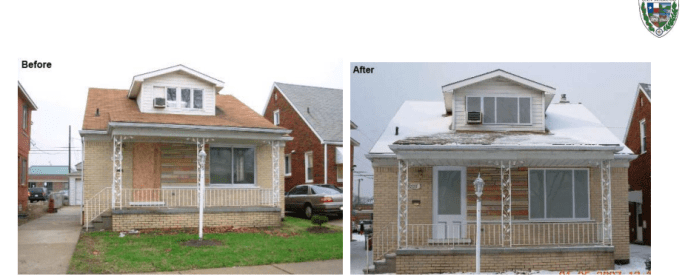
The left hand part, in the red dotted area, has some historic houses that people think are cute, like this one:
I think it’s pretty cute! Maybe it can be saved.
Jude Prather speaks up about maybe finding a way to put commercial in a little historic house like this. Maybe it can be made into a restaurant or something. (I think we all miss Cool Mint Cafe.)
Three people from the newly-formed Tenants Advocacy Group came to speak against it. Their argument went “Rent-by-the-bedroom apartments are predatory and there is plenty of student housing. We don’t want this at all.”
I am so thrilled that they’ve formed this group. This is outstanding.
Their argument against rent-by-the-bedroom is that these leases are more exploitative than regular leases:
You can get stuck with someone awful and have no recourse.
Making students rent “as is” without having seen their actual unit, and then units have broken furniture, mold, etc.
Not having a clause allowing for a way to break the lease
The only thing that I’d quibble is that plenty of regular leases are also exploitative. But a Tenant’s Advocacy Group is exactly the right place to start! Next I’d like to see the city fund a lawyer who will send letters to landlords and argue for fairer leases.
Side note: Rent-by-the-bedroom itself is very weird, and I can’t decide how I feel about it. Without it, you get an apartment with your friends, and if one friend falls behind on their rent or moves out abruptly, the rest of the group is financially liable for the whole rent. So there really is a sense in which students are protected by signing individual leases.
The usual argument against them is they allow rents to skyrocket. But I can’t see how it’s the lease structure that does that. Landlords are always going to charge the maximum that they think people will pay, and if you have insufficient housing, then people are forced to pay it.
Rental companies definitely act in predatory ways. Tenants need protection. It’s just not obvious to me that this one detail of the lease structure is the heart of the problem.
The students in TAG were against the entire complex, full stop. They argued that we have enough student housing and we don’t need any more.
I don’t buy this part of their argument. Housing is like musical chairs: if you add more student housing, students who like fancy new complexes will move into it, and free up their old housing, and whoever moves into that frees up their old housing, and so on. There is not a bright firewall between student housing and non-student housing when complexes get old enough.
Is 7 stories too high? Jane Hughson thinks so, especially for the portion in red. She’d like to see it be a transition area, so maybe 3 stories?
Honestly, I think 3 stories is fine as well. This town does not like high-rises, and I don’t see any need to antagonize people.
So what are the good parts? Well, it’s housing, and it’s not sprawl. Those are good things!
But again, this was just informational. It will come back.
Item 18: Tightening up the rules of city council meetings.
Most of these are codifying the way we currently do things. There’s one change that’s mentioned explicitly: changing “Citizen Comment” to “Community Perspectives”.
This is a good change! I’ve definitely felt weird writing this blog, trying to avoid the word “citizen” when I don’t actually care about someone’s immigration status.
To Any City Staff Who Read This: I have two suggestions!
Sometimes letters from the public are included in the packet, other times not. I want to know what people care about! It is helpful to me to see what the community is mad about! I’d like a consistent practice of including letters to council in the packet.
Often when someone goes up for Q&A, the answer is, “Staff will get back to you.” I’d like to know these answers, too! They should get posted to the message board, please!
….
Item 20: Top Secret Executive Session
Two interesting items:
“receive advice of legal counsel regarding pending litigation concerning the title to an alleyway located near the intersection of University Drive and CM Allen Parkway”
I wouldn’t have noticed this if it hadn’t been brought up during Citizen Comment. The speaker (Kama Davis) said that the company is called SM Block 21, and that they had renderings online. So I looked it up.
Lo and behold, they are!
The lot:
The rendering:
The alley in question:
At least, that’s the only alley I see.
What makes this an EXTREMELY hot potato is the backdrop of last week’s P&Z meeting. So, remember the Comp Plan? It has splinter parts, and in particular there is a Downtown Area Plan.
This hasn’t passed yet, but it’s cooking. It involves this part of town:
Here’s the part that everyone’s worked up about:
They call this part the CM Allen District.
It’s pretty big. And notice that the one in the back is the same thing we were talking about above!
The Downtown Plan Committee said:
We want people walking back and forth between downtown and the park
Right now, it’s all parking lots. Those are the worst: smelly, hot, dangerous. Parking lots shut down walking. (This is borne out by data.)
Businesses can’t survive there (clearly)
So what’s remaining? We should put some housing there.
Staff provided a visual of what it might look like if giant buildings were made out of sliced bread:
Pretty unappealing! They called this option 1.
Jane Hughson and the P&Z subcommittee kinda lost their minds looking at that photo. It’s pretty atrocious! Here’s what they counter-proposed:
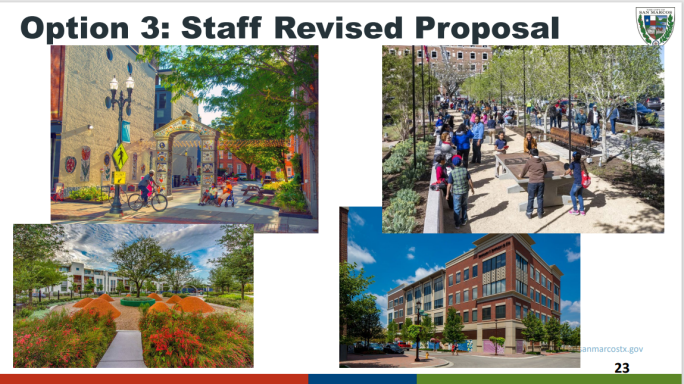
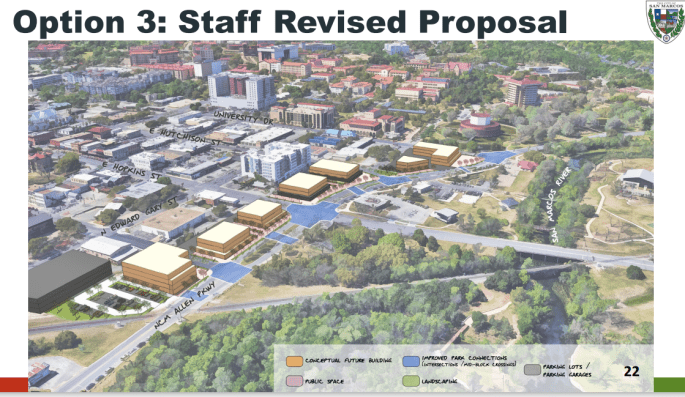
The city staff cringed and squirmed and said, “There’s no way in hell you can afford that. That land is super expensive and you’d lose especially valuable tax base.” They proposed option 3:
Those photos are apparently from El Paso. It does look appealing!
But there’s also the “smaller loaves of bread” visual for Option 3:
A ton of people heard about this, and the community came out heavily for Option 2. P&Z recommended option 2 for the Downtown area plan, on the premise that you might as well swing for the fences, even if it’s a long shot.
My two cents:
I’m mostly neutral. A park sounds super lovely, I see the appeal of it. At the same time, those lots are never going to be used very heavily. They’re kidding themselves. The river gets used very heavily, but the parts of the river parks that aren’t close to the river do not. Like, the land along CM Allen between the tennis courts and the railroad tracks – people don’t want to be that far away from the river. And here, you’re on the far side of CM Allen. Are you going to lay down a picnic blanket with a busy street blocking your kids from the river?
Maybe this is a good place for targeted park space – move the baseball fields, or tennis courts, put pick-up soccer fields there. Free up the land that is actually close to the river.
But again, it’s wildly expensive, there’s no obvious way to acquire it, and we’d lose a high-revenue tax base right now. So given the hand-wringing over property taxes last time, it seems kinda counterproductive to take this on.
At the same time, you never get a second chance to grow your parks. I love the river parks so much, I can’t bring myself to be mad about the idea of growing them. Maybe in 50 years, the grandkids will be really glad if we set that land aside.
Bottom line:
Clearly these two things are incompatible:
So when Council debates what to do with the alley that the developer wants, they’re inevitably also saying something about the green fields on the right.
The second interesting item is this:
“[T]o receive advice of legal counsel regarding pending litigation regarding Eric Cervini, et al. vs. Chase Stapp, Brandon Winkenwerder, Matthew Danzer, and City of San Marcos; Civil Action No. 1:21-CV-00568-RP; In the United States District Court, Western District of Texas; Austin Division.”
That would be your Biden Bus incident. It is still simmering along, making its way through the court system. The San Marcos lawsuit is mentioned at the end of this article, but mostly I can’t find anything current about it.
You can even get all trompe l’oeil about the whole thing:
Council liked this, so staff is going to draft some policy and bring it back.
…
But wait! There’s more!
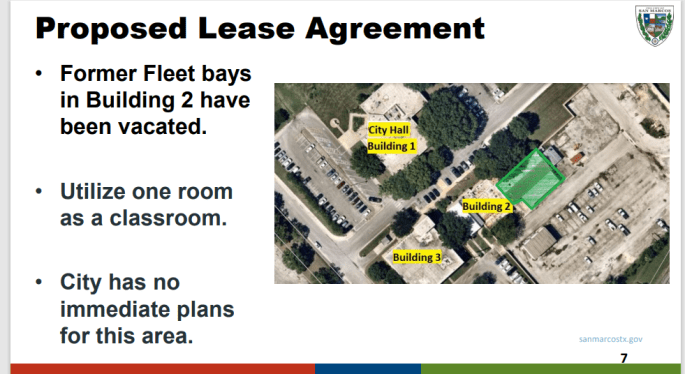
We already partner with ACC to give workforce training courses. Think things like HVAC training, plumbing and electric, etc, where you can get out and immediately start earning a decent income.
Right now we offer courses at the library, but if we had more space, we could offer even more. So we’re going to renovate some city buildings for this:
So the city is proposing using $240K of the Covid money to renovate and create some classrooms.
Everyone’s stoked about this. It’ll come back in some form to council.
Good lord, you all, this week is DENSE and MEATY. We’ve got your budget. We’ve got your property taxes. We’re selling water to Kyle. We’re updating the development code. We’re banning cans, goddamnit! There is just so much to cover.
Also, I spent a lot of this week’s write up yelling about everything. Sorry about that.
One over-arching observation:
The first half of the meeting is spent wringing our hands over the high taxes.
The second half of the meeting is spent preventing measures that might reduce the tax burden.
The cognitive dissonance hurts my brain!
Anyway, here we go:
Hours 0:00 – 3:19: The budget, the tax rate, the utility rate hikes, and lord, the fighting.
Hours 3:19 – 4:07: How to actually reduce the tax burden, plus VisionSMTX, and selling water to the city of Kyle.
Hours 4:07 – 5:45: Updating the Land Development Code, and revisiting occupancy restrictions. Also SMPD body cams, and a future ban on single use containers in the river.
One final note:
This council – except Alyssa Garza – loves the status quo. The new budget cements the status quo, because fundamentally that’s what council wants. Very little legislation ever gets introduced that transforms any problem in a significant way. They see presentations on homelessness, housing costs, sustainability, and other big problems, and then a year or two later, they see another one.
There are some exceptions – Mark Gleason initiating the can ban, for example, getting the transit agreement completed, banning puppy mills – but those are rare. Mostly, this council likes to keep it business as usual.
There was a big turnout tonight! 21 speakers total, and more speaking at public hearings later during the meeting. The whole citizen comment lasted over an hour.
The main topics were:
The can ban, by far. People who do the work of pulling trash out of the river have a lot to tell you about why we need to ban single use containers. 16 of the speakers talked about this, including the mayor and some councilmembers from Martindale.
Some notes:
It would actually be a ban on all single-use containers.
New Braunfels and Martindale both have bans, and they’ve made a huge difference. Plus you save money on trash clean up.
The key is to educate and get buy-in from residents. Not just ticketing people.
2. Selling our water from the Edward’s Aquifer to Kyle
For the second year in a row, Kyle has run out of water and wants to buy some from us.
Virginia Parker, from the San Marcos River Foundation, talks a lot about this: their conservation efforts are shoddy. Sell them the water, but make it contingent on tighter water conservation.
The city doesn’t agree with SMRF’s criticism. We’ll talk about this when we get there.
3. The taxes are too dang high
There weren’t actually a ton of people who showed up in person, but council comments give the impression that they’ve been swamped with complaints behind the scenes.
4. Notification radius for development agreements – it should be appropriately large
This is mostly about the SMART Terminal, and how no one knew ahead of time that it was a thing, until it was too late. But it’s also happened with other issues, too.
The city is going to start sending notifications to neighbors in these situations. They’re offering a 400′ notification radius. The problem is that the SMART Terminal is supposed to be 2000 acres, which is 87,120,000 ft2. The 400′ notification is the tiniest sliver around something that big.
As we’ve said before, the notification radius should be proportional to the size of the project.
Finally, Dr. Rosie Ray offers some good improvements for the Comp Plan, but I’m going to save those for the VisionSMTX discussion so that I can put them in context.
…
Items 5-8, 16-18: The budget, the tax rate, and the rate hikes.
We talked a lot about the budget here last time, and I was an insufferable blowhard about the virtues of paying your taxes. (I still am! Sorry!) So I don’t think we need to recap all of that.
The short version: the tax rate is steady, but housing prices went up, and so the amount everyone pays is going up. Also utilities are going up.
Clearly councilmembers got an earful about property taxes and the appraisal process. I can’t tell if people are mad that appraisals are so high, or that appraisals are done poorly. If it’s incompetence, that’s a different problem than skyrocketing costs.
This is a useful slide, which is totally illegible:
Would you like it to be clearer? ME TOO. Unfortunately, this slide is not in the packet, and so I had to take a shitty screenshot.
If you promise that I’m your favorite blogger, I’ll transcribe the damn thing for you:
2022-2023: Average monthly bill
2023-2024: Avg monthly bill
Monthly increase
Electric
$93.01
$94.72
$1.71
Water
$56.47
$59.29
$2.82
Wastewater
$48.26
$50.67
$2.62
Stormwater
$14.90
$14.90
0
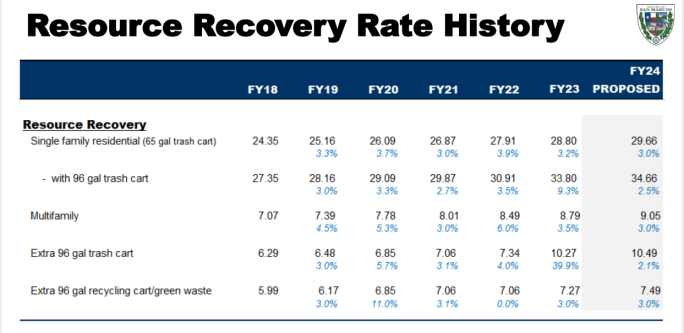
Resource Recovery (ie trash and recycling)
$28.80
$29.55
$0
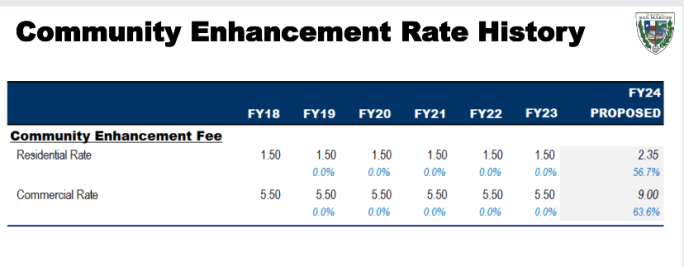
Community Enhancement
$1.50
$2.35
$0.85
Property Tax
$160.53
$182.42
$21.89
Total
$383.47
$414.01
$30.54
All of those are based on a $338K house and average usage.
Listen: $414 is a lot of money per month. I don’t want to be flippant about that. In addition, you’re paying SMCISD and Hays county taxes, at a rate of $1.133782 and $0.3125, respectively. So that’s another $3832.18 to SMCISD and $1056.25 to Hays County, which works out to a monthly total of $821.38 per month.
That stings! BUT.
1. The first problem is that we’re bringing the sting of paying $821.38 to a conversation which is really only about the property taxes part, which is $182.42.
2. The next problem: there’s actually not much to cut. Core services are really important. The city actually runs a lean budget. You are getting mostly-maintained roads. You are getting smart people with degrees to make sure that the buildings are safe and conform to what we have all agreed that we want buildings to do. You’re getting libraries and librarians. You’re getting a phenomenal park system and park staff that work there. You’ve got cops that will (mostly) show up if you’re in danger and (hopefully) arrest the right person (that’s a conversation for a different day.) You’ve got firefighters to show up if you have a fire. And you’ve got to pay all these people fairly. That $182 is going to really important stuff, and I’m sorry that it’s invisible, but it’s as important as keeping the lights on in your house.
3. We can reduce the tax burden through city planning – increase density in gentle ways.
Listen: single family neighborhoods do not bring in enough tax revenue to pay for themselves. Cities compensate by taxing apartments and business at a higher rate. If you live in a house, you are already being subsidized by apartments and businesses.
We’ll talk about this a LOT later.
4. You should absolutely be angry, because the rich should be paying so much more.
Both locally and statewide, taxes are super regressive – 2nd worst in the country, in fact! The poorest 20% of Texans pay 13% of their income in taxes. The middle 60% pay 9.7% of their income, and the wealthiest 20% of Texans pay only 3% of their income in taxes. This is utter bullshit.
This is because the main tax at the state level is a sales tax. Sales taxes are the most unfair taxes. If you live paycheck to paycheck, you get taxed on your entire paycheck because you spend everything you earn. But the wealthier you are, the more buffer you have between the money you spend (and get taxed on), and the money you put in investments, tax free.
San Marcos also has a 2% sales tax. Obviously this is in order to cash in on the outlet malls, but it’s also another flat tax hitting our poorest residents the hardest. In fact, we actually bring in more money from the sales tax than property taxes: the sales tax brings in $42 million, the property tax brings in $37 million.
Remember the part about how poor people pay 13% of their income in state and local taxes? They are only earning $14,556 a year. The state makes $2037.84 off that poor guy.
Whereas the top quintile paying 3% of their income? They earn $228,924 on average. The state makes $6,867.72 off the rich guy.
If you taxed the rich guy at 13%, Texas would get $29,760, and he’d still have almost $200K left! We could do so much more to alleviate poverty and help communities, if we taxed the rich fairly.
5. Property taxes are not as unfair as sales taxes. They’re not great, but they’re not the worst. But you know what’s the ACTUAL WORST? The state proposal to use a surplus from sales tax to refund property taxes. Texas is literally going to redistribute money from the poor to the rich. This makes me lose my goddamn mind.
(If you think that landlords will lower rents with that money, you are high on your own supply.)
And the state needs that money! Might I suggest using it to REPAIR THE GODDAMN FOSTER CARE SYSTEM?
You guys, this conversation is making me sweaty. I need to bring it back to local issues again.
…
Sorry. I got really shouty. Ahem.
…
Let’s start from the beginning.
Utility rate hikes: water, wastewater, trash/recycling, and community enhancement are all going up a little. On average, you’ll pay $8/month more.
The Vote (tucked inside the consent agenda)
Raise them rates! Jane Hughson, Shane Scott, Jude Prather, Matthew Mendoza, and Mark Gleason Don’t you dare: Saul Gonzales and Alyssa Garza
I strongly disagree with Saul and Alyssa on this vote. These are four areas where responsible use can drive down costs. We need to be mindful when we’re taking a long shower, or lowering the AC, or watering the lawn. Don’t subsidize people being wasteful.
These rates should be priced so that each fund is self-sustaining. Separately, we should fund utility assistance for those who can’t afford the cost. In other words, we should keep doing exactly what we’re doing.
…
Next, the budget conversation.
The public hearing:
City staff made some 3 minute videos to explain the budget process to the public. They got like 50 views total. [Scroll down here if you want to see them.] That’s not successful. None of you shared those videos on social media or anything. None of you held town halls.
We pay money to contractors to do big surveys and we don’t use the results.
City staff is paid too much under this budget.
We’re taxing people out of their homes!
There’s no transparency and no environmental accountability!
Let me single out one speaker, Noah Brock, who is making a very different, specific point:
The Highway 80 Utility project only connects to two properties: some city property and the SMART Terminal property
The water and wastewater funds directed to this project have spiked hugely: – It’s going to use $10 million /60% of the water fund. This was 1.5 million last year. – It’s going to use $15 million /49% of wastewater.
Why are you raising rates 5%, and then directing $25 million for the SMART Terminal?
I have no answers.
Council discussion
Saul Gonzalez asks about freezing property taxes for anyone over age 65. He brings this up several times throughout the night. Do other cities do this?
Answer: Yes, cities like Killeen do this.
Saul asks how they make up the revenue?
Answer: their tax rate is higher.
(I don’t think Saul likes this answer.)
Next up is Alyssa: She is a no on this budget. We’re not fixing our problems. Incremental change is not meaningful change. There’s a lack of transparency and participation. We need a more equitable process and we need to provide tax relief. We’ve got big problems – we need good paying jobs, we need affordable housing, we need to help the homeless. We’re doing nothing on those problems.
Jude Prather: This budget achieves those five goals we laid out! It’s great.
Mark Gleason: I wouldn’t be voting for this budget if we weren’t going to get all this property tax relief from the state.
(Yes – that sales tax surplus from all Texans that will go to just property owners. How nice for some.)
Shane Scott is totally in campaign mode. He hasn’t given a speech all year. But here we go:
Since he was first on council, the budget has gone from 1.5 million to 3.5 million
He fights for the lowest costs.
“They should be paying for OUR lifestyle – we were here first!” I have no idea who he has in mind with this, but sure.
Cost of food, single moms
He doesn’t want to risk lowering our bond rating.
Safety, hooray!
Participation, hooray!
And my favorite part: voting on this budget literally makes Shane Scott puke… but he’s a yes.
Jane Hughson: Look, the property taxes are going up $22/month. I’m a yes.
Matthew Mendoza: I want to puke too, just like Shane! But I’m a yes.
So everyone has staked out their basic positions on the budget.
…
The conversation then turns meta
What went wrong that everyone is so unhappy at the final stage? We’re going to have a big conversation on this. Here’s the positions that everyone stakes out:
There’s an 9 month process and we’ve given you tons of opportunities to share why you’re unhappy. This is bullshit to bring it up now. (Jane, City Manager Stephanie Reyes)
We’ve said that we’re unhappy at every step of the process! And we have an obligation to represent the unhappiness of the community, and the community is freaked out by property taxes. (Saul, Alyssa)
It’s no one’s fault – it’s the appraisal calendar and the tight turnaround, and how difficult it is to communicate with the public. We feel great shame. (Mark Gleason, Matthew Mendoza)
Wait, I thought we agreed that everything was great. (Jude)
I already gave my one speech, why are we still doing this (Shane)
Here is how the conversation unfolds:
Jane Hughson says to council, “Save these speeches for January, when the next budget process starts up again. Voice these issues during the Visioning Process.”
In other words, if you all are mad about different things, use the budget process. Bring this up from day one.
Alyssa counters, “The Visioning Process does not work. It has nothing to do with the actual needs of San Marcos. It’s tone-deaf. Stop romanticizing the strategic goals and using them to accept the status quo.”
This is true – the budget process takes last year’s budget, and tweaks it incrementally, according to Council direction. It cements the status quo for another year. It’s never going to produce transformational change, which is what Alyssa is here for.
Alyssa believes sincerely and deeply in citizen participation – this is how she’d fix the budget process. This is where I disagree. First, I’m a little more cynical: everyone’s busy. I don’t think there’s an outreach effort on the planet that will engage a real number of citizens until they see the price tag, at the very last minute. (And frankly, people can be idiots about how to run a town when they do show up.)
But note: Alyssa is not proposing a concrete, alternative budget with different priorities that she can point to. This is why I’m interpreting her vote as a protest vote against a complacent status quo, and not a counter-proposal for a realistic alternative.
This next exchange is really crucial:
City Manager Stephanie Reyes:
“This is disheartening. This did not happen in a vacuum. We rely on each of you, as elected officials, to talk with our neighbors. You represent your constituents within the community. We expect to hear a diverse set of thoughts and ideas at every meeting. Every budget meeting has been in an open forum, with citizen comment and Q&A afterwards.
“You hear a lot about the things that city staff does not-so-good, and there’s not a lot about the things that we are doing that are going very well within our city. And that is very frustrating, because that is what staff hears. Staff gets a lot of bad raps, but they’re carrying out Council direction that you all make as a group.
“I also hear “hey, we can’t tax our neighbor out of their home” but I also hear “oh we don’t want commercial development” or “oh we don’t want these things”. We can’t have more and more and more and not have anybody to pay for it. Somebody’s got to pay for it. So either expectations need to come down, and what gets asked of city staff to do more, or we need to temper our expectations in a way that is within what we can afford.
“Staff is not formulating this budget in a vacuum. It’s a conversation, it’s been a dialogue, there have been different junctures, we’ve gotten direction from each one of you, every step of the way. And now at the end to make it look like it’s just our budget? I just don’t think that’s necessarily a fair way to portray that.”
(I shortened and edited her words, but I don’t think I misrepresented her. It’s at 1:53 if you want to listen for yourself.)
Alyssa replies:
“I hope you’re not trying to imply that my discontent is news to you or anybody else. I hear your frustrations. Let me take a second to share mine. I feel that staff feelings are constantly weaponized to foster this sense of guilt about speaking up. That’s my perception. I think the way I treat staff every day speaks to the fact that I value staff. I try to give kudos whenever kudos are merited, I try to have grace, I try to advocate for better things for them. Staff works hard, strides have been made on this process. That’s a fact.
“But multiple truths can exist at once. They don’t have to be in contradiction of each other. All that’s true. But it’s also true that it’s very little and these concerns from our community are not new. It sucks that you guys inherited this. I’ll just share this: when you know the caliber of what you’re working with and you know the possibility of what could be delivered , you just have really high expectations, and I think that’s what our neighbors are expecting with this whole new leadership and leadership style.
“So if it’s coming across as being dismissive or trying to intentionally hurt staff’s feelings, that’s not my intention. It’s my responsibility to echo my constituents’ frustrations. And it’s not just the ones I see, it’s decades worth of historical frustrations. And again, it sucks that you guys inherited this, but that’s just the way it is.”
(Not really edited at all. Alyssa’s very eloquent.)
They really are both right, and it’s not a contradiction. Staff solicits council input. Council ignores Saul and Alyssa and votes to stick with the status quo. Staff takes council direction and implements it. The community gets mad and blames staff.
[Here is one more truth: you will never escape “the community gets mad and blames staff.” No matter how amazing your process is, that’s how it will always end.]
Their exchange was so powerful and raw. It kind of cracked me up to hear everyone else chime in after for a piece of it:
Mark: omg omg! I’m so sorry. It’s just the calendar of when numbers become available! You guys get so many kudos. Covid AND inflation! Huge kudos. Teams. It’s just communication.
Jane Hughson: hooray for staff!
Saul: I too heart the staff! My constituents are broke. Let’s freeze taxes for those over 65.
Matthew Mendoza: We all failed. We didn’t fight hard enough. I blame me.
The vote on the budget:
Yes: Jane Hughson, Jude Prather, Shane Scott, Matthew Mendoza, Mark Gleason No: Saul Gonalez and Alyssa Garza
…
But wait! There’s more!
Next, they have to vote specifically on the property tax increase. By Texas state law, this has to pass by 5 votes. (Last year, Saul, Alyssa and Max all voted against it, and almost blew up the process. In the end, Saul switched his vote. Alyssa and Max were protesting all the extra cops.)
More public hearings Max Baker packed 50 ideas into three minutes. LMC channeled Milli Vanili. Former councilmember Lisa Prewitt and former school board member Juan Miguel Arredondo both showed up to talk.
I don’t know how to boil it down, so I’m just writing it out.
Max Baker: – We don’t have it’s own economic development person. We rely on GSMP. – Maybe there are technology solutions! Why don’t we fight for those solutions to the budget? – Why wait for January? Start now. – Community blames staff because staff are the experts. We’re stuck with what you give us, and you get defensive. – People also ask for FEWER Cops. The Cops are the ones that ask for more cops. Other conceptualizations of safety. – when do we stop giving big corporations all these tax breaks? – Appraisal problem, cover for “not raising taxes” – why don’t we make sure people get their appraisals, and why don’t we help people protest their appraisals? – Y no accountability? Burt Lumbreras said we should stop giving tax breaks, because it will blow a hole in the budget, but GSMP said we need it, so we did it. – year after year, you claim you’ll fix it next year.
(This is generally what I mean when I say Max puts 50 ideas into 3 minutes. It’s a lot.)
LMC – Sings Milli Vanilli. Staff uses a big city consultant to give themselves a 5.5% raise. And we have to cut costs. Waste in the budget. You all don’t read your packets.
Juan Miguel Arredondo – Tax rate: I represent people who live on the margins. Those who have trouble fixing their car and buying groceries. They don’t get to decide that they are going to get pay raises to keep up with inflation. There’s no fund balance. They just have to do more with less. That’s what you have to do, too. Your choice will cause poor people to make hard choices.
Lisa Prewitt – ditto everything. everyone is right from their own perspective and we can’t judge. But I did the Visioning workshop for six years and we did talk about freezing seniors. We’re all in this together. We’re all trying to budget ourselves at home. Medical, medicine, groceries, utilities. Our seniors are vulnerable. They can’t get a second job or come out of retirement. When do people get a break? Another 5-10K per year? You can’t tax people out of their homes!
…
Look: clearly I disagree with these speakers. I don’t think that we should slash the budget to give people a tax break.
I know times are tight. But you absolutely cannot lift someone out of poverty with a tax break. You can break poverty by raising the minimum wage to keep up with inflation, and implementing well-designed social programs, affordable healthcare and housing, and wealth redistribution. But not with a $500 tax cut.
City staff deserve to be paid fairly. The budget is lean. Nevertheless, we’ll talk in the next section about how to reduce the tax burden.
Spoiler: no one wants to do it.
Council conversation
It’s more of the same:
Saul
Saul goes back to his thing about freezing taxes for seniors: I want to ask Juan Miguel Arredondo about how the school board freezing taxes for seniors. Did you all do that? JMA: I wasn’t there, and it’s complicated, and we went into debt.
Saul: How do appraisals work, anyway?
Answer: Houses are appraised on January 1st. And remember, there’s a 10% cap. And remember, you can protest your appraisal and get it adjusted downward.
Saul: All my appraisals went up and I had to raise all my rents.
Jude
Jude: Look at all these good things! Tax rate is steady, homestead exemptions, state tax relief will be retrospective!
Alyssa
Alyssa: What should I say to our neighbors when they say that we should use the general fund to close the shortfall? Answer: Tell them it’s not sustainable. The general fund is for one time expenses, not recurring expenses.
Alyssa: How are we helping renters? I’m concerned about utility increases, which disproportionately impact renters.
Note: this is not entirely true. Living in an apartment is much more environmentally efficient than a house. You get some savings on heat and AC because you’re insulated by other apartments. You’re not playing dumb games trying to keep your yard green in a historic drought. You’re presumably sharing the trash/recycling bill in some form.
Mayor Hughson
Jane: Appraisals are legally required to rise and fall with what people are actually paying for houses. The sales prices skyrocketed last year. Nothing sneaky happened. They seem to be cooling, they could come back down.
Mark
Mark Gleason, being smart: I’m not in favor of freezing property taxes for those over 65. Instead, we can increase their homestead exemption on a regular basis. That helps the poorest homeowners more than it helps the wealthiest homeowners.
Note: I agree 100% with this. Some seniors are rich and have million dollar homes, and you don’t need to freeze their taxes. Homestead exemptions help house-poor home owners more than wealthy home owners.
The Exciting Conclusion
Alyssa: Can we change the tax rate?
Answer: Yes. It would blow a hole in our budget. But we’re under a time crunch – if we don’t pass a budget by September 30th, we automatically revert to the 0.503 tax rate. This would cost us $6 million.
Stephanie Reyes: THE TIMELINE. THIS DID NOT HAPPEN IN A VACUUM!
Alyssa: OUR NEIGHBORS. THEY ONLY JUST HEARD ABOUT THIS AND ARE VERY MAD!
Shane Scott: Can we make it up in sales tax?
Answer: We’ve gotten a $1.6 million surplus recently, but we really can’t use that for recurring expenses.
Alyssa: I’m a no. I’d take vacation and do whatever it takes to rework the budget by October.
Mark Gleason: The time for this was two months ago. I know the public doesn’t become aware until the 11th hour. When we have overages, it goes to public safety, like I wanted. We just literally can’t change it at this late an hour.
Saul: My constituents want more services for less tax.
Jude: Political instability is bad for fiscal stability! This should be a 7-0 vote. We should have hammered this out all year.
Alyssa: I’ve been saying this ALL YEAR. And these are my neighbor’s concerns, not mine.
Matthew: How would not-passing the tax rate work?
City Manager Stephanie: DON’T YOU DARE. Please.
The vote: Set the tax rate to pay for the budget we already passed: Mayor Jane, Shane, Mark, Matthew, and Jude Blow it up to smithereens! Saul and Alyssa
…
One Final Note
The thing that kills me about this conversation is that no one connects it with the VisionSMTX conversation. Single family housing sprawl is a wildly expensive way to run your city!! Every single aspect of your city costs more! Running infrastructure down to Trace, out to La Cima, up to Whisper, and out east to the new Riverbend Ranch is what’s stretching our resources so thin.
You must put more people in these areas. Gently densify things – allow duplexes and triplexes, allow ADUs – you share the tax burden among more people, and tax rates can go down.
(Also, quit just putting giant apartment complexes on the edge of single family sprawl. Economic integration is important.)
Rally the troops. We’ve got to keep going. This meeting is just so densely packed with important information.
Next up:
Item 19: VISION SMTX.
We’ve talked about Vision SMTX a lot. It’s the new comprehensive plan. (What is a comprehensive plan? It’s the vague, conceptual plan for how we want San Marcos to grow over the next 30 years.)
Quick background: There was a 30 member citizen committee that met with a consultant over two years and came up with a plan. Then P&Z looked at it and said “fuck no!” Mayor Hughson and three P&Z members rewrote large parts of it, and that’s basically what’s before council now.
It now comes up three times before council: – This current meeting: informational, with public comment – First vote on October 17th, where the public can give feedback again – Final vote on November 6th , (with no public comment)
Comments from the community:
we should tax businesses instead of giving them tax breaks
“Low Intensity” shouldn’t allow for heavy industrial. (In other words, SMART Terminal should never have been taken up for consideration out in a bunch of cow fields.)
Some philosophical ramblings
The comp plan does not end single-family zoning. San Marcos is not wading into that debate. But it’s simmering in the background.
The problem with single family zoning is that it’s very sparse. That means you’re building a lot of roads and utility pipes and lines, and increasing coverage of fire and police, without covering many people. That’s all very expensive to maintain over time. Single family zoning does not bring in enough money to pay for itself. If you live in a house, you are subsidized by apartments and businesses. In most cities, 70% of the land is zoned single-family.
Why has our city budget swollen to $315 million dollars? Because San Marcos has to run services Whisper Tract up north, Trace down south, La Cima out west, and Riverbend Ranch out east. All sprawl.
On top of that, we pretend there are only two ways to live: 1. sprawling single family neighborhoods, or 2. gigantic apartment complexes.
That’s it! Only two choices! Sorry! But that’s just super not true. The idea is to allow slow, incremental change, where now and then you can put a small four-plex on a single lot. It still feels like a neighborhood, but there’s housing for people who don’t need 3+ bedrooms in a house.
(In fact, it would feel like the goddamn Historic District, which was built before single family zoning was a thing, and now weeps piteously about it’s own demise any time you try to discuss any other neighborhood in the city.)
Then you can spread the tax burden across more units per acre, without driving up costs for the city. This actually reduces taxes!
Listen, council just spent THREE HOURS talking about the budget. The community seems to care a LOT about property taxes.
You want to know why the city struggles to balance it’s budget? Single family zoning. You want to know why traffic keeps getting worse? Single family zoning. You know who benefits from single family zoning? Anyone who got their house early or who can afford to pay a lot. Fuck everyone else.
If you want taxes to go down, you’ve got to spread the costs of government over more people, without creating more work for the city. In other words: less sparse. More dense.
Allow people to rent rooms in their houses to others. (End occupancy restrictions!)
Allow people to build ADUs in their backyards
Allow 2, 3 and 4-plexes throughout any neighborhood.
And my personal beef with single family zoning: stop segregating by wealth. It’s toxic and destructive. We are all part of the same community.
I agree with Max about taxing businesses. But you also need more people to share the tax burden.
End of philosophical rant. Back to Vision SMTX.
Dr. Rosie Ray is probably the smartest person in town on this stuff. She spoke about Vision SMTX, back at the beginning of the meeting, but I saved it till now. She’s advocating for two small tweaks:
The 15-minute city (FMC or 15mC)[1][2][3][4][5][6] is an urban planning concept in which most daily necessities and services, such as work, shopping, education, healthcare, and leisure can be easily reached by a 15-minute walk or bike ride from any point in the city.[7] This approach aims to reduce car dependency, promote healthy and sustainable living, and improve wellbeing and quality of life for city dwellers.[8][9]
But the P&Z/Jane Hughson subcommittee put the phrase “or vehicles” into the definition for San Marcos. In other words “15-minute walk, bike ride, or car ride”. You can understand how that makes the whole “reduce car dependency” thing totally worthless, yes/yes?
So Dr. Ray (diplomatically) suggests we use the actual definition that the rest of the world uses. She’s much friendlier about it than I am.
2. P&Z/Jane Hughson created something called “Neighborhood Low – Existing” in the Preferred Scenario Map. The idea here was to freeze all existing neighborhoods in carbon, like Hans Solo, and prevent any of that gentle densification like ADUs, townhomes, or four-plexes that I talked about earlier. So they said that all existing neighborhoods are single family.
The problem – which Dr. Ray points out – is that a lot of current neighborhoods are not strictly single family. She herself lives in a condo! So they’ve made a lot of existing neighborhoods out-of-conformance with being existing neighborhoods. If you don’t allow multiplexes – that are already there! – from being part of existing neighborhoods, then the people who live in them will have much more trouble making changes to their property. Dr. Ray asks that they restore the multi-plex housing type to existing neighborhoods.
These are the least possible asks. Dr. Ray is wise and I’ll just go with banging the drum in support of her asks.
…
There’s not much discussion, because the night is so blisteringly long already. Just one important comment, from Mayor Jane Hughson, regarding the P&Z/Jane rewrite:
“Everybody keeps saying that we watered down the plan, when me and P&Z got together and rewrote it. For the longest time, I didn’t know what they meant. Watered down? What did we water down?
“Then I realized what they meant! They didn’t like the word swap of objectives to considerations! That’s all! So I’m going to go through and change it back!”
NO. No. Jesus, Jane, that is not at all what we’re saying. How on earth did you get that impression? Dr. Ray literally said:
Remove the word “vehicle” in the definition of 15-minute City
Allow townhomes and other existing multiplexes in the definition of Neighborhood Low – Existing.
Those are actual meaningful changes. This is not a case of “What a wacky misunderstanding! We meant the same thing all along.”
One final note: No city council member made a peep about either of Dr. Ray’s suggestions. There are still two more opportunities, but I have a bad feeling about this.
…
Item 22: Kyle is running out of water. Specifically, they’ve used up all their Edward’s Aquifer alottment. They want to buy our unused Edward’s Aquifer water from us. This also happened last year!
Recall that during citizen comment, most people said, “Yes, give Kyle the water, because they’re our neighbors. But for the love of god, attach some strings to it! They shouldn’t waste their water and then just dip into ours!”
Here’s how the city presentation goes:
1. Kyle will take the water either way. They will either pay someone else, or they will default on their contract, but the water is going to be used, for sure. So the aquifer will be depleted by the same amount, regardless of our decision
2. Kyle uses different water conservation stages than we do. So yes, they just entered Stage 3, but that’s pretty similar to our Stage 4.
3. As part of this deal, they have to match San Marcos water conservation efforts.
4. We stand to make $344K off this deal-io.
So first: are Kyle’s water restrictions similar to ours? It’s surprisingly hard to tell.
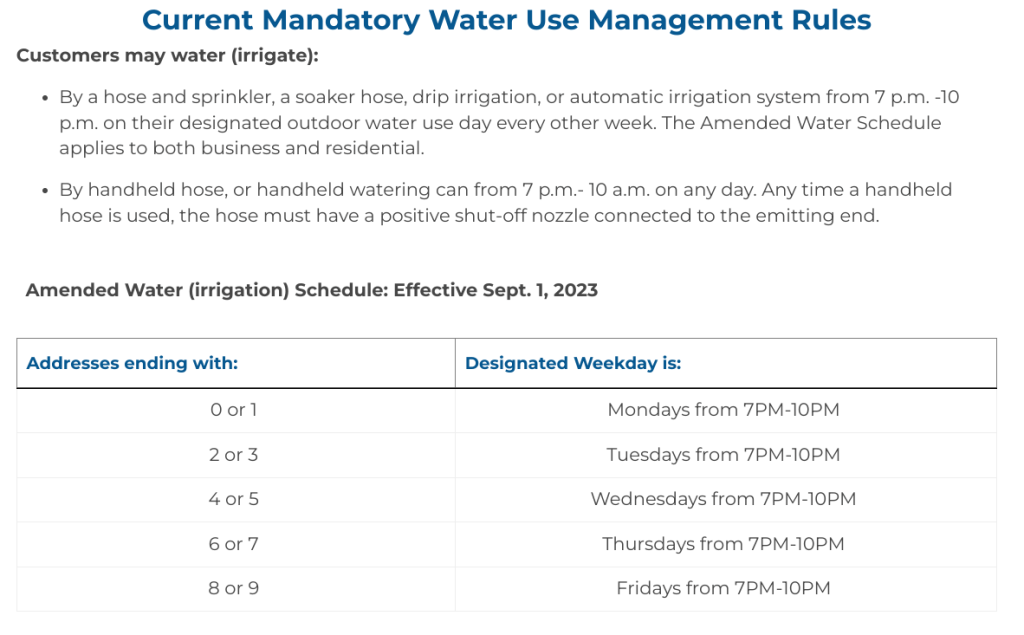
Ours has a handy graphic with all our stages:
We’re Stage 4.
Their website has their current stage, but not all the stages:
But they only entered this stage last week. Before that, they were Stage 2, and I can only find all their stages in this cumbersome, unreadable thing.
So has Kyle been irresponsible with their water usage? It depends. It could be that they’ve been watering golf courses all summer, while Rome burns. It could be Tesla or other new businesses. It could be that they’ve approved a bunch of housing developments without thinking about the water issues.
And yes: approving too many housing developments or signing unsustainable development agreements with Tesla would be totally irresponsible. But it’s the kind of irresponsible that Texas does unconsciously. We don’t think through the ramifications of sprawl or corporate resource abuse very well. Like, at all.
Jude Prather speaks up on behalf of the public speakers: What about the next year? Can we put something in there about conservation in the future, so that they don’t need to borrow more water next year?
Answer: Kyle is just waiting for ARWA water to show up! Then this won’t be an issue!
The Kyle representative clarifies: Actually, ARWA water won’t show up to the west side of town until December 2025! Those are the folks that need this water.
Yes, Kyle will have to use our water next year. Whatever they did this year was not enough, and they’ll do the same exact thing next year. The new water will not be here in time. La la la la la.
We relaxed parking restrictions downtown and it is having unintended consequences – The Parlor has bought up several private parking lots.
Several speakers talk about the development agreement notification radius again. They use that the radius needs to be “proportional to the size of the project”, and my little blogger heart swelled three sizes.
Council Discussion
One of the changes being proposed is to increase the occupancy restriction from 2 to 3 unrelated people.
(What does this mean? In San Marcos, in single-family zonings, you get only one roommate. You cannot have three unrelated people living together. This is a great way to maintain wealth segregation. And yes, this is totally unenforceable but we do it anyway.)
Matthew Mendoza starts off with a rousing cry against it.
Matthew’s basic claim: if we let three unrelated people live together, then we’re on a slippery slope to ending single family zoning. He claims that Minneapolis tried this, and it failed so hard that they’re undoing it.
For what it’s worth, it looks like he got every detail of the Minneapolis example wrong. They ended their occupancy restrictions, and then liked it so much that they doubled down.
And then, Minneapolis did exactly what Matthew is scared of – in 2019, they were the first major city to end single-family zoning. So far it’s providing gentle, incremental densification, the way it’s supposed to. (But rents and housing prices are actually falling there for an entirely different reason – elimination of parking minimums. But yowza, we cannot handle a topic that spicy on this particularly epic-length entry.) Since then, several states and many cities have ended single-family zoning.
Matthew!! Why are you micromanaging everyone’s lifestyle? Let people have a goddamn roommate.
But also: YOU ALL JUST BEMOANED HOW EXPENSIVE TAXES ARE. LET GRANDMA RENT OUT AN ADU, FOR GOD’S SAKE! Let people live with their friends!
See how crazy-making this meeting was? The cognitive dissonance fried my wee brain.
(Alyssa does respond to Matthew, wearily: Who are we to dictate what counts as family, anyway?)
Here we go:
The vote on occupancy restrictions:
Restrict back to 2: Matthew Mendoza, Saul Gonzalez, Jane Hughson Relax it to 3: Shane Scott, Jude Prather, Mark Gleason, Alyssa Garza
So it barely passed.
A stray thought: Jane voted 6th in line. She was a reluctant yes when this was discussed 18 months ago. I think she switched her vote mid-stream, because she could see it would pass either way. If Mark had voted after Jane, he might have switched his vote to match hers, and the whole thing might have failed.
Bottom line: It should never have taken 18 months after extensive discussion to bring this to a vote. It almost undid all that hard work.
But whatever: it passed.
…
Still on the Land Development Code: Businesses that serve alcohol have to get a Conditional Use Permit. (CUP). These get renewed by P&Z every three years. Should we separate out bars from restaurants, and only make the bars go to P&Z? Staff is proposing this, because it would save time and effort.
Jane Hughson makes a motion to say no, and stick with the current situation – all CUPs, both restaurants and bars – should go to P&Z for renewal.
The reasoning goes like this: sometimes restaurants are jerks, and are bad neighbors to nearby residents. Noise complaints aren’t addressed by the police. But at P&Z, neighbors can state their case and the restaurant owner will actually pay attention because they don’t want to lose their CUP. Then P&Z can attach conditions to the CUP – make the restaurant come back for renewal in one year instead of three, put quiet hours on the restaurant, that kind of thing.
I agree with Jane here. And sometimes you do get a lot of people from a single street, all pissed off about the same restaurant. This is a really important opportunity for community input, and we shouldn’t take this power away from community members.
As Jane puts it, “Sometimes our biggest problem child is a restaurant.”
One extra thought: It’s already a thing where bars try to pretend that they’re restaurants in order to get more relaxed treatment. If you let restaurants skip P&Z approval, even more bars will try to get reclassified as restaurants, to avoid scrutiny.
The vote:
Restaurants have to go to P&Z: Matthew Mendoza, Mark Gleason, Jane Hughson, Saul Gonzalez Let restaurants skip all that: Jude Prather, Shane Scott, Alyssa Garza
So it passes 4-3.
Finally, Mayor Hughson has a few issues that are queued up for next time:
In the new (poorly named) “business park” zoning, Jane just doesn’t want truck bays for 18 wheelers. Little delivery trucks are fine, but she doesn’t want semis.
The point of this new zone is to be “good neighbor industrial” (which is what I’d name it). I agree that 18 wheelers are less neighborly than delivery trucks. Staff is worried that no one will apply for this zoning if you rule out 18 wheelers.
Notification radius for development agreements: Jane is listening. She agrees that it should be larger for larger projects.
She also wants you to know that the city already goes above and beyond the notifications that are required by state law. (Sure, kudos. But state laws are mostly written by jerks, so that’s a low bar to clear.)
At any rate, getting her on board here is a huge win, because no one else was responding.
A month ago, Mark Gleason got really mad about some house on Sturgeon with a rooftop patio. In response, staff is proposing that rooftop patios count as a “story” if they cover 25% of the roof.
Jane wants it to be much lower: any rooftop structure counts as an extra story.
My opinion: stop being a bunch of killjoys. Let people have their rooftop patios. Quit harshing my mellow, man.
Developers have to either donate parkland, or pay a fee. We’re updating the calculations to be more fair. If you’re only developing 4-8 lots, you can skip the fee.
Jane: Why wouldn’t people in the 4 or 8 houses use our parks? Why exempt them from park fee? I’ll bring this back next time, too.
So there are a lot of fiddly details still to hash out.
The first vote, which is not the final vote:
Yes, let’s update the code: Everyone besides Matthew No, I’m still mad about occupancy restrictions: Matthew
…
Item 21: SMPD body cams.
We rent them from this company called Axon. The company’s prices are going up. If we renew early, we can stay at the old rates. Save a million dollars.
We have 10 drones, btw.
Alyssa: There are multiple grants available for body worn cameras. Did we seek any of these opportunities?
Chief Standridge: We do not have an Equal Employment Opportunity Plan (EEOP) so we can’t apply for grants. We are aware and trying to fix that.
This is an interesting point. It turns out that we can’t apply for a lot of federal funding until we have an EEOP. It includes any Department of Justice or SAFER grants. We are definitely taking this seriously and working on one.
The vote to re-up on the body cams: Yes: Everyone but Alyssa No: (no one) Abstain: Alyssa Garza
Alyssa explains that she hasn’t reviewed our SMPD body cam policy since it was last updated, and she can’t in good conscience vote on these in the meantime.
…
Item 23: Single use container ban!!
You guys. It’s been SUCH a long meeting. This last item is so popular and great – it’s a shame that I’m just now getting to it.
If you’ll recall, five hours earlier we had boatloads of community members show up to speak in favor of banning single-use containers from the river and parks. Volunteers pull out epic tons of trash from the river as often as possible, and we just can’t keep up. It flows down river and to the gulf. It’s bad for the river itself.
So what happens tonight?
This is just the very beginning of the process. Mark Gleason and Matthew Mendoza are bringing it up to see if council is interested in moving forward with this.
So who’s in?
Mark is a hard yes.
Jude: let’s do it!
Saul: Me too!
Matthew Mendoza: I live in Rio Vista! I’m desperate to see this pass.
Alyssa: Let’s focus on the education piece, and secure the buy-in of the community. Lean on park ambassadors instead of marshalls. Best practices. No unnecessary policing of our neighbors.
Jane: I’m in to move forward.
So everyone is enthusiastic! It’ll take some time and work. I definitely want to give Mark and Matthew props for initiating the issue, though.
…
Q&A from the Press and Public
Listen, Max Baker spoke as many times as possible this evening, and he has a tendency to pack ten ideas into a three minute speech. So I’m cherry-picking, because this was entertaining.
First, Axon is the company that makes the body cams. Max accuses, “Are you all aware that there is a SUPREME COURT CASE against them for antitrust issues? Do your homework!!”
He’s right but he’s wrong: It’s exactly that – some anti-monopoly wonky lawsuit brought against them by the Federal Trade Commision. But I can’t see how that’s a big scandal.
Max also says, “This same company wants to design TASER DRONES. Lotta concerns about civil liberties in that regard.”
I’m not saying this company is any good. But given that they’re involved in an anti-trust lawsuit, I’m guessing we don’t have terribly many choices either way. Have fun dreaming about TASER DRONES!
Hello San Marcos! We’re back! Let me be honest: this week is a bit dry. We’ll just muddle through as best we can. Maybe tax rates are your thing?
Hours 0:00 – 2:36: In which we talk about the budget, and taxes, and exemptions, and a sneaky little bit of the Carrizo-Wilcox Aquifer even gets in there.
Hours 2:36 – 3:14: Some Right of Ways get altered, some speed cushions arrive, we talk about CARTS, and multiple kinds of cats.
Election talk
Place 3: Last time we said that, barring any wild cards, Alyssa Garza would be running unopposed. There was no wild card. There was a very mild card – someone filed to run as a write-in candidate – and then that person withdrew, so even the mild card went away. So Alyssa is back to running unopposed.
Remember: Alyssa is just one progressive vote! Until we get her some teammates up on council, all she can do is gently nudge other councilmembers towards decency.
Place 4: So Shane Scott vs Atom Von Arndt is the only election to cover, and there’s nothing much to say yet. Shane has a huge encumbancy advantage.
The main topic of the night is the budget, so the main complaint during citizen comment is that taxes are too high. Taxes are too high, and also the city isn’t solving all our problems, which is basically the municipal equivalent of “the food was terrible and the portions were too small!”
(And also, people hating on the bike lanes. Everyone loves to hate the bike lanes. If you love bike lanes, I suggest you let City Council know, because the anti-bike lane people are kicking up dust.)
Confidential to city council: I like the bike lanes. Let’s keep bikers alive.
Back to taxes. I’m going to tell you a little parable of my cat:
I had a lovely tomcat who was scared of the vacuum cleaner. Whenever I ran the vacuum cleaner, he would lose his mind and attack my shoes. He would just beat my poor shoe all to hell. (I tried not to vacuum very often.)
That’s the end of the story!
Here’s the thinly veiled moral: Being mad about taxes is like my cat attacking my shoe. Don’t be mad at taxes for your justifiable economic woes. You are neck-deep in capitalism! Be mad at that! You are right to feel worried that a medical disaster could undo everything you’re working for, or that you might be destitute in your old age, or unable to help out your kids. The real crime is that someone can work fulltime and not be able to cover their basic needs.
If you know, if you truly 100% trust, that you’ll always have clean safe housing, healthy food, and free medical care readily available, then your life is much freer. That’s the paradox: we pretend this is freedom while paralyzing ourselves with anxiety. We’re such a mess.
Anyway, hooray for taxes. Hooray for a social safety net, and if only it were much stronger. We’ll talk more about who gets tax breaks, and what kind of charity that is, a little later on. In the meantime, if you’re still mad about taxes, scroll through this little demo on the scale of economic inequality and get back to me.
One comment that’s not about taxes: Virginia Parker spoke on behalf of the San Marcos River Foundation. Basically:
Everyone is freaked out by the river and parks right now
The summer was so hot, the river is so low, the parks are so overused
We desperately need more park staff and marshalls. (These are her words. I’m not totally clear on what the marshalls do.)
We should have paid parking with free passes for residents to help offset costs
Only remaining vegetation are those fenced off Habitat Protection areas, and keeping that vegetation is crucial to keeping the river clear
We’re spending a bunch of money to promote tourism, but with the river in its current state, that’s kinda irresponsible.
Item 13: The 2024 $315 million dollar city budget.
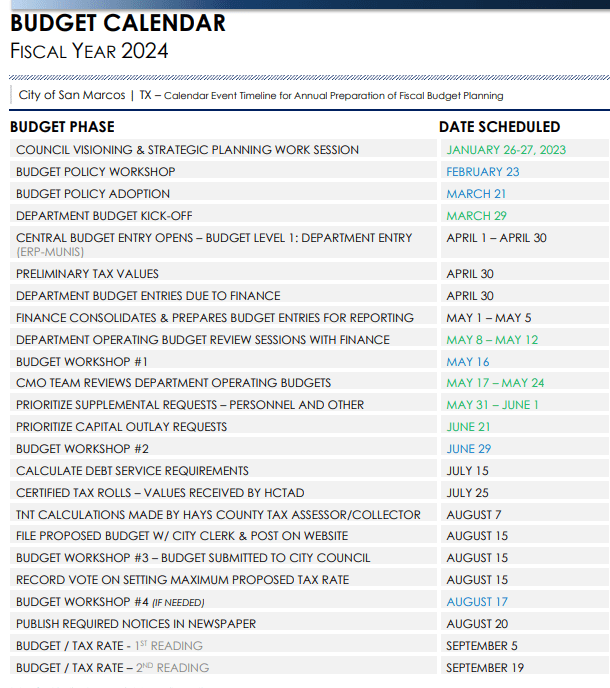
It takes 9 months to birth a budget. Here’s the basic timeline:
At the workshop last January, Council came up with their goals that are supposed to shape the whole process:
They are all important, but public safety was the one that council really hammered, over and over again. “Public safety” can mean so many different things to different people! Do we mean lifting people out of poverty? Do we mean vocational training for ex-offenders as they transition to private life? Do we mean hiring more cops? (We definitely mean hiring more cops.)
The budget has a ton of moving parts, obviously. Here’s the bird’s eye view of the whole thing:
Here are the major points that were emphasized:
Note:
The compensation study is to help us retain city staff. This is important – high turnover is incredibly expensive. Also, it’s just good manners to compensate people fairly.
The Human Services Advisory Board money is the money that the city gives to local nonprofits.
New city hall: there’s a state law that you can’t borrow money for a city hall building. (It’s wild what the state legislature will micro-manage.) So if your city hall was built in 1975 and you’ve outgrown it, you have to sock money away under a mattress until 2075, when you’ll be able to afford your new city hall.
Capital Improvements Program: this just means city projects and repairs. Fix the stormwater drainage in this neighborhood, add in sidewalks over there, etc.
So is this a good budget? Does it achieve those five goals? I don’t know!
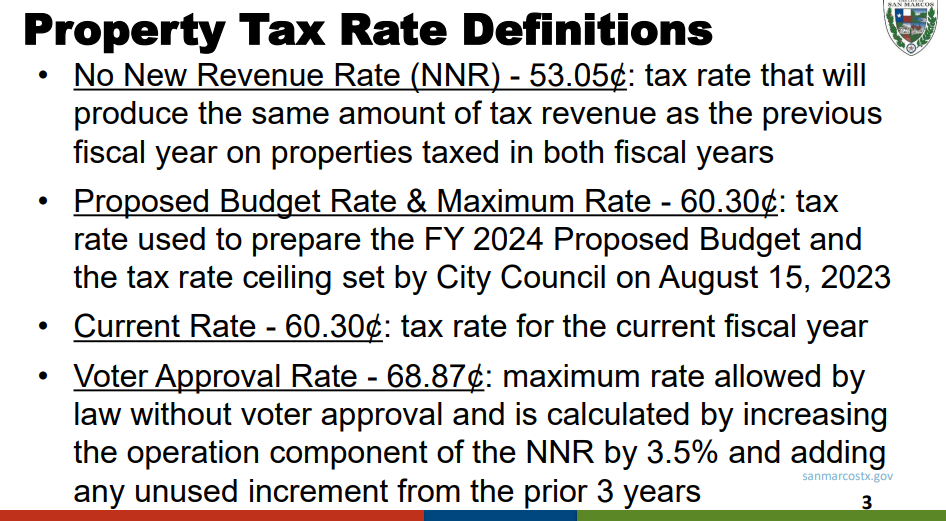
Last year, city staff presented Council with 2 similar plans, and they debated them. Would we go with 59.3¢ or 60.3¢ tax rate? Would we use the extra $700K on cops and firefighters? Last year, Chief Stephens and Chief Standridge came in person to plea for personnel. This made it easier for me to understand those aspects of the budget being discussed.
This year, there was just one budget and just one tax rate proposed. No debates. No lingering questions posed. City council basically didn’t say anything besides thanking staff for their hard work. (And I listened to most of the workshops, and never heard much arguing there, either.) There are two possibilities:
Staff is just great. They’re producing top notch budgets, and there’s not much to argue about.
No one on council has strong feelings about these things, and no one has an angle to dig in and get heated up about anything.
Probably both are true? It’s very hard to figure out what people are thinking when no one says anything substantive.
The 60.3¢ rate is the same as last year. Of course, inflation’s been a thing. So how much are taxes going up?
The average home went from $294K to $338K, so the average homeowner’s city property taxes are going from $1,686 in 2023 to $1,949 in 2024.
Details:
(Now, this is only part of your tax bill. You also pay SMCISD and Hays property taxes.)
Let’s talk about the (15,000). That’s the homestead exemption. In other words, you get a 15K discount before we charge you property tax. This was created in 2022. It also gave seniors and people with disabilities a 35K deduction.
Was this a big deal? Yes and no:
It costs us about $1.1 million dollars, out of $315 million budget, to do so. Every home owner in San Marcos gets to evenly split $1.1 million dollars. None of them think that they just got a $90 bonus check from the city, but they did.
Here’s the thing: We spend $550K on funding various nonprofits around town. (This is the whole Human Services Advisory Board thing.) We hem and haw and dole out $15K here and $25K there, and make nonprofits put in a ton of work for little amounts of money.
At the same time, we spend twice as much on charity to people who own their own homes as we spend on all other nonprofits, combined. San Marcos is 75% renters! That handout is only going to 25% of the population!
Some home owners are rich. Others are definitely not. Being house-poor is definitely a real thing, and we need to help house-poor home owners. All I want is for the homestead exemption to feel like the city sent you a physical $90 check. It should not be invisible.
If I had a magic wand, I’d say that everyone must pay their full tax bill – federal and local – and then any deductions would get mailed back as a refund. Subsidizing the rich should feel as tangible as subsidizing the poor.
(Why not just cure poverty with your magic wand? oh hush.)
…
Items 15-18: Your utility and water rates are going up. I’m sorry. Sort of. Channel your anger towards structural inequality.
For electric, we’re still the cheapest around:
Don’t let anyone ever talk about privatizing public utilities.
Here’s our water rate:
Well, it’s mid, as the kids say.
Staff says that one of our biggest water expenses is a $1.4 million contract with Alliance Regional Water Authority.
I can’t actually find the contract in the budget, so I don’t know what we’re paying yearly:
I see Alliance Water Revenue, but not an expense. (I must be looking in the wrong place, idk.)
What is this contract? Basically, in 2007 we got some funding from the state to build this organization with Kyle, Buda, and the Canyon Regional Water Authority. We drilled 4 wells, and we’re laying a bunch of segments of pipes, and some storage tanks, and a water treatment plant.
Carrizo water needs to be treated – it’s got more minerals and salt in it than surface water or Edwards Aquifer water. But it sounds like there’s a LOT of it. During the Council meeting, staff says that this is supposed to be a 40 year plan for getting us water. I can’t find that promise written down anywhere though.
Either way: water rights are going to be a big, messy fight coming up in the future. It’s good that we’ve got at least somewhat of a plan.
…
Along with water and electric, there’s also garbage and recycling:
and also a Community Enhancement Fee:
So if I’m ballparking all that, your rates for all these services is going from:
58.20+49.27+28.80+1.5 = $137.77
to
59.43+51.71+29.66+2.35 = $143.15
So your monthly bill is going up $5.38.
(This isn’t exactly right, because I don’t know how much electricity and water the average household uses each month. I have to assume the city gave us monthly quantities.)(They actually mentioned the total increase at one point, but I missed it, and now I can’t find it.)
Full disclosure: the Utility Assistance application form is a little intimidating, at least to me. It is not Community Action’s fault that their application is cumbersome. It’s the culmination of a maze-like system of scrabbling for peanuts that we impose on nonprofits.
When I say my fantasy is a strong social safety net, my fantasy is also that it will be very easy to use.
…
There were two moments that I want to share:
The vote to raise the utility rate by 5%:
Yes: Jane Hughson, Mark Gleason, Jude Prather No: Shane Scott and Saul Gonzalez Absent: Matthew Mendoza, Alyssa Garza.
WHOOPS. It takes four votes to pass. So since Matthew Mendoza and Alyssa Garza were absent, it failed.
You could practically hear City Manager Stephanie Reyes’ stomach plummet through the floor, although she is the most poised person on the planet. She politely explained that we’ve now blown a giant hole in the budget, and we’ll need to revise it, and that we may need a special session in order to get everything passed by October 1st.
With that, Shane Scott offered to switch his vote, which I’m sure was a massive relief. He explained that he just reflexively is a “no” on rate hikes, but didn’t actually want all those consequences to come crashing down.
The re-vote:
Yes: Jane Hughson, Mark Gleason, Jude Prather, Shane Scott No: Saul Gonzalez Absent: Matthew Mendoza, Alyssa Garza.
Phew.
Matthew Mendoza was absent during the utilities conversation, but he arrived in time for the Community Enhancement Fee conversation. This is small, but it irritated me:
Matthew asked, “What if an evicted person decides to throw all their stuff all over their front yard? Can this fee help with that kind of thing?”
Listen: don’t phrase it like that. A yard full of possessions is mostly a sign that someone’s problems are too big for them, and I don’t mean the landlord.
Also, it’s just plain wrong. Evicted people don’t throw all their stuff all over their front yard. Evicted people just left their stuff exactly where it was, and did not move it one inch. Someone else got mad – like an ex-boyfriend or ex-girlfriend – and threw out their stuff, or the landlord moved it all to the curb.
(The answer was no, Matthew, you cannot use this money for that purpose, why would public money be used to help landlords clean up after tenants.)