
Citizen Comment:
Two people spoke:
- Stop putting up Native American creation imagery because it’s hostile to Catholics.
- Virginia Parker, director of the San Marcos River Foundation: yay EAHCP! They put in Dog Beach, Rio Vista, Ramon Lucio stepped entries into our park.
…
Workshop 1: Incidental Take Permits
Here is the Edward’s Aquifer:
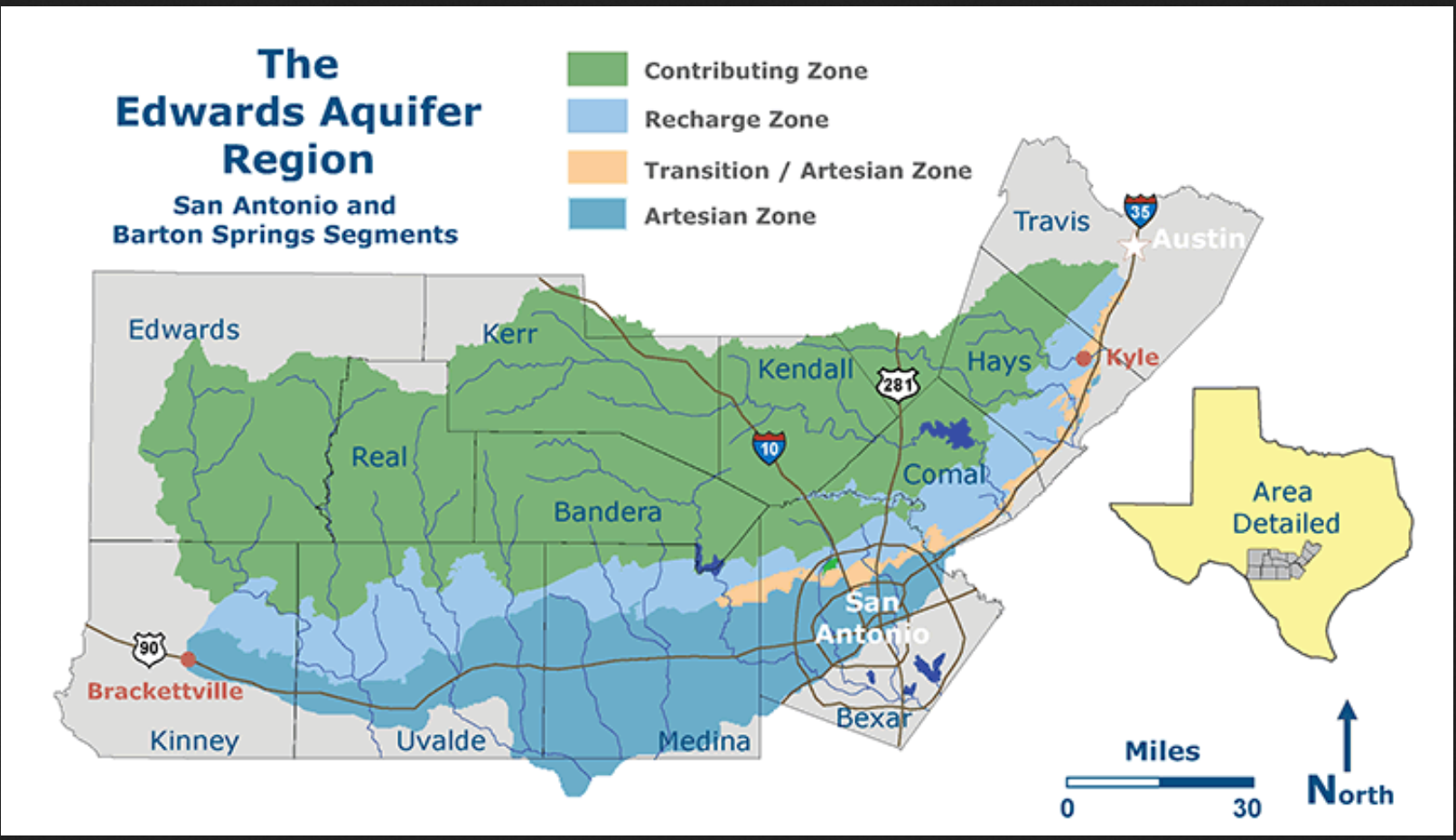
The green part catches all the rainfall. The light blue part is all the porous caves and springs, where the aquifer is right at the surface. The dark blue part is the storage tank of the aquifer.
The water only pops up in two places: the San Marcos and Comal rivers.
In 1991, the Sierra Club sued the US Fish and Wildlife Service, for not protecting the endangered species in these rivers. They won the lawsuit, and the Edwards Aquifer Authority was created with legal status to protect the flow of these two rivers. (Here is all the history you might ever want to know, and then some.)
…
So the Edwards Aquifer Authority’s job is to keep the rivers flowing. They are required to have a plan, and the plan has to get approved by the US Fish and Wildlife department.
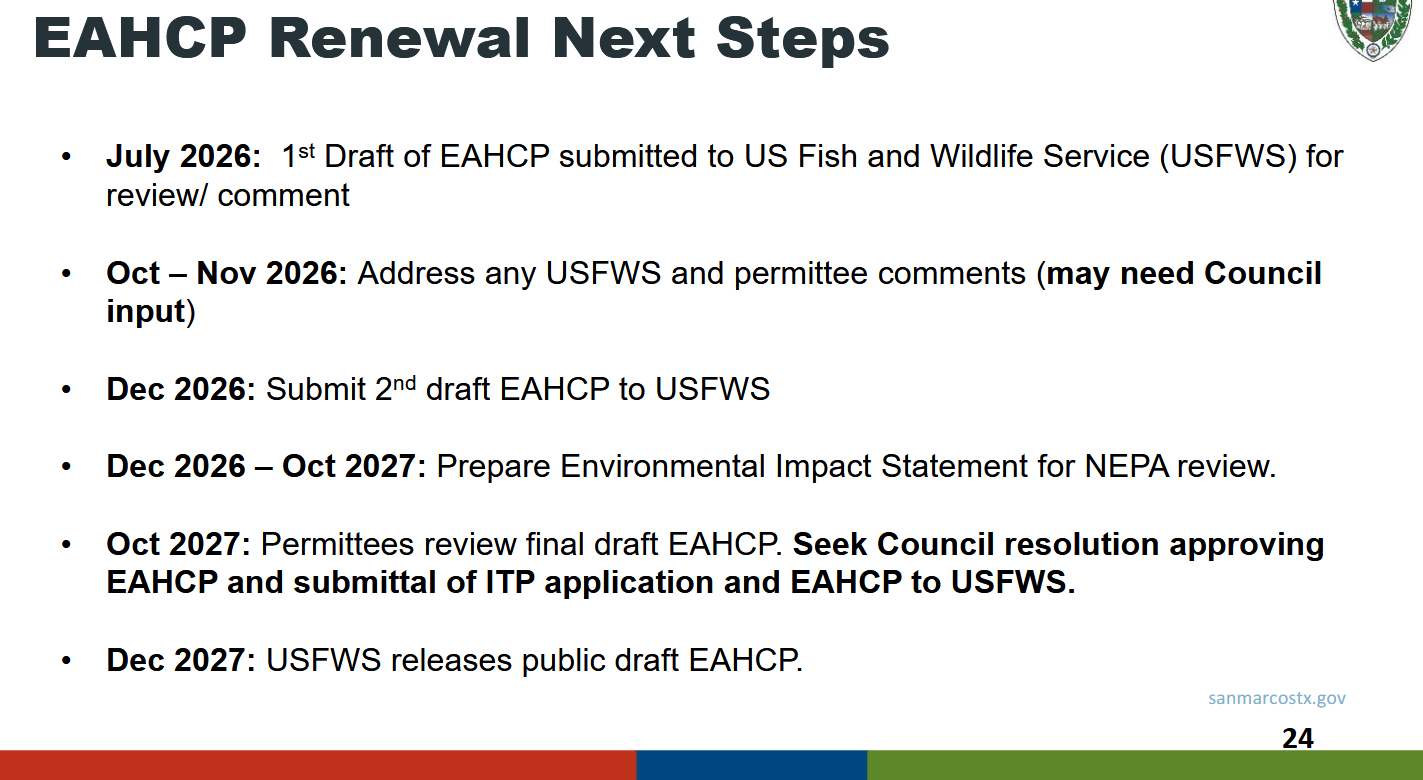
The old plan is going to expire in 2028, and so we’re working on the new one:
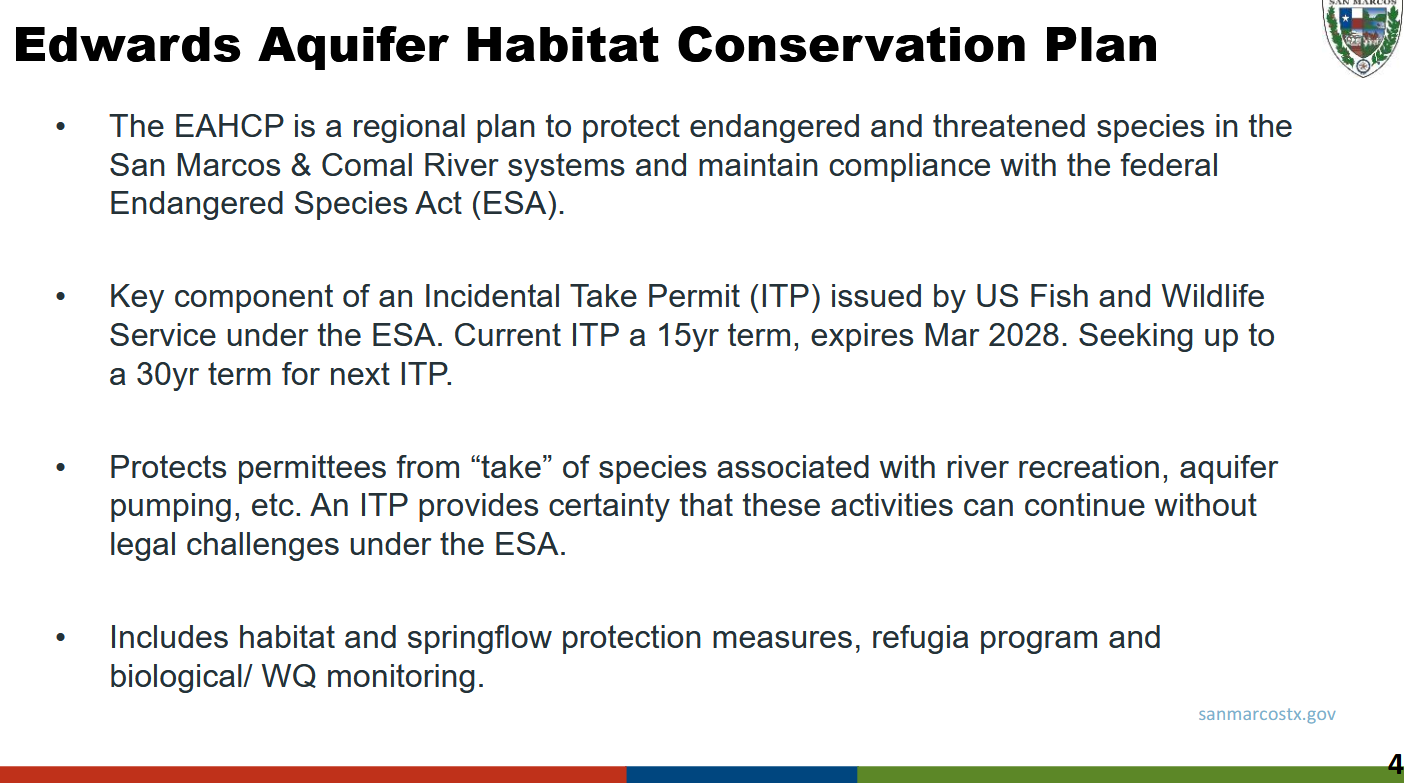
“EAHCP” stands for Edwards Aquifer Habitat Conservation Plan.
…
A big part of the new plan is the Incidental Take Permit:
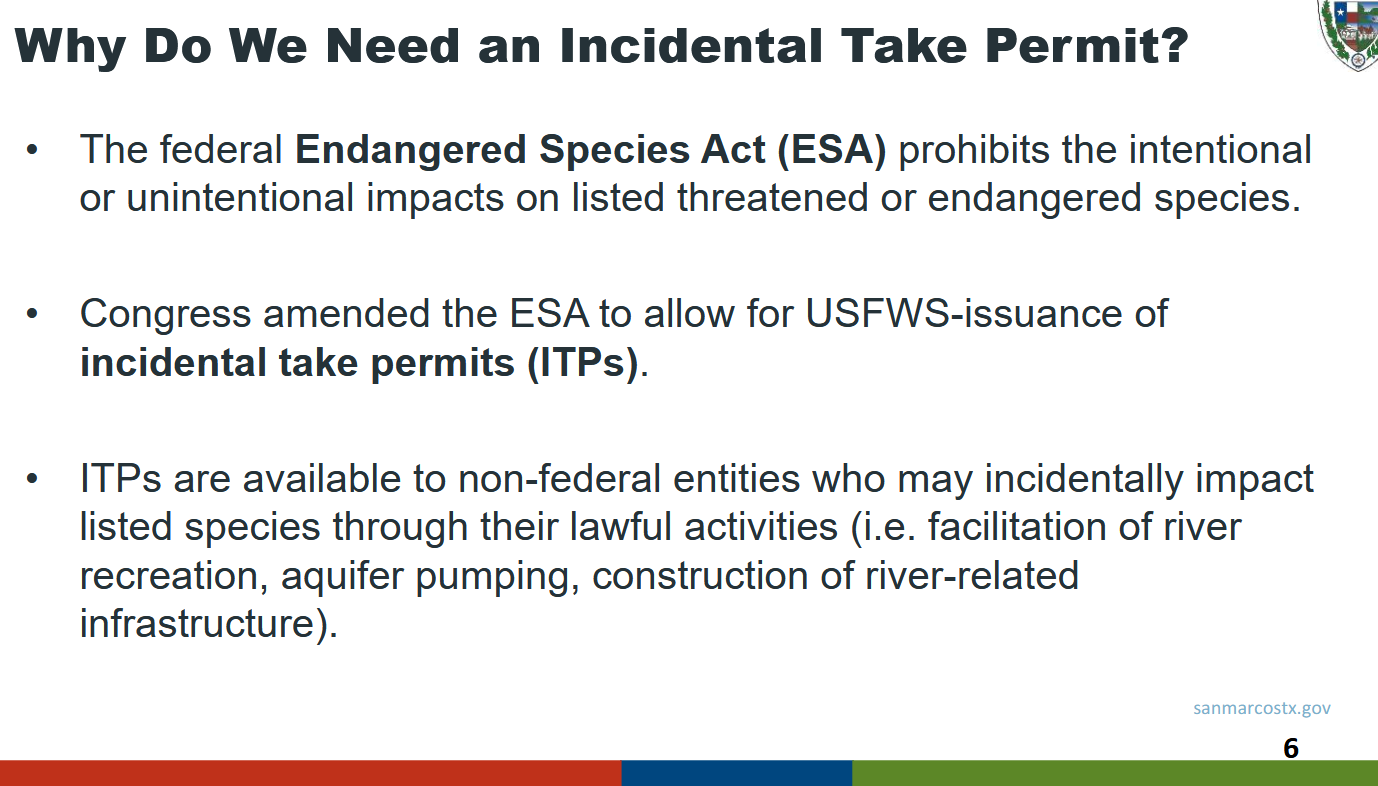
Incidental Take Permit means “you’re going to disturb the endangered plants and fishies, so let’s plan to do it legally”. Otherwise you could get sued.
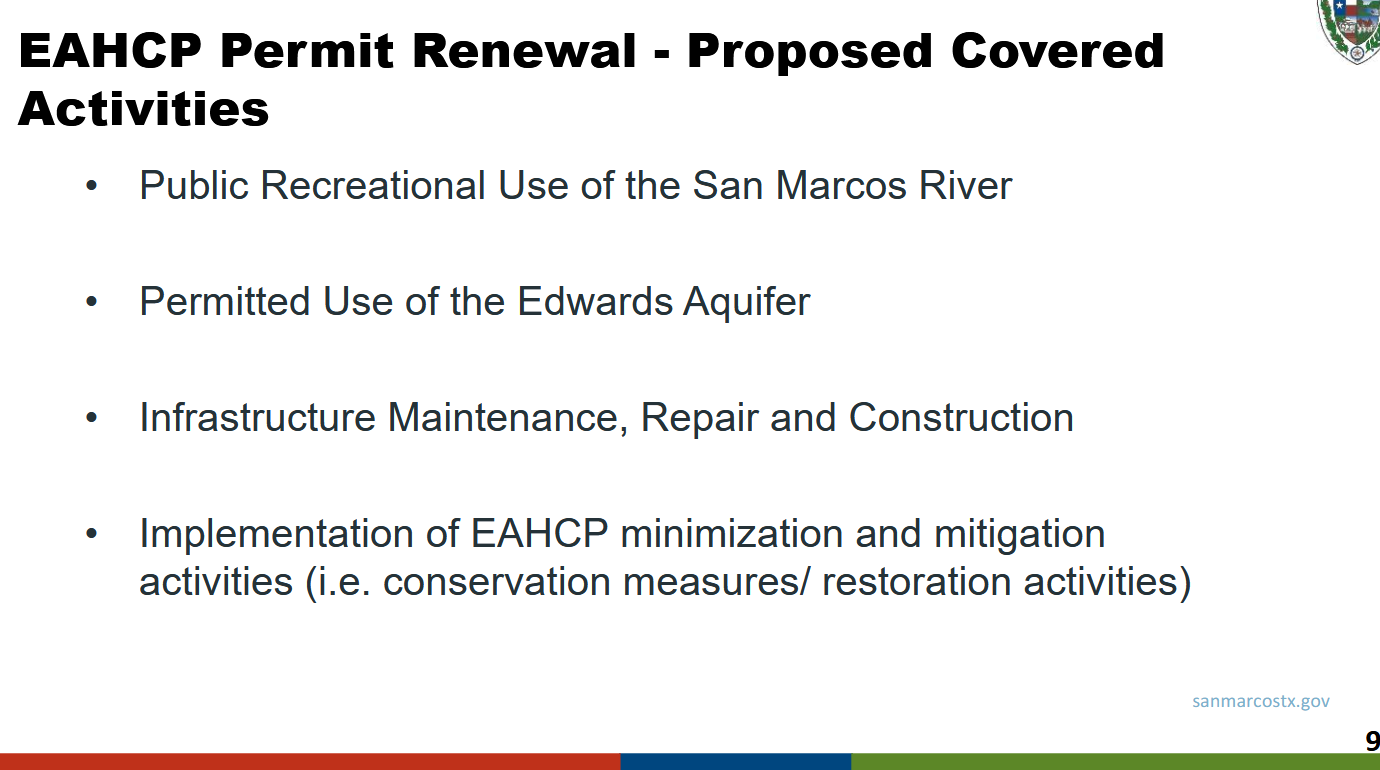
Here’s the things you might do that would be bad for endangered species:
- swimming and playing in the river
- Pumping water out of the Edwards Aquifer
- Construction things that happen alongside the river
The biggest thing is pumping water out of the aquifer.
Here’s who gets permits to pump water:
- Edwards Aquifer Authority – Total water available is about 500,000 acre-feet of water.
- San Antonio Water System – gets allotted about 235,000 acre-feet of water/year
- City of San Marcos – gets about 5000
- City of New Braunfels – about 9000
- Texas State University – about 2000
…
Next up on the ITP: making sure recreation on the San Marcos River doesn’t hurt the protected species.
Here are the specific activities we want to allow, in the EAHCP:
Here’s the type of thing EAHCP has done, so that people can swim without destroying the river:
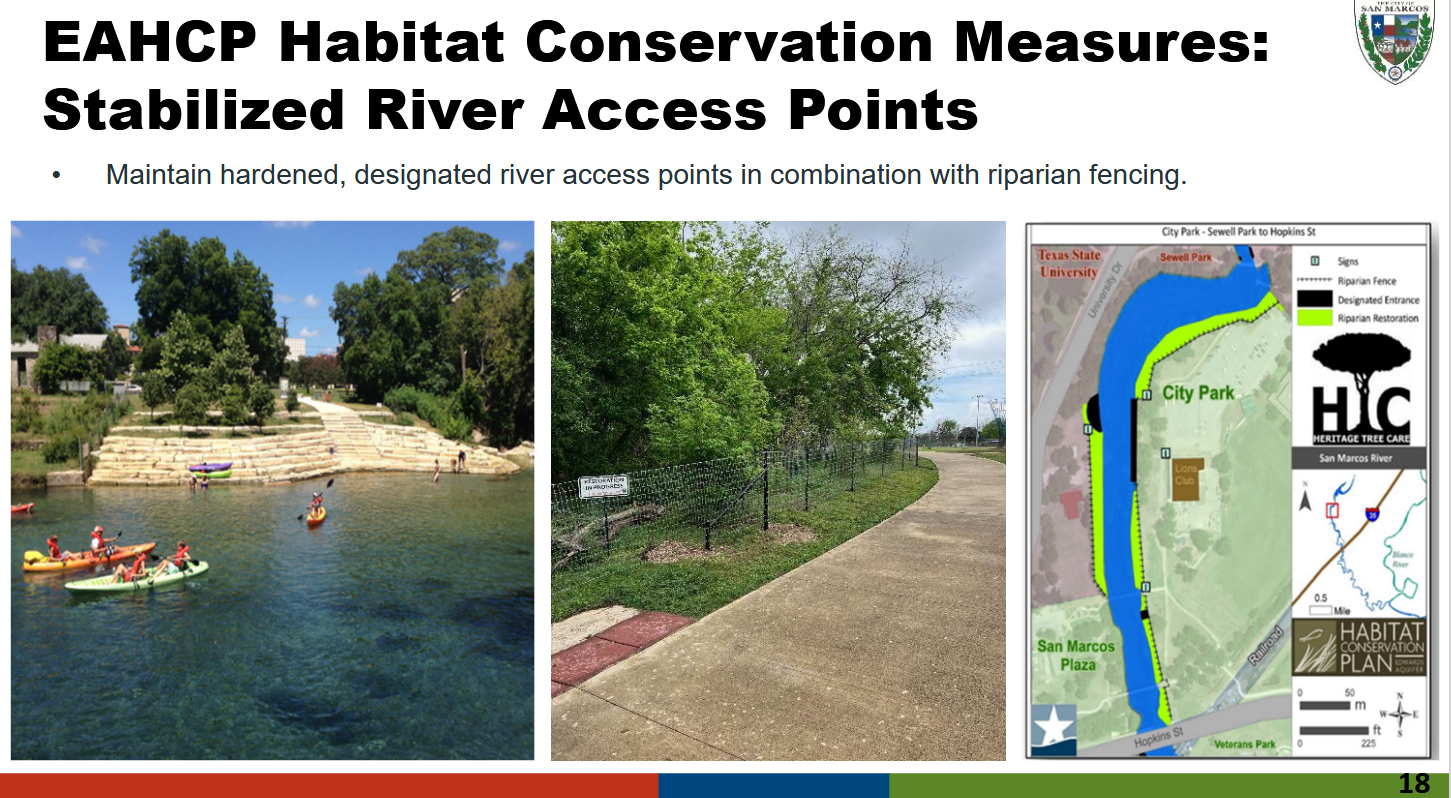
They built the steps on the left, and fence off the stuff in the middle.
So we used to have a barren bank, very bad for the river, on the left here:
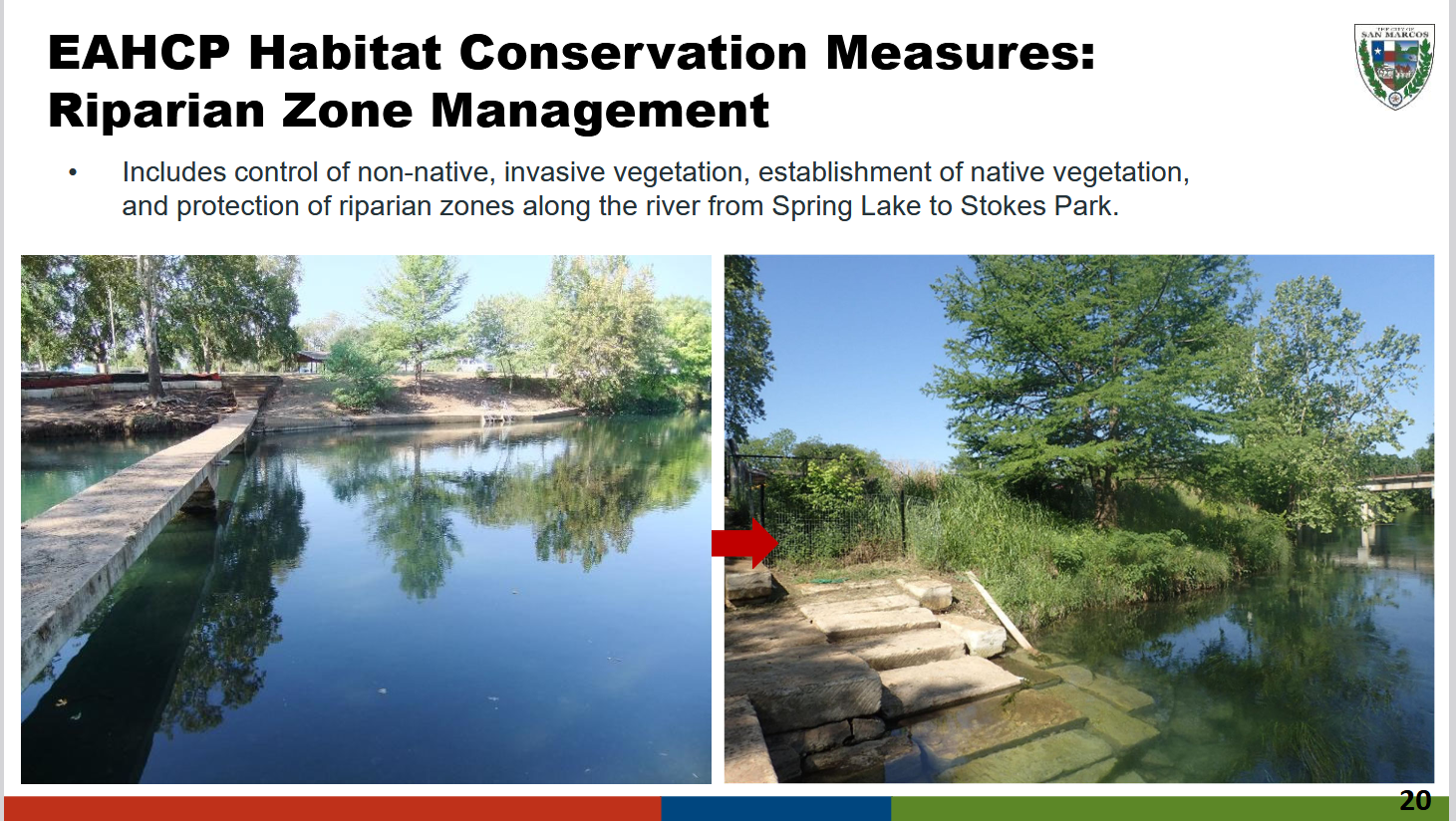
and now we have nice steps and a protected, healthy river bank. Hooray!
San Marcos is expected to also do some work:
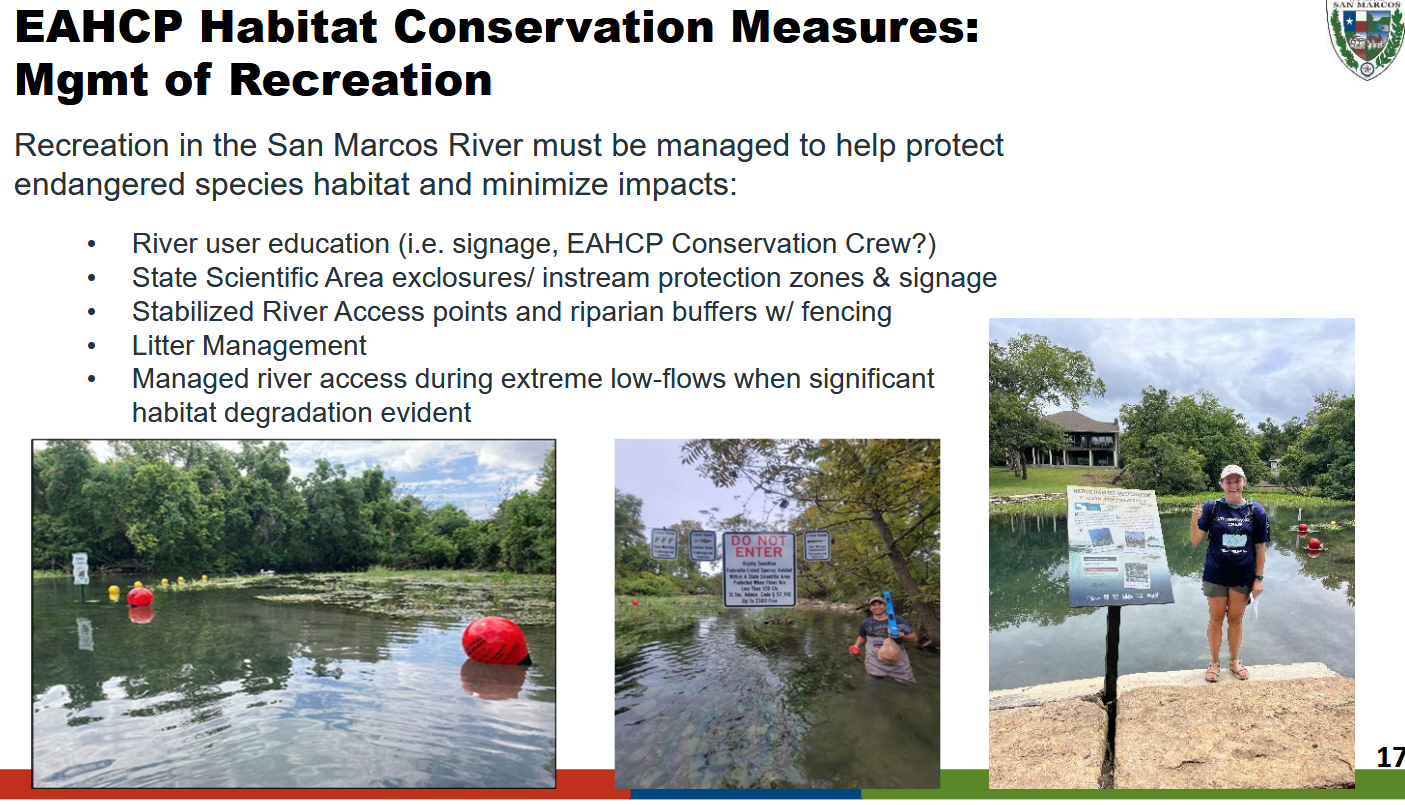
Basically:
- Keep people from swimming and messing with protected parts of the river, and help people have fun in designated areas.
- Pick up a lot of litter.
- When the river gets super low, we have to keep the habitat from getting hammered, by limiting how much people are going in the water.
…
The plan lays out how to measure whether or not the river is healthy enough for the species to survive.
They have to measure a bunch of things:
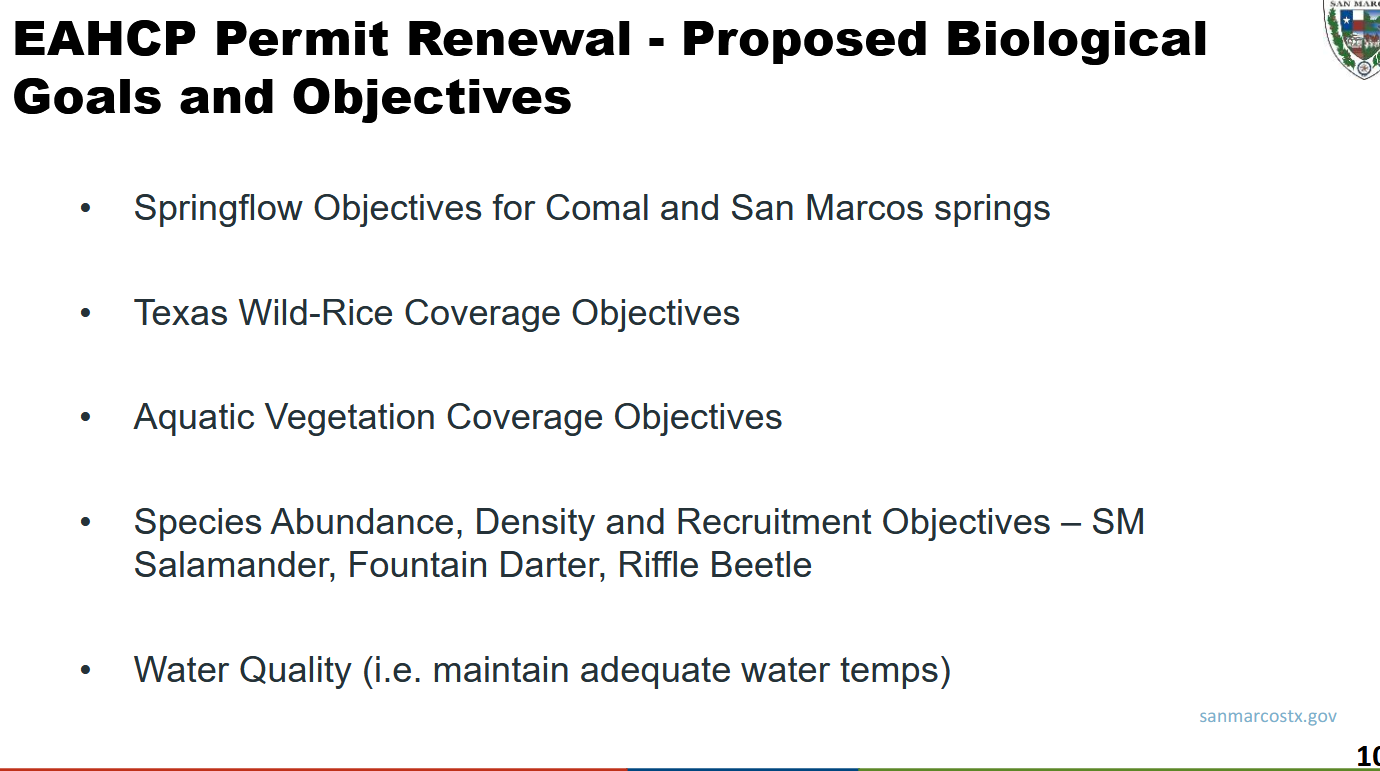
For example, here’s some of the goals for springflow:
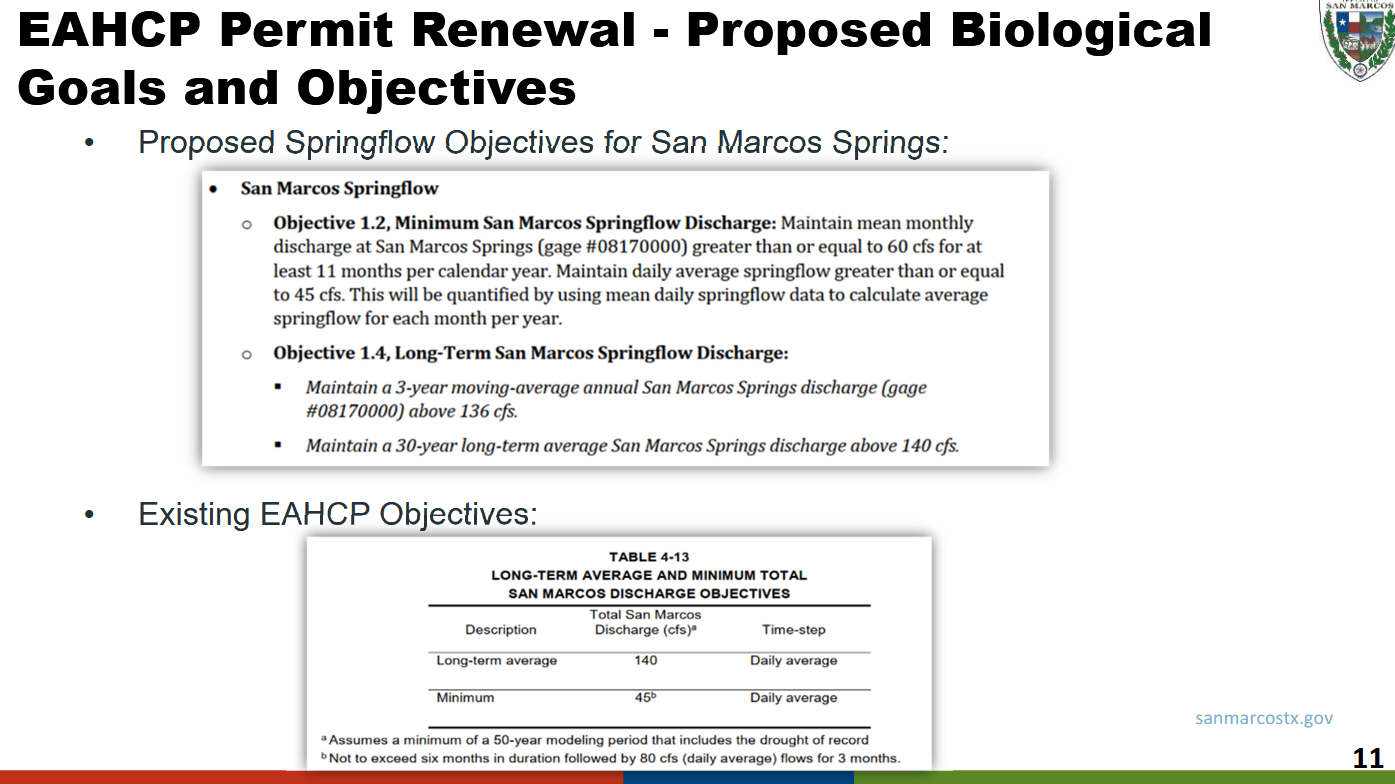
Average flow of the San Marcos river is 175 cfs (cubic feet per second). Right now it’s about 90 cfs. It’s been about 90 cfs for the past few years.
The absolute lowest that’s okay is 45 cfs, and only if it doesn’t stay that low for very long. I can’t imagine the river only having half as much water as it does right now.
…
What’s the plan when the river gets low?
The Edwards Aquifer makes everyone cut back on pumping during a drought:
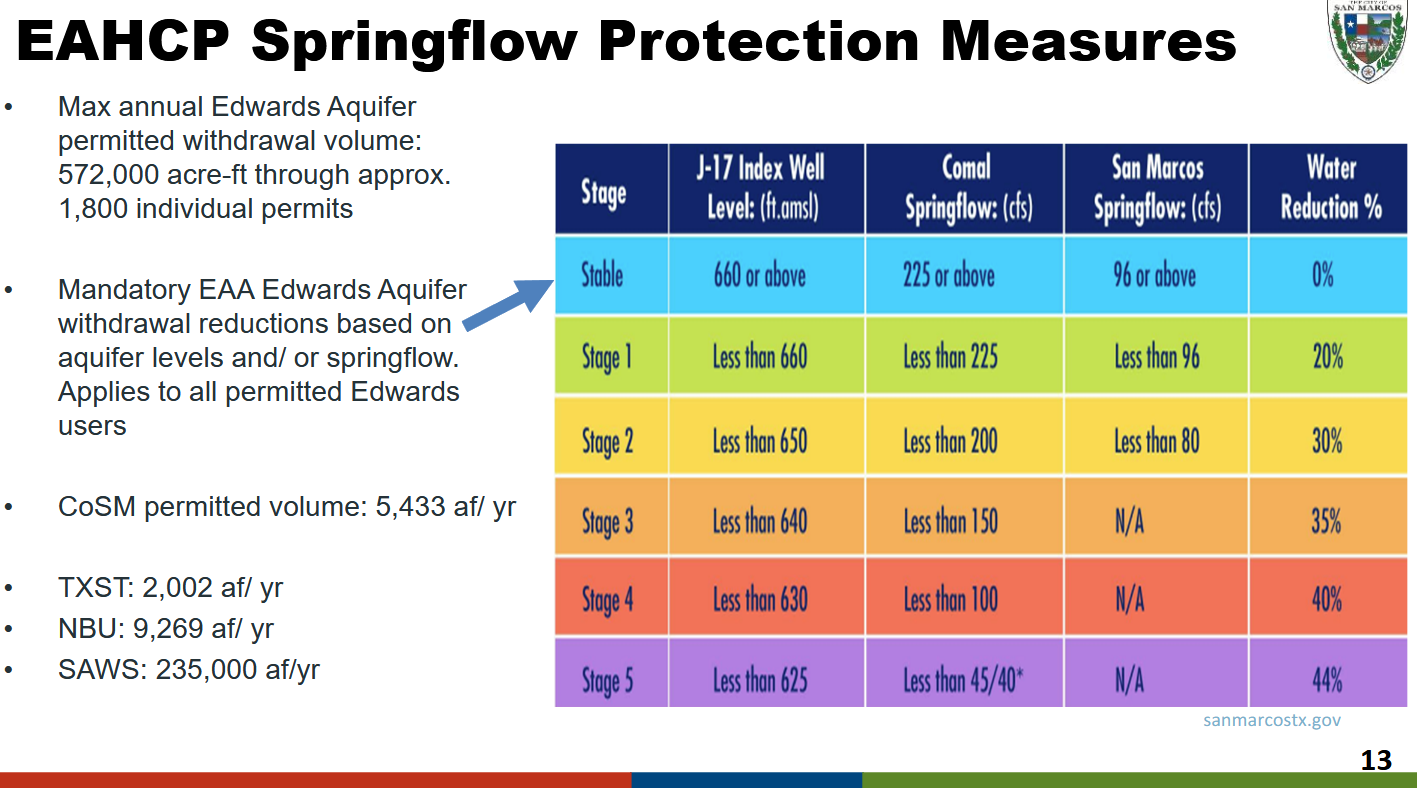
So San Marcos normally gets 5433 acre-feet per year. But if we were in a Stage 5 drought, we’d only be allowed to use 3042 acre-feet.
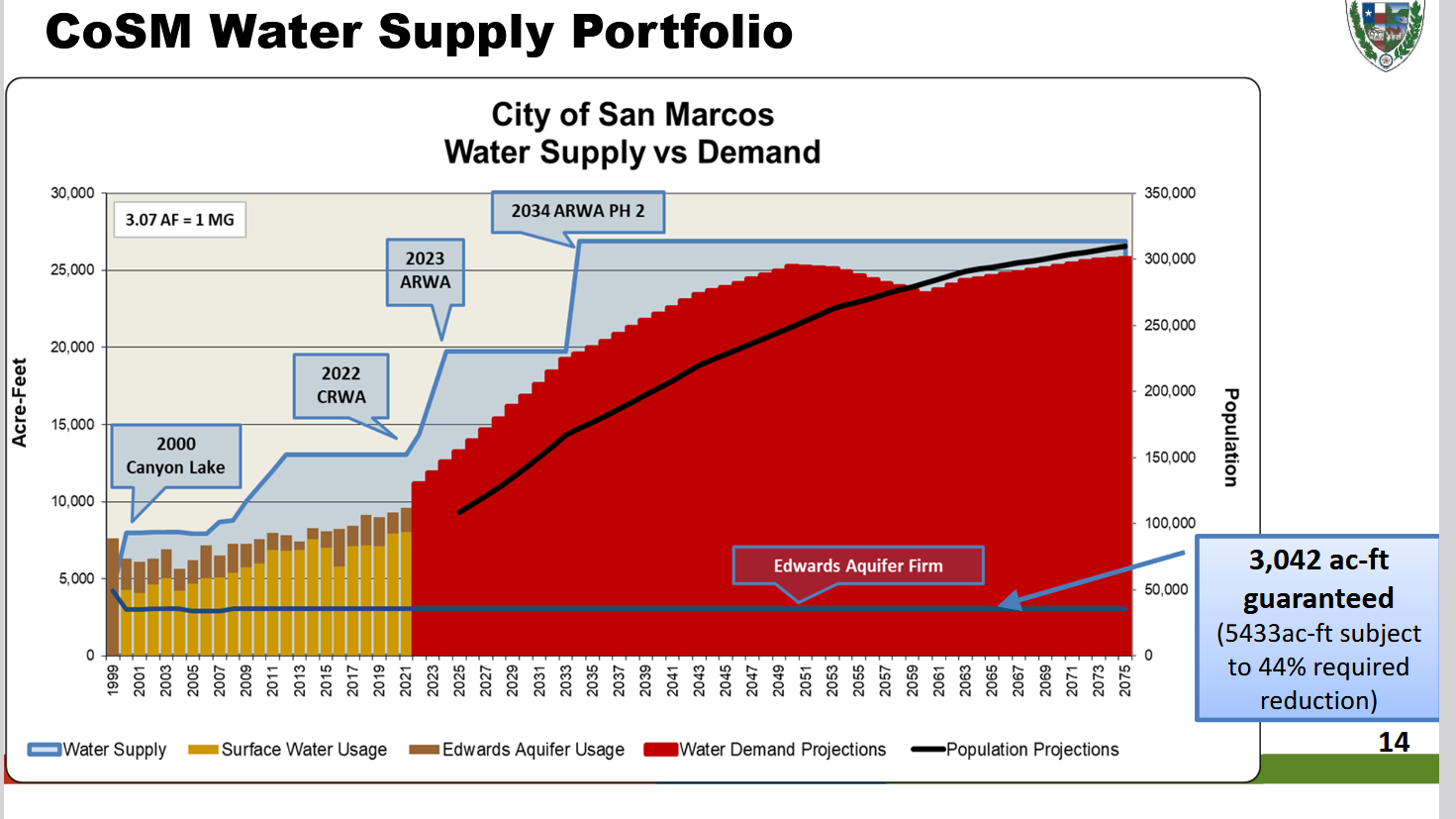
So that’s the blue line at the bottom of this chart: the amount of water that we’ll always be guaranteed to get from the Edwards Aquifer.
…
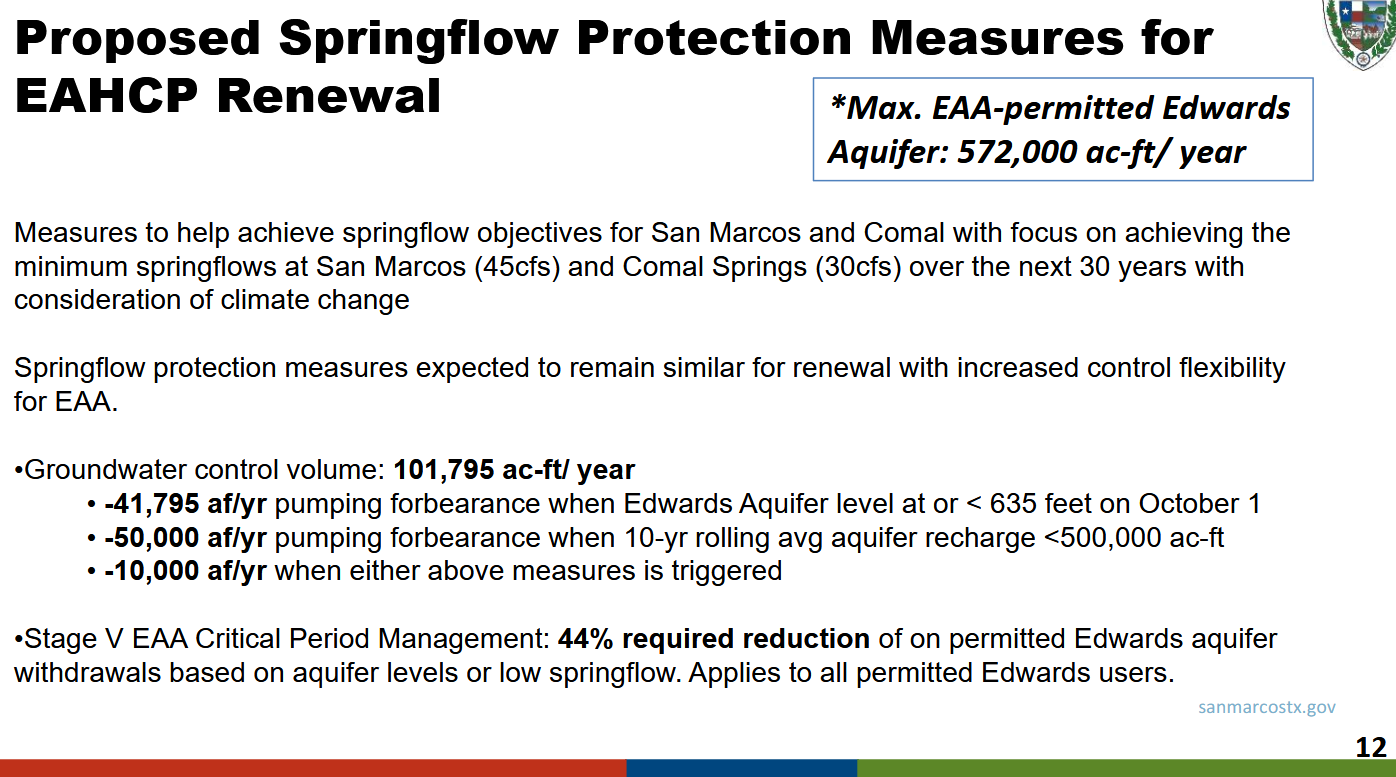
I might have misunderstood this next part. I think the Edward’s Aquifer Authority is going to buy back 100K acre-feet of water, and then use that to protect the river when it gets low.
….
Here’s another goal for the river:
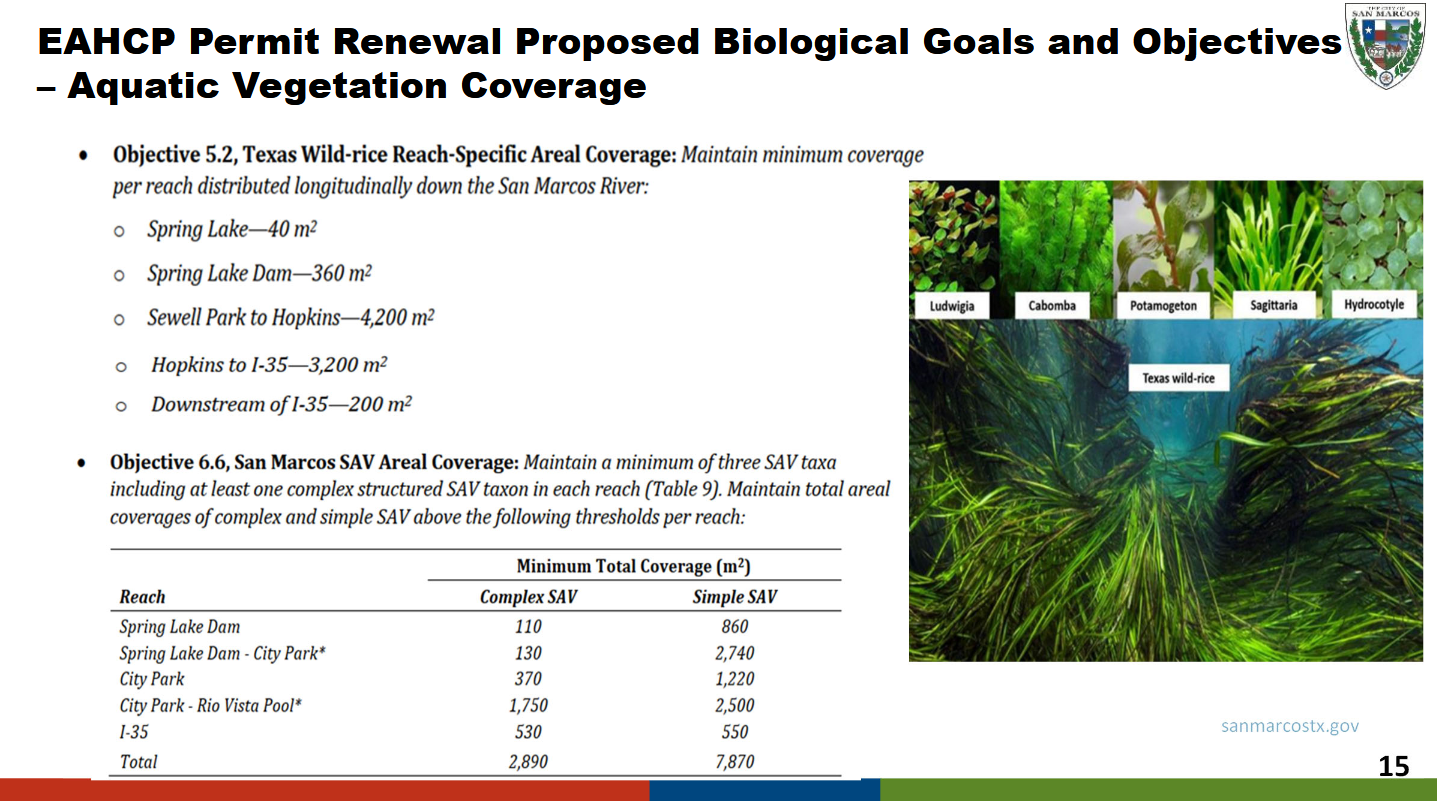
they measure the amount of endangered plants, and plant more good plants, and remove more bad plants.
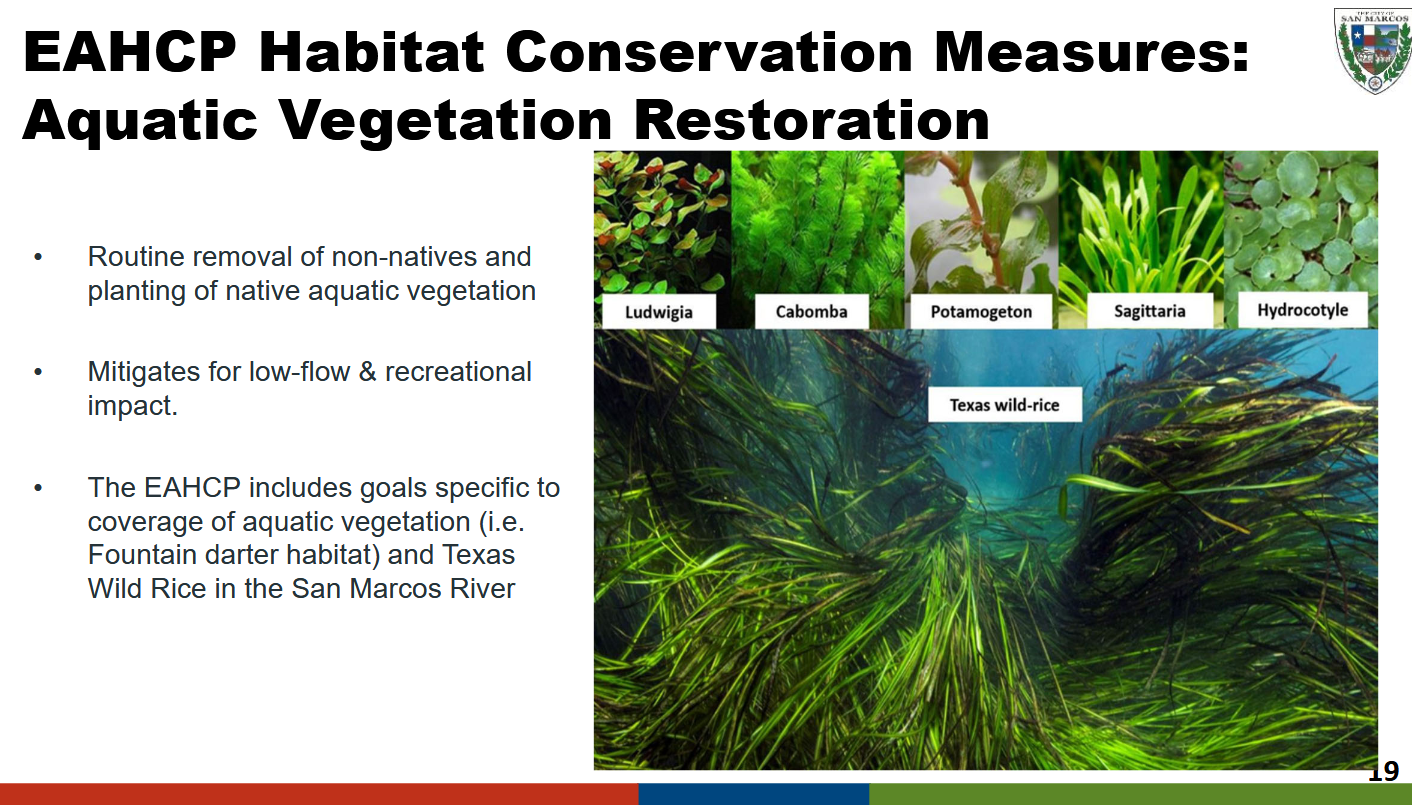
So we also have to take care of the plants:
They measure the animals:
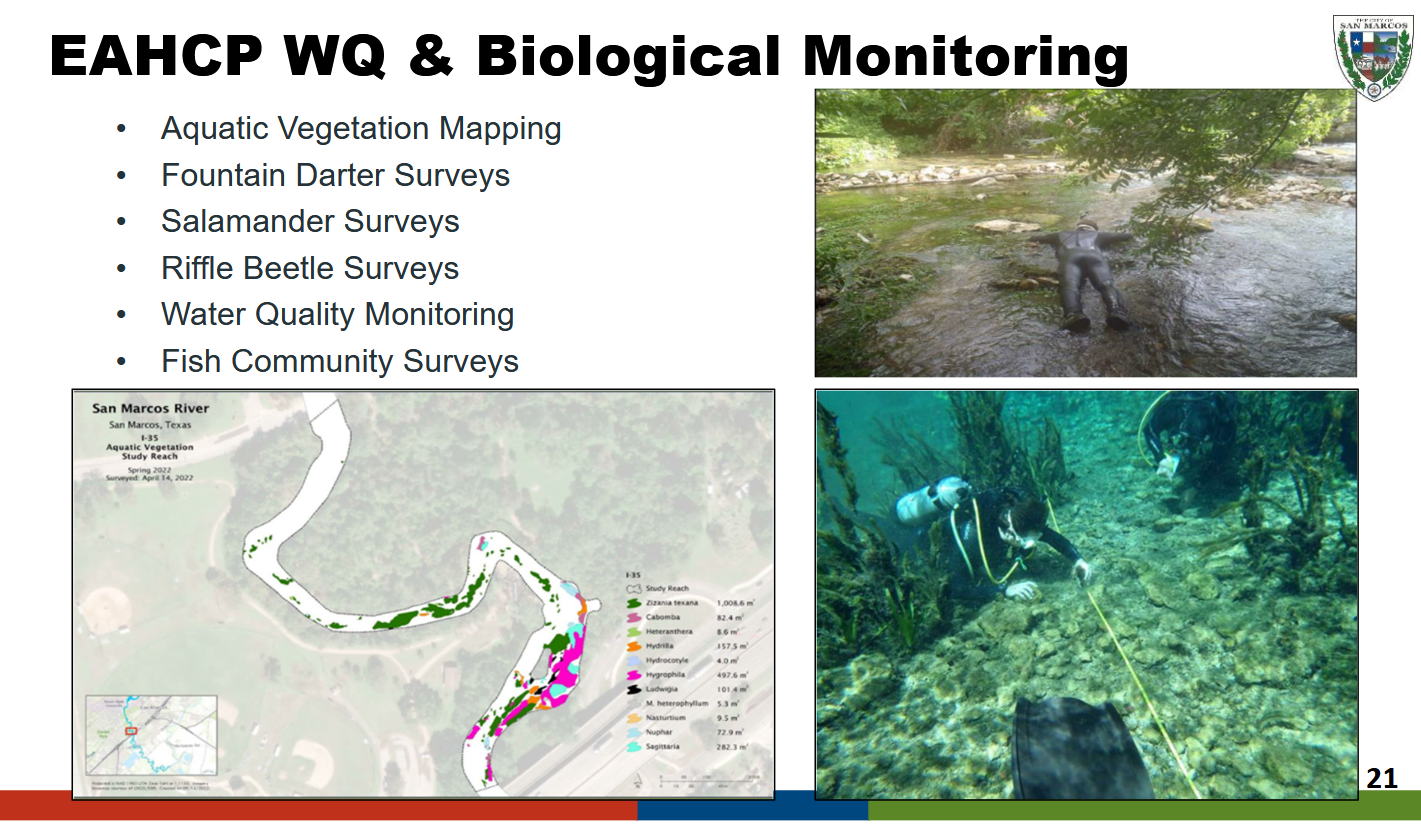
Listen: if I hadn’t been listening to the presentation, I might have been freaked out by the photo on the top right. Doesn’t that guy look a little spooky, laying facedown like that?
They also raise the endangered species outside of the river:
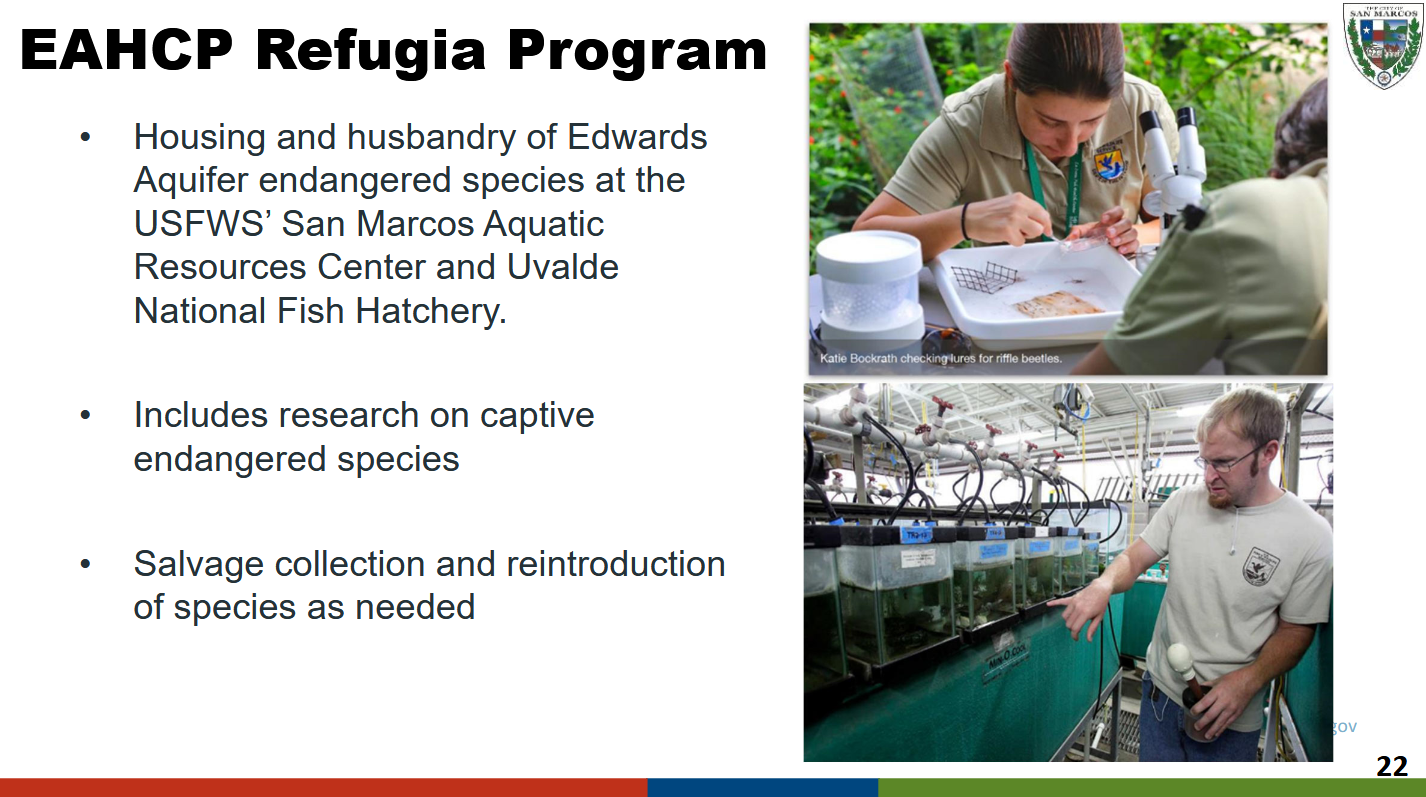
in case of some natural disaster.
…
In total, here are all the conservation measures that San Marcos and Texas State University are supposed to implement:
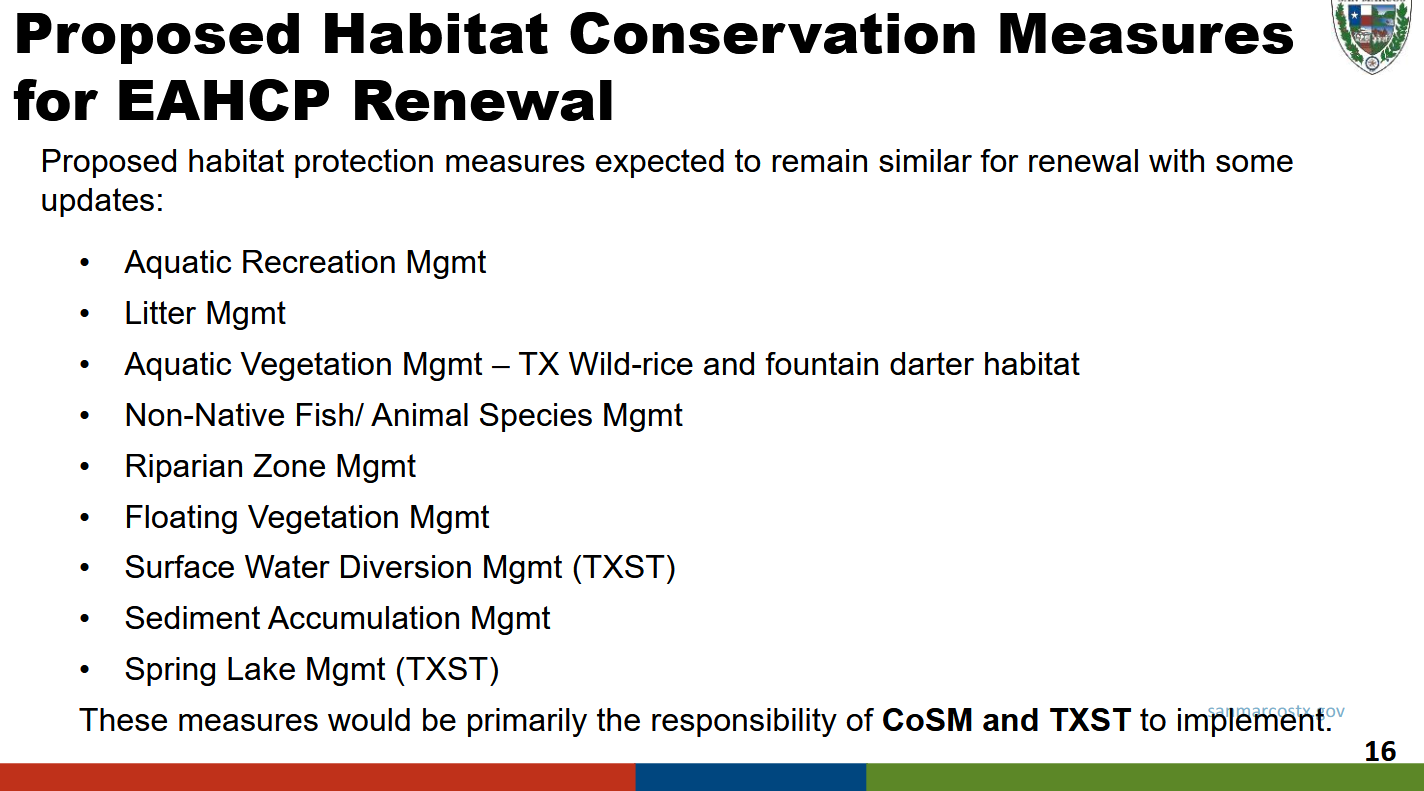
It’s mostly things we’ve already been doing, under the old plan. They help us fund these, too.
…
So how much does this all cost?? It is expensive! About $28-30 million/year.
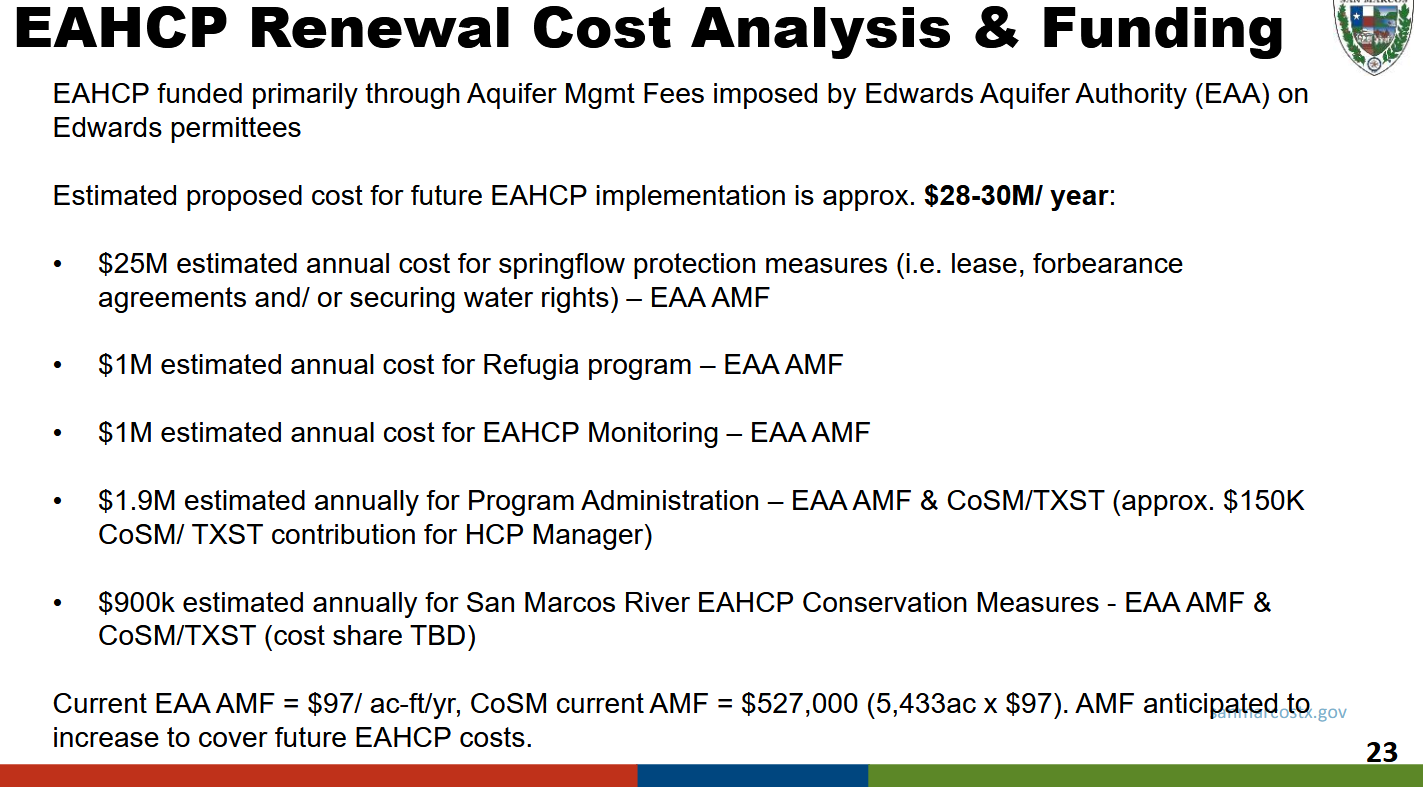
Cost of water rights will probably go up over the next 30 years, to pay for all this.
What does Council say?
Josh: How much does it cost to put this plan together?
Answer: Mostly staff time. About $2 million in grant money.
Amanda: Is the city already able to hold up our end of the bargain?
Answer: Yes, we contract out a lot of the conservation measures. It’s a lot of continuation of what we’ve been doing.
Jane: You say that we need to controlling access during extremely low flow events. What do you think this will look like?
Answer: There are a lot of unknowns. Could be paid access, parking access, might depend on what locations have been degraded. River hasn’t been at 45 cfs since the 1950s.
Jane: Are the fences along the banks less ugly?
Answer: Yes, they’ve been replaced with more aesthetically pleasing black fences.
Jane: We’re trying to stop promoting the river to tourists. Like the TxDot sign on 35 advertising river recreation.
Answer: It’s hard to get them to take their signs down.
Conclusion: We’re going to have a future conversation about how to downplay the river to tourists. Especially since water is such a big topic these days.
…
Workshop #2: Water and wastewater fees
We’re going to be raising impact fees later this summer. This presentation is mostly informational.
What’s an impact fee?
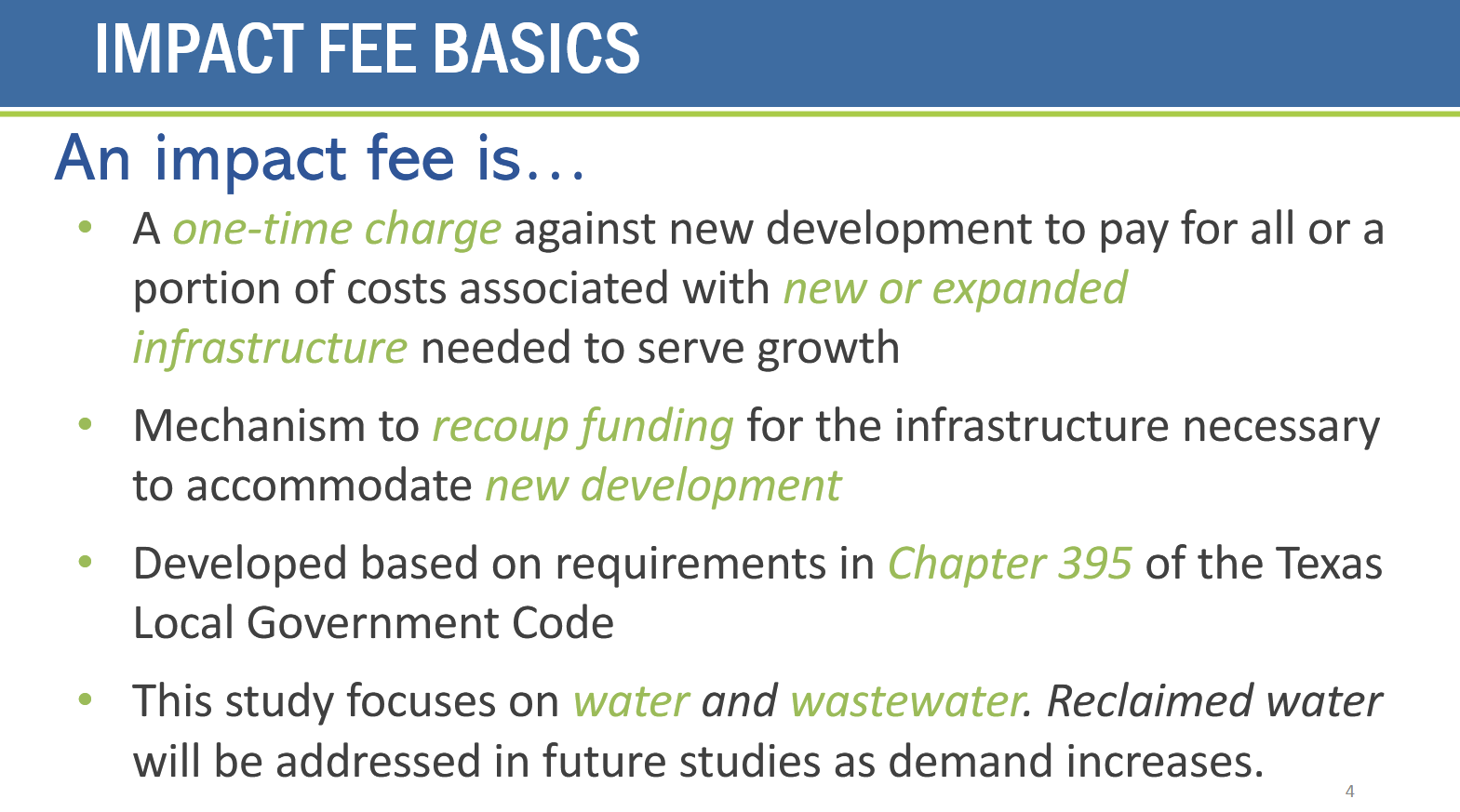
Great. This presentation is specifically about water and wastewater fees.
Developers only pay impact fees new developments. Nothing existing is going to have to pay any of these fees.
Here’s the past history:
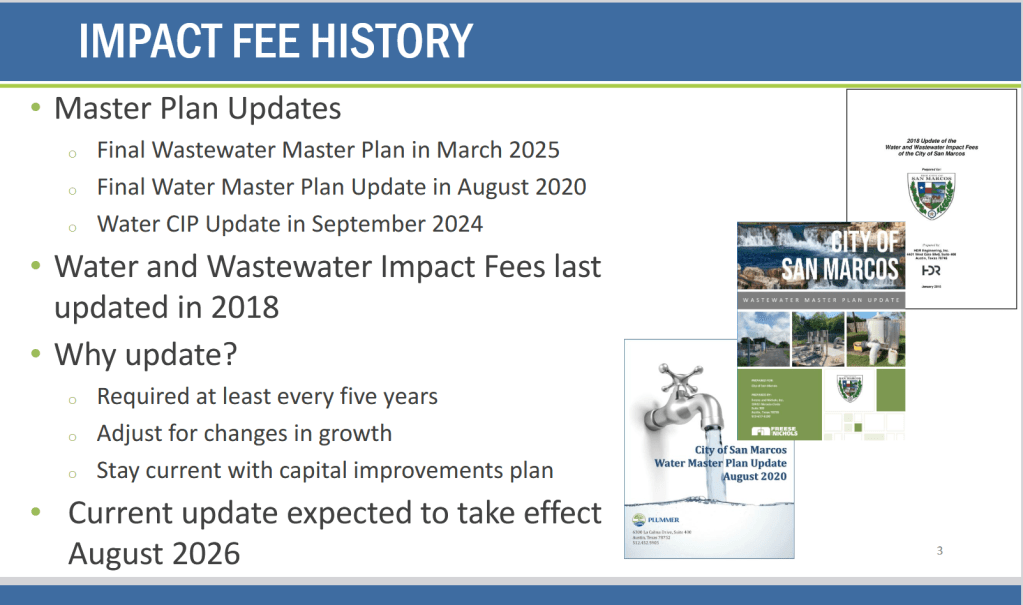
Great.
There are rules for impact fees:
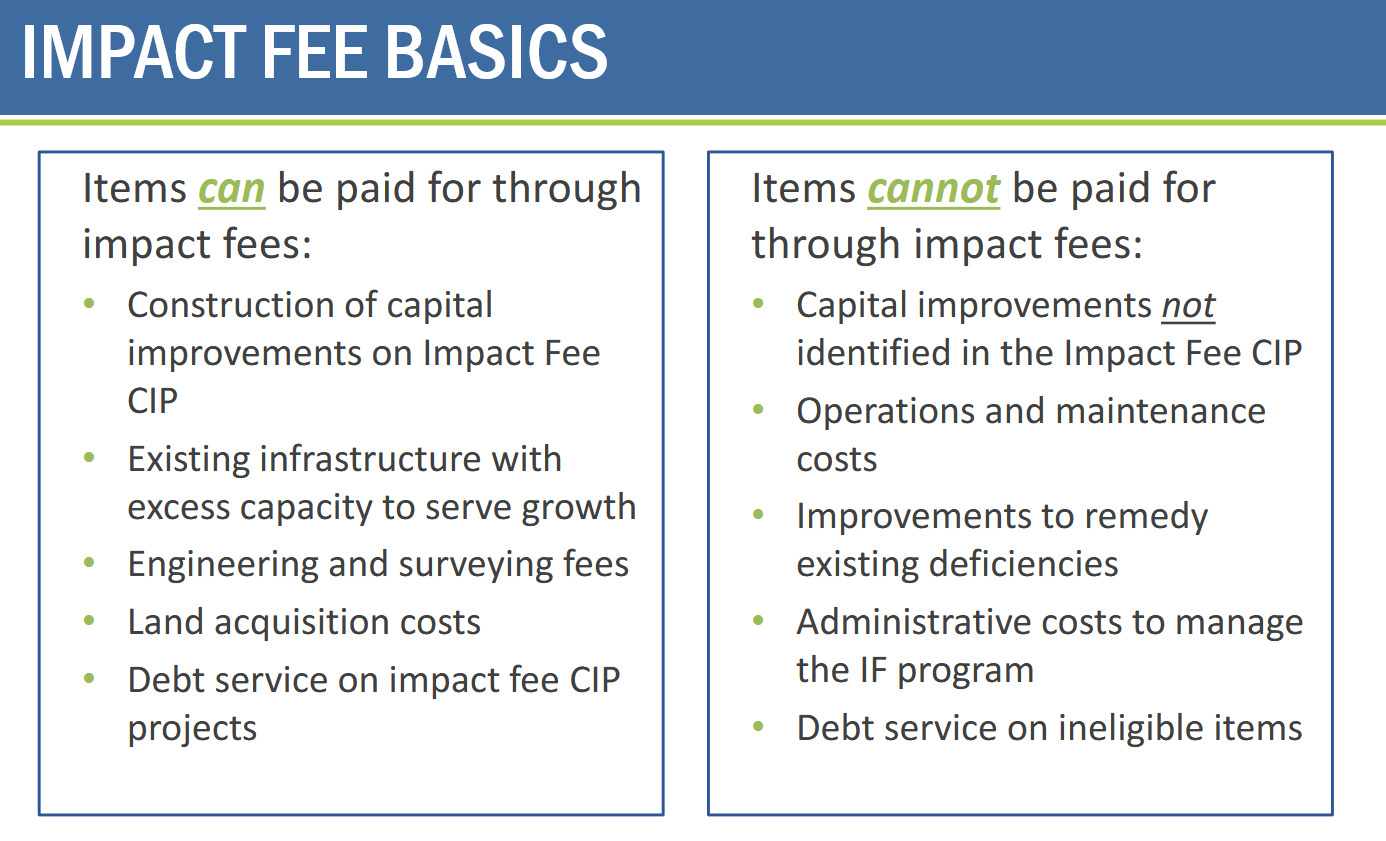
…
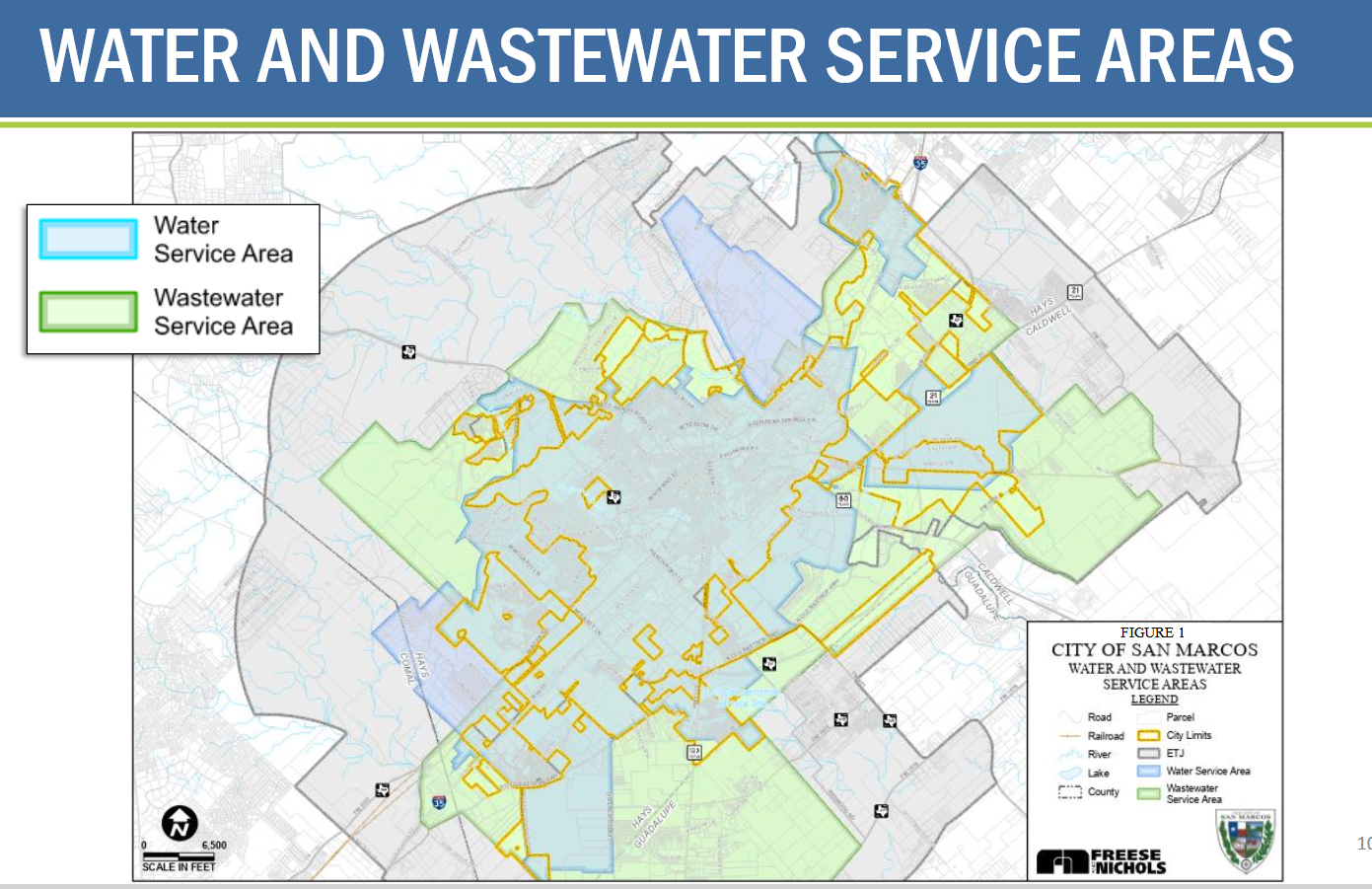
You can only charge an impact fee in your service area. So here’s where we can charge impact fees:
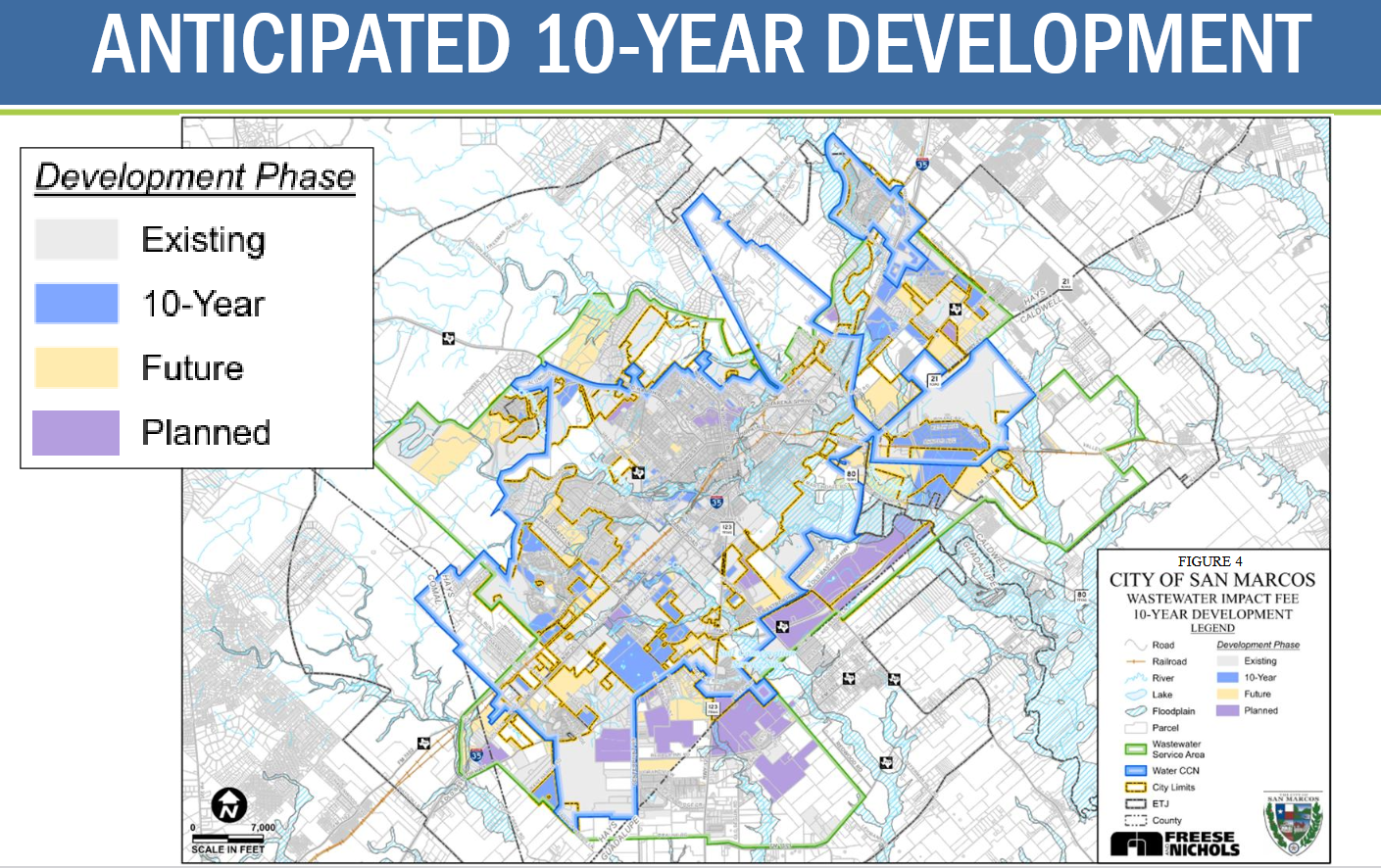
and here’s where we think people are going to build:
…
In order to compute impact fee rates, they need to know two things:
- What’s the total cost of projects that need to be paid for by impact fees?
- How many developers are going to be sharing those costs?
Let’s take those one at a time.
First: total cost of projects:
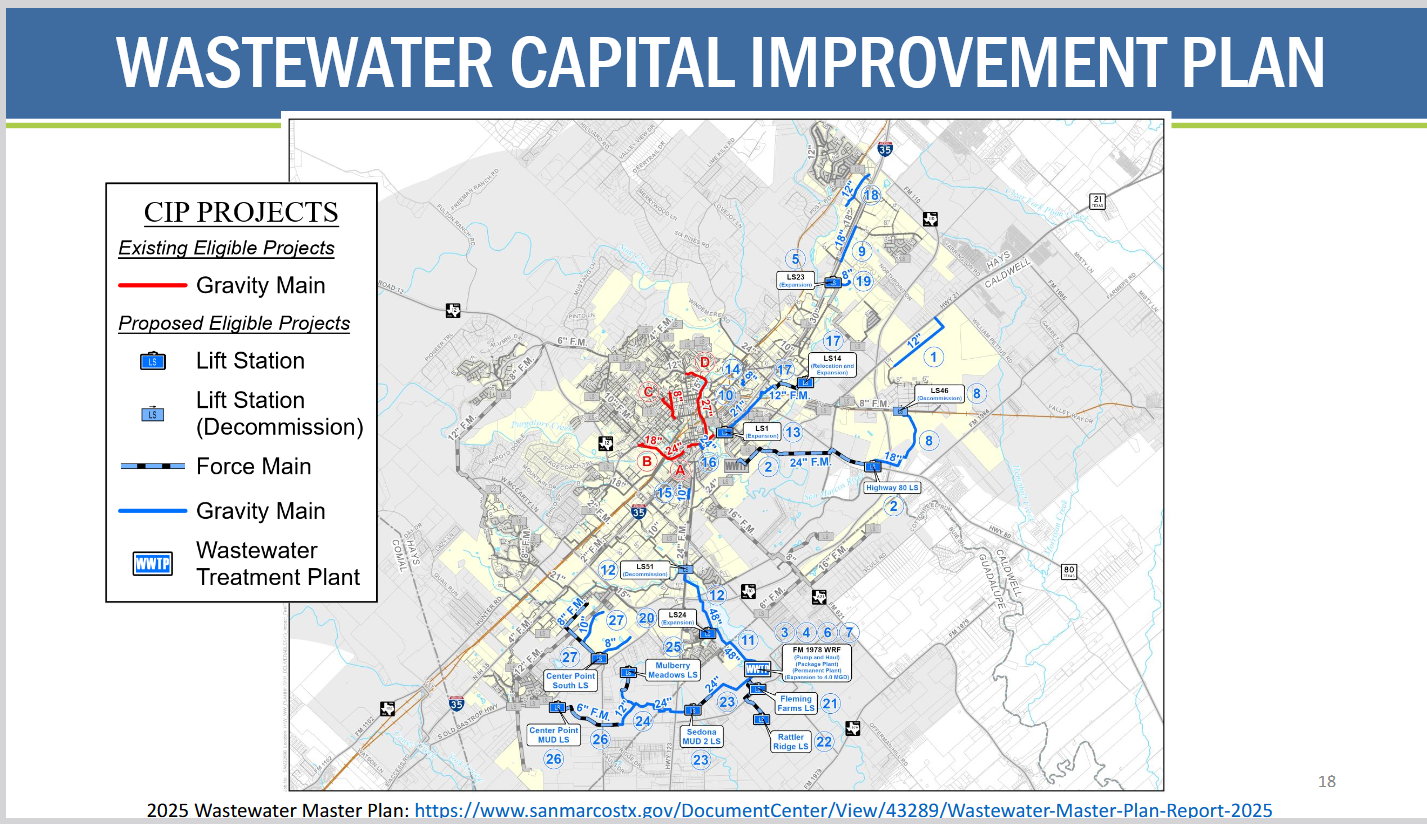
So they know where the growth is expected to happen, and so they can map out what kinds of water and wastewater projects will need to be completed so that all the new homes and buildings can get water impact.
Second: how many developers will be sharing the costs?
You want to charge them different amounts, according to how big the development is. So we go according to meter size.
Here’s how we translate meter size into number of homes:
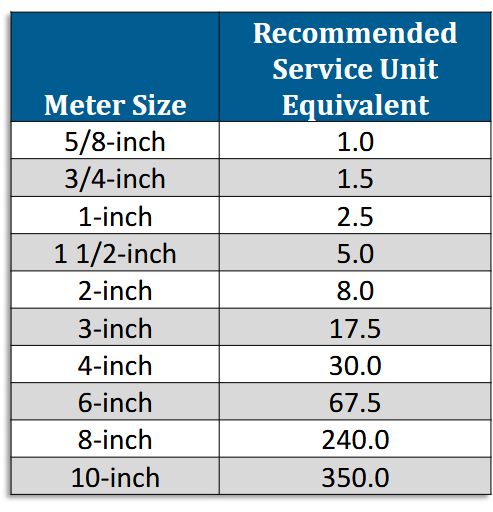
In other words, we assume a 10-inch meter is equivalent to 350 homes.
After doing all that conversion, here’s the total number of “homes” that we’re providing water to:
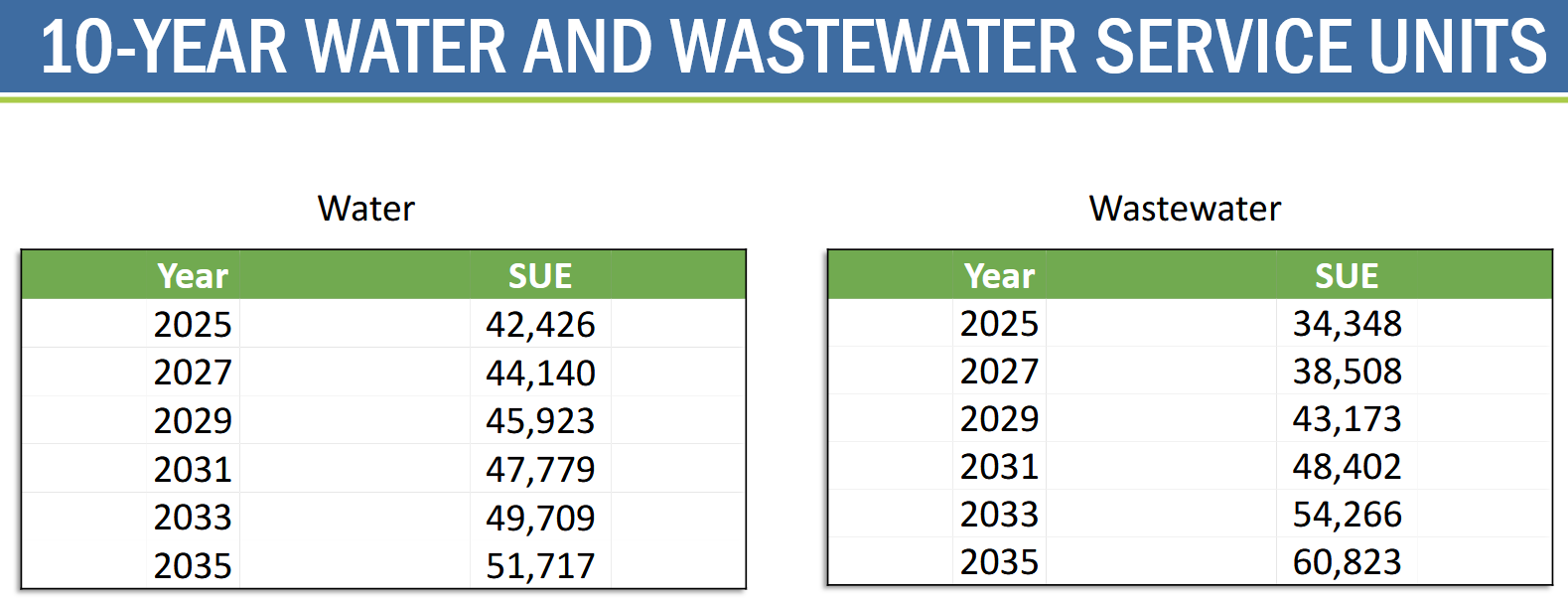
…
So that would give the city what they need to compute the new impact fee rates:

Actual proposed rate hikes will come in June and July.
Council questions:
Josh: How do we compare to neighboring cities? Are we scaring off developers?
Answer: We benchmark with neighboring cities. We’re in line. It basically depends on how recently they’ve updated their impact fees. If they’re still going on 2015 rates, we’re higher.
Amanda: Do we incentivize reducing impact? Do we have reward programs for water re-use?
Answer: We’ll take this input and get back to you.
The city has a big reclaimed water facility. It doesn’t produce drinking water, but you can use it for cooling and irrigation. We run “purple pipe” to a bunch of places, like the Kissing Tree golf course, the power plant, the downtown plants, and some parts of the university.
Shane: What if they use reclaimed water. Does the purple pipe give a discount or anything?
Answer: No, it’s an entirely separate thing. This is only clean drinking water. It means they use less water, though, so that reduces their costs.
Lorenzo: Does the university pay impact fees?
Answer: Yep.
This is important, because the university skips a lot of local taxes, in general.
…
Workshop 3: Public Art Policy
In the last 20 years, we’ve put up way more public art!
There are a lot of decisions about what gets funded and where it’s located. How should we be transparent with the public on how these decisions are made? We need a Public Arts Policy.
We already have one, but it’s old:
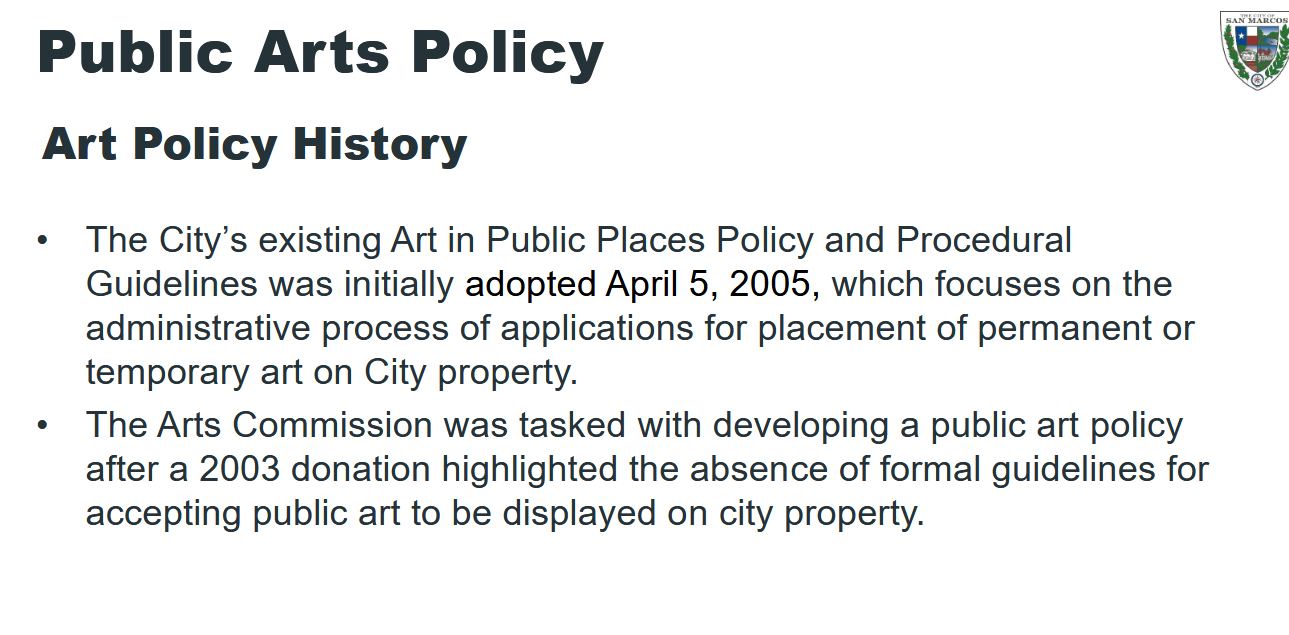
For awhile it was just donations. Then around 2018, we commissioned the mermaids statues and Big Wavey:
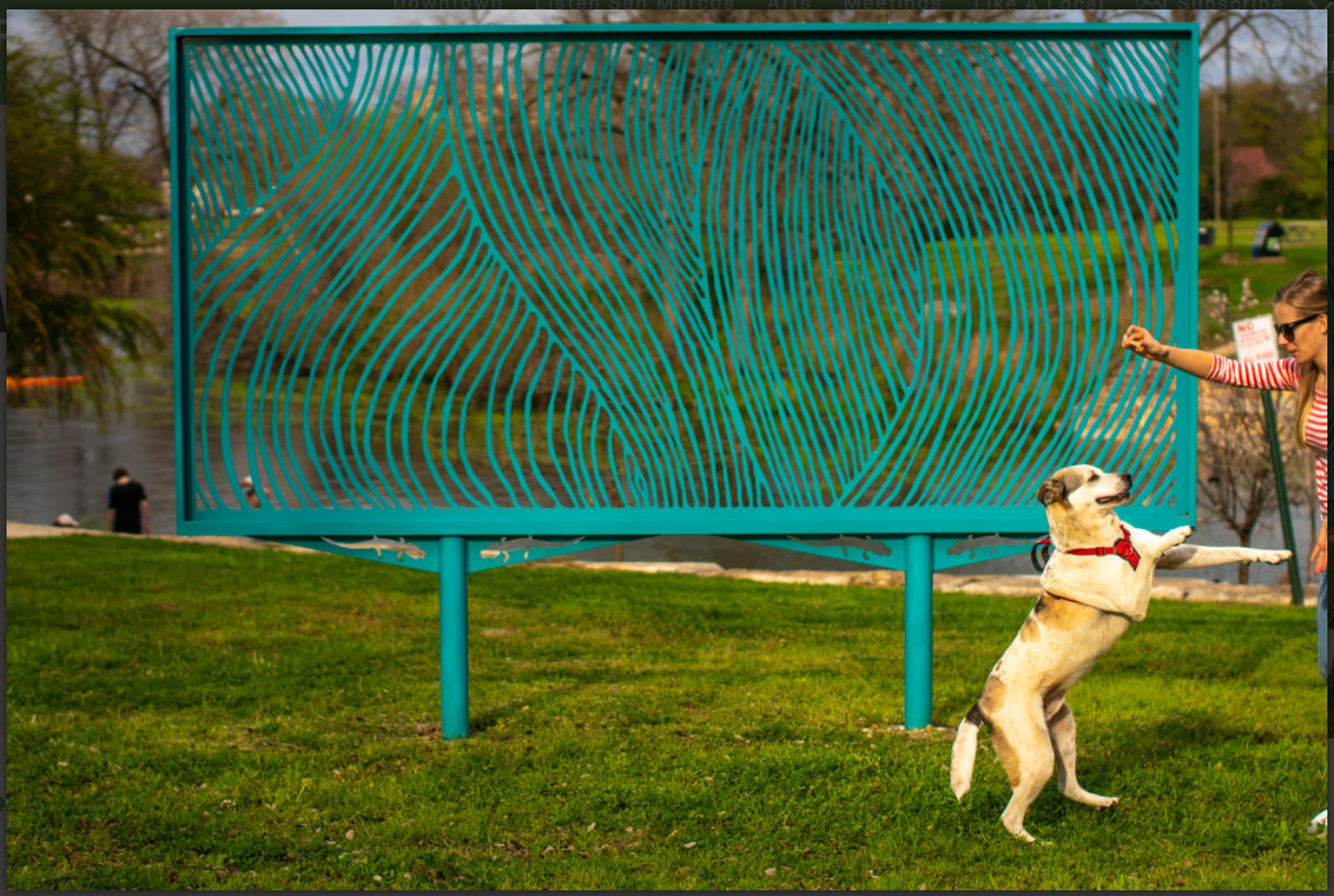
Since then, we’ve gone on to do a lot more.
Some are big, like this mural behind Industry:

and some are little, like these traffic boxes:
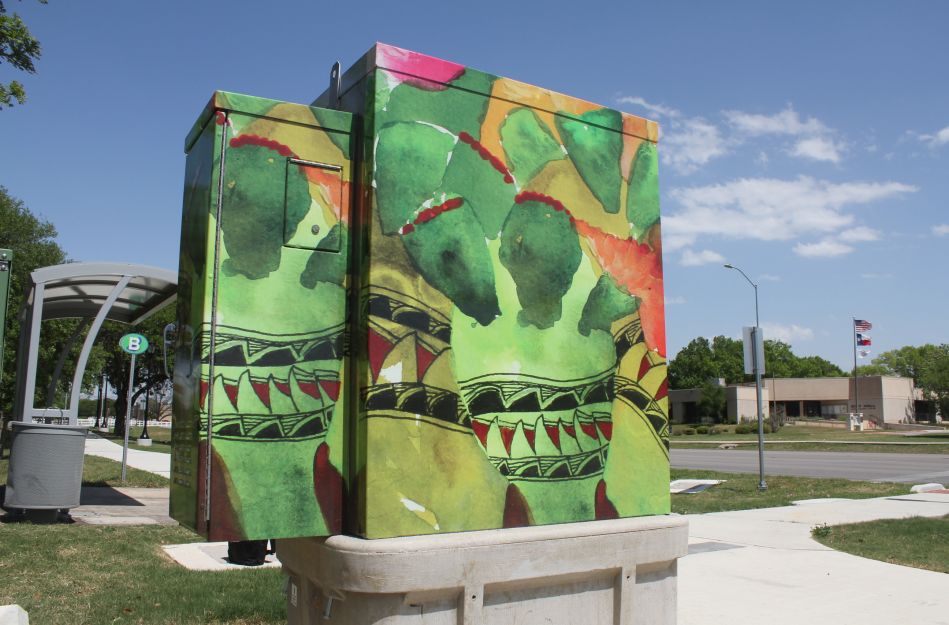
I really love that traffic box.
…
Here’s the program that commissions and maintains these public art pieces:
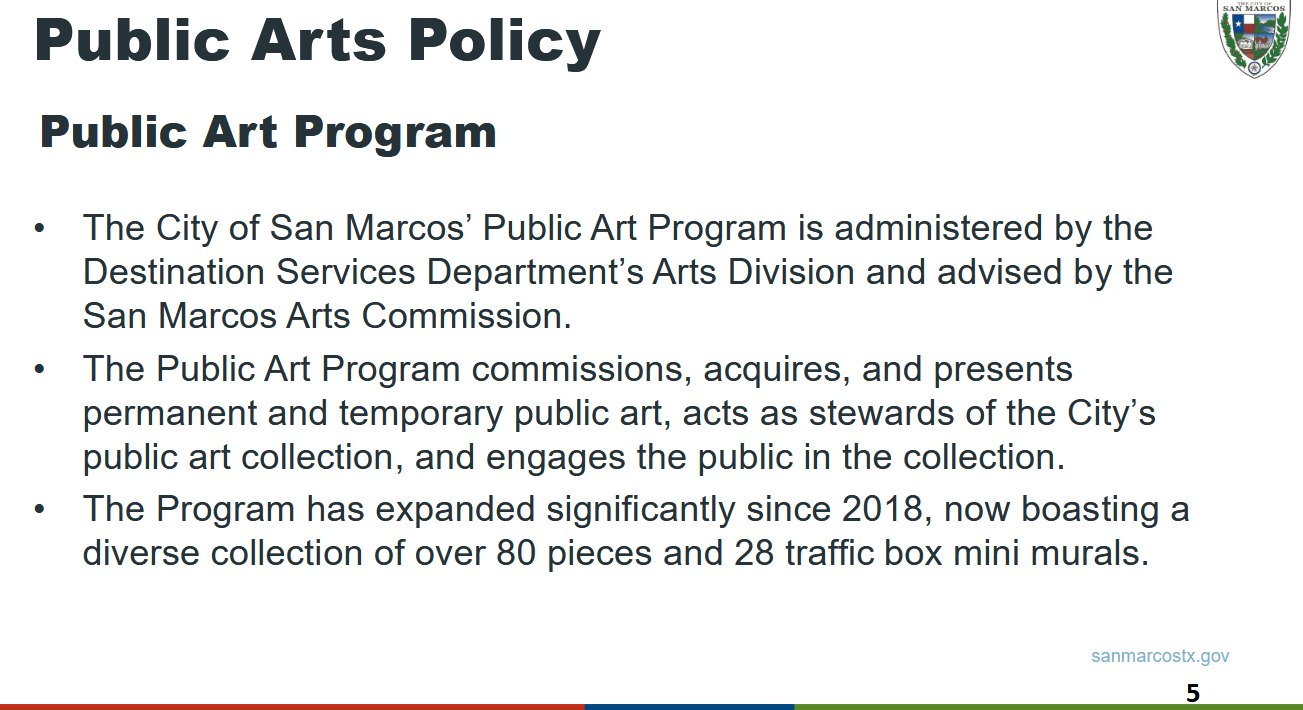
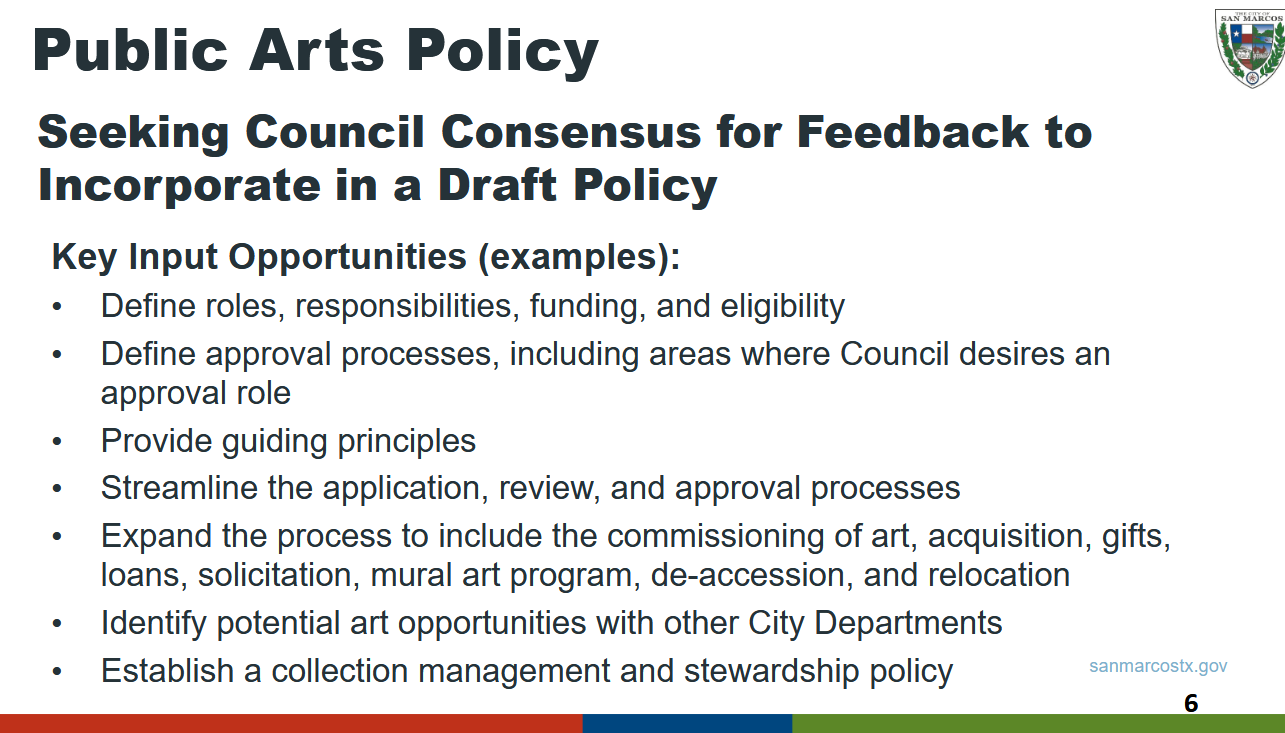
So we’re trying to lock down some details and create a more formal Arts Policy. It’s going to cover things like: how do we maintain art? How do we approve things? How do we ensure these things sustain after we’re gone?
This is the planning stage.
Council questions:
Amanda: If we’re collaborating with a private organization, how are they consulted?
Shane: What about the public?
Answer: We hold lots of meetings with the collaborators, and at least one public meeting, unless it’s a super small project.
Alyssa: It’s great that we’re getting a reputation as a creative community.
Shane: What happens if someone tags a mural?
Answer: Murals actually prevent graffiti. People are less likely to tag murals. When it happens, we remove it or work with original artist to repair the mural.
Jane: What about murals on private buildings?
Answer: We go in halvsies. They have to keep it up for at least five years.
Then we get to The Big Conversation:
Jane: For major art, I want it to come to Council. I’m so embarrassed that we omitted the rattlesnake on the big mural, but we have a bobcat.
Jane is talking about this:
You see this mural as you’re driving on LBJ from I-35 towards downtown.
It makes Jane lose her mind every time, because there is a bobcat:
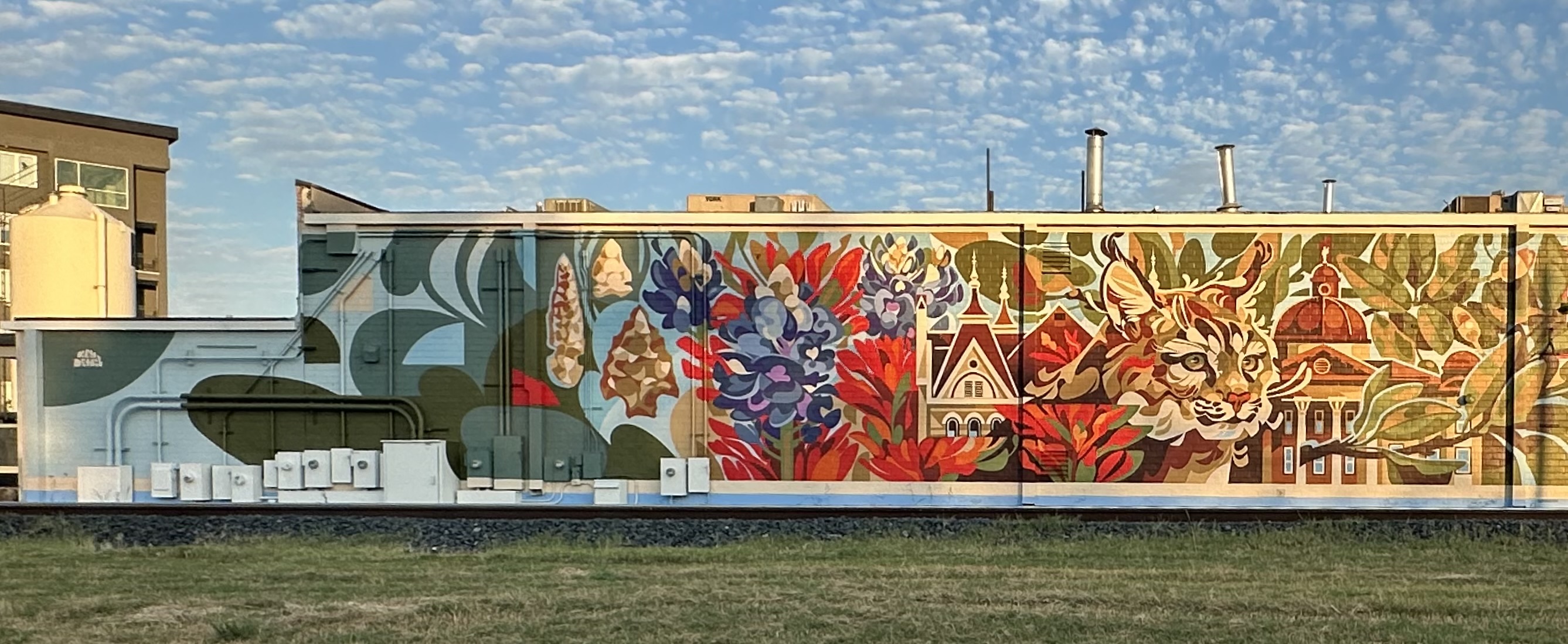
which obviously represents Texas State, but there is no rattlesnake in the mural, to represent SMCISD.
Jane is so upset about this mural that she wants a line-item veto on every major art piece that comes through San Marcos, because if she’d seen this design, she’d have asked, “Where’s the rattlesnake?”
I happen to totally agree with her – that mural needs a rattlesnake. However! Council should not have a line-item veto on artwork.
Listen: Edge cases make bad policy. If you have a single unusual bad situation, it’s going to have a lot of unique aspects, and you should not write general public policy with that case in mind. (And in fact, the very next time a mural came around, Jane tried to apply the lessons of the bobcat mural standard. She tried to ban a cactus painting for being prickly. It was a total mess.)
Staff: Best practices is that council and community provide the prompt up front, and give them what to go by.
Jane: That wouldn’t have saved the rattler problem. I want to see the art before it’s too expensive or too hard to change.
Shane, Matthew: YES!
Josh: We could make a list of ten principles! Artists could be required include three of ten!
(Note: oh god, this is how you end up with bland mush.)
Jane: Nope. I want to see the art and proofread it to make sure there’s a rattlesnake in it.
Amanda: Art is super subjective. We don’t want to tie the hands of the artists.
Josh: I don’t want to weigh in on art.
…
So what went wrong with that mural? Here’s the process of how murals are designed:
- The arts commission talks with the building owner
- Hold public meetings, get community direction and input
- Call for qualifications to get a style
- Pay 2-3 artists a stipend to get designs
- Arts commission votes on 2-3 designs. Makes minor changes.
With that mural, the artist included every single thing that was mentioned in the community meeting.
City staff: And actually, it was not a Texas State bobcat. It was an actual bobcat, like a wildlife thing.
(Note: the bobcat is literally standing in front of Old Main, so I’m pretty sure it’s a Texas State bobcat.)
…
Alyssa: No. I don’t trust our judgement. Don’t you all remember our insane Gateway Sign discussions? We have terrible instincts. Leave it to the experts on the Arts Commission.
Josh: does the arts commission weigh in on highway signs?
Answer: No, that’s graphic design. It’s art but also functional.
(Apparently all the council members have gotten a lot of phone calls from community members who hate the gateway signs.)
Jane: Do you all know WHY we even have an arts commission?
Amanda: I don’t.
Jane: It was my idea!
Shane: in 1821.
Jane: it was 1998. I was on CDB, we were asked to do a lot of art design, and I was like, “I’m not qualified. We should have a commission.” Boom, you’re welcome.
Bottom line: they’re going to probably get to micromanage the art. We’ll see what the next draft of the Arts Policy looks like.

