Last fall, we saw that Riverside Drive killed its street parking. They were sick of people parking in front of their houses and walking over to the river. Now you need a resident permit to park there on weekends.
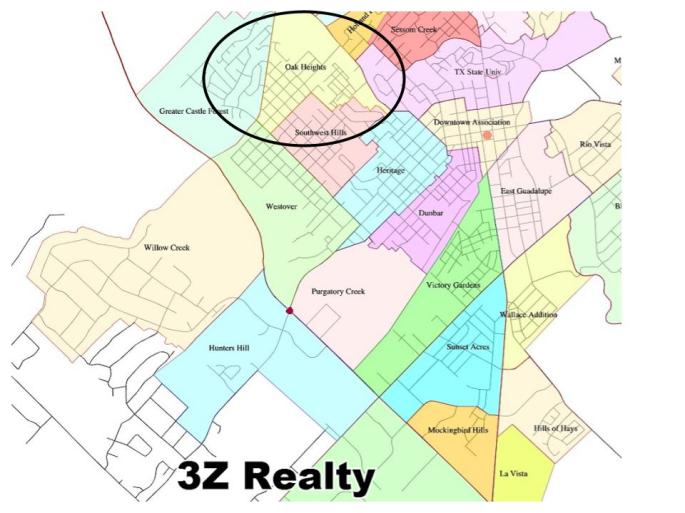
This pink part of Rio Vista neighborhood wants to join the fun:
They don’t want rivergoers to park on their streets, either.
…
These guys live by one of the Spring Lake trail heads:
They also don’t like hikers parking in front of their houses. They want to require parking permits, too.
…
You know me: I’m a world-class scold on this topic. I did not like it when they did this in Blanco Gardens, I didn’t like it on Riverside, and I don’t like it now. I think this is all bullshit.
It’s a privilege to live walking distance from a major park. You’re very lucky! But the street does not belong to you. People should get to park there.
That said: it is super gross when park visitors leave trash behind in people’s yards! But surely there’s a better solution than quasi-privatization of public streets.
…
Anyway, Council approves both the Rio Vista streets and the Panarama streets:
It’s two different votes, but they both went the same way.
So now only residents get to park on those streets.
…
Item 26-27: CDBG money.
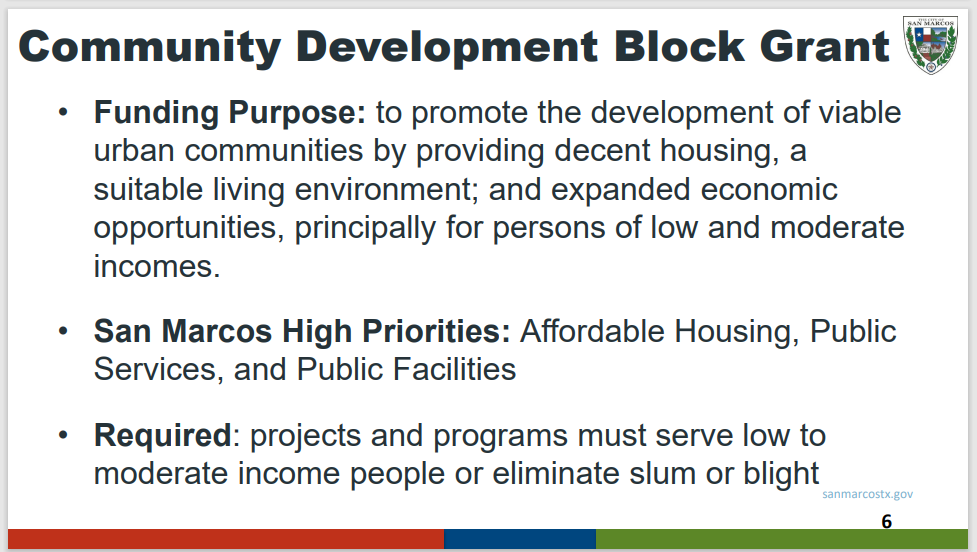
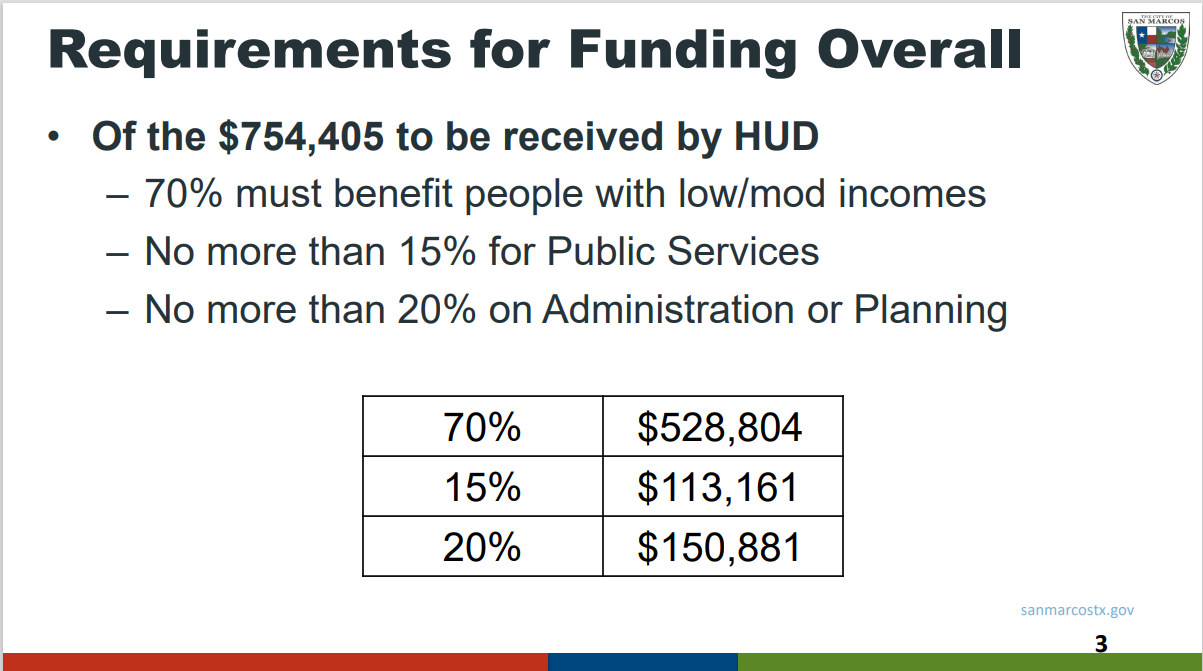
CDBG stands for Community Development Block Grant. This is money from HUD for local projects. This year we have $750K to distribute.
There are some rules:
Council has priorities, and they also had a survey and public outreach to see which categories to focus on.
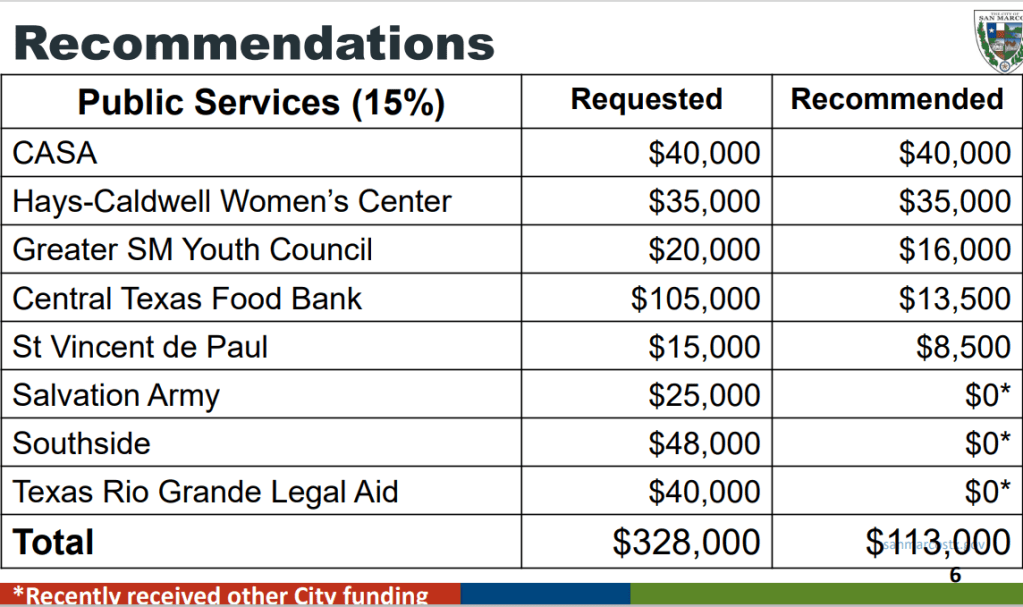
The committee waded through a bunch of recommendations, and is recommending these amounts:
There’s some explanation that goes with these amounts:
Salvation Army, Southside, and Texas Rio Grande Legal Aid are all getting other funding from the city.
Thorpe Lane just needs a little more funding to add to last year’s funding. They got $650K last year.
Long Street and Cuatehtemoc Hall are just too expensive for this particular fund, and Cuatehtemoc is getting some other city funding.
Calaboose is getting roof repairs instead of a new roof, and the city is paying for that instead.
Malachi Williams: his mother and sister both spoke about their loss. They will continue to fight for justice.
It’s always particularly heartbreaking to hear from the family, and it’s worth being grateful that they have not shied away from speaking on his behalf.
2. Redwood/Rancho Vista and Riverbend Ranch:
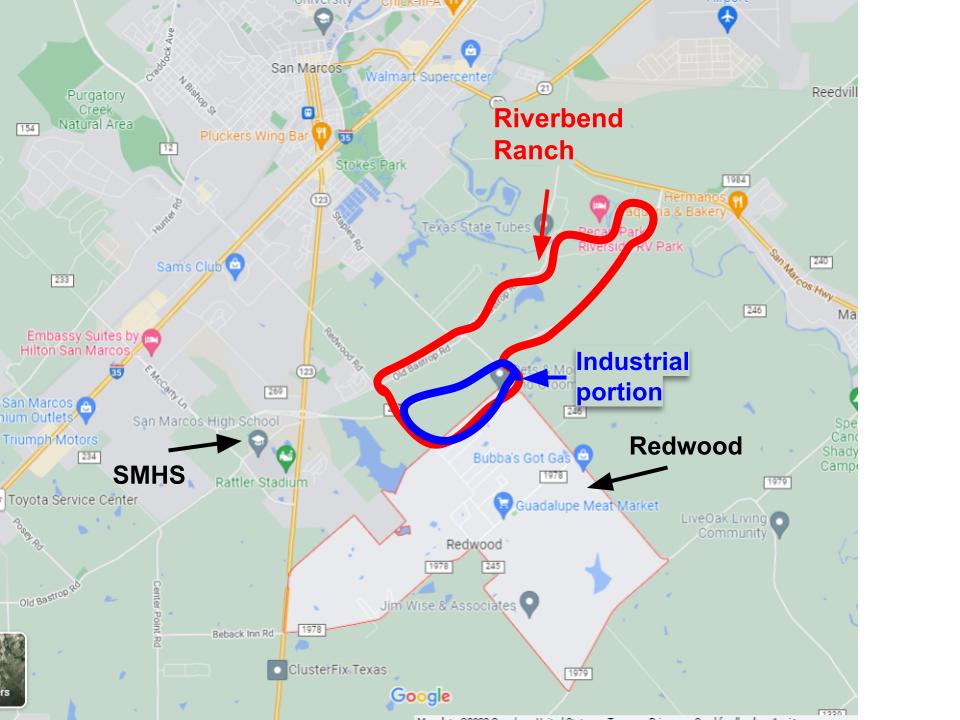
Basically, Riverbend Ranch will be a gigantic development that is immediately uphill from Redwood. The development agreement was approved in 2021.
Now, Redwood has huge problems with septic and flooding. Today the developers want to change up the agreement, in ways that might increase the flooding.
The two speakers are Veronica Reyes Ibarra and Monica Reyes Ibarra. Veronica is the president of both the Redwood/Rancho Vista Neighborhood Association and Water Supply Corporation, and Monica is a former resident and advisor to the organizations. They are both advocating on behalf of their community. They both explained about the flooding and challenges to Redwood/Rancho Vista, and the consequences on the people who live there.
We’ll unpack all of the details in Item 17!
Speedbumps in Trace:
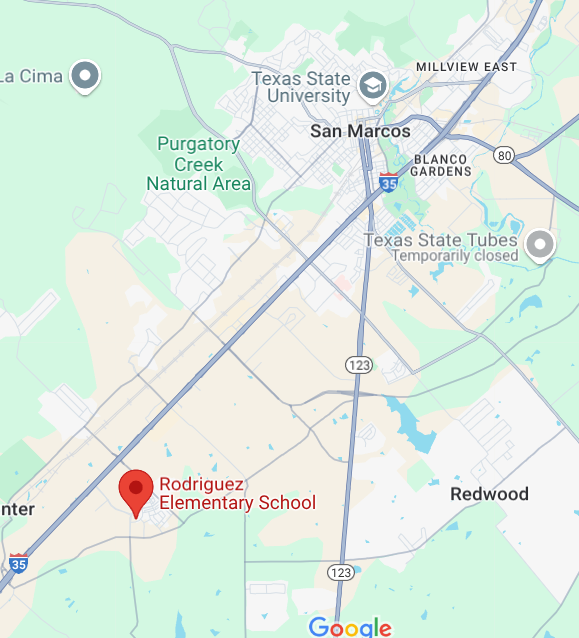
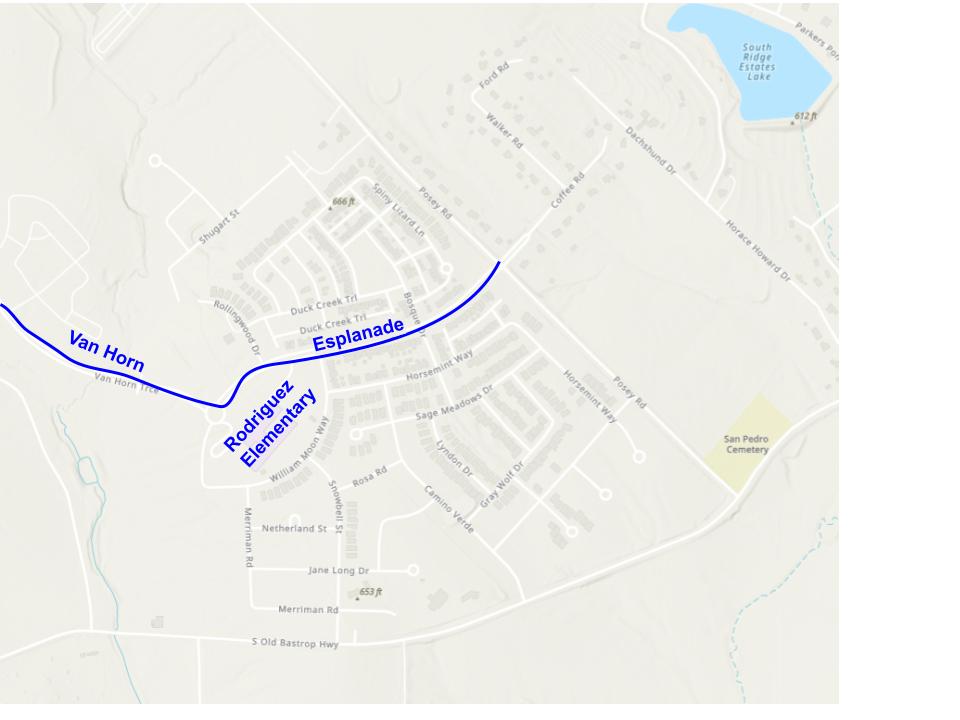
Rodriguez Elementary is here:
in the middle of Trace subdivision.
The speaker wants speedbumps on Van Horn and Esplanade, due to people tearing through the main road at unsafe speeds:
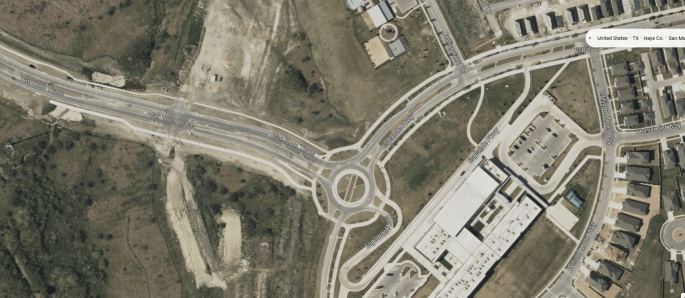
I can imagine that – it feels like a nice, big wide expressway:
Ok, that is a terrible photo. In reality, it has trees and houses and people living there.
(I got that photo is from Bing maps and it is obviously very outdated, but Google maps is even worse:
But I didn’t have a chance to go photograph it in person. Oh well.)
Anyway: yes. Speed bumps are probably a good idea.
…
Item 1: HUD grant money
We get federal grant money from HUD , (the department of Housing and Urban Development). Some of these grants we get regularly, and others we’d apply for if we have another flood or natural disaster.
HUD grants require a few things:
A citizen participation plan
A five year consolidated plan
So we’re updating these.
The Citizen Participation Plan:
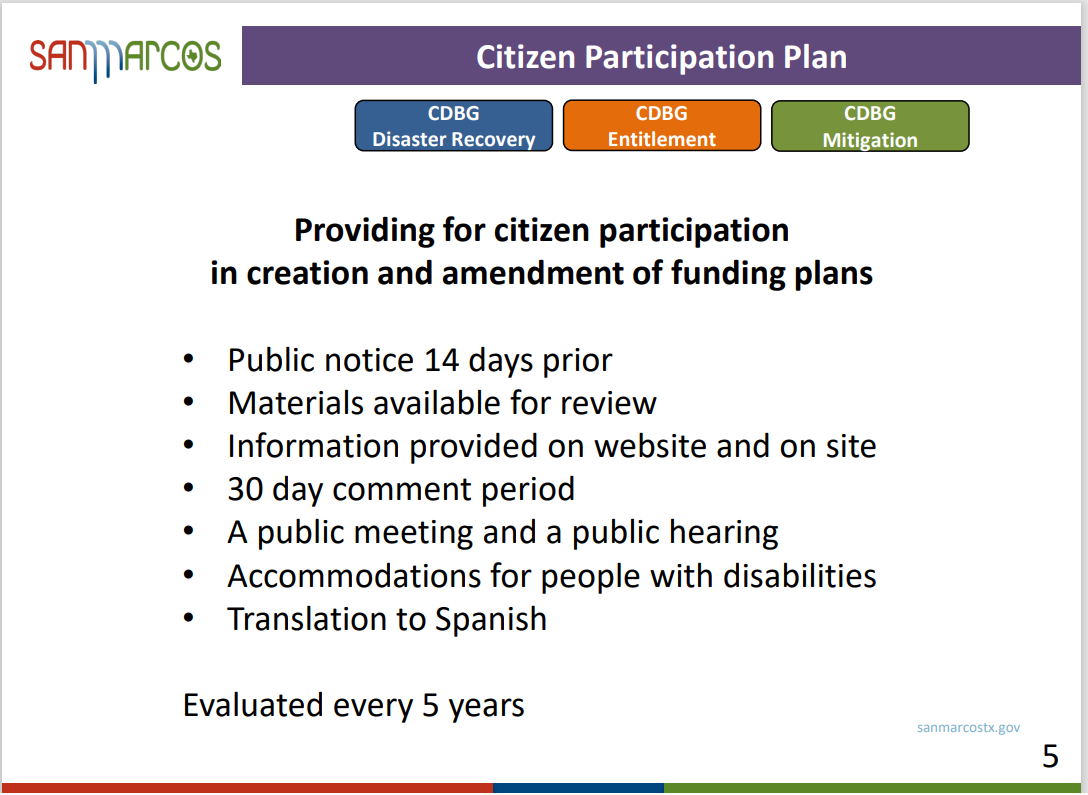
HUD requires you to have a plan on how citizens will be able to participate in the decision-making process for how the grant will be used. You have to update it every five years.
Here’s ours:
No one has any questions or concerns about this.
…
The Five Year Consolidated Plan:
This is a little more in-depth. Basically we need to pick some broad categories to prioritize.
Background
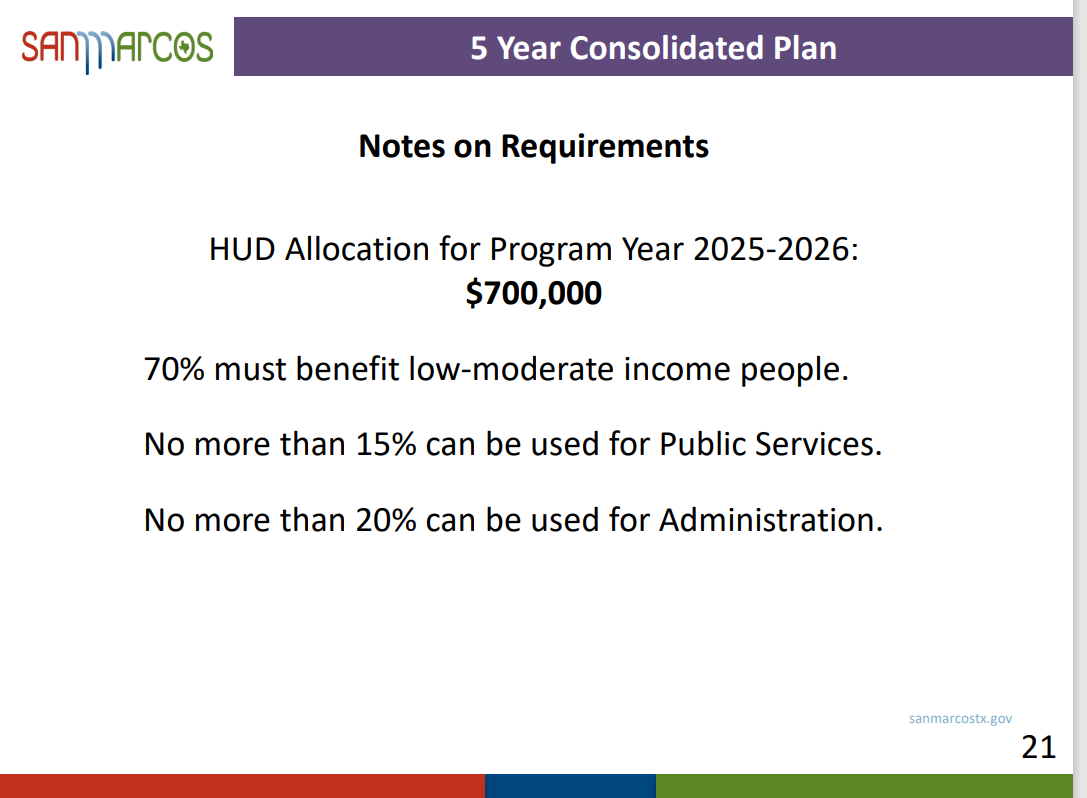
We generally get about $700K each year in Community Development Block Grant (CDBG) money.
HUD puts some rules on it:
During the past 5 years, these were our priority categories:
And here’s what we accomplished over the past five years with the CDBG money:
…
So what do we want to prioritize for the next five years?
Here’s what HUD directs us to do:
Staff held surveys and open houses to get public opinion.
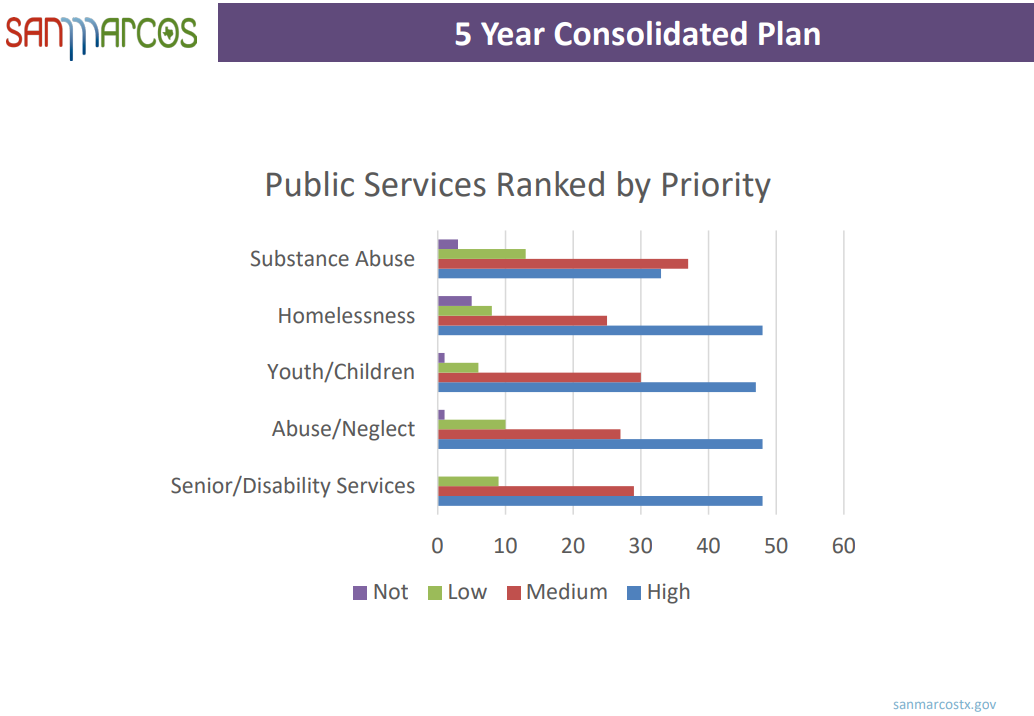
Survey results:
Feedback ranked along themes:
Based on all that, here’s what staff recommends that our priorities should be:
…
So what does Council think?
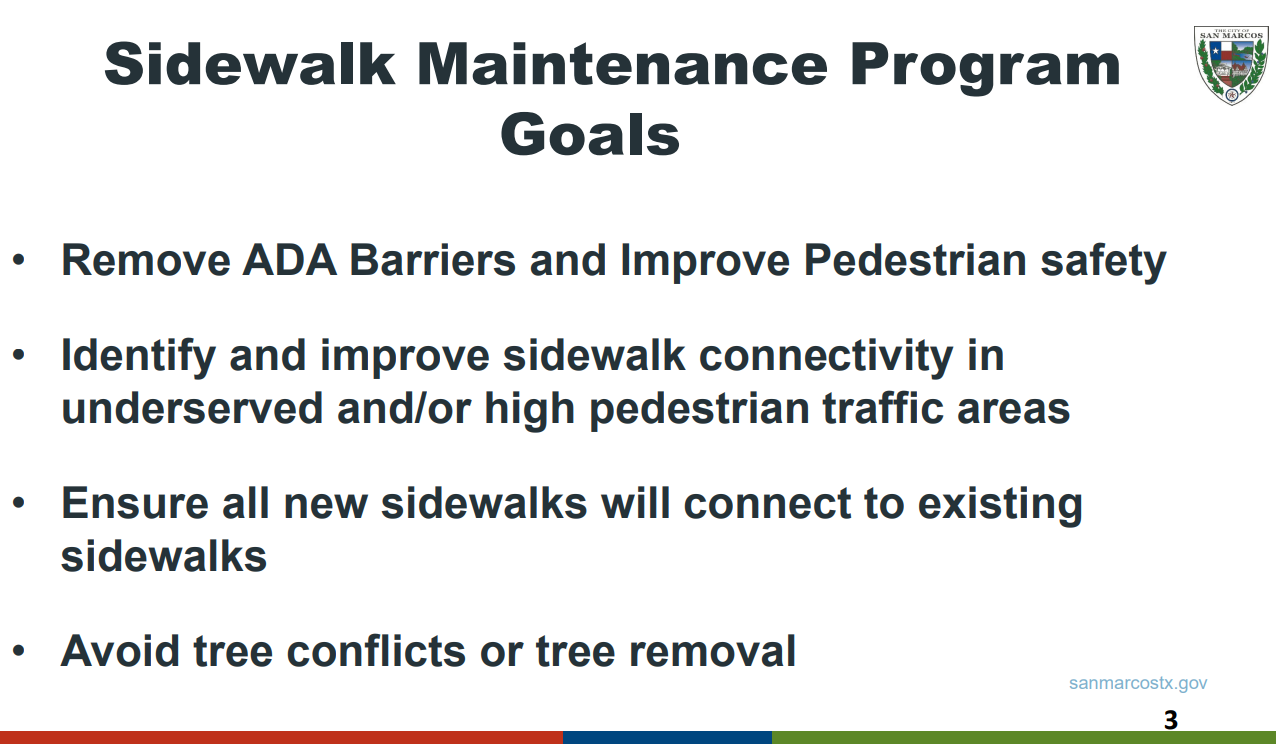
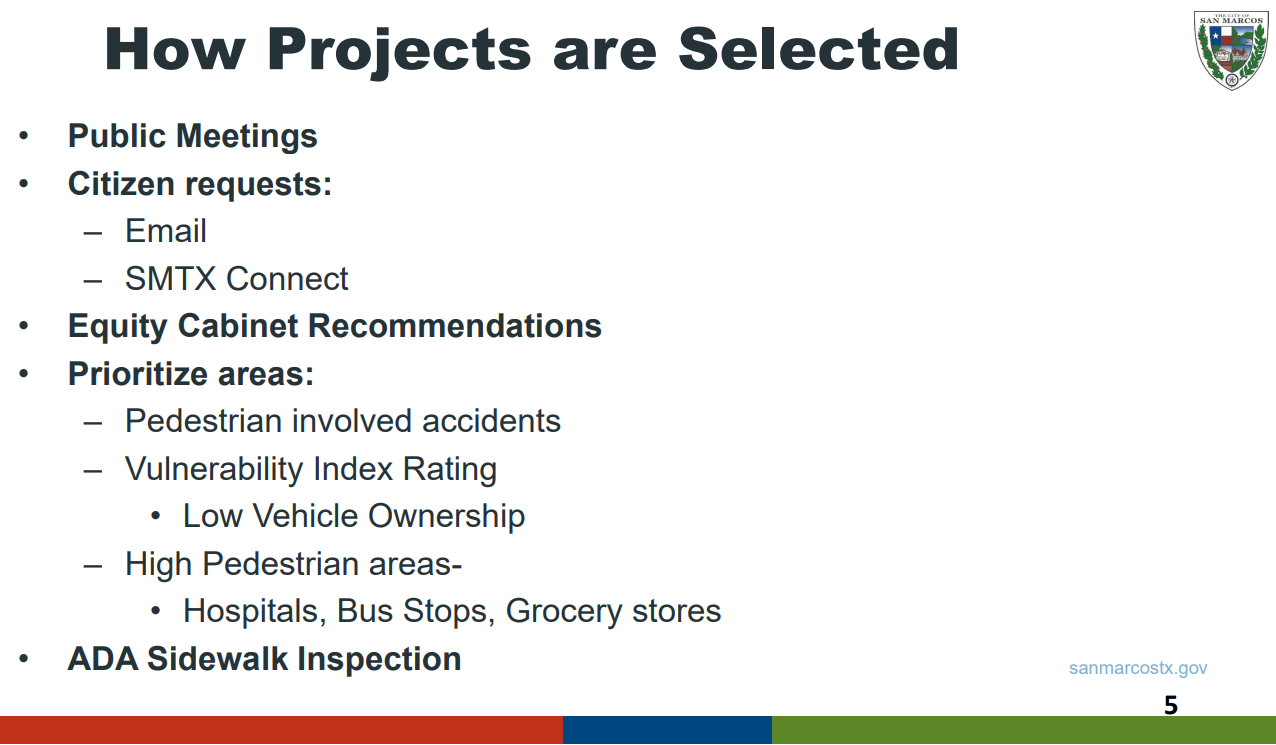
Amanda: What about sidewalks? Can we include sidewalk projects? Answer: They’re generally too expensive, but the gap sidewalk program has smaller, cheaper projects that are a good fit.
Alyssa: What kind of survey response numbers did we get? Answer: 86 online, and then in the 7 dream sessions we got another 50 responses.
Alyssa: Transit is clearly a big response. Can we include that as a priority? Answer: It is included under Public Services.
The city also gives out grants to nonprofits, under the Human Services Advisory Board, or HSAB.
Jane: Can we merge the application process of CDBG and HSAB? Answer: We’re going to align the applications in 2026, but we still have separate committees looking at the applications.
There’s some discussion of workforce skills and economic development. ACC offers HVAC courses at the library, for example, and Community Action picks up the tab using CDBG money.
Everyone is on board with these two plans.
…
Item 15: Summer Fun! And other fun.
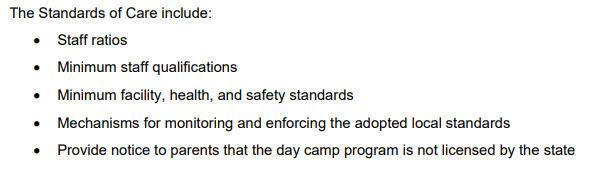
We’re updating our Youth Programs Standards of Care for 2025. This means Summer Fun and Discovery Camp and any other kid-things that the city runs.
What is Summer Fun?
It’s a weeklong summer camp held for 8 sessions during the summer. The biggest point is that it is extremely affordable – $40 per week for city residents, including breakfast and lunch – and so it’s a real service to families who need affordable childcare. It’s hosted at different SMCISD campuses each year.
Before Covid, Summer Fun had 300 kids per week, across two different campuses. It dropped dramatically during Covid, and now we’re somewhat back, up to 120 kids per week. There’s usually a waitlist of about 50-60 kids each week, but we’re short on staffing.
There are a few questions about scholarships and residency and growing the program.
scholarships are available for anyone in SMCISD, even if you’re out of the city
City residents get priority registration, so it’s been filled with just city residents for the past few years.
They would like to grow the program and serve more families, yes.
Keep in mind: Back in 2021, development agreements did not trigger any notifications. So no one in Redwood would have been notified about this development.
This changed after SMART/Axis blew up in 2023. Now they notify people within 400 feet about an upcoming development agreement.
That’s better, but still not much. The notification radius should be proportional to the size of the development.
…
So as far as I know, no one noticed this massive tract of land was being discussed.
Just for funsies, here’s how the original vote went, back in 2021:
Yes, this looks AWESOME: Jane, Shane, Saul, and Mark Gleason and Jude Prather No, this seems terrible: Alyssa, Max Baker
Mm-hmm.
Redwood/Rancho Vista
Just south – and downhill! – of Riverbend Ranch is the Redwood/Rancho Vista community. They’re part of SMCISD and the greater San Marcos community, but they’re also kinda their own community. The Guadalupe-Hays county line runs right between Riverbend Ranch and Redwood.
Back in 2017, a study by UT-Austin uncovered widespread parasitic infections in the residents. This is due to septic problems and flooding. The soil is terrible for septic systems, so they break down and leak almost immediately. Anything that increases flooding risks will expose this vulnerable community to more adverse health effects.

Since then, the two speakers – Veronica Reyes Ibarra and Monica Reyes Ibarra – have mobilized the community around solving the septic, flooding, and parasite issues. The three issues are all intertwined, and all expensive to fix. (Veronica is the president of both the neighborhood association and Redwood/Rancho Vista water supply corporation.)
…
In August 2022, the development agreement came back for amendments. This time I noticed. They wanted a variance for a 30 foot cut-and-fill.
What’s cut-and-fill? I drew you some pictures!
Suppose you’re trying to develop along a hill:
Now, you can’t put a foundation on a slope – you have to level it out:
(I’m sorry. I wasted a lot of time doing this.)
So this is cut-and-fill:
Developers love this because now you can fit a lot of houses, or one big industrial building:
But now you’ve destroyed the natural drainage patterns, and this is going to make flooding much worse.
So the city code requires you to take little steps, like this:
You can’t fit as many houses though:
and you definitely can’t put a giant industrial warehouse on it anymore.
Back in 2022 at least, that was exactly what the developer wanted to do:
They want a bunch of amendments, but specifically they want the cut and fill. No one mentions if this is for an industrial portion anymore. (Sure do hope it’s not another AI Data Center!)
Here’s the deal they hammered out with staff:
So this is the question that’s before Council: Can they have their cut-and-fill if they agree to do all these other nice things?
….
What does Council say?
Matthew: It is shameful that Guadalupe County isn’t helping our neighbors! I dream of annexation! I am a simple man, and I like retention ponds. They’re a visual indicator that storm water is being detained. Can we have more of those?
(I’m really not trying to mock Matthew here – these are quotes! He literally said “I am a simple man!” Council members are just endearing goofballs sometimes.)
Answer: They’re going to have retention ponds. Those were already in the development agreement.
Matthew: But can we have more?
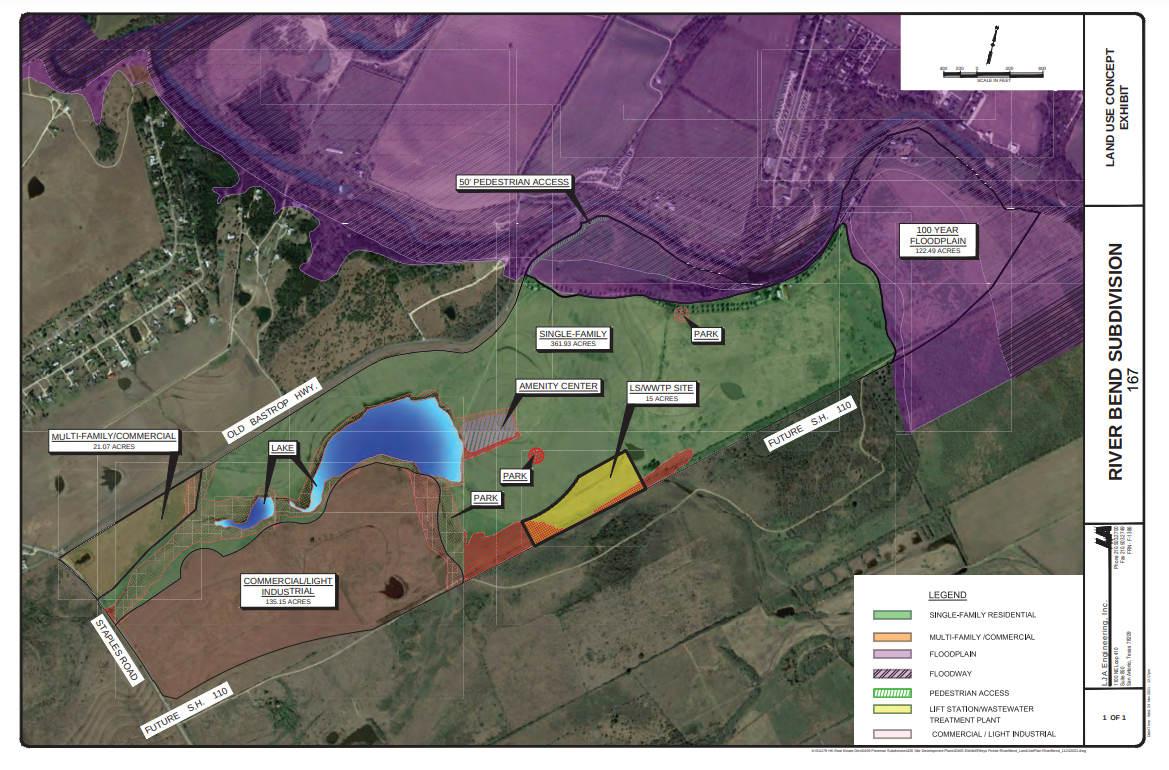
Answer: No? They’ll be there? Look at this map, there’s a lot of them:
It’s hard to see, but I believe it’s the two red hatchmark regions, on the left and lower right parts of the pond?
….
Jane is arguing hard for the deal. She keeps hammering the angle that if there were no development agreement, there’d be no protections at all. Therefore this is better than the alternative.
I am not so sure. Big cut-and-fill is generally banned for a reason. Jane doesn’t seem to be taking that into account – she’s only arguing that the mitigation strategies are great.
Shane comes out against the deal. “It’s like the Woods all over again. 15% increased retention is barely anything.”
Staff: They’ll divert the water and release it downstream of Redwood/Rancho Vista
Shane: Doesn’t matter. 15% is barely anything.
(I’m inclined to agree.)
Saul is worried about the parasites and the flooding. It floods really badly there.
Staff explains a bit: the soil is really bad for septic systems. They basically break very quickly and release sewage into the soil. The parasite lives in the sewage in the soil.
Several council members ask: Can Redwood be annexed and brought onto city sewage?
Answer: Redwood/Rancho Vista might not want this? Every home owner would have to individually request annexation. Annexation comes with lots of taxes and fees. Just the sewer would require connection fees and stormwater fees and other things. It’s not likely that Redwood would reach consensus on this.
Staff: The advantage of this development is that it will at least bring a sewer line much closer to Redwood.
Q: What’s all this about a M.U.D.?
Answer: M.U.D. stands for Municipal Utility District. This is like a city-lite. They charge taxes and have a board. They run utilities for people that live in the M.U.D, but they don’t do all the rest of the city government stuff.
(If you are curious about the insanity of the Cedar Park M.U.D, enjoy this blog which is their version of The San Marxist. Things are pretty bonkers.)
City Manager Stephanie Reyes weighs in with the following, which is worth quoting:
“That’s the hard part with a lot of decisions Council is faced with. Because, sometimes, it will look like you’re supporting a certain development, and a lot of times, it’s not about supporting the development – it’s about supporting the regulations on the development, that you would not otherwise have if you did not vote a certain way.
So that is something to contemplate, and it’s not lost on us that that is a very heavy decision… Some of the things can be developed by right, so even if you don’t vote for it, it’s still going to happen, but you lose the negotiating power to make some of these concessions and negotiations happen.”
So basically, no one likes this development any more, but we can’t stop it. (Well, I think Jane still likes it.)
…
Here’s my read: City staff and Jane Hughson are absolutely convinced of two things:
The benefits of the improvements outweigh the risks of cut-and-fill.
They will definitely develop the property anyway, if the cut-and-fill is denied.
The rest of council has to decide if they agree on those two things. Everyone feels very uneasy voting yes but also uneasy about voting no.
I will say this: Council seemed genuinely concerned about the residents of Redwood.
Jane makes one last point: This is a big environmental win, because they wanted to build a package plant, and we got them to agree to a lift station instead.
What this means is that the developer wanted to install a cheap little sewage treatment station that would then release to the river. This means it would have higher levels of phosphorous and lead to more algae blooms and other bad river outcomes. Also, package plants are not staffed, so it takes longer to notice when something malfunctions and it starts dumping untreated waste into the river.
Instead, we’ve gotten them to agree to a lift station, which brings the sewage back to San Marcos, to a higher quality treatment plant. So this is good!
(This win is independent of the welfare of the people in Redwood, though.)
The final point is that the Redwood parasite is already a problem that needs dire attention. And ultimately, Redwood is not in either San Marcos or in Hays County – it’s in Guadalupe County, which we have no jurisdiction over.
What Council decides is that they’ll to bring the issue of Redwood septics and flooding back, at a future meeting. They will discuss a resolution to send to Guadalupe County, to try to somehow get them to take action on the issue.
The vote:
Yes: Jane, Matthew, Alyssa, Saul, Amanda, Lorenzo
No: Shane Scott
My take: This is a really hard one.
I’m not convinced that the mitigation strategies will outweigh the cut-and-fill risks, but I’m also not convinced that they won’t?
The package plant thing seems like a win
Passing a resolution to get Guadalupe County to help Redwood seems likely to be empty, but maybe Council will be more persistent than that.
I felt like the current Council is sincere in their desire to help the residents of Redwood, but it’s not obvious how they should do that. It will require sustained attention and energy to help the residents out.
Citizen Comment always starts with Jane Hughson reading a spiel about not being a jerk at the podium. However, this time there’s a new bit about how the security guy will haul you out of the room, if push comes to shove. Jane mentions that this is because of an incident a few weeks ago.
Now I’m all curious! I don’t know what happened, but it sounds exciting.
Here are the big topics for citizen comment:
TDS stands for Texas Disposal Systems. They’re the guys that run San Marcos trash and recycling. Apparently TDS was first awarded the San Marcos contract in 2003, and they’ve been renewed ever since. They are coming up for renewal again.
Five people all have something to say about this. They don’t want TDS to automatically get the contract again. They want council to open up for bids from other companies this time around, instead of automatically going with TDS.
This item isn’t on the agenda tonight, but clearly there’s some sort of backstory here.
2. SMART/Axis, and whether they should get a new road.
This is the big item of the night, so I’ll save the comments for then!
3. Handicap Access around San Marcos.
This has come up before – speakers at Citizen Comment saying that San Marcos does not enforce handicap parking violations and does not prioritize accessibility.
Today they’re focused on Thorpe Lane, which is coming up in the CDBG projects.
4. One person brings up the Gaza ceasefire resolution.
…
Item 8: CDBG money.
CDBG stands for Community Development Block Grant. This is money the federal government gives us for small projects, for low-income residents.
First off, we have $766K from this year, and $640K rolling over from previous years, so we have $1.4 million total to spend. The new money, $766K, comes with strings attached:
So you have to be a little strategic about which projects get funding in which category.
This is the second reading. We saw this same list of projects back in June:
The second project – Thorpe Lane Sidewalk improvements – is the specific ADA accessibility one that the speakers were talking about, during citizen comment.
What does Council say?
Matt Mendoza: This is a new better council! I live in Rio Vista, so I get it!
What he means is that old city councils might have been jerks about funding the ADA projects, but this version is a kinder, gentler city council. Also he lives in Rio Vista, which is near Thorpe Lane, so he understands about the obstacles facing people in wheelchairs. Sure, why not?
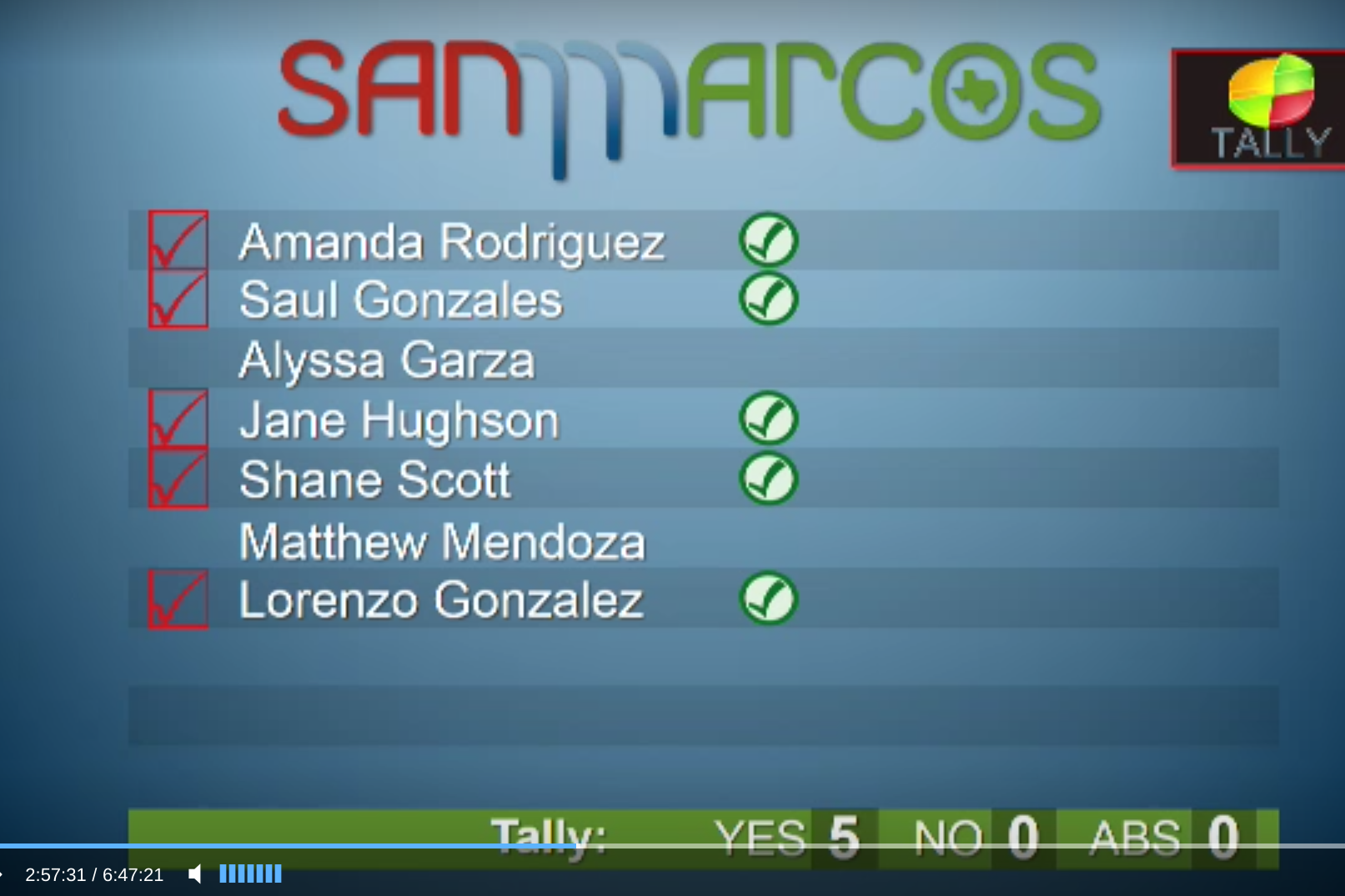
And that’s it! In the past, they’ve tinkered with these amounts, and moved $100 here and there whimsically, but this time they just vote.
The vote to award these CDBG grants:
Yes: everyone. No: no one.
….
…..
Item 9: The big item. We’re talking about annexing a SMART/Axis road.
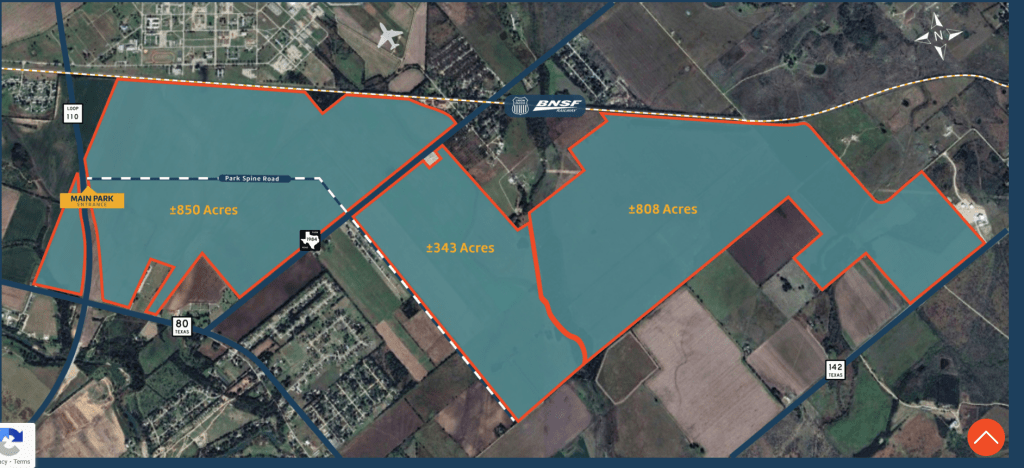
January 2023, Council makes a development agreement with Franklin-Mountain for this property:
Look how big that is! It’s wild.
Here is a complete list of all the details Franklin-Mountain gave for this project:
[ … Silence….
…crickets….
Somewhere, a train whistles in the distance. ]
In other words, they wanted complete freedom to do whatever they want on this land. And so Council gave it to them! The worst-case scenarios would be some sort of toxic industrial mushpot.
As soon as the community found out, they were super angry. The development agreement contract had already been signed, though.
So the community started looking for the next Council decision point, to intervene and turn the ship around. Franklin-Mountain needed annexation and zoning to start their plan. So the community focused on this.
Franklin-Mountain reluctantly tried to placate the community. But every time they met with the community, they pissed everyone off. They would just stonewall and give bland platitudes. Everyone got madder and madder.
Eventually the community put enough pressure on council, and Franklin-Mountain withdrew their application at the last minute. That was in the summer of 2023.
Which brings us to today.
This is the first time they’ve been back since last summer.
Back to this map:
Here’s the version on the company website:
We’re going to look at the left half of it:
This is just south of the airport.
Here are the roads that we care about:
That is, Loop 110, the new loop on the east side, Highway 80, and a tiny country road called Highway 1984.
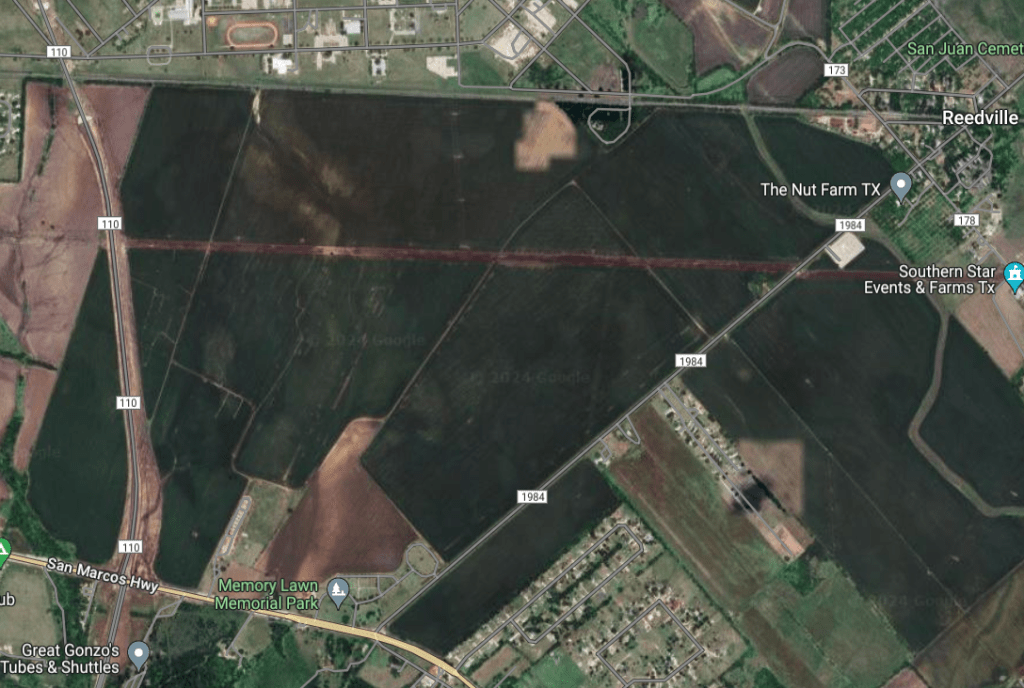
And just for funsies, here’s the aerial view of what we’re talking about:
So notice that dirt road running horizontally across.
In the original plans, there was a road here:
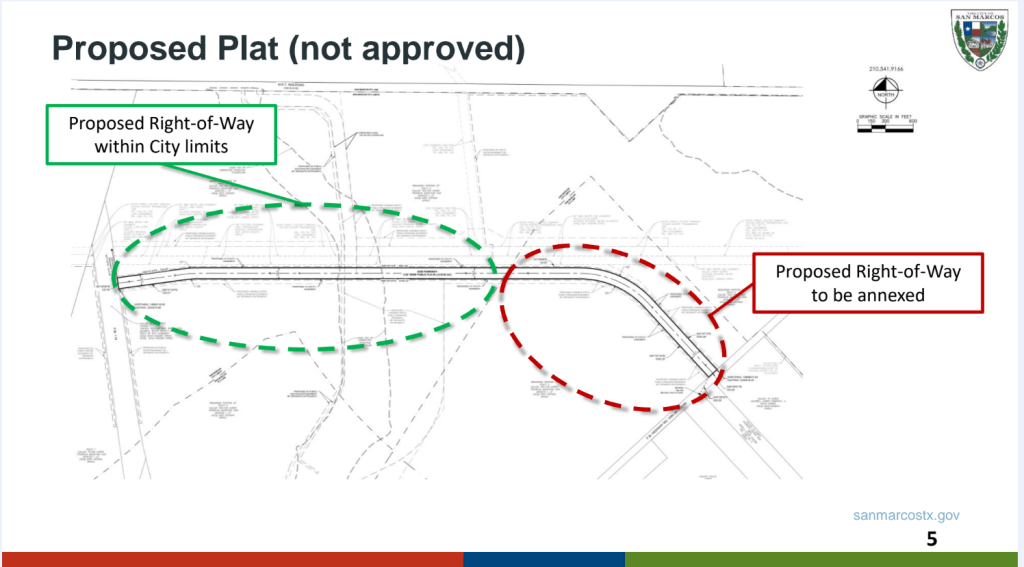
Now, we don’t care about the WHOLE road. We care about the red portion of the road:
Franklin-Mountain wants San Marcos to annex that part of the road in red.
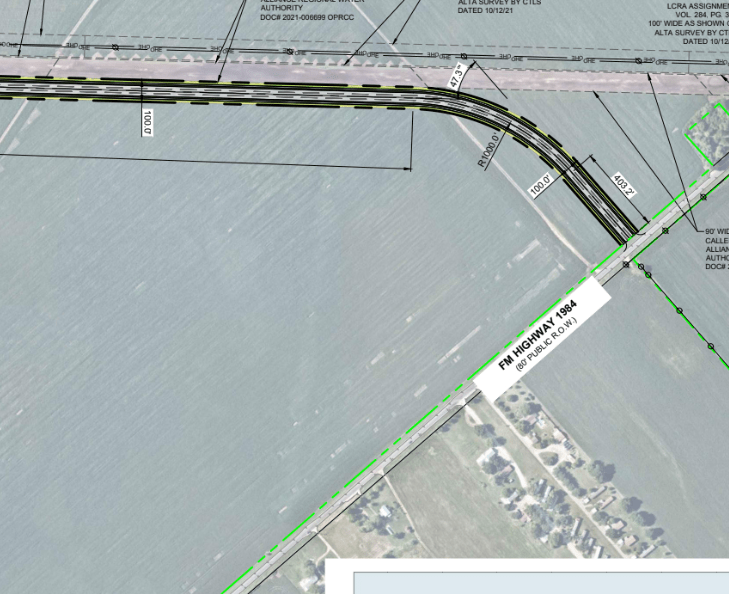
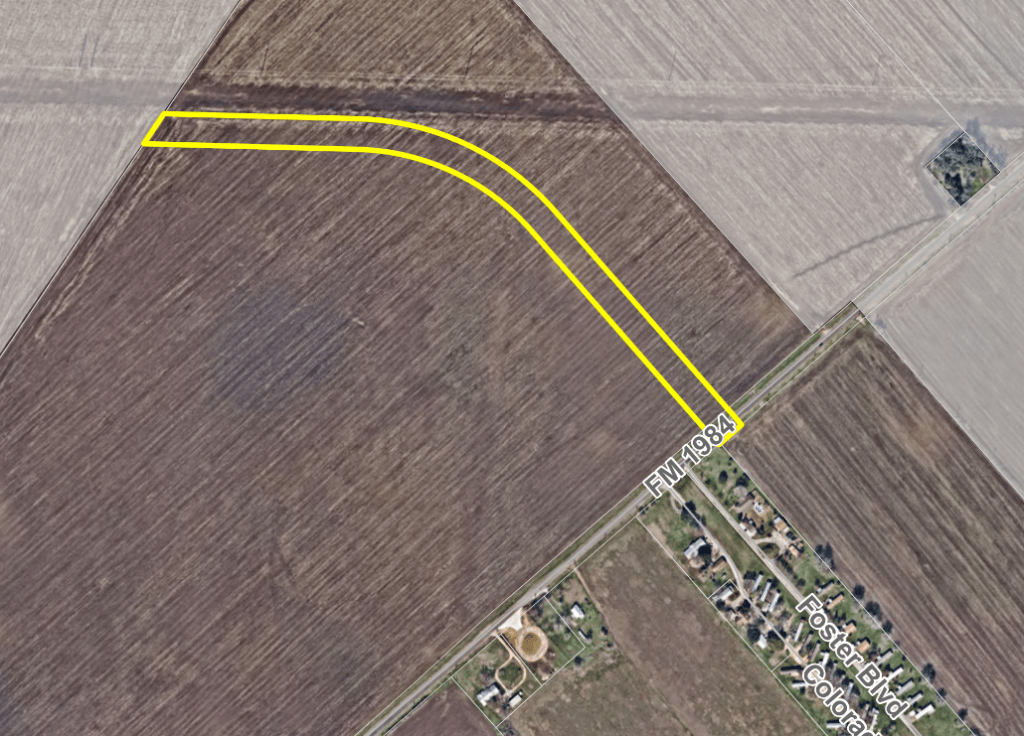
So first, notice that the road has jumped since the original plan:
Original on left, new version on the right.
You can tell it jumped by looking at the homes off of 1984. It used to be away from them, and now it’s right at the homes. This road is supposed to continue straight along someday. So now it will run along everyone’s back yard, instead of being separated by a field. This is a point of contention.
Franklin-Mountain wants San Marcos to annex the land and maintain the road. I think they’d still pay for the initial costs, though.
…….
Fundamentally, there are two questions:
Do we loathe and resent SMART/Axis so much that we basically just want to stall/delay/irritate them out of San Marcos? Or at least get them to take our concerns seriously?
For me, the answer is a hard yes!
Does this road benefit anyone besides SMART/Axis?
Here’s where it gets murky. It’s hard to tell what’s a good faith argument, and what’s a fake argument designed to give cover for Franklin-Mountain. There’s definitely some bullshit that we’ll try to weed through.
What does the public have to say?
This only benefits the developer
1984 is not equipped for this kind of extra traffic, because there will be heavy 18-wheelers constantly going to and from SMART/Axis.
They should submit plats and a Traffic Impact Analysis (TIA) first.
This runs along people’s homes now.
According to the development agreement, if you move a road, you have to get an amendment to the development agreement. Clearly they moved a road.
What does city staff say?
This road is supposed to connect big trucks from I-35 to SMART/Axis. Hopefully they won’t use the 1984 part, but we can’t tell them not to.
Running along people’s homes is actually a buffer! It’s a good thing.
We have a draft of a Traffic Impact Analysis, but the details are super sketchy.
The original road location was conceptual, not a major change.
What does council say?
Shane Scott: If this was an HEB, I’d say yes! But traffic is a nightmare out there already. You want to add more trucks? That sounds like a terrible idea. I’m a no!
Saul Gonzales: Samesies! I don’t see the benefit. Now is not the time.
Alyssa Garza: Can staff talk about the concerns about all the extra traffic on 1984?
Answer: We can’t prevent trucks from taking 1984. They have to put signs encouraging trucks to take Loop 110 though. We just don’t know the future.
Jane Hughson: If we deny this annexation, can they still build the road?
Answer: Yes. They would have to work with Caldwell County, and build it to Caldwell standards.
Jane Hughson: If we annex it in the future, we’d have to pay for the upgrade to San Marcos standards?
Answer: Yup.
Alyssa Garza breaks in: My spidy sense is telling me that Annie Donovan might have a useful point to make here.
(Citizens can’t talk during the discussion unless a councilmember calls them up.)
So Annie goes up to the podium, and says, “Franklin-Mountain already tried to build the road under Caldwell County standards. But Caldwell requires a full plat and all kinds of information that these guys won’t supply. So Caldwell wouldn’t grant them a permit. We’re their back up plan because we let them get away with anything.”
Isn’t that enlightening? Other counties don’t give freebie blank checks to developers like we’ve done! They require the developer to explain what they’re going to be doing to the land. Amazing.
Alyssa: Staff, do we even talk to Caldwell County about these things?
Answer: [Vague mushpot of an answer about Intralocal Agreements and whatnot.]
Jane: Why would trucks come down 1984 to get to SMART/Axis? This seems like an internal road to me.
(I don’t know why Jane thinks this. Look at the map:
Definitely not an internal road or dead end. Regular old two-way road from Hwy 1984 to Loop 110.)
Matthew Mendoza: I know 1984 very, very well. Been out there my whole life. My cousin was killed there. We have to do this, to make 1984 safer! I wish it weren’t so close to the houses. But this is so important.
Mark Gleason: Thoroughfares are good! I don’t like the proximity to the houses, but development is coming, so we should be the ones to do it. I’d like to talk directly to the developer, but they aren’t here. But yoo-hoo? If you could show up next time? That would help!
Usually developers send a representative to hearings, especially if it’s controversial like this. The representative would say sympathetic things to the neighbors, in a Bill Clinton “I feel your pain” kind of way. They can also answer questions and discuss compromises with city council. This is the bare minimum to pretending to care about the community.
These shmucks can’t clear that low bar. Mark Gleason wants to ask about the road moving, and maybe find a compromise with them, and so he is trying to alert them that they really should show up and field some questions.
Jane: I also don’t like proximity to houses. But when you think about it, isn’t a road just a different kind of buffer? What, otherwise they want some nasty industrial building in their backyard? This is a WIN!
Mark: I bike to Martindale. Highway 80 is wild in between 110 and 1984! Be forward thinking!
Alyssa: Could staff explain why this road is life-saving? Is that for real?
Answer: Well, it at least is good for traffic flow. Always better to have an alternate route in case of an accident!
Staff engineer: We like the San Marcos street and drainage standards better than the Caldwell standards. It’s also good to connect streets.
My thoughts:
First, the safety argument is worthless. This road will absolutely not make Highway 1984 safer. It will definitely increase traffic on 1984. There is no way there could possibly be less traffic on 1984.
Look, if you want to make 1984 safer, you do things like this:
There is nothing on there remotely related to our situation on that list.
This road is good for traffic flow! If Hwy 80 is backed up, people have a second route to get to I-35. But it is not good for safety.
…
Let’s be blunt: If SMART/Axis was a great project run by a transparent, forthcoming company, and everyone was thrilled about it, this road would be fine.
People who are opposed to this road are really saying that they’re opposed to giving any ground to SMART/Axis.
The question is: for the people in favor, are they toting water for SMART/Axis, or do they genuinely believe in the beauty of this road?
This meeting is just a first vote – there will be a second reading at the next meeting.
The Preliminary Vote:
Yes, I want this to come back next meeting: Jane Hughson, Mark Gleason, Jude Prather, Matthew Mendoza
No, shut it down: Saul Gonzales, Alyssa Garza, Shane Scott
I would have voted no, as a vote against SMART/Axis. In a different world with a different company, the road is probably fine.
….
Items 10,11, 12, 14, 15, 16: A whole bunch of utility stations and electric substations and things like that.
La Cima is getting a Pedernales Electric Station here:
That is just past the intersection where Old RR 12 meets New RR 12:
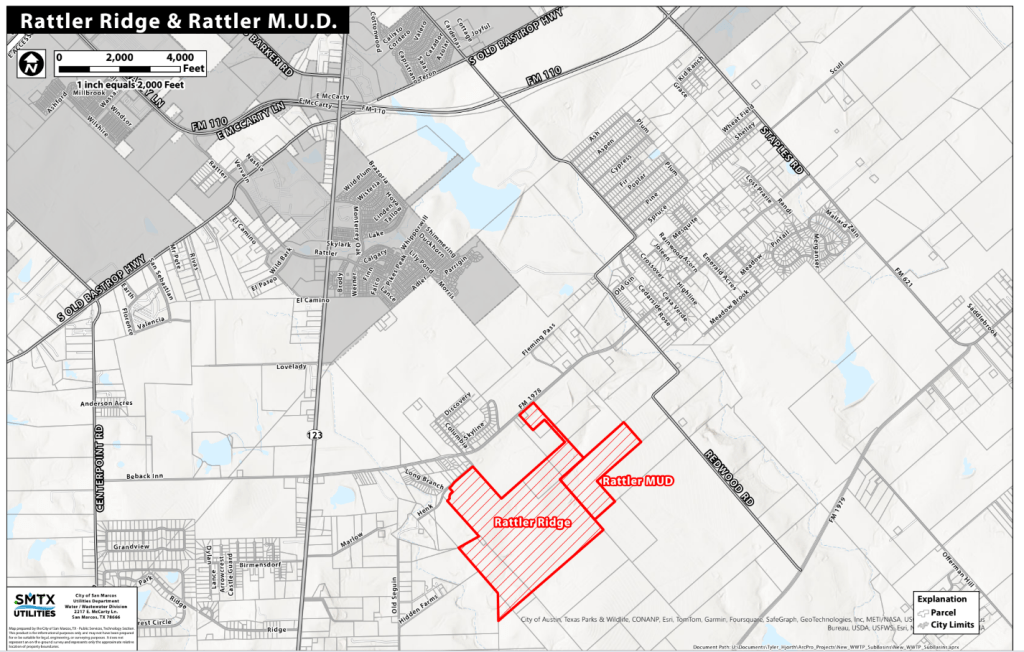
We’re annexing the electric Rattler substation here:
which is here:
We’re annexing the Guadalupe County Municipal Utility District No. 9, which is here:
And creating the new Sedona Municipal Utility District No. 1 here:
and we’re paying $3,218,046.00 to Payton Construction, Inc., for the Comanche Pump Station Improvements Project here:
Also we’re spending $2,340,876.46 for waterline construction along Staples Road.
…
Item 18: Hail damage
Apparently city cars had $1,483,482 worth of hail damage from the May 9th storm.
San Marcos is part of something called the TML Intergovernmental Risk Pool, where a bunch of cities all band up together, pay into a pool, and basically self-insure.
So our deductible is $25,000 to cover the $1.5 million in hail damage. Not bad.
A solid hour of citizen comments to kick things off!
Nearly everyone – 17 speakers – spoke about the issues of Malachi Williams’ death at the hands of SMPD, and calling for a ceasefire resolution for Gaza.
The family and activists are calling for three things:
Release the name and badge ID number of the officer that killed Malachi Williams
The officer should be placed on leave while the investigation is ongoing.
The family should be able to view all officer and storefront footage, with a lawyer present.
It sounds like the chief has offered to let the family watch some of the footage, but not all, and is denying the request to have their lawyer present. That’s pretty goddamn outrageous that you would ever require someone to forgo a lawyer in a legal context. (They don’t have a right to a lawyer, because nobody is under arrest or anything, but plainly it’s what’s fair.)
A lawyer would be able to inform the family about what Chief Standridge is legally able to do, and what he can’t, and a lawyer can advise the family – on the spot – on what’s in their best interests. If a lawyer isn’t there, then Chief Standridge is the authority on what Chief Standridge is legally able to say and do. See the problem?
One guy from Outsiders Anonymous shows up to advocate for their gym/treatment center during the CDBG grants item. (We ended up funding them at about 80% of what they asked.)
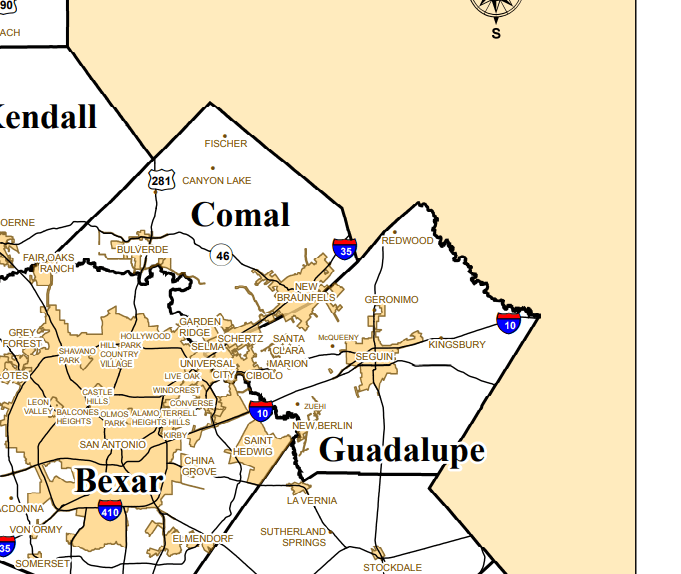
One speaker talks about her adult child with disabilities. There’s no day center in San Marcos anymore, and he commutes to New Braunfels.
We absolutely should have a day center for adults with special needs. I’m super uninformed on this topic, but it’s definitely part of serving the needs of your community.
But let’s talk about the other part: there’s no public transportation to get back and forth between San Marcos and New Braunfels.
And the two systems don’t overlap or coordinate on their boundaries, so there’s just this cliff dividing San Marcos from its neighbors:
Puzzle pieces! (I had fun making that picture.)
Suppose you use the shuttle service because of your physical disability. How are you supposed to get from Redwood to San Marcos? There are a lot more mental health resources in New Braunfels than in San Marcos, but only if you’ve got the means to get yourself there and back.
Listen: Seguin, New Braunfels, and San Marcos need to triangulate on some shared public transit along I-35 and 123. Austin Metro is not meeting our needs here.
…
Item 9: Community Development Block Grant applications, 2024-25
HUD gave us $766K this year to give away, and we’ve got $639K rolling over from last year. So total, we’ve got about $1.4 million to give away.
First off: we have $639K leftover? Out of $712K that we were awarded last year? What on earth happened?!
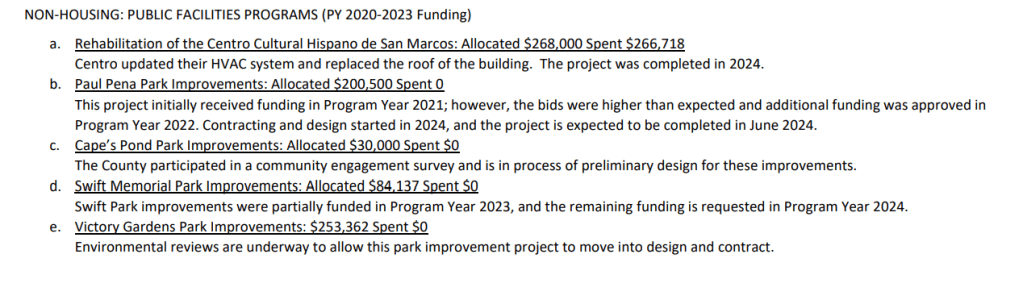
It turns out that it rolls over from year to year, and there are project delays. It’s spelled out in the report here:
So the first two categories – Housing Programs and Public Facilities – are really falling short.
Alyssa Garza asks about the Housing Rehab program?
Answer: Housing Rehab had $800K from CDBG and $800K from ARPA, for a total of $1.6 million. They are running seriously behind. Currently there are 30 houses with bids in place. Five are under construction and 25 are pending, and that will use up the funding.
Alyssa also asks: Can we hire lawyers to help homeowners with title problems? (This is mentioned under the Home Demo program above – “Properties with sub-standard structures also tend to have ownership issues”.)
Alyssa: There are free legal aid programs at St. Mary’s and UT-Austin that have offered to help.
The staff is vaguely friendly about this suggestion, but not in an “omg I’ll do that tomorrow” kind of way.
In the end, they decide to put “paying for a lawyer” on the list of side-projects that can be consulted when there’s a loose bit of money that suddenly becomes available.
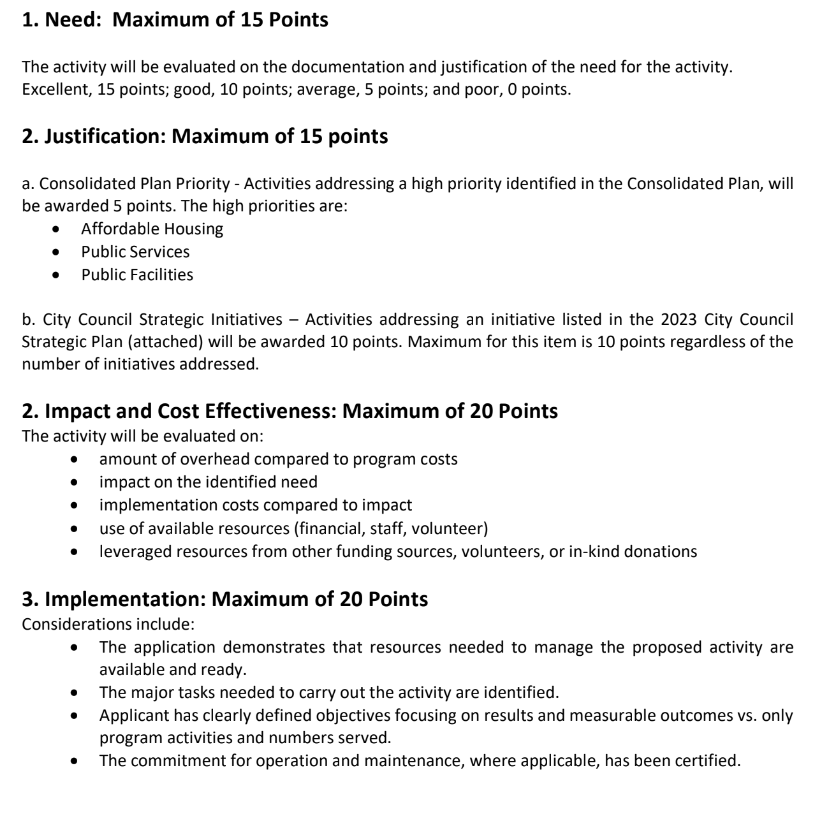
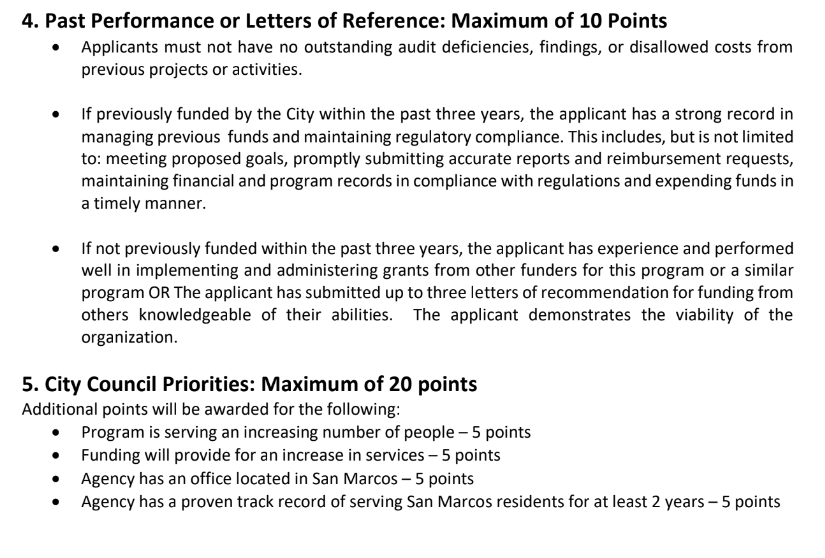
Onto 2024! Here’s the criteria that we use:
(For what it’s worth, I don’t love the Council Priorities. I think they risk creating perverse incentives.)
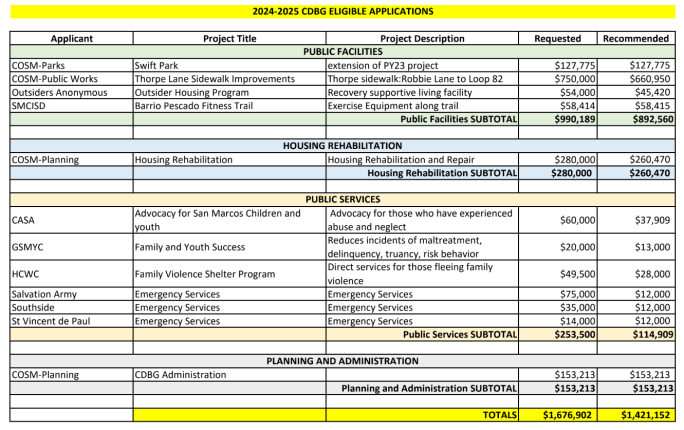
Moving on! There was one ineligible application and 11 eligible applications. Here are the recommended funding amounts from staff:
Anyway: Council does not make any changes.
I believe this is just a first reading, so if you’ve got advice for Council, you’ve got another chance at the July meeting.
…
Items 10-11: Kissing Tree
Kissing Tree was approved in 2010. It’s a PDD – “Planned Development District”. This means the city got to micromanage every last detail of the whole project, and put it in writing, in a contract.
[Quick primer on PDDs: They’re a mixed bag. You can spell out exactly what will be built, but you can also waive a lot of regulations that the developer doesn’t like. In general, PDDs are only as good as the Council that negotiates them.
We got rid of them in 2016, which was an unforced error and I’ve complained about it a lot. Then recently we brought them back again. So now the city has the ability to lock things down again.]
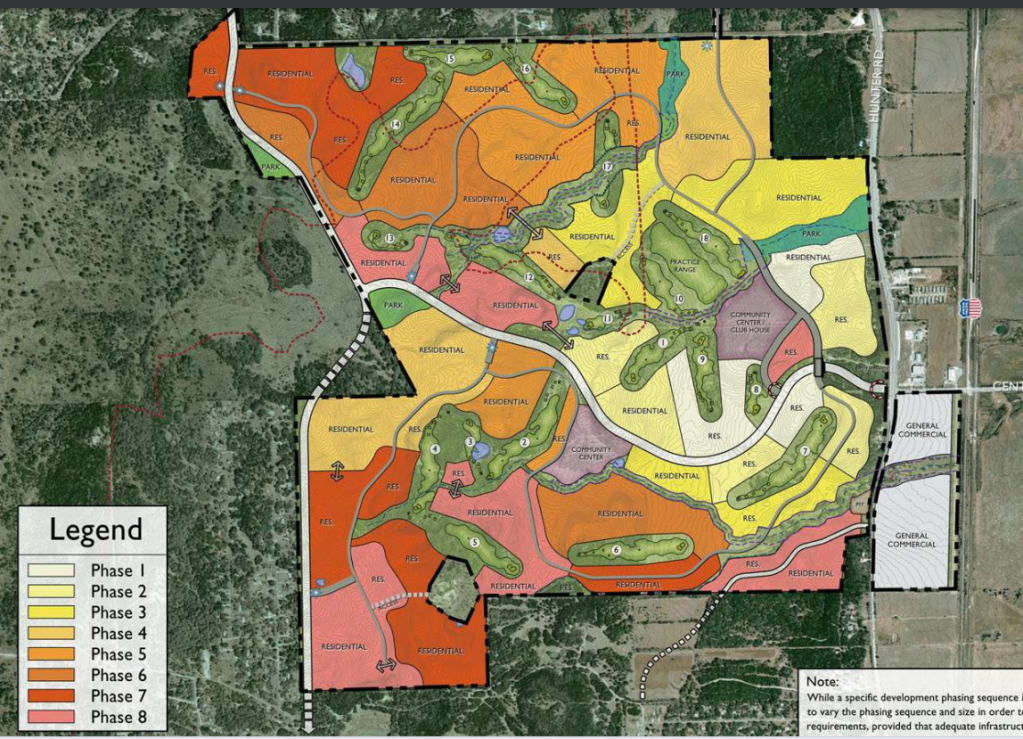
Here’s where it is:
You know, this thing, out on Hunter Road and Centerpoint:
That map has not been updated since 2010, so I have no idea how much has been built out already.
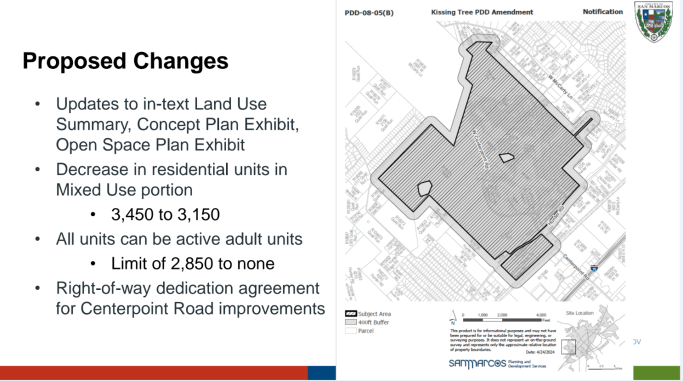
Kissing Tree wants to modify their PDD, so they have to go back to Council. Here’s what Kissing Tree wants to do:
“Active Adult Units” means senior housing.
In other words: The original plan is for 3,450 units: – 2,850 were senior housing – 600 were available for everyone else.
Now they want build 3,150 total units: – 3,150 for seniors – 0 available for everyone else.
It’s not that big a deal – I’m sure this is more profitable for them now – but I’m irritated that no one provided an explanation or talked about consequences. In fact, Council talked about it for roughly 30 seconds, and this was the entire exchange:
Shane Scott: “This is a great example of why PDDs are so useful. We got rid of them, and we should bring them back.”
Jane Hughson: “We are bringing them back. We’ve discussed this.”
Shane: “Was I here for that?”
Jane: “I think so?”
SMCISD gets kind of affected by this kind of decision. The problem is that San Marcos is lopsided – we need more families to balance out all the non-family tax base (ie the university, the outlet malls, and things like Kissing Tree.) From time to time, we get dinged under the state’s Robin Hood law and have to send money back to the state for poorer districts, despite being a Title 1 school district ourself. It’s a complicated mess.
But just remember: Texas squandered a $32 BILLION dollar surplus last legislative session. This was sales tax money – from all Texans – which got sent back to property owners. We literally took money from renters and gave it to home owners.
There is plenty of money in this state to fund all schools properly. We just need to elect a governor and legislature that wants to do so.
….
Item 12: Good news on the Water-Wastewater Treatment Plant front!
We’re getting a new centrifuge:
and a diffuser replacement in aeration basin:
We promise not to spend more than $6,716,477.45.
And a very special San Marxist shout-out to the kind soul on city staff who put these photos in the powerpoint presentation!
These slides didn’t even get shown during the meeting. I see you, I appreciate you.
…
Item 16: We are meekly opening the door for the possibility of maybe someday, beginning a conversation about paid parking downtown.
This is such a tentative baby step that there are no details or decision points yet. We’re just strapping on our sun bonnets, lacing up our sneakers, and sizing up the path ahead of us.
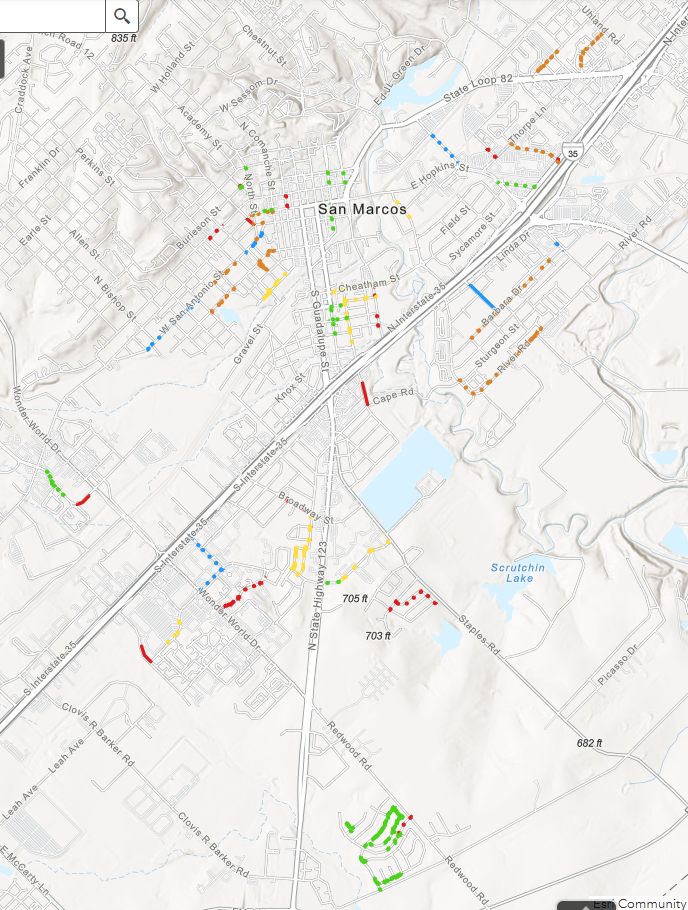
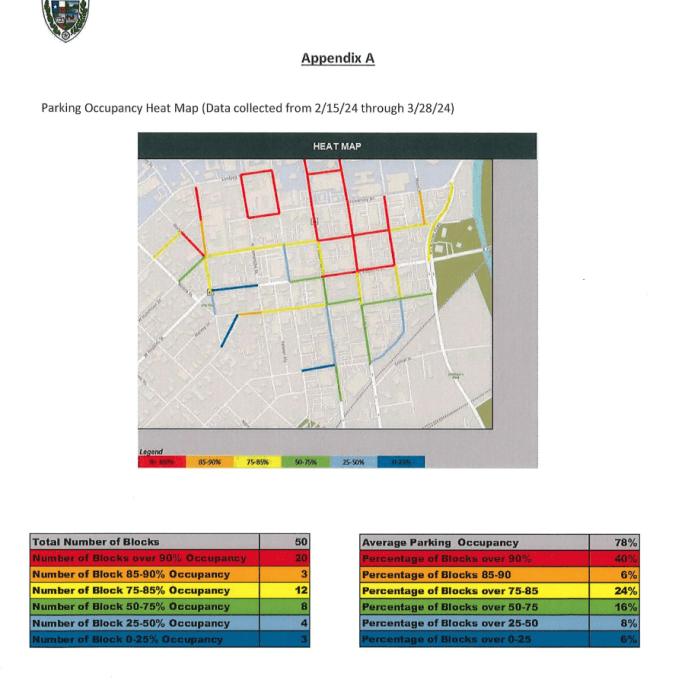
I did think this heat map was interesting:
That map is pretty unintelligible; here’s my attempt to improve:
This is only measuring parking – not traffic congestion or anything.
Here’s what the colors mean: 20 red blocks: street parking is generally over 90% full. Three orange blocks: street parking is usually 85-90% full. Twelve yellow blocks: street parking is usually 75-85% full. Eight green blocks: street parking is usually 50-75% full. Four light blue blocks: street parking is usually 25-50% full. Three dark blue blocks: street parking is usually under 25% full.
Several people from the SMART protest community showed up to talk about Item 18, the revision to the San Marcos Development Codes. We’ll get to this.
A few people talked about different good projects for the CBDG money.
Item 10: CBDG money for 2023-24.
This is $712K of federal money from HUD that’s intended to help community programs for low-income folk.
Here’s the requested amounts, and what ends up being awarded:
The “rec” amounts end up being approved by council.
On the Habitat House Counselling program: The federal department, HUD, requires housing counselling in certain situations. Habitat offers an online course and then individual counselling thereafter. A rep from Habitat for Humanity shows up to explain all this. But it wasn’t persuasive, because the cost is wild: Last year, Habitat charged San Marcos $13,000, and only 11 San Marcos households participated.
HUD offers a free online house counselling course. Sso we’re going with that. (We still work with Habitat on housing construction. Just not counseling.)
Shane Scott asks if we can boost CASA to $60K. The problem is that HUD has categories for this money, so you can’t dip into any project you want to move funds around. They decide that they’ll just boost CASA from the other money they dole out – the city money (HSAB) or the last bit of Covid money (ARP).
Item 11: Running wastewater from Whisper Tract down through Blanco Shoals natural area, to connect with the city wastewater system.
I’m only including this item because it annoyed me. LMC spoke during the public hearing, and asked if this involved tree removal. Would the city hold itself to the standards that it holds its citizens?
Mark Gleason follows up: Will this require tree removal? Answer: It could! Mark: Is there a remediation procedure? Answer: nope! Jane Hughson: Can we add a remediation procedure in? Answer: It’s not in the development agreement with Whisper. [Translation: you can’t make the developer pay for tree remediation.]
Ok, fine, but we can certainly pay for tree remediation. But it just gets dropped, exasperatingly.
This is the Council Dance: – Here, we identified a problem. – Let’s all sit uncomfortably for a sec – Rather than fix it, just pat it on the head and go on our merry way.
Also: Add in tree remediation to your goddamn development agreements, Council!
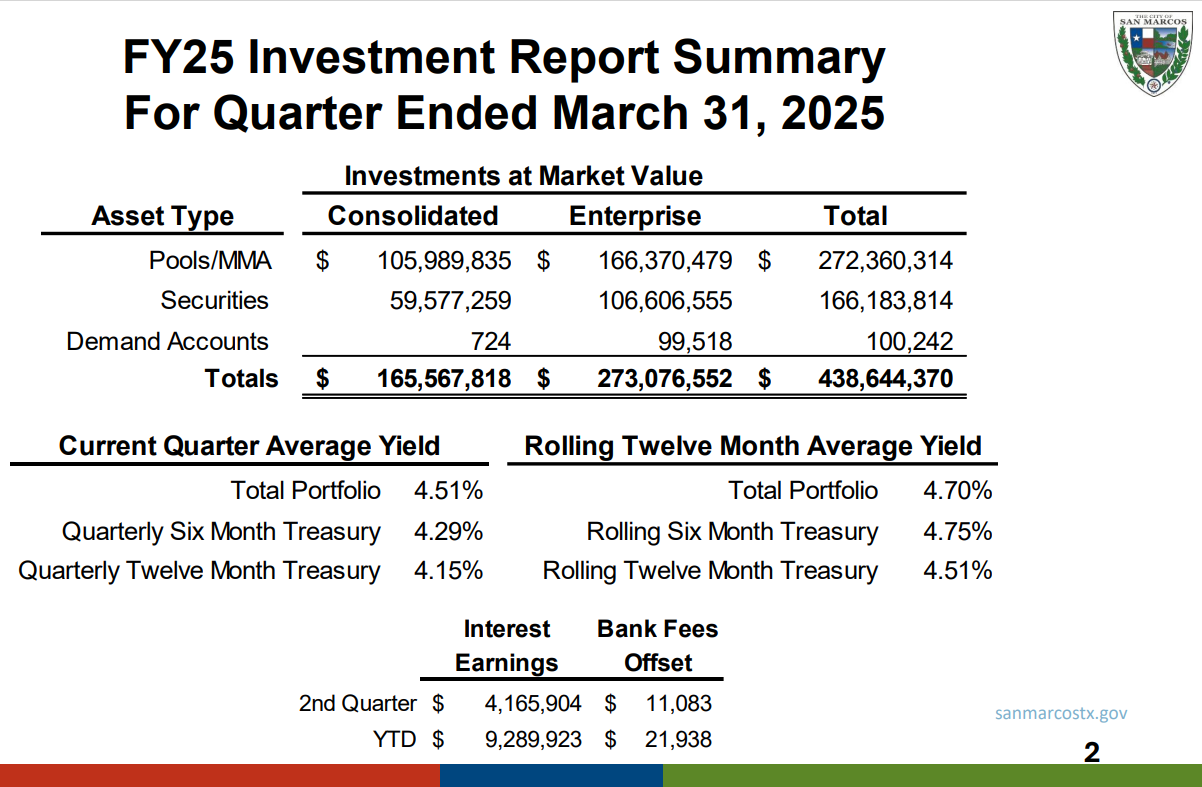
Item 12: Issuing $3.7 million dollars in bond debt. I didn’t really follow the details, but our AA bond rating was affirmed by Standard & Poors, which was presented as a thing we should feel good about.
Item 14: CURFEWS ARE BACK. This is delicious.
If you’ll remember, there was a three part giant shitstorm over renewing the curfew, last year. Mark Gleason decried the roving gangs of minors in his neighborhood. Mano Amiga turned out a large number of people speaking out against it. I myself made the case that curfews are dumb and wrong.
The final vote on curfews, back on 12/14/22:
So it passed. (I miss the clickers.) In theory, the Criminal Justice Reform committee was going to study the issue and bring it back.
However, the good hypocrites at the state level, in their quest to micromanage cities, felt differently!
H.B. 1819 seeks to ensure that all young Texans have opportunities to succeed without the burden of a criminal record early in life by eliminating the authority of political subdivisions to adopt or enforce juvenile curfews.
It’s really an oddly specific thing for the State Legislature to care about. Based on this flyer, it was supported by a real mix of groups: a conservative think tank, homeschoolers, youth services and racial and social justice organizations.
The common thread seems to be anti-authoritarianism. Works for me.
Upshot: in order to comply with the new state law, the curfew has now been repealed. Hooray!
Item 15: Ending the contractor test requirement to pull a permit. This came up before as a discussion item, and now it’s happening. This is a good thing. Anyone can pull a building permit now.
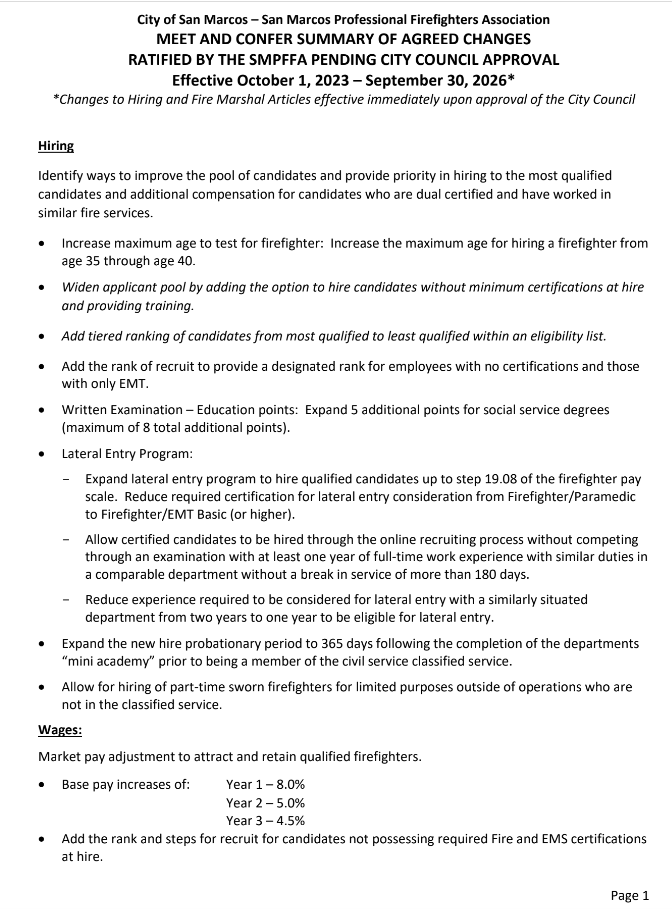
Firefighters also get to unionize and collectively bargain for their contracts. The firefighter’s union is SMPFFA. Since firefighters aren’t known for systematically stopping, harassing, and abusing people of color, SMPFFA gets a lot less attention than the police.
Citizen Comment: We’re going to focus on the SMART/Axis Terminal here. (It’s not otherwise on the agenda today.) There’s a group, Citizens Against SMART/Axis, which is holding a public meeting at the library on Sunday (6/11) at 3 pm. Here’s their flyer, off Facebook:
Ie, if you’re reading this on Sunday morning and you’re free this afternoon, why not head on over? They seem like nice people.
The big day will be July 3rd, when City Council votes on the Heavy Industrial zoning. If it passes, then we’ve given a massive blank check to a jerk who will then decide which industries come to San Marcos. Right now, there’s a lot of money in batteries and tech fabrication plants and things involving toxic rare metals and lots of water, and Texas has very lax environmental restrictions. That’s the kind of scenario that I’m particularly worried about. (I also think the sheer scale of it is bonkers.)
And if the zoning doesn’t pass? My guess is that there’s a contingency clause in the development agreement – if the zoning doesn’t pass, it invalidates the contract. Then the company could either develop under county regulations, or walk away for a year, or come up with a different proposal.
Have you all seen the yard signs around town?
I think they’re pretty effective. Partly because they put council members on notice that the community is willing to launch a public campaign: vote down Heavy Industrial, or the next public campaign may be against you.
Bottom line: Council shat the bed. It’s really astonishing how they passed this development agreement under so much quiet and stealth. It’s 2000 acres, for god’s sake!
…
Item 6: Community Development Block Grant money. (CDBG) The city gets federal money to spend on nonprofits. This year, we’ve got about $700K to distribute.
Here’s the criteria that staff uses to assess projects:
And here are staff recommendations:
Saul Gonzales asked about Habitat getting $0 for Housing Counseling. The answer: Habitat is really good at lots of things, but counseling ain’t one of them. Plus they’ve still got leftover money from last year. In general, we’re still partnering with Habitat, but just not for counseling.
As for the Housing Rehab program getting $0: somehow this is good for the city, for reasons I didn’t quite follow.
Alyssa Garza mentions that she hears a lack of trust in the nonprofit community about how these funds get allocated, and that increased transparency would help. I don’t have the expertise to read between the lines! But transparency generally sounds good to me.
…
Item 7: P&Z is going to gain some new powers: the powers of AIRPORTATION. Specifically, some height hazard zone regulations and compatible land use zonings. A lot of this is regulated by the FAA, but P&Z will get to weigh in on the remaining bits.
Whenever the airport comes up, everyone speaks cryptically about scandals that I’m uninformed on. We saw a snippet of it here. Even LMC weighed in on some convoluted past event from ten years ago. Frankly, I’m pretty sure I’m not capable of fully understanding whatever the hell went down.
….
Item 8: The city has a lot of 2 hour parking downtown. Now some of those sites will be relaxed, to 4 hour parking. Here’s where it will go:
Take your time! Shop around! You’ve got four hours now.
Council members asked some worried, nonsensical questions, as though we were tightening up restrictions instead of loosening them. Everything will be fine.
…
Item 9: We’re pretty terrible at paying parking tickets:
So the city is going to start putting boots on cars, if you have 3 or more unpaid tickets.
The point is to force the worst offenders to get in touch with the city and come up with a payment plan (or maybe schedule some volunteer hours instead – more on this later.) The plan is not to turn the screws on someone who is teetering on the edge of economic catastrophe. Of course, it always just depends if the program is implemented in good faith or not.
The top left and top right roads are Craddock and Old 12, where The Retreat is. This is the Crockett elementary neighborhood. The speed limit used to be 30 mph.
Now it will have a new, lower speed limit of 25 mph in on these streets:
Good for them! Drive like a grandma, everyone. Your car is lethal.
….
This is Uhland Road:
It runs from Post Road to I35, and then jumps north, and runs east to Harris Hill road.
Here we’re only looking at the part west of 35. These lucky folks are getting some speed cushions here:
Good job! Drive safe.
Jane Hughson wraps up by saying, “All right! We do listen to our residents! …um …when we’re talking about speed cushions. And changing however many miles per hour you can go in a neighborhood.”
That is hilariously self-aware of Jane Hughson. And it’s true: sometimes we listen to our residents. Other times, we don’t.
…
Item 13: $250K more to GSMP to fund a small business program. Seems fine, as far as capitalism goes. The only reason I noticed it was because Matthew Mendoza made a special point of praising this accomplishment.
Items 16-18: Various CDBG funding. Moving money around to fund rental and utility assistance, a project where they buy flood-prone land to keep it from being developed, and working on some ongoing flood projects for the Blanco Riverine and around Blanco Gardens.
Item 17: The Planning Department has a lot of fees for various services and permits. How do they set these prices?
It’s been a while since they updated what fees they charge. So they had a consultant come in and analyze how much it costs the city to carry out all these services. Then they compared fees to seven comparison cities. Then they shared all this at the December 14th workshop, and proposed new fees.
The city wants to balance covering at least 50% of their costs, without charging homeowners and small businesses too much or being too out of line with the other cities. I did not dive deep into the fees, but the methodology sounds fine. Council said it was all fine.
Item 20: The result of the HSAB drama from December. At the 3 pm workshop, city council worked on this with city staff. Here’s the outcome:
(Note: It says “The Board should not fund all programs” but they intended “The board should not feel compelled to fund all programs.”)
All seems fine. I think they’re going to go back and re-allocate the December money according to these principles.
Item 21: Mano Amiga circulated a petition to repeal the SMPD contract. Now, I obviously live here in San Marcos. If Mano Amiga were to approach me, I would sign their petition, because I generally support their mission.
But as your local friendly blogger, I’m going to call shenanigans – the actual petition is confusing. As far as I can tell, this is the entire thing:
What’s the actual, specific gripe with the meet-and-confer contract? And what’s the specific, desired outcome? Maybe there’s another page somewhere spelling it out? (Update: It’s the Hartman Reforms. But I still don’t see anything about it on the Mano Amiga website.)
Now this incident is extremely clear-cut abuse by the correctional officer. You’ve got an unarmed inmate in a hospital, wearing ankle shackles for god’s sake. He tries to escape. The officer shoots him six times. That officer had some fantasy that the only way to handle a person running away was to be judge, jury, and executioner. Joshua Wright has to die because this correctional officer can’t properly evaluate and handle the danger of an unarmed guy wearing ankle shackles. What the utter fuck.
Mano Amiga is clearly livid, and sprang into action, demanding bodycam footage and holding events and raising awareness. Of course, I wholly support their efforts for justice for Joshua Wright. This is the most just and deserving of causes to fight for.
Item 13: Marijuana has now been decriminalized in San Marcos! Go nuts. But not too nuts, because you’re still in Texas and none of the other police forces (including the Tx State campus cops) are playing by these new rules.
….
Items 14/15: Reallocating money.
The Chamber of Commerce has $200K leftover Covid Relief money. The city is giving it to a few other programs:
Training members of the community to get certified on QuickBooks for bookkeeping
Training local small business owners and setting them up with bookkeepers from the first program
Childcare gap funding for families
I am hugely in favor of that last one. Childcare is wildly expensive.
There’s also some CBDG-covid money to be reallocated, $188K worth. The city staff propose that it go to two programs:
Marble Falls has a stress-healing nature program, where you’d take a bus there and spend a day or two outside. It’s ~$300 per person, which would be covered by $75K of the Covid money.
Improvements to the Kenneth Copeland Memorial Park. It used to be the El Camino park, but was renamed to honor the officer that was killed in 2017. They want to put $112K into improvements to it.
Nobody likes the Marble Falls idea. Too far away, too expensive, and we have very nice local parks.
Alyssa Garza proposes that we use the money on something that meets people’s direct needs a little better – rental assistance, utility assistance, that kind of thing. Jane Hughson, Saul Gonzalez, and Matt Mendoza all basically agree with Alyssa.
Mark Gleason and Jude Prather want to put $113K on the Kenneth Copeland park, and the other $75K on rental assistance.
Shane Scott wants to put all $188K on local parks, arguing that parks benefit everyone, while rental assistance only benefits some people.
Alyssa says, “You guys. The people are going to be living in those parks if we don’t help them cover their rent,” and tells them they’re out of touch with the needs of the community.
Jude Prather relents. But he makes some dippy comments here, “Could we call it Kenneth Copeland rental assistance?” (The park is already called the Kenneth Copeland park. We’re not disrespecting the officer by postponing new picnic tables. It’s already a nice park.) “Next September, I’m knocking on your door for that Kenneth Copeland money!” he says. Jane Hughson suggests that he doesn’t need to wait till next September. He can just go through the normal budgeting process that starts in a few months.
Anyway, five councilmembers want to direct the money towards rental assistance, so that’s how it will go.
…
Finally, they have to go through and replace Max on a bunch of committees and such. There’s probably 20 appointments or so.
Some that caught my attention:
Shane Scott has joined the Criminal Justice Review committee
Alyssa Garza has joined the Workforce Housing committee.
And a bunch more. Mostly these details are getting too into the weeds, even for me.
The big topic of the night is the film studio to be built out in La Cima, and what kind of tax breaks they should get, and what kind of expectations should come along with it. Someone from SMRF spoke about holding them to high environmental standards. Another speaker spoke in favor of it.
Rodrigo Amaya talked about one specific police officer who is known to racially profile and harass Hispanic community members at Rio Vista.
Remember the dangerous intersection in front of the Methodist Church? That was on April 19th. There is now a stop sign, and the head of WalkSMTX came to profusively thank the city for their quick action. That is some responsive governance right there.
(Some financial reports, an annexation into La Cima which is just more houses and not the film studio.)
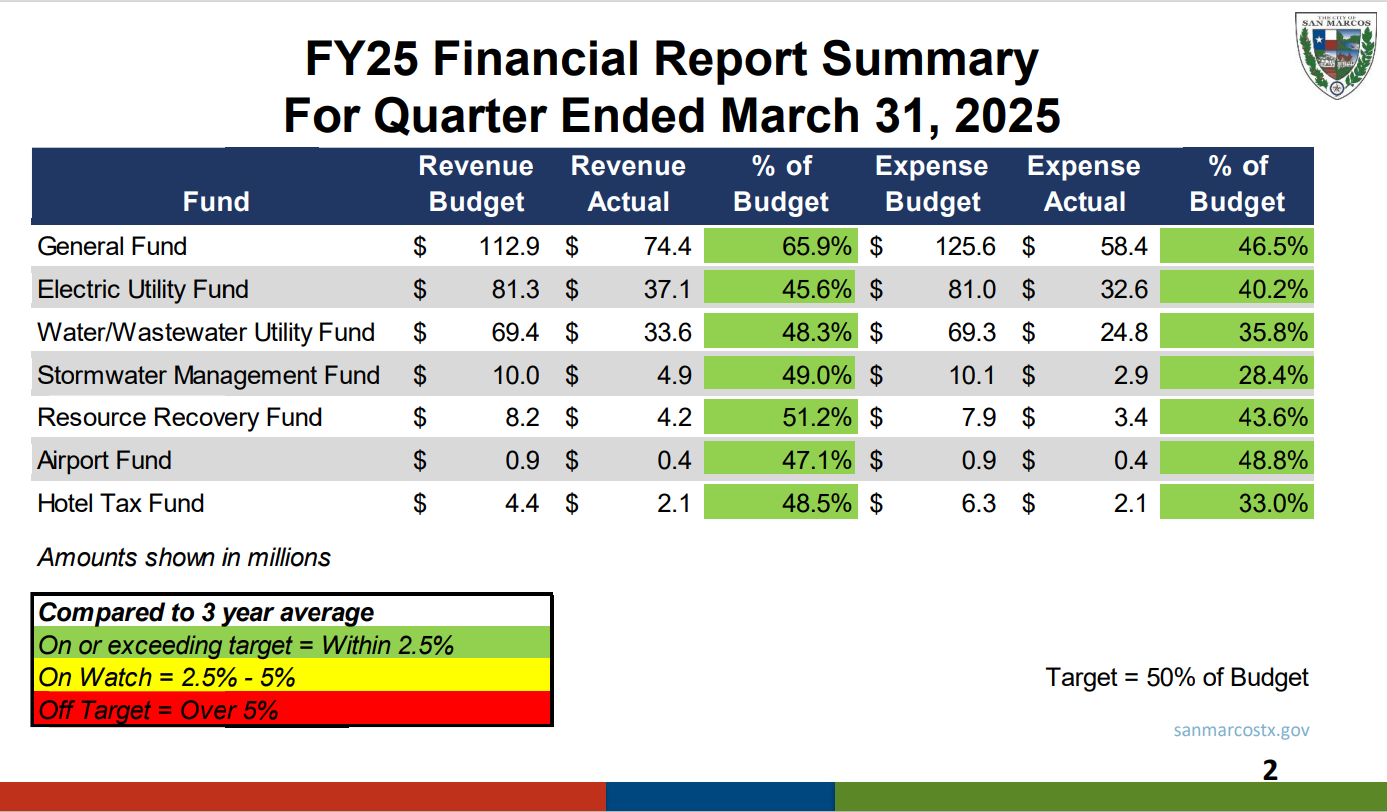
Item 29: ’22-’23 CBDG Grant Allocations
There is about $850K in Community Block Development Grant (CBDG) money to be allocated this August. Tuesday’s presentation gave preliminary recommendations about how to divvy it up. Applicants are the Hays-County Women’s Shelter, Habitat for Humanity, CASA, Salvation Army, about four different city programs, and Southside Community Center.
One of the city programs – the homebuyer assistance program – has been a flop, because there aren’t any affordable houses. So that is discussed, but not axed.
Max Baker tackles Southside Community Center. Basically, there are a lot of reasons to feel warmly towards Southside Community Center – they’ve been serving the homeless for a very long time, and doing so when no one else was. As Jude Prather put it, “their heart is in the right place.” There are also a lot of reasons to be critical of Southside – in recent years, it sounds like the director had his hands full with medical issues, and the management has fallen apart.
Southside asked for $115K of CBDG money, and staff is recommending $55K. However, Southside is apparently sitting on $392K, unspent, from prior years. Max Baker wants to know why we’re even considering giving them an additional 55K.
He starts by reading this bit that city staff posted to the message board, after Max asked about the $400k:
Staff: As a subrecipient, Southside is essentially a “staff extension” – they must handle a program exactly like staff would handle it. Staff is responsible for setting them up for success, ensuring they are trained. In 2019, all City staff responsible for development and oversight of the program left. In 2020, the HUD monitoring had an extensive 15 findings that included every part of the program – such as documenting whether contractors were procured competitively, whether homeowners received information appropriately, and what each expenditure included. HUD required that City staff completely rewrite the policies and procedures and retrain Southside. Staff also chose to take on some of the actions such as procuring contractors, in order to ensure it was done correctly. Southside has been on hold since, waiting for 1) policy and procedure rewrite 2) retraining 3) contractor procurement. In addition, Southside was responsible for the application intake and income verification process and that did not go well; staff has taken this over as well and is working to receive the correct income documentation from applicants.
Max goes on to say “…This is the first time I remember hearing that there is this large pot of money that is being unused because of Southside’s – I’m going to put it bluntly – incompetence in managing a program, or having the staff necessary, to deal with this. … If staff is doing so much of this work, why are we still working with Southside? My assumption is that it’s because they have the building.”
(The answer to this is supposed to be posted to the message boards, but it’s not up yet.)
As usual, Max is right, but kind of hostile and undiplomatic about it. Southside isn’t run by bad people. Staff is not bad people. Maybe we shouldn’t be awarding Southside more money at this moment, but maybe we can say it more nicely?
…
On a different note, Max Baker has an excellent suggestion that the CBDG money could be used to provide 24 hour restrooms available for homeless people and the general public. This is really important. We can ameliorate some of the worst difficulties of living on the streets, while simultaneously working to get people off the streets.
The next recurring theme was a large amount of money to be allocated, across different items.
Items 35-36, $9 million from American Rescue Plan Fund (and it sounds like there will be 9 million more, next summer.)
Item 40, $800K in CBDG proposals for the 21-22 fiscal year
Item 41, $1 million in utility assistance
So these were quite a lot of fun – feeling flush with cash and able to grant all the wishes to all these nonprofits. Down with austerity and belt-tightening!
On the first, the American Rescue Plan Fund:
– they argued about whether tourism and marketing should get quite such a big cut. It seems that this sector is limited in where they can seek funds, and they did take quite a hit during COVID. But maybe not quite as much as was proposed. ($282K)
– they argued a bit about Briarwood, a neighborhood outside of city limits that suffers severe flooding, in part because of how San Marcos has been developing. There’s a 2.5 million stormwater mitigation project there. They managed to thread the needle on that one – postpone it by three months and fund it from several spots.
– A lot of small projects got some money: Southside Community Center, bilingual outreach and communications, KZSM, vaccination outreach, Nosotros la Gente, which provides shoes for local kids. Good feelings all around.
2. On the CBDG funds, nearly everything got funded besides Roland Saucedo’s proposal, which is seeemingly why they chipped in for him in the previous funds.
3. The Utility Assistance fund is interesting. They’ve paid out about 20% of what’s available, and they’re all concerned that people aren’t applying. City staff was put on the defensive about their outreach efforts.
– Everyone who is past due gets a letter with info on how to apply. If the city has an email address, they send an email too. – The city has reached out to the Food Bank and SMCISD. – The application was made fairly short – just one page. – Disconnections have been suspended during the pandemic, but there will be a date set to resume disconnections.
Criticisms:
– how about going through the churches? Commissioner Gonzalez says that he has to KEEP directing city to this and they never do. – Commissioner Gleason, Commissioner Derrick, and Mayor Hughson all feel like until you send them notice of disconnection, no one will be very motivated to apply. – Commissioner Garza talks about how people (meaning the Hispanic community) are more likely to just tighten their belts, out of not wanting to take more than their fair share, and that they’ll want to save the funds for someone who REALLY needs it.
Commissioner Scott, actually, was strongest on this: “Can’t we just see who is past due and pay off their balance without them having to apply?”
Hughson concern-trolled about undeserving people who have the money and could pay. Nothing Texas hates more than someone receiving some crumbs when they could have scraped by without them. Garza is enthusiastic about this proposal.
Scott’s proposal – just pay off the deliquent accounts – has to be put on the agenda and brought back as an item, because it didn’t fit onto the existing agenda. So it still could happen.
…
As an aside: there’s an ongoing dynamic where City Council and Lumbreras are perpetually exasperated with each other. It goes like this:
Council frequently acts like he has done something incompetent.
He then defensively retorts that they tied his hands in the way they made the request.
I am not sure yet who is being a jerk, or if there’s blame to spread to both. Mayor Hughson herself is a generally prickly person, and it often doesn’t mean anything.
…
All three topics will be finalized at some point in August.