We’re covering ALL of January. It’s a lot! All the action is at P&Z and the workshops:
How are we going to handle this EMS clusterfuck?
Are we going to start charging entry fees to out-of-towners at the river?
What the hell happened at P&Z last week, anyway?
(The actual council meeting was pretty breezy!)
Note: Between the ice on the ground and ICE terrorizing communities, our attention is getting pulled in a lot of directions. If you’re here, I appreciate it.
Here we go:
Hours 0:00 – 2:35: All little things. A PID, the Historic Preservation Plan, a little campus church, a senior citizens center, and bitcoins. Pretty quick, breezy meeting.
Bonus! 3 pm workshops: The details on the EMS mess. What’s San Marcos going to do next?
Only six speakers! (Contrast that with P&Z – about 100 speakers. We’ll get to that!)
Topics covered:
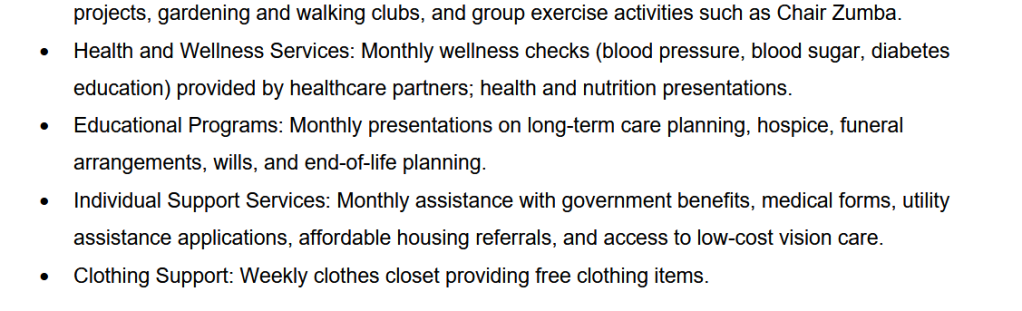
Community Action is stoked about renewing the lease for the senior citizens center
Please postpone the Historic Preservation Plan
Oppression is violence. Your neglect is violence against us.
A list of names of people killed so far by ICE
Reappointing the chair of the San Marcos Housing Authority
That was about it!
….
Item 17: River Bridge Ranch PID
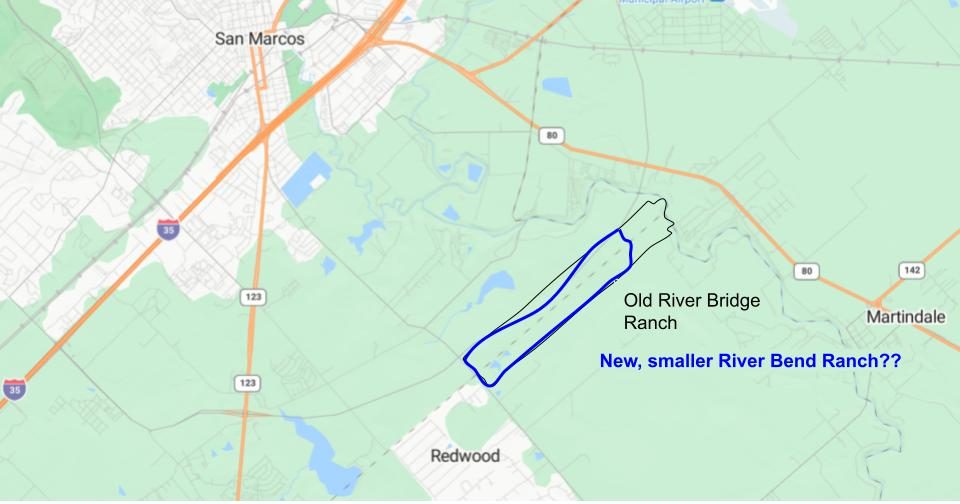
River Bridge Ranch is way out here:
It came up in December, here, when it shrunk to the new, smaller size.
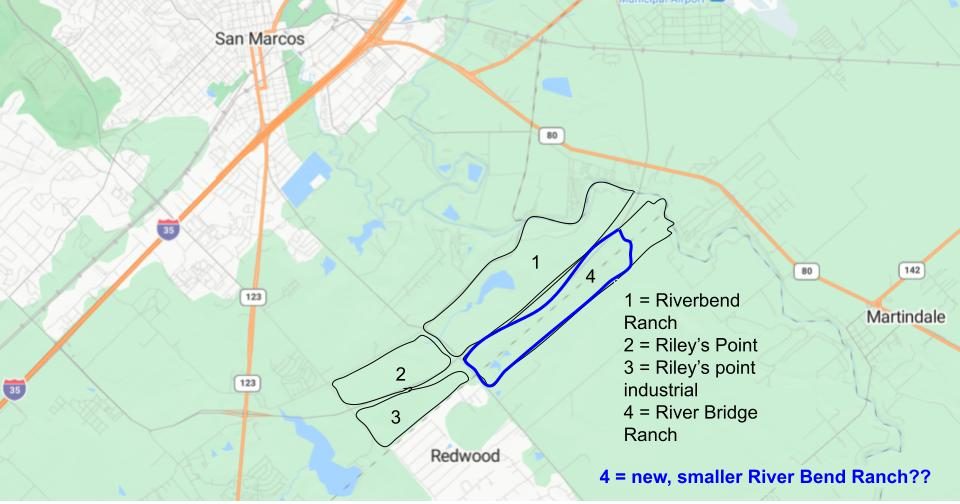
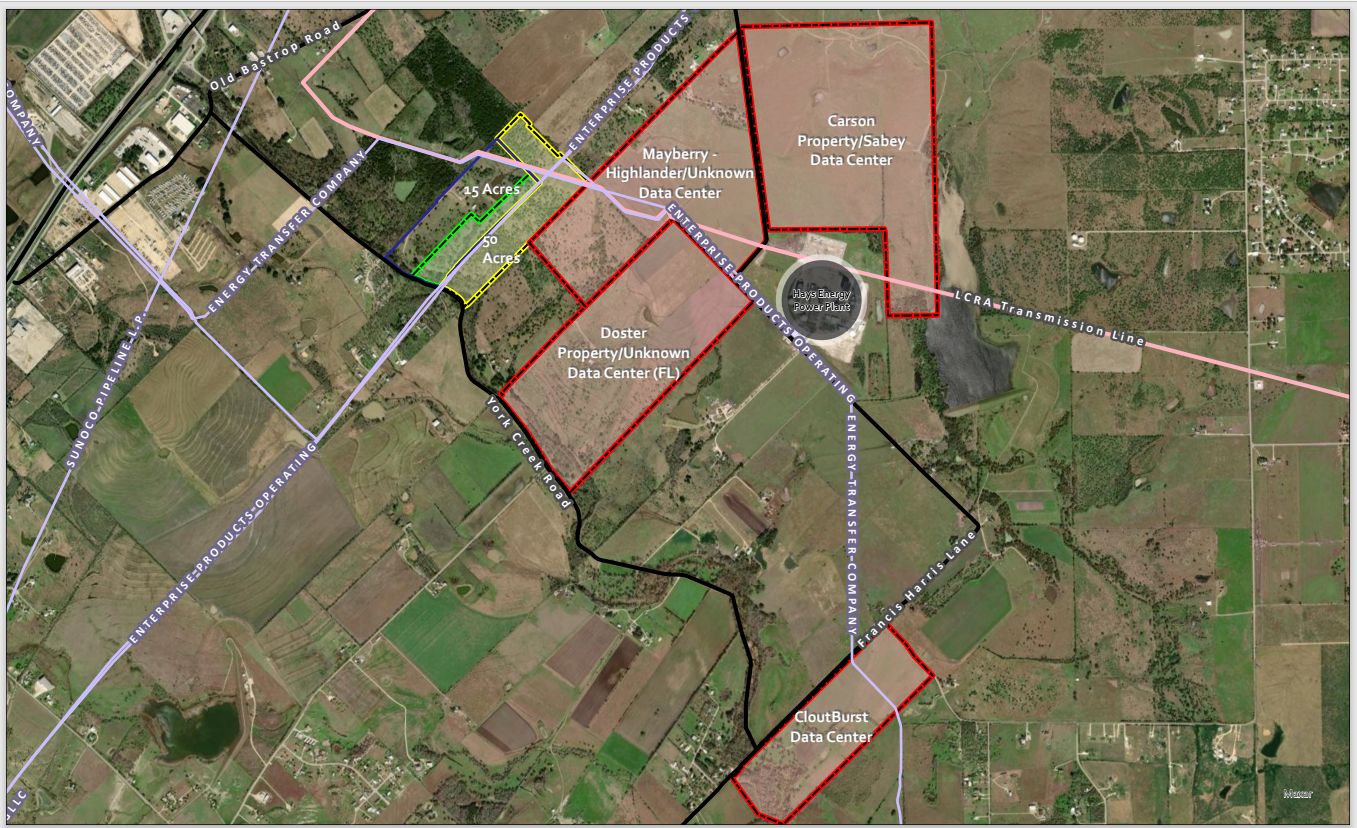
They want to put homes out here. It’s part of this larger cluster of developments that have been in the works for years and years:
I have never liked ANY of these, whatsoever. They all fail four of the five criteria:
Price Tag to the City: Will it bring in taxes that pay for itself, over the lifespan of the infrastructure and future repair? How much will it cost to extend roads, utilities, on fire and police coverage, on water and wastewater?
Hard fail. Cities lose money on remote developments. The developer may cover the initial cost of infrastructure, but the longterm maintenance is on us. Plus running fire, EMS, and police services way out there. The property taxes will not cover the cost to the city.
Housing stock: How long will it take to build? How much housing will it provide? What is the forecasted housing deficit at that point? Is it targeting a price-point that serves what San Marcos needs?
It’s claiming to provide affordable starter homes. This is something that people want, yes.
Environment: Is it on the aquifer? Is it in a flood zone? Will it create run off into the river?Are we looking at sprawl? Is it uniformly single-family homes?
Not on the aquifer. Somewhat close to the river. But it’s textbook sprawl, and sprawl is bad for the environment. Most likely entirely single-family homes.
Social: Is it meaningfully mixed income? Is it near existing SMCISD schools and amenities?
The San Marxist Special: Is it a mixed-income blend of single family houses, four-plexes, and eight-plexes, all mixed together? With schools, shops, restaurants, and public community space sprinkled throughout? Is it walkable?
Ha, no.
River Bridge Ranch also has a weird backstory. Here’s what seems to have happened:
2008: There’s some 563-acre property called The Mayan Tract, and the owner wants to be annexed into San Marcos. Martindale agreed to this.
2014: New owners buy the property.
2018: The new owners file a lawsuit to challenge the validity of the annexation. Martindale joins the suit.
2020: The suit gets settled in 2020. This thing called a PID is formed as part of the settlement. (We’ll get to what a PID is.)
Max Baker described the settlement as “They strong-armed the city into forming a PID.” He was on council then, so he was there. But he also tends to use inflammatory language to describe things. So that may not be the universal opinion – I have no idea.
2021: Lennar Homes purchased the land and they get the PID.
In other words, people have been trying to do something with this land for 10-15 years, unsuccessfully.
…
So what is a PID?
PID stands for “Public Improvement District”. What this means is that all the home owners will pay a surcharge on top of their property taxes. That extra money is used to make the neighborhood nicer.
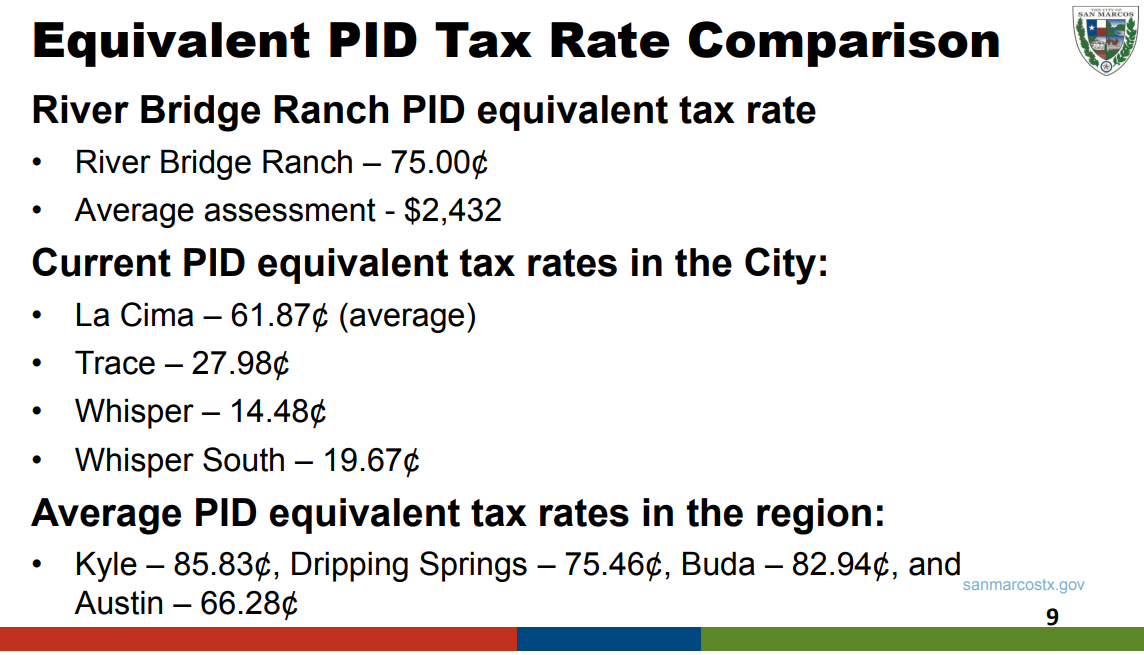
Here’s how much people might pay:
So that is on top of your regular property taxes, which is 65.15¢.
I don’t love PIDs. They are a little bit of a shell game – you can list houses at a cheaper price, because you didn’t have to include the cost of the neighborhood improvements. Instead of paying extra on their mortgage, the homeowners will pay extra in yearly taxes.
It’s fine as long as all home-buyers are perfectly wise and have access to enough wealth. Late-stage capitalism, eh?
Why is this coming to council?
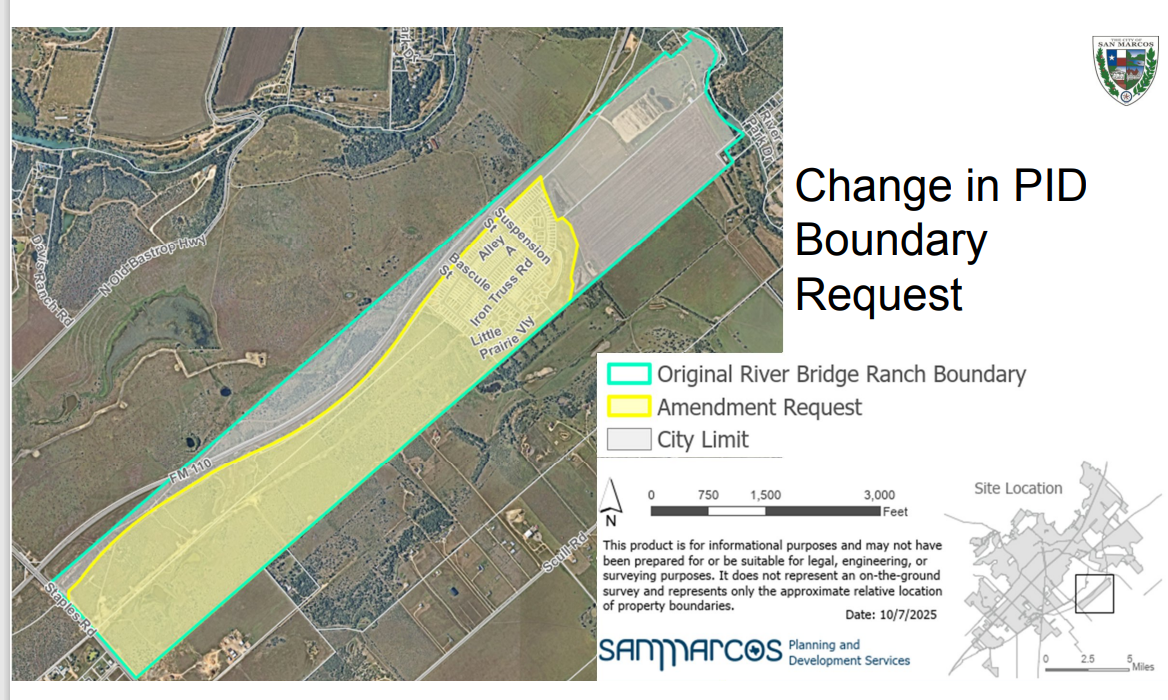
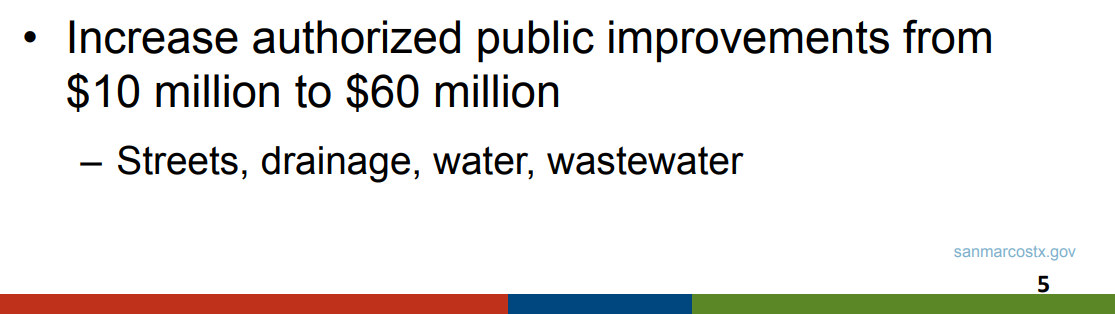
Lennar Homes wants to change the terms of the PID. They want to reduce the size to match the new smaller footprint, and then increase the dollars.
The new size:
(Also discussed in December.)
The new PID budget:
Like I said earlier, I think this project is terrible sprawl. It will cost the city more to maintain services out there than we’ll bring in, in property tax revenue.
No vote tonight. The PID changes will get voted on at the next meeting.
….
Item 18. San Marcos Historic Preservation Plan
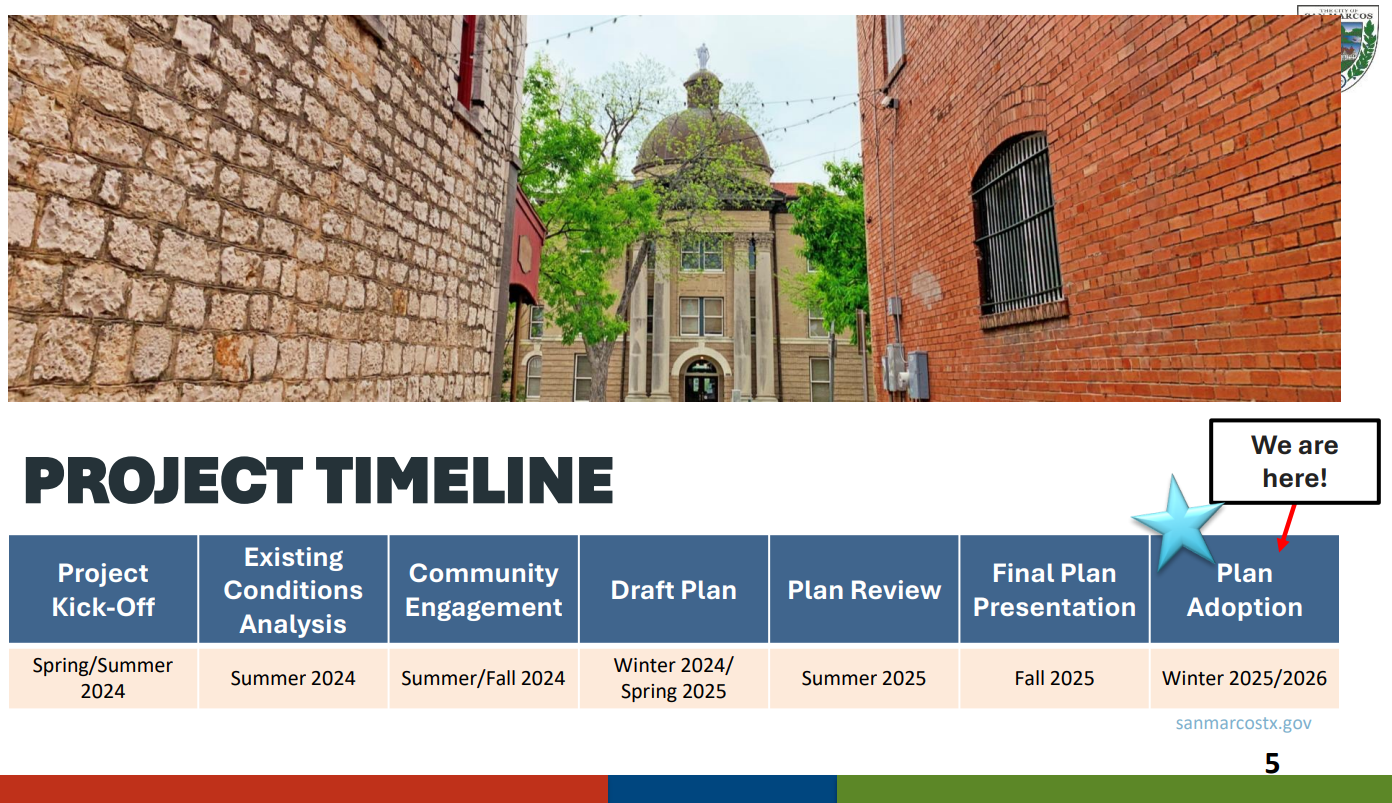
We’ve seen it before, back in October. We’ve been working on this for awhile:
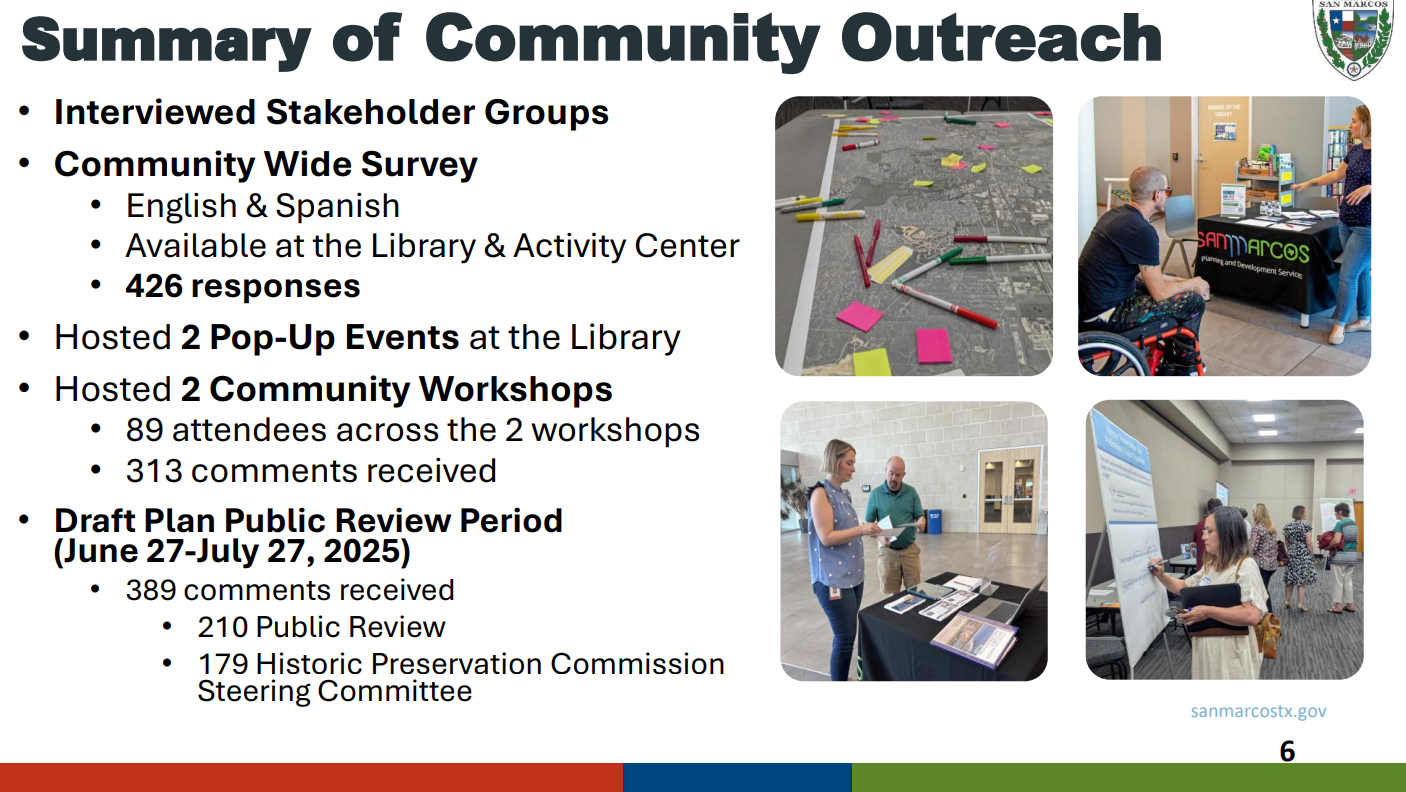
They tried hard to get community input:
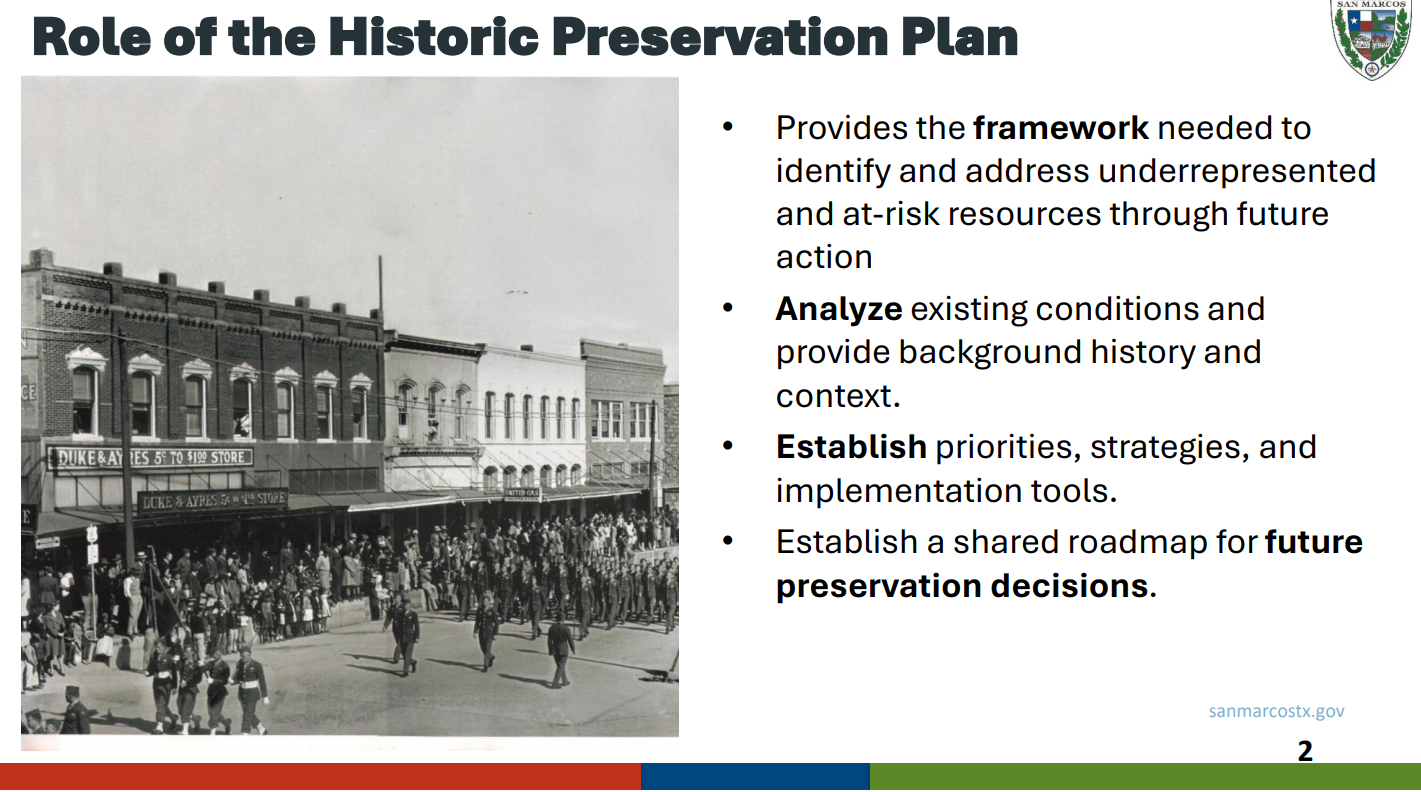
What’s it supposed to do?
Great! What else?
If we adopt this plan by mid-February, we qualify for a $5K grant from the National Trust for Historic Preservation.
We’re out of money, anyway. We’re using some consultants and we’ve given them just about the whole sum.
HOWMEVER!
The letters have been coming in, and people have a lot of complaints.
Here’s what I gathered: What’s here isn’t bad, but it doesn’t give a clear roadmap of how to proceed. – What should be prioritized? – What’s the order of operations? – How do we implement this big list of lofty ideals, on a shoestring budget?*
Staff protests that they’ve had a TON of outreach, and that these complaints can be addressed, even if we pass the plan first. They seem worried that this will drag out forever.
Bottom line: Staff is going to compile a comprehensive list of all the proposed changes, and try to categorize them as short term or long term, and bring it back.
* Hat tip to Ryan Patrick Perkins for walking me through this.
….
Item 19: Rezoning
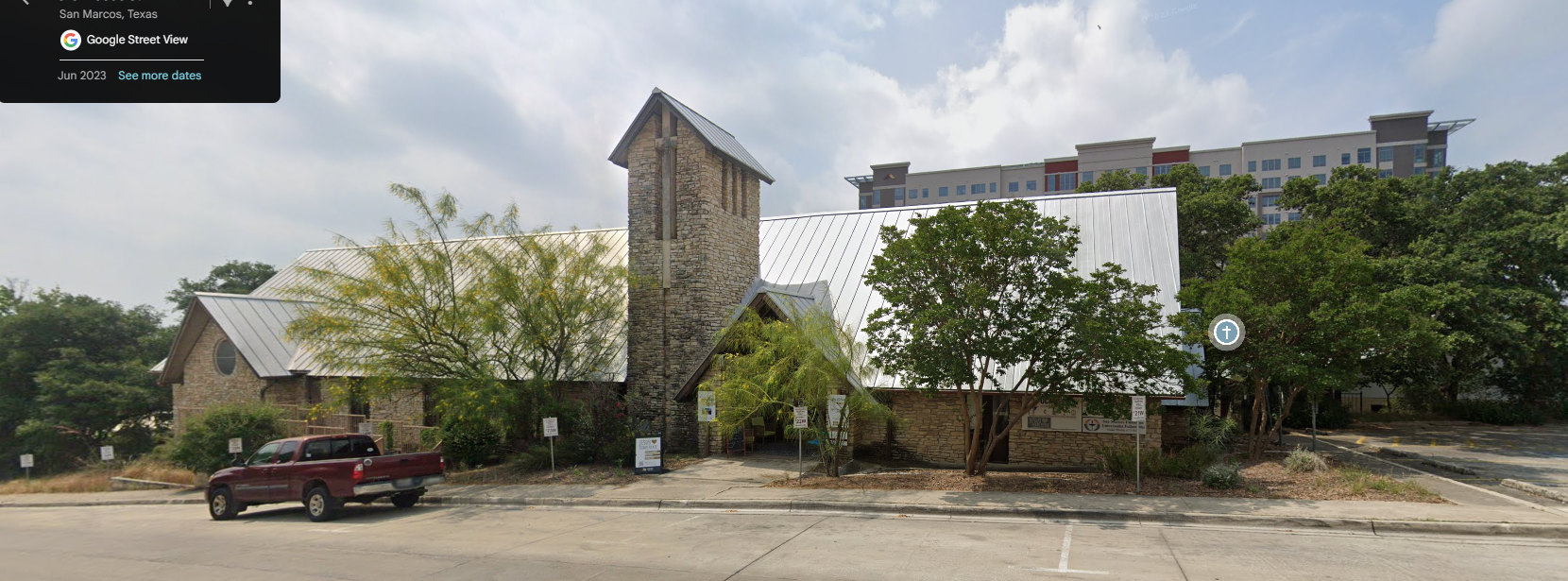
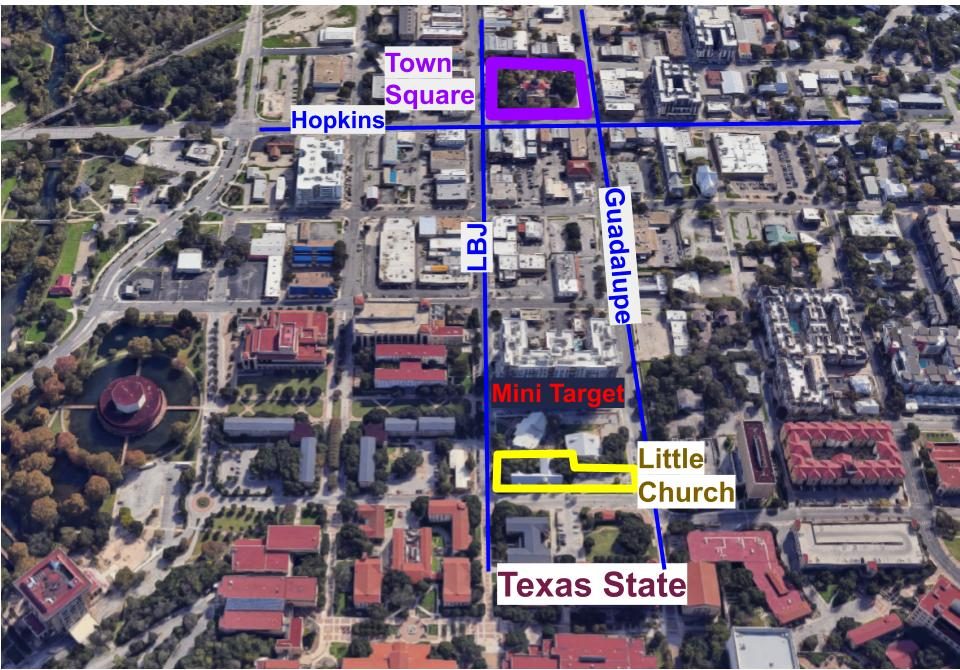
This church is right by campus:
It’s used by Christ Chapel and United Campus Ministry currently.
It’s right between campus and mini-Target:
It sounds like it will be a 6-story apartment complex, owned by the church, with church things on the ground floor.
The minister gives his pitch:
The church is going to keep owning the property. We won’t sell it.
They’ve thought hard and long about this
It’ll be great!
If we don’t get this rezoning, we’d have to sell it. Who KNOWS what you’ll get!
Will the old church building itself get torn down? No one asks this question. I assume it’s a goner. (Maybe they’ll let the new building eat the church, like Sanctuary Apartments did, a few blocks over?)
What do I think? Let’s check the five criteria!
Price Tag to the City: Will it bring in taxes that pay for itself, over the lifespan of the infrastructure and future repair? How much will it cost to extend roads, utilities, on fire and police coverage, on water and wastewater?
Very low cost to the city – this area is all built up and well-supported already. I don’t know if it will bring in much tax revenue, because it’s still owned by the church. But no concerns here.
Housing stock: How long will it take to build? How much housing will it provide? What is the forecasted housing deficit at that point? Is it targeting a price-point that serves what San Marcos needs?
I have no idea on any of this. It’s a pretty tiny lot.
Environment: Is it on the aquifer? Is it in a flood zone? Will it create run off into the river? Are we looking at sprawl? Is it uniformly single-family homes?
All of Texas state is uphill of most of San Marcos, and it’s mostly paved over. The pre-existing situation is terrible for flooding. This does add more pavement.
Social: Is it meaningfully mixed income? Is it near existing SMCISD schools and amenities?
Extremely walkable and close to the university.
The San Marxist Special: Is it a mixed-income blend of single family houses, four-plexes, and eight-plexes, all mixed together? With schools, shops, restaurants, and public community space sprinkled throughout? Is it walkable?
Well, no, but you wouldn’t really put a San Marxist Special in the middle of downtown.
On the whole, I’m fine with this! You want density in your downtown.
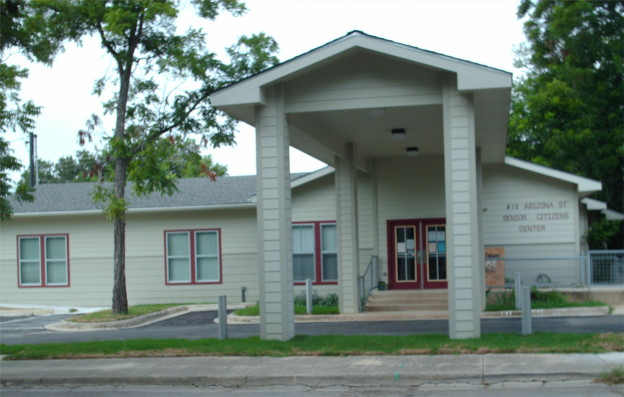
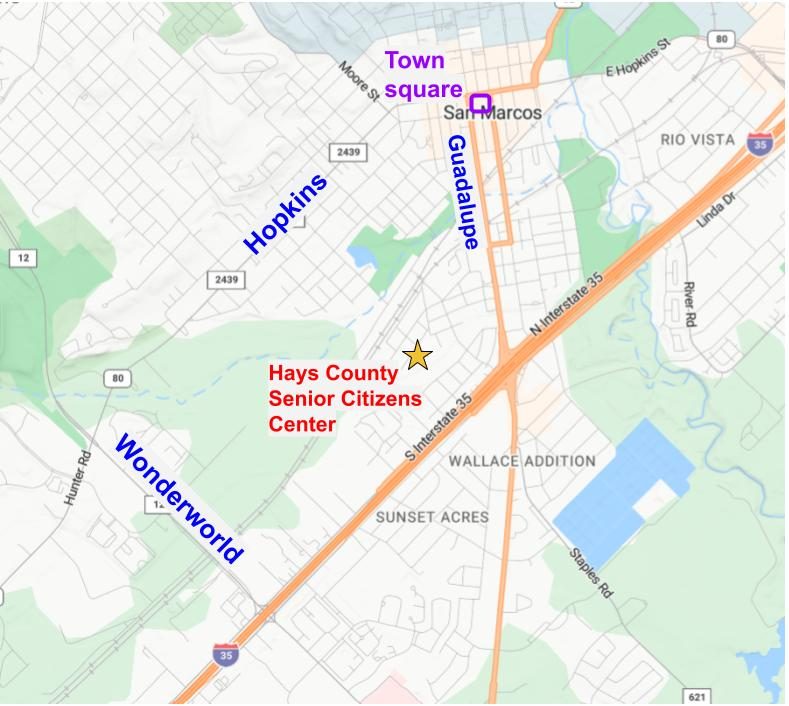
They lease the building from the city. It’s time to renew, for another ten years. It’s an old building, so they’ll let us know if there are any concerns on the walk through.
Great!
…
Item 20: Bitcoin scams
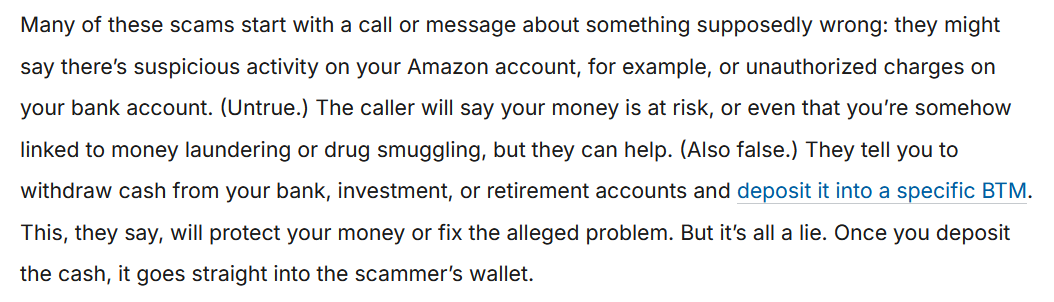
What’s the opposite of a warm, nurturing senior citizen center? Maybe scamming old people with a bitcoin ATM?
Apparently there are Bitcoin ATMs:
You can buy and sell cryptocurrency on these.
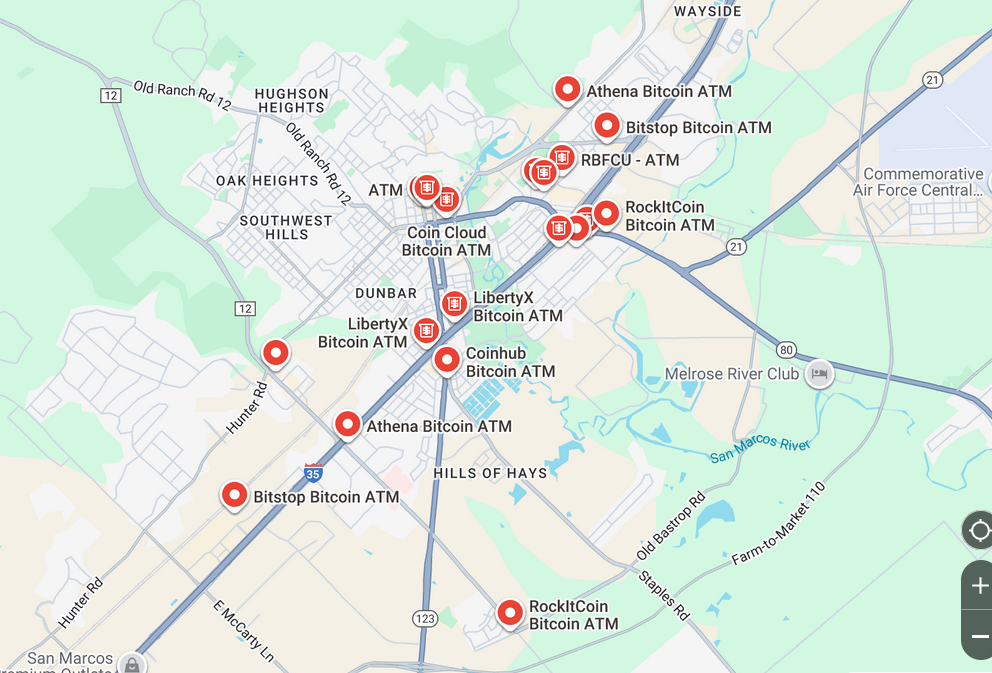
Google tells me they’re all over San Marcos:
As a crotchety old Marxist, I don’t like it. But here we are.
We’re going to require stores to put little warning signs by all the BTMs, saying “hey! Here’s some red flags that you might be getting scammed!”
It’s better than nothing, but wouldn’t it be nice if we had a functional federal and state government that cracked down on predatory scams?
[Sidebar: I don’t understand how bitcoins are untraceable. Isn’t the whole point that it’s a block chain that grows a little bit longer with every transaction, recording its whole history of where it’s been so far?]
…
That’s it for the regular meeting! Now comes the spicy stuff.
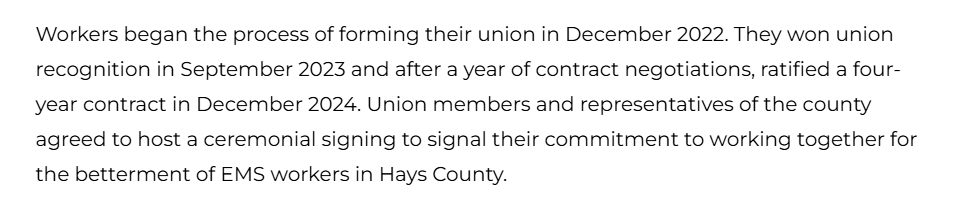
Here’s my best attempt to reconstruct the timeline:
1983: San Marcos-Hays County EMS is formed as an independent non-profit. All the nearby towns and Hays County all contribute to funding it.
2009: We hire Fire Chief Les Stephens. When he’s hired, he’s told that the SMHC EMS is a total mess, and we want to be prepared in case we need to bail on them. So he starts making sure that all his fire fighters are trained as paramedics.
2010: Buda bails on SMHC EMS, and splits off to run their own program.
SMHC EMS gets its act together and becomes a high-quality organization. So we end up not needing to split off. But we still require that fire fighters be paramedics, because it’s best practices. A lot of times, they’re the first ones on the scene.
This is the big theme of the night: the EMS workers are getting screwed, no matter how you slice it.
2025: San Marcos asks Kyle and Hays to give us 12-18 months to put together an EMS plan.
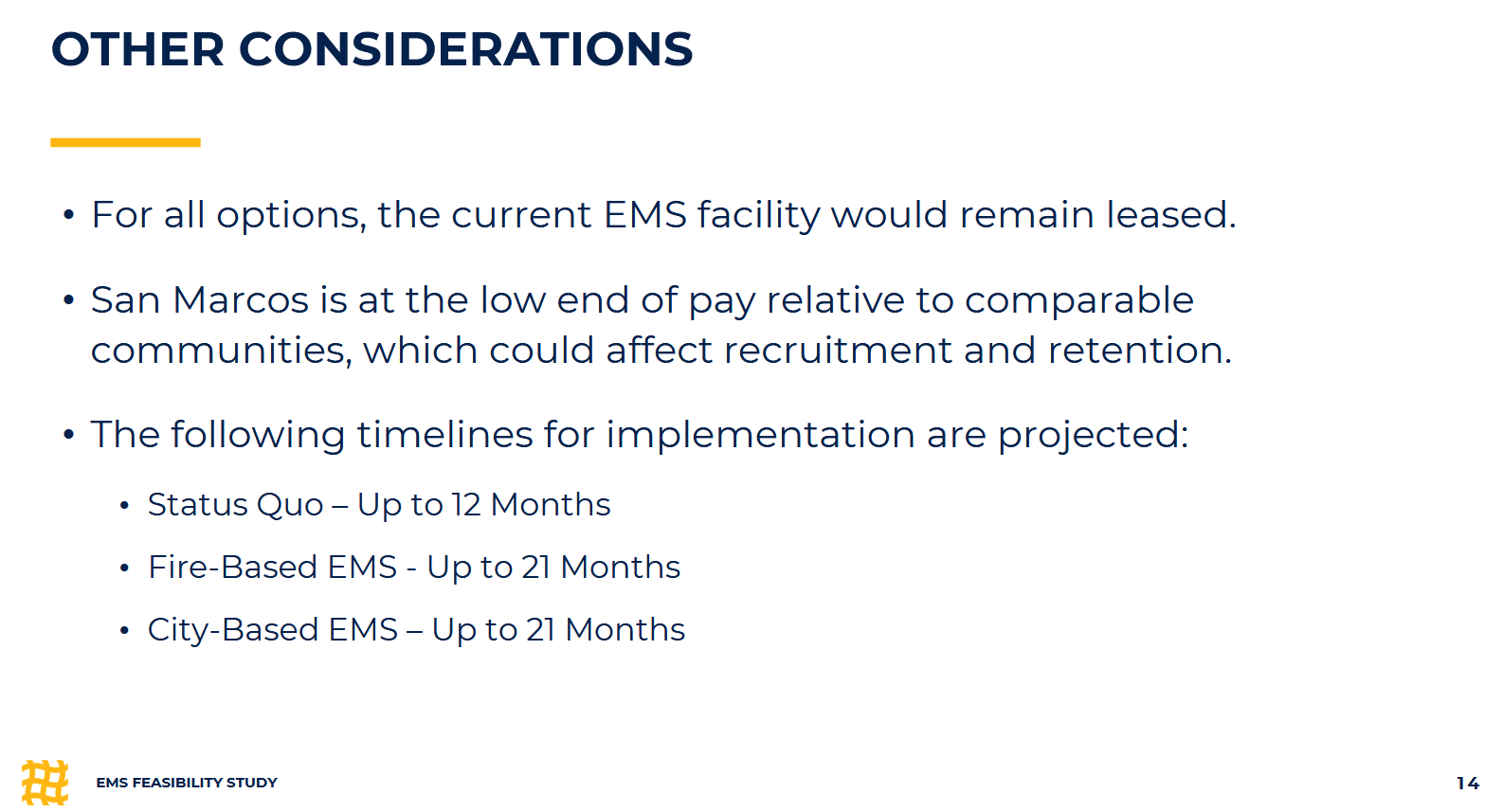
2026: The clock is ticking. The first ambulances will be removed in April, and they’ll all be gone by October.
…
Which brings us to today
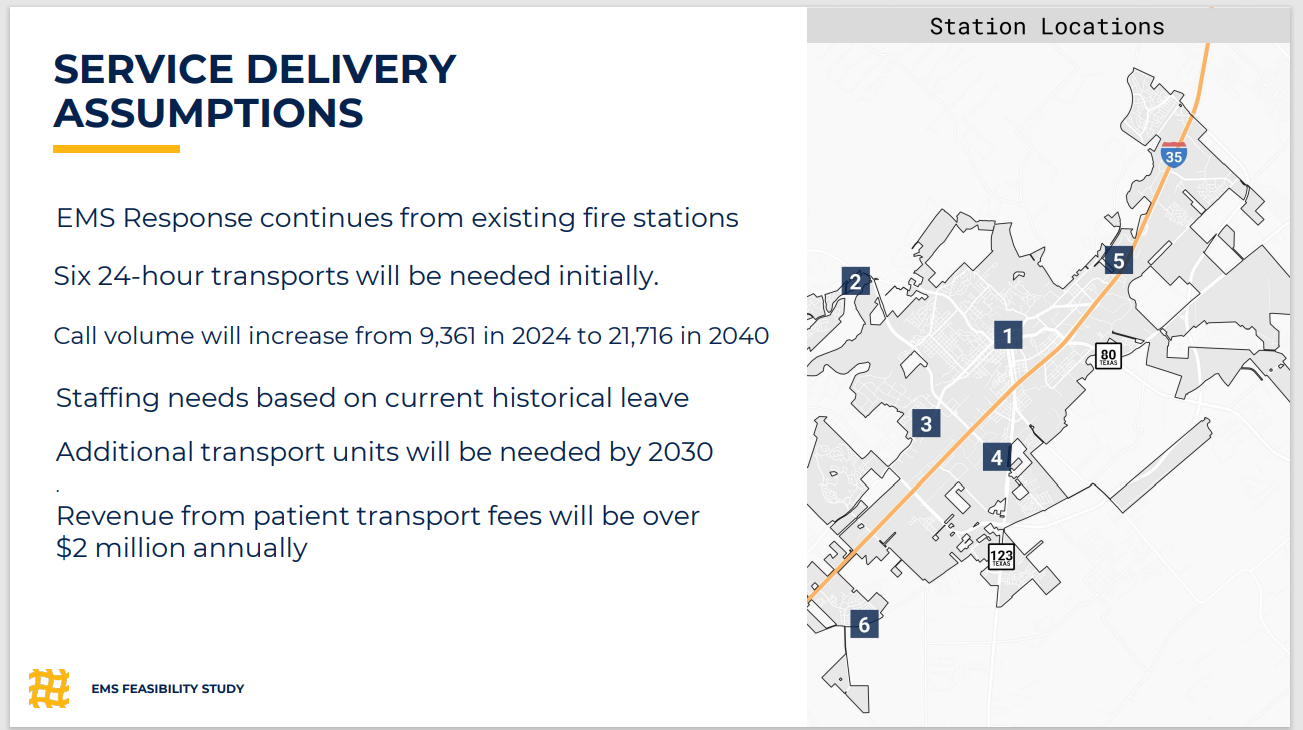
All the partners left, and now it’s just San Marcos. We have to figure out how we want to provide EMS services to San Marcos residents.
So we commissioned a 6 month EMS study. This workshop is about that study.
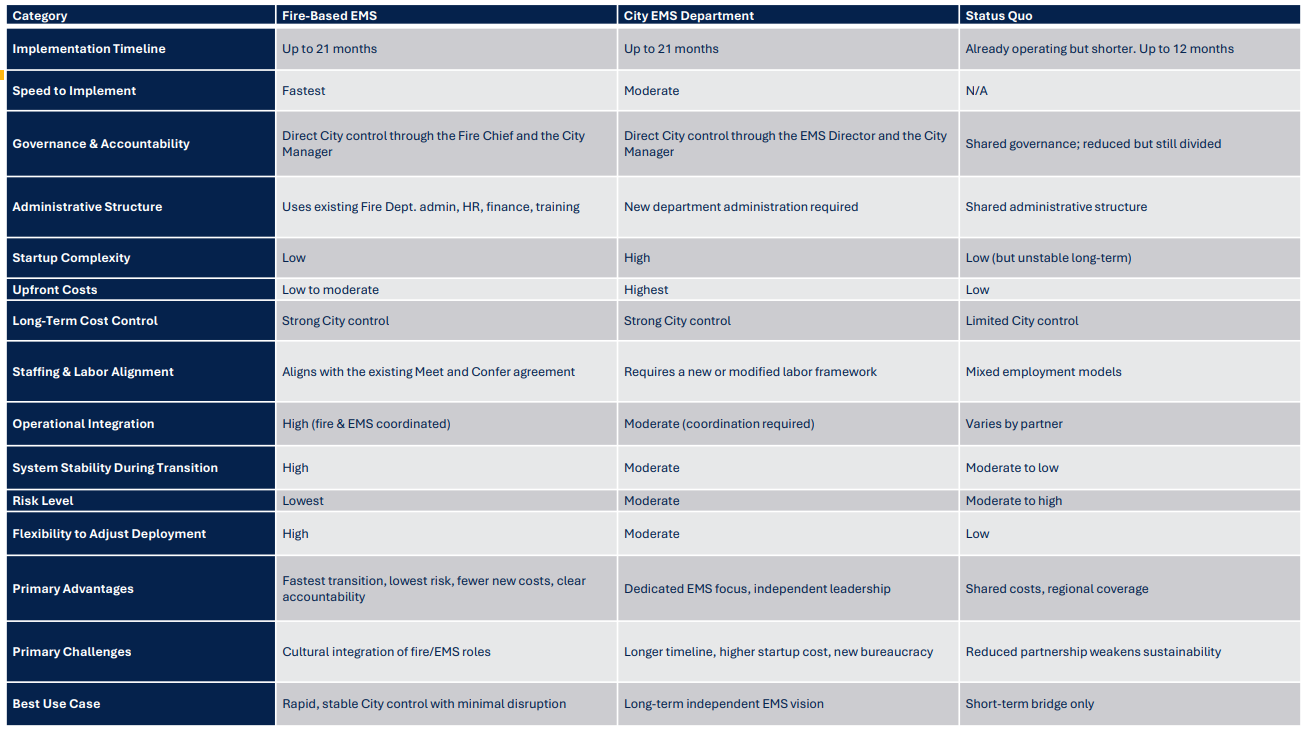
These are the three choices:
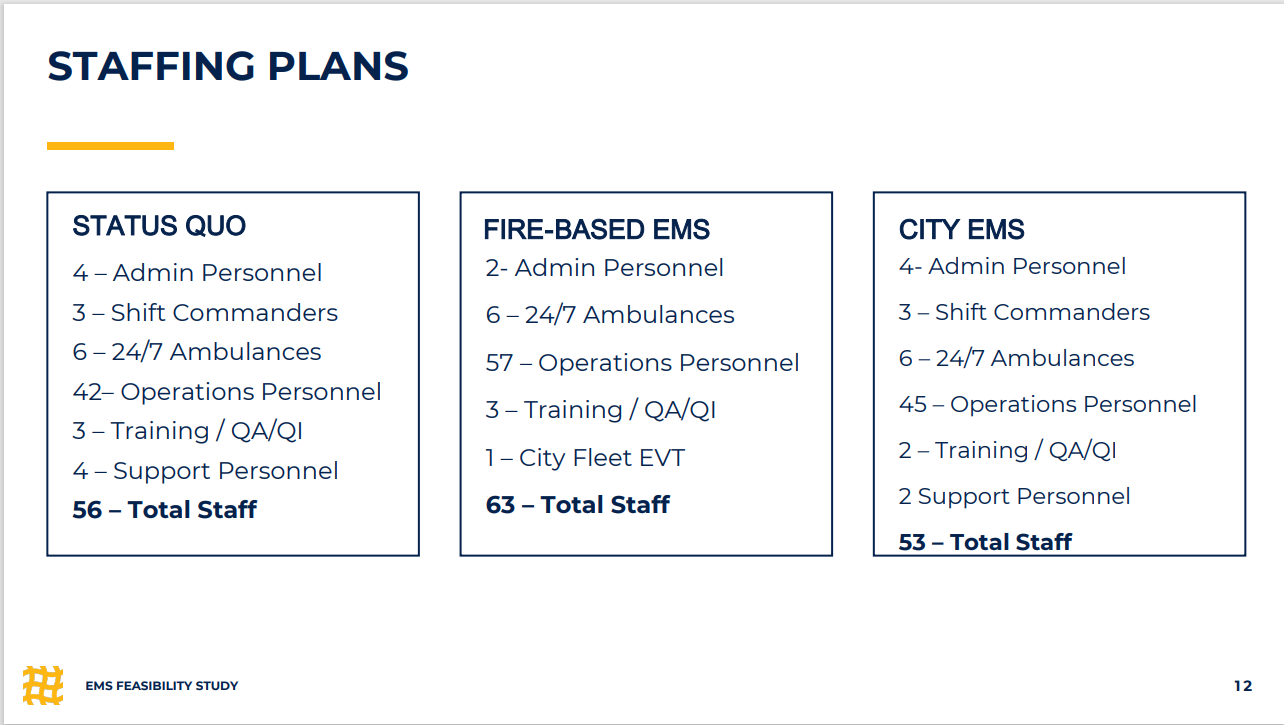
Renew the contract with SMHC EMS and just carry on.
Roll EMS into our fire department. This is called Fire-based EMS.
Make a new standalone City EMS department.
No matter what, San Marcos needs to be able to provide some basic things:
Here’s how much personnel is required under each model:
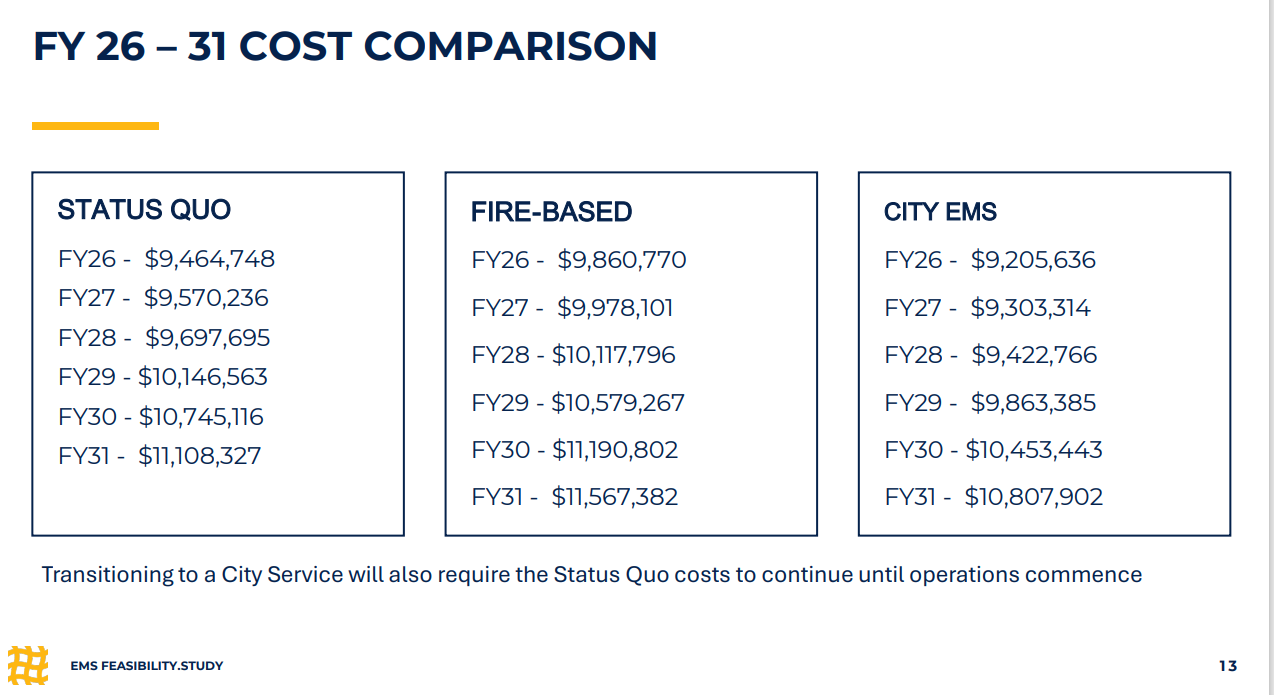
Here are the costs:
The reason City EMS is cheaper is partly because it requires less staff, but also because EMS workers would get paid less.
Status quo? SMHC EMS is unionized. They can demand higher wages
Fire-based EMS? Our fire department gets partial union perks, like collective bargaining. This is the whole “meet-and-confer” thing. So they can also arrange higher wages.
City EMS: they’ll get paid along with all the other city employees.
Sorry, I know it’s small. It’s slide 15 of this presentation, or page 153 on this PDF, if you want to scroll.
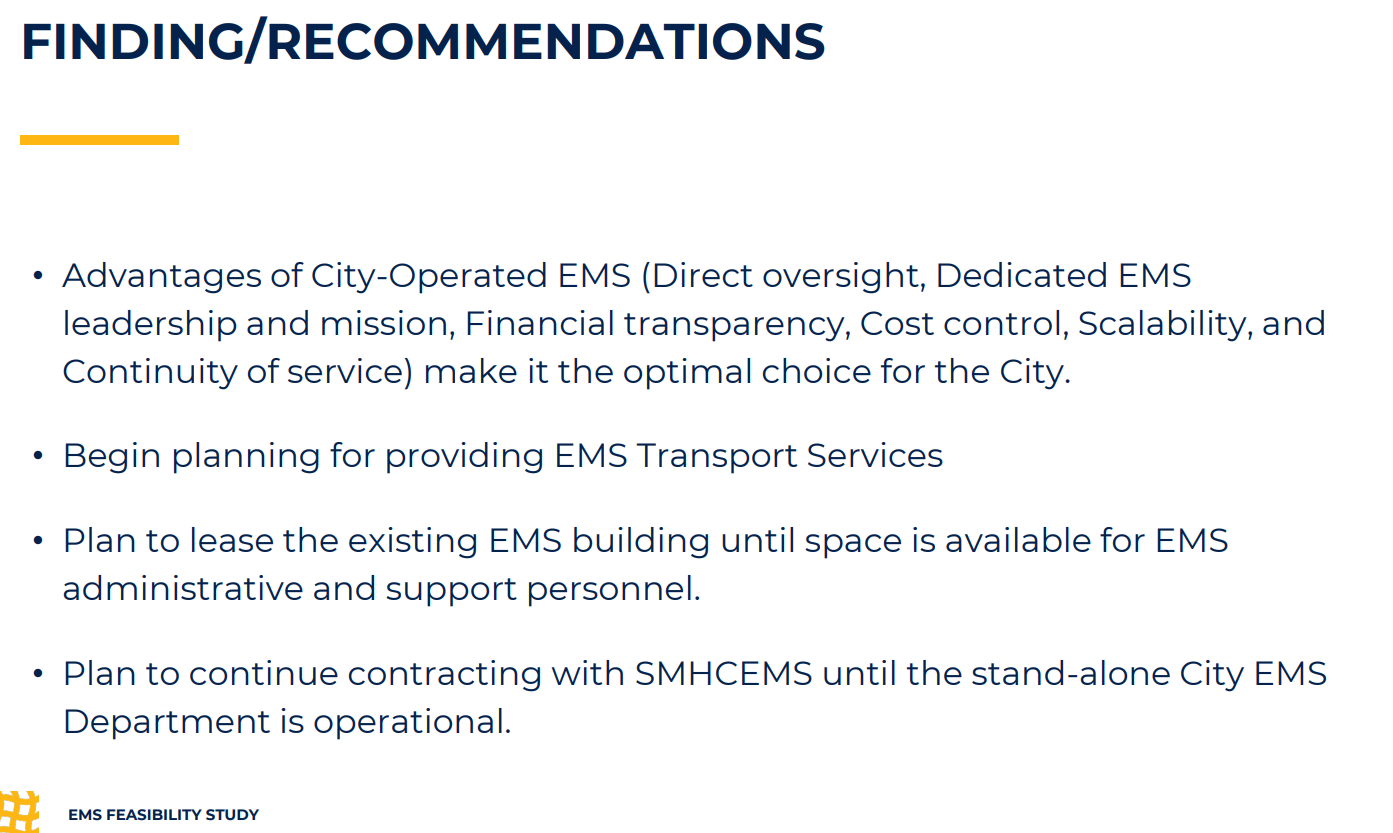
The consultants are recommending that we go with City EMS.
And, of course, this is all very urgent. As the contracts dissolve, everyone will start taking their supplies.
The first ambulances will start to leave in April, and the last of the ambulances will be gone by October.
….
What does everyone say?
Zach Phillips is the president of the SMHC EMS union. He says:
There are inconsistencies in the EMS study. We’d like you to postpone.
If postponing isn’t an option, our goal is workforce continuity.
Our priority is providing high quality care. We can best do that by keeping the experience and expertise of our employees together. We know San Marcos really well.
What does Council say?
Amanda: I’m worried about the destabilization of the workforce. What transition process would be recommended? Answer: The EMS workers would go through the normal city application process, but we’d work closely with them to align expectations and make it as smooth as possible.
Josh: My big concern is the transition. – You can’t do good work without good people, but our salaries are lower. – Taking on a whole company in-house is expensive – We have to be fiscally responsible, but if we’re going to do this, we need it to be rock-solid. – How would insurance and liability work? Answer to that last bit: We get insurance through Texas Municipal League.
Shane: When Chief Stevens was hired back in 2009, the plan was to convert to Fire-based EMS. Chief, how do you feel about all of this?
Chief Stevens: Fire fighters do not want to be EMS, and EMS workers don’t want to run into burning buildings. When you talk to the people that work in these departments, they generally do not want to be merged.
Note: This is the biggest argument against fire-based EMS. Several different speakers say the same thing: Medical EMS people like doing the medical stuff, and fire fighters like doing the fire-fighting stuff. They do not want to merge.
Shane: Well, did we waste a bunch of money then preparing SMFD to be ready to convert to EMS? Chief: No. It’s best practices to get fire-fighters trained as paramedics. We’re usually first on the scene, so we can start medical care while EMS gets here. We’re going to keep requiring paramedic certification.
…
Jane: How would the finances work out? Answer: We’ve been paying $2.5 million to SMHC EMS. You all allocated an extra $2 million last September.
Jane: But that still leaves about $9 million? Answer: Well, you bring in some money from patient care.
Lorenzo: City EMS is cheaper because the workers get a worse deal. If we do Fire-based EMS, they’d get 4% raises every year, along with FD and SMPD. I’m against City EMS.
Amanda: What’s the time frame here? Answer: We’re a little freaked out! Last July, we asked them to give us 12-18 months. But they’re going to start removing ambulances in April. The dissolution will be complete in October.
Amanda: I’m fine with the recommendation in the report.
Josh: Can I call the union president back up? Sir, what is the union’s position on transitioning to non-union jobs?
Union President Zach: One of our concerns is that all employees are able to transition, assuming they want to. – Like Chief Stephens said, not all EMS want to be fire fighters. I personally prefer EMS and medical things, and not fire. – We want to make sure all individuals can come over with their existing seniority. – We’re worried about the timeline. If it drags out, you’ll lose people with a lot of local expertise because they’ll look for other jobs.
Josh: If you had a way to do it, what’s your preference on the transition? Assuming it’s options 2 or 3? Zach: Right now, we have collective bargaining. – The state does not allow public employees to collective bargain. – But city councils can vote to allow meet-and-confer for City EMS. – We just want to be able to negotiate. – There’s no way we could go on strike, and we would not ever try to go on strike.
City Assistant Manager Anderson: I’ve been trying to figure this out. My read on state rules is that City EMS can have an employee association, but they aren’t allowed collective bargaining.
City Lawyer: I need to read up on some of these legal details. I don’t think collective bargaining is allowed. Some of the bigger cities have a similar thing to meet-and-confer between other employees. I just need to look stuff up.
City Manager Reyes: Each option carries budget consequences, so just be mindful.
…
Shane: I’m torn. I need more time, too.
Matthew: how do you transfer seniority? Answer: We’d have to work it out. We’ve worked it out in other contexts, though.
Matthew: I’m for City EMS then. I want to explore these meet-and-confer options though.
Bottom line:
City EMS plus labor protections: Matthew, Josh, Amanda, Jane
Need more time: Alyssa, Lorenzo, Shane
So we’re going with City EMS, but city staff will bring back some details:
the inconsistencies in the study that Zach referenced,
Labor protections, whether we can do a meet-and-confer option
When all is written about the data center, my guess is that the Rubicon was crossed at P&Z last week. This was the pivotal moment.
Lots has already been written about this meeting:
San Marcos Record: $1.5B data center moves forward to council: Planning and Zoning Commission voted for rezoning after nearly 8 hours of public discourse
Caldwell/Hays Examiner: SAN MARCOS PLANNING & ZONING COMMISSION IGNORES PUBLIC COMMENT, VOTES TO ALLOW CONTROVERSIAL RE-ZONING APPLICATION FOR PROPOSED HIGHLANDER SM-1 DATA CENTER
So I’m going to keep this brief.
Background:
First off, it was a seven hour meeting. Total, it was almost 5 hours of public comment.
Over 100 people spoke. There are good photos at both those links, above.
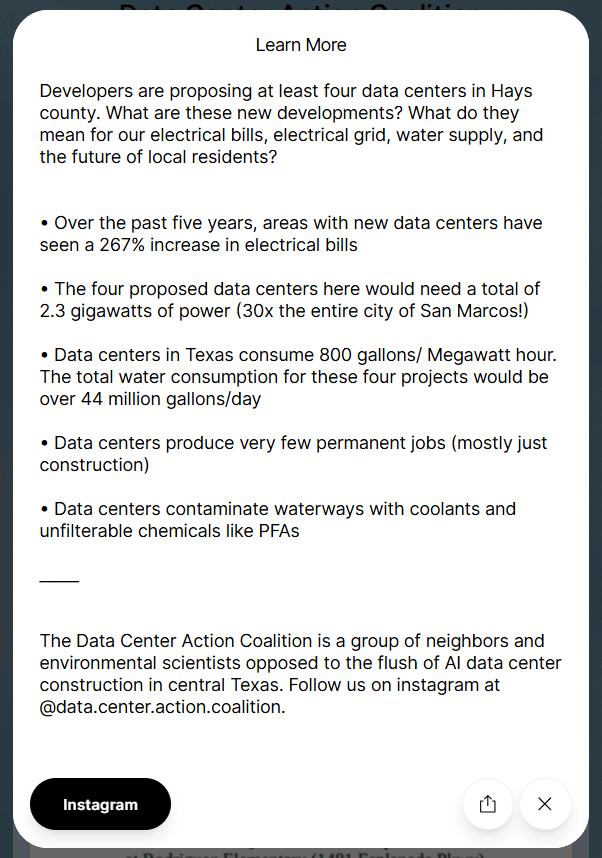
Instead of summarizing all that, I’m going to just let the group data.center.action.coalition represent all the speakers.
William Agnew: City staff keep saying that it’s a choice between housing and a data center. But I thought the housing option was dead.
Here’s what Agnew is referring to:
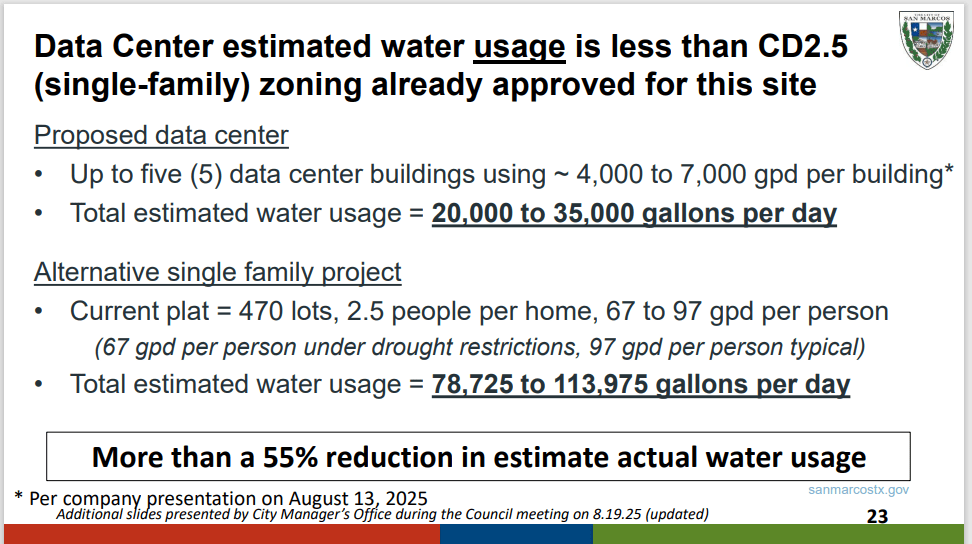
City staff makes these comparisons all the time – arguing that this data center uses less water than 470 homes.
This argument only works if you believe that the houses would otherwise be built. If Mayberry has given up on the idea of housing, then this comparison is useless.
Agnew asks the developer, Mayberry: “If you get turned down for this rezoning, would you build houses instead?” Mayberry: “Yes. We were already working with architects and engineers when we were approached by the data centers. We will go back to houses if this is voted down.” (I’m paraphrasing.)
Is he telling the truth? My guess is that P&Z believes him and the activists don’t. I truly have no idea. (But it is a terrible location for a subdivision.)
…
Next big topic: Is Mayberry violating city rules by bringing the rezoning back in January?
When a project gets denied at City Council, it can’t come back for one year. It’s only been about five months. Lots of speakers bring up this point.
The city lawyer is very clear: this wasn’t actually denied back in August. It just wasn’t approved. Therefore they can come back sooner.
Note: This really does happen regularly. It’s not just this data center. Council will hold off on a formal denial, to give someone a chance to come back around again.
…
Various points made by different commission members:
We should wait until after Council comes up with new rules for data centers. Answer: We’re obligated to move forward with applications, and any later rules would not apply to this application
Are there tax abatements being discussed? Answer: No, not locally. There could be some federal or state tax break being offered.
We’re a recommending body, not elected officials. We should approve this so that Council can decide.
It’s weird to call this “Commercial Low” when it actually won’t employ many people.
This is consistent with the comp plan! I love it.
I’m not going to vote against the will of hundreds of people. I don’t love it.
This is spot zoning, which is illegal! You can’t base your zoning on one single use.
It’s not spot zoning – if you look at all the non-data center uses, they’re totally fine.
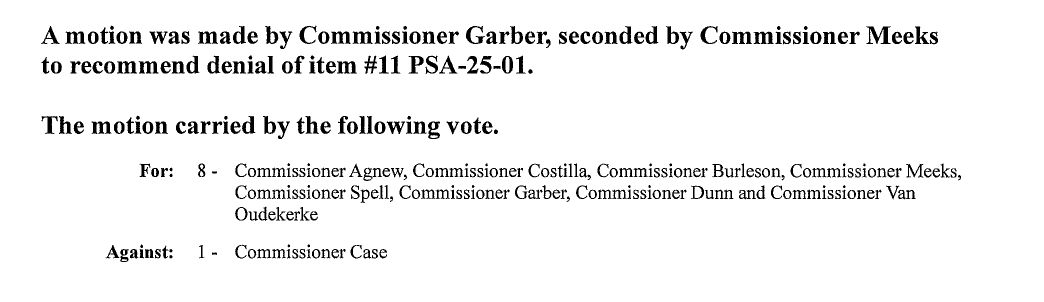
The vote:
Yes: David Case, Rodney Van Oudekerke, Michelle Burleson, Griffen Spell, Lupe Costilla, Maraya Dunn
No: William Agnew, Amy Meeks
There are actually two separate votes – one to allow for the zoning to change, and one to actually change the zoning. Both go the same way.
This matters a LOT.
Last spring, P&Z voted this rezoning down. Therefore Council needed a supermajority – 6 votes out of 7 – to overturn a P&Z decision. They only got 5.
But now, P&Z has approved the rezoning. So this time, Council will only need a regular majority to approve it. That’s a much lower bar to clear.
…
So who flipped?
Here’s how the vote went, last March:
Five commissioners – Costilla, Burleson, Spell, Dunn, and Van Ouderkerke – all switched their vote since last March.
I don’t know what to make of that, but it’s a huge number. It suggests that conversations have been happening outside of publicly available meeting times.
…
Full disclosure: I am in the mushy center on this issue.
The argument against the data center:
There are a ton of passionate activists who are voicing their opinion about what should happen in this city. That should carry some weight.
The water, the electricity, and the bad vibes.
Maybe denial will send a message to the state legislature? Some symbolic value?
The argument in favor:
The property tax is significant, even if only a fraction of it comes in.
People who need city services aren’t going to show up and voice their opinion against the activists. But they still exist, and there are a lot of them, and they deserve to have their needs funded.
Denying this data center does not move the needle on the actual water and electricity problems caused by the data center industry.
At the beginning of January, Council had some workshops. The topics were:
Paid parking at the Lion’s Club
Fencing and charging an entry fee at Rio Vista
Let’s dive in!
…
Workshop 1: Paid Parking at the Lion’s Club:
We started charging for parking this past summer. Do we want to keep doing it?
In theory, residents are free. But only if you’ve gone online ahead of time and register your car. (Register your car here!)
If you don’t register, or you don’t live in San Marcos, you’re supposed to pay at the kiosk.
If you don’t register and you don’t pay at the kiosk, you’re going to get a ticket in the mail.
Your license plate is scanned when you come and go, any time between 6 am and 11 pm. The ticket gets automatically processed and mailed out.
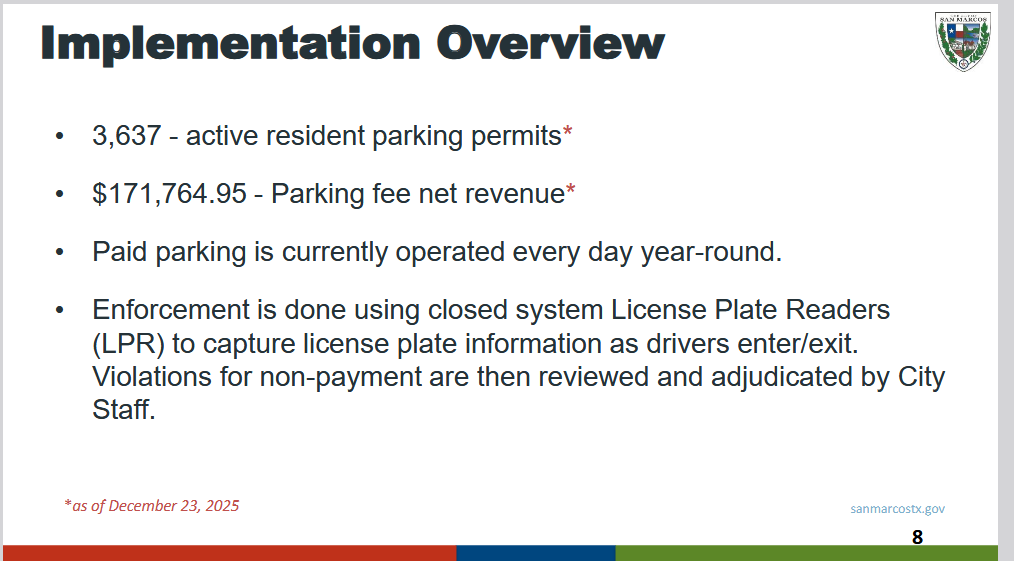
How well is it going?
Is that good or bad?
3637 isn’t very many, in a town of 70,000. That’s not good.
It’s only been six months, though. Give it time.
Apparently 25% of those tickets went to San Marcos addresses. That’s bad! Locals are supposed to be free.
But again, patience.
If you get a ticket, you can just call the city. Staff will walk you through the registration process and then cancel the ticket. That’s good! But not everyone knows that’s something they can do.
Amanda and Alyssa are both concerned: Who is getting rejected from the system? What barriers are there to getting the permit?
Answer: We’ve had 345 applications rejected. Most were rejected because they didn’t provide a driver’s license, or the photo ID plus address.
Some were out-of-towners
Some might have gone back and completed it later
We don’t really know how many people gave up or were turned off by the process.
(Jane asks a zillion oddball, detailed questions of the form, “If a person does X and then Y happens, can the system do Z?” The answer is always, “No, the system cannot do that.”)
Question for Council: do we want to exempt people close to San Marcos?
One of the major complaints has been from people who have come to the river for years every morning, but they live outside of town.
Council decides to exempt all of SMCISD. So all San Marcos residents and all SMCISD residents can park free at the Lion’s Club. But you do have to go register first.
…
Workshop 2: Fencing and charging admission at the river
Background: We’ve been destroying the river for the past half-dozen years. It seems to be mostly out-of-towners taking day trips to San Marcos.
The major problems are:
Safety: People get super drunk, people get heat stroke, there are lots of rocks and lots of deep water, and the crowds are too packed and unsupervised.
Cost: it’s super expensive to hire enough marshals and staff to keep things safe, and then we can’t even hire enough people to fill the slots. The out-of-town visitors tend to just visit for the day, and leave without spending money in town.
Environmental: wild amounts of litter, erosion of the banks, and destruction of the wild rice and other underwater things. The little endangered fishies need their habitats.
In 2024, we tried a can ban. But things were worse than ever! Nobody enforced the can ban because staff was so overwhelmed by the safety issues. They spent all their time dealing with crises.
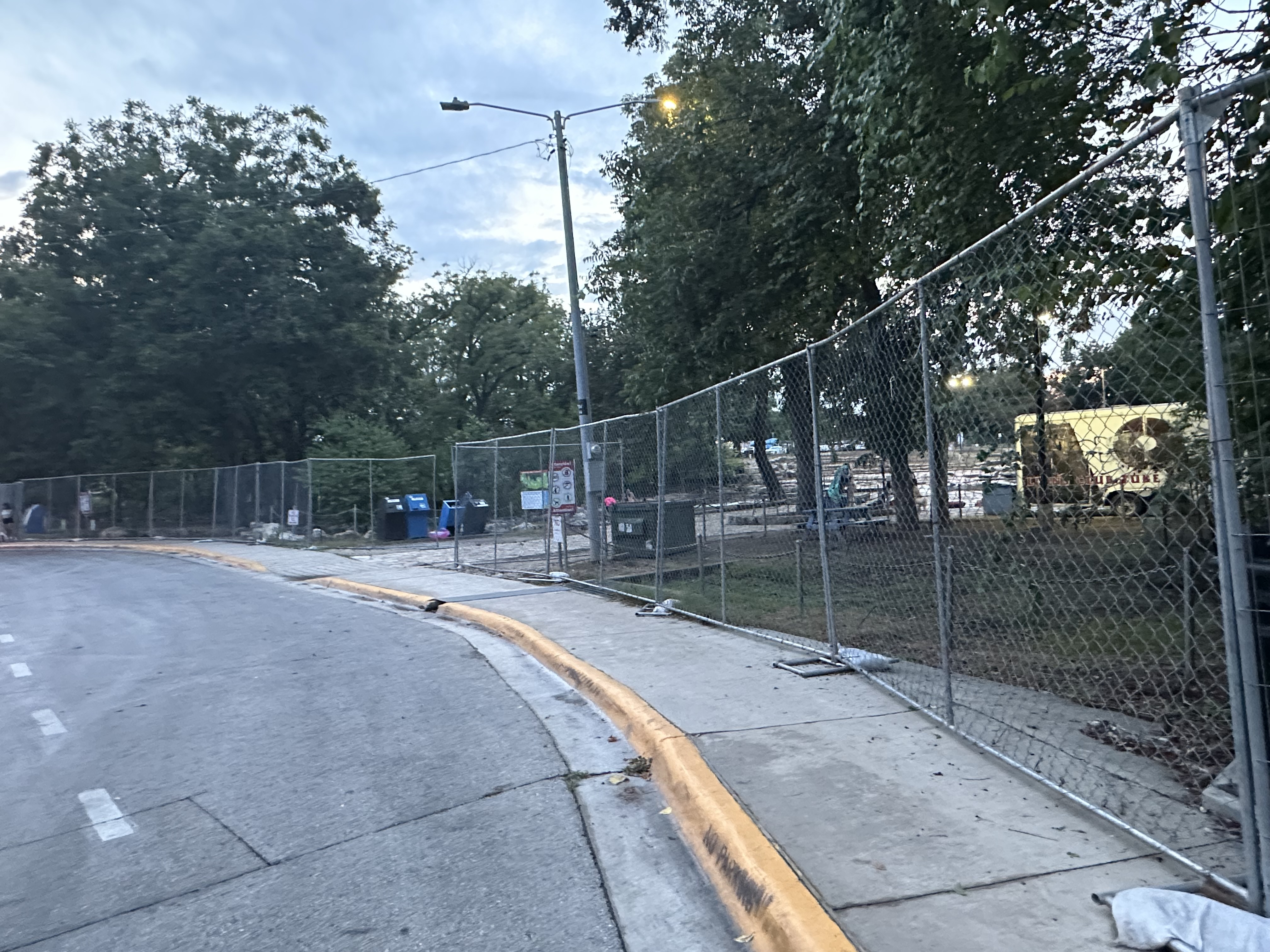
This past summer, 2025, we tried fencing off the river:
In my mind, this was a big success!
The river was still free. On weekends and holidays, staff was stationed at the entrances. They could stop you, tell you about the styrafoam ban, make sure you’re not bringing alcohol in, and so on. Basically, they just educated visitors on the park rules.
This seemed to help! The crowds were a bit smaller and less out of control.
The city saved money because it took way less staff.
The litter was less intense.
The crowds were less intense.
It was partially due to the very rainy July, but also the fences.
(My theory is kinda depressing: I think people stopped coming because they couldn’t easily bring alcohol in.)
Which brings us to this workshop.
Two main questions to deal with.
Does Council want to keep having the fences?
Does Council want to keep it free, or start charging out-of-towners? (Nobody is interested in charging local residents.)
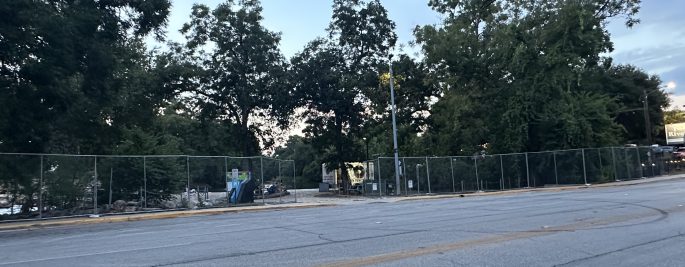
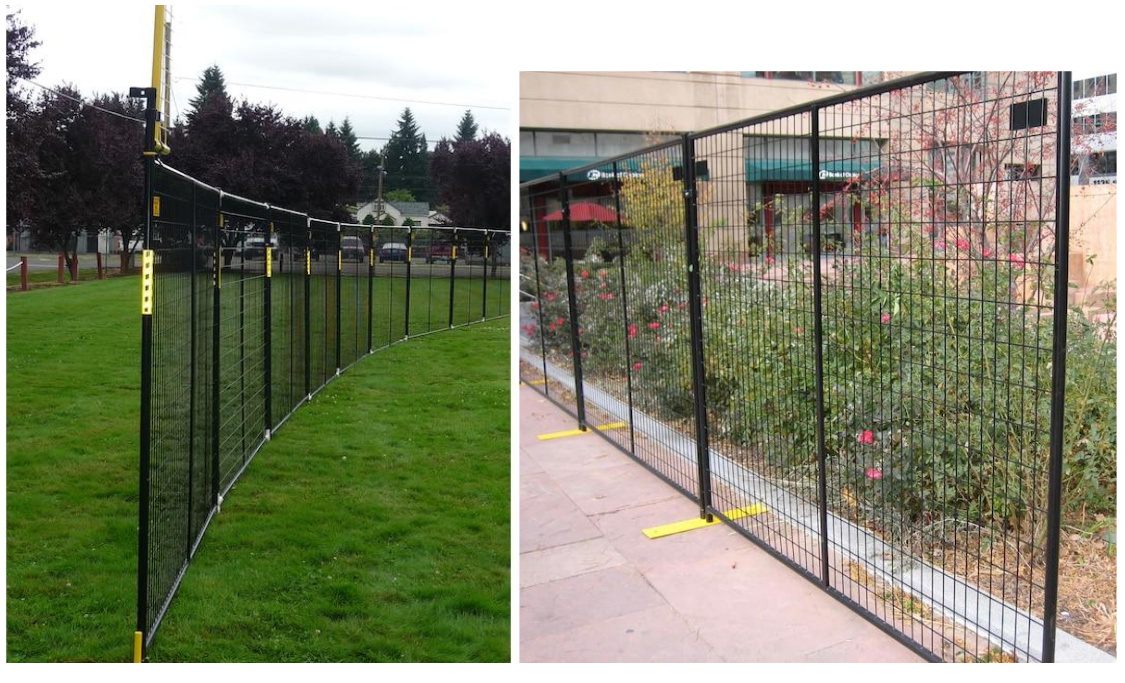
Last year, the fence was ugly.
This year, they’re proposing something less ugly:
It would still be temporary! It would go up in May and come down in September.
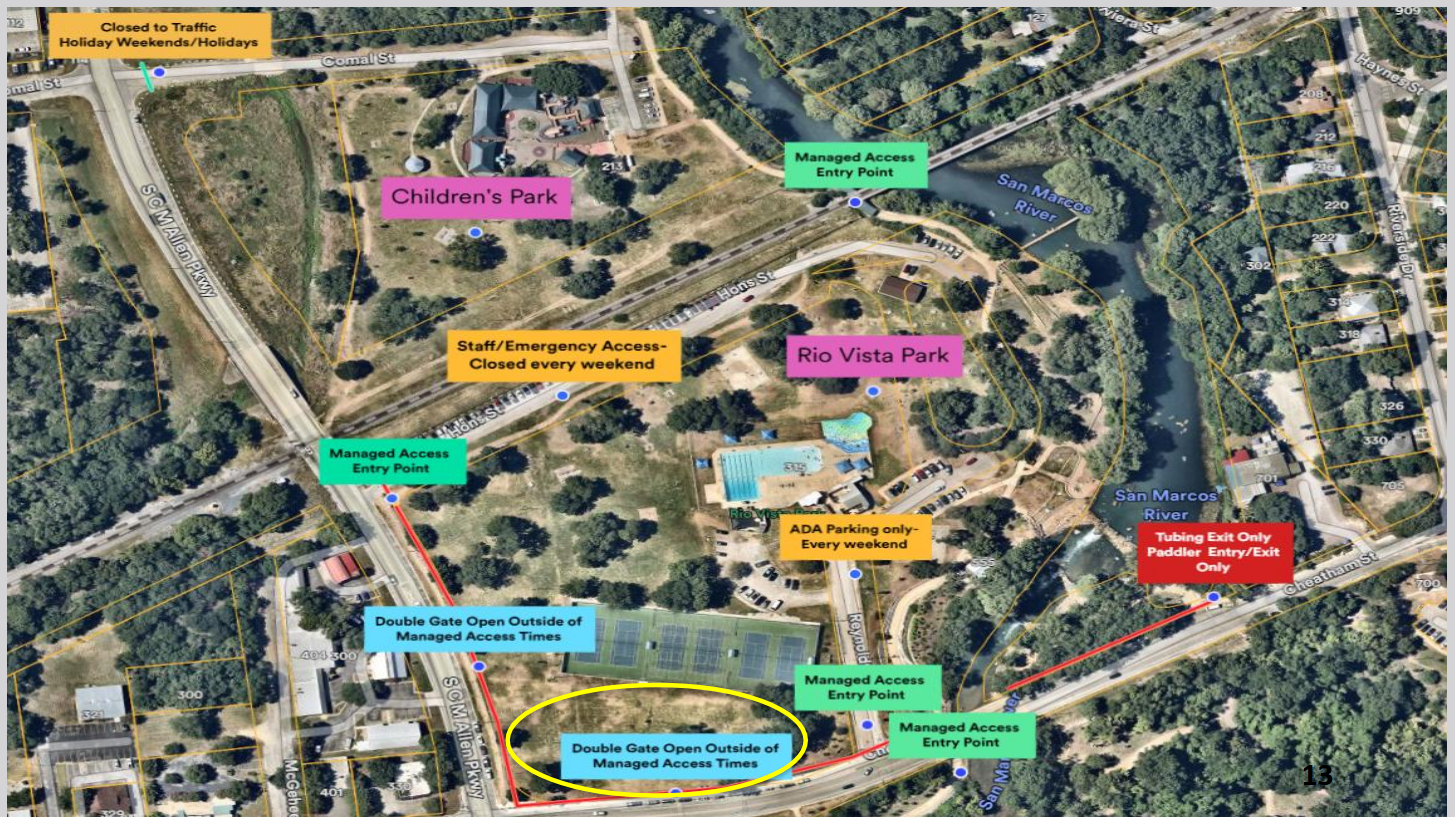
Here’s where the fence would go:
Basically the same as 2025.
They’re going to add in two gates, at those blue squares by the tennis courts. But only for during the week, so that people can easily walk into the park. On the weekends, they’ll be closed, so that we don’t have to hire more staff to sit there.
It’s got some drawbacks – like taking kids to the Children’s Park is more difficult on holiday weekends – and staff is going to try to work through some of those issues.
Should we charge an entry fee?
I loathe the idea of charging money for the river. The problem is that we’re the last free river park.
When all the river parks in all of central Texas were free, the crowds could disperse evenly. One by one, each park started charging entrance fees. This increased the pressure on the remaining parks.
If I had a magic wand, Texas would properly tax its wealthy citizens, and then we would use that money to subsidize public parks, and they would stay free.
Since that’s not going to happen, and since San Marcos just voted for candidates who ran on lower taxes, we are stuck choosing between three things:
Use a huge chunk of our budget keeping the river parks safe and clean
Let the river get destroyed and let visitors get hurt.
Charge out-of-towners for using the river
So here we are.
…
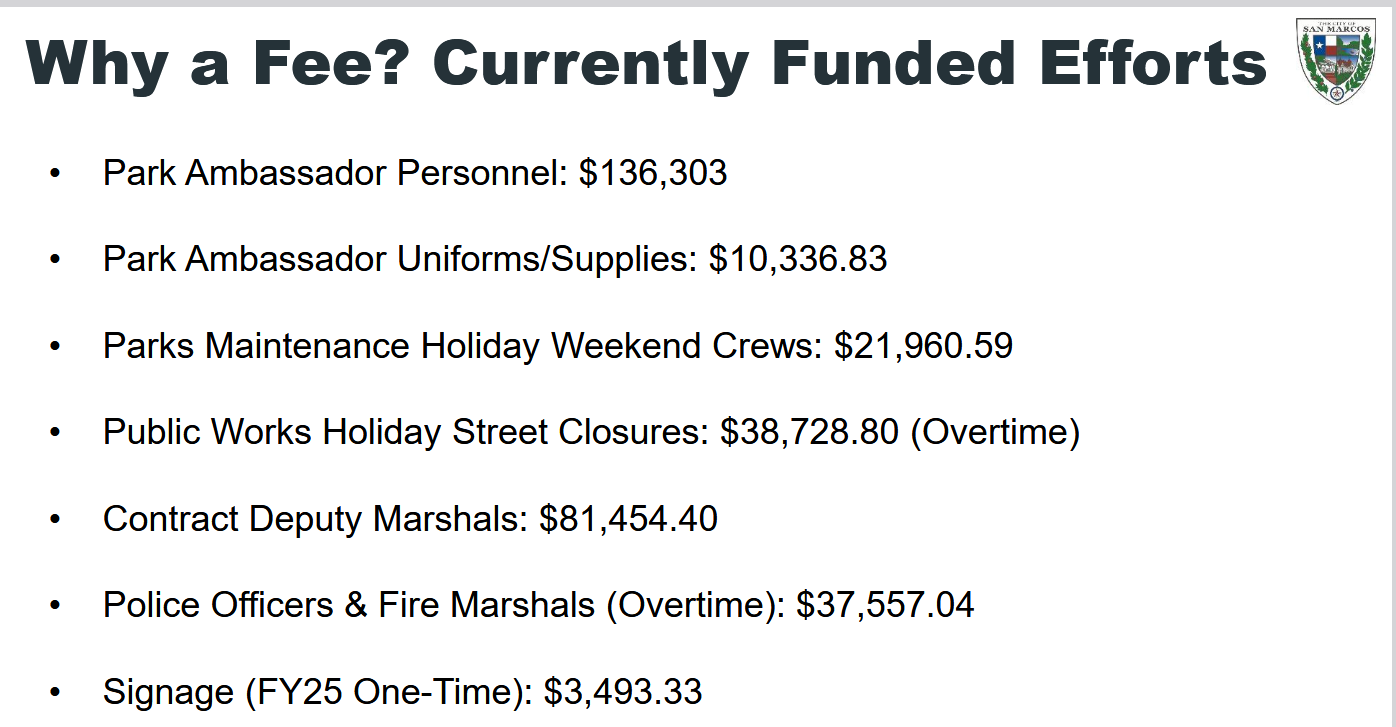
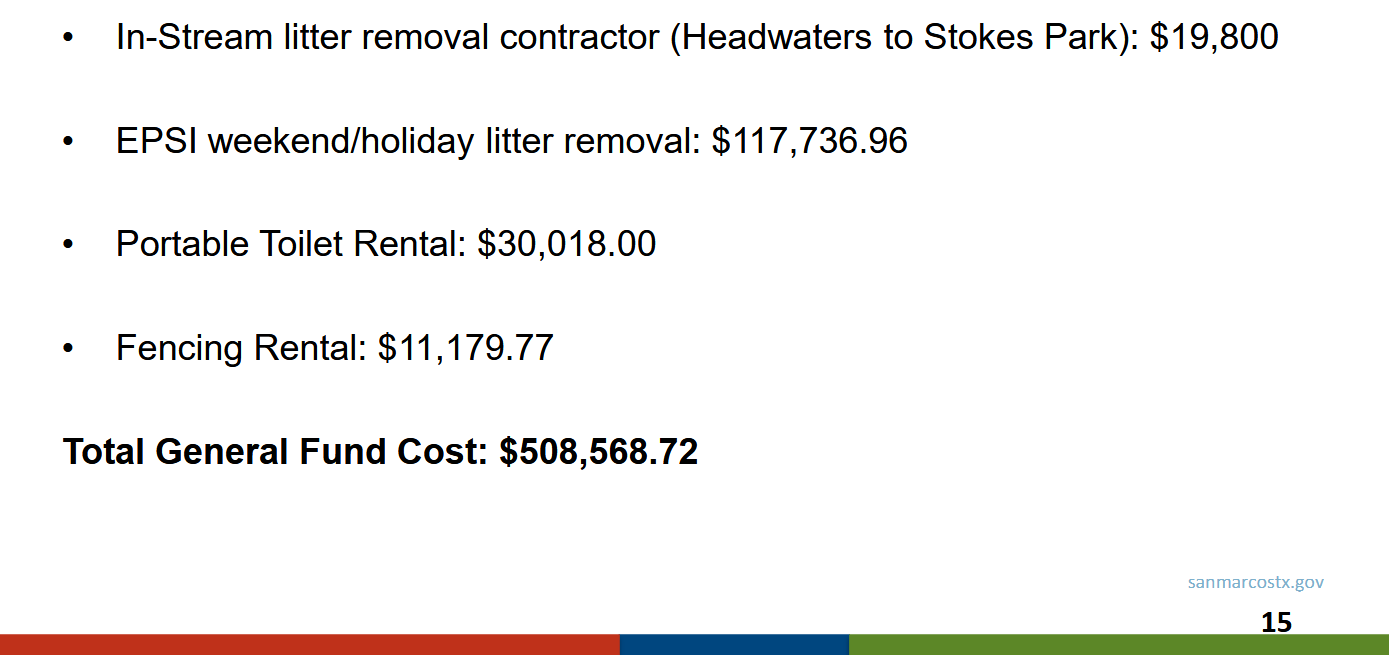
How much does it cost to staff the river?
A lot!
About $500K.
How would charging people even work?
First off, it’s supposed to be free if you live in town. It would be similar to parking at the Lion’s Club: – Register online ahead of time. – Get a QR code on your phone to show the people at the gate. – Or just show your ID at the gate to get in.
Note: But I don’t want to bring my phone OR my wallet to the river! This already sucks.
Out-of-town people would pay online ahead of time, and get a QR code.
Alyssa and Amanda have a lot of concerns with people having to navigate this process. It’s similar to the parking problem – every time you put friction into a system, you lose your vulnerable people.
…
How much money will this bring in?
We don’t know! It costs $30K to get the software.
We don’t really know how many out-of-towners come to the park. And we don’t know how many people will stop coming if it’s not free anymore.
…
There are a few different questions:
Does Council want to charge anybody?
If so, who counts as an out-of-towner?
How much do we want to charge?
We’ll take these one at a time.
Does Council want to charge out-of-towners?
Yes: Jane, Shane, Matthew, Josh, Lorenzo
Postpone for a year to collect data: Alyssa, Amanda
So that passes.
Who should get in for free?
Everyone agrees: All of San Marcos and all of SMCISD.
How much should we charge?
Everyone wants staff bring back options.
…
Just to note: New Braunfels charges $2 to get in the river, and $25 to stop and put a blanket down on the grass.
TWENTY FIVE DOLLARS! We will not be doing that. That’s nuts.






 The San Marxist