
Citizen Comment:
The biggest topic of the night is the data center. 12 people spoke:
- 1 in favor
- 10 opposed
- One neutral board member from Crystal Clear Water, who says some interesting things.
I’ll summarize everyone’s comments when we get to Item 11.
Other topics:
- The Teacher Re-use nonprofit in San Marcos sounds great.
- San Marcos is busy, and needs more businesses!
- Loose pit bulls attacked my dog and me, and neither SMPD nor Animal Control nor the animal shelter was willing to do anything about it.
- The KZSM issue (2 speakers)
The KZSM issue: KZSM 104.1 is the local non-commercial FM station in town. (They’re great! Check them out here!) As the speaker says, “We bring the voices, music and culture of San Marcos to the airwaves, streaming and podcasting.”
The city used to also have it’s own radio station, KZOS. In 2022, the city agreed to shut it down and transfer the assets to KZSM. This was a big generous move, and everyone was happy.
But the city didn’t finish the transfer. Like, it fizzled out and lost momentum? You can still listen to KZOS here, and the city is apparently still paying streaming fees and music licensing fees.
The speakers say: “We have tried for more than a year to explain the facts to City staff, to ask them to correct the website and to keep its promise. That is, to transfer the hardware, software and music library to KZSM. That will turn off the KZOS stream… We could use the money the City is paying for this, since we have to pay these fees out of whatever we can get from donations.”
I gotta say: I’ve never heard of KZOS and it’s wild that the city is running a tiny, redundant little radio station.
…
Item 9: Historic Preservation Plan
Last time, community members had a lot of concerns about the plan. The plan has good details, but it is short on the implementation part. What’s prioritized? What’s first? Is this all going to get shelved and forgotten? Etc.
Staff brought back a summary of all the complaints:
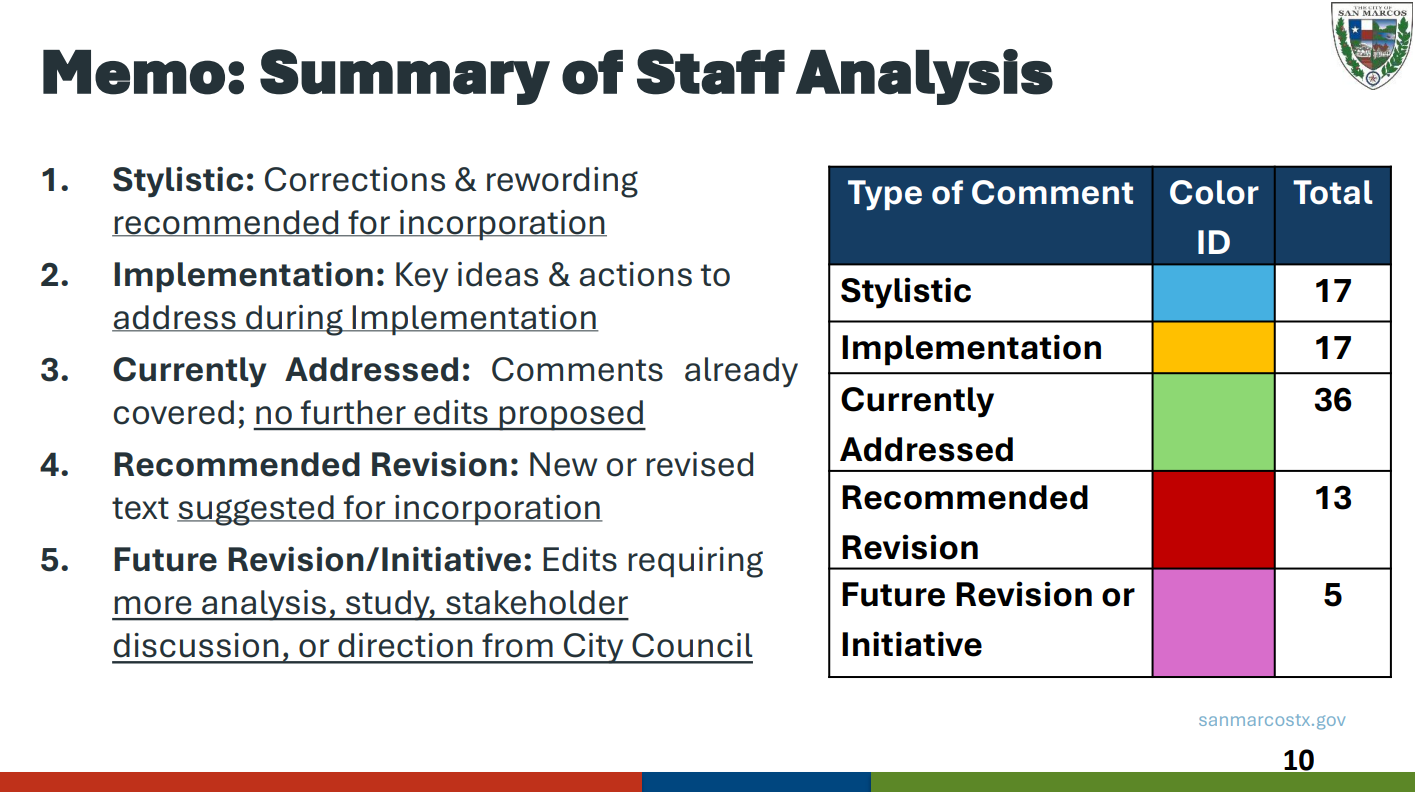
Basically, they’re adopting all the red and blue comments. If you want to read all 39 pages of comments, knock yourself out, here.
There’s going to be an oversight committee that governs the rest, and quarterly reports to Council.
The vote:
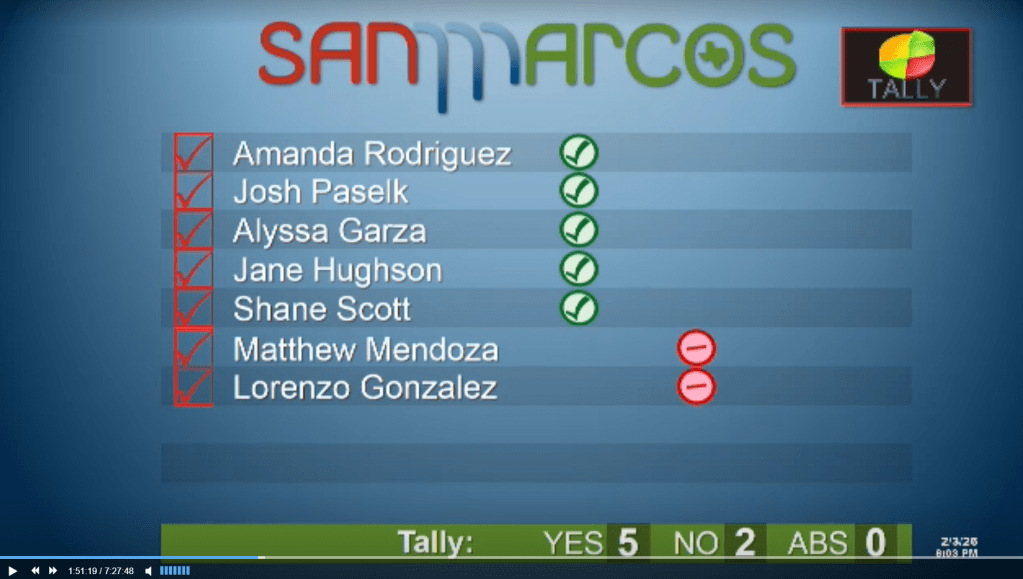
I think Matthew and Lorenzo did not yet trust the implementation process.
If you’d like to read the plan yourself, enjoy it here.
On we go!
…
Item 10: Post Road and Uhland
About a year ago, this little strip came to Council for rezoning:
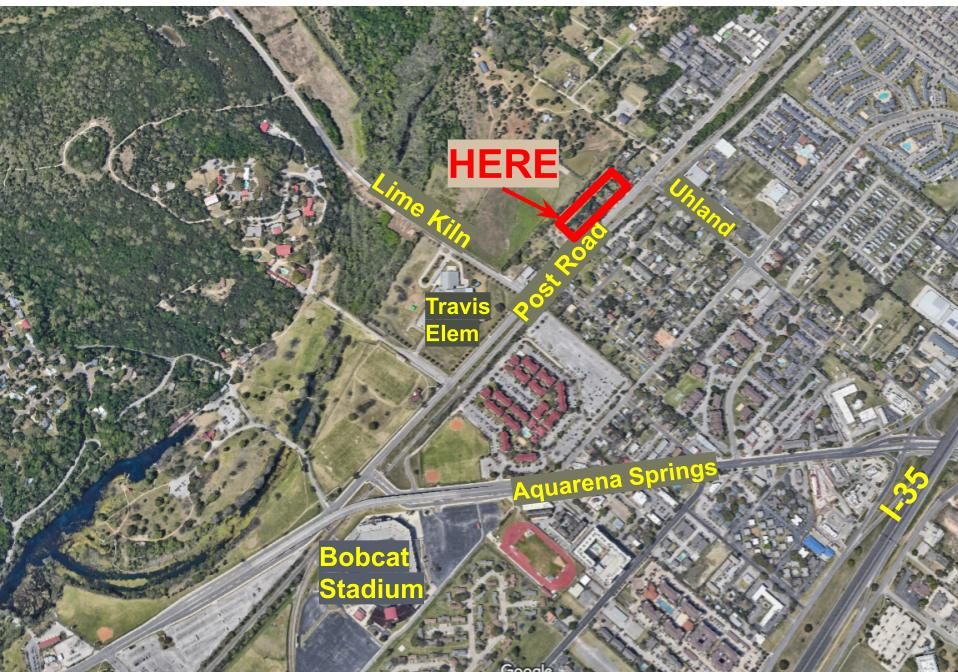
It was these eight plots of land:

And the owner wanted to convert them to condos.
Notice how the top corner lot is missing? That brings us to today:
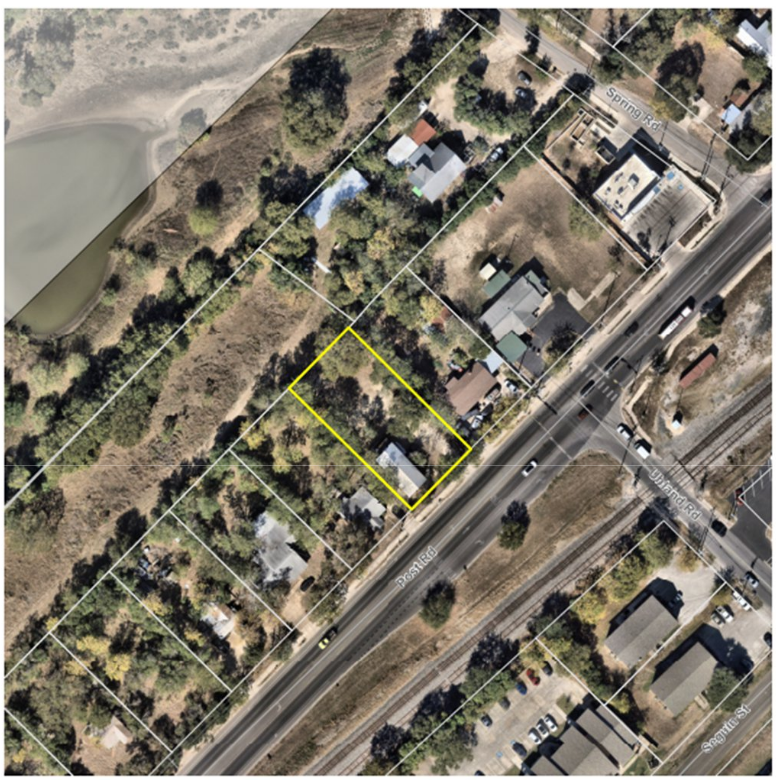
There it is! It’s the missing corner lot. They want to rezone this corner to match the rest. Great!
Everyone is fine with this.
….
Item 11: The Data Center
Back story: Discussed previously here, here, here, here, here.
Super short version:
- March 2025: Maberry wants to rezone his land to build a data center.
There is a huge outcry from the public. P&Z denies the rezoning. - August 2025: The rezoning goes to council.
It needs 6 votes to overturn P&Z. Maberry only gets 5 votes. - January 2025: Maberry re-applied for his rezoning to P&Z.
This time P&Z approves it.
Now it’s back to council. No vote tonight – it is just a public hearing.
Two notes:
1. Every step of the way, there has been a massive outcry from the community. There are hours of citizen comments, town halls, letters written, etc. A lot of people are furiously opposed to this data center.
2. There are a lot of data centers being built in Hays County.
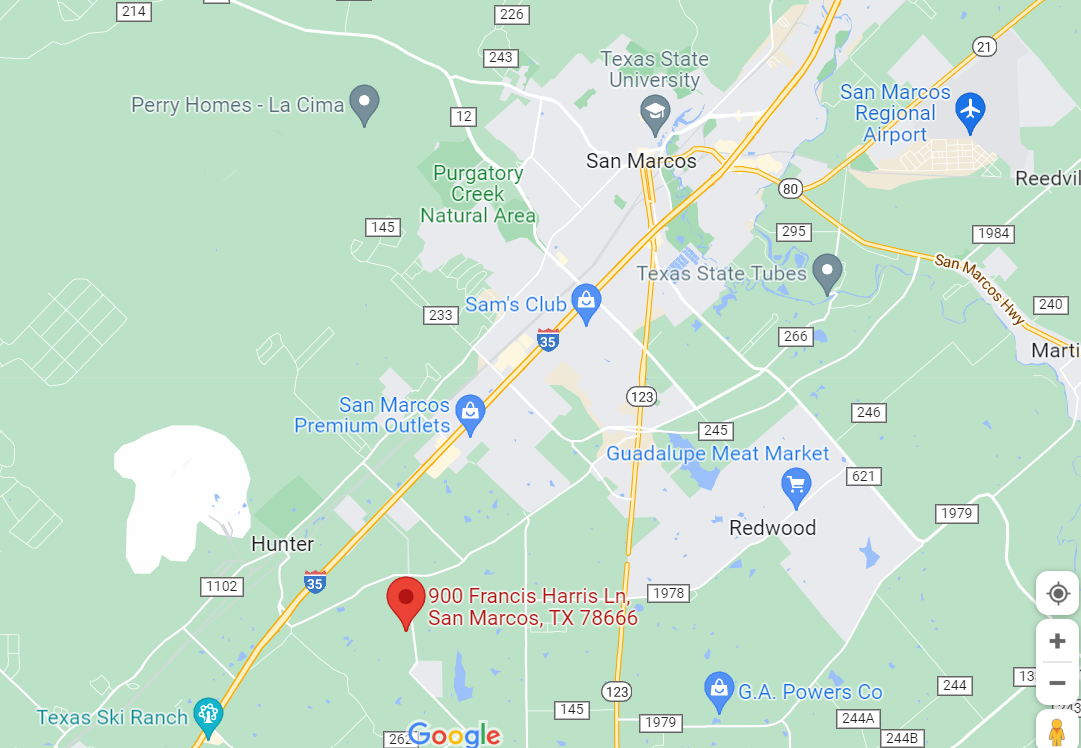
These are the local data centers I know about so far:
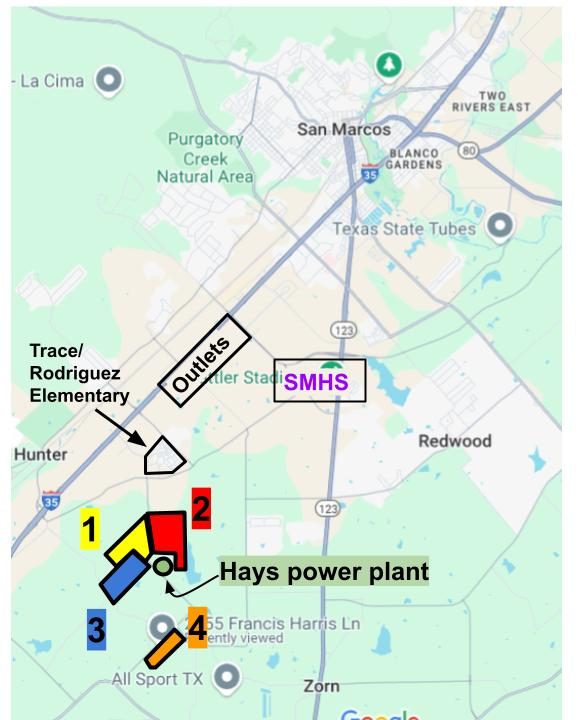
- Maberry, the one that Council will vote on.
- Carson properties, see below
- I don’t know who. These guys call it the “Doster property“
- Cloudburst Data Center (already being built)
None of those, besides Maberry, can be stopped, because they’re all in the county.
And here are the ones in Texas:
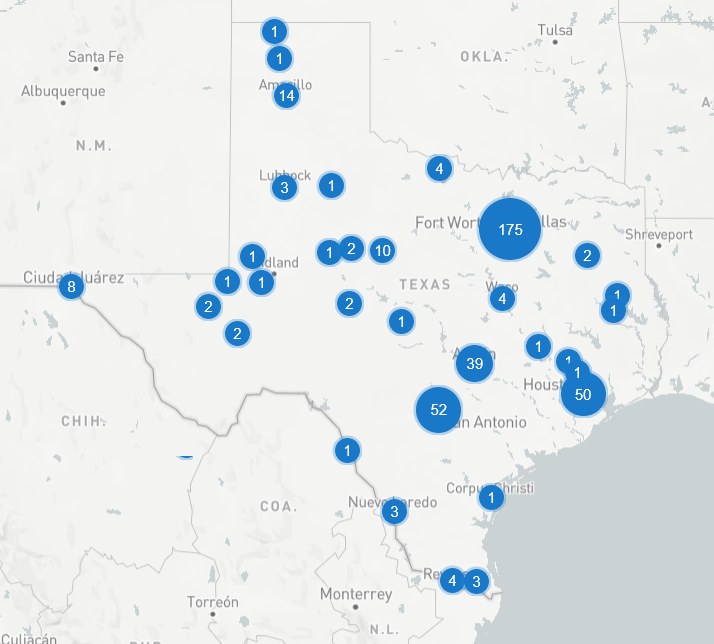
About 400 so far.
…
Public Hearing:
There are 14 more speakers: 3 in favor, 11 opposed. (Some speak twice.) I’m combining all the major points from earlier in the meeting and this public hearing.
Here are the major points from the activists:
- Data centers use an unbelievable amount of water. We’re in a severe drought.
- They use a ton of electricity, and electric plants also use a lot of water
- This is not going to create many jobs.
- You’re ignoring the comp plan!
- You’re ignoring hundreds of people.
- It’s extremely difficult to win lawsuits against companies that use more water than they’re allowed to use.
- This will cause ERCOT to grow the grid, which uses more water.
- Crystal Clear Water is in water-debt and in financial debt. But they’re legally obligated to provide water that they literally don’t have.
- This is a violation of the Land Development Code
- The optics of this are horrible.
And the arguments from the supporters:
- These will be union labor jobs!
- We’re willing to make lots of concessions. You can’t negotiate with any of the data centers in the county.
- This petition thing is bullshit! (more below)
One neutral person speaks: he is from the Crystal Clear Water Board. Crystal Clear is the folks who would be providing water to Maberry. He says:
- Maberry claimed that he’s putting water use in the restrictive covenant, and that the water use is about half of what it would be if he built homes out there.
- As a board member, I would like to clarify: he only has a residential use agreement. He’s not allowed to substitute for commercial, industrial, or agriculture uses. Strictly residential.
…
Two technical points that might swing this decision towards the activists?
- The waiting period.
(There has been confusion about Council’s non-denial. If Council denies a rezoning, there is a one-year waiting period. However, Council did not technically deny the data center last August.)
But there was a second technicality pointed out!
This is from the Land Development Code, section 2.5.1.2.F:
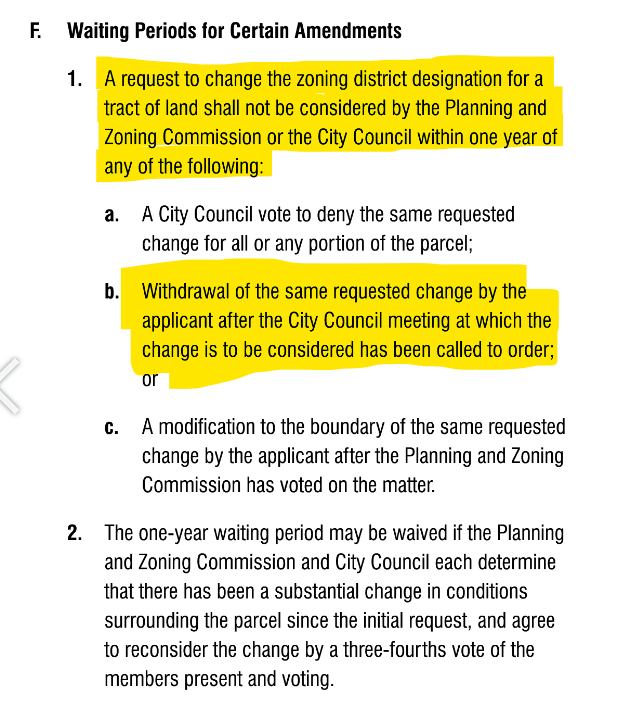
Maybe this does apply. Maberry did withdraw their zoning request after that meeting in August.
2. The Valid Petition
In Texas, there is something called “a valid petition“. This is a way for neighbors to prevent a rezoning. If 20% of the neighbors within 200 yards sign a valid petition, then the rezoning requires a supermajority at City Council.
So this is what the neighbors have done.
This might be a game-changer, because the data center can probably get 4 council votes, but not 6 council votes.
One side note on the valid petition
It is mostly signed by residents who own farms next to this site. But the last signature on the petition is not from a home-owner:
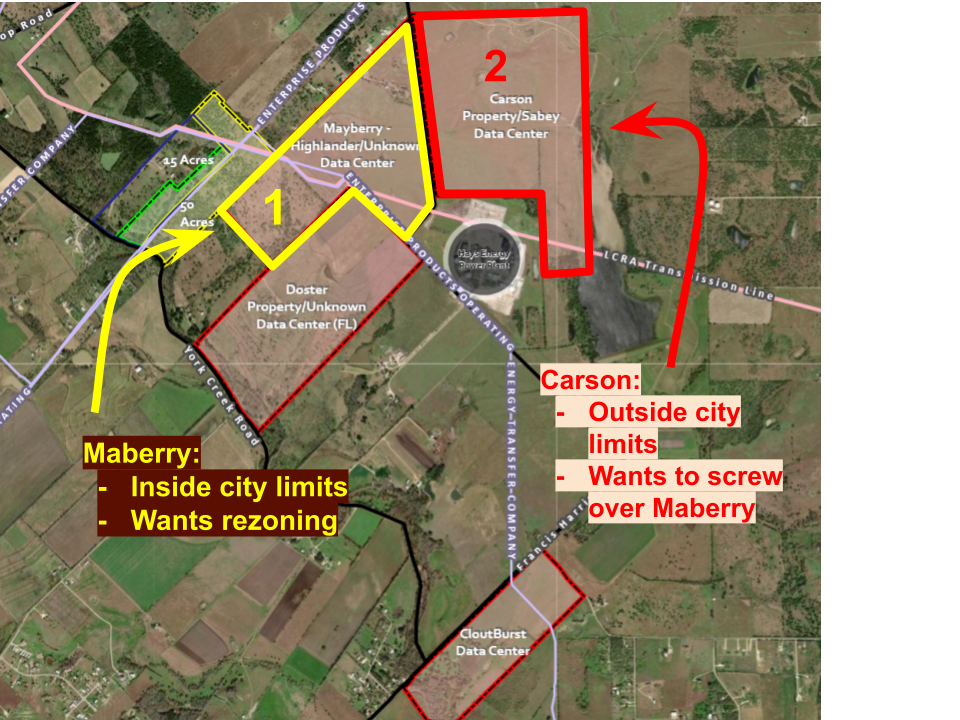
Carson Properties signed the petition. They also want to build a data center, right next to Maberry.
The home-owners are the ones who did the hard work of collecting signatures. But the petition definitely benefits Carson’s ability to build their data center.
…
Let me address the activism directly:
The activists are in an impossible position, because Texas politics is very rigged:
- They care deeply about the environment and critical drought in central Texas. (Me too!)
- Data centers, as an industry, pose a real existential threat to the water resources in this state.
- Texas has entrenched systems that make it virtually impossible to fight the data center industry.
This is a slow-motion trainwreck, and it’s really awful.
Maberry is a lightning rod for all this activism and anger, because he uniquely made the dumbass decision to get his land annexed into the city. So out of 400 data centers in Texas, this one can be fought.
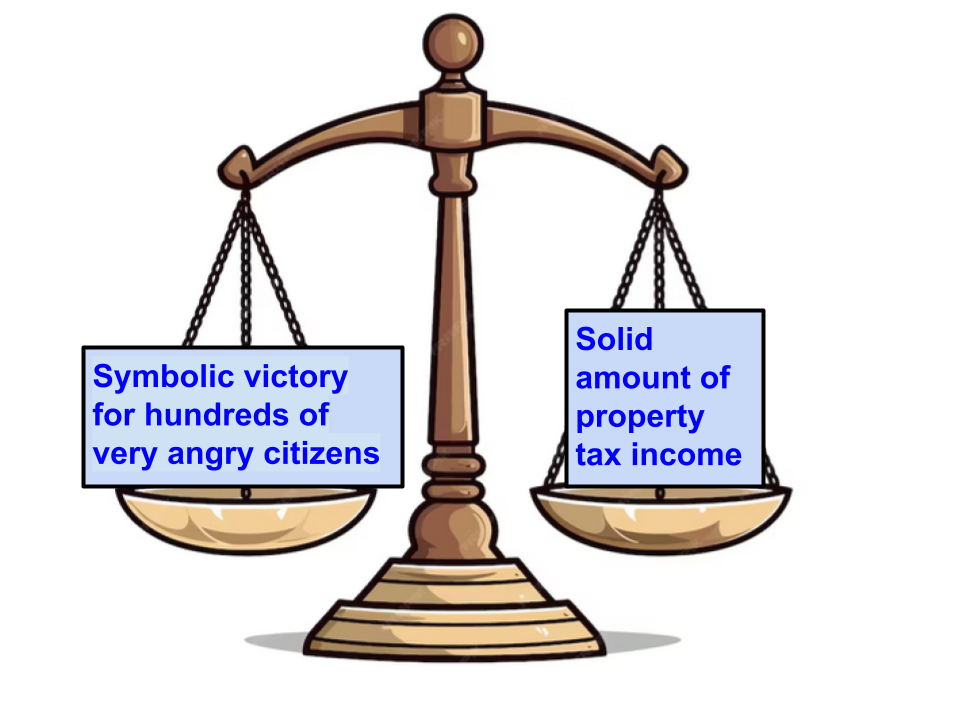
A victory against Maberry is symbolic, but not much more than symbolic.
Here’s what Council’s decision is:
My two cents
I am a little exasperated with the activists, because I don’t like extremely hyperbolic language. I hear lots of people overstating the situation – “people will die!” and “the river will run dry!” and “there is literally no reason to vote for this!” – and none of that is accurate.
But far more than that, I’m angry at the state government. We’re in this no-win situation because they refuse to do their job.
I think the real path forward probably involves following:
- Legal battles from water districts who are legally obligated to supply water that they do not have.
- Legal battles from counties that have no mechanism to regulate natural resources
- Activists and environmentalists who are extremely concerned about the drought.
- ERCOT needs to continue to transition to low-water energy sources like wind and solar
- the Texas Water Development Board needs to step in to help coordinate all this.
My sincere hope is that the activists see themselves as part of a much larger fight than just Maberry’s data center.
What does Council say?
Barely anything! There’s no vote tonight.
Here’s where we are on the timeline:
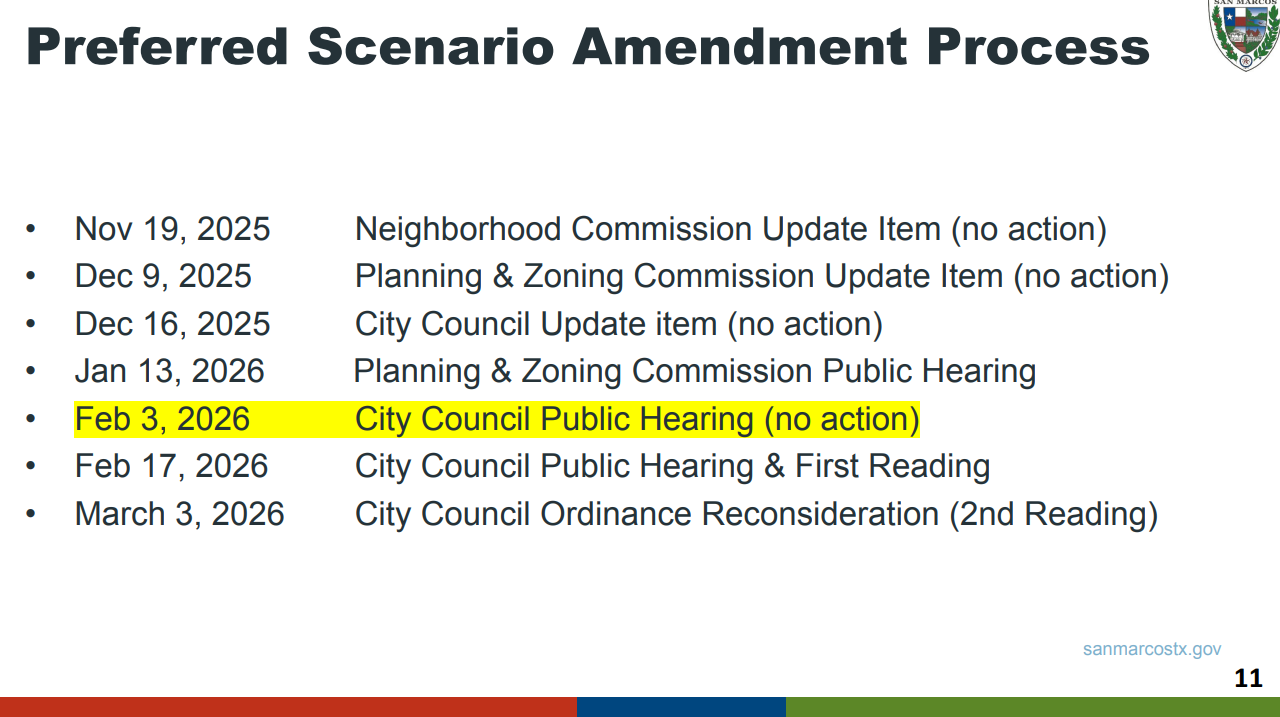
The big discussions and votes will happen on February 17th and March 3rd.
That is when all the wheeling-and-dealing will take place. Stay tuned.
…
Sidebar: Valid petitions are also called Tyrant’s Vetos, and they are generally not good:
Valid petitions are an obscure zoning procedure that have been used to try to obstruct a Dallas hospital expansion, student housing in Bryan, and Habitat for Humanity houses in Austin.
Lefty groups generally do not like them because they are anti-democratic and a big NIMBY problem. They make it incredibly easy to block things (like affordable housing) that a city needs to support its residents. Last year, the Texas legislature fixed it to some extent.
…
Item 12: Rooftop on the Square
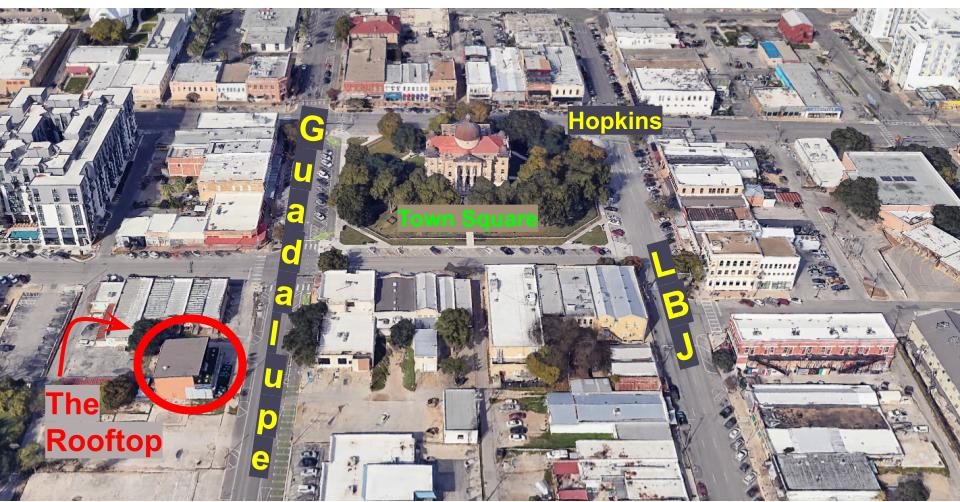
This is one of those clubs on the square. It’s located here:
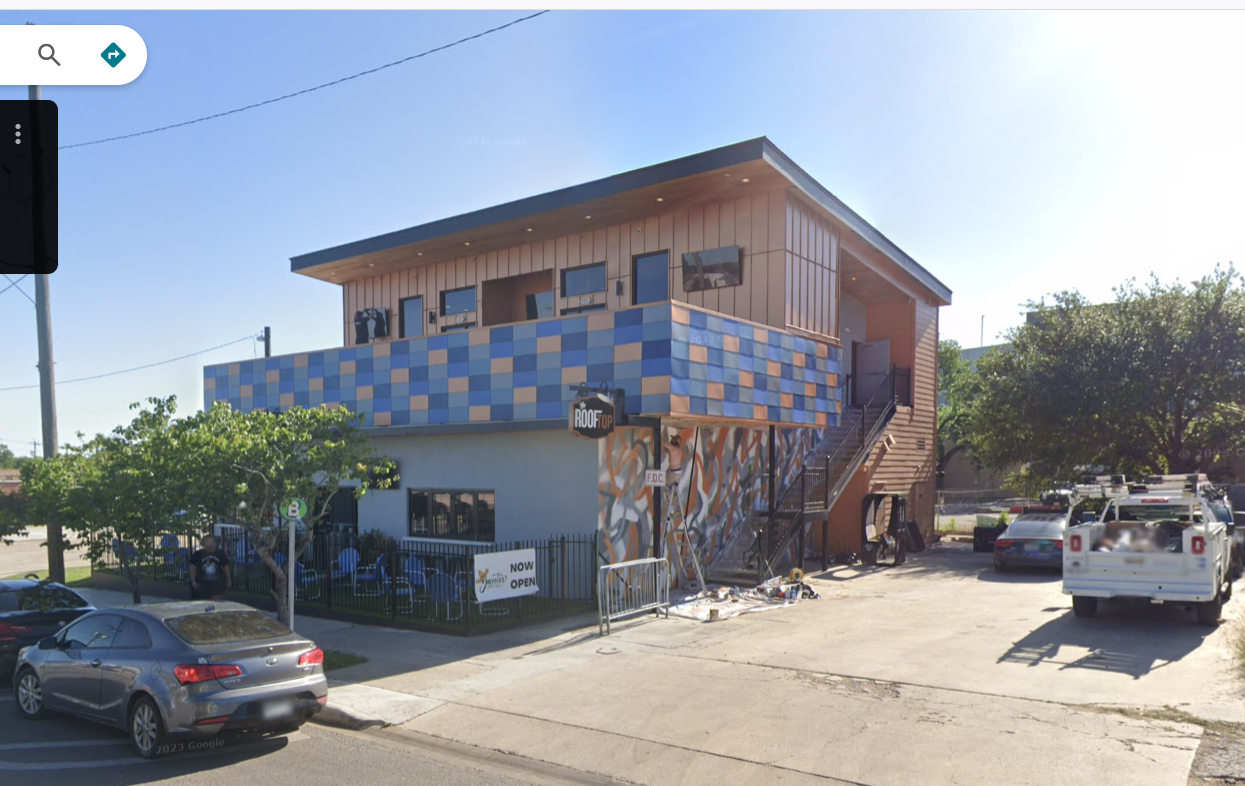
and looks like this:
They first opened in 2012. Based on their webpage, it looks like this:

It advertises “first class vibes”, and looks like a good place to get blackout drunk and get felt up. Maybe that’s your jam!
It is NOT the jam of P&Z.
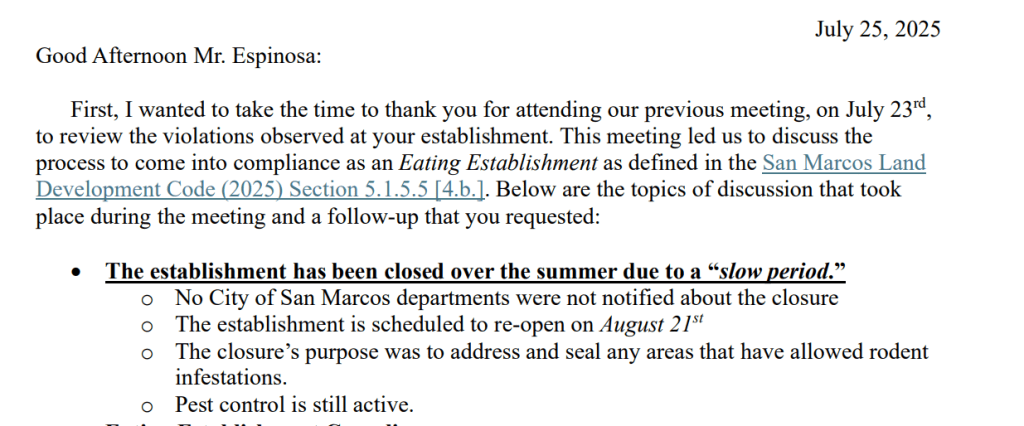
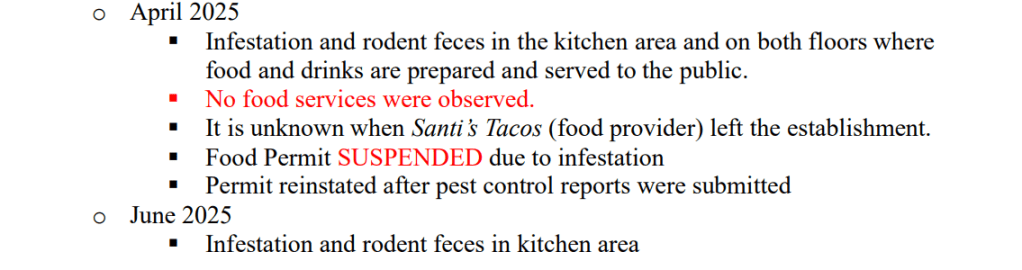
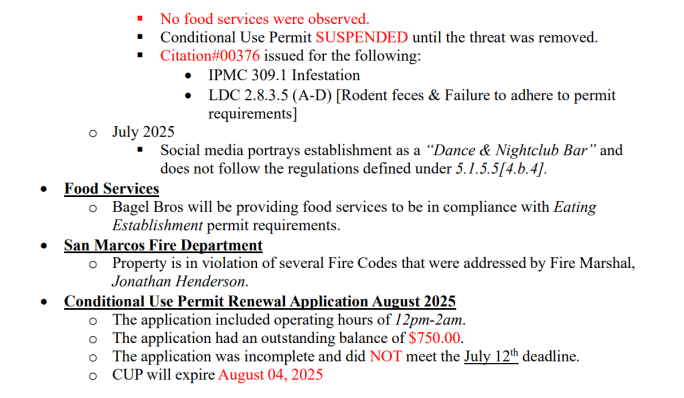
So, the Rooftop first pissed off P&Z back in August, 2025. The Rooftop is technically a restaurant and not a bar. (Can’t you tell?) So they have a restaurant alcohol permit, not a bar alcohol permit. This means that they’re supposed to be selling at least a little bit of food and pretending that patrons are not merely trying to get blackout drunk.
They were not selling any sort of food.
Here’s how Code Compliance writes things when they are really fed up with a business:
In August, due to all these shenanigans, P&Z gave the Rooftop a 3 month alcohol permit.
They were supposed to:
- Get some sort of food service up and running
- Get that nasty health violation stuff cleaned up.
- Keep your nose clean for three months.
December, 2025: they did not keep their noses clean!
1. The food stuff is fine: first they worked out something with Bagel Bros, and then replaced Bagel Bros with a food truck. Great!
2. The health inspection stuff is so-so: they mostly got this stuff cleared up, but Matthew Mendoza toured the place and found it disgusting, even after they’d been working on it for awhile. He reported seeing these little buzzballz liquor bottles stashed all over the place:
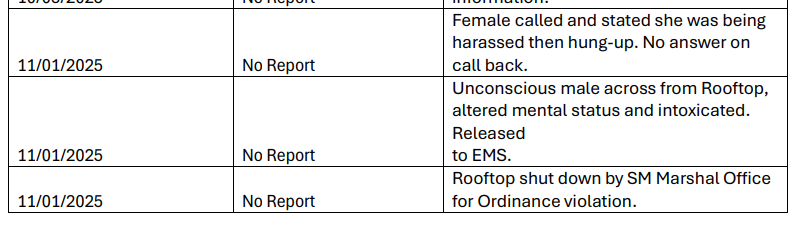
3. Did they at least keep their noses clean? No. They got NINE police calls during that same three month window.
To be fair, some of those were initiated by Rooftop staff. You don’t want to ding an establishment for calling the cops themselves. But the one that is a really big problem is Halloween weekend.
If you remember, that was the night that a person was killed downtown. That killing did not specifically involve the Rooftop, but a bunch of other stuff did.
So what did involve the Rooftop?
Here’s the police report from that one night:
Here’s the fire marshal report about why the Rooftop was shut down that night:
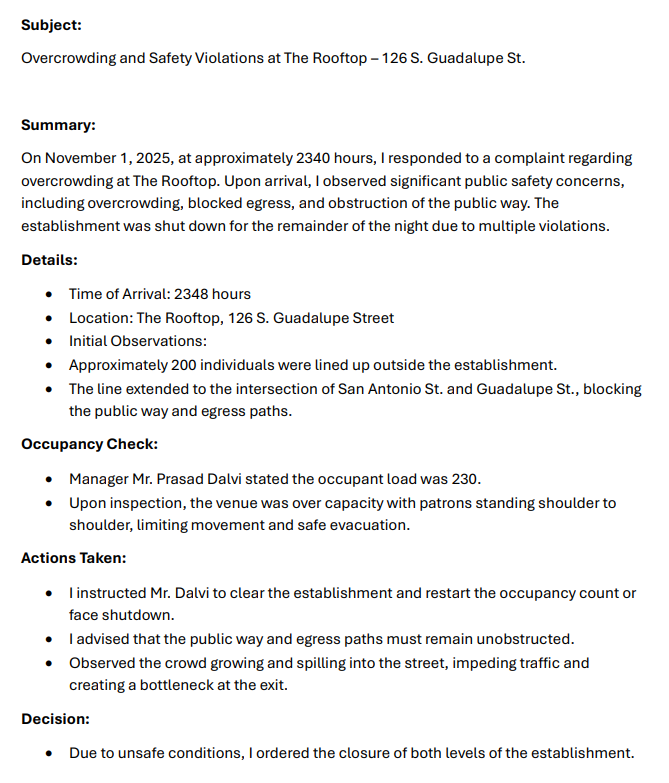
The fire marshal said to the manager, “I can either close you down, or we can empty the place and count how many people leave.”
The manager said, “Let’s empty the place out, and count!”
No one can recall the exact number of people who came out of the Rooftop, but the fire marshal decided it needed to be closed down.
Finally, and most damning of all, this police bit from after the shooting:
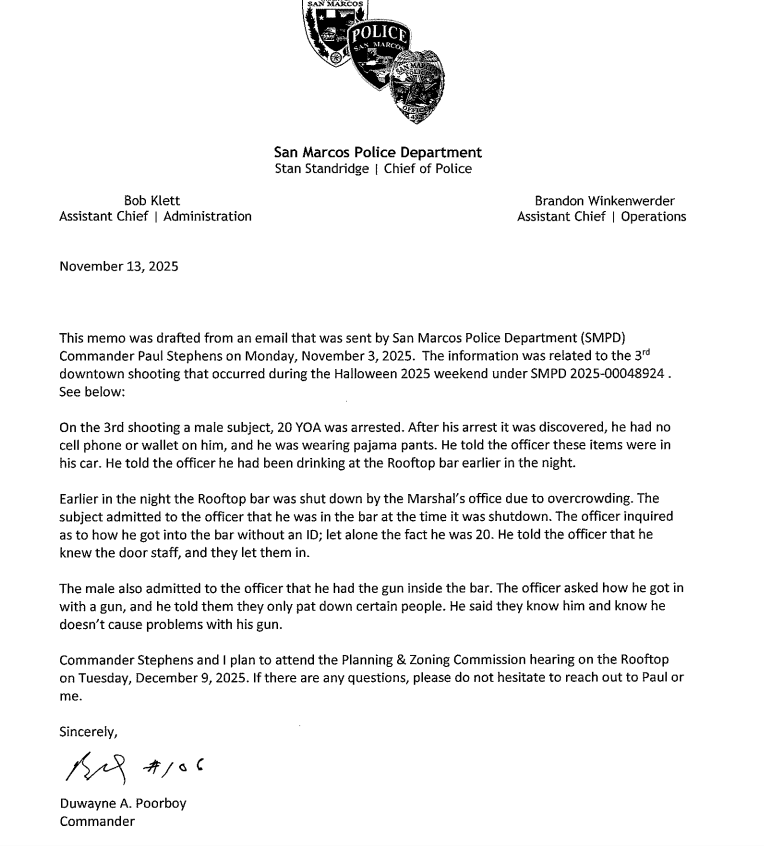
I mean, dude. DUDE. You’re letting in underage dudes with guns in their pajamas! While you’re on probation! If you’re trying to smooth things over with the grown-ups at P&Z, this ain’t the way.
Over the next few weeks, there was some mixed communication between SMPD and the manager, as SMPD tried to locate the Rooftop surveillance video for the night. It got automatically erased after seven days.
Bottom line: due to all this, P&Z denied the alcohol permit. No booze for you, Rooftop.
…
Which brings us to tonight!
The Rooftop is appealing the P&Z decision. This means that it will take a supermajority of councilmembers to overturn the P&Z decision. In other words, it takes 6 votes out of 7 to overturn the denial.
At the public hearing, there are four people from the Rooftop who all try to plead their case:
- We’ve gotten LOTS of renewals since 2012!
- Sometimes WE’RE the good guys who called the cops!
- On that crazy Halloween night, all the bars were shut down, not just us!
- We have metal detector wands and dress codes.
- Listen, it was a mix up about the security video from Halloween night.
And then there was the lawyer, who was mostly very repetitious:
- This is arbitrary and capricious!
- This is hearsay!
- Quasi-judicial setting!
- Not clear and substantial new evidence!
- You can’t make decisions on emotions! P&Z does everything emotionally!
She seemed to be mostly threatening to sue if they were shut down.

Ok then.
What does Council say?
Matthew is a hard no: “When I toured your establishment, you all were very dismissive of all these problems. There were ball bottles stashed everywhere. There was a nasty patch in the kitchen that still wasn’t clean.”
SMPD:
- This was not arbitrary and capricious.
- It’s not hearsay when it comes from a police report.
- We were at the Rooftop because of a fight – not arbitrary nor capricious.
- The fight spanned two locations.
- They were the only bar closed for overcrowding, before the shooting. All the other bars were shut down because of the shooting.
Manager:
- We wand and pat down every person that enters!
- Two separate lines for 18+, 21+
- There’s a dress code! No baggy pants, no sweatsuits, no jerseys, no do-rags.
Alyssa: Sounds a little bit racist!
(I had that same thought.)
Code compliance:
- We flagged a LOT of problems in September.
- Since then, they’ve been very cooperative. Almost everything code-related is cleared up.
Lorenzo does his very Lorenzo thing, where he gets bogged down in overly technical amendments. “What if they try to outsmart us and serve food during the daytime and not serve food at nighttime? We should require two full time periods! No, we should limit their hours of operation! But what about the Superbowl on Sunday? Are they trying to pull a fast one on us?” None of this goes anywhere.
…
Other amendments that they consider:
- Making the alcohol permit last 4 months. (this passes)
- Make them 21 and up (this does not pass)
- They must hire more off-duty cops (I don’t remember).
At one point, Josh Paselk asks SMPD Chief Standridge point blank: “Can you all work with this business? Do you feel okay about them?”
Chief Standridge: “We can work with ANYBODY. We will always do our best to keep the community safe! That said, the rest of the downtown businesses are sick of underage kids getting blackout drunk and puking everywhere.”
I’m paraphrasing a little bit, but that’s the gist of it. The Downtown Business Association would like to see some accountability among the bar owners.
Two hours later, the vote to restore the alcohol permit for the Rooftop:
<drumroll…> (Remember it needs six votes to pass)
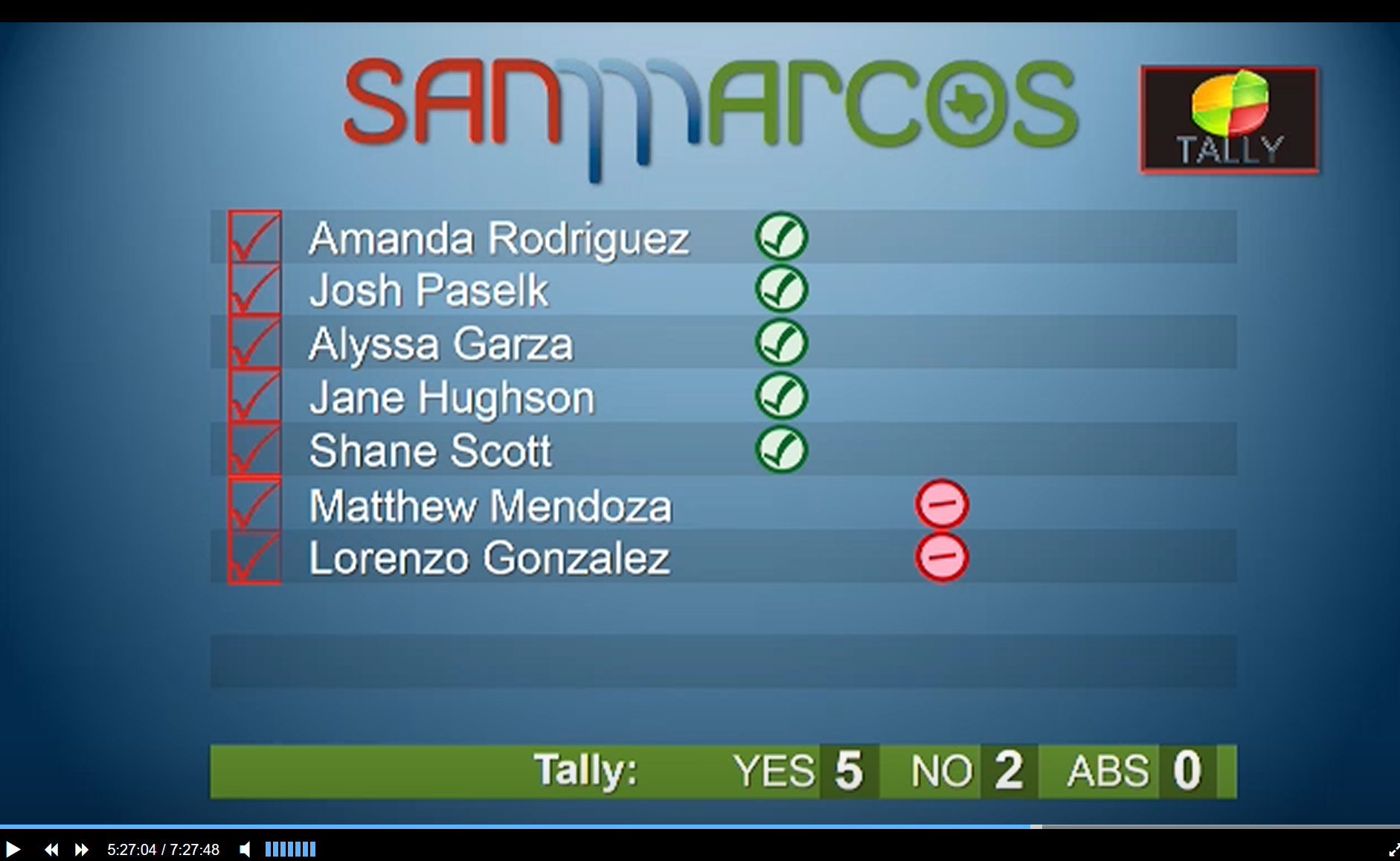
That’s not a supermajority! IT FAILED.
The Rooftop has lost it’s alcohol permit.
….
How long until they can reapply and reopen? The city lawyer said he needed to stop and look it up, but then we never found out. It might be one year.
(I hunted around the Land Development Code and couldn’t figure it out, either.)
…
Item 13: Whisper PDD
Whisper PDD is this development, way up north:
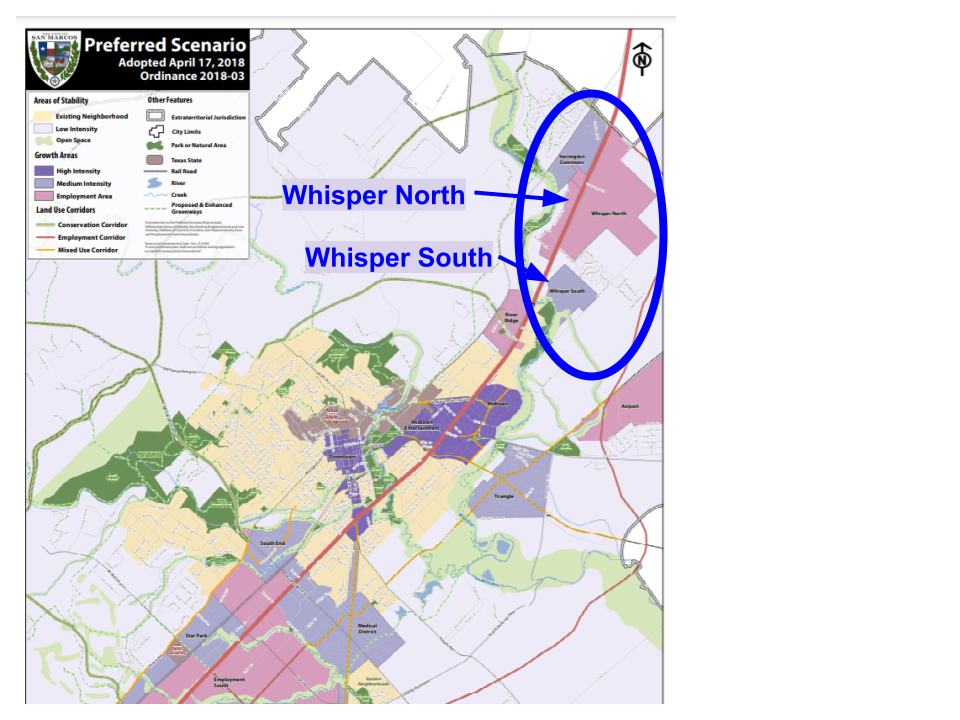
PDD stands for “Planned Development District” and it means that there are all sorts of fiddly rules about what they can and can’t do.
What these guys want to do is….

a FOURTH HEB?! what? Didn’t we just break ground on our THIRD HEB?
Guys, this is like an embarrassment of riches. We’re going to be swimming in HEBs. You’re going to have so many high quality groceries from this good-hearted company, you’re not going to know what to do with yourself.
Here’s where it will go:
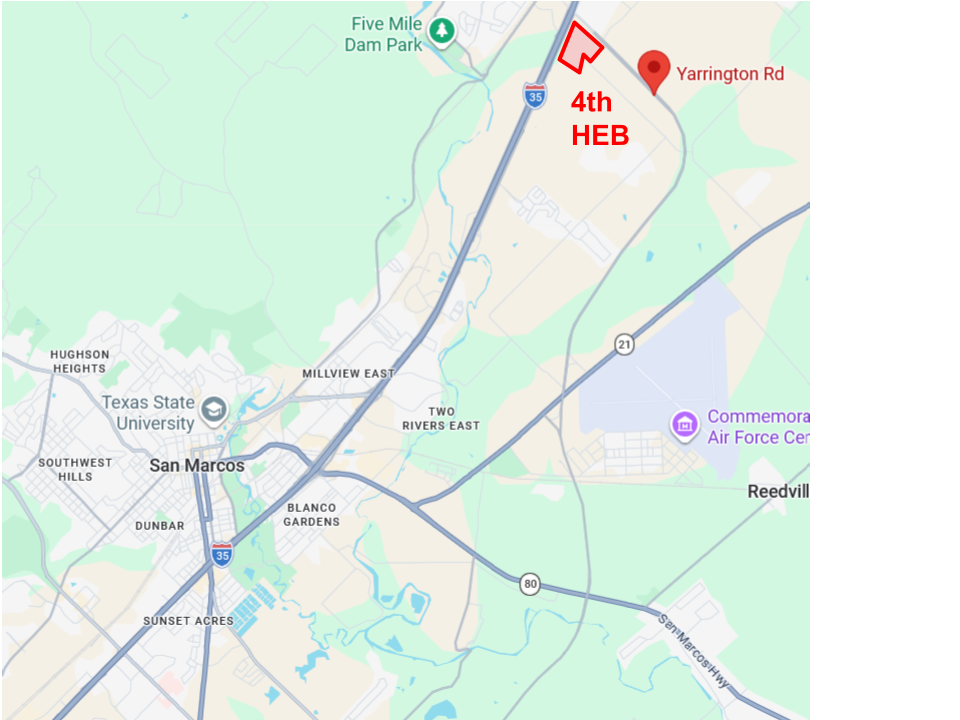
Everyone is a hard yes.
Just one thought: they’re not going to try to shut down little HEB, are they? It’s so well-loved.
…
Item 5: New train bridge!
Maybe you’ve noticed that we have a lot of trains in San Marcos. Here are the railroad lines through town:
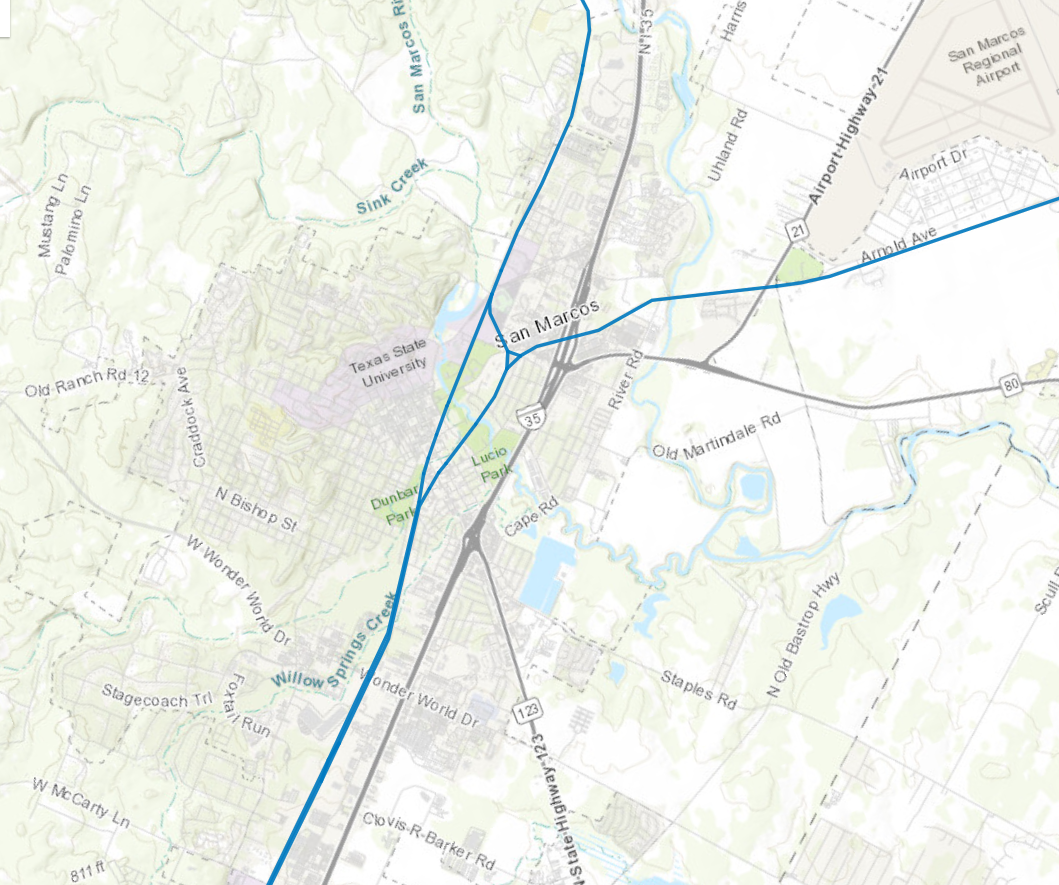
This is why the trains sometimes completely stop – they’re merging or crossing tracks or avoiding another train.
Here’s the south side of town:
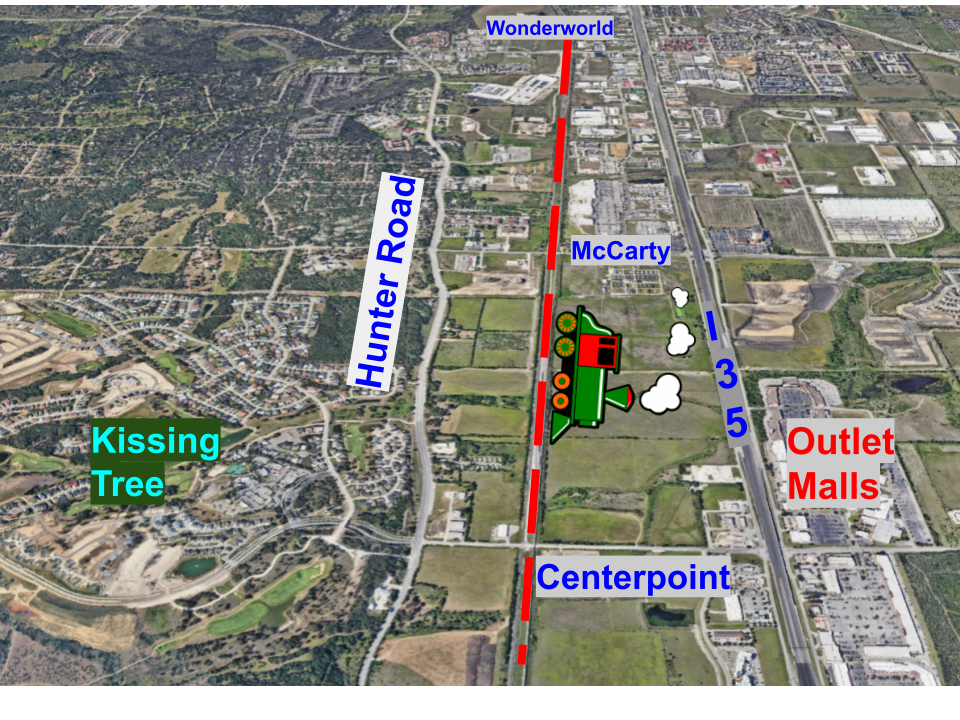
The tracks are running parallel to I-35. When there’s a train stopped, you have to go to Wonderworld to go over it (or find the end of the train and go around it).
But change is a-coming! Good news, Centerpoint fans! YOU get a train bridge!
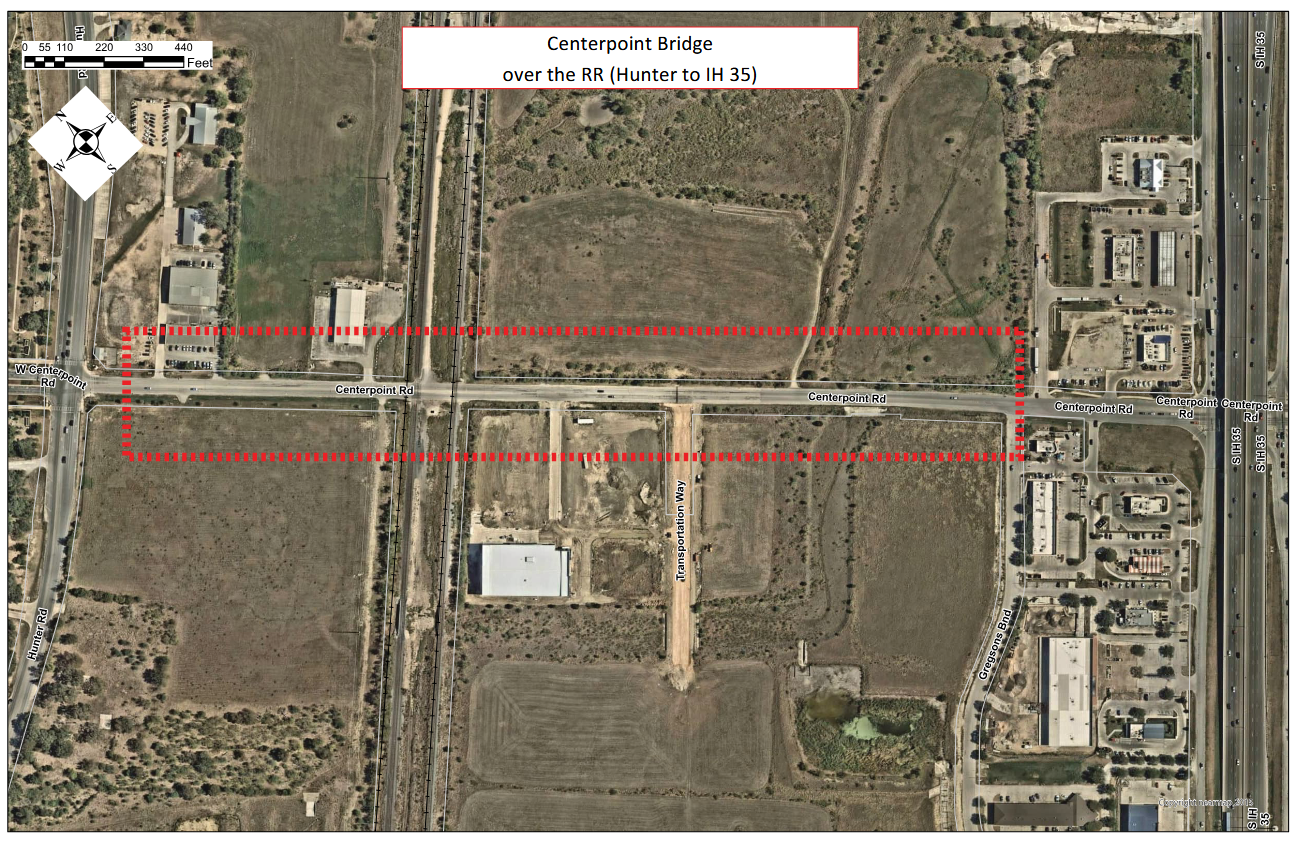
You lucky dogs. Now don’t spend it all in one place.
…
Item 8: Downtown security
SMPD is trying to keep downtown from spinning out of control on the weekends.
They struck a deal with Texas State PD: Texas State is kicking in $150K to help pay for officers downtown.
Just this once, though! It’s not an ongoing deal.
…
Item 15: Appointments to boards and commissions
We were already six hours deep in the meeting, and I didn’t know any of the names of the people being appointed, and so I didn’t listen very carefully to this bit.
Sorry about that!




 The San Marxist