
Workshop #2: San Marcos Water Supply.
(I love this one so much.)
Where do we get our water from?
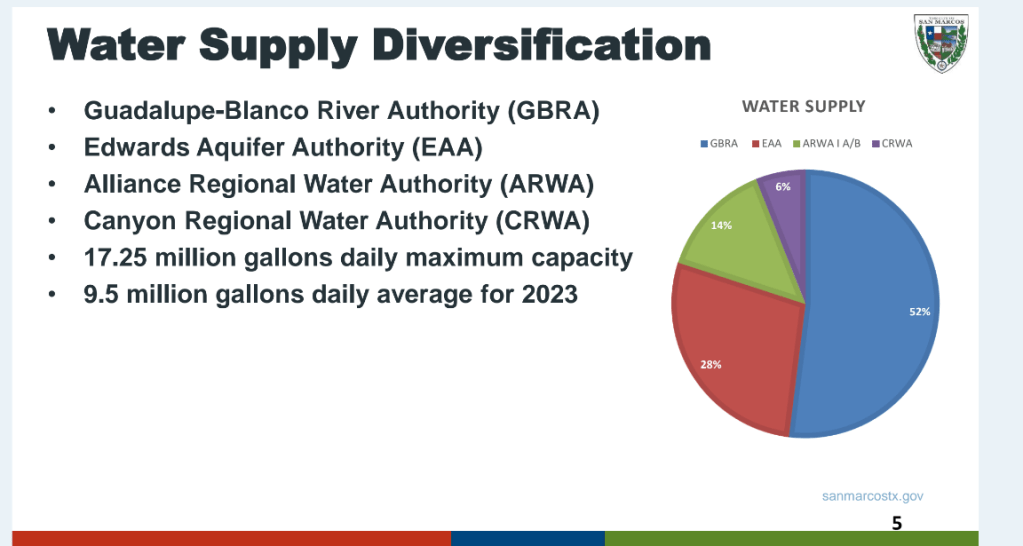
Until 2000, San Marcos exclusively got Edwards Aquifer water. Then we signed on to get some surface water from Canyon Lake, and in the mid 2000s, we joined ARWA water. (More on ARWA in a moment.)

“MGD” means a million gallons of water per day.
…
What is ARWA?
ARWA is kind of crazy. Basically, in 2006, San Marcos, Kyle, Buda, and the Canyon Regional Water Authority got together and tried to figure out a longterm plan. They formed ARWA, the Alliance Regional Water Authority.
They decided to connect to the Carrizo-Wilcox Aquifer, which is over here:
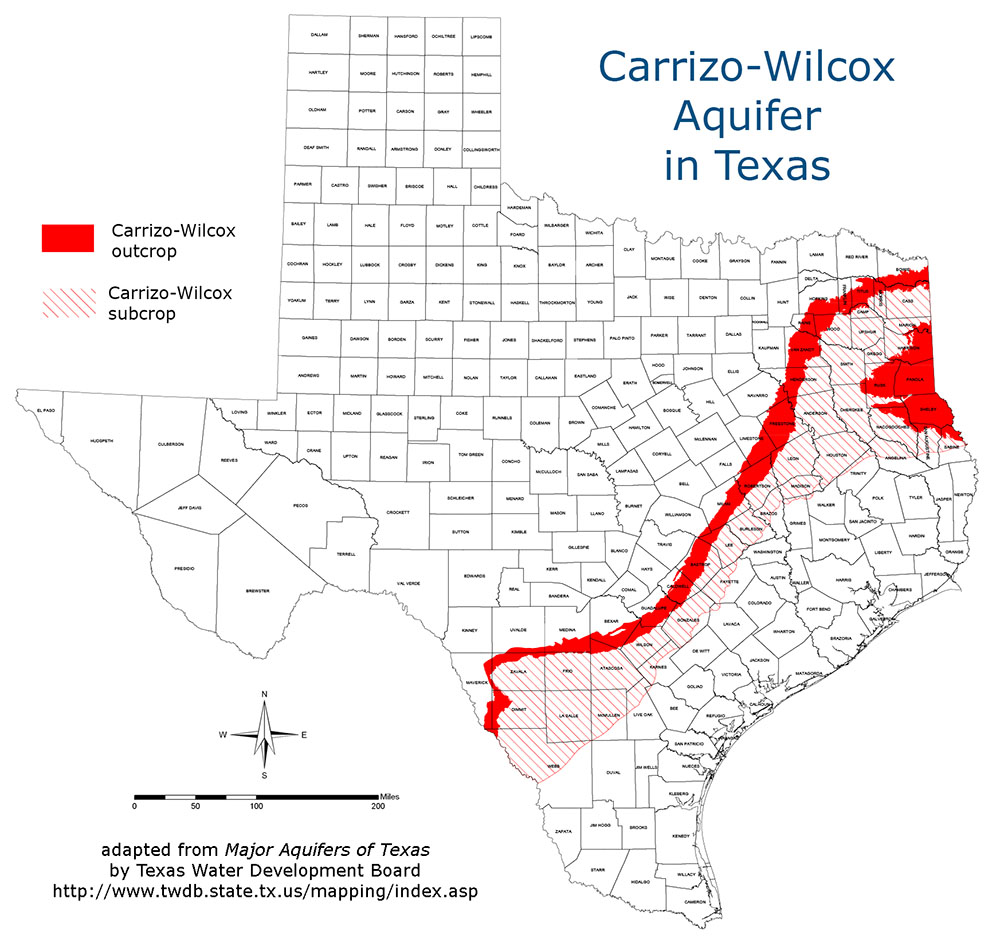
The crazy part is that this started in 2006, and they knew they wouldn’t be delivering water until 2023. This was a very longterm plan! That is really good foresight by the councils that agreed to this.
There was all sorts of infrastructure that had to be built. I think this is the whole project:

So we’re getting all the water from the green oval on the far right. Then it has to be treated, at the blue dot, so that it’s drinkable. All those red lines are pipe that had to be laid down, and it gets run out to Lockhart, Buda, Kyle, San Marcos, and New Braunfels. That’s why it took so long.
But now it’s here! This is great!
….
So we’ve got all this water – Edwards, Canyon, and now ARWA. Is it enough?
It depends! How many people are trying to use this water?
This is the population projection, based on 2017 data:

In other words, the black line is the projected population, and the red part is how much water we’d need. So in 2055, we’re expecting to have 140K people and need about 16K acre-feet of water each day. (An acre-foot means take an acre of land, and fill it with water that is 1 foot deep.)
Here’s the water supply, according to when each of those sources kicked in:
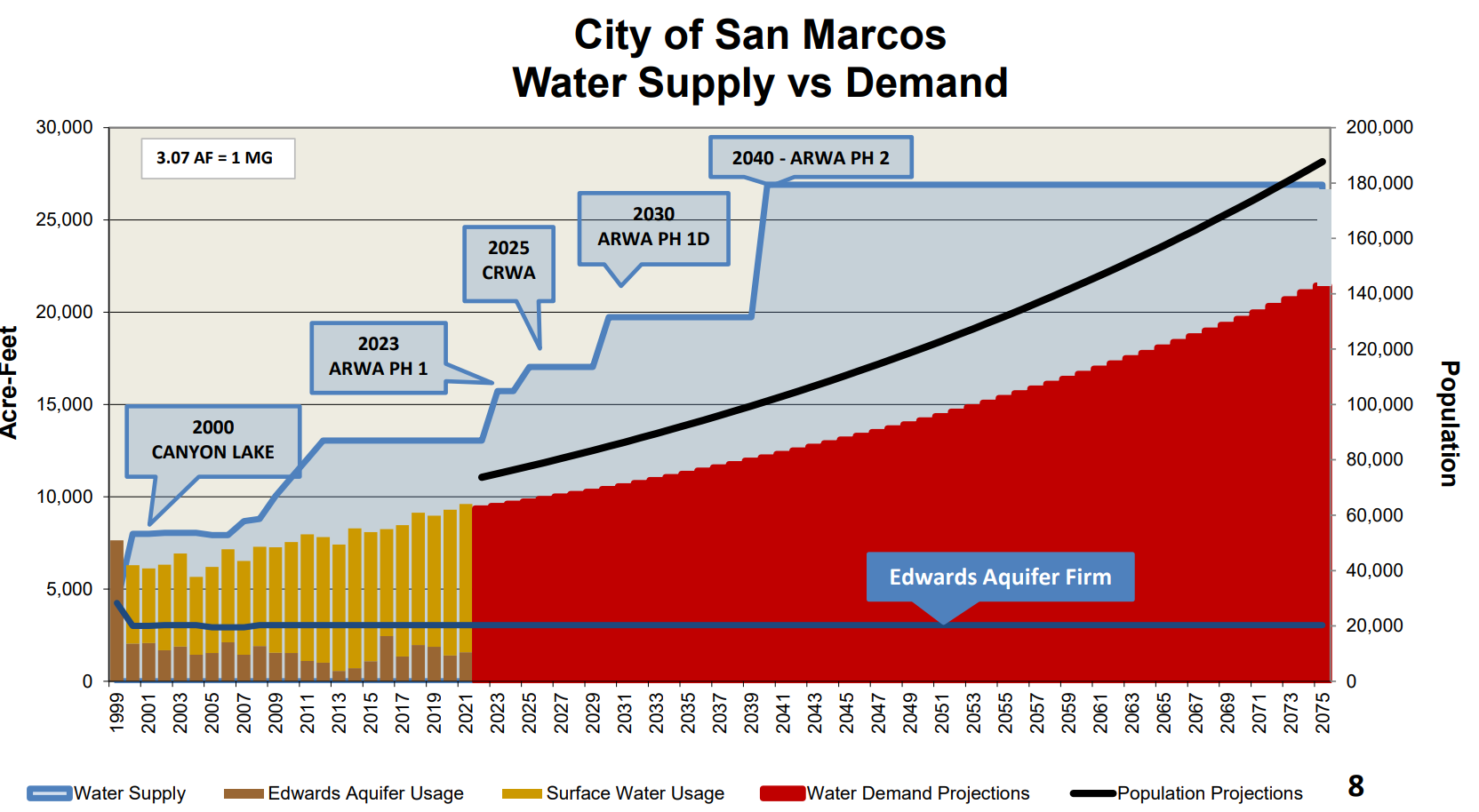
So this looks great! So in 2055, when we need 16K acre-feet of water, and we’ll have access to about 27K acre-feet of water. Through 2075, we’ve always got more water than we need.
This is great!
But then…. we had to update our projections. Between 2017 and 2024, this region grew even more than expected. So we had to ramp up our projections, accordingly:
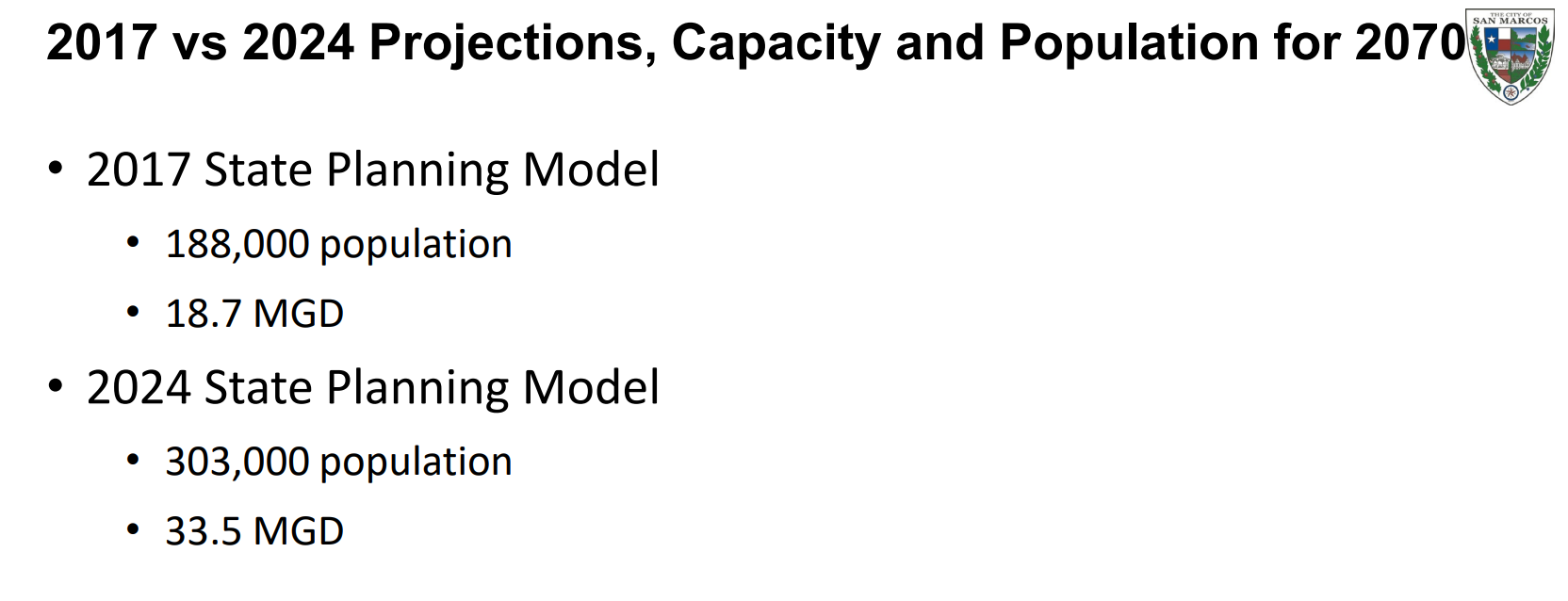
So if we’ve got the same amount of water planned, but a ton more people, the graph now looks like this:
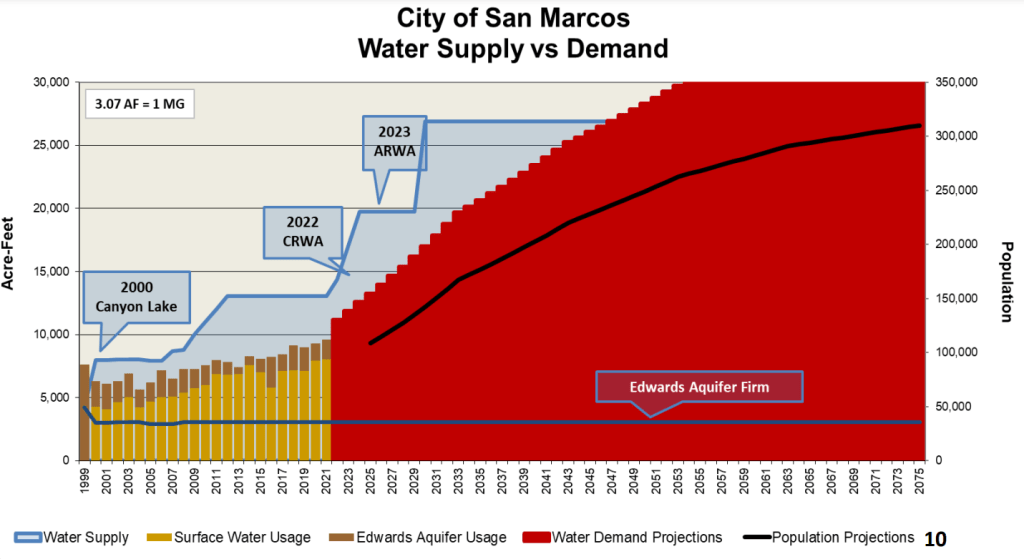
Whoops. Now we are scheduled to run short on water in 2047.
So what do we do?
The good news is that we’ve got plenty of planning time, and we’re putting it to good use. There are basically two ways to address this:
- Find more water
- Use less water
We’re going to do both.
First, more water:

Apparently Buda and Kyle are even shorter on water than we are. Everyone is interested in collaborating and shoring up supplies. An ARWA Phase 3? Maybe a different source?
Second, reduce water usage:
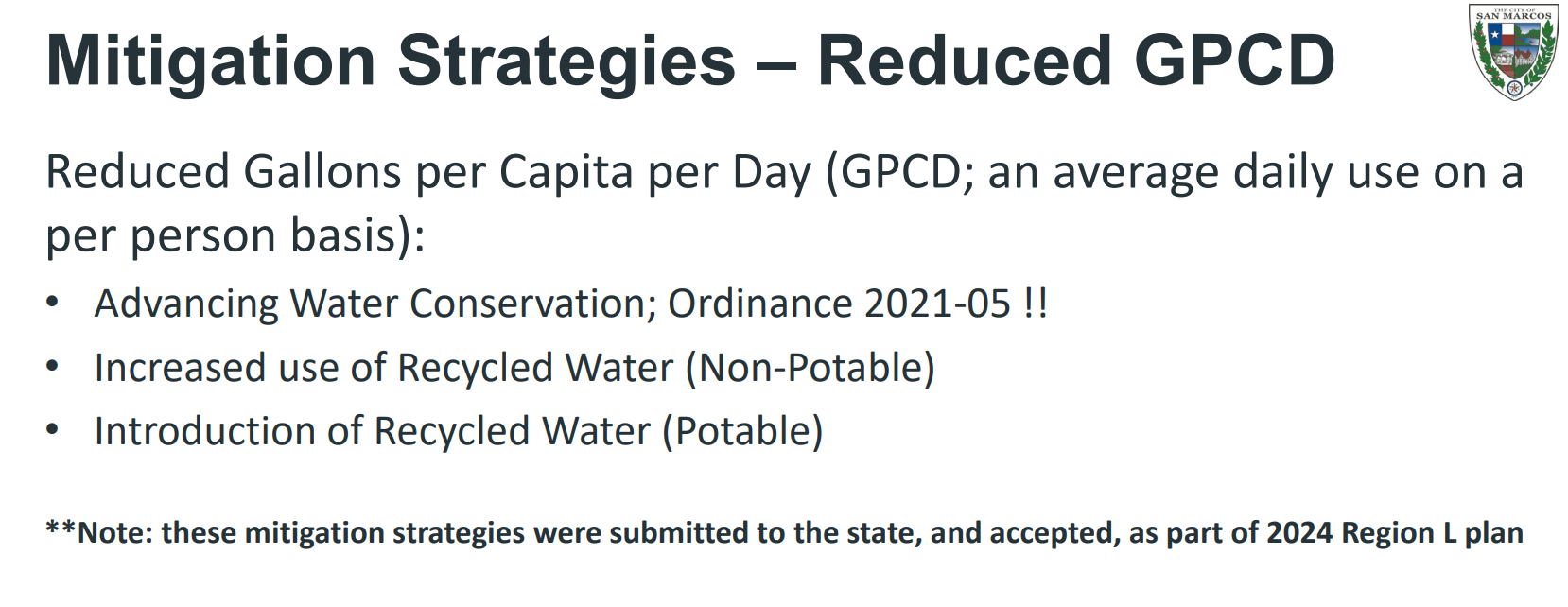
The second two bullet points are huge: reclaiming used water. We’ve already got some reclaimed water already:
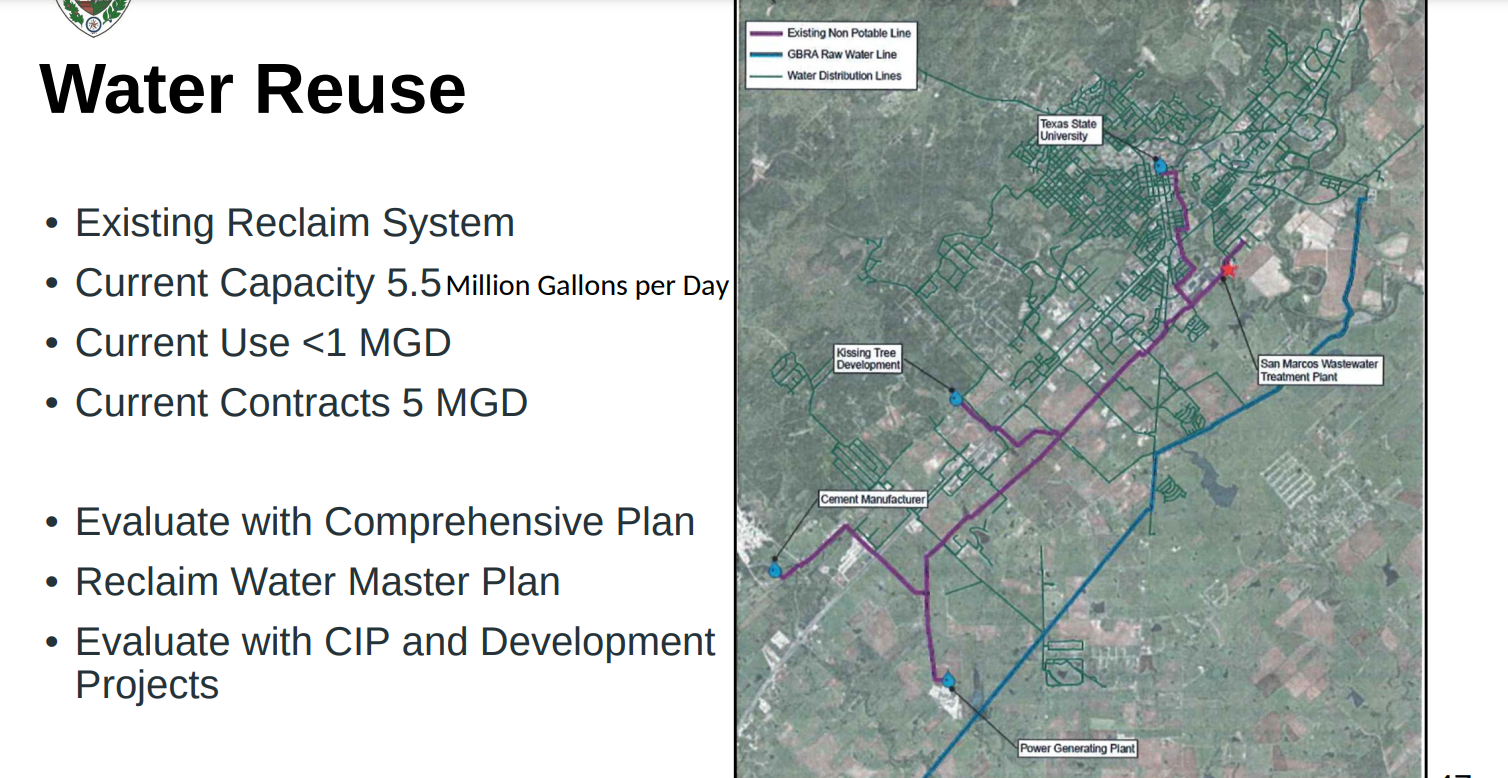
(That slide is from a 2022 presentation, here.) All that purple is where we can send reclaimed water to. We currently have about 5.5 million gallons per day of reclaimed water.
The problem is that it’s not drinkable. So you can use it to water the golf course at Kissing Tree (which they do!) but you can’t send it to people’s houses.
The holy grail will be when we can get reclaimed water clean enough to drink. Then we can really ramp up our water re-use.
(I read once that one of the grand failures of midcentury America was not double-piping all the houses, so that we weren’t mixing our toilet water with our sink water. Then we wouldn’t be watering our lawns with drinking water, and we wouldn’t be trying to clean and re-use toilet water.)
Here’s what we think we can get to:

Notice that the water supply hasn’t changed. But the red part – our water use – is smaller. The red part dips down again around 2050 because we think we’ll be able to get the reclaimed water clean enough to drink by then.
What does Council say?
Amanda asks if we have a problem with water leakage from pipes?
Answer: We’re actually pretty good on this. It happens, but we’ve got one of the lowest rates in the state.
Amanda: Can we get a graph of the top ten biggest water users?
Answer: Yes! We don’t have it on hand, but we’ll email it to you.
(I love this question. Amanda said she’ll send the graph over when she gets it, but she hasn’t gotten it yet.)
Amanda: Do we still do rebates for rain barrels?
Answer: Yes! Details here.
The City Manager Stephanie Reyes also mentions this: San Marcos water rates are a little higher than those around us, but it’s because of all this advance planning. We are in a much more secure longterm position that most others.










 The San Marxist