Bonus! 3 pm workshops, 2/4/25

The first workshop was an update on the budget side of the CIP projects, which is kind of weedy and wonky, so I’m skipping that. But feel free to watch here.

Workshop #2: Equity Cabinet

Last summer, the city received a presentation from Dr. Rosalie Ray, at Texas State. She was proposing to run an equity cabinet on Transportation, and report back with her findings.
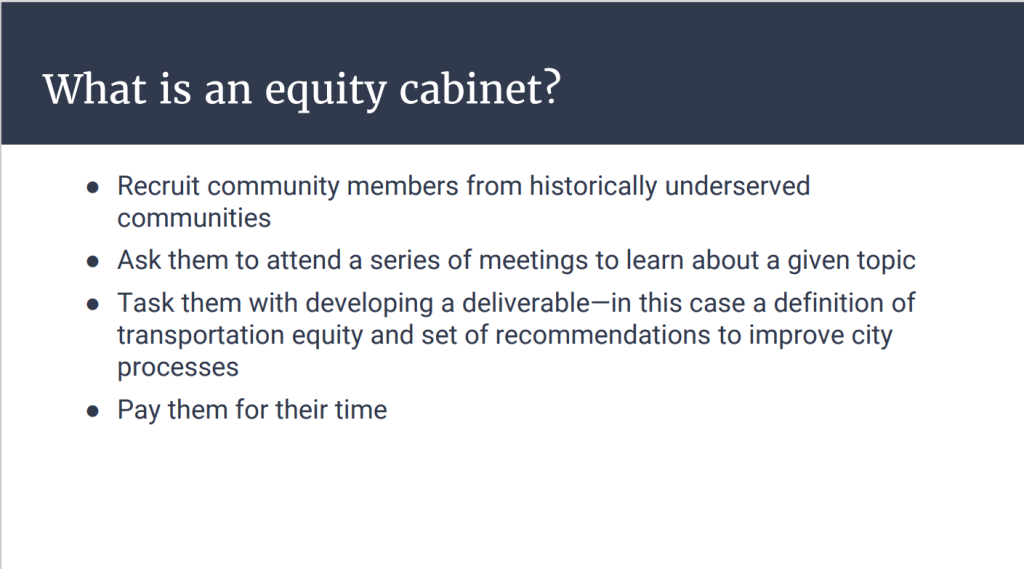
So basically, DEI is hard to do well. It takes time, energy, funding, and expertise. An equity cabinet is one model that the research-folk like, as a way to do it well.

Ours is studying transportation.

Here’s what I got out of it: there’s a lot of expertise about transportation by city staff, and there’s a lot of lived experience by people who don’t have cars, out in the community.

If you want to incorporate their experience into city policy, you need to do a lot of things:

  1. Give people rides to meetings and compensate them for their time. The whole point is to focus on people with barriers to participation, so you’d better address the barriers.
  2. Have the cabinet go into detail about what problems they face.
  3. Have city staff give the cabinet a rundown about how city planners organize and work on transportation issues.
  4. At this point, the cabinet has both sides of the equation: lived experience plus expertise. Then the cabinet members can really identify the sources of the problems and understand what it would take to solve them
  5. Eventually they arrive at a set of recommendations, which the city can then incorporate into their plans.

That’s why it’s a big, drawn out process involving time, money, and energy! But it sounds like it went really well.

First: You have to know exactly what you’re aiming for, if you want a concrete, productive conversation:

The participants were giving the presentation, for what it’s worth.

Here’s their experience:
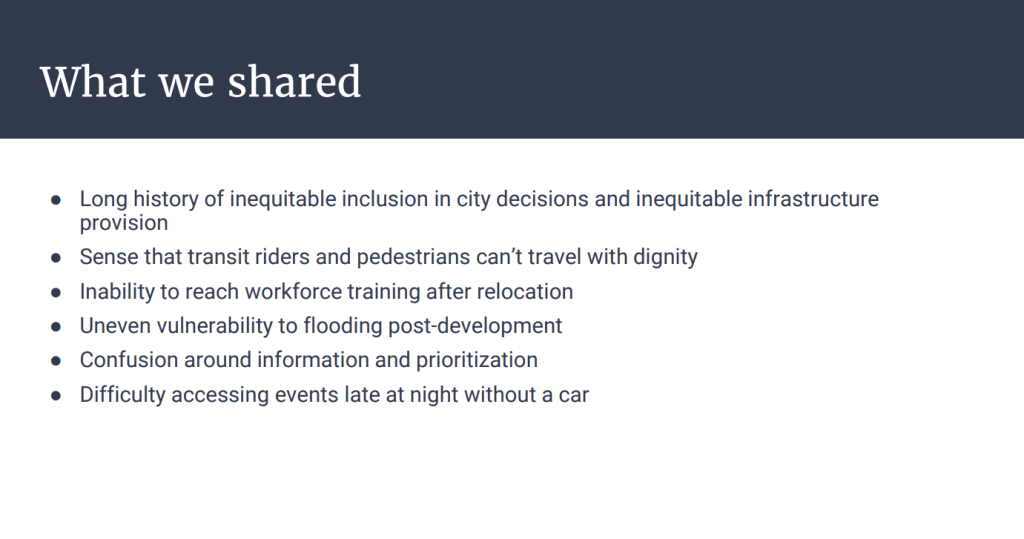
Life is really not easy in San Marcos, without a car. Like, Workforce Solutions that’s supposed to help you train and find a job, cover childcare, etc, is located way out on Posey Road.

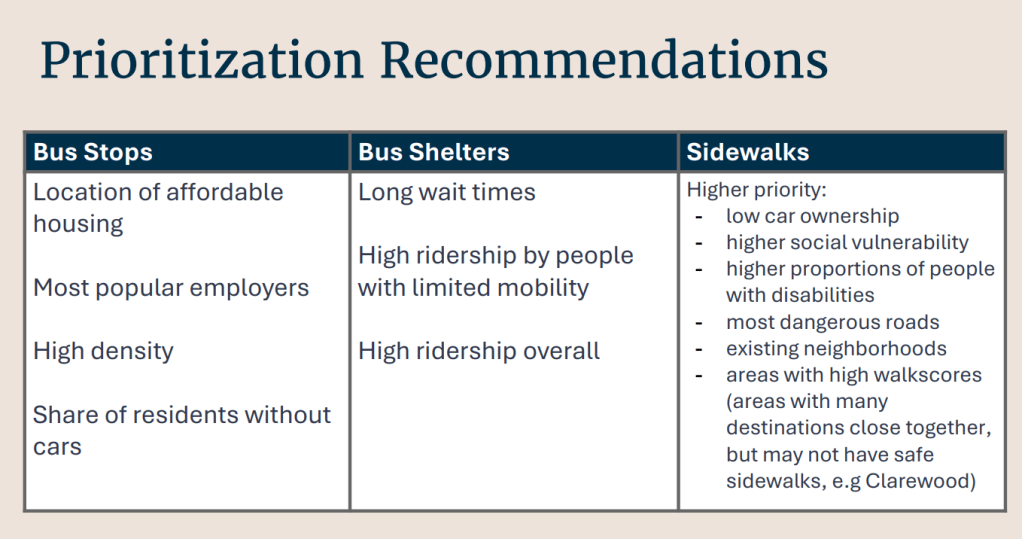
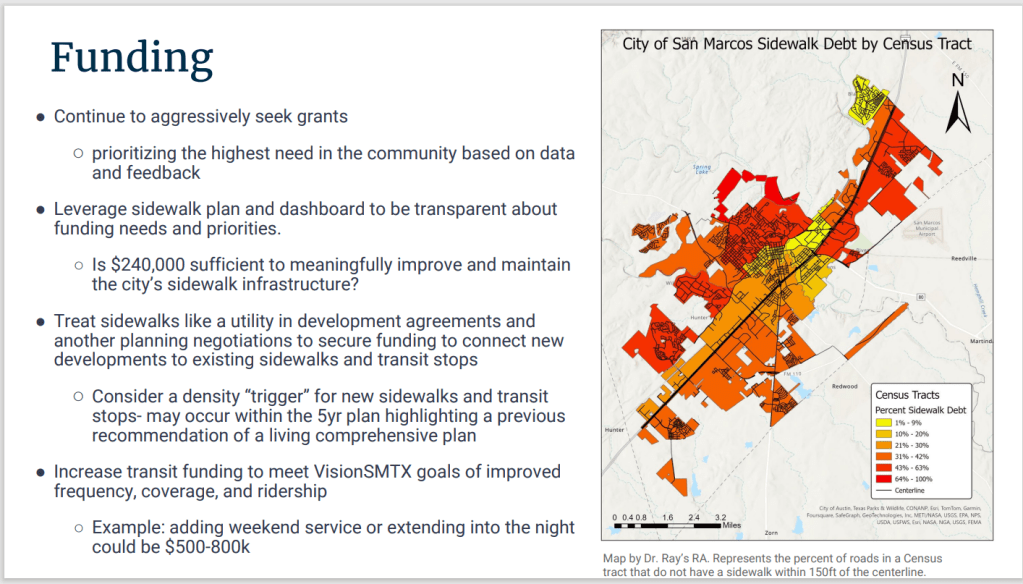
This is the participants incorporating the expertise of city planners into their understanding of San Marcos:

So taking expertise plus lived experience together, they identified some key problems:

Those are categories.

Here’s their specific recommendations in each of those five categories:

Again, it’s a great presentation, so feel free to go listen yourself here.

Council had a few questions:

Jane asks about sidewalk priorities and bus shelter status?
Answer: We have 18 sheltered bus stops already. We want more, but we’re holding off because we’re about to re-do the Transportation Master Plan, and we don’t want to put something in that we immediately have to tear out.

Amanda: Are other cities doing anything that we should start doing?
Answer: Sometimes when there’s not enough space for a full shelter, they anchor two seats to the bust stop pole, with a little shade on top.

As Amanda put it, these recommendations are all so feasible! There’s nothing impractical to any of this.

There’s two big plans coming up: TXDOT is doing a transit plan, and the city is re-doing our transportation master plan. Both TXDOT and the city were involved in the Equity Cabinet, and want to incorporate the recommendations into their new plans. Hooray!

Bonus! First 3 pm workshop, 1/21/25

Workshop #1: Sessom Drive

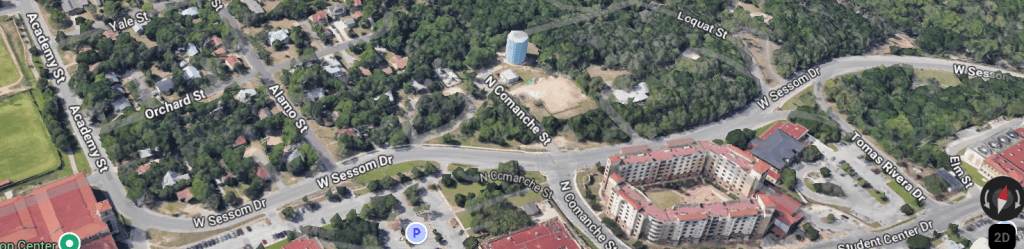
In 2018, we updated the Transportation Master Plan. We noted a bunch of dangerous intersections, and put in a bit about safe biking lanes.  Since then, you’ve seen all sorts of bike lanes pop up.  

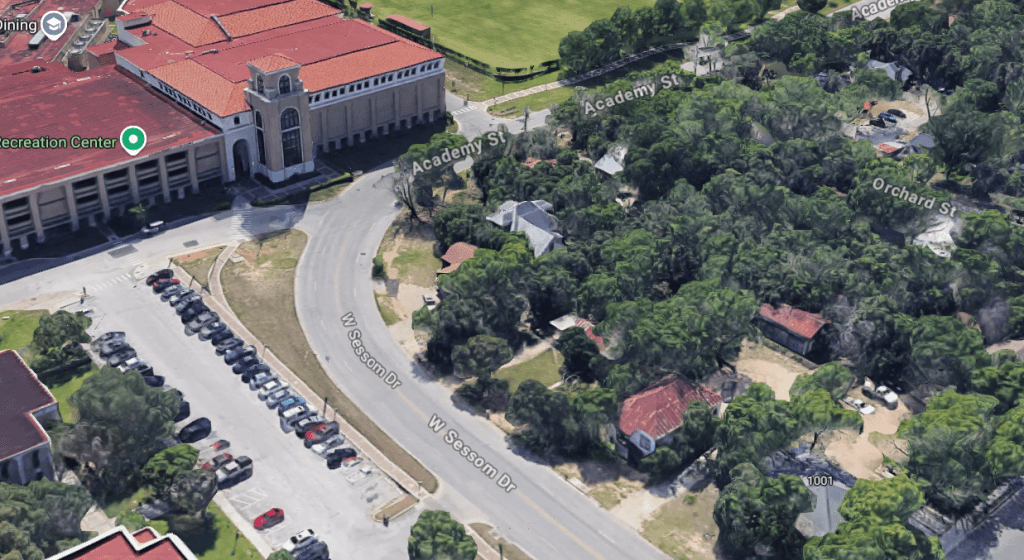
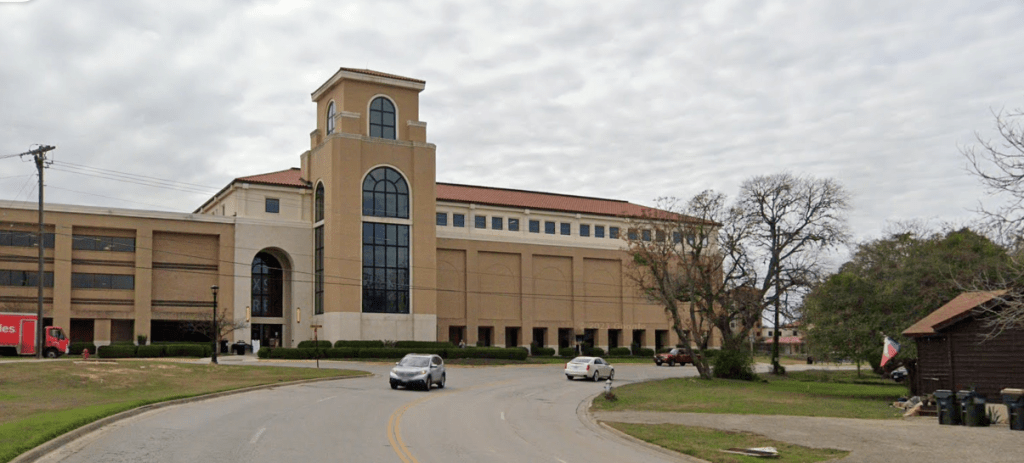
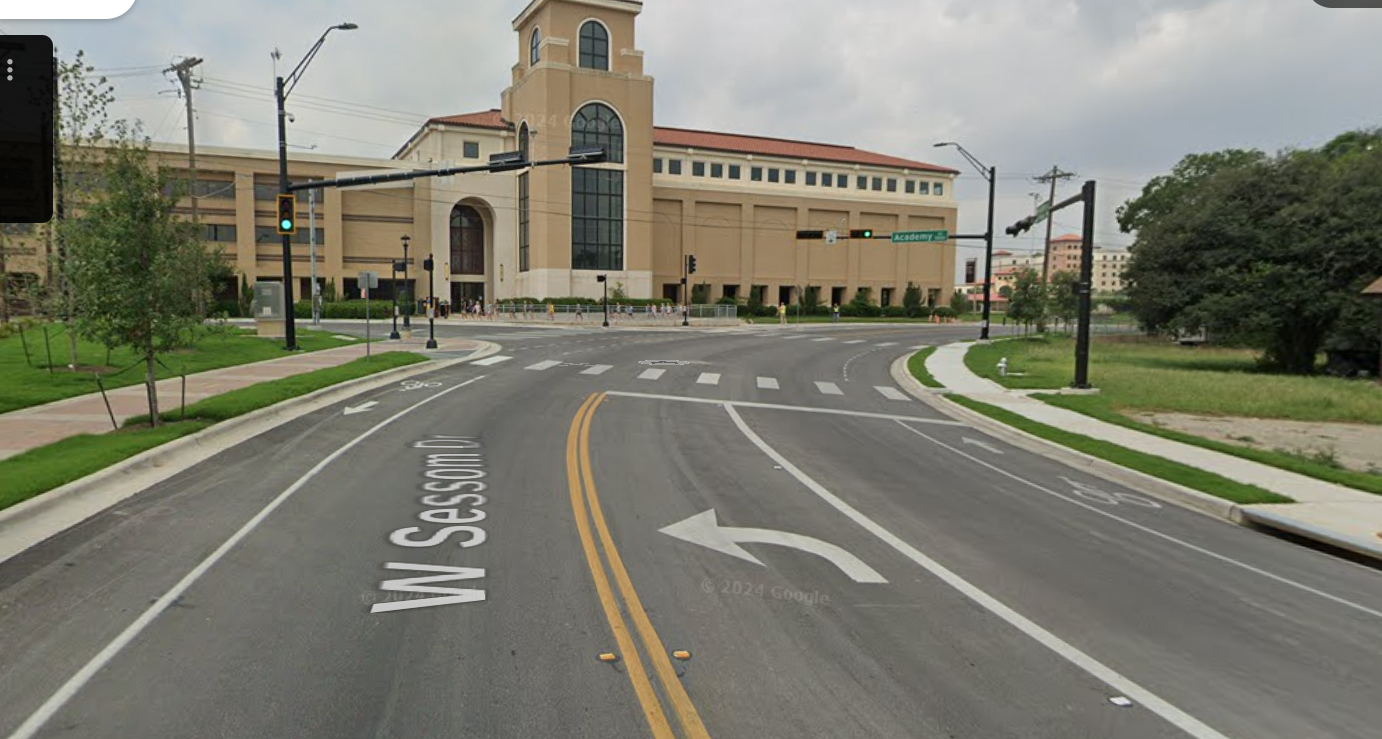
Academy and Sessom was flagged as one of the dangerous spots to improve.  This is the stretch we’re talking about:

It’s always seemed super dangerous to me! Drivers are so zippy through this:

wheeeee!

Here’s what was done:

Here’s a little before and after. Four skinny zippy, windy lanes, in 2021:

I worry for all the bikers!

After:

A light, bike lanes, single lanes, a left turn lane: so much safer.

Here’s another before-and-after:

Hopefully bikers don’t feel like they’re going to be run over anymore!

Did it work? 

Looks like it worked great! (“Level of Service” means how much traffic can you handle.)

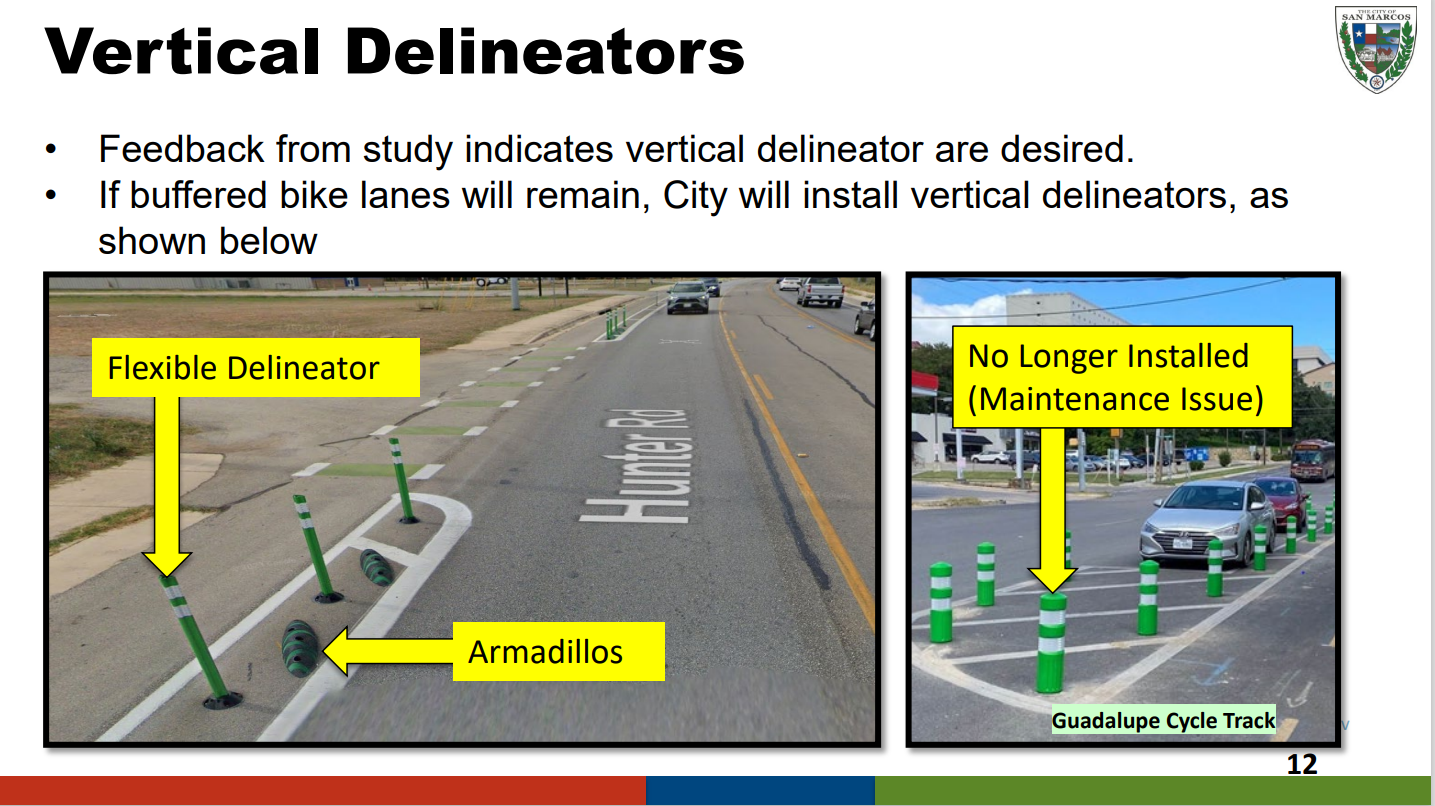
The bikers have concerns, though. What are “vertical delineators” that the cyclists want?

These things.  You’ve seen them all over town.

The city was trying out different kinds, and it seems like the armadillos work best.  (The other kinds require extra maintenance – they don’t pop back up after awhile, or they get torn off and leave bolts sticking up in the road, etc.  The armadillos are just glued down.)

….

So this brings us to the next question!  We’re going to be improving Sessom down to Aquarena:

We just completed the yellow part. We are about to work on the blue part to the right. We have some choices:

  1. Go back and undo the bike lanes and safety measures in the yellow part.
  2. Keep them, and extend them to the blue part.

[Updated to add: I got this part wrong – there’s no option to extend the bike lanes to the new part. They’re just deciding on the yellow part, and if they should add armadillos. Also fixed below.]

Jane Hughson reminisces about when they agreed to try bike lanes on the yellow part. (This was the very first meeting I blogged publicly, back in 2022!
– Shane, Mark, and Saul all voted against the bike lanes on Sessom and Craddock. 
– Jane, Alyssa, Jude and Max Baker all voted to try the bike lanes out.
Jane was reluctant, but she decided since it’s just paint and easily reversible, we might as well try them out.)

So what should we do?

Undo the old bike lanes:  No one
Keep the bike lanes and add armadillos: Everyone

Hooray! That was a test, Council, and you passed. Good job.

There’s one more workshop after this! Keep going!

Hour 1, 12/15/21

Let’s discuss the Transportation Master Plan. The main issue here is bikes, and whether their lanes should be protected, shared, buffered, or sharrows. Here’s a nice graphic from here:

If I were to name them, I’d call them Safe, Scary, Pleasant, and Terrifying.

There was significant discussion on whether or not sharrows are terrifying. On the one side, it appears that many studies focus on the perceived safety of sharrows and not the actual safety of sharrows. It took me about two seconds of googling to find a study that clarified this point, though. So I’m calling shenanigans on the sharrows-advocates here.

Another point of contention: Barnes Drive and Monterrey Oaks. Both have the potential to be great biking places. Barnes Drive runs parallel to I-35 and can get bikers to their jobs at the outlet mall. Monterrey Oaks connects the neighborhood to Bouie elementary and the high school. The planning department pled that neither spot can handle a bike lane, and thus both of them have to be sharrows. The city council was pretty united in their polite skepticism.

Here’s my not-so-polite skepticism: wtf, planners? Neither of those roads are high speed thoroughfares, and both are plenty wide. The planners seemed tragically dedicated to the sanctity of turn lanes. It did not seem to occur to them that Bouie elementary might want a bike lane, and might even turn over some easement without a fight to make it happen. And Barnes Drive? The road that separates giant parking lots that are never full? This seems like the least difficult needle to thread. I’M ROLLING MY EYES.

City Council was great. Max Baker was the most outspoken proponent, but Shane Scott and Mayor Hughson also advocated forcefully for traffic calming measures and general bike safety improvements. Baker amended the plan to include both Barnes and Monterrey Oaks, and the city staff acknowledged that it wasn’t impossible. It would just take time and money. The amendments passed unanimously.

Anyway, this is not the final vote. This all comes up one more time. There was reasonably good turnout among the cycling community – maybe four or five speakers? Hopefully they keep mobilizing and advocating for Less Terrifying options.