Bonus! 3 pm workshops, 10/8/25

The river! This is the big topic of the week.

Background:

We’ve been destroying the river the last few years.

The basic problem is overuse. This is a photo from a 2023 parks presentation:
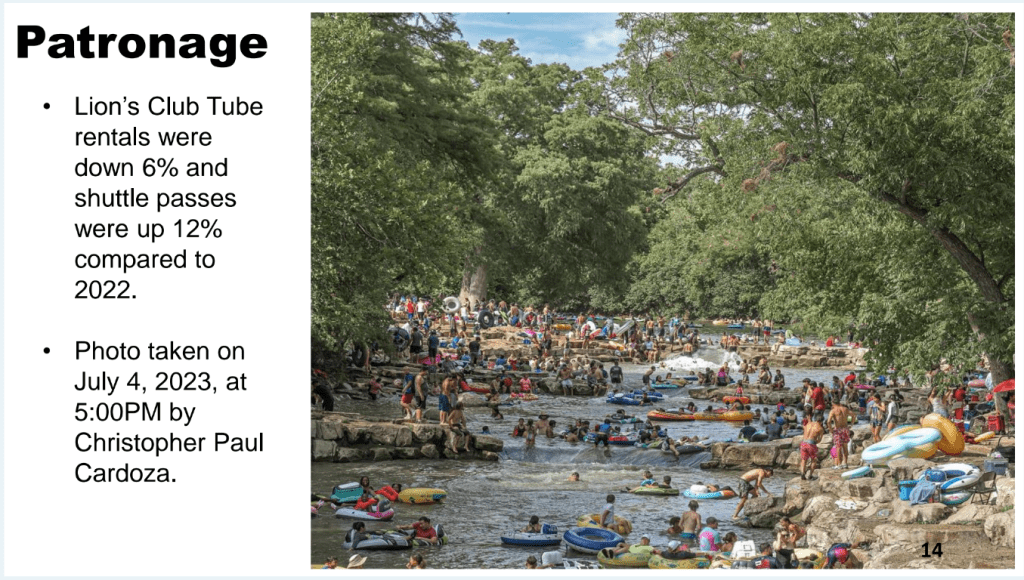
That is a LOT of people.

To get specific, overuse causes three basic problems:

1. Safety: it’s super hot and people get very drunk.

That’s a dangerous set-up for heat stroke, falling on rocks, getting into fights, and accidental drowning.

2. The environment: the river gets destroyed.

This is also from the 2023 presentation:
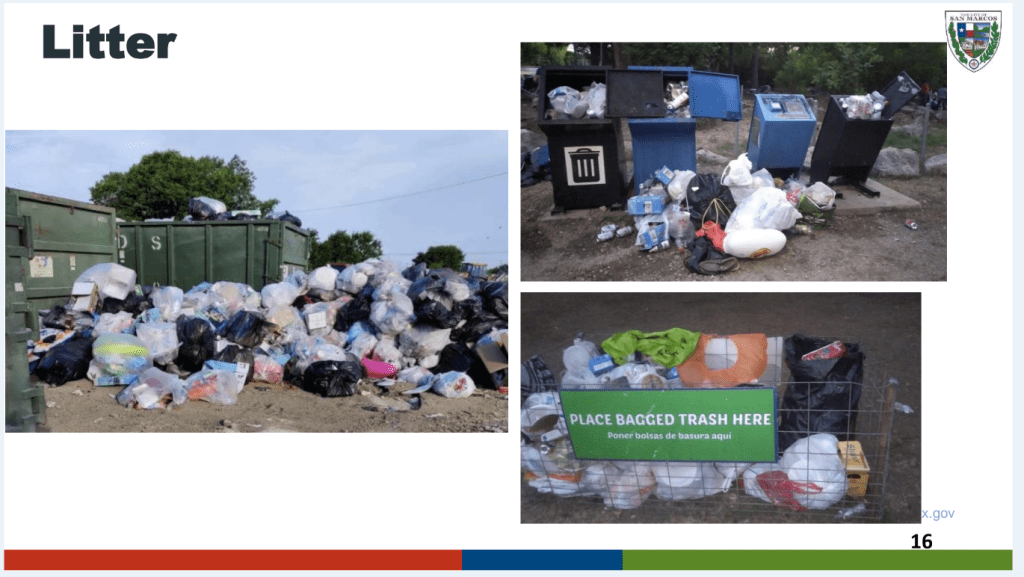
This is from the 2024 presentation:

and
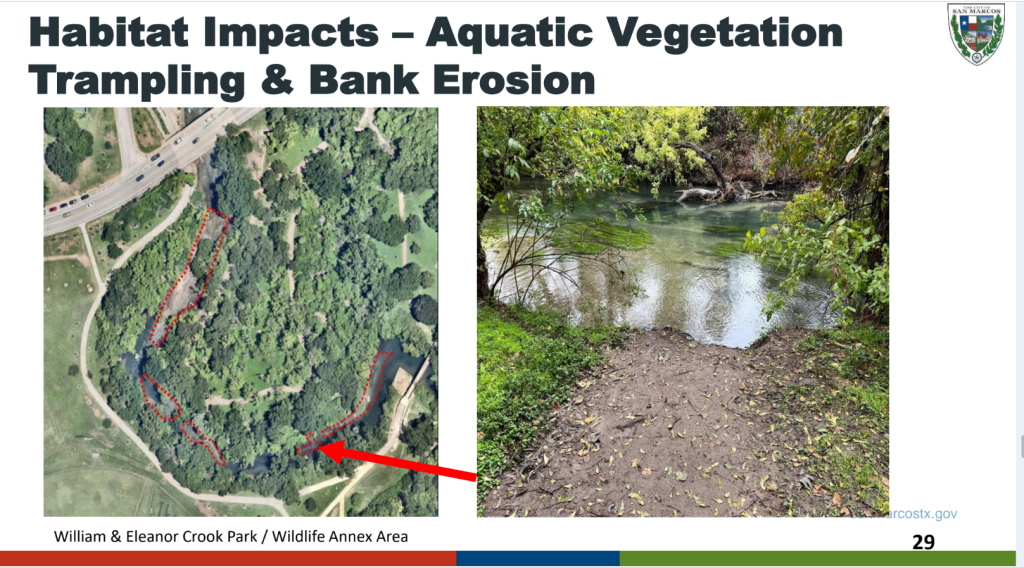
It’s all of the litter, and all of the repeated trampling of the banks, and the erosion of the aquatic wild rice and habitats for endangered species. It’s all bad.

3. The cost.

City staff really haven’t even brought up the price tag in the past few years, because the litter, damage to river, and lack of safety were so off the rails.

But of course, all solutions require people, and people’s labor costs money. So this is looming.

Solutions

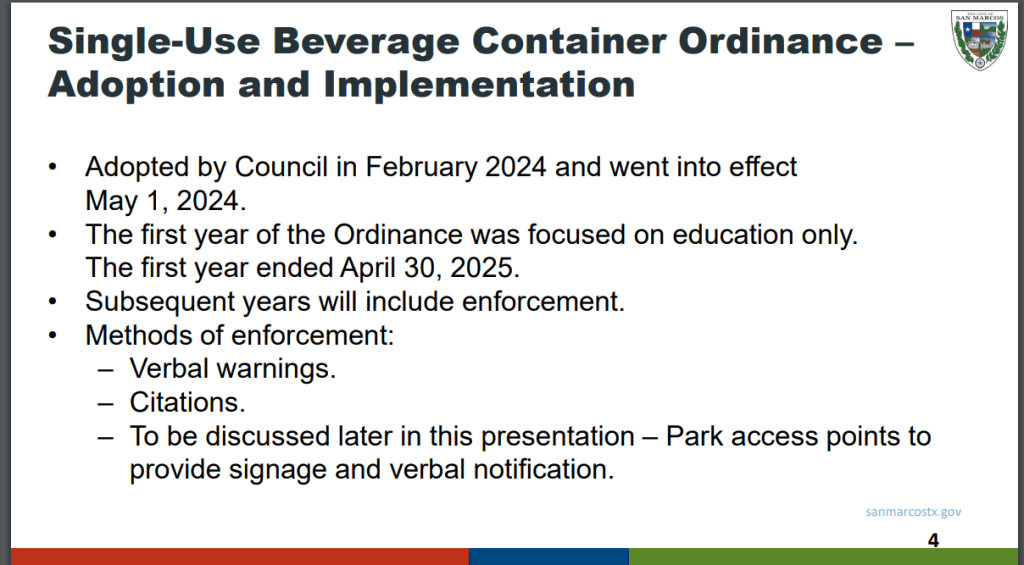
The 2023 season was so bad that Council realized we need to do something. So in 2024, we passed a can ban. Summer 2024 was the first implementation.

But it did not go well. Basically, we couldn’t enforce it because we were so overrun with crowds and safety concerns. Here’s my write up of the situation last year.

So this spring, Council cautiously agreed to try Managed Access for 2025.

That means this:

around Rio Vista and the falls.

Everyone thinks these fences are very ugly and sad! They’re not wrong. But I’m going to make the case that the fences are a good first step. It is a work in progress.

Basically, the falls, swimming pool, and tennis courts at Rio Vista were fenced off. In order to access them, you had to walk to one of the three entrances:
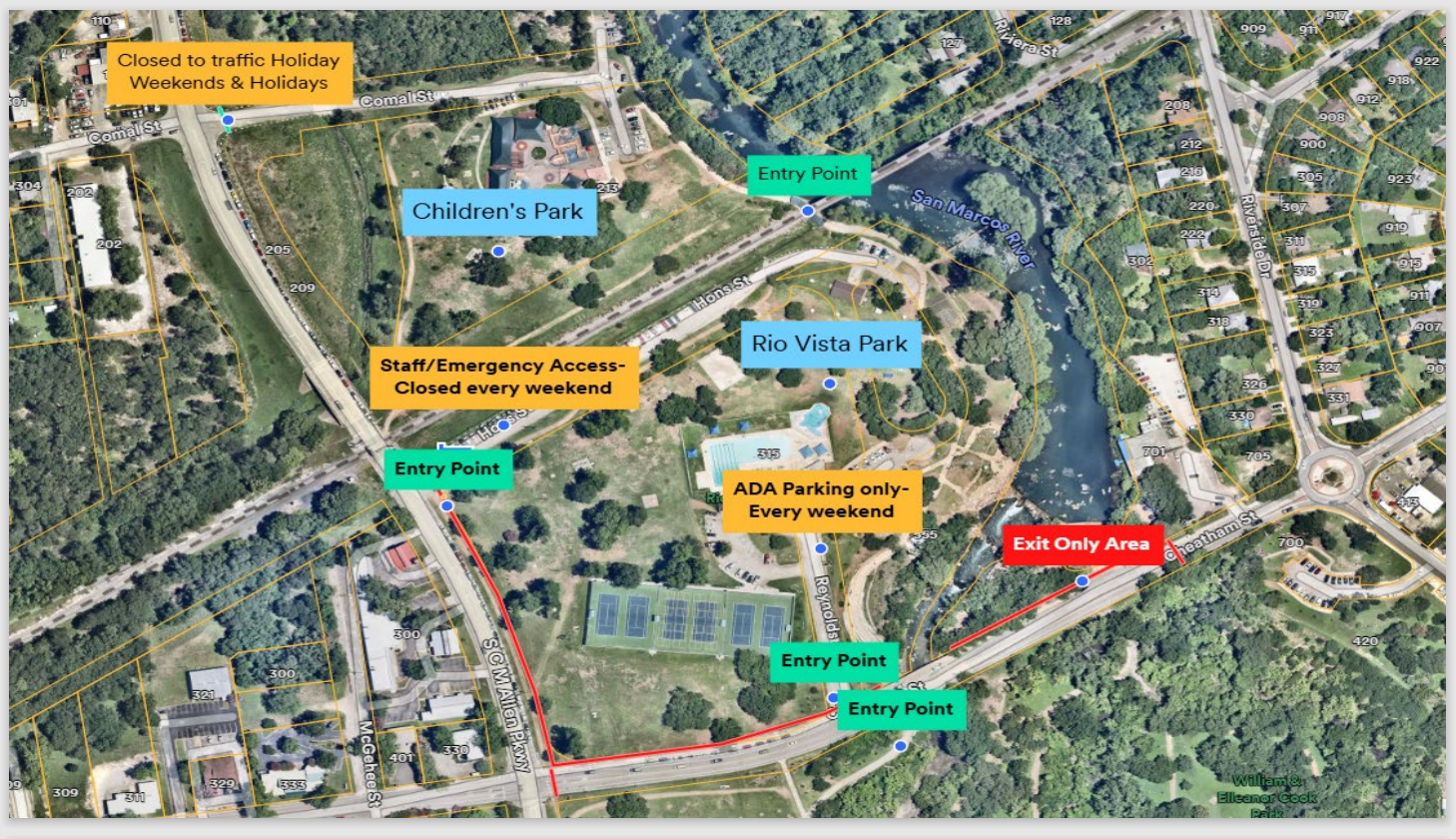
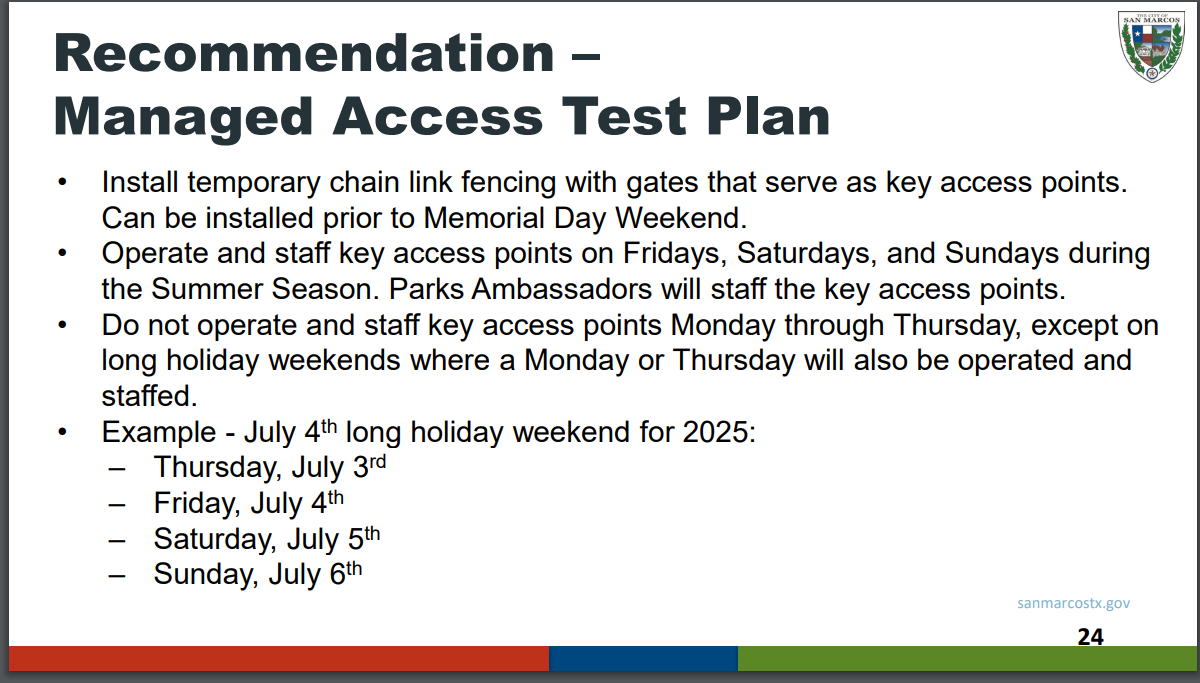
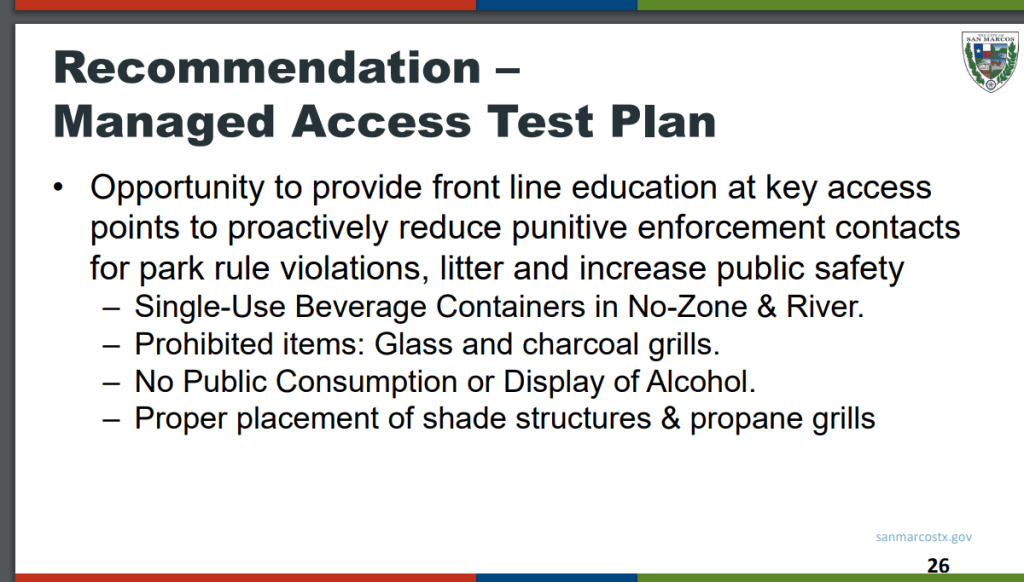
On weekends and holidays, those entrances were staffed. They’d check to make sure you weren’t bringing in anything banned, like alcohol or a bunch of styrofoam plates.

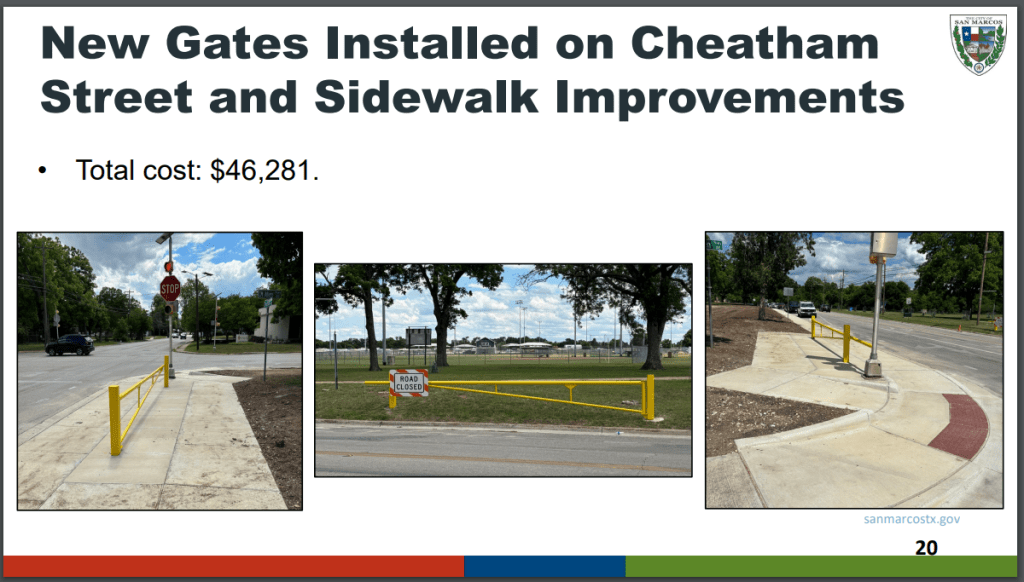
On the big holiday weekends – Memorial Day, 4th of July, and Labor Day – they also closed off Cheatham street altogether:
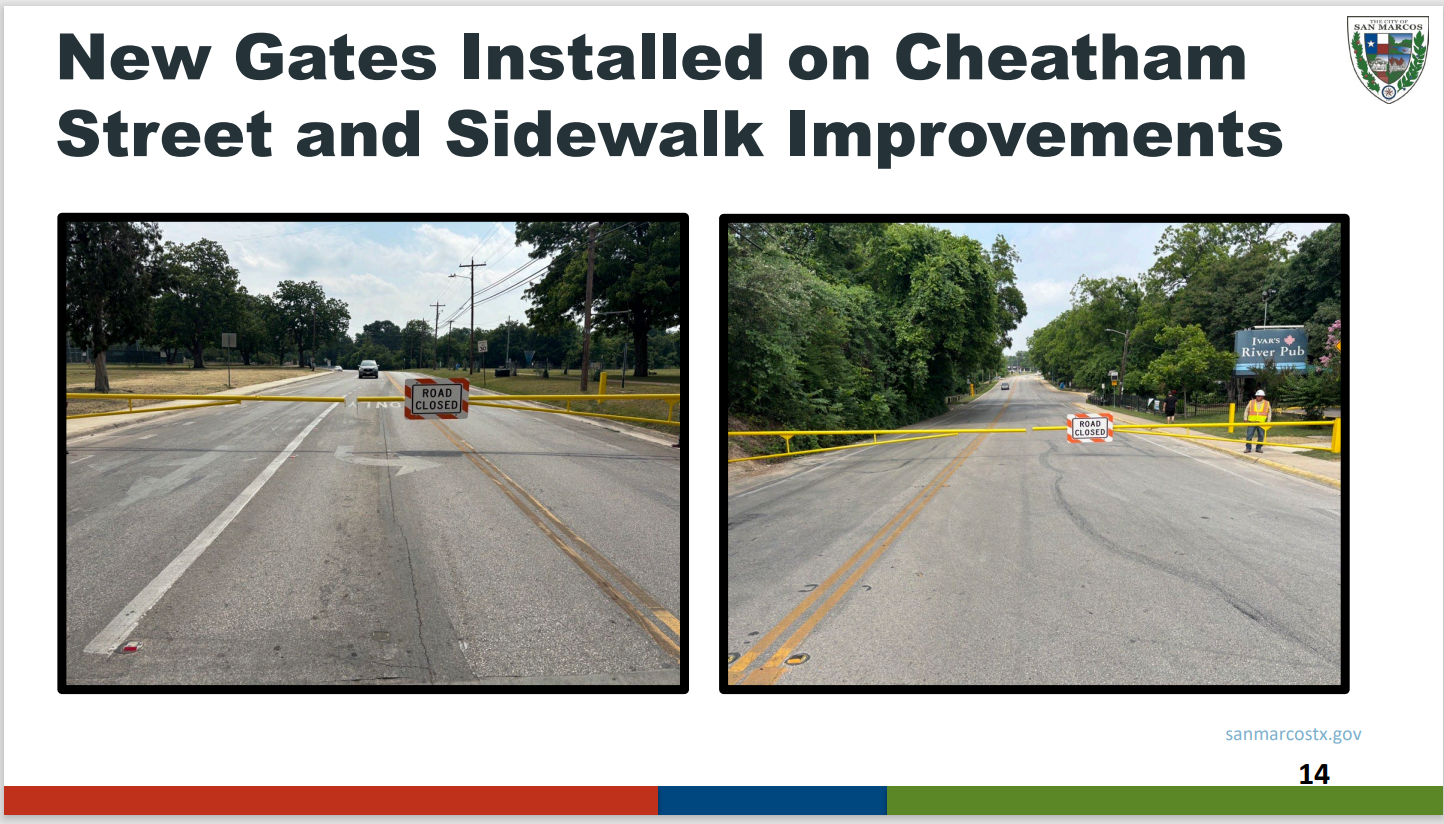
They also increased staffing. There were at least ten more employees just to staff the entrances and exits on weekends and holidays. There are a lot of hands on deck, picking up trash, monitoring situations, and available for emergencies:
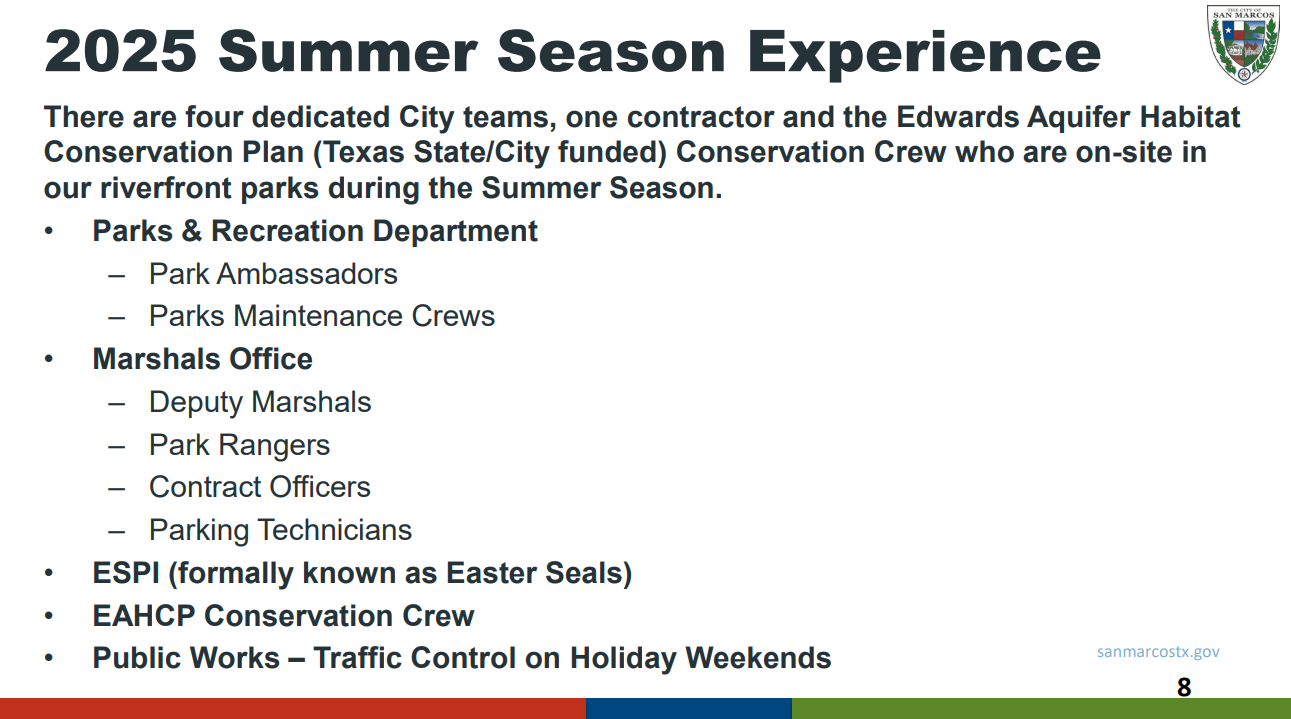
It’s a really big operation.

What does the public think?

At citizen comment for the workshop, three people spoke. I think they are all very involved in river clean-up efforts.

Major themes:

  • Fences significantly reduced the size of the crowds
  • Fences significantly reduced the amount of trash in the river
  • Fences significantly protected the riparian zones of the river, ie the wild rice and other environmental spots.
  • There is more work to do. There was still a ton of litter.
  • Let’s look at places that have done this well – for example, Copenhagen has a sustainable tourism program. Tourists can get perks if they pick up litter or take public transportation.

….

What does city staff say?
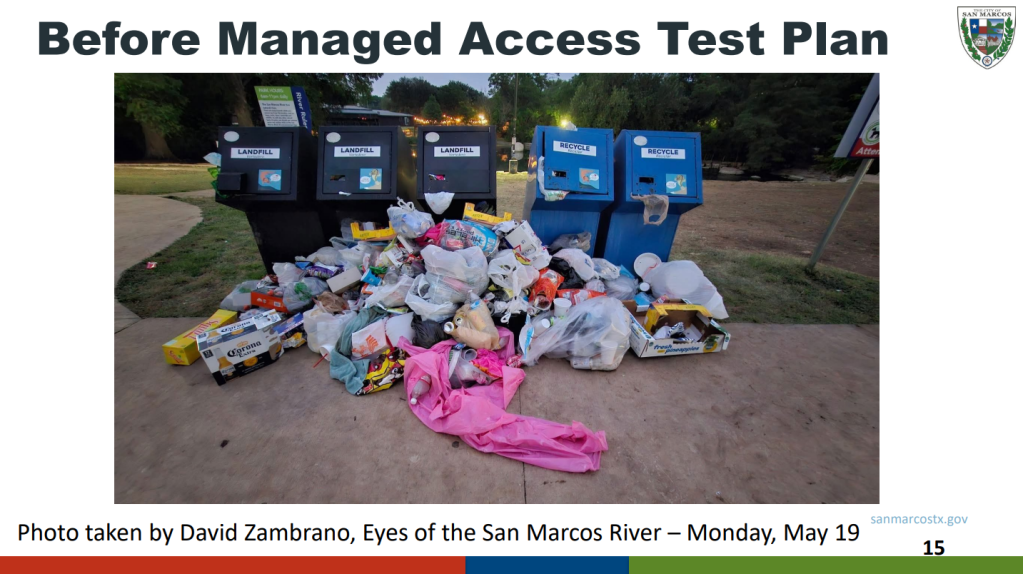
Litter started off rough, at the beginning of the summer.

Fences were put up at the end of May. Then:
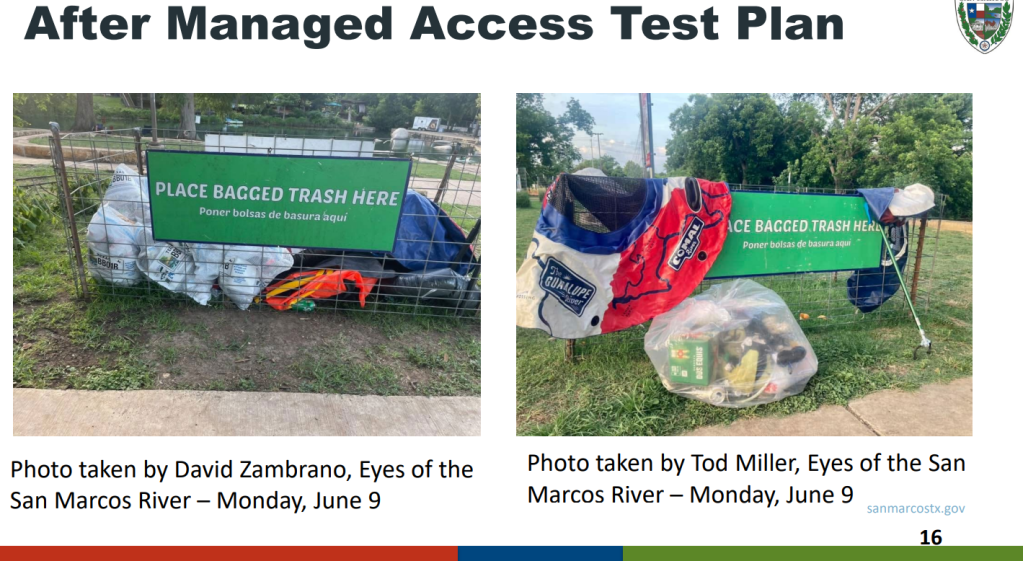
Looking good!

And some data:

Note: July was much rainier and less-hot than usual. The 4th of July was pretty much rained out (while the tragedy was unfolding in Kerr County and elsewhere). So it wasn’t just strictly the fences.

You know these cute little litter boats?

via

They track how much trash gets collected in them:

Here’s how city staff summarized the summer:

More good than bad!

Did visitors just go to a different part of the river?

Staff said no, they did not see an increased number of problems upstream or downstream from Rio Vista. It seems like everyone wants to be at the falls.

(It could still happen after a few years, of course. But it has not happened yet.)

Overall, everything seems optimistic!

That is my personal belief, too – that this year, things were less dangerous and destructive than they’ve been in the past.

So that’s 2025. What about the future?

Here are the big questions for Council today:

1. Do they want to keep fencing off Rio Vista in the future? (ie “Managed Access”)

    2. Do they want to start charging out-of-towners for river access?

    Let’s take these one at a time.

    The fencing.
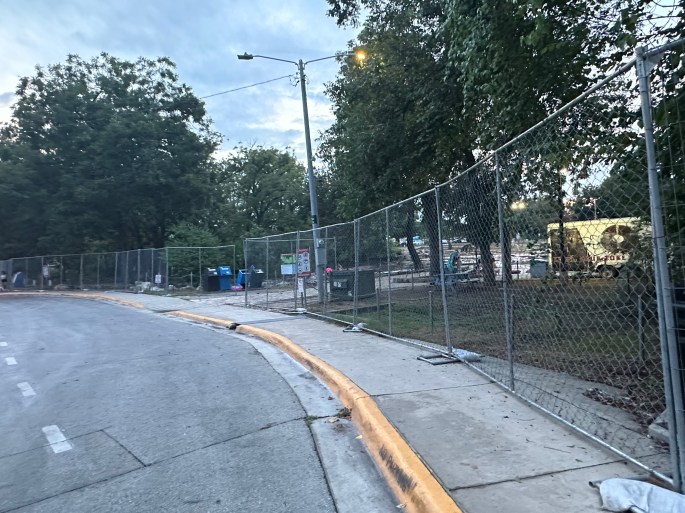
    Another angle:
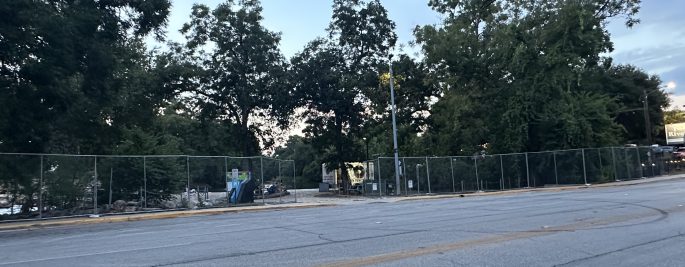
    Everyone hates the big, bulky chain link look. Including me!

    Can we at least make it look a little nicer?

    Maybe!

    Staff is not proposing that we put up permanent fencing. This would only go up between Memorial Day and Labor Day.

    Council questions:

    Q: Would we rent or buy the prettier fencing?
    A: We’d buy it. It would cost about $75K. Renting the fences this past summer was roughly $15K.

    Q: People were cranky about the tennis courts being inside the fencing . Can we find a way to make them easier to access?
    A: Yes, we can definitely explore this for next year.

    Bottom line: Does Council want to continue with the fences?

    Mostly yes. Alyssa and Amanda are both a little squirrelly on the question, but they’re more yes than no.

    Note: I am a hard yes. You only get one river, and overuse will kill your river. This is a dead on, textbook-example of a Tragedy of the Commons.

    ….

    2. Should we charge admission?

    The problem is that we’re running a giant operation here, all summer long, and it requires a lot of staff. Furthermore, it mostly isn’t San Marcos residents using the river.

    This is an old slide from 2024:

    (Zartico is a company that tracks cell phone data. We paid them to track people on the river and tell us where people went afterwards. Yes, it’s a teeny bit creepy.)

    The point being, about 1/3 of the park visitors were local, and 2/3 were in from out of town. Here’s 4th of July from 2024:
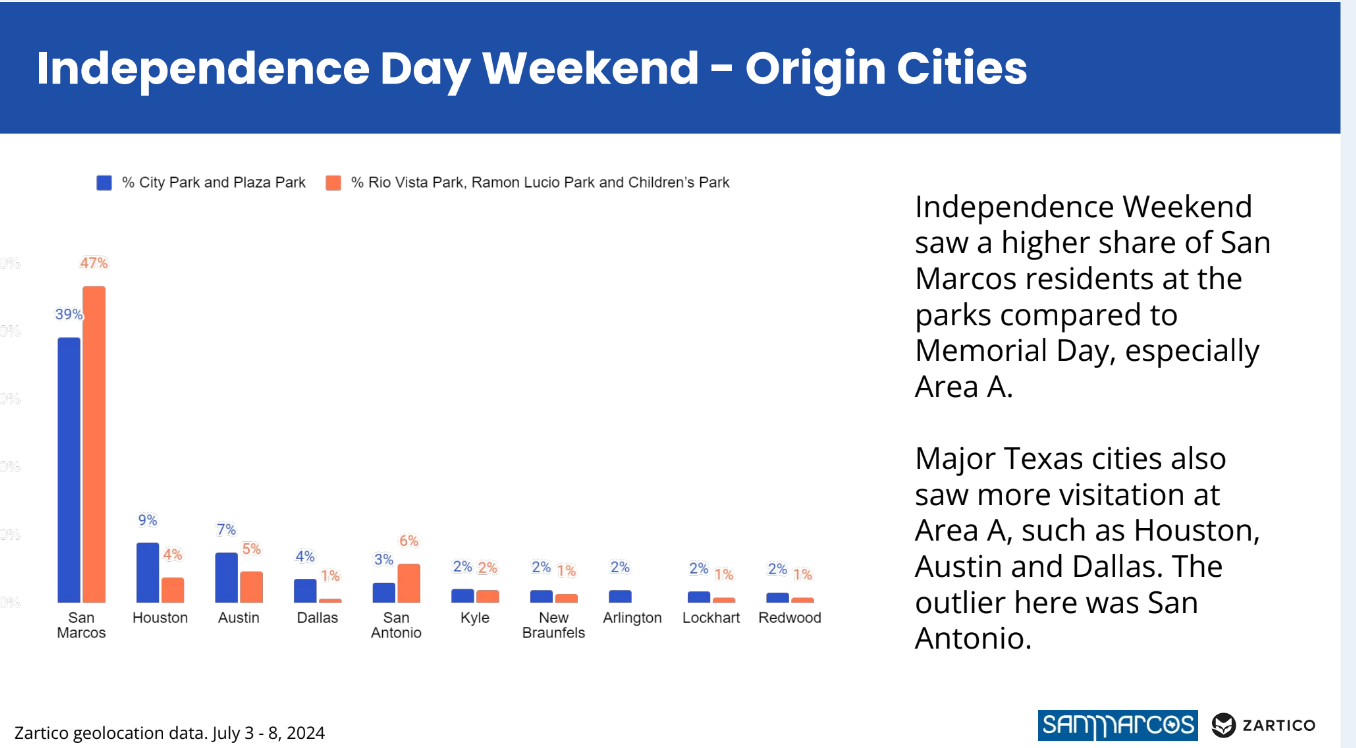
    More from San Marcos, but still under 50%.

    No one is proposing that we charge admission to San Marcos residents. But should we charge out-of-town visitors an admission fee?

    What does everyone else do?

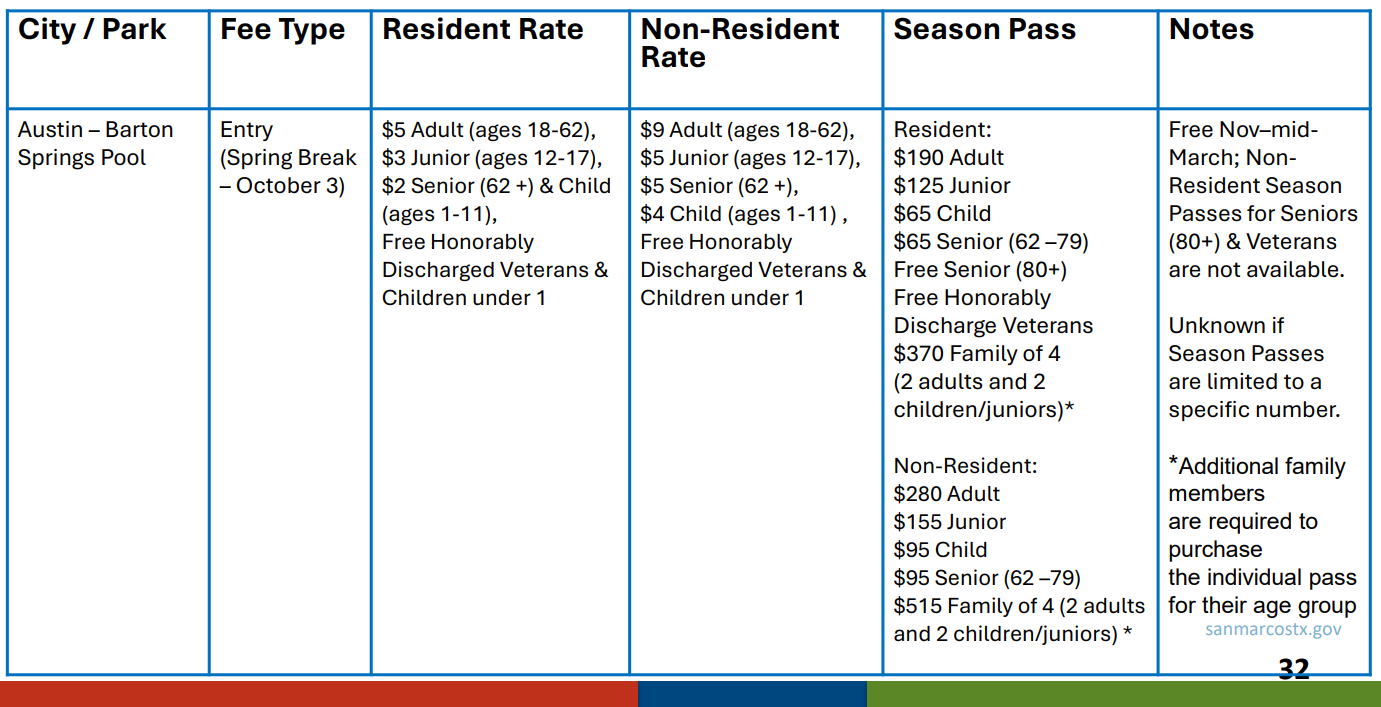
    Lots of cities charge fees:

    ….

    And so now, San Marcos?

    City staff is recommending yes, we should start charging.

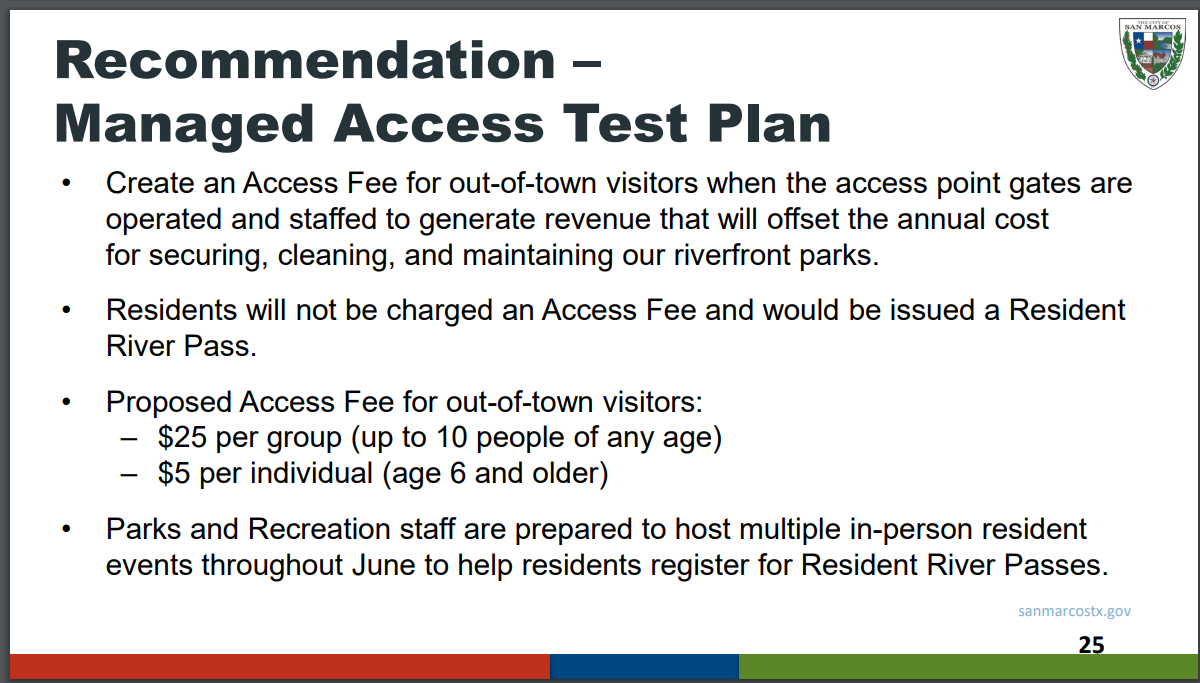
    Here is what they propose to council:

    What does Council think?

    Jane: we should start our season earlier than Memorial day.
    Answer: That just costs even more.

    Alyssa: How would residents get a river pass?
    Answer: You’d sign up in person or online. Like getting a library card. It would be a physical hard copy.

    Alyssa: One per household or one per person?
    Answer: Per person.
    Alyssa: Even kids?
    Answer: I mean, you all are council. You tell us what you want.

    Amanda: I have strong reservations about this. The river is a natural resource. I don’t like the idea of commodifying it. I don’t like the precedent it sets. New Braunfels probably started out only charging a little, and now it’s $25 to set out a blanket. And their river is still trashed.

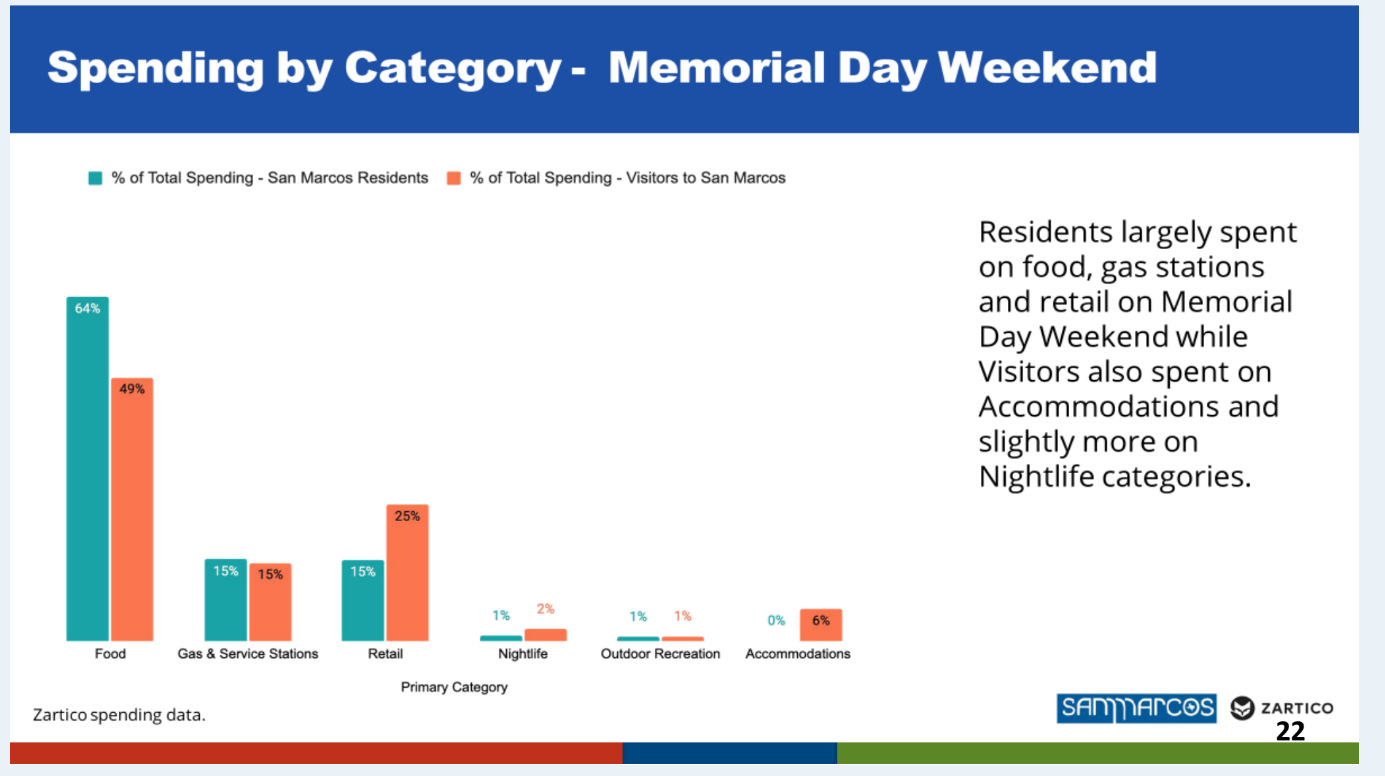
    Jane: Our out-of-town visitors aren’t spending money here. They’re not contributing to the tax base that pays for these parks. I don’t want to charge residents, but I’m okay charging out-of-town guests. They need to share the cost.

    She’s referring to things like this (from 2024)
    Saul: How much revenue would this bring in?
    Answer: We have no idea. It’s hard to even figure out how many people go to the river.

    Let’s break it into categories

    1. San Marcos Residents

      No one is proposing that we charge San Marcos residents. But there’d have to be some sort of free pass system.

      Every time you add a layer of inconvenience, you trip up vulnerable residents. (Think: undocumented community members who don’t feel safe signing up, or harried single mothers who keep forgetting to sign up. Etc.) Alyssa and Amanda voice some of these concerns.

      2. People just outside the city limits.

      What about people who live nearby? Like you have a San Marcos mailing address, but you’re not officially in city limits?

      Jane, Shane, Saul, Matthew: They should get a reduced admission price.
      Alyssa, Amanda, Lorenzo: they should be free.

      3. Actual out-of-town visitors?

      Lorenzo: Yes. We should charge them.
      Jane: Yes. Same.
      Alyssa: I don’t know. This needs more work.
      Amanda: Kids at least should be free.
      Saul: I agree on the free kids.
      Matthew: I’m fine with what staff proposed.
      Shane: [never turns on his microphone, I have no idea]
      Alyssa: Who’s gonna pay $100 for a season pass? Come on. This needs work.

      Fair point, Alyssa.

      Overall: It’s a little hard to follow, but I think this is where everyone lands:

      Yes, charge out-of-town guests: Jane, Lorenzo, Shane, Saul, Matthew

      Maybe.  We’re not sure yet: Alyssa, Amanda

      No one is a hard no.

      What do I think?

      I’m on the fence. I hate the increase in bureaucracy and bookkeepping, and I wish for a state where we just properly funded parks and local governments. (See also: socialized health care is much cheaper than private insurance because it’s so much less paperwork, bureaucracy, and red tape.)

      I also hate the idea that everyone on the river would have to keep a plastic card on a lanyard around their neck.

      On the other hand, here we are – with actual bills to pay and actual rivers to save, people to keep safe – and that all costs money.

      Maybe the river pass can be made into a little bracelet?

      …….

      Lorenzo: can we hold an evening workshop instead of a 3 pm workshop, so that more residents can attend?

      Everyone agrees this is a good idea.

      Bottom line: City staff will bring back more rate models and Council will have another workshop. But it looks like the writing is on the wall. I think it’s likely.

      …..

      One last workshop topic.

      Paid parking at the Lion’s Club

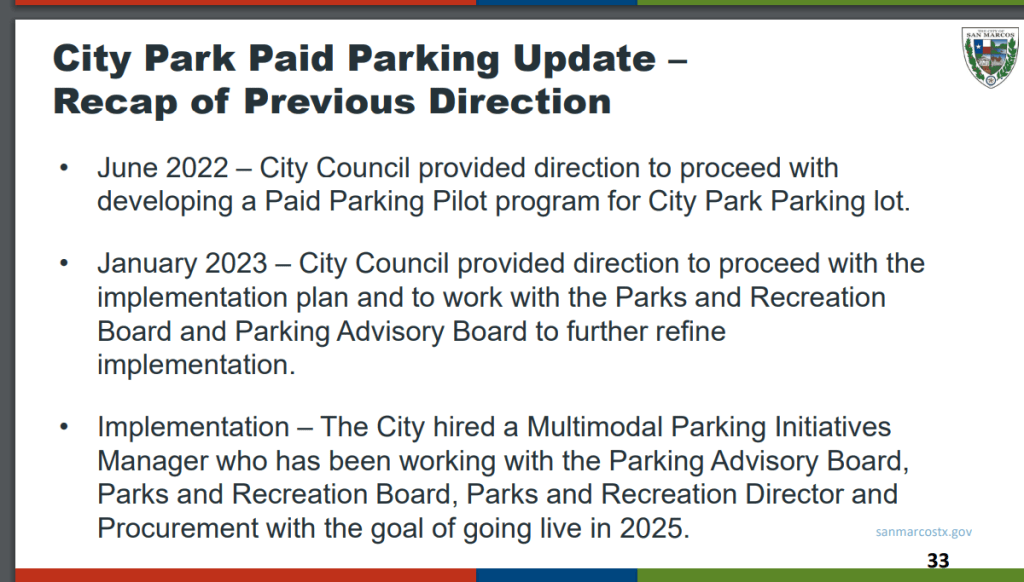
      We’re midway through a pilot year of paid parking at the Lion’s Club. It’s free for all residents, but you do have to register. (Register here!)

      How’s it been working?
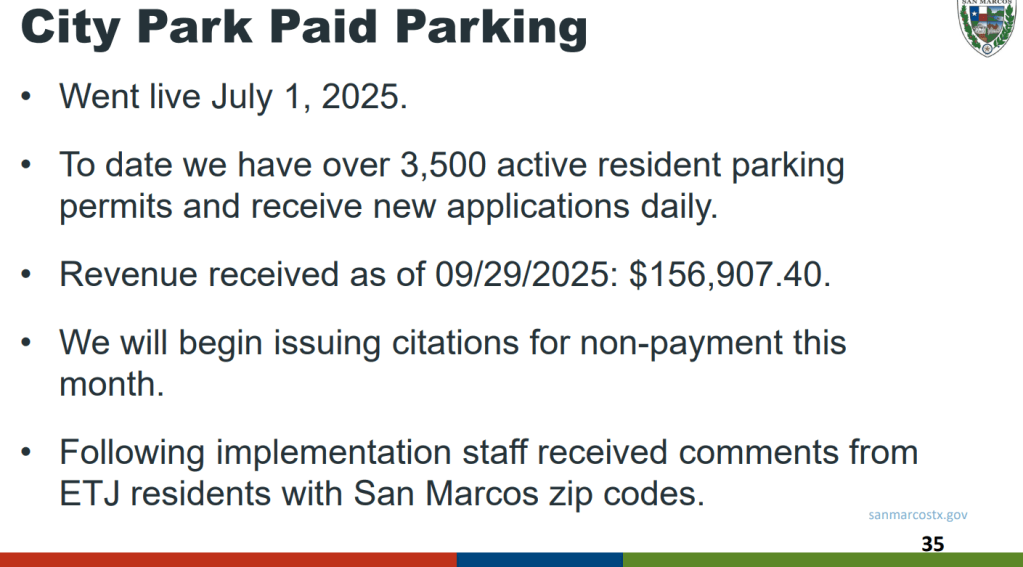
      Ok, so it just started.

      A few notes:

      • They have not yet been ticketing anyone, but they’re about to start. (Apparently there have been problems with Texas State students. Students can park there, as residents who want to use the parks, but not to go attend class at Texas State. I have no idea how they can tell who is doing what.)
      • “ETJ” stands for extra-territorial jurisdiction, ie the people who live nearby the city, but not in the actual city limits.

      The main question: do we want to charge people less if they live in the ETJ? On the one hand, they don’t pay property taxes. On the other hand, they do come to San Marcos to go shopping, and so they pay sales tax.

      How do we want to handle people who live close to San Marcos?

      Charge a reduced fee: Matthew, Shane, Jane

      Keep it free: Alyssa, Amanda, Saul, Lorenzo

      There’s some minor quibbling about what “close” should mean. Anyone in who lives in SMCISD? Anyone with a San Marcos mailing address? some third option? I think they settled on SMCISD.

      Hours 0:00 – 3:25, 9/16/25

      Citizen Comment

      Just three speakers!  Topics:

      Nobody spoke about the budget.  Nobody complained about the tax increases being too high.  Can we just put a pin in this for later? Let’s remember this.

      Item 22:  Hazmat Routes

      You know these guys. You love these guys:

      via

      They live in our lovely river, but nowhere else.  It could be catastrophic if there was a crash on I-35 over the river, and a bunch of hazardous chemical were spilled into their habitat.

      What cities do in this situation is design a Hazmat route.  Here’s what we’re proposing:

      That’s along FM 150.  So you’d cross the San Marcos river well east of the habitats of those critters, if you were driving a truck full of something nasty.  

      A few notes: 

      • This is only for thru-traffic.  If you’re delivering somewhere in San Marcos, you can head there.
      • This is going to be a long process – it’s gotta go back and forth with TxDOT a few times.

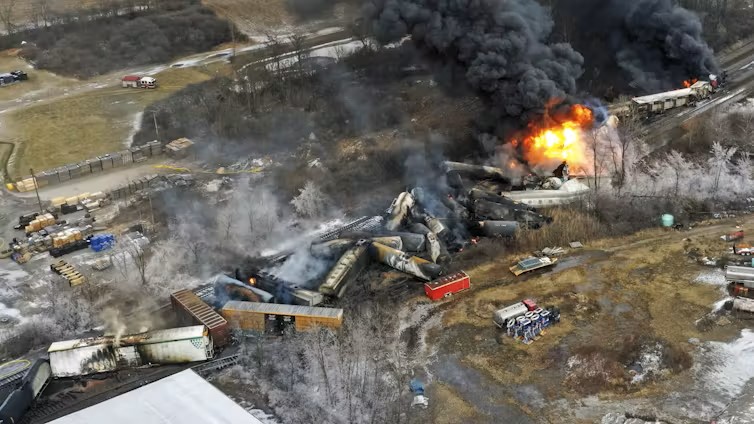
      Kind of related: remember when the train derailed in East Palestine, Ohio, with all those toxic chemicals?

      (and they tried to get away with paying each person something like $5 for wrecking their lives?)

      We also have a lot of trains crossing our river! I doubt you can re-route trains quite so easily, but I wonder how environmentalists think about and plan for these risks.

      Items 23-25: The budget and the tax rate

      I’m sorry, this item gave me whiplash. This went off the rails. Not the good kind of roller coaster.

      We need a fair amount of backstory. The drama on Tuesday unfolded so fast that it will be incoherent, unless I bring you up to speed, first.

      I’ll try to keep it zippy!

      Background

      First thing to know: we have not raised our property tax rate since 2022.

      Politicians genuinely hate raising taxes. Politicians like being liked! They like being elected. I don’t know where we got this idea* that they rub their palms together and cackle about bilking tax-payers, but they don’t do this.

      Polititians love short-term easy decisions that make tax-payers happy! Raising taxes is the opposite of that.

      *It was Reagan.

      ….

      The budget process

      1. January-February-March-etc: they hold some giant two day workshops. Councilmembers develop their priorities for the next year. More workshops. Very slow grind.

      2. May-June: The first tax estimates come in: we’re in a budget crisis. We can squeak by this year, but we’re facing a budget cliff.

      Roughly speaking, this is the problem::

      1.  Our sales tax is down.
      2. Our property taxes are down (because home prices are declining)
      3. Inflation is up.
      4. We are as lean as we can go. We have already cut $100K from departments.
      5. We’ve got some big expenses looming. (Covid money ending.)
      6. The state government is trying to strangle cities.

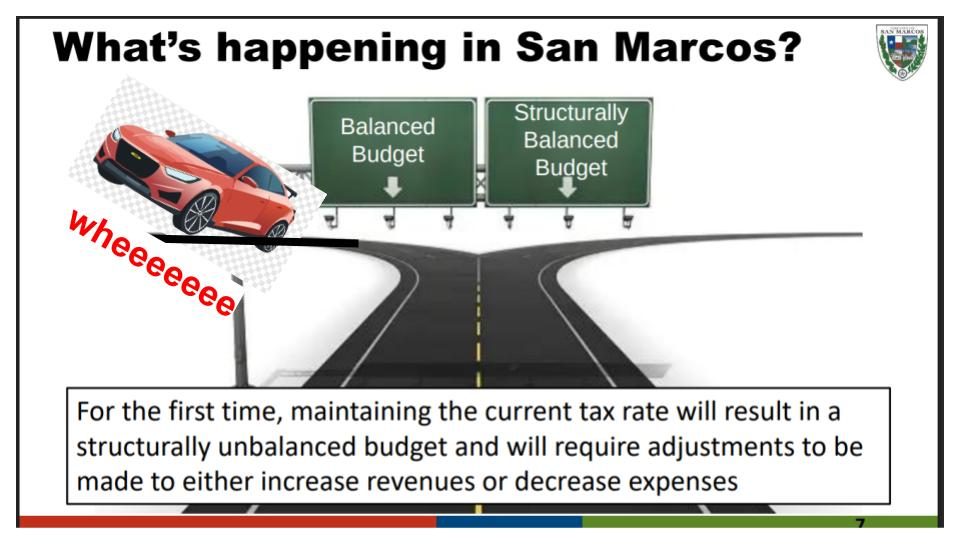
      Here’s the graphic that they showed:

      It was a big Come to Jesus Moment. Council went to Jesus. They gave direction that they wanted to go with the Structurally Balanced side of that road.

      Bottom line: “Structurally Balanced” means raising the tax rate modestly over multiple years (instead of one big crazy future hike.) All of council agrees with it.

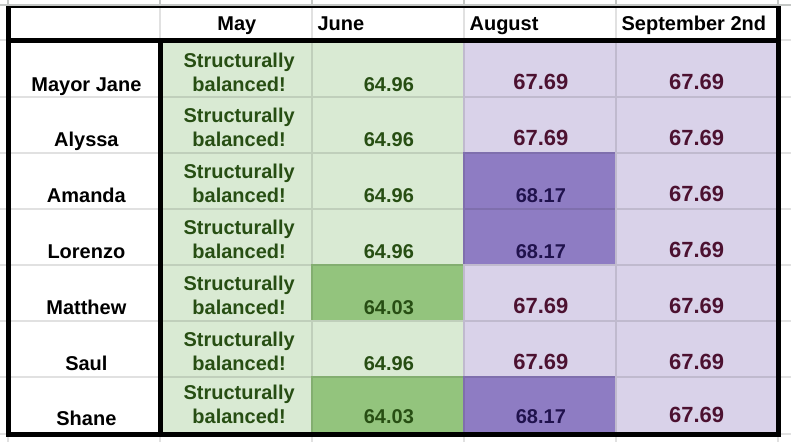
      June: In June, staff comes back with some Structurally Balanced tax estimates:

      Here’s what everyone said they wanted:

      Ok, great! We’re getting somewhere.

      ….

      August: Real numbers come in. (June was just an estimate.)

      By law, council has to set their own upper bound, in August. It’s a weird quirk.

      So staff lays out these possibilities:

      That’s in the afternoon, at the 3 pm workshop.

      Matthew and Saul are all willing to go up to the middle column now. The gravity of the budget crisis is evident to everyone.

      The Lorenzo changes things up: “I want to go between 64.96¢ and 70.49¢. I want to land on the number that gives a $0 in that last row. Neither a surplus or a deficit forecast for 2027.”

      Everyone is intrigued by this idea. He ends up successfully getting everyone on board with this! What careful planning we’re demonstrating!

      That night, at the 6 pm meeting, they vote on the tax rate cap:

      So we go with the 67.69¢.

      This is our max: the final tax rate cannot be higher than 67.69¢.

      Note: In August, they also mentioned something about an EMS study. It was another potential looming cost. This is going to become a very big deal, but it didn’t jump out at me then.

      Last background month! We’re now to September.

      September 2nd meeting:

      They take the first official vote on the 67.69¢ tax rate:

      Now you’re all caught up.

      …..

      This current meeting!

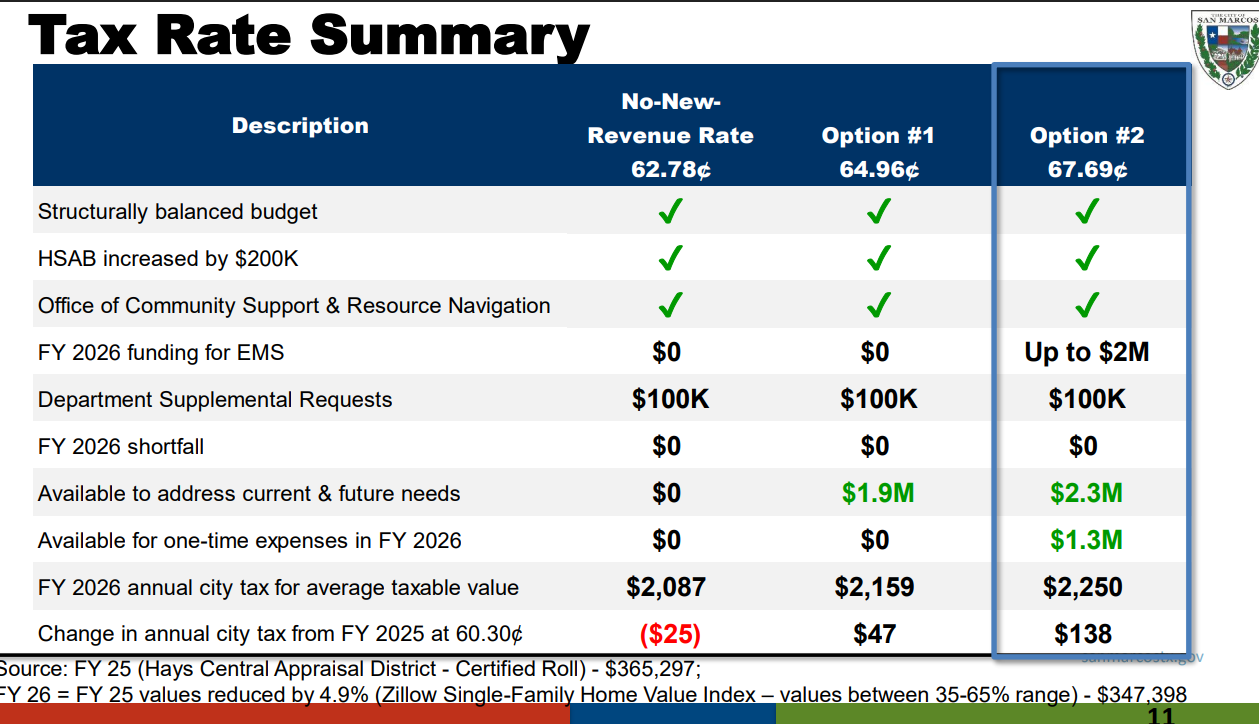
      Here are the three scenarios we need to have on hand for this conversation:

      What would home owners actually have to pay, if we raised rates in these categories?

        • The “No New Revenue” rate, 62.78¢. (NNR)  Your tax bill goes up $0.
        • Option 1: 64.96¢.   The average tax bill goes up $72.46 per year, or $6.03 per month.
        • Option 2: 67.69¢.  The average tax bill goes up $163.21 per year, or $13.60 per month.

      ….

      Sidenote: Those amounts are based on an average house worth $347,398 (and $15K homestead exemption).

      Most of San Marcos rents! But for those who own homes, home value varies a lot.

      Here’s the average home price by neighborhood in San Marcos:

      The last column is the monthly increase, under 67.69¢.

      That chart has 40 rows. Only the last eight rows exceed the average home value! (Blanco Vista and Kissing Tree are both way bigger than they seem.)

      Point being: most neighborhoods would see smaller tax increases under these proposed hikes.

      ….

      The public outcry:

      <crickets> …. <crickets>

      There was none. I mean, I’m sure Council got phone calls. But I’ve watched these meetings for years now – compared to other years, this is nothing.

      Two people showed up to talk about the budget during the public hearing. They both made nuanced points about the good parts and bad parts of the budget.

      Contrast that to the big items this year:

      • Tantra: 50+ speakers showed up.
      • Gaza: 125+ speakers showed up (on the day of the vote)
      • Data Center: 14 speakers on August 19th

      People show up when they’re mad. This ain’t that. This is the wind at Council’s back, pushing them to make the responsible decision.

      And then suddenly there is a big curve ball: EMS.

      This came up in August, but it was uncertain. Now it’s certain.

      So, there’s something called the San Marcos-Hays EMS.  This is who you call when you need an ambulance.  It used to be a lot bigger.  Over time, Wimberly left. Then Buda left. Then Dripping Springs left.

      Since the August meeting, it’s now official: Kyle and everyone else is leaving.  So it’s just San Marcos.   (The cheese stands alone)

      This is a big problem! We don’t have a city-run EMS.  We’ve got fire fighters who may be trained paramedics, but they can’t take you to the hospital. We don’t have ambulances. We don’t have a facility to store ambulances.  We don’t have the infrastructure to run another department.  But because this partnership is dissolving, we’re going to have to figure it out. 

      This is going to cost about $2 million.  This will start getting dealt with in November.

      Bottom line: those tax rates all need to increase by about 2.4¢ to cover EMS.

      Council Discussion

      Council asked a lot of questions about the EMS situation. They also were asking about Council priorities – what had to be decided on Tuesday, and what stayed flexible. It was not a very long conversation.

      Lorenzo keeps acting squirrelly.

      Finally he says: “I don’t like the 67.96¢ anymore. The State legislature didn’t pass those crazy laws after all. We should have more economic development! I want to go back to 64.96¢.”

      Well, shit!

      A few things:

      1. “Economic Development”: I erased a big rant about this.  It’s not a magic bullet.

      This is like walking out onto the NFL sideline and telling the coach, “Hey, you should try to score more points than the other team! Then you’d win!”   City staff really does know about economic development. They are always working on it. 

      2. The State legislature will definitely do Abbott’s bidding, and Abbott wants those laws. If not 2025, then watch for them in the next session.

      3. The 64.96¢ isn’t an option anymore! It doesn’t include EMS!

      The City Manager responds with alarm: “Please, please don’t go with 64.96¢. That won’t even cover EMS. We need at least 65.15¢.”

      ….

      Listen: The rug just got yanked, suddenly, and nobody is prepared. Nobody has the presence of mind to call a time-out and fix all the numbers.

      Confusion reigns.

      But look how helpful I am! I made you a chart!

      This is what I think city staff would have put on a slide, if anyone had had advance warning.

      Here’s my theory: I think Lorenzo intended to go from the 3rd row to the 2nd row. After all, he said “64.96¢”. But since we now have an EMS crisis, he didn’t even cover the first row. The City Manager is asking him to please at least get to 65.15¢ in the first row.

      We’ve suddenly rolled back all the careful planning for the budget cliff. The budget cliff is still coming! We still did all the planning! But instead, we’re about to do this:

      I’m especially flabbergasted because Lorenzo himself was the one who promoted the 67.69¢. He literally picked it to leave us with a balanced budget in 2027 – neither deficit, nor surplus.

      Saul, Shane, and Matthew were always barely willing to make a difficult vote. So as soon as Lorenzo gives them permission, the coalition for 67.69¢ falls apart.

      The vote on 67.69¢:

      Yeah.

      Let’s have a time lapse:

      (Technically, I’m combining two separate votes in that last column. First they vote for 67.69, and it fails. Then separately, they vote for 62.78+EMS. This passes.)

      Anyway, that’s the whole saga! We had the wind at our backs, and instead we shot ourselves in the foot. It felt like someone whispered in Lorenzo’s ear at the 11th hour, and the whole thing unraveled.

      Honestly, I’m kinda salty about the whole thing. .

      One final note: $2 million for EMS is a bargain. That works out to 2 cents. By law, Emergency services is allowed to charge a special tax of up to 10 cents. That would bring in about $8.5 million.

      Nobody is trying to shake down tax payers here. They just want an ambulance to show up when your grandmother has a heart attack.

      Item 4-5: Electric and Water Rates.

      The next discussion is even goofier, if you can believe it. (But less destructive.)

      Your electric bill comes in two parts:

      1. a base rate ($14.31)
      2. a usage rate. (Based on how much electricity you use.)

      Usage rates are going up. (Discussed here before.)

      Shane Scott speaks up:”Let’s just cancel the base rate!” He wants everyone’s bill automatically lower by $14.31 every month.

      You can practically hear staff’s hearts all plummet through the floor as they try to grapple with this craziness. (Ten minutes ago, we tanked the budget over whether to raise taxes by $6 or $12 a month. And now Shane wants to throw away another $14?!)

      The director of utilities tactfully explains that this would blow a $3.4 million hole in our budget. The city manager gently mentions our bond rating and debt service coverage. We could get sued by bond holders.

      Shane withdraws his motion.

      The vote on electric rates:

      A little later, we have the vote on water rates:

      So water rates will not change.

      Listen: this is totally irresponsible. This is lazy, wishful thinking.

      The city is not turning a profit on water. You have to cover the costs of your water utility.

      If you want to save people money on their water bill, help them conserve water. Don’t strangle the department that has to fix the pipes and pay for the water rights.

      That’s basically it for the meeting. I know barely anyone cares, but this was super big bullshit.

      Bonus! Bonus! Workshop #2, 5/20/25

      Workshop 2: Riverfront Parks Update

      It’s summertime! That means it’s time for this:

      Can we please not destroy it this year?

      Last year, we implemented a can ban.

      It did not go very well.

      Mostly because the park was mobbed with so many visitors that staff couldn’t keep up:

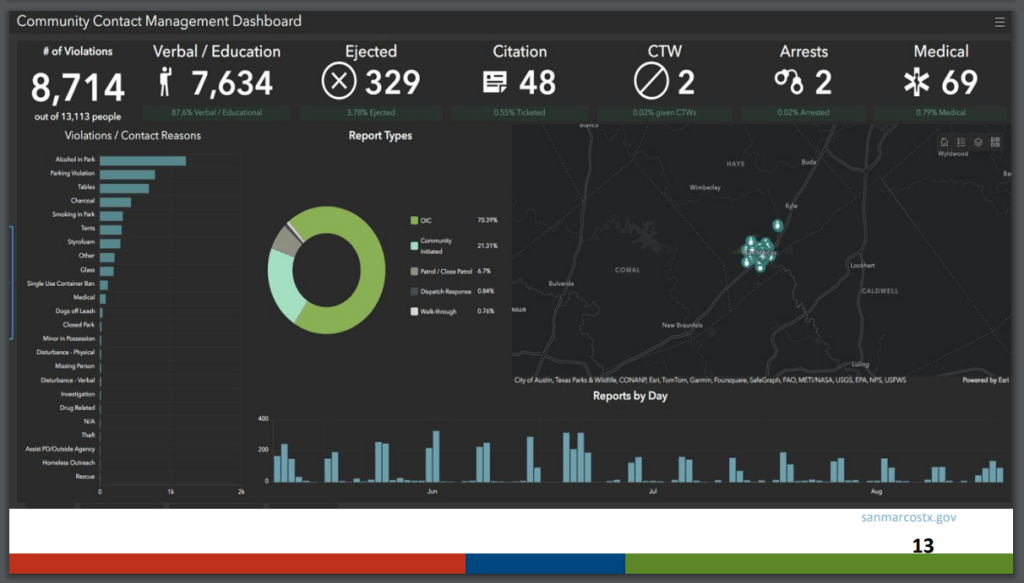
      We saw this last year:

      The arrests are low, because the marshals can’t take the time to arrest someone.

      We saw these sad photos from the river last year, too:

      and

      It’s very depressing.

      Trying to keep up with the crowds is super labor intensive:

      Also there are a ton of volunteers, like the The Eyes of the San Marcos River, that show up weekly and pick up the massive amount of litter left behind.

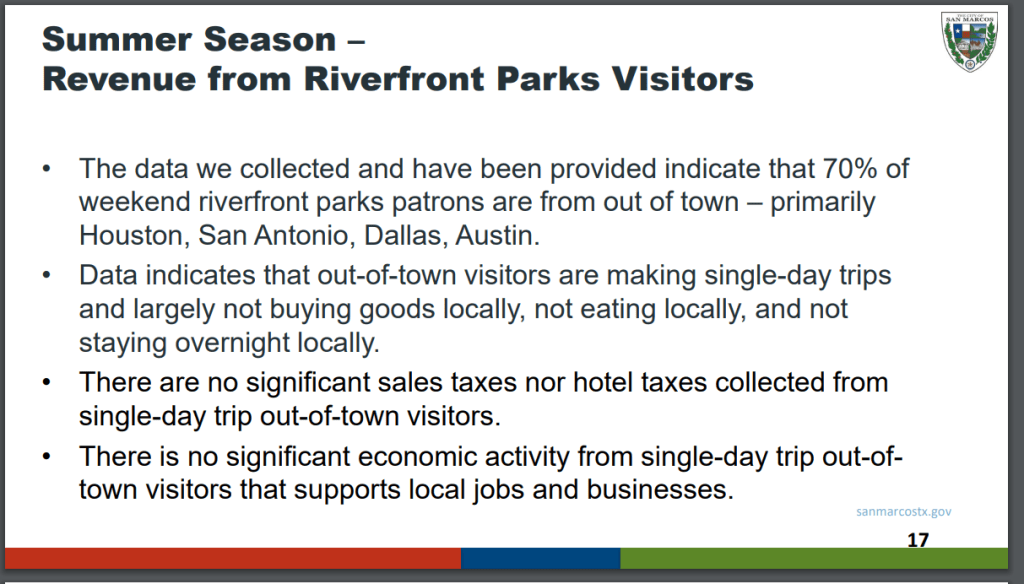
      Basically, San Marcos residents have stopped using the river on the weekends. It’s used by tourists from San Antonio, Houston, Austin, and other out-of-towners:

      But we don’t collect any tax revenue from them, because they don’t stop at the restaurants or spend the night.

      So residents are footing the bill, while the river is over-used by others to the point of destruction.

      What happened is that there used to be lots of free river parks in Central Texas. But one-by-one, they all got fenced off and started charging admission. This put the pressure on families to travel further and further to get some free recreation and relief from the summer heat.

      We’re the last park that is still free. So now we’re getting more people than our river can handle.

      This is a collective action problem, specifically a kind called the tragedy of the commons. People have destroyed many, many finite natural resources throughout history. It would be great not to add our river to that list.

      I hate this situation so much. I want people to have free recreation to escape the Texas heat! I want families to have fun together! And yet we absolutely have to keep our river healthy and clean.

      (The actual solution is that Central Texas needs a lot more free water recreation options available for residents in the summer. The heat is brutal. If we had a functional state government that tried to improve things for their residents, they could solve that problem.)(If my aunt had wheels, she’d be a wagon.)

      So what are we doing differently this year?

      First off, for holiday weekends:

      blocking off Cheatham on either end. We started doing this on holiday weekends last year, and it helped keep people safer.

      Next: getting the shuttles out of the neighborhoods:

      So now the Lion’s Club shuttle takes the I-35 frontage road, instead of going down Riverside.

      Those are both good, but what about the BIG problems?

      After last fall, Council was timidly open to the idea of fencing off the river and charging admission. But they had lots of questions. It was very preliminary.

      But then it hasn’t come up since then.

      So this was kind of a surprise! The park staff want to try some stuff out this year:

      WHOA. That’s this weekend! This is pretty short notice!

      The plan:

      They want to test out fencing off this one part of the park, by the falls:

      You would only be able to get in at those four green entries. You’d have to talk to someone, who reminds you of the rules, like the ban on charcoal grills, and single-use containers, and alcohol.

      Maybe we could we keep things from getting less out of hand?

      ….

      I think this is a pretty good idea? I’m surprised that it materialized so fast, but this is a good test run.

      City staff also floats the idea of charging admission to out-of-towners on weekends? Not residents, just tourists:

      Residents would have to register for a pass.

      Also they want to be able to tow people more easily:

      Right now, only Marshals or police can get a vehicle towed. They want to make it easier for the Parking Enforcement Techs to get a vehicle towed, so that the Marshals can keep dealing with the park.

      What does Council think?

      Amanda and Alyssa both: This is all super rushed. This is way too fast. We also have major concerns about staffing – there were some marshals that were overly aggressive and problematic?

      City manager Stephanie Reyes: The park marshal that was in the news was fired. But listen: it’s super dangerous there. We’ve gotten very lucky, but please take this seriously.

      Jane: All these decisions have to come back, though, with precise definitions.

      Parks Director: You can defer the fee. We don’t need to charge people. We just want to have the fence so that we can talk to people before they go in. You can send someone to go put contraband in their car if you catch them on their way in, but once they’ve set up and are midway through the day, it gets dicey.

      Saul: Do we own the fence?
      Answer: no, we’re renting it. But it’s rolled in to the cost of the Porta-potties. We got a great deal.

      There are three questions for Council to answer:

      1. Do they want to try fencing off Rio Vista park?
      2. Do they want to charge admission to out-of-towners?
      3. Do they want parking techs to be allowed to get vehicles towed?

      Let’s take these one at a time:

      1. Fencing off Rio Vista Park, around the falls?

      Yes: Saul, Jane, Amanda, Lorenzo, Shane, Matthew
      No: Alyssa, who says she cannot sign onto anything without more details.

      I think this is a good idea.

      2. Charging an admission fee for out-of-towners?

      No. There is not much appetite for charging a fee immediately. There are too many unknown details about how exactly we’d pre-register residents.

      What about having a future conversation about charging an admission fee?

      Yes to a conversation: Saul, Jane, Lorenzo, Amanda, Matthew
      No: Alyssa, Shane

      3. Parking techs allowed to get someone towed?

      Yes: Jane, Matthew, Lorenzo
      No: Saul , Amanda, Shane, Alyssa

      So this fails.

      We’re also moving forward with paid parking at the Lion’s Club:

      So the idea is that it’s free for residents, as long as you register ahead of time:

      You can also register online.

      The workshop ran way over time. They didn’t start the council meeting until almost 7 pm.

      Bonus! 3 pm workshops, 4/1/25

      Three quick ones!

      Workshop 1: Bicycle Friendly Communities.

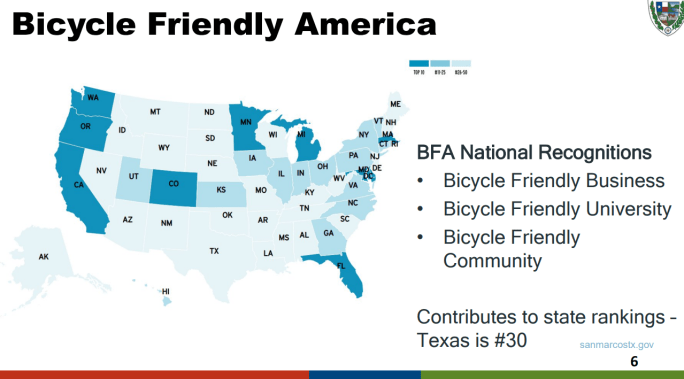
        The League of American Bicyclists hands out awards.  We’re bronze! We’ve been bronze since 2018, actually. But we were renewed!

        Overall, Texas is mid.

        It takes a fair amount of work to get this designation.  Along the way, we got some survey data:

        They also gave us a report card:

        Ouch. Hmm.  Maybe I don’t know what “bronze” actually means. That we’re trying?

        They included 17 recommendations.  We’re a work in progress.  Read ‘em all here.

        Council asks a few questions:
        – Bike incentives? Access? (no)
        – Do we reach out to businesses? (no)
        – Demographics of survey responses? (no)

        I’m being pretty negative, but the city is doing good work on a shoestring budget.

        Remember: on average, it costs about $1,015/month to own a car, whereas it’s about $29/month to commute by bike. San Marcos is full of people who might prefer to bike – but only if it feels safe, and only if they actually have a bike.

        Workshop 2: Spin Scooters

        These came up before, last July.

        We’re talking about these: 

        They’ve been around since 2021. 

        You download an app, and it tells you where the closest one is, and you can rent it and ride around the Scooter Zone.

        Originally they were contained to this blue area:

        Last May, the Scooter People asked if they could grow.  So we gave them a 9 month pilot period to extend to this region:

        Also we allowed them to become 24/7. Before, they shut down overnight.

        So how did the pilot program go?

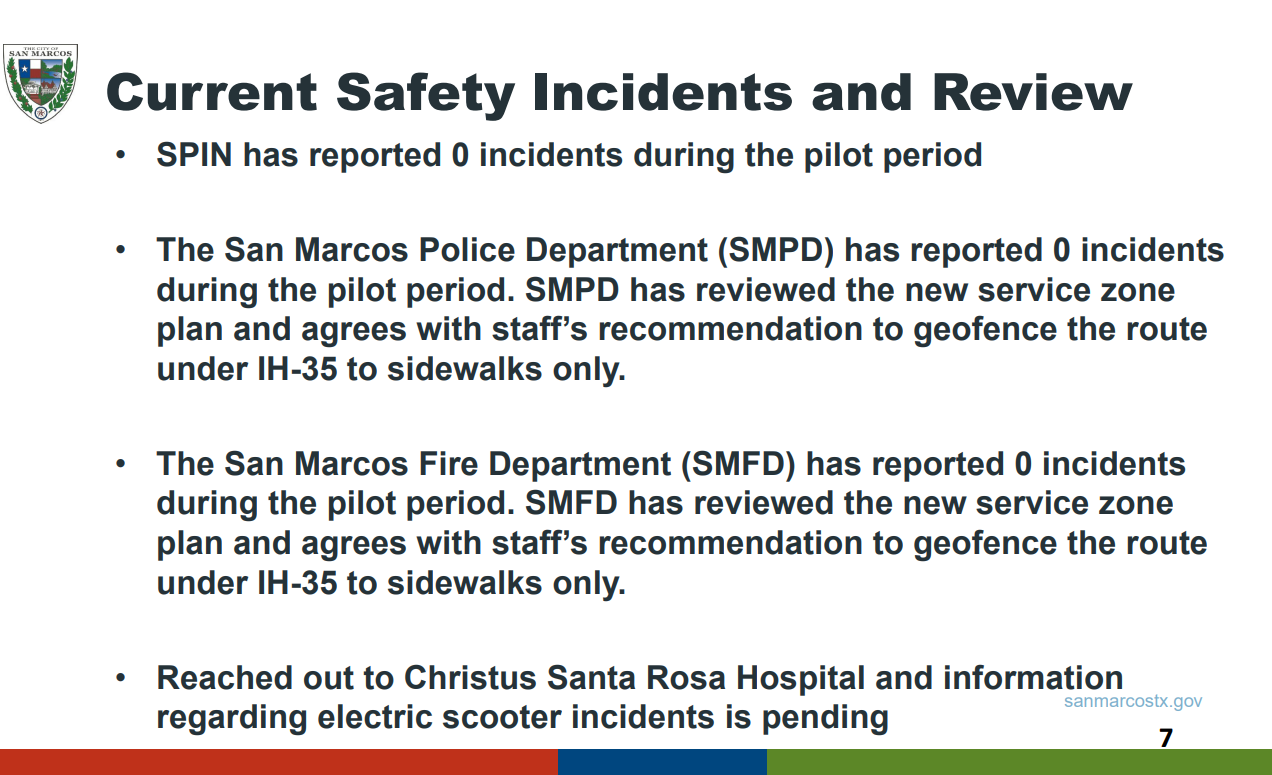
        There haven’t been any incidents!

        Everyone is fine making that region permanent.

        Would we like to fire up a new pilot region, here?

        Sure.

        One final note: Are these actually affordable?

        It costs $1 to unlock, and then $.30 plus taxes per minute. So let’s ballpark that it costs $6 for a 15 minute commute. That means that one daily trip would cost about $360/month.

        That’s actually kinda pricey. Still cheaper than owning a car, but not, like, frugal.

        Workshop 3: Edwards Aquifer Habitat Conservation Plan

        Okay, this topic is always fascinating.

        So back in 1991, there was a lawsuit by the Sierra Club against the U.S. Fish and Wildlife Service. The Sierra Club sued for neglect under the Endangered Species Act. Their case was that if the Edwards Aquifer drops too low, then the endangered species in the Comal and San Marcos rivers could go extinct. And they won!

        So the Edwards Aquifer Authority was created, and they got some legal power. This is important!

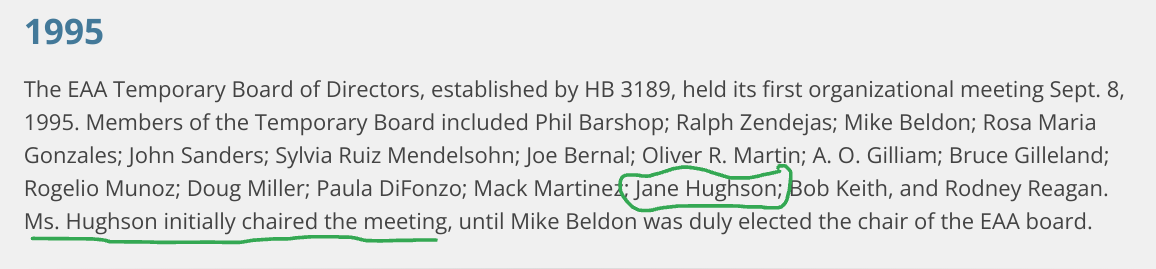
        (hey, look at this:

        Probably some of you know all those names, but Jane’s jumped out at me. Good on her.)

        Here’s the key: The EAA is allowed to cap much water gets used, and they are allowed to charge organizations to use the water. They sell credits to San Antonio, New Braunfels, San Marcos, Texas State University, Kyle, and so on. Then they use that revenue to fund conservation measures.

        Today’s presentation is on the Edwards Aquifer Habitat Conservation Plan, or EAHPC. This is how they actual take care of the rivers.

        So what do they do?

        SO MUCH! They spent about $10 million on San Marcos alone.

        They do a bunch of underwater gardening, to make sure there’s enough habitat for the little endangered fishies, and also the endangered wild rice:

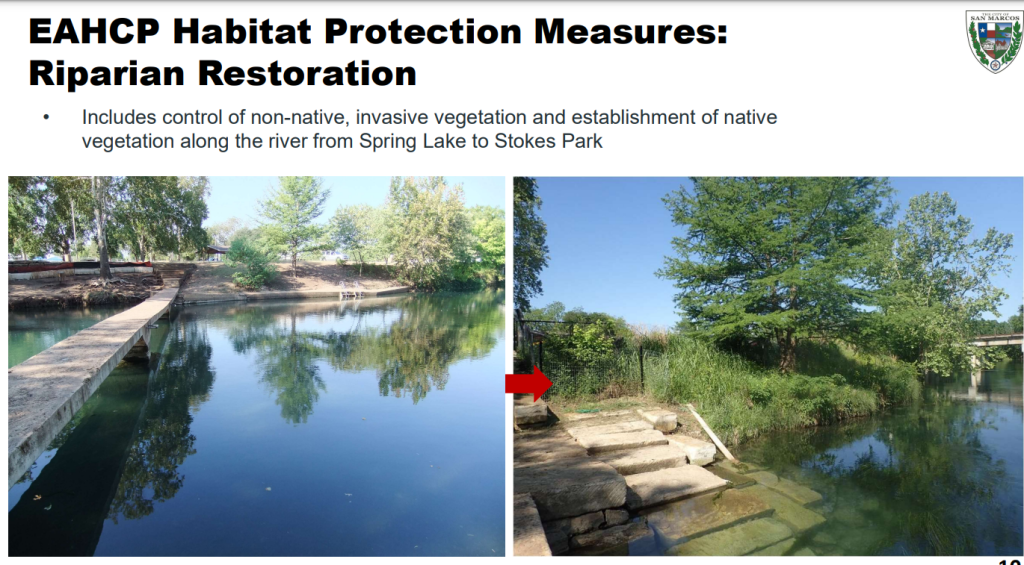
        They fence off the spots where the bank is getting eroded and trampled to death, and nurture it back to life:

        That photo is just upstream of the falls. It’s as if you’re standing on the island with the big cypress trees, looking back towards the bank.

        They hire people to go spear-fishing for non-native species:

        The one on the left is those little sucker-fishes that people put in their aquariums to eat the algae and keep in clean. The one on the right is tilapia.

        Council asks: what happens to the fish?
        Answer: The guy who does the spear-fishing holds a big fish fry and serves tilapia fish tacos, down at Ivar’s river pub.

        Council: What about the sucker-fish?
        Answer: Don’t eat those. Gross.

        But also: the San Marcos Discovery Center has a fish shelter! Like they’ll take your old fish if you don’t want an aquarium any more, and if you are getting started, you can go adopt fish for free from them.

        Don’t dump your old fish in the river, everybody. Take them to the fish library.

        What else?

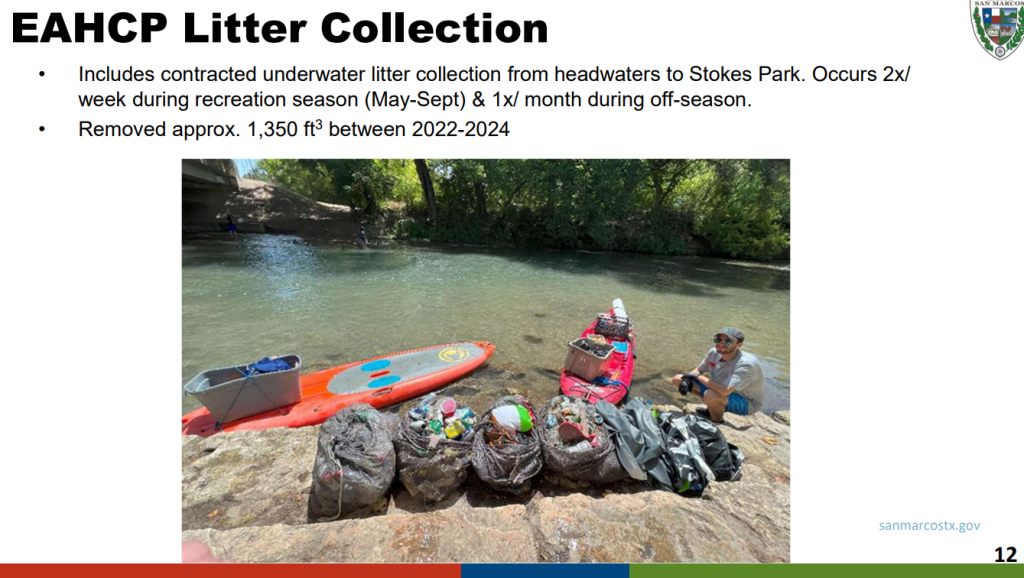
        They pay for scuba divers and snorkelers to collect trash out of the river, twice a week, all summer long:

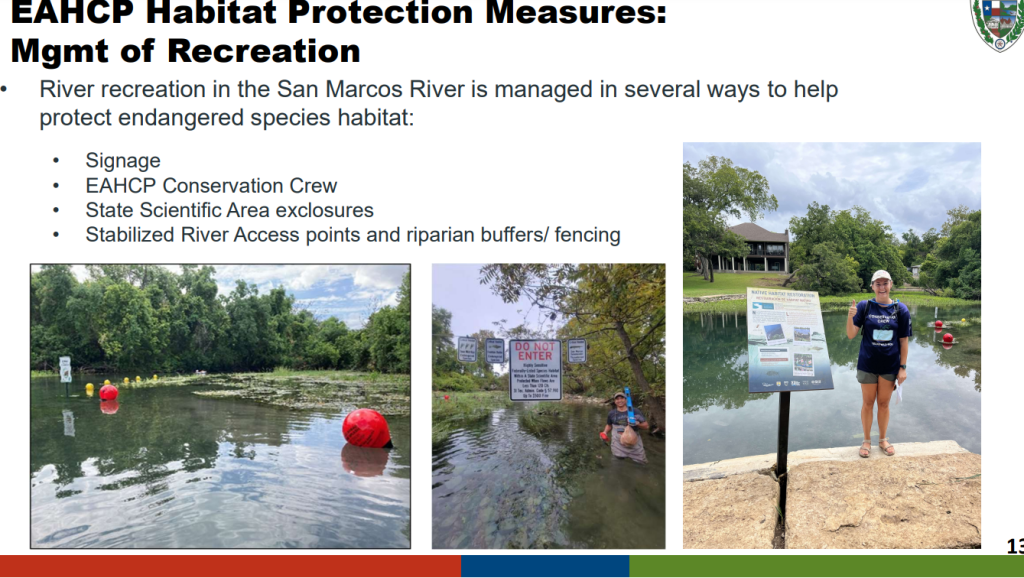
        They keep those red bobbers around the wild rice and sensitive spots:

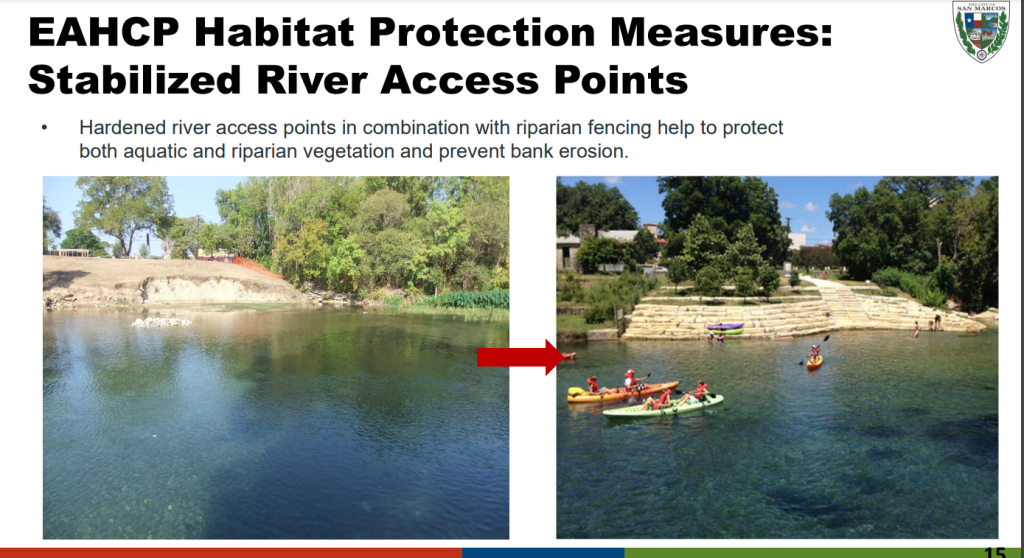
        They put the big limestone rocks in at certain river swim spots, and then fenced off a bunch of the other spots:

        In other words, they were like “Let’s contain the swimming to a few really great swimming spots, and not worry about vegetation there. Then we’ll protect the rest of the river for vegetation.”

        Also the limestone rocks keep the bank from eroding.

        They did a bunch of stormwater detention that keep the nasty stuff from running into the river:

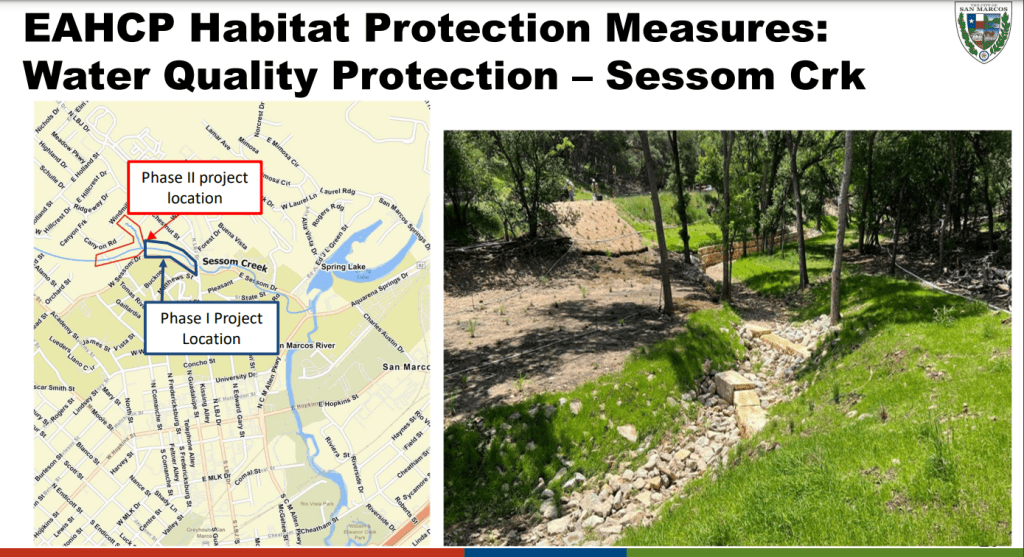
        and they also fixed up Sessom’s Creek:

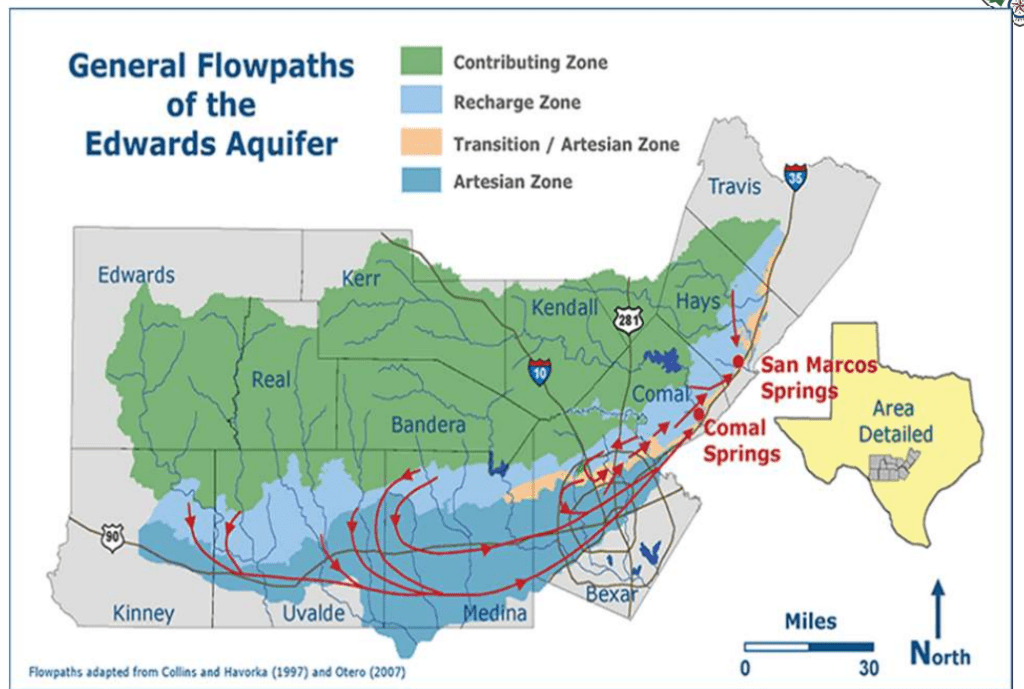
        I mean, let’s pause here. This is wild, right? This is the Edward’s Aquifer:

        Everyone in that dark blue region would just be draining the aquifer dry, if the EAA wasn’t around. Instead there’s been this massive coordinated effort, resulting in $10 million worth of projects to protect our river?!

        That’s insane and beautiful. You’ve got to cherish this and really breathe it in.

        (Especially during this larger dark time. I hope this program is not dependent on federal funding.)

        But wait, there’s more! You can’t hold these deals back!

        The scientists study and monitor all the endangered critters:

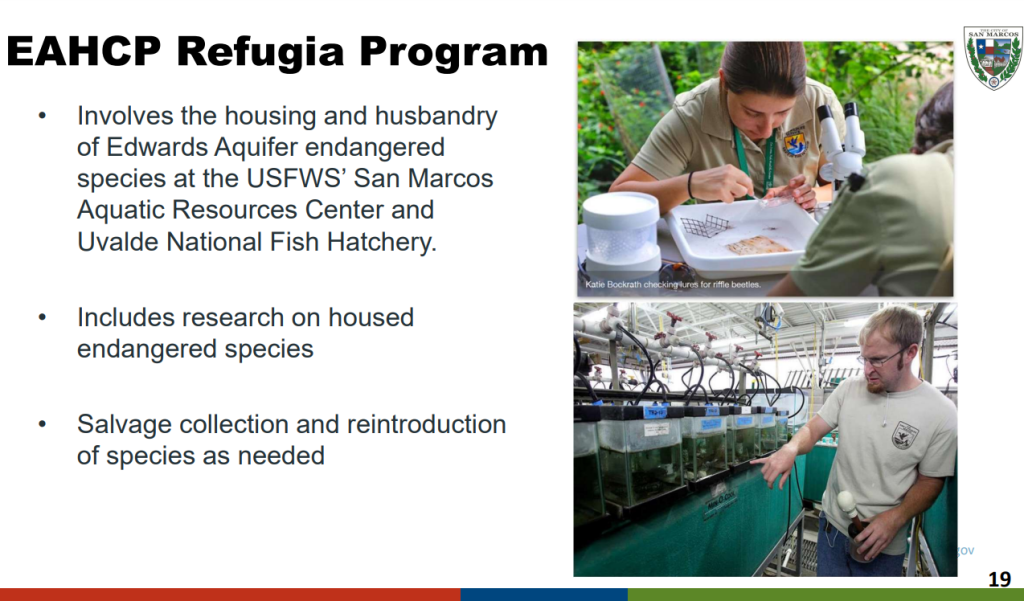
        They scoop them up and take them on field trips, over to McCarty Lane or down to Uvalde:

        That way, if there was a massive natural disaster or chemical spill or something, they could re-introduce the species after the river was healthy and cleaned up again.

        What’s next? The current EAHCP plan runs from 2013-2027. So it’s about to expire, and they’re mapping out the next one to run from 2028 – 2058.

        They’ll do a lot of the same stuff – make sure the river stays flowing, make sure the people don’t destroy the environment, make sure the endangered species are still paddling around in healthy numbers. But they’ll also have to respond to a hotter, drier world, which makes this all harder.

        There’s some technical details to the new plan, and honestly, you should just watch the whole presentation here. (Or read all the slides here.) 10/10, no notes.