Hours 0:00 – 3:38, 9/3/24

Citizen Comment:

  • Five people spoke against the SMART/Axis road annexation.
  • A guy from the airport asked about his lease rate for his hangar

That was about it.

Items 2-3:  Quarterly financial and investment report.

This is the official report for Jan 1st – March 31st went.  Back in May, we got a sneak preview: sales tax was tanking below projections and we were scrambling to reign in spending. 

This is more re-hashing of that same news. Sales tax was down, so everything got pulled back.

Item 19:  It takes two public hearings to approve the budget.  This is the first, and then final approval will be on September 17th.

Here’s the big picture:

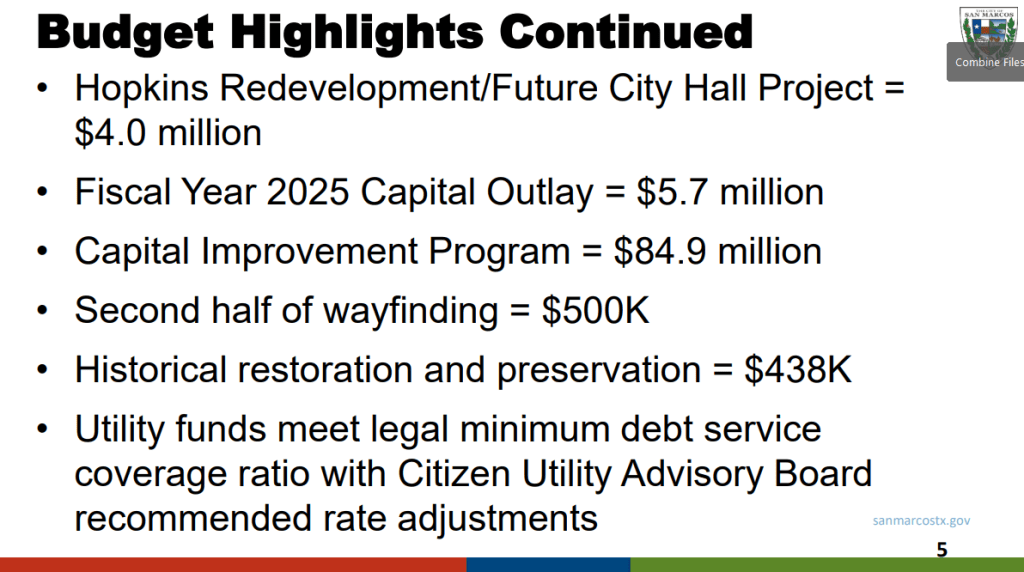
With highlights:

For me, the highlights are only somewhat helpful. I need context in order to makes sense of these notes. What helps me most is a breakdown of the general fund, by department.

Last year’s breakdown of the General Fund, by department:
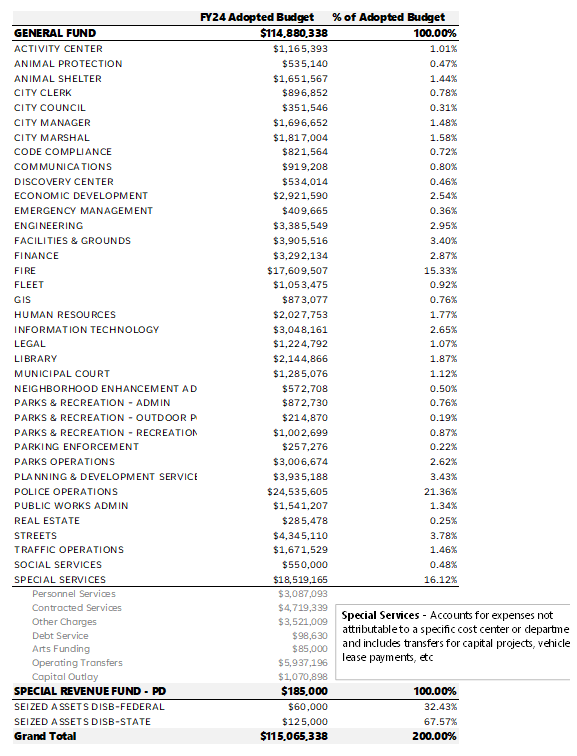
I got that by submitting a FOIA request last year. I’ve requested this year’s General Fund breakdown, but haven’t yet gotten it.

[Let me put on my tinfoil hat for just a moment. Indulge me in the dullest conspiracy theory of all times:

– The 2024 draft budget has the General Fund breakdown by department, starting on page 82.
– But the 2024 adopted budget has no General Fund breakdown anywhere!
– the 2023 draft budget has the General Fund breakdown by department, starting on page 88.
– But 2023 adopted budget also has no General Fund breakdown anywhere!

For the past two years, it’s disappeared from the actual budget, once it was approved. What on earth.

Finally, even the 2025 proposed budget does NOT have the General Fund breakdown included. This annoys me, hence the FOIA request mentioned above.

I submitted the request back on August 22nd, so we’re past the normal FOIA response time. The information is in the budget, but it’s scattered. It would take hours of work for a layperson to extract it from the online budget, one department at a time.

END OF MY MILDLY EXASPERATING CONSPIRACY THEORY!]

Back to budget discussions. Utility rates are going up:

The average home-owner will pay $13.46 more per month. There’s a big discussion in the workshops about utility assistance, so I’ll cover some details later on.

We’re using the same tax rate as last year, 60.3¢.

Listen: I cannot stress enough how little conversation there is about any of this. Partly this is because there have been a lot of budget workshops already.  Partly this is because the community didn’t show up to complain. (Although they have one more chance.) But mostly because this council is so used to each other that they all know exactly where they all stand.  There’s nothing left to say.

Matthew Mendoza asks a great question. During the section on the Water and Wastewater Fund, he asks: “These contract costs keep increasing every year. Why do we keep contracting out? There’s like 4 water and wastewater contracts. Why not do these things internally?”

The answer has a few parts:

  • Some contracts are management contracts, others are infrastructure and CIP
  • The contracts for the surface water plant and the wastewater treatment plant both have automatic inflation adjustments built in
  • On the wastewater treatment plant, we’re at the end of a 20 year contract. We’re putting a provision in the new contract to have an exit clause, so we could convert staffing to in-house in a few years if we want. When it was built in the 90s, it actually was operated by city staff. We started contracting it out in the 2000s.

This is SUPER interesting! Let’s highlight some things:

  • It’s so common for contracts to have built-in, automatic inflation adjustments! You know what doesn’t? The minimum wage. Failure to peg the minimum wage to inflation is one of the most underappreciated policy failures of the 20th century.
  • The wastewater treatment plan used to be city-run! We privatized it in the 2000s! What. Privatization is not your friend. Let’s get that back.

Mark Gleason asks if trash and recycling contracts also have automatic inflation adjustment?

Answer: Yes on refuse collection.

Alyssa still votes no on the utility fund votes, because of the rate increases. But she acknowledges the workshop on emergency utility assistance. (We will cover this below.) If it were working as it should, she says she’d be able to vote for the regular rate increases.

Item 4:  Axis Logistics (aka SMART Terminal) road annexation.

Backstory. The giant Axis Logistics/SMART company:

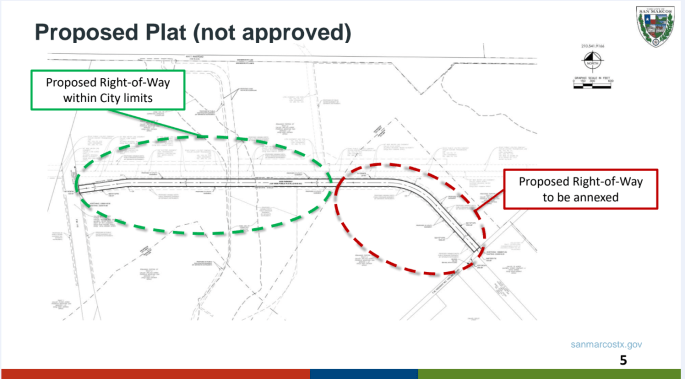
wants Council to annex city land for a road:
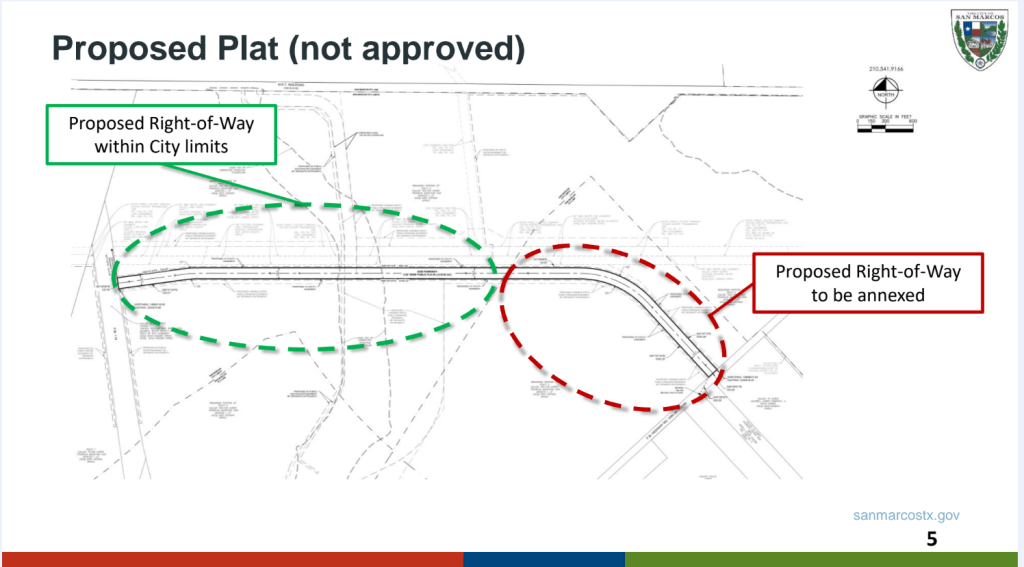
However, the company has made total enemies of the surrounding community, by always being super secretive about their plans. In this case, the road has jumped locations. Originally it was further from houses and now it’s closer to them.

At the August 5th meeting, there was a fair amount of discussion. Everyone seemed concerned. Nothing was resolved.

At the August 20th meeting, it was mysteriously postponed.

Time for the exciting conclusion! So much drama! Buckle up for…

…zip, zero, zilch. Literally, Council spends four minutes total on this item.

The vote:
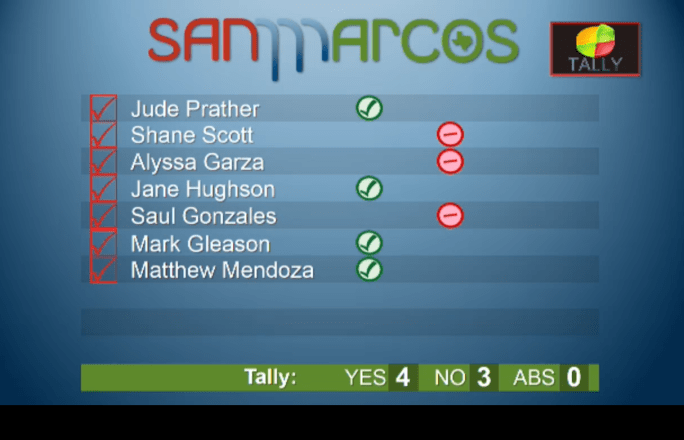
No one ever asked in public about whether the road could be moved back to the original location.  No one explained whatever Mark needed more time to research since the last meeting.

This is what I mean when I say this council is stale. Everyone knows where everyone stands on everything, and so no one bothers to say anything outloud.

Item 24: School Resource Officers are back, baby!  (School Resource Officers = SROs)

Last meeting, the city approved the SRO contract

Two changes had been proposed by SMCISD:

  • The SRO contract should be two years instead of one
  • The contract can be renewed administratively, without Council approval. 

Council renewed the contract, but nixed those two changes. They wanted to see the contract, in person, every year.

Since then, the school board met: they really want the two year contract and admin renewal.  So they held the line on those two details, and punted it back over here.

Remember last time how I pointed out that Jude Prather should really recuse himself, because his wife is the director of the organization that oversees all SROs, statewide?  

  • He didn’t recuse himself this time, either. 
  • He actually was the one who made the motion to approve
  • Superintendent Cardona even mentioned that Prather’s wife wrote the officer training.
  • At Q&A at the end, a community member (LMC) asked about this conflict of interest.
  • By that point, Prather had gone home.  LMC said it was a question for the city lawyer, but Jane Hughson ended the meeting without giving the lawyer a chance to answer the question.

This is getting into more egregious territory!  Jude certainly knows better. He recuses himself over absurdly flimsy pretexts all the time.

ANYWAY.  Chief Standridge says he could include SROs in his yearly update to Council.  Superintendent Cardona talks about how closely everyone meets and supervises the SROs.

Mark Gleason politely says “I told you so! Stability. Safety. Etc.”

The vote: Should we switch to two year SRO contracts and administrative renewal?
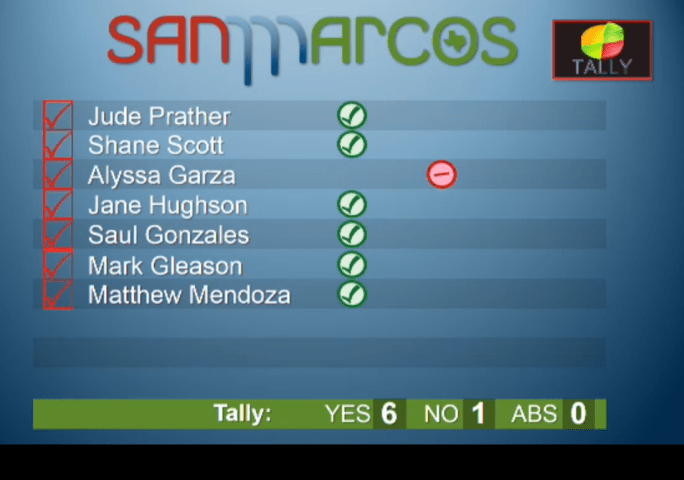
… 

Item 25:  This was a little confusing.

Gather ‘round, children.  Once upon a time, there was a little Municipal Utility District, on the north end of town:

That’s east of I35, on Yarrington road. The year was 2014.

It was actually kind of gigantic if you zoomed out:

But none of the townspeople ever did. 

Here’s what the developers pretended it would look like, some day:

Look at all that water! What the hell is going on here. Here’s the satellite photo of this area:

So much less water!

(Were those lunatics planning on a great new lake? Were they going to tap the Blanco, where it runs underground, to create a watery playground for rich people? Maybe!)

Back to our story.

The village council elders put a weird clause in the development agreement that allowed landowners to opt out.  Usually council elders wouldn’t do such a thing, but in this case they did.

By 2023, these owners had opted out:

The red parts had opted out.

In 2023, the rest of the land owners opted out:

So at Tuesday’s council meeting, the little village dissolved the Municipal Utility District altogether. There’s no development agreement. There’s no lake.

THE END! 

The moral of the story is: there is no moral. 

Item 26: New City Hall and Hopkins Redevelopment project

Back in July, we saw some pretty pictures about what the new City Hall could look like, and what Hopkins could look like, maybe someday:

Today’s task: we’re going to form a steering committee, to help shape the vision. 

Who does Council want to be on the steering committee?

Jane: We could have each councilmember pick a person, and then have a representative from some key constituents – Texas State, River Foundation, Downtown Association.

Alyssa:  Before we have this conversation, we need the DEI coordinator. Otherwise we’ll do what we always do. That leads to the status quo, and the same old people still have the same old power. 

Mark Gleason: I like each councilmember picking two people, plus the key organizations should all have representatives.

Alyssa:  Hey! You guys. We need to stop and get input from the DEI person, before we have this conversation. 

Jane: And councilmembers themselves. What about the mayor?

Alyssa:  Listen. Stop. The DEI coordinator is not here.

Matthew Mendoza: Why should Texas State get a seat on the committee?

Jane Hughson: It’s just part of being good neighbors. They also have a representative on the downtown committee.

Alyssa:  Hello? Anyone? Bueller?

Shane Scott: You know how councilmembers get their names in the building? I think we should have little bobbleheads of ourselves, instead.*

Alyssa:  LALALALALALA AM I SHOUTING INTO THE VOID HERE?

Matthew: We should require that members have lived in San Marcos for at least five years!

Alyssa:  [mumbles to self about DEI coordinator]

Jane: How about a P&Z representative?  How about a library representative?

Alyssa:  [draws pictures of a council consulting the DEI coordinator, and holds them overhead, in the style of Lloyd from Say Anything.]

Saul: Should we require that they be caught up on their taxes?

Jane, dryly: We don’t require that for elected officials. 

Alyssa:  [Launches little confetti cannons. Sends in carrier pigeons with tiny notes tied to their legs, which read “Let’s consult with the DEI coordinator”. Does an interpretive dance for the letters “D”, “E”, and “I”.] 

In the end, everyone agrees to come back next time with their final ideas for the composition of the steering committee.  City staff is going to talk with the DEI coordinator and get best practices from her, and they’ll share those next meeting.

Here’s the thing: You have to get the DEI coordinator to talk to everyone before the brainstorming. Otherwise the brainstorming will perpetuate the same old power imbalances as always.  The point of the DEI coordinator is to gently get everyone to cut that shit out, and redirect them into new territory.

*This is a real comment. I did not make this up.

Hours 0:00 – 1:54, 8/20/24

Citizen Comment:

A few main items:

  1.  Malachi Williams.  (7 speakers)
  2. SMART/Axis Terminal road annexation (3 speakers)
  3. Some one-off topics: San Marcos Civics Club, ceasefire in Gaza, RFP for wastewater, council attentiveness to residents.

Let’s tackle the killing of Malachi Williams first. There have been some major developments – namely the grand jury declined to press charges against the officer, and so he’s not facing any legal repercussions.  SMPD released the name of the officer who killed Williams, but no one else, and the bodycam video from that cop, but not the rest of the footage.

I get to go first, because this is my platform!

Listen: there’s a big gap between what’s legal and what’s moral.* 

Here’s what’s legal:  According to Chief Standridge, the cops followed de-escalation procedure in the convenience store.  Then there was a footrace. Malachi Williams was holding knives, and headed through the HEB parking lot, and so the cop shot at him several times. 

The grand jury did not indict the police officer.  This is legal – it means they thought there was not enough evidence to convict the cop in court.  And the grand jury is probably correct. The Supreme Court standard for cops is that they are allowed to shoot if they perceive a threat. That is a very low bar to clear, which is why it’s unlikely this officer would have been convicted. It is easy to believe that this officer will claim that he perceived a threat.  Therefore he’s allowed to shoot and kill Malachi Williams. 

This is all legal.

None of this is moral.  As a society, we failed Malachi Williams in many, many ways.  Long before the night of April 11th, we had set the stage for this, because we do not provide anywhere near enough investment in mental health services and housing for homeless people. 

Once Malachi Williams is having a mental health crisis on April 11th, we sent police officers in blue uniforms.  These officers may have been trained in current de-escalation techniques, but plainly that training is nowhere close to what this kid needs.  Remember, Malachi Williams had been acting creepy, but not violent. He has not actually threatened anyone with a knife, or even been close enough to anyone to threaten them with a knife. Importantly, he does not have a gun.

Malachi Williams runs away.  You run away when you’re scared.  But the cops do not think of him as being scared. They think of him running towards HEB, with knives.  They themselves are running towards HEB too, with guns.

Malachi, with knives, is considered a worse threat than a cop openly firing a gun in the HEB parking lot. Malachi’s life is not worth the extra police training that it would take for this officer to better understand how to handle this situation. That is not moral.

Ultimately, the only person who did anything violent is the police officer.  Malachi Williams is now dead and his family are now left to grieve.  This is a moral failing by the police department and the larger, complacent society.

Some good links:
why police officers are rarely prosecuted
how to think about police reforms
Guiding Principles on Use of Force, with a whole section on both mental health and people with knives. (That is a police research group, and they argue that police should never need to shoot someone with a knife.)

Onto what the speakers say:

  • The grand jury is unnaccountable and secretive. 
  • SMPD needs to release the full footage. Did the cops deliver immediate medical aid, like they’re legally bound to? [I am very interested to know this, too!]
  • One person (Sam Benavides) submitted a FOIA request for all footage.  She was told that she needed to provide names of officers in order to get their body cam footage. Of course, the only name that has been released is the one officer that held the gun, so this is totally circular obfuscation.

A note about grand juries: proceedings are generally not released to the public, because it’s one-sided. The defense is not present, just the prosecutor. So it would be unfair to the defendant to release a one-sided story.  However: this falls apart with police shootings, because the prosecutor can sandbag the proceedings, out of working so closely with the police. Independent prosecutors would help a lot with police accountability.

*hat tip to my friend for helping me with this framing.

  1. Axis/SMART Terminal road

Just to refresh, here’s what we’re talking about:

It’s that dotted blue line between Loop 110 and Hwy 1984. Not the whole thing, just the right hand elbow of it:

Speakers brought some numbers from TxDot, CAMPO, and the Traffic Impact Analysis:

  • FM 1984 currently has 2380 cars per day
  • Hwy 80 has 17,400 cars per day
  • The new road is estimated to have 25,000 trucks per day.

So this is adding way more traffic to the surrounding roads.

Speakers also still want to know why the road moved – it used to be away from houses, and now it’s right by them. (We discussed this last time but didn’t get an answer.)

At the 3 pm meeting, the direct of of the San Marcos River Foundation (Virginia Parker) gave their two cents: they are in favor of the road annexation. They spoke to Caldwell County, who said that they’re stretched too thin to maintain the roads to San Marcos city standards. SMRF’s position is that it’s best for flooding if the city of San Marcos is responsible for maintaining the roads.

At the 6 pm meeting, it was pointed out that San Marcos can surely come up with a workaround there. We make deals all the time to deal with this sort of thing.

….

Onto the meeting!

Item 1:  The SMART/Axis Right-of-way road is up first! (Background here.)

Aaaaaaand…… It got postponed.  Womp-womp. Something was discussed during Top Secret Executive Session that made Mark Gleason want to do more research on the issue? 

One off-topic comment: SMART/Axis’s whole shtick is that they can’t possibly give any details up front, because they don’t know who their tenants will be.  Last year, they just want the whole thing annexed and zoned in one big blank-check chunk. They are still refusing to provide any details whatsoever.

This slide was shown during the presentation:

Wow, look at that magical exponential growth! In 20 years, their property will be worth $10 billion dollars!  They may have make-believe tenants that they can’t yet explain to us, but they will definitely be wildly successful, and the city will swim like Scrooge McDuck in the tax windfall. Let’s make all these important decisions based on this Very Serious Graph of Reality.

Item 12: Intralocal Agreement with the Animal Shelter

Up till now, San Marcos has been running a regional animal shelter, and it’s too much.  So we’re transferring responsibility to Hays County, and operating a local animal shelter just for the city, instead.

Hays County was maybe taken by surprise by this? It’s in their court now.

City Manager Stephanie Reyes has talked with the city managers in Buda and Kyle, and has requested a few things:

  1. Hays County, Kyle, and Buda need to change their ordinances to match ours
  2. They need to market animals at events
  3. Consider participation with PALS to address pet overpopulation

Of course, these other jurisdictions could come back with amendments, which we’d consider. We’re not ordering them to adopt our version so much as asking them to consider this first version. But at some point, the ordinances need to match.

Item 16: School Resource Officers (SROs)

SROs are a joint collaboration between the city and the school district.  This is the yearly re-upping of the contract.

There are a few proposed changes:

  1. Maybe the contract should last two years, instead of one year?
  2. Maybe the contract can be renewed by administrative approval, instead of coming to council?
  3. (Some others, but these are the ones that got discussed.)

Alyssa Garza makes the case that it should be discussed every year.  She’s actually mostly on board with the program, but says she’s only gotten to this place by having lots of detailed conversations every year.

Saul Gonzales agrees. 

Jane Hughson also agrees, and adds that the renewal should really occur in the summer, before the new school year starts.  

Mark Gleason and Matthew Mendoza are both peeved by the discussion.  

Mark: we’re wasting everyone’s time! I just want to bring stability to the program!

Matthew: We should stay in our lanes! This is school board business! 

(They both sure do have a lot more trust and faith in policing than I do.) 

The vote: Should the contract last one year or two years?

One year:  Shane Scott, Alyssa Garza, Jane Hughson, Saul Gonzales
Two years:  Jude Prather, Mark Gleason, Matthew Mendoza

So it’ll be one year.

The vote: Should the contract come to council? Or can it be renewed by administration?

Council:   Everybody except Jude Prather
Admin: Jude Prather

I’m going to call shenanigans on Jude Prather here. This boy recuses himself all the time. He recused himself during the animal shelter discussion ten minutes ago! He recused during a discussion on equity cabinets, the first Lindsey Street Apartments discussion, an environmental Interlocal Agreement with Texas State, and many others. Usually it’s because it involves Hays County, and he’s employed with Hays County, or it involves veterans, and he works with veterans, or it involves Texas State, and his wife works for Texas State. (It’s not a bad thing. He builds a fence around the law.)

Anyway, Jude has a legit conflict of interests on SROs – his wife is actually the director of the organization that trains SROs. This is a literal conflict of interest! He did not recuse himself.

It didn’t affect the vote, and Jude isn’t running for re-election, so I’m not too fussed.  But it’s still a thing.

Overall vote to renew the SRO contract:

Yes: everyone
No: no one

Alyssa says it’s the first SRO contract she’s voted in favor of.

….

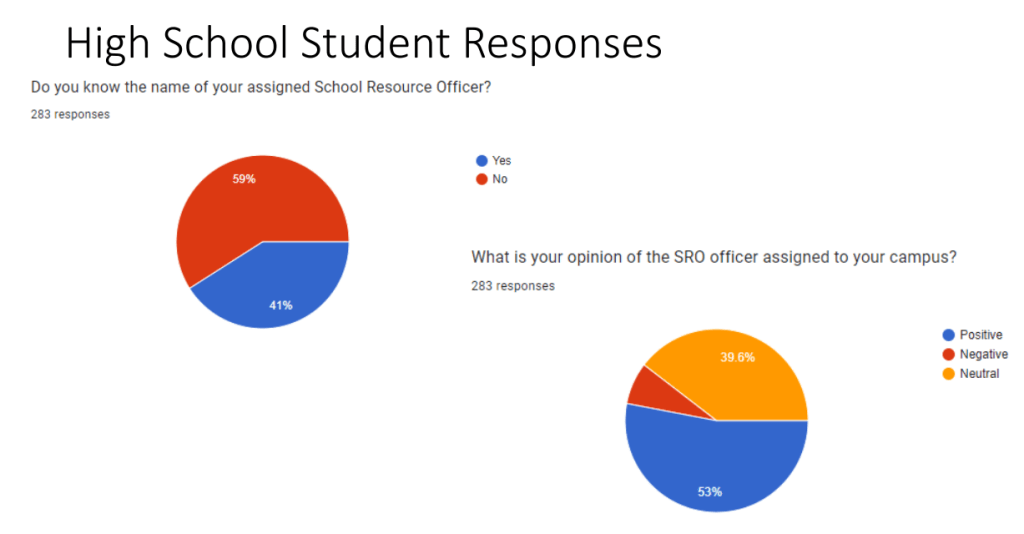
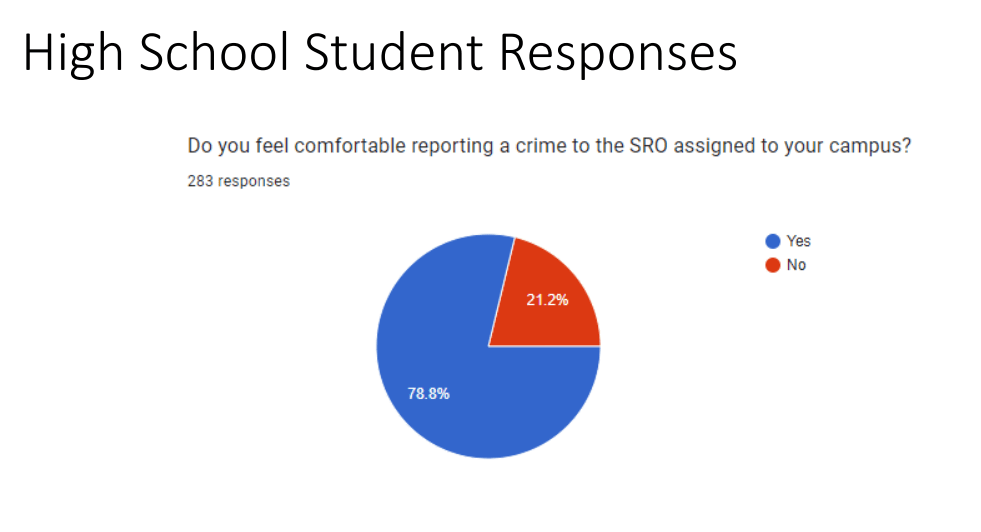
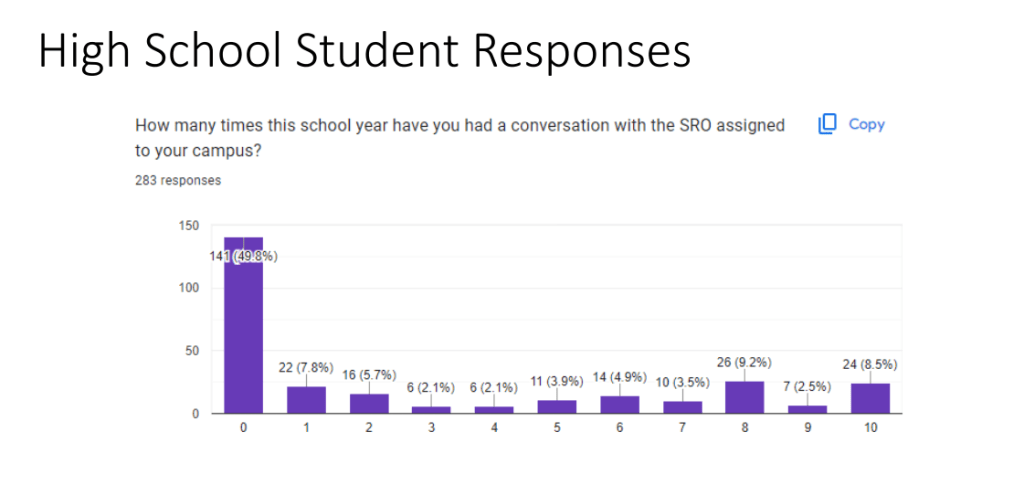
One more note:  In years past, Max Baker and Alyssa Garza kept asking for the SRO survey data, and it never materialized. 

This year, it was here! Good governance in action.

How do middle schoolers at Goodnight and Miller feel about cops in their schools?

How do SMHS students feel about cops in their schools?

How do middle and high school teachers feel about cops in their schools?

So there you have it!

Hour 3:00 – 3:50, 8/16/22

Item 12: School Resource Officers

School Resource Officers are not a great concept. On the other hand, Uvalde happened three months ago, and it’s gutting to consider leaving kids unprotected. It’s time for city council to renew their contract with SMCISD for the cops in schools.

Last year, Council asked the SRO program to conduct a survey on the efficacy of the program. Does anyone feel safer? How well is it working to have cops in schools? They specifically wanted the survey to include caregivers and students, along with teachers and admin.  

It just …didn’t happen.  It was about to happen, back in May, and then it got sidelined due to Uvalde.  But that means there was a solid six months of thumb-twiddling before May where nothing happened. Alyssa Garza and Max Baker are both furious. “That’s a really big ball to drop,” says Alyssa coldly.

Angry Alyssa is my favorite Alyssa. In general, Alyssa is preternaturally calm and patient, diplomatically providing context and backstory that her colleagues lack. That makes her icy anger during this item all the more compelling. Angry Alyssa is deployed rarely, judiciously, and with heat-seeking laser precision. It’s a special occasion when it happens.

Here are some other choice moments:

  1. Jane: Wouldn’t we want the school board to address this? Did they?
    Alyssa: I don’t know. But this council has a habit of playing hot potato with responsibilities, and so I do not care what the school board did.

2. Mark Gleason being mark-gleasony:

Mark: Would this leave anyone open to lawsuits if something terrible happens, if we haven’t signed this yet?
The city lawyer:  No. Neither party is waiving immunity. School districts have more protection against negligence than districts. The city is responsible – whether or not there’s an agreement – to train, supervise, and control these officers.
Mark: I still think it could. I really truly do. It leaves us weaker if litigation were to arise. This sets a bad precedent! A very dangerous precedent! Someone could read this and say “they have no school resource officers!”
Alyssa: But they would be there.
Mark: It sets a bad narrative!

(Please just remember how worried Mark is about lawsuits, because we’re about to talk about the lobbying ordinance.)

3. And Alyssa, at her most eviscerating:

Jane Hughson: Do you have any amendments? Do you have any changes?
Alyssa: My hesitancy is because we didn’t engage parents. We did not consult them.
Jane: So there’s not anything in this document that you would change?
Alyssa: I would change the whole thing. So don’t be asking me that, Mayor. 
Jane: I want this closed.  There’s a survey in it.
Alyssa: I don’t have any changes. And I didn’t want “a survey”. I wanted the PD or the ISD to get creative and figure out some way to get perspectives given everything that went on, and it’s disappointing that they didn’t.
Jane: If that was a request, we should have put that in the contract.
Alyssa: It’s not a request.  It’s common sense. That’s bad leadership. We didn’t have to hold their hand through it. Districts all over the state are doing it, and the nation. We don’t have to hold leadership’s hand for everything. Read the room! 

(These snippets are pared down, because it’s so blisteringly dull to read actual transcribed dialogue. But I think I preserved the gist of it.)

At this point, Max has an amendment, but Shane Scott moves to call the question, and gets council to agree, 5-1, to end debate.  (Jude Prather is abstaining.)  So we didn’t hear Max’s amendment.

Should we renew the SRO contract?

The vote on renewing the SRO contract:
Yes: Jane Hughson, Shane Scott, Mark Gleason, Saul Gonzalez
No: Max & Alyssa

Alyssa Garza is primarily angry at the failure to consult parents and caregivers in designing the current contract for School Resource Officers. Max Baker is angry at twelve different things, probably all valid, but spread too thin.

Here’s my take: I’m most concerned with finding out how SROs are involved when students break rules. At one point, Alyssa asks for a breakdown of police interactions with students, by race and special needs. Chief Standridge says that we have that information in our records, but it’s not pulled out in a standalone spreadsheet.

I want to know:
– what are the races and special needs of students in incidents where the SROs are involved
– what are the severity of the offenses
– what are the severity of the consequences

Then I want that data compared to incidents where the SROs are not involved. Here, I want to ignore minor offenses and just focus on the offenses that are matched up with the ones that do involve SROs.

Matching up by severity of offense, I want to know:
– what are the races and special needs of the students in these no-SRO incidents
– what are the severity of the consequences.

(I am also worried about school shootings. All my solutions are magical, and involve hearty funding of mental health initiatives and eradication of automatic weapons.)

….

Item 21: Approving the ballot for November.  

We are going to take a moment to relish Shane Scott being a colossal twat:

Shane, what on god’s green earth are you holding?!

And I quote him at 3:49, saying:

“I uh, kinda scored this, this is 3 oz of marijuana. I couldn’t put 4 in here. And this is going to be considered a low-level offense? My question is, what is considered high-level – like a pillow case? What’s the next step up, just out of curiosity?”

Here are the reasons this is idiotic:

  1. This exact issue was discussed last time. Shane is a day late and a dollar short.
  1. Council is not here to discuss decriminalizing marijuana today. This is a routine ballot approval for November. There’s no issue at hand. 
  1. Consider his actual question:
    Q: If four oz is considered low-level, then what is considered high-level?
    A: Anything above four oz, you dingbat. 

4. So why is he actually hauling in 3 oz of pot into a city council meeting? Two opposite reasons:

  • To show off that he’s got access to the dank stuff, I guess 
  • To show off that he’s so against this decriminalization measure

I would bet you four ounces of marijuana that Shane likes his weed, and that he still listens to Cypress Hill when he lights up.  And I think he should be legally allowed to do so.

But as a city council stunt?  Equal parts weird and inconsequential. Whatever, dillweed. (He approved the ballot, along with everyone else.)

September 7th City Council Meeting (Part 2)

The other two most-important items are Items 14 and 34.

Item 14: Interlocal Agreement with SMCISD on School Resource Officers

Commissioner Baker has a list of concerns about SROs.

  • They are reassigned to different schools for failure to do their job, instead of being removed as SROs all together
  • While training is required to be an SRO, officers get placed on campuses that are not trained as SROs
  • There is language about how SROs will “promote the concept of punishment for criminal acts”. How is this useful in our schools? Some people extend this concept to undocumented community members. This is destructive.
  • “Increase students’ knowledge and respect of the law” – what about when officers aren’t due that respect?
  • May we identify the funding sources of this study?
  • Why are we putting protection of property above protection of students?
  • Why aren’t we surveying students to see how the officers are doing and if they feel safer?
  • We put a pro-SRO video on YouTube featuring an officer whose actions have raised concerns.

Commissioner Derrick weighs in with points about SROs needing mental health training. She’s had particularly negative eperienc

Broadly, I agree with all of Baker’s points. However: Chief Dandridge is consistently great when he talks to City Council. I don’t know what he’s like on the job, and I know that there are community members who are frustrated with our police. All I am saying is that Dandridge’s performance at council meetings is very good. So far, this is what I’ve seen:

  • He generally does not respond adversarily to aggressive questions from Baker.
  • He often agrees partially or completely.
  • He backs up his statements with information and data,
  • He admits when he doesn’t know something, and offers to find the information.
  • He does not offer pat solutions and does not reduce the complexity of issues.

Again, maybe he’s a jerk on the force! I don’t know! But he’s good at council meetings.

Chief Dandridge responds to all of these points, one by one. On the questions about statistics and data, he pledges to write a memorandum compiling his data and that he will send it out to council. He lists the classes that the SROs are trained in. It includes restorative justice, mental health, developmental psychology, suicide prevention, and many more. He doesn’t try to dispute Baker’s points per se, but provides context for how these things play out in San Marcos. And he’s supportive of ideas like surveying students.

In the end, they vote to postpone and have work session. So nothing is resolved here, but I’m glad to see these issues discussed.

Item 34: Greater San Marcos Partnership, GSMP

GSMP is a pro-business organization that works across the entire county to bring business in and support existing businesses. San Marcos kicks in $400k/year. Several issues are raised:

Does GSMP make life better for San Marcos residents? Commissioner Baker wants GSMP to conduct a survey to quantify the impact of GSMP on San Marcos residents.

Mayor Hughson seems rather obtuse on this one, repeating several times that San Marcos already conducts a detailed quality of life survey and there is no need for GSMP to duplicate this. The difference is that the city survey is attempting to ascertain the benefits brought by the city, and the GSMP survey would attempt to measure benefits brought by GSMP. One does not substitute for the other.

Amendment for a mandatory survey passes, 4-3.
In favor: Derrick, Gonzalez, Garza, and Baker
Opposed: Hughson, Scott, Gleason

Next issue up is the Environmental Social Grievance reports, or ESG. These are third party reports compiled on the externalities that a business imposes on the community. City Council has asked for information from GSMP on wages, environmental impact, and other externalities. GSMP says that for $10K, they’ll buy an ESG from a third party company.

Baker would like to read one before agreeing that this suffices. But there isn’t one to read, because they cost money and they’re proprietary. It’s a very frustrating business-y solution. “We’ve contracted out with a niche business, and obviously they aren’t motivated by the public good. What’s the problem?” It’s not exactly corrupt, but it’s annoying and full of middlemen.

Baker moves to postpone until they can see a sample ESG report and see if it is satisfactory, but the motion fails.

In favor: Derrick, Garza, Baker
Opposed: Hughson, Scott, Gleason, Gonzalez

Councilmember Derrick makes an amendment to add mental health providers as a targeted industry. This passes 6-1, with Scott voting no, like a dillweed.

A representative speaks up about how intractable the problem of attracting mental health providers is. He promises that they’ll target, but not that they’ll be successful.

This last part is the BEST. Now, Councilmember Baker has been furious since he was at the GSMP Summit last spring, and nobody was wearing masks. Baker makes an amendment to the agreement that the GSMP will have to follow CDC guidelines on safety.

This passes 5-2:
For: Mayor Hughson, Derrick, Garza, Gonzalez, and Baker
Opposed: Just Gleason and Scott.

The whole discussion takes FOREVER, but the poetic justice of Max getting to force GSMP to wear masks is so sweet and worth every last bit.

(Finally, the actual agreement with GSMP passes unanimously.)