SMPD is a rather large chunk of the general fund. The General Fund this year is $126 million:
and SMPD is the biggest chunk of that, at 22%.
…
Obviously there’s huge disagreement within the community on this point. Maybe you think all cops are trigger-happy jerks with daddy issues, or maybe you think cops are upright citizens with a zest for being helpful. Most likely, you’re somewhere in between.
At any rate, as a community, we have to come together and make decisions.
Here’s a question: does SMPD need more staff?
(First off, yes: all of our city departments need more staffing.) But anyway, in order to answer this in an unbiased manner, we hired some consultants.
Here’s what they say:
and
You can read the whole report here (scroll down past the slides). It’s very detailed.
Here’s just a highlight of the slides:
Afternoons and late night is when they get the most calls.
The university has its own separate police force with its own rules. But they sort of overlap and cooperate around the edges:
So how long does it take for police to show up?
They do not show up to minor car crashes anymore, because of those budget cuts we’ve been talking about.
The consultants made a big deal out of “proactivity”.
It’s basically the things that get done in between crises. If you’re always swinging wildly from crisis to crisis, you can never harass brown people for broken tail lights assist the grandmothers when they have a flat tire.
Next up is Dispatch:
That seems very sympathetic.
and admin:
Ok.
And investigations:
Sure.
…
Loose, disorganized thoughts:
It’s good to have this information
This whole report is inherently pro-cop, because it is pro-status quo. This is not a conversation about how we can re-imagine safety in San Marcos. However, a majority of San Marcos does support SMPD.
All departments are being squeezed right now. If we conducted staffing studies on all departments, we’d get big needs across the board.
Flock cameras are Licence Plate Readers, or LPR. They sit at intersections like so:
We have 14 of them in San Marcos, and they’re located here:
(We also have 8 downtown cameras that are not Flock cameras. The city owns these cameras.)
What makes everyone so mad about Flock cameras?
Every single time you drive by a Flock camera, your license plate gets tagged and recorded. Then Flock takes all this data, and pools it all together across the nation, into one big, sloppy data fest.
When your police department agrees to share all their data , they are given access to all the data about everyone who drives anywhere in all of the US.
Privacy rights are a tricky thing to talk about, because of a few things:
1. Our private lives started getting tracked extensively about 20 years ago. Now it’s like being mid-avalanche – we’ve all gotten used to things that are extremely abnormal.
This is the frog in boiling water scenario – as a society, how do we claw our private data back? (Europe has passed laws.)
2. The consequences are fuzzy and abstract for a long time…. until suddenly they’re really, really bad.
Your data is out there. Corporations sell it. It spreads like smoke. Nothing happens until it gets into the wrong person’s hands. Right now, because Trump has weaponized ICE and the FBI, people who want to abuse Flock data know they probably won’t be punished for it.
3. Freedom and safety are always in tension with each other. If you want to end all crime, you could put every single young man between ages 14 and 35 in jail. Your crime rate will drop to <1%.
But one of our core American ideals is freedom. Freedom is so important that we’re willing to accept some loss of safety. (“Innocent until proven guilty” literally means that we think it is wiser to let some guilty people go free than to risk locking up someone innocent.)
Where do you draw the line between freedom and safety? That is the heart of this discussion.
How did we get here?
April, 2022: Original Council agreement with Flock.
It was actually never discussed at that council meeting. It was put on the Consent Agenda with 15 other items. That means all sixteen items get one single vote, unless a council member pulls an item for discussion.
December 29, 2023: The first contract ends, and city staff signs a second contract with Flock Cameras.
This contract never went to Council for approval. Alyssa is pretty salty about this!
But honestly: in 2023, council was very very pro-cop. Jude Prather and Mark Gleason were still on Council, plus Matthew Mendoza.
All taken together, Council was extremely deferential to expanding SMPD in 2023. Hypothetically, if they’d voted on Flock Cameras, it would have been 6-1. I promise you, that’s what would have happened. (Alyssa would have been the only No vote.)
Well, Trump, obviously. Biden certainly deported a huge number of undocumented people! But he did not weaponize ICE with the kind of cruelty that we see from Trump.
This is what I meant above, about consequences. During the Biden administration, the loss of privacy didn’t feel as real to many people. Now we hear how Flock shares their data with ICE. We hear how Flock data tracks women who are leaving the state. The abuses are systemic.
Which brings us to today
The 2023 contract is up at the end of this year. Renewal was due by December 1st.
But city staff needs Council direction before they can renew, for two reasons:
All decisions over $100K go to council for approval
Clearly this has gotten contentious in a way that it wasn’t in 2023.
For unclear reasons, it did not get on the agenda in November. That means that we missed our deadline to renew.
Tonight’s topic: What is Council direction to staff? Do we want to renew after all, or modify, or just shut down Flock in San Marcos all together?
What does the public have to say?
Two speakers were pro-Flock cameras. Their main points:
What about other technology that helps capture criminals? Do you want to ban that, too?
Ten speakers were anti-Flock. Their main points:
Flock cameras are reactive, not proactive. They respond to crimes that have already occurred, but they do not prevent future crimes. (More on this below)
Their networks get hacked all the time. Their data is not secure. (True, true.)
Peter Thiel is one of the creepiest billionaires around, and has funded ⅓ of the flock network. (Yes)
There is no accountability for Flock.
ICE has access to Flock data.
Anecdotes of stalking incidents and tracking women who are leaving states to get abortions (for example)
But Flock cameras are aimed at intersections. They just record license plates. They don’t prevent the victim from being shot on the square – they just help find the shooter afterwards.
However, it does appear that Flock Cameras help solve crimes. Or as Chief Standridge puts it, we can solve the crime much faster, at least. It saves detective time.
What does Council have to say?
First off, Lorenzo recuses himself due to employment conflict of interest.
Next, Alyssa and the city manager go back and forth on the timeline for a while. (About the 2023 contract, discussed above.)
Amanda goes next. Her main points:
We had a community town hall on public safety. There were diverse opinions!
Opposing flock is a pretty mainstream opinion
Surveillance doesn’t prevent crime.
This is about Flock, not SMPD. Focus on Flock.
Lots of people would be okay with a strictly internal SMPD camera system.
Flock opens us up to expensive lawsuits. Lawsuits are way more expensive than the cost-savings from the cameras.
Saul: Are the city-owned downtown cameras LPRs? Are they License Plate Readers? Answer: No, they aren’t. You have to go and watch them to get information out.
Saul: If the National Guard or martial law comes to San Marcos, can they access the data? Answer: Legally, it would require a subpoena. Illegally, yes, systems can always be hacked or accessed. No guarantees against that.
Jane: Data is stored for 30 days, and we don’t share data with the rest of the Flock network? Answer: Right, we stopped sharing after June. Now other agencies have to fill out a specific request and send it to us.
Jane: How often do we get requests from out-of-town PD? Answer: We’ve gotten 20 since July. We denied two of them.
Alyssa: Hays County tried really hard to create some safeguards, and Flock is not interested. The Flock representative laughed when Hays requested some mild modifications to their system. They won’t do anything and won’t disclose anything.
Jane: I love Law & Order, but this one company makes me nervous.
Jane’s main points:
I’m okay with cameras, but not Flock.
Can we get some non-Flock cameras?
Let’s renew with Flock while we source non-Flock cameras, so that we don’t have a gap in surveillance. Then we can switch in 2026.
Matthew: Samesies! No longterm Flock, but I’m okay with short-term Flock. No gap in surveillance, please and thank you!
Amanda: If we’re so focused on avoiding gaps, what about our major gaps in crime prevention? How about the gap on mental health care? How about the gap in homelessness prevention? Those would actually prevent crimes from occurring. Reacting does not make us safe.
Question: How much does Flock cost? Answer: About $43K for a year.
They get into the nuts-and-bolts of transitioning to a different company. How long does it take to solicit proposals? Could we piggyback on an existing contract? Could we get a pro-rated or month-to-month contract with Flock in the meantime? (Answers: 12 months, maybe, and maybe.)
Extra details:
Back in the spring, there were five cameras that may have gone live without Council approval. They were definitely mounted up on poles. Council is very interested to know whether or not they were turned on and recording data? Or just mounted up there? We never got a firm answer on this.
Question: Could we create our own, internal system? Answer: Maybe! Seems plausible.
Jane: The story about Evanston, Illinois is creepy. If we’re signing a new contract, put in a clause to avoid that.
What she’s referring to is this: Evanston took down their Flock cameras due to privacy violations. Then Flock put them back up again. It took a court cease-and-desist order to get Flock to stop putting the cameras back up, on their own.
Question: How do you measure the effectiveness of Flock? Answer: It’s mostly anecdotal, because Flock won’t share the information that you’d need to know this.
Saul specifically says that he supports SMPD and his own son is an officer, but he’s a no because of the risk of lawsuits.
THE VOTE:
Let’s sign a whole new contract!: nobody. We want a short term contract with Flock, while we hunt for new options: Jane, Shane, Matthew Absolutely no contract with Flock at all: Amanda, Alyssa, Saul
So it’s a 3-3 tie.
What does that mean??
It takes a little bit of time to untangle this. Basically, it takes 4 votes for Council to take action. Neither side got 4 votes. So nothing happens.
But what’s the outcome then?
We have to go back to the timeline. December 1st was the deadline to renew, and we couldn’t renew without Council approval. So that deadline came and went. We did not renew.
And now… nothing happens. Which means we’re done with Flock!
….
Look, I loathe authoritarian microsurveillance and I think the threat from tech billionaires and ICE is far greater than the danger of unsolved crimes. So I’m good with this!
…
Item 15: Speed limits
Here’s the new FM 110, going east of San Marcos:
On that red stretch, should we increase the speed limit from 60 mph to 65 mph?
This is pretty nutty:
Here’s what I think that means: TxDOT came to us and said, “We think your speed limit is too low. If too many people are speeding, you have to raise the speed limit.”
So we had to do a study, and the study did show that too many people were speeding! So now we have to raise the speed limit, so that they’re not speeding anymore.
How ass-backwards is that?
(Also: when national speed limits went from 55 mph to 65 mph, fatalities rose by 20%. It’s the whole freedom vs safety trade-off, again!)
Council votes:
Stay at 60 mph: no one.
Go up to 65 mph: everyone.
I mean, I wouldn’t want to take on TxDOT either. 😦
River Bridge Ranch is always hopelessly confusing to me, because it is right next to Riverbend Ranch, and they both have had a hundred different names over the years. (Riley’s Point, The Mayan Tract, Baugh Ranch, etc etc)
This is mostly for my benefit:
For years I didn’t even realize these were separate properties.
This came up before here. Now we’re workshopping it.
The basic idea is that tenants should be able to meet up and talk about their landlord, or their living conditions, without fear of getting evicted.
This is the type of behavior that is protected:
Great!
And here’s the type of thing a Landlord is not allowed to do:
Sounds reasonable.
On the other hand, landlords also have some rights:
Seems reasonable.
Finally, you still have to abide by your lease.
….
My main question is about Rent-By-the Bedroom. We had a fantastic presentation on these, last year.
RBB complexes skirt rules by avoiding certain legal terms. Tenants don’t sign a “lease”, they sign an “installment contract”. So a lot of laws about tenants and landlords don’t apply to them.
Since that’s their game – swap out magic words to avoid legal status – we need to make very sure that our language is broad enough to include them.
I’m looking at the definitions section from the proposal:
“Dwelling” and “landlord” don’t seem broad enough to include “Installment Contracts”.
(Also: the definition of “Lease” uses the word “Landlord”, and the definition of “Landlord” uses the word “Lease” so things are getting circular here.)
Other than that, this is a great step forward!
…..
Workshop #2: SMPD Vehicle rental policy:
This has also been in the works – literally for years. Here’s where they’re landing:
Great!
….
Workshop #3: Update to the Airport Master Plan:
We have an Airport Master Plan that was approved in 2021.
(Honestly, I’m kind of guessing what they said, based on the slides. I was distracted. Sorry about that!)
This runway is going to get a glow up:
And it sounds like there will some day be a passenger terminal out front:
This will come around for approval during a regular council meeting.
I think what’s going on is that the school board wants to sell off the rest of the property:
This block sits within the Mexican American and Indigenous Heritage and Cultural District. (This district was created in 2021, and then never mentioned again. Literally, I searched.)
I don’t think there’s a map of the district anywhere. This is the closest thing I found:
Professor Ana Juarez started up a petition a few weeks ago to get the city to buy the land, so that it doesn’t become developer-bait. It’s got a lot of historical significance:
Over 900 people signed the petition so far! And a bunch of people signed up for citizen comment.
This brings us to Tuesday!
Purchasing this property got put on the agenda for Tuesday’s meeting. But the city put it in Top Secret Executive Session, so it wasn’t discussed publicly. It sounds like this choice riled up a lot of people? and city staff got an earful of complaints about this?
So Ms. Reyes issued this disclaimer: “Hey, we love this property too! But we have to put real estate discussions in Executive session. It’s not some weird scheming thing. Also if we want to move on this, we have to move fast, because it’s time-sensitive.” (I’m paraphrasing.)
So the city is trying to get on board! This is great news. But the school district and the county also have to buy in. If you’re so inclined, you can:
The Lions Club: ten people from a bunch of nonprofits spoke in favor of renewing their lease.
Tenant’s Right to Organize: seven people spoke in favor.
Buying the land next to El Centro: three people in favor
We’ll discuss the Lions Club and the Tenants’ rights items at length.
A few smaller topics:
three people speak against the AI data center proposal. This is supposed to be decided at the August 19th meeting
One candidate for council introduces himself: Brandon Oles. (Another candidate – Chase Norris – also spoke, but not about the election. He spoke on tenants rights, Lions Club, and El Centro.) They’re not running for the same place, though, so they’re not opponents.
…
Item 5: The Texas State Boutique Hotel
We saw this back in July. Almost everything is the same, but Amanda mentions a few important wins:
Wages will rise automatically with inflation
If you work 25 hours per week, you’re eligible for medical/dental/vision benefits.
Those are both really great for workers.
The vote:
My two cents: there’s not much downside for the city, but it’s hard to imagine this hotel turning a profit.
Here’s how it works: The city leases the building to the Lions Club, and they’re the only group that can run shuttles and rent tubes for this stretch of the river.
The Lions Club then donates all their profits to organizations around town, and also fundraises for additional money for donations. (Lions Clubs have chapters all over the world, where they fundraise and give money to nonprofits. Ours just happens to run a tubing operation.)
…
Tuesday’s question: Should we extend the Lions Club lease at the tube rental for another five years?
Alyssa has a number of questions. Basically, she appreciates the Lions Club’s good work, but her constituents want to better understand the charitable funding decisions. How does the grant selection process work?
Answer: The Lions Club accepts grants all year long. There’s no fixed due date.
Here’s how much our local chapter has given out, over the past five years:
Here’s a list of everyone they’ve funded over the past few years:
Question: What kind of outreach do you do? How do nonprofits find out about your grants? Answer: We reach out to any organization that we’ve worked with in the past, but we don’t have contact information beyond that.
My read on the conversation: I’m guessing that Alyssa hears complaints that grants keep going to the same agencies over and over again. And also: some of those organizations are politically touchy. Why these organizations, and not others?
Answer: these aren’t city grants. This is a city lease of a building to a private organization. City grants require transparency and oversight, but a private organization can give out grants however they want.
My two cents: Let’s not make the perfect the enemy of the good. The Lions Club donates to lots of great nonprofits around town, they partner with river clean-up, and they employ lots of young people. They work hard to make San Marcos better, even if they do things slightly differently than I might.
The vote to renew the Lions Club lease:
great!
…
Item 18: $25,000 from the Department of Justice to SMPD
Ok, this is fascinating.
Last year, SMPD teamed up with Hays County, and applied for a grant from the Department of Justice. Together we were awarded $37,516. The plan is to split off $25,500.00 for San Marcos, and then Hays gets the other $12,000.
So that’s why it’s on the agenda tonight – are we okay sorting out this split with Hays County?
Everyone seems okay with this!
…
Say, what are we spending this money on, anyway?
Ok, fine. Technology, and yet another camera. (Not a flock camera, though.)
What’s a JAG grant, anyway? Is it specifically about technology? It hadn’t occurred to me to wonder about that, but Amanda went and looked them up:
Indigent defense! Crime prevention and education! Drug treatment, mental health programs, behavioral programs, crisis intervention teams! Out of all those possibilities, we landed on… some new software and a pole camera?
Amanda would like to know if we could change the scope of our funding towards something a little more aligned with council priorities? and Alyssa asks how this happened?
No one has a good answer! So let me help: this grant was written last year, and this would have been totally fine with last year’s council. They liked technology and cameras! Alyssa was the only one on council last year who would have rejected this. Everyone else would have given this a big thumb’s up.
This is a new year, with two new councilmembers, and now we have a coalition of progressive voices up there! It is making a huge difference.
Jane is fine in principle with changing the scope of the grant, but she’s worried that if we have to go back to the federal government, they’ll cancel the grant altogether and we won’t get any money. (That’s a valid concern.)
It goes in circles for a long time. But eventually, they land here: staff is going to see if we can change the scope of the grant. This will come back in September.
…
Side note: What about the other half of the grant? How is Hays County spending their $12K? Are they going to fund mental health initiatives and indigent defense? Will they crusade to a more just society?
Answer: They’re buying vests!
okay then. I hope they look dapper.
…
Item 22: 100 acres south of McCarty
We’ve seen this property here before, just in July:
Nothing important happened on Tuesday. It’s going to be discussed on September 2nd. I’m really only bringing this up because I saw this news article and this other news article pop up.
I did thumb through the draft proposal, though. Supposedly it will have:
Two big apartment complexes (800 and 400 apartments)
A much smaller number of townhomes (44 townhomes)
84 houses for sale
120 houses for rent
A hotel
“Live Work Play” mystery item
Office/retail/grocery space
Everyone keeps mentioning that there will be an indoor/outdoor recreation portion, so I assume the mystery item will be some sort of Trampoline Roller Skating Splash Pad. Let’s all spread that rumor, anyway.
There is no vote tonight. It is just a discussion item.
The vote is scheduled for the July 1st meeting
P&Z denied the request. So Council needs a 6-1 supermajority to overturn the P&Z vote.
There are 19 more speakers during the public hearing, along with the 35 from from the top of the meeting. (Some people speak twice, though.)
Here’s the main points that people make against the data center:
We’re in a drought, and this will destroy the San Marcos river
We’re in a drought, and this will destroy the San Marcos river
We’re in a drought, and this will destroy the San Marcos river
We’re in a drought, and this will destroy the San Marcos river
We’re in a drought, and this will destroy the San Marcos river
This really is the most important point. Climate change is pushing us towards permanent water shortages, and data centers use a massive amount of water for cooling.
And also:
This will drive up utility rates
There are reports from Granbury that these data centers are unhealthy to live near
Here are the arguments made in favor:
We’re going to get a lot of tax revenue
This does not cost the city much in terms of roads, utilities, and fire/police/emergency services.
These guys are offering to be more environmentally sustainable than the other six data centers. Take the regulated data center over the unregulated one.
Specifically, they’re going to use closed-loop cooling instead of open-loop evaporative cooling. This uses much less water.
Here is the developer’s basic pitch: “Data centers are definitely, 100% coming to central Texas. I’m the friendliest and the most cooperative one. I’m willing to do things environmentally and sustainably.”
He’s offering to put a bunch of concessions into a restrictive covenant. This is a contract that stays intact even if he sells the power plant. The next owner will still have to comply with it.
Here’s what he’s offering:
Closed loop, non-evaporative water cooling system. (This is very important.)
Limiting water use to an amount equivalent to 235 homes
Stricter than San Marcos Code on stormwater detention and impervious cover.
Sound and light mitigation
Getting water from Crystal Clear, not from San Marcos.
Getting electricity from Pedernales, not from San Marcos.
Only need San Marcos for waste water.
Here’s the obvious rebuttal to the last few points:
Who cares if it’s San Marcos city water or Crystal Clear water? It’s all coming from the same water table underground.
One speaker puts it like this: “These are straws pulling on the same water table”. Exactly.
Will this cause the San Marcos River to dry up???
Here’s what the developer said: they’ll need about 400-500K gallons of water to initially fill about 6-7 buildings. But after that, they don’t need much water until the buildings need to be re-filled in maybe 10 years.
100k of water is about what an average family of three uses in Texas a year (~88k). Won’t make the river run dry!
If it was an open loop cooling system (evaporative cooling) and an average system, it would be about 12.5% of San Marcos use. It wouldn’t take many of those to overwhelm local supplies.
So this is a big picture question. Can our river handle this one data center, on a closed loop system? Yes. Can it handle seven data centers on open loop systems? No.
…
So does ANYONE have control over how many data centers come to central Texas?!
This is an uncomfortable question! There’s only flimsy safeguards.
Can San Marcos block them? Only if they’re in city limits, and the developer needs the land to be re-zoned.
1. The overall situation is pretty bad for water use. 2. The San Marcos river has some unique legal protections, because of the Edwards Acquifer Authority. They have legal authority to sue if companies go over their allotted amounts. But still, do we need to test this? 3. We’re relying really heavily on ERCOT to gatekeep this situation.
…
What does Council say?
Everyone’s a little annoyed that the actual restrictive covenant is not already prepared and ready to read. But it’s not.
This is the basic argument that emerges: ERCOT is not going to approve all seven applications. They’ll probably only approve 1-2 applications. So if this data center gets approved by ERCOT, it might prevent an unregulated one from getting approved. That would be a net good.
Jane: It’s better to have these guys, who we can regulate, than the others who we can’t.
Shane: The wastewater from the center goes to the city system. How much extra clean up do we have to do to the wastewater, from the extra chemicals? Answer: We have a filter standard. They have to clean the wastewater up to our standards before they release it to our system.
Lorenzo: Are there going to be gas turbines or some sort of power plant? Answer: No, that’s Cloudburst. We’re not going to have a power plant.
Lorenzo: What happens if they violate the restrictive covenant? Answer: Two things: – Before we issue city permits, we’ll check to make sure they’ve built it the way they’re supposed to. So they can’t get up and running if they don’t build what they say they’ll build. – After it’s built, if they violate the covenant, we can get a court injunction. The court will order them to comply.
The developer is trying to be the most accommodating person ever. Would YOU like to talk to him? He’s got a whole website, and a whole shtick about how he’d like to talk to you.
(Honestly, he’s refreshing after the SMART-Axis Terminal jerks.)
Amanda: I’m concerned that we don’t know what company we’re actually talking about. Answer: I’m not allowed to say who it is yet. I promise I’ll say before the July meeting. They have facilities in Austin, Carrollton, and San Antonio, if you get my drift.
[Gentle reader, I got his drift. This appears to be the only Carrollton data center.]
A lot of citizen comments mentioned how utility and water rates will skyrocket. Alyssa asks about this? Answer: Council sets water rates. They don’t skyrocket unless you want them to.
[Note: This answer is a little disingenuous. Council sets water and electric rates for everyone on San Marcos utilities. So those won’t skyrocket. But if you live down south by all these proposed data centers, you might not be on San Marcos utilities. Who knows what Crystal Clear water and Pedernales Electric will do.]
…
Conversation turns to the P&Z denial. Right now, it takes 6 Council votes to overturn P&Z.
Should Council send this back to P&Z, to take another look? If P&Z changes their mind and approves it, then Council would only need 4 votes to pass this data center.
However, sending it back to P&Z will delay everything by 4-5 months. It might hurt their chances with ERCOT. Council does not want to risk the possibility that ERCOT denies this application, in favor of some other yahoo developer who throws up something worse, out in the county.
Bottom line: I think Council will approve this one data center at the July meeting.
We’re in a kinda terrible situation, but this one data center is probably the least-bad option.
They read all the license plates that go by, and record the date and time. Then if the police are trying to find someone, they can run a search on all that data and see if there’s any record of it.
“LPR” means “License Plate Reader”, and we first got some back in 2017. But we didn’t join the Flock network until 2022, when we bought 14 cameras:
(Also I note that they used seized funds for the first batch. Blech.)
…
Back in February, SMPD wanted to purchase 19 more Flock cameras. Council delayed approval in order to revisit our privacy policy. In March, we revisited our privacy policy and made some good improvements.
So now it’s time to vote on whether or not to approve the grant for these cameras.
What are the arguments for and against?
In favor: There are lots of examples of how Flock Cameras are used to solve crimes. From the packet:
Arguments against : They are tracking your every move. Do you want to live in a police surveillance state? The data gets merged nationwide to have one big nationwide network. Private companies can have Flock cameras. Neighborhoods can have Flock cameras. The ACLU does not like Flock one bit.
But it’s not just an abstract fear about loss of privacy: ICE has access to Flock data. We’ve got a federal administration that plays out revenge fantasies on brown people, and is in the business of deporting people as recklessly and broadly as possible.
Amanda: It’s the times we’re living in. People disappear off the streets because of this technology. – The policies aren’t strong enough to protect against a subpoena. Austin didn’t know until they did an audit that ICE was accessing their data. (Austin is now ending their license plate reader program.) – Senate Bill 9 would require Texas sheriffs to work with ICE. Our data will definitely get shared. Our policies will not protect us. – They’re rolling out new technology, like NOVA. – Please just don’t do this to people.
Saul goes next: I see the pros, but there are not enough safeguards yet. I’m a no.
Council spends the next hour trying to nail down exactly how much control you have over who sees your data. If Dallas PD is looking for a specific red car, can SMPD decide whether or not to release the data on that specific car?
Eventually the answer comes out: no. You do not get to decide on any specific request for data. Once you set up a reciprocal agreement with Dallas, they get access to all your data. Either the faucet is on, or it’s off.
…
The Flock representative keeps repeating “The city of San Marcos owns the data. Flock does not own the data. They’re just the guardians of the data!” Alyssa asks: Can you show me where in the contract that exclusive access is guaranteed to San Marcos? Your policy says that you “retain a perpetual, royalty-free license to use aggregated data for your purposes.” Flock rep answer: We promise that we use it only for anonymized training data.
Lorenzo: Does Flock own the physical servers? Or do you rent servers? What Lorenzo means is: where are the actual, physical computers where the data is stored? Does Flock have their own computer storage?
Answer: We use Amazon Webservices. This means, no, Flock does not own large-scale computer storage. Flock sends the data to Amazon for storage on Amazon computers.
Lorenzo: So Amazon is a third party that could also be subpoenaed for the data? You might not even know if they had to hand it over. What if they violate their agreement and fail to delete it? Answer: It’s in our contract with Amazon that they’d delete the data after 30 days. If they didn’t, they’d have to charge us extra! [Note: that answer does not make any sense. You didn’t misread it.] Lorenzo: Amazon is in the business of data collection. Jane: You’re not in control of that data.
…
Alyssa: This system is dangerous by design. – these claims are absurd! Like “license plates aren’t personal information”. You can track a person with it, can’t you? It’s personal information. – We own the data, but we don’t. They keep it. – They say ICE can’t access our data, but they do. – Anyone that we share our data with can then turn around and share it with whoever they want. – There are many cases of cops using it to stalk people. – Peter Theil is a backer of this, for god’s sake.
Chief Standridge: Look, I can only speak on behalf of what happens locally. In San Marcos, Flock helps solve specific crimes. Locally, I don’t have evidence of any privacy breaches. I am only able to speak to San Marcos.
Amanda: I have never thought that you all are the bad actors. We share with 600 agencies. Our policies don’t matter when we’ve already shared with them. Flock would not be in business without this network.
Jane: I was a software manager at the university. Here’s how it goes: you get a new technology, and you hammer out all the rules with the company. Then they get bought. All the rules with the first company go out the window, and the new company puts all new rules down. If Flock gets bought, all these rules go out the window.
Chief Standridge: What about all the safeguards and policies we discussed in March? Amanda: All we did is require agencies to follow all applicable rules and laws. But there are no federal rules! This technology is not regulated. Your policy ends the moment you share data with them. We share data with Houston! Houston openly says they work with ICE. Therefore we work with ICE.
…
Shane: What about the first 14 cameras we already bought? We still have those, right? Jane: Yes. But we could put it on the agenda to get rid of them. Alyssa: I guess we should revisit this!
Jane shares a little of her thinking: – Originally I thought these cameras were great. And if Flock were only used like in the examples, then it would be fine. – I’ve learned stuff tonight that’s giving me a really hard time saying Flock is good for the US. – Then I thought, “But there’s cameras everywhere. There’s Ring, etc, toll roads, smart phones, etc.” – But that’s different. This goes to government agencies. I’m not worried about our department, but I can’t say that about other departments – Maybe just at major intersections? Nope, nope, that doesn’t work. It’s the other departments. – We just don’t have enough guard rails for this. The more I learn about how the system is being used, it’s pretty scary.
…
Something has happened since the last discussion, because Chief Standridge does not seem surprised that it’s unfolding like this.
He makes one last bid: “What if we only share data within Hays County?”
Alyssa: What keeps Hays County from turning around and sharing it? Amanda: What about the Texas Senate Bill that requires sheriffs to cooperate with ICE?
City Manager Stephanie Reyes weighs in: It’s clear that you all are worried about where we are as a nation. It’s not an issue about SMPD. It’s not about our individuals. It’s about the policy decisions that we can control in the national scene. Everyone’s like: Yes! Correct!
…
Finally, the vote: The motion is to deny. So a green check means no on the cameras, red dash means “yay Flock!”
Are you a NO on the cameras?
Amazing. Shane and Matthew are the only ones who still want them.
The council conversation was outstanding to listen to. It was just so sharp. Everyone made really great points.
It turns out they’re breaking up with us? Their contract is up on June 30th, and they don’t want to renew.
The reasons are:
Low ridership
Tariffs
Finding parts
Ouch.
Once they officially break things off, we’ll start looking for a different company who might enjoy our low ridership, tariffs, and lack of parts.
…
Item 24: More data centers!
So, recall there are seven data centers with applications in at ERCOT.
These are the three that I know about:
So now we’re on the pink one.
Yes, it’s gigantic. The red one from earlier is 200 acres, and this one is 785 acres. They’re saying it would also include housing. Unlike the one in red, the developer wants this one to be on San Marcos water.
It’s past midnight and everyone is exhausted. They decide to just form a council subcommittee to negotiate and discuss the issue further.
Council subcommittee: Jane, Amanda, Lorenzo.
I’m good with that.
…
Item 32: Proposed Charter Amendments for ballot
Here’s the legal language for everything that will show up in the November Ballot:
…
Q&A: Max Baker:
Matthew Mendoza again! Why do you think it’s appropriate to use swear words during the ceasefire conversation?! C, S, and A words?!
Would council consider revisiting EDSM policy and how we award benefits when GSMP knows before Council? Would you bring a discussion item that puts Council knowledge before biz privileges?
CIP stands for Capital Improvement Plan. These are all the big city projects – like, more than $100K – where you have to cover them with a bond and they span multiple years.
There’s basically a fuzzy 10 year plan, a better 5 year plan, a focused 3 year plan, and then an actual budget for the next year.
There are quick easy projects, long difficult projects, and some that are mid:
Loosely speaking, these are the categories for the projects:
Look, here’s some nice photos of projects that have gone great!
woo-hoo!
Here’s some of the bigger upcoming projects:
The hard part is wading through the hundreds of projects, and figuring out what you think about them. That’s what Council has to do.
So what does Council think about them? Not much! They’re eager to get to Workshop #2.
…
Workshop #2: SMPD Vehicles
How do police vehicles work when officers are off-duty? How much wear-and-tear gets put on them? What about when the officer picks up a second job?
Basically, we’ve been letting officers take their vehicles home since 1983:
…
What’s the benefit of letting police officers take their vehicles home?
I found the slides confusing, so I’m just going to summarize Chief Standridge’s arguments:
1. “If it ain’t broke, don’t fix it!” We’ve had a drop in crime since Covid, so don’t meddle with things that work.
2. 79 of SMPD employees are on-call sometimes, so it makes sense for them to have a vehicle at home. Otherwise they’d have to re-route to the station, check out a car, and go from there, which is a big delay.
Officers are supposed to keep their radios on, when they’re driving to or from work. He gives a lot of examples of cops that respond to calls nearby, when they happen to be commuting home.
3. Financial considerations:
a. If we tried to park all the vehicles in our lot, we’d run out of parking lot space at the station.
b. If we had cars in use 24 hours a day, we’d have to replace them every 3 years, instead of every 5 years, because they’d wear out more quickly. (This is kind of silly. The force is driving the same number of hours either way. Replace one car after 3 years, or replace two cars every 6 years – you aren’t changing anything.)
c. This slide:
I’ll definitely give the Chief this point. Having vehicles spread out over town is good when the station gets flooded in, which happens semi-frequently.
4. So much time would be wasted checking vehicles in and out. It would take an officer 30 minutes to do a check-out vehicle inspection, and then 30 minutes to do another check-in vehicle inspection at the end! That extra hour would add up to $25,000 in hourly pay per year.
(This one also seemed silly. Maybe check with the Parks Department or Maintenance Department, and see how they manage to make it work.)
5. Officers are a little kinder to the vehicle if they know they’re stuck with it for five years, instead of getting rid of it after each shift.
This one is easy to believe.
…
Chief Standridge never answers the main question: Is this cost-neutral? On the whole, if you compare a take-home fleet vs an on-site fleet, how does the total cost compare?
Here’s what I personally care about: Is this policy similar to the kind of frugality we expect from other departments? Are we keeping SMPD as lean as we keep Parks & Rec, or the library, or maintenance, or anyone else?
We never really got an answer to that, either.
….
Part 2, same workshop: SMPD Vehicles being used when cops have second jobs.
This is what Council cares about more. How much wear-and-tear is getting put on the vehicles when officers go on second jobs? Like SMCISD hires them to work a basketball game, or Amazon hires them to direct traffic? What about the wear and tear on the cars that occurs then?
This is pretty common:
The problem is the jobs that need the cop to keep his vehicle on and idling. For example, you get hired to direct traffic at Amazon. That ages a vehicle, and means that SMPD has to replace the car sooner.
So they’re going to charge officers a little rental fee:
They figured that a rental car company would charge them $163 for 24 hours, so that works out to $6.80 per hour.
Here’s what we’re going to do:
Council is fine with this. They’re going to draw up a formal policy and go from there.
My two cents: Two hours of discussion was way too much for this topic. I lost interest in the finer details of which officer stops for an iced tea on the way to HEB or whatever.
“TIRZ” stands for Tax Increment Reinvestment Zone. We have 5 or 6 of these in San Marcos. This item is about the Downtown TIRZ, which covers this area:
This TIRZ started in 2011.
Here’s how a TIRZ works: In 2011, they appraised the value of all that property. Say it was appraised to be $100 million back in 2011. While the TIRZ runs, the city will only get taxes on the $100 million. As the property gets more valuable, the downtown will pay more taxes, but the extra taxes get put back into projects to make the downtown better.
So for example, suppose in 2018, the downtown is now worth $150 million. The city gets the taxes on the first $100 million, and the downtown gets the taxes on the next $50 million.
Here’s a little visual aid explaining this in the council packet:
The downtown TIRZ is actually a joint TIRZ with the county also knocking back some money. Here’s the actual amounts, if you’re curious:
This next bit did not get a lot of discussion:
My best guess is that everyone still wants the TIRZ to wrap up by 2027, and so we’re giving them a final boost to get across the finish line.
Here are the amounts they need to finish up the projects:
Anyway, it does not get much discussion, and passes unanimously:
The city is giving roughly $1 million to the downtown for projects this coming year.
I’m okay with the premise, but I’m uneasy that it didn’t get more discussion, in light of the massive budget cuts we’re incurring elsewhere. If we extended the TIRZ to 2028, could we have spread out $500K somewhere else?
…
Item 22: CUP appeal
There’s this Holiday Inn, on the southbound frontage road, right before WonderWorld:
They have a little bar and grill inside:
The bar and grill serves alcohol. So they have to get a Conditional Use Permit (CUP) from the city.
Here’s how CUPs work: your first year open, you get a 1 year permit. After that, you get a 3 year permit, (There are a lot of extra details, but that’s the gist of it.)
These guys got their 1 year permit back in 2017, and then never came back.
Now: this is a really common, widespread problem in San Marcos, and P&Z and staff have been working to clean it up for awhile now. The city was sloppy about sending reminders, at times, and the businesses were sloppy about not coming in for their permits if no one was checking. So a ton of businesses fell behind.
Here’s the problem: there’s a fee attached to the CUP. (A couple hundred dollars?) The city doesn’t turn a profit, but it covers the cost of staff time and materials.
So the businesses that skip the CUPs for a decade – like these guys – are saving maybe $1000 over the businesses that follow the rules. It’s a little unfair.
P&Z handles this by making businesses pay off their delinquent CUPs. If you skipped 2 renewals, you’re going to get 2 6-month CUP permits. When you’re all caught up, you can go back to having 3-year CUPs.
That’s what happened to these guys. They skipped 2020 and 2023, so when they came in last August, they got their first make-up CUP, lasting 6 months. When they came back in March, they got their second make-up CUP, lasting 6 more months.
But this time they got pissed! So they appealed to Council. They want a full 3 year CUP, and they want a refund of $765.
Here’s the thing:
1. Is the bar right? Absoutely not! This is the standard that P&Z is applying everywhere. This is absolutely fair, and the bar is wrong. But….
2. Is this a good fight for City Council to pick? Hell no! Pick your battles. If someone is making a mountain out of this molehill, have the good sense to step out of their way.
Council steps out of their way and rewards the appeal.
I’m a little annoyed that Council fawns over them for being such good community members. There’s no need to kiss their ass when you’re the one doing them a favor. But Council fawns and preens over them. Whatever.
The vote: Should they get refunded the money that the rest of the business owners have to pay?
Haha. I probably would have voted “yes”, but my heart is with Matthew voting “no”.
…
Item 12: Staffing study for SMPD
Chief Standridge came in 2022. Back then, SMPD did a staffing study, and decided that we needed a lot more police officers:
Then there was a violent crime spike in 2022, and so we freaked out and claimed that we needed a LOT more police, as fast as possible:
I would argue that our crime spike was actually part of a nationwide trend:
(From here.) As covid drifted back in time, crime rates have settled back to baseline in San Marcos, as well.
Council has been spending all its extra money adding extra police and fire fighters. Back then, Alyssa was the only progressive voice on council. But now she’s got company. So do we really need to keep adding police officers?
We’ve decided to do another policing staff study. We are hiring these guys to tell us whether we need more police officers or not.
Is council willing to spend $116K on a new staffing study for the police, from that consulting company?
Amanda: the timeline looks rushed. How are you going to get community input by July 2025? Answer: It’s actually supposed to be five months, not two months.
Alyssa: Why these guys? Answer: They did our Marshal staffing study. We liked them. They didn’t tell us to hire more marshals, but they had good ideas how to move people around.
Saul: This is a lot of money. Can we see the bidding process? Answer: We didn’t have a bidding process, but next time we can do that. Sorry about that.
The vote:
…
Item 4: More SMPD!
Here’s what they want to do:
Should we spend $938K on police station improvements?
Short answer: Yes, because this decision was already made, and now we’re just following through. This is the building and the bullet trap for the shooting range. (We saw the bullet trap earlier here.)
(Did this item get a robust discussion earlier, when it was approved in June 2023? Absolutely not. But what’s done is done.)
Amanda: Will there be any more asks associated with this project? Answer: Possibly to resurface the parking lots. But we don’t expect anything unexpected to turn up when we break ground.
Saul: You do know this is an old graveyard, right? Answer: No, sir, I did not know that. Saul: I’m just kidding.
That was the best moment of the night right there, for sure. I laughed so hard at that.
The vote:
…
Item 10-11: EVEN MORE SMPD!
SMPD is applying for a two grants related to license plate readers. This is supposed to relate to vehicle theft and stealing catalytic converters. Total, these two grants are about $183K. SMPD needs Council’s blessing to apply for the grants.
(This is not the same thing as the license plate scanner saga that we’ve been following here, here, and here.)
Amanda: Didn’t the deadline pass in April? Answer: We got a special exception, because they know that city councils don’t always meet on schedule.
Amanda grills Chief Standridge over the date, and Lorenzo gets snippy over the time wasted. If you enjoy petty council member exchanges, go here and start watching at about 4:08:50.
The vote:
I am 90% sure that Alyssa verbally stated her vote was actually a “no”, but it was hard to hear.
…
Item 24, 25: Tinkering with boards and commissions, and filling vacancies.
There’s a vacancy on P&Z, left by the passing of Jim Garber. Council elects Josh Paselk to be the new commissioner.
…
One last note:
Everyone makes an effort to dress professionally for council meetings:
But is Amanda rocking a maroon three piece suit?!
Is this a councilmember, or is this Andre 3000?? I appreciate good drip, as the kids say.
The Teacher Re-Use Center, a non-profit that is housed in a city warehouse, and sounds kind of gigantic in scope
A potential new neighborhood: The Villages on Posey.
This had the most speakers. So, the San Pedro cemetery is right next to Trace Development. It was vandalized in 2003, possibly out of racism. Following that, some researchers at Texas State (like one of the speakers, Dr. Ana Juarez) started doing community-based research there, and the cemetery was designated historic cemetery a few years later.
Now some developers want to build a neighborhood next to it. But – plot twist! – they were good neighbors! They reached out to the cemetery board and made friends.
The developer has offered $5000 for the cemetery, to pay for restoration and damage from cars. The cemetery would be part of the plans moving forward. So these representatives from the cemetery board are here to speak in favor of the development.
More on this in Item 19!
…
Item 1: Charter Review Committee
Every four years, we form a Charter Review Committee. They’re supposed to comb through the City Charter with a fine-tooth comb, and offers up suggestions. Then Council decides which suggestions should go to the voters, and which suggestions should get deep-sixed.
The committee was formed in January. They’ve met weekly since then. Today we’re getting a soft launch of their suggestions. (The actual formal suggestions will come in May.)
Note: Jim Garber was the vice-chair of this committee. The chair, John Thomaides, took a moment to say a nice tribute to Garber, about his contributions and the difference he made here.
…
The Interesting Recommendations:
1. Mayor Term Length: Right now, the mayor’s term is two years long. They can serve four consecutive terms, and then they have to take a 2-year break before running again.
CRC Recommendation: – Mayor serves four year terms instead of two year terms. – After two consecutive terms, they have to sit out a cycle before running again.
Jane did not like this. She’s long been on record as saying that the mayor ought to have to get re-approval from the voters every two years.
2. Single Member Voting Districts.
CRC Recommendation: Neither yes nor no. Instead they recommend that council studies the issue and educates the public and take some time, instead of throwing it on the ballot.
This is a good approach. I’m also torn on this issue
3. Council members attending meetings over zoom. Right now council members can attend by zoom, whenever they want.
CRC Recommendation: Council members get a max of 3 times to zoom in, per year. (With some excused reasons, but I don’t know what those are.)
I don’t know. Are council members more effective in person? Absolutely. Is zooming in better than missing the meeting altogether? Also yes.
Look:
If you think council members are punks who sometimes zoom in for bad reasons, then yes, cap it at three.
If you think council members are legitimately constrained by second jobs, or kids, or illness, or responsibilities, then you should trust that they’re zooming in for good reasons.
We already have a lot of barriers to running for office. Parents, people with disabilities, people with difficult schedules: it’s almost impossible to be a council member. I don’t think we need more obstacles.
Plus, look: if we do have a punk council member who zooms in for funsies, we can vote them out. It’s a democracy. So I think I’m a no on this one.
4. City Council Meeting Minutes
CRC Recommendation: Meeting minutes from each council meeting must be approved in the following council meeting.
Ha. HA. HAAAA. Council has not approved any meeting minutes since May 2022. It’s been almost three years! (I’ve mentioned this before, and before that.)
It’s super annoying! Right now, if you want to find out what happened, you have to go listen to the actual meeting. It takes forever.
(I mean…maybe not having minutes posted has been a little good for this blog? I get to be the sole documentarian, in the absence of minutes.) But anyway, yes to this.
5. Referendum petitions
CRC Recommendation: – Increase the time allowed to file a referendum petition from 30 days to 90 days. – Increase the time for city to verify petitions from 45 to 60 days. – Require a form for financial disclosure for referendums and initiatives.
That last one is AMAZING. Yes, if we’re voting on something, I would love to know who is funding it.
(The first two are good, too.)
Less interesting, but still good
Public Notifications: Right now, the city must notify the public by placing a notification in a public newspaper. Recommendation: Let’s also put notifications on the city website and social media.
Council is required to meet at least 22 times per year. Recommendation: Reduce the minimum number of council meetings from 22 to 20 per year. This just builds in a little extra flexibility for November, December, and January.
Printed copies of city code or ordinance are available for purchase, at cost. (Or free online.)
Reduce residency requirement for P&Z from 5 years to 3 years.
Shuffle around the naming of sections to gather the ethics-things under an “Ethics” section.
Those all sound fine with me.
…
They only somewhat align with the Council suggestions for the committee:
But that’s good – it shows the committee was independent. And Thomaides promised that they really did unpack all those suggestions to death.
“Not so fast!” Council cried. “This has major privacy implications!”
Council decided to hold a review of the privacy policy first, and delay the purchase of the 30 new license plate scanners. Chief Standridge was peeved.
So in March, council reviewed the privacy policy. Chief Standridged tightened up a lot of the loose gaps. It’s not perfect, but it’s much better.
So now the camera purchase has come around again. May SMPD please purchase these 30 license plate scanners now? Pretty please?
“Not so fast!” cries Amanda. “We tabled this item until June. It’s only April.”
Everyone looks at the lawyer, who says, “Yes. I went and watched the video several times. You all voted to postpone until June.”
Lorenzo: “Who cares? We delayed for the privacy policy, and we got the new privacy policy. Why not just do it now?”
Amanda: “Well, the media picked it up, and so the public is under the impression that it will come back in June. If anyone wants to participate in the process, they’re operating under the assumption that they have two more months.”
Jane concedes that she also cares about this.
Question: Will the price go up in June? Answer: nope, same price.
The vote: Re-postpone the cameras until June, like we said we would?
Yes: Everyone
No: No one.
Let’s be frank: Is this really about the people who’ve penciled JUNE in their calendar to show up and protest these cameras? Or is this about slow-playing Chief Standridge?
Tomato/tomato! ¿Por qué no los dos?
…
Item 19: The Villages At Posey Road
This doesn’t exist yet, but it will go here:
(We also saw this property back in 2022.) They want to be a PID.
What’s a PID?
PID stands for Public Improvement District. The developers want to make this a PID. What that means is that the houses in the PID all pay a little extra tax money, and that money gets used on the roads and infrastructure for that specific neighborhood.
(This is WAY better than a TIRZ. Kissing Tree is a TIRZ, not a PID, which is why we are giving $1,288,406 to Kissing Tree this year. With a TIRZ, the developer basically says, “hey, what if the fanciest, wealthiest neighborhoods were subsidized, too? We could make them even fancier then.” I’m not kidding about how they work.) (TIRZ stands for Tax Increment Reinvestment Zone, if you care.)
We haven’t had any PIDs in a decade. Trace, Whisper, and La Cima were all approved for PIDS around 2014. After that, council decided not to make any new PIDS until two things happened:
Update the Comprehensive Plan
City decides there is a need for incentives for residential development.
The comprehensive plan (Vision SMTX) was finally approved last fall. Tonight they’re deciding if they want to reboot PIDs with these guys.
So what would this PID be?
Some sort of planned neighborhood community. The details haven’t been hammered out.
Price Tag to the City: Will it bring in taxes that pay for itself, over the lifespan of the infrastructure and future repair? How much will it cost to extend roads, utilities, on fire and police coverage, on water and wastewater?
Housing stock: How long will it take to build? How much housing will it provide? What is the forecasted housing deficit at that point? Is it targeting a price-point that serves what San Marcos needs?
Environment: Is it on the aquifer? Is it in a flood zone? Will it create run off into the river?Are we looking at sprawl? Is it uniformly single-family homes?
Social: Is it meaningfully mixed income? Is it near existing SMCISD schools and amenities?
The San Marxist Special: Is it a mixed-income blend of single family houses, four-plexes, and eight-plexes, all mixed together? With schools, shops, restaurants, and public community space sprinkled throughout? Is it walkable?
You know what I’d go for.
What’s this about a cemetery?
The San Pedro Cemetery is right next door:
This is an old cemetery that served the Hispanic community, especially when other cemeteries wouldn’t bury anyone who wasn’t white. Like I mentioned above, it was vandalized in 2003, and then kinda had a renaissance. It got designated as a historic cemetery and people care about it. (Saul has mentioned how most of his family is buried there.)
The developer wisely reached out to the cemetery board ahead of time.
Here’s how I imagine the conversation going:
Developer: “Hey there, San Pedro Cemetery Board! What would it take to get you on our side?” San Pedro Cemetery Board: “We’ve got a wish list of maintenance and restoration projects. Would you like to fund some of them?” Developer: “We sure would!”
But that’s good communication and collaboration! This is how you keep friction from developing in your working relationships. (Probably both sides were a little more polite about it.)
So the San Pedro Cemetery will be included in the PID.
Council decides to send the whole thing to a PID committee. More to come.
Workshop #1: Update on Downtown plan Workshop #2: Privacy policy on SMPD License Plate Scanners
….
Workshop #1: Listen, this was great. I just ran out of time to write it up properly, so it’s a little short.
We approved the Downtown plan in 2023.
So now we’re implementing it:
So far, we’ve done a bunch of great stuff!
Here’s what we’re in the middle of doing:
And here’s what we’re going to do next:
And here’s what we need, to do it:
Like I said, I’m shortchanging a really enjoyable presentation. Go listen!
…
Workshop #2: License Plate Readers
In February, SMPD asked Council to approve a bunch of license plate readers.
We had literally just talked about privacy with respect to technology, and these definitely require privacy protections. So we postponed the purchase until we had an updated privacy policy.
Here we are! Policy time.
…
What is FLOCK?
So in other words, there are seventeen intersections in San Marcos that are recording your license plate every time you drive by. (And soon there will be thirty locations.)
So basically, SMPD owns the data, but it’s located on the FLOCK system. If you have a crime in mind, you log in and run a query, and then it tells you which license plates were at that location, or it tells you all places a specific car went, or whatever.
Council had three big concerns:
We’ll take these one at a time.
Retention periods: how long do they keep the data?
We’re currently 30 days, and Chief Standridge makes the case that we need to stay at 30 days.
There’s no slide for this part, but he’s basically saying, “People don’t report crimes right away. Sometimes the crime isn’t even discovered for a week or two. If you don’t have the crime reported for two weeks, that eats up a lot of your time to query the data base for the license plate.”
He had his crime analyst go back into the system and pull the average length of time people waited to report various crimes, in 2024 in San Marcos. He says:
Criminal sexual contact: average 513 days delay
Forcible rape: average 640 days delay
Credit card ATM fraud (ie, steal your wallet or purse from your car and go to the nearest ATM): delay of 103 days
Shoplifting: average 21 days delay. (This is because stores submit the theft to corporate, and corporate decides whether or not it meets the threshhold to bring in the local SMPD.)
I mean, ok. This makes the case that the cameras aren’t actually helping you solve most of these crimes, but point taken on the delay in reporting.
…
Onto 2: Privacy Concerns:
They’re proposing a bunch of amendments to current policy.
Great.
The “TBP” bit stands for “Texas Best Practices”, which is an accreditation thing.
Amanda asks if we can include “economic status” to the list of protected statuses? In other words, no targeting an intersection because it’s known that homeless people are camping near there.
Sounds great to me! Everyone is on board with this.
Next:
What the hell – until now, you didn’t need reasonable suspicion or probable cause to run a query?!
Anway, now you do.
There’s a bunch of details here!
You get regular training.
You have to supply a case number when you run a query.
Later on, someone else in SMPD will be double-checking all the queries to make sure they make sense.
SMPD will not give the data to any private entity.
These are definitely huge improvements.
…
We’re sticking with 30 days, but we’re no longer going to grant exceptions:
3. Data sharing with other organizations:
There’s going to be an MOU, or Memorandum of Understanding. Any other law agency that wants San Marcos data has to sign this MOU.
The MOU isn’t written yet. But it’s going to require that officers in other jurisdictions follow all the same rules as us. Specifically, there must be a case number. You can’t just be looking people up.
And there will be a portal with general information available to the community.
Finally, misusing the system is a crime:
and you can get punished for it:
…
One weird thing about Flock Cameras is that anyone can buy them and join in. The outlet malls probably have them, your apartment complex or HOA could have them. Anyone who cares enough about who is coming and going can buy one.
Will we share our data with any old HOA or shopping mall?
Not anymore!! (But JFC, we sure used to play fast and loose with this data. The deleted part in red is wild.)
There’s some discussion of ICE in all this. We’ve opted out of immigration tracking. But there are some laws (SB4) which may or may not make this more complicated.
…
My opinion: These are really big amendments that make the system safer. I am still wary about license plate readers and Flock Safety, but this is at least much better.
There are two workshops: one very short and one very long.
Evoke Wellness.
Back in December, Council had a lot of questions for these guys. They offer mental health and addiction treatment for people referred over by the police. We’ve allocated 150K of Covid money for this. This is a follow up discussion with the director at Evoke.
Amanda: What’s it look like if you’re receiving services?
The director gives an extremely detailed answer!
Prescreen for eligibility. Detox? Residential? Intensive Outpatient?
Say we’re starting with detox. Then there’s an evaluation and intake process.
Then you’re seen by nursing staff to get orders from the medical director on the detox protocol, medication regimen
Detox lasts 5-7 days. Completely voluntary. You’re free to leave at any point.
Residential: 21-28 days. Could be detox and then residential.
In the residential part: first there’s a biopsych-social assessment: trauma history, drug use history, family relationships, everything. You need a full picture to treat the whole person.
Clinical team and medical team working together to monitor the patient 24/7.
During the day: like school, 6 hours a day. Learn about substance abuse and mental health conditions, tools, coping skills to hopefully achieve longterm sobriety.
Breakfast, meds, 9:30-5:30 programming, community involvement with 12-step panels holding meetings with clients.
You also get a therapist and case manager. The case manager will help with the discharge process.
Therapist meets weekly and as needed.
6 hours/day of group therapy.
Longer lengths of stay produce better outcomes. Typically 28-35 days.
Discharge plans: typically clients take the clinical recommendation for a sit down placement in a PHP (partial hospital hospitalization) – lower level of care, higher level of freedom, and so own down the levels of care.
Amanda: How often is the intake the first time the person’s ever run through their trauma? Answer: Depends if they’ve ever had treatment before. Could be first time, could have relapsed.
Amanda: Typical client to staff ratio? Answer: 8:1 ratio, plus nursing staff and on-call medical director and leadership team.
Amanda: On the discharge plan: If you don’t want to go through everything, can you still get a discharge plan? Answer: Yes. And if they won’t accept the discharge plan, our case managers will help connect them with resources that work for them.
Amanda: What about people that are indigent? How does medication work upon discharge? Answer: For all clients, detox meds are covered for free, for 5-7 days. They are responsible for their medications, but if they have no resources, we will keep providing it. The discharge coordinator will work with them to find the community resources to stay on their medications.
Alyssa: Last year, I asked for info about Evoke. They were in the process of getting a mental health license – did that happen? Answer: We are licensed for co-occuring disorders. There must be substance disorder with a mental health disorder. Actually pretty rare to have a substance issue without a mental health issue, so this is pretty much all our patients. We do not currently serve clients that only have a mental health issue and no substance abuse.
Alyssa: This helps San Marcos? Chief Standridge: The goal is jail diversion. We’re using funds from both San Marcos and Hays money. If they have insurance, we use that first. If they’re indigent, we try to use our funds. But only if they’re residents of San Marcos.
Everyone is really pleased by the high quality of the answers given by the director.
Alyssa: I’m very hopeful? There’s a lot of structural root causes and obstacles that have to be overcome, and we have to think about those when it’s time to budget. And the public defenders office has been really helpful in locating resources. But I am anxious about the rise in need for support services. We’re setting people up for failure if we don’t supply resources.
Shane: I’m tickled to death! How it all came together, as a team.
(This is Covid money, so we’ll have to figure out how to fund it going forward.)
…
Workshop 2: SMPD. This is a 2 hour presentation!
This is SMPD’s opportunity to put their best foot forward. This is a description of all the trainings and guard rails in place at SMPD. Everything is couched in really positive terms – “Do we make mistakes? Sure! But we then unpack it and learn from it.”
This isn’t bad! It’s totally fine. It’s what any other department would do. However, a police department requires an extra level of skepticism, because of the sordid history leading up to this moment in time.
Usually I’d use Council questions to look for cracks in the presentation. But they ran out of time, because the council meeting starts at 6 pm.
So this is a very glowing presentation, without any opportunity to give a counter-narrative. Anyway, I’m just the messenger. Don’t shoot me.
…
Chief Standridge came here four years ago. We’re kind of summarizing the internal protocols that he’s implemented over this time.
There are five different speakers.
Speaker #1: Internal changes
“ABLE” stands for Active Bystander for Law Enforcement. This is basically like “Friends Don’t Let Friends Drive Drunk.” How do you create an environment where cops will tattle on each other?
The goal is for the consequences of not intervening to be bigger than the consequences of intervening. They do some training around interventions as well.
Here’s how many internal cases they’ve dealt with:
I mean, it’s absolutely impossible to interpret this. Is this a lot, or a little? How often are incidents going unreported? Would I agree with the outcomes if I knew all the details of the incidents?
There’s no way that PD could answer these questions! But it also means that we can’t really makes sense of this data.
It’s like if five people go to the doctor for measles, and the doctor treats three of them, and diagnoses one with allergies and one with mumps.
That doesn’t tell you much about the number of measles cases in the rest of the town
It also doesn’t tell you if the doctor is making correct diagnoses
Both those things would be much harder to figure out.
Here are the investigations that were found to be substantiated:
In 2021, we had one IA investigator. Now we have four. So that definitely helps have more eyes looking out for bad behavior.
…
The Event Review Board
The Event Review Board reviews every incident, use of force, pursuit, and preventable accident. They try to see what the department could change to reduce these events.
It’s a broad group of people and they’re supposed to look at any potential event, no matter how minor.
Some data:
Again, I just don’t have enough context to make sense of these numbers.
The speaker might have said given good context! But this was a three hour presentation, and if she did, I didn’t jot it down in my notes.
Also:
None of these were available last April, when Malachi Williams was killed. Alyssa brings this up.
Amanda asks about the costs of these?
Taser 10: $343K for 123 officers, or about $2789 per officer, per year. (Includes the Taser 10, body cameras, unlimited video storage, training, and software licensing.) BolaWrap: $1,299.99 each, and $38.99 each for cartridgets 40 mm foam bullet launcher thing: $1,273.50 each
I don’t know if each officer gets each thing, but that would come to $5362 per officer. With 123 officers, it’s about $660K.
Look, I want the officers to use less lethal force. I’m just pointing out that SMPD spends bigger sums of money, and they do it much more quickly and easily than any other department.
…
This next thing is actually really great.
Suppose you stop someone and they don’t speak English. You open up this Voyce app, and there’s a live translator. You pay by the minute.
Notice they can provide sign language as well. (But it only works if officers remember that people can be deaf. This would not have helped John Kelley, the deaf man that was tased in 2019 for not responding when SMPD told him to stop.)
The speaker says that there was one time that they needed a Mandarin translater at 3 am. This is pretty invaluable for that. (It was originally designed for the medical community. Seems invaluable there, too.)
This app doesn’t help you figure out what language the other person is speaking though. You have to use google or something.
That was all the first speaker!
…
Next speaker: Accreditation
So I guess not all the PDs are accredited, but now we are?
We’re not there yet, but we’re working towards it.
Basically you have to come up with policies that satisfy the agency in these areas:
You have to show compliance with 173 best practices.
(This meeting was the day when it was super windy and there was all the spooky smoke and dust hanging over the city. Everyone’s alarms kept going off for the evacuations up in Kyle.)
Anyway, it sounds like it’s a ton of work:
And then you have to stay accredited:
…
Onto the next speaker!
This one is super interesting – it’s on our 911 call center.
Basically, there’s a nationwide shortage of 911 dispatchers. We used to have 9 vacancies. We filled over half of them, and we’ve got a current batch of highers to fill the rest.
What happened is that we started paying a reasonable salary, and got a reputation as a good place to work. So we’re in a much healthier spot now.
911 callers also have language barriers. Instead of the VOYCE app, they use something called CyraCom:
Alyssa points out that this happened in the original 911 call involving Malachi Williams. The caller only spoke Spanish. While they were connecting with CyraCom, there was just this awful dead silence, where the caller had no idea whether or not they were going to get any help.
Alyssa suggests having a few pre-scripted lines like, “One moment while we connect with a translator” or something. This is a great idea.
We’re also trying a new program:
This is a program where they transfer mental health calls out to trained mental health providers, who will connect the person with local resources, or stay on the line and talk the person through whatever’s going on.
They can also transfer the call back to 911, if they think we need to send out an emergency response, after all. The responder then goes right out, because the call is already in the system.
They’ve been doing it since November. It turns out that most of the calls do come back to us, after all? And we end up sending someone out. It’s a work in progress!
…
Next speaker! The SMPD Mental Health Unit.
I don’t know what the training to be a Mental Health Officer really means. Is it a course? Is it multiple courses? Is it like a Master’s degree? Are you supervised by a mental health professional?
(I’m sure I could look it up, but I’m just trying to first get this whole entry out on time.)
It sounds like they do good things: they sit with people who are scared and nervous before testifying or going to court. They get food boxes from Hays County Food Bank if someone needs it. They’re generally problem-solving and checking in on people’s well-being. They will sometimes stay with someone for months, making regular follow ups to help manage someone’s care.
Here, have some data:
An “emergency detainment” is if someone is an immediate danger to themselves of others. They try to avoid doing that, though. It may mean taking them to an ER or a substance abuse facility. (But not jail.)
…
Next speaker! What comes next with Mental Health Officers?
Here’s what the state is doing:
It used to be that officers had two options:
Take someone to an emergency room
Take someone to jail and go through courts.
Now we’ve got more options. The state created a big Mental Health Officer framework in 2015.
Here’s what we’ve got so far:
Here’s what we’re aiming for:
…
Next speaker! Context of Crime.
We report crime in two ways:
We are transitioned in 2018/2019 from UCR to NIBRS, which is better data. But any longterm comparison requires UCR data.
This recent data also corresponds time-wise with Chief Standridge arriving in 2021. So we are simultaneously implementing new strategies:
There’s a special victims unit:
They partner with Hays-Caldwell Women’s Shelter.
…
Next up is Chief Standridge! He is very apologetic.
There is a specific Chief’s Advisory Panel. In order to get community feedback, they drew up some questions about the public’s crime-related fears.
The plan was for everyone on the panel to chat up their neighbor and get some informal feedback. Max Baker offered to digitize the survey and share it with the San Marcos Civics Club.
When staff got the responses, they threw out anything that didn’t seem relevant to the question at hand. Chief Standridge is extremely apologetic to this. He apologizes profusely and specifically to Max and the public.
Here are the remaining answers:
He promises to get the full data, including the extra answers, out as quickly as possible.
(My personal answer is car crashes on I-35. That terrifies me.)
…
By this point, it is 5:30, and the looming 6 pm meeting starts to take over the presentation.
Councilmembers have lots of questions, but there’s not really time for them.
…
Next presentation! School Resource Officers.
SROs are supposed to be three things: Counselor, educator, and law enforcement:
But not these things:
We have five total:
We’ve been doing this since Columbine, and most of the community is pretty happy with it:
…
Back to Chief Standridge:
He sums up with this program for the next year:
At this point, they are almost out of time. There are slides on the Marijuana Decriminalization Dashboard, but he doesn’t get to them. But it’s all publicly available here.

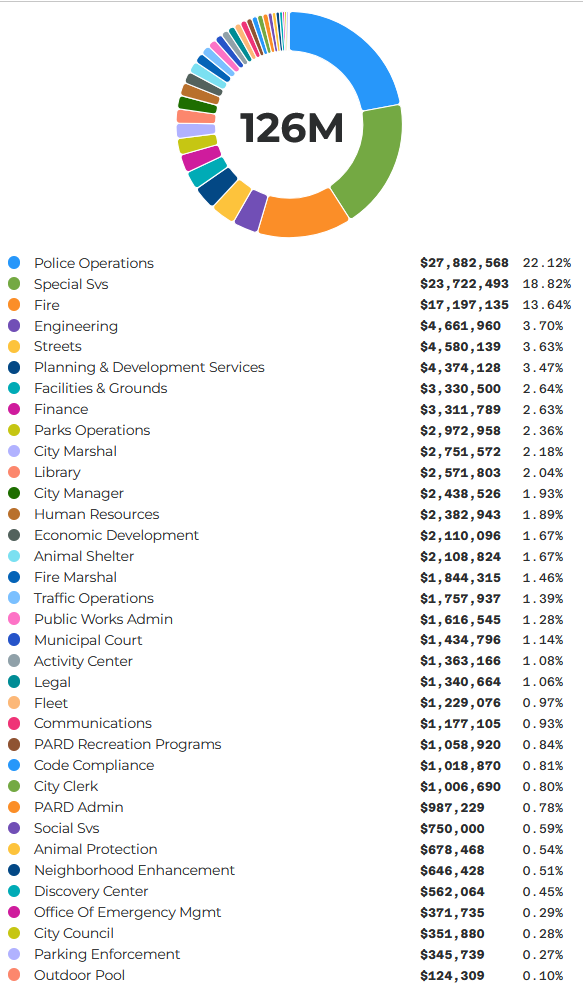
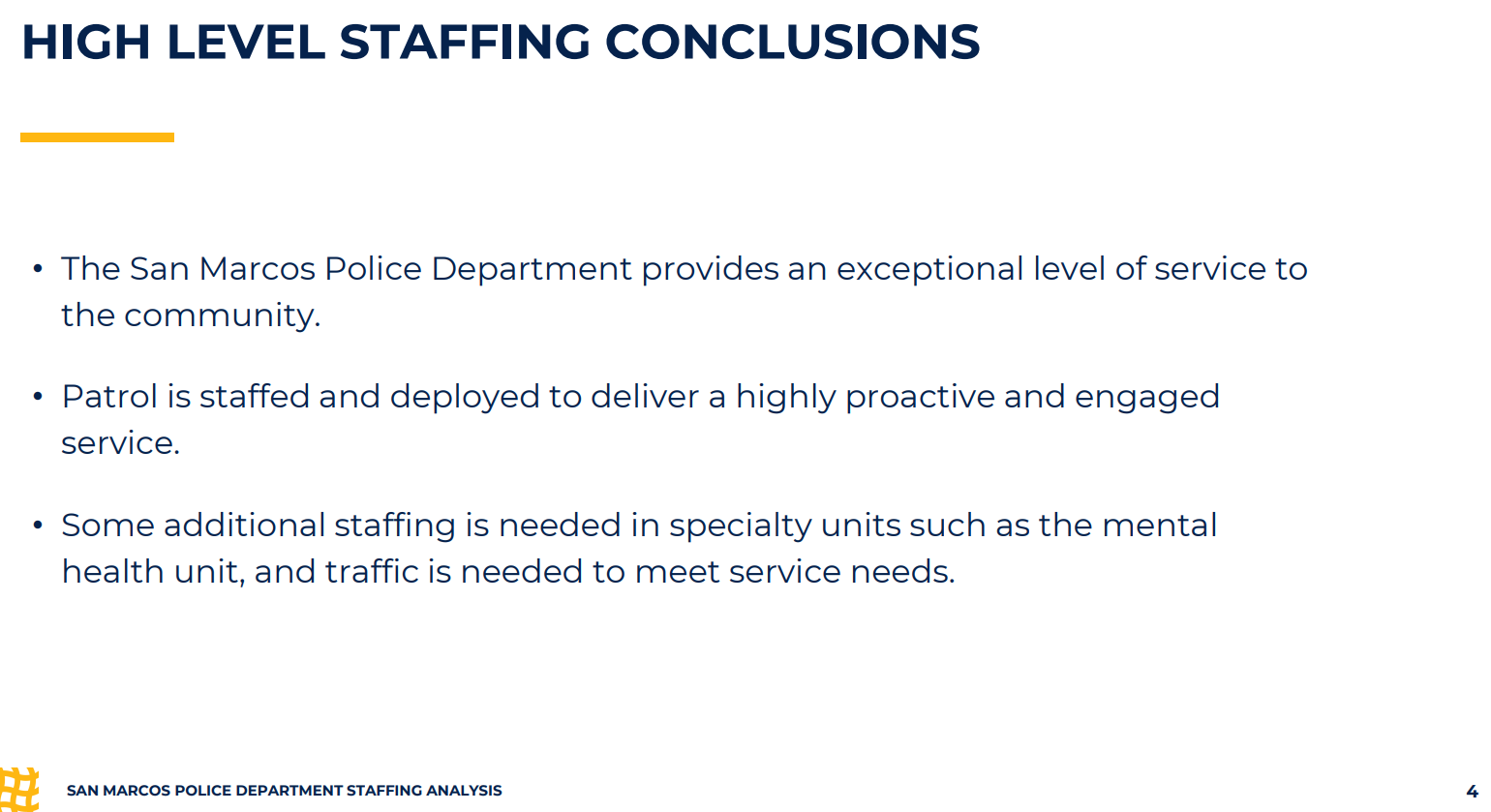
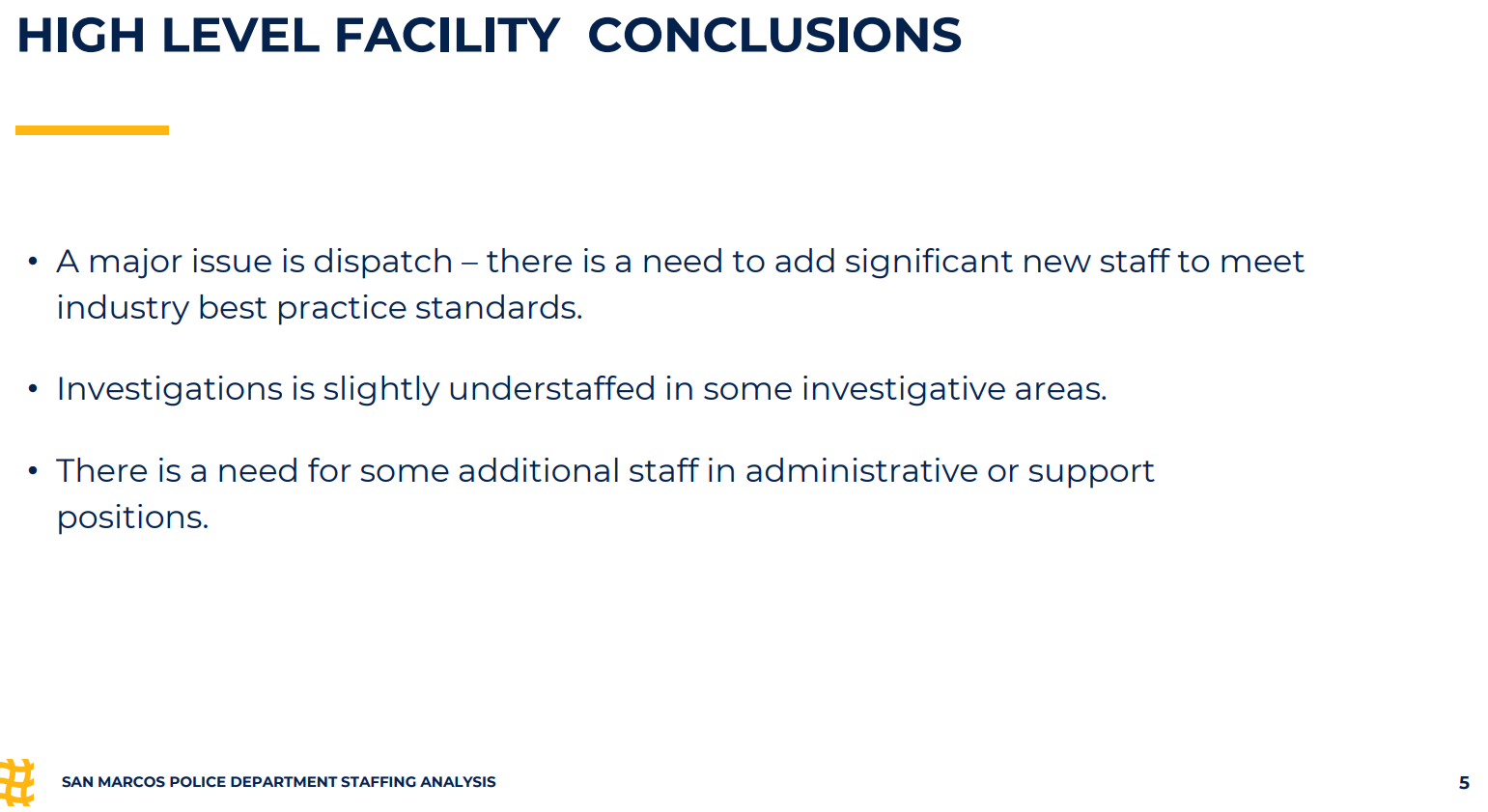
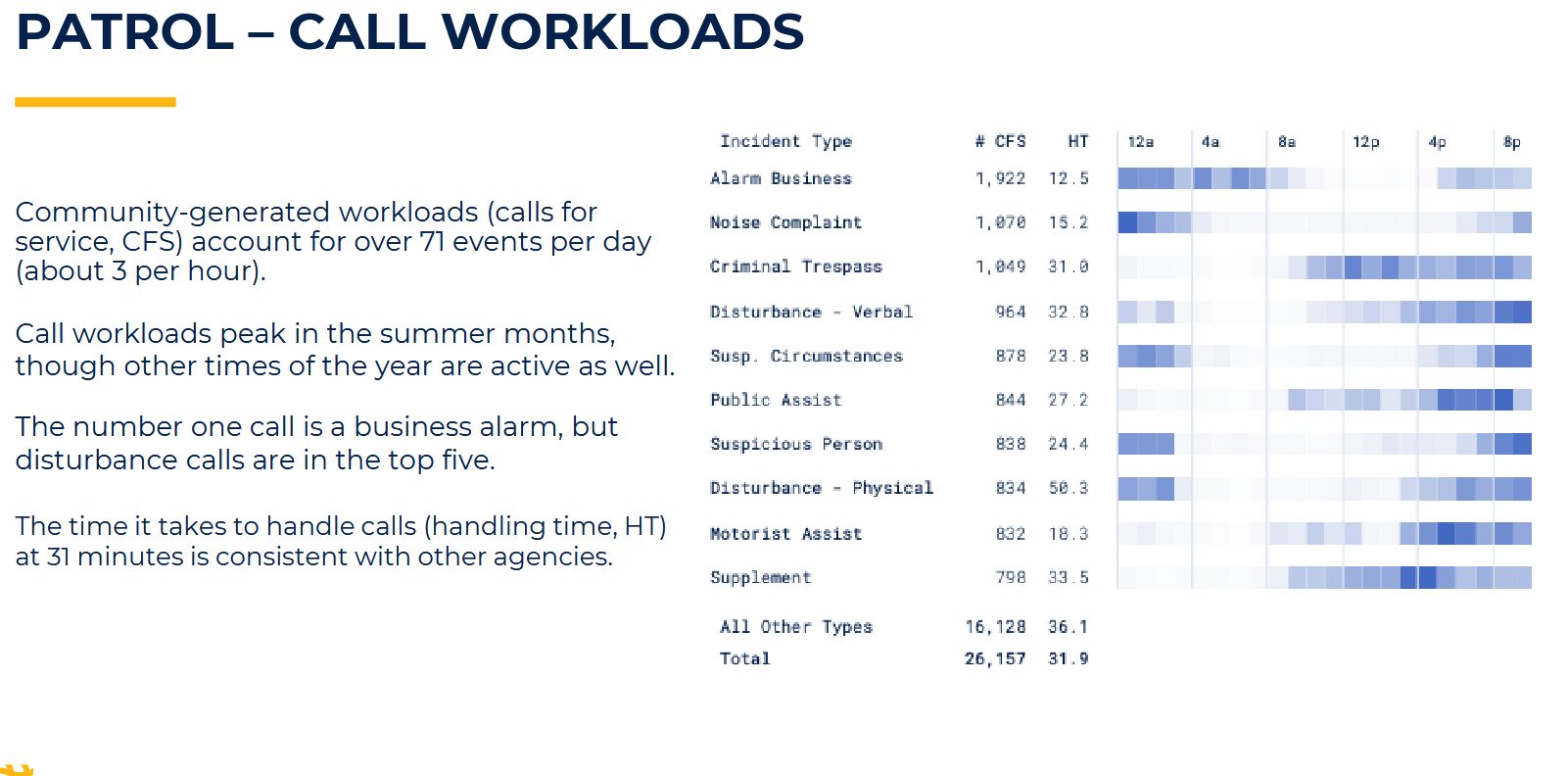
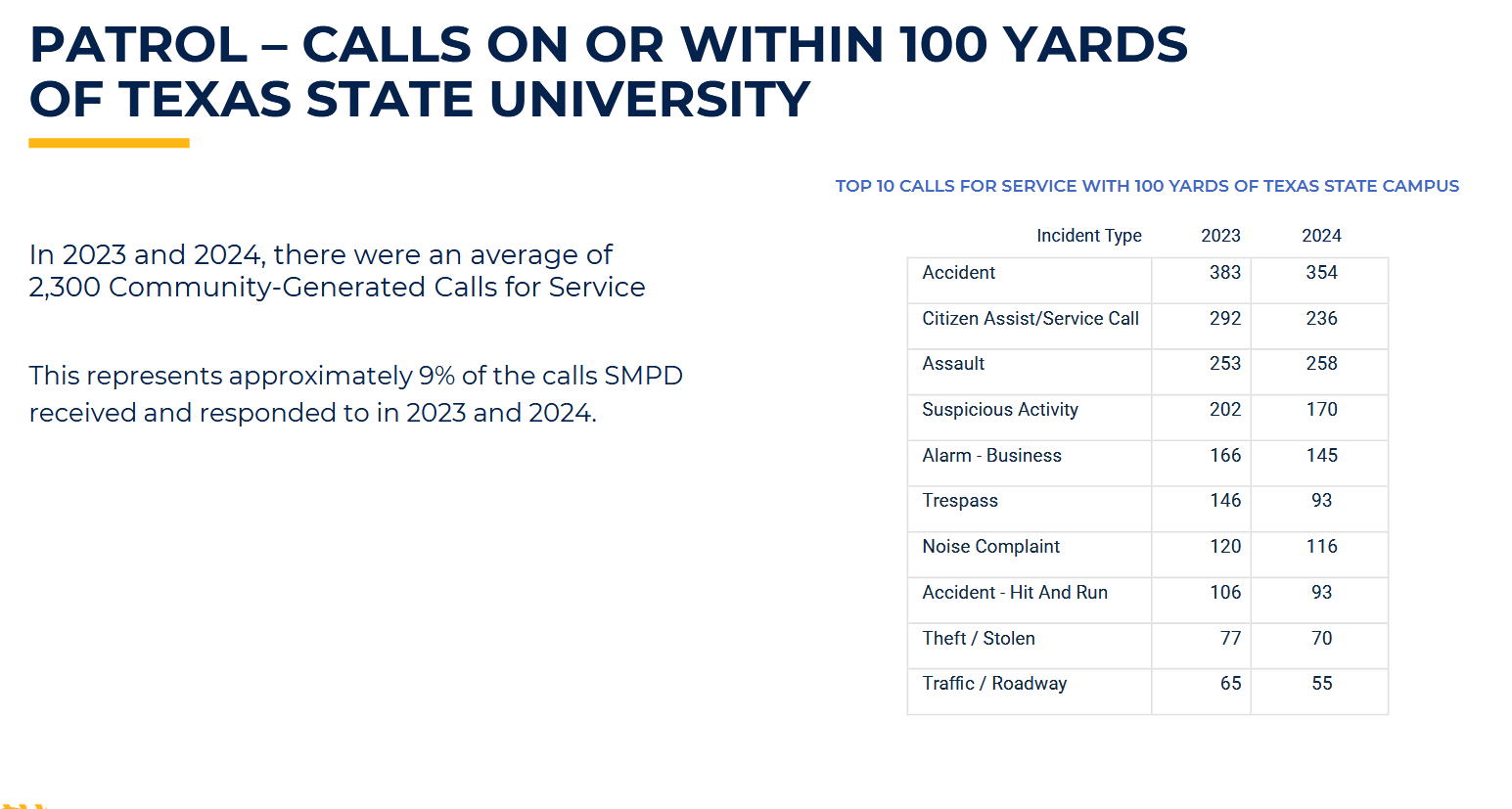
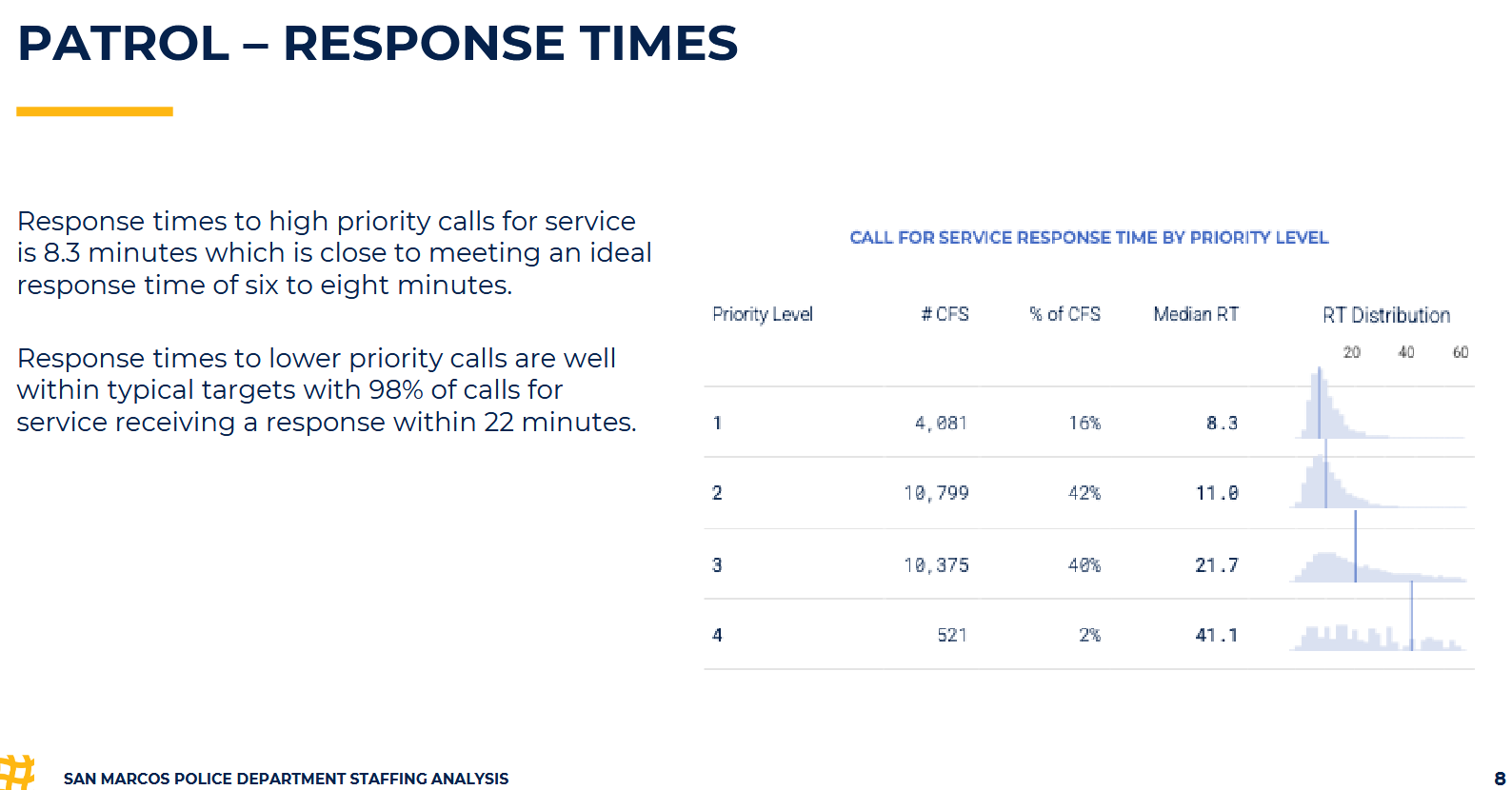
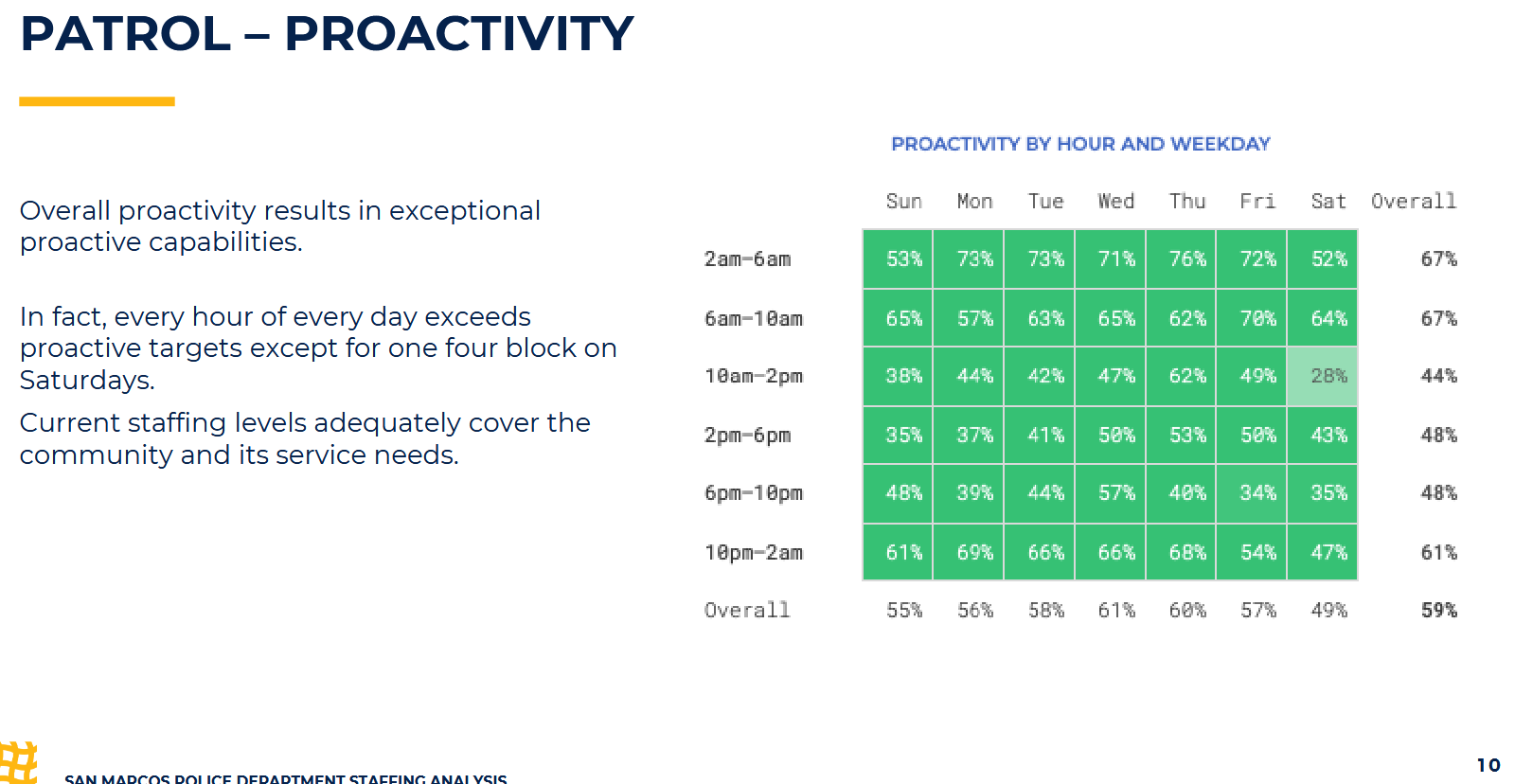
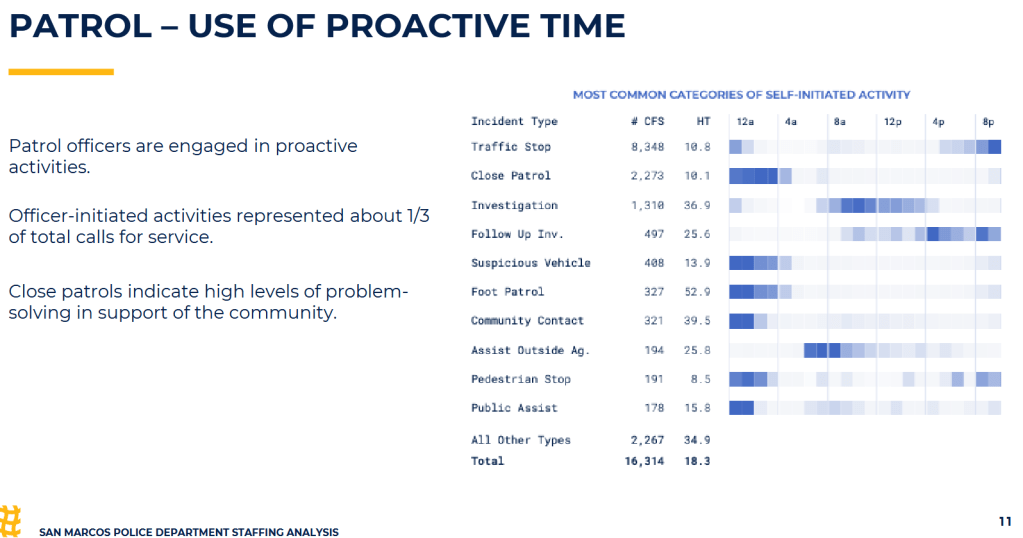

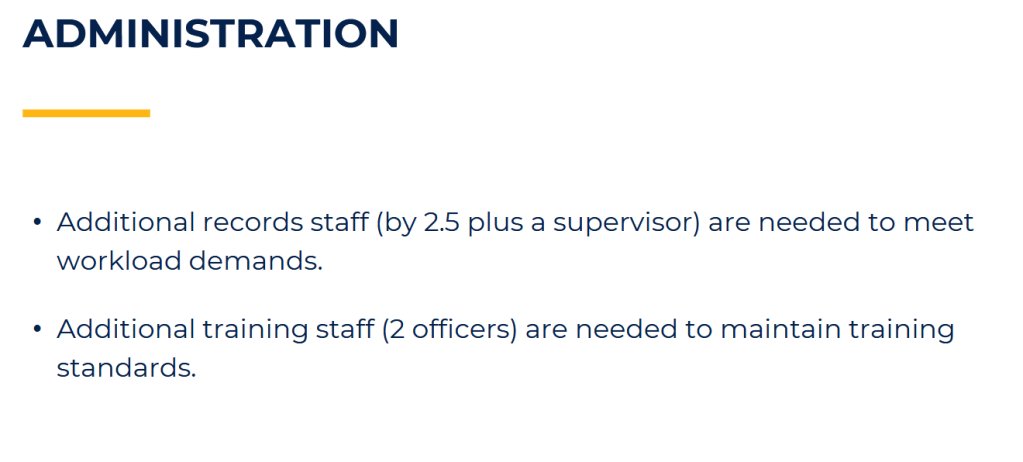
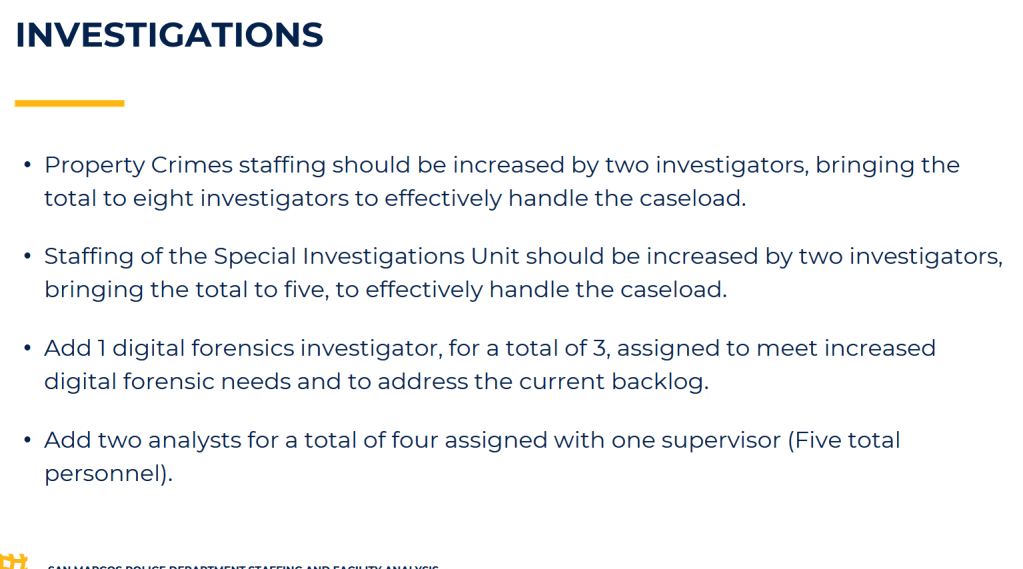



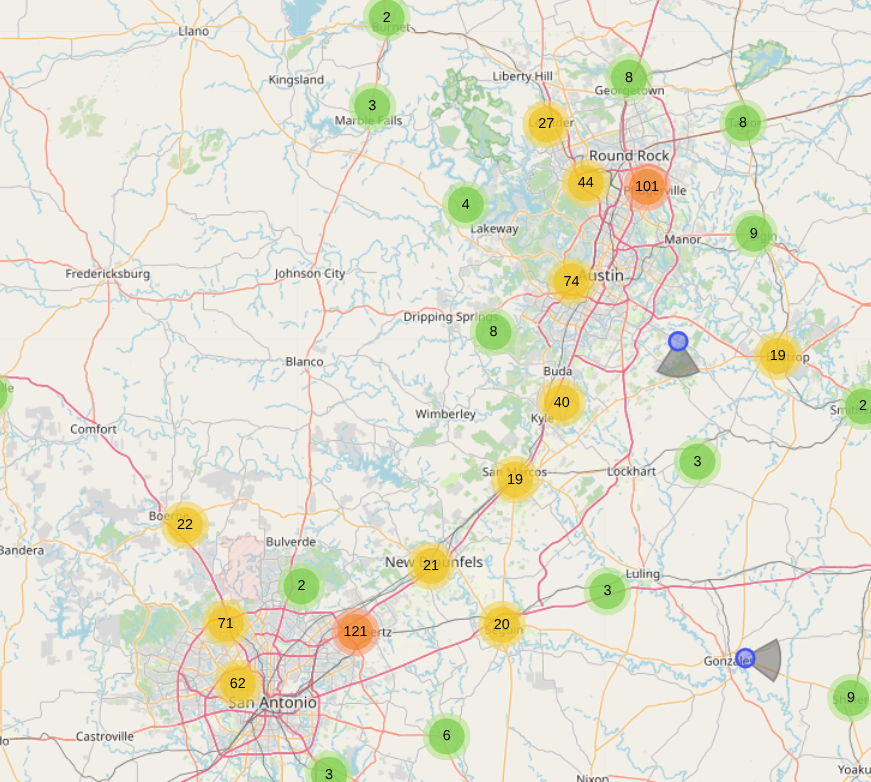


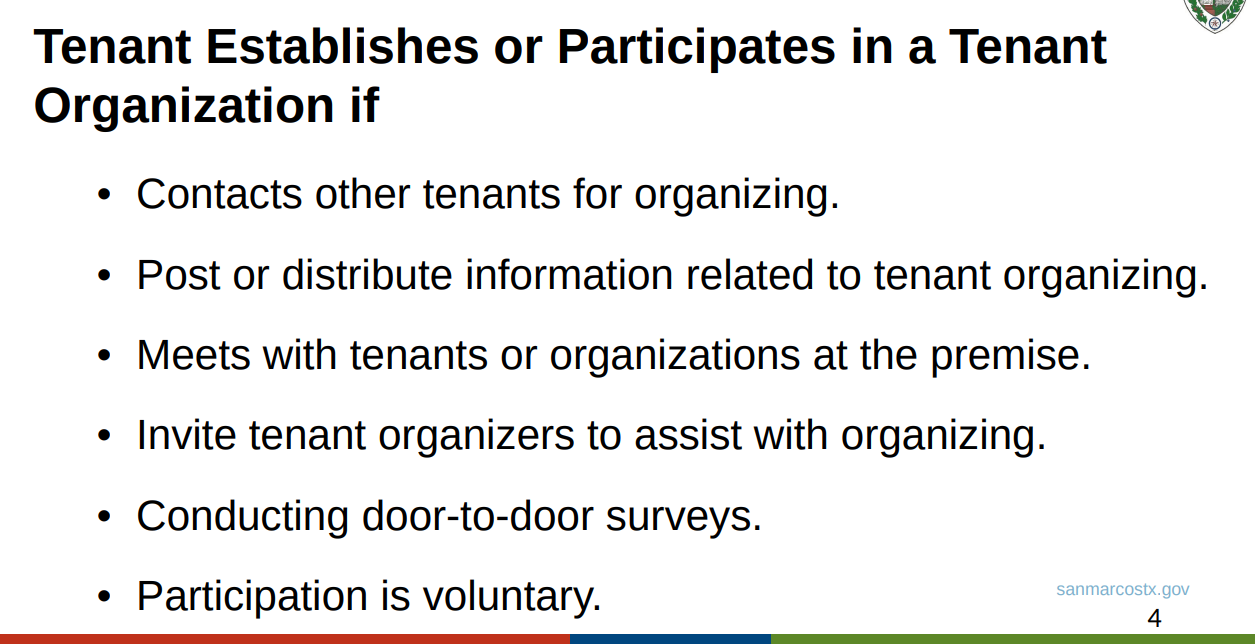


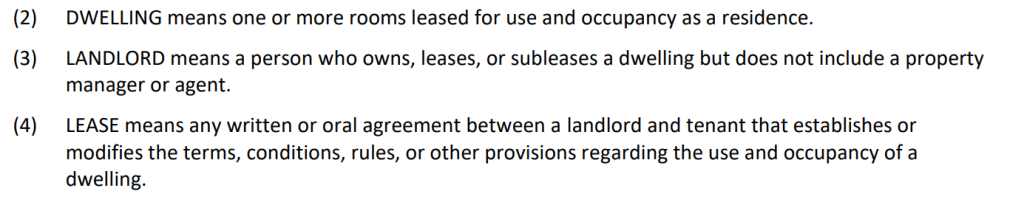


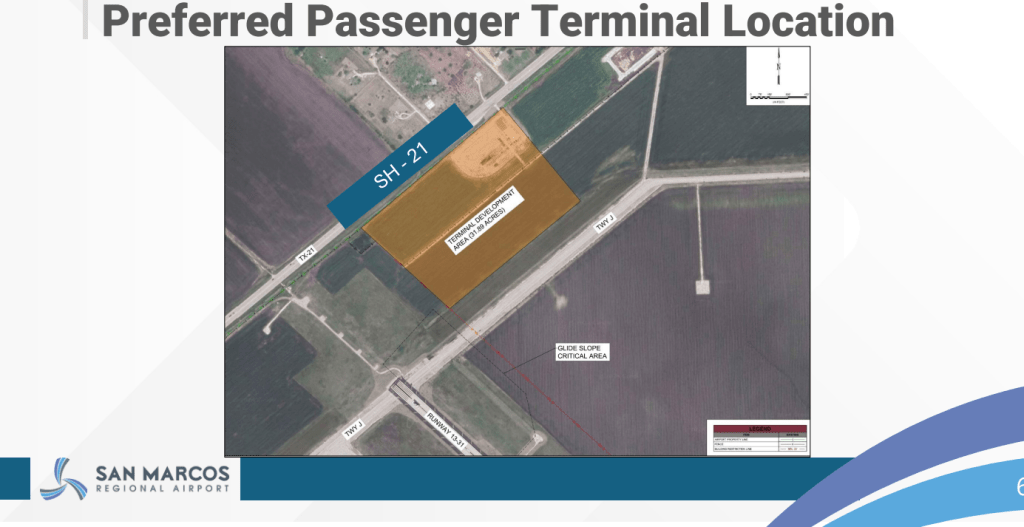

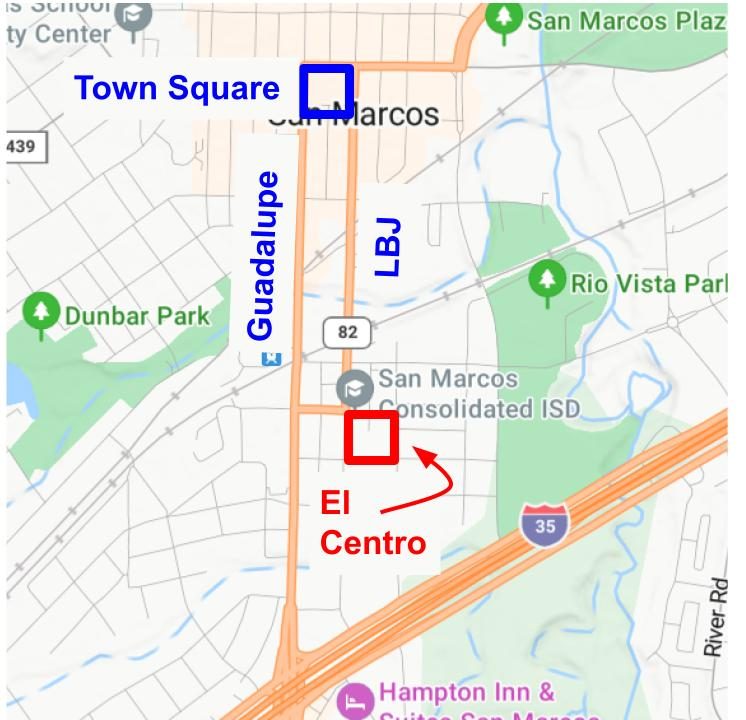
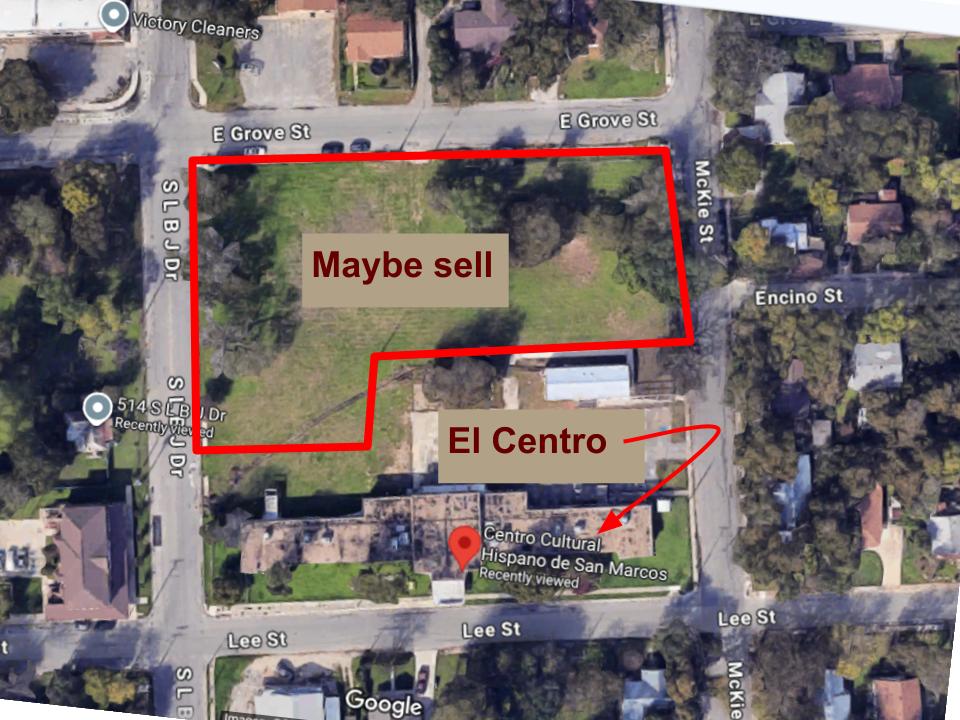
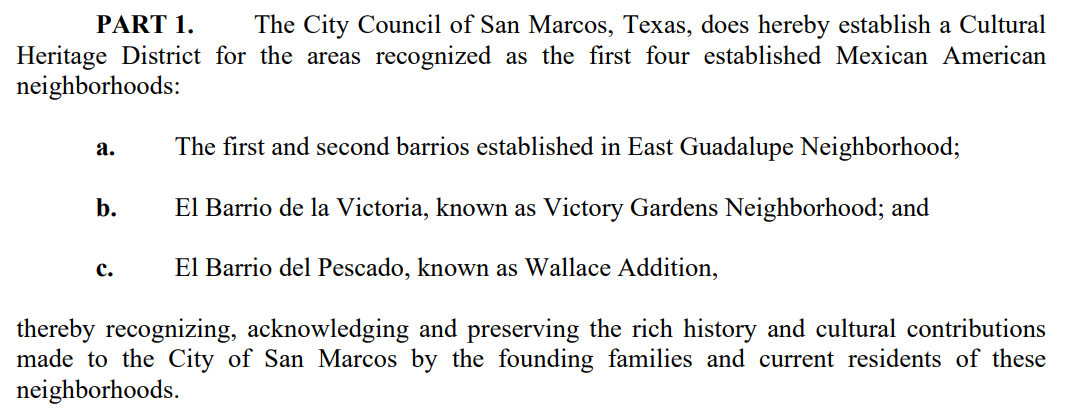

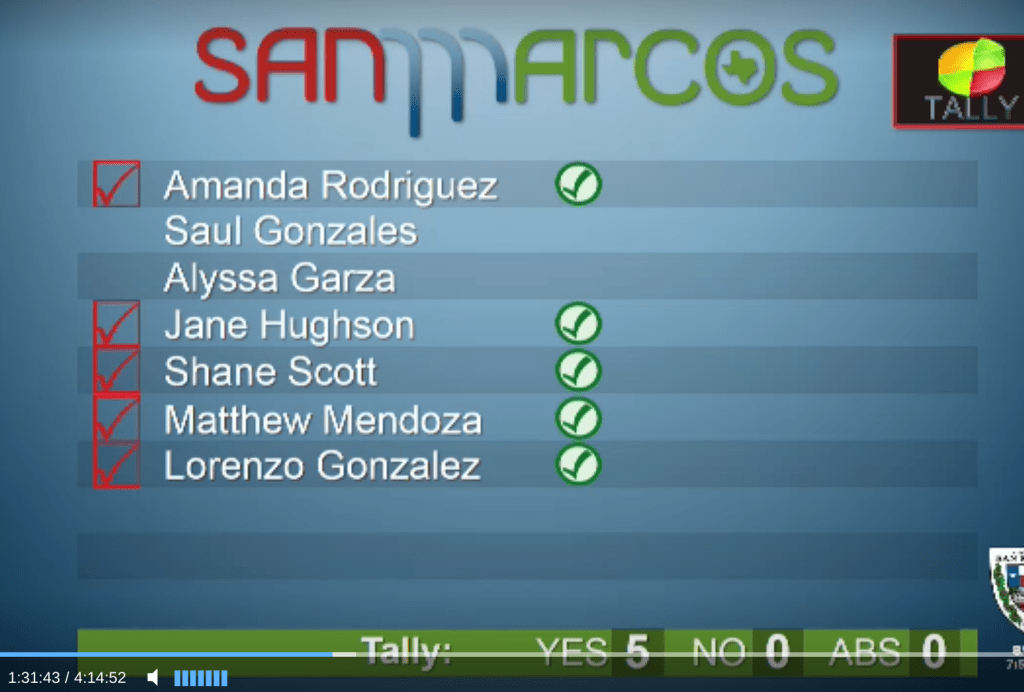
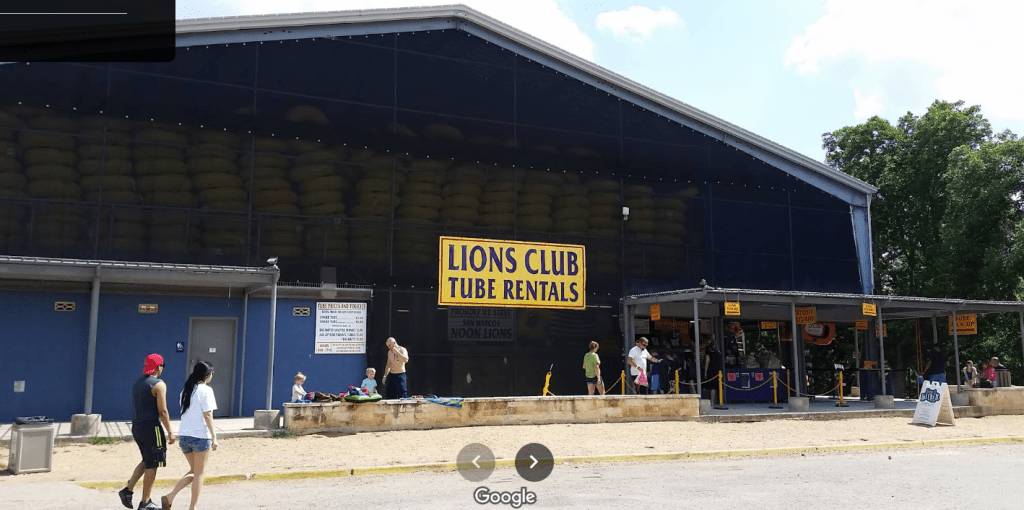





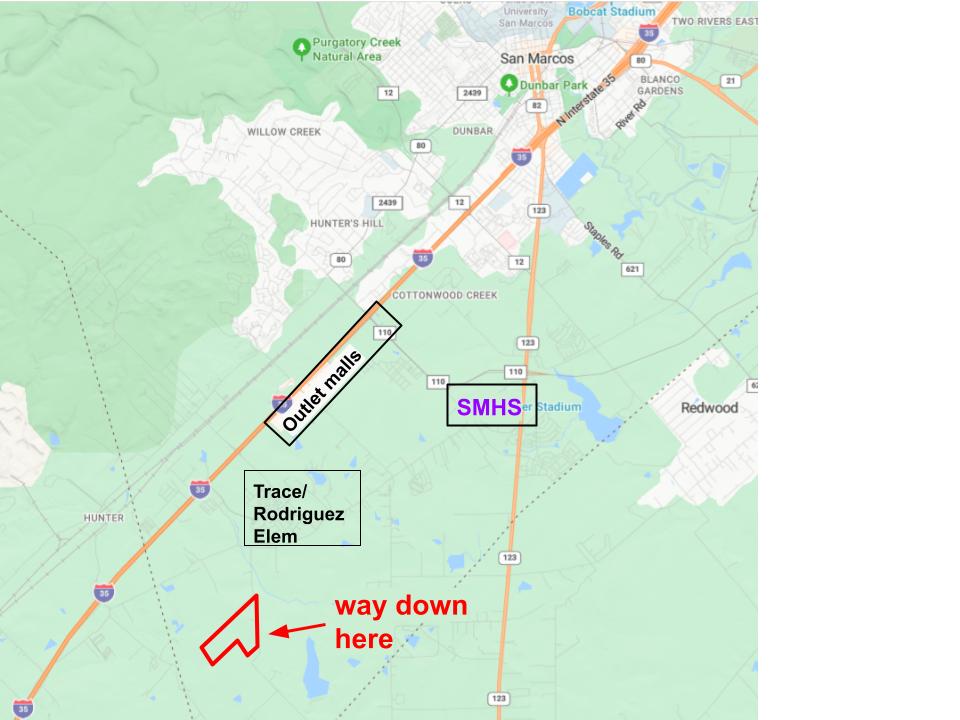



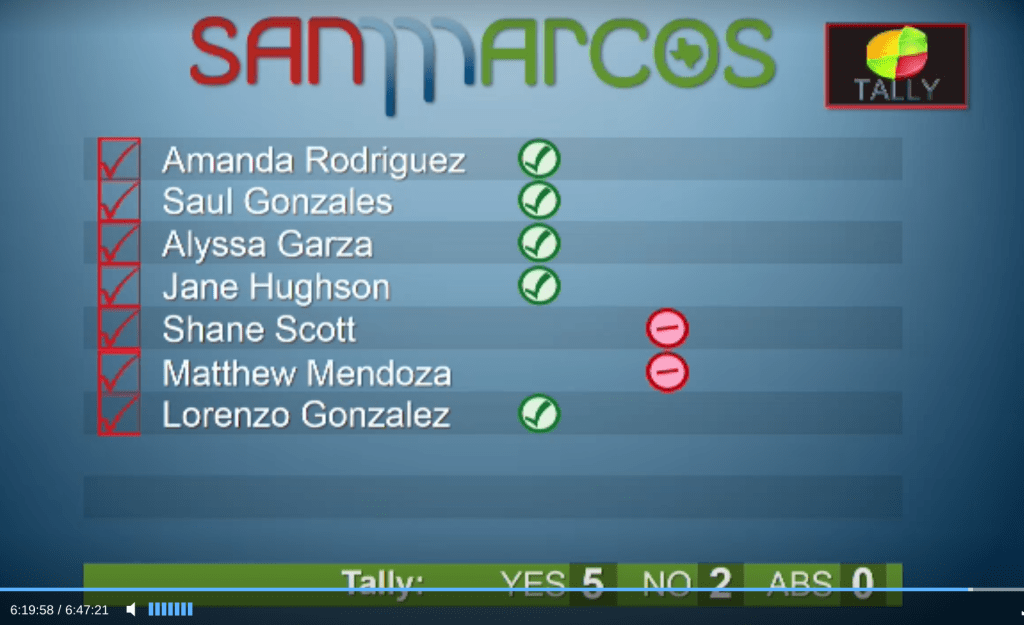



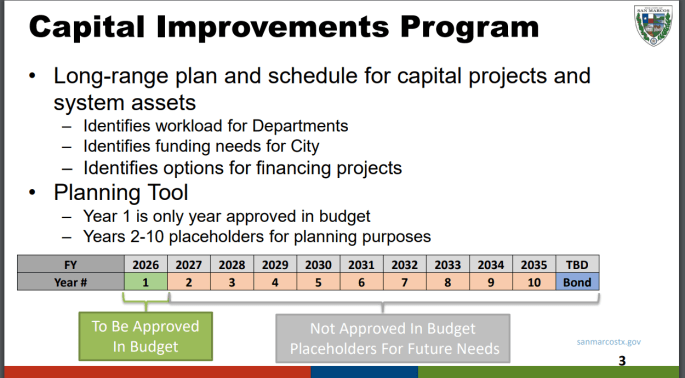


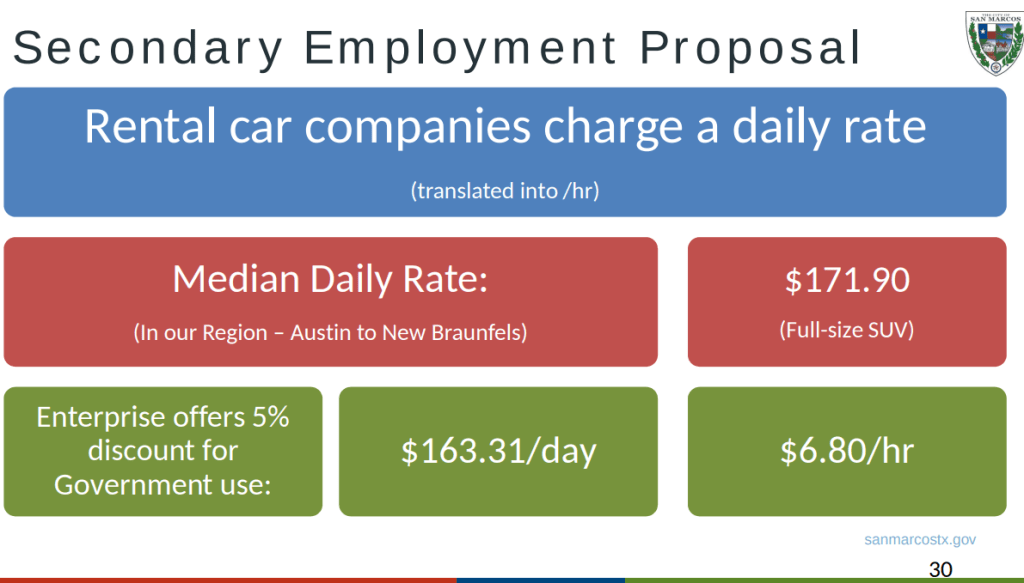


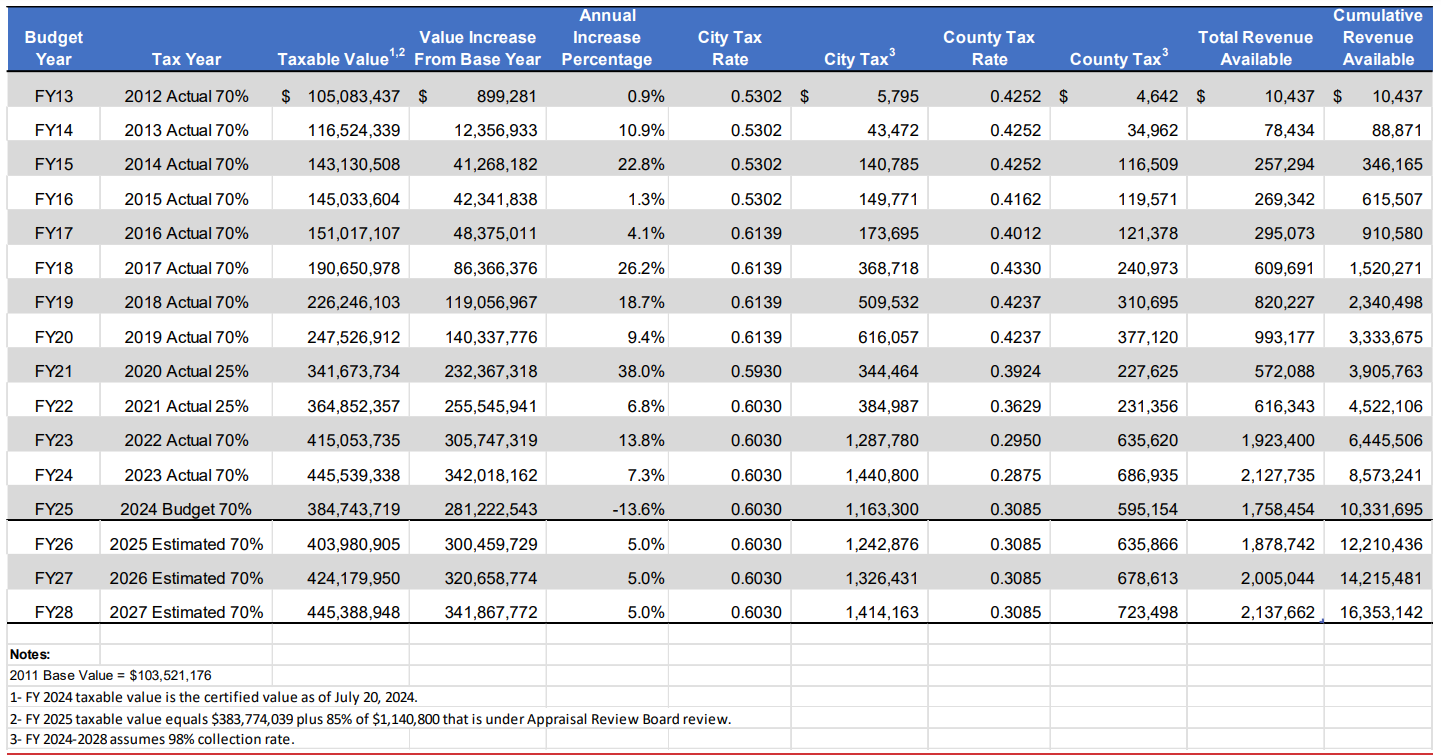


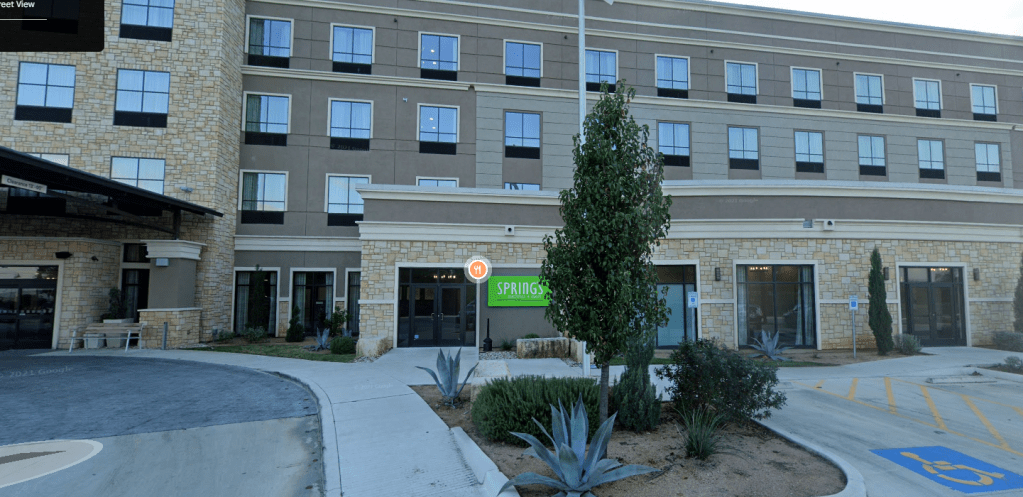


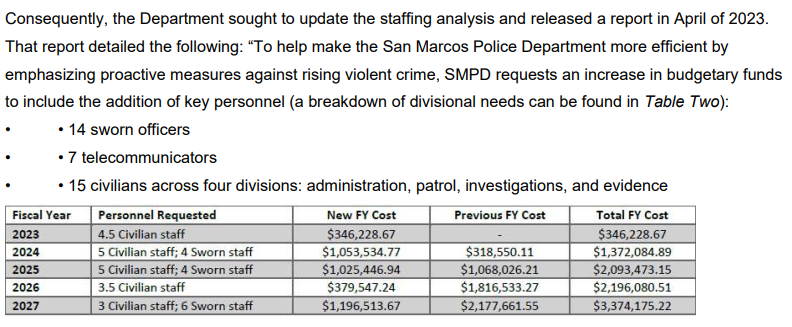

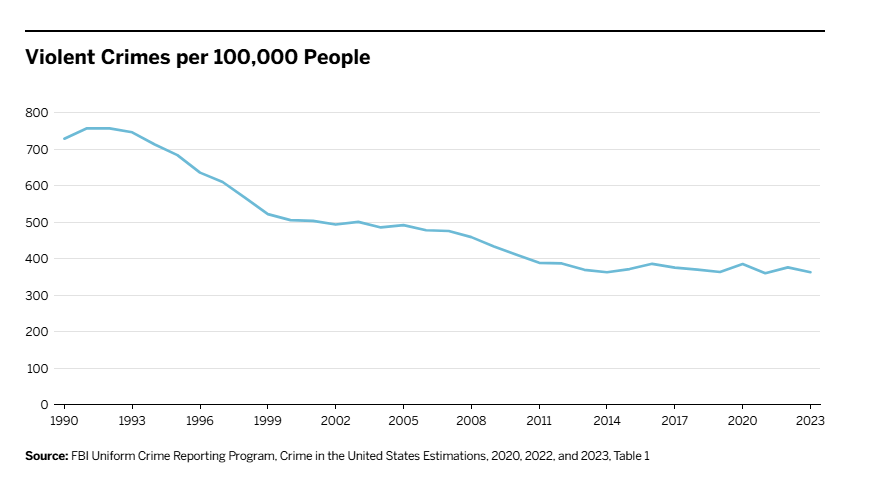


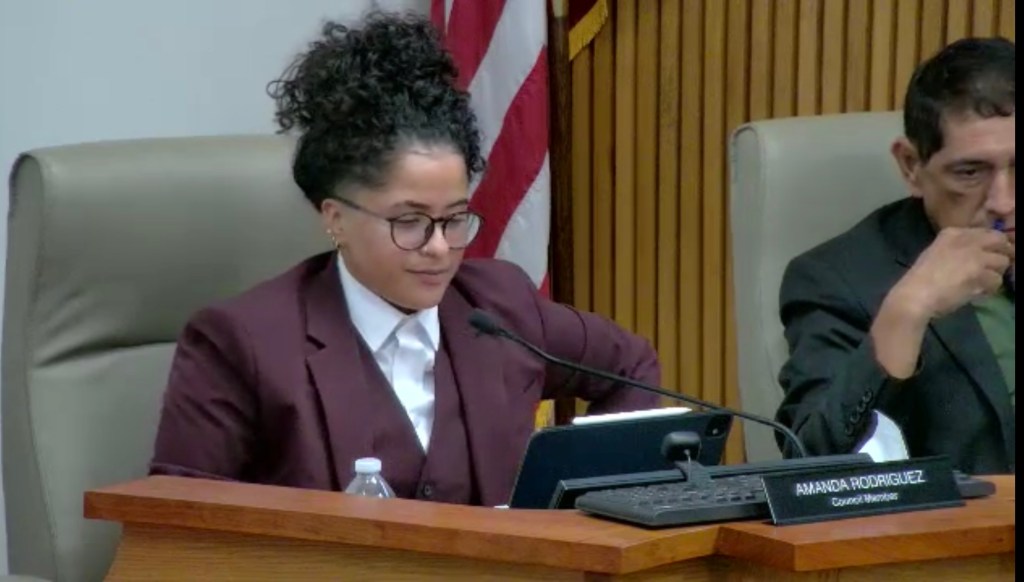

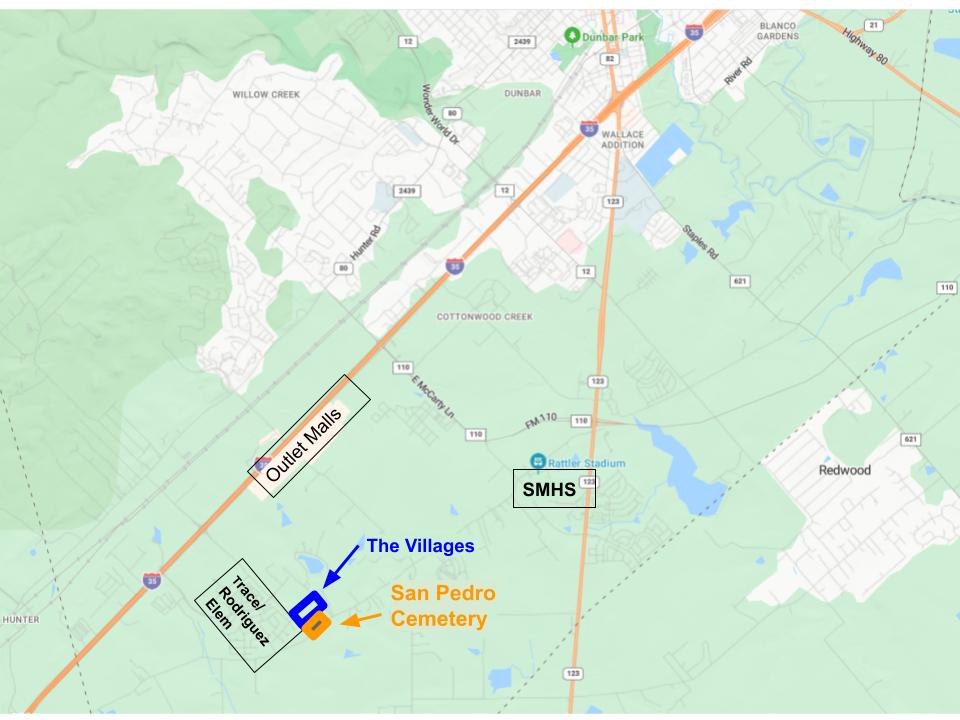


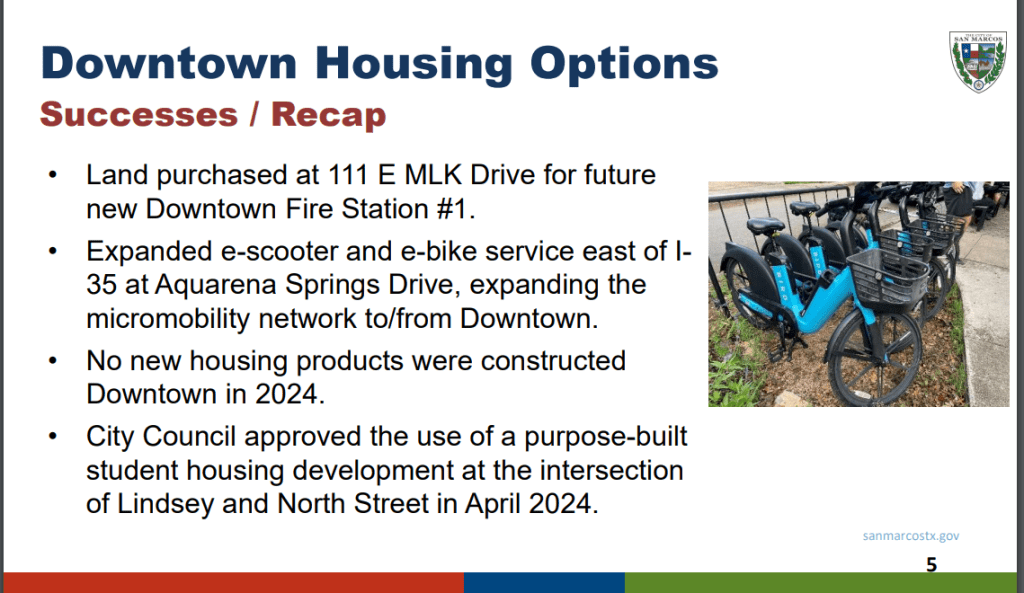


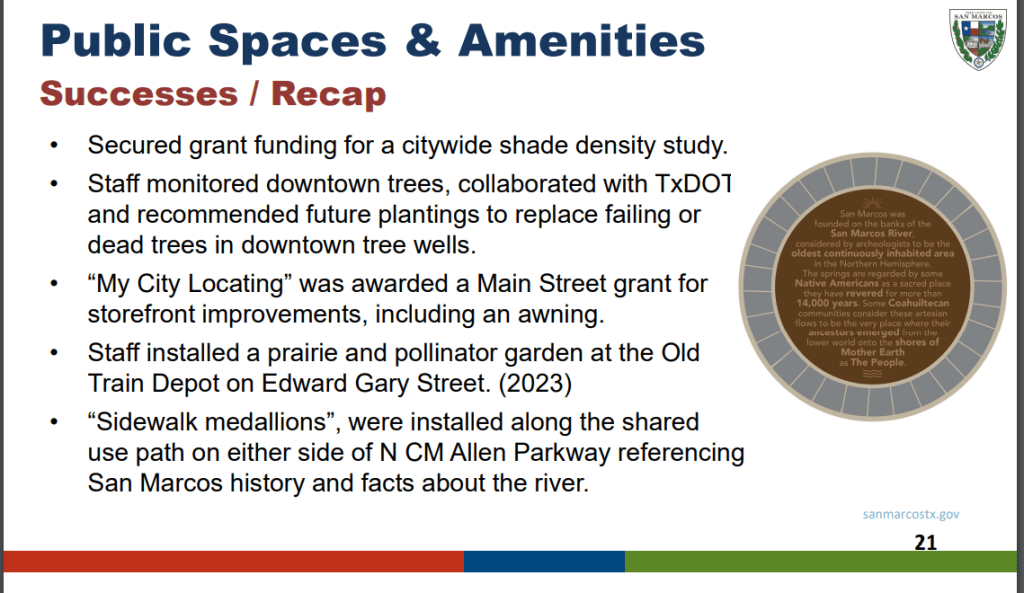
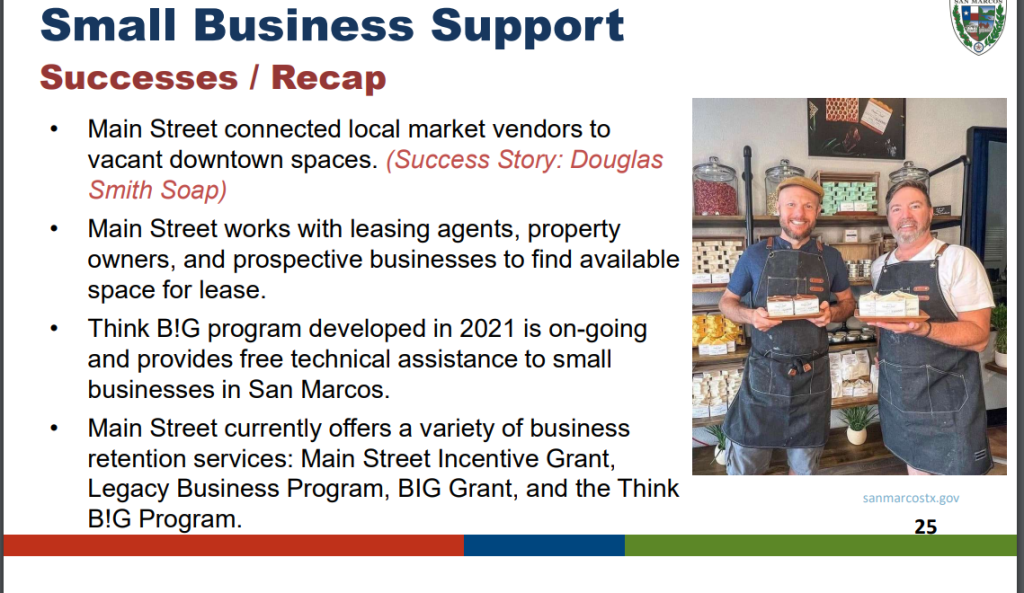


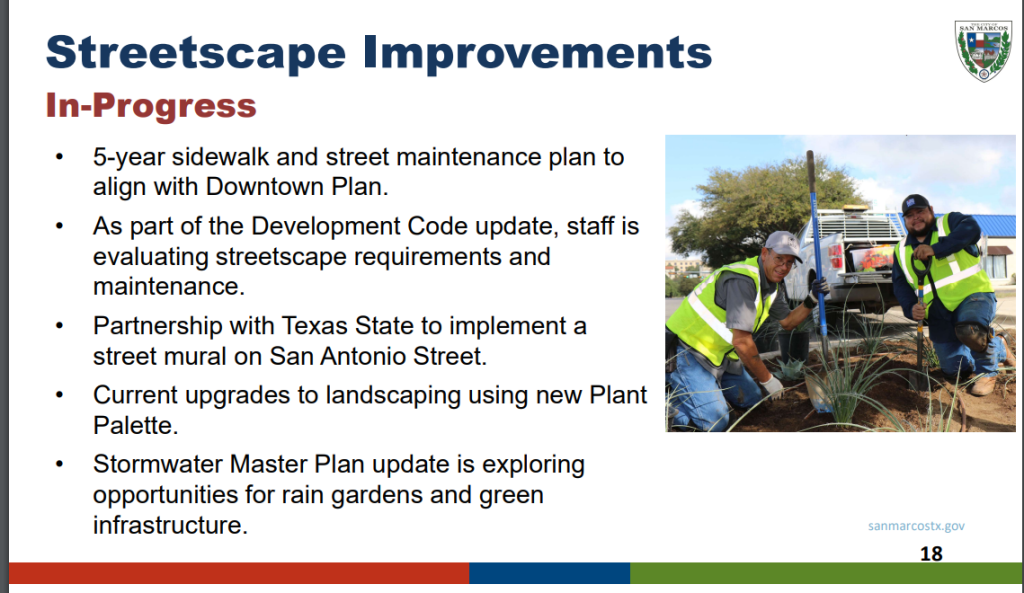
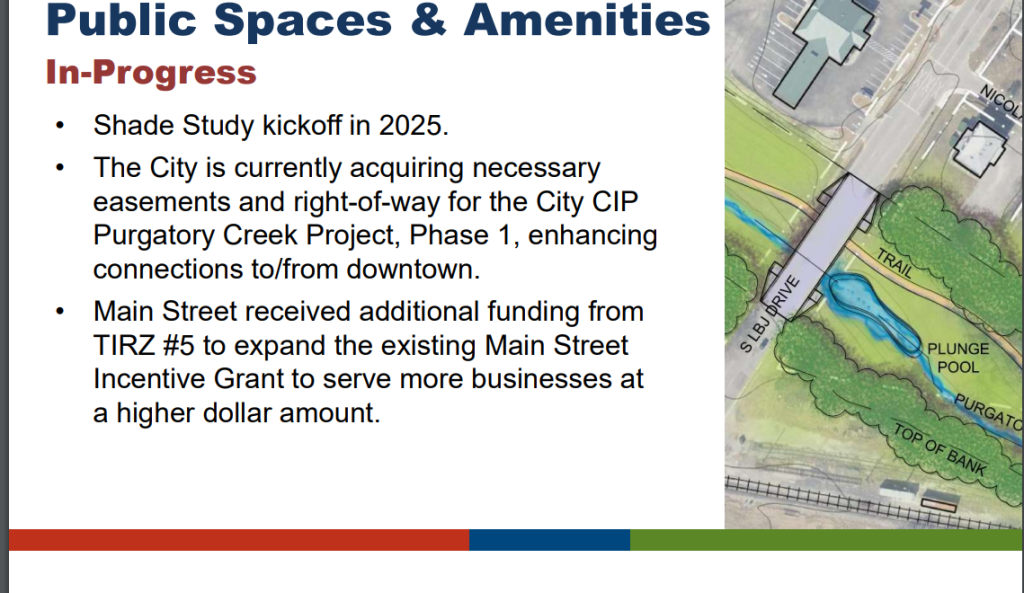
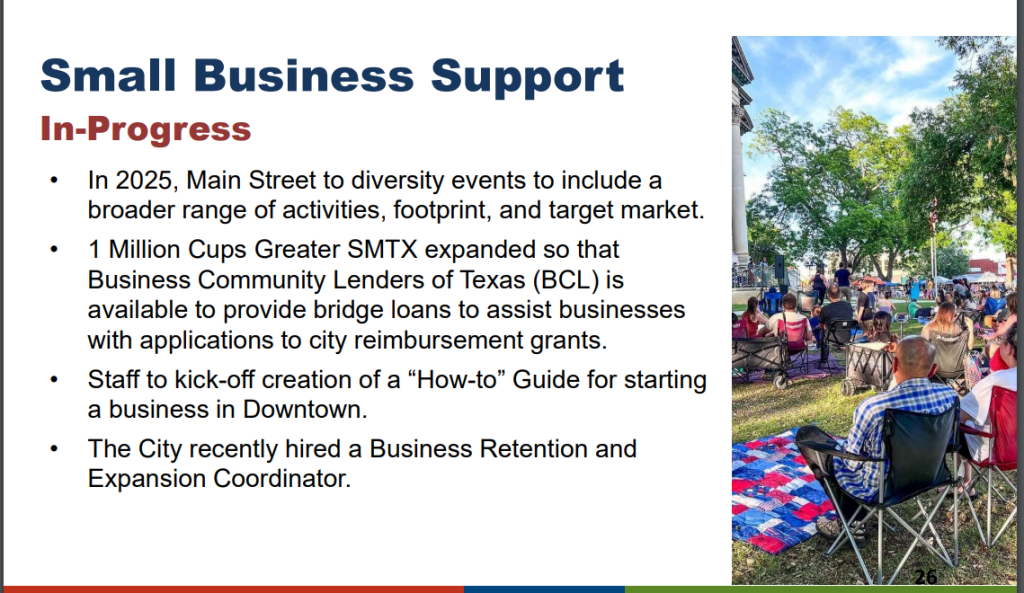


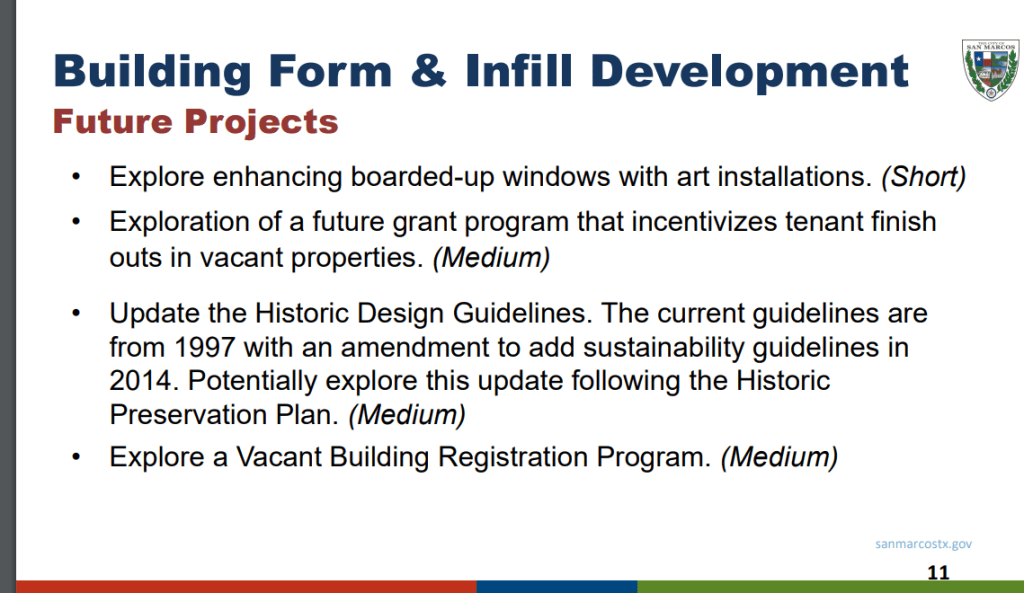
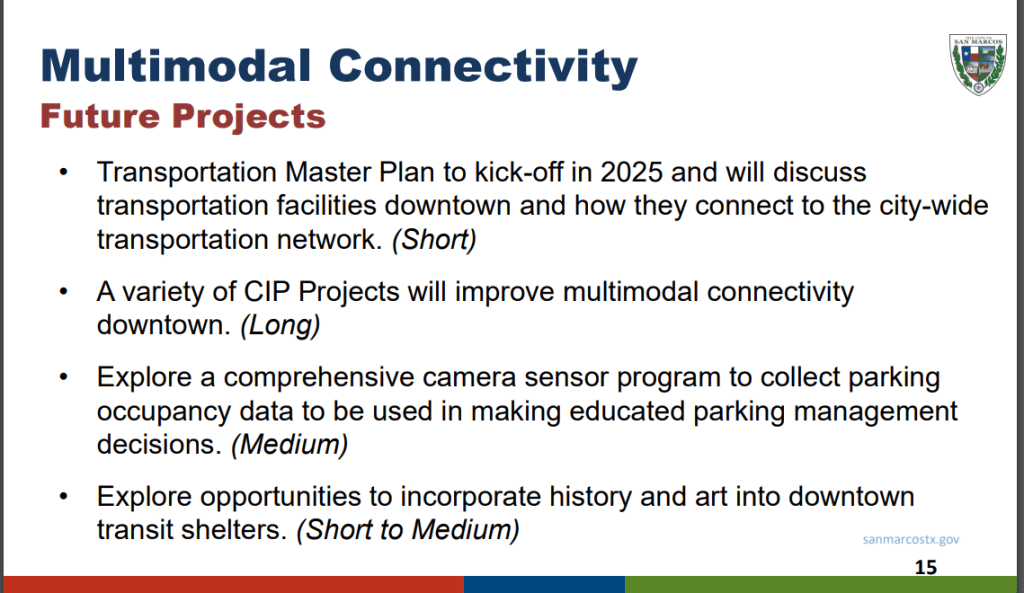


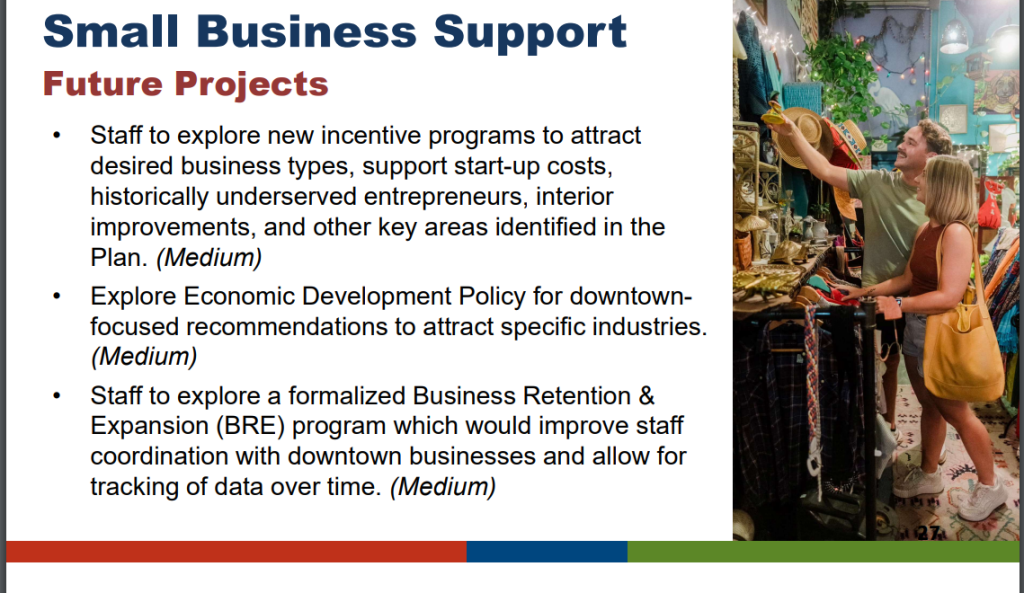
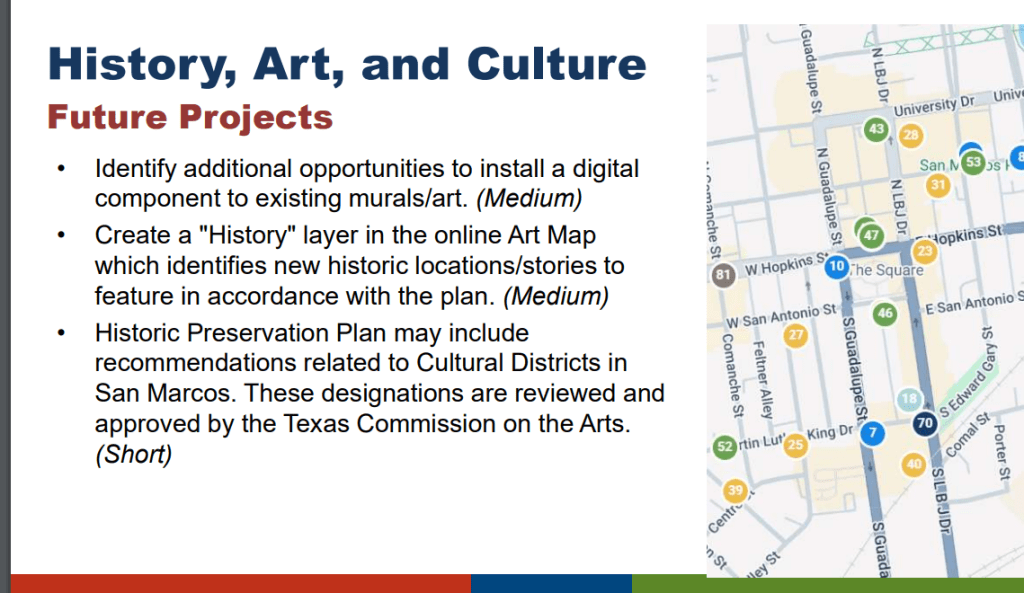



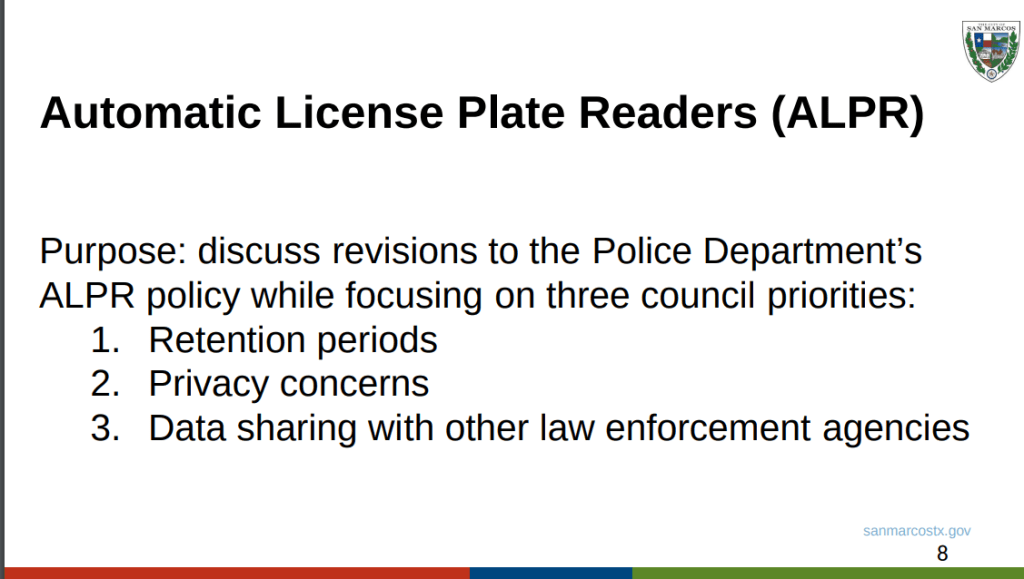

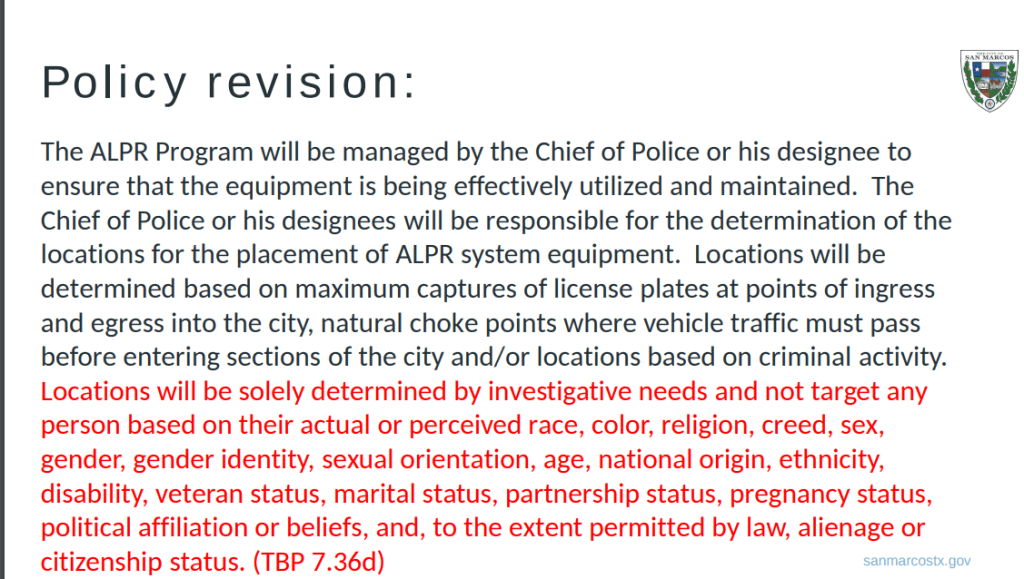
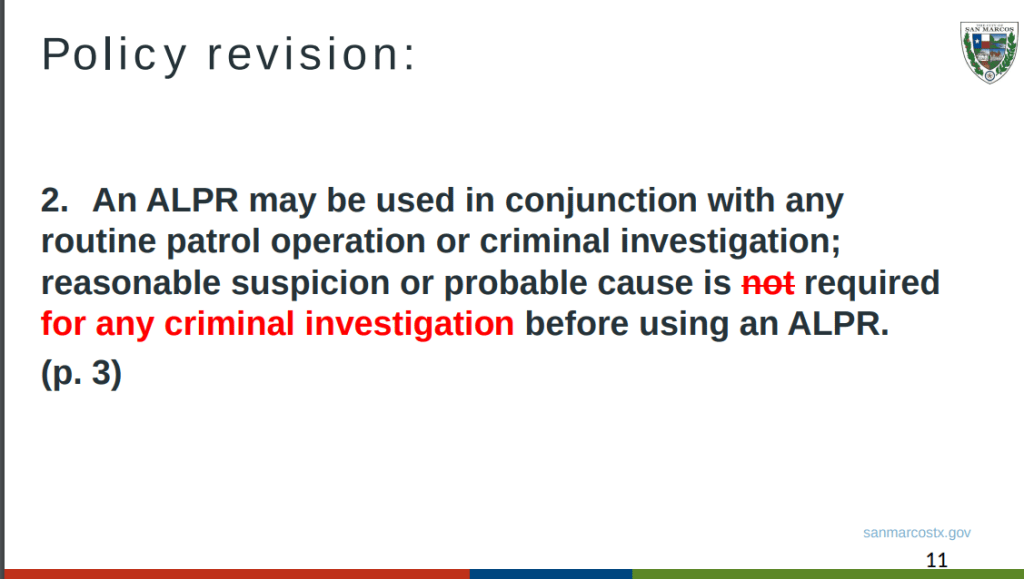

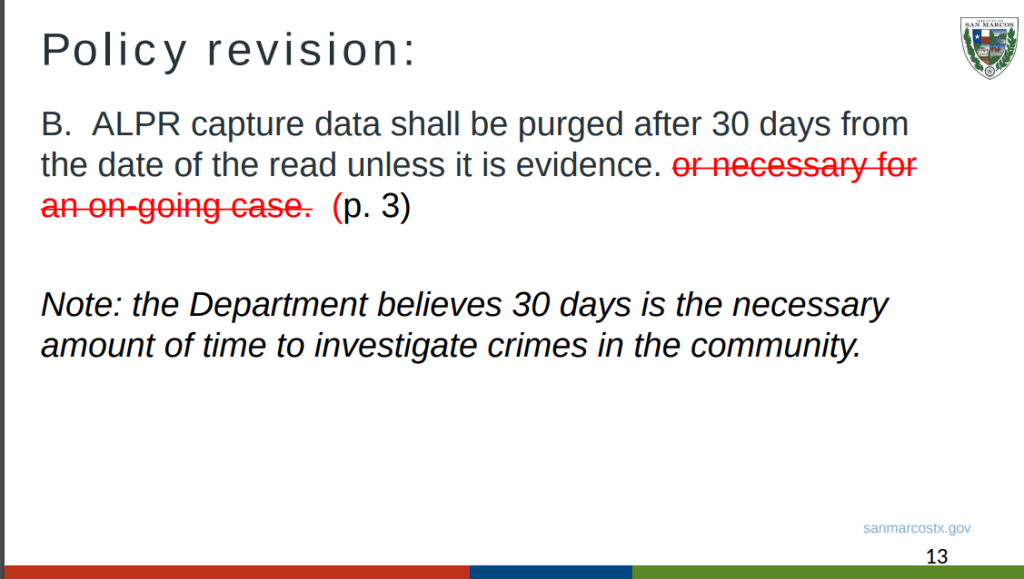


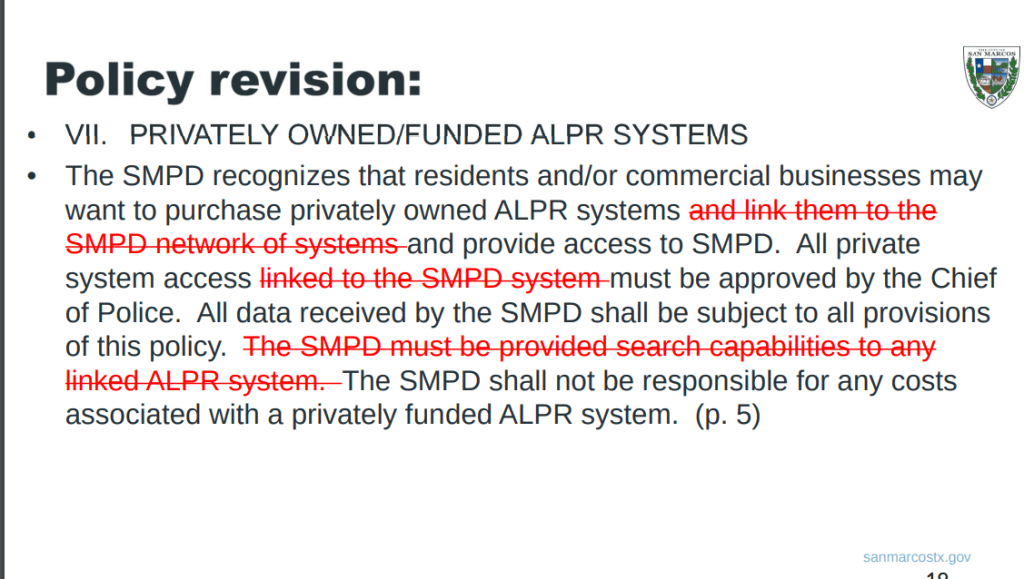


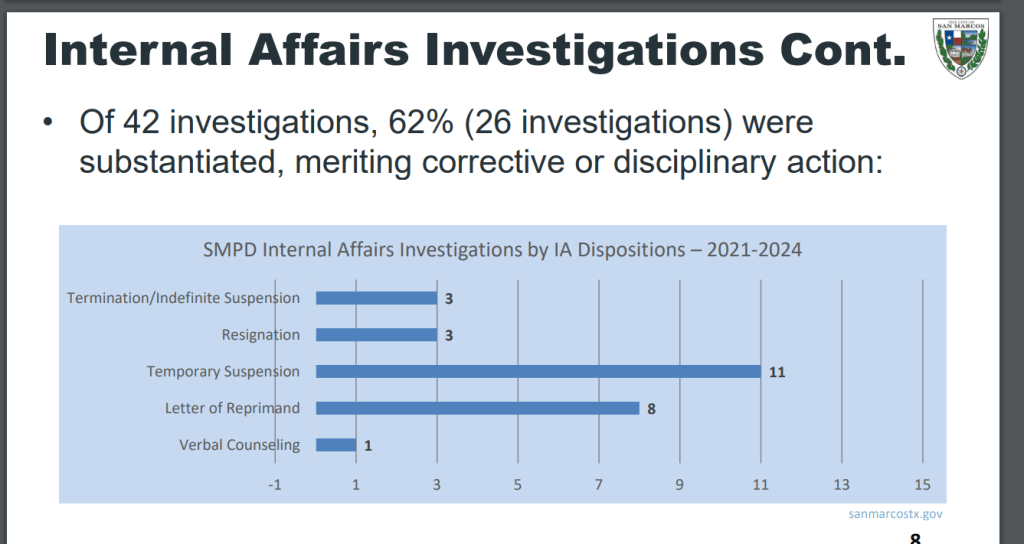


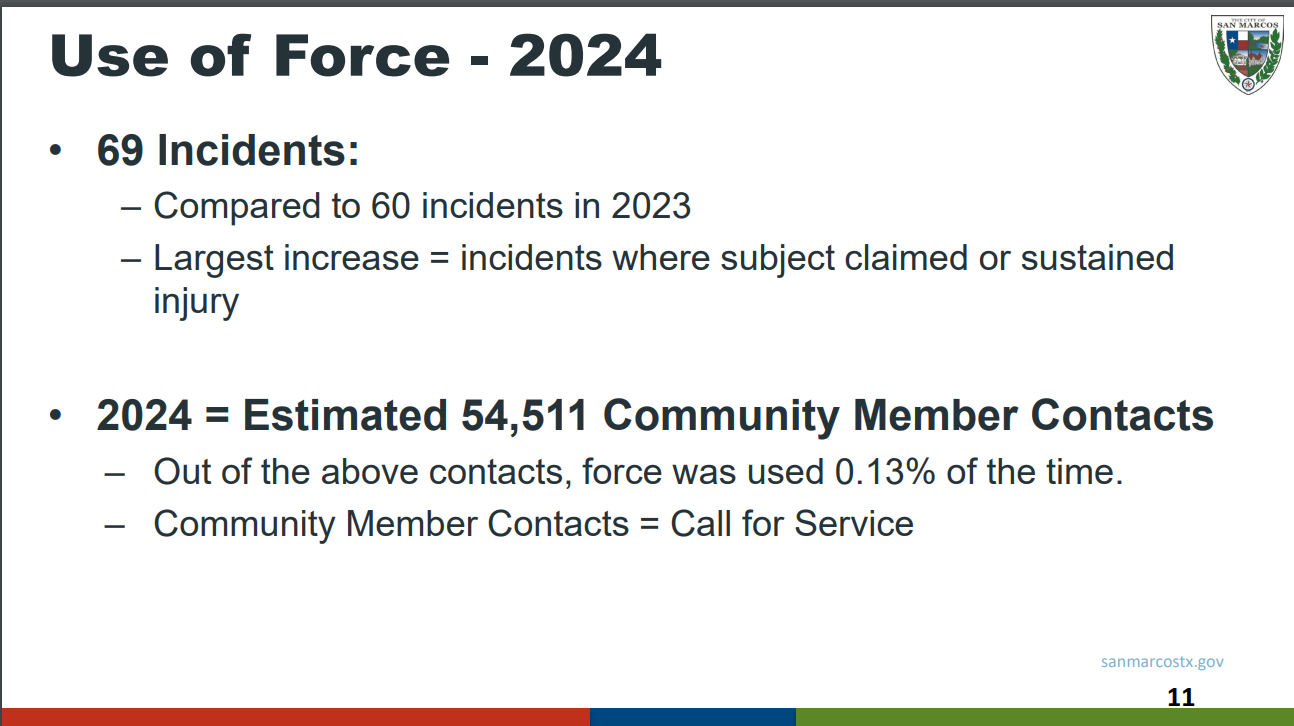
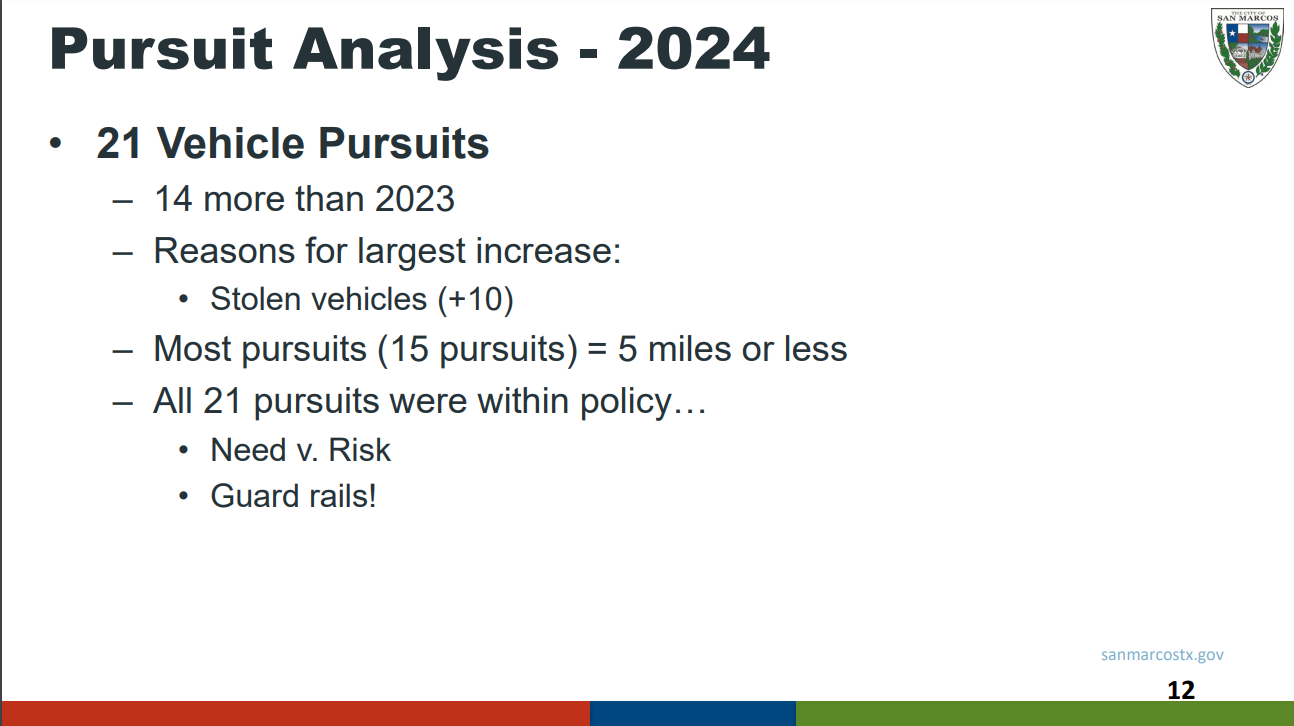


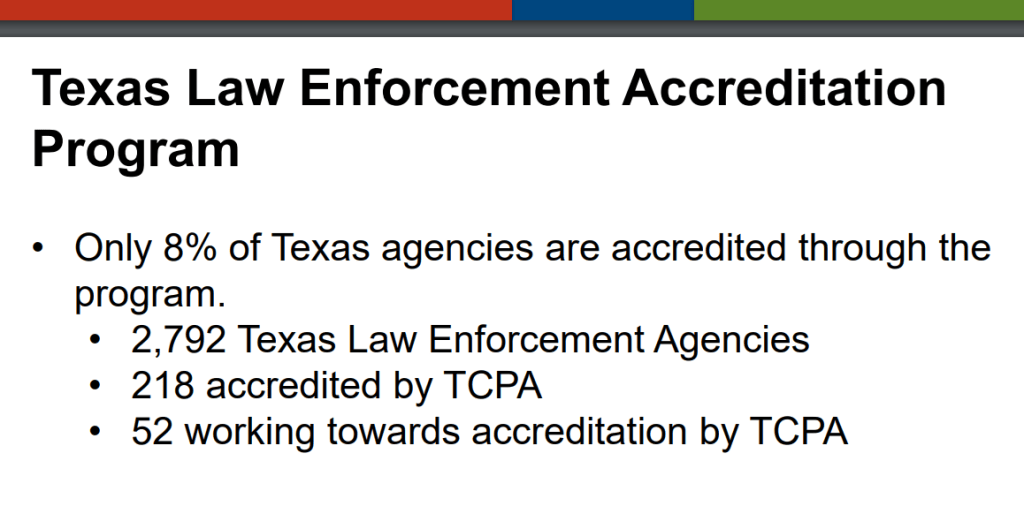


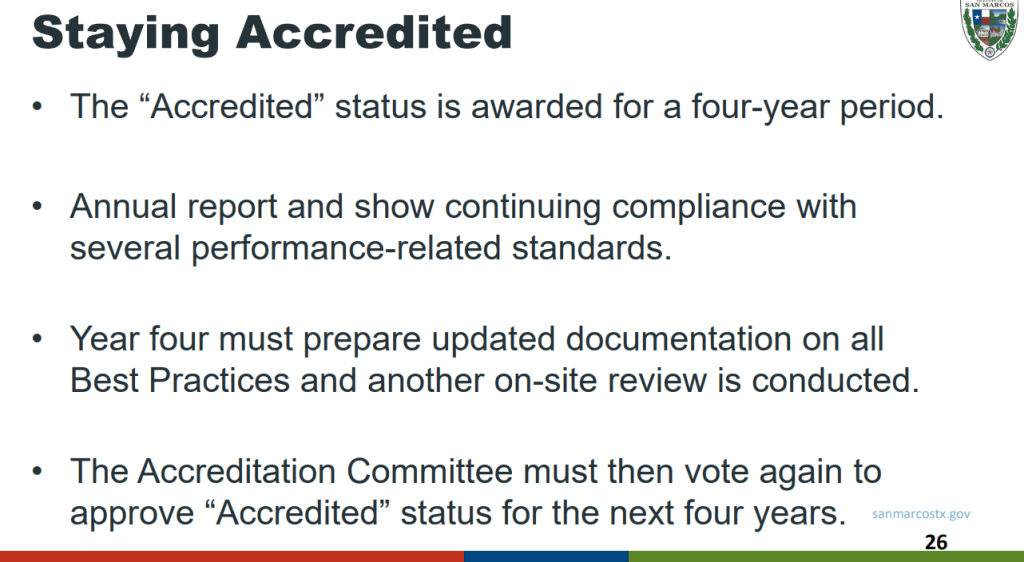


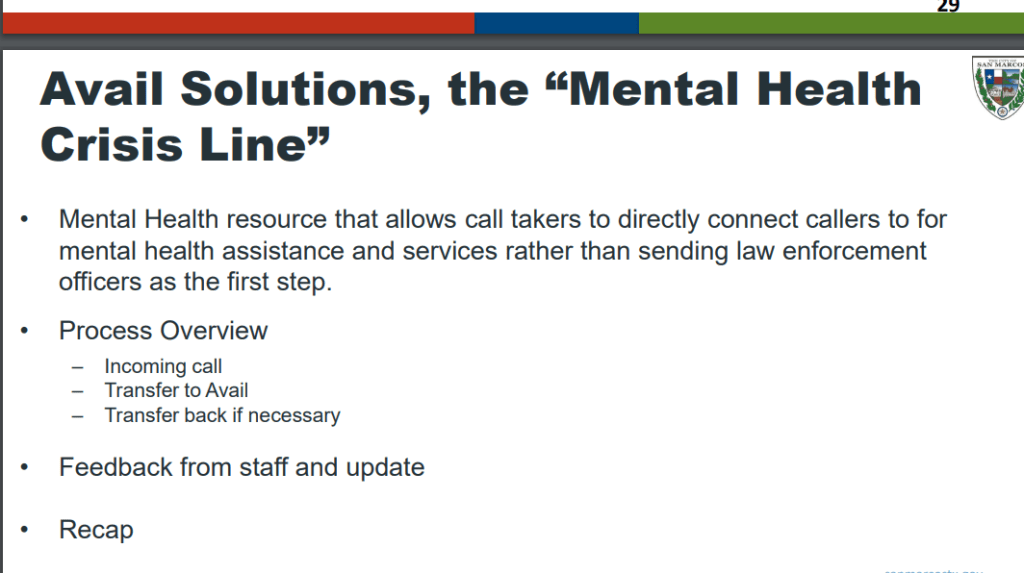

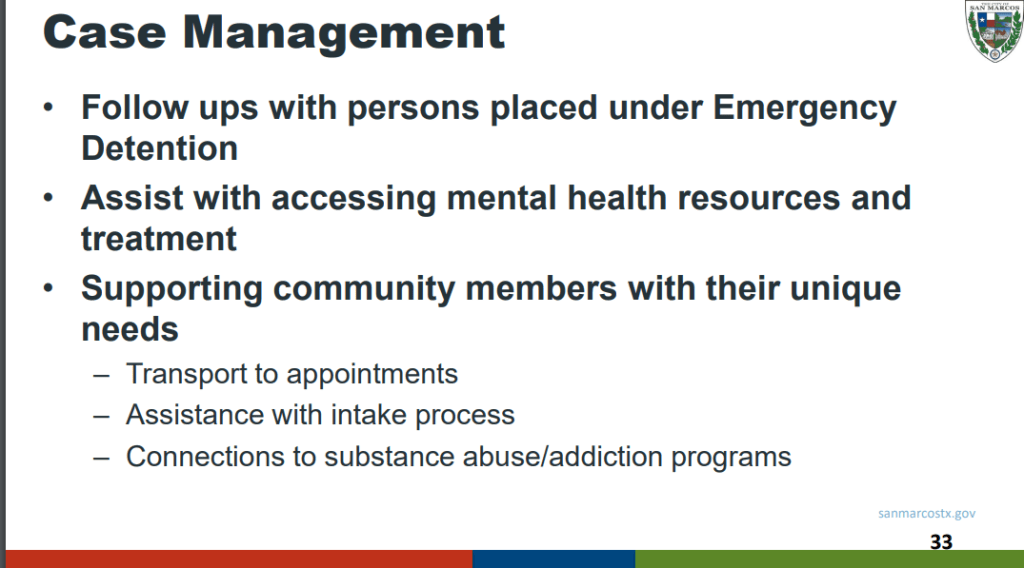

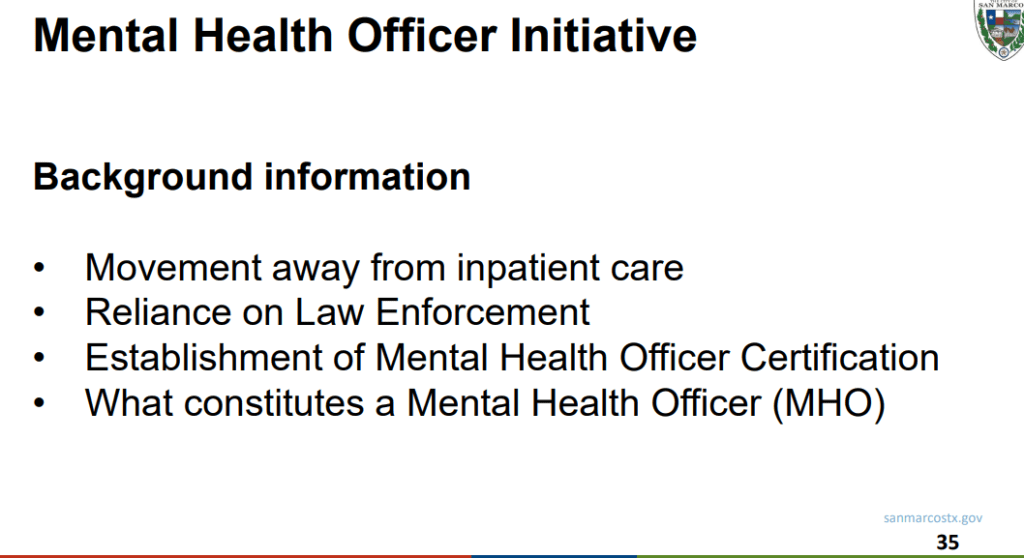

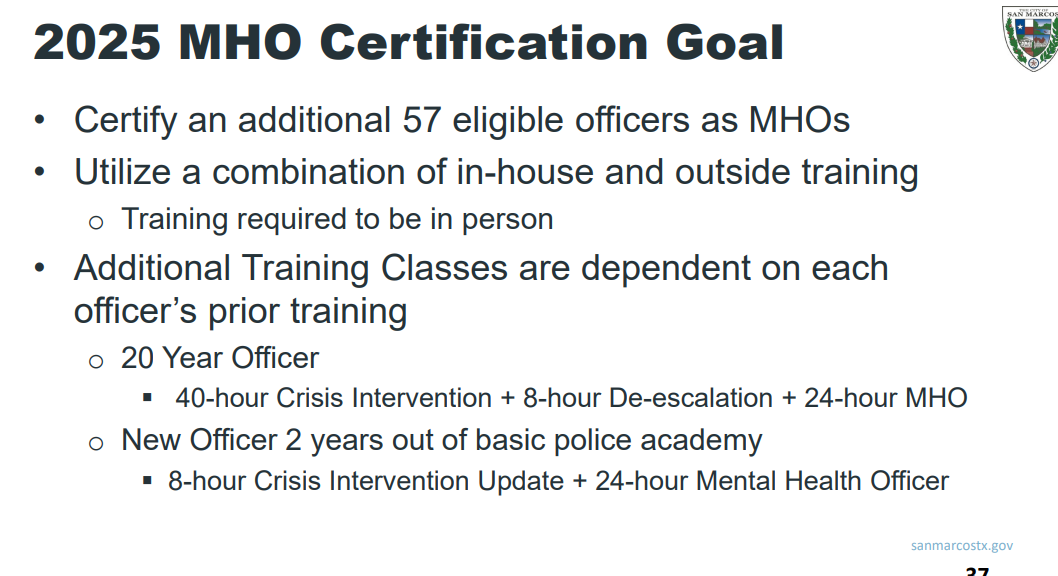

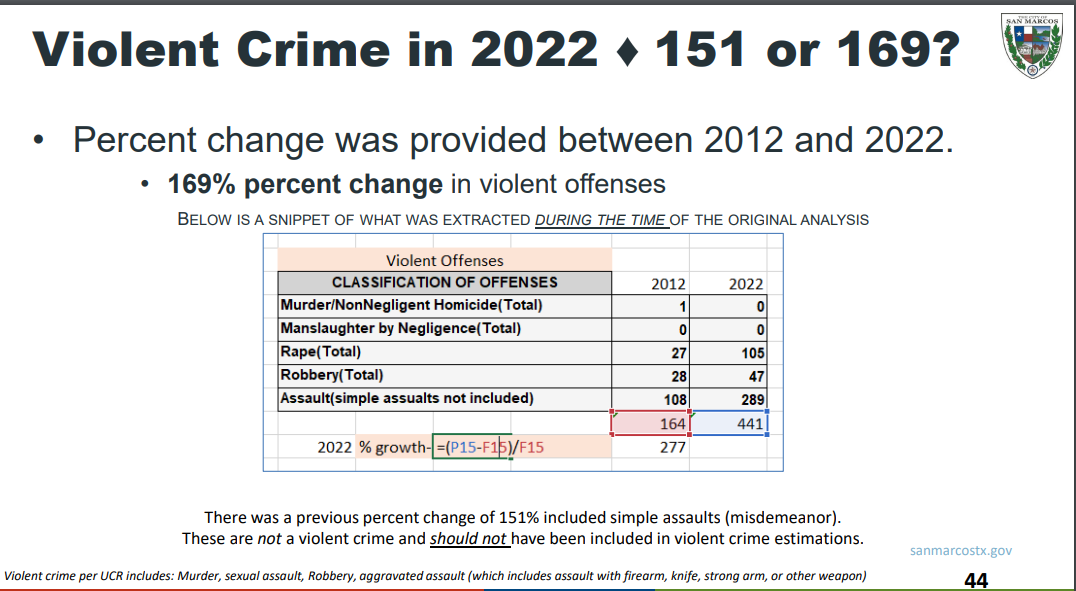


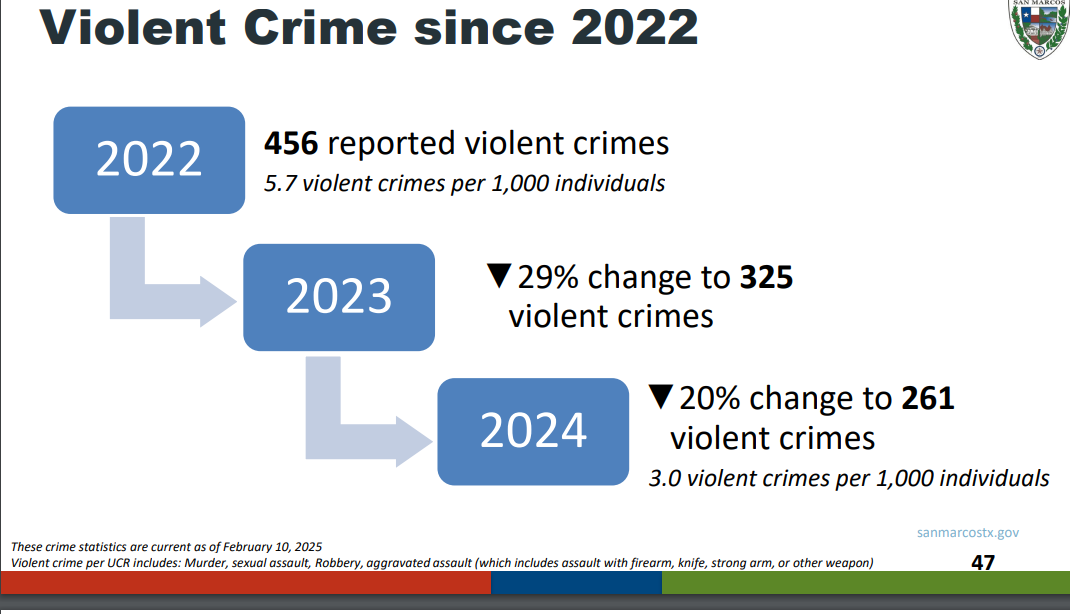

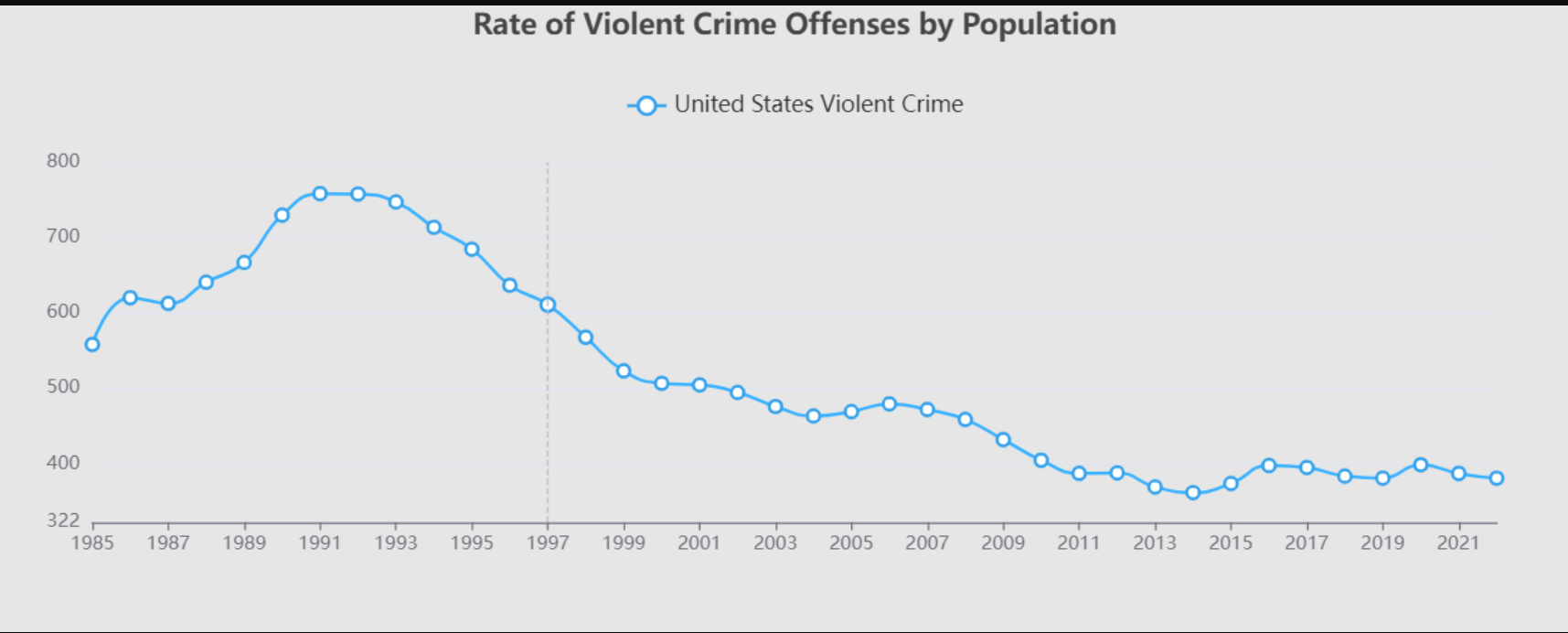
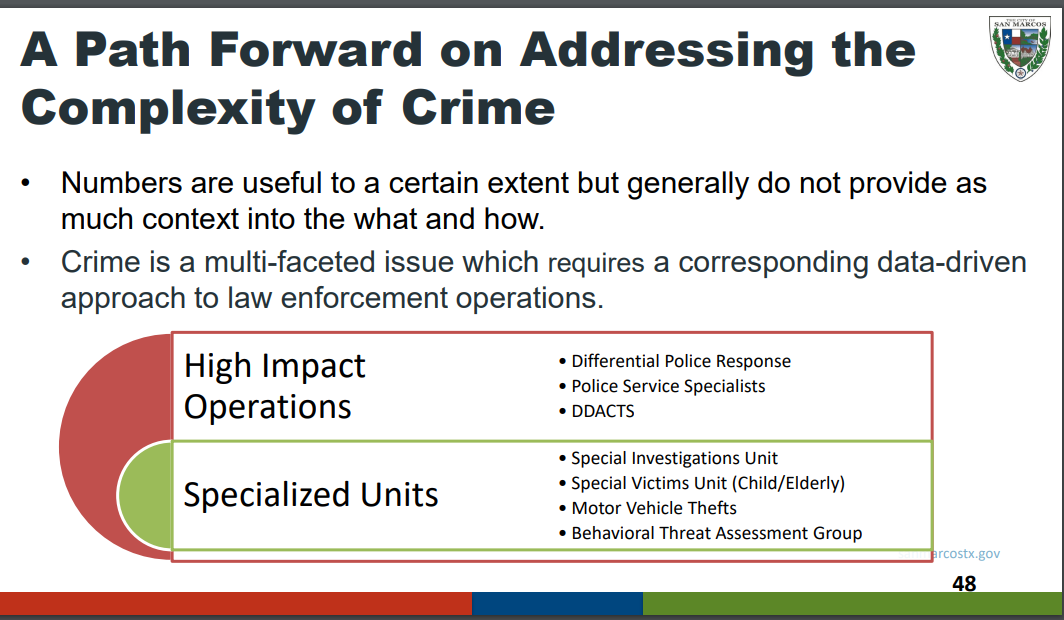

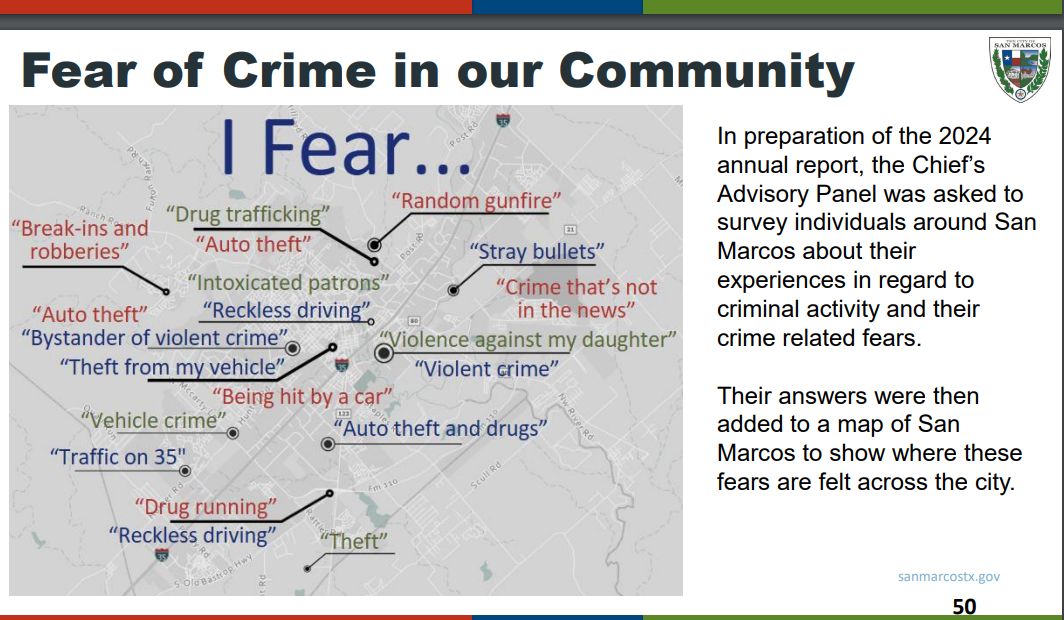


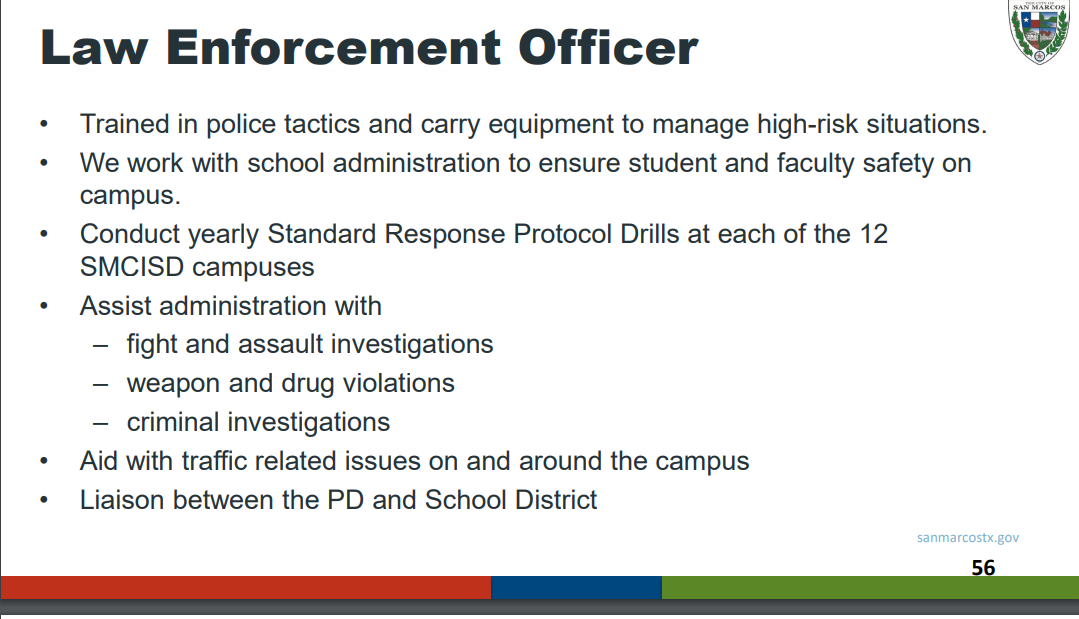


 The San Marxist
.png)