Hours 3:28 – 6:47, 6/3/25

Item 29: The Dreaded Data Center

First off: apparently there are actually like 7 different companies trying to come to Hays County and put in data centers?!

Out of those seven companies, there are a few specific ones that keep coming up:

  • This one, on Francis Harris Lane
  • John David Carson’s, discussed later on in this meeting.
  • The Cloudburst one, which keeps popping up in the news.

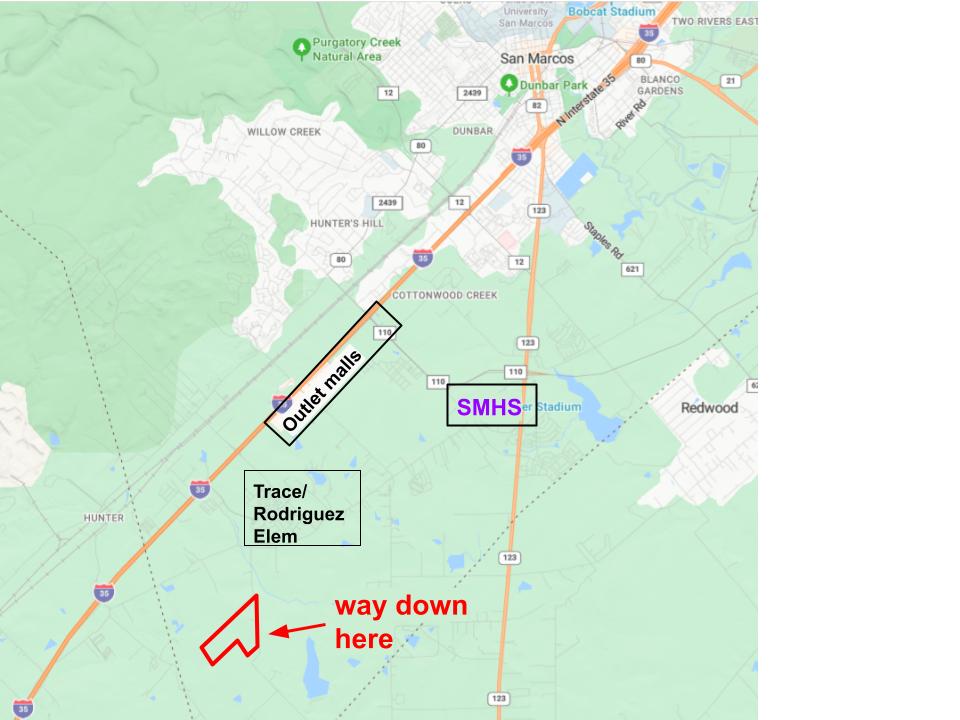
As best I can tell, these are the locations:

I got the address of the Cloudburst site from this article.

So the one we’re talking about now is this one:
(Discussed previously here.)

A few notes:

  • There is no vote tonight. It is just a discussion item.
  • The vote is scheduled for the July 1st meeting
  • P&Z denied the request. So Council needs a 6-1 supermajority to overturn the P&Z vote.

There are 19 more speakers during the public hearing, along with the 35 from from the top of the meeting. (Some people speak twice, though.)

Here’s the main points that people make against the data center:

  • We’re in a drought, and this will destroy the San Marcos river
  • We’re in a drought, and this will destroy the San Marcos river
  • We’re in a drought, and this will destroy the San Marcos river
  • We’re in a drought, and this will destroy the San Marcos river
  • We’re in a drought, and this will destroy the San Marcos river

This really is the most important point. Climate change is pushing us towards permanent water shortages, and data centers use a massive amount of water for cooling.

And also:

  • This will drive up utility rates
  • There are reports from Granbury that these data centers are unhealthy to live near

Here are the arguments made in favor:

  • We’re going to get a lot of tax revenue
  • This does not cost the city much in terms of roads, utilities, and fire/police/emergency services.
  • These guys are offering to be more environmentally sustainable than the other six data centers. Take the regulated data center over the unregulated one.
  • Specifically, they’re going to use closed-loop cooling instead of open-loop evaporative cooling. This uses much less water.

Here is the developer’s basic pitch: “Data centers are definitely, 100% coming to central Texas. I’m the friendliest and the most cooperative one. I’m willing to do things environmentally and sustainably.”

He’s offering to put a bunch of concessions into a restrictive covenant. This is a contract that stays intact even if he sells the power plant. The next owner will still have to comply with it.

Here’s what he’s offering:

  • Closed loop, non-evaporative water cooling system. (This is very important.)
  • Limiting water use to an amount equivalent to 235 homes
  • Stricter than San Marcos Code on stormwater detention and impervious cover.
  • Sound and light mitigation
  • Getting water from Crystal Clear, not from San Marcos.
  • Getting electricity from Pedernales, not from San Marcos.
  • Only need San Marcos for waste water.

Here’s the obvious rebuttal to the last few points:

  • Who cares if it’s San Marcos city water or Crystal Clear water? It’s all coming from the same water table underground.

One speaker puts it like this: “These are straws pulling on the same water table”. Exactly.

Will this cause the San Marcos River to dry up???

Here’s what the developer said: they’ll need about 400-500K gallons of water to initially fill about 6-7 buildings. But after that, they don’t need much water until the buildings need to be re-filled in maybe 10 years.

I asked Robert Mace how bad that is? He said:

  • 100k of water is about what an average family of three uses in Texas a year (~88k). Won’t make the river run dry!
  • If it was an open loop cooling system (evaporative cooling) and an average system, it would be about 12.5% of San Marcos use. It wouldn’t take many of those to overwhelm local supplies.

So this is a big picture question. Can our river handle this one data center, on a closed loop system? Yes. Can it handle seven data centers on open loop systems? No.

So does ANYONE have control over how many data centers come to central Texas?!

This is an uncomfortable question! There’s only flimsy safeguards.

  • Can San Marcos block them? Only if they’re in city limits, and the developer needs the land to be re-zoned.
  • Can Hays County block them? No, they cannot prevent data centers from coming.
  • Can ERCOT block them? Sort of yes. They have to approve anyone who wants to join the grid.

The rumor is that ERCOT will approve 1-2 data centers in this region, for now.

It sounds like Cloudburst is trying to work around ERCOT by building their own natural gas power plants. I don’t know if ERCOT would still have to approve them or not.

Bottom line:

1. The overall situation is pretty bad for water use.
2. The San Marcos river has some unique legal protections, because of the Edwards Acquifer Authority. They have legal authority to sue if companies go over their allotted amounts. But still, do we need to test this?
3. We’re relying really heavily on ERCOT to gatekeep this situation.

What does Council say?

Everyone’s a little annoyed that the actual restrictive covenant is not already prepared and ready to read. But it’s not.

This is the basic argument that emerges: ERCOT is not going to approve all seven applications. They’ll probably only approve 1-2 applications. So if this data center gets approved by ERCOT, it might prevent an unregulated one from getting approved. That would be a net good.

Jane: It’s better to have these guys, who we can regulate, than the others who we can’t.

Shane: The wastewater from the center goes to the city system. How much extra clean up do we have to do to the wastewater, from the extra chemicals?
Answer: We have a filter standard. They have to clean the wastewater up to our standards before they release it to our system.

Lorenzo: Are there going to be gas turbines or some sort of power plant?
Answer: No, that’s Cloudburst. We’re not going to have a power plant.

Lorenzo: What happens if they violate the restrictive covenant?
Answer: Two things:
– Before we issue city permits, we’ll check to make sure they’ve built it the way they’re supposed to. So they can’t get up and running if they don’t build what they say they’ll build.
– After it’s built, if they violate the covenant, we can get a court injunction. The court will order them to comply.

The developer is trying to be the most accommodating person ever. Would YOU like to talk to him? He’s got a whole website, and a whole shtick about how he’d like to talk to you.

(Honestly, he’s refreshing after the SMART-Axis Terminal jerks.)

Amanda: I’m concerned that we don’t know what company we’re actually talking about.
Answer: I’m not allowed to say who it is yet. I promise I’ll say before the July meeting. They have facilities in Austin, Carrollton, and San Antonio, if you get my drift.

[Gentle reader, I got his drift. This appears to be the only Carrollton data center.]

A lot of citizen comments mentioned how utility and water rates will skyrocket. Alyssa asks about this?
Answer: Council sets water rates. They don’t skyrocket unless you want them to.

[Note: This answer is a little disingenuous. Council sets water and electric rates for everyone on San Marcos utilities. So those won’t skyrocket. But if you live down south by all these proposed data centers, you might not be on San Marcos utilities. Who knows what Crystal Clear water and Pedernales Electric will do.]

Conversation turns to the P&Z denial. Right now, it takes 6 Council votes to overturn P&Z.

Should Council send this back to P&Z, to take another look? If P&Z changes their mind and approves it, then Council would only need 4 votes to pass this data center.

However, sending it back to P&Z will delay everything by 4-5 months. It might hurt their chances with ERCOT. Council does not want to risk the possibility that ERCOT denies this application, in favor of some other yahoo developer who throws up something worse, out in the county.

Bottom line: I think Council will approve this one data center at the July meeting.

We’re in a kinda terrible situation, but this one data center is probably the least-bad option.

Item 7: Flock License Plate Reader Cameras

Flock Cameras are these:

They read all the license plates that go by, and record the date and time. Then if the police are trying to find someone, they can run a search on all that data and see if there’s any record of it.

“LPR” means “License Plate Reader”, and we first got some back in 2017. But we didn’t join the Flock network until 2022, when we bought 14 cameras:

(Also I note that they used seized funds for the first batch. Blech.)

Back in February, SMPD wanted to purchase 19 more Flock cameras. Council delayed approval in order to revisit our privacy policy. In March, we revisited our privacy policy and made some good improvements.

So now it’s time to vote on whether or not to approve the grant for these cameras.

What are the arguments for and against?

In favor: There are lots of examples of how Flock Cameras are used to solve crimes. From the packet:

Arguments against : They are tracking your every move. Do you want to live in a police surveillance state? The data gets merged nationwide to have one big nationwide network. Private companies can have Flock cameras. Neighborhoods can have Flock cameras. The ACLU does not like Flock one bit.

But it’s not just an abstract fear about loss of privacy: ICE has access to Flock data. We’ve got a federal administration that plays out revenge fantasies on brown people, and is in the business of deporting people as recklessly and broadly as possible.

Here’s a particularly chilling recent example: She Got an Abortion. So A Texas Cop Used 83,000 Cameras to Track Her Down. Those would be nationwide Flock cameras that made that possible.

How does the Council conversation go?

Amanda: It’s the times we’re living in. People disappear off the streets because of this technology.
– The policies aren’t strong enough to protect against a subpoena. Austin didn’t know until they did an audit that ICE was accessing their data. (Austin is now ending their license plate reader program.)
Senate Bill 9 would require Texas sheriffs to work with ICE. Our data will definitely get shared. Our policies will not protect us.
– They’re rolling out new technology, like NOVA.
– Please just don’t do this to people.

Saul goes next: I see the pros, but there are not enough safeguards yet. I’m a no.

Council spends the next hour trying to nail down exactly how much control you have over who sees your data. If Dallas PD is looking for a specific red car, can SMPD decide whether or not to release the data on that specific car?

Eventually the answer comes out: no. You do not get to decide on any specific request for data. Once you set up a reciprocal agreement with Dallas, they get access to all your data. Either the faucet is on, or it’s off.

The Flock representative keeps repeating “The city of San Marcos owns the data. Flock does not own the data. They’re just the guardians of the data!”
Alyssa asks: Can you show me where in the contract that exclusive access is guaranteed to San Marcos? Your policy says that you “retain a perpetual, royalty-free license to use aggregated data for your purposes.”
Flock rep answer: We promise that we use it only for anonymized training data.

Lorenzo: Does Flock own the physical servers? Or do you rent servers?
What Lorenzo means is: where are the actual, physical computers where the data is stored? Does Flock have their own computer storage?

Answer: We use Amazon Webservices.
This means, no, Flock does not own large-scale computer storage. Flock sends the data to Amazon for storage on Amazon computers.

Lorenzo: So Amazon is a third party that could also be subpoenaed for the data? You might not even know if they had to hand it over. What if they violate their agreement and fail to delete it?
Answer: It’s in our contract with Amazon that they’d delete the data after 30 days. If they didn’t, they’d have to charge us extra!
[Note: that answer does not make any sense. You didn’t misread it.]
Lorenzo: Amazon is in the business of data collection.
Jane: You’re not in control of that data.

Alyssa: This system is dangerous by design.
– these claims are absurd! Like “license plates aren’t personal information”. You can track a person with it, can’t you? It’s personal information.
– We own the data, but we don’t. They keep it.
– They say ICE can’t access our data, but they do.
– Anyone that we share our data with can then turn around and share it with whoever they want.
– There are many cases of cops using it to stalk people.
Peter Theil is a backer of this, for god’s sake.

Chief Standridge: Look, I can only speak on behalf of what happens locally. In San Marcos, Flock helps solve specific crimes. Locally, I don’t have evidence of any privacy breaches. I am only able to speak to San Marcos.

Amanda:  I have never thought that you all are the bad actors.  We share with 600 agencies. Our policies don’t matter when we’ve already shared with them. Flock would not be in business without this network.

Jane: I was a software manager at the university. Here’s how it goes: you get a new technology, and you hammer out all the rules with the company. Then they get bought. All the rules with the first company go out the window, and the new company puts all new rules down. If Flock gets bought, all these rules go out the window.

Chief Standridge: What about all the safeguards and policies we discussed in March?
Amanda: All we did is require agencies to follow all applicable rules and laws. But there are no federal rules! This technology is not regulated. Your policy ends the moment you share data with them. We share data with Houston! Houston openly says they work with ICE. Therefore we work with ICE.

Shane: What about the first 14 cameras we already bought? We still have those, right?
Jane: Yes. But we could put it on the agenda to get rid of them.
Alyssa: I guess we should revisit this!

Jane shares a little of her thinking:
– Originally I thought these cameras were great. And if Flock were only used like in the examples, then it would be fine. 
– I’ve learned stuff tonight that’s giving me a really hard time saying Flock is good for the US.
– Then I thought, “But there’s cameras everywhere. There’s Ring, etc, toll roads, smart phones, etc.”
– But that’s different. This goes to government agencies. I’m not worried about our department, but I can’t say that about other departments
– Maybe just at major intersections? Nope, nope, that doesn’t work. It’s the other departments.
– We just don’t have enough guard rails for this. The more I learn about how the system is being used, it’s pretty scary.

Something has happened since the last discussion, because Chief Standridge does not seem surprised that it’s unfolding like this.

He makes one last bid: “What if we only share data within Hays County?”

Alyssa: What keeps Hays County from turning around and sharing it?
Amanda: What about the Texas Senate Bill that requires sheriffs to cooperate with ICE?

City Manager Stephanie Reyes weighs in:  It’s clear that you all are worried about where we are as a nation. It’s not an issue about SMPD.  It’s not about our individuals. It’s about the policy decisions that we can control in the national scene.
Everyone’s like: Yes! Correct!

Finally, the vote: The motion is to deny. So a green check means no on the cameras, red dash means “yay Flock!”

Are you a NO on the cameras?
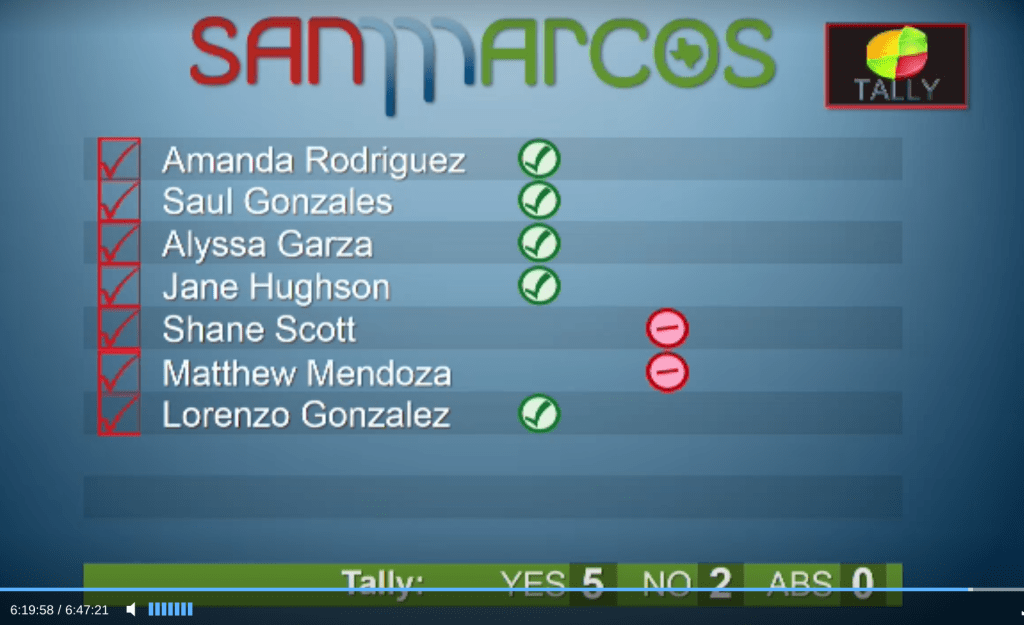
Amazing. Shane and Matthew are the only ones who still want them.

The council conversation was outstanding to listen to. It was just so sharp. Everyone made really great points.

Whew! After all that, we’re not quite done yet…

Item 15: Spin Scooters

You know them, you love them:

(We’ve discussed these before, here and here.)

It turns out they’re breaking up with us? Their contract is up on June 30th, and they don’t want to renew.

The reasons are:

  • Low ridership
  • Tariffs
  • Finding parts

Ouch.

Once they officially break things off, we’ll start looking for a different company who might enjoy our low ridership, tariffs, and lack of parts.

Item 24: More data centers!

So, recall there are seven data centers with applications in at ERCOT.

These are the three that I know about:

So now we’re on the pink one.

Yes, it’s gigantic. The red one from earlier is 200 acres, and this one is 785 acres. They’re saying it would also include housing. Unlike the one in red, the developer wants this one to be on San Marcos water.

It’s past midnight and everyone is exhausted. They decide to just form a council subcommittee to negotiate and discuss the issue further.

Council subcommittee: Jane, Amanda, Lorenzo.

I’m good with that.

Item 32: Proposed Charter Amendments for ballot

Here’s the legal language for everything that will show up in the November Ballot:

Q&A: Max Baker:

  • Matthew Mendoza again! Why do you think it’s appropriate to use swear words during the ceasefire conversation?! C, S, and A words?!
  • Would council consider revisiting EDSM policy and how we award benefits when GSMP knows before Council? Would you bring a discussion item that puts Council knowledge before biz privileges?

Adjourned at 2:35 am.

Bonus! 3 pm workshops, 4/1/25

Three quick ones!

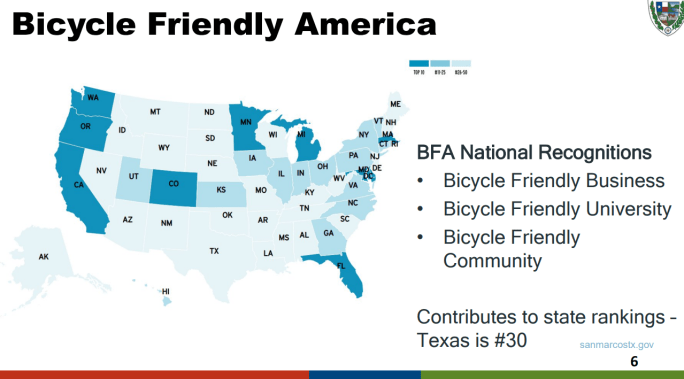
Workshop 1: Bicycle Friendly Communities.

    The League of American Bicyclists hands out awards.  We’re bronze! We’ve been bronze since 2018, actually. But we were renewed!

    Overall, Texas is mid.

    It takes a fair amount of work to get this designation.  Along the way, we got some survey data:

    They also gave us a report card:

    Ouch. Hmm.  Maybe I don’t know what “bronze” actually means. That we’re trying?

    They included 17 recommendations.  We’re a work in progress.  Read ‘em all here.

    Council asks a few questions:
    – Bike incentives? Access? (no)
    – Do we reach out to businesses? (no)
    – Demographics of survey responses? (no)

    I’m being pretty negative, but the city is doing good work on a shoestring budget.

    Remember: on average, it costs about $1,015/month to own a car, whereas it’s about $29/month to commute by bike. San Marcos is full of people who might prefer to bike – but only if it feels safe, and only if they actually have a bike.

    Workshop 2: Spin Scooters

    These came up before, last July.

    We’re talking about these: 

    They’ve been around since 2021. 

    You download an app, and it tells you where the closest one is, and you can rent it and ride around the Scooter Zone.

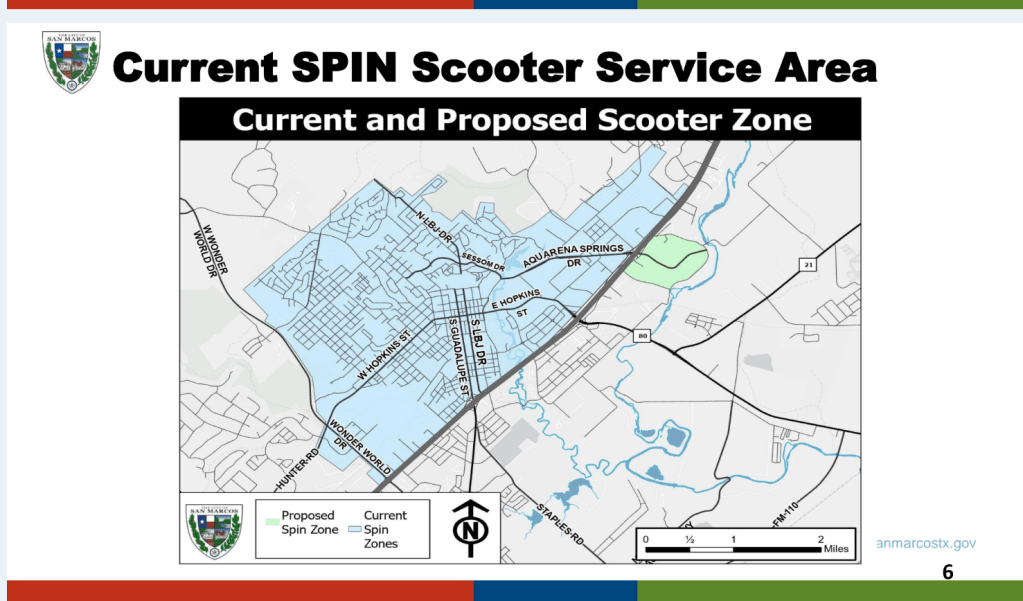
    Originally they were contained to this blue area:

    Last May, the Scooter People asked if they could grow.  So we gave them a 9 month pilot period to extend to this region:

    Also we allowed them to become 24/7. Before, they shut down overnight.

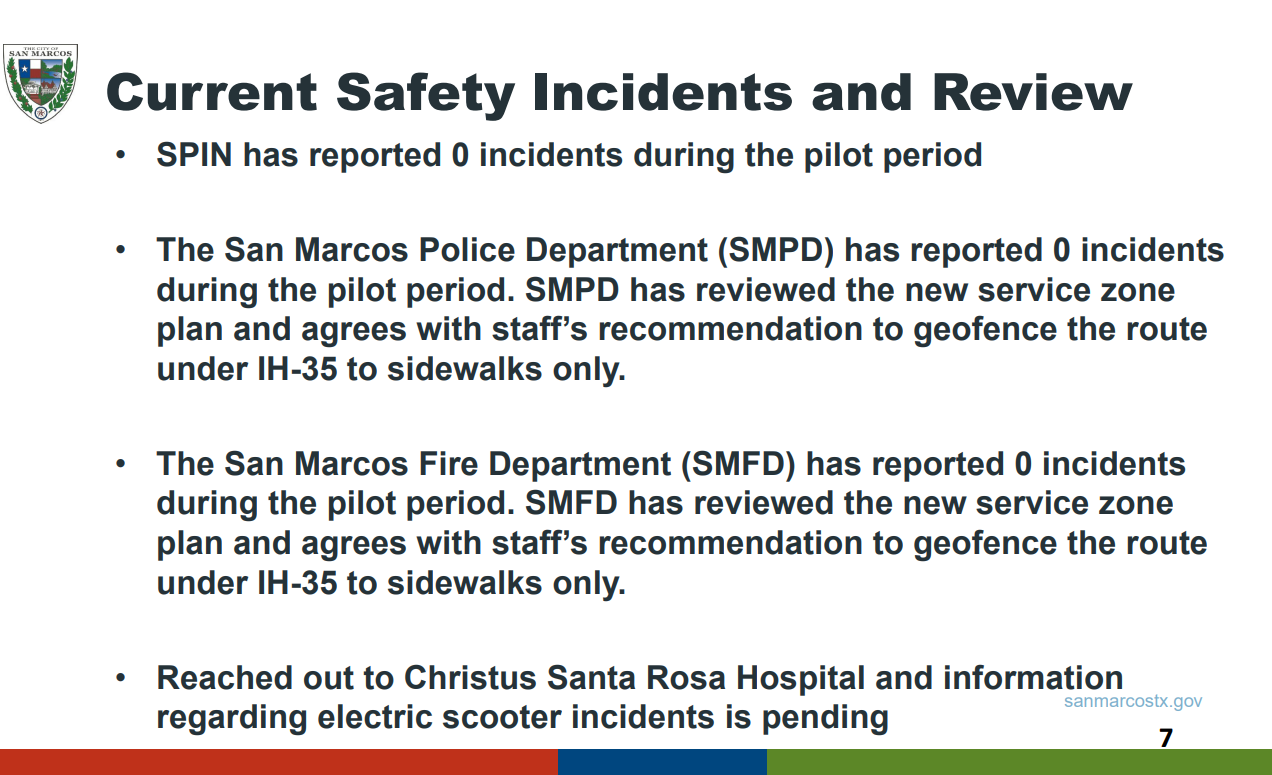
    So how did the pilot program go?

    There haven’t been any incidents!

    Everyone is fine making that region permanent.

    Would we like to fire up a new pilot region, here?

    Sure.

    One final note: Are these actually affordable?

    It costs $1 to unlock, and then $.30 plus taxes per minute. So let’s ballpark that it costs $6 for a 15 minute commute. That means that one daily trip would cost about $360/month.

    That’s actually kinda pricey. Still cheaper than owning a car, but not, like, frugal.

    Workshop 3: Edwards Aquifer Habitat Conservation Plan

    Okay, this topic is always fascinating.

    So back in 1991, there was a lawsuit by the Sierra Club against the U.S. Fish and Wildlife Service. The Sierra Club sued for neglect under the Endangered Species Act. Their case was that if the Edwards Aquifer drops too low, then the endangered species in the Comal and San Marcos rivers could go extinct. And they won!

    So the Edwards Aquifer Authority was created, and they got some legal power. This is important!

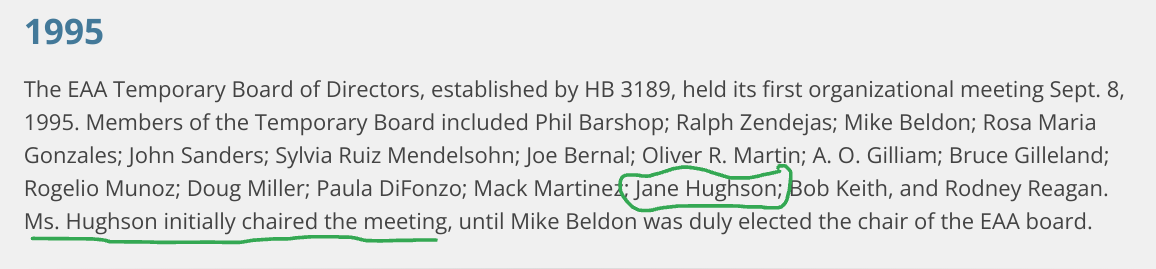
    (hey, look at this:

    Probably some of you know all those names, but Jane’s jumped out at me. Good on her.)

    Here’s the key: The EAA is allowed to cap much water gets used, and they are allowed to charge organizations to use the water. They sell credits to San Antonio, New Braunfels, San Marcos, Texas State University, Kyle, and so on. Then they use that revenue to fund conservation measures.

    Today’s presentation is on the Edwards Aquifer Habitat Conservation Plan, or EAHPC. This is how they actual take care of the rivers.

    So what do they do?

    SO MUCH! They spent about $10 million on San Marcos alone.

    They do a bunch of underwater gardening, to make sure there’s enough habitat for the little endangered fishies, and also the endangered wild rice:

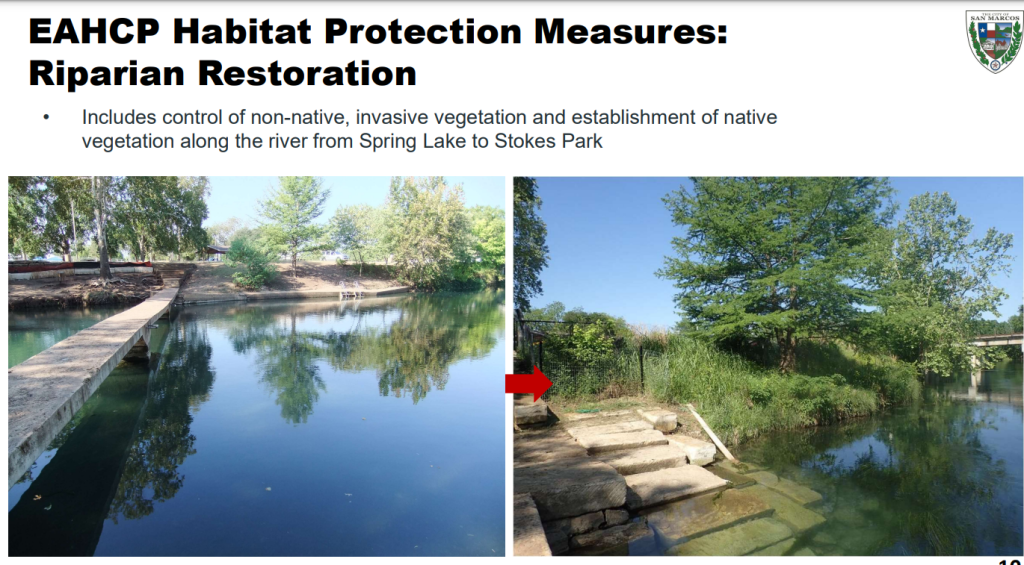
    They fence off the spots where the bank is getting eroded and trampled to death, and nurture it back to life:

    That photo is just upstream of the falls. It’s as if you’re standing on the island with the big cypress trees, looking back towards the bank.

    They hire people to go spear-fishing for non-native species:

    The one on the left is those little sucker-fishes that people put in their aquariums to eat the algae and keep in clean. The one on the right is tilapia.

    Council asks: what happens to the fish?
    Answer: The guy who does the spear-fishing holds a big fish fry and serves tilapia fish tacos, down at Ivar’s river pub.

    Council: What about the sucker-fish?
    Answer: Don’t eat those. Gross.

    But also: the San Marcos Discovery Center has a fish shelter! Like they’ll take your old fish if you don’t want an aquarium any more, and if you are getting started, you can go adopt fish for free from them.

    Don’t dump your old fish in the river, everybody. Take them to the fish library.

    What else?

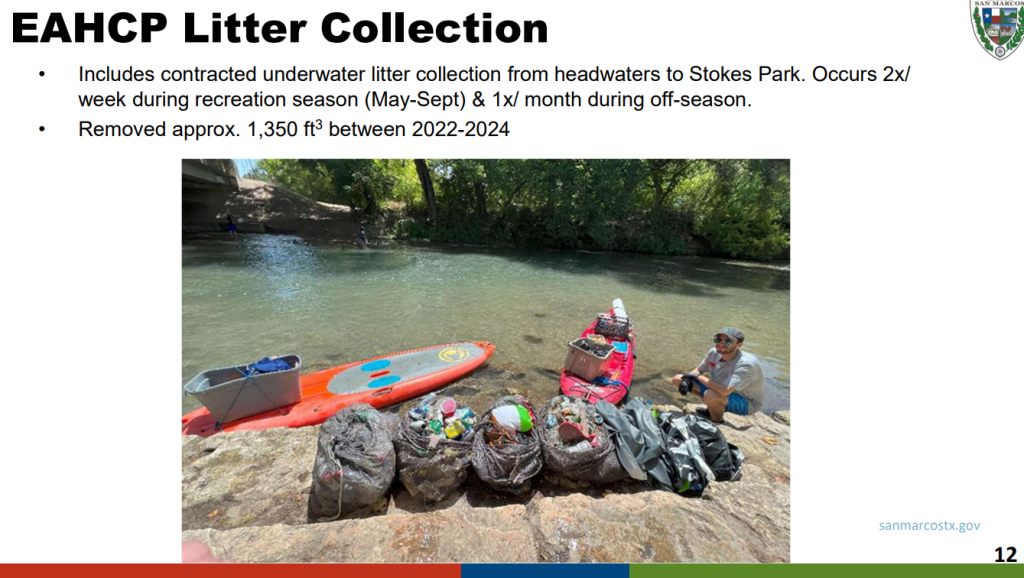
    They pay for scuba divers and snorkelers to collect trash out of the river, twice a week, all summer long:

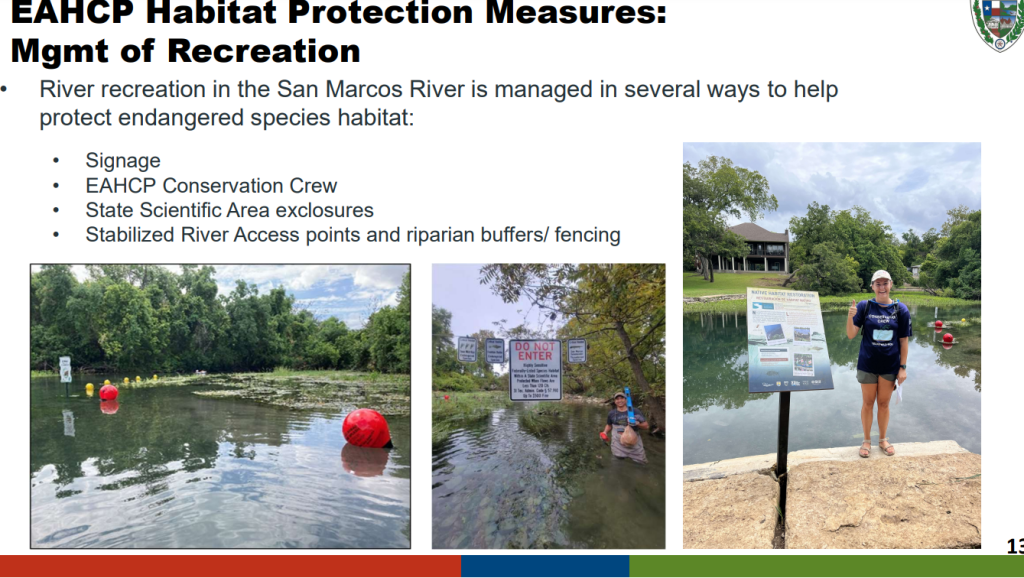
    They keep those red bobbers around the wild rice and sensitive spots:

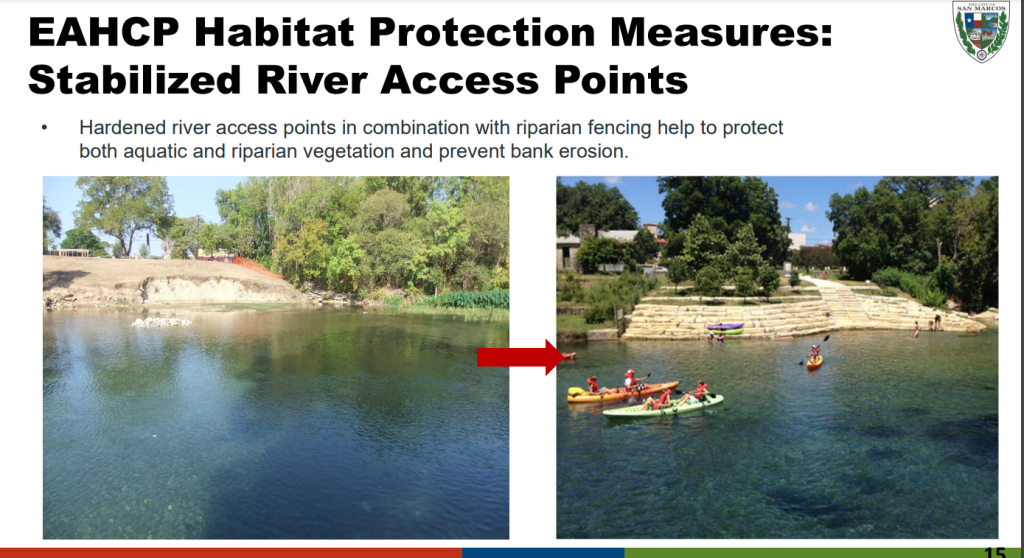
    They put the big limestone rocks in at certain river swim spots, and then fenced off a bunch of the other spots:

    In other words, they were like “Let’s contain the swimming to a few really great swimming spots, and not worry about vegetation there. Then we’ll protect the rest of the river for vegetation.”

    Also the limestone rocks keep the bank from eroding.

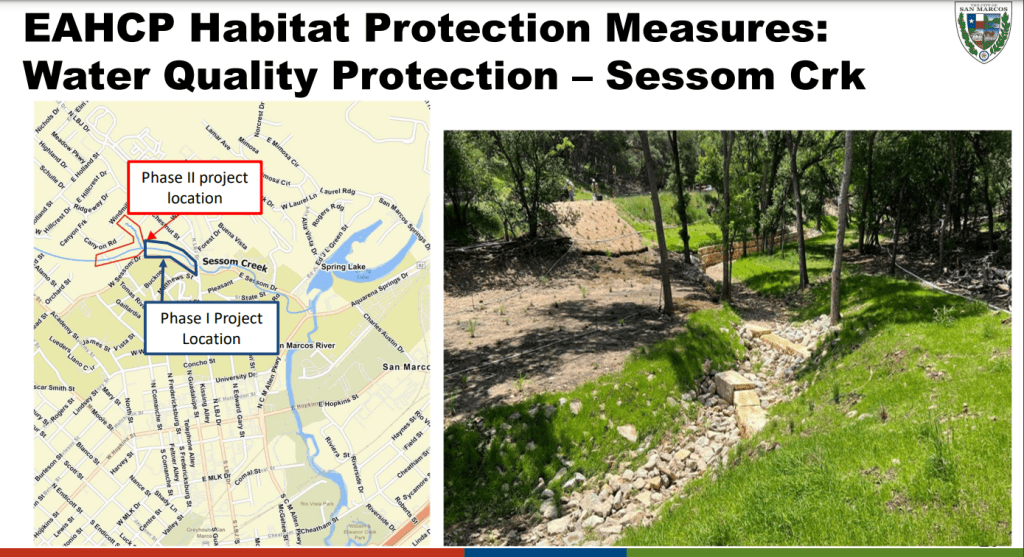
    They did a bunch of stormwater detention that keep the nasty stuff from running into the river:

    and they also fixed up Sessom’s Creek:

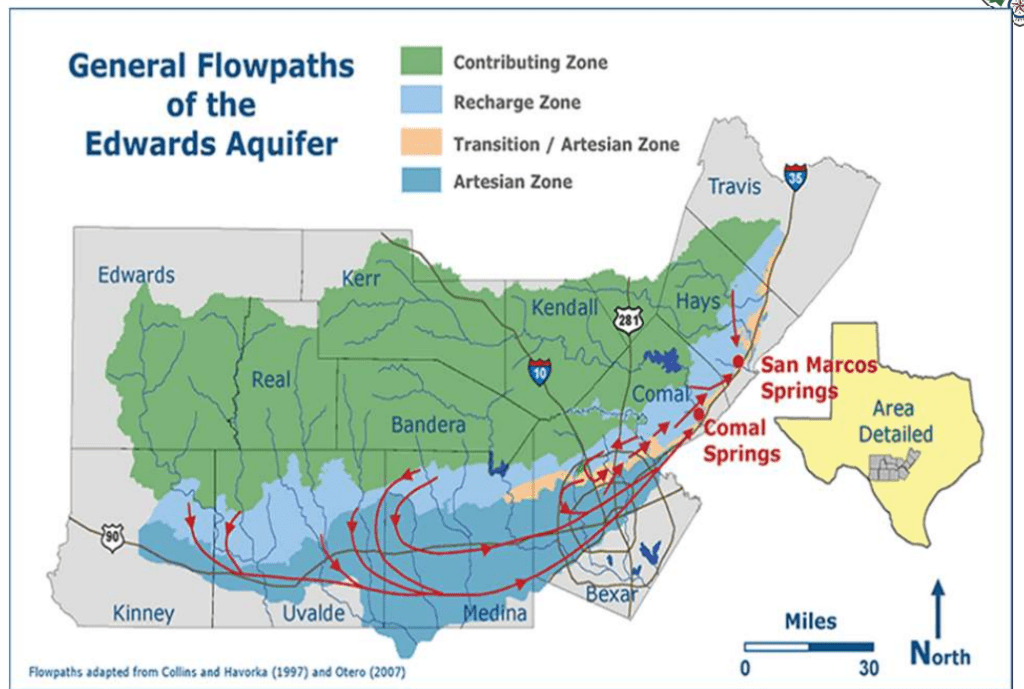
    I mean, let’s pause here. This is wild, right? This is the Edward’s Aquifer:

    Everyone in that dark blue region would just be draining the aquifer dry, if the EAA wasn’t around. Instead there’s been this massive coordinated effort, resulting in $10 million worth of projects to protect our river?!

    That’s insane and beautiful. You’ve got to cherish this and really breathe it in.

    (Especially during this larger dark time. I hope this program is not dependent on federal funding.)

    But wait, there’s more! You can’t hold these deals back!

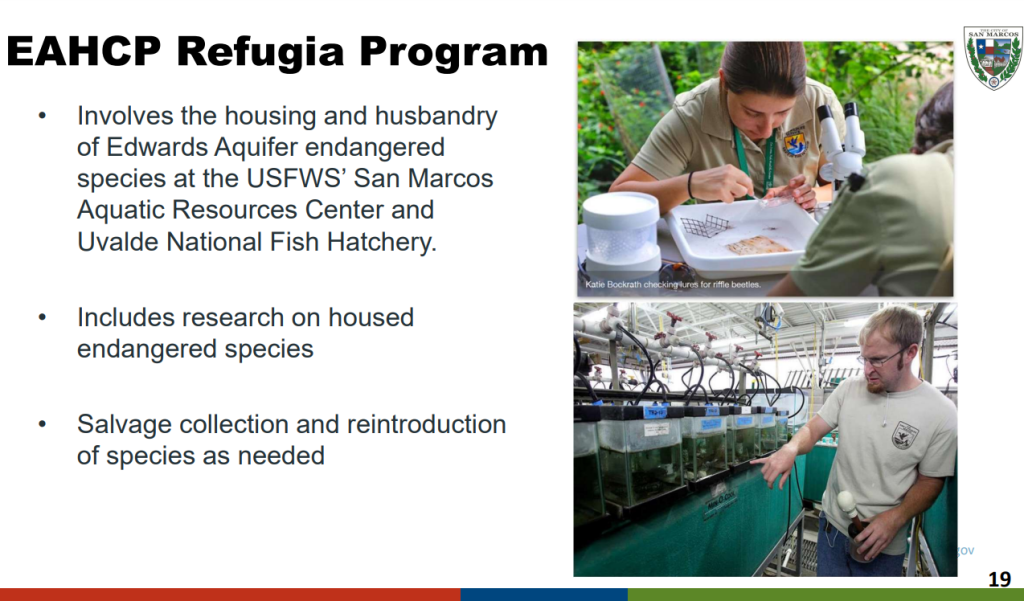
    The scientists study and monitor all the endangered critters:

    They scoop them up and take them on field trips, over to McCarty Lane or down to Uvalde:

    That way, if there was a massive natural disaster or chemical spill or something, they could re-introduce the species after the river was healthy and cleaned up again.

    What’s next? The current EAHCP plan runs from 2013-2027. So it’s about to expire, and they’re mapping out the next one to run from 2028 – 2058.

    They’ll do a lot of the same stuff – make sure the river stays flowing, make sure the people don’t destroy the environment, make sure the endangered species are still paddling around in healthy numbers. But they’ll also have to respond to a hotter, drier world, which makes this all harder.

    There’s some technical details to the new plan, and honestly, you should just watch the whole presentation here. (Or read all the slides here.) 10/10, no notes.

    Bonus! 3 pm workshops, 5/7/24

    We had great workshops this week!

    Item 1: Equity Cabinets

    (Jude Prather recused himself from the discussion, due to his wife’s employment at Texas State. As far as I can tell, there’s nothing remotely conflict-of-interest about this – but sure, why not.)

    I learned that there’s something called an “equity cabinet”.  You pull together a bunch of people who represent traditionally underrepresented groups in your community, and have them thoroughly study a problem in the community, and make policy recommendations.  (Here is the example from the presentation of where it’s been done before.)

    Dr. Rosie Ray is a researcher at Texas State (and we’ve seen her before: here and here and here and here and here). She got some funding to partner with the city of San Marcos – if the city is interested – to put together an equity cabinet to study all things transportation-related.

    Who exactly are the traditionally underrepresented groups?  Biden defines it like so:

    Who are the local partners who can put forth good candidates for this cabinet?

    What would they be focusing on? 

    So about 10 people would be chosen to work closely together over five months.  They’d get paid, it would be structured and well-planned, etc etc. The cabinet would have to get up to speed on the challenges that the city faces and what we’re currently doing.

    So what does council think?

    Everyone’s on board!  Sounds like it’s a go. 

    Here’s the timeline:

    I look forward to hearing the recommendations from the cabinet!

    ….

    Item 2: PIT Count

    How many homeless people are there? It’s not an easy question to answer, for obvious reasons. 

    One way you do it is with a “Point in Time” count (ie, a PIT count). You pick one day (in January, per HUD requirements) and get as many volunteers as possible to go out into your county and try to lay eyes on as many homeless people as possible. But also, you talk to the people and try to get a snapshot of the people who are homeless that night.

     Homeless Coalition of Hays County conducted ours on January 25th this year.  They’re part of the Texas Homeless Network.  It took 50 volunteers that day, and 17 more doing background work.

    It’s not perfect:

    But it’s still useful!

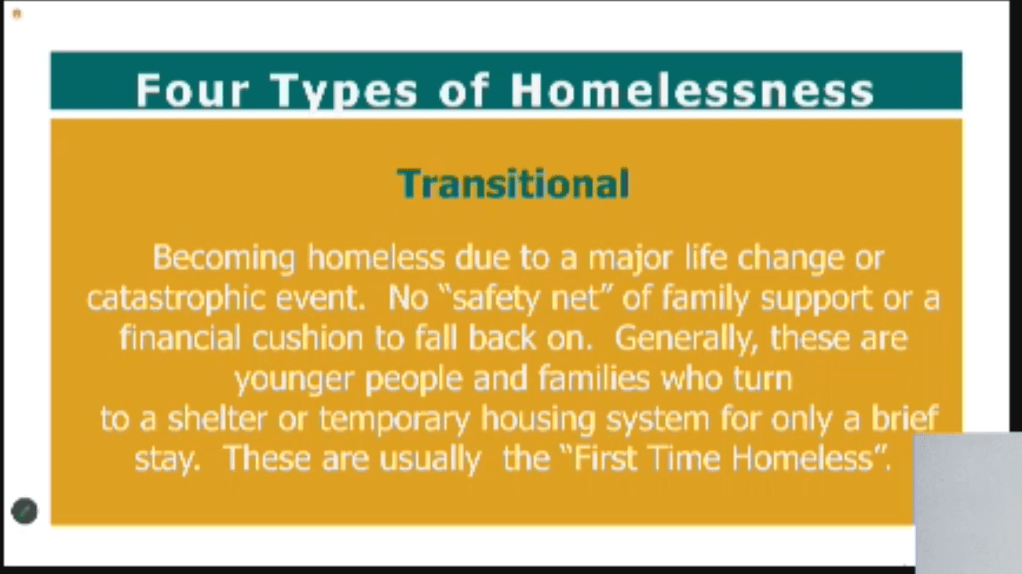
    Keep in mind that homelessness is complicated:

    The chronically homeless people are the most visible. These are the people you see along I-35 or in public areas. These are the people most likely to get counted in the PIT count.

    The hidden or transitional homeless people are much harder to count. Who knows if you’re couch-surfing, or living in your car? Especially if it’s on-again, off-again? A lot of these people are holding jobs and functioning in society, but can’t afford housing.

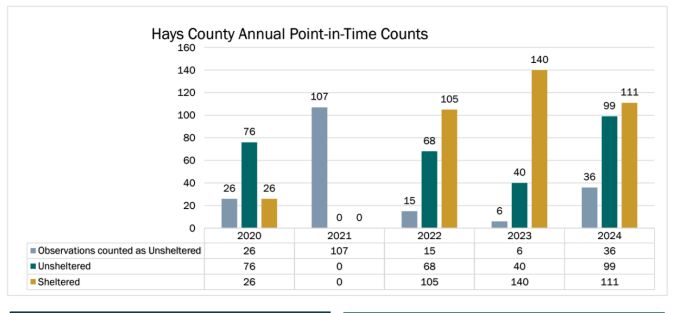
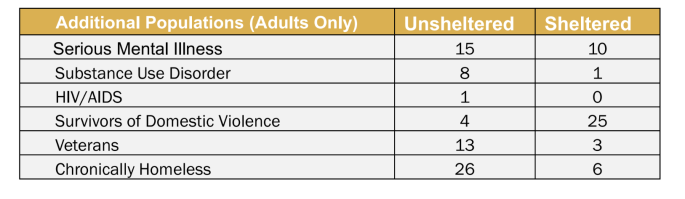
    Results: 

    “Sheltered” means Hays County Women’s Shelter or Southside Community Center/BR3T program with motels.

    So why is the number of unsheltered people going up? Most likely, it’s two things:

    • we’re getting better at locating and counting homeless people, and
    • rising housing costs are displacing more people, so there are actually more homeless people.

    Where are the homeless people in Hays County?

    Mostly in San Marcos.

    This also has a couple reasons! We’ve got most of the resources here. But also, the people conducting the PIT count know San Marcos mostly thoroughly. They know where to check in town. We need cooperation from people with deep knowledge of Dripping Springs and Wimberly homeless communities, if we’re going to find and locate people there.

    On that day, the PIT Count volunteers make 4 sweeps, but all during daylight, for safety reasons. They also chat with the homeless people, if the person is interested in chatting. So we get some informal survey data.

    Survey results:

    So what good is this? First, it allows us to apply for lots of funding.

    Quick Detour: Remember Robert Marbut, from here and here? He was Trump’s homelessness expert, and then we tapped him to write a Homeless Action Plan for San Marcos.

    Marbut advocates for “Treatment First” programs. You do not house someone until they’re stable enough to keep the housing. (If this seems cruel, you might have spotted the fly in the ointment.)

    Under the Biden Administration, HUD funds “Housing First” programs. You get someone off the streets, first. Once they have some basic safety and security, then you can work on mental health and addiction issues. (The main argument against this is, “If you offer housing with no strings attached, you’re threatening capitalism! Workers won’t hustle and turn a profit if they’re not scared of having their life crumble!” Mm-hmm.)

    Presidents matter. They install people to run all the major organizations, like HUD, the EPA, Dept of Education, DoE, etc. Under Biden, you will have sane people implementing humane policies. Those policies affect things like how cities help homeless people. It really matters.

    Anyway, here are the slides from the presentation on why Housing First is more effective than Treatment First:

    It’s more effective and less cruel! Win-win.

    The PIT count is not the only measure of homelessness. There’s also the McKinney-Vento report for kids enrolled in public schools:

    The McKinney-Vento report measures things slightly differently than the PIT Count. They try to record how many kids are couch-surfing, which is the “doubled up” category, and who is temporarily living in a hotel or motel. Whereas the PIT count doesn’t catch either of those unless Southside is paying for the hotel room.

    One last note: Jude Prather volunteered at the PIT count, and works in his job to get vets housed, and he deserves some kudos for that hard work.

    He also made a point of advocating for increased funding for organizations that provide individual case work for homeless people, which I think is a reference to H.O.M.E. Center.

    I agree! They do great work.

    Item 3: Spin Cycles

    You might recognize these scooters from such hits as:

    “I’m abandoned, blocking a sidewalk” or “I hope you didn’t need to use a wheelchair on this sidewalk”.

    All kidding aside, they popped up in San Marcos back in 2021.

    (It’s kind of weird – there’s no history about these scooters on the blog. Council did not discuss them when they were approved in 2021, nor when they were re-upped in 2022. No workshop, no discussion, nada. Did they go straight from Executive Session to the Consent Agenda, with zero public discourse? I think so!)

    I’m actually in favor of this kind of thing! I mostly think the program is great (aside from blocking sidewalks).

    This is my best guess as to how it works: you download an app. It shows you where the nearest scooter is. You can activate the scooter and ride it within a certain zone. The company is supposed to maintain and insure the scooters, and make sure they get tidied up on a regular basis so that they don’t prevent people in wheelchairs from using the sidewalk once they’re discarded.

    Here’s the current boundary of where they work:

    I assume when you hit a boundary, they just deactivate, like a sad ghost who hit the wall of their haunting-perimeter.

    They max out at 15 mph, and the company has slow-zones where they max out at 10 mph.

    Overall, the program is successful!

    • They’re heavily used.
    • They’re significantly cheaper than owning a car
    • They’re better for the environment.
    • They’ve had 1 reported safety incident in 2022-2023.
    • They’re great at preventing people in wheelchairs from using the sidewalk. (Kidding. But this is my one major gripe.)

    The company is asking for a two things:

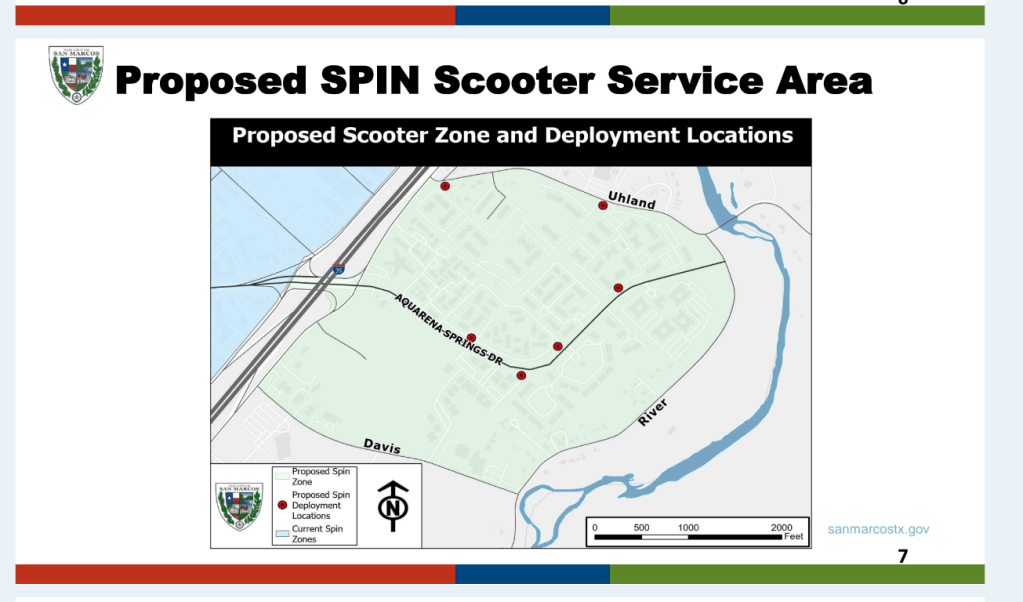
    1. Bigger service area. They want to cross I-35, at Aquarena Springs Road:

    This is a great area to include. There are tons and tons of students there, going back and forth to campus.

    The big issue is I-35, of course. (I sometimes fantasize about what it would be like if I-35 had never split this town in half.)

    Here’s what they’ll have to navigate safely:

    The intersection of Aquarena and I-35 does technically have a sidewalk path that riders can take the entire way, to navigate it.

    [Confidential to anyone who drives a car, truck or SUV: People are fragile. Please drive your 2000 lb vehicle timidly.]

    2. Their second ask is to operate 24/7.

    Right now, the scooters only work 5 am-midnight. So they’re not restricted to daylight hours, but they’re not available when the bars close at 2 am, either. But they’d like to be!

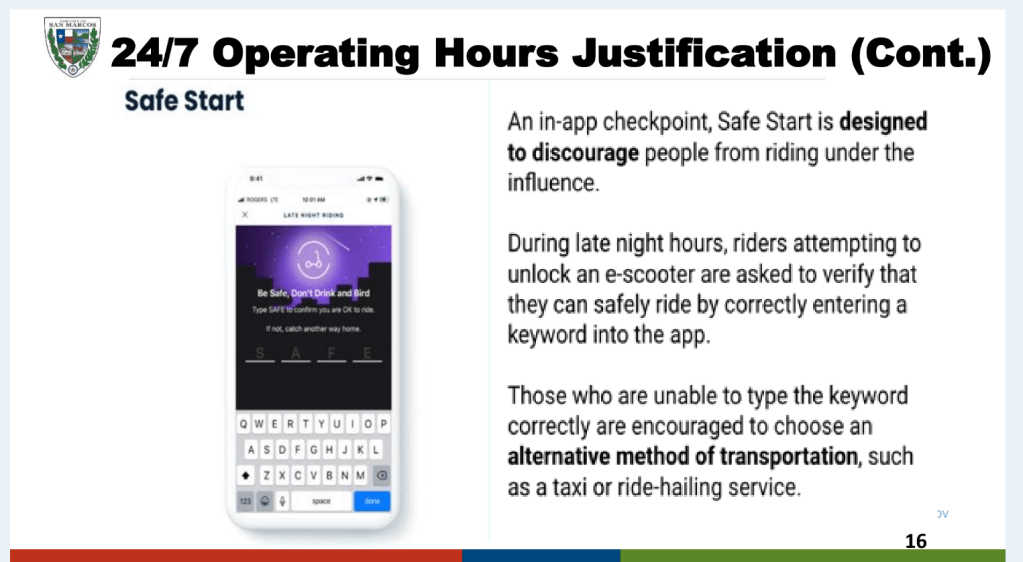
    They have some safety options to mitigate things:

    So I guess you can’t be so drunk that your vision is blurring? This seems like a low bar to clear, but at least they’re not getting behind the wheel of a car?

    They can also throttle the max speed, and cap them all at 10 mph during overnight hours.

    What does Council think?

    Jane Hughson is a little wary of the I-35 exchange, and asks if we can put up some signs or markers directing scooters to take that specific sidewalk path.

    Answer: sure.

    Mark Gleason has some reservations about I-35 as well, but is mostly enthusiastic about looping in the east side and connecting them across 35. He asks if they can extend the zone to Walmart.

    (I agree that stretching it to Walmart is a great idea.)

    Saul Gonzales asks if you can get a DUI on one of these.

    Answer: Yes you can!

    In the end, everyone’s on board with this. Also, it’s a pilot program that will come back in 6 months, so we can see how it’s doing.

    City Council Meeting, May 5th, 2020

    Well, it’s already 6:50, so I missed the first chunk. What’s on the menu today?

    Currently:

    1. ID#20-231 Receive status reports and updates on response to COVID-19 pandemic; hold council discussion, and provide direction to Staff.

    CDBG grants, I think.

    2-6: Consent agenda meh. Ed abstained from something to do with getting his salary from Texas State.

    A speed limit thing: 30 mph to 25 mph. Harvey street between North Street and Blanco Street. A tow away zone. Another speed limit thing. An agreement between Texas State and the city. Tax stuff. Anti-computer-virus stuff.

    11. 50K from the Asset forfeiture program to an employee wellness program.

    Max: civil forfeiture: can we explain this to the public? It’s like 150K. Can you explain for people where this comes from?

    Presenter: Proceeds of felonious activity. Drug seizure. Money that’s along

    I love that Max is asking him to explain this.

    Passes quickly.

    12. Revising and updates some public records. Meh. Passes unanimously.

    13. Prohibiting motor-assistend scooters owned by commercial scooter companies.

    Backstory: this is the compromise version. I was personally opposed to the first version. I even wrote a letter. Originally it was really extreme and banned all motorized scooters. This seems fine. I don’t totally know the motivation.

    Presentation: This has been going on for 6 months, with vagueness.

    None of those motorized rental scooters, like our motorized bikes. Users and companies will both get in trouble. Private scooters okay. City can carve out exceptions in the future. End of presentation.

    Melissa: Do we really need to penalize the users? We get new students to town constantly.

    Answer: These are big and require credit cards.

    Melissa: yeah but that’s not my question. Is it legally required?

    Answer: I’m not answering. I’m wandering around it and talking about intent.

    Melissa, tightlipped: thank you.

    Mayor Jane: I agree with Melissa. How would a kid know about city ordinances? But it’s pretty piddling. Only up to $100. They could give warnings.

    Bert: The companies try this! They have dumped a bunch of scooters or bikes without permission, before! We end up finding out really quickly and wouldn’t fine the individual. We’d just confiscate them.
    [The San Marxist: Civil forfeiture!]

    Mayor Jane: Do we want to deal with sidewalk width?

    There’s a back and forth. Who gets to ride ad walk where, etc. I’m just asking. You guys can take care of that.
    Bert will look into it.

    Max: I also had the width question! Got another. When they dump a bunch of scooters on us, can we raise the max fine?

    Answer: We can’t go higher than 2K on any safety thing. That’s a city ordinance that $2K is the max.

    Max: Is that per instance?

    Answer: It’s per dump, not per vehicle. Also the vehicles can be impounded and there’s a per-scooter $50 impoundment fee.

    Ed: I just like to agree with what other people said.

    Constantino: There is already a city ordinance about lots of other things with wheels in the Central Business Area, ie downtown. Like roller skates and skateboards and bikes. Anywhere else, things with wheels have to give right of way to elsewhere. Been the way ’round these ordinances since the 1970s.

    Mayor Jane: Is that a real hand, Ed?

    Ed: I forgot to lower my hand. [In all fairness, these are zoom-hands.]

    They lowered the fine to $250? Not sure, I missed stuff to chat with our little neighbor.

    Anyway, it’s unanimously passed.

    14. The delay for fees associated with food permits, etc. They discussed this last week. A covid relief thing for small businesses. Skip a payment and divide the rest into thirds, and spread fees over 6 months. By request.

    15. Some covid stuff. Parklets for downtown? Savings clause?

    Temporary licenses for parklets. To reactivate downtown.

    Oh, this is nice: businesses can use little parking spaces as extra outdoor seating. Sidewalk cafes, etc. They already can, but they have to get approval, etc. from city council. This is going to expedite it and make it more pro-forma, waive application fee, and it would all be temporary and end when the students get back, mid-August. Food, retail, etc. Use the space.

    [The San Marxist: This is a very good idea! More things need to be outside during Covid. Use the natural outdoor ventilation! Avoid congregating indoors!]

    Should there be alcohol allowed? Council could explore that.

    Mayor Jane: TABC wouldn’t hold outside their business perimeter, would it?

    Shannon: Not normally, no. In Covid-times? With the take out, etc? Maybe.

    Mayor Jane: I’m not staking any side. I’m just saying it may be moot.

    Shannon: Yes ma’am.

    More presentation: For this, we streamlined the parklet manual. Delete delete delete. Kept ADA. Durable plates, etc. Gotta keep it clean. Insurance, liscense. Max of 2 parklets per block, and a parklet is two parking spaces.

    Per block? or per block face? Council, you get to pick! I mean, you still want to have parking spaces. You know how testy everyone gets about parking.

    [The San Marxist: Parklet is just the cutest word. Sparkly parklets.]

    Mainstreet is into this, as well. Wants to promote it and make more of these.

    Melissa: With social distancing, two spaces seems small. And can they do this with the private parking in the back? If it’s not in a public right of way?

    Shannon: if they’re serving food…thinks it through…should be okay?

    [Back parking lot parklets seem really hot and parking-lot-ish. I’m picturing the pavement just exuding massive amounts of heat, and the soles of my shoes getting sticky, and feeling immensely uncomfortable. No breeze. Etc.]

    Blocks vs. block faces? “Yer a block face,” quips my spouse. “Specially that guy.”

    Mayor Jane is counting angled parking spots out on Google Maps: Angled spaces don’t seem like they’d be as useful as parallel.

    Melissa: Something about coffee to go. And what about courthouse lawn? Grab and go food?

    [I missed some stuff. Some darling friends cookie-bombed us and ran.]

    Melissa: I want to make an amendment – two per block face.

    Max: Abbott requires everything disposable, to go. What’s up here?

    Shannon: If it’s an extension of your restaurant, I’m not sure you’d have to do Abbot’s thing.

    Max: what’s this about ADA?

    Shannon: we usually don’t remove ADA details.

    No smoking in the parklets.

    Max: What if there’s competition for these? First come, first serve?

    Shannon: yes. So far, no one’s ever wanted one.

    Ed: Shouldn’t it say something about emergencies?

    Constantino: yeah, maybe!

    Ed: Yeah well can you put that in there?

    Melissa: This parking space bit about two spaces isn’t in here anywhere.

    Shannon: It’s on page 4 of the manual.

    Mayor Jane: but we’re not approving the manual.

    Shannon: yes you are.

    Melissa: Two per block face, please. I’m making an amendment.

    Saul: I don’t like the alcohol. I don’t like the courthouse lawn.

    Mayor Jane: Alcohol wouldn’t be allowed. The courthouse part isn’t in this ordinance.

    Saul: ty.

    Max: Is there a distance-to-door thing? Can parklets be adjacent? That seems bad for social distancing.

    Shannon: already on it.

    Bert: we’d stop it.

    Amendment passes unanimously.

    Jane: Ok, social distancing. Remember how Abbott tied our hands on keeping people 6 feet apart? Let’s interject somewhere here and make it tie parklets to a 6 feet distancing. Make the restaurant uphold it. Just tie it to the parklet permit.

    Ed: I only want it to apply in the parklet.

    [The San Marxist: Make it everywhere! Mayor Jane is right.]

    Melissa: I just don’t want police officers sticking their heads in restaurants to check.

    Mayor Jane: It’d be complaint-driven. But if you all just want in the parklet…

    Saul: Inside and outside.

    Max: Inside and outside.

    Joca: Samesies.

    Markeymoore: Samesies.

    Melissa: I mean, I’m not going to die on this hill. Inside and out is fine.

    What about using the parking hub? Doesn’t require extra language. It’s city property. Just let people wander over with their to-go food.

    Max: I think they should have to notify their neighbors. I think we should require hand sanitizer.

    Both sort of loosely agreed on. Emergency measure stuff to account for it being approved on a first reading.

    Saul: What if a neighbor is opposed?

    Shannon: Since these are temporary, a neighbor does not have veto power.

    Unanimous!

    ——————————————————————

    16. There’s going to be an Executive Session after this, and then they come back and talk about their Executive Secrets. The topic is “acquisition of property in Downtown San Marcos for public use”. My guess is…parking garage??

    I don’t know how much stamina I have for this sort of thing – it’s 8:40. If they don’t return soon, I might just post this and watch the last bit later this week.