Hours 1:17 – 3:50, 12/2/25

Item 19:  Flock Cameras

This is the biggie!  

What are Flock Cameras? 

Flock cameras are Licence Plate Readers, or LPR.  They sit at intersections like so:

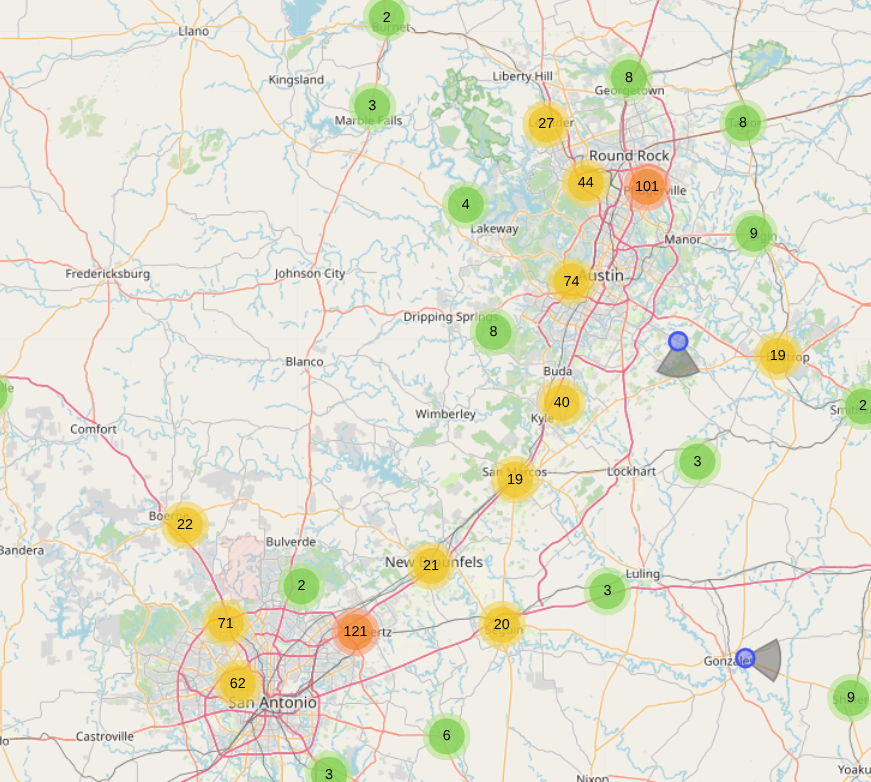
We have 14 of them in San Marcos, and they’re located here:

(We also have 8 downtown cameras that are not Flock cameras.  The city owns these cameras.)

What makes everyone so mad about Flock cameras?

Every single time you drive by a Flock camera, your license plate gets tagged and recorded.  Then Flock takes all this data, and pools it all together across the nation, into one big, sloppy data fest. 

When your police department agrees to share all their data , they are given access to all the data about everyone who drives anywhere in all of the US.

And the network is HUGE:

via

Here’s just the I-35 corridor:

..

Privacy and Data

Privacy rights are a tricky thing to talk about, because of a few things:

1. Our private lives started getting tracked extensively about 20 years ago. Now it’s like being mid-avalanche – we’ve all gotten used to things that are extremely abnormal.

This is the frog in boiling water scenario – as a society, how do we claw our private data back? (Europe has passed laws.)

2. The consequences are fuzzy and abstract for a long time…. until suddenly they’re really, really bad.

Your data is out there. Corporations sell it. It spreads like smoke. Nothing happens until it gets into the wrong person’s hands. Right now, because Trump has weaponized ICE and the FBI, people who want to abuse Flock data know they probably won’t be punished for it.

And ICE is constantly using Flock data to find people to snatch.

3. Freedom and safety are always in tension with each other. If you want to end all crime, you could put every single young man between ages 14 and 35 in jail.  Your crime rate will drop to <1%. 

But one of our core American ideals is freedom. Freedom is so important that we’re willing to accept some loss of safety.  (“Innocent until proven guilty” literally means that we think it is wiser to let some guilty people go free than to risk locking up someone innocent.)

Where do you draw the line between freedom and safety? That is the heart of this discussion.  

    How did we get here?

    April, 2022: Original Council agreement with Flock. 

    It was actually never discussed at that council meeting.  It was put on the Consent Agenda with 15 other items.  That means all sixteen items get one single vote, unless a council member pulls an item for discussion. 

    December 29, 2023: The first contract ends, and city staff signs a second contract with Flock Cameras.

    This contract never went to Council for approval.  Alyssa is pretty salty about this!

    But honestly:  in 2023, council was very very pro-cop.  Jude Prather and Mark Gleason were still on Council, plus Matthew Mendoza. 

    Furthermore, there was a post-covid crime bump:

    via

    There was a lot of nervous energy around that.

    All taken together, Council was extremely deferential to expanding SMPD in 2023.  Hypothetically, if they’d voted on Flock Cameras, it would have been 6-1. I promise you, that’s what would have happened. (Alyssa would have been the only No vote.) 

    February, 2025: The winds change! This was the first time I ever heard “Flock Cameras” uttered in a City Council meeting. SMPD wanted 19 more cameras.  Council postponed the decision until June, and then voted no. No additional Flock Cameras.

    What changed since 2023?!

    Well, Trump, obviously.  Biden certainly deported a huge number of undocumented people! But he did not weaponize ICE with the kind of cruelty that we see from Trump. 

    This is what I meant above, about consequences. During the Biden administration, the loss of privacy didn’t feel as real to many people. Now we hear how Flock shares their data with ICE.  We hear how Flock data tracks women who are leaving the state.  The abuses are systemic.

    Which brings us to today

    The 2023 contract is up at the end of this year.  Renewal was due by December 1st.

    But city staff needs Council direction before they can renew, for two reasons:

    • All decisions over $100K go to council for approval
    • Clearly this has gotten contentious in a way that it wasn’t in 2023. 

    For unclear reasons, it did not get on the agenda in November.  That means that we missed our deadline to renew.  

    Tonight’s topic:  What is Council direction to staff?  Do we want to renew after all, or modify, or just shut down Flock in San Marcos all together?

    What does the public have to say?

    Two speakers were pro-Flock cameras.  Their main points:

    • SMPD implemented a new privacy policy back in May.
    • Flock cameras are victim-focused
    • LPR cameras helped solve the downtown murders
    • Everybody gets captured on camera constantly! 
    • What about other technology that helps capture criminals?  Do you want to ban that, too?

    Ten speakers were anti-Flock.  Their main points:

    • Flock cameras are reactive, not proactive. They respond to crimes that have already occurred, but they do not prevent future crimes.  (More on this below)
    • Their networks get hacked all the time. Their data is not secure. (True, true.)
    • Peter Thiel is one of the creepiest billionaires around, and has funded ⅓ of the flock network. (Yes)
    • There is no accountability for Flock.  
    • ICE has access to Flock data.
    • Anecdotes of stalking incidents and tracking women who are leaving states to get abortions (for example)

    Do Flock cameras help prevent crime? 

    Basically, no.  Cameras work when they are visible and aimed at the location of the crime.  In other words, if you put a big, obvious camera aimed at a parking lot, you can reduce the number of car break-ins. 

    But Flock cameras are aimed at intersections. They just record license plates. They don’t prevent the victim from being shot on the square – they just help find the shooter afterwards.

    However, it does appear that Flock Cameras help solve crimes.  Or as Chief Standridge puts it, we can solve the crime much faster, at least. It saves detective time.

    What does Council have to say? 

    First off, Lorenzo recuses himself due to employment conflict of interest.

    Next, Alyssa and the city manager go back and forth on the timeline for a while. (About the 2023 contract, discussed above.)

    Amanda goes next. Her main points:

    • We had a community town hall on public safety.  There were diverse opinions!
    • Opposing flock is a pretty mainstream opinion
    • Surveillance doesn’t prevent crime.
    • This is about Flock, not SMPD. Focus on Flock.
    • Lots of people would be okay with a strictly internal SMPD camera system.
    • Flock opens us up to expensive lawsuits. Lawsuits are way more expensive than the cost-savings from the cameras.

    Saul: Are the city-owned downtown cameras LPRs? Are they License Plate Readers?
    Answer: No, they aren’t.  You have to go and watch them to get information out.

    Saul: If the National Guard or martial law comes to San Marcos, can they access the data?
    Answer:  Legally, it would require a subpoena.  Illegally, yes, systems can always be hacked or accessed.  No guarantees against that.

    Jane: Data is stored for 30 days, and we don’t share data with the rest of the Flock network?
    Answer: Right, we stopped sharing after June. Now other agencies have to fill out a specific request and send it to us.

    Jane: How often do we get requests from out-of-town PD?
    Answer: We’ve gotten 20 since July. We denied two of them.

    Alyssa:  Hays County tried really hard to create some safeguards, and Flock is not interested.  The Flock representative laughed when Hays requested some mild modifications to their system.  They won’t do anything and won’t disclose anything. 

    Jane: I love Law & Order, but this one company makes me nervous.  

    Jane’s main points:

    • I’m okay with cameras, but not Flock.
    • Can we get some non-Flock cameras? 
    • Let’s renew with Flock while we source non-Flock cameras, so that we don’t have a gap in surveillance. Then we can switch in 2026.

    Matthew: Samesies!  No longterm Flock, but I’m okay with short-term Flock.  No gap in surveillance, please and thank you! 

    Amanda:  If we’re so focused on avoiding gaps, what about our major gaps in crime prevention? How about the gap on mental health care? How about the gap in homelessness prevention? Those would actually prevent crimes from occurring. Reacting does not make us safe.

    Question: How much does Flock cost?
    Answer: About $43K for a year. 

    They get into the nuts-and-bolts of transitioning to a different company. How long does it take to solicit proposals? Could we piggyback on an existing contract? Could we get a pro-rated or month-to-month contract with Flock in the meantime? (Answers: 12 months, maybe, and maybe.)

    Extra details:

    • Back in the spring, there were five cameras that may have gone live without Council approval.  They were definitely mounted up on poles.  Council is very interested to know whether or not they were turned on and recording data? Or just mounted up there? We never got a firm answer on this. 

    Question: Could we create our own, internal system?
    Answer: Maybe! Seems plausible.

    Jane:  The story about Evanston, Illinois is creepy.  If we’re signing a new contract, put in a clause to avoid that.

    What she’s referring to is this:  Evanston took down their Flock cameras due to privacy violations.  Then Flock put them back up again.  It took a court cease-and-desist order to get Flock to stop putting the cameras back up, on their own.

    Question: How do you measure the effectiveness of Flock?
    Answer: It’s mostly anecdotal, because Flock won’t share the information that you’d need to know this.

    Saul specifically says that he supports SMPD and his own son is an officer, but he’s a no because of the risk of lawsuits.

    THE VOTE:  

    Let’s sign a whole new contract!: nobody.
    We want a short term contract with Flock, while we hunt for new options: Jane, Shane, Matthew
    Absolutely no contract with Flock at all:  Amanda, Alyssa, Saul

    So it’s a 3-3 tie. 

    What does that mean??

    It takes a little bit of time to untangle this.  Basically, it takes 4 votes for Council to take action.  Neither side got 4 votes.  So nothing happens.  

    But what’s the outcome then? 

    We have to go back to the timeline.  December 1st was the deadline to renew, and we couldn’t renew without Council approval.  So that deadline came and went.  We did not renew.

    And now… nothing happens.  Which means we’re done with Flock! 

    ….

    Look, I loathe authoritarian microsurveillance and I think the threat from tech billionaires and ICE is far greater than the danger of unsolved crimes.  So I’m good with this!

    … 

    Item 15: Speed limits 

    Here’s the new FM 110, going east of San Marcos:

    On that red stretch, should we increase the speed limit from 60 mph to 65 mph?

    This is pretty nutty:

    Here’s what I think that means: TxDOT came to us and said, “We think your speed limit is too low. If too many people are speeding, you have to raise the speed limit.”

    So we had to do a study, and the study did show that too many people were speeding! So now we have to raise the speed limit, so that they’re not speeding anymore.

    How ass-backwards is that?

    (Also: when national speed limits went from 55 mph to 65 mph, fatalities rose by 20%. It’s the whole freedom vs safety trade-off, again!)

    Council votes:

    Stay at 60 mph: no one.

    Go up to 65 mph: everyone.

    I mean, I wouldn’t want to take on TxDOT either. 😦

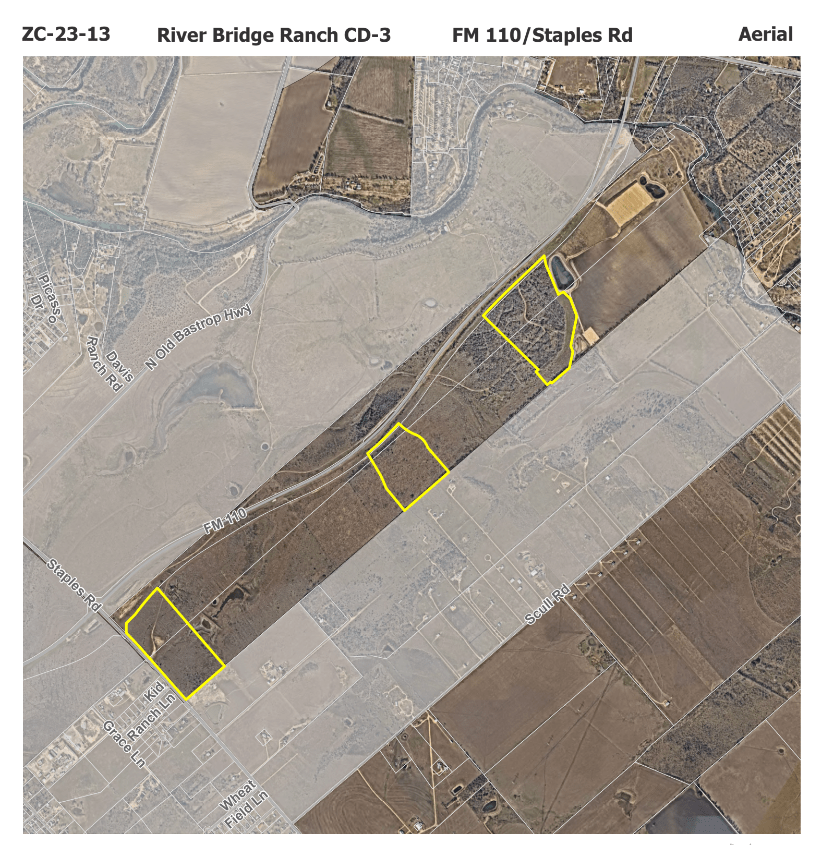
    Item 16: River Bridge Ranch PDD

    River Bridge Ranch is always hopelessly confusing to me, because it is right next to Riverbend Ranch, and they both have had a hundred different names over the years. (Riley’s Point, The Mayan Tract, Baugh Ranch, etc etc)

    This is mostly for my benefit:

    For years I didn’t even realize these were separate properties.

    Anyway, I hate them all.

    Today is about #4, River Bridge Ranch.

    It’s getting a little bit smaller, I think:

    Good.
    Hours 0:00 – 2:16, 3/6/25

    Citizen Comment:

    Three topics came up:

    1. Malachi Williams:
    2. Redwood and Riverbend Ranch
    3. Speedbumps in Trace Development

    Let’s take these one at a time.

    1. Malachi Williams: his mother and sister both spoke about their loss.  They will continue to fight for justice.

    It’s always particularly heartbreaking to hear from the family, and it’s worth being grateful that they have not shied away from speaking on his behalf.

    2. Redwood/Rancho Vista and Riverbend Ranch:

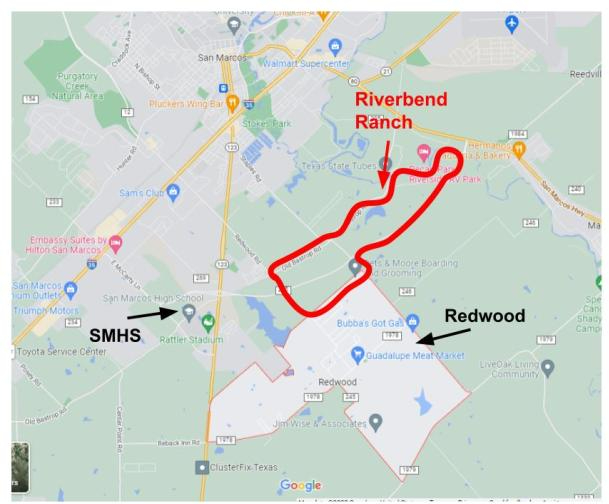
    Basically, Riverbend Ranch will be a gigantic development that is immediately uphill from Redwood.  The development agreement was approved in 2021.

    Now, Redwood has huge problems with septic and flooding.  Today the developers want to change up the agreement, in ways that might increase the flooding.

    The two speakers are Veronica Reyes Ibarra and Monica Reyes Ibarra. Veronica is the president of both the Redwood/Rancho Vista Neighborhood Association and Water Supply Corporation, and Monica is a former resident and advisor to the organizations.  They are both advocating on behalf of their community. They both explained about the flooding and challenges to Redwood/Rancho Vista, and the consequences on the people who live there.

    We’ll unpack all of the details in Item 17!

    1. Speedbumps in Trace:  

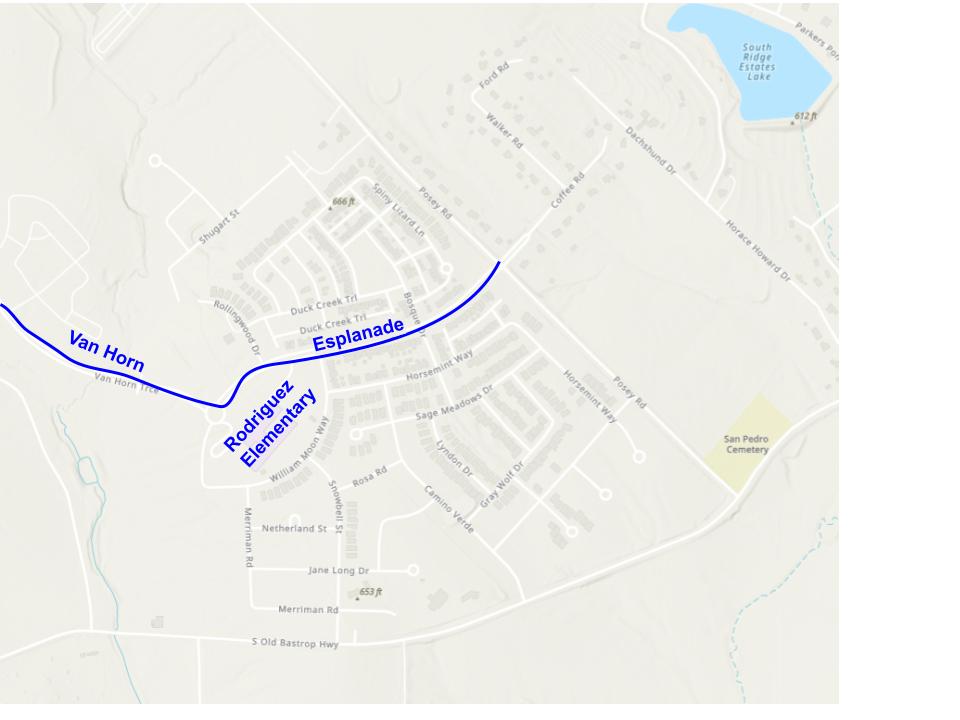
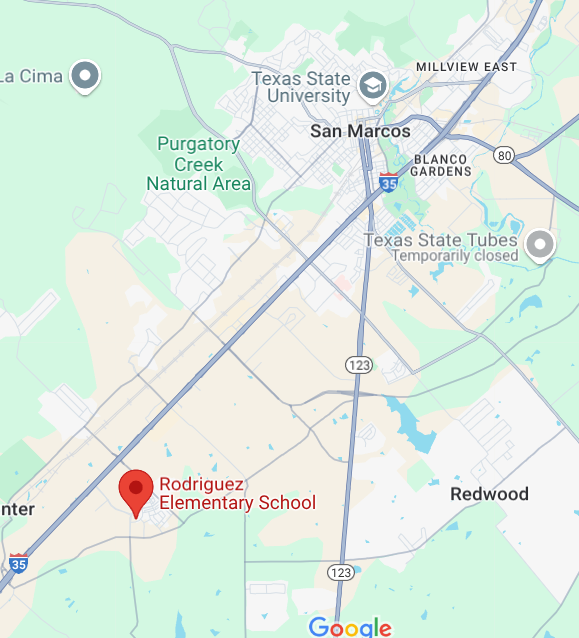
    Rodriguez Elementary is here:

    in the middle of Trace subdivision.

    The speaker wants speedbumps on Van Horn and Esplanade, due to people tearing through the main road at unsafe speeds:

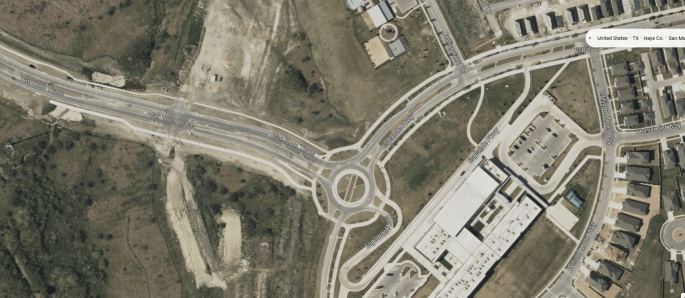
    I can imagine that – it feels like a nice, big wide expressway:

    Ok, that is a terrible photo. In reality, it has trees and houses and people living there.

    (I got that photo is from Bing maps and it is obviously very outdated, but Google maps is even worse:

    But I didn’t have a chance to go photograph it in person. Oh well.)

    Anyway: yes. Speed bumps are probably a good idea.

    Item 1: HUD grant money

    We get federal grant money from HUD , (the department of Housing and Urban Development). Some of these grants we get regularly, and others we’d apply for if we have another flood or natural disaster.

    HUD grants require a few things:

    1. A citizen participation plan 
    2. A five year consolidated plan

    So we’re updating these.

    The Citizen Participation Plan:  

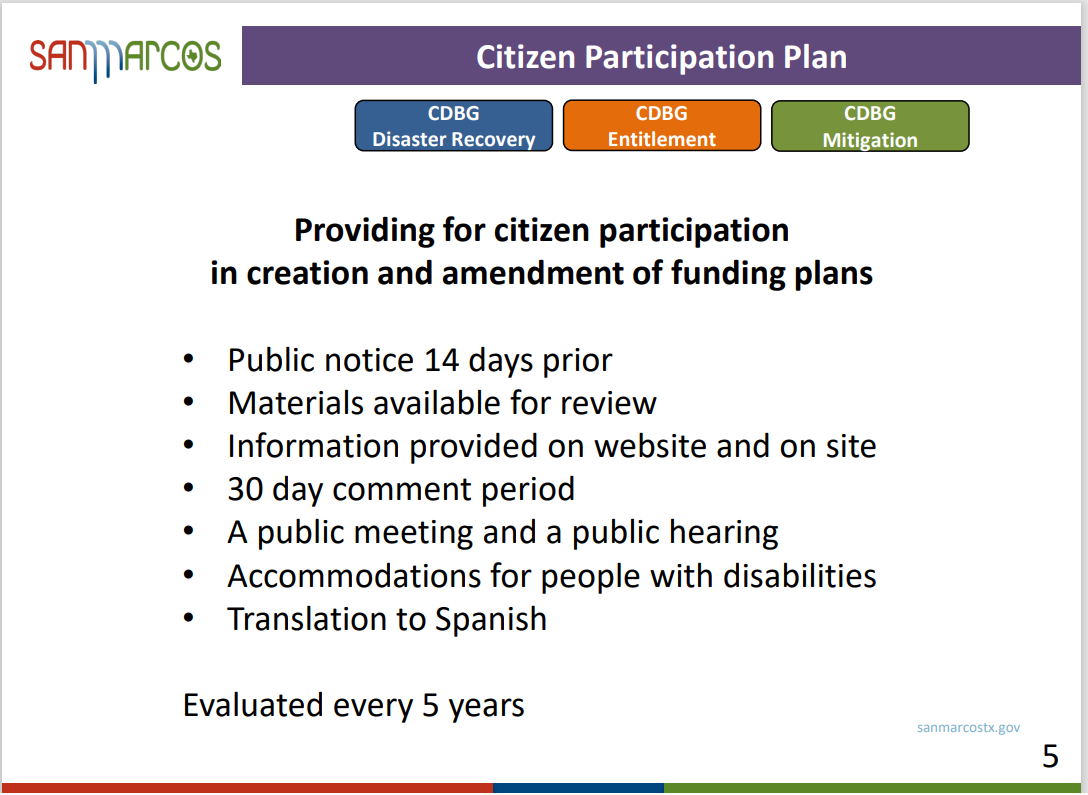
    HUD requires you to have a plan on how citizens will be able to participate in the decision-making process for how the grant will be used.  You have to update it every five years.  

    Here’s ours:

    No one has any questions or concerns about this.

    The Five Year Consolidated Plan:

    This is a little more in-depth.  Basically we need to pick some broad categories to prioritize.

    Background

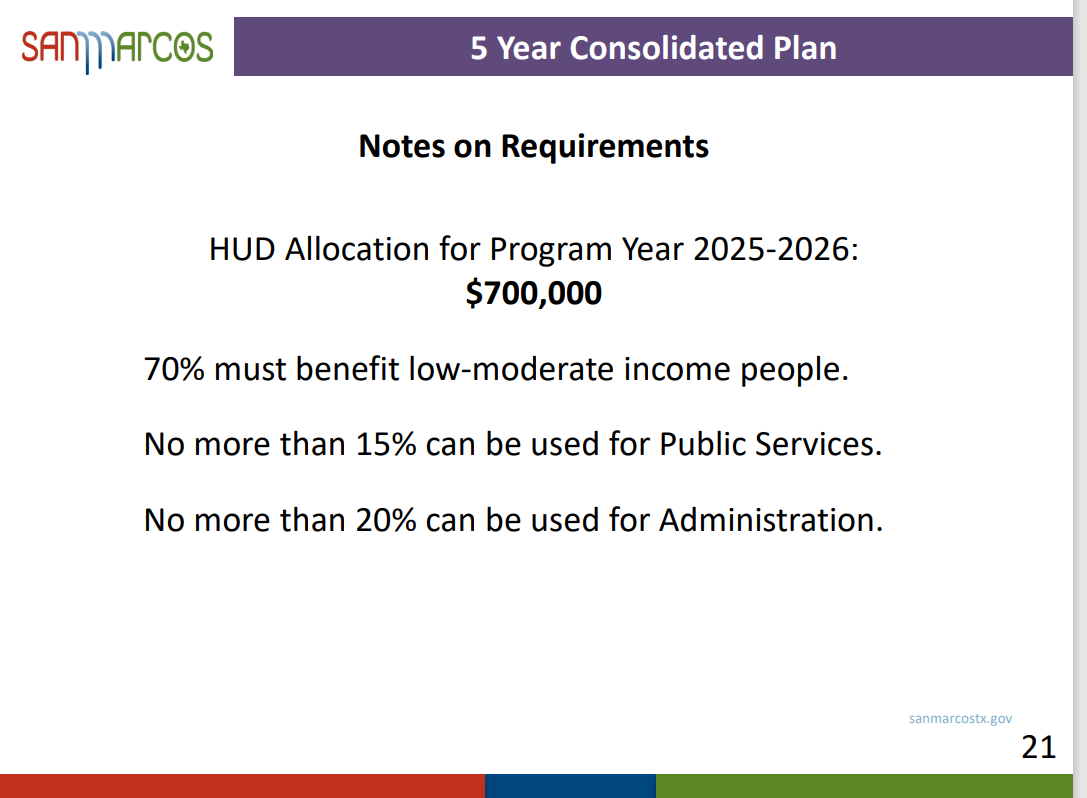
    We generally get about $700K each year in Community Development Block Grant (CDBG) money.

    HUD puts some rules on it:

    During the past 5 years, these were our priority categories:

    And here’s what we accomplished over the past five years with the CDBG money:

    So what do we want to prioritize for the next five years?

    Here’s what HUD directs us to do:

    Staff held surveys and open houses to get public opinion.  

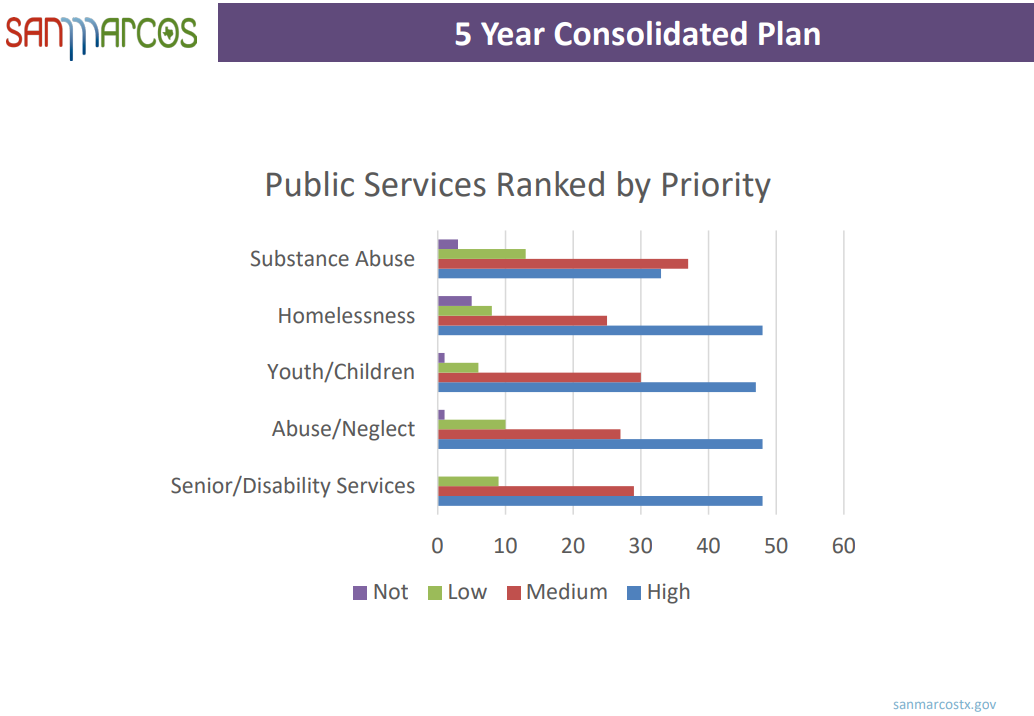
    Survey results:

    Feedback ranked along themes:

    Based on all that, here’s what staff recommends that our priorities should be:

    So what does Council think?

    Amanda: What about sidewalks? Can we include sidewalk projects?
    Answer: They’re generally too expensive, but the gap sidewalk program has smaller, cheaper projects that are a good fit.

    Alyssa: What kind of survey response numbers did we get?
    Answer: 86 online, and then in the 7 dream sessions we got another 50 responses.

    Alyssa: Transit is clearly a big response. Can we include that as a priority?
    Answer: It is included under Public Services.

    The city also gives out grants to nonprofits, under the Human Services Advisory Board, or HSAB.

    Jane: Can we merge the application process of CDBG and HSAB?
    Answer: We’re going to align the applications in 2026, but we still have separate committees looking at the applications. 

    There’s some discussion of workforce skills and economic development.  ACC offers HVAC courses at the library, for example, and Community Action picks up the tab using CDBG money.  

    Everyone is on board with these two plans.

    Item 15: Summer Fun!  And other fun.

    We’re updating our Youth Programs Standards of Care for 2025.  This means Summer Fun and Discovery Camp and any other kid-things that the city runs.

    What is Summer Fun?

    It’s a weeklong summer camp held for 8 sessions during the summer. The biggest point is that it is extremely affordable – $40 per week for city residents, including breakfast and lunch – and so it’s a real service to families who need affordable childcare. It’s hosted at different SMCISD campuses each year.

    Before Covid, Summer Fun had 300 kids per week, across two different campuses.  It dropped dramatically during Covid, and now we’re somewhat back, up to 120 kids per week.  There’s usually a waitlist of about 50-60 kids each week, but we’re short on staffing. 

    There are a few questions about scholarships and residency and growing the program.

    • scholarships are available for anyone in SMCISD, even if you’re out of the city
    • City residents get priority registration, so it’s been filled with just city residents for the past few years.
    • They would like to grow the program and serve more families, yes.

    The city also runs a discovery camp, and a spring break camp, and other helpful camps.

    (The vote for the Standards of Care is 7-0.)

    … 

    Item 17:  Rancho Vista/Redwood, and Riverbend Ranch

    This one is big and tricky.  

    Backstory:

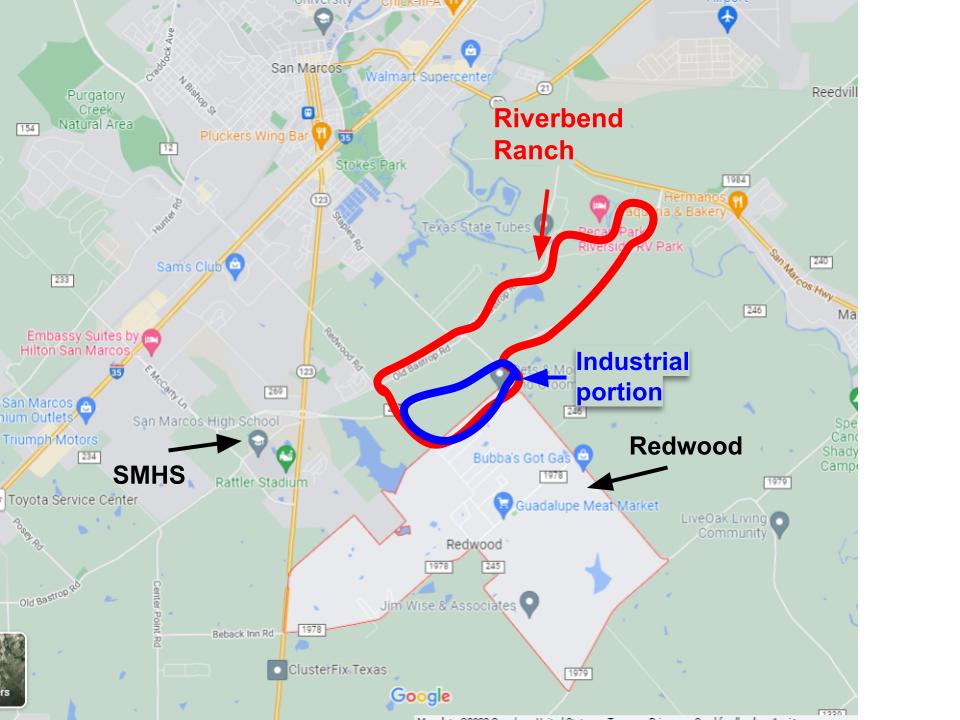
    Riverbend Ranch is an enormous piece of land that kind of wants to be its own town. It is just north of Redwood:

    It’s not built yet, though.

    We approved a development agreement with them back in December 2021. (This was when I was practice-blogging, and had not yet gone public.  I did write up the meeting, but did not notice the importance of this item.)

    Keep in mind: Back in 2021, development agreements did not trigger any notifications.  So no one in Redwood would have been notified about this development.

    This changed after SMART/Axis blew up in 2023. Now they notify people within 400 feet about an upcoming development agreement.

    That’s better, but still not much. The notification radius should be proportional to the size of the development.

    So as far as I know, no one noticed this massive tract of land was being discussed.

    Just for funsies, here’s how the original vote went, back in 2021:

    Yes, this looks AWESOME: Jane, Shane, Saul, and Mark Gleason and Jude Prather
    No, this seems terrible: Alyssa, Max Baker 

    Mm-hmm.

    Redwood/Rancho Vista

    Just south – and downhill! – of Riverbend Ranch is the Redwood/Rancho Vista community. They’re part of SMCISD and the greater San Marcos community, but they’re also kinda their own community. The Guadalupe-Hays county line runs right between Riverbend Ranch and Redwood.

    Back in 2017, a study by UT-Austin uncovered widespread parasitic infections in the residents. This is due to septic problems and flooding. The soil is terrible for septic systems, so they break down and leak almost immediately. Anything that increases flooding risks will expose this vulnerable community to more adverse health effects. 

    Since then, the two speakers – Veronica Reyes Ibarra and Monica Reyes Ibarra – have mobilized the community around solving the septic, flooding, and parasite issues. The three issues are all intertwined, and all expensive to fix. (Veronica is the president of both the neighborhood association and Redwood/Rancho Vista water supply corporation.)

    In August 2022, the development agreement came back for amendments. This time I noticed. They wanted a variance for a 30 foot cut-and-fill.  

    What’s cut-and-fill?  I drew you some pictures!

    Suppose you’re trying to develop along a hill:

    Now, you can’t put a foundation on a slope – you have to level it out:  

    (I’m sorry. I wasted a lot of time doing this.)

    So this is cut-and-fill:

    Developers love this because now you can fit a lot of houses, or one big industrial building:

    But now you’ve destroyed the natural drainage patterns, and this is going to make flooding much worse.

    So the city code requires you to take little steps, like this:

    You can’t fit as many houses though:

    and you definitely can’t put a giant industrial warehouse on it anymore.

    Back in 2022 at least, that was exactly what the developer wanted to do:

    This went to P&Z.

    There was a huge outcry from the residents of Rancho Vista/Redwood. About 30 residents wrote letters, and more showed up in person, to talk about the flooding and drainage issues and health consequences.

    P&Z turned the cut-and-fill down.

    Then it went to Council. Council did not vote on it, but instead formed a subcommittee in January 2023. Matthew, Saul, and Alyssa are all on it.

    Then two years passed?  I’m not sure why? 

    Which brings us to the present moment

    They want a bunch of amendments, but specifically they want the cut and fill. No one mentions if this is for an industrial portion anymore. (Sure do hope it’s not another AI Data Center!)

    Here’s the deal they hammered out with staff:

    So this is the question that’s before Council:  Can they have their cut-and-fill if they agree to do all these other nice things?

    ….

    What does Council say?

    Matthew: It is shameful that Guadalupe County isn’t helping our neighbors!  I dream of annexation! I am a simple man, and I like retention ponds.  They’re a visual indicator that storm water is being detained.  Can we have more of those?

    (I’m really not trying to mock Matthew here – these are quotes! He literally said “I am a simple man!” Council members are just endearing goofballs sometimes.)

    Answer: They’re going to have retention ponds. Those were already in the development agreement.

    Matthew: But can we have more?

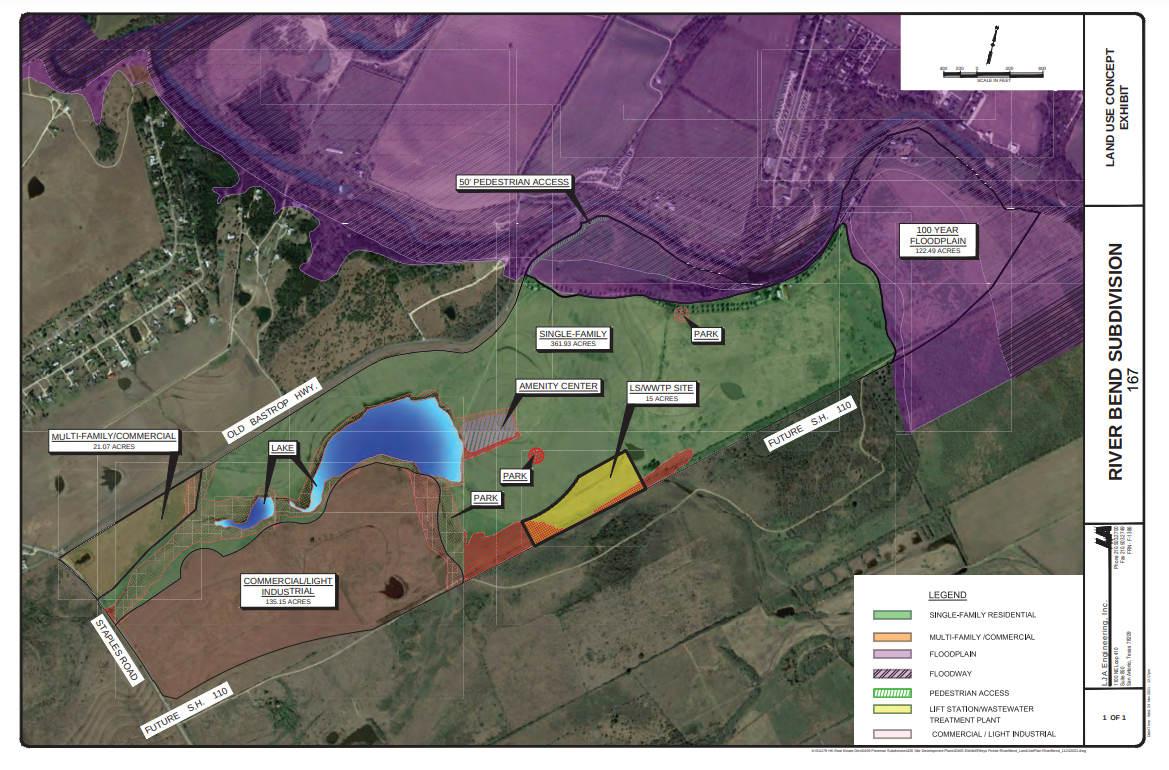
    Answer: No? They’ll be there? Look at this map, there’s a lot of them:

    It’s hard to see, but I believe it’s the two red hatchmark regions, on the left and lower right parts of the pond?

    ….

    Jane is arguing hard for the deal.  She keeps hammering the angle that if there were no development agreement, there’d be no protections at all.  Therefore this is better than the alternative.  

    I am not so sure.  Big cut-and-fill is generally banned for a reason.  Jane doesn’t seem to be taking that into account – she’s only arguing that the mitigation strategies are great.

    Shane comes out against the deal.  “It’s like the Woods all over again. 15% increased retention is barely anything.”

    Staff: They’ll divert the water and release it downstream of Redwood/Rancho Vista

    Shane: Doesn’t matter. 15% is barely anything.

    (I’m inclined to agree.)

    Saul is worried about the parasites and the flooding.  It floods really badly there.

    Staff explains a bit:  the soil is really bad for septic systems.  They basically break very quickly and release sewage into the soil. The parasite lives in the sewage in the soil.  

    Several council members ask: Can Redwood be annexed and brought onto city sewage?

    Answer: Redwood/Rancho Vista might not want this? Every home owner would have to individually request annexation. Annexation comes with lots of taxes and fees.  Just the sewer would require connection fees and stormwater fees and other things.  It’s not likely that Redwood would reach consensus on this. 

    Staff: The advantage of this development is that it will at least bring a sewer line much closer to Redwood.

    Q: What’s all this about a M.U.D.?

    Answer:  M.U.D. stands for Municipal Utility District.  This is like a city-lite.  They charge taxes and have a board.  They run utilities for people that live in the M.U.D, but they don’t do all the rest of the city government stuff.

    (If you are curious about the insanity of the Cedar Park M.U.D, enjoy this blog which is their version of The San Marxist.  Things are pretty bonkers.) 

    City Manager Stephanie Reyes weighs in with the following, which is worth quoting:

    “That’s the hard part with a lot of decisions Council is faced with. Because, sometimes, it will look like you’re supporting a certain development, and a lot of times, it’s not about supporting the development  – it’s about supporting the regulations on the development, that you would not otherwise have if you did not vote a certain way. 

    So that is something to contemplate, and it’s not lost on us that that is a very heavy decision… Some of the things can be developed by right, so even if you don’t vote for it, it’s still going to happen, but you lose the negotiating power to make some of these concessions and negotiations happen.”

    So basically, no one likes this development any more, but we can’t stop it.  (Well, I think Jane still likes it.)  

    Here’s my read: City staff and Jane Hughson are absolutely convinced of two things:

    1. The benefits of the improvements outweigh the risks of cut-and-fill.
    2. They will definitely develop the property anyway, if the cut-and-fill is denied.

    The rest of council has to decide if they agree on those two things.  Everyone feels very uneasy voting yes but also uneasy about voting no.   

    I will say this:  Council seemed genuinely concerned about the residents of Redwood.  

    Jane makes one last point:  This is a big environmental win, because they wanted to build a package plant, and we got them to agree to a lift station instead.

    What this means is that the developer wanted to install a cheap little sewage treatment station that would then release to the river.  This means it would have higher levels of phosphorous and lead to more algae blooms and other bad river outcomes.  Also, package plants are not staffed, so it takes longer to notice when something malfunctions and it starts dumping untreated waste into the river.  

    Instead, we’ve gotten them to agree to a lift station, which brings the sewage back to San Marcos, to a higher quality treatment plant. So this is good!

    (This win is independent of the welfare of the people in Redwood, though.)

    The final point is that the Redwood parasite is already a problem that needs dire attention.  And ultimately, Redwood is not in either San Marcos or in Hays County – it’s in Guadalupe County, which we have no jurisdiction over.

    What Council decides is that they’ll to bring the issue of Redwood septics and flooding back, at a future meeting. They will discuss a resolution to send to Guadalupe County, to try to somehow get them to take action on the issue. 

    The vote

    Yes: Jane, Matthew, Alyssa, Saul, Amanda, Lorenzo

    No: Shane Scott

    My take:  This is a really hard one. 

    • I’m not convinced that the mitigation strategies will outweigh the cut-and-fill risks, but I’m also not convinced that they won’t?
    • The package plant thing seems like a win
    • Passing a resolution to get Guadalupe County to help Redwood seems likely to be empty, but maybe Council will be more persistent than that.   

    I felt like the current Council is sincere in their desire to help the residents of Redwood, but it’s not obvious how they should do that. It will require sustained attention and energy to help the residents out.

    Hours 0:00 – 0:50, 11/6/24

    Onto the little meeting!   

    Just one citizen comment, from a community member about the Dunbar Heritage buildings that are under renovation.

    Item 12: The good people of Riverside Drive want to ban parking on their street.

    The issue is that the street fills up with river-goers in the summer. Since there is not enough proper parking around the falls, people park on Riverside Drive during the summer, and walk over. 

    Look, I’m not in a great mood.  I didn’t like it last month on Sturgeon, and I don’t like it now.

    1. This is exclusionary.  The street does not belong to you.  

    2. It’s counter-productive! Street parking is a traffic-calming measure. It makes drivers go more slowly, instead of tearing through your neighborhood at 40 mph.

    3. I might be sympathetic if local residents did not have driveways, and were forced to park away from their houses and walk to get home.  But that is not what is happening. The residents of this street put out orange traffic cones to block river-users from parking in front of their houses.  They’re not putting their own cars out on the street. 

    4. The parking ban is year round. (Holidays and weekends.) There is no reason for the ban to exist during the winter.  Does it matter? No, but it’s overreach.  

    Living near the river is a privilege.  The streets belong to the public, and that includes those who want to visit the river.  I’m just not in the mood for territoriality and exclusion at the moment. 

    The Vote:

    Yes, parking bans are great: everybody
    No, parking bans are the worst: nobody

    Oh well. At least I can rant on the blog.

    Item 4:  The new HEB.

    Everyone cheered and quickly voted on this, in about 30 seconds.

    Here were my concerns last time:

    • Would all HEB employees get the $15/hour as required by local ordinance, even at the existing stores?
    • Can we include something about wage and benefits, to make sure our workers are given good jobs?
    • Is it in writing that Little HEB will stay open for a certain number of years? 
    • Can we ask HEB about purchasing that little triangle of land next to Purgatory Creek from them?

    Here’s what council said about these questions:

    [Nothing.] 

    I know, we were all consumed with the election. But I still wish we’d fought on behalf of employees.

    The vote:

    YAY HEB 4-EVAH: Everybody, unanimous, etc. 
    I hate everyone’s favorite grocery store:  nobody.

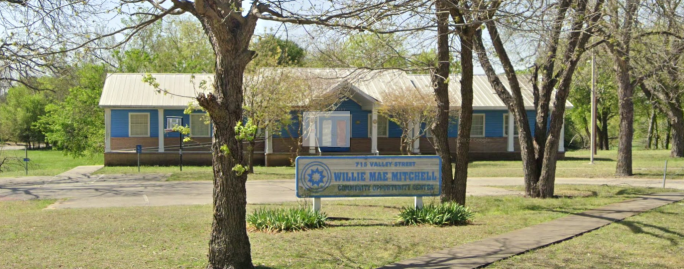
    Item 10: The Mitchell Center

    We mentioned this last time at the workshop: it’s being handed over to the Calaboose African American History Museum. 

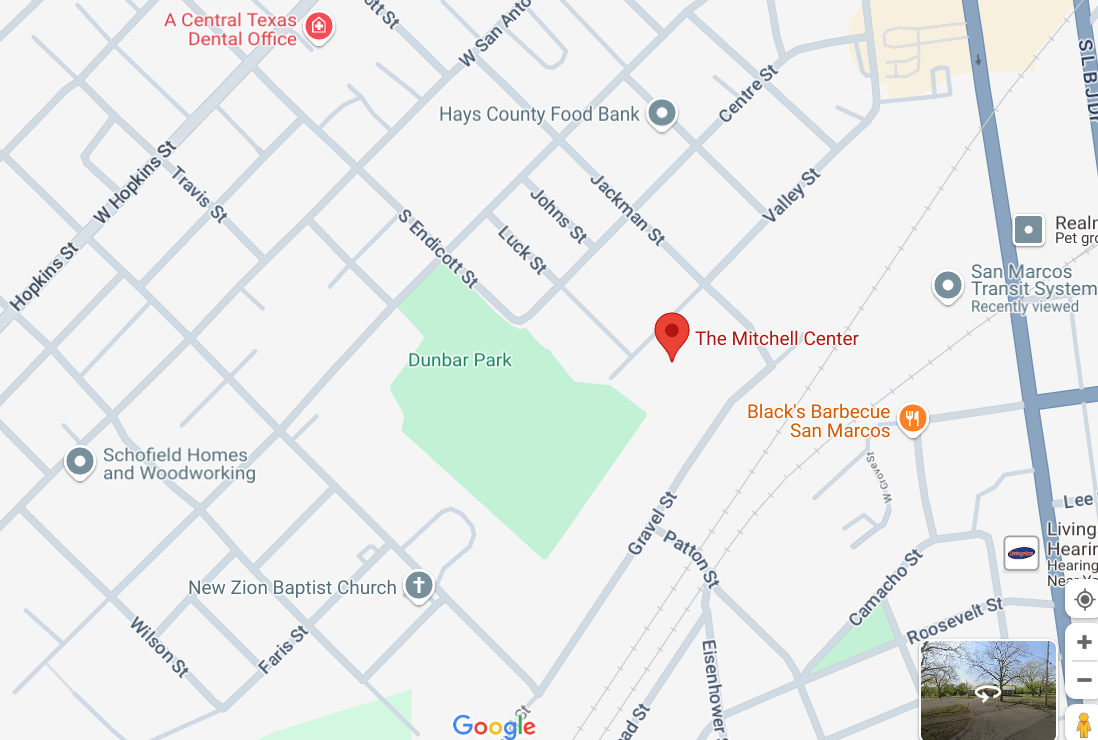
    It’s located here, tucked in the back corner of Dunbar park:

    Apparently there is a covenant that runs with the land that requires the land be used for a public, non-profit purpose.   This seems like a good choice.

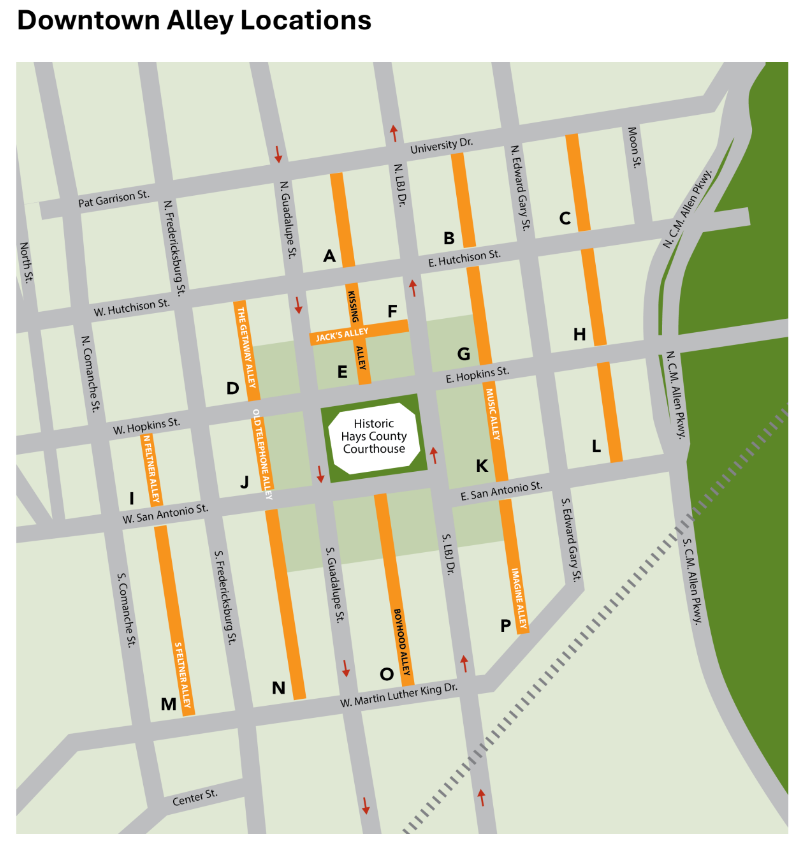
    Item 13:  Naming the alleys

    This also came up last time:

    Those seven alleys with names in white are getting officially named. 

    The remaining alleys are driving Jane crazy.  She wants to pair them up with movies or anything, and get them named.  No one else seems to be in that big a hurry.

    Item 14:  Municipal Court

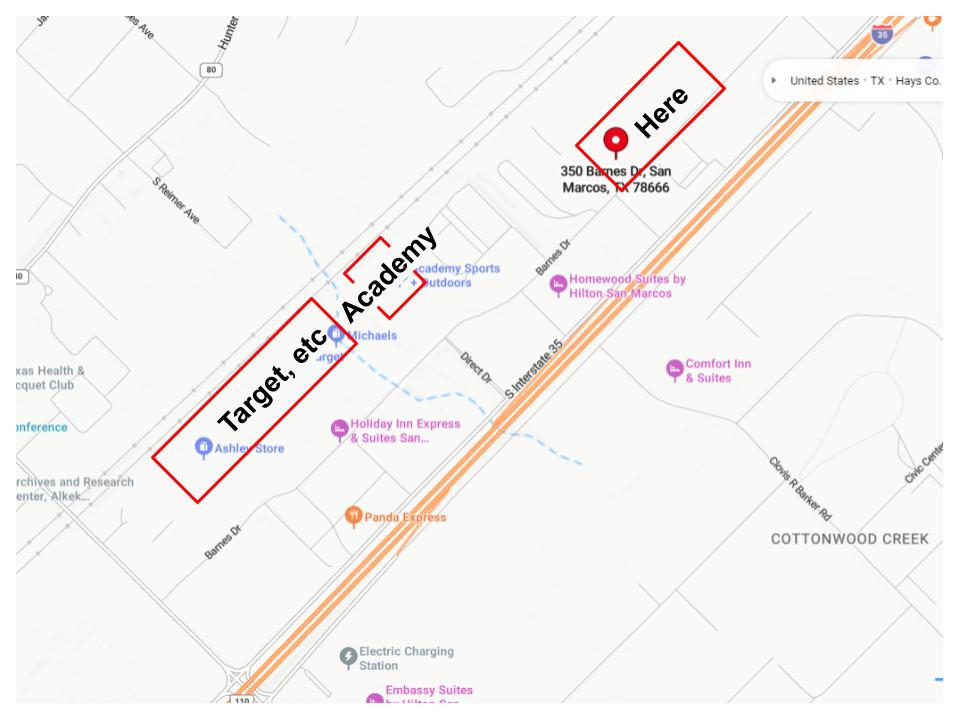
    I guess we’re getting a new spot for our municipal court?

    I don’t know if this is where the public will go for court, or if it’s administrative type stuff.

    Here’s the building, according to Google Maps:

    We signed a 20 year lease.

    Item 17: River Bridge Ranch is this giant future subdivision:

    It’s located here:

    (That bit above is actually two closely related developments: River Bend Ranch and River Bridge Ranch. But the details are murky to me.)

    This development makes me cranky:

    1.  In 2022, they wanted to put an industrial plant on the southern corner, which would have required an insane cut-and-fill.   This would have increased flooding in Redwood. Huge numbers of residents from Redwood turned out to argue against it, given the flooding and infrastructure.  The permit was denied.

    2. Originally, River Bridge Ranch was approved to be both housing and commerce. After all, it’s huge! And we have this long-standing issue where there isn’t any commerce on the east.  They waited for a polite amount of time to pass. Then they came back and asked if Council would just forget about the pesky commerce bit. 

      Council said “You betcha!  This way you’ll make more money!” And lo, no more commerce.

    This meeting, Council forms a subcommittee on it: Saul Gonzales, Matthew Mendoza, and Jane Hughson.

    So this means it’s going to be coming back around again. Fingers crossed!

    Items 16 and 18: The New City Hall

    We’re designing a new city hall.

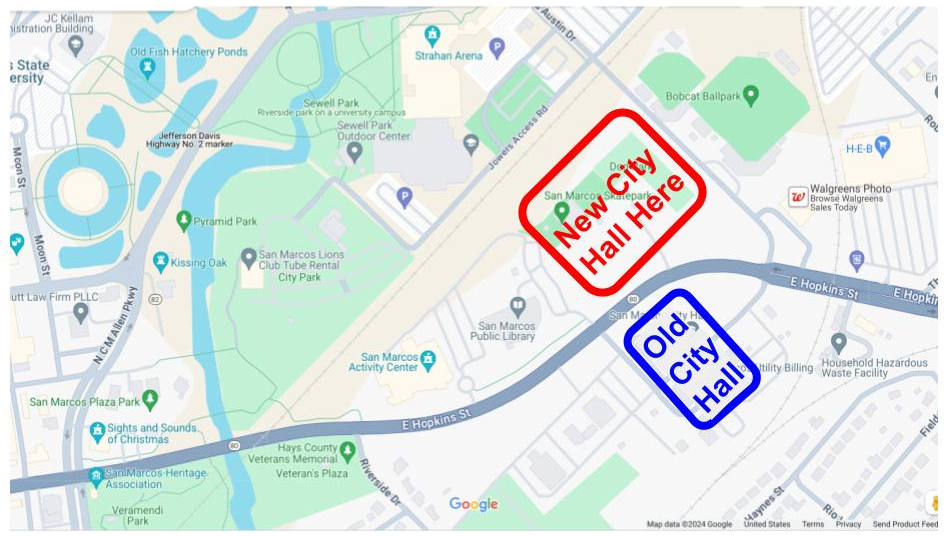
    Council has this grand idea that the new city hall should replace the dog park and skate park, and the current location should be housing:

    I am not convinced! Why should we develop our parks? Why not re-build where you are?

    Anyway, Council appointed a 23-person steering committee:
    – The mayor and two councilmembers
    – These groups all get to pick a member: P&Z, Library, Downtown Association, River Foundation, University representative, Chamber of Commerce
    – Each councilmember picked two community members.
    In total there are 23 people.

    SO! After multiple meetings and lots of discussion, what did the DEI Coordinator say about the end result? Did we achieve diversity, equity, and inclusion? Moment of truth!

    …Nothing. The DEI coordinator wasn’t there. Status quo was upheld.

    This would have been the moment to verify that “business as usual” had produced a diverse committee that matches San Marcos.  We did not verify this!

    Hours 2:21-3:58, 1/17/23

    Item 29: Riverbend Ranch

    We’ve seen this proposed development before, and after P&Z denied their cut-and-fill. Residents of Redwood mobilized like 30 people to come talk to P&Z that night. It was really amazing.

    The major issue is that Riverbend Ranch will be on the hill immediately above Redwood. Redwood is home to a lot of extremely vulnerable community members and is dealing with flooding, raw sewage, and significant health challenges due to sewage contamination.

    The council could force Riverbend Ranch to be developed in such a way that it helps Redwood tie in to San Marcos water and sewage. Or the council could allow them to develop in a way that increases flooding and sewage contamination. This could be done really well, or it could be a nightmare.

    Matt Mendoza, Alyssa Garza, and Saul Gonzalez all volunteered to be on the Riverbend Ranch committee.  I am relieved.  You can trust Alyssa to remember to protect Redwood, and Matt Mendoza was personally the one who went down and talked to the Redwood community prior to the P&Z council meeting, so he’s also invested. And Saul is generally sympathetic to people without financial means to protect themselves from developers (although he usually takes the safe route when it comes time to actually vote).

    ….

    Item 30: Paid parking in the Lion’s Club parking lot. 

    We have a lot of out-of-towners who come to tube the river and go to football games.  We want to recoup some costs by charging them to park in the Lion’s Club parking lot.  So we’re launching a 3 year pilot program.

    It’s supposed to be free to San Marcos residents, which means that there has to be some system to tell who is a resident and who is not a resident.  It sounds like you go online and ask for a sticker to put on your car? You would either have a license or some sort of photo ID, or something with your address on it. (I might be wrong about the sticker.)

    Alyssa gets them to include library cards on the acceptable forms of ID, which is good.

    It’s pretty pricey for non-residents:

    The biggest discussion came about whether or not the machines should be cash-less.  Mark Gleason doesn’t like cash-less machines out of general get-offa-my-lawn old man vibes. (He’s not wrong!) Alyssa doesn’t like them because poor people are less likely to have credit cards. (Also correct.) So the compromise is that there will be one machine that accepts cash, and the others throughout the parking lot will be cashless.

    I share Alyssa’s uneasiness about the invisible barriers that arise when you implement cashless payment systems. At the same time, in this case, those bonkers prices are their own impediment for poor people. You can get like three eggs for that kinda money!

    Item 31: One last time with the Human Services Advisory Board.

    San Marcos donates money from the General Fund to nonprofits.  The funding process this year was a shitshow (apparently – I don’t really know details) and so council stepped in to give new instructions.  So now, on this third meeting on this topic,  council is nailing down the final details of how they want grant applications to be evaluated. There are two main sticking points:

    1. Grant money is only available if you’re serving San Marcos residents. The issue is what kind of track record is required. Should nonprofits from Austin and San Antonio who want to expand their service to include San Marcos be allowed to apply for city funds? Or should money be restricted to nonprofits who already serve San Marcos?

    Jane wants the nonprofits to already be serving San Marcos. Saul agrees.

    Alyssa makes the case that in certain categories, like mental health, we have a dire need for providers.  Nonprofits from San Antonio and Austin will be more successful finding other grant money to use on San Marcos if they can use this grant to demonstrate a need here.  

    Mark Gleason and Matthew Mendoza want to give preference to San Marcos-established nonprofits, but not exclude the others from applying.  I didn’t catch what Jude preferred, but this is where Council lands as a whole.

    1. Jane Hughson feels strongly that nonprofits should not depend on this money. She doesn’t want anyone to lose their job if the city has less money one year and can’t fund as many nonprofits.  In light of this, there is a rule that no full-time employee should be funded. You can ask for money to fund a part-time employee, but not a full-time employee.

    So the issue is: can you split the workload of a full time employee, and ask for partial funding? Can a grant ask for 30% of the salary of the full time employee who is assigned to work on the program for 15 hours per week? Or do they have to hire a standalone part-timer for 15 hours per week?

    Jane is a strong no. You must hire a literal part-timer for 15 hours per week. No carving up the time of a full-time employee. 

    Good news! We have an actual nonprofits expert on council! Alyssa has tons of non-profit experience, and is currently employed writing grants for her job. She explains that this is standard operating procedure in the world of nonprofits. Nonprofits are used to piece-mealing their employee’s salaries together across several grants. As long as the non-profit is basically competent and experienced, they will have a Plan B in place so that no one loses their job if San Marcos doesn’t offer these funds one year.

    Out of everyone, Mark Gleason is the only person who seems to hear what Alyssa is saying. Weirdly, Jane keeps marking down that Mark is on Jane’s side, but Mark is persistent in correcting her.

    But on the whole, it is the most infuriating goddamn conversation.  Everyone is sure that they know what’s best for nonprofits and no one is listening to Alyssa.  It comes off as paternalistic and arrogant.

    Jane keeps requesting that any councilmember who wants to allow partial funding of full-time employees must give a specific numeric cap. Alyssa keeps explaining that that is arbitrary and counterproductive – the nonprofit will have to justify their request, and the HSAB can make an informed judgement.

    They settle on a 20% cap: you can ask the grant to cover up to 20% of a fulltime employee’s salary. Because they know best.