Bonus! 3 pm workshops, 10/8/25

The river! This is the big topic of the week.

Background:

We’ve been destroying the river the last few years.

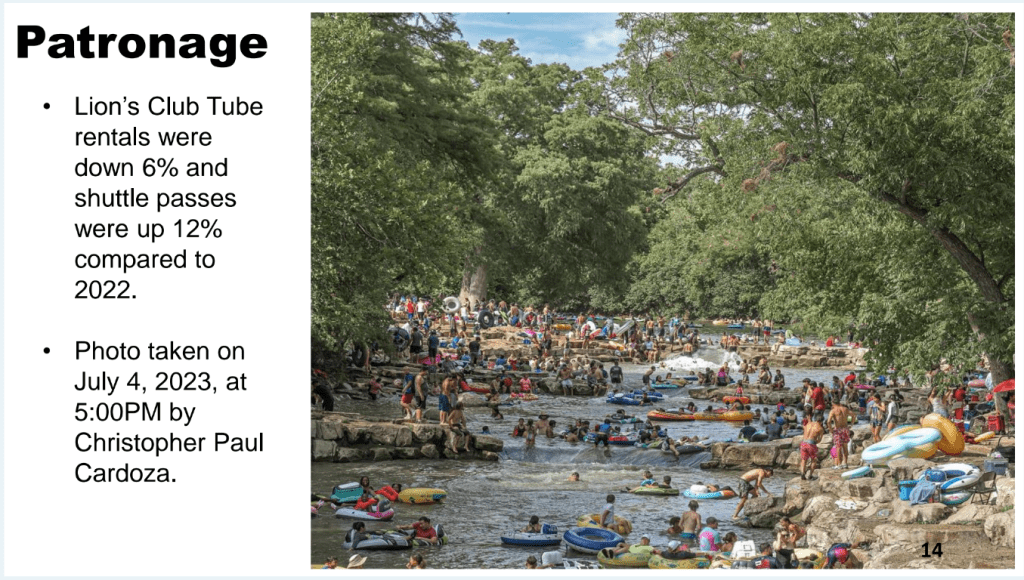
The basic problem is overuse. This is a photo from a 2023 parks presentation:

That is a LOT of people.

To get specific, overuse causes three basic problems:

1. Safety: it’s super hot and people get very drunk.

That’s a dangerous set-up for heat stroke, falling on rocks, getting into fights, and accidental drowning.

2. The environment: the river gets destroyed.

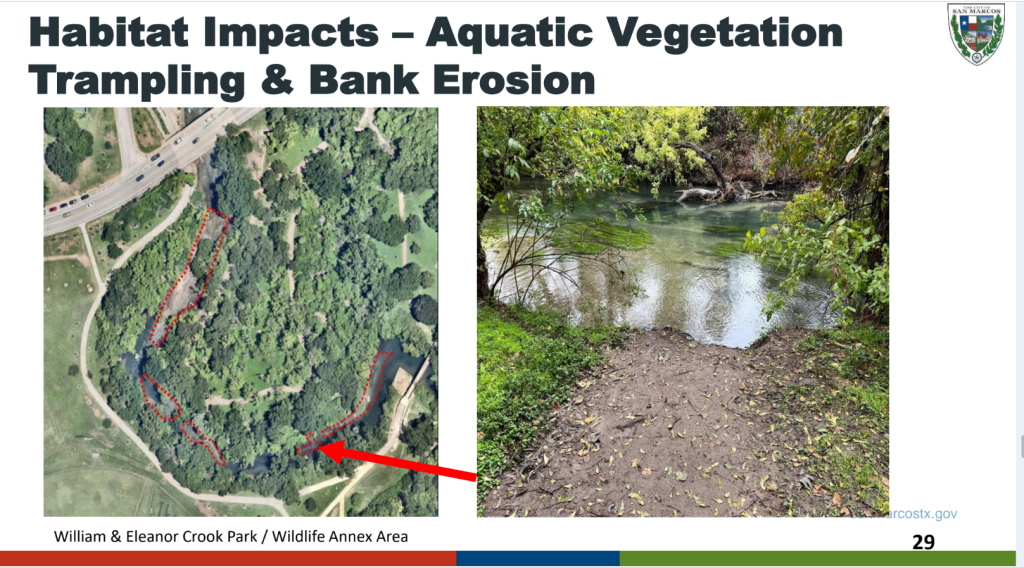
This is also from the 2023 presentation:

This is from the 2024 presentation:

and

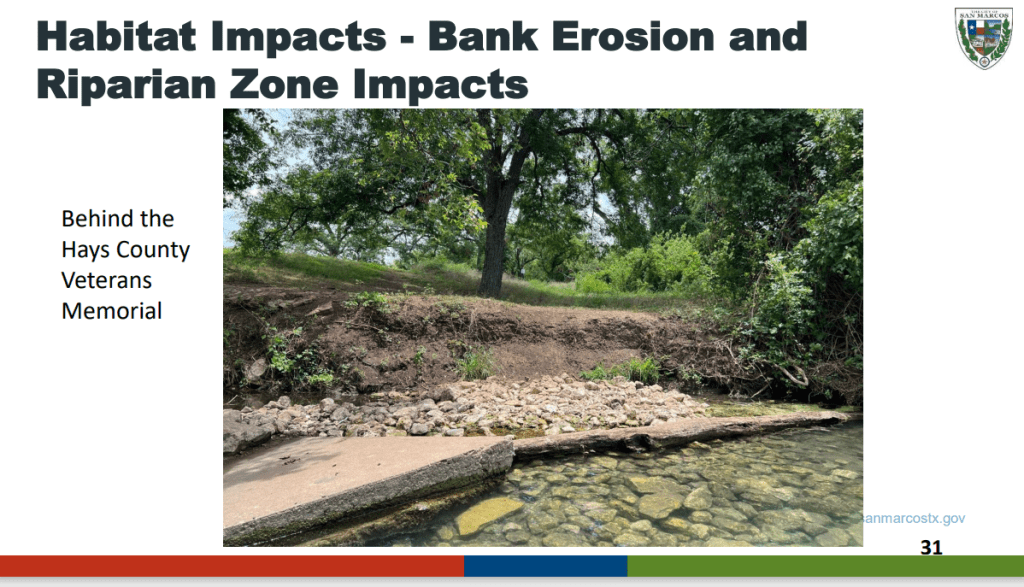
It’s all of the litter, and all of the repeated trampling of the banks, and the erosion of the aquatic wild rice and habitats for endangered species. It’s all bad.

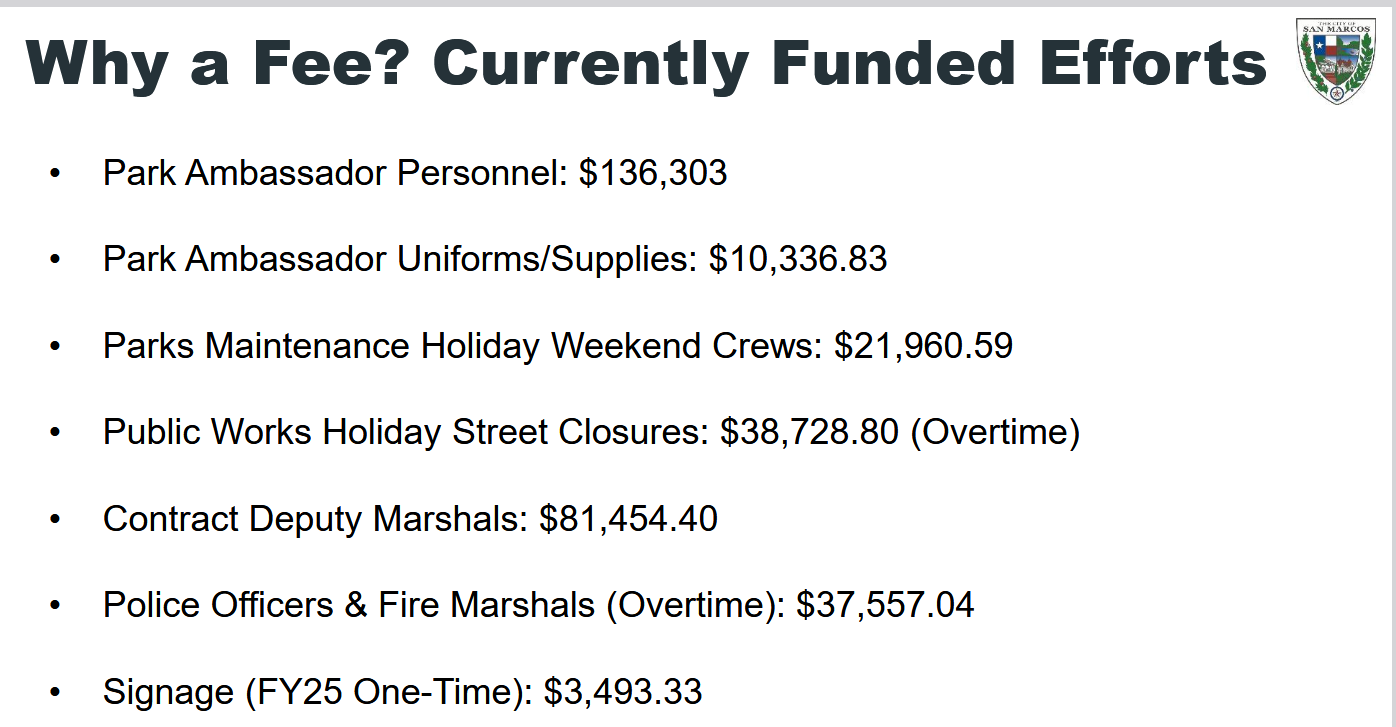
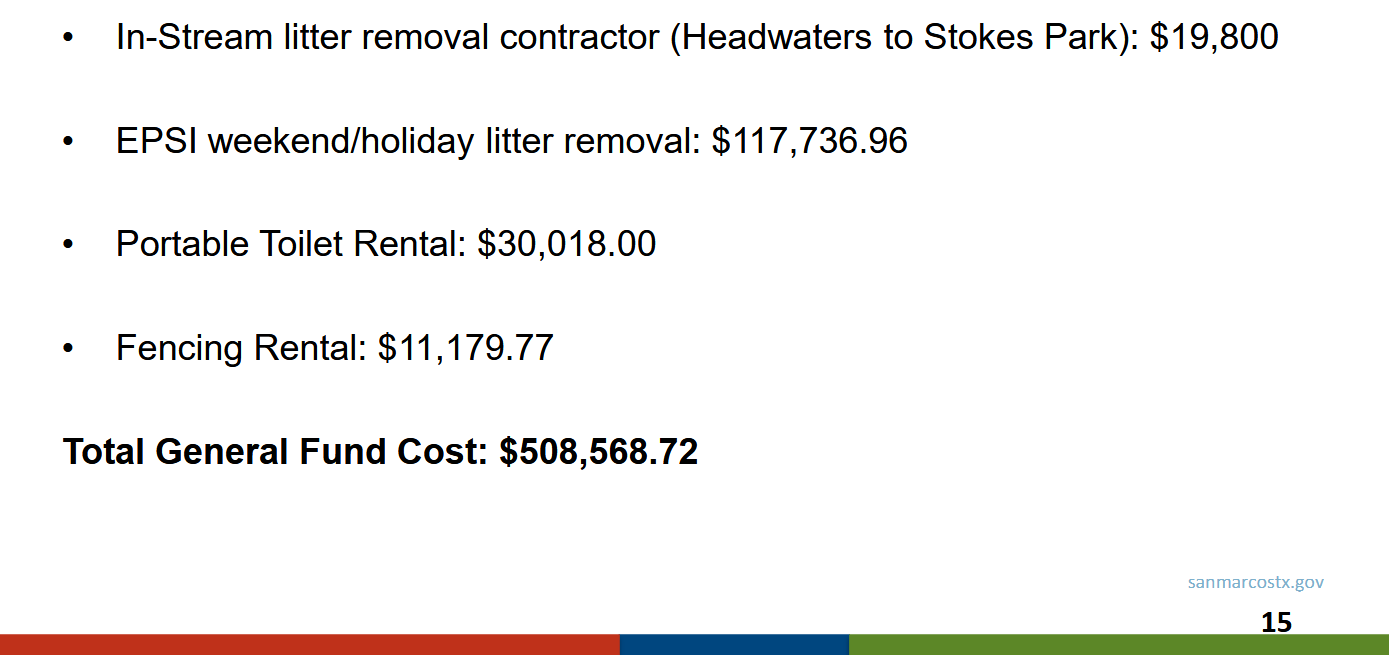
3. The cost.

City staff really haven’t even brought up the price tag in the past few years, because the litter, damage to river, and lack of safety were so off the rails.

But of course, all solutions require people, and people’s labor costs money. So this is looming.

Solutions

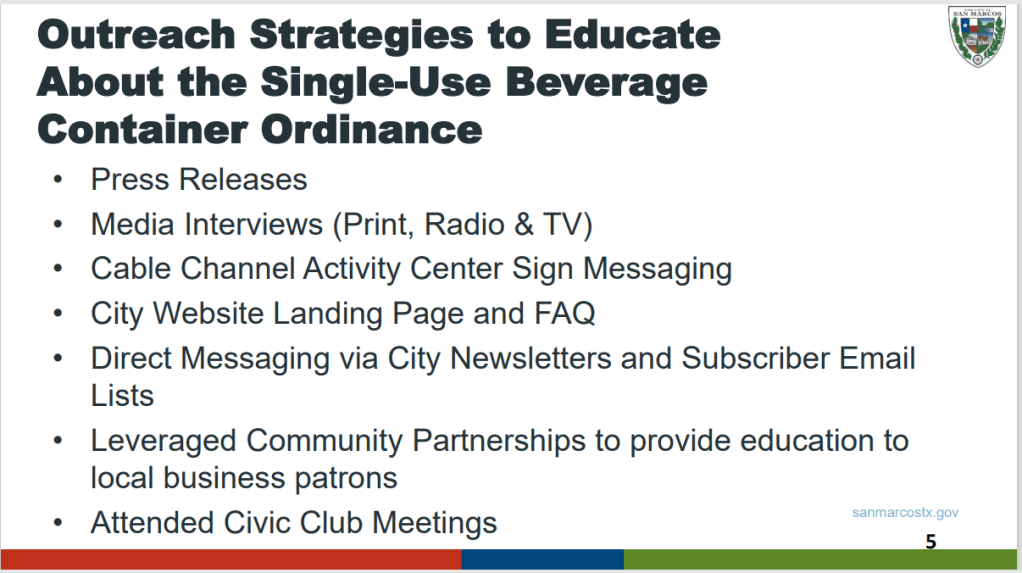
The 2023 season was so bad that Council realized we need to do something. So in 2024, we passed a can ban. Summer 2024 was the first implementation.

But it did not go well. Basically, we couldn’t enforce it because we were so overrun with crowds and safety concerns. Here’s my write up of the situation last year.

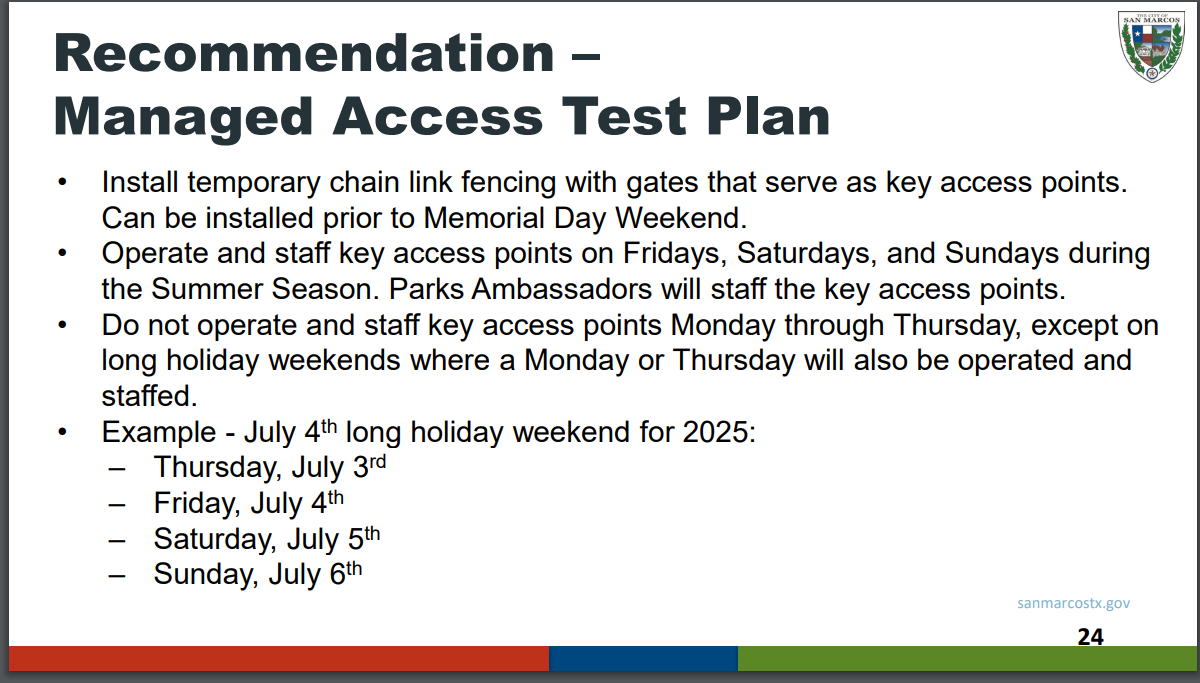
So this spring, Council cautiously agreed to try Managed Access for 2025.

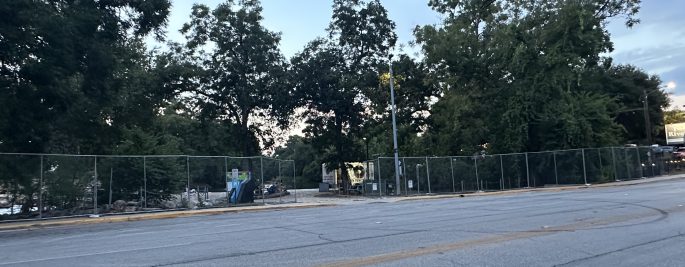
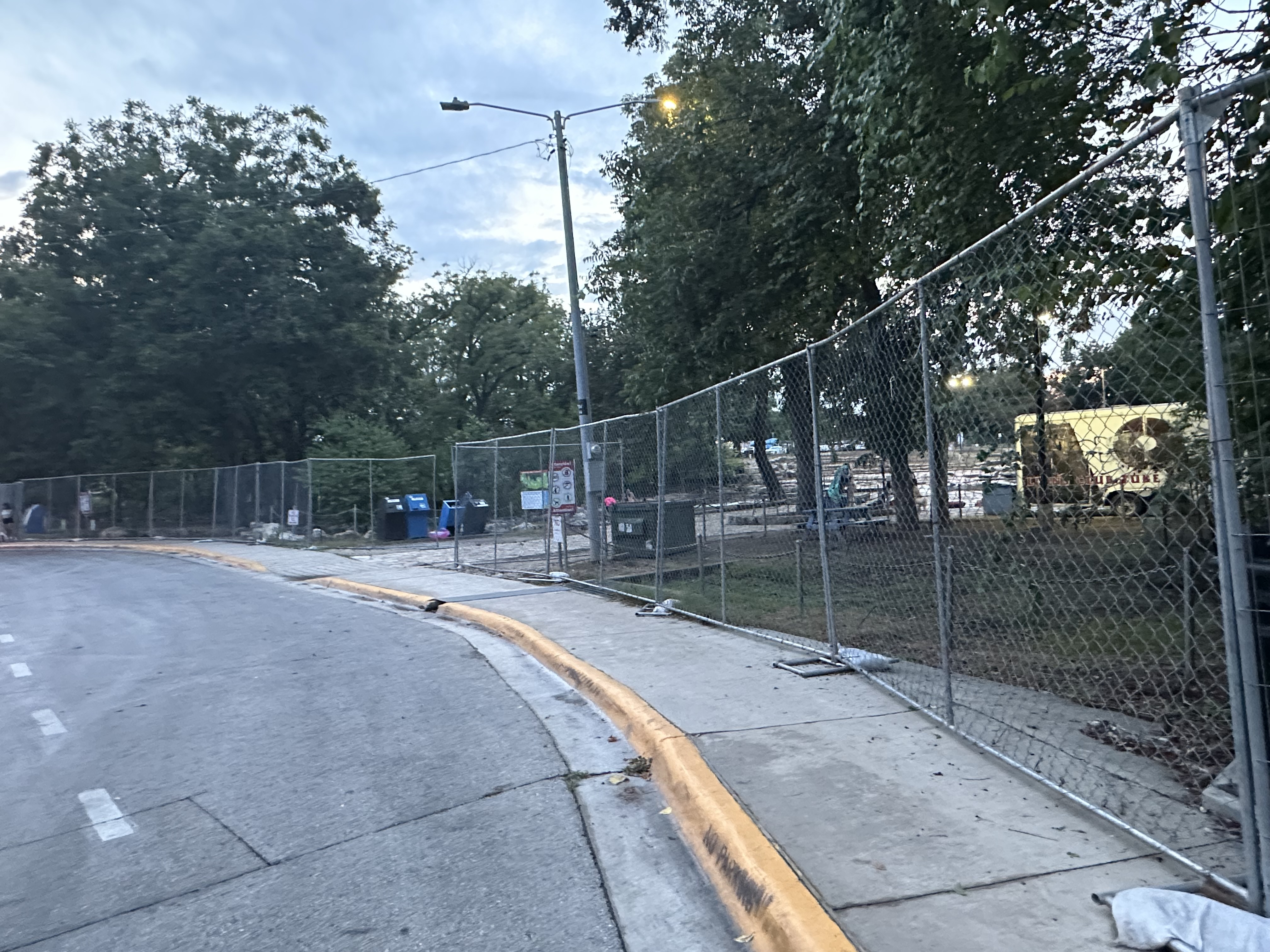
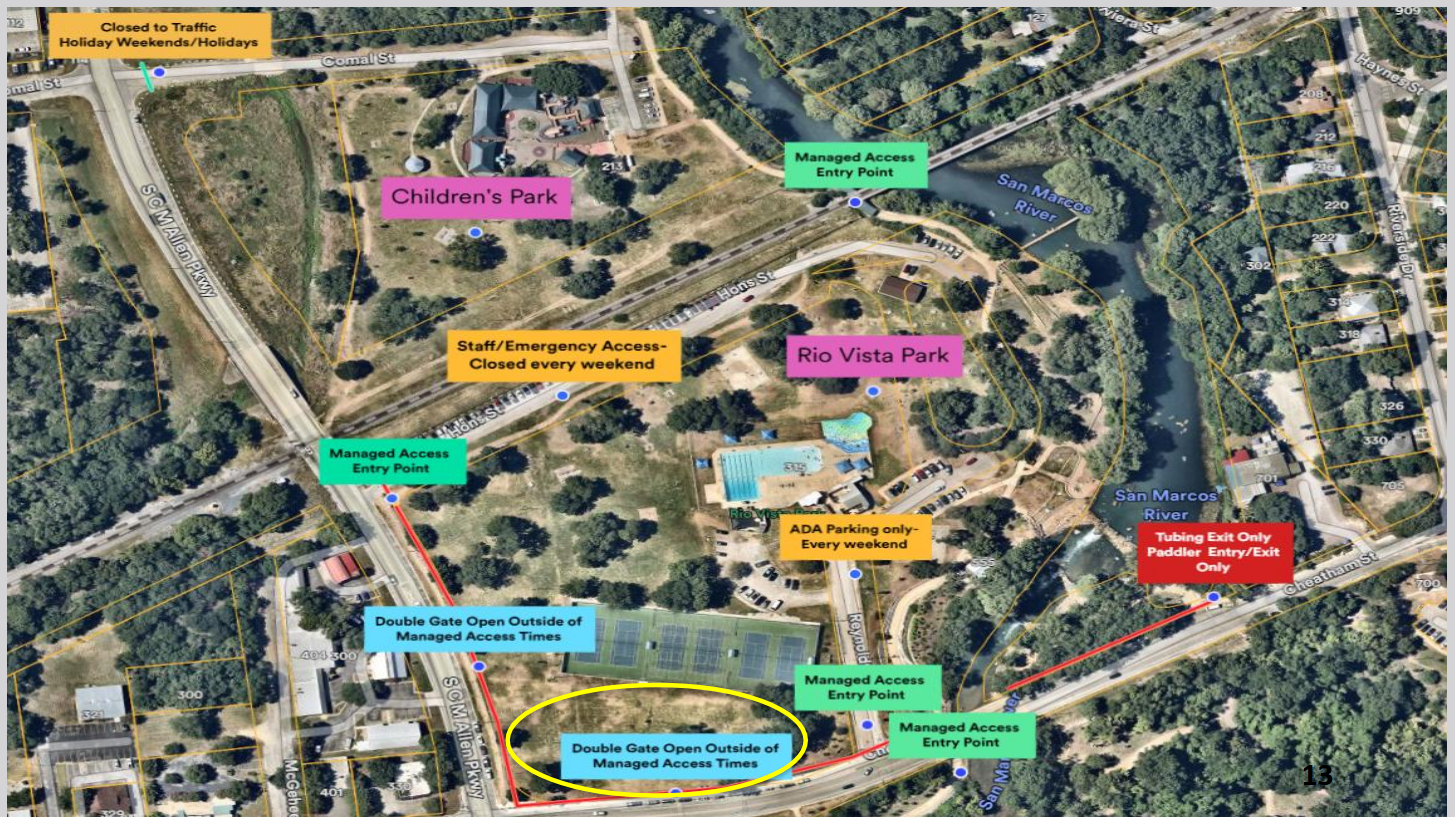
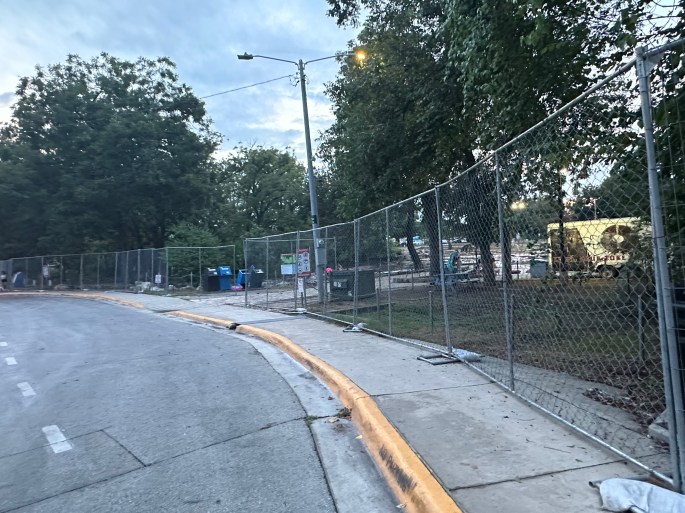
That means this:

around Rio Vista and the falls.

Everyone thinks these fences are very ugly and sad! They’re not wrong. But I’m going to make the case that the fences are a good first step. It is a work in progress.

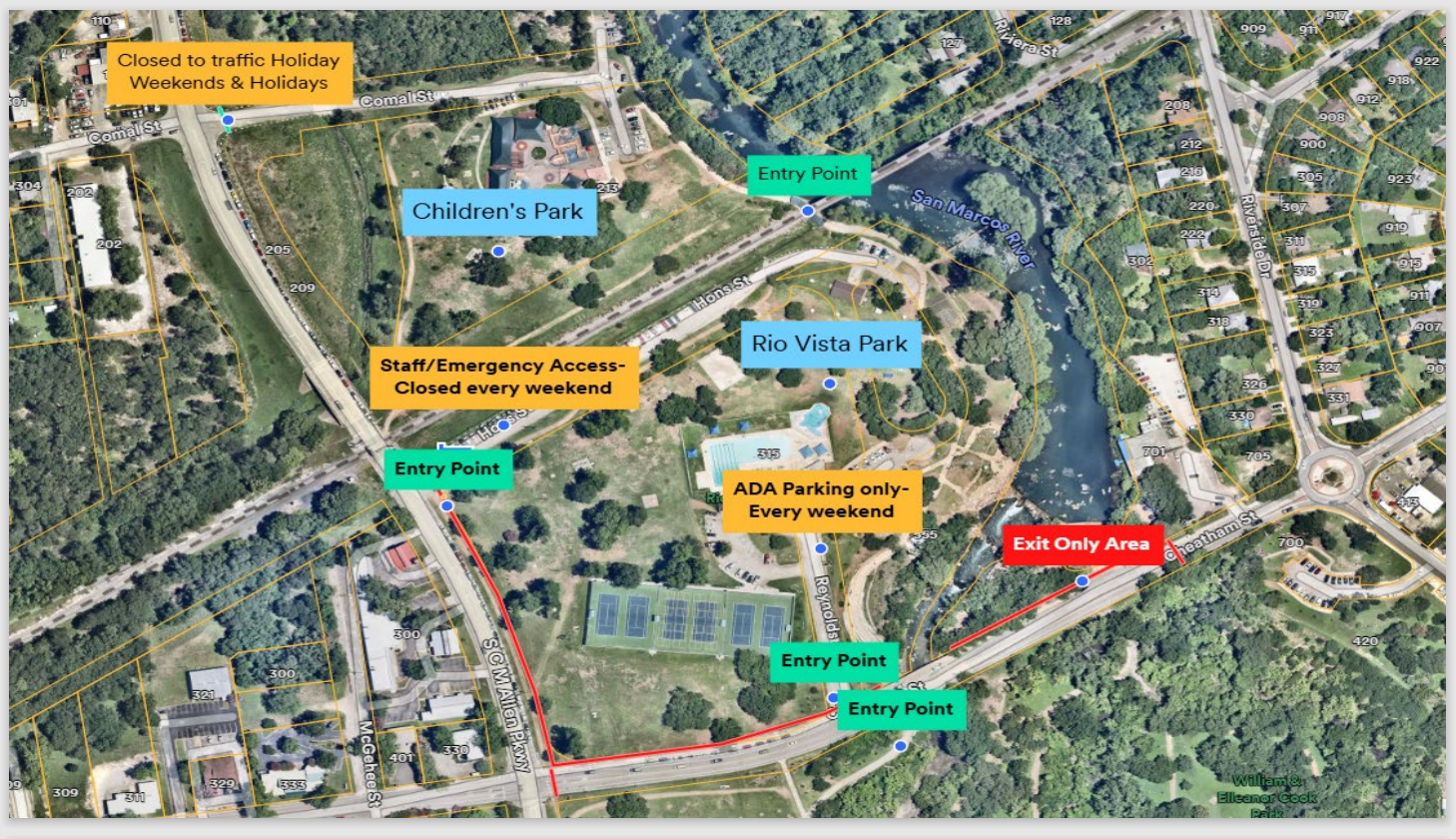
Basically, the falls, swimming pool, and tennis courts at Rio Vista were fenced off. In order to access them, you had to walk to one of the three entrances:

On weekends and holidays, those entrances were staffed. They’d check to make sure you weren’t bringing in anything banned, like alcohol or a bunch of styrofoam plates.

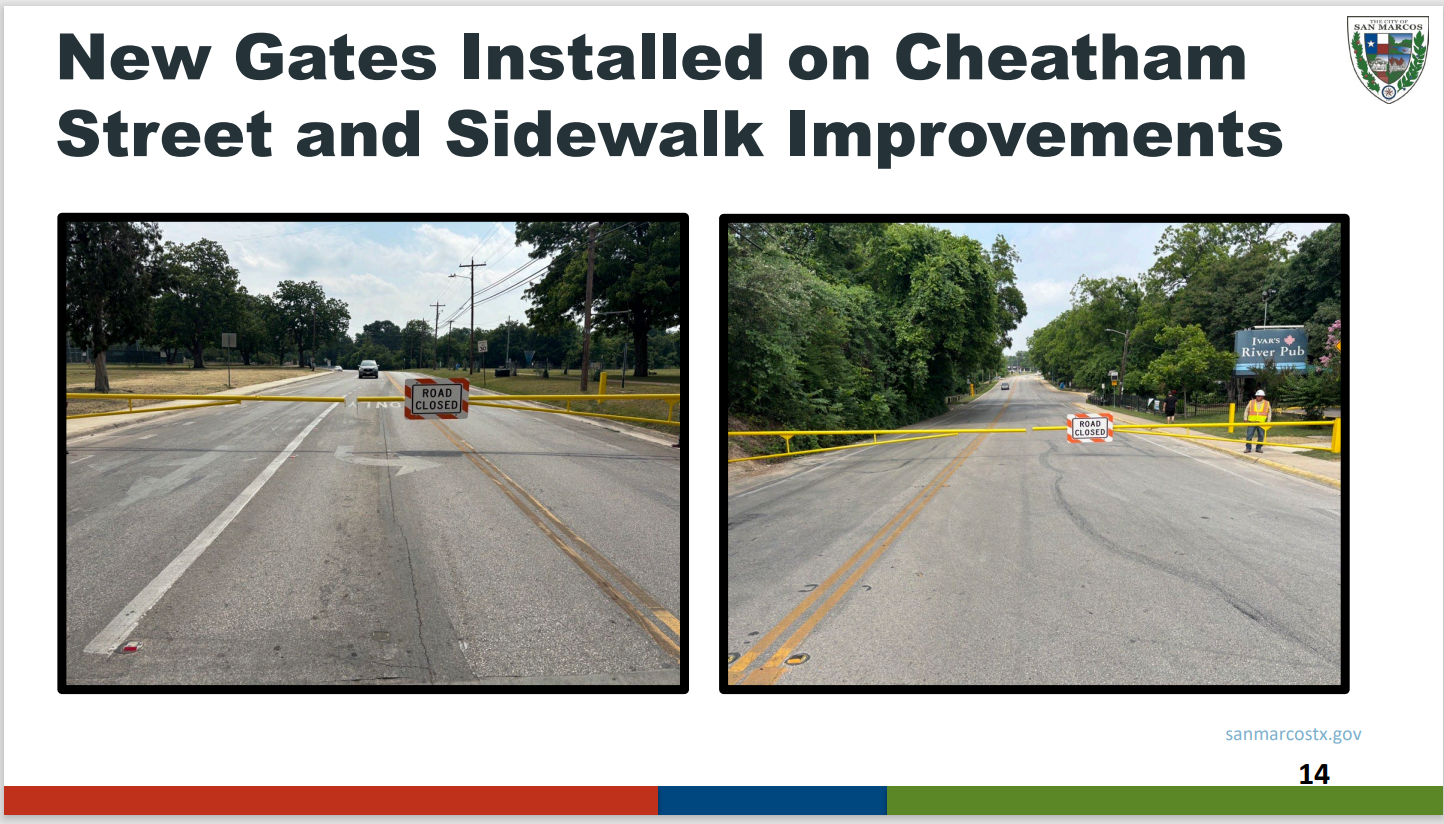
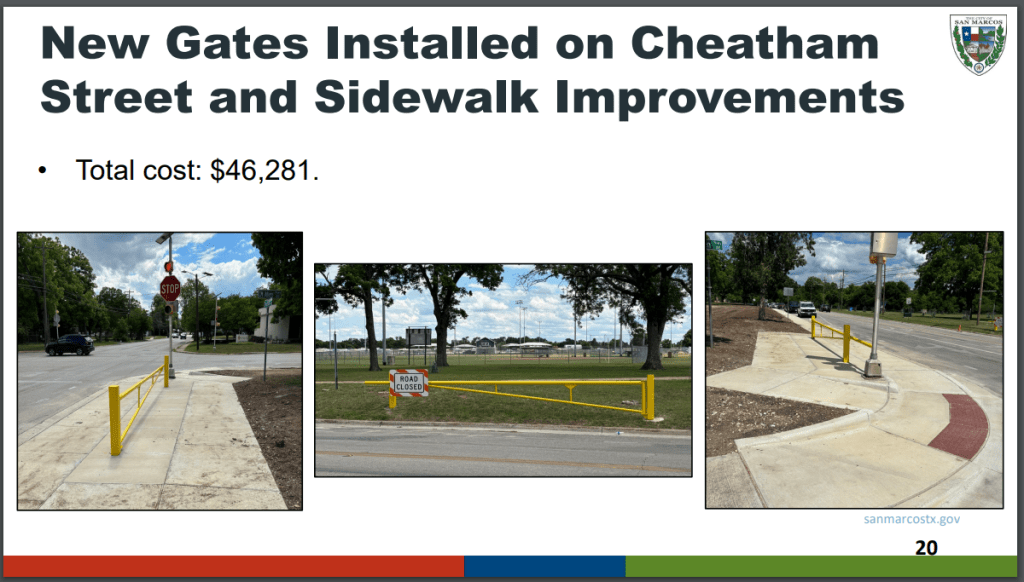
On the big holiday weekends – Memorial Day, 4th of July, and Labor Day – they also closed off Cheatham street altogether:

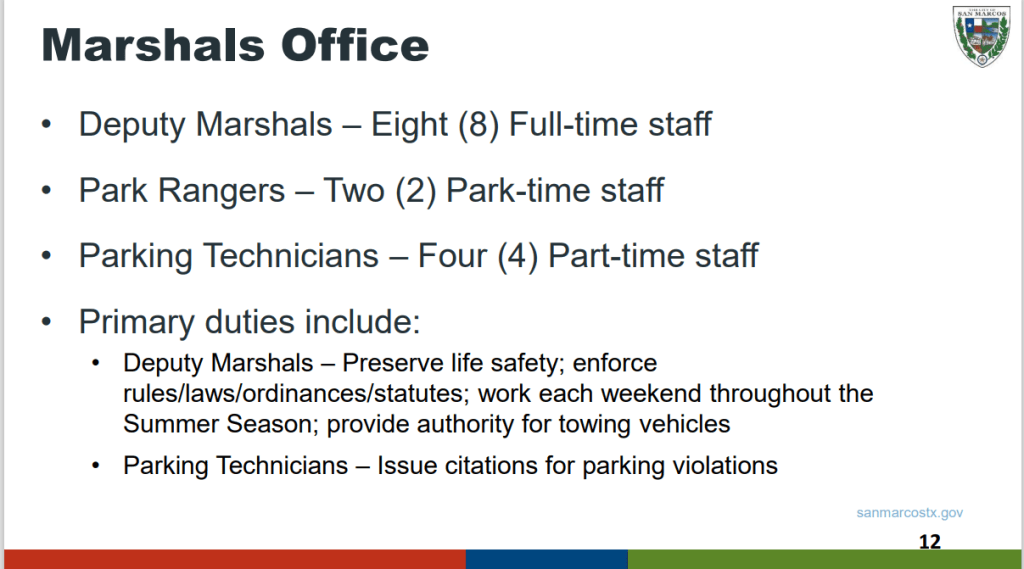
They also increased staffing. There were at least ten more employees just to staff the entrances and exits on weekends and holidays. There are a lot of hands on deck, picking up trash, monitoring situations, and available for emergencies:

It’s a really big operation.

What does the public think?

At citizen comment for the workshop, three people spoke. I think they are all very involved in river clean-up efforts.

Major themes:

  • Fences significantly reduced the size of the crowds
  • Fences significantly reduced the amount of trash in the river
  • Fences significantly protected the riparian zones of the river, ie the wild rice and other environmental spots.
  • There is more work to do. There was still a ton of litter.
  • Let’s look at places that have done this well – for example, Copenhagen has a sustainable tourism program. Tourists can get perks if they pick up litter or take public transportation.

….

What does city staff say?

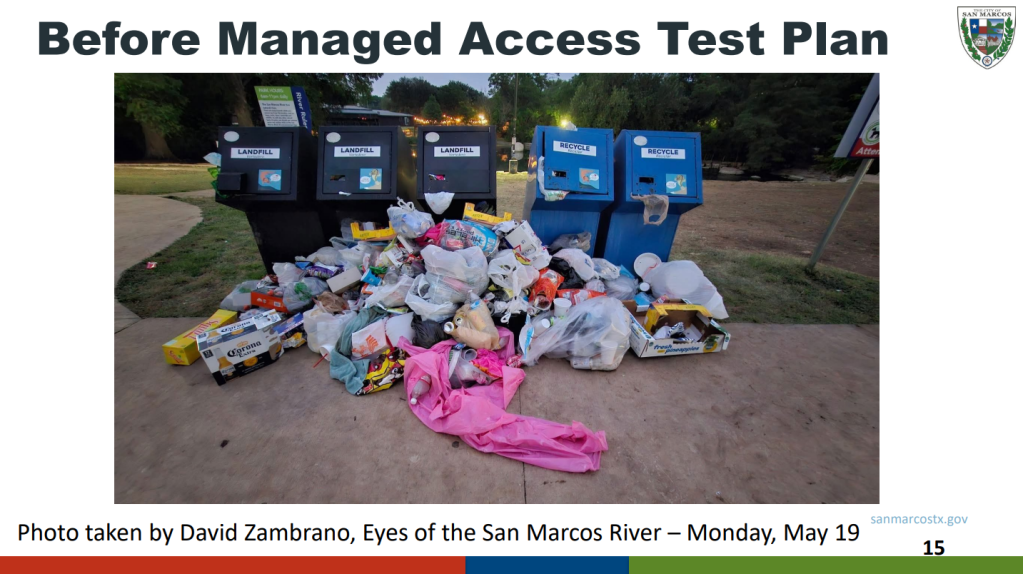
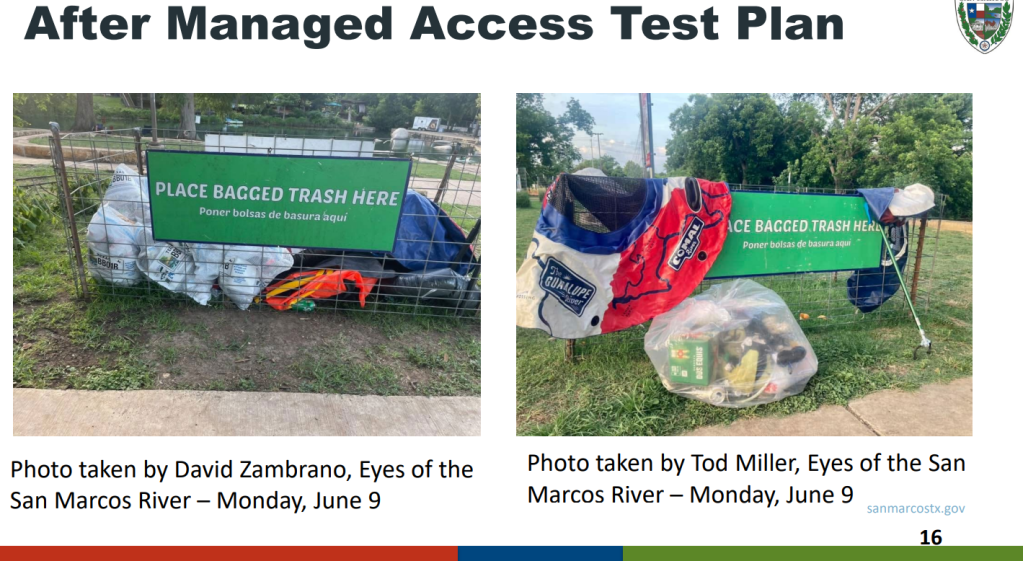
Litter started off rough, at the beginning of the summer.

Fences were put up at the end of May. Then:

Looking good!

And some data:

Note: July was much rainier and less-hot than usual. The 4th of July was pretty much rained out (while the tragedy was unfolding in Kerr County and elsewhere). So it wasn’t just strictly the fences.

You know these cute little litter boats?

via

They track how much trash gets collected in them:

Here’s how city staff summarized the summer:

More good than bad!

Did visitors just go to a different part of the river?

Staff said no, they did not see an increased number of problems upstream or downstream from Rio Vista. It seems like everyone wants to be at the falls.

(It could still happen after a few years, of course. But it has not happened yet.)

Overall, everything seems optimistic!

That is my personal belief, too – that this year, things were less dangerous and destructive than they’ve been in the past.

So that’s 2025. What about the future?

Here are the big questions for Council today:

1. Do they want to keep fencing off Rio Vista in the future? (ie “Managed Access”)

    2. Do they want to start charging out-of-towners for river access?

    Let’s take these one at a time.

    The fencing.

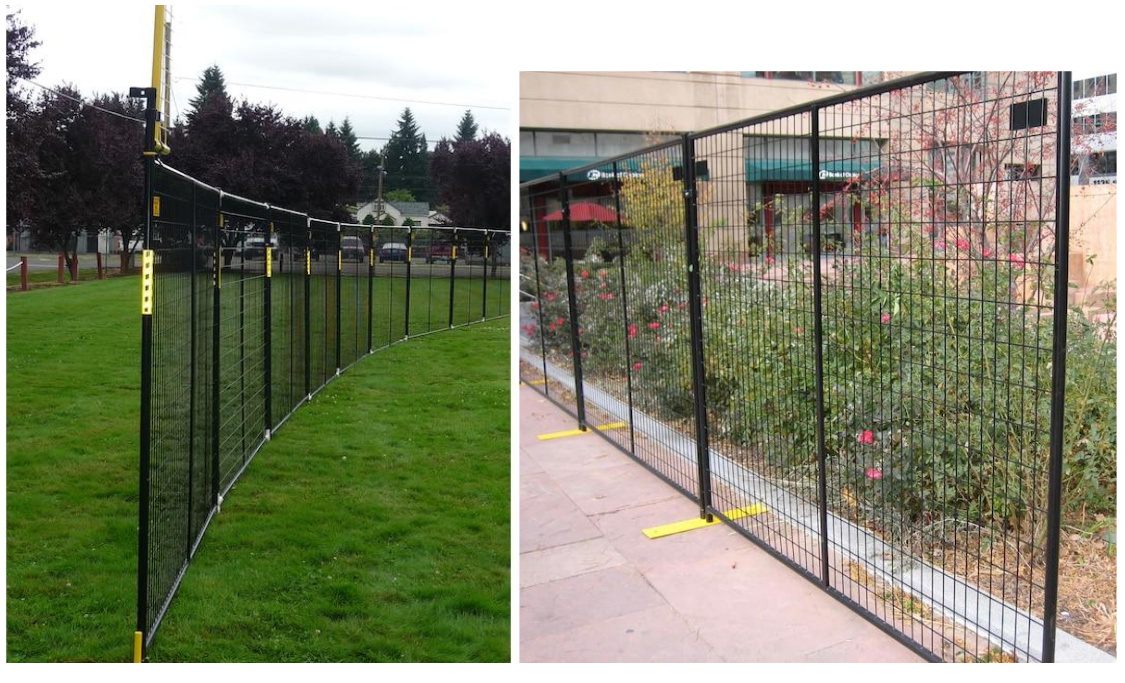
    Another angle:

    Everyone hates the big, bulky chain link look. Including me!

    Can we at least make it look a little nicer?

    Maybe!

    Staff is not proposing that we put up permanent fencing. This would only go up between Memorial Day and Labor Day.

    Council questions:

    Q: Would we rent or buy the prettier fencing?
    A: We’d buy it. It would cost about $75K. Renting the fences this past summer was roughly $15K.

    Q: People were cranky about the tennis courts being inside the fencing . Can we find a way to make them easier to access?
    A: Yes, we can definitely explore this for next year.

    Bottom line: Does Council want to continue with the fences?

    Mostly yes. Alyssa and Amanda are both a little squirrelly on the question, but they’re more yes than no.

    Note: I am a hard yes. You only get one river, and overuse will kill your river. This is a dead on, textbook-example of a Tragedy of the Commons.

    ….

    2. Should we charge admission?

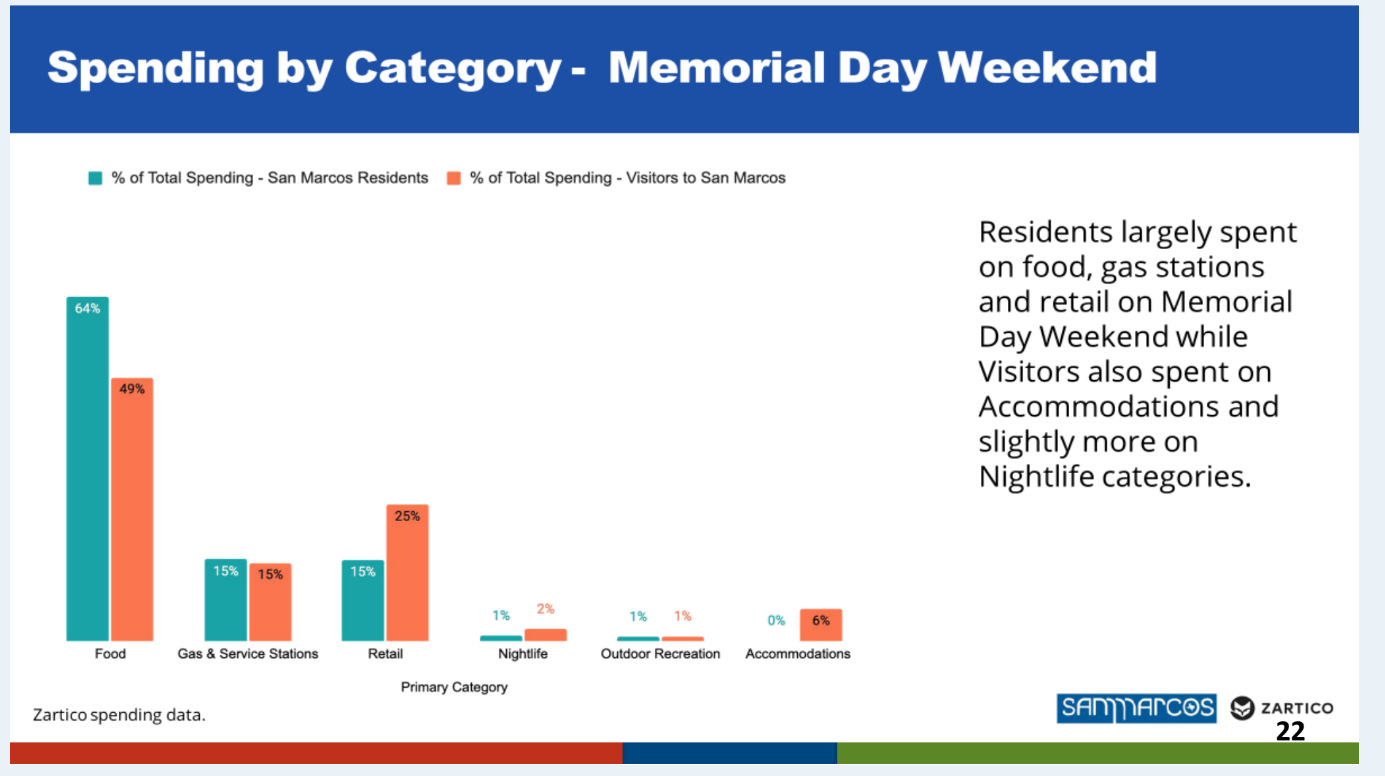
    The problem is that we’re running a giant operation here, all summer long, and it requires a lot of staff. Furthermore, it mostly isn’t San Marcos residents using the river.

    This is an old slide from 2024:

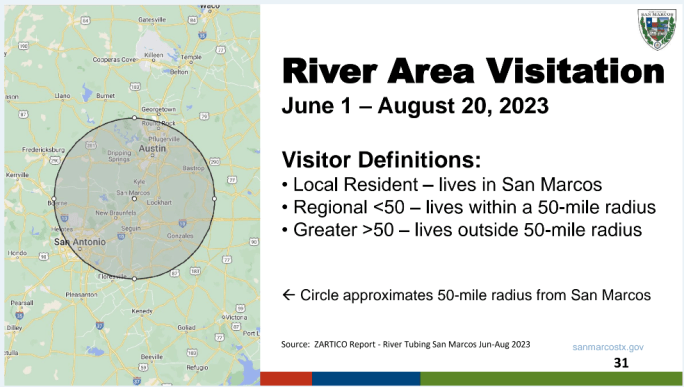
    (Zartico is a company that tracks cell phone data. We paid them to track people on the river and tell us where people went afterwards. Yes, it’s a teeny bit creepy.)

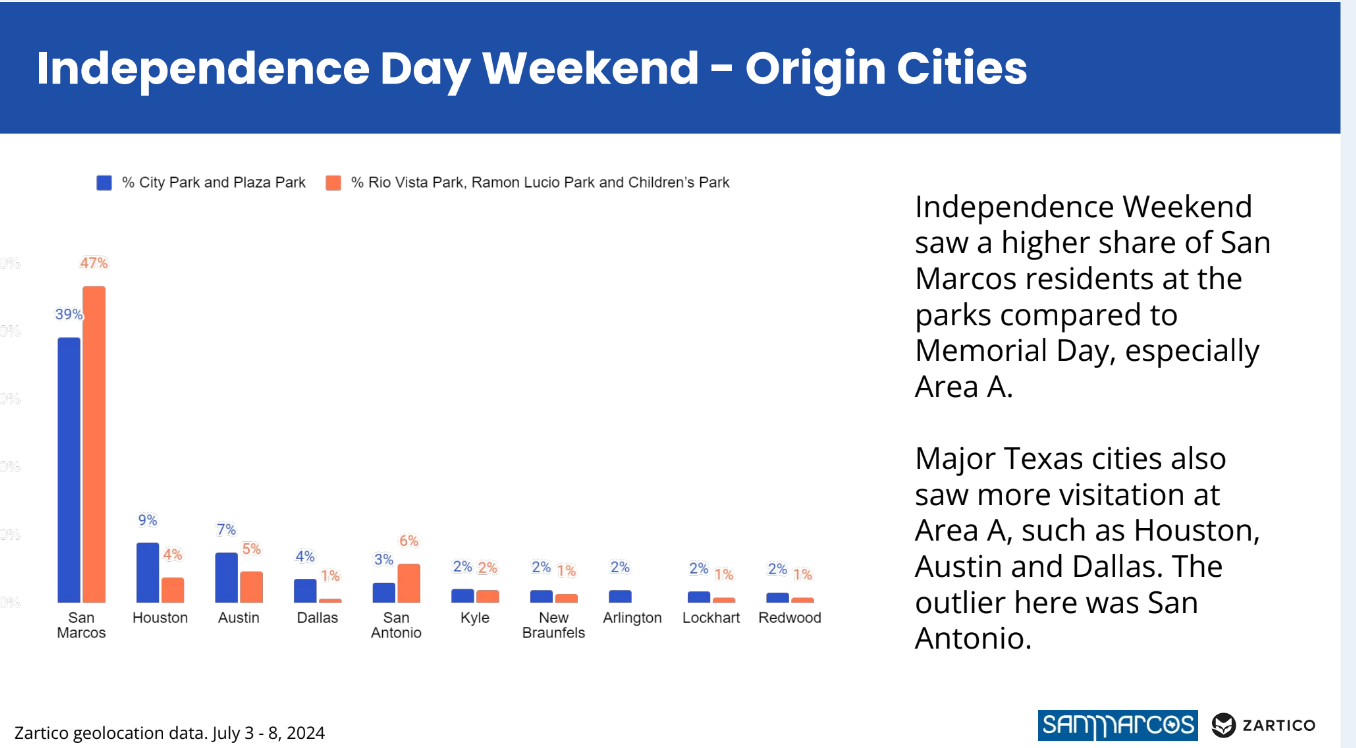
    The point being, about 1/3 of the park visitors were local, and 2/3 were in from out of town. Here’s 4th of July from 2024:

    More from San Marcos, but still under 50%.

    No one is proposing that we charge admission to San Marcos residents. But should we charge out-of-town visitors an admission fee?

    What does everyone else do?

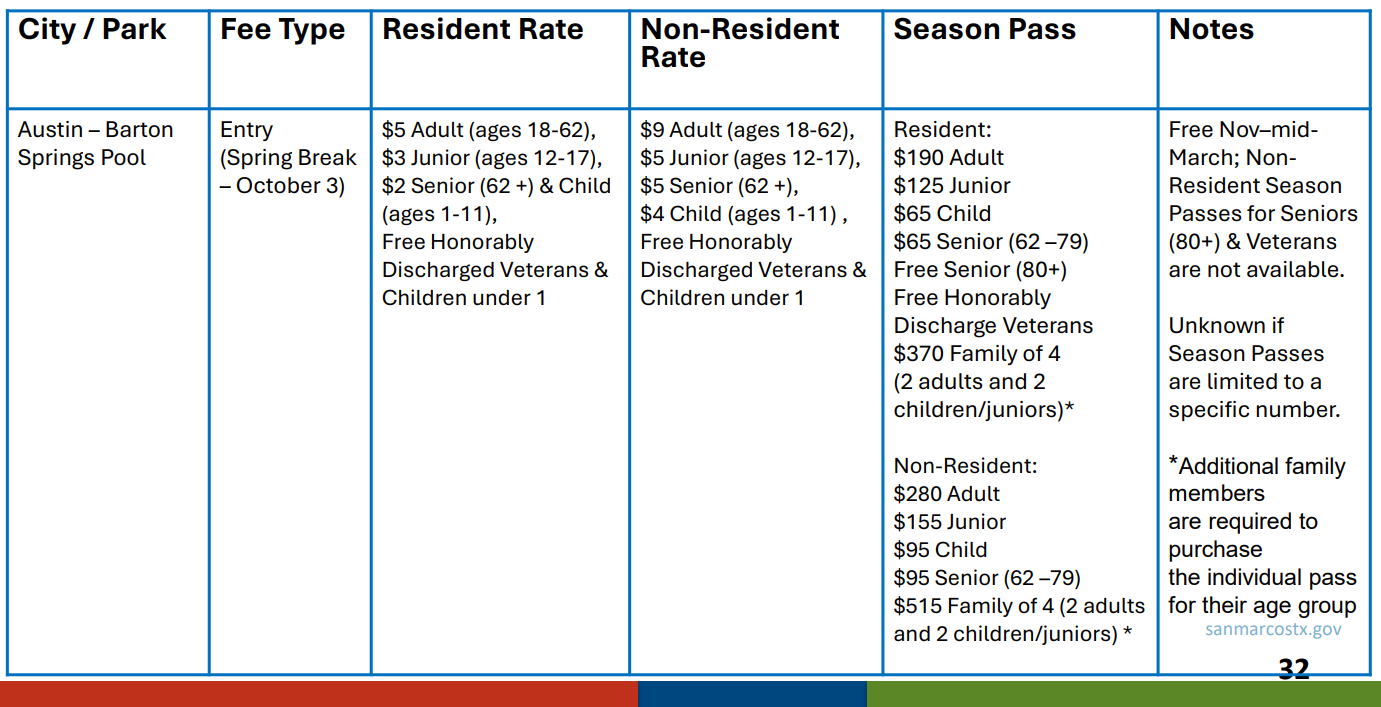
    Lots of cities charge fees:

    ….

    And so now, San Marcos?

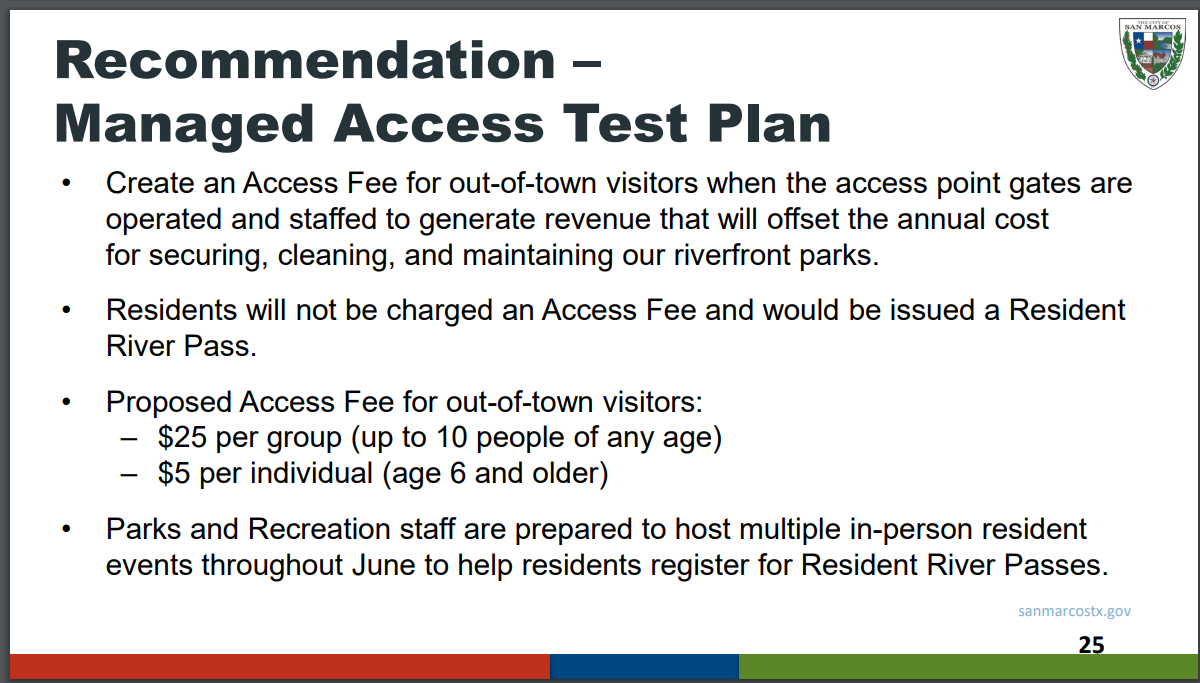
    City staff is recommending yes, we should start charging.

    Here is what they propose to council:

    What does Council think?

    Jane: we should start our season earlier than Memorial day.
    Answer: That just costs even more.

    Alyssa: How would residents get a river pass?
    Answer: You’d sign up in person or online. Like getting a library card. It would be a physical hard copy.

    Alyssa: One per household or one per person?
    Answer: Per person.
    Alyssa: Even kids?
    Answer: I mean, you all are council. You tell us what you want.

    Amanda: I have strong reservations about this. The river is a natural resource. I don’t like the idea of commodifying it. I don’t like the precedent it sets. New Braunfels probably started out only charging a little, and now it’s $25 to set out a blanket. And their river is still trashed.
    Jane: Our out-of-town visitors aren’t spending money here. They’re not contributing to the tax base that pays for these parks. I don’t want to charge residents, but I’m okay charging out-of-town guests. They need to share the cost.

    She’s referring to things like this (from 2024)

    Saul: How much revenue would this bring in?
    Answer: We have no idea. It’s hard to even figure out how many people go to the river.

    Let’s break it into categories

    1. San Marcos Residents

      No one is proposing that we charge San Marcos residents. But there’d have to be some sort of free pass system.

      Every time you add a layer of inconvenience, you trip up vulnerable residents. (Think: undocumented community members who don’t feel safe signing up, or harried single mothers who keep forgetting to sign up. Etc.) Alyssa and Amanda voice some of these concerns.

      2. People just outside the city limits.

      What about people who live nearby? Like you have a San Marcos mailing address, but you’re not officially in city limits?

      Jane, Shane, Saul, Matthew: They should get a reduced admission price.
      Alyssa, Amanda, Lorenzo: they should be free.

      3. Actual out-of-town visitors?

      Lorenzo: Yes. We should charge them.
      Jane: Yes. Same.
      Alyssa: I don’t know. This needs more work.
      Amanda: Kids at least should be free.
      Saul: I agree on the free kids.
      Matthew: I’m fine with what staff proposed.
      Shane: [never turns on his microphone, I have no idea]
      Alyssa: Who’s gonna pay $100 for a season pass? Come on. This needs work.

      Fair point, Alyssa.

      Overall: It’s a little hard to follow, but I think this is where everyone lands:

      Yes, charge out-of-town guests: Jane, Lorenzo, Shane, Saul, Matthew

      Maybe.  We’re not sure yet: Alyssa, Amanda

      No one is a hard no.

      What do I think?

      I’m on the fence. I hate the increase in bureaucracy and bookkeepping, and I wish for a state where we just properly funded parks and local governments. (See also: socialized health care is much cheaper than private insurance because it’s so much less paperwork, bureaucracy, and red tape.)

      I also hate the idea that everyone on the river would have to keep a plastic card on a lanyard around their neck.

      On the other hand, here we are – with actual bills to pay and actual rivers to save, people to keep safe – and that all costs money.

      Maybe the river pass can be made into a little bracelet?

      …….

      Lorenzo: can we hold an evening workshop instead of a 3 pm workshop, so that more residents can attend?

      Everyone agrees this is a good idea.

      Bottom line: City staff will bring back more rate models and Council will have another workshop. But it looks like the writing is on the wall. I think it’s likely.

      …..

      One last workshop topic.

      Paid parking at the Lion’s Club

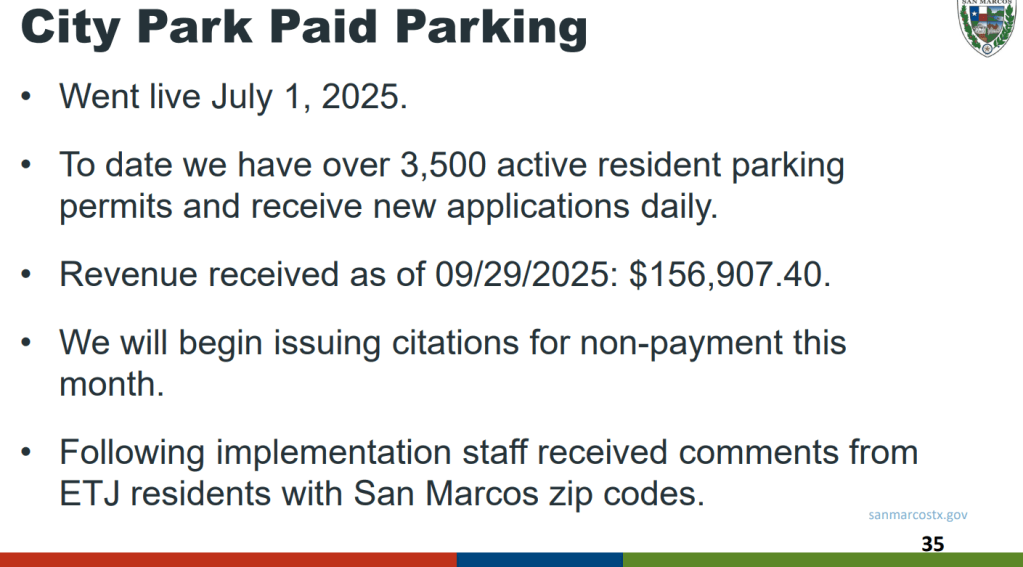
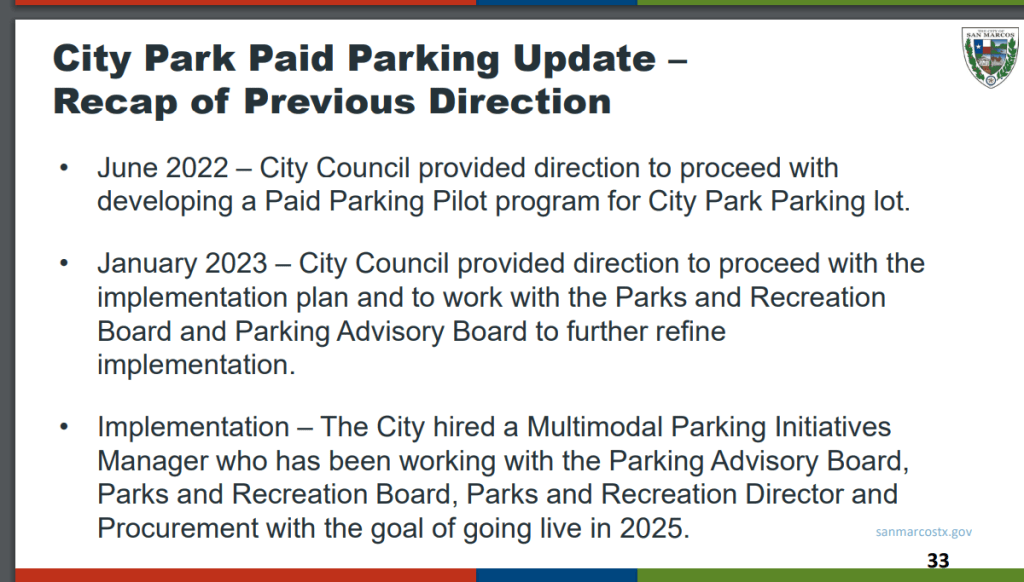
      We’re midway through a pilot year of paid parking at the Lion’s Club. It’s free for all residents, but you do have to register. (Register here!)

      How’s it been working?

      Ok, so it just started.

      A few notes:

      • They have not yet been ticketing anyone, but they’re about to start. (Apparently there have been problems with Texas State students. Students can park there, as residents who want to use the parks, but not to go attend class at Texas State. I have no idea how they can tell who is doing what.)
      • “ETJ” stands for extra-territorial jurisdiction, ie the people who live nearby the city, but not in the actual city limits.

      The main question: do we want to charge people less if they live in the ETJ? On the one hand, they don’t pay property taxes. On the other hand, they do come to San Marcos to go shopping, and so they pay sales tax.

      How do we want to handle people who live close to San Marcos?

      Charge a reduced fee: Matthew, Shane, Jane

      Keep it free: Alyssa, Amanda, Saul, Lorenzo

      There’s some minor quibbling about what “close” should mean. Anyone in who lives in SMCISD? Anyone with a San Marcos mailing address? some third option? I think they settled on SMCISD.

      Bonus! Bonus! Workshop #2, 5/20/25

      Workshop 2: Riverfront Parks Update

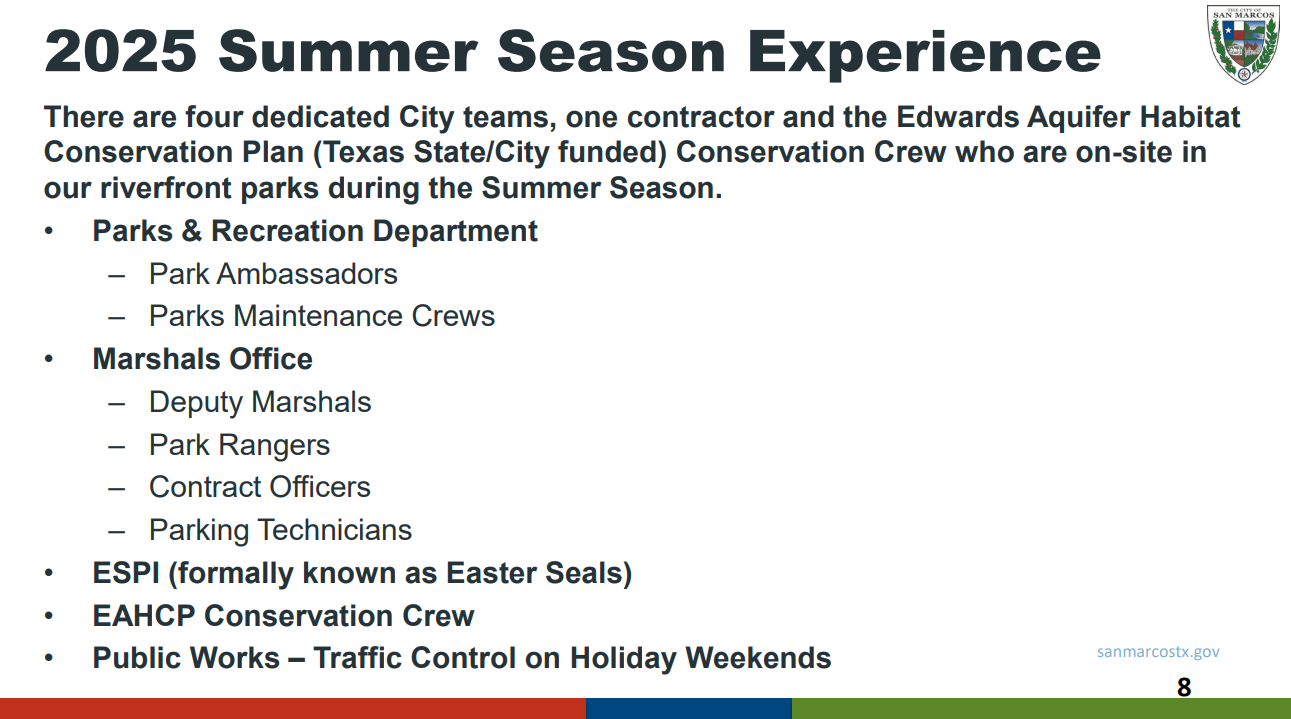
      It’s summertime! That means it’s time for this:

      Can we please not destroy it this year?

      Last year, we implemented a can ban.

      It did not go very well.

      Mostly because the park was mobbed with so many visitors that staff couldn’t keep up:

      We saw this last year:

      The arrests are low, because the marshals can’t take the time to arrest someone.

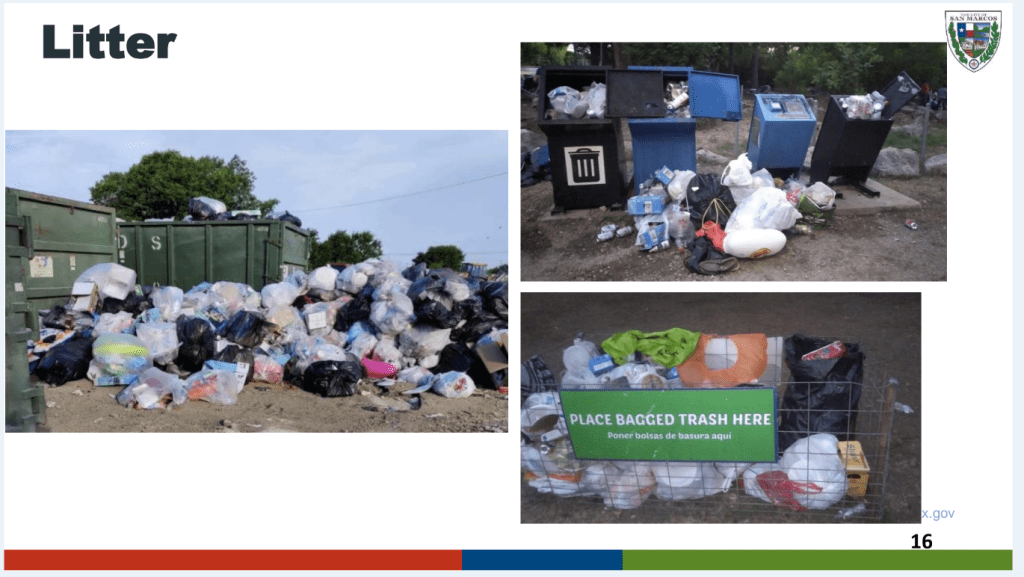
      We saw these sad photos from the river last year, too:

      and

      It’s very depressing.

      Trying to keep up with the crowds is super labor intensive:

      Also there are a ton of volunteers, like the The Eyes of the San Marcos River, that show up weekly and pick up the massive amount of litter left behind.

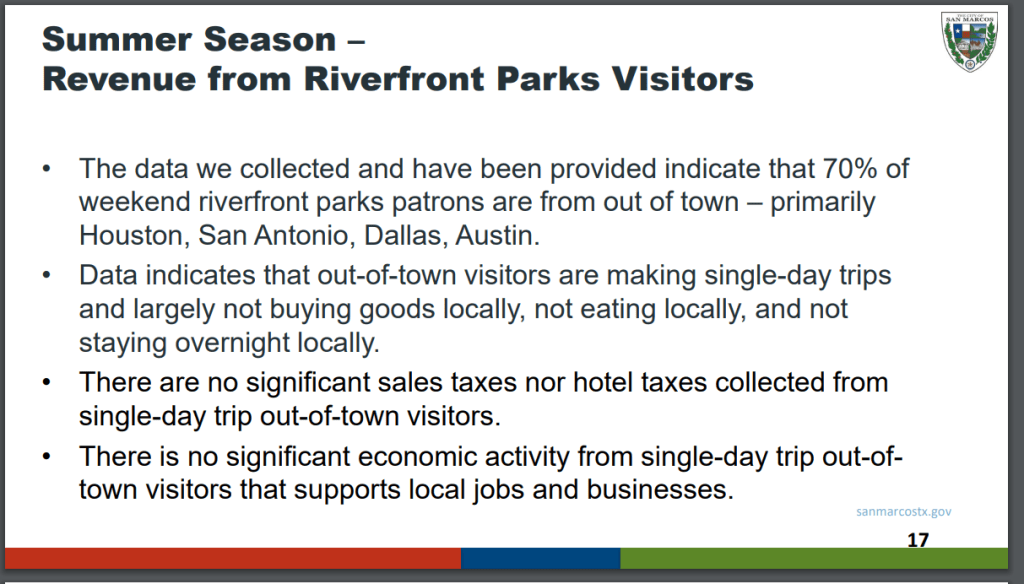
      Basically, San Marcos residents have stopped using the river on the weekends. It’s used by tourists from San Antonio, Houston, Austin, and other out-of-towners:

      But we don’t collect any tax revenue from them, because they don’t stop at the restaurants or spend the night.

      So residents are footing the bill, while the river is over-used by others to the point of destruction.

      What happened is that there used to be lots of free river parks in Central Texas. But one-by-one, they all got fenced off and started charging admission. This put the pressure on families to travel further and further to get some free recreation and relief from the summer heat.

      We’re the last park that is still free. So now we’re getting more people than our river can handle.

      This is a collective action problem, specifically a kind called the tragedy of the commons. People have destroyed many, many finite natural resources throughout history. It would be great not to add our river to that list.

      I hate this situation so much. I want people to have free recreation to escape the Texas heat! I want families to have fun together! And yet we absolutely have to keep our river healthy and clean.

      (The actual solution is that Central Texas needs a lot more free water recreation options available for residents in the summer. The heat is brutal. If we had a functional state government that tried to improve things for their residents, they could solve that problem.)(If my aunt had wheels, she’d be a wagon.)

      So what are we doing differently this year?

      First off, for holiday weekends:

      blocking off Cheatham on either end. We started doing this on holiday weekends last year, and it helped keep people safer.

      Next: getting the shuttles out of the neighborhoods:

      So now the Lion’s Club shuttle takes the I-35 frontage road, instead of going down Riverside.

      Those are both good, but what about the BIG problems?

      After last fall, Council was timidly open to the idea of fencing off the river and charging admission. But they had lots of questions. It was very preliminary.

      But then it hasn’t come up since then.

      So this was kind of a surprise! The park staff want to try some stuff out this year:

      WHOA. That’s this weekend! This is pretty short notice!

      The plan:

      They want to test out fencing off this one part of the park, by the falls:

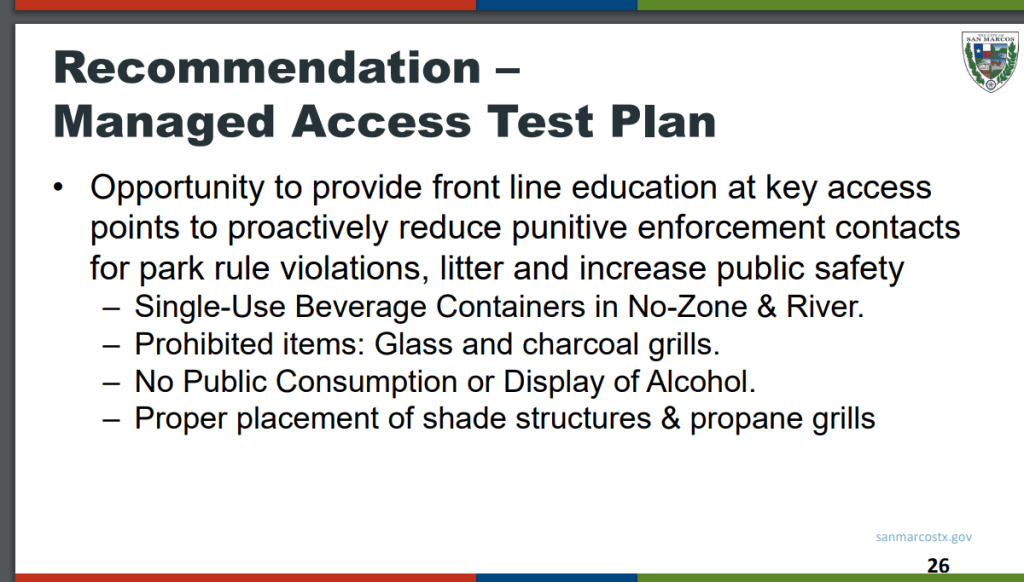
      You would only be able to get in at those four green entries. You’d have to talk to someone, who reminds you of the rules, like the ban on charcoal grills, and single-use containers, and alcohol.

      Maybe we could we keep things from getting less out of hand?

      ….

      I think this is a pretty good idea? I’m surprised that it materialized so fast, but this is a good test run.

      City staff also floats the idea of charging admission to out-of-towners on weekends? Not residents, just tourists:

      Residents would have to register for a pass.

      Also they want to be able to tow people more easily:

      Right now, only Marshals or police can get a vehicle towed. They want to make it easier for the Parking Enforcement Techs to get a vehicle towed, so that the Marshals can keep dealing with the park.

      What does Council think?

      Amanda and Alyssa both: This is all super rushed. This is way too fast. We also have major concerns about staffing – there were some marshals that were overly aggressive and problematic?

      City manager Stephanie Reyes: The park marshal that was in the news was fired. But listen: it’s super dangerous there. We’ve gotten very lucky, but please take this seriously.

      Jane: All these decisions have to come back, though, with precise definitions.

      Parks Director: You can defer the fee. We don’t need to charge people. We just want to have the fence so that we can talk to people before they go in. You can send someone to go put contraband in their car if you catch them on their way in, but once they’ve set up and are midway through the day, it gets dicey.

      Saul: Do we own the fence?
      Answer: no, we’re renting it. But it’s rolled in to the cost of the Porta-potties. We got a great deal.

      There are three questions for Council to answer:

      1. Do they want to try fencing off Rio Vista park?
      2. Do they want to charge admission to out-of-towners?
      3. Do they want parking techs to be allowed to get vehicles towed?

      Let’s take these one at a time:

      1. Fencing off Rio Vista Park, around the falls?

      Yes: Saul, Jane, Amanda, Lorenzo, Shane, Matthew
      No: Alyssa, who says she cannot sign onto anything without more details.

      I think this is a good idea.

      2. Charging an admission fee for out-of-towners?

      No. There is not much appetite for charging a fee immediately. There are too many unknown details about how exactly we’d pre-register residents.

      What about having a future conversation about charging an admission fee?

      Yes to a conversation: Saul, Jane, Lorenzo, Amanda, Matthew
      No: Alyssa, Shane

      3. Parking techs allowed to get someone towed?

      Yes: Jane, Matthew, Lorenzo
      No: Saul , Amanda, Shane, Alyssa

      So this fails.

      We’re also moving forward with paid parking at the Lion’s Club:

      So the idea is that it’s free for residents, as long as you register ahead of time:

      You can also register online.

      The workshop ran way over time. They didn’t start the council meeting until almost 7 pm.

      Hours 2:50 – 3:56, 3/18/25

      Item 23: Cape’s Dam 

      Hooboy, CAPE’S DAM. As you know, this is a whole epic story!   Let’s see if we can wade through everything.

      Background:

      Here’s the part of the river that we’re talking about:

      (source)

      Cape’s Dam is here:

      Damn Dams, and the Damn Dammers who Dam them.

      In general, old dams are bad for rivers.

      US Fish & Wildlife generally recommends removing them, so does this other American Rivers group, and pretty much any other environmental group.

      Back in the 2000s, some folks at the Meadows Center began looking at Cape’s Dam. Would removing it be good for the endangered species?

      Eventually they wrote up this report for the city: Effects of changing height of Cape’s Dam on recreation, Texas wild rice and fountain darter habitat in the San Marcos River, Texas.

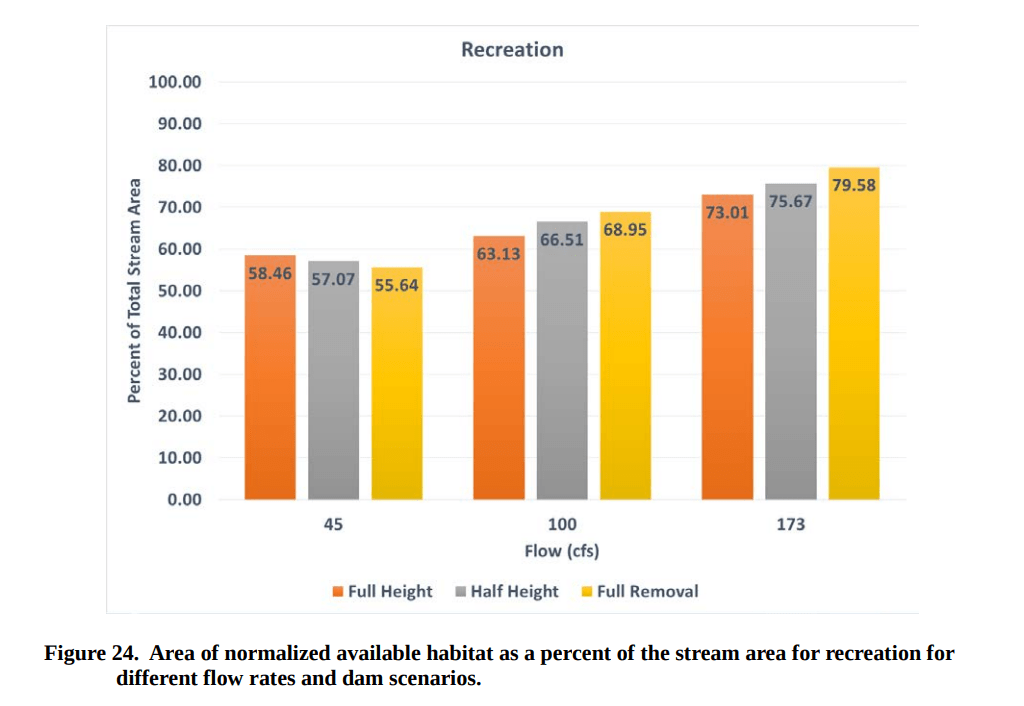
      It is insanely thorough! I can tell that much. They look at three things: fountain darters, Texas wild rice, and recreation. They conclude that removing the dam is good for the fishies, good for the endangered wild rice, and not bad for recreation.

      This is their graph on recreation:

      The 45 means drought, 100 is normal river, and 173 is after a lot of rain. The bars represent how much of the river is deep enough for you to paddle on. Removing the dam doesn’t really change how much of the river you can paddle down.

      In 2014, they reported all this to the Park’s Department. But before they talk to Council, we have…

      The 2015 Floods

      The 2015 Memorial Day floods come along.  A 40 foot wall of water barreled down the Blanco River, 11 people are killed, and tons of homes are flooded.

      In the course of all this, Cape’s Dam is destroyed.  

      Here’s what it looks like afterwards:

      (From this video) and from another angle:

      (source)

      I hunted for awhile, but I can’t find any photos of the dam from before it was destroyed.

      2016: Council hears all of this for the first time

      Now the city is trying to cope with post-disaster San Marcos. They’re assessing damage, applying for disaster funding, and so on. For Cape’s Dam, they’ve now got a liability mess on their hands.

      The issue is presented: Should Council remove the dam and fill the Mill Race?

      Wait, what’s the Mill Race?

      I think it’s this:

      It’s this little channel that was built back when this was an actual mill. It’s very calm and smooth because it’s got dams on both sides. I think you get this nice little loop around Thompson’s Island. So there are groups, like the scouts and disabled veterans, who have used this stretch for learning to kayak and rehab and growth.

      It’s great for those groups!

      But as far as I can tell, this is an amazing stretch that’s been kept hidden from public use. That part irritates me. People living east of I-35 have not been able to enjoy the Mill Race or the rest of the parks on that map very easily.

      Back to 2016

      As far as I can tell, this is the source of all our problems:

      I actually went back and listened – you’re welcome – and here’s the problem: if you remove the dam, the Mill Race won’t have enough water 85%-90% of the time. Mostly it will have stagnant mosquito water, or dry up altogether.

      So removing the dam wrecks the Mill Race. You could still canoe and paddle on the real river! Just not the Mill Race part.

      So it’s 2016, the dam is now dangerous, and Council is given this choice:

      1. Use free money from the Army Corp of Engineers to remove the dam.
        • Good for the health of the river!
        • Good for the endangered species!
        • Can still paddle on the regular half.
      2. Use free money from the Army Corp of Engineers to remove the dam, and then use imaginary millions of dollars that we don’t have to rebuild the dam.
        • Imaginary money is not real. We don’t have it.

      In March, 2016, Council votes to remove Cape’s dam.

      So now the shit hits the fan. Massive controversy.

      This organization springs up to save the Mill Race. They have some sympathetic points, but they also make some crappy arguments.

      It was in the news a LOT. Like, a whole lot. Like, it’s one of the biggest San Marcos controversies of the decade.

      The Argument about Historical Significance:

      This is the part I have the least patience for. The argument that takes hold is that Cape’s Dam is so historically significant that we’ve got to save it. For the children! For the historians!

      Look: if Cape’s Dam is so sacred, how come I cannot find one single photo of it anywhere, before it was destroyed? Didn’t we love it then?

      I do even think there’s interesting history here! What was engineering like a hundred years ago? That’s worth studying.

      The part that makes this bullshit is when you use it to say the dam must be preserved, in the river. Want to haul the broken pieces on the bank somewhere? Put up a nice plaque commemorating the dam? Knock yourself out! But don’t pretend that the historical significance means we need a functional dam in 2025.

      But this gains traction. Preservation Texas has this blurb about the dam, Hays Historical Commission weighs in, and City Council holds a workshop with the Texas Historical Commision.

      Thus begins the next phase of the controversy, 2017-2024:

      We begin kicking the can down the road. For the next eight years, everyone just punts. You can read a nice summary of all the dithering here!

      Kick, kick, kick. We’re kicking the can. kick, kick, kick.

      Two extra details from this part of the timeline:

      1. The free disaster money to remove the dam expires. Now we’d have to apply for grant money. But like I mentioned, lots of organizations want old dams removed, so there’s money around.
      2. In 2017, San Marcos River Foundation acquires the land on one side of the bank.  They are a hard NO on rebuilding the dam.

      They have always been very clear on their position: it is best for the health of the river to remove the dam.  You can’t rebuild the dam unless you can access their side of the river.  They will not agree to rebuilding the dam on their land.  Therefore there is no dam.

      So now, in 2025:

      I’m no engineer, but I’m pretty sure this is the choice before us:

      1. Find grant money to remove the dam.
        • Good for the health of the river!
        • Good for the endangered species!
        • Can still paddle on the regular half.
        • Current dam is dangerous and needs to be removed. (A recent tragedy.)
      2. Find grant money to remove the dam.
        • Then find imaginary millions of dollars more to rebuild the dam
        • Find an imaginary way to get SMRF to consent to let us rebuild a dam that they are strongly opposed to.

      Look, it’s not actually a choice. No matter what, it starts with removing the dam.

      This brings us to Tuesday’s meeting!

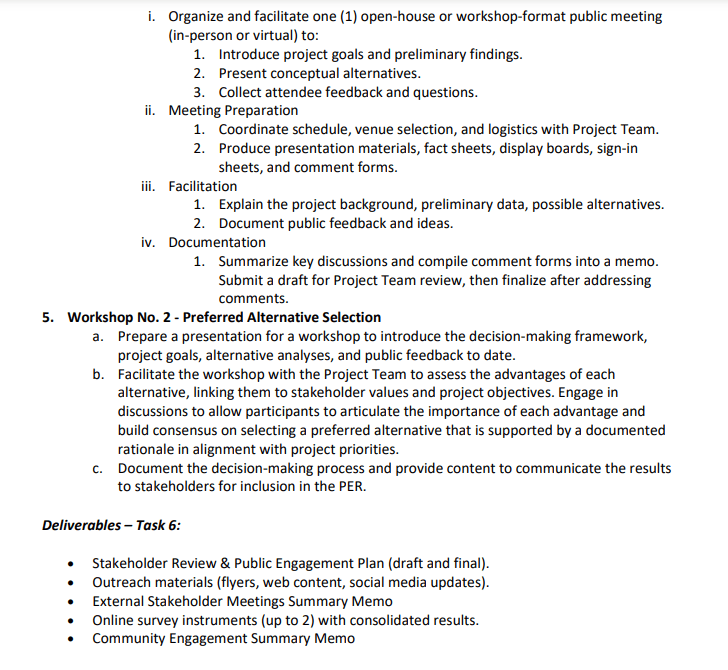
      The issue at hand is spending $340K on a feasibility study. The study would do this:

      So this study is going to answer all our questions:
      – What’s the current conditions of the dam and the whole area?
      – What would it take to rebuild it? Or partially re-build it? Or just remove it?
      – What’s the environmental situation? What’s the permitting process?
      – Do a bunch of public outreach and get public feedback.

      ….

      What does Council say?

      There are a few things to keep in mind during the Council discussion.

      1. We need the feasibility study, no matter what.  Every outcome requires permits. You need this study to get those permits.
      2. The east side of San Marcos has been majorly neglected for river recreation. We need to develop this.  Not necessarily the Mill Race – the public couldn’t access this anyway. They definitely deserve good river access and recreation.
      1. Most likely, you have to remove the dam, no matter what. (I’m no engineer, but look, it’s a pile of rubble.)

      Council has a lot of confusion.  This is understandable – it’s a big, complicated topic.  But you’ve already read 1000 words on this, and trust me, you don’t want to read about them going in circles.  There are a LOT of circles, and they go round and round.

      Some highlights:

      Q: Can we skip the study and just put the money towards re-building?  (Shane)
      A: No. You need it to get permits and apply for grant funding. Plus the re-building would be way more than $340K.

      Saul Gonzales is quite clear-headed about keeping safety front-and-center in the conversation. Everyone is focused on this, but Saul is the one who repeatedly mentions it.

      Q: What about liability, should someone get injured?
      A: Yes, we are exposed.  This is a man-made thing in a public space, and we’re supposed to be in charge of it, even though the state owns the river.  SMRF would maybe have some liability in court, and parks get a little immunity for being outdoors, but this is not a natural outdoorsy thing. It’s a big risk.

      Q: Aren’t we partnering with the county on all this?
      A: Sort of, yes.  They’re interested in rebuilding. Or they were, in 2021, when we last talked with them about this.

      Several councilmembers point out: The east side needs some good river access!

      I agree with that!

      Shane, Jane, Matthew, Lorenzo, and Alyssa are all open to rebuilding the dam.  They seem to be thinking that this is the way to support river access on the east side. They’re wrong about this, but it’s sympathetic.

      Saul’s position: “I’d like us to make this safe, as quickly as possible. Let’s start with taking it out, and see if everyone likes it.  After that, if everyone wants a dam, we can rebuild the dam.”

      Amanda’s position: “Rip it out and let the river flow. Then create recreation on the East Side.”

      This aligns most closely with my beliefs.

      Jane and Amanda go off on a tangent about getting public input first.  Now, the folks doing the feasibility study are already supposed to get a bunch of public input. And it’s a LOT:

      But Jane and Amanda are proposing that the city get a bunch of public input, before the folks in the study get a bunch of input.

      Look: No. That is just more kicking-the-can down the road.

      Alyssa makes the exact right point here: “We have engaged with the public for YEARS.  EVERYONE has an opinion.  I know what the results will be.”

      That is correct.

      ….

      There’s discussion of partial rebuilds. Can the proposal consider that?
      Answer: Yes. It’s in there.

      Jane says: The main problem is that the Mill Race needs more water. Can we fill it with reclaimed water?
      Answer: Uhhhhhhh…. you’re freaking us out. You want to release sewage into the Mill Race?

      Jane: it’s treated, not raw sewage, and it gets released to the river downstream. So why not release it upstream?
      Answer: We’re feeling woozy just trying to imagine the permitting process involved in releasing reclaimed water into a recreation area. Oh god.

      I admire Jane’s problem-solving ambitions!

      Bottom line: The study should take about 10 months. Then we will have a lot more information!

      My belief is that the dam should go, and we should focus on creating recreation access for the public on the East Side. The mill race has always been treated as a fancy, restricted portion of the river, and the exclusiveness is bullshit.

      If you’re curious:

      Here’s a great read from 2000, from an old-timer named Tom Goynes, who has been paddling the river since the 1970s.

      And here’s someone’s video, showing what it looks like to kayak through all this stuff we’re talking about:

      It’s pretty amazing and beautiful.

      Bonus! 3 pm workshops, 9/17/24

      This week’s workshop was all about the river and parks. It was both so interesting and so depressing. 

      The big question is: How’d the can ban go?! 

      The big answer is: We broke our river. We were so overwhelmed with record-breaking crowds that we couldn’t even get to the can ban.  The river got really damaged.

      Out-of-town crowds were too big.  Bad behavior was high.  There was more trash and destruction than ever before.  We might have to fence in the river parks and start charging admission. It’s all very depressing!

      Let’s dive in.

      1. Preparations. We planned on doing the can ban!  (There was a can ban plan.)

      Here’s what we did ahead of time to prepare:

      We tried to promote the ban every way we knew how, ahead of time.

      We put these signs up in the park:

      There were also sidewalk stickers, pointing towards the Go Zones and the No Zones.

      You could quibble that the signs and stickers weren’t great at demarcating the Go Zones and No Zones, but this was supposed to be the trial year, where we try things and see what works. ♫ Life’s a dance you learn as you go ♪, and all that.

      Generally there are both marshals and park ambassadors at the park:

      And marshals:

      (The can ban plan began.)

      1. But things went really badly:

      The big problem is drunk people – they fight, they trip and fall and hurt themselves, they get heatstroke or other medical issues from the heat. Just lots of safety issues that preoccupy city marshal attention. No one has any bandwidth to get to the can ban.

      Overparking is a problem, too. And there’s lots of litter that gets left wherever people go to find parking.

      Memorial day was a particular disaster:

      So in response to Memorial Day, they changed things up for 4th of July weekend and Labor Day weekend.

      Mainly, they shut down Cheatham street. This helped with the drop-off and pick-up mess, and the aggressive U-turns that cars make.  They had to staff both ends of the street, so that used up more staffing.

      The other big thing was contracting with off-duty police officers. We pulled $100K out of Covid money and spent it on extra staffing.

      Finally, they blacked out the dates for the baseball fields, so we weren’t hosting a baseball tournament at the same time. This freed up some parking for the rivers.

      So how bad did things go?

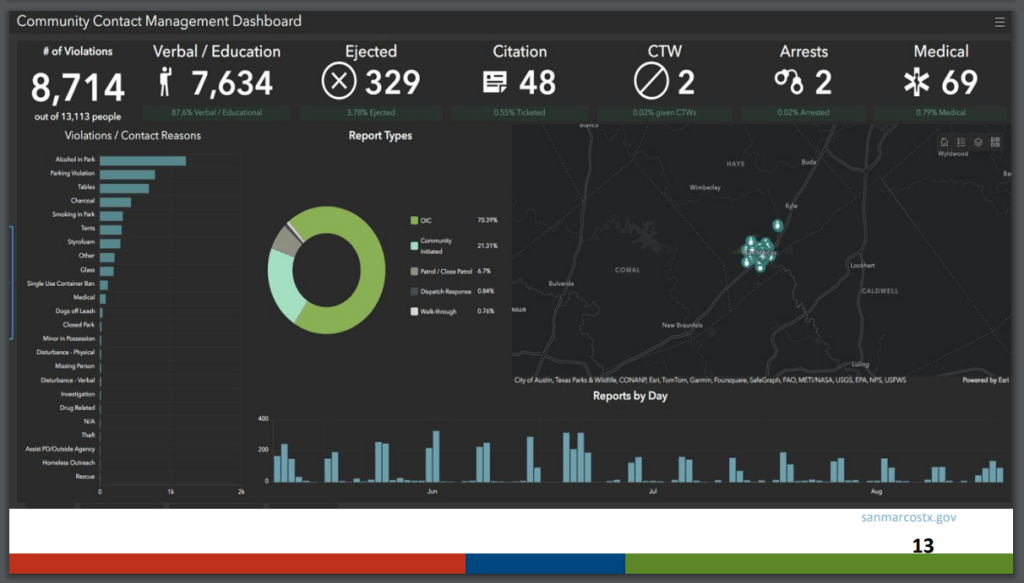
      Deputy Marshals have a dashboard:

      This is the total for the whole summer. Highlights:

      • 329 park evictions.
      • 48 citations. You can see that the most common one is alcohol, by far, and next is parking violations.
      • Only 2 arrests! But that’s because a marshal has to then leave with the person, which leaves the park even more understaffed. So ususally they just kick the person out of the parks.
      • 69 medical incidents. Most of those are drunk people who succumb to the heat.

      It sounded pretty grim. They were so understaffed.  All the marshals and park ambassadors worked every single weekend, no exceptions, all summer long, no vacations. 

      Staff also said that most of the behavior problems are out-of-towners. Local residents are less likely to cause problems.

      This is the main reason the can ban kinda died – we were in survival mode for making sure that everyone stayed alive and safe.

      3. So why???

      Why is all of this happening?  What changed in the past few years?

      The problem is all the other river parks. The other cities have fenced in their parks and started charging admission. We’re the only free river park left, in the San Antonio-Austin general region.

      I hate all of this so much.  It pits two things I care deeply about against each other:

      1. Recreation should be available to all people.
      2. You must take care of your river. 

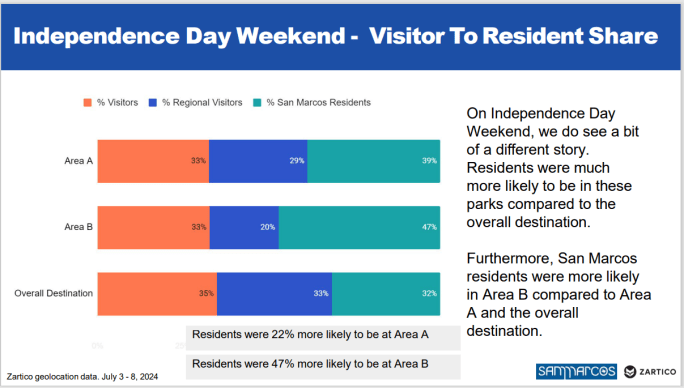
      So who exactly uses the river parks so much? We hire these guys to track cell phone data.  Here’s what they tell us:

      First:

      Area A is downstream – the falls, near the baseball fields, near the children’s park. 
      Area B is upstream – near the Lion’s Club and the general Sights and Sounds part of the park.
      (I don’t know what Overall Destination means.)

      Next, the colors:

      Teal means they are San Marcos residents. 
      Blue means they come from this radius:

      Orange means they’re from outside of that circle.

      So roughly 60% out-of-towners. I’m kinda surprised by how many people drive in from Houston:

      So how many people actually are showing up on these busy weekends? It wasn’t in the presentation, so I emailed city staff to see if we knew.

      They kindly answered: Nope, unfortunately, we don’t. You can’t get that data from this company, because they’re just sampling cell phone data. To know the total number of people, you’d have to have staff literally out there counting by hand.

      Crowds looked a little different on the 4th of July weekend, but you get the picture:

      Anecdotally, the speakers said the vast majority of the drug/alcohol/behavior problems were out-of-towners. Also depressing!

      4. Onto the poor river.  

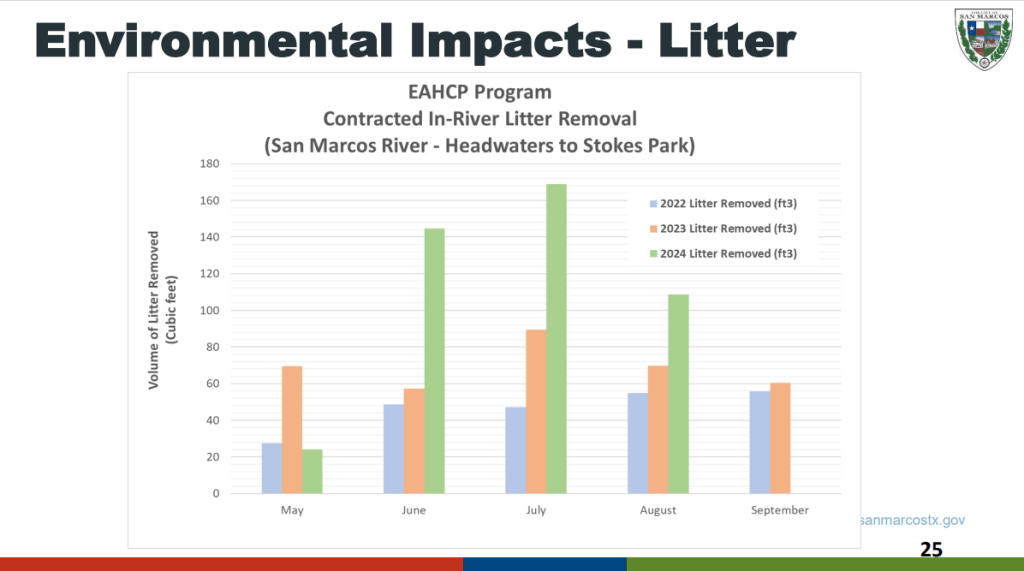
      First up, litter:

      It looks like it went through the roof. But staff said that this graph is misleading, because we doubled our clean up efforts to twice weekly instead of once a week.  Some of that is old trash from years past. 

      It’s still depressing!

      Also, that’s mostly volunteers out there, doing major clean ups 2x a week. (Like The Eyes of the San Marcos River and Keep San Marcos Beautiful.) So they deserve some big kudos.

      We’ve also got those litter boats for tubers:

      So maybe some of the tubers were bringing re-usable containers after all? And the can ban helped? Who knows.

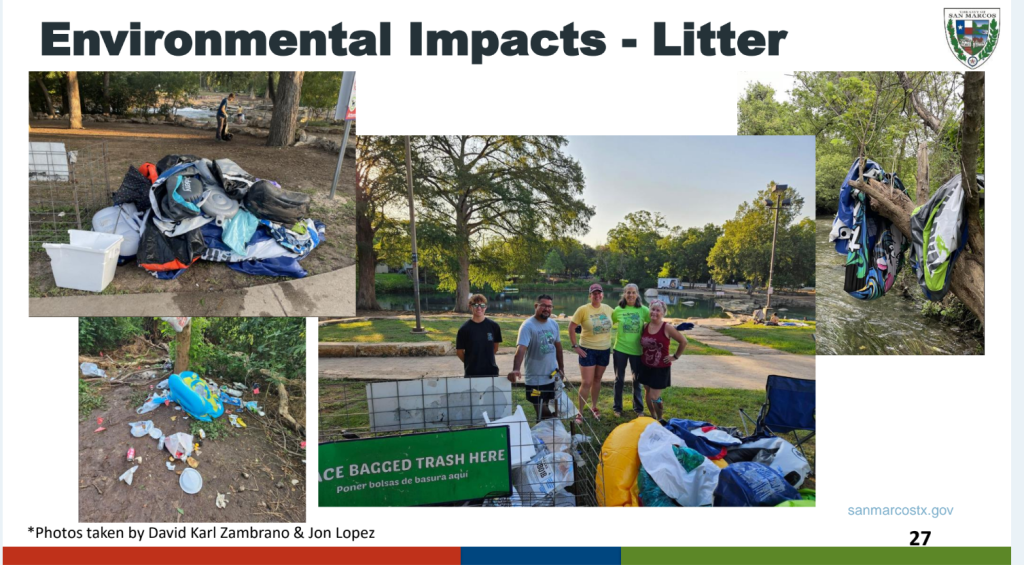
      Look at this stuff. Ugh ugh ugh.  

      They said that usually on Saturdays and Sundays, they pulled about 50 old dead tubes out of the water each day.   

      Apparently Lion’s Club rentals were way down, too. Two years ago, they rented 48,000 tubes. This year they rented 36,000 tubes.  Same with shuttle service. People are buying tubes from stores and walking back up to the top of the river, instead.

      A really big problem is that people find new ways to get into the river, and then they destroy the river at these access points.  

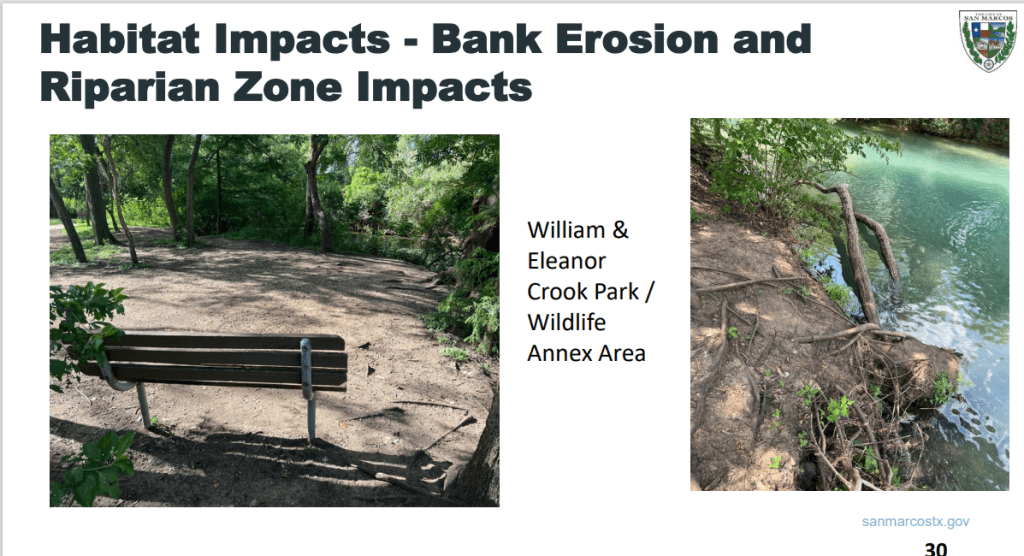
      The bank erosion looks like this:

      And the wild rice, ecosystem, etc everything gets destroyed. 

      I told you it was depressing.

      They put lots of photos in, so I’ll pass them along:

       This presentation was a major bummer. You only get one river! 

      My $0.02:

      This is a classic example of a tragedy of the commons:

      It just makes me very sad.

      Solutions:

      Staff only has one proposal:  You fence in your parks, you charge nonresidents for admission, and you use the revenue to hire more staff. 

      Apparently New Braunfels brings in enough money to pay for it’s entire parks system. That’s a lot more financially sustainable than redirecting $100K of Covid money to contract out with off-duty police officers.

      Here’s the thing: inevitably, it will limit access poorer people with fewer resources more than it limits access for wealthier people. Even if you make it free for residents, there will be hoops to jump through.

      But what else can you do? I have no other good ideas, either.

      So now we turn to Council discussion.

      (Only Mark, Matthew, Saul and Jane were here.)

      Mark Gleason goes first: he has serious reservations about fencing in the park and charging admission.

      • There’s no such thing as “aesthetically pleasing” perimeter fencing.
      • It might be inevitable, but it’s got such a cost associated with it.
      • Can we fully implement paid parking and the can ban first, and see if that helps?
      • Fences become dams in a flood! They clog with leaves and debris and prevent water flow.

      I am really sympathetic to him here. I also want anything but blocking off the parks.

      Staff responds to some of these: paid parking is not going to generate the kind of income stream we need to staff these crowds.

      Jane Hughson: “Yes on managed access. This is breaking my heart.”

      What would a perimeter fence and managed access look like?

      There’s nothing concrete to talk about yet. Staff wanted to check with Council before beginning research. So we can’t say where the fences would go, or where the entrances would be, or anything.

      How far up would it start? Texas State is having problems at Sewell and the headwaters, and so they want to coordinate with us on this.

      How far down would it go? Probably to I-35, at first. Mark Gleason points out that this will drive people to over-use the river on the east side of 35. Staff responds that they’ll have more staff available to cover these other areas, once we get a stable revenue stream.

      Apparently New Braunfels does have a problem with people slashing the fence, to sneak in. They have to constantly pay for repairs. So we’d probably have that problem, too.

      Some possibilities to explore:

      • Free for residents
      • Free during the week

      My read on the mood in the room was that this is inevitable. We will have to fence off the river parks and charge admission.

      Top Secret Executive session: Another ridiculous code name: Project Jolly Rancher!

      • Is it a sticky factory?
      • Is it a happy rancher?
      • Is it a green giant? 

      Who knows!

      Bonus! 3 pm workshops, 9/3/24

      Great workshops this week. Best part of the meeting.

      We had three presentations this time:

      Presentation 1: Purgatory Creek Flood Mitigation project

      This is really cool. We last saw it in November 2023, when we bought land for the project.

      Purgatory Creek runs from the Purgatory Natural Area over to the San Marcos river. Basically, we’re going to geo-engineer Purgatory Creek to flood less.

      So that’s Wonderworld Extension on the far left, where the yellow and blue meet. Then they cross Hopkins and run behind Dunbar, along the railroad tracks, and then cross the edge of downtown, over to the river.

      90 buildings are going to have to be removed, because they’re at risk for flooding:

      That’s a lot of buildings! Are these houses with people living in them? Are they historic? I could have used more details here.

      Correction: I’m an idiot. The structures are being removed from the floodplain. Not removed altogether. It’s safer now for the people living in them.

      But on the plus side, it’s going to have a neat little hike-and-bike trail through it. 

      I love that.

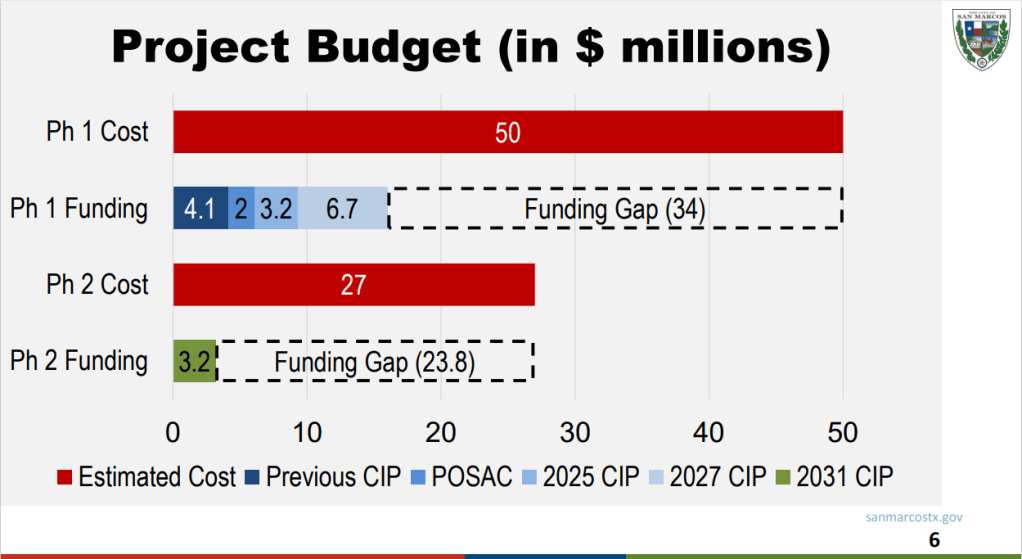
      It’s gonna be hella expensive, and we don’t yet have the money:

      We’re going to apply for a bunch of grants.

      If we get grant funding, we could begin construction in 2026.  If we don’t, we could maybe begin construction in 2030.  It’ll take about two years to finish.

      One last detail: On the far right, you can see where Purgatory Creek meets the San Marcos river:

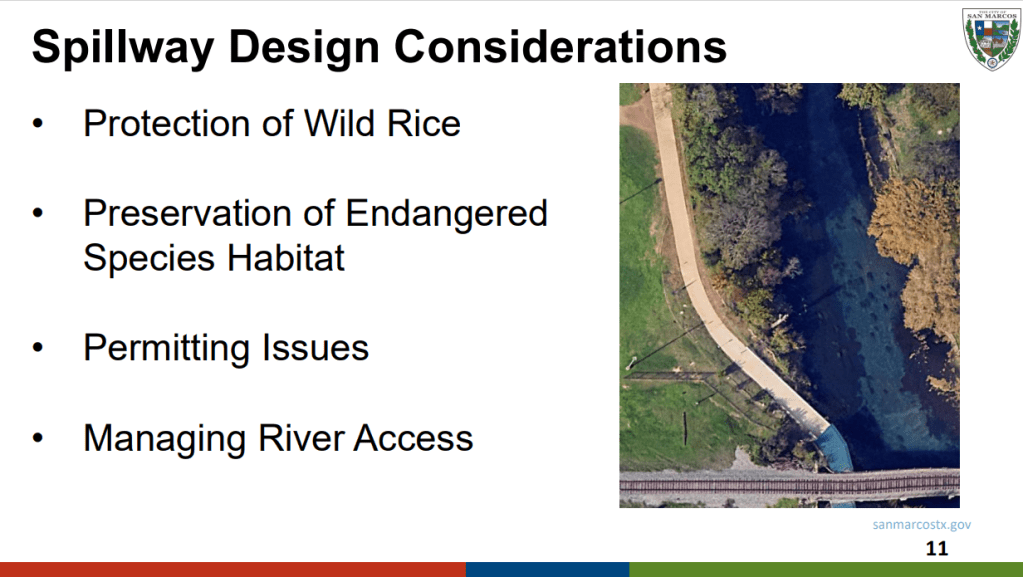
      There’s a pale green Spillway, for when it floods. The spillway is in between the Children’s Park and the railroad tracks, so it’s letting into the river right where the sidewalk goes under the railroad tracks.

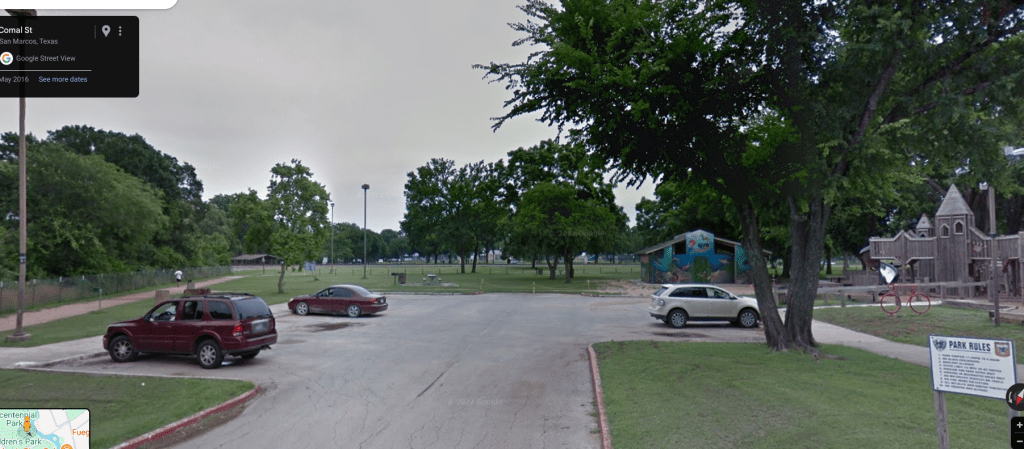
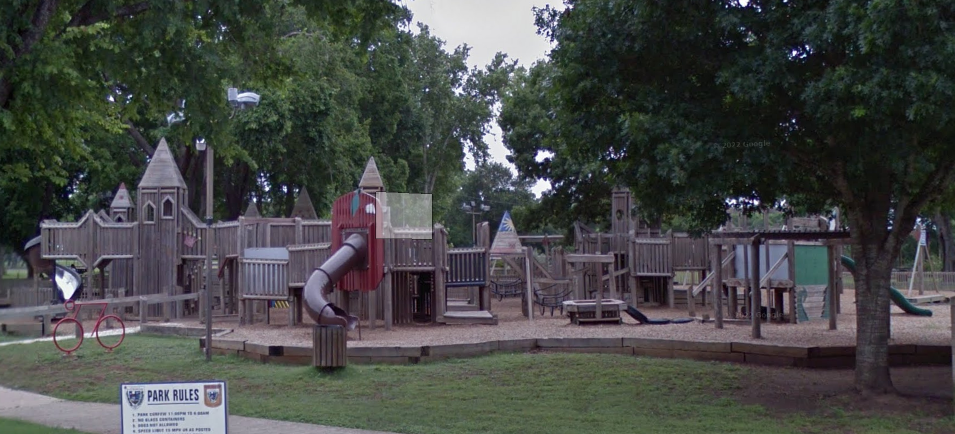
      In other words, you’d see it from here:

      This photo from Google Streetview is so old that the Children’s Park is still the old wooden structure!

      Awwww. Makes me a little nostalgic.

      Anyway! In the original plan, they were going to use this spillway as an access point for people to easily get in and out of the river.  

      But the people from the Parks Department and the river experts are all saying this is a terrible idea, please don’t do this.

      There’s a big patch of endangered wild rice there and endangered species that live in the wild rice. And also it’s deep with a brisk current, so it’s not that safe for little kiddos, either.  Just leave this area alone, please.

      So the spillway will still end up there, but they’ll make it uninviting for people.

      ….

      Presentation 2: Capital Improvement Projects (CIP)

      These are all the major city repairs going on around town. The Purgatory Creek project that we just heard about is one. They get approved alongside the budget. Council saw the current list of projects back in May. (I didn’t really say much about it at the time.)

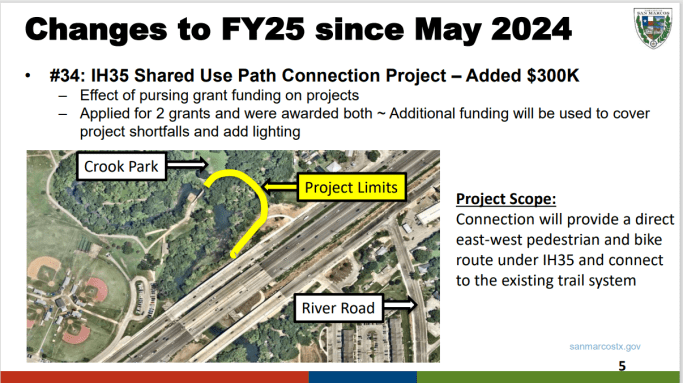
      There’s only one major change since May – we’re adding one new project:

      What are we looking at here? Let’s back up.

      So, I35 has been torn up around the river for years now. TXDoT redid both the access roads, they’re adding I35 lanes across the river, it’s a whole thing.

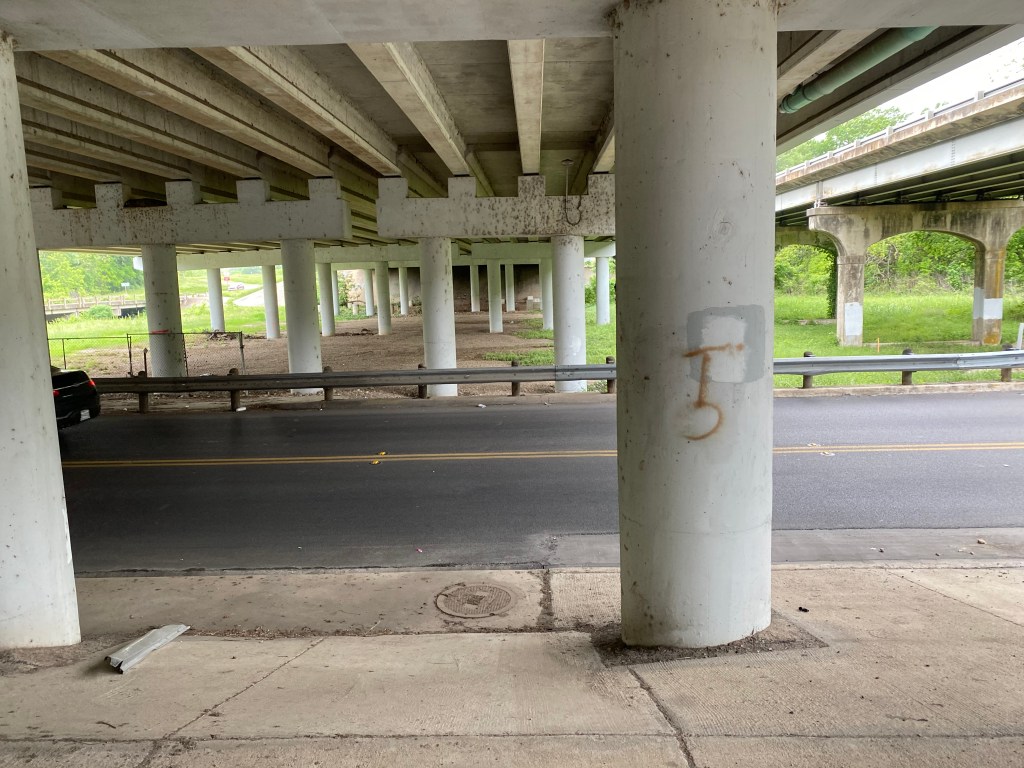
      One part of that is that they removed the old underpass along the river:

      TxDot photo

      So on the right hand side, you can see where they’ve torn up the road that used to go under I35, along the river.

      Here’s a photo I took, back in 2020, during lockdown:

      So that’s what the underpass looked like at peak pandemic.

      Removing it was a major bummer for the good people in the Blanco Gardens neighborhood. They lost their best connectivity across I35. Now they have to go up to Hopkins-80, or down to Guadalupe-123, and deal with a big, busy intersection.

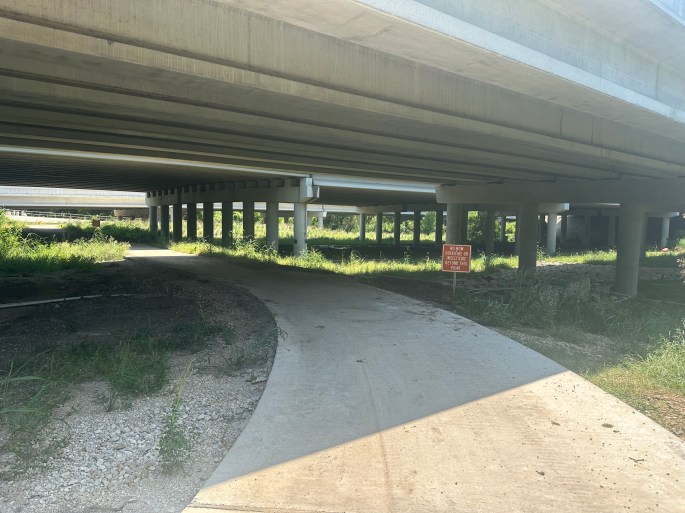
      Since then, TXDot has replaced it with a hike and bike trail.

      It looks like this:

      So you can easily bike from Blanco Gardens over to Riverside, and you end up by Herberts. That part is great!

      So what are we doing now? Pink is the route you can currently take on your bike:

      Yellow is what’s being proposed. It would connect the east and west sides of the park trails. Great!

      This was not in the budget back in May. But since then, we’ve been awarded two grants to cover the cost. The total cost for that little yellow sidewalk is $2 million dollars.

      TWO MILLION DOLLARS? Well, yes. Here’s why:

      Blue is the main river that you swim in. But there’s this little side channel, in purple, from an old dam built in 1904:

      In fact, here’s some of the machinery from the mill:

      So that tiny little yellow sidewalk is $2 million dollars, because you have to build a bridge to get across this little side channel.

      Now, San Marcos is not paying $2 million for that bridge. What we did was apply for a bunch of grants, and we got almost all the money covered. We just have to pay $300K for that bridge in matching funds. Great!

      Mark Gleason is uncomfortable with this $2 million. He lives in Blanco Gardens and actually walks and bikes all over the place, so he’s constantly using this path. He’s just not sure if the cost justifies the increased connectivity that you get. Even though the $2 million is mostly federal money, he just feels weird about it.

      I see his point. It’s such a disproportionate cost, compared to the shoestring that San Marcos usually runs on.

      But then I just tell myself, “Hey, don’t forget we’re spending $1.2 million on Kissing Tree this year!” Then the $2 million bridge for everyone doesn’t seem so bad. Especially since most of it is covered with federal money.

      Plus, once the east side of the river parks gets built out, the parks system will need to be connected, so we might as well do it now.

      ….

      Presentation 3:

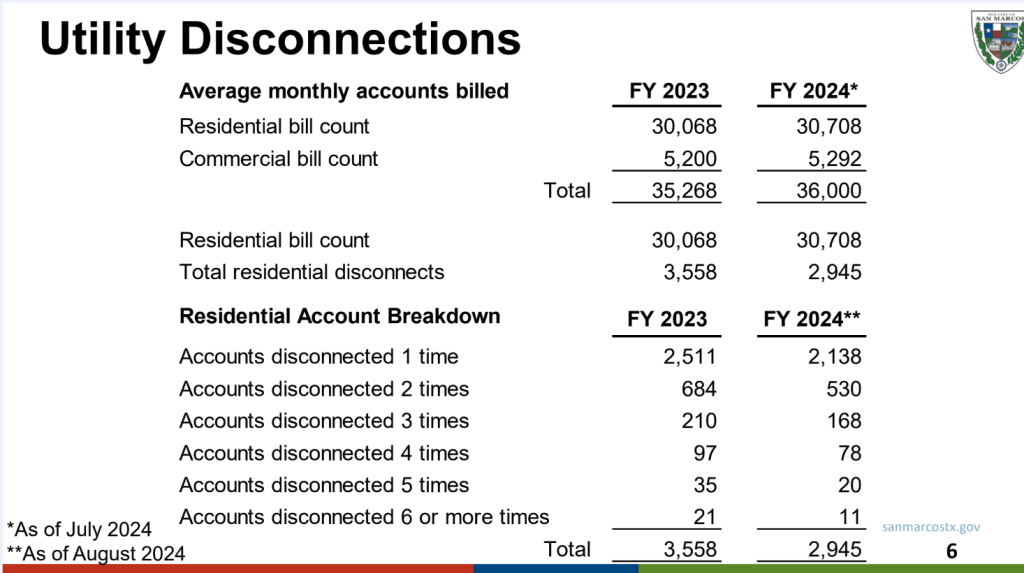
      We’ve got a big utility assistance program in San Marcos, but it doesn’t always work very smoothly. Let’s talk about it.

      How many people are we talking about?

      So there are about 30,000 residential accounts, and almost 3000 accounts have been disconnected so far this year. (Some multiple times.)

      Here’s how it’s supposed to go. Suppose you get a disconnect notice on your electricity or water. You call the city. The city does two things:

      1. Offers you a late payment plan
      2. Connects you with the nonprofits that offer utility assistance.

      How often does it work like that?

      So far this year, we’ve given 580 accounts utility assistance, but 107 of those were still disconnected anyway. There have been 1,948 accounts that have gotten extensions – some of them multiple times – and 586 have still been disconnected.

      So out of the 3000 disconnections this year, most people aren’t getting into the system to get help ahead of time. For the people who get in the system, about 75% avoid disconnections.

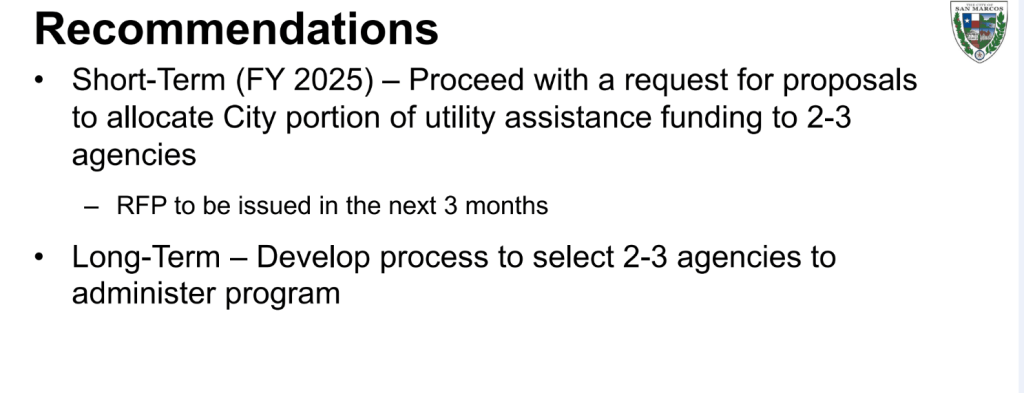
      Ok, so let’s talk about the assistance side of things. San Marcos kicks in $231K to utility assistance. The biggest chunk of that goes to Community Action:

      But Community Action also gets some federal money, so there’s actually about $435K available for assistance:

      Community Action gets $120K from the city. But when someone comes in for assistance, Community Action tries to spend federal money first. So only $14K of the $120K was spent. However, the federal water assistance program has ended, so Community Action will need to spend more city money to cover that need.

      The biggest problem is that federal money is slow. You have to fill out a ton of paperwork. But people need money immediately – cars need to be repaired, babies need diapers, the lights need to stay on, etc – or else small crises spiral into giant crises. So we need a way to get money to people fast.

      A few things get discussed:

      • Do we have to charge a 10% fee on late payments? Can we just make it a flat $10 fee instead?
      • Should we spread out city money among different agencies?
      • Would the other agencies actually have enough staffing to get the money out quickly?
      • What about San Marcos residents that are on Pedernales electric?
        Answer: they can get federal assistance, but agencies can’t use the credits from San Marcos electric specifically.

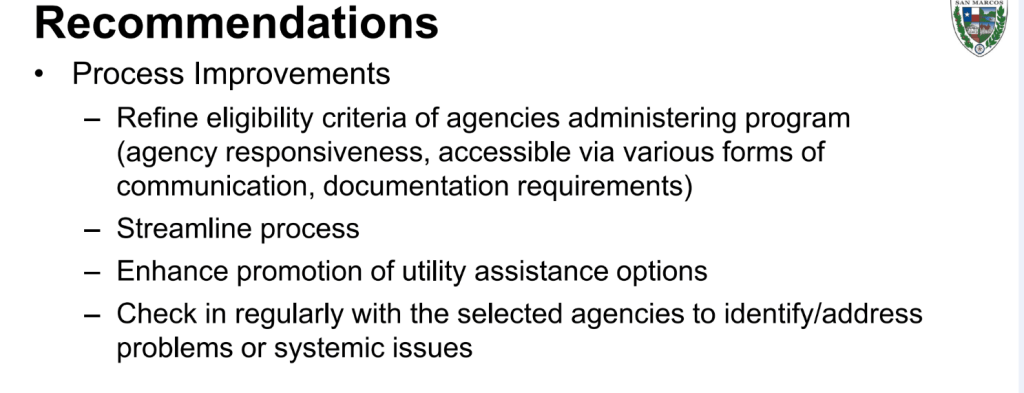
      Here’s what we’re talking about doing:

      We’re also going to look at our fees and see if we can afford to reduce them.

      Here’s my two cents: It is really hard to administer programs to the public well. It’s hard to find people, get their ear, get them to respond, get them to bring in paper work, find funding, and connect all the dots to get the assistance to people.

      We tend to see overhead spending as wasteful, but it’s really not. Thoughtfully designed programs that aren’t running on fumes can serve people better.

      Finally: if spending $231K of tax dollars on utility assistance gives someone heartburn, just remind them that we’re spending $1.2 million dollars on Kissing Tree this year.

      Bonus! 3 pm Workshops, 11/6/23

      Parts of the 3 pm workshops were interesting!

      1. The first one was on San Marcos Tourism:

      How does it compare to other industries in the city? How does it compare to other cities? I have no idea! So those numbers are kind of meaningless without context, unfortunately.

      • We have 29 hotels and 50 short term rentals
      • We have a hotel occupancy tax, and we use it on the various festivals, mural arts, Sights & Sounds, and things around town.

      Apparently we advertise outside of San Marcos, like so:

      Whatever works, man. I guess Marketing knows best.

      As a marxist, I’m mostly not a marketing and business person. But then they started talking about the river, which is more interesting to me.

      So, who goes to the river?

      They hired some consultants to track our cell phones, and see where we sleep at night. 

      So after we tube the river, where do we sleep?

      This year, about a quarter were local, half were regional, and 20% were more than 50 miles away. Last year, 40% were local, a third were regional, and a quarter were from further away.

      It would be nice to have some absolute numbers here, by the way.  It was implied that we had more users this year, due to the drought, but you can’t tell that from the percents.

      2. The second presentation was on Summer 2023 at the River Parks

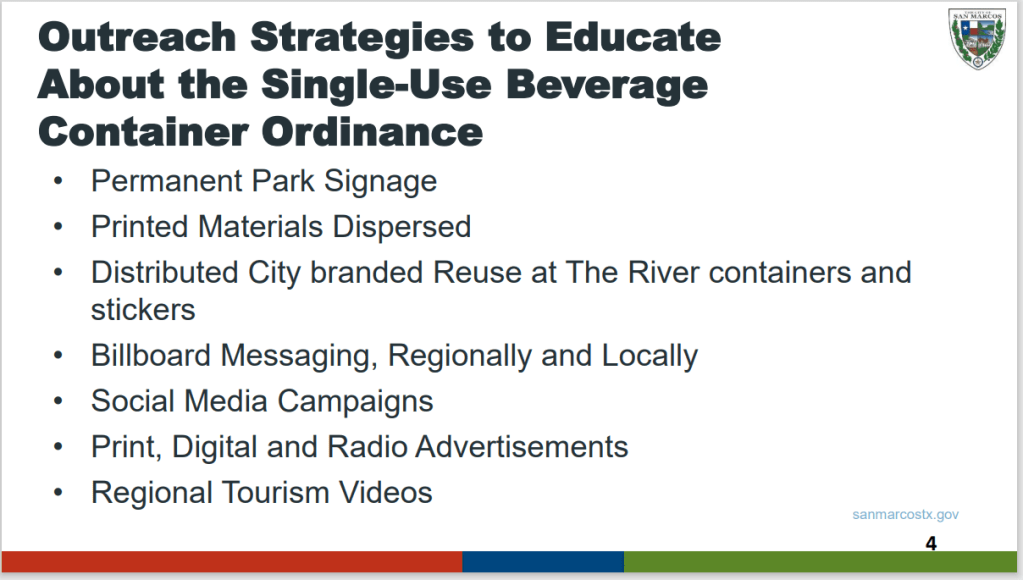
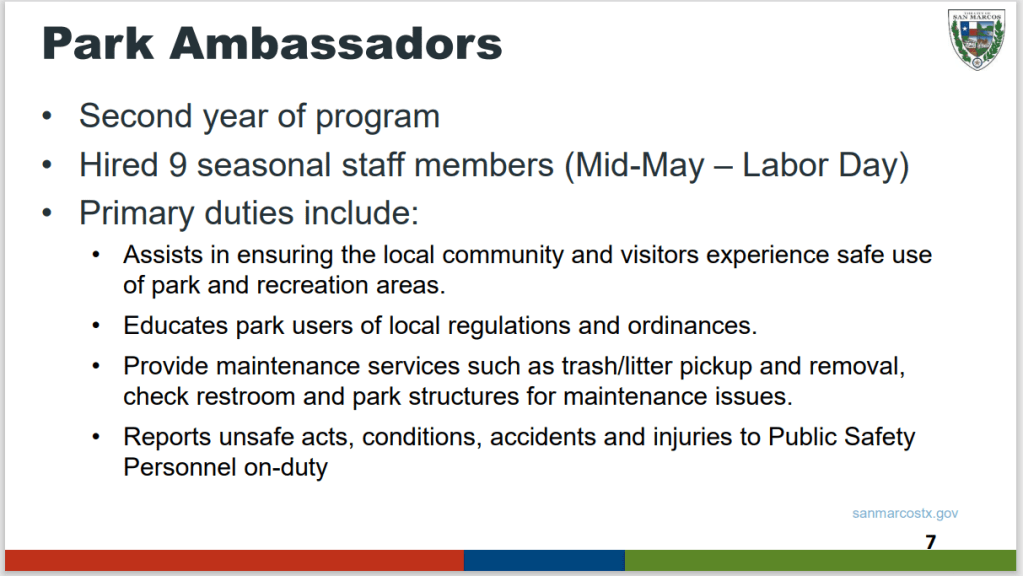
      We tried a new Park Ambassador program this year. We hired 8 staff members to wander through the river parks all summer long, and try to be helpful.

      It sounds like they told a lot of people to put their glass bottles away, put their charcoal grills away, put their dog on a leash, and put their trash bags in the right places.

      You can see those spikes right at the 4th of July weekend, and the weekend before school starts.

      Apparently park use is up this year. In the first presentation, they speculated that it was because of the drought: local watering holes dried up and were closed, to preserve them, and so people came here instead.

      This photo was taken by Christopher Paul Cardoza:

      (I got it from the slide show, though.)  It’s 5 pm on the 4th of July. 

      There’s a serious problem here:

      1. How else are you going to escape the heat on the 4th of July, unless you find some water? In our shitty world of capitalism, we’ve eliminated almost all free ways to have recreation and a little joy in people’s lives. 
      2. But the river is super overused. This is extremely bad for the health of the river.

      (Might I suggest overthrowing our capitalist overlords and breaking free from the chains that bind? No? Ah well.)

      One of the biggest problems is the litter:

      Pretty much every weekend, the river parks are trashed. It’s one of the biggest problems the parks department faces, and they have a ton of clean up efforts going simultaneously. 

      They spend $191K each summer on litter abatement alone. (That’s enough to buy 120 BolaWraps, for those of you keeping track.)

       Anyway, the Parks Department has some suggestions:

      My opinions:

      • Single-Use Container Ban: yes. You’ve got to get the trash under control.
      • Tube size limitation: yes. It’s super dangerous when these giant 8 person contraptions go over the falls and over people swimming. 
      • Paid Parking and Picnic Permits: The idea is to charge non-residents. It’ll be a headache for residents, though – you probably have to download some app and verify your address. 
      • Managed Access Points: I think this means that the park gets fenced in?  That feels sort of sad.  Maybe it’s inevitable.

      Alyssa Garza asks about the ban on charcoal grills.  What’s the history here? Why is propane okay, but charcoal not?

      Answer: Until 2013, you could bring charcoal grills.  We just could not get people to properly dispose of their charcoal.  People dump it on the ground, other people burn their feet. People dump it at the base of the tree, the tree starts on fire:

      The photo on the right is offered up as evidence that people dump hot charcoal on tree stumps and start fires, which is really pretty wild.

      In 2013, we adopted the Habitat Conservation Plan, and banning charcoal grilling was part of that.  Allowing propane grills was the compromise position. 

      These are going to go to the Parks Board, and then on to City Council very soon.