
Citizen Comment:
Main topics:
- Malachi Williams: Seven speakers, including family members. They want justice for Malachi. Several of the speakers focus on the detail that Malachi ran because a cop pulled a gun on him. Before the videos were released, this detail wasn’t mentioned. It shows how the officer escalated the situation instead of de-escalating it, which then ended in tragedy.
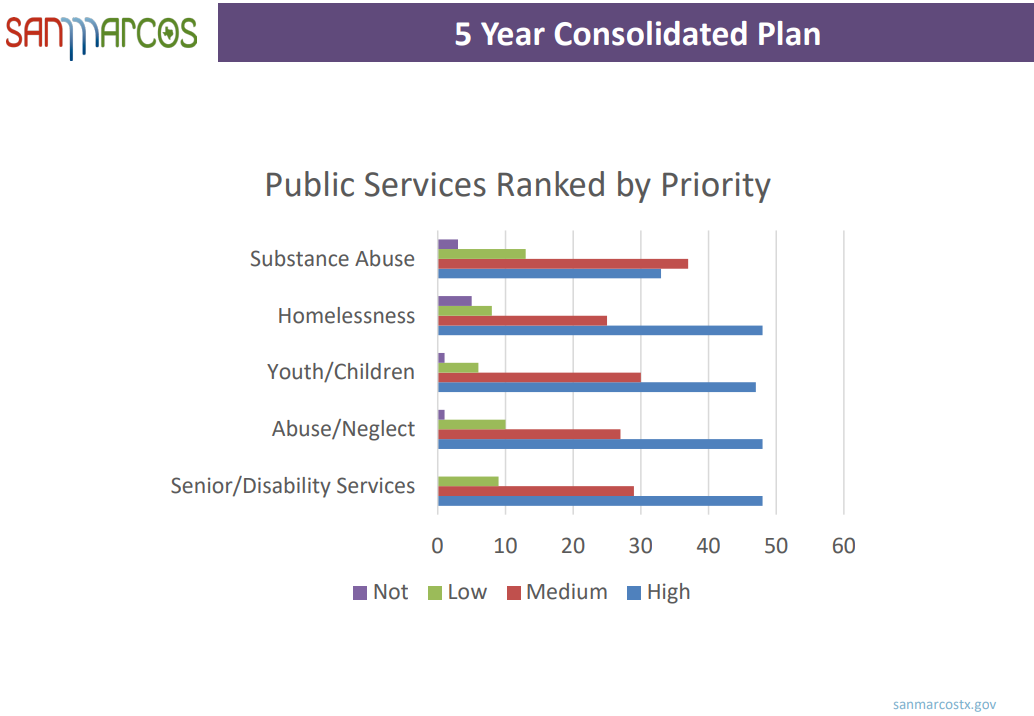
- Human Services Advisory Budget funding: Council is thinking about increasing HSAB funding for next year. Three speakers advocated for this.
- Cape’s Dam and the Mill Race: Two people talk about how much they love the river, east of I-35 and want council to keep it. We’ll unpack all of this!
- Tenants’ Bill of Rights: The San Marcos Civics Club made this a focus, and got Council to put this in their visioning statement. Now council will need to make it happen. Two speakers focus on this.
- Ceasefire in Palestine: four speakers. They still want the city to pass a resolution calling for a ceasefire in Gaza.
…
Onto the meeting!
Items 1-4: A bunch of audits and investment reports.
We got the audit reports for CDBG funding and the 23-24 fiscal year. Plus the quarterly financial report and investment report.
Everything looks normal. No rude surprises. (Apparently we’ve gotten awards for excellence for the past 35 years, on our yearly fiscal audit. OH YEAH BABY.)
…
Item 18: Rezoning about 15 acres
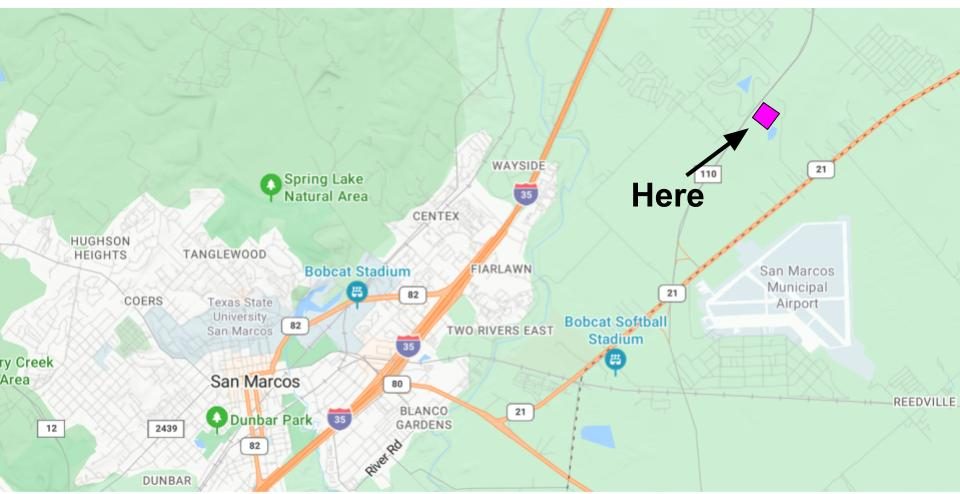
This property is way up north:
Back in 2020, we annexed this yellow and pink bit:
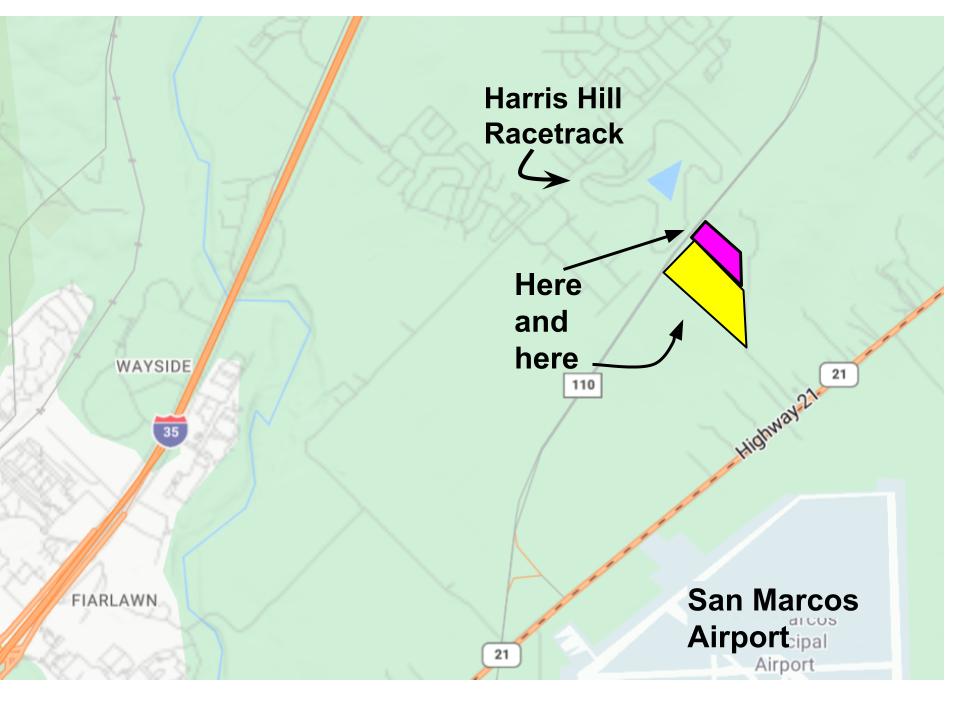
The yellow was zoned Manufactured Home, and the pink was zoned Light Industrial.
There were some concerns then – do we really want to make the folks in the mobile home community live right against an industrial park? But we let it ride.
Now the pink part is coming back for a rezoning – they want to switch it from Light Industrial to Manufactured Home. In other words:
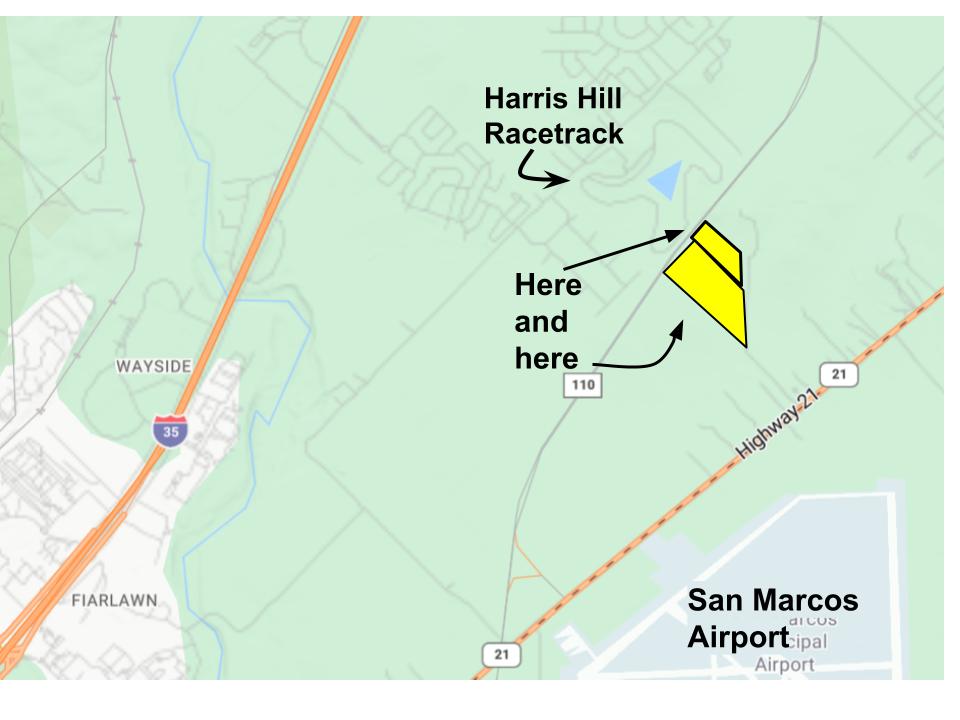
Great! Now nobody has to live near an industrial park.
…
Item 20: Budget Policy Statement
We’re working on the Fiscal Year 26 budget.
First: There was a two days Visioning workshop in January, which lead to approving the Strategic Plan.
The nex workshop was at the end of February. Today we’re approving the thing from that: the Budget Policy Statement.
What’s a Budget Policy Statement?
This is like the guard rails for building the budget over the summer. Most of it is pretty dry? Like “Do you want to budget to maintain 150 days worth of recurring operating expenses in the budget, or just 90?” “Are we okay using the General Fund for Stormwater projects over $5 million?” Etc.
There are two interesting bits:
- Each year, the city sets the rate for electricity, water, sewer, trash, etc. To do this, they have to predict what their costs will be. Then they pick a rate that will cover all their costs.
From the Budget Policy Statement

What does this mean? If your utilities get turned off, you have to pay extra late fees to get your utilities back on. All of the late fees, taken together, add up to big chunk of revenue.
The question is: Suppose we are predicting that we’ll bring in $100K in late fees. (I’m making that number up.) Should we use that $100K to lower the rates for the rest of the customers?
Argument in favor: It’s more economical to include the late fees in your calculation. It allows you to set lower rates for the whole city.
Argument against: It’s kind of icky to count on late fees, for two reasons. First, you’re charging your most desperate customers – the ones who already can’t keep up – an extra fee, and then using that fee to help out all the other, less-desperate customers.
Second, it creates an incentive to creep up your late fees over time. When budgets are lean, it’s tempting to lean on late fees as an extra source of revenue you can tap, like cities that ticket their poorest residents into oblivion in order to balance their budgets.
The current council has already been going in the opposite direction. They are already trying to lower the late fees, to make it easier for residents to get their electricity turned back on.
To the original question: they decide that we are not going to use the late-fee revenue in computing utility rates. Then, when late fees come in anyway, they’ll put that money towards the Utility Assistance program.
It’s a small touch, but a good one.
2. Here’s the other one worth paying attention to:
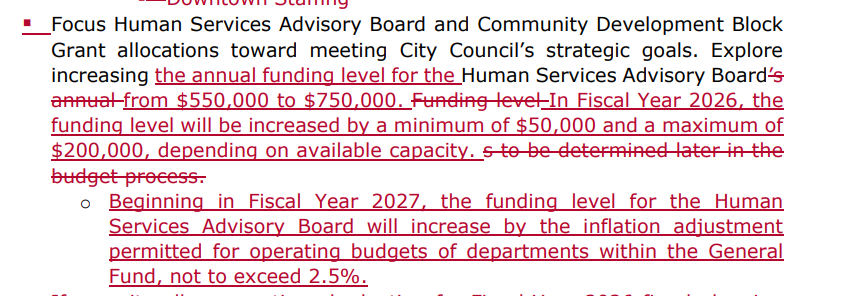
This is what the speakers during Citizen Comment were talking about.
Last December and January, HSAB funding was a total mess. There was too little funding, and Council ended up pitting nonprofits against each other. It was clear that we need to significantly ramp up city funding of nonprofits.
Right now, HSAB gets $550K. Council sets a range of additional funding, between $50K-$200K. When we find out what kind of money we’re getting from property taxes this July, then we’ll determine where we land in that range.
This part makes me extra happy:

Yes!! Peg the HSAB budget to inflation. We do it in contracts with for-profit entities all the time. It should be universal.
(The failure to peg minimum wage to inflation was one of the greatest policy near-misses of the 20th century. Having a federal minimum wage of $7.25/hour is such a mockery.)
…
Item 21: Cut-and-fill in La Cima
Pedernales Electric wants to build a substation here:
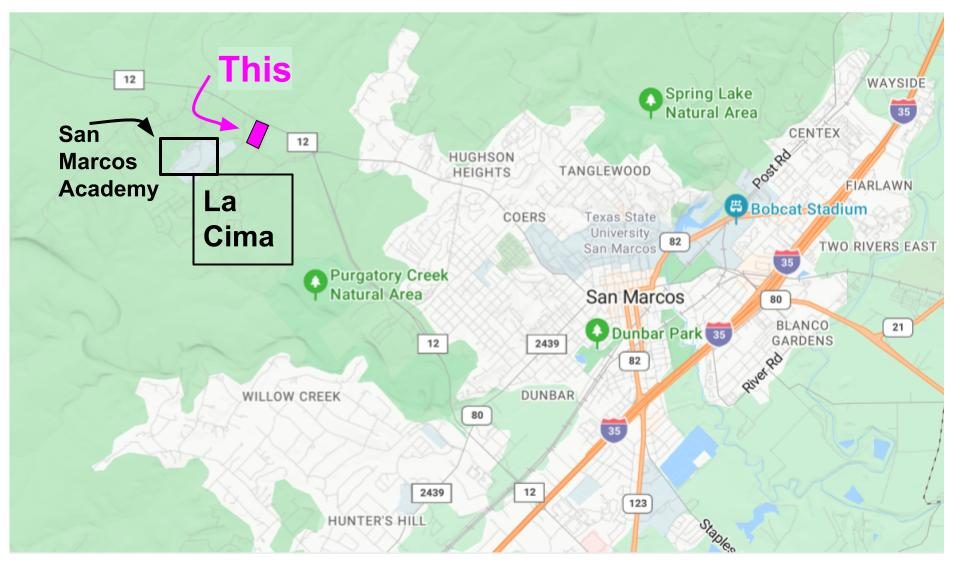
But it’s on a hill. Like we saw last time, it’s hard to build on a hill. So they also want to do a cut-and-fill.
This time, no one is worried about flooding.
Matthew Mendoza is a little worried that the people in La Cima might have to look at a substation, though.
Staff reassures him that there is another building, and then the La Cima apartment complex, all separating the substation from the houses. So their eyes won’t be hurt by the substation.
This passes 6-0.
…
Item 5: Council Compensation
This was so weird.
Quick Recap: (Full story here.)
Councilmembers get three kinds of money:
- Monthly stipend
- Travel and expenses
- Flex money (either)

Shane Scott proposed doubling the flex money and travel money, and he wanted it effective IMMEDIATELY. Like, something lit a fire under his butt.
Last time, they went in circles forever, but ultimately landed here:
Travel budget
- There’s plenty of travel money already. The total council travel doesn’t go over budget.
- Council members can lend each other travel money if one is going over.
- If they STILL go over, there can be an extra $15K in a special travel fund that any of them can apply for.
- AND, they each get an extra $2K for travel.
Flex budget
- Double the Flex amount from $7.5K to $15K.
In other words: right now, a council member earns $24.9K a year, if they choose to take their flex pay as income. This would increase it to $32.4K.
…
The item was put on the consent agenda, which means, “Staff thinks this will sail through.” After all, they hammered out all the votes last time.
Jane said nope! and pulled it off the council agenda. She gives a speech about how none of this is needed, there’s plenty of money in the travel budget. And how we certainly shouldn’t be doing this mid-year.
Amanda agrees on the mid-year part. More responsible to start it with the next fiscal year. She makes that amendment: Delay this until next year’s budget?
The vote: Postpone changes until next year’s budget?
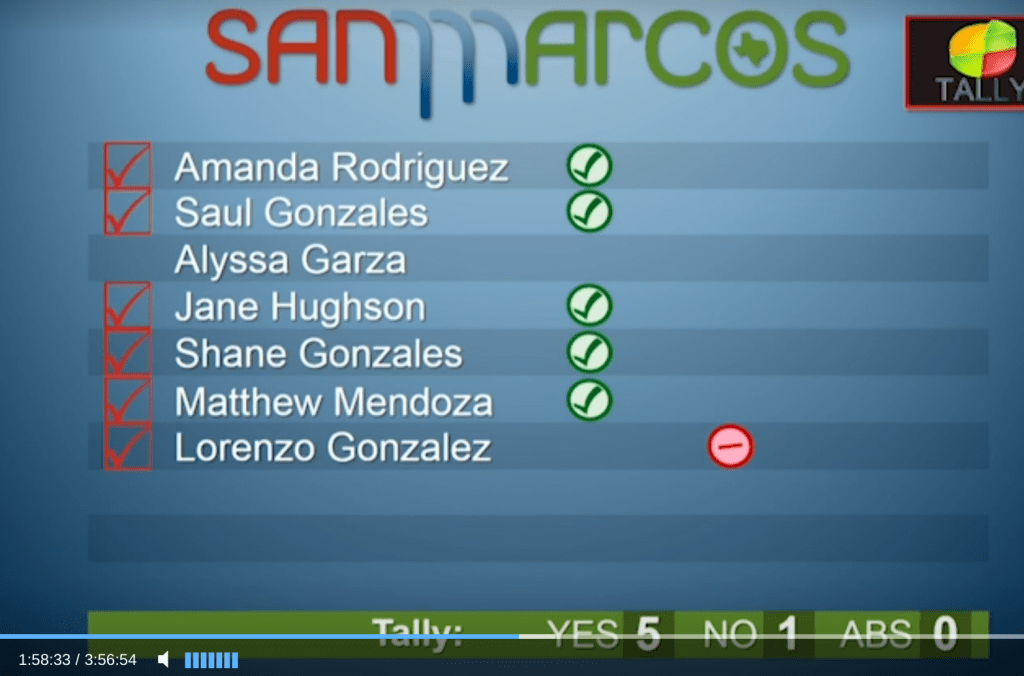
Ok, great.
But then Shane – who started this whole conversation back in December! – says, “Let’s just kill the whole thing, who cares. We don’t need it anymore.”
(This is when I first thought, “What the hell is happening? Was this whole thing a ploy to get some quick money?”)
Jane sees her chance and makes a motion to kill both the travel increase and flex spending increase.
On the flex spending, Amanda pleads, “But why?”
Amanda has been quite open about having to resign her state job to take this position, and the impossibility of surviving on $24.9K per year.
Jane: “We don’t need it. We already raised it in 2023.”
What she means is that before 2023, council members got $23.4K per year, if they took their flex money as pay. They gave themselves a raise of $1500 then.
Amanda: I agree on the travel. But on the living expense, who here – anyone? – can live on this little?”
Jane: “It’s not supposed to be a fulltime job.”
Amanda: “Fully agree. But we both know that it is actually a fulltime job.”
Jane: “For some people it is. Not everybody.”
Amanda: “Oh trust me, I understand that too. And I wish everybody shared full interest.”
Jane: “I do too.”
Amanda: “But again, please tell me, who can survive on this? Would anybody in this room?
<crickets>
Then conversation dies.
…
The key issues is this: Is being a councilmember a fulltime job? We pretend it isn’t, but in order to do it well, it definitely is.
If we pay poverty wages, then council members have three options:
- Be independently wealthy or have someone who can support you.
- Try not to neglect your council job as you juggle multiple jobs
- Live in poverty
This is not how you get the best possible council members. This is how you get mostly wealthy and/or distracted council members.
…
But anyway, then they vote:
The vote: Should Councilmembers survive on $24.9K per year?
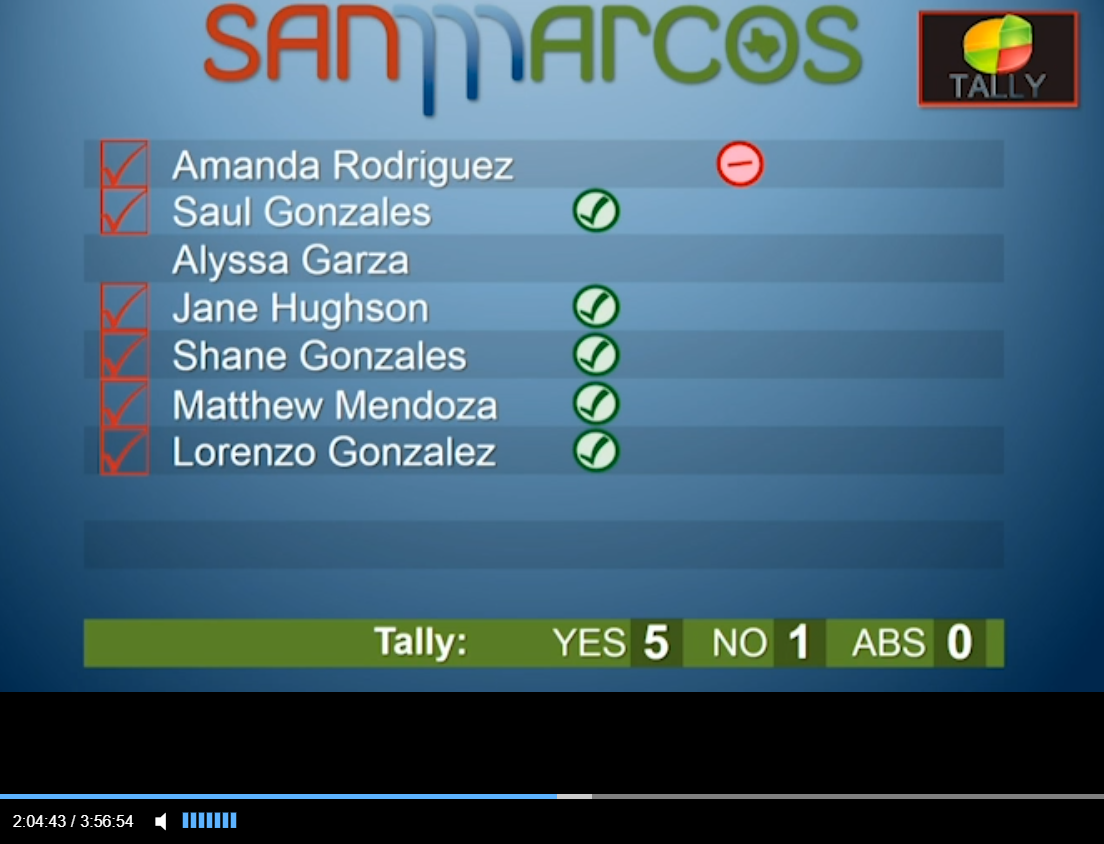
So yeah, no raise.
I’m so baffled. Two weeks ago, Shane and Lorenzo both thought it was reasonable to increase flex spending, and now they don’t? What the hell happened?
….
Then they vote to roll back the travel funds increase:

This one doesn’t bother me so much. There is plenty of travel money, if you allow people to donate funds to each other.
Bottom line: After all these meetings, everything is back where it started, aside from a special bonus travel fund.
Clearly I have no idea what happened, but it felt like petty bullshit, to be honest.
….
Item 24: SMCISD stormwater voucher
This is a continuation from last time. (Full backstory here.)
Super quick background:
Statewide, the legislature is intentionally starving the school districts. This is not hyperbole. Abbott is hellbent force-feeding school vouchers down everyone’s throat. He’s denying funding to the public schools is a way of increasing the pressure on the state legislature to vote for his deal.
Funding hasn’t increased since 2019, but there have been several unfunded mandates that cost a lot. Plus inflation.
SMCISD is in a $9 million budget crisis. They’ve asked for the city for a stormwater waiver, which would save them about $350K.
Which brings us to today.
First there’s a presentation about the stormwater fund:
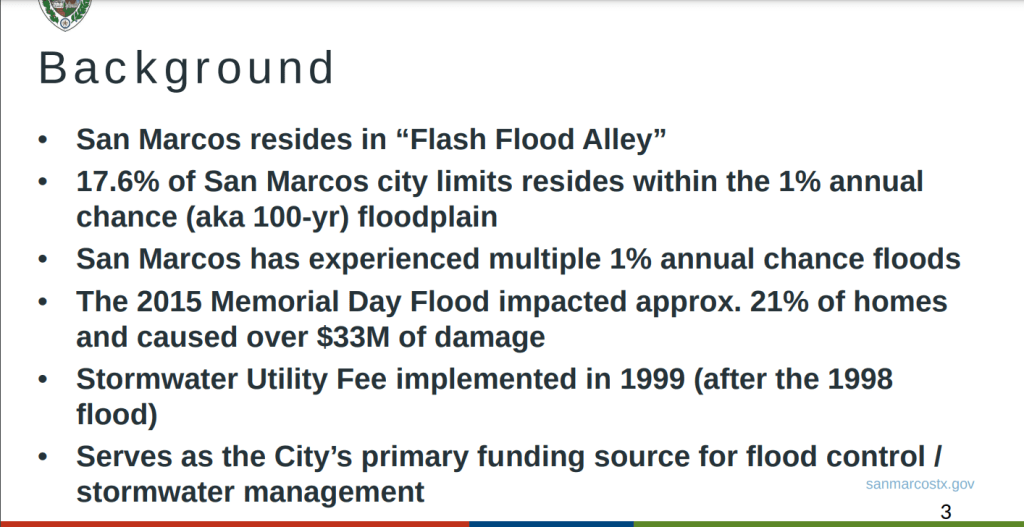
Immediately after San Marcos created the stormwater fund, Texas State University asked the State Legislature to grant them an exemption. They were the very first university in Texas to ask for one! What go-getters.
After that, all the other universities thought it was a pretty good idea.
Here’s the total list of state-wide exemptions:

So basically, empty lots, lakes, universities, and ….El Paso school district. Who knows.
…
The state law says that stormwater fees must be equitable. They go into a fair amount of detail about how we put ours together.
Basically, if we want to help out SMCISD, here are the four options:
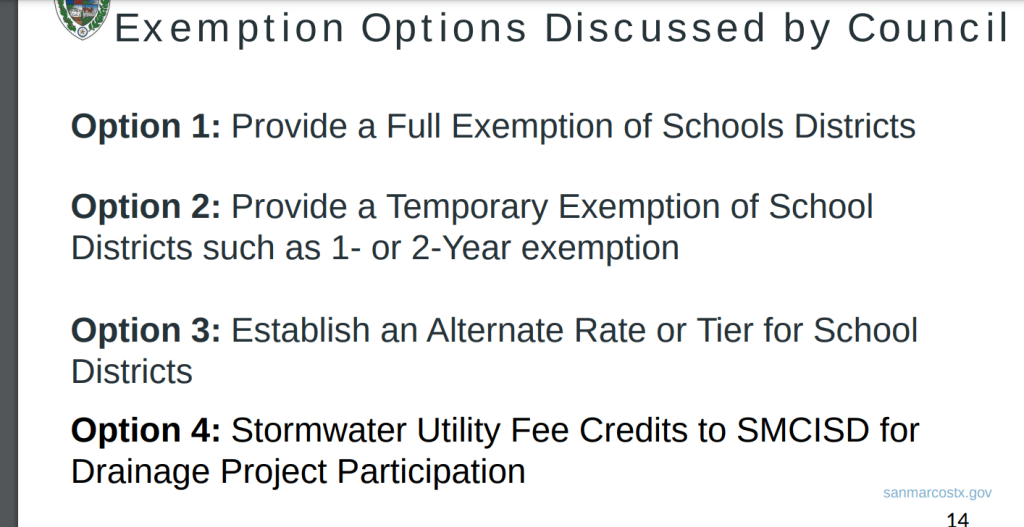
Option 1 would cost a lot and open the door to other nonprofits asking for a waiver, too.
Option 2 would cost some, and open the door.
Option 3 might open us up to legal challenges of being non-equitable.
Option 4 is the one that Staff clearly favors. In fact, city staff and SMCISD staff have already met, and they’re both open to this.
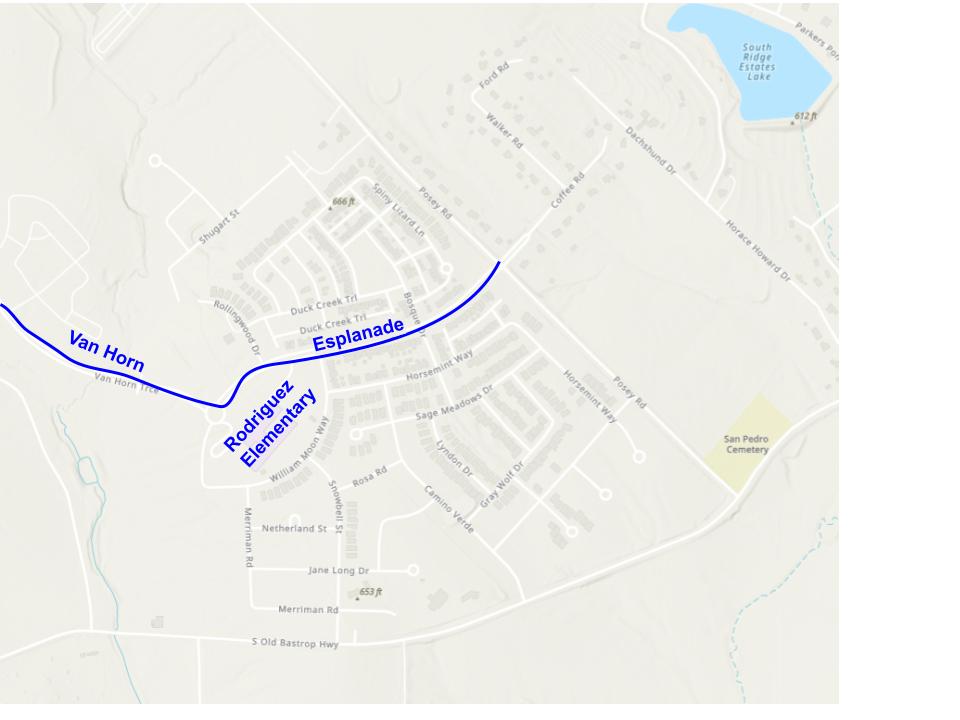
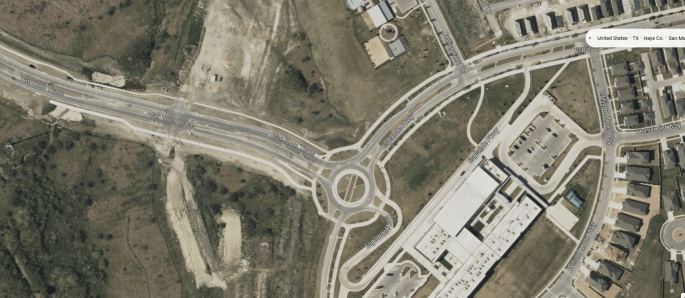
Option 4 is about Mendez Elementary. Mendez is located in Sunset Acres, which has terrible flooding. The city wants to build a detention pond on Mendez property, to help with the flooding.
All the council members are on board with pursuing 4.
The only thing is that Mendez Elementary is being renovated. Until SMCISD knows the new footprint of the building, they can’t donate the land.
(Now, SMCISD has already submitted the Mendez plans to the city for permitting. So the city could literally go look right now at the Mendez plans. It’s not a mystery. We can see exactly how much space there might be for a drainage pond.)
…
There’s a long, weirdly circular conversation where Lorenzo and Amanda keep saying, “We should meet occasionally with the school board, just to stay informed on what we’re each up to.”
Jane keeps responding with, “It’s no use. Alyssa and I keep trying to think of a reason that all three entities – city, county, schools – should meet, and it’s very hard to think of issues that need attention from all three groups.”
Ok? That’s a different thing? That’s not what Amanda and Lorenzo are suggesting?
Anyway, they vote for 4.
…
Item 25: Redwood/Rancho Vista
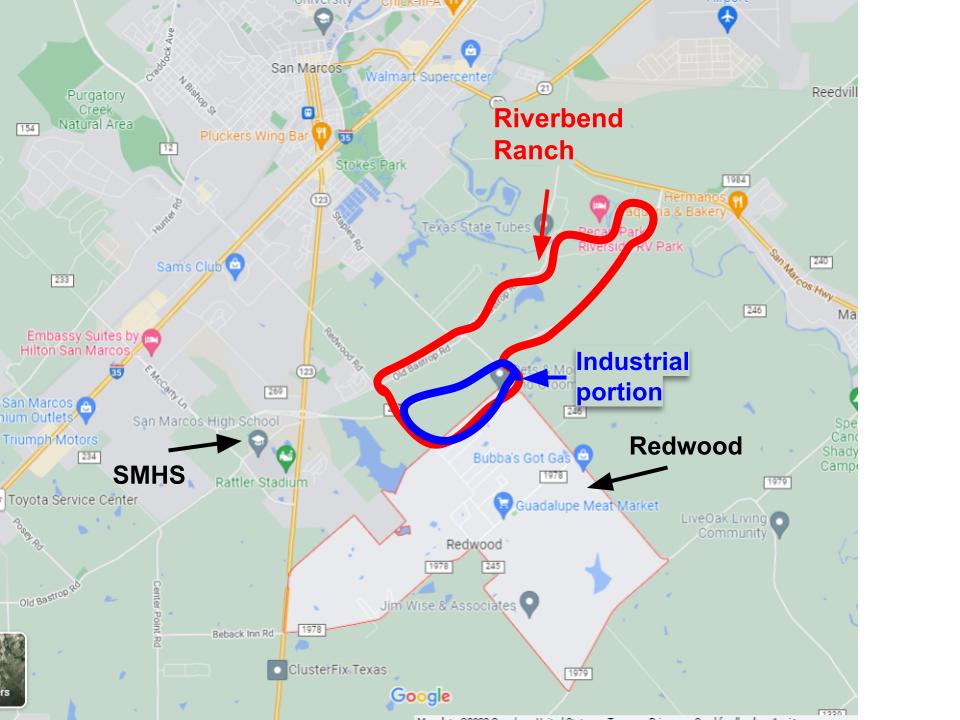
Last time, we discussed this property, immediately north of Redwood and Rancho Vista:
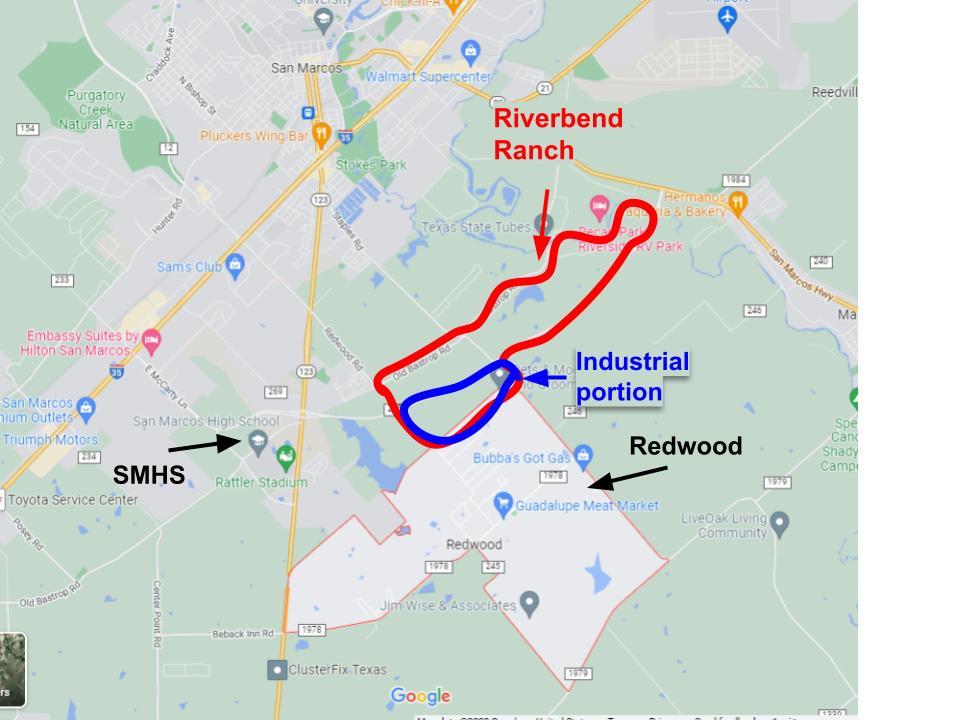
We were trying to figure out if that industrial portion would make flooding worse in Redwood.
Redwood and Rancho Vista have severe septic and flooding issues, which leads to a parasite living in the soil. It’s a big health issue, and it usually only happens in developing countries. But the community is quite poor and vulnerable, so it’s happening here. Any solution is going to be very expensive.
Last time Council tried to have it both ways: “We’ll let this development through, but we promise to take action on Redwood.”
So tonight is that action: A strongly worded letter to Guadalupe County about how the septic issue and parasites is a public health and safety issue, which has been going on for years and years.
Jane suggests that we let them know about the Texas Water Development Board, which has a specific Economically Distressed Areas Program. Maybe Guadalupe County could get some money from there.
City Manager Stephanie Reyes mentions looping in SMCISD – after all, these families go to our schools and are part of our community.
So staff will draw something up, and it will come back.
My two cents: this is fine as a first step, but not as a last step.















 The San Marxist