Bonus! 3 pm workshops, 10/8/25

The river! This is the big topic of the week.

Background:

We’ve been destroying the river the last few years.

The basic problem is overuse. This is a photo from a 2023 parks presentation:

That is a LOT of people.

To get specific, overuse causes three basic problems:

1. Safety: it’s super hot and people get very drunk.

That’s a dangerous set-up for heat stroke, falling on rocks, getting into fights, and accidental drowning.

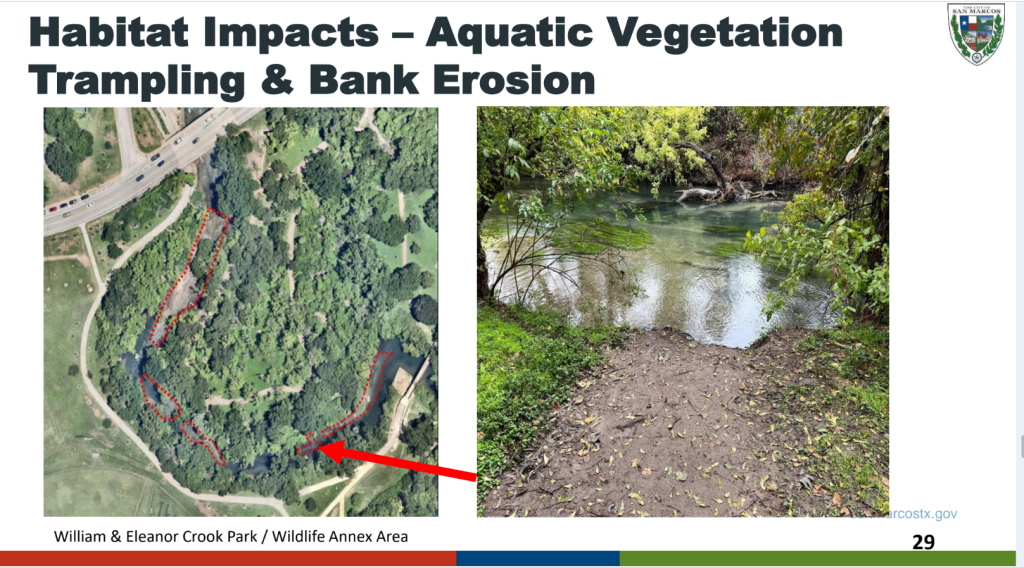
2. The environment: the river gets destroyed.

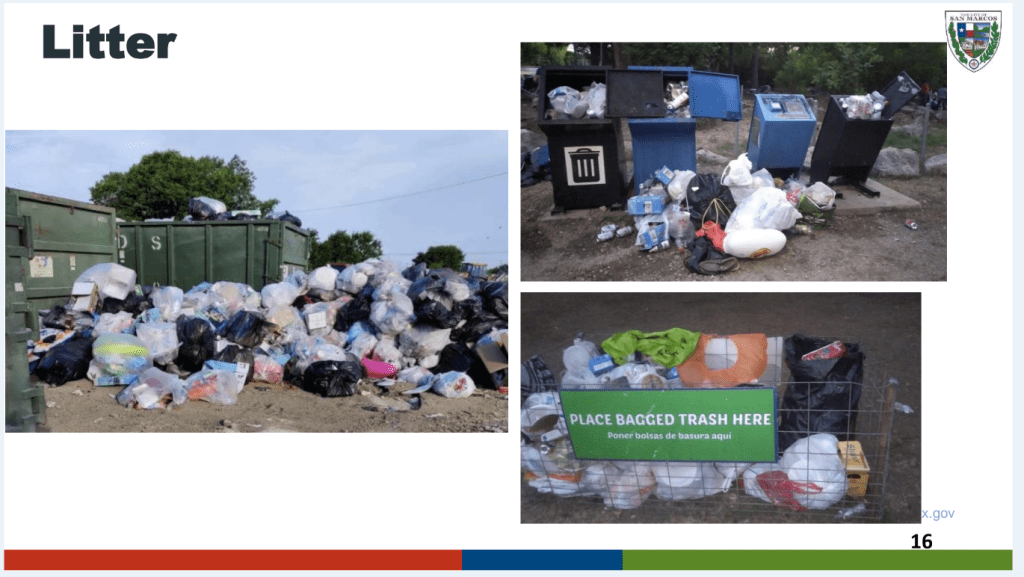
This is also from the 2023 presentation:

This is from the 2024 presentation:

and

It’s all of the litter, and all of the repeated trampling of the banks, and the erosion of the aquatic wild rice and habitats for endangered species. It’s all bad.

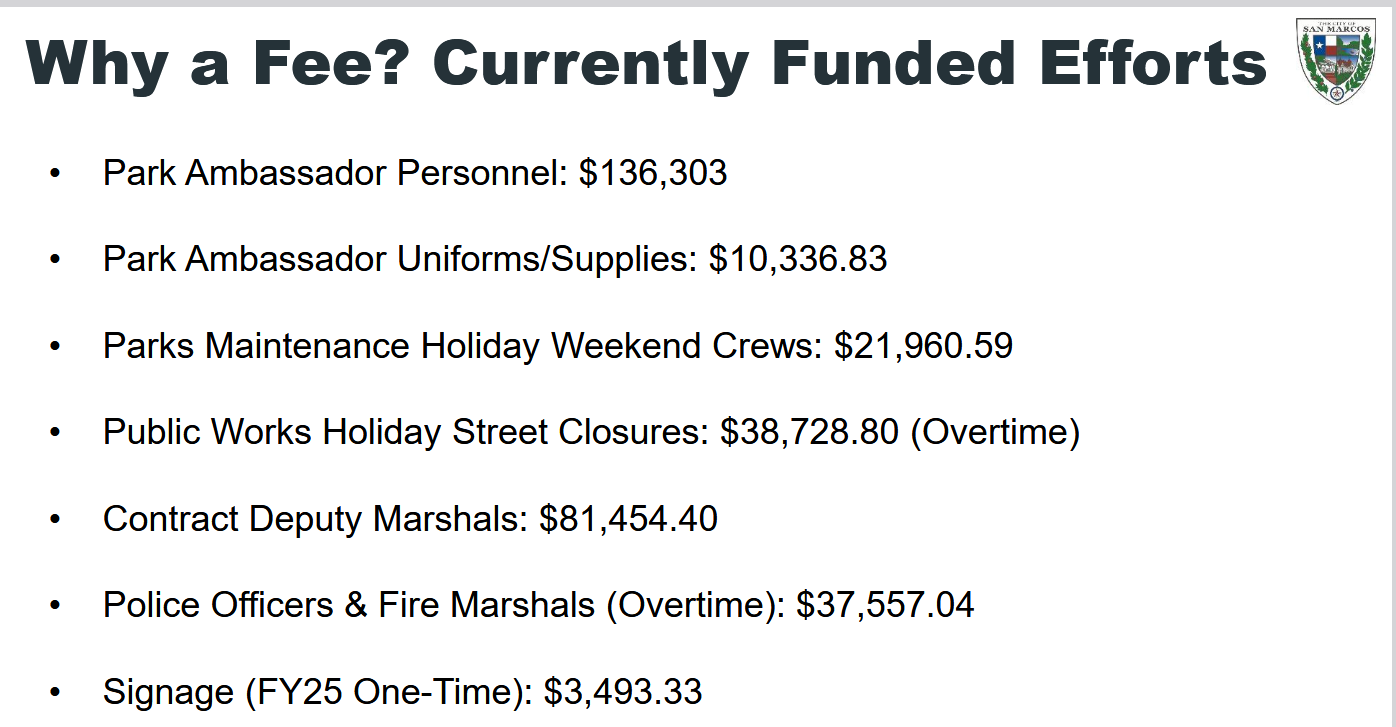
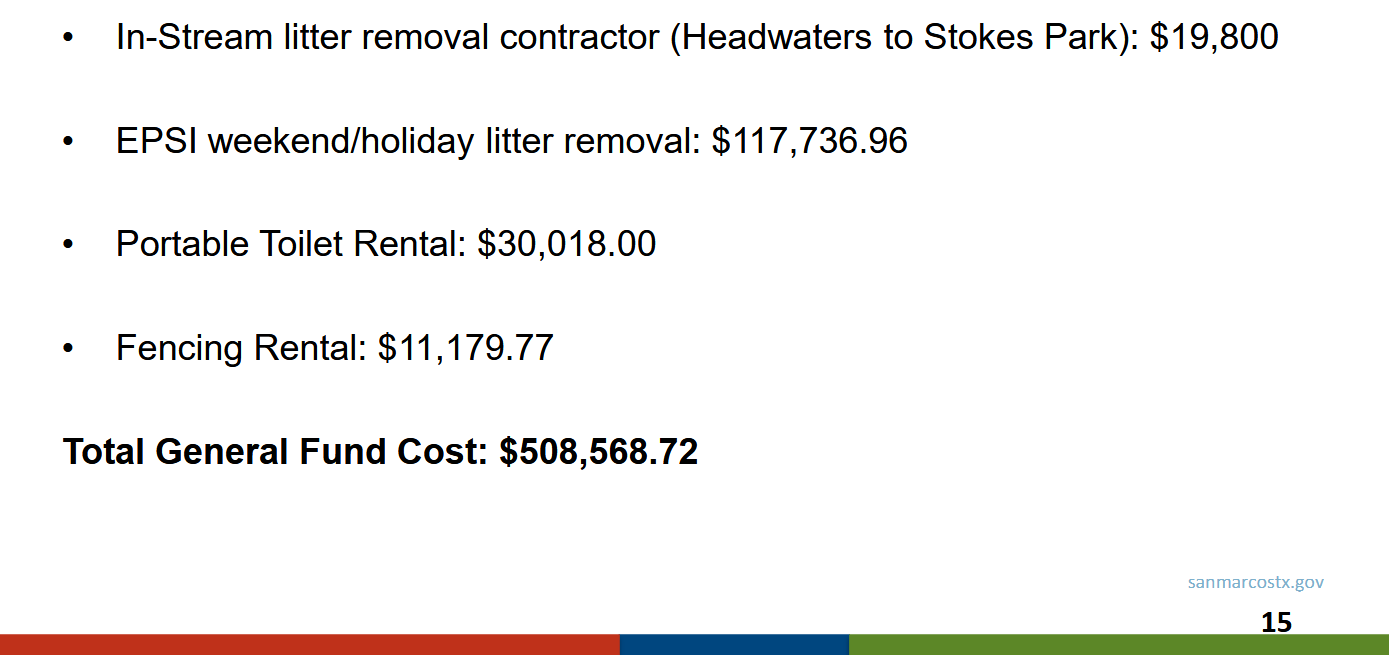
3. The cost.

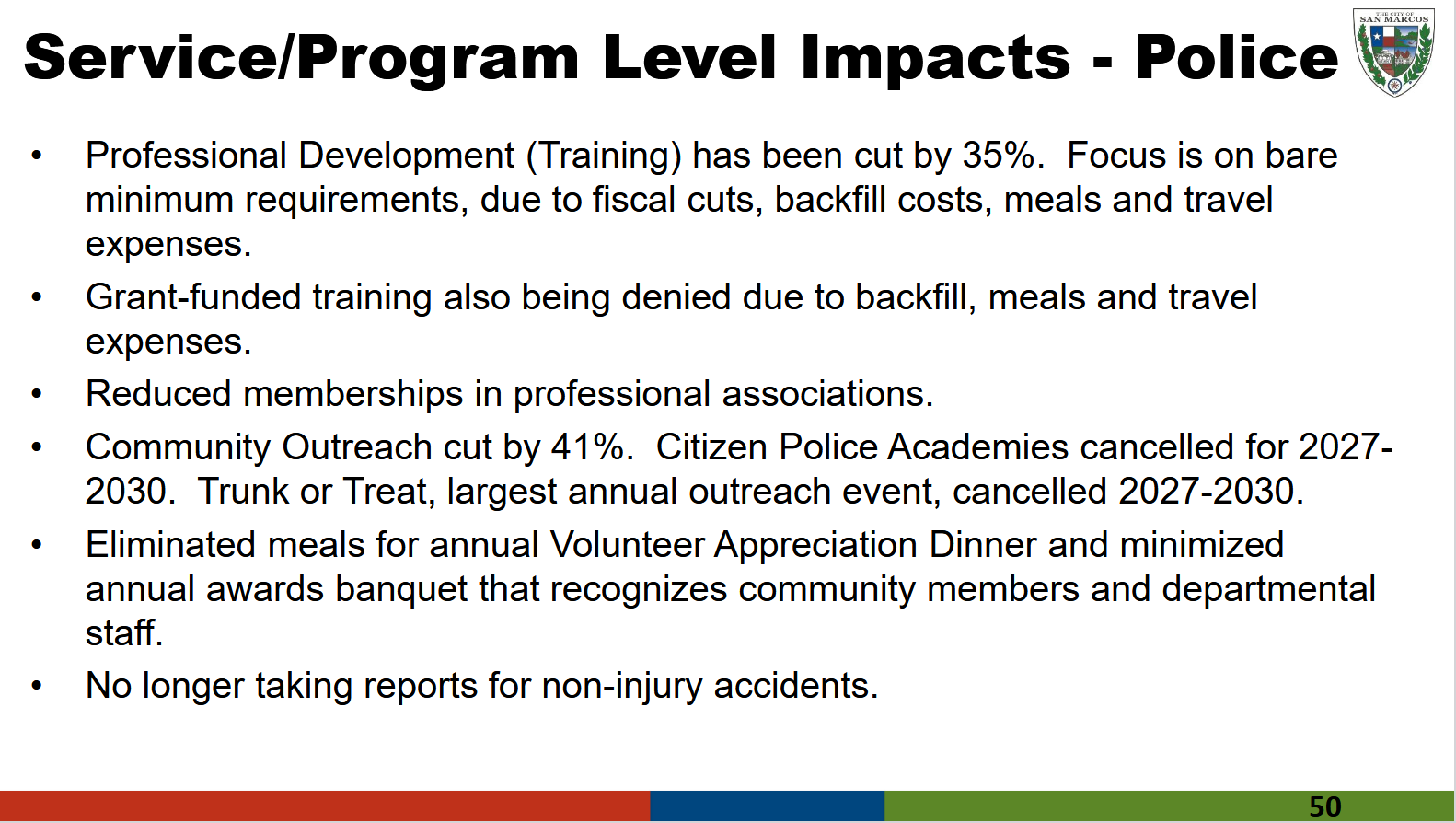
City staff really haven’t even brought up the price tag in the past few years, because the litter, damage to river, and lack of safety were so off the rails.

But of course, all solutions require people, and people’s labor costs money. So this is looming.

Solutions

The 2023 season was so bad that Council realized we need to do something. So in 2024, we passed a can ban. Summer 2024 was the first implementation.

But it did not go well. Basically, we couldn’t enforce it because we were so overrun with crowds and safety concerns. Here’s my write up of the situation last year.

So this spring, Council cautiously agreed to try Managed Access for 2025.

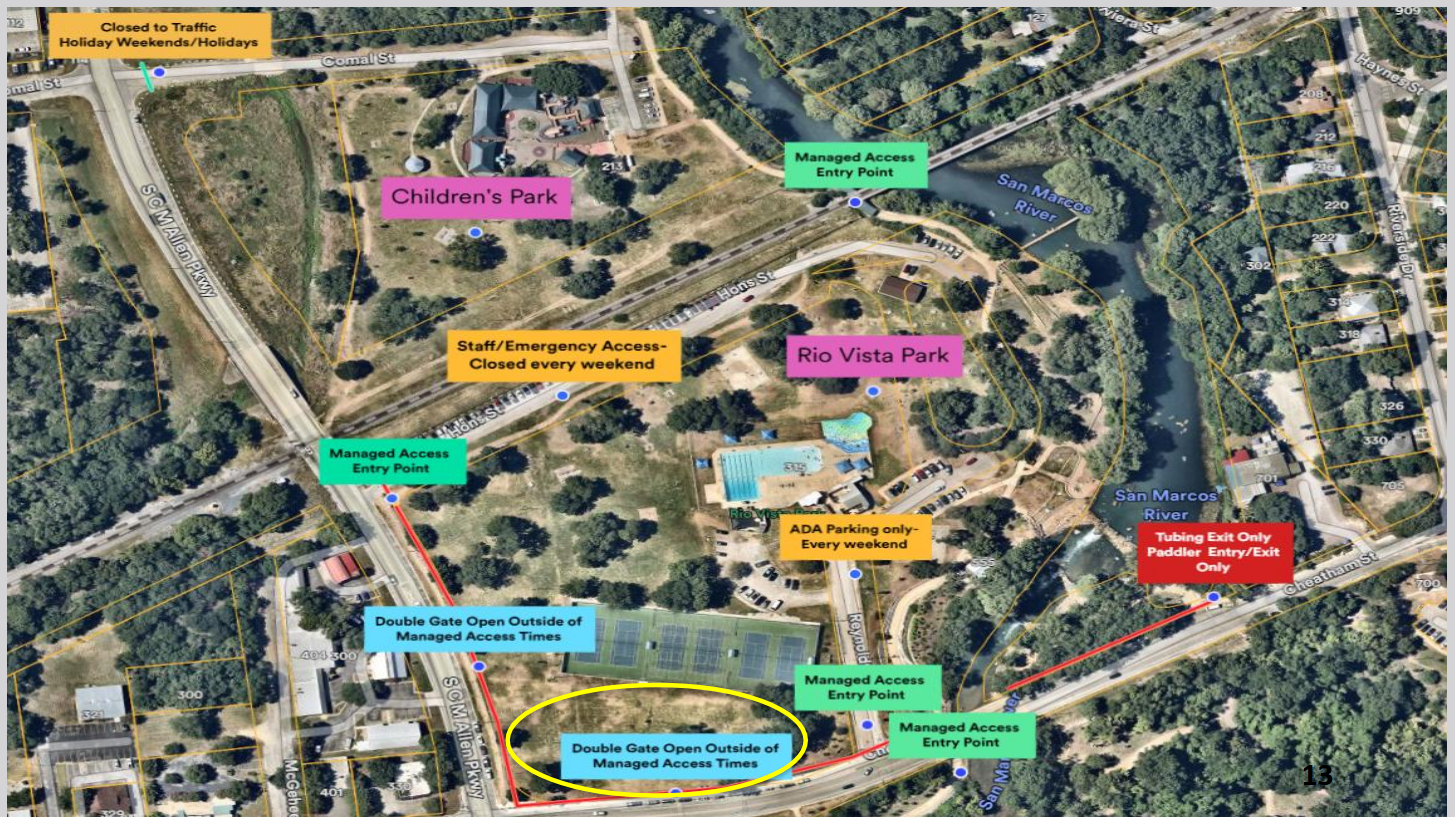
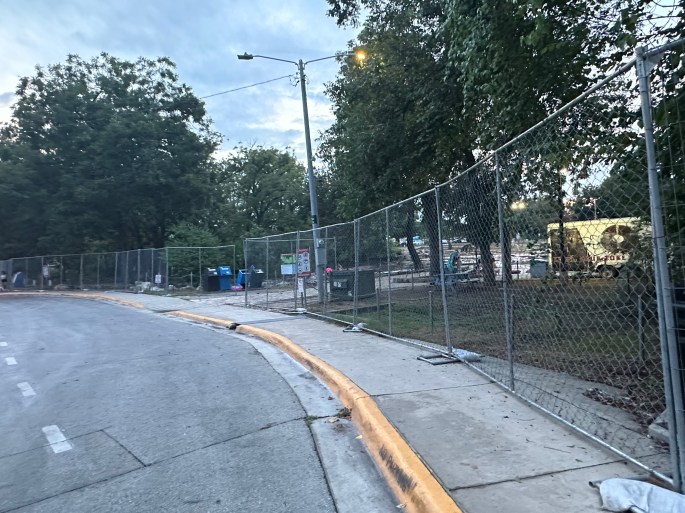
That means this:

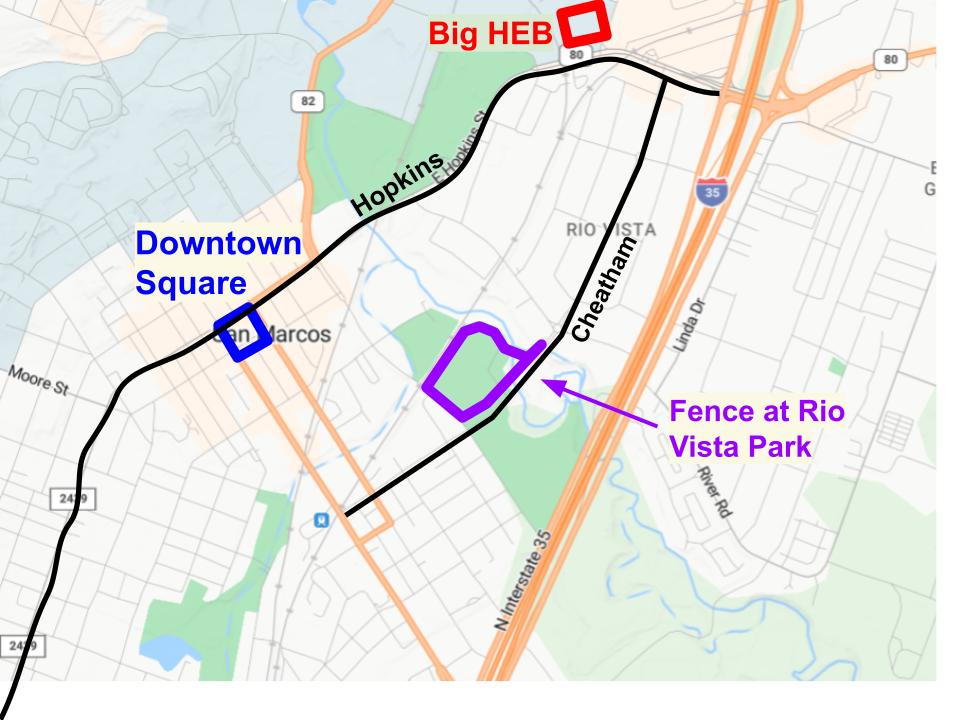
around Rio Vista and the falls.

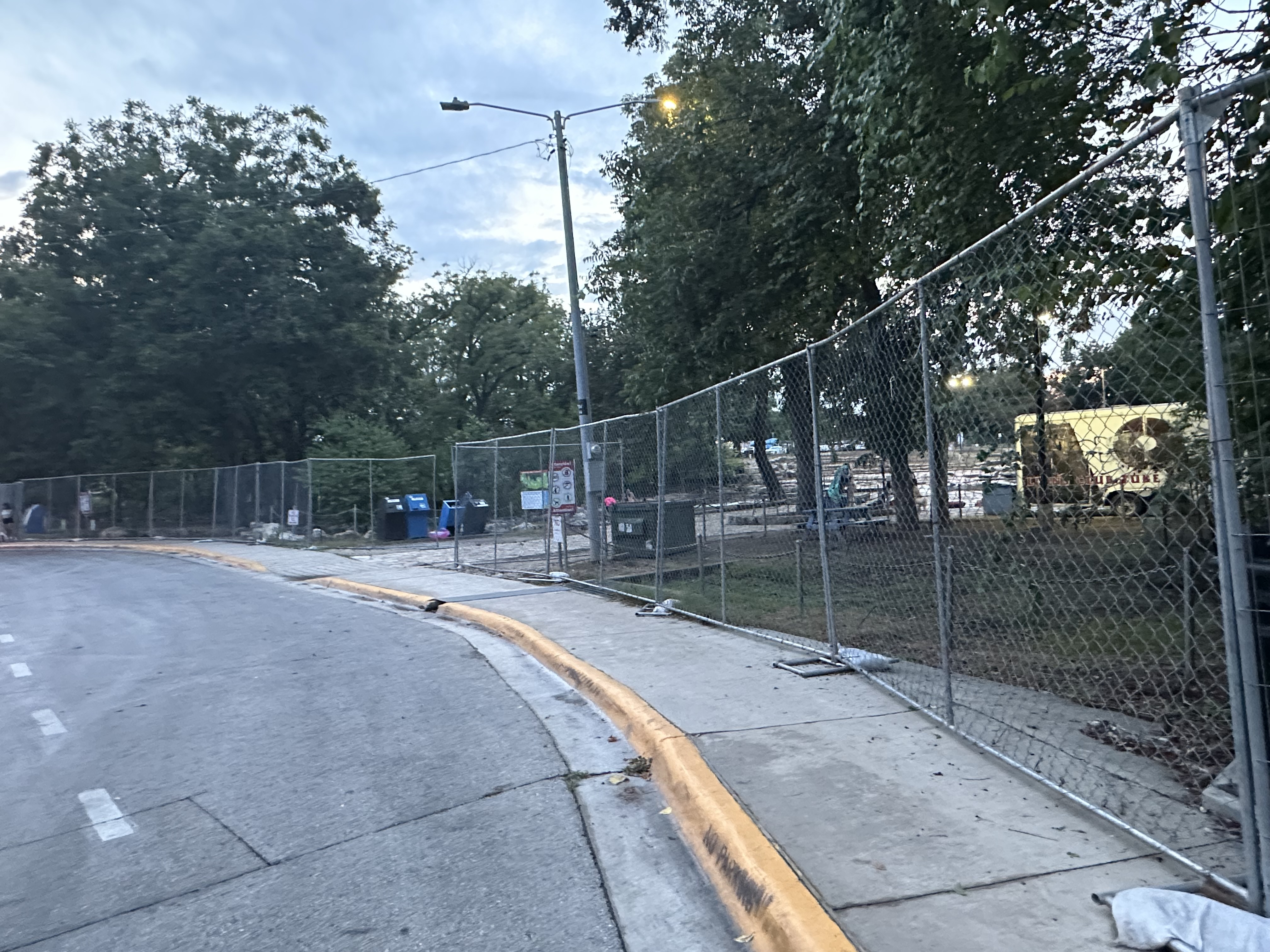
Everyone thinks these fences are very ugly and sad! They’re not wrong. But I’m going to make the case that the fences are a good first step. It is a work in progress.

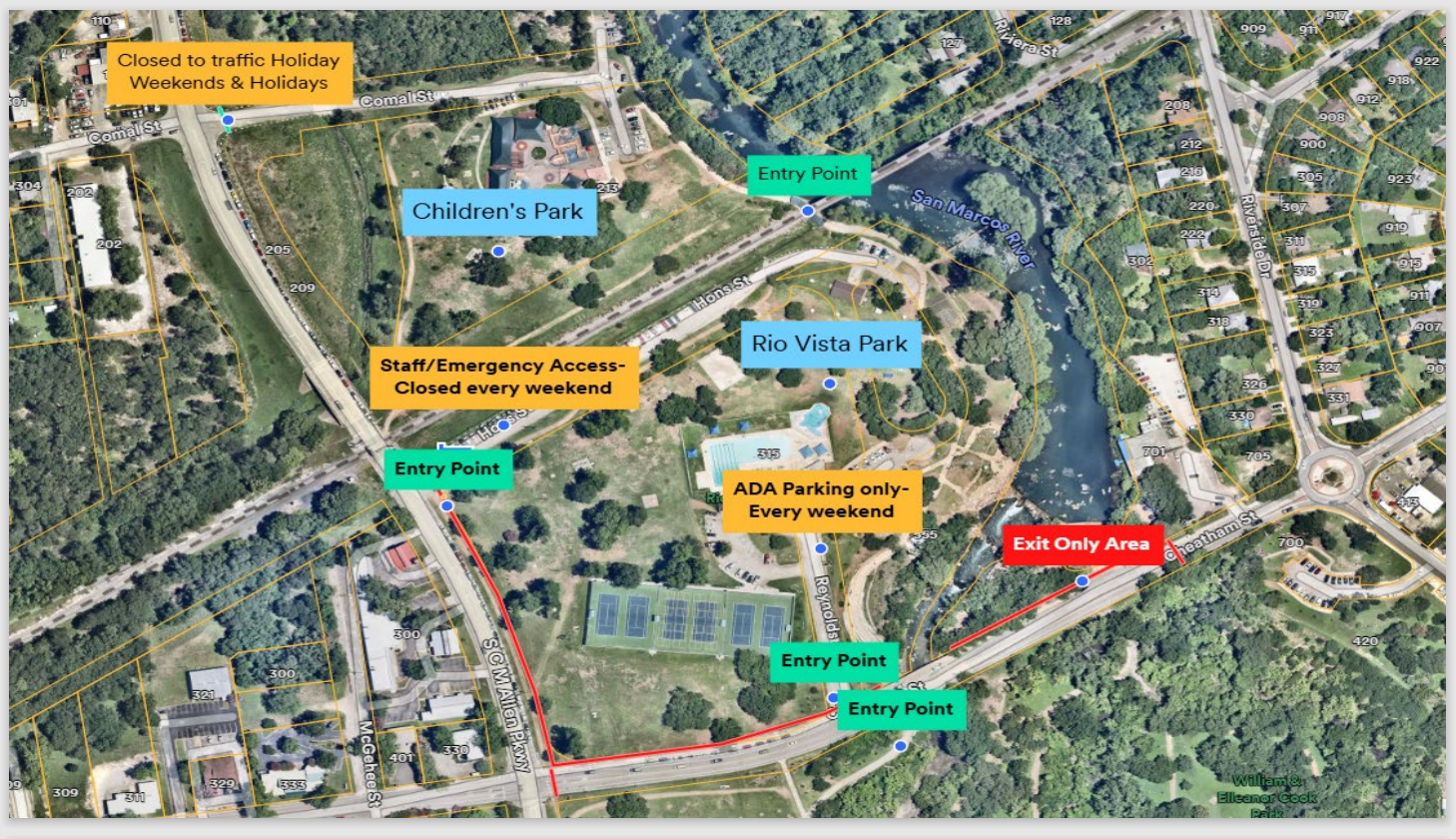
Basically, the falls, swimming pool, and tennis courts at Rio Vista were fenced off. In order to access them, you had to walk to one of the three entrances:

On weekends and holidays, those entrances were staffed. They’d check to make sure you weren’t bringing in anything banned, like alcohol or a bunch of styrofoam plates.

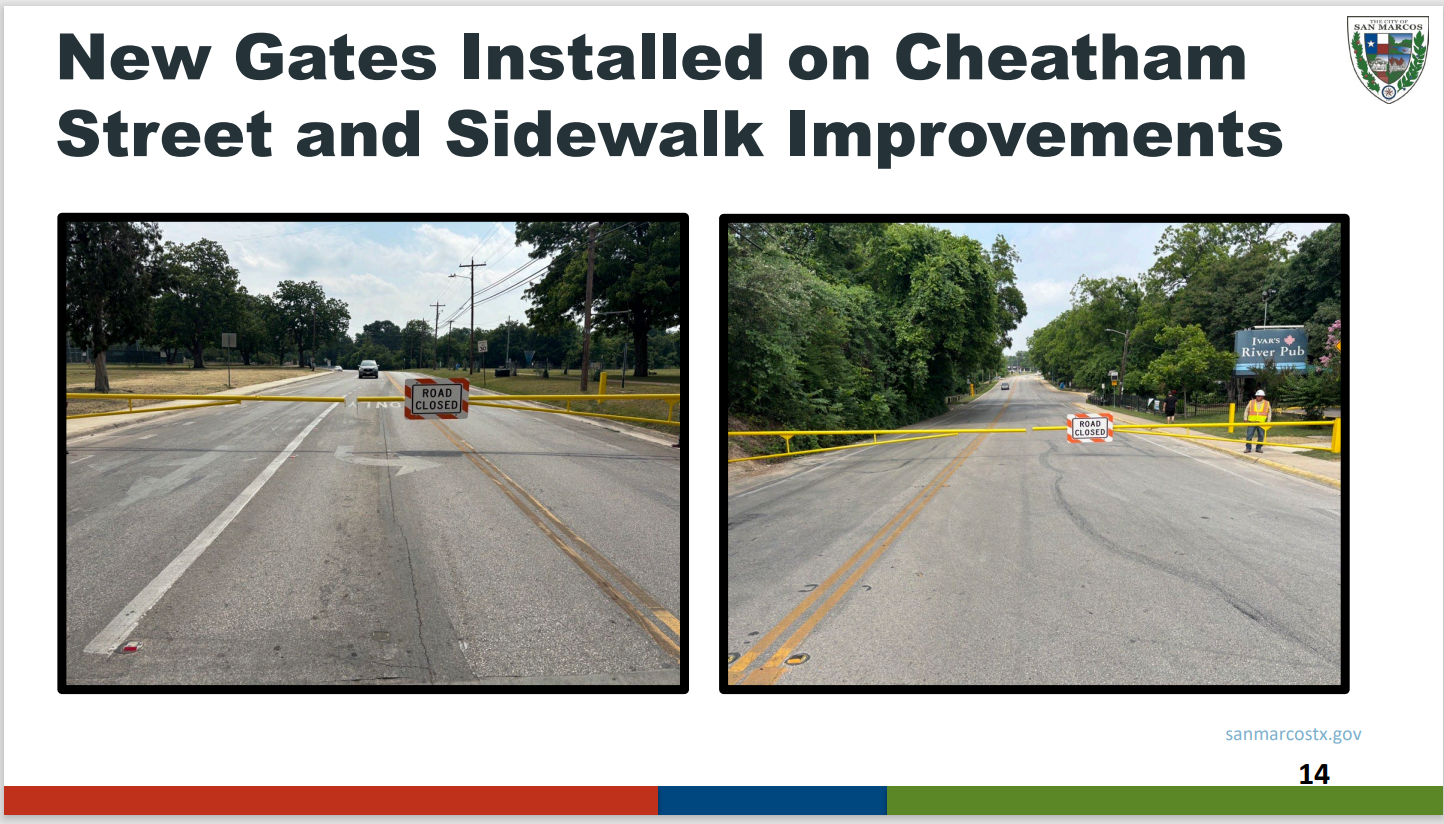
On the big holiday weekends – Memorial Day, 4th of July, and Labor Day – they also closed off Cheatham street altogether:

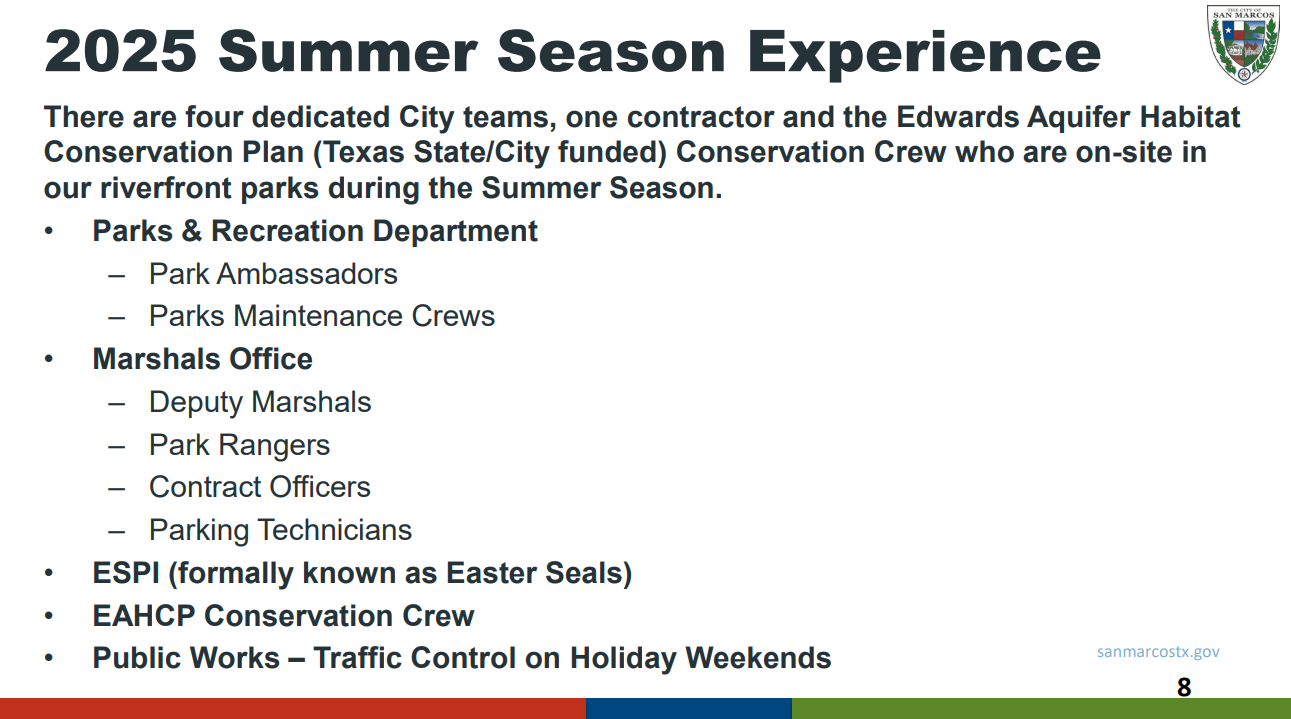
They also increased staffing. There were at least ten more employees just to staff the entrances and exits on weekends and holidays. There are a lot of hands on deck, picking up trash, monitoring situations, and available for emergencies:

It’s a really big operation.

What does the public think?

At citizen comment for the workshop, three people spoke. I think they are all very involved in river clean-up efforts.

Major themes:

  • Fences significantly reduced the size of the crowds
  • Fences significantly reduced the amount of trash in the river
  • Fences significantly protected the riparian zones of the river, ie the wild rice and other environmental spots.
  • There is more work to do. There was still a ton of litter.
  • Let’s look at places that have done this well – for example, Copenhagen has a sustainable tourism program. Tourists can get perks if they pick up litter or take public transportation.

….

What does city staff say?

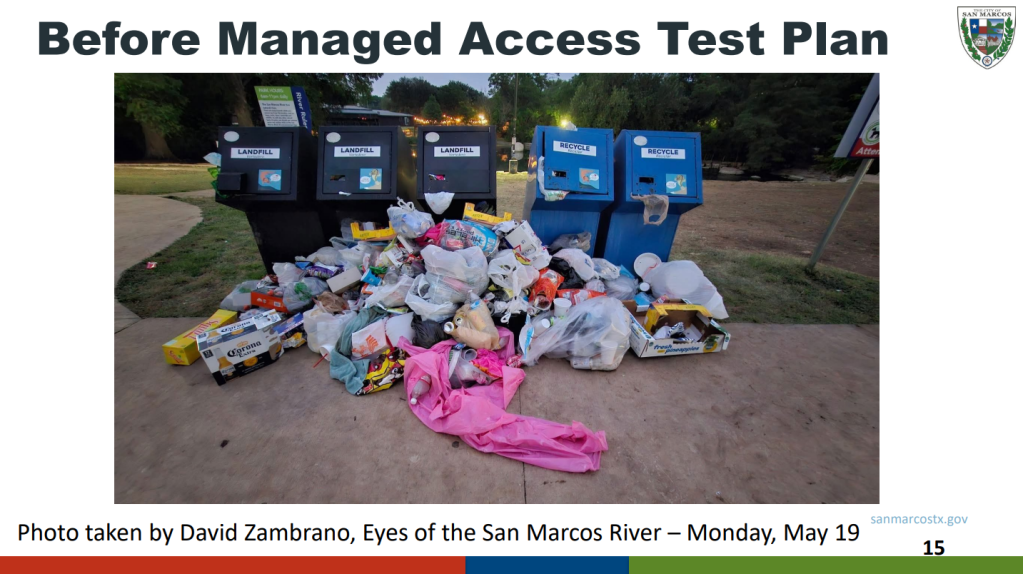
Litter started off rough, at the beginning of the summer.

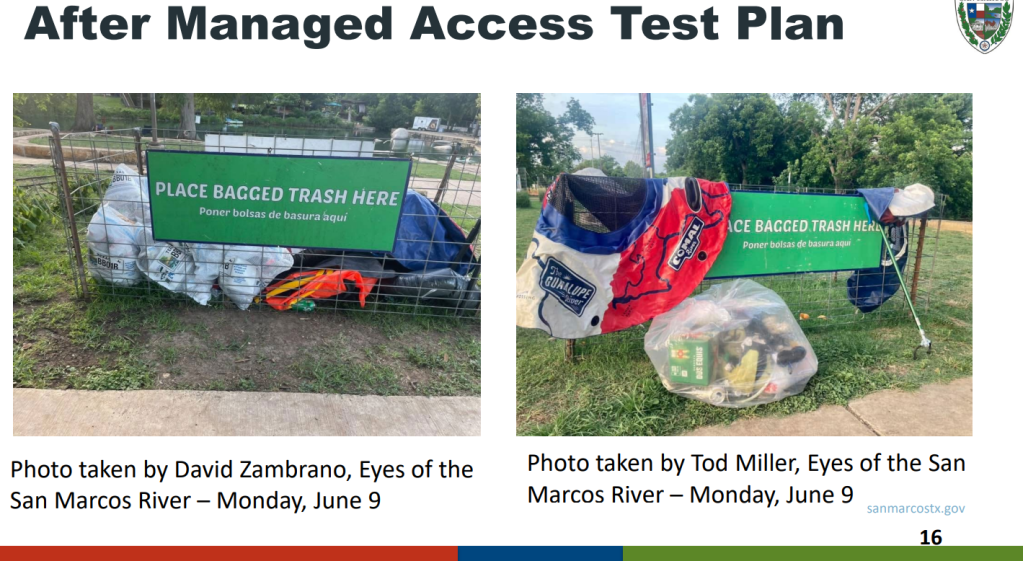
Fences were put up at the end of May. Then:

Looking good!

And some data:

Note: July was much rainier and less-hot than usual. The 4th of July was pretty much rained out (while the tragedy was unfolding in Kerr County and elsewhere). So it wasn’t just strictly the fences.

You know these cute little litter boats?

via

They track how much trash gets collected in them:

Here’s how city staff summarized the summer:

More good than bad!

Did visitors just go to a different part of the river?

Staff said no, they did not see an increased number of problems upstream or downstream from Rio Vista. It seems like everyone wants to be at the falls.

(It could still happen after a few years, of course. But it has not happened yet.)

Overall, everything seems optimistic!

That is my personal belief, too – that this year, things were less dangerous and destructive than they’ve been in the past.

So that’s 2025. What about the future?

Here are the big questions for Council today:

1. Do they want to keep fencing off Rio Vista in the future? (ie “Managed Access”)

    2. Do they want to start charging out-of-towners for river access?

    Let’s take these one at a time.

    The fencing.

    Another angle:

    Everyone hates the big, bulky chain link look. Including me!

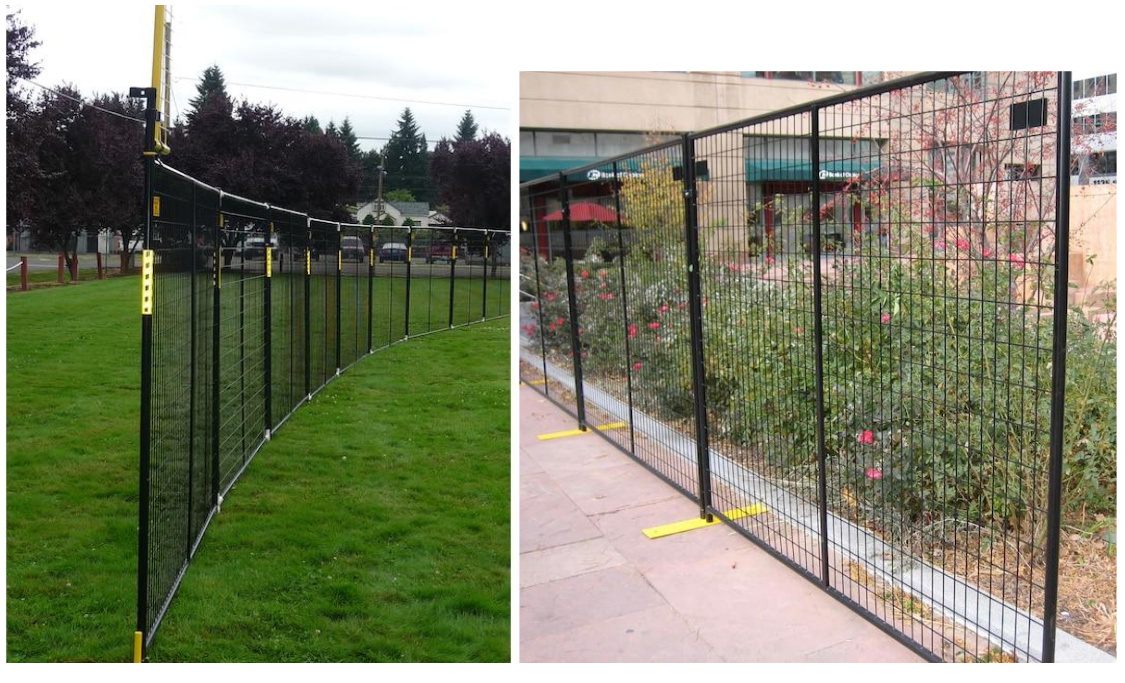
    Can we at least make it look a little nicer?

    Maybe!

    Staff is not proposing that we put up permanent fencing. This would only go up between Memorial Day and Labor Day.

    Council questions:

    Q: Would we rent or buy the prettier fencing?
    A: We’d buy it. It would cost about $75K. Renting the fences this past summer was roughly $15K.

    Q: People were cranky about the tennis courts being inside the fencing . Can we find a way to make them easier to access?
    A: Yes, we can definitely explore this for next year.

    Bottom line: Does Council want to continue with the fences?

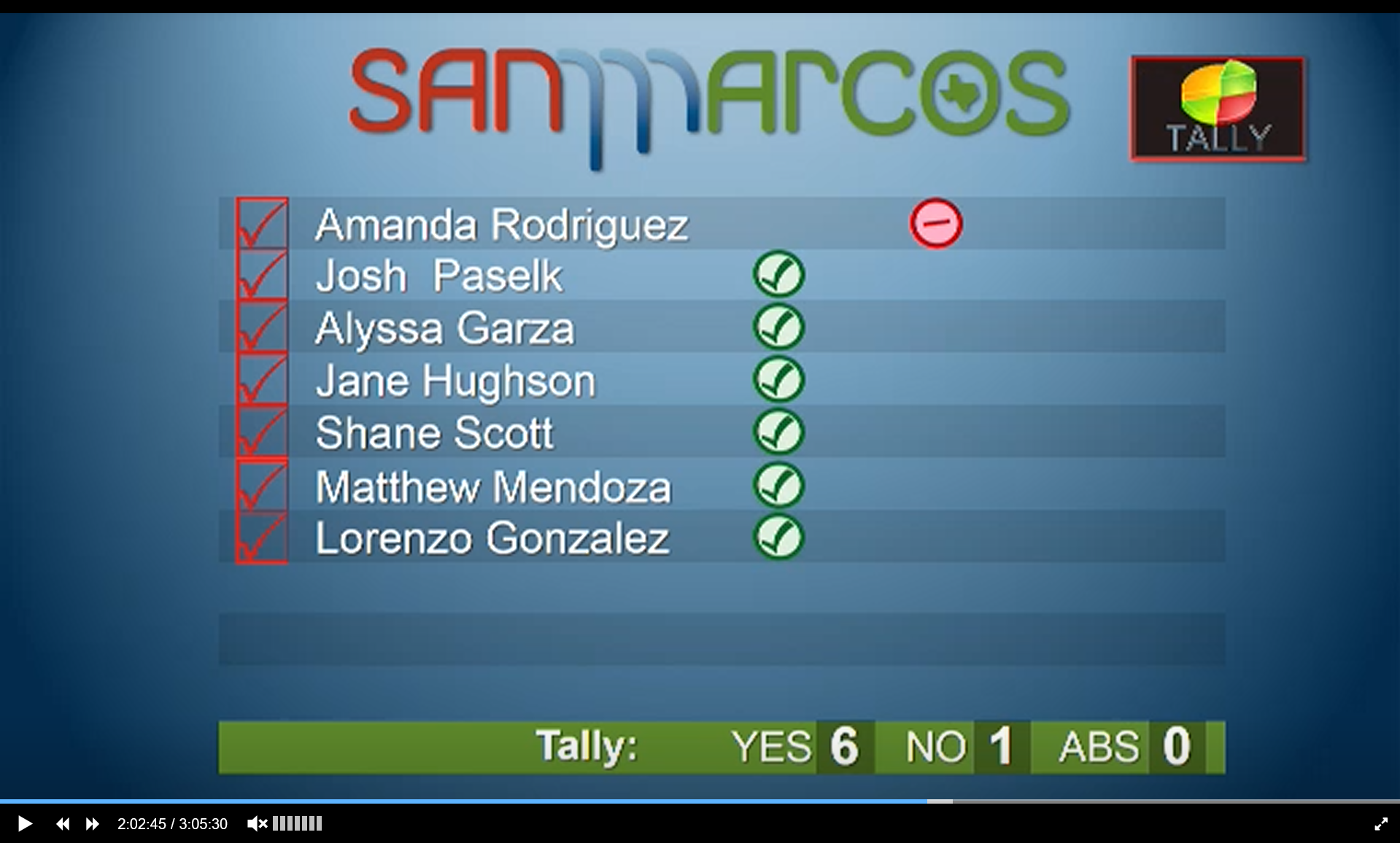
    Mostly yes. Alyssa and Amanda are both a little squirrelly on the question, but they’re more yes than no.

    Note: I am a hard yes. You only get one river, and overuse will kill your river. This is a dead on, textbook-example of a Tragedy of the Commons.

    ….

    2. Should we charge admission?

    The problem is that we’re running a giant operation here, all summer long, and it requires a lot of staff. Furthermore, it mostly isn’t San Marcos residents using the river.

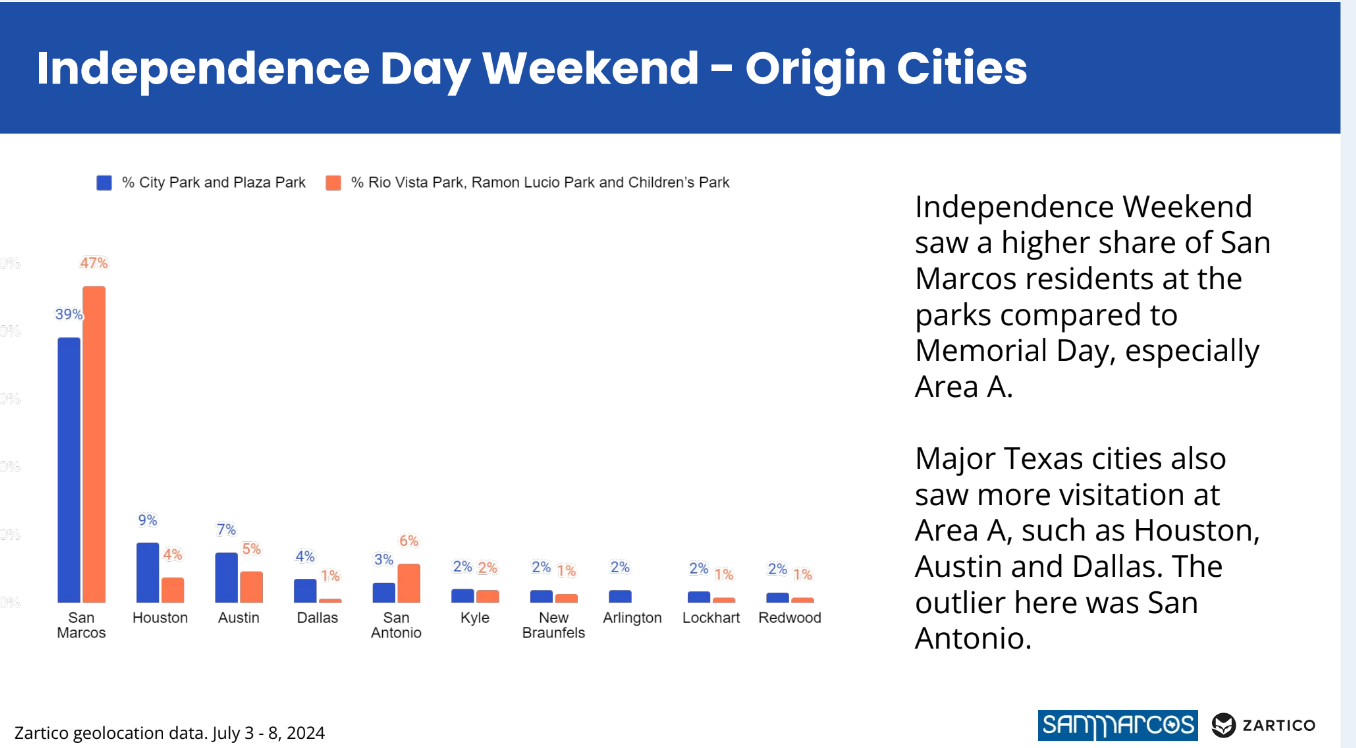
    This is an old slide from 2024:

    (Zartico is a company that tracks cell phone data. We paid them to track people on the river and tell us where people went afterwards. Yes, it’s a teeny bit creepy.)

    The point being, about 1/3 of the park visitors were local, and 2/3 were in from out of town. Here’s 4th of July from 2024:

    More from San Marcos, but still under 50%.

    No one is proposing that we charge admission to San Marcos residents. But should we charge out-of-town visitors an admission fee?

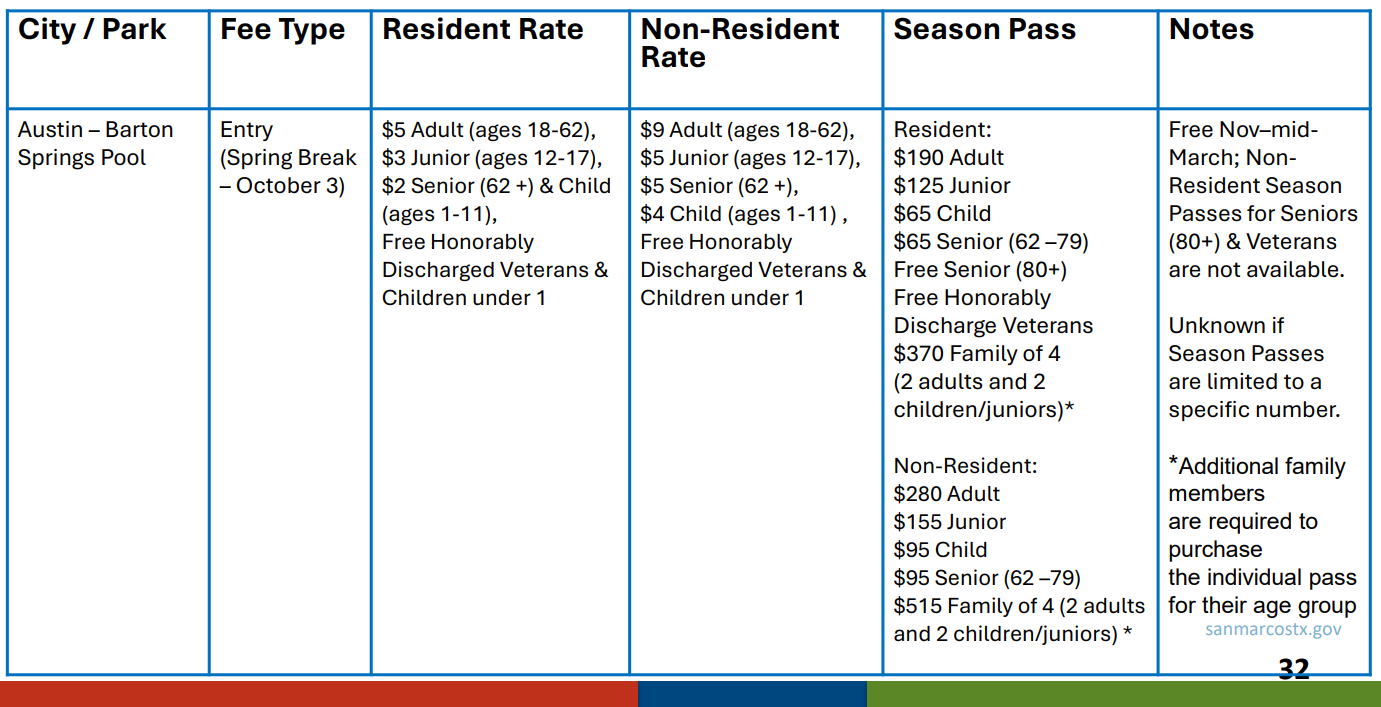
    What does everyone else do?

    Lots of cities charge fees:

    ….

    And so now, San Marcos?

    City staff is recommending yes, we should start charging.

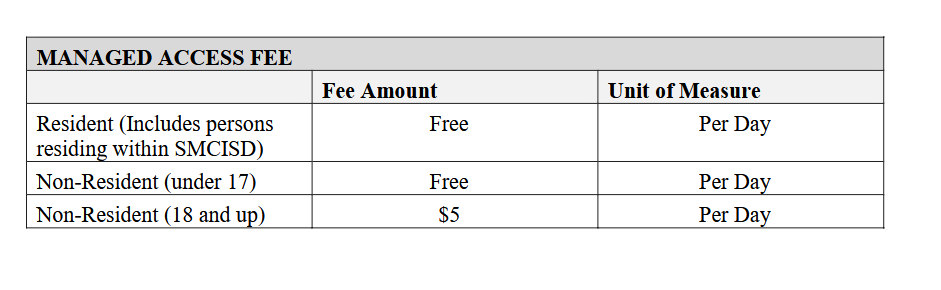
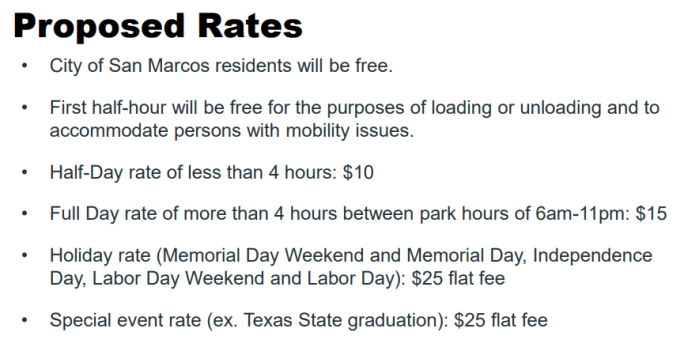
    Here is what they propose to council:

    What does Council think?

    Jane: we should start our season earlier than Memorial day.
    Answer: That just costs even more.

    Alyssa: How would residents get a river pass?
    Answer: You’d sign up in person or online. Like getting a library card. It would be a physical hard copy.

    Alyssa: One per household or one per person?
    Answer: Per person.
    Alyssa: Even kids?
    Answer: I mean, you all are council. You tell us what you want.

    Amanda: I have strong reservations about this. The river is a natural resource. I don’t like the idea of commodifying it. I don’t like the precedent it sets. New Braunfels probably started out only charging a little, and now it’s $25 to set out a blanket. And their river is still trashed.

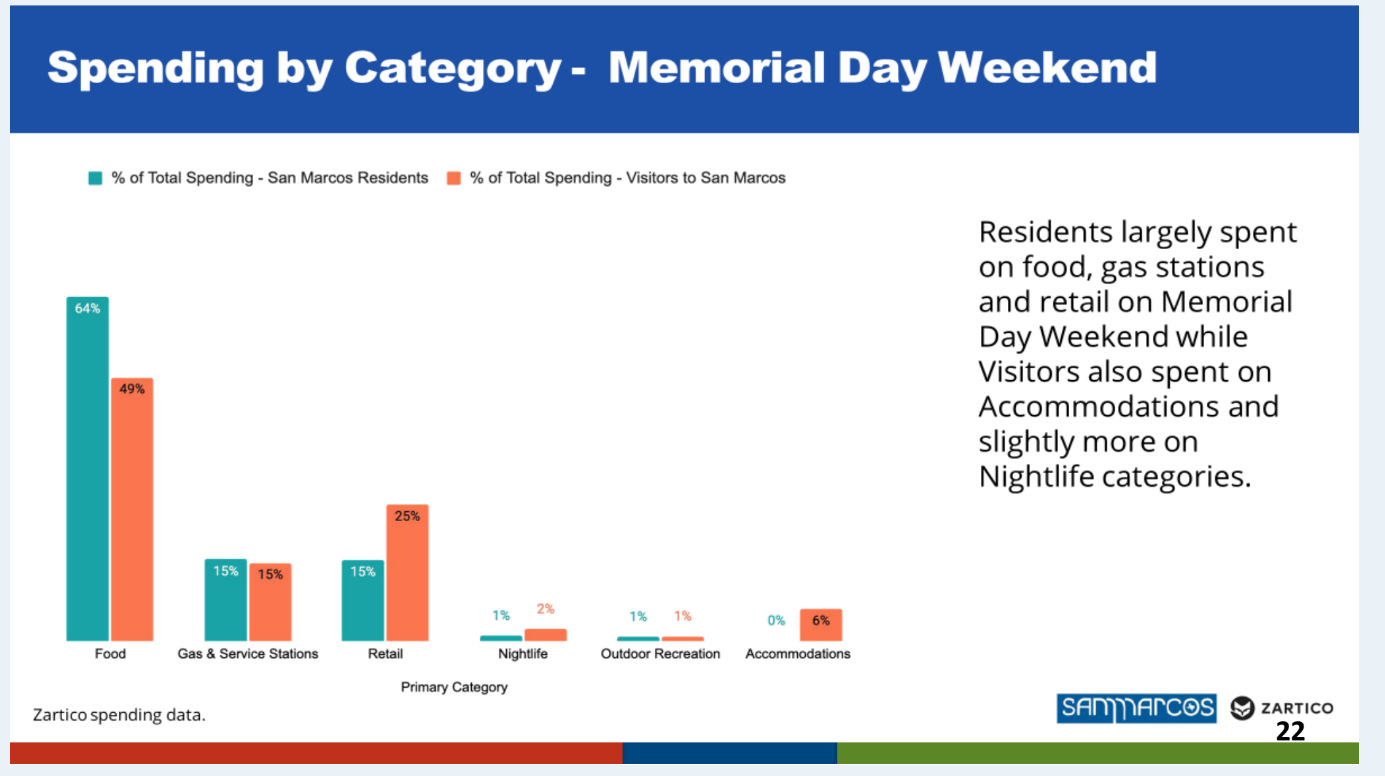
    Jane: Our out-of-town visitors aren’t spending money here. They’re not contributing to the tax base that pays for these parks. I don’t want to charge residents, but I’m okay charging out-of-town guests. They need to share the cost.

    She’s referring to things like this (from 2024)

    Saul: How much revenue would this bring in?
    Answer: We have no idea. It’s hard to even figure out how many people go to the river.

    Let’s break it into categories

    1. San Marcos Residents

      No one is proposing that we charge San Marcos residents. But there’d have to be some sort of free pass system.

      Every time you add a layer of inconvenience, you trip up vulnerable residents. (Think: undocumented community members who don’t feel safe signing up, or harried single mothers who keep forgetting to sign up. Etc.) Alyssa and Amanda voice some of these concerns.

      2. People just outside the city limits.

      What about people who live nearby? Like you have a San Marcos mailing address, but you’re not officially in city limits?

      Jane, Shane, Saul, Matthew: They should get a reduced admission price.
      Alyssa, Amanda, Lorenzo: they should be free.

      3. Actual out-of-town visitors?

      Lorenzo: Yes. We should charge them.
      Jane: Yes. Same.
      Alyssa: I don’t know. This needs more work.
      Amanda: Kids at least should be free.
      Saul: I agree on the free kids.
      Matthew: I’m fine with what staff proposed.
      Shane: [never turns on his microphone, I have no idea]
      Alyssa: Who’s gonna pay $100 for a season pass? Come on. This needs work.

      Fair point, Alyssa.

      Overall: It’s a little hard to follow, but I think this is where everyone lands:

      Yes, charge out-of-town guests: Jane, Lorenzo, Shane, Saul, Matthew

      Maybe.  We’re not sure yet: Alyssa, Amanda

      No one is a hard no.

      What do I think?

      I’m on the fence. I hate the increase in bureaucracy and bookkeepping, and I wish for a state where we just properly funded parks and local governments. (See also: socialized health care is much cheaper than private insurance because it’s so much less paperwork, bureaucracy, and red tape.)

      I also hate the idea that everyone on the river would have to keep a plastic card on a lanyard around their neck.

      On the other hand, here we are – with actual bills to pay and actual rivers to save, people to keep safe – and that all costs money.

      Maybe the river pass can be made into a little bracelet?

      …….

      Lorenzo: can we hold an evening workshop instead of a 3 pm workshop, so that more residents can attend?

      Everyone agrees this is a good idea.

      Bottom line: City staff will bring back more rate models and Council will have another workshop. But it looks like the writing is on the wall. I think it’s likely.

      …..

      One last workshop topic.

      Paid parking at the Lion’s Club

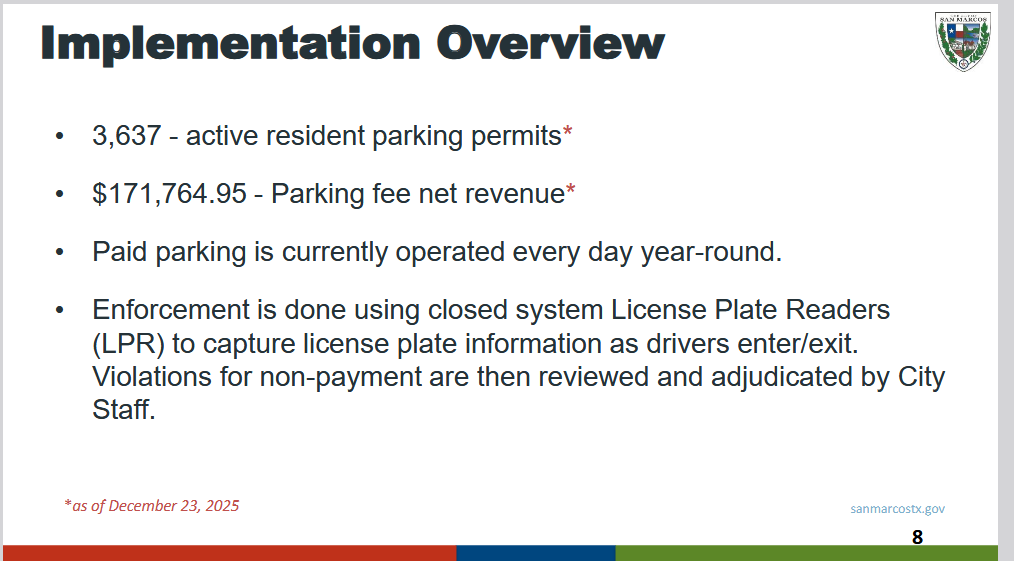
      We’re midway through a pilot year of paid parking at the Lion’s Club. It’s free for all residents, but you do have to register. (Register here!)

      How’s it been working?

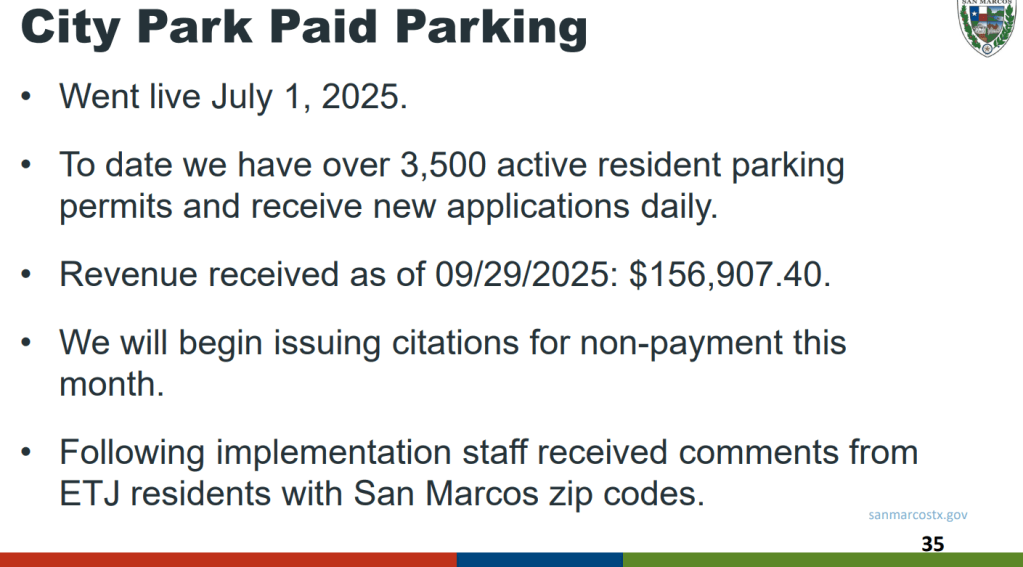
      Ok, so it just started.

      A few notes:

      • They have not yet been ticketing anyone, but they’re about to start. (Apparently there have been problems with Texas State students. Students can park there, as residents who want to use the parks, but not to go attend class at Texas State. I have no idea how they can tell who is doing what.)
      • “ETJ” stands for extra-territorial jurisdiction, ie the people who live nearby the city, but not in the actual city limits.

      The main question: do we want to charge people less if they live in the ETJ? On the one hand, they don’t pay property taxes. On the other hand, they do come to San Marcos to go shopping, and so they pay sales tax.

      How do we want to handle people who live close to San Marcos?

      Charge a reduced fee: Matthew, Shane, Jane

      Keep it free: Alyssa, Amanda, Saul, Lorenzo

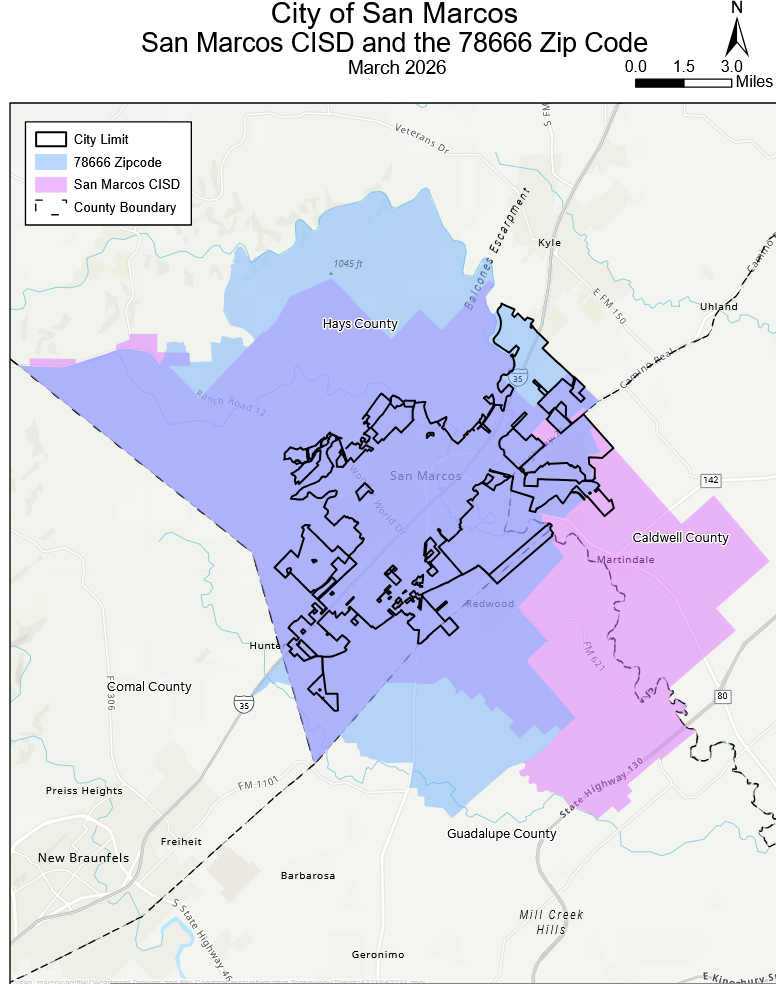
      There’s some minor quibbling about what “close” should mean. Anyone in who lives in SMCISD? Anyone with a San Marcos mailing address? some third option? I think they settled on SMCISD.

      Hours 3:21 – 5:07, 11/19/24

      Item 10:  LIHTC Housing (LIHTC = Low Income Housing Tax Credits)

      Back in May, we approved this LIHTC Complex:

      It’s for senior citizens. Right around the corner from Target.

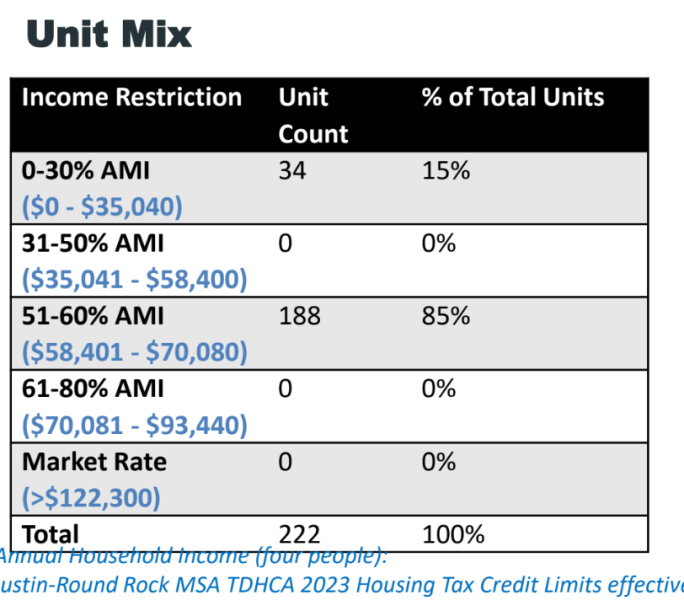
      How affordable will these units be? The developer agreed to set aside a certain number of affordable units:

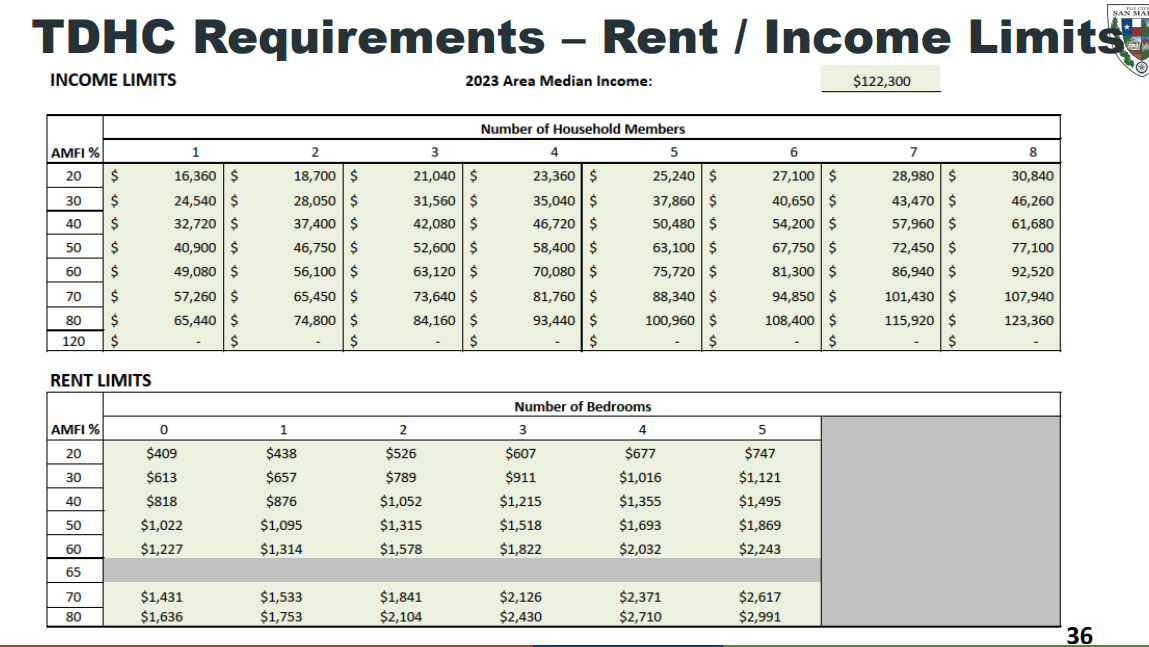
      AMI means the Austin Area Median Income. So 30% AMI means your family’s yearly income is 30% of the median Austin income. But the Austin median income is $86K, whereas the San Marcos median household income is $47K.

      So the categories are a little weird. Those 188 units at 51-60% AMI? That’s low income for Austin, but pretty normal for San Marcos.

      ….

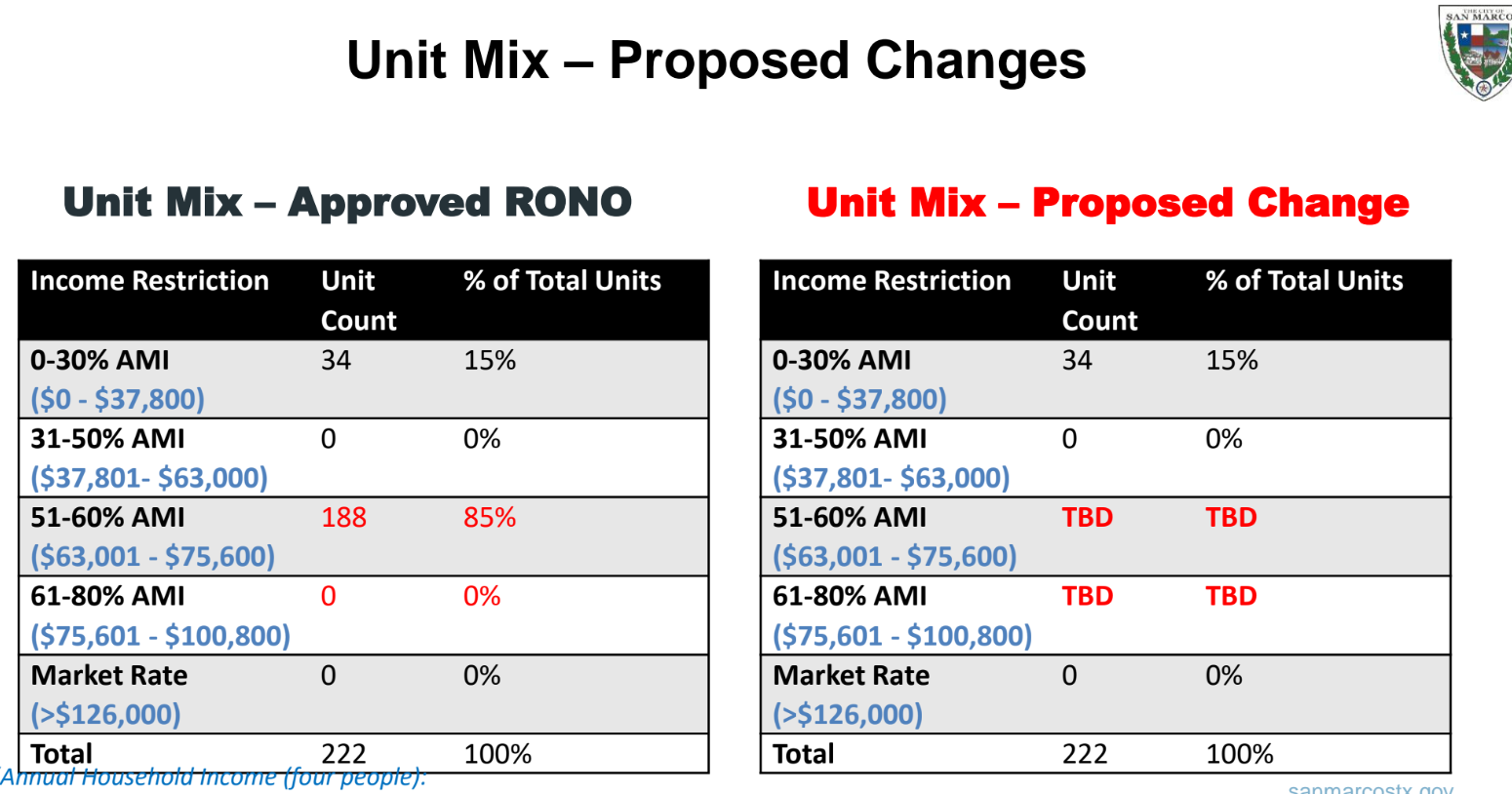
      The developer is back, and wants permission to change some things.  First, they want to loosen the ranges of incomes:

      So he wants to take the 188 units for families earning $63-$75K, and spread them out for incomes earning $63K-$100K.

      Side note: You can live in an apartment intended for a higher income than yours. However, you would not get a fully reduced rent:

      The guy also changed his mind on BBQ grills and picnic tables, due to space concerns.  He wants to swap them out for two horseshoe pits.

      Jane, Alyssa, and Amanda are all not happy about this. 

      The developer says he’s got a market study. There’s just not demand for the under 60% AMI group! If he can extend to the 80% range, he’ll be able to find more residents. 

      Jane is open to this, but she doesn’t like the unspecified numbers.  She proposes this:

      0-30% AMI: 34 units
      51-60% AMI: 86 units
      61-80 % AMI: 102 units

      Her reasoning goes like this: Seniors get a yearly 3% cost of living increase on Social Security. If you were earning 60% AMI and you get that bump, you could get priced out. Suddenly you’re making 61% of the AMI.  You don’t qualify for your apartment anymore. If there’s not a tier above you, you have to pay market rate, or move.

      Alyssa and Amanda call bullshit on the whole market study.  (ME TOO.)  It just doesn’t pass the sniff test that San Marcos has run out of families earning less than $75K, and you have to subsidize families earning up to $100K.  Our median household income is $47K, for pete’s sake! 

      The developer does not have the actual market study on hand, to show council.

      Amanda calls him out on this: Does this market study even reflect the people we’re trying to help? We don’t know, because we haven’t seen it.

      The vote on Jane’s amendment: (86 units under 60%, 102 units under 80%)

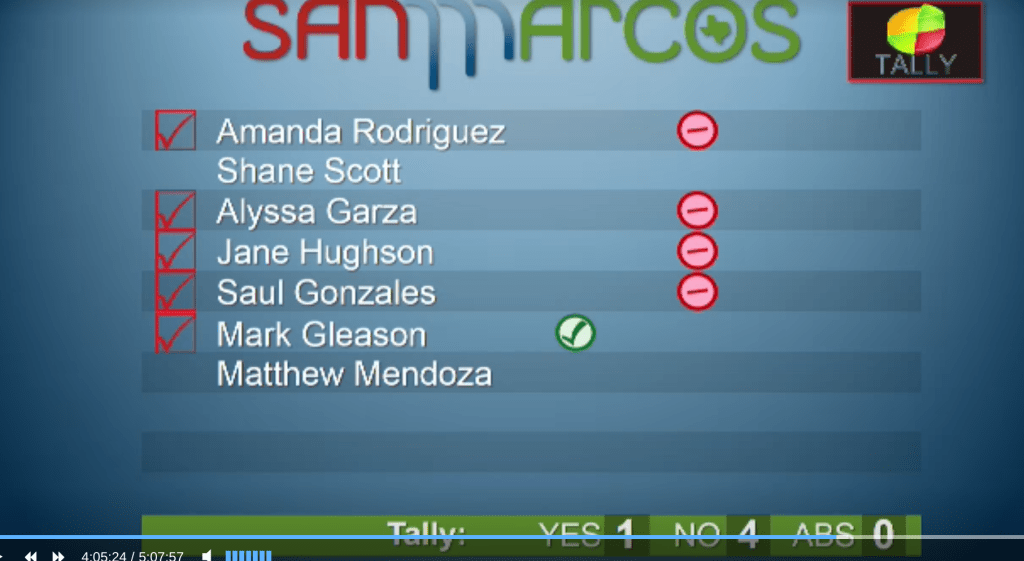
      Yes:  Jane Hughson, Saul Gonzales, Mark Gleason
      No:  Alyssa Garza, Amanda Rodriguez

      But!! It takes four votes to pass.  Since Matthew and Shane are absent, this fails. 

      The developer pleads that it’s not a complete blank check! The subsidized apartments still have to average out to 60%! 

      The final vote:

      Should the developer get to split up the Under 60% category however he wants?

      Sorry, dude! 

      Item 7:  We’re down to the final dregs of Covid money.

      Last time, we discussed this funding:

      Alyssa Garza basically chewed everyone out for never, ever prioritizing rental assistance. I mean, she was nice about it. But she has said this one million times.

      And lo! They made it work! New funding plan:

      Staff thinks we can give this rental assistance out with fewer strings attached than CDBG money.   This is very good, too.

      Item 12:  Getting ticketed at the Lion’s Club.

      Paid Parking is coming next summer to the City Park parking lot.  (Ie the Lions Club parking lot.)  Instead of paying someone to write tickets, they want to use cameras and mail the tickets out.  

      Some extra details:

      • The lot will free for San Marcos residents, but you have to go online and sign up somehow.
      • If you pay within 14 days, you get a discount.

      Council asks good questions:

      Amanda: How does the 14 days work? From the day of the ticket? What if they’ve got some situation and their mail isn’t coming promptly?
      Answer: We could change that. What about if it’s 14 days from when the ticket arrives at the house?
      Amanda: ?? How would you know?  Let’s just make it 30 days.

      Saul: Is there a warrant if this isn’t paid?
      Answer: San Marcos parking tickets are a civil offense, so no.  Hays County, though: those are criminal offenses. They’ll getcha.

      Amanda: What happens if someone’s car breaks down?
      Answer: There is an appeals process.

      Amanda: What’s the resident registry process like?
      Answer: It’s online.  We are also going to do some library outreach to help people sign up. 

      Alyssa: I can’t actually find the appeals process online. 
      Answer: Yep.  We’re going to put the link on the actual citation that you get in the mail.

      The vote: 5-0

      Item 13: NEW FIRE TRUCK!

      We’re getting an ERV010 Star Side Mount Pumper Truck with a 500-gallon tank and 1500 GPM pump.

      I’m guessing that it looks something like this

      Item 14:  Five Mile Dam

      If you know the youth soccer league, you know that it all happens at Five Mile Dam:

      image source

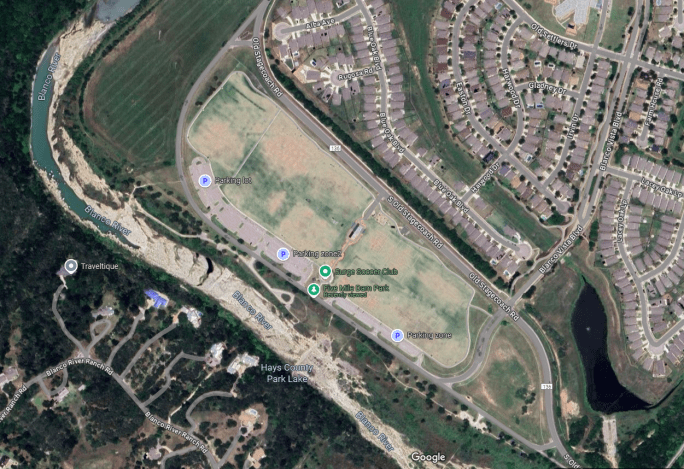
      Which is located here:

      The soccer fields opened in 2010.  They’re owned by the county, but maintained by the city.  So the city pays for the lighting, playground, sprinklers, etc.

      This photo makes it look like maybe the sprinklers aren’t working? Idk.

      Surge Soccer uses the fields for free.  (Surge used to be called SMAYSO, changed their name, missed their opportunity to call themselves Smoccer.)  This helps keep prices cheap for San Marcos families. Surge is good about this.

      Hays County is selling us the Five Mile Dam parks. But Hays County doesn’t actually care about the soccer fields.

      What Hays County cares about are these two other parks:

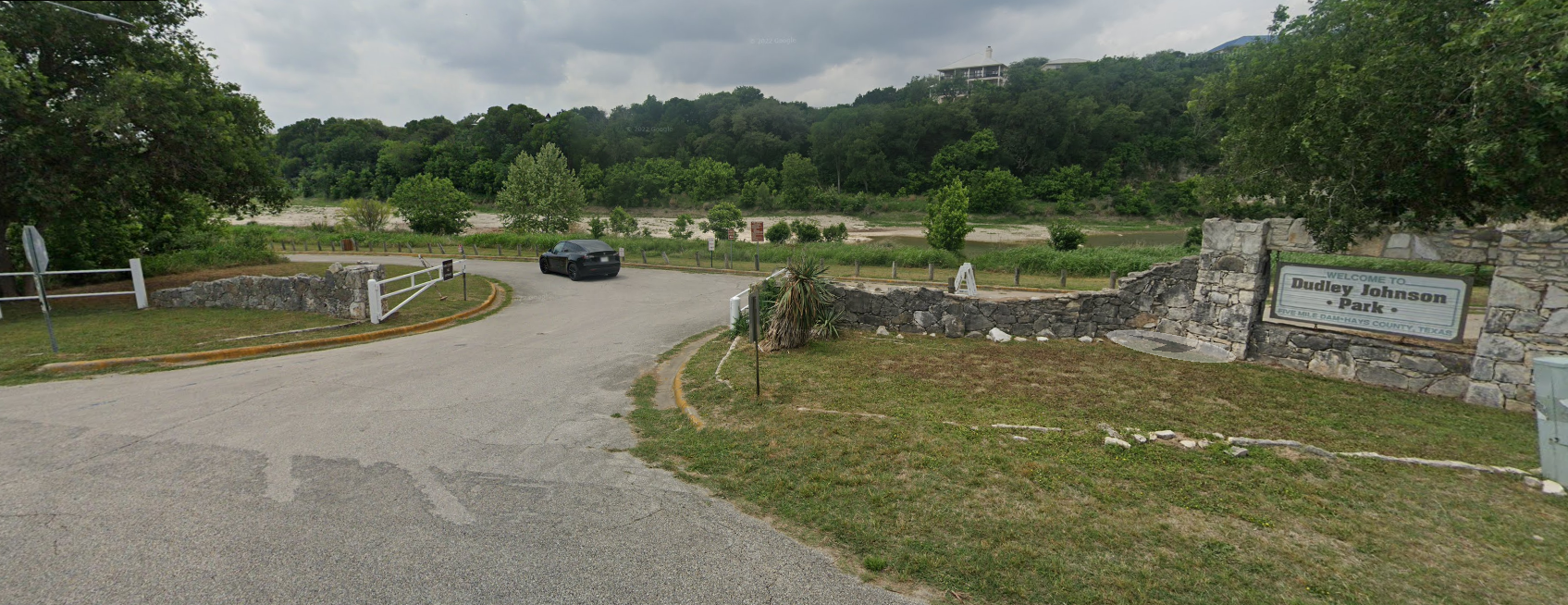
      1. Dudley Johnson Park:

      2. Randall Wade Vetter Park:

      Let’s zoom in on that sign:

      Yep! That’s the right place!

      Those are here:

      At least, that’s my best guess.

      So these three properties are a package deal. You want the soccer fields? You have to take Dudley Johnson and Randall Wade Vetter.

      How much is Hays charging us? 

      Zero! It’s free!   Wow, they must really want to get rid of those parks. 

      The last dam report was in 2016, and at that point, the dam was in good condition.   And the county will help with maintenance on the parks for the next year.

      Is this good for us? 

      Yes. We want those soccer fields, or else Surge Soccer won’t stay cheap for local kids.

      The danger is that Kyle or some private company would buy the fields.  They can make a lot of money renting them out.  But it would end Surge soccer.  Or at least, the affordable, community-focused version of Surge. 

      Soccer is the biggest youth sport in San Marcos, by far. It’s important to secure these fields. 

      Council votes unanimously for this deal.

      ….

      Item 16: Blanco Vista Water Tower

      Same neighborhood as Five Mile Dam! They’re getting a water tower, as part of all this ARWA stuff.  There is $50K in the ARWA budget set aside to paint the water towers. 

      How would we like to paint it?

      Here’s what our other towers look like:

      Here’s what some neighbors do:

      Here’s what some fancier cities do:

      We could either keep it simple, or pay $100K+ to go all out. 

      Council: keep it simple. 

      Item 17:  The Deer

      Deer are a big problem.  Mostly they cause a lot of car crashes, but they can also get impaled on your fences. (Ewwwwww.)  

      A speaker came from Texas Parks & Wildlife, and talked to the neighborhood commission.  Basically, the first step is to get people to stop feeding the deer.  

      Should we ban feeding the deer?

      • Pros: deer are a big problem.  
      • Cons: have you seen how cute they are, with their big eyes and fluffy tails???

      The Neighborhood Commission decides on an education campaign, instead of an outright ban, because of all those people who love the big-eyed-fluffy-tailed-deer.

      What does Council think?

      MARK GLEASON HAS VERY STRONG FEELINGS! 

      • First, even if you ban feeding, it won’t help.  Too much available food.
      • Deer have no natural predators.
      • You must hunt! Open up the parks to hunting!
      • We could make a whole weekend of it! Have drawn hunts! 

      This is a thing – see here and here.  And Texas does allow hunting at its state parks.

      The problem is that Mark is bringing a huge energy here – It must be discussed! It works! Cutting people off. It’s the only thing that works! – and everyone is a little taken aback. 

      Jane: They’ve been hunting on my land for 20 years, and it doesn’t keep the deer away.

      Mark: IT WORKS! You just need to hunt a few. After a few generations, the mothers keep their babies away!

      Alyssa: I dunno, doesn’t work on my dad’s ranch either.

      Eventually Jane shushes him, and everyone goes back to talking about corn. 

       Don’t feed the deer, everyone, but really don’t feed them corn.

      Item 18: Animal Shelter Vacancy

      We finally got it filled.  The new person talks about how much they love animals, and how they’ve fostered and volunteered before. 

      (I still have a lingering weird feeling about the other person who was jerked around by Council for months, but this person seems fine.)

      Hours 2:21-3:58, 1/17/23

      Item 29: Riverbend Ranch

      We’ve seen this proposed development before, and after P&Z denied their cut-and-fill. Residents of Redwood mobilized like 30 people to come talk to P&Z that night. It was really amazing.

      The major issue is that Riverbend Ranch will be on the hill immediately above Redwood. Redwood is home to a lot of extremely vulnerable community members and is dealing with flooding, raw sewage, and significant health challenges due to sewage contamination.

      The council could force Riverbend Ranch to be developed in such a way that it helps Redwood tie in to San Marcos water and sewage. Or the council could allow them to develop in a way that increases flooding and sewage contamination. This could be done really well, or it could be a nightmare.

      Matt Mendoza, Alyssa Garza, and Saul Gonzalez all volunteered to be on the Riverbend Ranch committee.  I am relieved.  You can trust Alyssa to remember to protect Redwood, and Matt Mendoza was personally the one who went down and talked to the Redwood community prior to the P&Z council meeting, so he’s also invested. And Saul is generally sympathetic to people without financial means to protect themselves from developers (although he usually takes the safe route when it comes time to actually vote).

      ….

      Item 30: Paid parking in the Lion’s Club parking lot. 

      We have a lot of out-of-towners who come to tube the river and go to football games.  We want to recoup some costs by charging them to park in the Lion’s Club parking lot.  So we’re launching a 3 year pilot program.

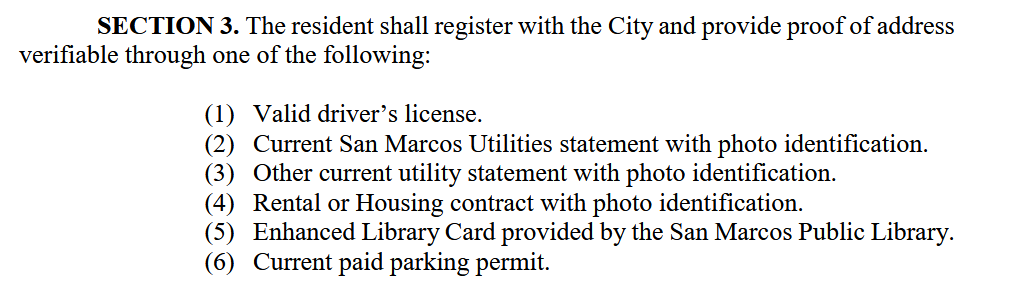
      It’s supposed to be free to San Marcos residents, which means that there has to be some system to tell who is a resident and who is not a resident.  It sounds like you go online and ask for a sticker to put on your car? You would either have a license or some sort of photo ID, or something with your address on it. (I might be wrong about the sticker.)

      Alyssa gets them to include library cards on the acceptable forms of ID, which is good.

      It’s pretty pricey for non-residents:

      The biggest discussion came about whether or not the machines should be cash-less.  Mark Gleason doesn’t like cash-less machines out of general get-offa-my-lawn old man vibes. (He’s not wrong!) Alyssa doesn’t like them because poor people are less likely to have credit cards. (Also correct.) So the compromise is that there will be one machine that accepts cash, and the others throughout the parking lot will be cashless.

      I share Alyssa’s uneasiness about the invisible barriers that arise when you implement cashless payment systems. At the same time, in this case, those bonkers prices are their own impediment for poor people. You can get like three eggs for that kinda money!

      Item 31: One last time with the Human Services Advisory Board.

      San Marcos donates money from the General Fund to nonprofits.  The funding process this year was a shitshow (apparently – I don’t really know details) and so council stepped in to give new instructions.  So now, on this third meeting on this topic,  council is nailing down the final details of how they want grant applications to be evaluated. There are two main sticking points:

      1. Grant money is only available if you’re serving San Marcos residents. The issue is what kind of track record is required. Should nonprofits from Austin and San Antonio who want to expand their service to include San Marcos be allowed to apply for city funds? Or should money be restricted to nonprofits who already serve San Marcos?

      Jane wants the nonprofits to already be serving San Marcos. Saul agrees.

      Alyssa makes the case that in certain categories, like mental health, we have a dire need for providers.  Nonprofits from San Antonio and Austin will be more successful finding other grant money to use on San Marcos if they can use this grant to demonstrate a need here.  

      Mark Gleason and Matthew Mendoza want to give preference to San Marcos-established nonprofits, but not exclude the others from applying.  I didn’t catch what Jude preferred, but this is where Council lands as a whole.

      1. Jane Hughson feels strongly that nonprofits should not depend on this money. She doesn’t want anyone to lose their job if the city has less money one year and can’t fund as many nonprofits.  In light of this, there is a rule that no full-time employee should be funded. You can ask for money to fund a part-time employee, but not a full-time employee.

      So the issue is: can you split the workload of a full time employee, and ask for partial funding? Can a grant ask for 30% of the salary of the full time employee who is assigned to work on the program for 15 hours per week? Or do they have to hire a standalone part-timer for 15 hours per week?

      Jane is a strong no. You must hire a literal part-timer for 15 hours per week. No carving up the time of a full-time employee. 

      Good news! We have an actual nonprofits expert on council! Alyssa has tons of non-profit experience, and is currently employed writing grants for her job. She explains that this is standard operating procedure in the world of nonprofits. Nonprofits are used to piece-mealing their employee’s salaries together across several grants. As long as the non-profit is basically competent and experienced, they will have a Plan B in place so that no one loses their job if San Marcos doesn’t offer these funds one year.

      Out of everyone, Mark Gleason is the only person who seems to hear what Alyssa is saying. Weirdly, Jane keeps marking down that Mark is on Jane’s side, but Mark is persistent in correcting her.

      But on the whole, it is the most infuriating goddamn conversation.  Everyone is sure that they know what’s best for nonprofits and no one is listening to Alyssa.  It comes off as paternalistic and arrogant.

      Jane keeps requesting that any councilmember who wants to allow partial funding of full-time employees must give a specific numeric cap. Alyssa keeps explaining that that is arbitrary and counterproductive – the nonprofit will have to justify their request, and the HSAB can make an informed judgement.

      They settle on a 20% cap: you can ask the grant to cover up to 20% of a fulltime employee’s salary. Because they know best.  

      May 4th, 2021 City Council meeting (Part 2)

      The second most interesting item of the night was Item 32: Paid Parking in the City Parks.

      This came from the Parks and Rec Board as a recommendation. It was basically swatted down hard. The conversation was handled very well.

      First off, everyone was against charging in Rio Vista parks. There’s barely any parking there already. It would push cars to park in the neighborhood. So the conversation was quickly restricted to the parking lots right by the Lion’s Club.

      Second, everyone was strongly against charging residents to park there. It was basically just a conversation about whether or not to charge tourists to park.

      Jane Hughson made all the sane points against this:

      • it would be a giant mess to implement a city parking permit program and get the word out to residents. Residents would constantly be showing up and either get charged or turned away to do some paperwork, or their pass would be in their other car, or they’d be riding in the car with their out-of-town guest, and so on. A million headaches.
      • Furthermore, it’s not even clear that we have enough of a tourist industry to pay for the headaches caused.

      Melissa Derrick made the best points in favor, namely that the river is overused and we risk eating our own tail if we can’t find a way to protect it. Many cities with important natural resources seem to use a permit system just fine, like Florida beach towns or whatever. Why can’t we?

      I hear what she’s saying, but somehow there’s a much steeper obstacle here in terms of awareness. Maybe just because every Florida beach town grapples with that same issue, and here it’s spotty. But it would be a huge mess.

      Hughson puts a plug in for us to charge for football parking, though. That seems like low-hanging fruit.