Hours 0:00 – 1:17, 12/2/25

Citizen comment:

There were 12 speakers, and only one topic: Flock Cameras

  • 10 people: they’re authoritarian and hijacked by ICE. Hard no.
  • 2 people: they keep us safe! yay cameras.

Lots and lots of details when we get to that item.

Item 10: The Downtown TIRZ

TIRZ stands for “Tax Increment Reinvestment Zone”.   What this means is that we’re going to put more resources into a fixed area.  TIRZ #5 is the Downtown TIRZ.

Here is the boundary of it:

Boundary of the Downtown Tirz goes from Texas State, through downtown, to I-35

Here’s how a TIRZ works: First, you fix a baseline year. For the downtown, it’s 2011. Back then, the whole region had a taxable value of $103 million.  

San Marcos always gets to keep the taxes on  $103 million.  But the value of the land keeps growing. San Marcos agrees to split the taxes 70-30 on all the value added above $103 million, until the TIRZ runs out. (Hays County is also part of the deal.)

So in 2025, the land is now worth about $550 million. San Marcos keeps the taxes on the $103 million base, and then splits the taxes on the other $447 million. All told, the TIRZ gets about $1.2 million from San Marcos, and another $600K from the county, in 2025.

What does the TIRZ do with the money? The rules are that they have to spend it all on enhancing the downtown, which is supposed to increase its tax value all over again.

Today they’re adding a little bit extra to their plan. Here’s what they want to do:

The TIRZ expires in 2027.  After that, the city keeps all the tax revenue on that district.

Fine! Everyone likes it.

Item 12:  Rezoning 24 acres on Wonderworld and 123.

Here’s a little patch of land:

Here’s what it looks like if you’re going south on 123, on the Wonderworld overpass:

The developers want to make it CD-5.

What is CD-5?

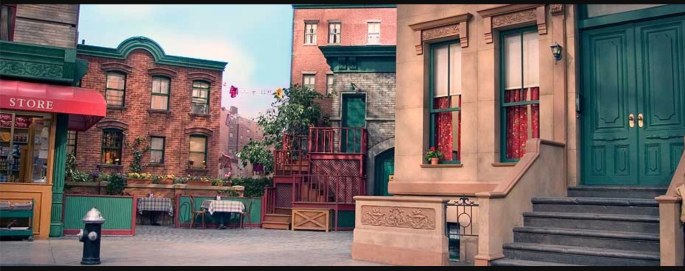
In theory, CD-5 is supposed to feel like a cozy, dense downtown area where you have shops and apartments and all kinds of nifty things, kinda like on Sesame Street:
But inevitably, it always ends up looking like this:

Relentlessly giant apartment complexes. 

What about some stores and restaurants?

I’m not actually opposed to giant complexes! Housing is great.  But this intersection is a great spot for some stores and commerce, no? It’s a constant drumbeat that the east side needs more commerce.

Jane brings this up:  “Will you all put in some commerce?”

Developer: “Who can say? We’re so mysterious!” 

Jane: “It would be really great.”

But then no one on Council actually does anything.

COUNCIL!! You have powers!  There are zoning overlays and Planned Development Districts, where developers agree to make some portion of a development into commerce.  

But here’s Council:

So Council just tells the developer, “Fingers crossed! Thoughts and prayers for commerce!” and leaves it at that.

….

Is this re-zoning a good idea? Let’s be a little systematic about it:

Five Questions For New Developments

Price Tag to the City: Will it bring in taxes that pay for itself, over the lifespan of the infrastructure and future repair? How much will it cost to extend roads, utilities, on fire and police coverage, on water and wastewater?

There’s a lot of development around this already, and this will be dense.  This is a good financially for the city. A+

Housing stock: How long will it take to build? How much housing will it provide? What is the forecasted housing deficit at that point? Is it targeting a price-point that serves what San Marcos needs?

We’re still in a housing deficit, and more housing is good.  So I’m fine with this.

Environment: Is it on the aquifer? Is it in a flood zone? Will it create run off into the river?Are we looking at sprawl? Is it uniformly single-family homes?

Not environmentally sensitive, not a flood zone. And it won’t be sprawl, because CD-5 has to be dense.  So doing well here, too.

Social: Is it meaningfully mixed income? Is it near existing SMCISD schools and amenities?

I doubt it will be meaningfully mixed income.  Developers don’t care.  It drives me crazy though – wealth segregation is a societal problem.   

It is very close to two elementary schools, Goodnight middle school, and SMHS, and also Bonham pre-K.   There are some restaurants near those schools. 

The San Marxist Special: Is it a mixed-income blend of single family houses, four-plexes, and eight-plexes, all mixed together? With schools, shops, restaurants, and public community space sprinkled throughout? Is it walkable?

This is literally what CD-5 should be.  A Marxist blogger can dream.

My $0.02: If I were on Council, I’d push hard for a zoning overlay that guaranteed some commerce. But if that was impossible, I’d vote yes, anyway.

The vote on rezoning:

Everyone: YES!

No one: no. 

So there you have it. 

Item 6: Mural at the Price Center. (Cousin to Panic! at the Disco.)

This item is peak ridiculous, in all the best ways. This is why I love local politics: everyone’s a regular person, and regular people are totally absurd.

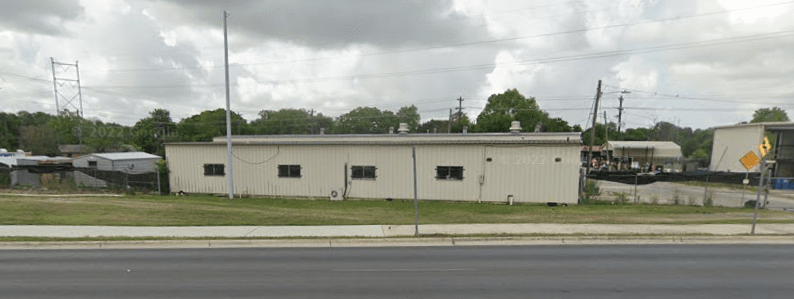
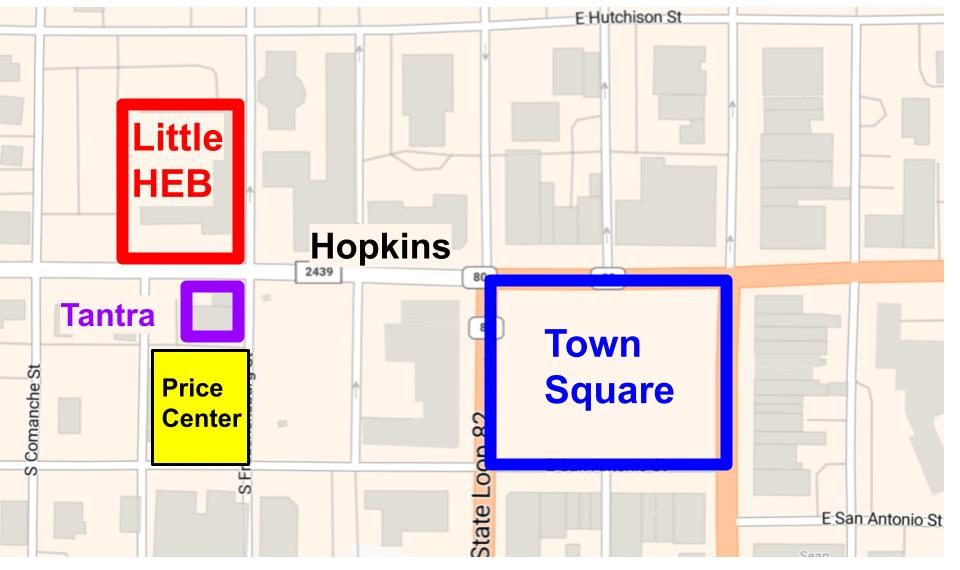
This is the Price Center:

It’s right behind Tantra, facing San Antonio St:
It’s mostly a public event space – there are concerts and shows inside, people rent it out for parties, there are market days where you can buy stuff from vendors, etc.

Here’s the front steps:

No one ever uses this entrance.  You walk around through the garden to go in.

Today’s item is about a mosaic mural to go on the front steps.  In other words, it’s a single picture that will be cut into strips, and go on the risers, like this:

Maybe you’ve seen a photo of the proposed mosaic! If you haven’t yet seen it, I’m going to withhold it until the end of this item, for maximum comedic value.

Because this is what Jane Hughson posted to the message boards ahead of time:

This mosaic definitely involves cacti, and Jane is NOT a fan. 

During the meeting, Jane brings up more points:

  • The mural is beautiful! But the cactus? Hard no. 
  • We’re trying not to have spiky plants like yucca downtown, because they are hazardous if someone falls in them.
  • We’re not Arizona. Feh, Arizona!
  • Cacti are prickly and unwelcoming.

Lorenzo agrees: it does hurt to fall in a cactus.

City Staff:  Some artists like cacti!  It’s subjective.

Amanda:  Cacti stand for our cultural heritage in Mexico!

Alyssa: I love ’em. Also they’re delicious.

Shane:  If we asked the artist to take out the cactus and re-do it, and they said no, what are the sunk costs? 
Answer: $1000.

Saul: I guess I’m a yes, because I don’t want to waste $1000.

ARE YOU READY TO SEE SOME CACTI?

Pause for a second.

Before you see it, I want you to picture an unwelcoming, prickly mayor cactus.  Get a good visual image in your head, before you scroll down.   What kind of cactus would be too hostile for the front steps?

Ready?? 

READY??

Here’s the proposed artwork:

Guys. GUYS. It’s so beautiful.  It’s mostly prickly pear flowers, more than anything else.  There’s nothing remotely hostile here.

This is the mural that we almost killed for being too prickly!  What a world.

….

The vote on the beautiful mural:

Yes, we love it!! :  Amanda, Alyssa, Saul, Shane, and Matthew

Ow, thorns: Lorenzo, Jane

So there you have it. Small town politics, eh?

Hours 1:13-2:22, 3/21/23

Item 19: Sam Aguirre used to be the lawyer for P&Z, and Michael Constantino was the lawyer for City Council. (I’m sure they both did more than that, but that’s what they were on camera for.)

Sam got hired by Seguin, so he left in the last year or two. Then Michael Constantino retired, a few months ago, so we had a vacant attorney position.

And now we’ve poached Sam Aguirre back! Welcome back, Sam.

Item 21: You know McCoy’s, the local building supplies place on Wonderworld:

They’re actually a chain with 84 stores across Texas, Oklahoma, and New Mexico.  But their headquarters is here in San Marcos:

That’s on northbound I35, past HW 80, right by the DMV.  

I went down a bit of a rabbit hole reading their little history blurb from their website, which I found weirdly fascinating. The McCoy great grandfather started off selling roofing supplies in Galveston in the 1920s, which is obviously lucrative every time a hurricane hits, although they make a point to say they didn’t price gouge. They switch to building supplies in the 1940s. They move the headquarters to San Marcos in the 1970s.  They kept growing and did very well in the 80s.

But then in the 90s, Home Depot and Lowe’s show up on the scene. This is the part I was very interested to read. How do you handle it when the Walmart of your industry comes to town? McCoy’s took a hit and described it pretty unflichingly.  They closed about 1/5th of their stores and scaled up their existing stores. They experimented with ideas that failed and they shut them down a few years later. But it’s now been 30 years, so I think they made it through.  It’s still entirely private and family owned, and they also own a bunch of land and a big ranch operation in west Texas.  

So back to that headquarters, on I-35. They actually own a really big tract of land right there:

They want to turn that land into a campus headquarters, here in San Marcos, for all their corporate leadership trainings and such. They’re picturing a campus with a lake and outdoorsy things where all the store managers can come be trained and hold retreats. Right now, they hold a bunch of these in Cedar Park. Wouldn’t it be nice to bring all that business home to San Marcos? 

City Council is 100% sold.  I’m not saying I’m opposed exactly, but this is catnip to good ol’ boys.  Jude Prather and Mark Gleason were fanning themselves with delight at the idea of a giant McCoy’s World of Leadership here in town. 

The current CEO, Meagan McCoy Jones, spoke in person about this.  She made a compelling case for the campus. My favorite part was when she had to explain that there are homeless people currently camped out on this land, and this was going to end.  She approached it fairly well: she started with her own efforts to combat homelessness and acknowledged the complexity of the problem, and then bluntly said, “but it will be a closed campus.” You understand.

Currently, this project is a long ways off. They were here today because they’re going to need to deal with these two light-red highlighter marks:

Those are roads on the transportation master plan, but McCoy’s is not on board with them, so they need to be removed.  Sorry, roads.

Item 22: More murals!

We have a San Marcos Mural Arts program. You can see a nice slide show of the murals here.

I particularly like the one across from Big HEB, which isn’t on that slide show:

It always cheers me up. Also, I had to go take that photo in person. That’s how dedicated I am. I tried to grab a photo off Google Maps, but it’s out of date:

Anyway, the next one coming is going to be here:

That is the back of the Old Hays County Justice Center, which currently houses Industry and Aquabrew.   That’s the view heading towards downtown on LBJ from I35.

A funny thing is that these photos are in the slide show on the Mural Arts website:

Isn’t that the same wall? I definitely have seen that mural. I like it, too!  Here’s another shot of it:

I couldn’t remember if this mural was currently up or not, so my Staff Photographer swung by and took a current photo here, too:

So there you have it. As far as I can tell, there used to be a mural, and then the mural got painted over, and now there will be a new mural.

The Arts committee is estimating $100K to paint the mural. But they’ve been planning this for years, and it’s a giant project.  It does not bother me to spend significant money supporting local artists and making San Marcos interesting and beautiful.

Item 24:  Meta-committees.

True to her word, Alyssa Garza wants to tackle the issue of skewed representation on San Marcos boards and commissions. Namely: it’s really old, white, and male.    Maybe not as entirely white and male as it used to be – which Jane Hughson often points out – but still way out of sync with the demographics of the city. 

To that end, they’re going to form a committee-on-committees.  Alyssa, Matthew Mendoza, and Mark Gleason all volunteered to be on it and study the problem.

Items 25/26 were Double Secret Executive Sessions on the Meet-and-confer renegotiations. 

Two days later, on Thursday, the first Meet-and-confer renegotiation session was held.  I can’t find a video recording of it, though, so I haven’t watched it. Mano Amiga was there in person, I think.

Q&A from the press and public:

Max Baker came back and raised a few issues in quick rapid-fire:

  1. What happened to equity-based budgeting?

Answer: there was never a consensus from Council to do so, but hopefully when we hire a new DEI coordinator, they’ll be on top of things.

  1. SMART, isn’t it an inland port? 

Nobody really answered, so I’ll take a stab at it: wikipedia tells me that inland ports are on rivers and dry ports are just land.  I suppose the SMART Terminal is on the river, although it would be pretty gross to use the San Marcos River for port purposes. I think Max was just pointing out that since Air and Rail are not part of it anymore, the SMART Terminal is just a SMT Terminal.

The real problem is that 6 out of 7 councilmembers are fine with SMT being an inland port or a dry port, and just want the neighbors to shut up about the whole thing.

  1. Are we worried about how the McCoy’s are really big players on GSMP? Right now GSMP brings lots of conferences to Embassy Suites, which we are still paying for.  What if GSMP switches to using this new McCoy’s campus for its events? 

No one responds to this, either, as most of them are very smitten with the McCoys, and also the McCoys conversation has just barely begun, anyway. 

  1. Vacancy tax: this is the one I find most interesting.  Can we look into a vacancy tax for landlords who just let their property sit derelict, while hoping that some fancypants will come pay higher rent? 

This is largely about the empty storefronts downtown, which really depress the whole vibe of the place.  Landlords want Austin businesses to come down and pay Austin rental prices for the space, and they seem content to just wait as long as it will take to find a tenant.

At first, Jane is hesistant, and seems to be saying that when they looked into this before, vacancy taxes weren’t legal in Texas. But Max says that he’s emailed in a bunch of different models for how to do it, like one where you charge them for extra trips by EMS/Fire Department/SMPD, which happen a lot more when a building sits vacant.

So: are vacancy taxes legal in Texas? Seems to be. There are two kinds of vacancy taxes: residential and commercial.  I can’t find anything that says they’re illegal, but I can’t find many examples of cities implementing them either.

Here’s a useful pamphlet from UT Law, but it’s from 2010. It has a bunch of helpful info, plus examples. Eg:

Dallas Downtown Vacant Building Registration Ordinance The Dallas ordinance requires owners of downtown vacant buildings to register their properties and pay a registration fee of $75, an inspection charge of $185, and a small additional fee per square foot of the building. Owners must submit a plan detailing a time schedule for correcting violations, a maintenance plan, or plans for renovations or sale of the building. The owner is required to submit an updated plan at least once every six months. Violations of the ordinance can result in criminal penalties, civil fines ranging from $500 to $2,000, and administrative penalties. The owner must carry commercial general liability coverage with a minimum combined bodily injury and property damage limit of not less than $2,000,000 annually.

I’m in! Let’s do it.

In the end, Jane asks if there’s a consensus on Council for staff to research vacancy tax options and bring something forward. And there is! So this will come back.