Hours 0:00 – 2:03, 2/18/24

Citizen Comment

Two topics today:

  1. Nine people spoke about Malachi Williams. 
  2. Three people talked about the Data Center that might come to town.

I’ll save the Data Center comments for when we get to that item, and just focus on the Malachi Williams speakers here.

Backstory: Malachi Williams was a 22 year old who was killed by an SMPD officer last April. It was reported that he was carrying knives. Two officers started to detain him at the convenience store on Cheatham and Hopkins. (He was not holding the knives at that point.) He took off running. They chased him over to HEB, and then shot and killed him in pursuit.

Since last April, a number of activists and family members have been pursuing justice for Malachi, and fighting for a fair process for the family and some kind of consequence for the cops.

Last August, a grand jury decided not to press charges against the officer. That basically brings us up to the present day.

Why now?  There was an event recently hosted by Malachi’s family. From what I gather, attendees were able to view some bystander footage for the first time. 

The focus today is on inconsistencies between what Chief Standridge and SMPD have claimed, and what actually happened last April.  

The biggest problem:

Chief Standridge has been asserting that a fire marshall was there and able to administer first aid in under a minute. Officers are trained in first aid, but they didn’t need to jump in, because the fire marshal is a certified paramedic.

The speakers say that is definitely not what the videos show.

Here’s what the speakers describe: Malachi doesn’t get first aid for about three minutes. During that time, SMPD got mad at him for not putting his hands behind his back. They rolled him around, so they could handcuff him. They checked his pockets. In fact, when first responders did arrive, they had to ask the cops to take the handcuffs off the guy they’d shot, who was bleeding out.

Malachi’s grandfather  

I’ve mentioned before what a compelling speaker he is. In his measured way, he asks council, “Think. If what we’re hearing today is true, are you disgusted? Can I get a show of hands, please?” – and he puts his own hand up – “If we’re telling the truth, if we’re telling the truth, are you disgusted?”

Here’s who raises their hands:
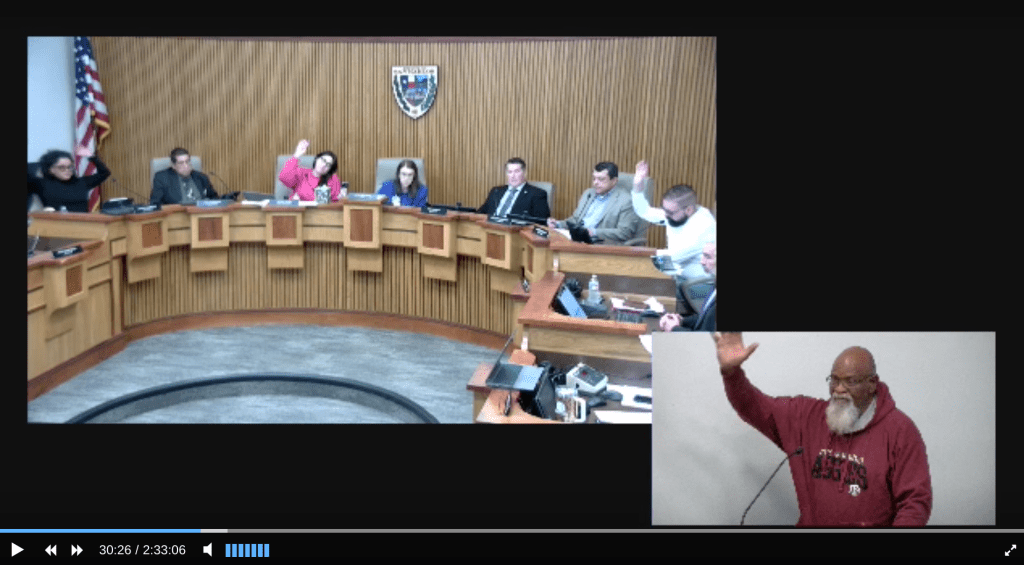
That would be Amanda Rodriguez on the left, with both hands up, Alyssa Garza in pink, and Lorenzo Gonzalez on the right. (I will say that so far, Lorenzo Gonzalez is proving to be a good council member.  I don’t have any complaints.)

Jane, Saul, Matthew, and Shane refuse to go along with the requested show of sympathy. (Is it performative? Sure, but I also think they genuinely just might not care.)

….

Now for an abrupt change in tone:

5.  Fireworks!  We put on a fireworks show every 4th of July.  

The amount we spend fluctuates from year to year:

This is because some years we get donations, and other years we don’t:

For the record, it’s always a 20 minute show.  As they put it, “The more donations we get, the bigger the booms.” 

Jane Hughson wants to know why we have to keep making the shows bigger.  If donations come in, can’t it just free up some city money that we could send over to the parks department?

Answer: People complain when it’s big one year and smaller the next.

Me personally: I’m with Jane here. I’m having a hard time caring about the size of the fireworks.  I’d rather use the donations for fireworks, and free up some money for the parks department.

But then again, I’m a grouchy old tree stump. If other people care, who am I to harsh their mellow?

Item 10:  Data Centers!

You may have seen this KXAN article, “A new AI data center is coming to San Marcos“?

This isn’t that.  In fact, there’s a lot of confusion about what that article exactly is about! We’ll try to unpack it all here.

So if this isn’t that, what is this?

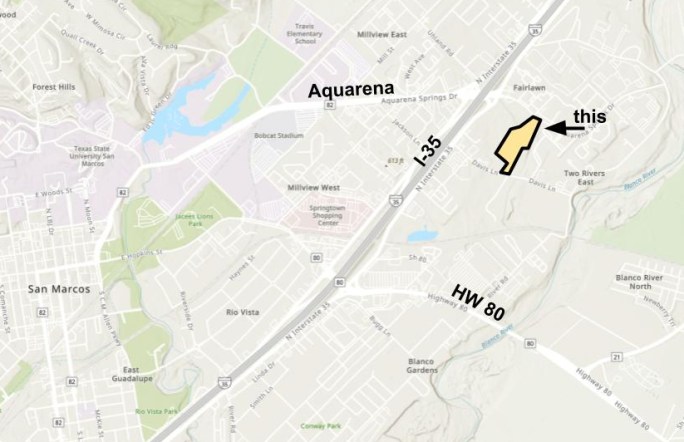
First off, it’s way down here:

(We’ve actually seen this property before, back in August 2nd, 2022.  They wanted to put houses out there.  I thought it sounded like a super terrible idea!)

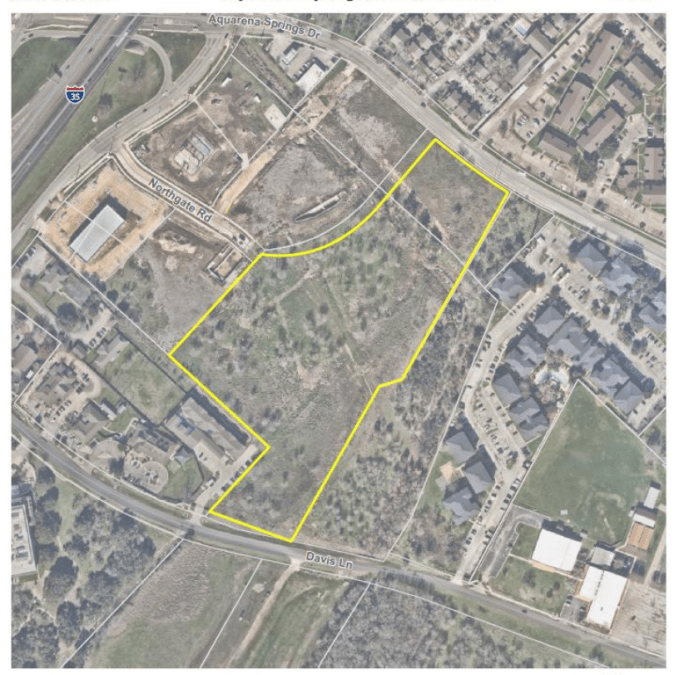
Here’s a close-up of that property:
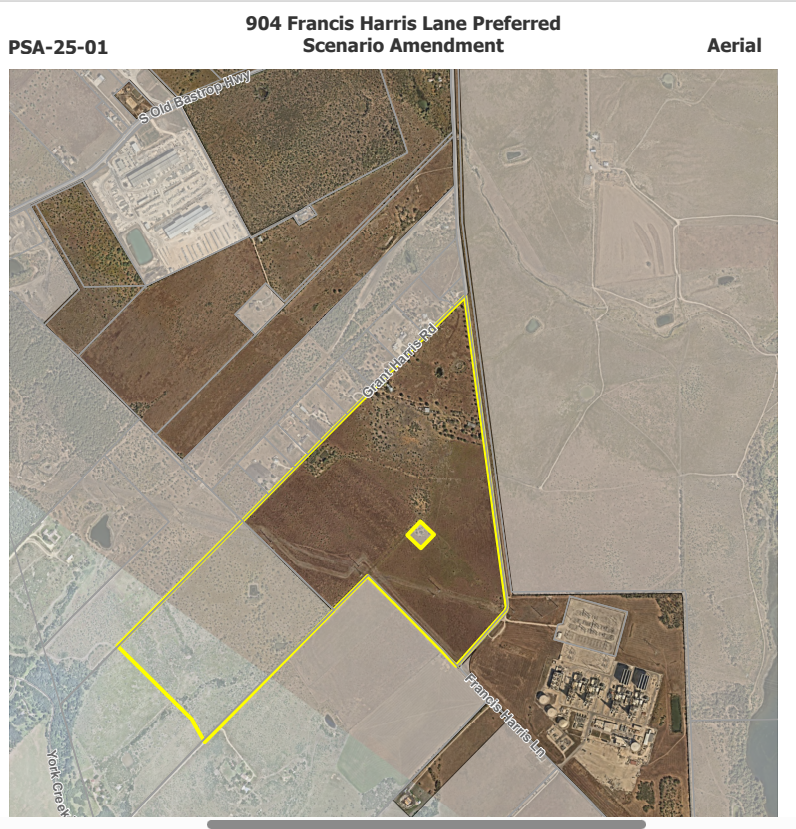
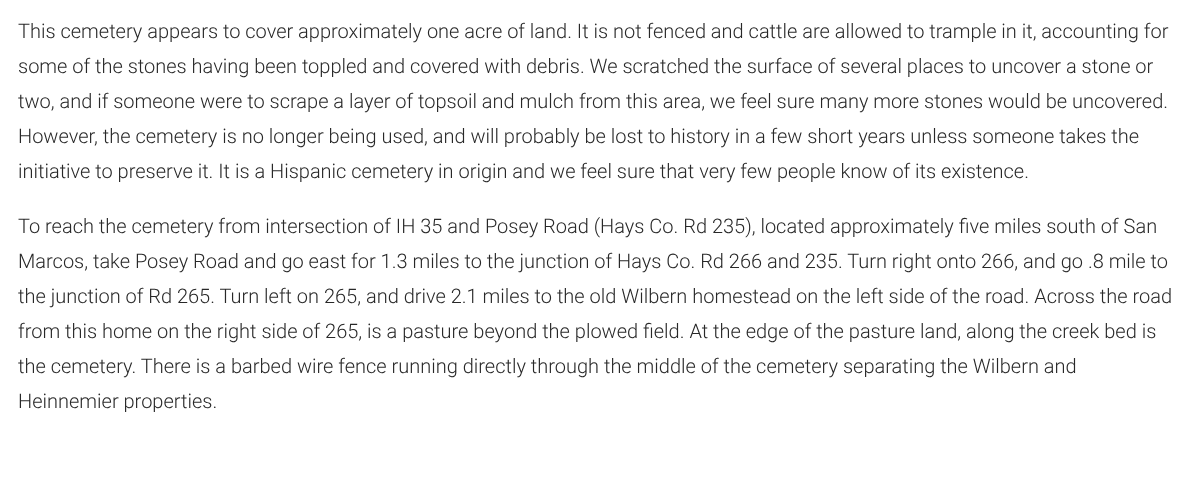
See that funny little yellow square?  That’s an old cemetery.  Access to the cemetery will be preserved.

Listen: I have some extremely boring confusion regarding this cemetery. I’m sticking it at the end of this page, because it’s truly too weedy to bore you with. This way you can opt out from the dumbest of my dumb shit.

What’s a data center? 

Basically a giant computer that takes up an entire building, where AI can perform its massive amount of computations.  So there are very few people working here, besides security and some technicians to monitor it.

What are the pros and cons?

The pros:

  • This is in the middle of nowhere, next to a giant power station.
  • The city is not going to have to spend much on infrastructure or maintenance.
  • The city should see some revenue from property taxes.

The cons:

  • Data centers take a massive amount of water.
  • Data centers use a massive amount of electricity.

This particular project would not be on city water or electric. They’d use Crystal Clear Water and Pedernales Electric for power.  (They’d be on San Marcos wastewater, though.)

Here’s the thing:  Crystal Clear Water draws from ARWA, just like we do.  It might not be city water, but it’s the same underlying water table, either way.

Can this be done responsibly?  Maybe!

Water is the biggest problem. The water is needed to cool the data center, because computers generate a lot of heat, which would then make them overheat and shut down otherwise.

The land-owner says that this will be a closed-loop water cooling system, which means less will be lost to evaporation. Matthew Mendoza says Google developed this technology 8 years ago. (I don’t know if this is the same as this technology, which only rolled out last year, but maybe.)

It’s great to implement the latest water-saving technology! But if quantities are still way too big, it doesn’t help you much.

Bottom line:  We can’t make an informed decision unless we have a concrete gallon amount of potable water usage.    

How much water does a data center use? This says an average estimate is 550K gallons per day for a hyperscale data center. (I’m pretty sure AI means a hyperscale data center). This closed-loop Microsoft system coming next year is claiming to only use 99.5K gallons per day. So we’ll probably be somewhere between those two estimates.

How much water do we have? According to the presentation in January, our current capacity is 4.8 million gallons per day.

NOTE: They would be using 550K gallons of Crystal Clear Water, not San Marcos water! But I couldn’t find a total capacity for CCW, so I just used San Marcos as a reference point. Both draw on the same underlying water table, so it’s best to still think about water conservation.

Can data centers use reclaimed water?  Maybe!

This link says yes, they can, but if the water quality is bad enough, it causes corrosion and microbial growth and other problems.

We do actually have a reclaimed water line that goes very close to there.  What’s the quality of the reclaimed water in that pipe? Could they use it?

I think this is the most essential question to answer.

Energy usage:  Honestly, this is probably less of a concern than the water.  Texas may have a shitty grid system, but we have a fairly healthy renewable energy supply, mostly because of all those windfarms out west.  This is a great state for both wind and solar energy, if we’d only stop electing such counterproductive leaders.

On energy, there is something called ASHRAE guidelines for data centers:

So maybe we could ask them to achieve that.

Do we have any leverage? 

Sort of! This is a tricky thing to answer.

First, they’re not asking for tax cuts. If they were, we could come back with all kinds of environmental restrictions. But they aren’t.

Second, they’re asking for a Preferred Scenario Amendment and a rezoning. There are rules around how cities make these decisions. You’re not allowed to base it on one specific project. You have to approve or deny based on all the allowed uses, and whether you like the location or not. And specifically, you can’t attach any requirements to these.

You might be able to require a Planned Development District, but I don’t know if water usage is an allowable reason to trigger one.

My opinion: If we can get them to agree to reclaimed water, then we should do this. Otherwise they’ll find another location that still uses the same water source, but isn’t within San Marcos jurisdiction.

I think many data centers will get built in Central Texas, no matter what.  I would like them to be as tightly regulated as possible. 

Note to Council: An ordinance requiring future data centers to be on reclaimed water might be handy to have!

What do citizen comments say?

Let’s go back to the beginning of the meeting. During citizen comment, one speaker had a list of extremely great questions:

  • What is the current noise ordinance for Light Industrial, within the city of San Marcos?
  • Will Dark Sky Lighting be considered for all outdoor buildings?
  • What will the setbacks be for both Francis Harris Road and the private Grant Harris Road?
  • Do we have a general idea of the size of the buildings?
  • What will be the estimated daily water usage?
  • Will it be public drinking water?
  • Will any measures be taken to lessen the impact of the large amount of impervious cover?
  • Cloudburst has stated on their website that this site will be part of their flagship data center in central Texas, and plans to aggressively grow its data center network. With a large amount of open farmland around the proposed site, should we expect further development from this company?
  • Since Cloudburst has already signed a longterm contract with Energy Transfer, the power plant already located on Francis Harris Lane, and KXAN reported on February 13th an AI data center is coming to San Marcos, should we assume decisions to change zoning and city limit boundaries are already confirmed?
  • Will Cloudburst be responsible for answering any of these questions or have to provide plans for the development, prior to the zoning change and incorporation into the city?

The very next speaker happened to be the land owner. His major points:

  • I’m working with the Data Center company to answer those questions above. The previous speaker submitted the questions to us in writing, after the P&Z meeting.
  • We have confirmed that the Data Center uses a closed loop water system. We are still working to quantify the amount of water lost to evaporation.
  • Hey look, we’re not going to put much wear and tear on the roads, at least!
  • And the biggie: We have no affiliation with Cloudburst or Energy Transfer. That is not us. The first time I ever heard of them is when that KXAN article came out.

What does Council say?

What the hell is going on with the KXAN article about Cloudburst?!

No one knows.  The owner swears up and down that he’s never heard of Cloudburst until that article came out, and has no idea what’s going on.

Amanda Rodriguez has headed over to the Cloudburst website, and they have the same exact timeline posted as this project:

Are there two projects? 

City staff says that it’s extremely unlikely a project of this size would operate on stealth-mode like this.  Companies tend to reach out to either the city for permits, or to the Economic Development Partnership to find out more about working in the area, or whatever.

The city manager Stephanie Reyes does also say that the city has gotten approached by multiple companies about data centers.  But no one else has an active application in progress.

Basically: no one knows what’s up with Cloud Center and they’re going to follow up.

….

What next?  Tonight was just informational. This is going to drag out all the way to April:

So there was no vote today. Stay tuned.

Item 11: Council members don’t get paid much.

Shane Scott wants to double the travel budget and increase the stipend that council members get.

First off: yes, we should pay our council more.  If you don’t pay your council enough, then you only get council members who are either independently wealthy, or who are willing to live in poverty in order to serve in council.  That’s not a recipe for healthy representation. 

Second: yes, we should increase their travel budget.  Inflation has made expenses go up.  We want council members to attend conferences and gain expertise, and make connections.  That’s how you get stronger representation. 

However, this is Shane Scott’s proposal, so it comes with a whiff of ridiculousness. 

Like at 1:18:30:

Shane: “At these conferences that I go to, I even get AWARDS for doing all the classes and stuff.”

Alyssa in the background: “he does, it’s so good.”

Jane: “I don’t really care about the awards. What value have you brought back to this council?”

Shane: “If I were to pass all the writing and stuff that I’ve learned before, I’d have a whoooole book of stuff that I’ve provided to council about doing stuff.”

I am dying to know more about these awards he’s winning for participation.

That’s my blogger dream, that Shane has a whole trophy case of these things.

Back to the proposal

The total increase of his proposal is $90K.

One ridiculous thing he’s doing is saying that he wants to increase amounts halfway through this year, instead of just waiting and budgeting the increases into next year’s budget.  So city staff had to scramble to figure out where to cut $45K from, in case Council approves Shane’s proposal.  

The city manager was not enthusiastic at all about this, back in December, but she managed to find $45K by raiding two budgets, one called “Council- related” and the other is a Contingency fund, for when projects go over their budget.

Here’s how much more money Council members would get, under this proposal:

“Expenses Elected” means your travel budget. This is anything where you have to provide receipts for what you did. So Shane wants to double everyone’s travel budget.

“Compensation” isn’t changing, but “Additional Expenses” is being doubled. “Additional Expenses” is basically extra compensation.  Councilmembers take it as a monthly lump sum for expenses where they don’t have to provide receipts. 

Why not combine “Compensation” and “Additional Expenses”?  Just call it all compensation? 

There’s actually a good reason: you can’t collect two paychecks from the government.  So if you work for the university, or the county, or the state, you can’t collect “Compensation”.  You can still collect “Additional Expenses” though – this is what Jude Prather did, since he works for the county.

Amanda is horrified to learn this – “You mean I could have kept my job?!  I took a huge paycut to accept this position.  I’m struggling.  I live with my mom, y’all.”  

I’m kind of infuriated on her behalf:  there was a better path available and she wasn’t informed?? 

Other council comments:

Alyssa:  Our community members treat us as though we’re fulltime and have staff.  Other cities pay their councilmembers to be fulltime, with staff, and they also slice their cities into districts so that you’re not answering to as many people.

Jane: Austin and Dallas pay their councilmembers fulltime and give them staff.  Not Kyle, Buda, or New Braunfels.  They pay zero.

Note: remember, paying $0 is strategic.  If you require someone to work for free, only wealthy people can do the work.  That’s not aspirational.

In the end, they move to postpone this.  Everyone’s going to come back with amendments and chop it up. 

Ok, back to the cemetery: The owner of the larger land does not own the cemetery. By state law, he will preserve access to that cemetery. At P&Z, Michele Burleson said she appreciates that – she was just there last weekend.

The owner also says, “Last time, there was some concern about the placement of the fence along the cemetery. So we did a fancy x-ray type survey. No folks beyond the perimeter of the cemetery!”

That’s reassuring! Also I remember that exact conversation. It’s here. But that’s not the same property!!

Here’s the property from the cemetery conversation:
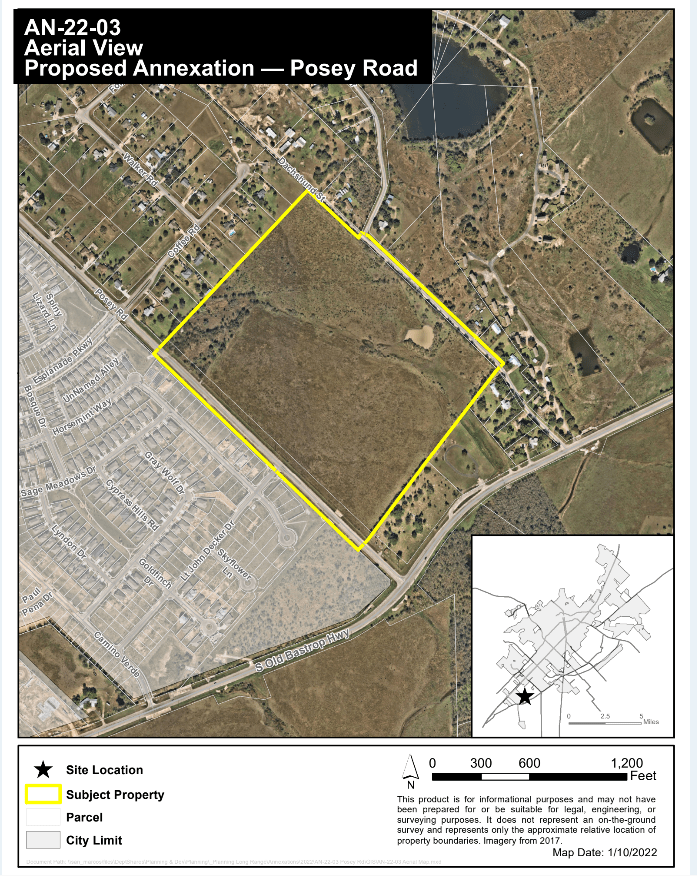
That’s a different cemetery altogether:
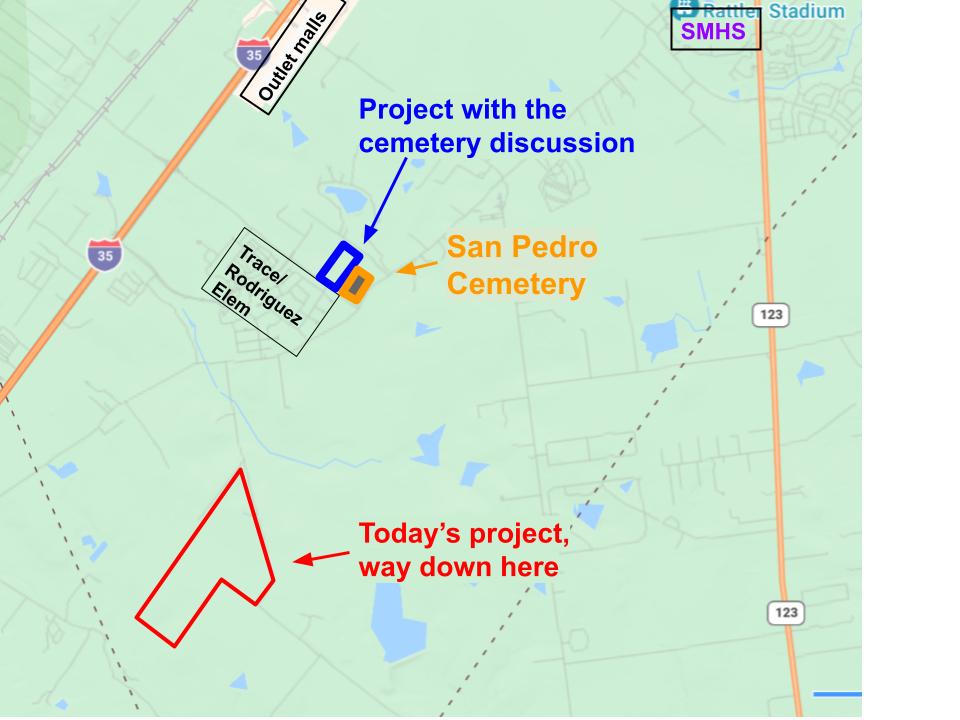
Everyone is remembering a conversation about the San Pedro Cemetery, not this one! So what cemetery is in the middle of this current patch of land? I think I found it, in this list of all the cemeteries in Hays County.

I think it must be the one called York Creek Cemetery. From that link:

Those directions put it squarely in the middle of today’s project, but they also don’t make it sound like a very active cemetery that people are visiting often.

[Updated to add: I’ve been corrected by a reader – thank you! – and the graveyard in the middle of this property is the Nichols-Berry Cemetery.

So that settles one question!]

(Which one did the land owner do the x-ray survey on? Is he confused about his own property? Or did he do surveys on both cemeteries? More unimportant questions I have lingering!)

Thank you all for accompanying me on this edition of Untangling Old Cemeteries of San Marcos.

Hours 0:00 – 1:54, 8/20/24

Citizen Comment:

A few main items:

  1.  Malachi Williams.  (7 speakers)
  2. SMART/Axis Terminal road annexation (3 speakers)
  3. Some one-off topics: San Marcos Civics Club, ceasefire in Gaza, RFP for wastewater, council attentiveness to residents.

Let’s tackle the killing of Malachi Williams first. There have been some major developments – namely the grand jury declined to press charges against the officer, and so he’s not facing any legal repercussions.  SMPD released the name of the officer who killed Williams, but no one else, and the bodycam video from that cop, but not the rest of the footage.

I get to go first, because this is my platform!

Listen: there’s a big gap between what’s legal and what’s moral.* 

Here’s what’s legal:  According to Chief Standridge, the cops followed de-escalation procedure in the convenience store.  Then there was a footrace. Malachi Williams was holding knives, and headed through the HEB parking lot, and so the cop shot at him several times. 

The grand jury did not indict the police officer.  This is legal – it means they thought there was not enough evidence to convict the cop in court.  And the grand jury is probably correct. The Supreme Court standard for cops is that they are allowed to shoot if they perceive a threat. That is a very low bar to clear, which is why it’s unlikely this officer would have been convicted. It is easy to believe that this officer will claim that he perceived a threat.  Therefore he’s allowed to shoot and kill Malachi Williams. 

This is all legal.

None of this is moral.  As a society, we failed Malachi Williams in many, many ways.  Long before the night of April 11th, we had set the stage for this, because we do not provide anywhere near enough investment in mental health services and housing for homeless people. 

Once Malachi Williams is having a mental health crisis on April 11th, we sent police officers in blue uniforms.  These officers may have been trained in current de-escalation techniques, but plainly that training is nowhere close to what this kid needs.  Remember, Malachi Williams had been acting creepy, but not violent. He has not actually threatened anyone with a knife, or even been close enough to anyone to threaten them with a knife. Importantly, he does not have a gun.

Malachi Williams runs away.  You run away when you’re scared.  But the cops do not think of him as being scared. They think of him running towards HEB, with knives.  They themselves are running towards HEB too, with guns.

Malachi, with knives, is considered a worse threat than a cop openly firing a gun in the HEB parking lot. Malachi’s life is not worth the extra police training that it would take for this officer to better understand how to handle this situation. That is not moral.

Ultimately, the only person who did anything violent is the police officer.  Malachi Williams is now dead and his family are now left to grieve.  This is a moral failing by the police department and the larger, complacent society.

Some good links:
why police officers are rarely prosecuted
how to think about police reforms
Guiding Principles on Use of Force, with a whole section on both mental health and people with knives. (That is a police research group, and they argue that police should never need to shoot someone with a knife.)

Onto what the speakers say:

  • The grand jury is unnaccountable and secretive. 
  • SMPD needs to release the full footage. Did the cops deliver immediate medical aid, like they’re legally bound to? [I am very interested to know this, too!]
  • One person (Sam Benavides) submitted a FOIA request for all footage.  She was told that she needed to provide names of officers in order to get their body cam footage. Of course, the only name that has been released is the one officer that held the gun, so this is totally circular obfuscation.

A note about grand juries: proceedings are generally not released to the public, because it’s one-sided. The defense is not present, just the prosecutor. So it would be unfair to the defendant to release a one-sided story.  However: this falls apart with police shootings, because the prosecutor can sandbag the proceedings, out of working so closely with the police. Independent prosecutors would help a lot with police accountability.

*hat tip to my friend for helping me with this framing.

  1. Axis/SMART Terminal road

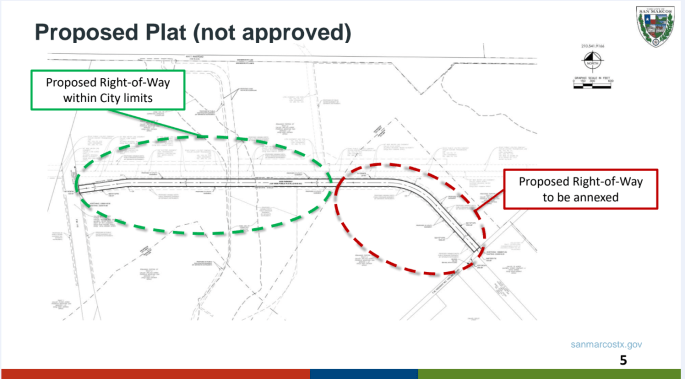
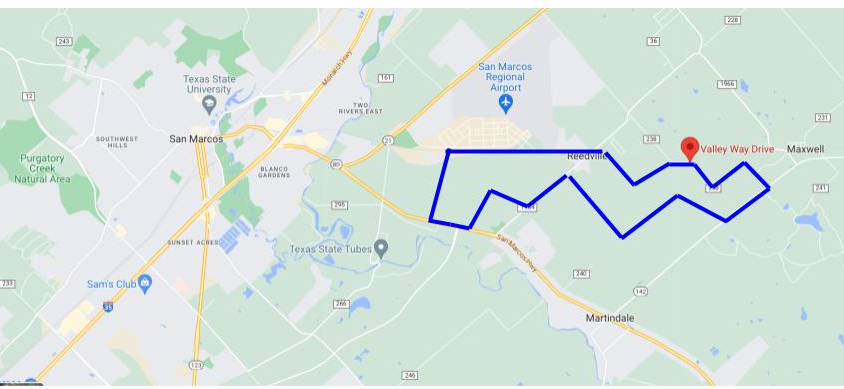
Just to refresh, here’s what we’re talking about:

It’s that dotted blue line between Loop 110 and Hwy 1984. Not the whole thing, just the right hand elbow of it:

Speakers brought some numbers from TxDot, CAMPO, and the Traffic Impact Analysis:

  • FM 1984 currently has 2380 cars per day
  • Hwy 80 has 17,400 cars per day
  • The new road is estimated to have 25,000 trucks per day.

So this is adding way more traffic to the surrounding roads.

Speakers also still want to know why the road moved – it used to be away from houses, and now it’s right by them. (We discussed this last time but didn’t get an answer.)

At the 3 pm meeting, the direct of of the San Marcos River Foundation (Virginia Parker) gave their two cents: they are in favor of the road annexation. They spoke to Caldwell County, who said that they’re stretched too thin to maintain the roads to San Marcos city standards. SMRF’s position is that it’s best for flooding if the city of San Marcos is responsible for maintaining the roads.

At the 6 pm meeting, it was pointed out that San Marcos can surely come up with a workaround there. We make deals all the time to deal with this sort of thing.

….

Onto the meeting!

Item 1:  The SMART/Axis Right-of-way road is up first! (Background here.)

Aaaaaaand…… It got postponed.  Womp-womp. Something was discussed during Top Secret Executive Session that made Mark Gleason want to do more research on the issue? 

One off-topic comment: SMART/Axis’s whole shtick is that they can’t possibly give any details up front, because they don’t know who their tenants will be.  Last year, they just want the whole thing annexed and zoned in one big blank-check chunk. They are still refusing to provide any details whatsoever.

This slide was shown during the presentation:

Wow, look at that magical exponential growth! In 20 years, their property will be worth $10 billion dollars!  They may have make-believe tenants that they can’t yet explain to us, but they will definitely be wildly successful, and the city will swim like Scrooge McDuck in the tax windfall. Let’s make all these important decisions based on this Very Serious Graph of Reality.

Item 12: Intralocal Agreement with the Animal Shelter

Up till now, San Marcos has been running a regional animal shelter, and it’s too much.  So we’re transferring responsibility to Hays County, and operating a local animal shelter just for the city, instead.

Hays County was maybe taken by surprise by this? It’s in their court now.

City Manager Stephanie Reyes has talked with the city managers in Buda and Kyle, and has requested a few things:

  1. Hays County, Kyle, and Buda need to change their ordinances to match ours
  2. They need to market animals at events
  3. Consider participation with PALS to address pet overpopulation

Of course, these other jurisdictions could come back with amendments, which we’d consider. We’re not ordering them to adopt our version so much as asking them to consider this first version. But at some point, the ordinances need to match.

Item 16: School Resource Officers (SROs)

SROs are a joint collaboration between the city and the school district.  This is the yearly re-upping of the contract.

There are a few proposed changes:

  1. Maybe the contract should last two years, instead of one year?
  2. Maybe the contract can be renewed by administrative approval, instead of coming to council?
  3. (Some others, but these are the ones that got discussed.)

Alyssa Garza makes the case that it should be discussed every year.  She’s actually mostly on board with the program, but says she’s only gotten to this place by having lots of detailed conversations every year.

Saul Gonzales agrees. 

Jane Hughson also agrees, and adds that the renewal should really occur in the summer, before the new school year starts.  

Mark Gleason and Matthew Mendoza are both peeved by the discussion.  

Mark: we’re wasting everyone’s time! I just want to bring stability to the program!

Matthew: We should stay in our lanes! This is school board business! 

(They both sure do have a lot more trust and faith in policing than I do.) 

The vote: Should the contract last one year or two years?

One year:  Shane Scott, Alyssa Garza, Jane Hughson, Saul Gonzales
Two years:  Jude Prather, Mark Gleason, Matthew Mendoza

So it’ll be one year.

The vote: Should the contract come to council? Or can it be renewed by administration?

Council:   Everybody except Jude Prather
Admin: Jude Prather

I’m going to call shenanigans on Jude Prather here. This boy recuses himself all the time. He recused himself during the animal shelter discussion ten minutes ago! He recused during a discussion on equity cabinets, the first Lindsey Street Apartments discussion, an environmental Interlocal Agreement with Texas State, and many others. Usually it’s because it involves Hays County, and he’s employed with Hays County, or it involves veterans, and he works with veterans, or it involves Texas State, and his wife works for Texas State. (It’s not a bad thing. He builds a fence around the law.)

Anyway, Jude has a legit conflict of interests on SROs – his wife is actually the director of the organization that trains SROs. This is a literal conflict of interest! He did not recuse himself.

It didn’t affect the vote, and Jude isn’t running for re-election, so I’m not too fussed.  But it’s still a thing.

Overall vote to renew the SRO contract:

Yes: everyone
No: no one

Alyssa says it’s the first SRO contract she’s voted in favor of.

….

One more note:  In years past, Max Baker and Alyssa Garza kept asking for the SRO survey data, and it never materialized. 

This year, it was here! Good governance in action.

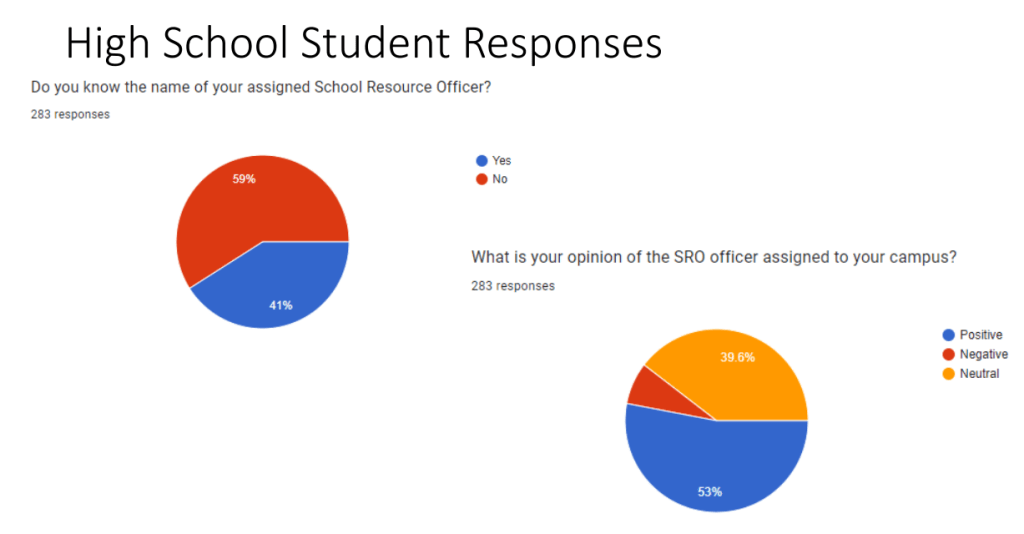
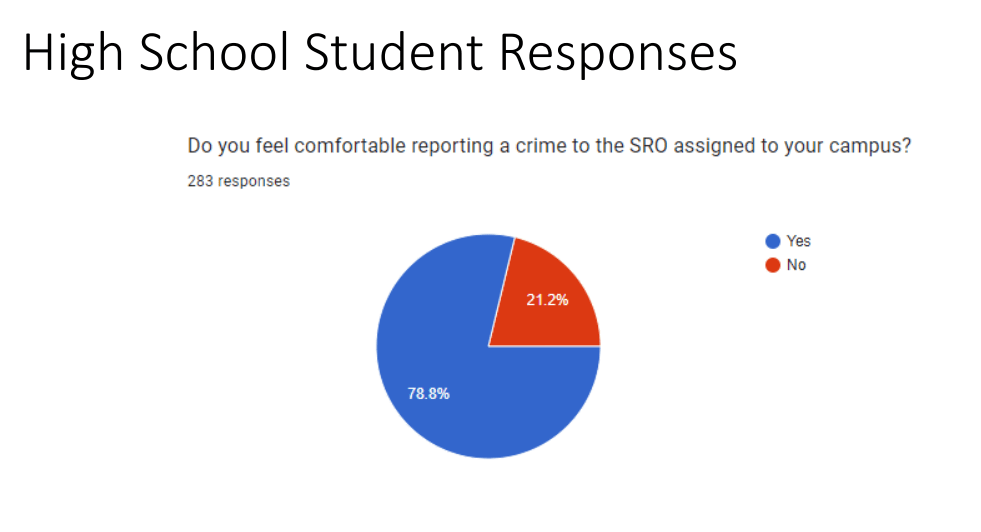
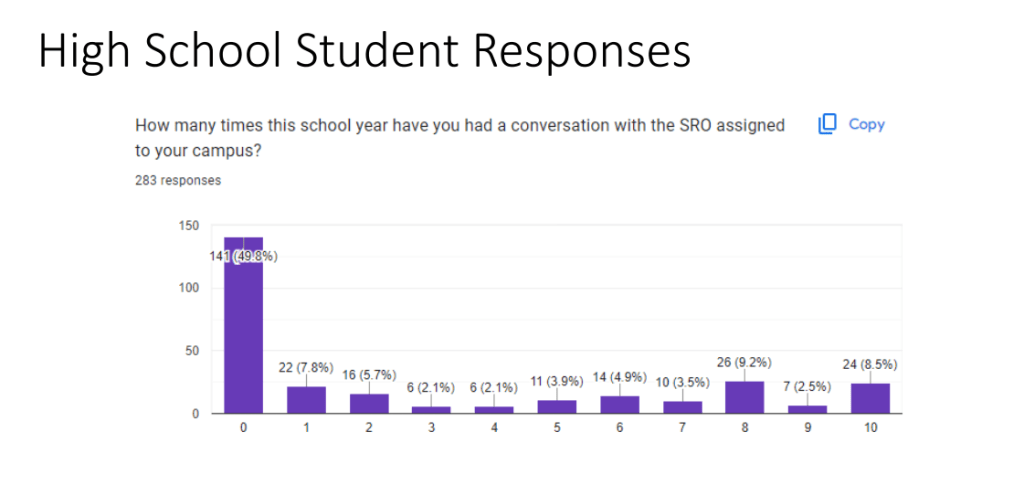
How do middle schoolers at Goodnight and Miller feel about cops in their schools?

How do SMHS students feel about cops in their schools?

How do middle and high school teachers feel about cops in their schools?

So there you have it!

Hours 0:00 – 1:32, 7/2/24

First off: it was Laurie Moyer’s last meeting, after 36 years with the city. Mostly she’s done engineering-ish things, but also some City Manager-ish things. She took all these great City Hall photos on her road trip last year. Congrats to her!

Citizen comment:

  • Two people – Noah Brock and Annie Donovan – talked about the latest iteration of SMART/Axis hijinks. I’ll save their comments for that section.
  • Two people called for a resolution for a ceasefire in Gaza.
  • The San Marcos Civics Club, and how Council passively assumes they can’t solve city problems
  • Mano Amiga’s petition to repeal Civil Service. I’ll save these details for later, too.
  • Finally, the killing of Malachi Williams by the SMPD officer on April 11th. (Discussed previously here, here, and here.)

To recap, the family of Malachi Williams has been asking for:
1. Release the name and badge ID number of the officer that killed Malachi Williams
2. The officer should be placed on leave while the investigation is ongoing.
3. The family should be able to view all officer and storefront footage, with a lawyer present.

Malachi’s grandfather spoke eloquently. This has happened before. But then the City Manager Stephanie Reyes spoke, which is new.

Here’s what Stephanie Reyes says:
– Video material is available for the family to view along with their attorney. It’s at the Hays District Attorney’s office.
– The DA says that neither the family nor their attorney has reached out to view the footage.
– The DA is waiting to discuss how much of the video the family can watch.
– Because this has been so awful, Chief Standridge is putting together an SMPD Crisis Communication Policy for future incidents.
– the DA Kelly Higgins weighed in on the policy. He has concerns about any public release of video while the investigation is ongoing. He wants videos to be withheld until after a grand jury has reviewed the matter.
– the DA knows that the family needs answers. State code authorizes the DA to let the family watch the video. He’s open to conversation with the family.

(I would like a universal policy that applies to all situations. When an officer is killed by a civilian, how quickly does the family see the videos?)

Next Malachi Williams’ grandfather speaks again, which is usually not allowed. “What we have been offered has not had much substance to it. We have not had a fair offer. There’s been an offer, but it’s not fair.”

Alyssa Garza asks, “Was the family offered the entire videos? All the body camera footage?”

Chief Standridge comes up. “The DA and I are offering the family all the body cam footage. But we are not offering the store’s videos. The DA has not agreed to release that. The DA and I will let them see still photos from the store. But the DA has not agreed to store footage.”

After that, the grandfather has a lot of questions and frustration. Council was not really allowed to respond, legally. They redirect him to the DA. He’s already interacted with the DA and is entirely fed up with him.

It ends in a tense place.

Item 23: Another LIHTC project! 

LIHTC projects are low-income apartment complexes which don’t pay local property taxes. We’ve seen two others recently here. (LIHTC stands for Low Income Housing Tax Credits.)
Where’s this one?

And here’s a close up:

They’re planning on having 304 units.  How affordable will these be?  

In other words, this is 46 units for low-income community members, and 258 for regular community members.  (The median income in San Marcos is $47,394 a year, so 85% of these units are regular old market rate apartments.)

Okay, fine. How much is this costing us?

The estimated loss in tax revenue is $3 million over 15 years, or $200K per year.  They’re softening that by giving us a one-time $400K payment. 

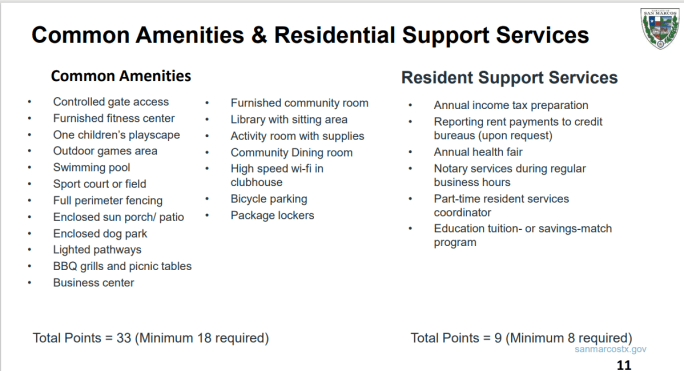
What other services are there going to be? 

[Technical note: There’s some mucking about with the number of 3-bedroom apartments. This complex only has half as many as the city San Marcos requires for LIHTC developments. However, there’s a letter from the Housing Authority about the different waitlists for 1, 2, and 3-bedroom apartments, and 3 bedroom apartments are not in demand as much as 1 and 2, so it’s fine.]

Jane Hughson has some questions:
– Did this area flood in 2015?
Answer: yep. But the buildings weren’t TOO badly damaged.
– Will the complex provide residential shuttles?
Answer: nope. It’s right on a bus line.
– Will the units have individual washer and dryer units?
Answer: yep. 
– Will they have education, services, and after-school tutoring?
Answer: yep.

Alyssa: I’ve heard complaints about restrictions and racially biased access to facilities.  How do you make sure that doesn’t happen?
Answer: We partner with Asset Living. They staff everything and report to us monthly. If something isn’t getting used, we ask them to advertise it.

[I am extremely curious about the complaints of racially-biased access to facilities.] 

The vote: Passes 7-0.

However: Council is going to have big conversation about LIHTC projects in general, at the end of this meeting. Stay tuned.

….

Items 23-24: Kissing Tree 

Kissing Tree is the senior community, way down on Hunter Road and Centerpoint.

Kissing Tree is a TIRZ.  This means they pay taxes, but the taxes don’t go to the city’s General Fund.   Instead they get funneled to side projects that benefit Kissing Tree – mostly building out the public roads and utilities that run through Kissing Tree.  It’s not wasted money, but it doesn’t go to libraries, parks, firefighters, etc.  

Costs have gone up and the assessed value of Kissing Tree has gone up, so they’re re-jiggering all the TIRZ numbers:

This is probably all fine! Before we had estimated that we were sending $32 million over to the Kissing Tree for roads and pumps and parks, and now we’re sending $46 million over. 

Over 15 years, we’re keeping $5 million and giving $46 million back.

Let’s compare this to the LIHTC Project above! In that one, we’re keeping $400K and sending $3 million back.

So to be stark about it:

  1. The LIHTC project is giving us 13% of their estimated property taxes and using the rest to subsidize rents on low-income apartments.
  2. Kissing Tree is giving us 10% of their estimated property taxes taxes, and using the rest on local roads and utilities.

Guess which project makes Mark Gleason uncomfortable? The big reveal later on will not surprise you at all.

….

Item 2: SMART Terminal/Axis Logistics

The SMART/Axis people want San Marcos to annex about 7.5 acres of land for a road and right-of-way. 

Quick backstory (Read more here.)

In January 2023, Council signed a development agreement with SMART/Axis people.  Back then, these agreements happened in one single council meeting, and barely anyone had to be notified.  So Council approved a gigantic fucking 2000 acre industrial park without public input and barely any details, and everyone got super angry about it.

2000 acres is very big:

Like, REALLY big:

The people who live out this way were absolutely livid.  But the development agreement was already signed.

The next step of the process was for SMART/Axis to apply for a zoning change to Heavy Industrial and get annexed into the city.  

What they could have done was meet with the neighborhoods nearby, provide details of the project, build relationships and be good neighbors.  Instead, they met with the neighborhoods and generally acted like supercilious pricks who couldn’t be bothered.  The surrounding community got more and more furious, and launched a major activist campaign against the project. 

Eventually SMART/Axis withdrew their zoning and annexation request. That was last summer. Since then, it’s been quiet.

Here’s my best guess: SMART/Axis didn’t want to share any details because they didn’t have any yet. They literally want free reign to do whatever they want on this land.  They came off as supercilious pricks because they are supercilious pricks.  They assumed San Marcos is a backwater rural town that will fawn over fancy business men and give them whatever they want, in hopes of some dollar bill scraps. City Council was happy to play their role!

That brings us to today – should San Marcos annex some land and build a road along the side of the land?  

First off: Nothing happens today. We are just picking dates for the public hearing and final vote.

However, let’s do some speculation!  This is brought to you by Noah Brock and Annie Donovan, during Citizen Comment. (They spearheaded the public campaign against SMART/Axis last year.) 

Here’s the case that Noah and Annie are building:

  • Is this a major change or a minor change? If it’s a major change, the development agreement needs to be amended. That’s a much bigger deal. (The city is saying this is a minor change.)
  • Originally, the roads lined up with the end of Quail Run. That was the edge of the whole project. But since then, the developer has bought more property, and asked Caldwell County to move some roads over.
  • It seems clear that they’re expanding the project beyond the development agreement, and this new land is right next to a residential area. 
  • This new ROW annexation is consistent with a bigger, changing project.

The basic problem is that SMART/Axis people are super secretive and seem to want to walk all over us.  Maybe they’re sweet little bunnies at heart, or maybe they want to do some toxic battery mining or who knows what.  They act like shitty neighbors every time they have a chance to right the narrative.

Today’s vote was just to set the dates, and here they are:

  • Public hearing will be on August 5th
  • Final vote will be on August 20th

….

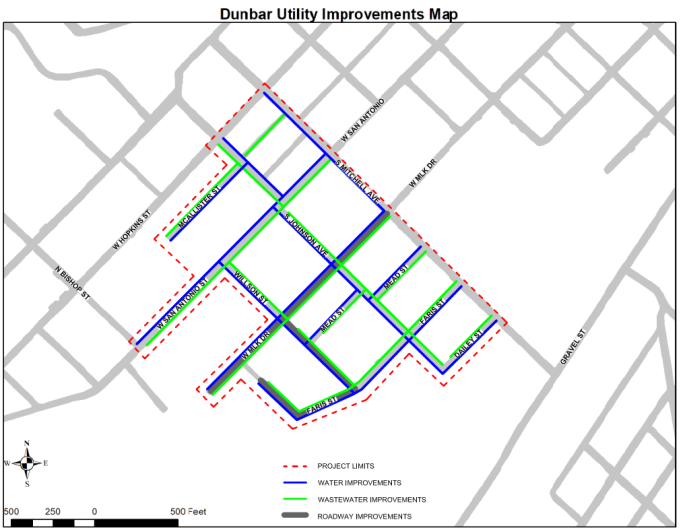
Item 25: Dunbar is getting some new pipes!

We’re spending $6 million on water and wastewater improvements here:

If you go here and scroll to Dunbar Water and Wastewater Improvements, you can keep an eye on the project. 

Supposedly will be done by August 2026.  So at least two years of dug up streets and annoying construction, but with a worthwhile payoff. 

Item 27:  Installing sports lighting on six soccer fields at Five Mile Dam.

This money was authorized awhile ago, this is just the contract to make it happen.  It’s about $1.3 million.

Hours 0:00 – 2:06, 6/4/24

A solid hour of citizen comments to kick things off!  

Nearly everyone – 17 speakers – spoke about the issues of Malachi Williams’ death at the hands of SMPD, and calling for a ceasefire resolution for Gaza.

Malachi Williams: backstory here.

The family and activists are calling for three things:

  1. Release the name and badge ID number of the officer that killed Malachi Williams
  2. The officer should be placed on leave while the investigation is ongoing.
  3. The family should be able to view all officer and storefront footage, with a lawyer present.

It sounds like the chief has offered to let the family watch some of the footage, but not all, and is denying the request to have their lawyer present. That’s pretty goddamn outrageous that you would ever require someone to forgo a lawyer in a legal context.  (They don’t have a right to a lawyer, because nobody is under arrest or anything, but plainly it’s what’s fair.)

A lawyer would be able to inform the family about what Chief Standridge is legally able to do, and what he can’t, and a lawyer can advise the family – on the spot – on what’s in their best interests. If a lawyer isn’t there, then Chief Standridge is the authority on what Chief Standridge is legally able to say and do. See the problem?

Resolution for a ceasefire:  

The activists didn’t just make this up on a whim. This is what’s going on all over the country.  They’re working on it in Austin, where they ultimately got fed up and passed a People’s Resolution instead. They’re working on it in San Antonio, which also got stuck. There haven’t actually been any cities in Texas that have been successful, but here’s a full list elsewhere.

There were a few other speakers:

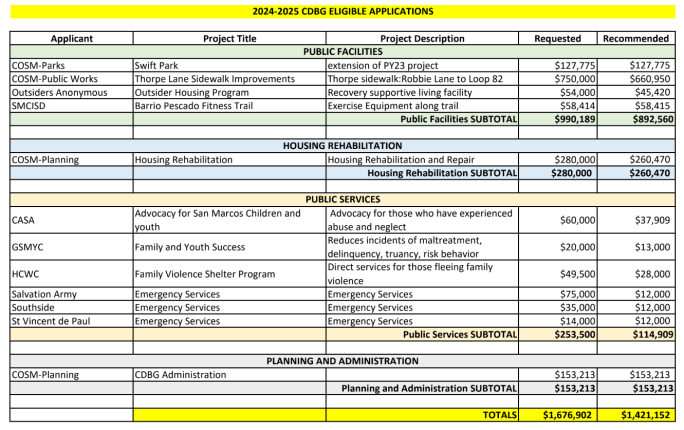
  • One guy from Outsiders Anonymous shows up to advocate for their gym/treatment center during the CDBG grants item. (We ended up funding them at about 80% of what they asked.)
  • One speaker talks about her adult child with disabilities. There’s no day center in San Marcos anymore, and he commutes to New Braunfels.

We absolutely should have a day center for adults with special needs. I’m super uninformed on this topic, but it’s definitely part of serving the needs of your community.

But let’s talk about the other part: there’s no public transportation to get back and forth between San Marcos and New Braunfels.

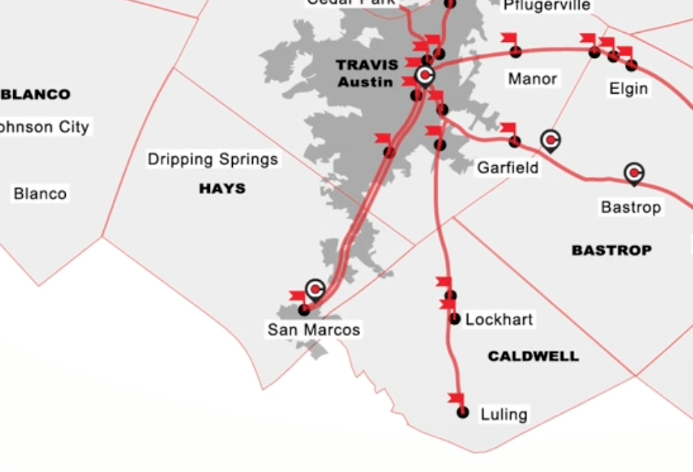
Here’s the problem: we’re on the southern tip of the Austin Cap Metro service area:

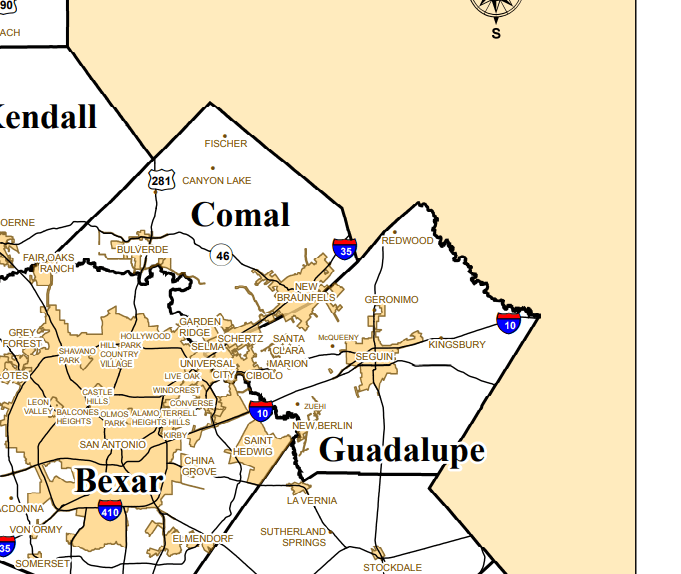
New Braunfels, Redwood and Seguin are on the northern edge of the San Antonio Alamo Regional Transit:

And the two systems don’t overlap or coordinate on their boundaries, so there’s just this cliff dividing San Marcos from its neighbors:

Puzzle pieces! (I had fun making that picture.)

Suppose you use the shuttle service because of your physical disability. How are you supposed to get from Redwood to San Marcos? There are a lot more mental health resources in New Braunfels than in San Marcos, but only if you’ve got the means to get yourself there and back.

Listen: Seguin, New Braunfels, and San Marcos need to triangulate on some shared public transit along I-35 and 123. Austin Metro is not meeting our needs here.

Item 9: Community Development Block Grant applications, 2024-25

HUD gave us $766K this year to give away, and we’ve got $639K rolling over from last year. So total, we’ve got about $1.4 million to give away.

First off: we have $639K leftover? Out of $712K that we were awarded last year? What on earth happened?!

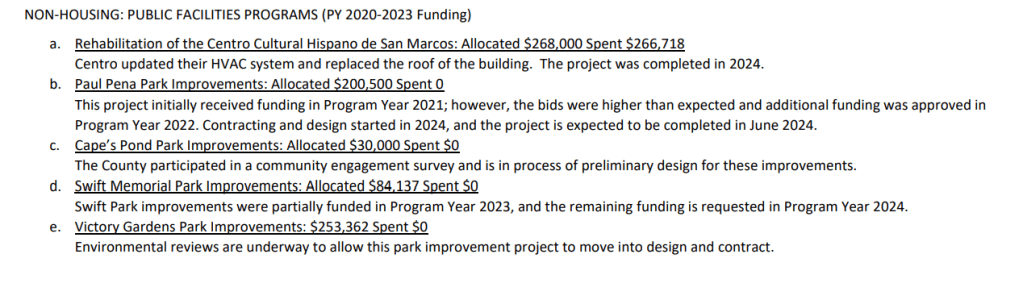
It turns out that it rolls over from year to year, and there are project delays. It’s spelled out in the report here:

So the first two categories – Housing Programs and Public Facilities – are really falling short.

Alyssa Garza asks about the Housing Rehab program?

Answer: Housing Rehab had $800K from CDBG and $800K from ARPA, for a total of $1.6 million. They are running seriously behind. Currently there are 30 houses with bids in place. Five are under construction and 25 are pending, and that will use up the funding.

Alyssa also asks: Can we hire lawyers to help homeowners with title problems? (This is mentioned under the Home Demo program above – “Properties with sub-standard structures also tend to have ownership issues”.)

Answer: We mostly rely on volunteers, because Texas Rio Grande Legal Aid tends to be so backed up.

Alyssa: There are free legal aid programs at St. Mary’s and UT-Austin that have offered to help.

The staff is vaguely friendly about this suggestion, but not in an “omg I’ll do that tomorrow” kind of way.

In the end, they decide to put “paying for a lawyer” on the list of side-projects that can be consulted when there’s a loose bit of money that suddenly becomes available.

Onto 2024! Here’s the criteria that we use:

(For what it’s worth, I don’t love the Council Priorities. I think they risk creating perverse incentives.)

Moving on! There was one ineligible application and 11 eligible applications. Here are the recommended funding amounts from staff:

Anyway: Council does not make any changes.

I believe this is just a first reading, so if you’ve got advice for Council, you’ve got another chance at the July meeting.

Items 10-11: Kissing Tree

Kissing Tree was approved in 2010. It’s a PDD – “Planned Development District”. This means the city got to micromanage every last detail of the whole project, and put it in writing, in a contract.

[Quick primer on PDDs: They’re a mixed bag. You can spell out exactly what will be built, but you can also waive a lot of regulations that the developer doesn’t like. In general, PDDs are only as good as the Council that negotiates them.

We got rid of them in 2016, which was an unforced error and I’ve complained about it a lot.  Then recently we brought them back again. So now the city has the ability to lock things down again.]

Here’s where it is:

You know, this thing, out on Hunter Road and Centerpoint:

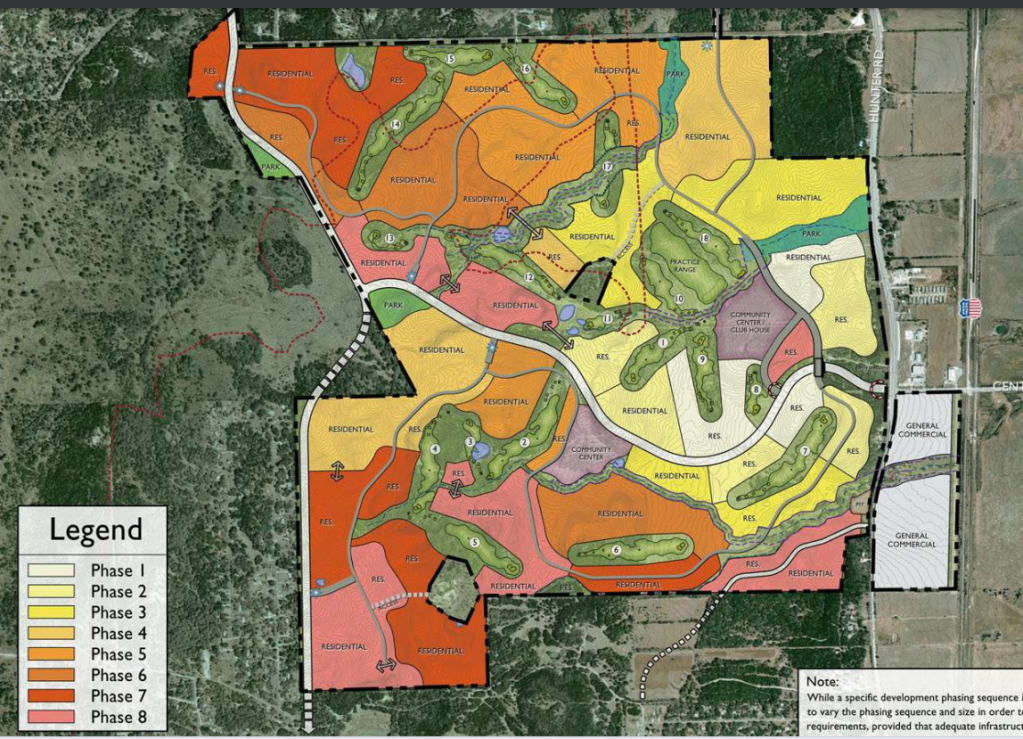
Here’s the original plan:

So, a lot of homes around a lot of golf course. (To their credit, they use reclaimed water on the golf course.)

That map has not been updated since 2010, so I have no idea how much has been built out already.

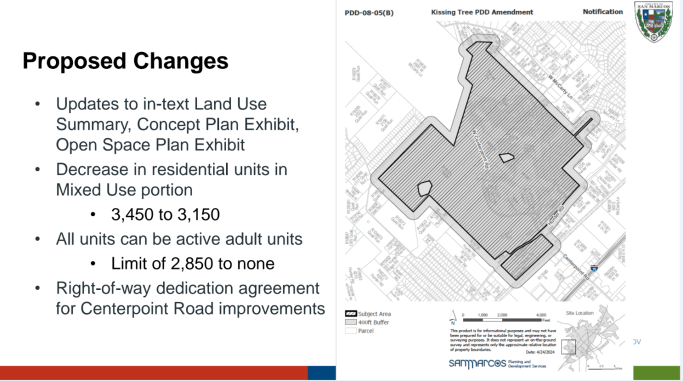
Kissing Tree wants to modify their PDD, so they have to go back to Council.  Here’s what Kissing Tree wants to do:

“Active Adult Units” means senior housing. 

In other words:
The original plan is for 3,450 units:
– 2,850 were senior housing
– 600 were available for everyone else.

Now they want build 3,150 total units:
– 3,150 for seniors
– 0 available for everyone else.

It’s not that big a deal – I’m sure this is more profitable for them now – but I’m irritated that no one provided an explanation or talked about consequences.   In fact, Council talked about it for roughly 30 seconds, and this was the entire exchange:

Shane Scott: “This is a great example of why PDDs are so useful. We got rid of them, and we should bring them back.”

Jane Hughson: “We are bringing them back. We’ve discussed this.”

Shane: “Was I here for that?”

Jane: “I think so?”

SMCISD gets kind of affected by this kind of decision. The problem is that San Marcos is lopsided – we need more families to balance out all the non-family tax base (ie the university, the outlet malls, and things like Kissing Tree.) From time to time, we get dinged under the state’s Robin Hood law and have to send money back to the state for poorer districts, despite being a Title 1 school district ourself. It’s a complicated mess.

But just remember: Texas squandered a $32 BILLION dollar surplus last legislative session.  This was sales tax money – from all Texans – which got sent back to property owners. We literally took money from renters and gave it to home owners.

There is plenty of money in this state to fund all schools properly. We just need to elect a governor and legislature that wants to do so.

….

Item 12:  Good news on the Water-Wastewater Treatment Plant front!   

We’re getting a new centrifuge:

and a diffuser replacement in aeration basin:

We promise not to spend more than $6,716,477.45.

And a very special San Marxist shout-out to the kind soul on city staff who put these photos in the powerpoint presentation!

These slides didn’t even get shown during the meeting. I see you, I appreciate you.

Item 16:  We are meekly opening the door for the possibility of maybe someday, beginning a conversation about paid parking downtown.

This is such a tentative baby step that there are no details or decision points yet.  We’re just strapping on our sun bonnets, lacing up our sneakers, and sizing up the path ahead of us.

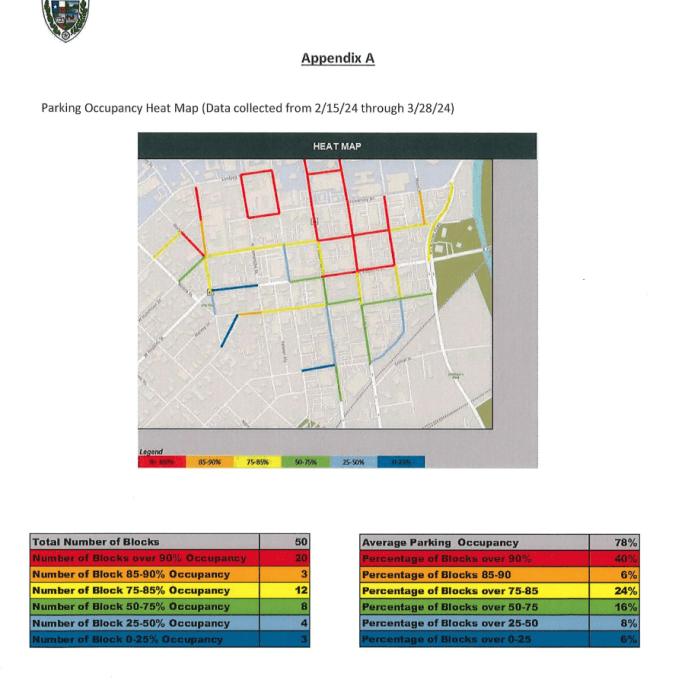
I did think this heat map was interesting:

That map is pretty unintelligible; here’s my attempt to improve:

This is only measuring parking – not traffic congestion or anything.

Here’s what the colors mean:
20 red blocks: street parking is generally over 90% full.
Three orange blocks: street parking is usually 85-90% full.
Twelve yellow blocks: street parking is usually 75-85% full.
Eight green blocks: street parking is usually 50-75% full.
Four light blue blocks: street parking is usually 25-50% full.
Three dark blue blocks: street parking is usually under 25% full.

It was a very short meeting!