Hours 0:00 – 1:56, 12/17/24

Citizen Comment

These were very interesting! 

Topic 1: Two speakers (Noah Brock and Annie Donovan) unpack part of Item #16 for us. 

Item #16 is about the Texas State Legislature. San Marcos lobbies the state government on various municipal issues. So we have a list of guiding principles.  

Here’s one of those items on the list:

I’m going to start with quoting Noah, because this is gold. First he reads that bullet point above. Then he says:

“This is a very specific location that’s called out in this guiding document.  The wording sounded familiar.  So I looked up what the last principles document said, in November 2022:

link

“They just replaced the words “SMART Terminal” with the location. So I went a little bit further, back to 2020. The document said the following:
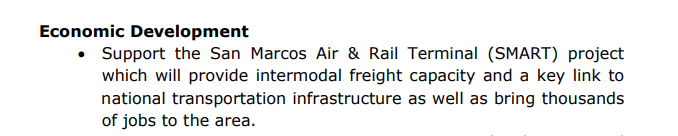
link

“Then I went even further, to 2018, where I found the origin statement:
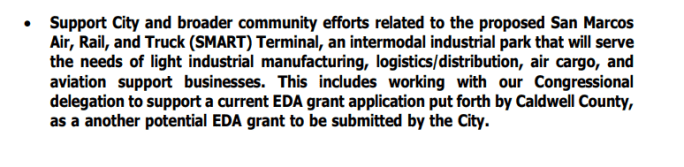
link

“Is it the city’s goal to develop an intermodal freight facility at this location? It appears that the original idea was to support light industrial manufacturing with a connection to the airport. Now we have a heavy industrial park that can stack containers 80 ft high, with no connection to the airport. 

Why does the wording keep changing to fit a developer’s current project? Isn’t a guiding principle supposed to come from the city, and not a developer?  

Do you remember when the city council voted unanimously to approach the developer of this project and change the development agreement, because the people did not support it, on May 2, 2023?   I would like to see a motion to remove this item from the document in its entirety. Thank you.”

So yes! In our packet of “what’s best for the city” we have a line item which is carved out specifically to be “what’s best for SMART/Axis Logistics”.  Verrrrrrry interesting. Stay tuned.

Topic 2: HSAB is the Human Services Advisory Board. The city allocates $550K in grants to nonprofits, and the HSAB awards the amounts.  There are a few comments here:
– The chair of the HSAB pleading that this amount of money is nowhere close to the need in the community
– A speaker on behalf of the Salvation Army, about how they weren’t funded as they’ve been in the past.

This will be unpacked in Item 15.

Topic 3: This place:

It’s on LBJ, at the train tracks, across from Toma Taco.

The city leases the property to Ruben Becerra, the Hays County Judge (which is not a “judge” so much as being like the mayor of Hays County.)  This speaker is super angry about this! 

We’ll get to the backstory on this property – Item 10 – but I still have questions.

Item 5:  Return of Evoke Wellness, for the final $50K of Covid Money.

This last bit of Covid money is going to the mental health program partnership between SMPD and Evoke Wellness, for people needing substance abuse treatment. (The county also works with Evoke Wellness.  This is part of a larger, semi-coordinated program to keep people with mental health crises and/or substance abuse out of jail.) We discussed this last time, too.

Amanda: How does this program work? Walk me through it. 

She basically wants to know all three parts:
1. how do people in crisis end up at Evoke Wellness?
2. What happens when you’re there?
3. What happens after discharge?

Part 1: how do people in crisis end up at Evoke Wellness?

First, SMPD responds to a call for someone in crisis. First, if they need medical help, SMPD will take them to the hospital. (Probably Christa Rosa).

If the person is stabilized but having a mental health crisis, SMPD tries to try to find out if the person has insurance or not. If so, then we try to find a facility that accepts their insurance. They’ll take the person to the treatment facility.  It might not be in San Marcos – could be Austin or San Antonio.

If they have no insurance or financial means, then once they’re stabilized, we give a mental health evaluation, and figure out what they need. Then we take the person to Evoke Wellness (for substance abuse) or Hill Country Mental Health.

Part 2: They’re at Evoke Wellness

No one from Evoke Wellness was on the line at the meeting, to talk about the services they offer there.  Amanda asked if we could have a workshop from them to hear about what their services are.  Everyone is on board with this.

Part 3: Discharge after Evoke Wellness

When they get to the treatment center, they start meeting with a case manager. They’re working on a discharge plan from day 1.

There are a few options for after they’re discharged:

  • Reconnect with safe support system, if that exists. Either the center, family, or mental health officer will give them a ride there.
  • Longterm treatment: may discharge to Sober Living, they may go to partial in-patient, several different places to go.

Amanda asks: What if someone has zero support services and zero resources? 

Answer: Then the case manager has to get to work.  Find shelters available. For example, Hill Country has an in-patient crisis stabilization unit in Kerrville. They’re in-house and have a big list of resources.  We make sure there’s a bed available at a destination shelter. The case manager is going to put together a plan to try to make sure the person does not end up homeless.

How many people are we helping?

Total, San Marcos is putting $150K towards Evoke Wellness, and Evoke Wellness is also providing 5 scholarships this year.

Chief Standridge says that costs vary wildly, depending if the person needs in-patient or out-patient treatment. But on average, $17K/person is a reasonable estimate.

So we can ballpark this: $150K plus the 5 scholarships helps about 10-15 people per year.

Alyssa asks: What kind of metrics do we have to assess how this is working?

Answer: We’ve got tons of internal statistics, but we’re not yet coordinating well on the county level, in order to get stats on the full scope of the issue. This is one of our big goals, though.

….

Just a quick soapbox: It is a moral obligation to help the most vulnerable people in society.  It does not matter if they made bad choices. Someone living on the streets with mental illness and/or substance abuse problems is being failed by society. And big problems cost a lot. 

But big problems can also be prevented! If we invested more heavily in prevention – early childhood support, family support, increase the living wage, increase housing, effective addiction prevention programs – it would be cheaper than working to solve big problems once they take root, on an individual basis. (And that’s not even counting the value added to people’s lives, for not being derailed by catastrophe.)

Can San Marcos afford to do all this properly on our own? Of course not.  But the state could! Texas had a $33 billion dollar surplus in 2023, and we’re projected to have a $20 billion surplus this coming year.  

Will Texas spend it on making a fair and just society??? (no.) Stay tuned!

Item 10:  We’re back to this cutie little place:

I think right now it’s called Las Dos Fridas.

Before that, it was Katz’s On the Go Cafe:
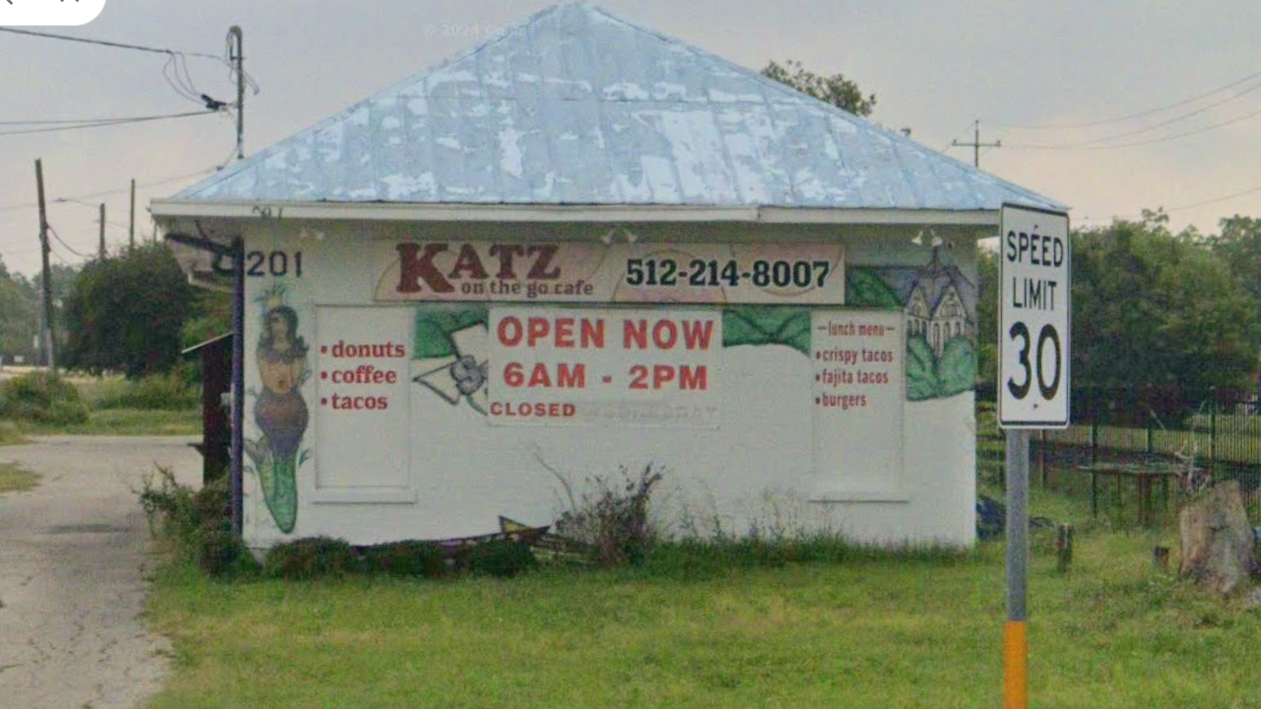
Before that, it was Santi’s Tacos:

And before that, Dixie Cream Donuts:
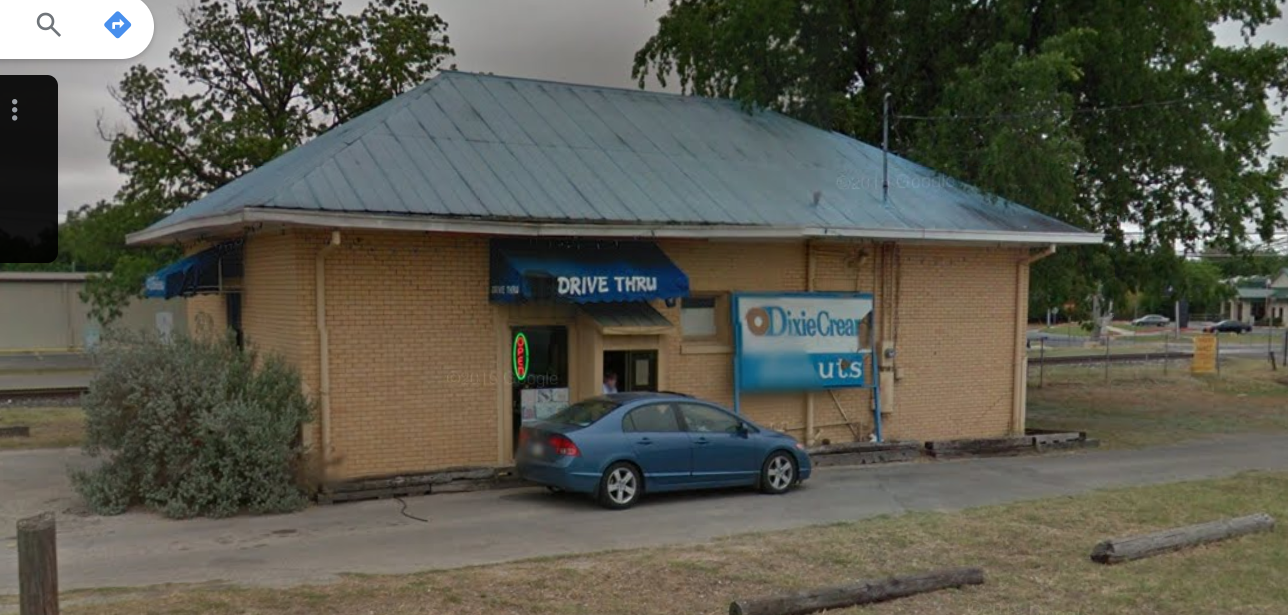
Ok.  Back in 2013, Union Pacific railroad offered to sell San Marcos four properties:

We agreed. (We hoped this property might someday be a good train station on the Lonestar Light Rail connecting San Antonio to Austin.  That’s what I dream about at night, at least.)

Now, Union Pacific sold the land to San Marcos in 2013, but not the physical little building.  The building was owned by Dixie Cream Donuts.  

Furthermore, look at that red border – the border runs right through the building!  So weird. They carved the Dixie Cream Donuts building, half on Union Pacific land, and half on San Marcos land.   (We even asked them about it at the time: “why not run the border around the building? It can be all UP, or all SM. We don’t care.”  

Union Pacific said, “nope.  We do this all the time.”  Okay then!)

At some point, Dixie Cream Donuts sold the building to Ruben Becerra.  So Becerra now owns the building, and leases the land underneath it from both Union Pacific and San Marcos.  He then sublets it to Las Dos Fridas.

No one is very excited about extending this lease to Becerra. This would just be a mini-extension, to match the sublease to Las Dos Fridas. It would expire in January 2026.

Council decides this is very thorny, what with Becerra being the Hays County Judge and all.  Council says cryptic things like, “I need to be able to give an answer when my constituents ask me what on earth is going on.” 

They decide to postpone until January. 

What happens if we don’t renew this lease? It’s not clear! Becerra still owns the building, he could in theory move it, although it’s probably not structurally sound.

The vote:

Yes, postpone until January: Everyone except Matthew Mendoza.

No! Let’s settle this now! Matthew.

I have no idea why Matthew wanted to settle it now. I don’t even know which way he wants it to go!

Item 14: New flood maps.

Ok, FEMA has been working on our flood maps since the 2015 floods. The old flood maps were based on 1990 data, so this is very much needed. The new maps are called Atlas 14.
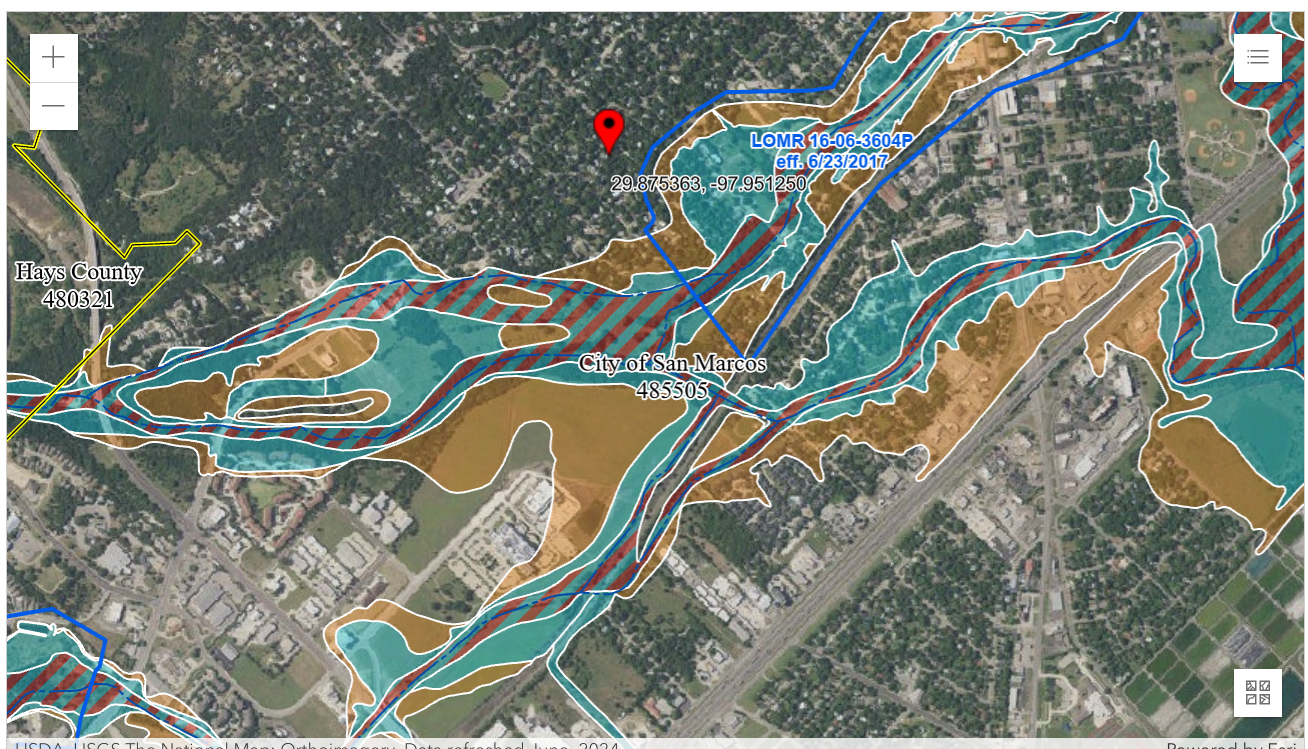
Here’s how much city land is now in a flood plain:

So about 800 new acres of San Marcos are now in the floodplain. We don’t know how many homes and businesses that is, though.

So if you’re now in the floodplain, what changes? There are two main things:

  1. Building codes: the city has stricter ordinances if you’re building in a flood plain.

Old buildings don’t have to be retrofitted, but any new buildings or additions have to meet flood plain standards. (Like being raised off the ground.)

This isn’t actually a new change – the city has been using the Atlas-14 data since 2017 in our ordinances.

2. Flood insurance rates for home owners.

This is part of a much bigger, larger problem. “Flooding is the most frequent severe weather threat and the costliest natural disaster facing the nation.” Even when insurance providers pull out of high risk places like Florida and California, everyone can get insurance because there’s a federal program called the National Flood Insurance Program.

The problem is that floods are really, really expensive. So flood insurance rates for people in a flood plain are very expensive. Many people can’t afford it, and go without. This causes two more problems:

  • Rates go up even more for everyone else
  • NFIP still doesn’t have enough money to give out in case of flooding.

It’s a giant mess. It’s even worse when you think of the historical context in a place like San Marcos: wealthy people built their homes uphill, and left the downhill places for poorer neighborhoods. So it’s the people in Blanco Gardens and Victor Gardens and Dunbar that live in floodplains and have to debate flood insurance, not the University or the Historic District.

So how much are rates going up?

Amanda Rodriguez cites a study from Rice University about flood rates rising.  (I think it’s this one.)
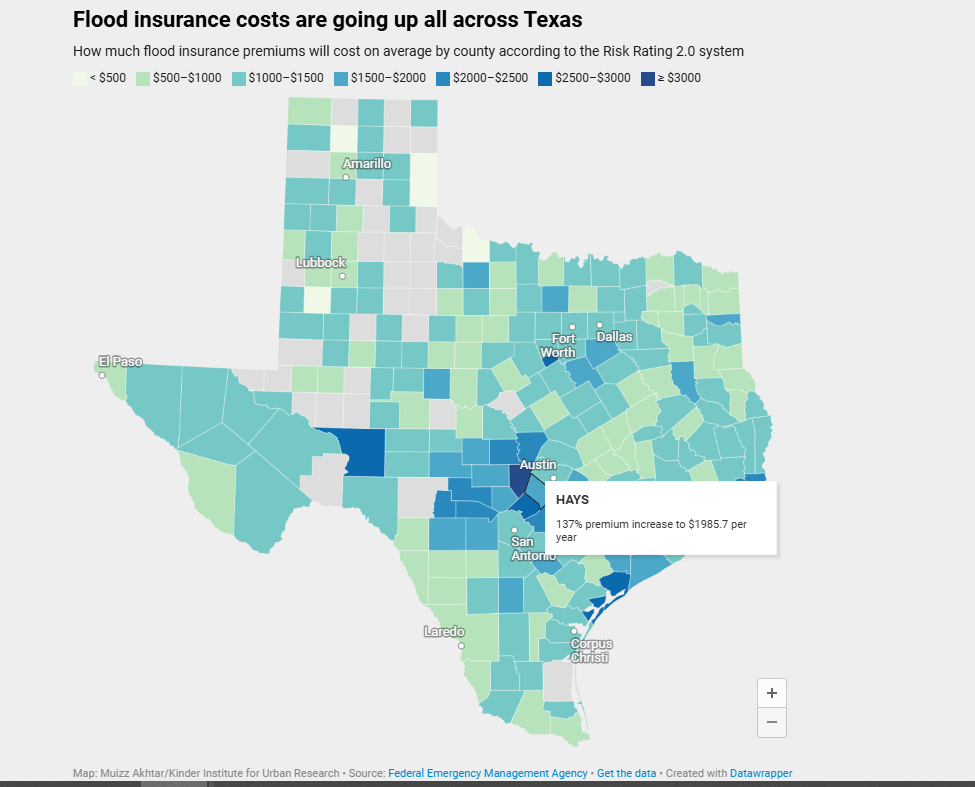
So rates in Hays County are projected to go up 137% increase. (Legally, the increase is capped at 18% per year. So over the next 5-10 years, your premiums would step up to cover the increased risk.)

Mark Gleason weighs in.  He has a lot of lived experience with floods, particularly because he got hit hard in Blanco Gardens in 2015.  

His main points:

  1. The National Flood Insurance Program is broken.
    • San Marcos is a member. This gets us a 15% discount, but subjects us to FEMA rules about rebuilding.
    • Premiums are unaffordable so people go without. Then disaster hits and they can’t afford to rebuild, and sell at low prices, and fancier housing gets built. (Yes.)
  2. If you’re in the floodplain now, you don’t have to retrofit your current home or business. But anything new, or an addition, has to conform to floodplain development standards
  3. If you own your home outright, you’re not required to purchase flood insurance. 
  4. But everybody SHOULD get flood insurance. It’s very cheap if you’re not in the flood zone

Mark’s solution: Feds need to come in and fix the Blanco River. It needs some sort of flood control. It’s cheaper to fix the Blanco than it is to raise homes. 

Jane: What about the San Marcos river and Purgatory Creek? Historically, those flood, too. It’s not just the Blanco.

Basically, no one could possibly have any good answers. Mark certainly doesn’t know what it might take to fix the Blanco. None of us know what it would take to fix the flooding. None of us know the extent to which climate change will make things worse. We are all just kind of holding our breath and hoping.

Hours 0:00-1:20, 12/19/23

Citizen Comment:

People talked about:
- Funding for rehabilitating various buildings in Dunbar
– Whether we really want to change the name of Citizen Comment to “Community Perspectives” or not.
– Concerns over police accountability
– How Mark Gleason got a letter of admonishment from the Ethics Review Commission, for voting on items where he should have recused himself. Specifically, he voted on the meet-and-confer contract for the fire fighters union, after receiving several donations of different sorts from them. (Details here but all you can do is watch a video. There are no minutes or documents.)
– Max Baker is starting a monthly San Marcos Civics Club, to get the public engaged and hold City Council accountable. (I imagine you could reach out to him on Facebook if you’re interested, and he’d be glad to have you.)

Item 1: We have a Sidewalk Maintenance Program.

Basically, the city looks for places where people are complaining, or there are pedestrian traffic accidents, or underserved areas, or high pedestrian traffic areas.

This is the type of thing they do:

Here’s what’s going on for the next year:

The five year plan is a little more loosey-goosey and responsive to changing needs, but here’s the tentative map:

If you have strong opinions, share them here.

What does Council think?

Jude Prather: there’s been a lot of improvement to our sidewalks. Let’s keep the gas pedal on.

Shane Scott: It happened outside my shop. They were really careful about the tree roots.

Mark Gleason: It happened to me! They laid the sidewalk today. They were very professional and they were careful of my trees.  Added convenience and safety. 

Mark Gleason does have one suggestion, which is that the city should use goat paths to identify potential places for new sidewalks.

I think he means this kind of thing, where over time people have worn a little path:

via

I’ve heard these called Desire Paths.

Alyssa: Great job. One of my neighbors posted about their really positive interactions with the city.  

Jane: We started thinking about sidewalks in 1992, we said “schools and grocery stores.” So we’ve come a long way. 

One issue is how to add sidewalks to streets where we don’t have a right-of-way. In other words, how do we build a sidewalk in a high-needs spot, where the city doesn’t own an easement along the road? Jane asks about this.

Answer: It makes it a bigger project than the Sidewalks Maintenance Project. We have to collaborate with Public Works. It goes on the CIP list.

My two cents: We need sidewalks running out to the high school. I know it’s far away, because that’s where land was cheap enough to acquire. Do not put a bike lane that feels like part of the street down 123 – put in a proper sidewalk. All the way to the high school. (And do it now, because a lot of that empty land is zoned for housing and apartments, and putting sidewalks in will get even harder.)

Item 18: Flood money.

After the 2015 floods, we got a big chunk of CBDG money from the federal government. It comes in two flavors:

  • Housing assistance
  • Stormwater projects

For Housing Assistance, we built 14 homes and repaired some of the public housing homes on CM Allen. (We discussed a few of these homes last year, being built in Sunset Acres.) 

It’s depressing that it took eight years to get these people into safe housing.  I think the main reason is that there were five rounds of funding, and so those from the first few rounds got their housing sooner. Plus I’m sure there were Covid delays, and some of it was generic government red tape. The last few houses remaining were finished this past year. 

Three applicants withdrew in 2022 and 2023, and at that point it was too late to get new applicants, and so the housing portion came in $1 million under budget.

On the stormwater projects, we’ve got:

  1. Uhland Road Improvements:

This one finished up in the fall.

2. Midtown Drainage – Aquarena Springs and I-35

This one will finish in April 2024.

3. Blanco Riverine: Berm and Floodwall

This one is supposed to finish in June 2024.

We discussed this one briefly back here. It’s a really big project:

and it’s supposed to do this sort of thing:

Basically geo-engineering a place for the water to go when it floods, instead of going into Blanco Gardens.

4. Blanco Gardens Drainage Improvements

This one is supposed to finish in August 2024.

The point of today’s presentation is that as some of the projects wrap up and have a little money leftover, the money gets shuffled around to the other ones that are still ongoing.

There are some other projects that will take a little longer to finish:
– Acquiring land for flood prevention
– Electronic rain gauges that are tied into the flood warning system
– 3 sets of permanent flood gates: Cape Road, McKie Street, and Jackman Street/Gravel Street.

This is all supposed to wrap up by 2027.

What does City Council have to say?
Saul: On Barbara Drive: what kind of drainage? Looks different than Conway.
Answer: It’s the same as on Conway. They’re both Open Channel. 

Saul: Is it dangerous for kids?
Answer: Velocities should be slow. Will have gates. Won’t have easy access.

Mark: I was personally affected by all the flooding. We’re still dealing with the ramifications. 

Mark has a few questions:
– Will the new raingauges be integrated with the WETmap website on the Hays county website?
Answer: Yes.
– Will emergency info/river flood data be shared with NOA?
Answer: I assume so but I don’t know for sure.
– When will rain gauges be done?
Answer: End of 2023, but they’ll be tinkered with in the Stormwater Master Plan.
– What kind of gate are you using for gating off those channels?
Answer: Single arm.
– So people are losing access to these alleys in Blanco Gardens. Are they aware?
Answer: we sent notifications and knocked on some doors. 

 Shane Scott asks the hard-hitting questions: What about Quiet Zones for trains?
Answer: That’s a totally different topic.  Different grant money.

Alyssa: I was also in Blanco Gardens during the floods.  As projects wrap up, can we get back to the people in these neighborhoods? We need to explain that we’re working through issues and they haven’t been forgotten.
Answer: there will be ribbon cuttings, etc.

Saul: A neighbor said they’ll only be allowed to have 1 cable.  Is that true?
Answer: Yes. There are 3 telecom companies. Time-warner/Spectrum, Astound/Grande, CenturyLink/Brightspeed.  Two of these pulled out of Blanco Gardens. So you basically only have Spectrum. 

This is just a discussion item, so there’s no vote.

Item 19: There are some toxic chemicals under Guadalupe. (We talked about this here a few months ago.)

Short version: there’s a bunch of groundwater toxic chemicals – PERCs, TCEs, VCs – deep in the ground, leftover from some dry cleaning businesses 40+ years ago.  They’re really not good, but the chemicals will break down over the next 100 years into carbon dioxide, a little chlorine, and water, which are not so bad.  They’ve basically sunk down way underground, into this stuff called Navarro Clay, which is a super thick gunky layer that just sits there underground, above the water table of the aquifer. So we can’t really clean it up, but they’re also not going to get into the river or the aquifer water table. We mostly need to leave them untouched until they decompose.

Here’s the three properties we bought, at the site of the original contamination:

The official way to let the chemicals sit there is to set up a Municipal Settings Designation, or MSD:

In this region, no one can drill any groundwater wells. You already can’t, because it’s within city limits, but now you EXTRA can’t.

We notified anyone who has a private well within 5 miles of this site. That worked out to 109 well owners. None of them seemed particularly concerned.

The vote: should we create an MSD?

Yes: everyone
No: No one

Hours 0:00-2:54, 11/1/22

Citizen comment: A ton of people turned out from Pick-a-Pet to fight the puppy mill ordinance. Mostly customers, with one or two employees.  Their main talking points were:

  • We love our pet so much!
  • The employees love animals so much, and the atmosphere is so nice and caring there!
  • Sometimes you just want a pure-breed, right?
  • Why do you want to close down this nice store?

These people seemed earnest, but the arguments above are all bunk.  You can have really loving, sweet employees and still buy your puppies in bulk from Minnesota farms with 3000 puppies and atrocious conditions for the breeding dogs. None of these things are dispositive.

Also, under the proposal, you can still buy your favorite pure-bred dog from a small scale breeder, where you can tour the facilities and admire the happy, handsome parents of your new doggo. And this nice store with loving employees can pivot to selling pet supplies and offering pet adoptions, like PetSmart does.

Another talking point is: 

  • We’ve been open a year, and none of our pets have ended up at the shelter, so we’re not making the stray animal problem worse!

This is also not really the point. The point is the puppy mills.

The speakers were pretty over-the-top with the mushiness. Their pups have transformed their families from bleak grayness to shimmers and sequins, and brought happiness to their little girls for the first time in their Dickensian existences. Only pure breeds from pet stores can bring little girls that kind of feels.

Stay tuned – we will hash out this ordinance thoroughly in Hours 4:00-5:08!

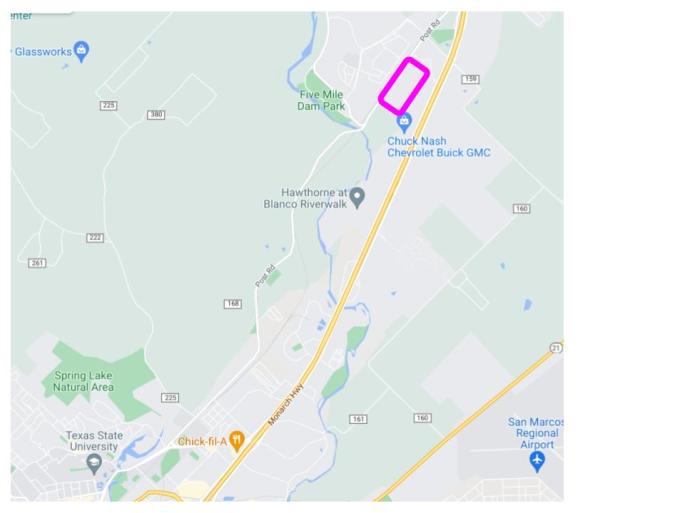
Item 16: About 40 acres near 5 mile dam:

It’s going to be apartment complexes.  It had been zoned General Commercial, and now it’s CD-4, which can mean a lot of things. But they openly admitted that it’s going to be apartment complexes.  

Should we apply our favorite criteria?

Housing stock: How long will it take to build? How much housing will it provide? What is the forecasted housing deficit at that point? Is it targeting a price-point that serves what San Marcos needs?

  • Pester the Planning Department directors to start providing an ongoing, updated needs assessment. We need to know this.

Environment: Is it on the aquifer? Is it in a flood zone? Will it create run-off into the river?Are we looking at sprawl? Is it uniformly single-family homes?

  • Not on the aquifer. Not in a flood zone. 
  • A teeny bit of sprawl, insofar as Blanco Vista is already isolated and sprawly. But it’s not making Blanco Vista any more sprawling. It shouldn’t require much in the way of utility extensions.
  • Apartment complexes are pretty environmentally friendly, because they’re efficient.

Social: Is it meaningfully mixed income? Is it near existing SMCISD schools and amenities?

  • Not meaningfully mixed income. That’s my biggest gripe about big apartment complexes – it’s not good for a community to be economically segregated.
  • On the schools: Blanco Vista got a special carve out to be part of Hays CISD instead of SMCISD, even though they live in San Marcos. This kind of chafes, for a few reasons. First, because people disparage SMCISD for racist and/or classist reasons, and so Blanco Vista deserves a bit of side-eye for wriggling themselves out of district. (And whoever was on city council back then, too.)

    Second, SMCISD is always weirdly close to getting forced to send money back to the state under the Robin Hood law, which is supposed to even out rich school districts and poor school districts throughout Texas. I’m not totally clear on the details, but it’s something like SMCISD needs families to balance out the university/outlet malls/non-family parts of San Marcos. So SMCISD particularly gets screwed when neighborhoods like Blanco Vista and Whisper Tract are in San Marcos but not in SMCISD.

    That die is already cast, though. This particular apartment complex is in Hays CISD.

The San Marxist Special: Is it a mixed-income blend of single family houses, four-plexes, and eight-plexes, all mixed together? With schools, shops, restaurants, and public community space sprinkled throughout?

  • Nope, not that at all.

So is this good or bad? It’s mixed.  More affordable housing is good. General Commercial would have been good as well, except developers seem to be too timid to build the retail that people need to have near their homes.

Item 17: I listened to this when it came through P&Z on October 11th.  This one is fascinating.

The 2015 floods destroyed a lot of homes.  Three years later, 12 of those families were awarded CBDG grants to build new houses.  Of those, 9 families are now in new homes. The CBDG program either built new homes for them on new lots somewhere in San Marcos, or they owned the land and had their old homes torn down and built new ones, raised above the flood plain.

We’re down to the last three families. They are still in the houses that were flooded, all trailer homes. The homes are becoming quite dangerous – a kid fell through the rotten floor, two of the couples are aging and there are damaged stairs, there’s mold, and on and on.  A family of six has no heat in the winter. And so on. They are still trapped in a nightmare that’s been going on for seven years.

These three families don’t own their land, and it’s in the floodway, so they have to be moved to new lots.  The city has a few lots available, but they’re not ideal – over by Texas State, away from schools/family/community, etc. 

So along comes this lot, in Sunset Acres, down the street from Mendez Elementary, where an old firestation used to be.  It’s large enough to be redeveloped into three houses.  It seems ideal.

However! At the P&Z meeting, about a dozen members of the neighborhood showed up.  They are dealing with horrendous conditions on their street.  Basically, raw sewage is frequently backing up into their bathrooms and up through their drains.  It sounds like a nightmare.  And several of them have regular flooding, as well.  This has been going on for years and years.

They weren’t opposed to the houses being built eventually, but they absolutely did not want anything increasing the quantity of waste in those pipes until the sewage problems were fixed.

The city staff explained the plan to fix the sewage: TxDot is putting a larger sewage pipe under I-35, which should be done by 2025. Then the city will start the Sunset Acres drainage and wastewater project in this neighborhood. It’s a two phase project.  Fingers crossed, everything will be done by 2029!

P&Z members basically gawked at City Staff and said, “Why have you handed us this utter shit sandwich?!” 

 It seemed like such a disaster – these three families are so desperate, and these other people are desperate in different ways, and we’re supposed to put the first group in with the second?!   No. P&Z denied the zoning change 6-2.

So now it goes to Council.  I am pretty impressed by the city staff. They got smacked down hard at P&Z, and they got to work.  First they had a bunch of meetings with the neighborhood and with all the different engineers and utility workers, and they sent little cameras down pipes and tried to figure out what to do.  

They came up with a medium-term plan and a short-term plan to supplement the long-term plan.

Medium-term: they’re going to replace one of the worst sagging, splitting pipes running down Broadway.  

Short-term: They’re going to massively enlarge a detention pond, to help with the flooding. For the sewer, they’re going to add an access point to the sewage line where it gets clogged, and they’re committing to cleaning it out on a regular basis. This should go a long way to keep the pipes flowing and prevent sewage from backing up into homes. (The new houses can be built with back-flow preventors, but the city can’t pay for those to be installed in existing private houses.)

Why haven’t we already been cleaning the pipes regularly? It depends what kind answer you want. Over the past decades and generations, we haven’t been doing these things due to negligence and systemic inequity. More recently, we haven’t been doing it due to a shoestring budget. We’re not doing tons of things throughout the city that we could, if we had more money.

Everyone on City Council was both impressed and appropriately cautious with this potential solution. Sunset Acres residents are so burnt out on being ignored by the city that they are not exactly celebrating yet. A lot hinges on how well the city implements the short and medium-term solutions.

Still, I don’t want to gloss over the tremendous amount of effort that the city staff went to, to make this a win-win-win situation. It would be great to remedy the raw sewage backflow and house these three families and restore everyone’s faith in the power of a group of citizens raising a fuss.

Hours 3:44 – 4:30, 9/6/22

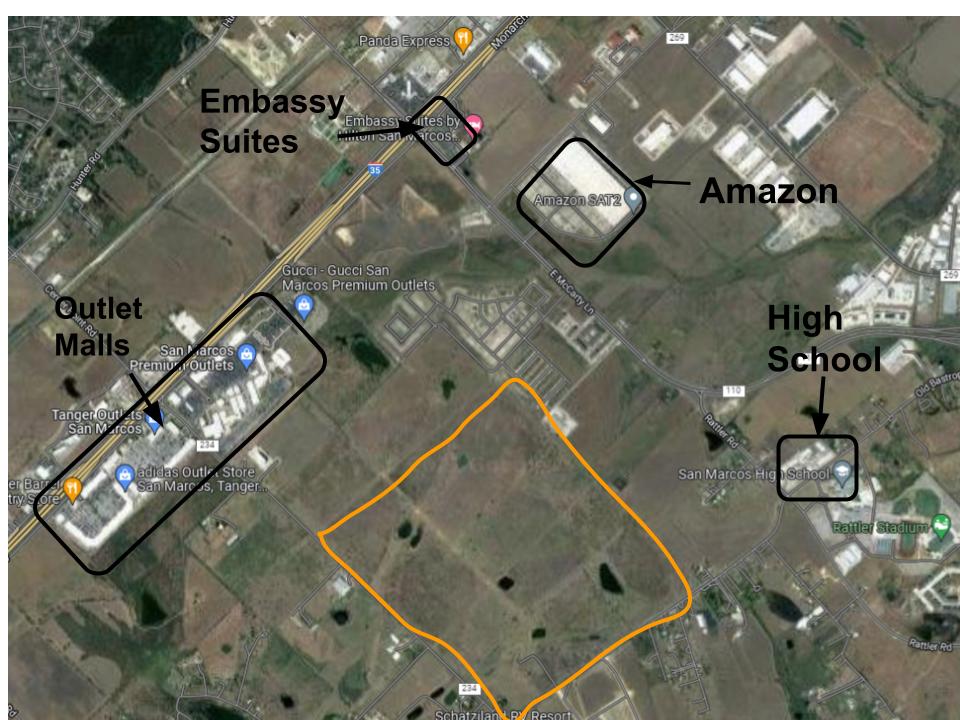
Item 27:  We zoned this piece of land during the August 8th meeting:

Now it’s back and we’re giving it tax credits.

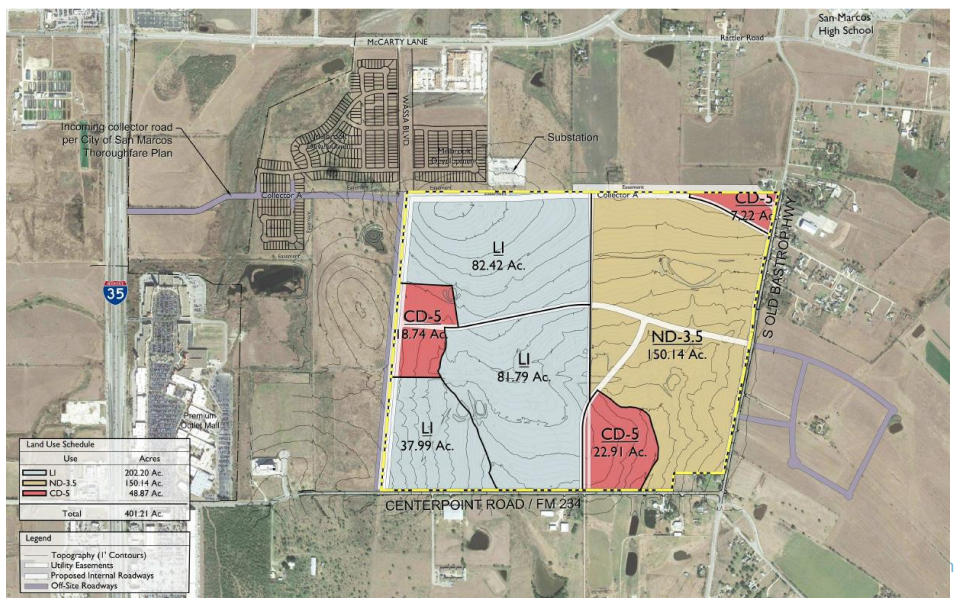
If you turn that orange square so that it lays flat, it breaks down like this:

The light blue section is “Light Industrial”.  Council is voting on a giant package of tax breaks for a developer to build a bunch of light-but-industrial buildings there.

There’s so much that happens in top-secret Executive Session.  As far as we plebes know, this land was just zoned during this very meeting, and now there’s a near-instantaneous agreement with someone calling themselves Majestic Reality Co. The project was code-named “Project Thin Mint,” in case you like code names, and thin mints.

Basically, they’ll get a bunch of tax breaks for a while, and then we’ll start to collect taxes on the buildings and businesses that eventually move in.  That’s the plan. 

Is this good for San Marcos? I have no idea!  It depends what gets built and what businesses move in. Ultimately, we lose a ton of control when we approve things like this, and we have very little information about how it will go.  (And this is standard, for Texas at least.  Texas is set up to let private developers shape cities, instead of elected officials, all the time, because we value their profit so much.)

Max Baker does grill the developer a bit, and comments on how secretive the Chapter 380 process is. 

The vote: 
Yes: Mayor Hughson, Shane Scott, Alyssa Garza, Mark Gleason, Saul Gonzalez
No: Max Baker
Absent: Jude Prather

….

Item 28: Blanco Riverine Flood Mitigation Project

Today they’re awarding some contract to some builder, and it is given all of 15 seconds during the meeting.   However, I wanted to give some background to this, because it’s interesting.

In 2015, we had the deadly Memorial Day floods, of course.  (More detail here, if you’re new to town.)  The Blanco Riverine Flood Mitigation project is supposed to create some extra channels for flood waters to go, instead of running into Blanco Gardens.

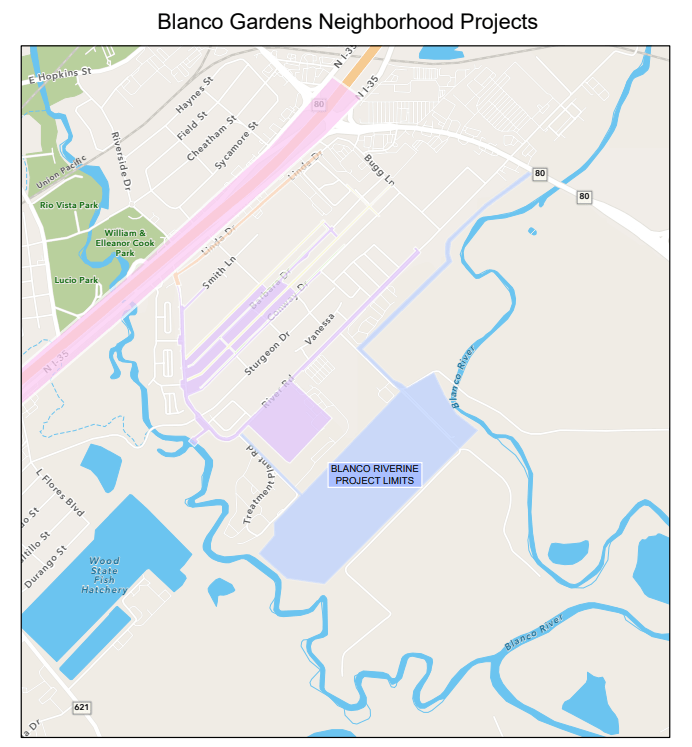
Here’s where it will be:

I don’t really know what’s involved, but this picture comes up a lot:

So I picture a massive drainage ditch through that periwinkle-colored rectangle, designed to catch the flood water, and then also, a long earthen hill that makes a wall between the ditch and the neighborhood.  So that’s coming.

Presumably when it’s not flooding, this should have trails and green space on it.

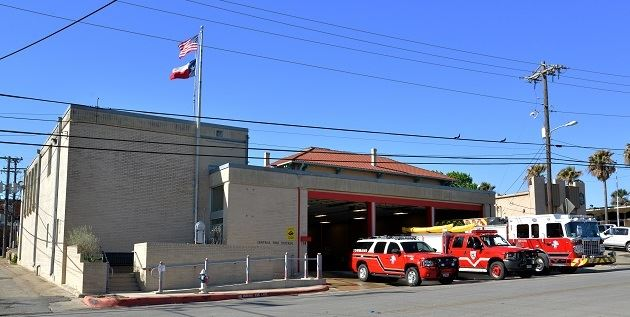
Item 29: We need a new downtown firestation. 

Firestation 1 is this one, downtown:

It’s not big enough and there are problems with that street.   So we’re moving it.

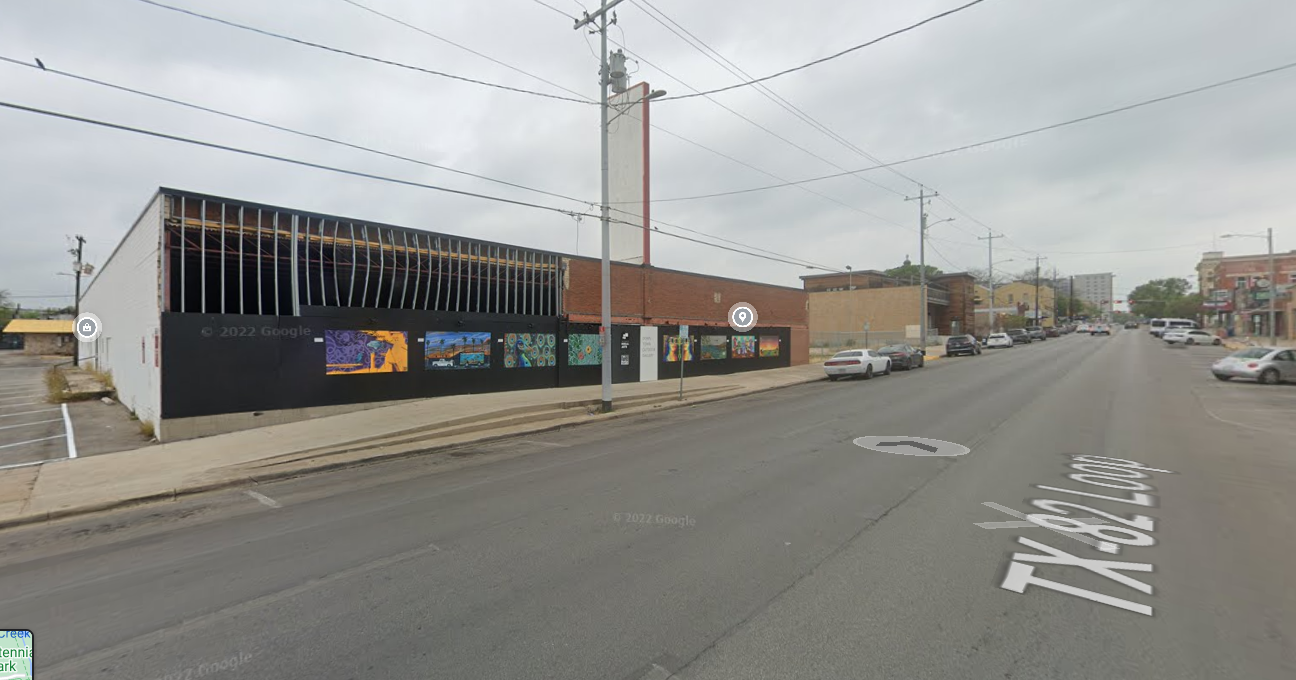
The new one will someday be here, in this building:

That is the old Diaz Martial Arts center, right across from Toma Taco.  Industry is to the left of that photo, and in the background is the old Golden Chick.  You’re on LBJ, heading west towards the town square.

Hours 2-3, 12/15/21

A couple small items here:

  • Eminent domain for two properties (or two parts of the same property?) involved in the Blanco Riverine Flood Mitigation project.

This is tricky. Eminent domain can be so exploitative, but once in a great while, it is needed for actual public safety. If public safety is truly on the line, then voting for it is more responsible. If there is another way to accomplish the goal, then voting against it is more responsible. Here we’re talking about flooding, so maybe this is a legitimate public safety issue. Eminent domain is obviously toxic in Texas, and it seemed like everyone was very uncomfortable with the idea. (Or at least performing discomfort.)

Mayor Hughson was clear that the city is still negotiating, and eminent domain may not ever be needed. My take: the city must feel that the property owner won’t ever negotiate until eminent domain is on the table. And then, once the threat of eminent domain is available, you’ve removed the property owner’s ability to freely enter or decline the contract.

In the end, everyone except for Max Baker and Alyssa Garza voted in favor of it. I just don’t know enough details to know if the city has worked hard enough to locate a workaround or not.

  • This one is kind of funny. Apparently the city owns the land under the Chamber of Commerce building to the Chamber, and charges them $1/year in rent. The Chamber built and owns the building on this land.

Then city’s Main Street office rents some space inside the Chamber building. The Chamber of Commerce turns around and charges the city $28,760/year in rent.

Max and Alyssa felt this was bullshit, or at least needed to be called out. I tend to agree. I don’t remember exactly how much money that we give to the Chamber, but my memory is that it’s on the order of 250K/year? They probably do help the business community, especially during Covid, but it’s hard not to suspect that business-types running a nonprofit may run it more like a business than a nonprofit.

The upshot: Max & Alyssa voted against it, and everyone else voted for it.

  • A number of items that received basically no discussion, and I don’t have enough context to evaluate: more Whisper tract things, a final vote on School Resource Officers, some Animal Advisory Committee details, and some Ethics Review Board disclosure details, and trying to locate some money for First Baptist NBC to compensate for the money that had gotten redirected PALS.

The Ethics Review Board one was regarding the financial disclosure forms that City Council and P&Z members have to fill out each year. The ERB wants more specificity. (Shane Scott balked, but it wasn’t clear that he was necessarily hiding anything. He’s generally contrarian when it comes to the ERB.)

Hour 1 – 11/3/21

Citizen Comment Period

Several people from the Animal Shelter are super fed up. It sounds like it’s been a catastrophe over the past year, since their last director left. I couldn’t infer quite who was running the show in the interim, but the speakers are furious. Transparency has clouded over, advocates and volunteers are being shut out, animals are being euthanized instead of exhausting all options. It sounded pretty bad.

(Apparently they’ve recently posted the job opening for a new director, so hopefully someone good will turn up.)

Flood Mitigation

The presentation was fascinating. It sounds like long winding trenches have been dug along the Blanco river, to keep it from flooding into Blanco Gardens. Then there’s a relief channel that’s going to be built to meet up with the river, downstream. In addition, there’s storm water drainage repairs and more projects being done in Blanco Gardens itself.

The presenter seemed very competent and clear-headed, but what do I know?

Max Baker asked about archaeological remains, should they turn up (which they often do). The answer seemed reasonable and non-evasive: everything would shut down and proper authorities called in. Basically, this is being carried out with federal funds, and so standards are much stricter than Texas for the engineering, environment, archaeology, and so on.

Sounds good to me.

Lobbyist Registration Ordinance

Tell me this isn’t fishy as hell: this was on the docket last July. It was postponed until November 3rd, in order to involve the new council (which already seemed shady). Since the new member hasn’t been seated yet, Mayor Hughson called for anyone to make a motion to table it for a week or two.

Mark Gleason immediately moved to table it until the end of January. Three months? In order to let one councilmember get up to speed? One councilmember who has been on council before, and who had six months advance notice that this issue was coming? It was so over the top that I concluded that Gleason is personally scared of this ordinance. Or someone who is scared of it is leaning on him. Whatever the root, this was bullshit.

Max Baker called them out for sandbagging the ordinance and dragging it out through as many elections as possible. He is correct, and this is really overt crap.