By the end of 2024, it all had to be contracted out. We did that.
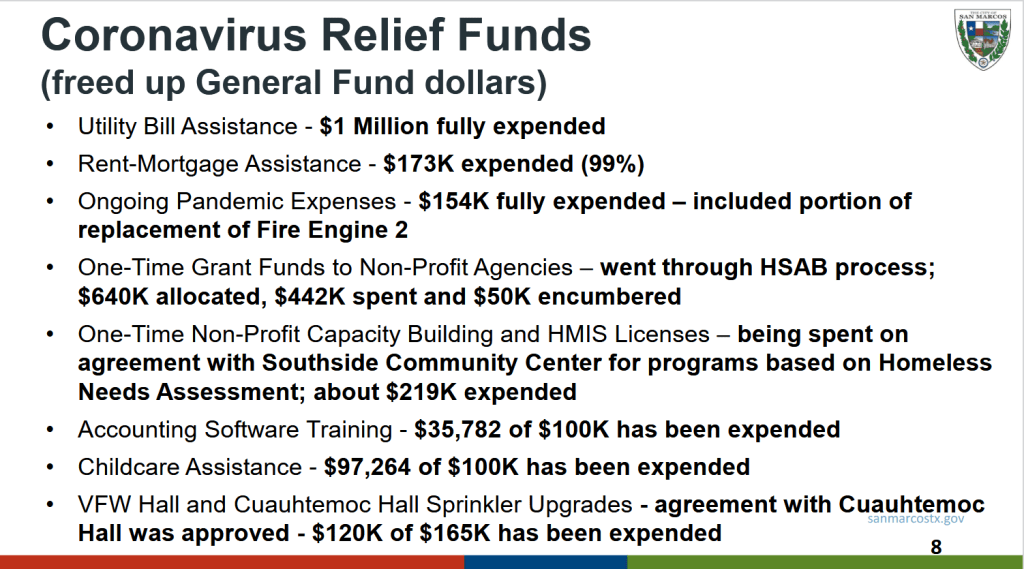
Here’s what the Covid Relief money went to:
(Note: For the Covid Relief money, they only mention $2.67 million of the $6 million in today’s presentation. I assume the rest got spent years ago.)
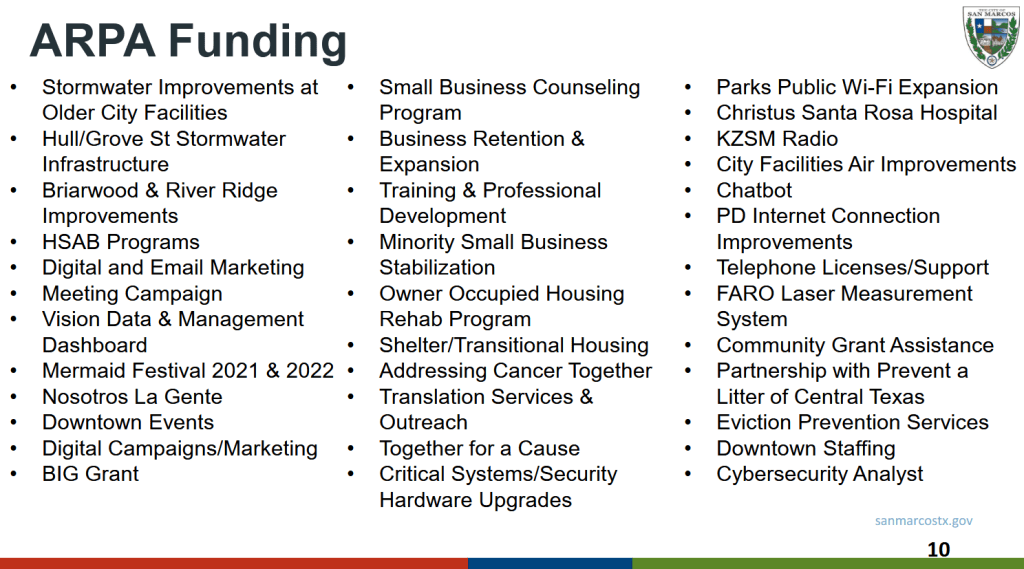
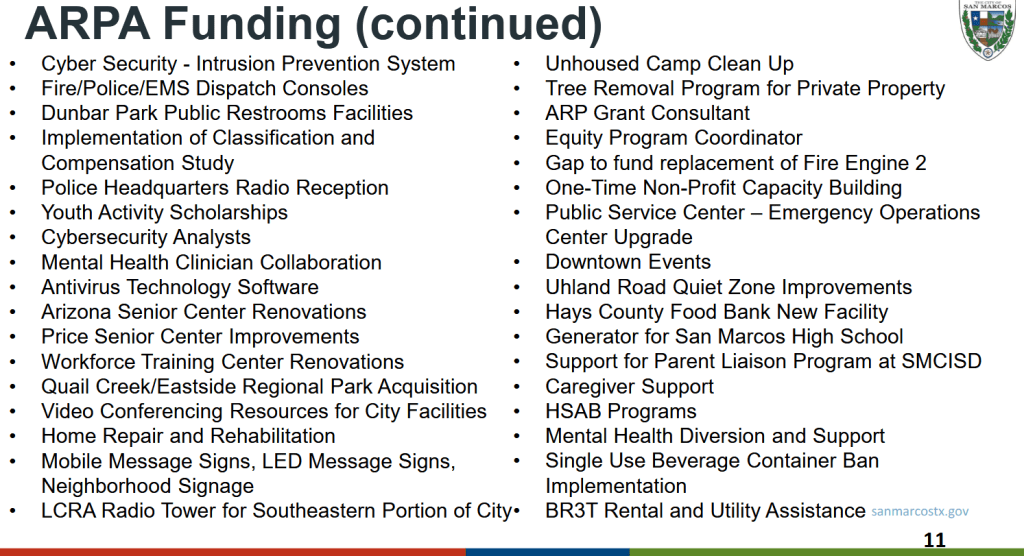
Here’s what we’ve spent the $18 million ARPA money on:
It has to all be spent by the end of 2026. So everything is wrapping up.
Which brings us to today
As projects finish up, there’s often a little bit of money left over. We’re allowed to put that towards one of the existing contracts, but you can’t start anything new.
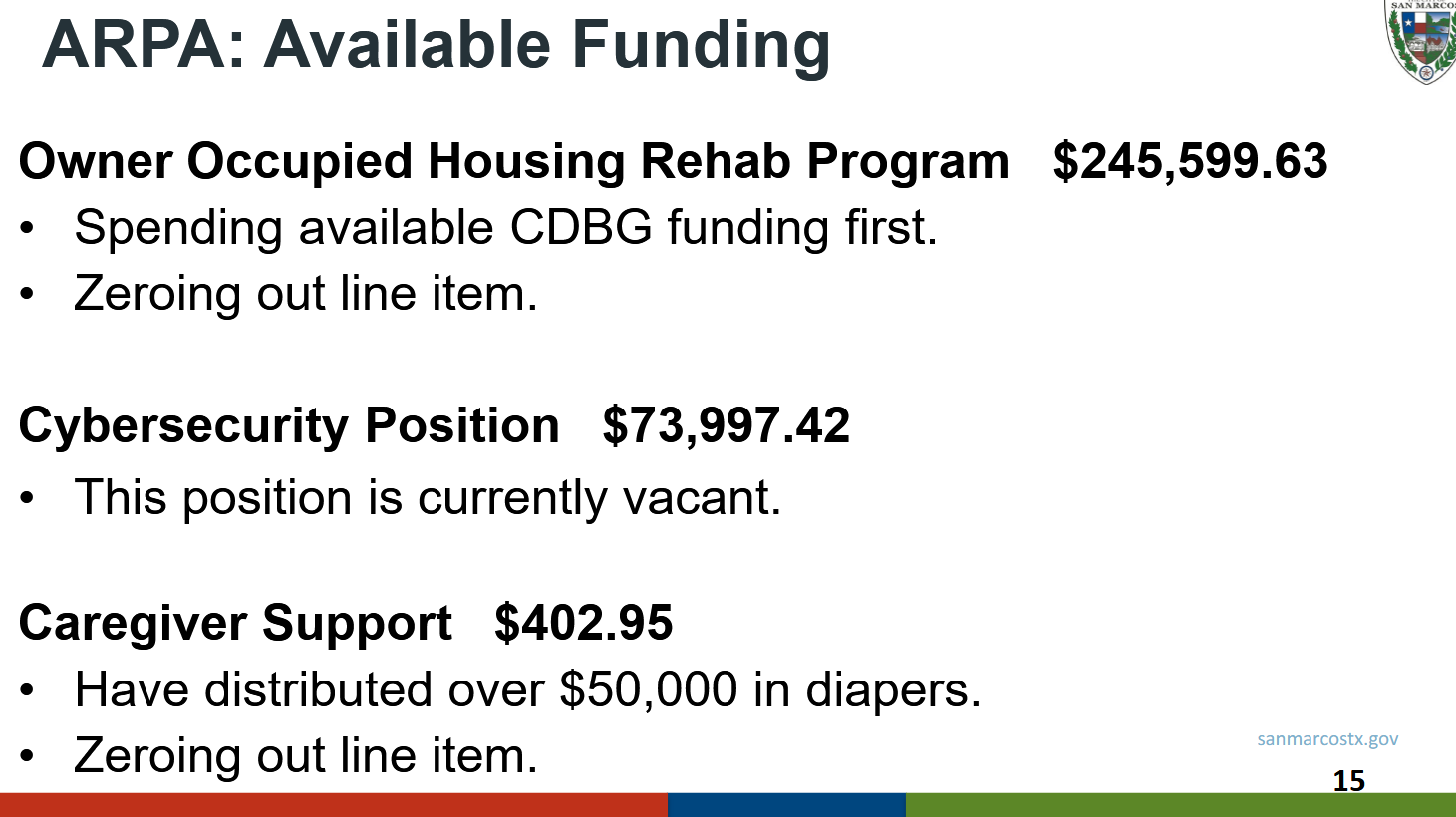
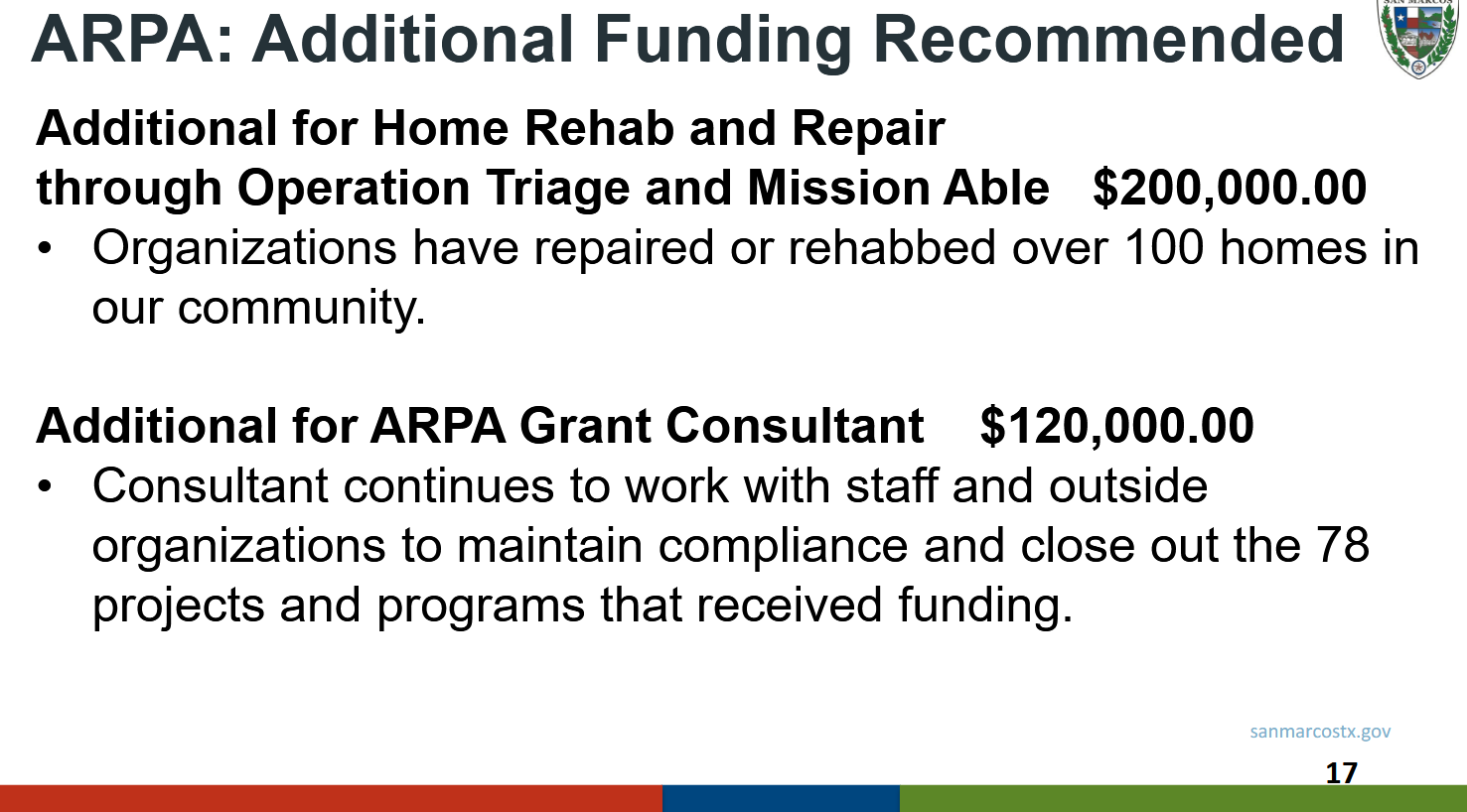
We’ve got about $320K freed up from these projects:
In other words: suppose you’re 70 and you bought your house in 1980, and you’ve worked low-wage jobs your whole life, and now you’re in danger of being homeless because your house needs $50K in repair so that it’s not condemned. This is the kind of program that comes in, fixes your foundation and your air conditioning, so that you can safely and happily stay in your home.
The grant consultant is the person who understands all the federal rules, so that we don’t risk losing this money due to mismanagement. We were going to have to pay this $120K either way.
What does Council say?
Jane: How about $5K to buy pet food for the PALS pet food drive program? That’s allowed because we had a covid contract with them already.
Alyssa: I need way more information. What are the deliverables? What’s the selection process? What’s the socioeconomic status of the recipients? Is this equitable? Where in the city do the recipients live? Do our neighbors trust them? I have so many questions.
Amanda: I’d like the extra info, but I’m good with Mission Able and Operation Triage.
Lorenzo: How about the food bank and BR3T?
(Note: BR3T is rent assistance and homelessness prevention.)
Alyssa: Can we get info on those, too? I want info on everything. BR3T funding is evaporating.
Jane: Maybe the consultant will come in under budget, and we can find $5K for PALS pet food from there.
Josh: I’m fine with the staff recommendations.
Shane: Me too.
Matthew: Me too.
Bottom line: This will come back at a city council meeting. Staff will bring back lots of information on Mission Able, Operation Triage, PALS, the food bank, and BR3T.
Here’s the situation: We’ve got city-owned water, electric, and wastewater. (Most of the people here are on city utilities, although some people are on Pedernales or Bluebonnet electric.)
When people can’t pay their utility bills, we offer them a two week delay. But we also give $120K to Community Action, to help pay people’s utility bills when they fall behind and can’t afford to catch up.
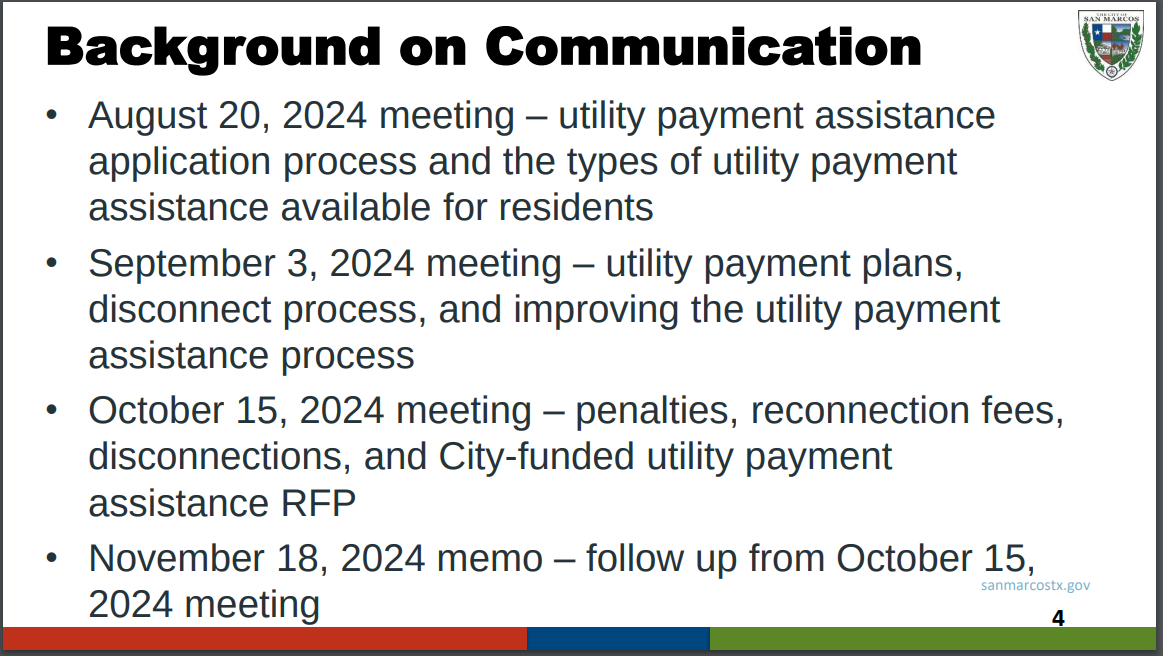
This has been an ongoing topic of conversation:
The problem is that most of the $120K we set aside for utility assistance isn’t getting used. There’s a ton of need out there in the community, and we’re not getting the money to the people that need it.
Why??
Community Action gets money from us. They also get grant money from the state and feds. So they use that state and federal money first, and then only use the city money if that money’s not available. That is good!
The problem is that their application process is long and a giant pain in the butt, because they’re trying to give out federal money. So people are being asked to provide all kinds of crazy paperwork documenting their employment or residence or whatever, and it takes weeks, and the person just needs their water turned back on so that they can cook dinner. This part is bad.
…
So the city is working on how to get the funds out faster. Would any other organizations like to also hand out utility assistance? (RFP means “Request for proposals”)
No one wanted to apply! They kept advertising and reaching out and extending the deadline.
Eventually they got three more applicants. Here’s what’s being recommended:
The “donated funds” bit means that San Marcos residents have an option to donate when they pay their bill. There’s about $45K in accumulated donations right now.
(Community Action spoke up on Tuesday and said their capacity is actually $30K, so that extra $10K will get re-distributed.)
Discussion points:
Question: How long will the turnaround time be for people needing assistance?
Answer: Different agencies have estimated 3-5 days. Some a little longer. We’ll nail it down for sure in the contract with each agency.
City Manager Stephanie Reyes proposes having a universal application that all the agencies could use for city funds. Everyone likes that.
…
There’s a lot of discussion about how customers can find out about utility assistance.
If your bill is overdue, you get an automatic robo-call on the 16th day.
On the 18th day, your bill is delinquent.
After that, the delinquency notice goes out.
Right now, we don’t mention the utility assistance on the phone call or on the delinquency letter. The person has to call into the city first.
Everyone wants to know, “Why don’t we tell people about the funds earlier?!”
City Manager Stephanie Reyes says tactfully, “It hasn’t always been the philosophy of Council to make this information available at this stage.”
What she means is this: Previous councils have been more obsessed with the random person who might cheat the system than they were with actually connecting people in need with assistance.
This council – thank god – is more obsessed with connecting people to assistance. They want to have the utility assistance mentioned in the robo-call, and put in the delinquency letter.
…
Late Penalties and Reconnection Fees
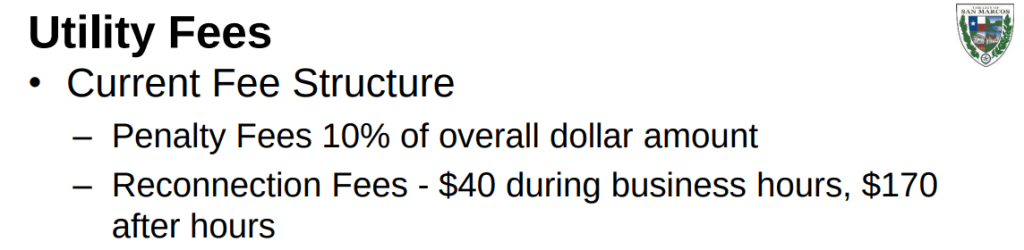
Suppose you can’t pay your utility bill. This would make it even harder:
In other words, if you’re $140 behind on your utilities, it will cost almost $200 to get everything turned back on. This is pretty typical.
Council looks at each of these individually.
Penalty Fees: on average, people pay about $14 in penalties – a little higher for houses, a little lower for apartments.
They debate capping it at different amounts – $10? $15? $20? – so that you’d pay either 10% or the cap, whichever is less. (This is Lorenzo’s suggestion.)
(This is for residential, not commercial.)
Reconnection Fees: This cost is based on a 2013 estimate of fuel plus labor to go to the house and turn it back on.
Staff is planning on recalculating these fees and see if they can bring it down.
…
Question: If we did away with all fees altogether, how much would rates go up?
Answer: about 0.5 %. Now, we always have rate increases, because costs go up. But if you want to do away with fees, we’ll need to tack on 0.5% on top of that.
…
Q: Can we change how many times they can get assistance per year?
Answer: Right now it’s twice per year. It might be hard to track among different agencies.
Most councilmembers want to change it to four.
Bottom line: This will come up at a future council meeting, along with some of the answers to questions that Council asked tonight.
…
Workshop #2
Update on American Rescue Plan dollars:
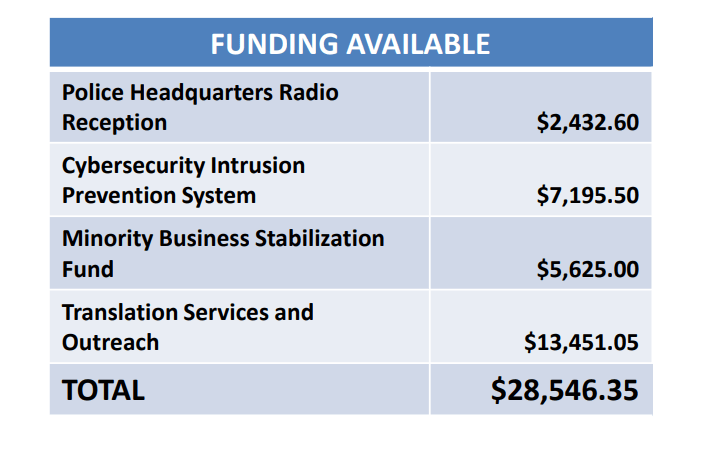
A few programs have a little money leftover:
Here’s where we want to re-allocate it:
Alyssa fought long and hard for us to provide rental service, and to use an agency that doesn’t take weeks and weeks in turnaround time. (Same issue as with the utility assistance – federal money comes with a wild amount of paperwork.) It’s nice that this is now becoming the norm.
Any further money that becomes available will also go to Rental Assistance.
It’s for senior citizens. Right around the corner from Target.
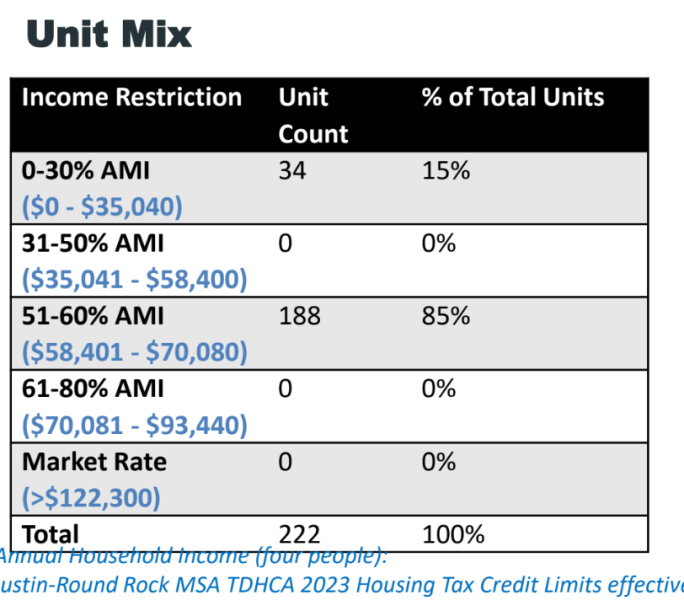
How affordable will these units be? The developer agreed to set aside a certain number of affordable units:
AMI means the Austin Area Median Income. So 30% AMI means your family’s yearly income is 30% of the median Austin income. But the Austin median income is $86K, whereas the San Marcos median household income is $47K.
So the categories are a little weird. Those 188 units at 51-60% AMI? That’s low income for Austin, but pretty normal for San Marcos.
….
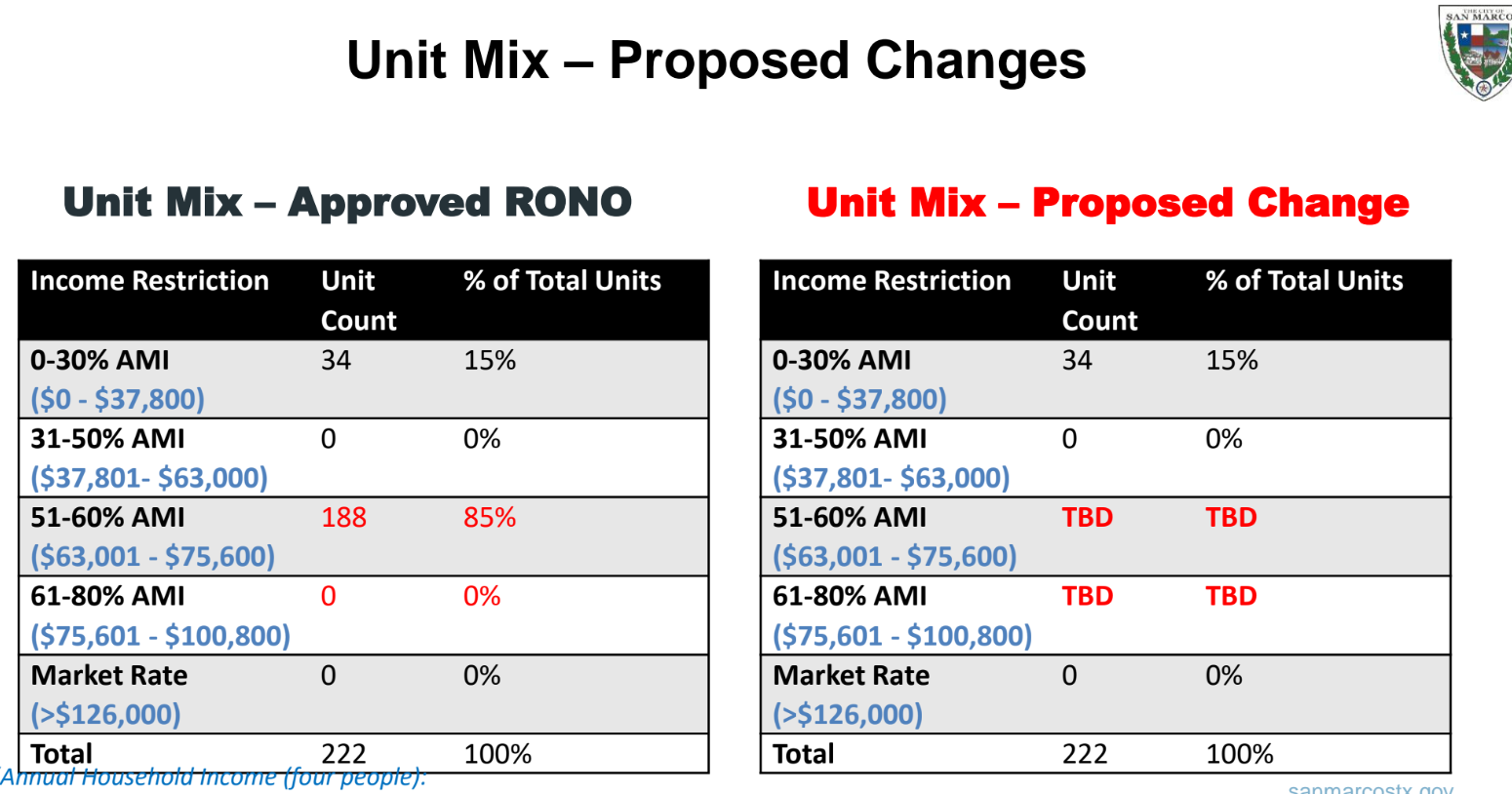
The developer is back, and wants permission to change some things. First, they want to loosen the ranges of incomes:
So he wants to take the 188 units for families earning $63-$75K, and spread them out for incomes earning $63K-$100K.
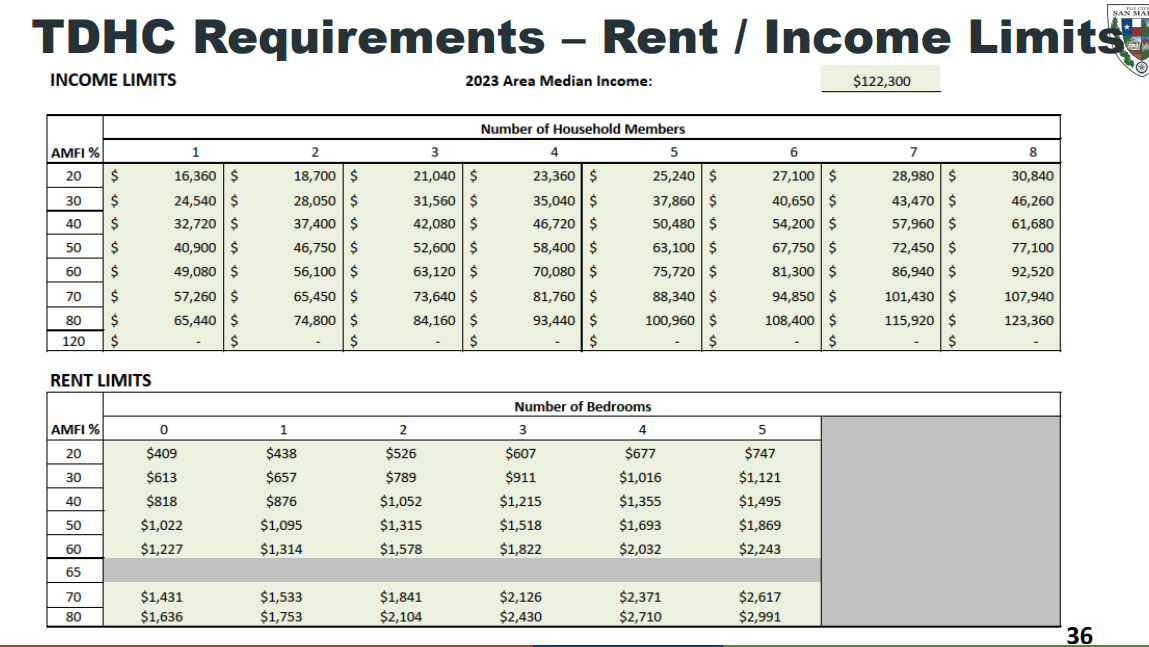
Side note: You can live in an apartment intended for a higher income than yours. However, you would not get a fully reduced rent:
The guy also changed his mind on BBQ grills and picnic tables, due to space concerns. He wants to swap them out for two horseshoe pits.
Jane, Alyssa, and Amanda are all not happy about this.
The developer says he’s got a market study. There’s just not demand for the under 60% AMI group! If he can extend to the 80% range, he’ll be able to find more residents.
Jane is open to this, but she doesn’t like the unspecified numbers. She proposes this:
0-30% AMI: 34 units 51-60% AMI: 86 units 61-80 % AMI: 102 units
Her reasoning goes like this: Seniors get a yearly 3% cost of living increase on Social Security. If you were earning 60% AMI and you get that bump, you could get priced out. Suddenly you’re making 61% of the AMI. You don’t qualify for your apartment anymore. If there’s not a tier above you, you have to pay market rate, or move.
Alyssa and Amanda call bullshit on the whole market study. (ME TOO.) It just doesn’t pass the sniff test that San Marcos has run out of families earning less than $75K, and you have to subsidize families earning up to $100K. Our median household income is $47K, for pete’s sake!
The developer does not have the actual market study on hand, to show council.
Amanda calls him out on this: Does this market study even reflect the people we’re trying to help? We don’t know, because we haven’t seen it.
The vote on Jane’s amendment: (86 units under 60%, 102 units under 80%)
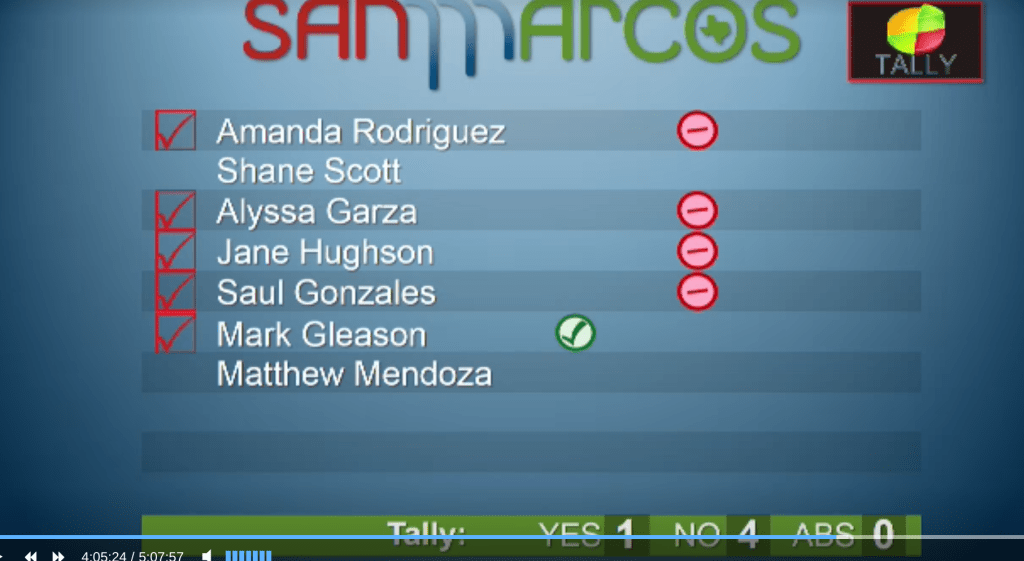
Yes: Jane Hughson, Saul Gonzales, Mark Gleason No: Alyssa Garza, Amanda Rodriguez
But!! It takes four votes to pass. Since Matthew and Shane are absent, this fails.
The developer pleads that it’s not a complete blank check! The subsidized apartments still have to average out to 60%!
The final vote:
Should the developer get to split up the Under 60% category however he wants?
Sorry, dude!
…
Item 7: We’re down to the final dregs of Covid money.
Alyssa Garza basically chewed everyone out for never, ever prioritizing rental assistance. I mean, she was nice about it. But she has said this one million times.
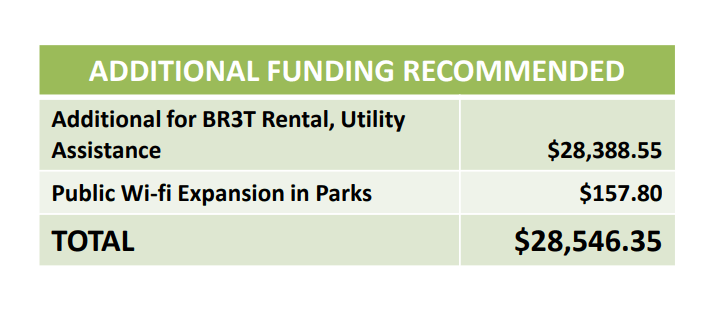
And lo! They made it work! New funding plan:
Staff thinks we can give this rental assistance out with fewer strings attached than CDBG money. This is very good, too.
…
Item 12: Getting ticketed at the Lion’s Club.
Paid Parking is coming next summer to the City Park parking lot. (Ie the Lions Club parking lot.) Instead of paying someone to write tickets, they want to use cameras and mail the tickets out.
Some extra details:
The lot will free for San Marcos residents, but you have to go online and sign up somehow.
If you pay within 14 days, you get a discount.
Council asks good questions:
Amanda: How does the 14 days work? From the day of the ticket? What if they’ve got some situation and their mail isn’t coming promptly? Answer: We could change that. What about if it’s 14 days from when the ticket arrives at the house? Amanda: ?? How would you know? Let’s just make it 30 days.
Saul: Is there a warrant if this isn’t paid? Answer: San Marcos parking tickets are a civil offense, so no. Hays County, though: those are criminal offenses. They’ll getcha.
Amanda: What happens if someone’s car breaks down? Answer: There is an appeals process.
Amanda: What’s the resident registry process like? Answer: It’s online. We are also going to do some library outreach to help people sign up.
Alyssa: I can’t actually find the appeals process online. Answer: Yep. We’re going to put the link on the actual citation that you get in the mail.
The vote: 5-0
…
Item 13: NEW FIRE TRUCK!
We’re getting an ERV010 Star Side Mount Pumper Truck with a 500-gallon tank and 1500 GPM pump.
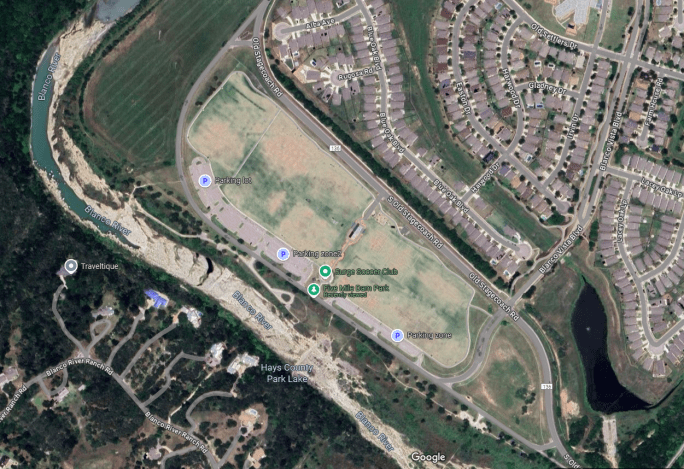
The soccer fields opened in 2010. They’re owned by the county, but maintained by the city. So the city pays for the lighting, playground, sprinklers, etc.
This photo makes it look like maybe the sprinklers aren’t working? Idk.
Surge Soccer uses the fields for free. (Surge used to be called SMAYSO, changed their name, missed their opportunity to call themselves Smoccer.) This helps keep prices cheap for San Marcos families. Surge is good about this.
…
Hays County is selling us the Five Mile Dam parks. But Hays County doesn’t actually care about the soccer fields.
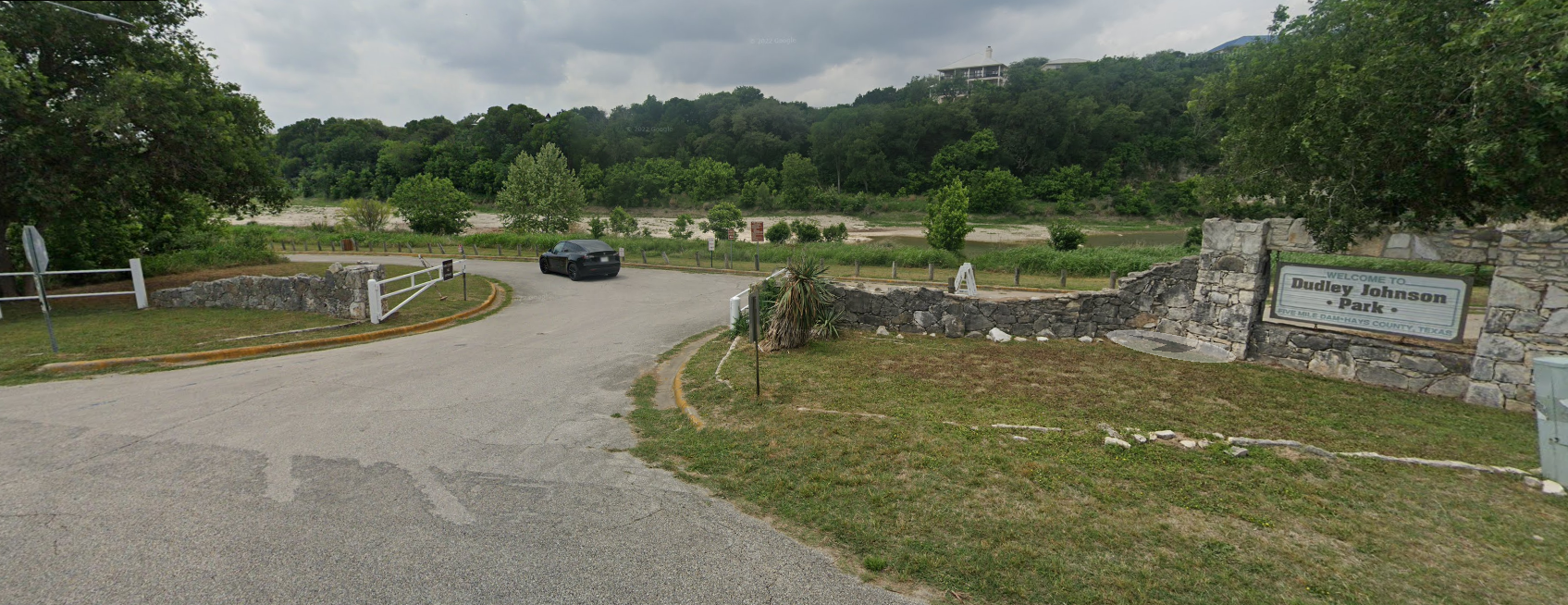
So these three properties are a package deal. You want the soccer fields? You have to take Dudley Johnson and Randall Wade Vetter.
How much is Hays charging us?
Zero! It’s free! Wow, they must really want to get rid of those parks.
The last dam report was in 2016, and at that point, the dam was in good condition. And the county will help with maintenance on the parks for the next year.
Is this good for us?
Yes. We want those soccer fields, or else Surge Soccer won’t stay cheap for local kids.
The danger is that Kyle or some private company would buy the fields. They can make a lot of money renting them out. But it would end Surge soccer. Or at least, the affordable, community-focused version of Surge.
Soccer is the biggest youth sport in San Marcos, by far. It’s important to secure these fields.
Council votes unanimously for this deal.
….
Item 16: Blanco Vista Water Tower
Same neighborhood as Five Mile Dam! They’re getting a water tower, as part of all this ARWA stuff. There is $50K in the ARWA budget set aside to paint the water towers.
How would we like to paint it?
Here’s what our other towers look like:
Here’s what some neighbors do:
Here’s what some fancier cities do:
We could either keep it simple, or pay $100K+ to go all out.
Council: keep it simple.
…
Item 17: The Deer
Deer are a big problem. Mostly they cause a lot of car crashes, but they can also get impaled on your fences. (Ewwwwww.)
A speaker came from Texas Parks & Wildlife, and talked to the neighborhood commission. Basically, the first step is to get people to stop feeding the deer.
Should we ban feeding the deer?
Pros: deer are a big problem.
Cons: have you seen how cute they are, with their big eyes and fluffy tails???
The Neighborhood Commission decides on an education campaign, instead of an outright ban, because of all those people who love the big-eyed-fluffy-tailed-deer.
What does Council think?
MARK GLEASON HAS VERY STRONG FEELINGS!
First, even if you ban feeding, it won’t help. Too much available food.
Deer have no natural predators.
You must hunt! Open up the parks to hunting!
We could make a whole weekend of it! Have drawn hunts!
The problem is that Mark is bringing a huge energy here – It must be discussed! It works! Cutting people off. It’s the only thing that works! – and everyone is a little taken aback.
Jane: They’ve been hunting on my land for 20 years, and it doesn’t keep the deer away.
Mark: IT WORKS! You just need to hunt a few. After a few generations, the mothers keep their babies away!
Alyssa: I dunno, doesn’t work on my dad’s ranch either.
Eventually Jane shushes him, and everyone goes back to talking about corn.
Don’t feed the deer, everyone, but really don’t feed them corn.
…
Item 18: Animal Shelter Vacancy
We finally got it filled. The new person talks about how much they love animals, and how they’ve fostered and volunteered before.
(I still have a lingering weird feeling about the other person who was jerked around by Council for months, but this person seems fine.)
I assume all you readers here already agree that health care should be free. Americans pay way too much for way too little, for vague reasons about “freedom”, as if anyone is excited about the freedom to be sick or die early.
Everyone deserves affordable health care, as a basic right. Great.
Here’s a second reason that health care should be free and universal: you need a coordinated response in order to launch the best fight against contagious diseases. Do we really want each person to get sick with tuberculosis and see if they can recover, with good old fashioned rugged individualism? Or do we want tuberculosis to actually be eradicated, for everyone, like a bunch of dirty socialists? Maybe grandma doesn’t need to hack up a lung in the first place.
This is what we mean by public health: often it’s better for everybody when everybody gets basic health care. It’s better for rich people, when poor people aren’t sick! Seems basic, but it’s mindblowing if you’re used to punishing poor people for being poor.
So we have a Hays County Health Department.
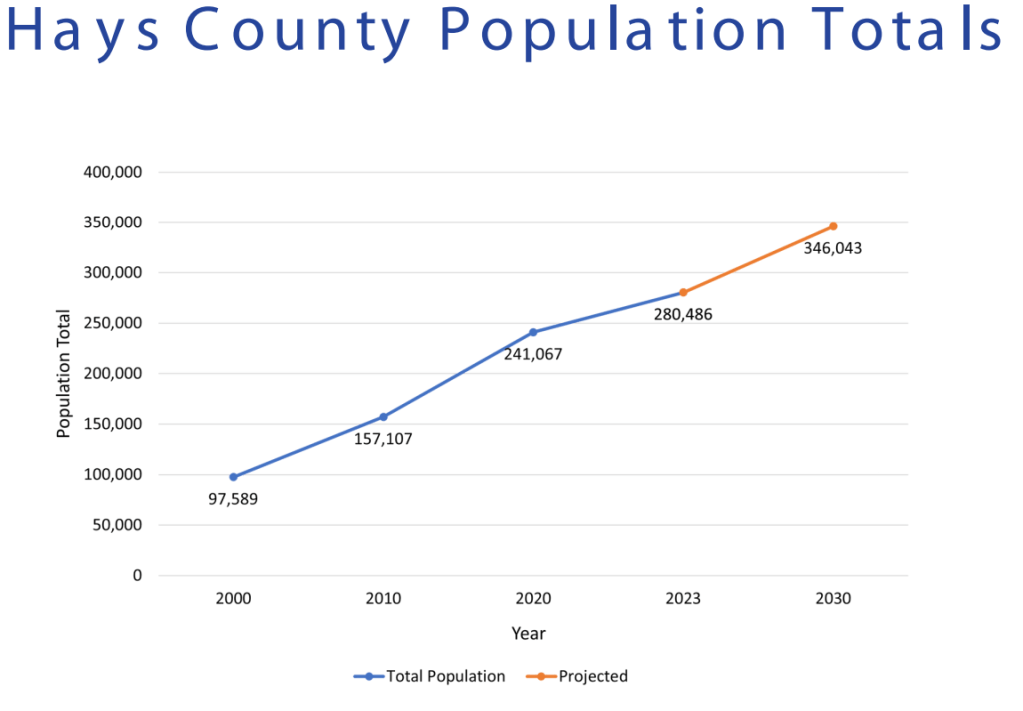
What’s the need like in Hays County? Well, first, we keep growing:
Second, we’re in need:
Some notes:
1. San Marcos has about 70K people, and Hays County has about 269K people. So the poverty rate is only 12.4% for all of Hays County, because there’s a lot of wealth in the north and west parts of Hays County.
Most of the poverty is concentrated in San Marcos and Kyle. The poverty rate in San Marcos is about 27%.
2. Let’s just note that the poverty rate is 12.4%, but unemployment is only 3%. Can you believe that we allow companies to hire people without paying them a living wage? Me neither.
You’d think we’d be storming the castle over this kind of exploitation, but instead we all just wake up in this world every day, as usual, stressed out over our meager salaries.
3. That housing crisis is a disaster. Spending half of your meager income on housing is no joke.
“TVFC” is Texas Vaccines for Children. “ASN” is …American Supplemental Nutrition? American Nephrology Society? Autonomous System Number? I got nothing.
“TB” is definitely tuberculosis, and we definitely do not want TB cases to be rising.
The presenter stopped and talked about syphilis for a little bit. It is definitely on the rise in Hays County, across all age groups, ethnicities, and economic classes.
Here’s statewide syphilis data:
from here. (The linked report focuses on women, because one of the worst risks is congenital birth defects if she has a baby.)
In conclusion: the health department does a lot on a shoestring budget, but they could do a lot more if the state funded public health like we should.
……………….
Presentation 2: American Rescue Plans (ARPA) money and Covid Relief money.
Covid money is running out. It has to all be budgeted by this December, and it has to all be spent by the end of 2025. We started with $22 million, and we’re down to about $1 million. Most of that is because of projects that came in under budget.
Here’s how staff is recommending we spend the money:
The LCRA tower is a bargain that came out of nowhere. It’s to give radio access to fire/EMS/etc on the southeast side of town. It was going to cost $4-5 million, but in the last moment, we looped in Guadalupe County and some other partners. So the fire chief Chief Stevens is a big advocate for that.
Jane Hughson asks about the running list of side-projects that council keeps, to be funded whenever we stumble into some money. Staff does not have that list available.
Alyssa Garza asks about some of the programs she’s tried to fund with ARPA money, where money never seems to materialize in a meaningful way. Specifically, funding for the Parent-Liaison SMCISD program and translation services. In both cases, money has gone to the program, but not in a way that addresses things well. Like, it’s all well and good to translate the website, but we’re not making events bilingual and bringing parity into public spaces.
Alyssa points out that the whole Council is being steamrolled into saying yes, for the tower they’ve never heard of before. Chief Stevens pleads that the stars aligned in a special way.
I get what Alyssa is saying: this is part of a larger pattern. Whose priorities get fast-tracked and whose priorities limp along, half-heartedly? The tower is not a bad project! It’s just a convenient example of a problematic, ongoing pattern.
Item 14: “ARP” stands for “American Rescue Plan”, ie Covid money. We’re down to our last $3 million. We started off with $18 million. This last bit has to be spent by the end of 2024, or we have to give the remainder back.
Here’s what staff is proposing, based on instructions from council:
The controversial part is spending $1.3 million on Uhland Road quiet district. Here’s what I think that means: Every time the trains cross the road, they blast their horns. If you want that to stop, you have to construct automatic traffic arms, and turn-around barriers, and some other safety things. We’ve done this in other neighborhoods.
Staff is trying to get the quiet zone funded through other grant money, but their most recent grant application was denied, so they stuck it here. It’s not really connected with Covid, though.
Alyssa Garza makes the case that ARP funds should be used to address direct needs. In other words, we shouldn’t be spending $2 million on the two parks and a quiet district. Direct needs are things like financial emergencies, mental health care, and violence prevention programs. Alyssa focuses in on that last one: other cities are using ARP money to pilot communiy violence prevention programs. Why not us?
She’s making a clever case: all of you who are obsessed with the police and crime rates? Let’s address violence in a preventative way. Wouldn’t that be better than just being reactive?
Objectively, Alyssa is right. (Let’s pretend I’m objective.) Support for police departments is generally shrouded in language about public safety and rising rates of violent crime. But police departments respond to violence. They’re reactive. That’s different from proactively working to reduce the causes of violent crime. If you claim you care about public safety, then you should support community violence prevention programs.
So Alyssa asks point blank: Can we re-arrange this money to pilot a violence prevention program?
And…. <crickets> … the silence dragged out, and no one joined in.
The problem is that the rest of council has a semi-acceptable excuse: there really is a fixed deadline to spend this money. Staff’s recommendations are all shovel-ready programs. So the rest of council doesn’t really have to entertain what Alyssa is saying, because momentum is on their side.
Should we be furious at them? It depends on what happens next.
Possibility 1:
Alyssa brings up community violence prevention programs at the next CJR subcommittee meeting.
Mayor Hughson and Shane Scott respond enthusiastically!
They work up a pilot program for Council.
Council enthusiastically finds some funding and moves forward with it!
In this case, everyone is forgiven for squirming uncomfortably and avoiding Alyssa’s proposal to use ARP funding right now.
Possibility 2:
Alyssa brings up community violence prevention programs at the next CJR subcommittee meeting.
It gets bogged down in the slow wheels of San Marcos city government.
Everyone says nice things, but also sandbags the process.
It stays in the background as a nice idea, and never quite makes it into implementation for the next several years.
In this case, City Council is making it clear: “Public safety” is a code word for “We love the police!” and they are going to prioritize SMPD over actual public safety whenever given the choice. Vote the jerks out of office!
…
Item 18: Here’s Trace development, way down south, past the outlet malls:
That’s where Rodriguez Elementary is.
Some sort of development wants to go in here:
The Trace developers are definitely worried about something industrial right going in right behind people’s backyards. Council decides to form a subcommittee: Jane Hughson, Matthew Mendoza, and Jude Prather are going to take care of business for ya.
…
Item 19: File this one under “victories are anticlimactic”: eight months after Max Baker loses his city council seat, they officially change the rules to allow subject matter experts to attend subcommittee meetings. (Discussed here previously.)
This was a flashpoint with Max – he’d bring up new issues, and everyone would cock their heads like a confused golden retriever, and then ignore what he was saying. Max wanted to bring in experts to explain complex issues, so that others would take him seriously, but he couldn’t even get experts in, because no one took him seriously. (Partly, this was because Max generally had 50 issues to solve simultaneously, and everyone kind of just got woozy at the overload. But partly, they just didn’t want to consider new ideas, like the environmental impact of the SMART/Axis Terminal.)
But this can also be abused, as noted by Markeymoore and Forrest Fulkerson in the comments here. If you have councilmembers who are shmoozy with a developer, and they invite the developer to the subcommittee meeting, you may essentially have a developer writing their own agreement with the city.
There’s also a little path to a bridge over the river, which leads to some trails. And there are some art installations, right where you’d head from the parking lot towards the river.
More art is coming!
I am not sure where it will go, but I’m guessing with the other art installations. (Not at the falls, despite that picture.)
It’s big:
This is the winner of a nationwide call for artist submissions, and then an open house forum, and finally the arts commission picked this one.
I didn’t find the price tag anywhere, but I generally think that arts enrich a community, and it’s worth spending money to compensate artists fairly.
Item 20: Finally! I promised you more parking news, and you stayed for it. Here’s your big pay-off:
Things in the works:
Parking Benefit Districts: this is not paid parking, but it’s a necessary pre-condition.
Parking Mobility Funds: if we had paid parking, we’d need a bucket to put the revenue in.
COLAs for fees
Currently, our parking tickets cost $20. They’ve been at that rate since 1974. That’s almost 50 years! Congratulations, $20 parking tickets, you’ve had a great run.
(Just for funsies, I went to an inflation calculator: a $20 ticket in 1974 is equivalent to a $126 ticket in 2023. What a bargain we’re getting!)
What’s proposed is having fees drift upward automatically with inflation. In other words, every three years or so, you’d just set a new, higher fee rate to match inflation. (COLA stands for Cost of Living Adjustments.)
Jane Hughson cracked me up again: “This is a good idea. We should just get it automated, so we don’t have to update it every… fifty years.”
Here’s why I like this so much: First, Jane says that we do this already with other fees that the city charges. Second, we do this with certain city employees. In other words, we are already well-versed in COLAs!
Which brings me to my hobbyhorse: Automatic COLAs for minimum wage. San Marcos does have a minimum wage of $15/hour for any business receiving tax breaks from the city. LET’S PEG IT TO INFLATION! If we can do this for parking tickets and city employees, surely we understand why this is so important for our neighbors earning minimum wage.
But wait! There’s more!
An amnesty/incentive program. Suppose you rack up a huge amount in fines. Maybe you even got booted. This is the program that will make it easier for you to settle up with the city – like signing up for volunteer hours instead of owing money, for example.
Everyone loves this idea. I love this idea, too.
5. Dynamic pricing. In other words, a little sign that says “Violators will be fined $20-$60” or whatever. So if you park illegally in off-peak hours, it’s not so bad. If you park illegally in the middle of Sights & Sounds, you get charged more.
(They claimed this was about deterrence, but surely it’s about making more money. It’s hard to see how dynamic pricing would make a dent in the decision-making of the shmuck clogging up Sights & Sounds, in the middle of four different choir performances.)
All of these will be fine-tuned before Council officially votes on them. But it’s clear: our widdle San Marcos is gwowing up.
The next recurring theme was a large amount of money to be allocated, across different items.
Items 35-36, $9 million from American Rescue Plan Fund (and it sounds like there will be 9 million more, next summer.)
Item 40, $800K in CBDG proposals for the 21-22 fiscal year
Item 41, $1 million in utility assistance
So these were quite a lot of fun – feeling flush with cash and able to grant all the wishes to all these nonprofits. Down with austerity and belt-tightening!
On the first, the American Rescue Plan Fund:
– they argued about whether tourism and marketing should get quite such a big cut. It seems that this sector is limited in where they can seek funds, and they did take quite a hit during COVID. But maybe not quite as much as was proposed. ($282K)
– they argued a bit about Briarwood, a neighborhood outside of city limits that suffers severe flooding, in part because of how San Marcos has been developing. There’s a 2.5 million stormwater mitigation project there. They managed to thread the needle on that one – postpone it by three months and fund it from several spots.
– A lot of small projects got some money: Southside Community Center, bilingual outreach and communications, KZSM, vaccination outreach, Nosotros la Gente, which provides shoes for local kids. Good feelings all around.
2. On the CBDG funds, nearly everything got funded besides Roland Saucedo’s proposal, which is seeemingly why they chipped in for him in the previous funds.
3. The Utility Assistance fund is interesting. They’ve paid out about 20% of what’s available, and they’re all concerned that people aren’t applying. City staff was put on the defensive about their outreach efforts.
– Everyone who is past due gets a letter with info on how to apply. If the city has an email address, they send an email too. – The city has reached out to the Food Bank and SMCISD. – The application was made fairly short – just one page. – Disconnections have been suspended during the pandemic, but there will be a date set to resume disconnections.
Criticisms:
– how about going through the churches? Commissioner Gonzalez says that he has to KEEP directing city to this and they never do. – Commissioner Gleason, Commissioner Derrick, and Mayor Hughson all feel like until you send them notice of disconnection, no one will be very motivated to apply. – Commissioner Garza talks about how people (meaning the Hispanic community) are more likely to just tighten their belts, out of not wanting to take more than their fair share, and that they’ll want to save the funds for someone who REALLY needs it.
Commissioner Scott, actually, was strongest on this: “Can’t we just see who is past due and pay off their balance without them having to apply?”
Hughson concern-trolled about undeserving people who have the money and could pay. Nothing Texas hates more than someone receiving some crumbs when they could have scraped by without them. Garza is enthusiastic about this proposal.
Scott’s proposal – just pay off the deliquent accounts – has to be put on the agenda and brought back as an item, because it didn’t fit onto the existing agenda. So it still could happen.
…
As an aside: there’s an ongoing dynamic where City Council and Lumbreras are perpetually exasperated with each other. It goes like this:
Council frequently acts like he has done something incompetent.
He then defensively retorts that they tied his hands in the way they made the request.
I am not sure yet who is being a jerk, or if there’s blame to spread to both. Mayor Hughson herself is a generally prickly person, and it often doesn’t mean anything.
…
All three topics will be finalized at some point in August.






















 The San Marxist