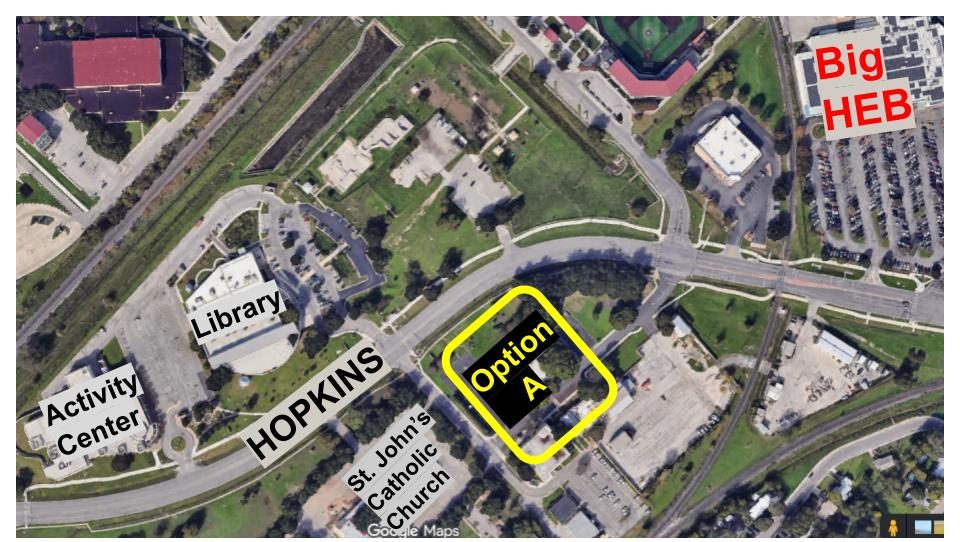
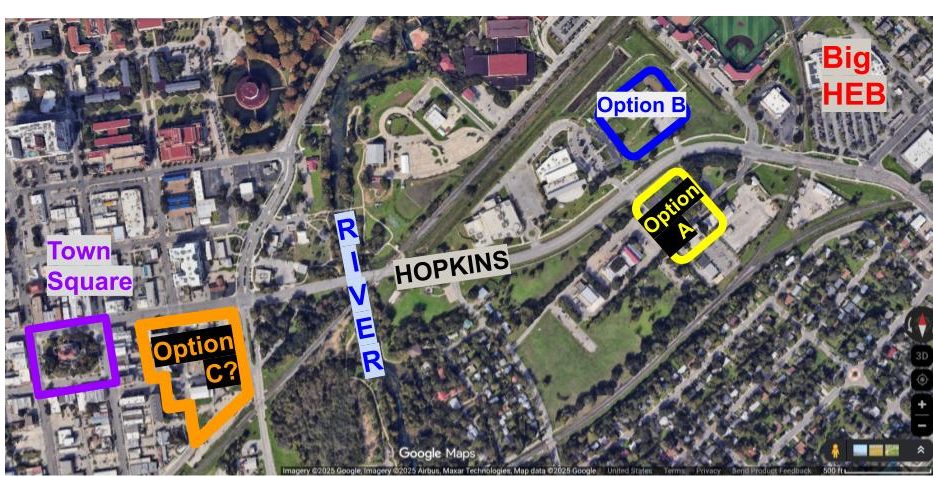
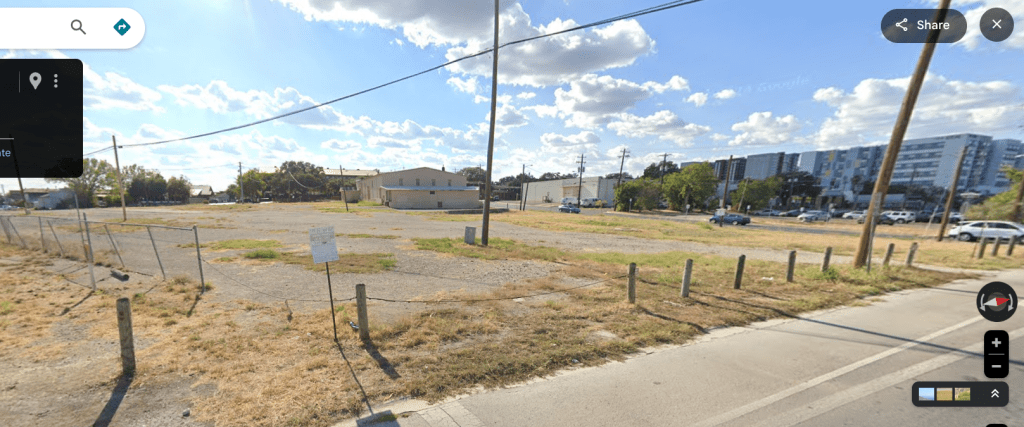
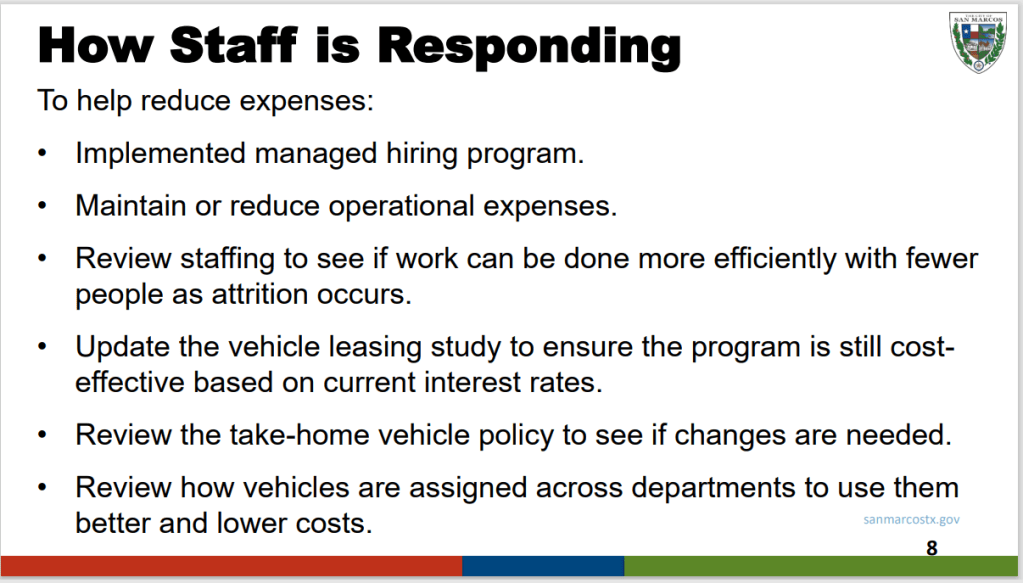
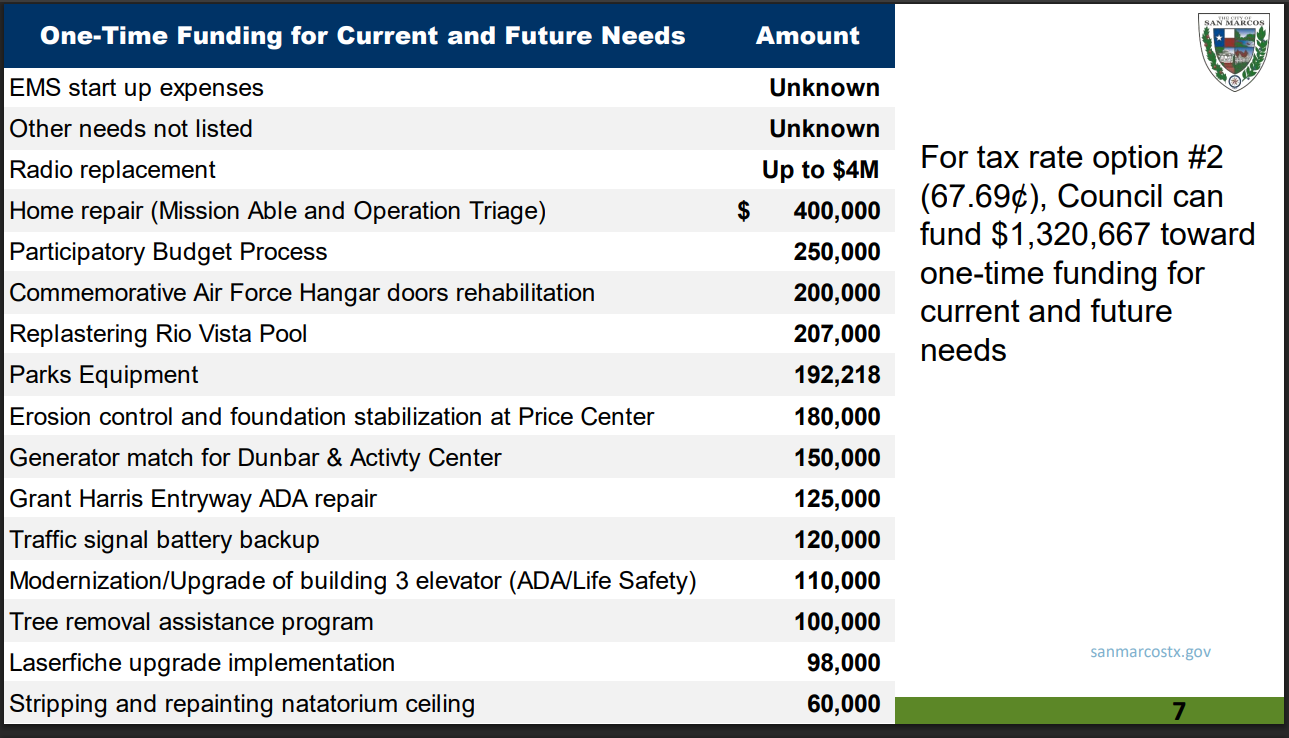
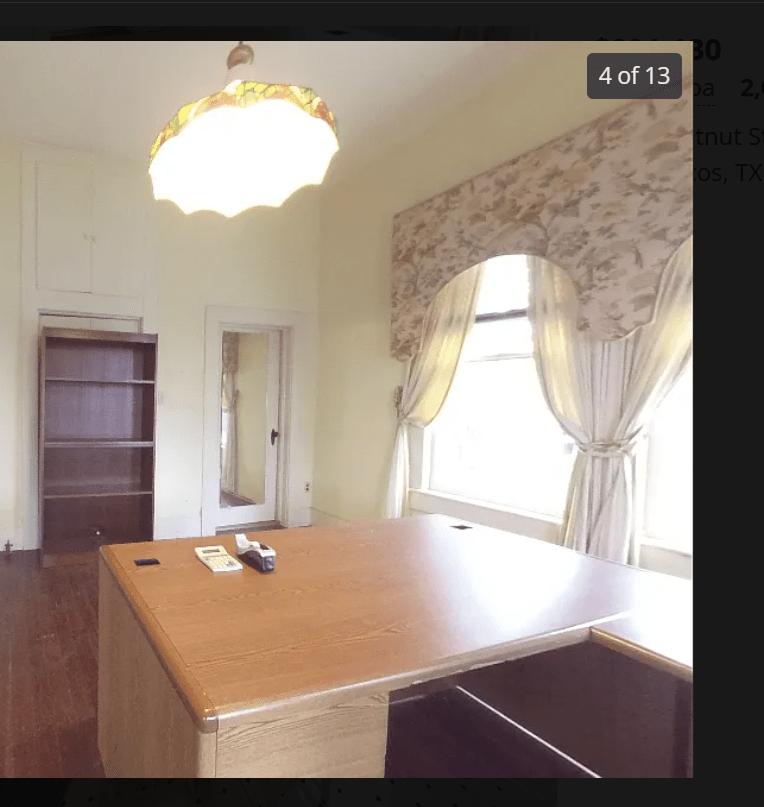
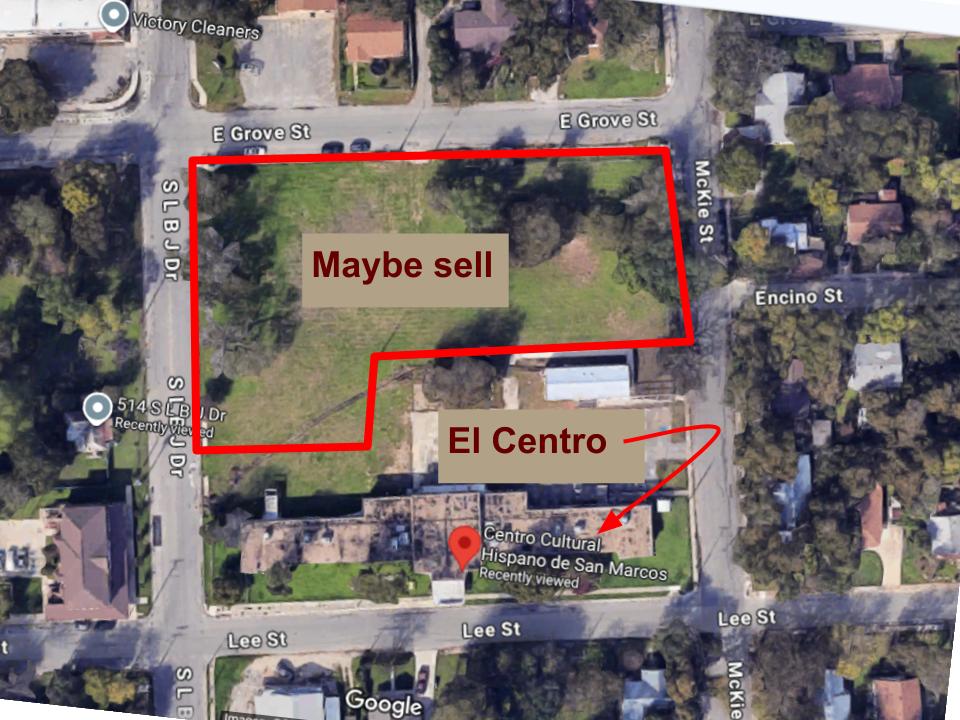
I think what’s going on is that the school board wants to sell off the rest of the property:
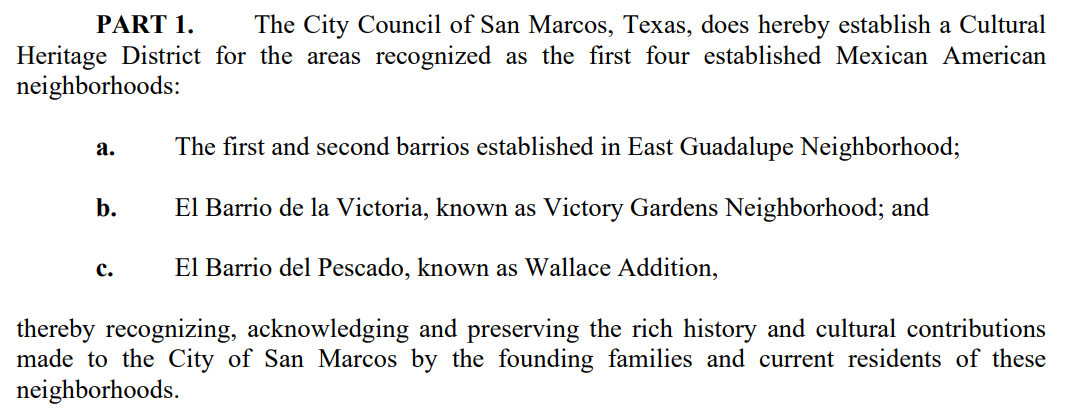
This block sits within the Mexican American and Indigenous Heritage and Cultural District. (This district was created in 2021, and then never mentioned again. Literally, I searched.)
I don’t think there’s a map of the district anywhere. This is the closest thing I found:
Professor Ana Juarez started up a petition a few weeks ago to get the city to buy the land, so that it doesn’t become developer-bait. It’s got a lot of historical significance:
Over 900 people signed the petition so far! And a bunch of people signed up for citizen comment.
This brings us to Tuesday!
Purchasing this property got put on the agenda for Tuesday’s meeting. But the city put it in Top Secret Executive Session, so it wasn’t discussed publicly. It sounds like this choice riled up a lot of people? and city staff got an earful of complaints about this?
So Ms. Reyes issued this disclaimer: “Hey, we love this property too! But we have to put real estate discussions in Executive session. It’s not some weird scheming thing. Also if we want to move on this, we have to move fast, because it’s time-sensitive.” (I’m paraphrasing.)
So the city is trying to get on board! This is great news. But the school district and the county also have to buy in. If you’re so inclined, you can:
The Lions Club: ten people from a bunch of nonprofits spoke in favor of renewing their lease.
Tenant’s Right to Organize: seven people spoke in favor.
Buying the land next to El Centro: three people in favor
We’ll discuss the Lions Club and the Tenants’ rights items at length.
A few smaller topics:
three people speak against the AI data center proposal. This is supposed to be decided at the August 19th meeting
One candidate for council introduces himself: Brandon Oles. (Another candidate – Chase Norris – also spoke, but not about the election. He spoke on tenants rights, Lions Club, and El Centro.) They’re not running for the same place, though, so they’re not opponents.
…
Item 5: The Texas State Boutique Hotel
We saw this back in July. Almost everything is the same, but Amanda mentions a few important wins:
Wages will rise automatically with inflation
If you work 25 hours per week, you’re eligible for medical/dental/vision benefits.
Those are both really great for workers.
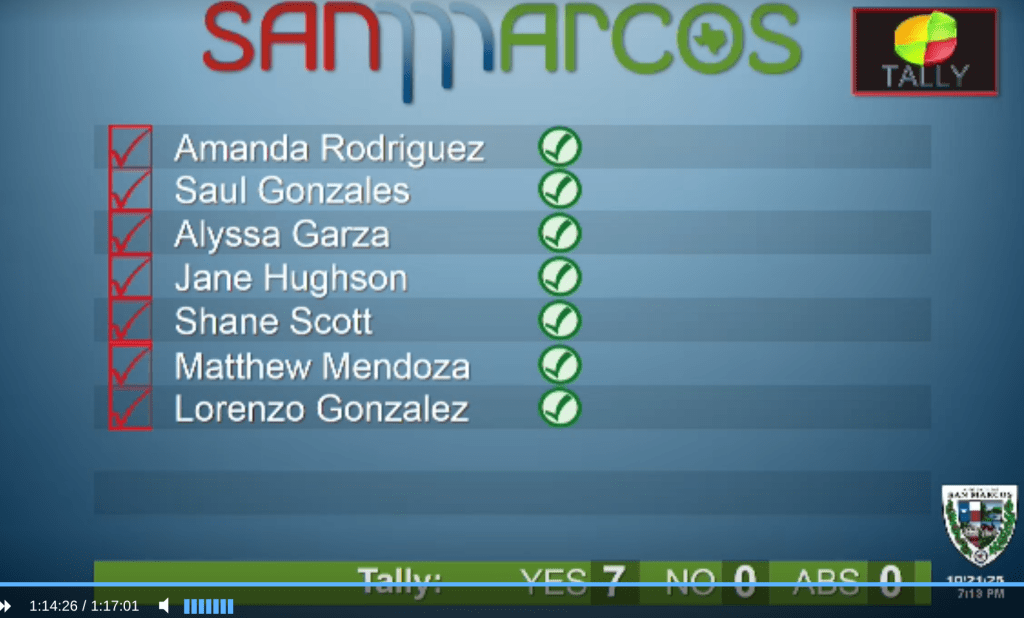
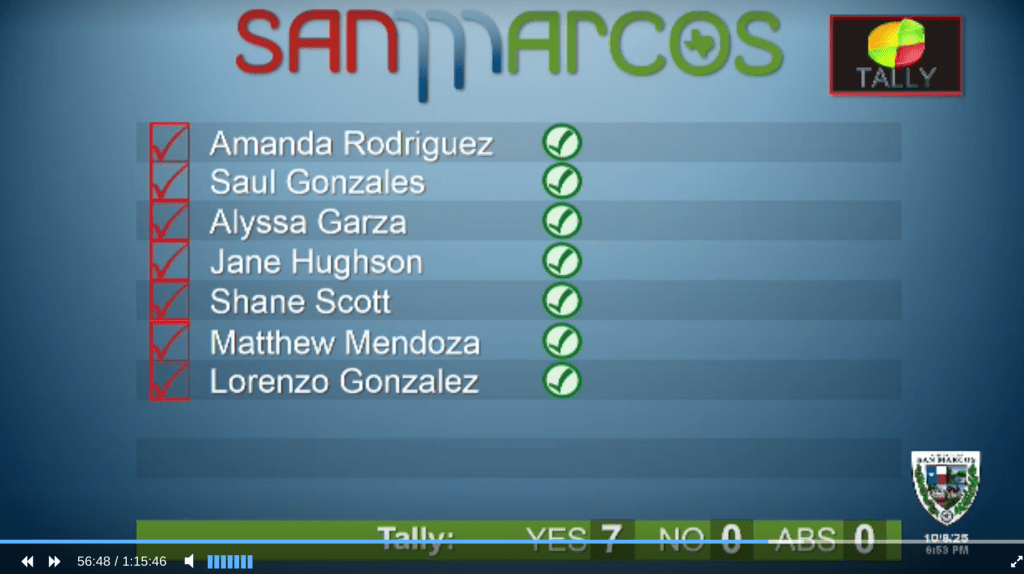
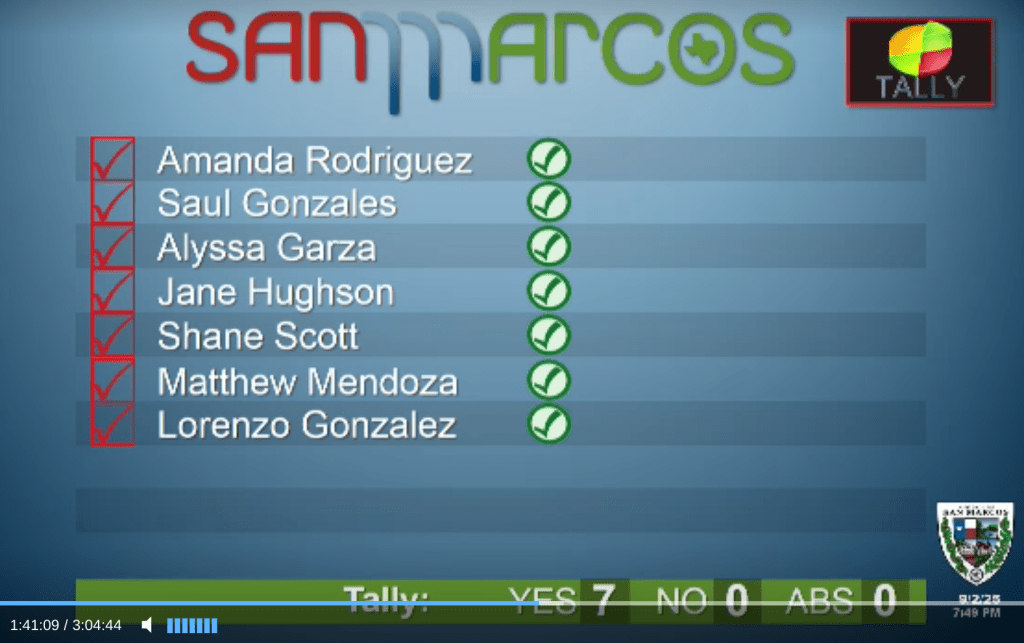
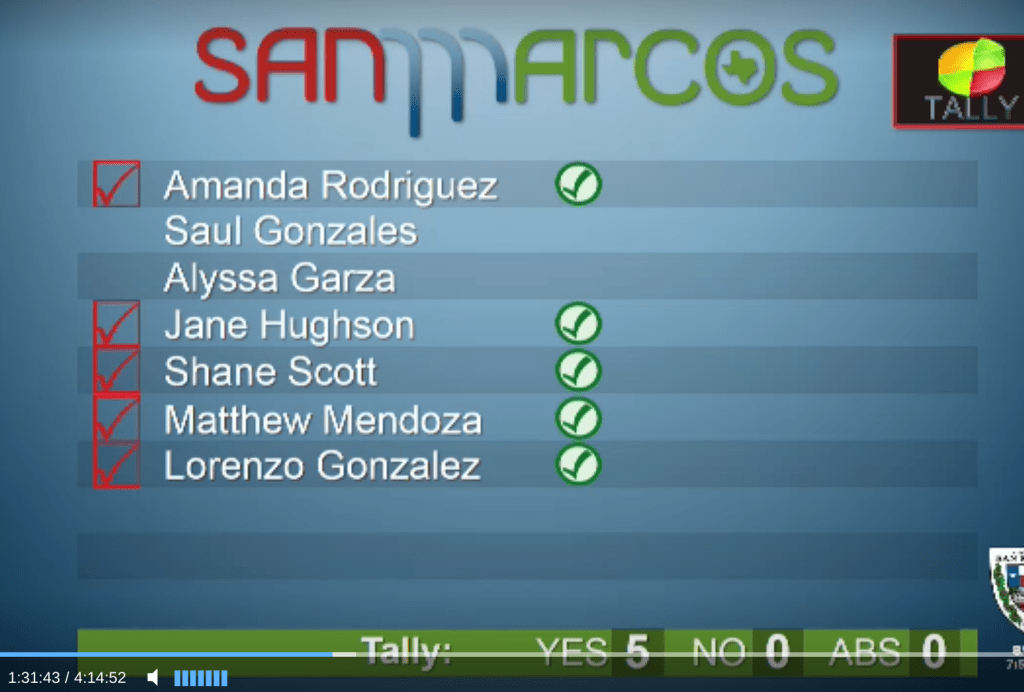
The vote:
My two cents: there’s not much downside for the city, but it’s hard to imagine this hotel turning a profit.
Here’s how it works: The city leases the building to the Lions Club, and they’re the only group that can run shuttles and rent tubes for this stretch of the river.
The Lions Club then donates all their profits to organizations around town, and also fundraises for additional money for donations. (Lions Clubs have chapters all over the world, where they fundraise and give money to nonprofits. Ours just happens to run a tubing operation.)
…
Tuesday’s question: Should we extend the Lions Club lease at the tube rental for another five years?
Alyssa has a number of questions. Basically, she appreciates the Lions Club’s good work, but her constituents want to better understand the charitable funding decisions. How does the grant selection process work?
Answer: The Lions Club accepts grants all year long. There’s no fixed due date.
Here’s how much our local chapter has given out, over the past five years:
Here’s a list of everyone they’ve funded over the past few years:
Question: What kind of outreach do you do? How do nonprofits find out about your grants? Answer: We reach out to any organization that we’ve worked with in the past, but we don’t have contact information beyond that.
My read on the conversation: I’m guessing that Alyssa hears complaints that grants keep going to the same agencies over and over again. And also: some of those organizations are politically touchy. Why these organizations, and not others?
Answer: these aren’t city grants. This is a city lease of a building to a private organization. City grants require transparency and oversight, but a private organization can give out grants however they want.
My two cents: Let’s not make the perfect the enemy of the good. The Lions Club donates to lots of great nonprofits around town, they partner with river clean-up, and they employ lots of young people. They work hard to make San Marcos better, even if they do things slightly differently than I might.
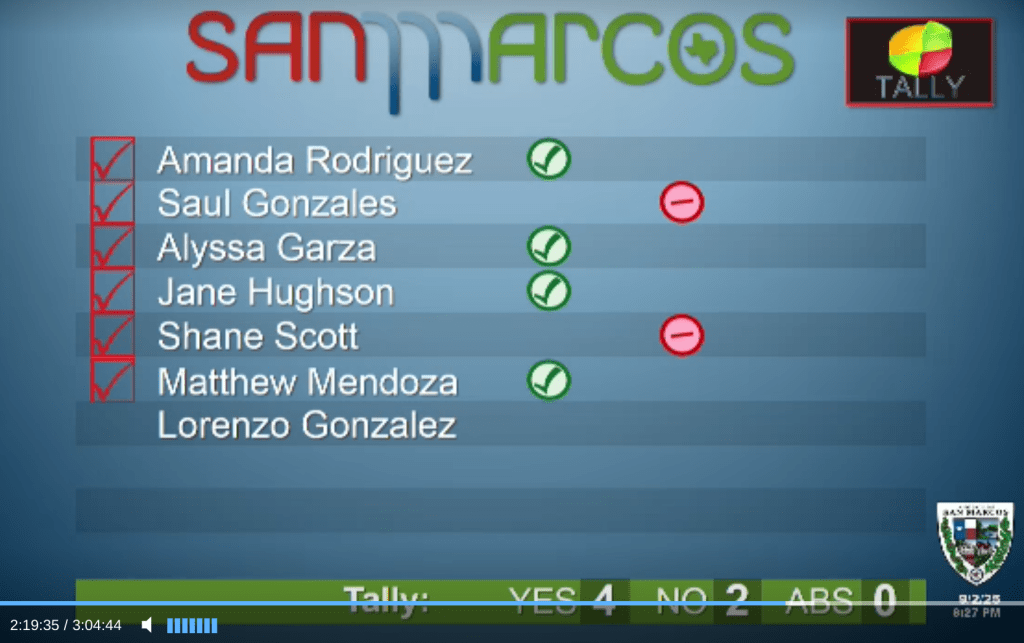
The vote to renew the Lions Club lease:
great!
…
Item 18: $25,000 from the Department of Justice to SMPD
Ok, this is fascinating.
Last year, SMPD teamed up with Hays County, and applied for a grant from the Department of Justice. Together we were awarded $37,516. The plan is to split off $25,500.00 for San Marcos, and then Hays gets the other $12,000.
So that’s why it’s on the agenda tonight – are we okay sorting out this split with Hays County?
Everyone seems okay with this!
…
Say, what are we spending this money on, anyway?
Ok, fine. Technology, and yet another camera. (Not a flock camera, though.)
What’s a JAG grant, anyway? Is it specifically about technology? It hadn’t occurred to me to wonder about that, but Amanda went and looked them up:
Indigent defense! Crime prevention and education! Drug treatment, mental health programs, behavioral programs, crisis intervention teams! Out of all those possibilities, we landed on… some new software and a pole camera?
Amanda would like to know if we could change the scope of our funding towards something a little more aligned with council priorities? and Alyssa asks how this happened?
No one has a good answer! So let me help: this grant was written last year, and this would have been totally fine with last year’s council. They liked technology and cameras! Alyssa was the only one on council last year who would have rejected this. Everyone else would have given this a big thumb’s up.
This is a new year, with two new councilmembers, and now we have a coalition of progressive voices up there! It is making a huge difference.
Jane is fine in principle with changing the scope of the grant, but she’s worried that if we have to go back to the federal government, they’ll cancel the grant altogether and we won’t get any money. (That’s a valid concern.)
It goes in circles for a long time. But eventually, they land here: staff is going to see if we can change the scope of the grant. This will come back in September.
…
Side note: What about the other half of the grant? How is Hays County spending their $12K? Are they going to fund mental health initiatives and indigent defense? Will they crusade to a more just society?
Answer: They’re buying vests!
okay then. I hope they look dapper.
…
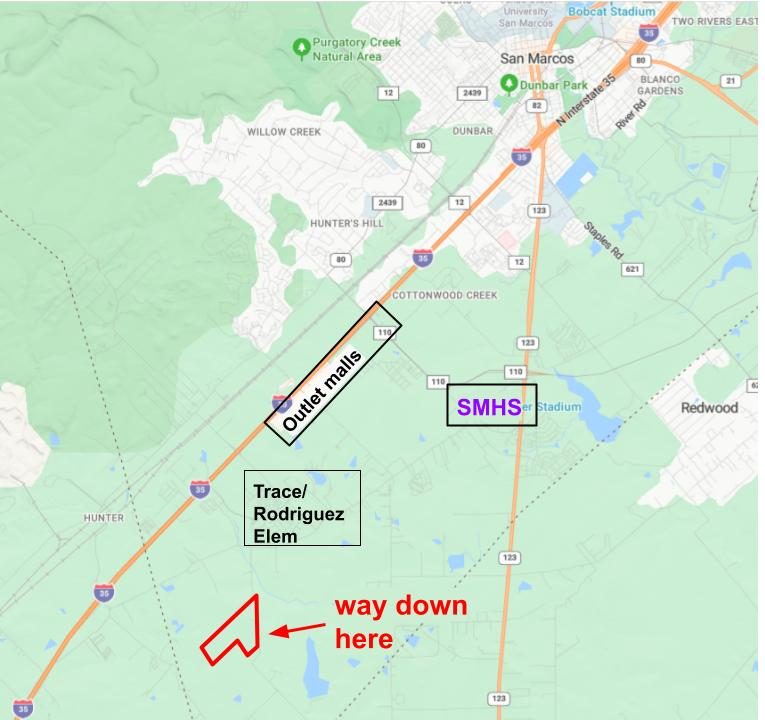
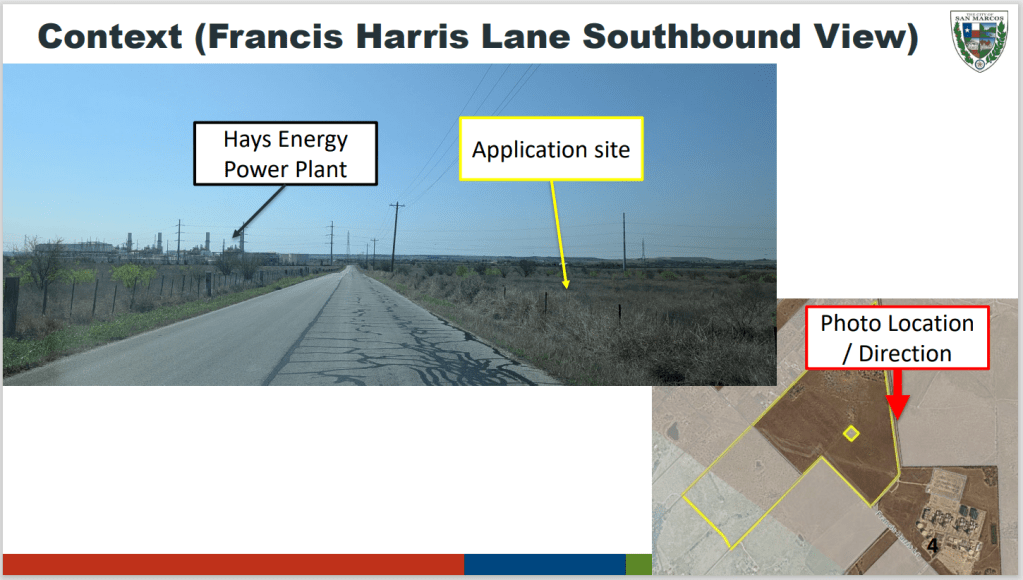
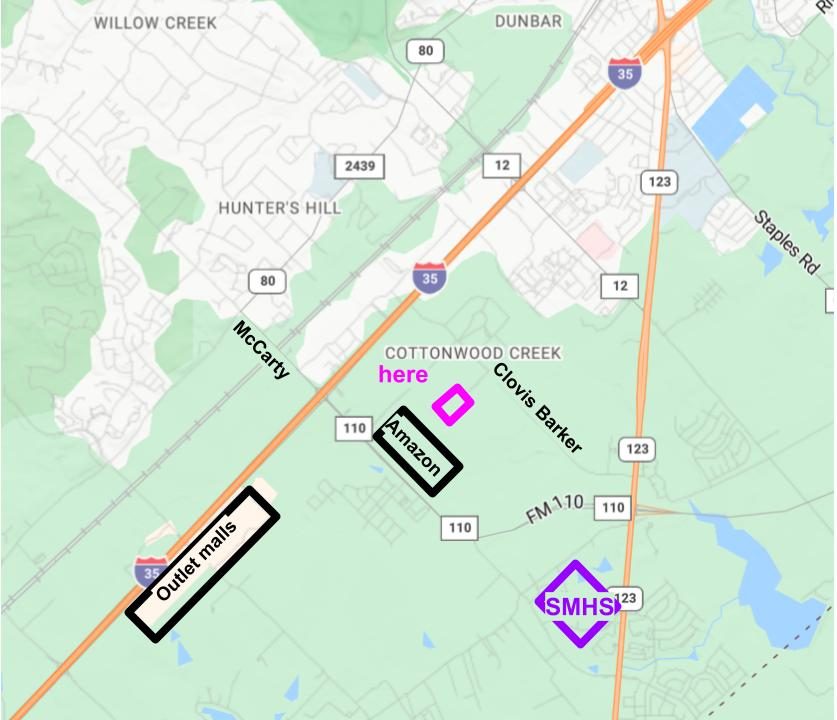
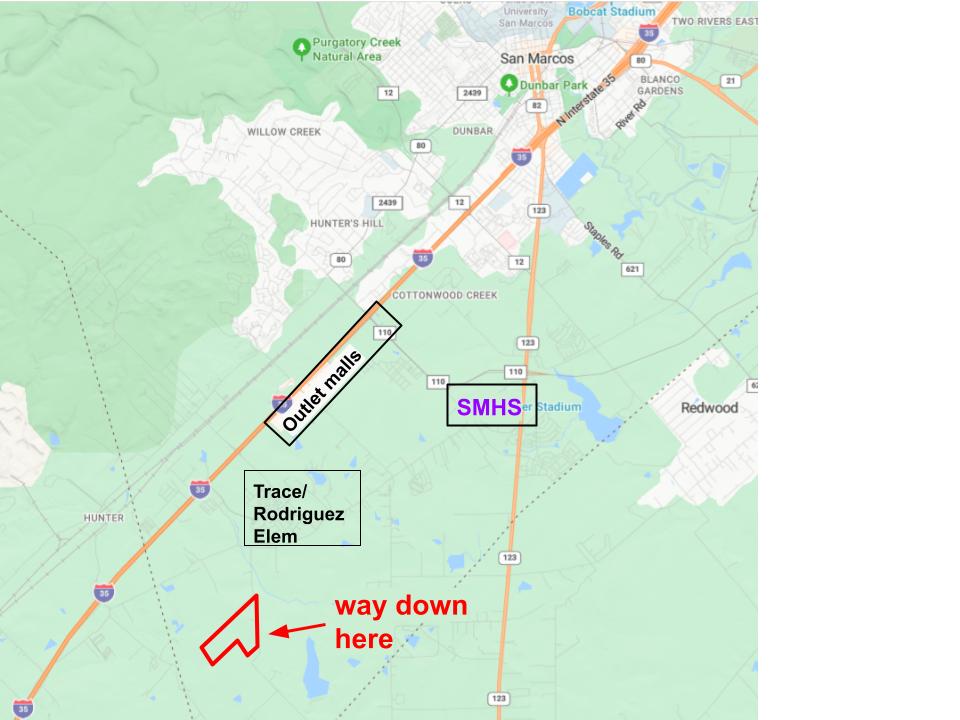
Item 22: 100 acres south of McCarty
We’ve seen this property here before, just in July:
Nothing important happened on Tuesday. It’s going to be discussed on September 2nd. I’m really only bringing this up because I saw this news article and this other news article pop up.
I did thumb through the draft proposal, though. Supposedly it will have:
Two big apartment complexes (800 and 400 apartments)
A much smaller number of townhomes (44 townhomes)
84 houses for sale
120 houses for rent
A hotel
“Live Work Play” mystery item
Office/retail/grocery space
Everyone keeps mentioning that there will be an indoor/outdoor recreation portion, so I assume the mystery item will be some sort of Trampoline Roller Skating Splash Pad. Let’s all spread that rumor, anyway.
The Question: Should San Marcos pass an ordinance that would protect tenants’ right to organize? The Answer: yes! Done. Moving on!
Okay, now let’s get into it.
Backstory: What should you do if you’re a tenant, and there’s mold in your bedroom, or your AC goes out, or you have no hot water, and your landlord refuses to fix it?
In Texas, you have very few options besides suing. You can talk to your landlord, of course. If they start to see you as a problem, you might be evicted. Filing a lawsuit is expensive, of course, and if you try to sue, you might be evicted anyways.
What’s the alternative?
Basically, tenants should be able to talk to each other about their landlord problems, and form tenant organizations, and bring issues to their landlords as a united front, without worrying that they’ll get evicted or face retaliation.
We actually already have a great tenants organization here in town! The Tenants Advocacy Group, or TAG, has been working on all this with the San Marcos Civics Club, which is why this is here before council. (It’s part of a larger Tenants Bill of Rights that they’re working on.)
How do you protect tenants?
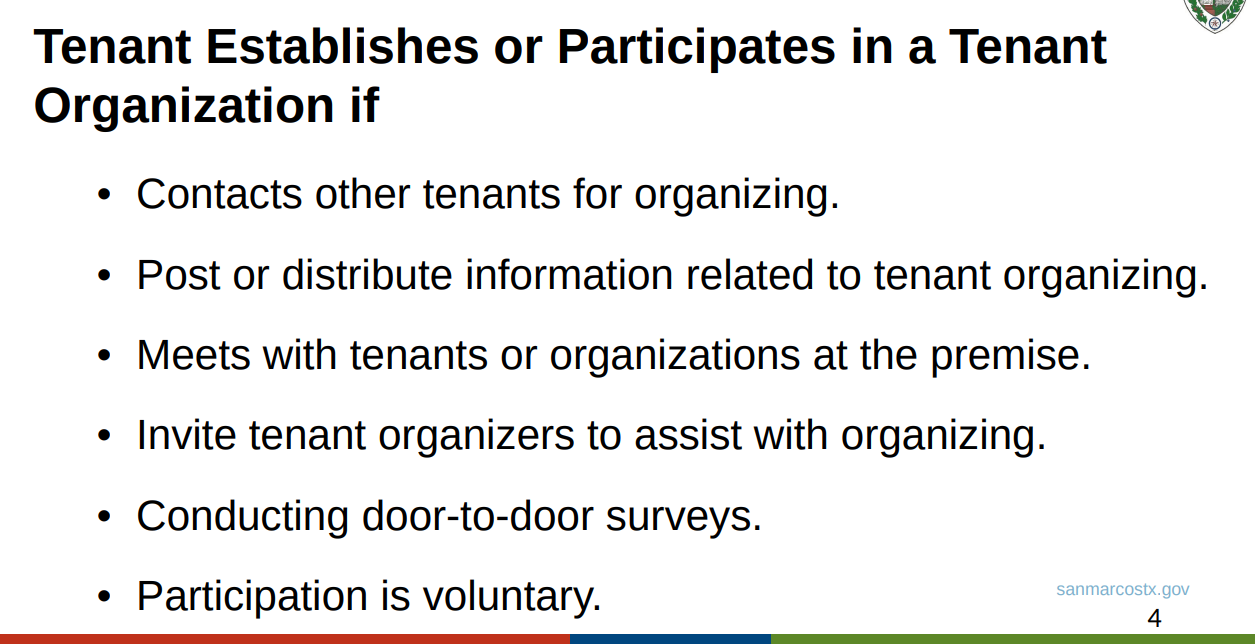
You pass an ordinance that protects tenants from retaliation if they want to organize. There are two parts:
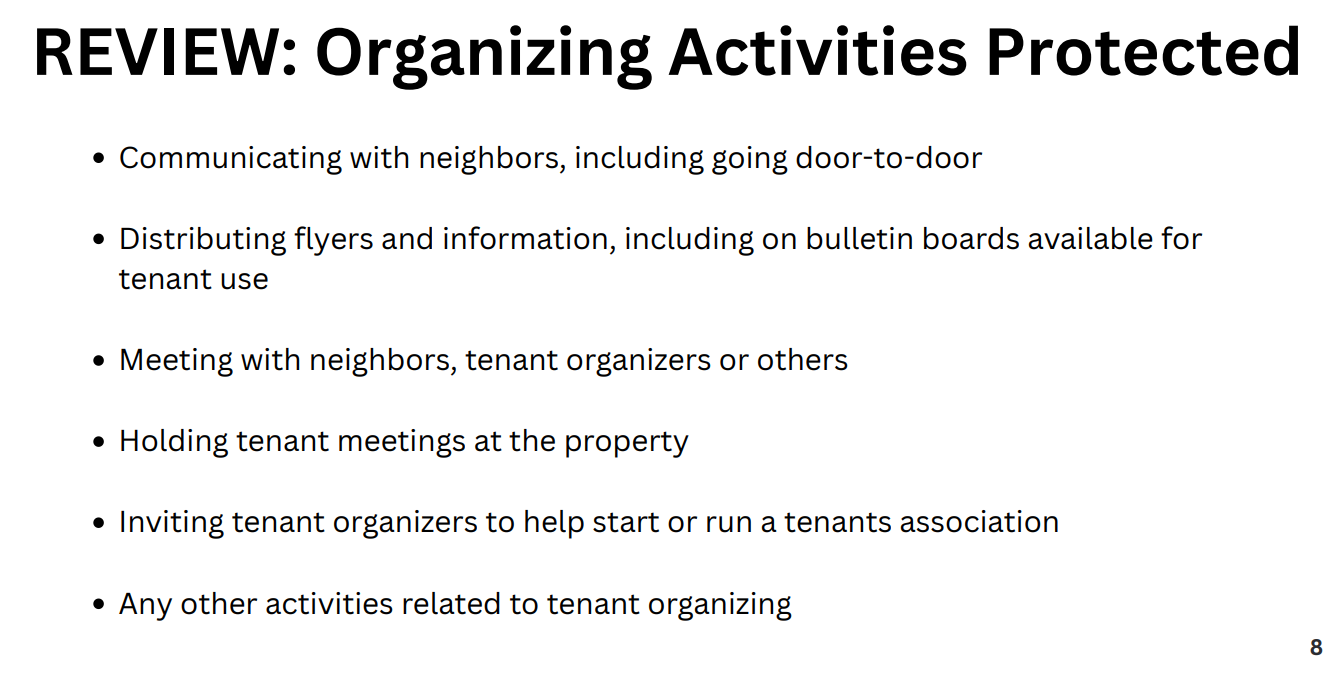
What kinds of tenant activities need protection?
What kinds of landlord retaliation or interference needs to be banned?
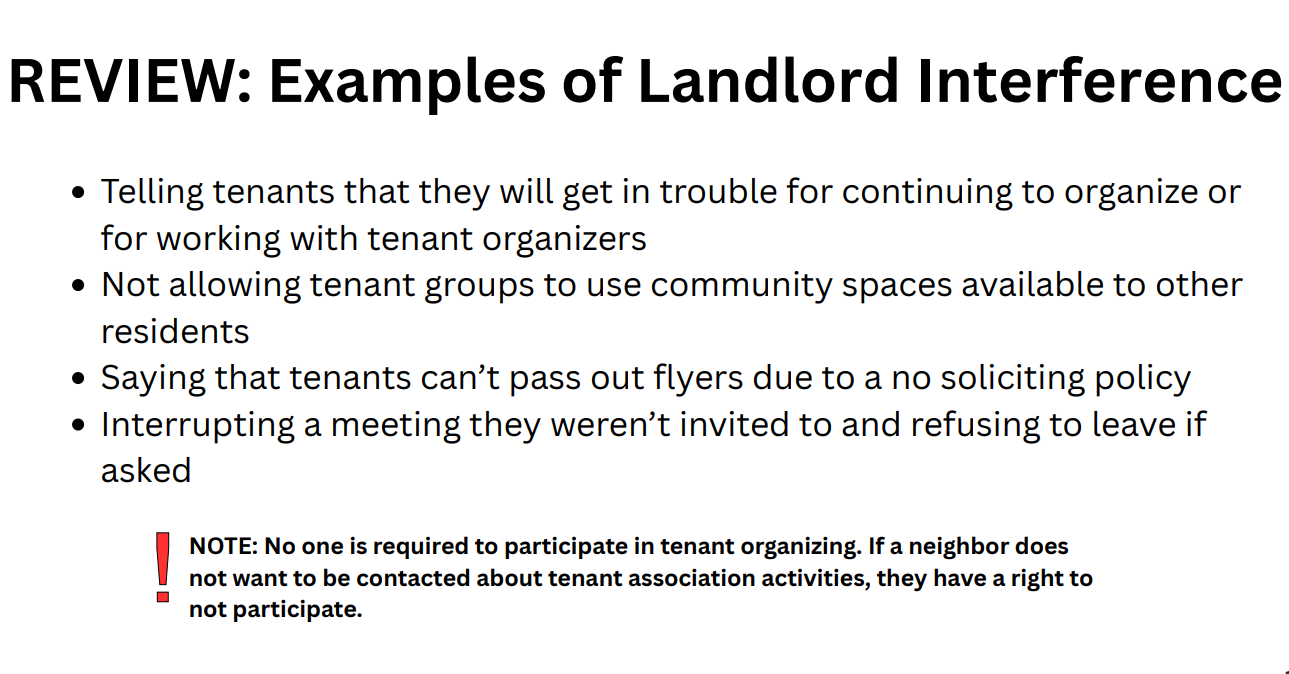
Amanda prepared some helpful slides:
So that covers the tenants. And for the landlords:
The penalty would be a misdemeanor.
Are there any laws that already exist, that protect tenants?
It depends on where you live! City staff made this helpful chart:
So yes: Austin has protections. The state overall has no protections. There are federal protections, but only in subsidized housing.
The idea would be to use the Austin ordinance as a jumping-off point, and then modify it to fit San Marcos.
This brings us to Council Discussion
Jane Hughson brings up a few details – what if a property manager is interfering on behalf of the landlord? Should they be included in the language? What about trained organizers and other non-tenants who might need protection? Can we avoid having the fliers become litter?
Amanda: Great ideas! We should definitely workshop this.
Lorenzo: A Class C Misdemeanor requires a police officer. I don’t want to criminalize landlords.
Note: Historically, marginalized groups are over-policed and criminalized. Fortunately, landlords are not historically marginalized! They’re pretty much the opposite. They’re the marginalizators!
Groups that have historically held outsized power – like landlords, or wealthy people, or police officers, or elected officials – are generally under-policed. In these cases, cities need to be more consistent with enforcement, and not worry about criminalization.
Lorenzo: Can we work out the details in a subcommittee? I don’t want to modify Austin’s ordinance. I want to write ours from scratch.
Jane: I agree. Let’s get a subcommittee going, and write out something homegrown.
Note: These are both bad ideas.
Don’t bury something in subcommittees. As Alyssa puts it, “Council subcommittees are where dreams go to die.”
Don’t reinvent the wheel. If Austin has a workable model, then let’s build on it.
Amanda points out that Austin’s ordinance has also been around for years, without being struck down by the courts. So that’s a more solid foundation to build on than if we just improvised our own thing.
City staff suggests a workshop?
Eventually everyone comes around to this idea, so it will be held on September 16th.
My dear minions: Go forth and tell Council that you think tenant protections are a great idea!
The big topic is the Data Center. It was postponed until August, though, so it’s not actually on the agenda for the meeting.
9 people showed up to talk against it. It is deeply unpopular!
Two people spoke in favor. They both happen to work for the developer.
Smaller topics:
Two people spoke in favor of Item 22, asking council for money to help fund veterans services in San Marcos
Two people spoke in favor of the Texas State hotel, in Item 20.
Two people spoke on general national and international political events. (Palestine, Trump’s BBB disaster of a bill, Adriana Smith, and more.)
…
Item 13: The Data Center proposal
It’s been postponed until August 19th.
😦
…
Items 14-15: We’re annexing and zoning 10 acres here:
They want to zone it Heavy Commercial.
A few years ago, we signed a Chapter 380 agreement with these guys. Part of the deal was that they get annexed and zoned when they’re ready to open. This is that.
…
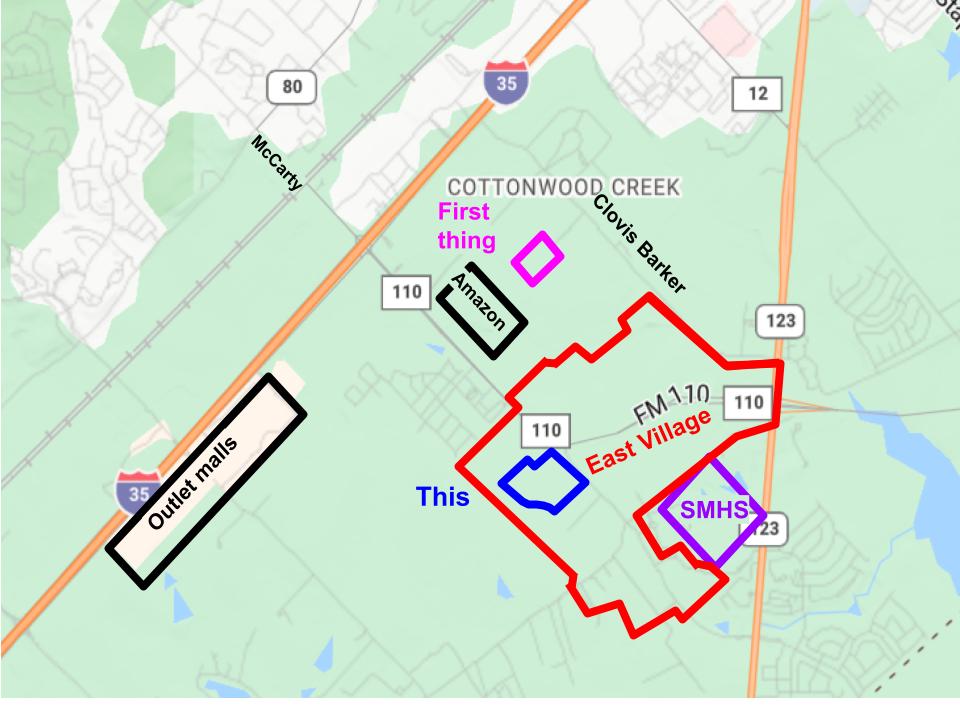
Item 16: This is very close to the previous item!
It’s here:
It’s supposed to be this:
I mean, that’s super vague. But okay.
This is part of a whole bigger thing San Marcos is trying to do, called the East Village. It’s supposed to go here:
It’s supposed to be a dense shopping/living/working urban area. Read all about it, if you’re curious.
…
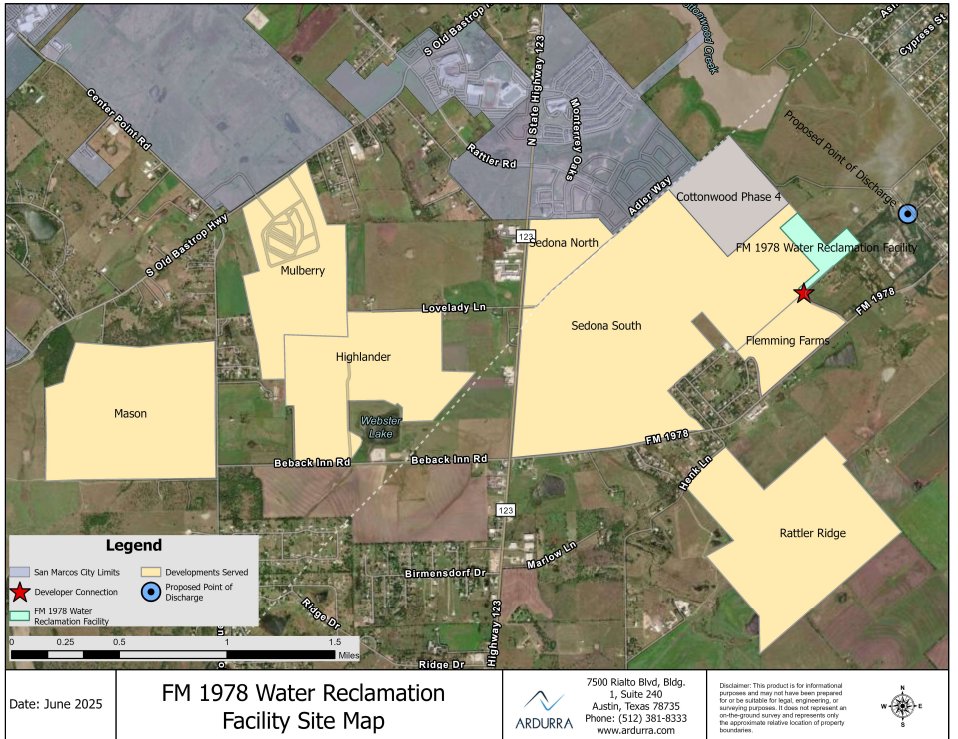
Items 18-19: There is a new wastewater treatment plant going in here:
There have been a ton of developments approved down this way lately.
We’ve talked about this one a bunch:
here and here, because of its impact on Redwood/Rancho Vista and flooding, and sewage problems.
Apparently there are a boatload more developments coming:
These areas are all contributing money to help pay for this wastewater treatment plant.
I don’t recognize most of those names! And I don’t think most of those are built yet? My guess is that they didn’t need city approval, because they’re outside city limits.
What it really is, is a massive amount of unchecked sprawl. That’s a big bummer.
(However, it’s not like it was caused by this wastewater treatment plant.)
…
Item 20: The university wants to build a fancy new hotel.
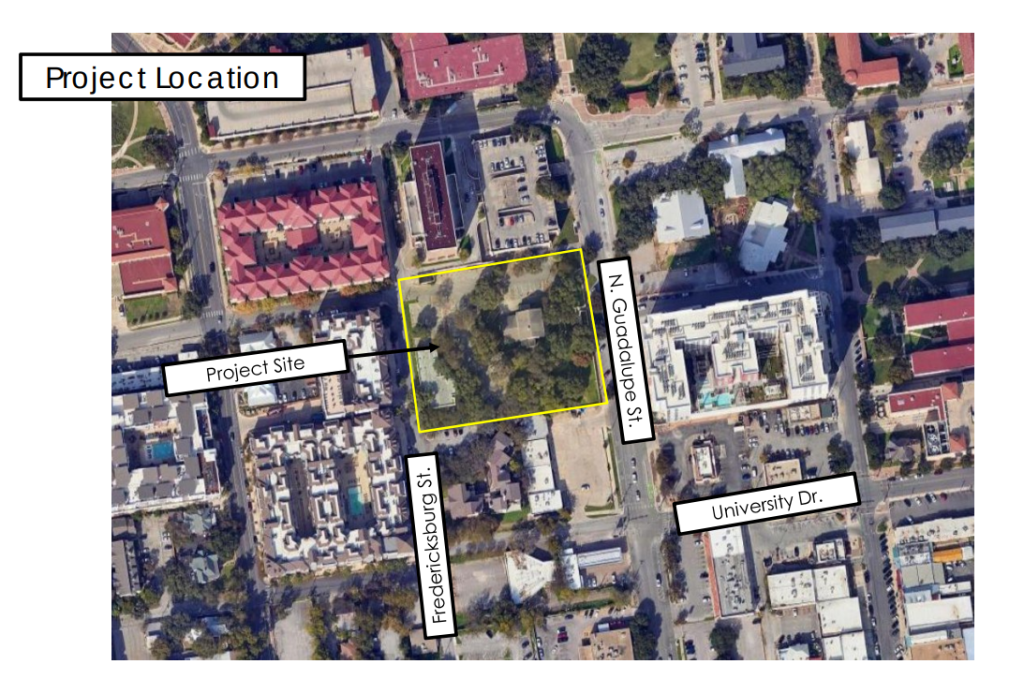
They want to put it here:
In other words, if you’re standing with Mini-Target on your right, facing the university, this location will be on your left:
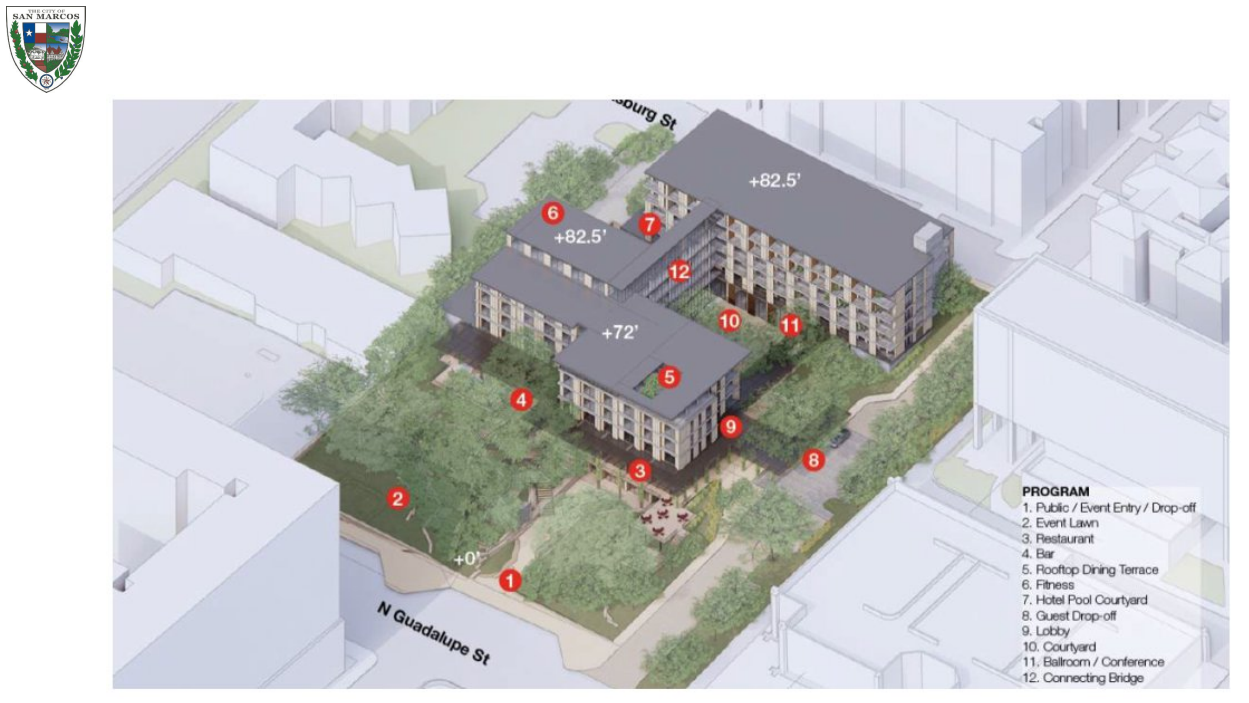
Here are a bunch of beautiful renderings from the presentation:
and
and
ooooooh! aaaaah!
Note: You should not trust beautiful renderings like these. They’re pretty pictures, not promises.
Here’s what they are willing to promise:
All this sounds great! I can see why the university wants a fancy hotel. This is also good for downtown businesses. Everything is great.
…
So why isn’t this great?
The issue is that they want a lot of tax breaks over the next ten years.
A hotel pays 3 kinds of taxes:
Property taxes
Sales taxes
Hotel Occupancy Taxes, or HOT Taxes.
Category 1: Property taxes. The actual ground under the hotel is owned by Texas State. Texas State does not pay property taxes. (This is why we lost $1.5 million in property taxes when Texas State bought Sanctuary Lofts and Vistas apartments.)
Texas State is going to lease the land to the hotel people. The hotel will pay property taxes on the physical bricks-and-mortar building, but not on the dirt underneath the building.
The estimated yearly property taxes will be $241K. We’re not offering any tax rebates in this category:
Ok, great.
My guess is that if the hotel owned the land, property taxes would be closer to $750K per year. But oh well.
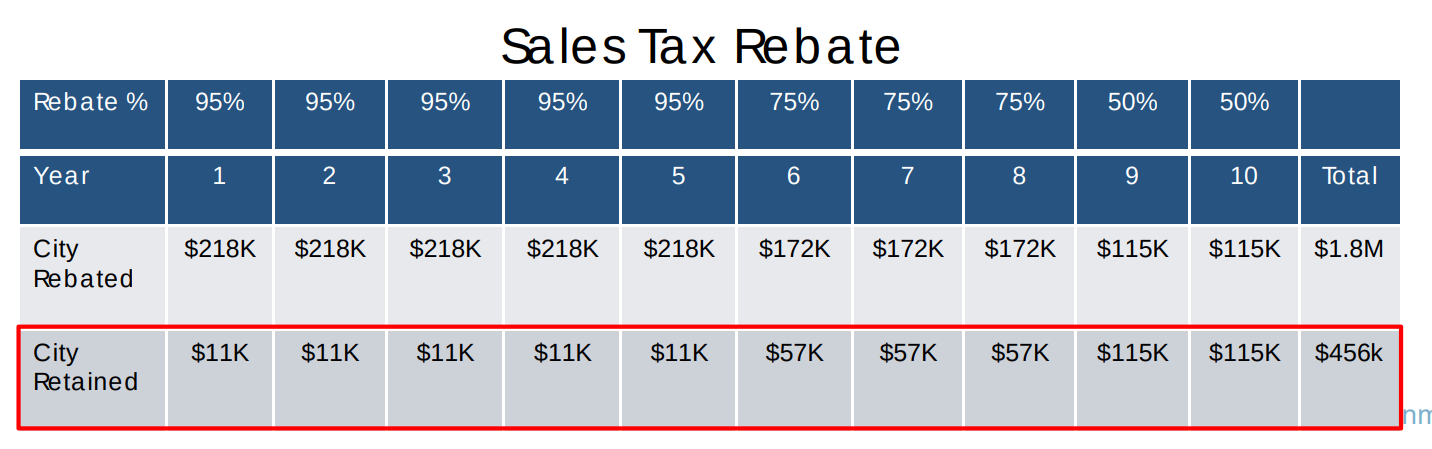
Category 2: Sales Tax: Here’s a big rebate.
For the first five years, they pay almost nothing. Then it steps up a little bit, over the next five years:
Ok, fine.
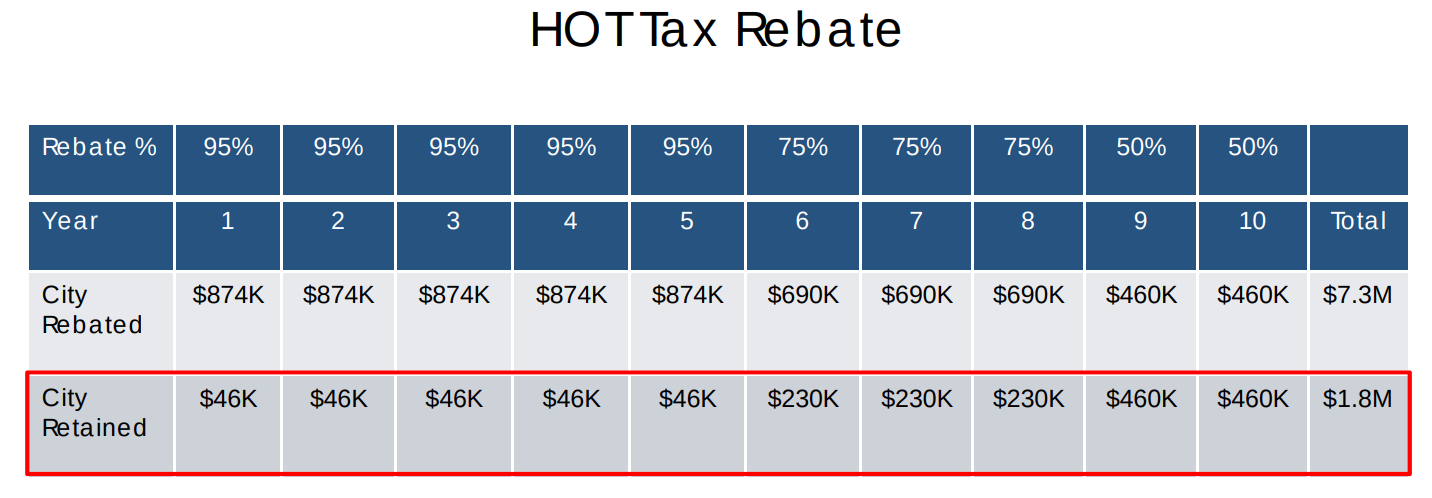
Category 3: HOT Tax: Also giving most of this category away:
Ok. This is starting to seem like a lot.
…
Total over 10 years:
If there was no deal in place, they’d pay $13.76 million in taxes.
Under this deal, they pay $4.66 million in taxes.
We’re refunding them about $9.1 million.
That seems like a terrible deal?
City staff says that unless we subsidize this hotel, they don’t have a viable business model. I think that means that… you don’t have a viable business model.
…
Listen: every time a luxury thing attempts to come to San Marcos, it goes out of business. This feels like wishful thinking. Like this bit:
In other words: “People will tube the river and then stay overnight in this hotel!”
Sir. SIR. We just spent months trying to keep the river free and affordable, because everyone who comes to tube is broke. A luxury boutique hotel is not going to keep any of them here.
I’m sure that there will be some fancy parents who pay full price, and I’m sure the University will put up lots of people (at a discount rate). Overall, I’m guessing the hotel struggles to turn a profit.
…
What’s in it for us?
Perk #1: They’re going to bring in some maybe-good jobs:
Amanda asks if these averages wages could be nudged up to $20/hour?
Answer: They’re open to running some numbers, and will come back with something definitive next time.
Perk #2: We’re protected if they sell the whole thing to Texas State. Since Texas State pays no taxes, the whole deal goes belly-up, and they have to reimburse us for the rebates:
But look: they could also just straight-up go out of business.
…
My 2 cents: There’s not much downside for the city, but I’m pessimistic anyway.
If we’re going to do this, we should:
Make the wages rise with inflation. Always. (We do this with every contract we sign with a vendor! This is common. We can extend this norm to low-wage workers.)
Get them to agree to be sustainable. Here’s some examples of sustainable University-affiliated luxury hotels.
Council votes on this, but it’s not the final vote. That will come at the next meeting.
…
Item 22: Veterans Funding
There’s a committee, the Veteran’s Affairs Advisory Committee. They undertook a big study over the past year, and concluded that there are four big needs in San Marcos:
A trained case worker specializing in veteran issues
Help figuring out transportation, especially when vets are trying to get up to Austin or down to San Antonio to the main office
Some money for the Veterans Memorial
Also ask the county to kick in money for the memorial
This item gets discussed for about an hour. Basically, the committee is making a very compelling case, but the city has very little money. It goes in circles.
…
Item 23: Gary Job Corps
What the hell is going on?!
Background: Job Corps are free job training sites, run by the federal government. You get free room and board, and get trained in some sort of vocation. You must be between 16-24 years old. Generally you’re there from 8 months to 3 years.
In general, the point is to give poor kids a path out of poverty, so that they can land a stable job.
Gary Job Corps is the one here in town:
Everyone always says it’s the oldest and biggest in the country! (I couldn’t actually verify this. This says the first job corps was opened in Maryland. This says that our site is 775 acres, which is probably the biggest because it’s an old air force base, but I can’t actually find enrollment by campus.)
On May 29th, the Trump administration announced that it was shutting down almost all of the Job Corps sites – all the ones run by contractors. This includes Gary Job Corps here in town. They gave everyone one month to shut everything down.
On June 5th, a judge ordered an injunction. Things are currently in limbo. It’s extremely hard to find good information on what’s going on. This is why Mayor Hughson wanted an update from someone involved.
There’s a representative from Gary Job Corps here today. He gives some information:
Currently there are 480 students enrolled at Gary.
When the May 29th order came, everyone was sent home.
About 400 students had somewhere to go, but the other 80 did not have anywhere to go. In other words, they were facing homelessness if Gary closed down abruptly.
When the June 5th injunction came out, Gary invited all the students back. About 25% have returned so far.
There are 99 sites nationwide, and 77 of them are being closed.
Jane’s big concern is these 80-90 students and families with nowhere to go. If Gary is shut down tomorrow, will they all become homeless? Very possibly, unless we work to secure some emergency housing.
Bottom line: they’re trying to work with the homeless emergency housing programs, in case Gary is in fact shut down, and 80 students and their families are abruptly turned on the street.
Last fall, we saw that Riverside Drive killed its street parking. They were sick of people parking in front of their houses and walking over to the river. Now you need a resident permit to park there on weekends.
This pink part of Rio Vista neighborhood wants to join the fun:
They don’t want rivergoers to park on their streets, either.
…
These guys live by one of the Spring Lake trail heads:
They also don’t like hikers parking in front of their houses. They want to require parking permits, too.
…
You know me: I’m a world-class scold on this topic. I did not like it when they did this in Blanco Gardens, I didn’t like it on Riverside, and I don’t like it now. I think this is all bullshit.
It’s a privilege to live walking distance from a major park. You’re very lucky! But the street does not belong to you. People should get to park there.
That said: it is super gross when park visitors leave trash behind in people’s yards! But surely there’s a better solution than quasi-privatization of public streets.
…
Anyway, Council approves both the Rio Vista streets and the Panarama streets:
It’s two different votes, but they both went the same way.
So now only residents get to park on those streets.
…
Item 26-27: CDBG money.
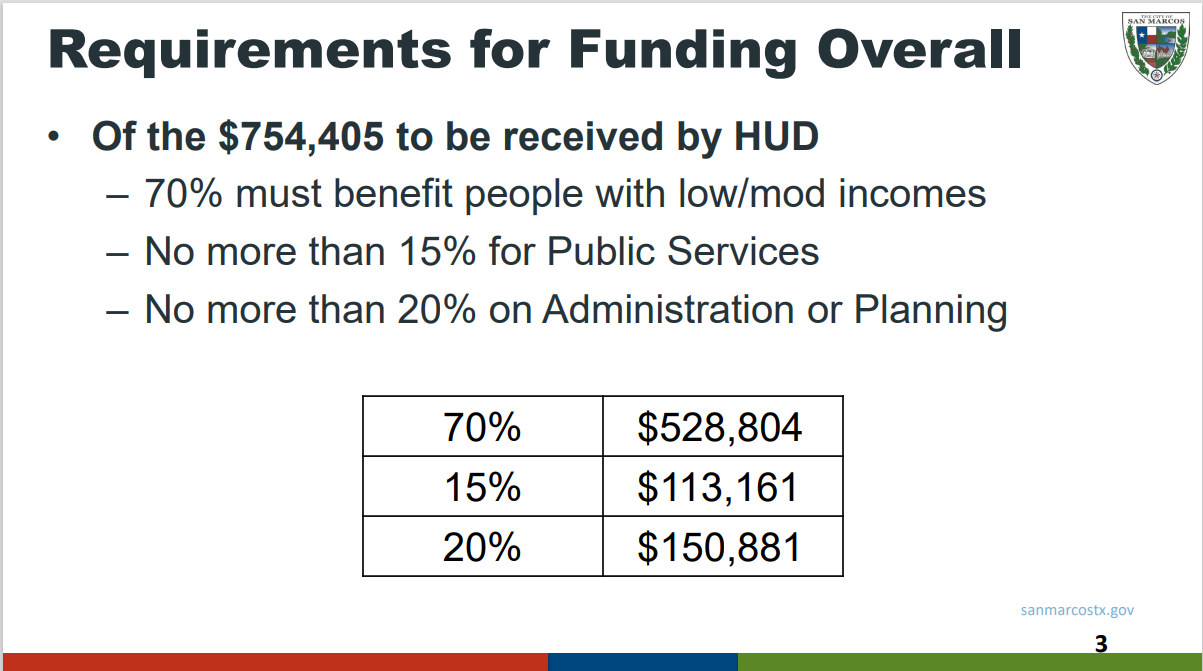
CDBG stands for Community Development Block Grant. This is money from HUD for local projects. This year we have $750K to distribute.
There are some rules:
Council has priorities, and they also had a survey and public outreach to see which categories to focus on.
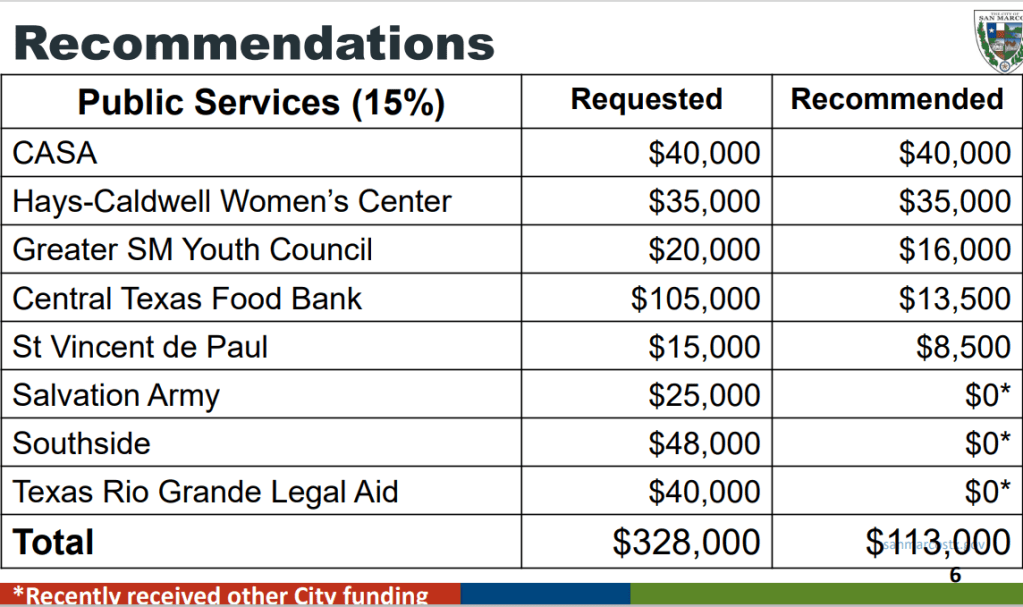
The committee waded through a bunch of recommendations, and is recommending these amounts:
There’s some explanation that goes with these amounts:
Salvation Army, Southside, and Texas Rio Grande Legal Aid are all getting other funding from the city.
Thorpe Lane just needs a little more funding to add to last year’s funding. They got $650K last year.
Long Street and Cuatehtemoc Hall are just too expensive for this particular fund, and Cuatehtemoc is getting some other city funding.
Calaboose is getting roof repairs instead of a new roof, and the city is paying for that instead.
There is no vote tonight. It is just a discussion item.
The vote is scheduled for the July 1st meeting
P&Z denied the request. So Council needs a 6-1 supermajority to overturn the P&Z vote.
There are 19 more speakers during the public hearing, along with the 35 from from the top of the meeting. (Some people speak twice, though.)
Here’s the main points that people make against the data center:
We’re in a drought, and this will destroy the San Marcos river
This really is the most important point. Climate change is pushing us towards permanent water shortages, and data centers use a massive amount of water for cooling.
And also:
This will drive up utility rates
There are reports from Granbury that these data centers are unhealthy to live near
Here are the arguments made in favor:
We’re going to get a lot of tax revenue
This does not cost the city much in terms of roads, utilities, and fire/police/emergency services.
These guys are offering to be more environmentally sustainable than the other six data centers. Take the regulated data center over the unregulated one.
Specifically, they’re going to use closed-loop cooling instead of open-loop evaporative cooling. This uses much less water.
Here is the developer’s basic pitch: “Data centers are definitely, 100% coming to central Texas. I’m the friendliest and the most cooperative one. I’m willing to do things environmentally and sustainably.”
He’s offering to put a bunch of concessions into a restrictive covenant. This is a contract that stays intact even if he sells the power plant. The next owner will still have to comply with it.
Here’s what he’s offering:
Closed loop, non-evaporative water cooling system. (This is very important.)
Limiting water use to an amount equivalent to 235 homes
Stricter than San Marcos Code on stormwater detention and impervious cover.
Sound and light mitigation
Getting water from Crystal Clear, not from San Marcos.
Getting electricity from Pedernales, not from San Marcos.
Only need San Marcos for waste water.
Here’s the obvious rebuttal to the last few points:
Who cares if it’s San Marcos city water or Crystal Clear water? It’s all coming from the same water table underground.
One speaker puts it like this: “These are straws pulling on the same water table”. Exactly.
Will this cause the San Marcos River to dry up???
Here’s what the developer said: they’ll need about 400-500K gallons of water to initially fill about 6-7 buildings. But after that, they don’t need much water until the buildings need to be re-filled in maybe 10 years.
100k of water is about what an average family of three uses in Texas a year (~88k). Won’t make the river run dry!
If it was an open loop cooling system (evaporative cooling) and an average system, it would be about 12.5% of San Marcos use. It wouldn’t take many of those to overwhelm local supplies.
So this is a big picture question. Can our river handle this one data center, on a closed loop system? Yes. Can it handle seven data centers on open loop systems? No.
…
So does ANYONE have control over how many data centers come to central Texas?!
This is an uncomfortable question! There’s only flimsy safeguards.
Can San Marcos block them? Only if they’re in city limits, and the developer needs the land to be re-zoned.
1. The overall situation is pretty bad for water use. 2. The San Marcos river has some unique legal protections, because of the Edwards Acquifer Authority. They have legal authority to sue if companies go over their allotted amounts. But still, do we need to test this? 3. We’re relying really heavily on ERCOT to gatekeep this situation.
…
What does Council say?
Everyone’s a little annoyed that the actual restrictive covenant is not already prepared and ready to read. But it’s not.
This is the basic argument that emerges: ERCOT is not going to approve all seven applications. They’ll probably only approve 1-2 applications. So if this data center gets approved by ERCOT, it might prevent an unregulated one from getting approved. That would be a net good.
Jane: It’s better to have these guys, who we can regulate, than the others who we can’t.
Shane: The wastewater from the center goes to the city system. How much extra clean up do we have to do to the wastewater, from the extra chemicals? Answer: We have a filter standard. They have to clean the wastewater up to our standards before they release it to our system.
Lorenzo: Are there going to be gas turbines or some sort of power plant? Answer: No, that’s Cloudburst. We’re not going to have a power plant.
Lorenzo: What happens if they violate the restrictive covenant? Answer: Two things: – Before we issue city permits, we’ll check to make sure they’ve built it the way they’re supposed to. So they can’t get up and running if they don’t build what they say they’ll build. – After it’s built, if they violate the covenant, we can get a court injunction. The court will order them to comply.
The developer is trying to be the most accommodating person ever. Would YOU like to talk to him? He’s got a whole website, and a whole shtick about how he’d like to talk to you.
(Honestly, he’s refreshing after the SMART-Axis Terminal jerks.)
Amanda: I’m concerned that we don’t know what company we’re actually talking about. Answer: I’m not allowed to say who it is yet. I promise I’ll say before the July meeting. They have facilities in Austin, Carrollton, and San Antonio, if you get my drift.
[Gentle reader, I got his drift. This appears to be the only Carrollton data center.]
A lot of citizen comments mentioned how utility and water rates will skyrocket. Alyssa asks about this? Answer: Council sets water rates. They don’t skyrocket unless you want them to.
[Note: This answer is a little disingenuous. Council sets water and electric rates for everyone on San Marcos utilities. So those won’t skyrocket. But if you live down south by all these proposed data centers, you might not be on San Marcos utilities. Who knows what Crystal Clear water and Pedernales Electric will do.]
…
Conversation turns to the P&Z denial. Right now, it takes 6 Council votes to overturn P&Z.
Should Council send this back to P&Z, to take another look? If P&Z changes their mind and approves it, then Council would only need 4 votes to pass this data center.
However, sending it back to P&Z will delay everything by 4-5 months. It might hurt their chances with ERCOT. Council does not want to risk the possibility that ERCOT denies this application, in favor of some other yahoo developer who throws up something worse, out in the county.
Bottom line: I think Council will approve this one data center at the July meeting.
We’re in a kinda terrible situation, but this one data center is probably the least-bad option.
They read all the license plates that go by, and record the date and time. Then if the police are trying to find someone, they can run a search on all that data and see if there’s any record of it.
“LPR” means “License Plate Reader”, and we first got some back in 2017. But we didn’t join the Flock network until 2022, when we bought 14 cameras:
(Also I note that they used seized funds for the first batch. Blech.)
…
Back in February, SMPD wanted to purchase 19 more Flock cameras. Council delayed approval in order to revisit our privacy policy. In March, we revisited our privacy policy and made some good improvements.
So now it’s time to vote on whether or not to approve the grant for these cameras.
What are the arguments for and against?
In favor: There are lots of examples of how Flock Cameras are used to solve crimes. From the packet:
Arguments against : They are tracking your every move. Do you want to live in a police surveillance state? The data gets merged nationwide to have one big nationwide network. Private companies can have Flock cameras. Neighborhoods can have Flock cameras. The ACLU does not like Flock one bit.
But it’s not just an abstract fear about loss of privacy: ICE has access to Flock data. We’ve got a federal administration that plays out revenge fantasies on brown people, and is in the business of deporting people as recklessly and broadly as possible.
Amanda: It’s the times we’re living in. People disappear off the streets because of this technology. – The policies aren’t strong enough to protect against a subpoena. Austin didn’t know until they did an audit that ICE was accessing their data. (Austin is now ending their license plate reader program.) – Senate Bill 9 would require Texas sheriffs to work with ICE. Our data will definitely get shared. Our policies will not protect us. – They’re rolling out new technology, like NOVA. – Please just don’t do this to people.
Saul goes next: I see the pros, but there are not enough safeguards yet. I’m a no.
Council spends the next hour trying to nail down exactly how much control you have over who sees your data. If Dallas PD is looking for a specific red car, can SMPD decide whether or not to release the data on that specific car?
Eventually the answer comes out: no. You do not get to decide on any specific request for data. Once you set up a reciprocal agreement with Dallas, they get access to all your data. Either the faucet is on, or it’s off.
…
The Flock representative keeps repeating “The city of San Marcos owns the data. Flock does not own the data. They’re just the guardians of the data!” Alyssa asks: Can you show me where in the contract that exclusive access is guaranteed to San Marcos? Your policy says that you “retain a perpetual, royalty-free license to use aggregated data for your purposes.” Flock rep answer: We promise that we use it only for anonymized training data.
Lorenzo: Does Flock own the physical servers? Or do you rent servers? What Lorenzo means is: where are the actual, physical computers where the data is stored? Does Flock have their own computer storage?
Answer: We use Amazon Webservices. This means, no, Flock does not own large-scale computer storage. Flock sends the data to Amazon for storage on Amazon computers.
Lorenzo: So Amazon is a third party that could also be subpoenaed for the data? You might not even know if they had to hand it over. What if they violate their agreement and fail to delete it? Answer: It’s in our contract with Amazon that they’d delete the data after 30 days. If they didn’t, they’d have to charge us extra! [Note: that answer does not make any sense. You didn’t misread it.] Lorenzo: Amazon is in the business of data collection. Jane: You’re not in control of that data.
…
Alyssa: This system is dangerous by design. – these claims are absurd! Like “license plates aren’t personal information”. You can track a person with it, can’t you? It’s personal information. – We own the data, but we don’t. They keep it. – They say ICE can’t access our data, but they do. – Anyone that we share our data with can then turn around and share it with whoever they want. – There are many cases of cops using it to stalk people. – Peter Theil is a backer of this, for god’s sake.
Chief Standridge: Look, I can only speak on behalf of what happens locally. In San Marcos, Flock helps solve specific crimes. Locally, I don’t have evidence of any privacy breaches. I am only able to speak to San Marcos.
Amanda: I have never thought that you all are the bad actors. We share with 600 agencies. Our policies don’t matter when we’ve already shared with them. Flock would not be in business without this network.
Jane: I was a software manager at the university. Here’s how it goes: you get a new technology, and you hammer out all the rules with the company. Then they get bought. All the rules with the first company go out the window, and the new company puts all new rules down. If Flock gets bought, all these rules go out the window.
Chief Standridge: What about all the safeguards and policies we discussed in March? Amanda: All we did is require agencies to follow all applicable rules and laws. But there are no federal rules! This technology is not regulated. Your policy ends the moment you share data with them. We share data with Houston! Houston openly says they work with ICE. Therefore we work with ICE.
…
Shane: What about the first 14 cameras we already bought? We still have those, right? Jane: Yes. But we could put it on the agenda to get rid of them. Alyssa: I guess we should revisit this!
Jane shares a little of her thinking: – Originally I thought these cameras were great. And if Flock were only used like in the examples, then it would be fine. – I’ve learned stuff tonight that’s giving me a really hard time saying Flock is good for the US. – Then I thought, “But there’s cameras everywhere. There’s Ring, etc, toll roads, smart phones, etc.” – But that’s different. This goes to government agencies. I’m not worried about our department, but I can’t say that about other departments – Maybe just at major intersections? Nope, nope, that doesn’t work. It’s the other departments. – We just don’t have enough guard rails for this. The more I learn about how the system is being used, it’s pretty scary.
…
Something has happened since the last discussion, because Chief Standridge does not seem surprised that it’s unfolding like this.
He makes one last bid: “What if we only share data within Hays County?”
Alyssa: What keeps Hays County from turning around and sharing it? Amanda: What about the Texas Senate Bill that requires sheriffs to cooperate with ICE?
City Manager Stephanie Reyes weighs in: It’s clear that you all are worried about where we are as a nation. It’s not an issue about SMPD. It’s not about our individuals. It’s about the policy decisions that we can control in the national scene. Everyone’s like: Yes! Correct!
…
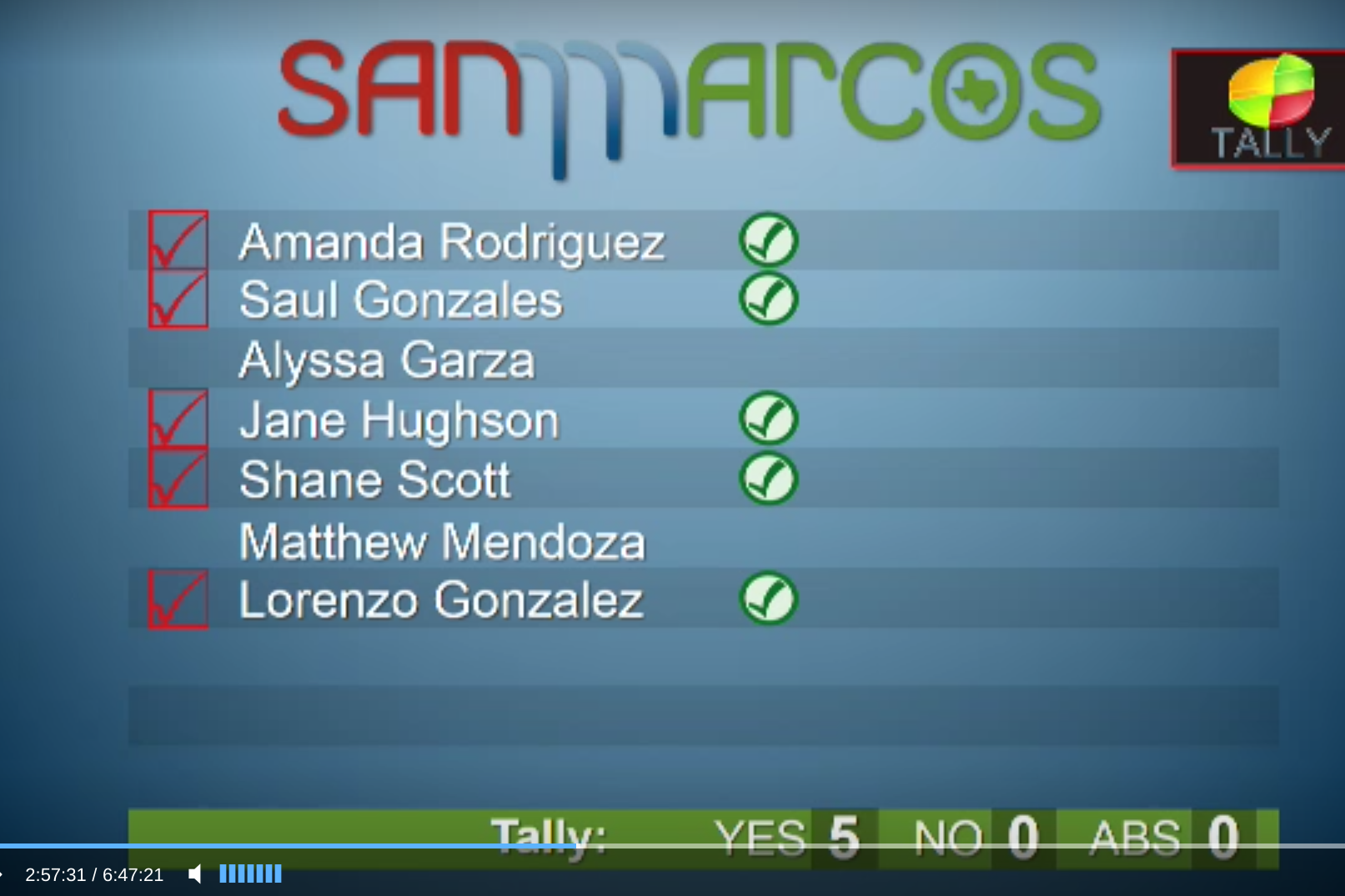
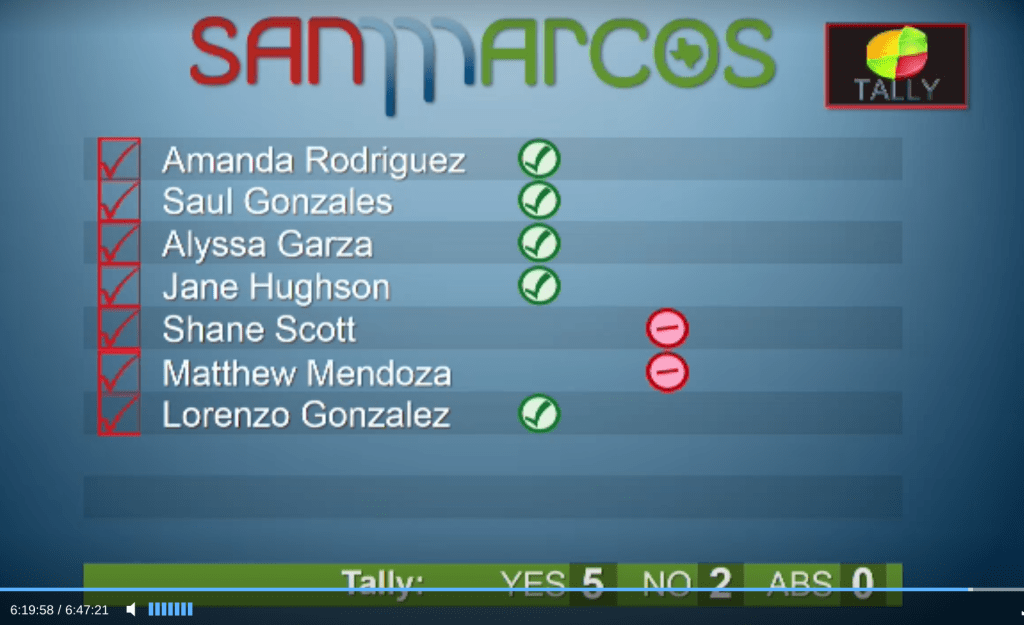
Finally, the vote: The motion is to deny. So a green check means no on the cameras, red dash means “yay Flock!”
Are you a NO on the cameras?
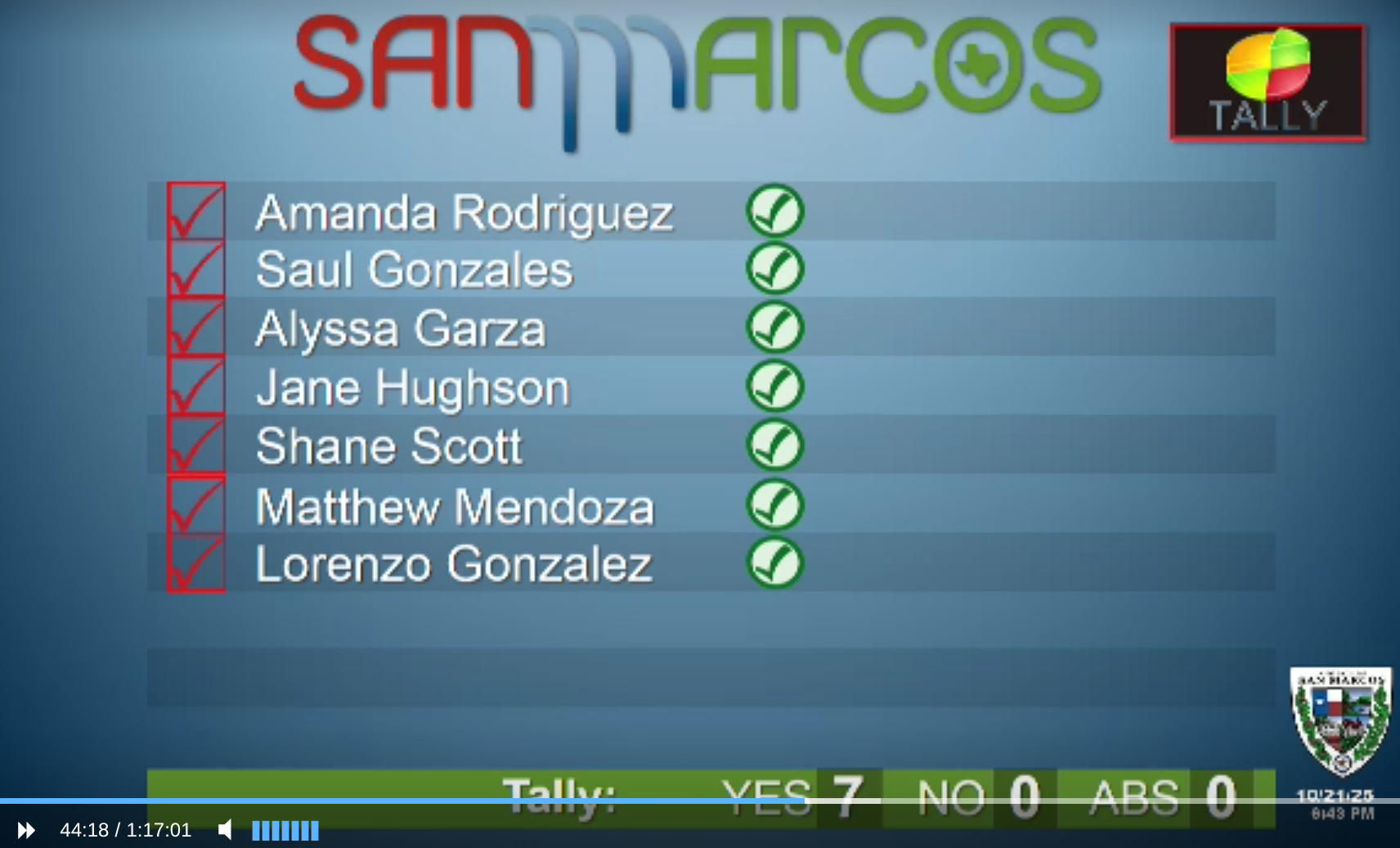
Amazing. Shane and Matthew are the only ones who still want them.
The council conversation was outstanding to listen to. It was just so sharp. Everyone made really great points.
It turns out they’re breaking up with us? Their contract is up on June 30th, and they don’t want to renew.
The reasons are:
Low ridership
Tariffs
Finding parts
Ouch.
Once they officially break things off, we’ll start looking for a different company who might enjoy our low ridership, tariffs, and lack of parts.
…
Item 24: More data centers!
So, recall there are seven data centers with applications in at ERCOT.
These are the three that I know about:
So now we’re on the pink one.
Yes, it’s gigantic. The red one from earlier is 200 acres, and this one is 785 acres. They’re saying it would also include housing. Unlike the one in red, the developer wants this one to be on San Marcos water.
It’s past midnight and everyone is exhausted. They decide to just form a council subcommittee to negotiate and discuss the issue further.
Council subcommittee: Jane, Amanda, Lorenzo.
I’m good with that.
…
Item 32: Proposed Charter Amendments for ballot
Here’s the legal language for everything that will show up in the November Ballot:
…
Q&A: Max Baker:
Matthew Mendoza again! Why do you think it’s appropriate to use swear words during the ceasefire conversation?! C, S, and A words?!
Would council consider revisiting EDSM policy and how we award benefits when GSMP knows before Council? Would you bring a discussion item that puts Council knowledge before biz privileges?
So much quieter than it’s been. Only seven speakers! Only twenty minutes long!
Here are the topics:
Four speakers: You should have voted for the Gaza ceasefire resolution!
Two speakers: No on the ceasefire! Also we support SMPD and public safety!
One speaker (Rob Roark, of KZSM fame): The Charter Review Commission worked hard and has some good recommendations. Hear them out!
….
Item 1: Homeless population PiT Count
“PiT” stands for Point in Time. Nationwide, everyone picks one day in January where everyone tries to get a physical headcount of how many people are homeless on that one specific day. This is how you get funding from HUD.
We did our PiT count on January 23rd this year. This is the report on it.
….
What counts as unhoused, according to HUD?
What doesn’t?
It’s not a perfect measure!
But it’s not worthless, either.
Here’s how the numbers have shaken out over the past five years:
The blue is a subset of the orange. Those are people who appear to be homeless, but we weren’t able to talk with them.
The vast majority of homeless people of Hays County are in San Marcos:
This is partially because the Hays County Women’s Shelter, Southside Shelter, and emergency hotel housing programs are all located here. But also partially because we’re just a much poorer, more precarious community than the rest of Hays County.
What does Council think?
The speaker makes a plea: can you help us get the county to work on its emergency response plan? For example, during the freeze, their plan was “Send everyone to Southside.”
They decide to send the issue to the Homelessness Committee to think about harder.
…
Item 2: Charter Review Commission
Every four years, we take a fine-tooth comb to the city charter, and look for improvements. Council appointed a commission of residents, back in January. They met weekly all spring, and returned back with a list of recommendations.
Council takes these recommendations, and either rejects them, accepts them, or puts them on the ballot.
Today is just the rough draft. Basically, they’re weeding out anything that they hate. Anything that Council likes will come back in formal, legal language, and then they can argue about the details.
There are 15 total proposed amendments:
Better pronoun use
Notifications on social media
Mayor gets 4 year terms
Tweaking the number of yearly council meetings
Cap on councilmembers zooming in to meetings
Approving council meetings minutes on time
Buying hard copies of city code, grammar tweaks
Auditing anyone who gets public funds
Financial disclosures for referendums and initiatives
More time to file referendum petitions
More time to verify citizen petitions
Change P&Z residency requirement
Review the comprehensive plan a little less often
State budgets using plain, clear language
Tweak some headings
Study single-member districts and launch education and conversation, but don’t take any major action right now.
Warning: This item takes about 2.5 hours to wade through. I’ll do my best to keep it snappy.
Let’s dive in.
Everyone is fine with this.
Everyone like this, too.
This is the first contentious one. This is about election turnout. Presidential elections have the biggest voter turnout. Midterm elections are the next-biggest. The odd years are called off-year elections, and they have the lowest turnouts.
For example, the committee chair read out the mayor vote total for the past four years:
2021: there were 3,800 votes for mayor (off-year)
2022: there were 17,000 for mayor (Midterm election)
2023: there were 3,900 votes (off-year)
2024: there were 23,000 votes (Presidential election)
So the key is those extra 10-20K voters who only show up for big elections: do you think they will vote for your candidate? If so, then you want to align elections to land on presidential years. If not, then you like elections to land on off-years.
The Charter Review Commission is arguing that we should switch to 4 year terms, aligned with Presidential elections. Here are their reasons:
It’s very expensive to run for mayor. Lengthening the term may induce more people to decide it’s worth it.
Two year terms means you’re always campaigning. This may mean you’re overly beholden to your donors.
We should prioritize all voters, not just the well-connected ones.
Often times subcommittees take more than two years to get their work done, so a mayor can’t complete their campaign promises in one term.
What does Council think?
Jane goes first:
She likes 2 year terms. The mayor should have to earn the votes of the people often.
She proposes splitting the difference and going with 3 year terms.
It’s easier to run in odd years because there’s less competition for attention.
It’s cheaper to run in odd years.
The conversation kind of deteriorates. People keep making opposite assertions that directly contradict each other:
Off-year elections are cheap, because there’s less competition!
Off-year elections are expensive, because it’s harder to get donations!
Off-year elections are easier, because it’s quiet so you can get more engagement!
Big years are easier, because you can piggy-back on the extra opportunities and everyone is paying attention!
These things can all be true – it just depends which voters you’re talking about. If you try to get students to turn out, then you like the big years. If you rely on Old San Marcos and personal networks, then off-years are easier.
More contradictions:
People may not want to commit to 2 year terms, because they only get a year before they have to start campaigning!
People may not want to commit to 4 year terms, because they may feel like it’s too long for something they’re not sure about!
Big years are harder, because the ballot gets so long! People don’t want to check all those boxes.
Small years are harder, because people don’t want to make a special trip to go vote!
Everyone’s just making random guesses – no one actually knows how these factors play out.
Alyssa: I strongly prefer 4 year terms. Saul: Two years is better, for accountability. Lorenzo: 2 or 4 year terms. Matthew: 2 or 3 year terms. Shane: 4 years. Amanda: I have issues with all the choices. But I guess 4 years.
This one will go to the people! You get to vote on this, in November! (Which is admittedly an off-year election.)
…
Spontaneous side quest: What about the rest of council? Should there be 4 year terms for all council members?
This is not controversial. Sometimes it’s hard to have two meetings in November, because of elections, and in January, because it means staff has to prepare a meeting over the holidays. We’re allowed to have as many extra meetings as we want. Everyone’s fine with this.
SIGH. This is dumb. This is about former council member Max Baker.
During Covid, everyone else came back in person, and he kept zooming in for an extra year or so. He was also a pretty contentious person who argued a lot, and pissed a lot of people off.
Would he have gotten along better with the rest of council if he’d been in person? Who knows. But many people believe that him zooming in made everything worse. Anyway, the voters did not re-elect Max, so the situation resolved itself.
In my opinion, that’s how it should go. Do something that pisses off a lot of people, and let the voters decide whether or not they approve. Democracy!
This recommendation is not that. It’s about micromanaging who zooms in for which kinds of reasons, but simultaneously pretending not to micromanage these things. “We trust you to give honest reasons, but you’re only allowed to give three bad reasons per year before you get an unspecified consequence.”
Look, these things are all true:
Meetings go better when people are in person
People can have good reasons to zoom in.
People can have bad reasons to zoom in, and you can’t tell the difference
Do not get into the business of policing how conscientious someone is at their job. You’ll end up writing a fractal maze of tedious, detailed rules. Extreme cases make bad policy.
Should this be a charter amendment?
Yes: Matthew Mendoza. No: Shane, Jane, Amanda, Saul, Alyssa, Lorenzo
Should Council discuss this further as an internal, lowkey rule?
Yes: Lorenzo, Amanda, Jane, Saul, Matthew No: Shane, Alyssa
Sure, that’s fine. It’s just weird to micromanage from the charter.
…
Heh. They have not updated City Council minutes since May 2022. Apparently there was some staff turnover, and it fell by the wayside.
This moves forwards.
Everyone is fine with this.
This one is odd. Basically, Council already puts a clause in its contracts that they can request audits like this. In practice, they almost never do.
The question is: do they need extra firm legal footing to do this? Should they put it in the charter, and authorize themselves with extra authority to do this thing we already do?
So it fails. I probably would have voted yes, though.
I liked this one, but the lawyer did say that it’s not really a Charter-level thing. The charter is like your constitution – it’s your high-level principles, but not your detailed little laws.
Yes: Saul, Jane, Matthew No: Alyssa, Shane, Amanda, Lorenzo
So this fails.
Council goes with this one.
Council goes with this one, too.
Keep five year residency: Jane, Saul, Shane, Matthew Shorten to three years: Alyssa, Lorenzo, Amanda
So this fails, and will not go on the ballot.
This just builds in flexibility, since it takes so many years to review a comprehensive plan.
Everyone on Council likes this! City Staff does not like this. The city manager is worried about how you balance formal legal language with plain, understandable language.
Jane Hughson has an example:
“Hotel occupancy taxes, utility revenues, and public private partnerships agreements currently secure self-supporting debt. In the event such amounts are insufficient to pay debt services, the city will be required to assess an ad valorem tax to pay such obligations.”
Can that be stated more clearly?
Probably the best practice is to keep the formal, legal language, but add in clear little summaries from time to time. This moves forward.
This is fine.
…
LAST ONE!
In other words, it’s too rushed to put single-member districts on the ballot. We should study and have community conversations about this, instead.
Do we want to have a conversation about this?
Yes to a conversation: Lorenzo, Amanda, Alyssa, Matthew, Jane No to even a conversation: Shane, Saul
Jane and Amanda are both pretty sure that they’re “No”s on single member districts. But they’re willing to have a conversation.
…
BUT WAIT! THERE’S ONE MORE!
Jane brings up one last issue: The Texas legislature might eliminate all local elections besides November. If something happens to a council member, you could have a vacancy for 10 or 11 months.
Do we want the option to have council appoint an interim, un-elected councilmember?
It sounds like most of council does not want this, but they decide to at least bring it back for a conversation.
“TIRZ” stands for Tax Increment Reinvestment Zone. We have 5 or 6 of these in San Marcos. This item is about the Downtown TIRZ, which covers this area:
This TIRZ started in 2011.
Here’s how a TIRZ works: In 2011, they appraised the value of all that property. Say it was appraised to be $100 million back in 2011. While the TIRZ runs, the city will only get taxes on the $100 million. As the property gets more valuable, the downtown will pay more taxes, but the extra taxes get put back into projects to make the downtown better.
So for example, suppose in 2018, the downtown is now worth $150 million. The city gets the taxes on the first $100 million, and the downtown gets the taxes on the next $50 million.
Here’s a little visual aid explaining this in the council packet:
The downtown TIRZ is actually a joint TIRZ with the county also knocking back some money. Here’s the actual amounts, if you’re curious:
This next bit did not get a lot of discussion:
My best guess is that everyone still wants the TIRZ to wrap up by 2027, and so we’re giving them a final boost to get across the finish line.
Here are the amounts they need to finish up the projects:
Anyway, it does not get much discussion, and passes unanimously:
The city is giving roughly $1 million to the downtown for projects this coming year.
I’m okay with the premise, but I’m uneasy that it didn’t get more discussion, in light of the massive budget cuts we’re incurring elsewhere. If we extended the TIRZ to 2028, could we have spread out $500K somewhere else?
…
Item 22: CUP appeal
There’s this Holiday Inn, on the southbound frontage road, right before WonderWorld:
They have a little bar and grill inside:
The bar and grill serves alcohol. So they have to get a Conditional Use Permit (CUP) from the city.
Here’s how CUPs work: your first year open, you get a 1 year permit. After that, you get a 3 year permit, (There are a lot of extra details, but that’s the gist of it.)
These guys got their 1 year permit back in 2017, and then never came back.
Now: this is a really common, widespread problem in San Marcos, and P&Z and staff have been working to clean it up for awhile now. The city was sloppy about sending reminders, at times, and the businesses were sloppy about not coming in for their permits if no one was checking. So a ton of businesses fell behind.
Here’s the problem: there’s a fee attached to the CUP. (A couple hundred dollars?) The city doesn’t turn a profit, but it covers the cost of staff time and materials.
So the businesses that skip the CUPs for a decade – like these guys – are saving maybe $1000 over the businesses that follow the rules. It’s a little unfair.
P&Z handles this by making businesses pay off their delinquent CUPs. If you skipped 2 renewals, you’re going to get 2 6-month CUP permits. When you’re all caught up, you can go back to having 3-year CUPs.
That’s what happened to these guys. They skipped 2020 and 2023, so when they came in last August, they got their first make-up CUP, lasting 6 months. When they came back in March, they got their second make-up CUP, lasting 6 more months.
But this time they got pissed! So they appealed to Council. They want a full 3 year CUP, and they want a refund of $765.
Here’s the thing:
1. Is the bar right? Absoutely not! This is the standard that P&Z is applying everywhere. This is absolutely fair, and the bar is wrong. But….
2. Is this a good fight for City Council to pick? Hell no! Pick your battles. If someone is making a mountain out of this molehill, have the good sense to step out of their way.
Council steps out of their way and rewards the appeal.
I’m a little annoyed that Council fawns over them for being such good community members. There’s no need to kiss their ass when you’re the one doing them a favor. But Council fawns and preens over them. Whatever.
The vote: Should they get refunded the money that the rest of the business owners have to pay?
Haha. I probably would have voted “yes”, but my heart is with Matthew voting “no”.
…
Item 12: Staffing study for SMPD
Chief Standridge came in 2022. Back then, SMPD did a staffing study, and decided that we needed a lot more police officers:
Then there was a violent crime spike in 2022, and so we freaked out and claimed that we needed a LOT more police, as fast as possible:
I would argue that our crime spike was actually part of a nationwide trend:
(From here.) As covid drifted back in time, crime rates have settled back to baseline in San Marcos, as well.
Council has been spending all its extra money adding extra police and fire fighters. Back then, Alyssa was the only progressive voice on council. But now she’s got company. So do we really need to keep adding police officers?
We’ve decided to do another policing staff study. We are hiring these guys to tell us whether we need more police officers or not.
Is council willing to spend $116K on a new staffing study for the police, from that consulting company?
Amanda: the timeline looks rushed. How are you going to get community input by July 2025? Answer: It’s actually supposed to be five months, not two months.
Alyssa: Why these guys? Answer: They did our Marshal staffing study. We liked them. They didn’t tell us to hire more marshals, but they had good ideas how to move people around.
Saul: This is a lot of money. Can we see the bidding process? Answer: We didn’t have a bidding process, but next time we can do that. Sorry about that.
The vote:
…
Item 4: More SMPD!
Here’s what they want to do:
Should we spend $938K on police station improvements?
Short answer: Yes, because this decision was already made, and now we’re just following through. This is the building and the bullet trap for the shooting range. (We saw the bullet trap earlier here.)
(Did this item get a robust discussion earlier, when it was approved in June 2023? Absolutely not. But what’s done is done.)
Amanda: Will there be any more asks associated with this project? Answer: Possibly to resurface the parking lots. But we don’t expect anything unexpected to turn up when we break ground.
Saul: You do know this is an old graveyard, right? Answer: No, sir, I did not know that. Saul: I’m just kidding.
That was the best moment of the night right there, for sure. I laughed so hard at that.
The vote:
…
Item 10-11: EVEN MORE SMPD!
SMPD is applying for a two grants related to license plate readers. This is supposed to relate to vehicle theft and stealing catalytic converters. Total, these two grants are about $183K. SMPD needs Council’s blessing to apply for the grants.
(This is not the same thing as the license plate scanner saga that we’ve been following here, here, and here.)
Amanda: Didn’t the deadline pass in April? Answer: We got a special exception, because they know that city councils don’t always meet on schedule.
Amanda grills Chief Standridge over the date, and Lorenzo gets snippy over the time wasted. If you enjoy petty council member exchanges, go here and start watching at about 4:08:50.
The vote:
I am 90% sure that Alyssa verbally stated her vote was actually a “no”, but it was hard to hear.
…
Item 24, 25: Tinkering with boards and commissions, and filling vacancies.
There’s a vacancy on P&Z, left by the passing of Jim Garber. Council elects Josh Paselk to be the new commissioner.
…
One last note:
Everyone makes an effort to dress professionally for council meetings:
But is Amanda rocking a maroon three piece suit?!
Is this a councilmember, or is this Andre 3000?? I appreciate good drip, as the kids say.
Antisemitism is a real problem, but calling for a cease-fire is not automatically antisemitic.
The US is morally culpable in this specific war because we fund weapons for Israel, in a way that we don’t for other wars around the world. (We fund Ukraine, but they’re not the aggressor, of course.)
Why now?
Activists have been calling for this for about a year. About 100 cities across the US passed ceasefire resolutions last spring. However, in San Marcos, it takes two council members or just the mayor to put an item on the agenda. Alyssa was the only council member interested. So it didn’t happen.
In November, we elected Amanda. Now there were two – Alyssa and Amanda – who could put this on the agenda. So they did, and here we are.
At the April 15th meeting, the ceasefire resolution was just a discussion item. The vote was “Do we want to bring this forward for a formal vote, or not?” That passed. So today is the formal vote on the actual resolution.
The key is that last paragraph. He is threatening to withhold state grants and terminate existing grants if we pass this ordinance. That is a wild escalation.
And from the assistant attorney general:
That’s basically “here’s how we can strip your city of lots of funds”.
…
Then there was the backlash-to-the-backlash, from Greg Casar:
And this from a bunch of local lawyers:
Which basically says “get the fuck outta here with that unconstitutional bullshit,” but in legalese.
That’s all that I caught wind of, but that doesn’t mean there wasn’t more out there.
…
Some Pre-game Analysis
The calculus has changed from the last meeting to this meeting, because of these letters from Abbott and the Attorney General. Let’s separate out some issues:
1. Morality. Let’s be very clear: the activists have the moral upper hand.
The sheer scale of obliteration, death, and starvation in Palestine is far disproportionate to the terrorism waged by Hamas, and the toll is mostly borne by civilians. This is a moral atrocity.
2. Strategy, Part 1:
What is the cost-benefit analysis of passing a San Marcos ceasefire resolution? Does it move the needle on the causes we care about? What resources does it cost to pass this?
3. Strategy, Part 2:
The bullying: How do Greg Abbott’s threats affect the calculus?
There are two main issues:
Free speech and first amendment rights. This is clearly protected speech, and Abbott’s threats are most likely illegal. Threats to your freedom of speech should be taken very seriously.
Risking city funding for San Marcos residents. If you take on that a legal fight, you are risking the grants and funding that the people of San Marcos depend on. You are also putting the cost of a legal fight on San Marcos, and there is no guarantee that we’d get a fair ruling.
How do you balance standing up for your first amendment rights against risking grant funding for struggling San Marcos residents? Both are incredibly important.
Listen: either decision carries consequences. This is not an easy thing to balance. Anyone who says this choice is obvious or easy is being overly reductionist.
We’ll get into this during the council discussion.
…
This brings us to last Tuesday’s meeting!
Citizen Comment
By my count, there were 125 speakers. They each get three minutes, so you can see how this can add up. My notes have 93 speakers in favor, 29 speakers opposed, and two where I just could not tell which side they were on. (One speaker spoke on the AI Data Center proposal.)
Main Arguments in favor are roughly:
we are culpable in this mass brutality. Therefore we must speak out.
This is a local issue because clearly local people are passionate about it.
There have been about a hundred other cities that have passed resolutions, and the international community has condemned the war
This is a first amendment fight. Concessions to a bully just makes them come back for more.
Main Arguments against are roughly:
What about Hamas and the hostages, and October 7th?
This is a local governing body, and we should stay in our lane
This isn’t worth the retaliation that it will bring. Don’t play chicken with Greg Abbott
A few stray themes I want to address:
Many people mention that San Marcos has sent $4 million in tax dollars to fund the war. That number seems to come from this website.
A couple people call on Matthew Mendoza to recuse himself, because he works for an Israeli IT company. He works for these guys, I think. (He addresses this in his comments.)
A few people call Shane out for falling asleep.
Is this true? Was Shane asleep??
Mostly he looks like this:
Sadly, I can’t really tell. You know I would have enjoyed making a big deal out of this, but I can’t quite justify it. I have standards.
Seven hours later, Citizen Comment winds down.
…
Council Discussion
It’s 1:00 am now, when Council finally dives in.
First, Amanda introduces the updates to the resolution. (Old version here, new version here.)
The major changes are:
Explicitly condemning the targeting of civilians
Explaining and organizing the intent of the resolution, and limiting the scope to the past 18 months
A legal CYA paragraph at the end, to reassure Abbott that this resolution does not call for San Marcos to break any state laws
Some #allwarsmatter language to clarify that we also care about Ukraine, Sudan, Ethiopia, etc.
Naming the international and federal laws that govern arm shipments
Council approves swapping in these changes, so this is the official version being voted on at the end of the meeting.
Everyone states their positions:
Jane: Rereads the Kirk Watson quote that she stated at the last meeting:
“The proposed resolution of the Austin City Council will not realistically end the violence on the other side of the globe. Nor will it stop federal taxes from being used to implement foreign policy. That is not in our power. The resolution, however, has the power to divide Austin, and will.”
Jane’s avoiding the morality discussion altogether, and strictly making a strategic argument here: this issue is causing too much fighting between residents of the same community. Therefore she is a “no” on this issue.
Later on, she states that she was a “no” even before Abbott’s letter. She is not responding to bullying. She is trying to end the discussion locally.
Amanda goes next.
The first half of her comments address the morality issue:
Last time I spoke to you all, I spoke off the cuff. I didn’t want to do that, because I felt like there are some things I really want to say, but listening to you all…
There are many things I don’t know.
I do not know what amount of death will finally be enough to quiet the screams in Gaza—the screams of children crushed by bombs, of doctors carrying the limbs severed without anesthesia, of stomachs howling from hunger while this country turns away.
I do not know how many more nights Palestinians must dream of meals they will never taste, or how many more days must pass where the only thing that briefly drowns out the screams is the sound of bombs falling.
I don’t know how many more years and decades need to pass for our government to care more for all of us and our loved ones, more than their cravings for funding death, deceit, and suffering around the world. I don’t know how many more years we have to watch our loved ones working till their bodies wear down and give up, to be able to survive. I don’t know how many more years we have to spend nights scared of the future we will leave for our children.
The second half of her argument addresses the strategic issue. Here she is making the case that this is the best way to respond to bullying and threats from the Governor:
But if there’s anything bringing forward this resolution has taught me so very clearly, our democracy is dying – if not dead already.
The past few days have revealed something deeply disturbing. We’ve witnessed, in real time, the methods of collective punishment this state is willing to use to force a city to bend the knee—not because of violence, not because of lawlessness, but because of speech they disagree with.
To everyone here, and to those watching—do something for me: Set aside the contents of this resolution, just for a moment.
Your Governor—and the political machinery behind him—threatened to defund you. Your neighborhoods. Your city. Why?
Because your neighbors dared to courageously ask this council to speak out against the targeted and indiscriminate killing of Palestinians in Gaza. The very neighbors we are taught—by faith, by conscience, by shared humanity—to love.
We didn’t arrive at this moment by accident. Generations of misplaced energy, of silencing dissenters, of confusing comfort with justice, have led us here, to a moment where the foundational right to free speech is not just under threat — it is being dismantled in plain sight.
And all of it is happening against a backdrop of rising hyper-individualism and deepening apathy, where too many have been taught that someone else’s suffering is not of their concern.
Know this: whatever your stance on this resolution is, that is no longer the question before us.
The real question, the only question, is whether you can walk out of these chambers tonight, and carry on with your life, knowing that the right to dissent now belongs only to those in power, and those who pull their strings. That our ability to speak truth has become conditional—granted or revoked at their convenience.
As those before me have used their power to raise alarms, so shall I.
And I don’t know where the camera is, but to Governor Greg Abbott: how dare you. How dare you use your energy to perpetuate collective harm against those who are already suffering, due to the shortcomings of this state. You have the power to protect, yet you wield it to destroy, to punish, to fuel the suffering of those you were sworn to serve. Your actions scream louder than any words ever could. And for that, I do not hate you. I feel sorry for you. It must be so miserable being that cruel and vindictive.
As a child, I used to ask myself and God, how horrors like chattel slavery were ever allowed. How could entire genocides unfold across the globe, with no one stopping them? How could some live in unimaginable wealth, while others starved in silence? How could humanity bear such cruelty?
But I understand it now. I see the truth in the crushing silence of our leaders. I see a media too afraid—or too complicit—to show us the truth of what we’re funding. And I see the dangerous, dangerous weaponization of Judaism to justify violence, not just against others, but at the expense of Jewish safety and integrity. Despite the atrocities of today being live-streamed, we still are left to confront the crushing weight of our tax dollars contributing to the suffering without our consent.
I’ll end with this. Despite the constant assertion that local governments should stay within their carefully crafted lanes, history has shown us something else entirely. Local governments have always been on the front-line defenders of the most marginalized and oppressed in our society. They have been the first to sound the alarm when the system falters, when justice is denied, when communities are left to suffer. Local governments should never be passive bodies that wait for the perfect moment to act, or hesitate while injustice takes root. They should be bold and courageous because that’s what the moment requires.
To everyone here today, I ask you this, and not just the people who came to speak for this: Do not sit idly by as this country continues its spiral into destruction, thinking you have no power to change the course of things. The power has always lied in the hands of the people. And that’s exactly why they work tirelessly to keep you from realizing it, to keep you from knowing what you’re capable of. But the truth is, your power is real, and it’s undeniable. It took you a year to get here, and you got here, because you didn’t give up. They fear you, and that’s why they try so hard to suppress you.
I plead with you: Whatever happens tonight, get involved. Engage with your communities. Talk to your neighbors. Learn from each other. Listen. Share your stories, your knowledge, your anger, and your hope. Do not let them strip you of the strength that lies within us all. It doesn’t have to be just death. Death can mean rebirth, and that happens because of you. So I thank you. I thank you for coming here and displaying such courage, such courage that for so many people, they are not willing to show. And I love this city, despite what people may say.
For the people who are sitting here, and not condemning the fact that our own governor – who you are all constituents of – has threatened to defund you, because he cares more about silencing you, than protecting you.
And I want to end with one quote. “When words offend people more than babies buried under the rubble, something is very wrong with our society.”
Saul goes next. He has been openly upset by the accounts of brutality in Gaza, and has acknowledged the moral argument in previous meetings.
Here he sticks to the strategic argument:
This topic has drawn so much attention in San Marcos. And it is dividing our community, in ugly ways. I hate to go back to the way it was, years back.* But as for my decision, I decided, after talking to several of my constituents, to stay in my lane and deal with the citizens of San Marcos voted me to do and the responsibilities that come with that. Therefore I’ll be voting no on this one, Mayor.
*I don’t know exactly what he’s referring to, here.
I’m extremely sympathetic to Saul here. I think he’s really wrestled with this in a genuine way.
Matthew goes next. Some of the citizen comments asserted that he should recuse himself, because he works for an Israeli IT company. Matthew addresses this part first:
First and foremost, I’ve already run through my company, and I’ve already asked them if there’s any conflict of interest, and they flat out told me “We don’t even know who you are.” I’ll make it very clear: I don’t have security clearance with the United States, let alone security clearance for any other organization.
I’m just a peon in a corporation, and I want a job, and I’m sorry if people feel like I shouldn’t work for that company, but guess what, it’s one of the few jobs in the world that allows me to use a skill set – which by the way, I don’t have college, so I busted my ass to get to where I’m at right now in the IT company. So I’m going to work there. And I want to work there because it’s a company that provides me with funds for my family, funds for me to be able to stay home, and to be able to contribute to our great community.
I go back eight generations in this family. First generation non-migrant worker. Ok? So to sit there and pretend like I am compliant to all this crap is ridiculous, it is insulting for you to sit there and call me that I’m willing to go ahead and contribute to genocide. That’s just – c’mon, you’re human beings. Why would you claim that somebody else who doesn’t have that power? So that’s done.
Now, I was elected to represent my city limits of San Marcos. I have no control or no authority over any other city, any other county, or any other nation. And nor do I want France or Germany or Israel or Palestine telling me how I should run my city, and make the decisions I have with these amazing 6 other individuals I have with me. We were elected. We are all different. We argue with each other consistently. We hold each other in such high regard so we treat each other with respect.
I have seen the division in this city in just the last month, and it’s become disgusting. People that are here – again, these are simple individuals – what people don’t realize here is this area that you’re in right now – San Marcos, Texas, that we love and that we cherish – ladies and gentlemen, the majority of it are migrant workers that have lived here for generations*. So simplicity is what sits in our hide. We don’t want to worry about everybody else. We’re so concerned about making our bills. We have an average family’s wealth here making $51,000 a year. We are one of the poorest counties in our state of Texas** and we are the poorest city in our beautiful county.
We’re being outrun by every other city, and you guys see where it’s coming out there. Ok. My priority – because my constituents have called me – my people who live in Barrio Pescado, who live in Sunset Acres, who live on Hunter Road, who have lived there for decades and I keep bringing this over again. Go to Parkdale on a day that it rains more than two inches and you have – excuse my french – but you’ve got shit coming out of their drains.
Now, why is that not a priority? Why are we not fighting over that? You know, if we’re going to fight the governor – which, I’m sorry to say it, it sucks that he’s here for two years, it is what it is – he’s elected, okay? I can’t change that. For us to actively go out there and try and yank funding from our very poor community makes no sense to me. It makes no sense that we’re denying our first obligation to the oath that we took to our charter of San Marcos. Our constitution. That’s where our obligation should stand, is within our city limits. And again, it’s called “city limits” for a reason.
I in no way want genocide to exist. I’m a human being. I don’t want children dying. I don’t want any of that stuff happening. But I want to remind everybody about the 1980s, 1990s, and the atrocities of Yasser Arafat***. This has been going on. There is such complicated behind this. You see division existing in my beautiful city. So I’m going to vote no, because my priority is the citizens of San Marcos.
This next part is the strongest part of Matthew’s speech:
Now I hope we can get together, and there was a gentlemen there in the sunglasses that had a great idea about trying to reach out to the governor. You want to make a difference, you want to talk about the funding that’s coming through? Then talk to our state representatives. Go talk to Erin Zweiner. Mrs. Zwiener’s one of the most amazing representatives that we have. And she’s willing to fight. But nobody’s going and knocking on her door! You need to go and talk to her. She has the power. Go run down Carrie Isaac. Go talk to Greg Casar. These are people who we all voted for! To make those choices for us. My limitations are here.
And I’ll be honest, I don’t want Greg Casar or Carrie Isaac or any other representative I have telling me how I should run my city that I live here and I intend to die here. I was born here. Eight generations go back, I can’t repeat that further enough that I am more committed to this now than anything else. That’s where the strength comes too, okay? And the fact again – I said it – Greg Abbott has made this threat. Whether you believe it or not, whether you want to sit there and say he’s a great man or evil man, the fact is that he’s the governor and he has the authority to do this, whether it’s legal or not, it’s going to be done. Now we could spend years going through litigation. We don’t have the funds for litigation like Houston, Dallas, or any of those cities that are sitting there doing it. And I’d sit back and ask yourselves, “Why haven’t these other cities done it? Why?” Because they have so many citizens that are at risk of this. My answer’s no.
Alyssa goes next. She is focusing on the First Amendment argument.
That is a perfect segue to my comments! Thank you, Matthew. I think that really helped set this up. You mentioned you don’t want Casar or other reps to tell you how to do your job as a local elected official. And so you don’t want to tell them how to do their job. The thing is, the Governor is telling us how to do our job in this situation.
I echo everything Amanda said. And for me, what it comes down to is – all of us can agree. Genocide is bad, right? Okay.
We are here to decide: Will we allow Greg Abbott to dictate what this community is allowed to care about? Will we allow ourselves to be threatened into silence? Because that is what’s happening. We’ve received letters from the Governor, Senator Campbell, and the Attorney General’s Office—all saying the same thing: “Shut up, or we’ll take away your money.”
But dozens of legal experts—right here in Texas and beyond—have confirmed what we already know: These threats hold no legal merit. This is political theater meant to scare us into submission. And yet… here we are.
So I’ll ask my colleagues: Do you condemn the Governor’s threats to San Marcos—yes or no?
Because regardless of how you vote tonight, I really want to challenge myself and the rest of this body to lead courageously. Our community deserves to know where each of us stand. I think it’s important for us to contemplate whether or not we believe it is just for the Governor to weaponize our city’s financial future to silence our voice. Whether it’s acceptable for a state leader to misrepresent irrelevant legal statutes to threaten our ability to govern?
We all know this isn’t about legality. It’s about control. He’s told us plainly: if this resolution isn’t fully denied, our bonds may not be approved. They’re going to take all our money. They’re going to make it harder for us to get any form of external funding that – to Councilman Mendoza’s point – we need. We’re not a rich city, by any means.
So no matter how each of you vote—I urge you: Use the platform our neighbors entrusted you with to name this for what it is: Government overreach. And it’s not okay.
We have to not just represent, but lead. And I can already feel the energy. I know how this vote is going to go. But not because anyone here supports genocide, Not because y’all agree with Abbott’s tactics, But because many of you can’t see the precedent this sets.
Like, I understand why. We have felt the anxiety of city staff. We’ve felt the anxiety of our neighbors who are reading in the newspapers and reading social media that all these lifelines are going to be taken from them. Right? If this body chooses to voice an opinion.
We care about operations, we want to keep things running, we want to protect what we have. But that’s exactly what we have here, because staying quiet does not protect us. And I just do not understand how that doesn’t weigh heavy on you.
This just makes it easier to be steamrolled next time. At what point do we say no more? At what point do we stop pretending that silence is strategy? At what point do we call on other cities to join us in refusing to be bullied?
Because yesterday, it was the constitutionality of our local can ban. Before that, it was whether citizen-led ballot initiatives were worth defending. And tomorrow, it’s gonna be whether we’re allowed to maintain some of the most robust environmental protections in the state.
Texas has been ground zero for regulatory preemption — where state leaders strip away local power every time cities do something they don’t like. And that’s messed up, y’all!
The onus is on us to figure out a way to push back. They don’t want us governing. They want us to comply.
But the more we fold to keep the peace, and to save us – the struggle of trying to figure out where to pull the money from to keep the lights on – the more control that they take. I feel like it’s so dystopian and wrong.
And I also just want to be clear—this resolution didn’t ask anyone to break the law. We’re not asking for anything illegal. But I do think that the edits that my colleague made reaffirm that and really lay it out in words.
We’re simply calling on our federal government and our state government to reconsider how it allocates our dollars, and how that money could be reinvested right here, in San Marcos.
Because we are interconnected. And again, it baffles me when people say this isn’t a local issue. That inability to see how all of this connects—how what we fund abroad shapes what we can fund at home—is why we’re losing local power. We can’t keep pretending that if we just “stay in our lane,” we’ll be safer. We need that external funding—the very funding going to another country, And that very funding Governor Abbott is now threatening to take from us.
I also just think it’s interesting that the Governor didn’t go door to door in San Marcos asking residents if they wanted their dollars funding bombs in Gaza. He didn’t poll Texans on whether to maintain business ties with a government accused of war crimes.
But the second we – the level of government closest to the people, speak up – suddenly we’re overstepping? Like, that’s bizarre. We are the government closest to the community’s heart. We feel the grief. We hear the voices. And if our people are calling on us to speak, I think we have to answer.
And yes—this is about genocide. I’m not drilling on that because I think everybody did a wonderful job presenting that piece. I just think we don’t get to say we care about children and then stay silent about the ones buried under rubble. We don’t get to say we care about safety while ignoring the violence we have helped fund. Even if it’s unintentional.
For me, the resolution isn’t symbolic. It is a stand for life, for local authority, for the soul of our city.
So I’ll close by asking once more: Do you stand with your community? Or with the Governor’s threats?
Because history is watching. And so are your constituents. That’s all I got.
Alyssa has been focused on the creep of legislative preemption for a while now. It is a really huge problem, but it mostly flies under the radar of what most people hear about.
That’s basically the end of the conversation.
What about Shane and Lorenzo?
Neither Lorenzo nor Shane say anything.
…
Finally, it’s time to vote:
Should San Marcos approve a resolution calling for a ceasefire in the Israel-Hamas war in Gaza?
So there it is. The ceasefire resolution does not pass.
There are another 15 minutes of Q&A with the public, and the meeting finally ends at almost 2 am.
There was 3 hours of citizen comment, and another 45 minutes at the 3 pm workshops. Total, there were about 75 speakers across both meetings.
San Marcos turned out HARD this week.
The biggest topic: Proposed Resolution for a ceasefire in Gaza 37 people showed up to call for City Council to pass a ceasefire resolution, plus one more mentioning it at the 3 pm comments 17 people showed up to advocate against City Council passing a ceasefire resolution.
Both are pretty gigantic turnouts. Much to say. Stay tuned till this part of the meeting.
Next biggest topic: Will the new city hall stomp on the skate park and the dog park? – 12 people showed up to support the dog and skate parks at 3 pm, and two additional speakers at 6 pm.
Everyone loves the parks, and no one wants the city to stomp on them.
Topics with 1-4 people: – Opposed to the proposed apartment complex next to Little HEB, or at least advocating for some tenant protections to be included – Opposed to the proposed AI Data Center. (Not on the agenda tonight, but I think it was supposed to be discussed) – LULAC is holding their state convention in June, in New Braunfels, and you’re invited! Details here.
…
Here we go!
Items 9-10:
Background: About a year ago, there was a pretty big shitshow in town, regarding whether or not to approve some new apartments here:
It pissed off a lot of people! The main arguments against it were:
Student housing is exploitative
This will destroy a peaceful neighborhood
This will make traffic and parking worse
The university will buy it as soon as it’s built, and we’ll lose the tax income (There was a partial compromise to address this.)
It will displace the people who live in the smaller complex there currently. (Also a partial solution worked out here.)
The main arguments in favor:
We need more housing, period.
This will be walkable to campus for students
The tax money is needed, especially since Texas State just bought two giant complexes and they don’t pay taxes.
I was (and still am) in favor of approving these apartments. But I also think it’s urgent for us to address tenants’ rights with some meaningful ordinances.
Ultimately it passed, with some concessions. And it pissed off a lot of people along the way.
…
One final note: Shannon Mattingly was the director of the San Marcos planning department from 2015 to 2022. Then she went to work for the Drenner Group, which are some Austin developers.
Then she showed up back in San Marcos, on behalf of the Drenner Group, pushing for this apartment complex. It felt like a major conflict of interest – like she was using her inside-baseball knowledge to work the system. A bunch of people complained!
Shannon was such an insider on San Marcos codes that she knew she wasn’t technically breaking the rules. That also irritated everyone. Council sent the issues to the Ethics Review Board to make a new rule. I don’t think it’s come back from them yet.
….
Now Shannon Mattingly is back! With the same thing, in the same neighborhood! I found myself a little irritated.
(Different developer. She’s just been hired to get it through San Marcos.)
The new project
This new project is supposed to go here:
Right now it’s mostly parking lots:
But there are a few things.
These cute little houses are on Pat Garrison:
These dull buildings are on Comanche and W. Hutchison:
And this old D.R. Horton building:
which has since closed down.
There’s also a little hair salon Hair Solutions is on Fredericksburg:
but it’s not part of the project:
So it will be staying.
…
Here’s the thing: it’s not a terrible place for apartments! It’s actually pretty good.
It’s just a little obnoxious to revisit the same exact neighborhood and push more change so quickly. Give us a moment to catch our breath, okay?
…
Onto tonight!
Three people opposed at citizen comment.
Four people spoke against at the public hearing. The main arguments are that student housing is bad for students. Other arguments were made about traffic and character of the neighborhood.
Seven people spoke in favor, but six of those are working with the developer.
Here’s a key detail: they do not need permission from council to build an apartment complex. Here’s what they’re allowed to build right now:
Five stories
75 feet tall
All units have 1, 2, or 3 bedrooms
1 parking space per apartment.
Rent-by-the-Bedroom leases are allowed
They’re here to ask permission for two specific things:
They want the “Purpose Built Student Housing” status. This would letd them put 4- and 5- bedroom apartments in.
They want seven stories instead of five.
Here’s what they’re offering up, by way of concessions:
They’ll double the amount of parking they offer.
The height would stay at 75 feet.
This is the developer’s explanation of how they’ll fit 7 stories into a 5 story building:
I guess? Here, you know you’re waiting for this meme:
mm-hmm.
…
One key detail: P&Z was not amused. They voted it down hard, 9-1. This means that Council needs a supermajority to overturn the recommendation.
…
One more complication:
These two apartment complexes were bought by Texas State back in 2023:
They were both converted to dorms. Texas State doesn’t pay city property taxes, so San Marcos lost a ton of money from this – probably well over a half million per year. Everyone was royally pissed off.
So now, any time one of these apartments gets proposed, council wants to make damn sure that the developer isn’t going to turn around and sell it to Texas State.
….
Questions from Council:
Question: Will these be affordable apartments? Answer: Not really. If we’re allowed 4- and 5-bedroom apartments, they’ll be cheaper than 1-3 bedroom apartments. But we’re not going for affordable here.
Question: Will you charge for parking spaces? Answer: Yes. Not all our students have cars, so it’s not fair to them to include it with the rent.
This is the wrong answer! The developer wants to charge for parking spaces, because if they include it with the rent, the rent will be higher. They want to advertise lower rents.
But Council wants parking spaces automatically included with the rent. If students have to pay extra for parking, many of them will say “screw it” and just park on the street. Council does not want the streets clogged with extra cars.
Matthew Mendoza: Will you put the pool somewhere else, so that people at HEB don’t have to see it?
Here’s what he’s talking about:
I mean, that’s not keeping me up at night, but okay.
…
Wheeling and Dealing:
Parking: Should they make the parking fee included, and students have to sign an affidavit that they don’t have a car, if they want it waived? (Similar to pets.) Council members said they wanted to, but then no one ever made an amendment. So no.
Selling to Texas State: Saul asks for 15 years, or even 10 years? The developer says absolutely not.
What if we say 7 years, but we don’t start clock once it’s built and open for business? The developer says okay.
How many bedrooms per apartment unit? It will be capped at 5 bedrooms. In theory, 4- and 5- bedroom units are “attainable” in price, even if they’re not “affordable” in price.
Can we require a certain number of affordable units, in exchange for the extra stories? This is called a density bonus, and it’s a common thing. But for some reason, in our code, we’ve specifically excluded Student Housing from this incentive. So we can’t.
Pool: You’ve gotta screen that thing in! For our eyes. Good lord. (This amendment passes.)
…
Final comments:
Jane: It’s very walkable. I’m not crazy about the 5 stories. It’s not going to be affordable. But okay.
Matthew: I love our single-family neighborhoods. This will help keep students out of them.
Saul: I’m a no, because of the sale after 7 years.
…
The vote:
Whoops. It FAILS!
Remember, P&Z denied this, so it takes 6 votes to overturn the P&Z vote. This ain’t that.
…
What happens next?
The developer pipes up: “I think we can agree to ten years after all!”
This makes Saul and Amanda both angry: “You’re playing games. You didn’t take us seriously when we asked if you could consider ten years. We’re still voting no.”
Finally it turns out that the developers misunderstood: they thought they weren’t allowed to sell the complex, period. But the city doesn’t care if they sell the complex – we just don’t want them to sell it to Texas State, or anyone else that is tax-exempt. The city just doesn’t want to lose the property tax income!
This is a much easier request! The developers are visibly relieved. “SURE!” they say. “10, 15 years, whatever. As long as we can close this out tonight.”
Council settles on 12 years from whenever it’s built and opens. So in practice, at least 15 years.
…
I’m combining two final votes into one here, but they went the same way:
So it will happen.
…
So: Are student housing complexes exploitative to students?
Basically, these companies play some legal ninjutsu. They avoid the word “lease”, because that’s a legal word with specific tenant protections. Instead, they offer “installment contracts”.
This is a big problem! This means that any time anything goes off-script, you’re still responsible for the entire 12 months worth of rent, ie $12k or $15K or whatever. Then, since they’ve got you over a barrel, they really do screw with tenants in ways that small-scale landlords just can’t do. Really, go skim through this post if you want to know the dirty details.
Nobody made any amendments regarding Tenant’s Rights, but it is on the strategic plan for this coming year.
…
Item 11: Speed limits!
This neighborhood is called the Wallace Addition:
They’re getting new speed limits!
Hopefully things are a little safer now for these folks:
It’s going from 30 mph to 25 mph.
Not that anyone is arguing with me on this, but here’s a nice graph showing how much safer pedestrians are when the car is going 25 mph vs 30 mph:
First, Texas state law says you have to do a traffic study if you want to drop the speed limit below 30 mph. So we did.
That last sentence is so interesting! So if cars were burning down these streets at 40 mph, we wouldn’t be allowed to drop it down to 25 mph? Maybe I’m misinterpreting it, or maybe Texas is dumb sometimes.
Item 16: Council Resolution Calling for a Palestinian Ceasefire:
Hooboy. Contemplating how to explain all this has me going like this:
But here we go!
Background
I cannot provide you with a 3000 year timeline of Israel. I’m just one tiny marxist blogger.
I also can’t provide a timeline from 1948 to the present day. We’d be here for months. Suffice it to say that there has been a lot of hatred and killing by everyone involved. But Vox attempted a timeline and a summary, if you’d like.
Here’s my summary: War is very bad, and Hamas and Israel should stop fighting one.
…
If I had to summarize the three positions in San Marcos, it would be:
Activists: Our federal tax dollars are funding mass amounts of killing!! This is horrifying. We must do something, even if it’s just symbolic.
Passivists: What on earth can little old San Marcos do? This is divisive. Council should stay in their lane.
The Backlash: We’re going to throw the word “anti-semitism” on any criticism of the war, and also drive up actual anti-semitism!
Let’s be clear on a few things:
The activists absolutely have the moral upper hand. The killing of the Palestinians, and leveling of entire cities is a moral black hole.
Actual anti-semitism is also on the rise! It’s a real problem! There is real anti-semitism, but calling for a cease-fire ain’t it.
The US is morally culpable in this specific war because we fund weapons for Israel, in a way that we don’t for other wars around the world. We’re not funding soldiers in Myanmar, Sudan, Ethiopia, etc in the same way.
(We fund Ukraine, but they’re not the aggressor, of course.)
…
Which brings us to today. Alyssa and Amanda put this on the agenda.
Here’s how it’s phrased: “A Resolution Calling for an Immediate, Permanent, and Sustained Ceasefire in Occupied Palestine, Arms Embargo on the State of Israel, Recognition of Palestinian Sovereignty and Protection of Constitutional Rights.” (It’s about three pages long, and you can read it here.)
The Activists: 37 people spoke in favor, and one more at 3 pm.
Therefore we have to do something. Even if it’s symbolic, it matters to the local Palestinian community and to the people showing up.
The Passivists: 17 people showed up against it.
This is an extraordinarily complex topic that has nothing to do with local politics, and City Council should stay in their lane.
The brutality of October 7th, and the remaining hostages have gotten lost in all this focus on Gaza.
I don’t know what kind of letters and emails Council got, because they weren’t included in the packet.
The backlash:
At the actual meeting on Tuesday, the speakers on both sides engaged in respectable civil discourse. However, I get the impression that there was an ugly backlash elsewhere. Here’s what I was told about:
Backlash #1, on Facebook:
Listen, when you threaten to call ICE on someone in 2025 for protesting about Gaza, you’re threatening to potentially have someone detained or deported without due process. That’s not civil discourse.
Backlash #2:
This is wild! Also very in line with Texas. (Did you know that all state contractors over $100K must sign a statement that they will not boycott Israel? Boycotting Israel is against state law, for anyone doing business with the state.)
To be clear: Donna Cambell is not our representative:
Jane starts by reminding everyone that this is just a discussion tonight, and not a vote on the actual ceasefire resolution.
Next Alyssa and Amanda state their cases. I kinda just want to let them use their words?
Alyssa speaks first:
As we begin discussion on the ceasefire resolution, I wanted to take a second – or several minutes – to clarify some things.
This resolution is rooted in the belief that all people deserve safety, dignity, and justice, under both US and international law. If the moral case made by so many today doesn’t move this body, then let’s talk about what this resolution means for local power and public resources, because both are under attack.
I’ve said this several times. Across the country, and right here in Texas, we’re seeing a coordinated rise in pre-emption laws, which are power grabs by higher levels of government, designed to silence local voices and override local control, and that should matter to all of us. And to all our neighbors. This isn’t speculation, it’s already happening, and this council and our city leadership have discussed it repeatedly. These types of laws are actively limiting our ability to govern in ways that reflect the needs and the values of San Marcos.
But it goes beyond this type of over-reach. We’re now seeing very real threats to defund cities, counties and non-profits – especially those who dare to push back – under the guise of reducing government spending.
So I just want us to be for real about what that means. Federal and state grants are being frozen or cancelled, including critical funds for infrastructure, climate resilience, and public safety. Field offices are being shut down in Texas and across the nation, agencies are facing steep cuts to programs that serve many of our residents, from emergency housing, to public health.
Here’s the important part that needs to be said: these threats to our funding existed long before we put this resolution on the agenda. Over the last four years, (and before, but I can only speak to the last four years), this body has worked diligently to strengthen relationships with the federal government, to bring millions of dollars in federal grants and resources for this community. The federal government knows this and is weaponizing this. That’s not just for us, that’s for everybody in our country.
Earlier – I guess technically yesterday – I met with nonprofit leaders across Hays who expressed that they’re terrified of losing more federal and state funding, and frustration that this is all under the guise of federal fiscal responsibility. These neighbors – the people who are doing this work – they are our neighbors. We know them, we love them. We know they are underpaid, overworked, and absolutely essential, yet their work is being politicized and threatened by federal government. And yet some folks who spoke today expect San Marcans to plead with that same government to rely on them to stop a genocide? They won’t even entertain the pleas of those who provide lifelines to people in our own country.
So perhaps if the federal government stayed in their own lane, and stopped funding the continued use of US weapons in violation of international law and humanitarian norms, we might have more money to provide to these lifelines.
On all fronts, caving to political bullies to preserve funding that again is already being stripped from communities across the nation is not leadership. It’s submission and we cannot like literally the numbers, we cannot afford to stay silent, not when silence means enabling intimidation and injustice. I echo the concerns of our neighbors that said, “You know, you were elected to serve San Marcos.” Our duty is to the people of San Marcos, not to the fragile egos of those who govern through coercion and fear.
Another point of clarity that I want to make is the resolution does not distract from local work. As elected officials, we must be able to walk and chew gum at the same time. (I remember a constituent emailed me that and it kinda stuck.) I and several of my colleagues have consistently been present in the community even without the support of city council staff, like we don’t get staff, designated support for constituent services, we’re like a one-person show, right? Even while juggling fulltime jobs, a lot of us, a family, and constant community presence, we do that, right? To further highlight this, I think it’s really important to name what sometimes our community doesn’t see. Or all members of our community don’t see – when state and federal systems fail us, we show up. Right? I show up. During the pandemic, I helped organize food distribution, PPE drives, Mutual Aid for San Marcos. When the county lost that super confusing and ineffective rental assistance program, it was people who came and spoke on the ceasefire resolution who rallied together to set up camp all over the city, with their laptops, to help their neighbors be able to apply, to prevent evictions. Right? And they were helped by current and past members of this dais. And also thank you to those who spoke tonight who also helped San Marcans navigate evictions and secure airship documents needed for our home rehabilitation program. Perfect example of someone with a law degree who uses that power and privilege to help our neighbors, instead of threatening to call federal law enforcement on them. During the winter storm, when our state failed to keep the lights on, who showed up? We showed up. We partnered with unlikely allies to distribute drinking potable water, get warming busses to the east side of San Marcos, and a lot of us, even those of us that weren’t elected and a lot of those who have come and talked about the ceasefire resolution – we showed up to do all that.
So if anything – and this is for those who kept like emailing and just really trying to express that we should focus on local, not let this distract from local work? – I think this resolution is entirely consistent with how I’ve always shown up, practically, compassionately, and rooted in real care for this city, even when it’s not in my lane, especially when it’s an emergency, and this work that a lot of us did, went on to shape several city and county policies reforms or services that benefit us all. I share that to illustrate that all our priority is san marcos, getting policy change requires hard work and imagination that we all do, and when you just read the charter it doesn’t say to do all that, right? it says “Stay in your lane!” But anyways, I think that’s really important to name, and what else?
This is really important. This resolution didn’t happen on a whim. It was brought forward after over a year of reflection, dialogue and listening. Again, it draws on international human rights, echoes values that are rooted in our constitutional rights, including free speech.
I won’t apologize for centering human dignity over political convenience. I won’t apologize for fighting to protect local power, and for asserting that supporting this ceasefire resolution is one way that we reclaim this power. And I also hope that this has helped our local leadership and neighbors begin to recognize interconnectedness of it all, because this isn’t just about this one resolution or one issue, it’s about the broader pattern of overreach, and we should all be worried about that, where those in power – namely the state and federal government, use fear, funding threats, and red tape to control, not just what we can say, but how we’re allowed to care about it. It’s clear to me that when they fund bombs but cut aid to housing and education, that’s connected. When they silence protests here, and crush dissent abroad, that’s connected. When they defund local governments and nonprofits, and they call us distracted for standing up, that’s absolutely connected, it’s to keep us divided, distracted, and disempowered so that they can keep consolidating power. I see the pattern. I think a lot of folks who spoke and emailed see the pattern. We have seen the pattern when we talk about how this pre-emption is going to impact our daily operations, so yeah. I won’t apologize for naming it, even in the face of threats aimed not only at our community, right? So senator Donna Campbell’s letter? But also my person, my physical safety, my family, and those that I love – yeah.
I will continue to resist because my abuelo reminded me on his death bed: Si Dios con nosotros, ¿quien contra nosotros? And that’s all I got, because then I’m gonna cry, you don’t wanna see that.
Amanda goes next:
Thank you all for being here. I’ve spent the past 3-4 days trying to write something down to bring this item forward in a way that does it justice. But after watching this livestreamed for over a year, I don’t know if there’s a word for it. On Council, we’ve been getting a wide range of emails. Many in support, but some threatening.
I’m not interested in being a politician who can only extend care within the geographical boundaries that I represent. That is such a conditional level of care, and if that’s the kind of politician you all want, I am not that. My term is over in 3 years. I will never be that.
This is not a political issue to me. This is a moral issue. This is the moral litmus test, for many of us.
I want to talk about a little girl who has stayed in my mind, for over a year.
Amanda goes on to describe a girl who was killed so brutally, along with her family, that pieces of her body were found hanging off the wall. (This is Sidra Hassouna.)
And people came here today to invoke God and religion to justify that? I think what breaks my heart is that I hope we’re really not that lost as a society, to where something like Sidra Hassouna’s death is okay, is justifiable. I’m not the most spiritual person in the room, never professed to be. But I’ll tell you: the God that I serve is not okay with that. You should feel shame invoking God as a reason to justify that.
Our tax dollars are literally subsidizingover 70% of this genocide. We meet people every day, they come to this dais, and they say “We can’t afford housing. I can’t afford to take care of my kids.” You go to the schools in this school district, the kids are literally waiting to get to school to eat their first meal. Where have we gone wrong, in our society? Where are our priorities?
I don’t mind being a pariah on this body, if it means standing up for what is right. I’ll be honest with you, and for all the people who have been calling my phone, threatening me, my life, threatening deportation, even though I’m a US citizen, calling me a terrorist, calling me this, calling me that. My own mother is not able to sleep at night, because she’s so worried as to whether somebody’s going to pull up to our house, because I’m literally asking for children and civilians to stop dying? to stop being killed?
I’m so desensitized to death, in a way in which I have learned more about death through my screen than I ever thought I could. I have seen children’s bodies lined up – and I’m not talking two, I’m not talking three – I’m talking 10+ bodies lined up, next to one another. And their pants are stained with pee, because they took their last breath.
And people are coming here to me today, with this whole argument, trying to make me convince y’all whether this is a local issue? My colleagues. Saul. You have grandchildren. Two of which are literally the children of my best friend. I held one of them in my arms the other day, and the entire time I thought, “I have seen so many lifeless bodies the size of theirs.” That is wrong.
It was mentioned, “What about the genocides elsewhere?” First of all, free the Congo. Free Syria. Free Puerto Rico. Free Cuba. It’s the same energy for them all. I want to read a quote. This is followinga massacre at Khan Yunis(one of many) on December 15th. This is someone who witnessed literal tents in a hospital being bombed. They said, “Shrieks of rage and grief, coupled with the smell of burned flesh. The only light is the roaring fire in a room of motionless bodies. Those who are left to witness are not the lucky ones.” You have people wishing for death. Because to die is better than to live in the situation that we have helped create.
This isn’t some natural disaster. This is a man-made atrocity. And we are fully subsidizing it.
I have seen doctors who are literally traveling from all parts of the world – including this country! So clearly people of this country can realize this is our fight, too – they describe children who have literally had a bullet sniped through their heads, through their hearts. And for my people who have been in the military? You know how much intentionality it takes to not only set yourself up, look through a scope, and then look at a child and pull that trigger? And we’re not supposed to care about this? Because it’s happening elsewhere?
I’m sorry. But when people on this body go and ask for people’s votes – which you will! – and when you profess to them that you care about them, that you want to see a better livelihood for them, that you want them to be able to take care of their family: all of that is for the birds, if you don’t support this.
This government is choosing not to do those things for our people, in order to fund this. So if somehow, some way, you are so not able to comprehend this on a humanity level? Don’t go and lie to our people, in this city, and say you care about those things. Don’t do it. And I will say, I will actually use a quote by the Israeli Defense Minister,Yoav Gallant, to help people understand how – similar to an email that we all recieved, I know you all probably read it! from a well-known person in this community, but I’ll do her a favor and not call her name out. But referring to Palestinians as “terrorists”, “rapists”, “killers” – he also used that same language. He also said, “We are fighting against human animals. Gaza won’t return to what it was before. We will eliminate everything.”
I appreciate the people who brought up the hostages tonight. I too want to see the hostages returned. But I don’t know how you expect that to be accomplished, with indiscriminate bombing. It was never about the hostages. There was an opportunity, and there have been many opportunities, you have the families of the hostages praying to their own government, saying “STOP. You are going to kill our loved ones.” The bombs don’t sit there and fall and say “oops! let me turn around, that’s a hostage under there!” They hit them, too. So if you care about the hostages, you support a ceasefire.
And I’ll just be quite frank. For all of my friends that are Jewish, who didn’t come here tonight, because of the fact that there has been such a conflation with this resolution being compared to anti-semitism: this resolution explicitly asks and acknowledges both the release of the hostages as well as being absolutely against anti-semitism. But I will say: you cannot tell me that Judaism, as a religion, supports this. Jewish people are not monolithic. That’s why so many people in Israel have spoken out against this. That is why so many people refuse to enlist in an army that is perpetuating a genocide. They don’t want to be a part of it, either.
So I just, I really plead with y’all. It’s been over a year. I sat on that dais a year ago. And I asked each of you, (with the exception of Lorenzo and me), I stayed until a little after the time we’re at now and I asked you explicitly: If a resolution came before you tomorrow, who would support it? For the crowd’s knowledge – and this is on video! – Councilmember Scott and Councilmember Saul Gonzales both raised their hand. They raised their hand.
And so I hope you all would do right today, because I’m telling you, it’s getting more hellish by the day. I don’t know what threshold you all expect us to be okay with. But I’m not okay with this. If I had an opportunity – let’s take it back to the holocaust! – and I was sitting on a city council in America? I would have said the same thing then. Because any genocide is wrong. It’s wrong.
So thank you to the organizers who came, thank you to all the people even who may have come here in opposition, who are able to have conversations with organizers and admit, “Man. I learned something.” I know this may not be favorable to everybody, but this position on this council does not mean more to me than knowing when I go to sleep at night, I did everything I could. Thank you.
…
Council discussion
It is well past midnight at this point, and there is very little Council discussion.
Lorenzo asks about amendments? What’s the best way for everyone to share amendments to the ceasefire resolution? They kick around how best to draft and share amendments.
Several councilmembers express regret that this conversation occurred during Passover – that was not intentional.
Jane Hughson quotes Kirk Watson, from last year when the Austin city council considered a ceasefire resolution:
“The proposed resolution of the Austin City Council will not realistically end the violence on the other side of the globe. Nor will it stop federal taxes from being used to implement foreign policy. That is not in our power. The resolution, however, has the power to divide Austin, and will.”
Jane makes two main points:
We can’t do anything that makes a difference.
Why this one war, and not all the others?
To the first point, Jane and Amanda quibble about whether this makes a difference or not. Amanda argues that yes, it’s symbolic, but it matters to the local Palestinian community. And after all, activists have been showing up for over a year. Clearly it matters to them.
To Jane’s second point: I mean, this is the only current war where the US is funding the aggressor to this extent. It is uniquely different.
The vote: Do we want to discuss this further?
Yes: Lorenzo, Alyssa, Amanda, Saul
No: Matthew, Jane
I’m Stuck on the Fence: Shane
But four is enough!
So this will come back. Stay tuned.
…
Question and Answer from the Press and Public:
Four people stuck around to ask questions, at 1:00 am in the morning:
Will amendments be made public?
Were any of the councilmembers lobbied by rightwing organizations?