April 5th City Council Meeting

The most important stuff is the three month eviction delay and the housing discussion. The most entertaining stuff may be the Pauline Espinoza discussion.

Bonus Prequel: The Lobbying Ordinance Workshop

In which it looks like it will be restricted to developers only.

Hour 1

In which you get a brief primer on the Whisper PDD.

Hour 2

I’m at the Pauline Espinoza Community Hall.
I’m at the Pauline Espinoza Rec Hall.
I’m at the Combination Pauline Espinoza Community Rec Hall.

Hour 3-3.5

City Council Goes to Washington! And I get cross with Max Baker’s shenanigans.

Hour 3.5-4.5

The three month eviction delay, and ending the two-person cap on unrelated people living together. Be prepared for an extremely long discussion on affordable housing – I have a lot to say on the matter.

Hour 1, 4/5/22

Citizen Comment: Spearkers from SMRF, landlords want to end the 90 day eviction delay, and people worked hard to properly get community input on the proposed new rec center name, “The Paulina Espinoza Community Hall”.

Whisper PDD

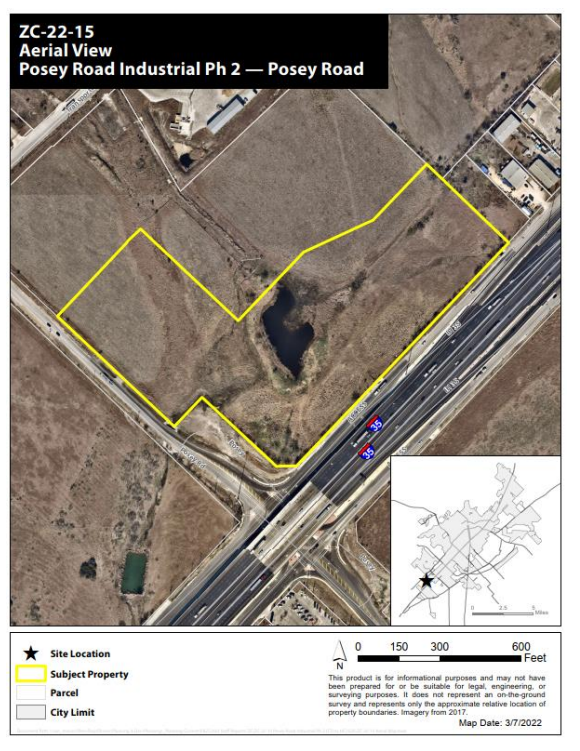
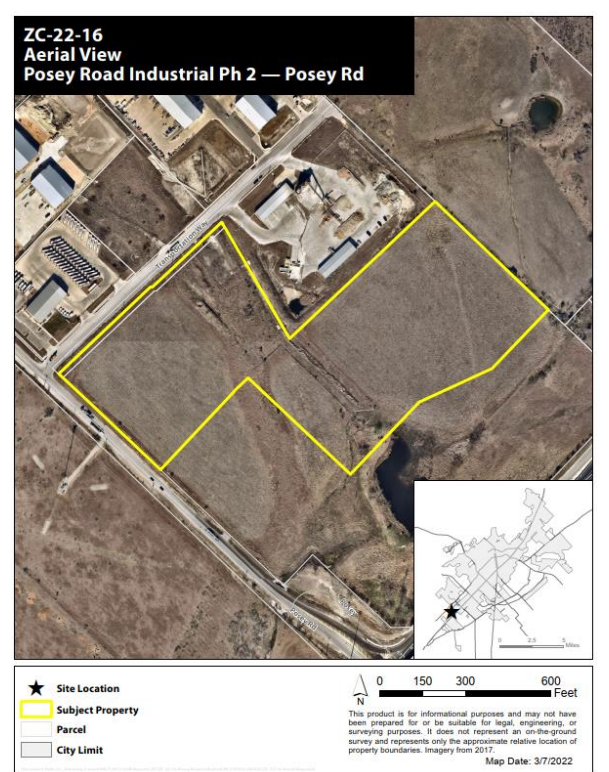
The Whisper PDD is an absolutely gigantic development that’s going in on the northeast side of 35, sort of across from Blanco Vista and Five Mile Dam.  My take is that no one paid any attention to it when it was passed, maybe circa 2015.  It was a long way from town, a long way in the future, and generally felt a little fuzzy and distant.

Max Baker hates it.  I don’t know enough about whether or not to hate it, but I will say this: when it comes to developers, we act like we’re terribly lucky if a developer would deign to build here. In reality, the city holds all the power, and developers need us more than we need them. Developers are a dime a dozen, and we don’t owe anything to a random out-of-town developer.  (Occasionally we have a local developer. I think Trace is local.  Local developers do seem to care a little more, presumably in a don’t-shit-where-you-eat kind of way.)

Max Baker goes off-topic to make a point about lobbying – he asks the developer which councilmembers he’s talked to, and the developer demurs (which does feel shady), and then Max accuses various councilmembers of having been the recipient. It’s aggressive and feels like it comes out of nowhere. This was the first time of the evening that I thought, “Max, what are you doing?” But given the topic, I assume Max was still angry from the lobbying workshop a few hours earlier.

(What was the actual issue at hand? The developer wants to rezone part of the property Light Industrial. He was denied at P&Z because the tract ran adjacent to Saddlebrook, a mobile home community up that way. He’s proposing to cut the area back so that it’s not adjacent any more.)

In the end, this detail gets kicked to committee and back to P&Z.

Hour 2, 4/5/22

The Pauline Espinoza Community Hall

At Citizen Comment, one of the speakers made some cryptic remarks about how the committee had met a LOT, and done quite a lot of community outreach, and much deliberation, and finally the consensus was “The Pauline Espinoza Community Hall” to replace the rec center.

When it came up for discussion, Mayor Hughson promptly offered an amendment: “The Paulina Espinoza Rec Hall”, instead of Community Hall.  Mayor Hughson’s concern was that the old timers would be confused, basically. That it’s been the Rec Hall since time immemorial, and the old timers would get flustered and miss their 50th reunion. 

(I would not say I’m an old timer – more of a medium-timer – but what I hear it called is The Lion’s Club, more than anything else.)  

Max Baker lit into Mayor Hughson for suggesting this, and this was the second time I got frustrated with Max and his lack of nuance.  I don’t like Mayor Hughson’s amendment either! But Max: don’t play an ace when a two will do. Don’t burst on the scene with guns blazing when you can win a vote with reason and clarity. Save your ace for those occasions when you need to bring the anger.

Alyssa Garza speaks eloquently about why “community” is a better choice, and why Pauline Espinoza’s legacy matters. Saul Gonzalez likes it. Jude Prather likes it. So the Mayor’s amendment is not going to go anywhere.

My favorite moment of the night was at 1:47, when Saul Gonzalez said, “I like it the way it is, Community Hall.”

Mayor Hughson says, “But that’s not the way it is, we haven’t voted on that yet.”

And Saul responds, “I’m just being prophetic, seeing ahead.” I loved that. Be your prophetic self, Saul! He’s so gentle about these things.

Mark Gleason is very worried about the cost of replacing the way-finding signs.  (“Way-finding signs” is such an awkward, silly phrase and it always makes me laugh.)  Anyway, Mark-worrying about cost-replacing the way-finding signs, and also main–building-large-sign-fitting on the Pauline Espinoza Community Center.

Staff is going to mock up a few sign designs and bring them in. Mayor Hughson puts in a bid for a sign that says “(Formerly the Rec Center)” as a parenthetical.  This seems absurdly clunky to me. Can’t we just explain it when publicizing the events that are held there?

“Dear Old-Timer,

Your 50th High School Reunion will be held at the Pauline Espinoza Community Hall, (formerly known as the Rec Center). Ask Siri if you need help.”

Seems fine to me.

Hour 3-3.5, 4/5/22

Every year, City Council gets to take a field trip to Washington DC. It hasn’t happened during Covid, though. They pick the agencies that align with current issues in San Marcos. They meet with staffers, form relationships, find out about grants, and generally broaden their understanding of how the federal government can help San Marcos.

This is the third time I got annoyed with Max Baker. Max is really mad about this trip. He’s mad about:

  • the carbon footprint of flying to DC. Doesn’t zoom exist?
  • that councilmembers will be lobbied, and that councilmembers will be lobbying others.
  • the Texas Open Meetings Act (TOMA) which forbids more than three councilmembers from getting together unless a formal meeting has been called. Won’t they all be on the plane together?

Max asserts that he wants to film the whole trip, in the name of transparency. The lawyer admits that he is allowed to do so, although he should let those around him know that they’re on film. Max asserts that filming the whole thing is just about the same as writing a summary at the end for constituents. If one is okay, the other should be okay.

MAX. STOP IT. Stop making the perfect the enemy of the good. Stop focusing on the drawbacks so hard that you lose track of the possibilities. 

Human nature is relational.  Agencies do not know all the cities individually. If you meet with people, and are nice to them, then you get all the flexibility and agility of someone who knows a system well, who can point you in the right directions. They will provide help tailored specifically for San Marcos.

Max is being willfully reductionist, and I’m getting very weary of it. And for the record: how is video footage different than a written summary?  I don’t know, have you ever read a TV guide? It’s not the same as watching your favorite show.

(This does not mean I’m in favor of those dumb decorum rules from last time! I will defend Max’s right to be contrarian and reductionist to the hilt, even while personally irked by it.)

Hours 3.5-4.5, 4/5/22

Items 17 and 19 are both about affordable housing, in different ways.

Item 17: Extending the Covid Disaster Declaration, and whether to keep the 3 month eviction delay ordinance.

On the Disaster Declaration: Keep it, because it makes us eligible for funding.  (But also, there actually could be another Covid wave. Right now, risk is low, and we should take our masks off and enjoy normal life. But the winds could shift again, and we’d have to respond to that.)

On the Eviction Delay: currently it takes 3 months to evict someone.  According to the Justices of the Peace, the eviction rate has stayed roughly steady pre-covid to covid.  The issue is whether we should go back to normal. (What is normal – evictions on demand? One month grace period? I don’t actually know.)

The argument in favor is that this costs landlords the rent money that they’re entitled to, and we’re clearly back in a healthy job market, so any Covid hardship should be over. The counterargument is that the Emergency Rental Assistance program has been an absolute shitshow – thanks, Hays County! – and people need it, but haven’t been able to get it. Furthermore, evictions lead to homelessness.

This is true and well-documented.  There are two main categories of homeless people – first, the visible homeless, with mental illnesses. These are sometimes called chronically homeless. This is who most of us think of when we think of homeless people. The other group is the temporarily homeless.  This group is much more invisible. These are people who may have been living a fairly stable life, but they were financially precarious, and then they were hit with one or several events, and now things are in a tailspin.  The eviction is an outsized, disproportionate consequence for the bumps in the road that led to it. It’s unsafe, unstable, extra-expensive, and it then takes years for people to recover some financial stability, if ever. It’s traumatic for children, and there are often children involved. (Traumatic for the adults, too.)

The problem is so much bigger than just the three month eviction delay.  We need a universal standard of living. We need housing guaranteed for all.  

Side note on housing:  The federal government used to build a massive amount of low income housing. Somewhere I read that in some cities in the ’70s, they were building ~200-300K units of housing every year. In the ’80s, we mostly switched to Section 8 vouchers, which meant that no new housing was being built by the federal government.  Production of cheap housing plummeted. People on Section 8 vouchers now have to compete with everyone else for housing.  All of a sudden, affordable housing became a limited resource, and then it became scarce.  The free market has not created a glut of cheap housing.  The government needs to build it.

Now, there were tons of problems with the federal low income housing, largely because of racism.  Buildings were not maintained and kept safe, and when you have a lot of people of color living in a rundown, dangerous area, society declares it to be a slum.  But the answer is to fix federal housing and pay to do it correctly, not throw the baby out with the bathwater.

So back to the 3 month eviction delay:  It would not be a problem to evict someone if they could move right into a safe, free, well-maintained, basic apartment.  It also would not be a problem if there was not a five year waiting list to get a Section 8 housing voucher. 

Believe it or not, I am actually sympathetic to landlords on this one, as well.  They’re still responsible for the mortgage every month. But the stakes are so much more dangerously high for the tenant than the landlord.  

Given how disastrous evictions are for tenants, and given that there is a huge pot of money that needs to be handed out, we should keep the 3 month delay in place while we work to connect tenants to the money. This also benefits landlords! If your tenant gets rental relief, then you get paid.

(Do I need to say that these arguments were all stated most clearly by Alyssa Garza? Yes, I should give credit where credit is due. She does a great job laying out the situation. In particular, she wants the city to help residents can get through the Emergency Rental Assistance program.)

Lastly: being a landlord comes with risk.  Being a business owner comes with risk. Being a bank and lending money comes with risk.  In different ways, these entities make money off of other people’s labor. If you eliminate the risk, then you just want to get richer by virtue of being rich in the first place.  Nice gig if you can get it, but very antithetical to this Marxist’s sense of fairness. (Of course not all landlords are rich, and not all business owners are rich. But they are better off than the people being evicted, right?)

In the end:
Keep: Alyssa Garza, Jude Prather, Max Baker, Jane Hughson, Saul Gonzalez
End: Shane Scott, Mark Gleason

(The four who voted to keep all want more data on evictions and have sympathy for landlords. It’s a hard issue.)

Item 19: Also a housing issue. Right now, we have a ban on more than two unrelated people living together. Should we increase that to three people? Or more?

Historically, San Marcos hates its college students.  And to be fair, historically Texas State was a massive party school.  So the stereotype is that your neighbor will be a rental house with 15 college students who throw keggers every weekend and puke in your bushes.  The idea is to prevent these students from living together.

(I actually have a theory that Texas State is much less of a party school than it was twenty years ago.  Rising admission standards, higher level of economic anxiety within the student body, and fewer slap-happy white kids, for lack of a better term. It’s been a long time since we had an incident like the drunk girl who had a DUI driving her toy Barbie Jeep around campus.)

There are SO MANY reasons that this occupancy restriction is a terrible policy.

  1. These bans are very classist and racist in effect, even if ostensibly the intent was anti-college students.
  2. You should write your policy to address the problem you want to solve. If giant parties and noise and trash are the problem, then you’ve got a code enforcement problem. No one actually cares if the people throwing the party are siblings or nephews or whatever.  (Max Baker makes this point.)

We look for workarounds – like the occupancy restriction – because code enforcement is hard. Right now, we have two code enforcement problems: we need to hire more code enforcement staffing, and we need to take on landlords.  Unless you can penalize landlords, they will never care that their property has become a nuisance. Until we have a well-functioning, complete rental registry, landlords can obscure their identities and avoid penalties.

3. The occupancy ban is totally unenforceable, which means that it is violated all the time, and enforced selectively.  When someone has an ax to grind with their neighbor, they can get them via this statute.  If a neighbor has a legit complaint, then deal with the legit complaint. This just invites capricious and biased enforcement.

4. Fundamentally, we need more housing.  People need to be able to double up and triple up, without fear of the law.  However, this ordinance is so broadly ignored that I doubt repealing it would actually open up much housing. So while this is the focus of the debate, it’s also sort of the least important reason.

I believe Alyssa Garza brought the item to the agenda.

There are a couple of sub-debates:

  • Would raising the limit to 3 help?
  • What if we required a conditional use permit? (CUP)
  • What if it had to be owner-occupied? In other words, if you own the home, you can rent out a bedroom, but not if you rent?
  • What if some Dallas parents buy a house for their college kids? Are the college kids considered “owner-occupied” and then allowed to have more unrelated people? I cannot believe how much traction this one gets, because college kids partying was ostensibly the whole problem.

Several times this evening, Jude Prather appears to be very responsive to the kinds of arguments that Alyssa Garza puts forth.  Both of them deserve credit – Alyssa for explaining herself patiently, over and over again, and Jude for listening with an open mind, and hearing what she’s saying. 

Saul Gonzalez and Mark Gleason are very opposed to any change. They both believe fervently in the destruction wrought by these massive house parties, and 8-10 cars parked all over the lawn.  My dudes: we are talking about three unrelated people.  Not 8-10. Three unrelated people most likely do not have a boatload of cars.

Max Baker and Jane Hughson are annoyingly cautious about this.  They want it to be owner-occupied, which basically means that old folks can rent out their kids’ bedroom, once their kids are long gone, to help offset the property taxes.  This is just the lamest little situation to restrict your attention to.  They also want it to perhaps require a CUP.

What’s even worse is that they’d consider it “owner-occupied” if a college student is living in a house that their parent owns.  This is purely symbolic, because there has never been an actual rich kid who has restrained themselves over this rule, but the idea is completely inequitable and infuriating. Weren’t these the kids that we were scared would throw the massive keggers?

Alyssa Garza points out the classism and racism inherent these proposals. Who exactly has generational wealth? Who owns homes? Who can navigate a CUP process? Whose daddy buys them a house for college?

Mayor Hughson hems and haws, and ultimately wants community feedback. Unfortunately, this is a terrible idea. You do not consult the community when racism and classism are involved, because hoards of people will happily tell you how racist and classist they are. This will invite all the NIMBY-types to come out in droves, and generate the false impression that we are being terrorized by keggers in San Marcos. 

(Max Baker does point out plenty of new builds have no residency restrictions.  This needs to be written carefully, lest we impose new residency restrictions where they currently don’t exist.)

The vote has several parts:
– Should we move it up to 3 unrelated people?
– Should it require a conditional-use permit (CUP)?
– Should it be limited to owner-occupied homes?
– If so, should college students in Daddy’s house count as owner-occupied?

Shane, Jude, Alyssa: Yes on 3. No restrictions.
Max: Yes on 3. In the historic district, owner-occupied with CUP.
Saul: Only owner-occupied with CUP. College kids count.
Mark: Only owner-occupied with CUP. No on college kids.
Jane: I can’t decide without talking to people in the community.

In the end, this was just a preliminary discussion. Staff will draft something raising the limit to 3 unrelated people, and bring it back.

Lobbying Ordinance Workshop, 4/5/22 prequel.

The lobbying ordinance has been in the pipeline since 2017. The current iteration of this proposal came up last June. Then it was postponed until July. Then it was postponed until November. Then finally it came up for discussion again in February. Then it was postponed to have a workshop. Basically it’s been a war of attrition on whether or not this thing will get passed.

Mayor Hughson shows up and proposes that the ordinance be restricted to just developers. This is warmly received by most of the council. Max Baker is furious. Alyssa Garza states that she wants to talk to constituents and see how they feel about it.

I am curious to know who exactly is omitted under this restriction? Certainly SMPOA and the Firefighters Union would be let off the hook, although we have a rough idea who they’d be in with. And probably organizations we like, like SMRF. From a lefty point of view, who should I be concerned about?

Still, this is much better than nothing. Rezonings, tax break agreements with the city (things like 380 agreements, TIRZ, PDDs, PIDs, and probably some other acronyms), running services out to businesses in the ETJ (the land surrounding San Marcos), etc: these would all be documented, and this is where the shadiness could easily occur.

There was an offhand comment about a city employee committing some offense during the Lindsey Hill proposal. I have no idea what that was referencing, and I’m curious to know more.

Quick primer on Lindsey Hill: Lindsey Hill is the old Lamar school building. Coming from downtown, if you turn right from Hopkins onto Old 12, a few blocks down you pass an old rundown, fenced off school. Circa 2015, developers bought it from SMCISD with plans to turn it into student housing. The historic district mobilized and shut that shit down hard. However, the developers – from Philadelphia, I think? – hadn’t gotten a rezoning contingency on the purchase, so they’ve just been stuck with the property ever since, unless they’ve managed to sell it at a major loss. Either they’re bleeding money, or they’re waiting for P&Z and council to turn over and become more sympathetic. Or both!

March 23rd City Council Meeting

Before we dive into to Wednesday’s meeting, I want to rant for a sec: Hays County under scrutiny for nearly $2.5 million loss of funds. Originally, the county got $7 million for rental assistance, back in January 2021. And we just…didn’t spend it. And eventually the federal government starts re-claiming unspent money for redistribution.

The details are even grosser: by September, the county had spent exactly $0. This made us ineligible for future funds. The federal government then announces then that you have to clear at least 30% of your grant by October. We made it to 2.65%, and so we lost $770K, and then it happened again this past February, and we lost another $1.7 million.

All I can figure is that someone was supposed to care about people struggling to make their rent, and just …didn’t. The rental assistance just wasn’t considered urgent, or a problem to solve, or to dedicate time and resources towards, or to collaborate with community partners on. (You can read the link – there are excuses given, but they’re all very flimsy.) I don’t know who to aim my anger at, but this is super grotesque.

On to Wednesday’s meeting!

Hour 1

Meek and mild. Renters will now get a CONA rep, which is a win. (CONA is the Council of Neighborhood Associations.)

Hour 2-3.5

Kind of a referendum on Max Baker himself. Pretty problematic.

Hour 3.5-4.5

Should the entire performance evaluation of the city manager be made easily accessible to the public?

Agendas, packets, and videos here.

Hour 1, 3/23/22

Citizen Comment: Mostly on Item 26, expanding the criteria for qualification as a designated historical site. Everyone is in favor. One speaker spoke eloquently about Pauline Espinoza, who was a local public figure and business owner back in the 1930s, and is now getting the Rec Center named after her.

There was a presentation on some early budget prep work for 2022-2023; none of the councilmembers reacted in any noticeable way. There was a snafu involving SMPD’s overtime budget – basically they’d been budgeting for 1 1/2 time as though it were 1/2 time, and now it would cost $600k to fix the issue. To me, it seemed like the kind of unfortunate-but-honest error that comes from having high turnover in your city office. But Council raked the staff member over the coals a little bit for it.

The City’s strategic plan for the next 12-36 months is being discussed. It looks like apartment-renters will get a CONA rep at CONA meetings, which is great.

(If I were making a wish-list for a strategic plan, I’d put a tenant’s council with a city lawyer to assist renters on the list. Just saying.)

Hours 2-3.5, 3/23/22

Jude Prather and Shane Scott brought in three measures:
1. There need to be some sort of time constraints when an item runs too long.
2. Rules of decorum need an update
3. All city council members should show up in person, instead of zoom.

Some context: Everyone understands that these are targeting Max Baker. The recent debate over the lobbying ordinance is looming large in everyone’s mind. (And Max is the only one still zooming in from his home.)

The crux of the debate is this: Max gets into arguments from the dais. One side interprets him as being rude, repetitive, combative, and violating professional norms, like committing personal attacks. Moreover, they want to prevent him from doing this.

The other side says that these interpretations are fraught and subjective. Furthermore, the urge to shut Max down is part of a long tradition of how people in power stay in power. It perpetuates the status quo if you silence anyone who doesn’t fit right in to the existing power structure. (This is correct.)

Now first, every communication has two layers:
1. a surface layer – your tone, your word choice, your mannerisms
2. a deeper structure – the actual content you’re trying to communicate

These proposals are all attacking Max on the surface level, and trying to police his tone, word choice, and mannerisms. They are not taking issue with his ideas. This is a very old tactic – you focus on someone’s tone, and then you don’t have to engage with the content. Historically, requirements for the surface level (“professionalism”) were used to prevent anyone besides old white dudes from participating, unless they pandered to the old white dudes. Accusing someone of being unprofessional allows you plausible deniability – you weren’t against their ideas, but they were being so unprofessional!

Here is the utter hypocrisy: These three discussion items are themselves an example of a polished, professional surface layer – all Jude and Shane did was submit items for a policy discussion! Superficially, it looks like they are seeking a return to collegiality.

It’s the deeper structure that’s the problem. Targeting a single colleague like this is rude and counterproductive. If you have a problem with a colleague, you talk to them, and then try mediation or bring in a third party. You don’t blast a memo out to the company with ostensibly neutral rules that happen to apply very specifically to your nemesis.

Jude and Shane cloaked their attacks on Max by putting it into policy proposals. They want to crack down on overt rudeness, but then run wild with stealth rudeness embedded in these three proposals.

Finally: Trying to shut Max down is absolutely wrong. And it is also true that sometimes Max can be very frustrating. But other times, he’s the passionate champion of values I hold dear. People are complex.

Before I sum up the councilmembers, let me list some of my burning thoughts:

  • Why do our council meetings last for 6+ hours? It’s not because Max is an intense speaker. What happens in bigger cities?
  • It was implied several times – mostly by Max and Alyssa Garza – that off-camera, councilmembers say plenty of rude things, but then play nice for the camera. Certainly plausible, but it’s hard to interpret what’s going on, from the outside.
  • You know what really wasted everyone’s time during the lobbying debate? The fact that Shane Scott managed to get everyone to postpone it for the umpteenth time. There are plenty of polite ways of wasting everyone’s time. Very professional.

Onto what was actually said:

Jude Prather: Kind of conciliatory, did not say much.

Shane Scott: Forgot he was even there.

Mayor Hughson: Fairly problematic in this conversation. She brings an absolute turd of a proposal, where she would ding anyone who personally attacks anyone else. If they persisted, and enough councilmembers agreed, they could be ejected and forfeit their vote on the issue. She tries to define personal attacks, and goes off the deep end with subjective language about viciousness, repetitiveness, and smirks.

She cannot stop interrupting Max Baker. He even requests that “No interruptions” be considered as an explicit rule of decorum, and she says, “No, I am not going to stop interrupting you when you say something factually wrong.” She may be correct that Max has said something factually wrong, but she’s shooting herself in the foot by interrupting him as often as she does.

Alyssa Garza: Consistently saves this council from itself. She explains about respectability politics and tone policing, and gets everyone on board with some cultural responsiveness training from a high quality consultant.

Mark Gleason: Mostly fine. He stands strongly opposed to any kind of time limit on discussions, and does want councilmembers to attend in person. He makes an earnest plea for the humanizing parts of being together in person, breaking bread together, etc.

Max Baker: Hard to summarize, since he was the subject of the entire conversation. He points out that anger and repetition are rhetorical techniques, and that they are trying to change how he delivers his words. He does correctly point out that we already have “calling the question”, which ends debate on an item and moves it onto a vote, and so time limits aren’t really needed.

He also tells Mark to fuck off (not in so many words) with his plea for humanity, and says to Mark, “The last time I saw you, you told me that I’m a fruitcake, and that I needed to skip off.” Max and Mark get snippy with each other over the things that were said in the course of campaigns. It got heated.

Saul Gonzalez: Silent per usual.

In the end:
– Everyone is on board with a Facilitated Retreat, run by someone who can offer cultural awareness and responsiveness mediation.
– the idea of time limits is discarded in favor of judicious use of calling the question.
– Max Baker and Jude Prather will get together and come up with a proposal to govern councilmembers zooming in to meetings and executive sessions.

Hour 3.5-4.5, 3/23/22

This last hour was spent on how City Council evaluates its appointees.

First off, there are only four. This isn’t a broad discussion on city employees in general. They are the municipal judge, the city clerk, the city manager, and…one other that I’m forgetting. The important one here is the city manager.

Clearly there was friction between the former city manager, Bert Lumbreras, and city council. From the outside looking in, it’s kind of impossible to know what was going on. Was he being given monstrously large tasks, and insufficient staff or budget? Was he communicating this back and proactively helping to shape the tasks into things more do-able? Was he just ignoring requests that he didn’t like, and letting them fall by the wayside? The interim city manager, Stephanie Reyes, certainly seems smoother during the meetings, and less quick to tell the council why their idea is a nonstarter.

Anyway, performance evaluations are being altered to be outcomes-driven.

The debate hinged on one aspect of this: should the full staff-evaluation be included in the city council packet, easily visible for the entire city to see? Or should only a summary be included?

Max Baker was arguing that the entire evaluation should be in the packet. Since the entire evaluation is available under FOIA, he argued, let’s not paywall it. Let’s be transparent about why someone deserves a merit raise, so that constituents can see the basis for these decisions.

Mayor Hughson felt this was a terrible idea, for the employee’s sake. That it’s bad management for one employee to see another employee’s assessment. Mark Gleason’s concern was that it might shape how forthright councilmembers can be when they write their evaluation, if they know it will be going public.

I do think this is a tough call, and that both sides have merit. These are private citizens. There is a giant difference in visibility between putting a review behind a FOIA paywall and publishing it in the council packet.

I think I’m siding with Mayor Hughson and Mark Gleason. Extreme cases make bad policy. Egregious situations should be dealt with individually. (But if I’m reading between the lines, the other problem is that half the council phones it in and rubberstamps the evaluations, and so the evaluations don’t accurately reflect the things that were frustrating about the employee.)

However, the vote went the other way:
Shane Scott, Alyssa Garza, Max Baker, Saul Gonzalez – show the raw data of the whole evaluation
Jude Prather, Jane Hughson, Mark Gleason – Just the summary.