Bonus! Workshop, 3/19/24

We get our water from a bunch of different sources:

We’re actually in pretty good shape, because we invested in ARWA water about twenty years ago. That is water from the Carrizo-Wilcox aquifer. It took a while to get the drilling and treatment set up, but it’s about to start coming online.

Here’s what our water supply looks like, over the next 50 years:

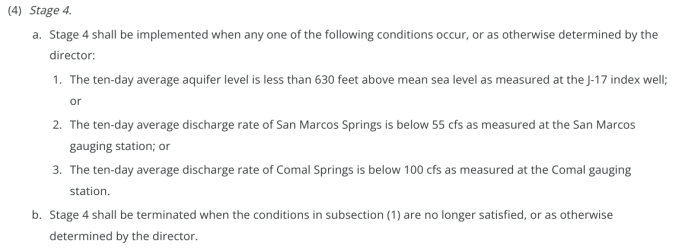
The main point of the presentation is our drought stages: right now we have five, and life would be simpler if we only had three.

The five:

The three:

Jane Hughson makes an excellent point: it used to be that Stage 2 was mild, and now Stage 2 is serious. It used to be that Stage 3 was Medium, and now Stage 3 is The Worst. It’s hard to get people to update their priors. This is going to require a high degree of messaging.

(Nevertheless, it’s probably simpler to have 3 stages instead of 5.)

Updated to add: Someone pointed out to me that the new proposal never bans sprinkler systems, even during the worst droughts. This seems like a bad move. Even if there’s plenty of ARWA water, it’s still resource-intensive to clean and treat it.

But listen: we can be doing more. Johnson City held an Ugliest Lawn contest, to promote the idea that it’s okay to let your lawn turn yellow. We could have Yellow is the new Green signs, or some other sort of messaging about letting your lawn go fallow.

Traditional green lawns are an environmental disaster, right? Let’s change the discourse around them, and give people permission to quit watering.

City Council! Tell the water guys to include this kind of messaging, stat!

March 5th City Council Meeting

San Marcos! I got your zoning cases, your Buccee’s, and I gripe at the Neighborhood Commission. Also the Lindsey Street Apartments, recycling, and SMPD.

Happy Spring Break to those who celebrate. Here we go!

Hours 0:00 – 1:00:  Gaza ceasefire,  two zoning cases, and some criticisms of Buccee’s.  

Hours 1:00 – 1:42:  Power lines, and the Neighborhood Commission pushes my buttons.  

Bonus! February 27th P&Z meeting:  The winds are changing on P&Z?  And also we look at those Lindsey Street apartments.

Bonus bonus! 3 pm workshops: Updates on the city contract with Green Guy Recycling and SMPD

One final note:

The results of the VisionSMTX survey came out, and were shared here on FB. Some thoughts:

  • There were about 160 responses.
  • 39 voted for the original plan, and 101 voted for the revised SMTX++ version. 5 wrote comments without choosing. 
  • 129 of them own property, 17 are renters, and 4 said neither or left it blank.  So this is not a representative sample of San Marcos whatsoever.

Kind of a bummer.

Hours 0:00 – 1:00, 3/5/24

Citizen comment:

  • Fourl people spoke, calling for City Council to issue a resolution calling for a ceasefire in Gaza.
  • Three people spoke against Buccees.  I’ll save the details for the item on Buccees, below.
  • One landlord speaks against items 17 and 18. These are resolutions from the Neighborhood Commission. We’ll get to those, too.

On the topic of the Gaza ceasefire: clearly, the mass killing of the Palestinian people by the Israeli army is a humanitarian crisis. Now in general, city resolutions on international issues aren’t going to carry much weight. We didn’t issue resolutions when the Rohinga were being killed in Myanmar or the Darfur genocide in Sudan.

But Gaza is more relevant because the US supplies Israel with weapons, and it’s even more local because Governor Abbott actively supports the Israeli army. So you can make the case that cities in Texas should actively and vocally oppose Abbott on this. I support the speakers calling on Council to issue a resolution for a ceasefire.

……

Item 13:  Some folks want to put a hotel on I35.

It would go here:  

On the street level, it looks like so:

That’s the view from the southbound I35 access road, as you’re heading from Wonderworld towards McCarty.

It had been zoned Heavy Commercial, which does not allow hotels. So the developer is asking for regular commercial, where they can.

What does Council think?

(Saul is absent.) So it passes easily.

Item 14:  Rezoning some land out by Redwood:

There’s a gas station and some senior apartments there already.  

It has been zoned CD-5, which is supposed to feel like a walkable downtown area.  Cute little two-story buildings along a sidewalk, where you can easily dip in and out from store to store.  Zoning that farmland as something “walkable” is a little ambitious?  But sure.

The owner hasn’t been able to get any developers interested in the spot. So he wants to change it to regular commercial.  This is more like your strip malls or dollar generals.  Big parking lot out front.  No longer striving for walkability.  

What does Council think?

Great.

….

Item 2: Buc-ee’s.

At citizen comment, there were several people who spoke against Buccees.   I’m going to organize their concerns:

Concerns that are nonsensical:

  • Buccees doesn’t reflect our values/preserve our unique character/reflect our priorities.
  • Inefficient land use
  • This is not what San Marcos needs. 
  • We cannot handle this. We don’t have the infrastructure to handle this.

Is the problem that Buccee’s is tacky? Do the good people of San Marcos only want serious, dignified gas stations, without cartoon mascots? What are we talking about here?

Concerns that at least make sense to me:

  • Buccee’s promotes oil-dependency and unhealthy food.
  • Keeps travelers from exploring San Marcos
  • Buccees generates less property tax revenue in NB than other I-35 frontage retail.
  • Jobs are closer to Kyle than San Marcos.
  • We should not be subsidizing retail jobs that pay below the median wage.

These are all legitimate drawbacks. Are they drawbacks that outweigh the projected $400K/year that the city will get in taxes? Eh, probably not.

Concerns that I share:

  • Contract is full of green-washing and light on details.
  • The work environment is toxic. They pay well because they work you to death.

I can’t evaluate whether or not the contract is green-washing. It’s certainly incredibly brief on the rainwater collection and oil-and-water runoff separators. I’d be interested to know what an environmental expert says.

On the work environment, I did a quick Reddit search. For example, this long thread from two years ago. Or this shorter thread from three months ago. There are lots of complaints that it is in fact a very toxic environment. Many comments say turnover is super high.

One last piece of evidence came during the February 20th meeting. The Buccee’s representative said multiple times something like, “The job is tough, so we compensate you for it! No one said it’s an easy job!”  That is not a great thing to hear from management.

What does council think? 

Mayor Hughson: I just want to highlight the dollars that this will bring in to the community.

Alyssa Garza asks if there’s any representative here from Buccee’s, who can speak to the accusations of bad labor practices?

Answer: There isn’t. City staff weakly gives some anecdotes about staff retention. But there’s no data on turnover or anything

Matthew Mendoza speaks to the quality of the opportunities and why we need good jobs for people without college educations.

The vote:

Everyone reassures Alyssa that labor violations are a federal matter! Surely the Department of Labor will respond promptly to any issues. 

That is some magical thinking right there. (Also I learned something new: federal law does not require lunch breaks or rest breaks. Unsurprisingly, neither does Texas. We should probably require breaks in our Chapter 380 agreements.) But generally, there is plenty of wiggle room to be an abusive employer without facing consequences from the DoL.

Hours 1:00 – 1:42, 3/5/24

Items 15-16:  Burying power lines

All new developments have to bury their power lines.  

In other words, this is bad:

whereas this is good:

There’s a lot of reasons why this is good practice:

Ok, great.

Whisper South and Whisper South Industrial are here:

Whisper South has requested skipping burying their electrical lines.  Staff denied the request. So they appealed to City Council.  

City Council agreed with staff, and denied the request as well. 

Good job, Council!

Items 17-18:  The Neighborhood Commission 

Maybe the Neighborhood Commission is my arch-nemesis?  I disagree so hard with them that steam is coming out my ears.

They sent Council two resolutions, on Occupancy Restrictions and Purpose Built Student Housing.

  1. Occupancy Restrictions

Back in April 2022, Council voted to loosen occupancy restrictions from a max of 2 unrelated people in a house, to a max of 3 unrelated people in a house. Unfortunately, the code wasn’t updated for another 18 months. By this point, Max Baker was off Council and Matthew Mendoza was on it.

Matthew was in a panic over the idea of 3 unrelated people living together. He tried to get everyone to vote against it, and it failed, and then tried one more time. He clutched his pearls so hard that he’s probably infertile now.

It finally passed, officially, in October. So it has been in effect for six months. But in a sore loser move, a subcommittee was put together “to study the issue further”.

The Neighborhood Commission is pissed off.

They want the rule to revert to a max of two unrelated people.

Listen: a cap of two unrelated people is batshit crazy.  They clearly hate students, but banning students effectively bans poor people as well. (I really don’t care if that’s accidental or on purpose.) This prevents poor people from pooling their resources and being able to afford the rent in a quiet neighborhood.  That’s super gross!   

Who actually thinks City Council should be in the business of policing who is married?  Why are we micro-managing people’s private lives this way?! 

Usually people will say “It’s about parking!” or “It’s about noise!” or “It’s about wild parties!”  But there are other mechanisms for dealing with noise and parties.  (Namely code enforcement and rental registries for landlords.)

What about the extra cars, parking on the street? Listen: your desire to keep street spots empty is less important than other people’s right to affordable housing. I don’t know why we allow “empty street spots” to be a weapon that existing home owners can wield against renters. Home owners do not have a right to keep street spots empty.

But let me be fair: surely the neighborhood commission gave thoughtful reasons, right?

Unless I’m missing something, they’re saying that three friends living together is causing all this:

  • Rising costs of home ownership
  • Impact on residents remaining in their homes
  • Impact of landlords attempting to put 3 unrelated students in a home
  • Negative impact on the neighborhood

Wow. That is high on blame and short on details. If something is going on, spell it out explicitly, because right now it looks unhinged. (Also home prices are currently falling.)

What does Council do?

Remember the subcommittee that was formed? It hasn’t met yet, mostly because it doesn’t have a purpose.

Jane Hughson calls for the subcommittee to meet within 30 days.  The subcommittee is Matthew Mendoza, Mark Gleason, and Alyssa Garza.

Shall they meet?

Yes, they must meet!! Jane, Matthew, Mark
No, it’s over, this is dumb: Alyssa, Shane, Jude

So the informal vote fails. They do not need to meet.

But wait! There’s more from the Neighborhood Commission!

  1. They hate Purpose Built Student Housing and rent-by-the-bedroom leases. 

There is an argument that RBB leases are predatory. (I don’t exactly agree, but we’ll talk about this extensively in the Bonus P&Z section.) But for now, it’s safe to say that the Neighborhood Commission is not upset because students are being exploited.

The Neighborhood Commission is saying this:

They do not want student housing complexes. I think this is clear.

So let’s summarize: they do not want students renting houses in neighborhoods. They also do not want apartment complexes to cater to students.

This is just delusional. Look, we have a university! With a lot of students! They are entitled to live in this town!

If students are throwing obnoxious parties, then we need to properly fund Code Enforcement to shut those down. If you have a problem with rentals, hold landlords accountable. This commission thinks that shutting off the actual supply of housing – this human right that we all deserve – will somehow lead to different behavior by students.

What does Council do?

It’s a little perplexing. Jane Hughson moves to postpone the discussion.

Her explanation is that they didn’t put Rent by the Bedroom (RBB) on the agenda, and so legally Council cannot discuss it. She wants to put both RBB and Purpose Built Student Housing on the agenda, so that Council can have the appropriate discussion.

But this is just wrong. Look at the agenda:

Rent by the bedroom is actually right there, on the agenda! How did no one correct her? They literally read that blurb out loud at 1:30:56, here.

(I mean, I truly don’t care. Let’s postpone. It’s not urgent.)

….

Council or city staff: if you’re reading this, I do have one practical suggestion:  

If you’re going to regulate RBB leases, you should require that leases include an option to rent by semester, for a modest surcharge.   Students need some flexibility to be able to take internships, or graduate in December, or move home for the summer.

Since the complexes are profiting off of being quasi-dorms, they should provide this benefit specific to students, like a dorm would.

Bonus! Feb 27th P&Z meeting

We have to unpack this.  The center of gravity has shifted on P&Z.

Let’s start with the end of the meeting:  the committee voted on their new chair.

Jim Garber has been the chair of P&Z since 2016 (aside from one year when he cycled off P&Z).  He’s literally been elected seven times.  It’s been quite a run.  Jim Garber was the main driving force behind the re-write of VisionSMTX.

But at this meeting, Garber lost re-election to David Case.

David Case is [updated: used to be] on the San Marcos Area Chamber of Commerce, and is the local VP for Schertz Bank. So it’s safe to say he’s pro-business. The pendulum has officially swung from anti-development towards pro-development. 

Is this good or bad?

It depends!

I am Goldilocks! I want us to land in the middle. I want us to have calm quiet neighborhoods, but they must include affordable apartments for lower income folks.  I want us to have gentle densification and to have nearby stores, so that you don’t have to drive a long way for your basic needs. Jim Garber was blocking a lot of this with the VisionSMTX re-write.

However, back in the early 2000s, we were haphazardly approving all kinds of giant apartments complexes. The danger is that P&Z will start recklessly greenlighting every proposal again.

How do I feel about giant apartment complexes? They should be carefully scrutinized on a case-by-case basis. 

There are good parts: they do not contribute to sprawl, they are more environmentally efficient than houses, you get some economy of scale, you can have amenities like pools and exercise rooms, and it’s easier to include wraparound services for low-income housing. 

But they are also a mechanism to enforce segregation by wealth, which makes me very cranky. And the scale matters: it’s jarring to put a giant complex immediately alongside a quiet neighborhood. Location is a major consideration.

Anyway: the NIMBY old guard was voted out, and a new tide has taken hold.  It’s just too early to know exactly how far it’s going to swing.

There was also one big, complicated zoning case:

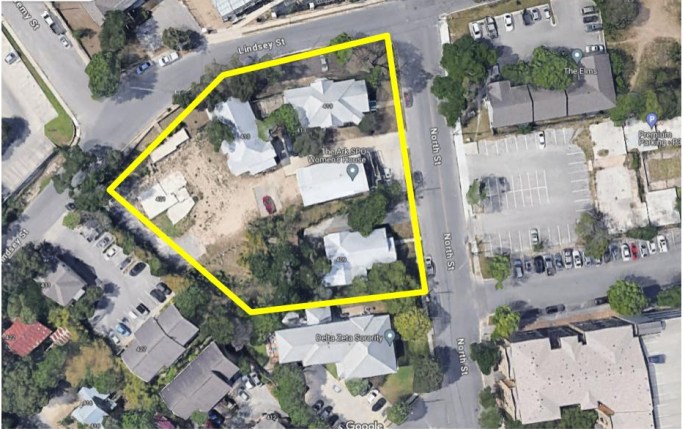
Should we build student housing here?

This came up back in October. It was memorable because Shannon Mattingly was the director of the San Marcos Planning Department until 2022, and then jumped over to this developer. It’s a pretty clear conflict of interest.

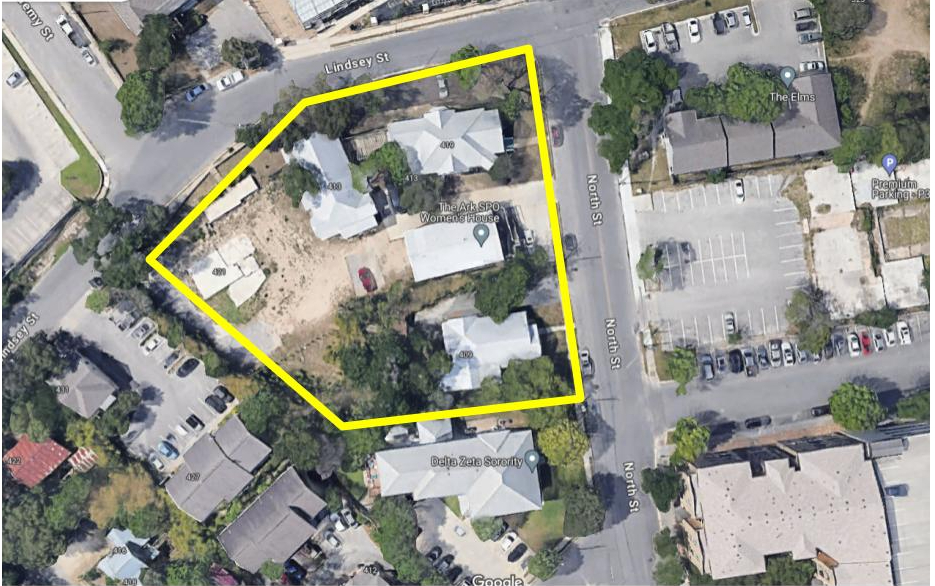
Here is a close-up:

One more background issue:

The university recently purchased Sanctuary Lofts and Vistas Apartments, which are very close to this:

They are going to turn them into dorms. The city is pissed off, because we used to get a lot of property tax from those apartments, and the university doesn’t have to pay local taxes.

So this looms on everyone’s minds: in five years, will the university just buy this, too?

Onto the issues

There were a lot of citizen concerns, which I’ll categorize:

  1. Complaints that student housing is exploitative:
  • Aspire (13 stories) charges $1k/bedroom
  • Rent by the Bedroom (RBB) means inadequate/subpar living conditions
  • Roommate matching is not legally binding
  • All roommates share liability for damages to common areas.
  • RBB is predatory
  • Student housing means subpar construction and craftsmanship

I find these complaints mystifying. Do these people think that the rest of the landlords are glorious noblesmen? All tenants need protection. Plenty of non-student apartment complexes are unsafe and unsanitary. All roommates always share liability for damages to common areas! All landlords will try to extract the highest rent they can.

I just am not clear why student housing is especially bad. Why not build a broader coalition across all renters?

2. Complaints about San Marcos housing in general:

  • We need diverse housing options
  • Downtown housing is solely being built for students, serious lack of other housing.
  • There is plenty of student housing available: 40 RBB complexes in San Marcos, with over 20K bedrooms.

We do need diverse housing options. Developers are not our friends, and they will not build diverse options unless it’s in their financial interests. This means simplifying the approval process and creating incentives for small-scale apartments and condos.

But those are all larger issues than this one complex.

3. Mostly legitimate concerns that are specific to this project:

  • This will make downtown encroach on nearby neighborhoods.
  • This will be a large corporate structure on an already congested street
  • The smalltown feel and skyline is being eaten up by big developments. 
  • They should provide regular leases alongside RBB.
  • We will be tearing down existing affordable housing and displacing people in order to build more expensive housing.

I find most of these compelling.

4. Concerns that I don’t know how to categorize:

  • we should not destroy this town for the convenience of students!

It was a LOT.  

So what did P&Z do? They basically landed somewhere in the middle. I thought they handled it well.

The request has four parts:

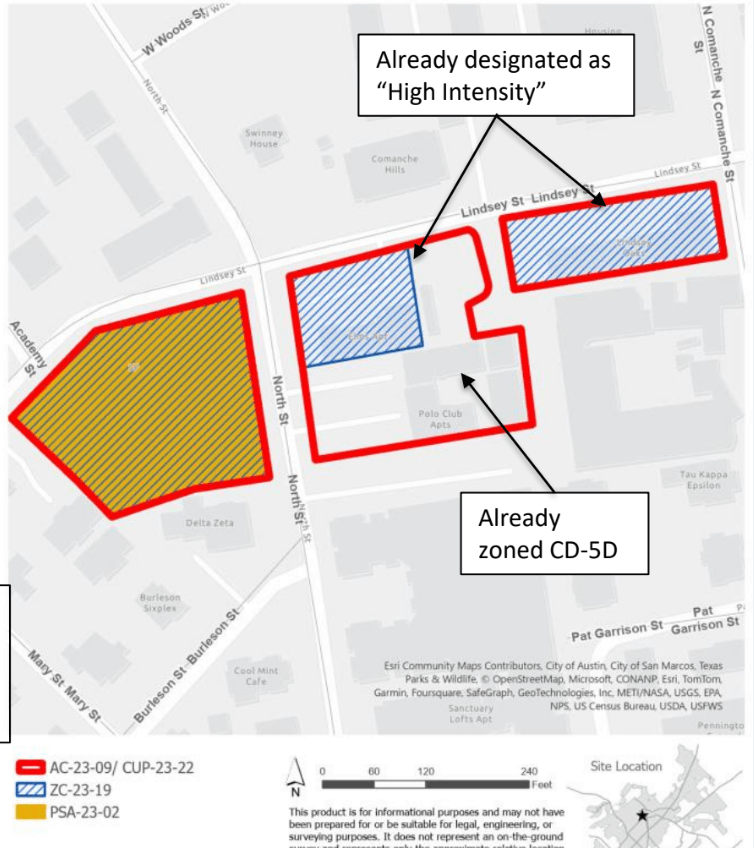
  1. Extend “Downtown” to include the west side of their property, that pentagon piece west of North Street.
  2. Change a mishmash of old zonings – multifamily 12, multifamily 18, multifamily 24 – to all match the standard downtown zoning, CD-5D.
  3. Get a permit to have Purpose Built Student Housing.
  4. Get an alternative compliance to go up to 7 stories.

Here we go:

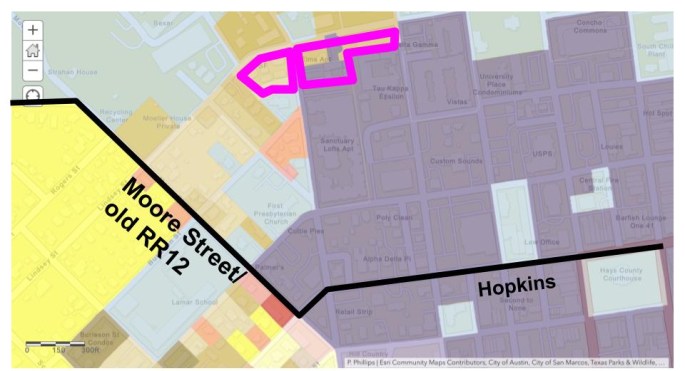
  1. Extend “Downtown” to include the bit west of North Street.

In terms of this picture:

we’re talking about the pentagon on the left hand side. Should that be part of the designated official Downtown District?

The vote: All 9 vote to deny. West of North Street is not downtown.

2. Change a mishmash of old zonings – multifamily 12, multifamily 18, multifamily 24 – to all match the standard downtown zoning, CD-5D.

First, the lefthand pentagon, west of North Street: No. This passes 9-0.

Next, the right and middle bits, east of North Street: there’s some good discussion.

  • Will this make flooding worse? CD-5D zoning is 100% impervious cover, like downtown. Currently they’re allowed up to 75% impervious cover.

Probably not: it’s actually 100% impervious already, because there’s a parking lot covering all the land. It pre-dates the 75% regulation.

  • What about the affordable housing already there? It would be torn down.

The vote: 5-4 in favor of changing the zoning to CD-5D.

(This is the first pro-development vote.)

3. Get a Conditional Use Permit to have Purpose Built Student Housing.

Important: this is not the same as Rent by the Bedroom. They can already do RBB leasing if they want. Purpose Built Student Housing lets them go up to 5 stories and have four bedrooms per unit, instead of 4 stories and up to three bedrooms per unit.

Arguments: We just passed the Downtown Area Plan. The Downtown Area Plan calls for no student housing downtown. We need to set a precedent of respecting the area plans.

The counterargument comes from William Agnew, who says, “I was on the Downtown Area Plan committee. I thought it was absurd to pretend we don’t want student housing downtown. That’s who lives downtown! I’m in favor of this CUP.” I love his bluntness.

The developer says they will offer regular leases alongside RBBs. For what that’s worth.

The vote: 7-2 in favor.

4. Get an alternative compliance to go up to 7 stories.

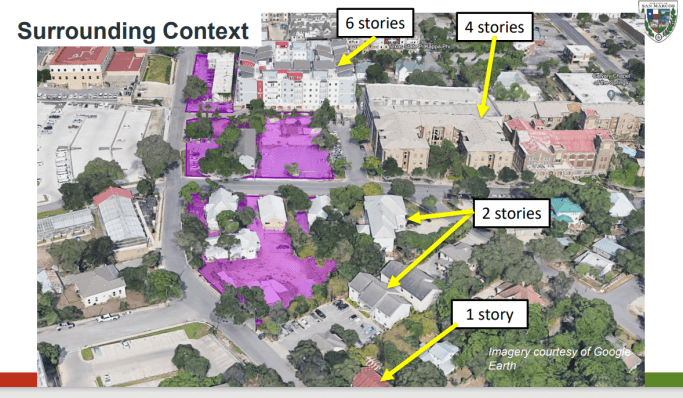
It gets pointed out that this is already uphill of Sanctuary Lofts, which is 5 stories. So if this were seven stories, it would loom even higher, due to the hill.

The vote: 8-1 opposed. They will have to stop at five stories.

In conclusion…

Approving this apartment complex has its negative trade-offs. It does make the area more congested. It does destroy some cheaper housing in exchange for more expensive housing.

That said, I think that overall, P&Z landed in a reasonable spot on the four items.

Bonus bonus! 3 pm workshop

Two presentations, about Green Guy Recycling and SMPD.

Green Guy Recycling

We’re renewing our 5 year contract with Green Guy recycling. We’ve been working with them since 2009.  

San Marcos residents get some free drop-offs per year, because of this contract.

Per year, you get recycling for: 

  • 24 hour drop off for common items
  • 5 passenger tires
  • 1 TV
  • 2 CRT screens
  • 2 appliances with Freon
  • 2 mattresses or box springs per year

This costs you $1.85/month.

They also provide a ton of long dumpsters for recyclables at Community Clean Ups throughout the year, and other things, like nuisance vehicle recycling, for the city.  It all sounds good to me.

….

Police Chief report

Congratulations! If you made it this far, you get a personal anecdote.  

I actually come from a family of communists. Literally, Marxists on both sides of my family.  At one point in the early 2000s, I was arguing with my uncle about the 2000 election.  He did not live in the US, but he was saying he would have voted for Bush over Gore.  I was outraged.

He explained to me why:  he felt that the entire capitalist system is so rotten that the only recourse is a revolution.  Electing Al Gore would placate everyone and delay the revolution by releasing steam, whereas electing Bush would make life worse, and thus hasten the revolution. 

To an abolitionist, small improvements are counterproductive because they distract from the revolution. When things get worse, it lights a fire under people to fight for a revolution.

(I still don’t agree with my uncle: I think it would have been better to elect President Gore, and I’m guessing 150,000 Iraqis might agree with me. But here we are.)

At the same time, sometimes the abolitionists are right, and you need a revolution. This is the WEB Dubois and Booker T. Washington debate about civil rights: can you fix things incrementally? Or do you have to fight for revolution? There wasn’t really an incremental fix for Jim Crow laws – people risked life and safety to fight for the civil rights movement.

So now we’re talking about SMPD, and there’s a split in philosophy:

  • Small improvements to police departments are good, because it improves policing.
  • Small improvements to police departments are bad, because the whole system is rotten and needs to be thrown out.  Small improvements prevent the fire from building that will motivate real change.  In other words, an abolitionist approach. 

Here’s where I stand: I’m okay with incremental improvements to SMPD. Waiting for a revolution leaves too many vulnerable people stranded in 2024.

Chief Standridge’s entire presentation is “Look at these positive incremental changes we’ve implemented, and the modest successes we’re showing!” 

Here are Chief Standridge’s main talking points:

  • We did a huge amount of community events and outreach in 2023. 
  • We have 60 active volunteers. 
  • School marshall program for the elementary schools, officers for the middle and high schools. (bleagh, but that is a different conversation.)
  • Brought in a qualified mental health professional to respond alongside the mental health unit.  (This is good!)

Accountability:  

It sounds like they’re documenting and investigating any significant incident. Do I have the proper context to analyze this stuff? no, of course not.

We hired a bunch of new people:

Our crime stats are trending down:

Two comments:

  1. Nationally, violent crime went down, because we’re getting further away from Covid life disruptions. But the drop in San Marcos does seem bigger than the national average.
  2. Chief Standridge says something like, “You can’t credit the police for a drop in crime, and you can’t blame the police for an increase in crime. Crime is due to complex socio-economic factors.” I give him credit for framing everything in terms of grounded evidence like this.

There are a bunch of mental health initiatives, collaborations, and new hires made, both to support the mental health of the officers and to take a holistic approach to crime reduction in San Marcos. These are good things!

There was one interesting question: Shane Scott asks about reserve officers.  Do we let volunteers be officers on the streets?

Chief says diplomatically, “I’m not comfortable with that. This city is still pretty …challenging.”

GOOD. I would be worried about George Zimmerman-style volunteers.

February 20th City Council Meeting

This week at City Council: it’s Buc-ee’s time! Should we accept them on their terms?  And also the can ban makes it across the finish line.

Let’s do this:

Hours 0:00 – 1:00:  In which we discuss Area Plans for Dunbar and the Historic District, and the River View apartments in Blanco Gardens.

Hours 1:00 – 1:57:  It’s Buc-ee’s time!  Should we accept them on their terms?  And also the can ban makes it across the finish line.

Bonus! 3 pm workshops:  Someday, there will be a new city hall.  Where shall we put it?

(I learned this week, over and over, that Buccees is actually spelled Buc-ees. Every time I see it with the hyphen, it looks weird and awkward, but here we are.)

Hours 0:00 – 1:00, 2/20/24

Citizen Comment:

Almost everyone speaking was local small business owners who are salty about Buc-ee’s asking for a $3.2 million rebate.  They observe that, collectively, they create a lot of jobs, and yet none of them have been offered a proportional rebate.

I can understand their frustration! Much to discuss. Stay tuned.

Item 1: The Dunbar and Heritage District Area Plan

You’ve heard about VisionSMTX literally for years. (Discussed hereherehereherehere, and here.) We’re neck-deep in getting it approved. 

There’s a side-hustle to VisionSMTX, which are the Area Plans. What this means is that a neighborhood get to decide what makes it special, and then enshrine that special magic spark into the city code.  This can be done well – “preserve these historical structures! More sidewalks!” – or it can be done poorly – “Create obstacles that keep poor people out! Micromanage everyone’s business!”

The first Area Plan is up! Here’s the boundary:

It’s a combined region that’s supposed to cover both the Historic District and the Dunbar neighborhood.

At P&Z, they recommended two big changes:

  • Split Dunbar and the Historic District into two separate Area Plans
  • Hold off until the Comp Plan is approved.

Splitting the two neighborhoods is a very good idea, given the historical legacy: one of these neighborhoods traditionally got all the resources, and the other was generally short-changed.  Making Dunbar the focus of its own plan seems healthy to me.

Council is also on board with both of these changes. So these new split Area Plans will now go back to the residents for revising.

Item 15: LIHTC Housing

LIHTC stands for Low Income Housing Tax Credits.  Apartment complexes can apply for tax breaks if they provide low-income housing and access to social services. 

Usually these are new complexes being built.  But this time, it’s an existing complex:

These are the River View apartments, in Blanco Gardens.

One note: River View apartments is directly across from the stupid Woods apartments, which is now called Redpoint, as though they can escape my anger by changing their name.

Presumably “River View Apartments” was so named, because it used to have a view of the river, before The Woods was built, and they should probably rename themselves “Apartment View Apartments” now. But that would be too grim.

Anyway: there’s 54 units, of which 40 are Section 8 housing. They were bought by a new owner two years ago who wants to use LIHTC funding to renovate them.

Council asks good questions!

Mayor Hughson: Will anyone be displaced by the renovations?
Answer: Temporarily, yes, but no one will lose their housing.  We’ll cover moving costs to a different unit or to a hotel during renovations. This is a HUD requirement.

Mark Gleason:  Why is it so vacant right now?
Answer: It’s 30% vacant, because the units were in such bad shape that we weren’t allowed to rent them until we fixed them up.  We’re about to get approval from HUD to start renting them.

Saul Gonzales: Are there enough washers and dryers? And are they priced affordably?
Answer: We’re required to have 1 set per 10 apartments, and we’ve got 6 sets, so we’re good.  On the pricing, we’ll blandly demur. 

Alyssa Garza: Are the wraparound services old or new?  What mechanism do you have to make sure you’re not just going to under-advertise and phase out services due to low participation?
Answer: They’re new.  HUD requires us to replace services that we phase out.

Council isn’t spending any money here. They’re just voting on whether to support the owner’s LIHTC application to the state. It’s basically just a vote of confidence.

The vote:

CLICKERS!!

Hours 1:00 – 1:57, 2/20/24

Item 17:  you may have heard of this gasoline station?

They want to come to San Marcos. 

Specifically, here:

Even more specifically here:

It’s going to have all your Buc-ees features that you know you love:

120 gas pumps, some electric vehicle charging stations, massive travel center, endless Buc-ees themed gear, etc. You know the drill.

There’s going to be some extra roads:

This is a good location.  It’s not in any floodplain, it’s not over the Edwards Aquifer recharge zone, nor any other sort of environmentally sensitive zone.  It’s good for traffic, too, because there are off-ramps and on-ramps right there. Southbound I-35 traffic can get in and out, without having to wait at any traffic lights.

So now the bargaining begins. What can they offer us? What can we offer them?

They’re offering a minimum of 175 stable jobs:

Just to be clear, $18/hour puts you at $36K per year.   That is above the federal poverty rate for a family of four, but it does not exactly leave you any breathing room. It’s a hell of a lot better than our $7.25/hour  joke of a minimum wage, though.

The benefits are meaningful – health care, 401K with matching contributions, 3 weeks paid vacation.  They’re not doing the asshole move of scheduling everyone for 35 hours/week in order to avoid having to pay for healthcare.  

Environmentally, they’re offering to install an oil-water separator to handle the runoff from the fueling area.

Virginia Parker, the director of the San Marcos River Foundation, had a recommendation: include a clause in the contract to require regular maintenance inspections of the oil-water separator on a regular basis.   

Take her advice, Council!!  Systems need maintenance! Don’t just let things degrade over the next 50 years.

(Council ignored this.)

So what do they want from us?

Background: businesses pay both property taxes and sales tax. 
– Property tax rate: 0.063 cents per $100 appraised.
– Sales tax rate: 1.5 cents per dollar. 

The deal is that Buc-ees would pay all of their property taxes, but only half the sales tax, for 15 years.   

Here’s what the fiscal analysis predicts:

So we stand to bring in a lot, but we’re also giving a lot away. 

Let’s just do some quick back-of-the-envelope math.  If Buc-ees expects to pay $188K in sales tax in the first year, that means they’re expecting to bring in over $25 million in sales, from this one store, that first year.  Over the whole 15 years, we’re rebating them $3.2 million. That implies they’re expecting to earn $426.7 million in sales, at this location alone. 

Bottom line: Sure, it’s in our best interest to give up this $188K so that we can get the bigger revenue. But they’re not struggling to keep the lights on. This isn’t a feel-good grant to a struggling mom-and-pop shop.

One other note: 

This is not in SMCISD.  Your local schools won’t see that money. Is Hays ISD a perfectly nice place? Sure. But it’s vast and stretches up to Austin, and it’s mostly not San Marcos, which is what this Council represents. Probably 98% of the kids in San Marcos are zoned for SMCISD.

One more interesting detail:  The EDSM board  is the Economic Development of San Marcos Board.  They took a look at this project at the end of last year, and they recommended a 10 year rebate.  But then it got changed to a 15 year rebate.  Why?  

Shane Scott asks this very question, later on:  Why was 10 years not okay? 
The Buc-ee’s rep says: This is our standard Chapter 380 agreement! If you want 10 years, we need a bigger rebate. Or if you want 20 years, we’d take a smaller rebate. You’re getting the standard package!

Saul asks: Would you stay if it was 10 years at 50%?
Answer: Yeah, no.  We’d walk.

Mmhmm. 

Saul asks: What about part-time employees?
Answer: We pride ourselves on having a maximal number of fulltime employees.

Saul: Is your customer base going to be local people or I-35 traffic?
Answer: We think it will be 80% out-of-towners.  Our business model is that we’re a road trip stop.  Shouldn’t affect local convenience stores or gas stations.

Matthew Mendoza asks about trash and recycling.
Answer:  We are aggressive recyclers! We do as much as we can! 

Matthew also asks if this is actually a truck stop?
Answer: Nope! No 18-wheelers except for the ones delivering things to the store.

Alyssa asks about benefits for employees?
Answer: 3 weeks vacation, health care after 60 days, and a 401K with 100% match up to 6%.

Those are all reasonable.

Jane Hughson asks one of the city staff to talk about programs for local small businesses, and he rattles off a dozen small programs. You can get coaching, you can get grants to replace your awning, you can get a grant if you want to do something environmentally friendly, that kind of thing. (That is the extent to which City Council heard and placated the citizen comment complaints.)

Jude Prather is super stoked.  This sends a message that San Marcos is OPEN FOR BUSINESS! 

Mark Gleason praises the choice of location for traffic and environmental reasons, which is fair.  He says he’s a little uneasy about the 15 years, and wouldn’t have agreed to it if they also were getting property taxes back. Also fair.  He compliments them on their fair employment practices and reiterates Jude’s OPEN FOR BUSINESS line.

The vote:

This will come back around next time for a final vote.  

I know I sound a little grumpy here. I’m not saying Buc-ee’s is a bad corporation. They seem like nice people. They seem like they make an effort to treat their employees well and do more than the bare minimum for the environment.  

Here’s what I’m saying:  In Texas, we allow corporations to get away with staggeringly awful behavior. So when a company comes along and doesn’t treat their hourly employees like utter dog shit, we fall all over ourselves with shock and awe.  What heroes! They pay $36K a year!  You can go to a doctor and take a vacation! 

Excuse me while I sidle away from the wankfest?  Thank you for clearing this extremely low bar of decency?

Bottom line: do I think we should we take this deal with Buc-ees?

Eh, yes. I do.  I’d vote for in favor, if it were up to me.

Item 5: THE CAN BAN!

This is the final vote. We’ve been over the go-zones and no-zones, the issue with the coolers, and everything else. (Here, here, here, and here.)

Alyssa Garza mentions again that she’s opposed to the ban on big coolers on the river.  I too think it’s silly, but the “go-zones” ended up being so big that there’s plenty of space for big coolers to hang out. 

Everyone is very gracious and appreciative of staff, and very excited to get this done. 

THE VOTE:

There was an actual burst of applause in the chambers.  Everyone’s super stoked.

Bonus! 3 pm workshop, 2/20/24

At 3 pm, there was a workshop on the future city hall.  We’ve discussed this before, back in 2022.

Basically, we can’t afford a new city hall, and Texas has a law that you can’t take out a bond to pay for a city hall. [Edit! I got that wrong. The law is that you have to get voter approval for a bond. City staff and city council don’t think that San Marcos voters would approve a bond for a city hall. Correction based on the 2022 presentation here.]

So they’re left with public-private partnerships, where some private entity goes in halvsies with you. You end up building something with both government and commercial appeal.  Bleagh, but here we are.

The first decision is location. 

This is the leading contender on location:

ie, across the street from the current city hall.

This is supposed to be a mock-up of what City Hall would look like if it were in that spot:

You’re looking at Hopkins. The old location is the lower right, and that would be converted to commercial and residential. Across Hopkins is the new City Hall, next to the retention pond. You can see the Bobcat baseball stadium in the background.

So that’s possible location #1.

Possible location #2 is where the current city hall is located, on the south side of Hopkins.

Nobody says what’s wrong with the southern side of Hopkins. What they say is, “If City Hall is on the northern side of Hopkins, it will welcome everybody coming from I-35! It will form a Civic Road of City Hall, the library, and the Activity Center.”

I guess the southern side is less welcoming because of how Hopkins bends? You’d think a big, snazzy, new building would feel big and snazzy on either side of the road, but I guess it’ll feel extra big and snazzy on the northern side.

Possible location #3 is somewhere downtown. The appeal of this is to bring back some daytime workers back to downtown. When Hays County Courthouse moved out to Wonderworld, the downtown lost a ton of people who would eat lunch at the restaurants and keep the downtown bustling during the day. It would be hard to pull off, though – we only own a tiny bit of land, and it would be pricey to acquire more.

….

Laurie Moyer is one of the assistant city managers, and she gave an extremely charming presentation about her Christmas vacation, which was spent driving all over Texas, observing the City Halls in comparable cities.

For example:

and then, her personal photo:

I was delighted by the whole thing. You should watch it here, if this is also your brand of nerdiness.

Bottom line: All these cities had city halls built in the past 20 years, and ours is 50 years old. The whole process will move extremely slowly, but we’re going to hire a consultant and get the ball rolling.