
Public comment at the 3 pm workshops:
There are three speakers:
- President of the local EMS union. We’ll hear from him throughout the workshop.
- Speaker in support of the current board chair of the San Marcos Housing Authority
- Max Baker, on the SMPD staffing study. (This item was actually postponed.)
….
Workshop: San Marcos EMS
Backstory: This is a mess! It first came up on the blog, back in September.
Here’s my best attempt to reconstruct the timeline:
1983: San Marcos-Hays County EMS is formed as an independent non-profit. All the nearby towns and Hays County all contribute to funding it.
2009: We hire Fire Chief Les Stephens. When he’s hired, he’s told that the SMHC EMS is a total mess, and we want to be prepared in case we need to bail on them. So he starts making sure that all his fire fighters are trained as paramedics.
2010: Buda bails on SMHC EMS, and splits off to run their own program.
SMHC EMS gets its act together and becomes a high-quality organization. So we end up not needing to split off. But we still require that fire fighters be paramedics, because it’s best practices. A lot of times, they’re the first ones on the scene.
All that backstory was provided by the city.
This next piece was NOT provided by the city:
2022: SMHC EMS starts forming a union:
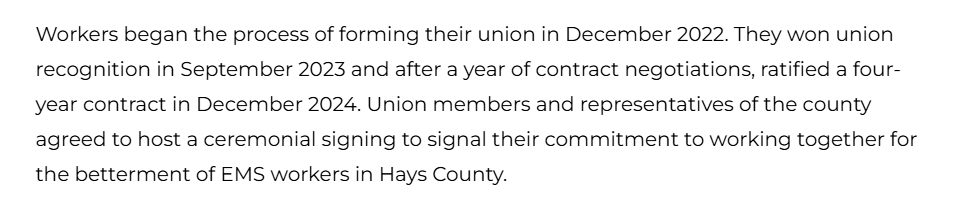
Immediately everyone starts splitting off and forming their own EMS services.
- Kyle votes to leave in November 2024
- Northern Hays also votes to leave in November 2024. This is Dripping Springs, Driftwood and Henly.
If it looks like union-busting and quacks like union busting… it’s union-busting, yeah?
This is the big theme of the night: the EMS workers are getting screwed, no matter how you slice it.
2025: San Marcos asks Kyle and Hays to give us 12-18 months to put together an EMS plan.
2026: The clock is ticking. The first ambulances will be removed in April, and they’ll all be gone by October.
…
Which brings us to today
All the partners left, and now it’s just San Marcos. We have to figure out how we want to provide EMS services to San Marcos residents.
So we commissioned a 6 month EMS study. This workshop is about that study.
These are the three choices:
- Renew the contract with SMHC EMS and just carry on.
- Roll EMS into our fire department. This is called Fire-based EMS.
- Make a new standalone City EMS department.
No matter what, San Marcos needs to be able to provide some basic things:
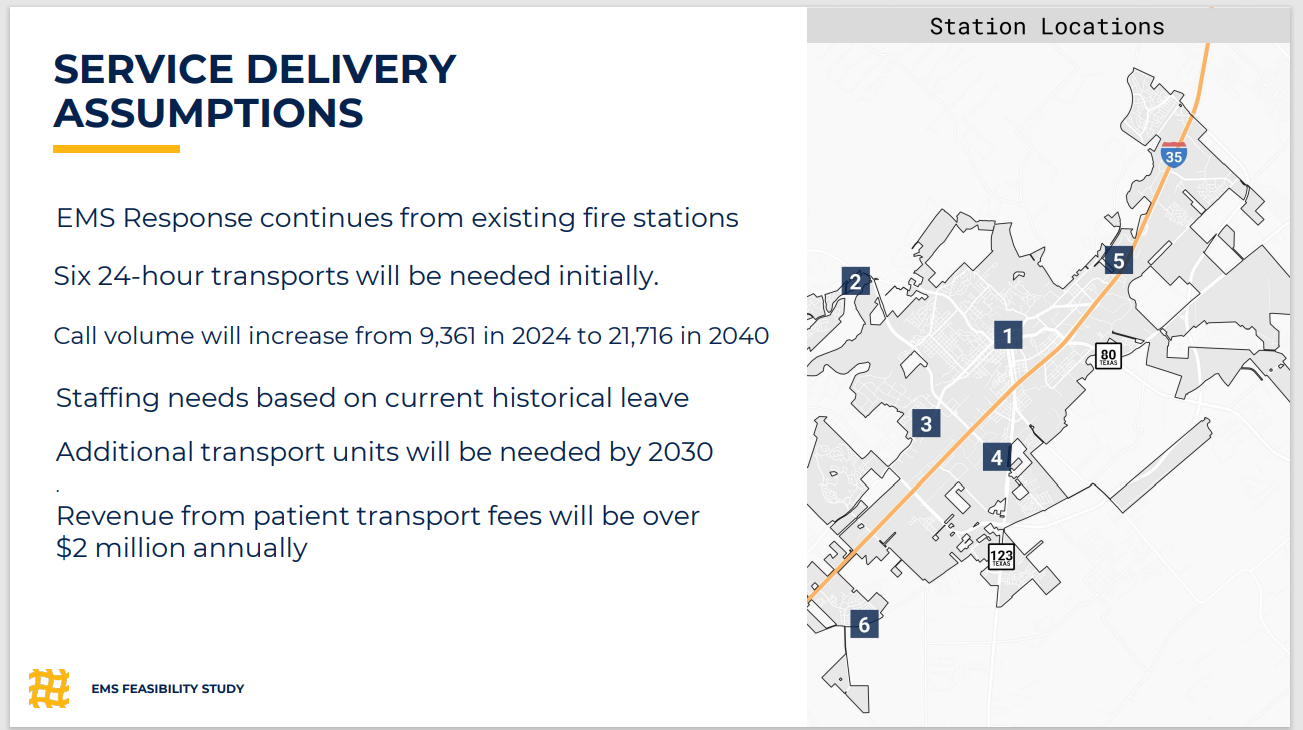
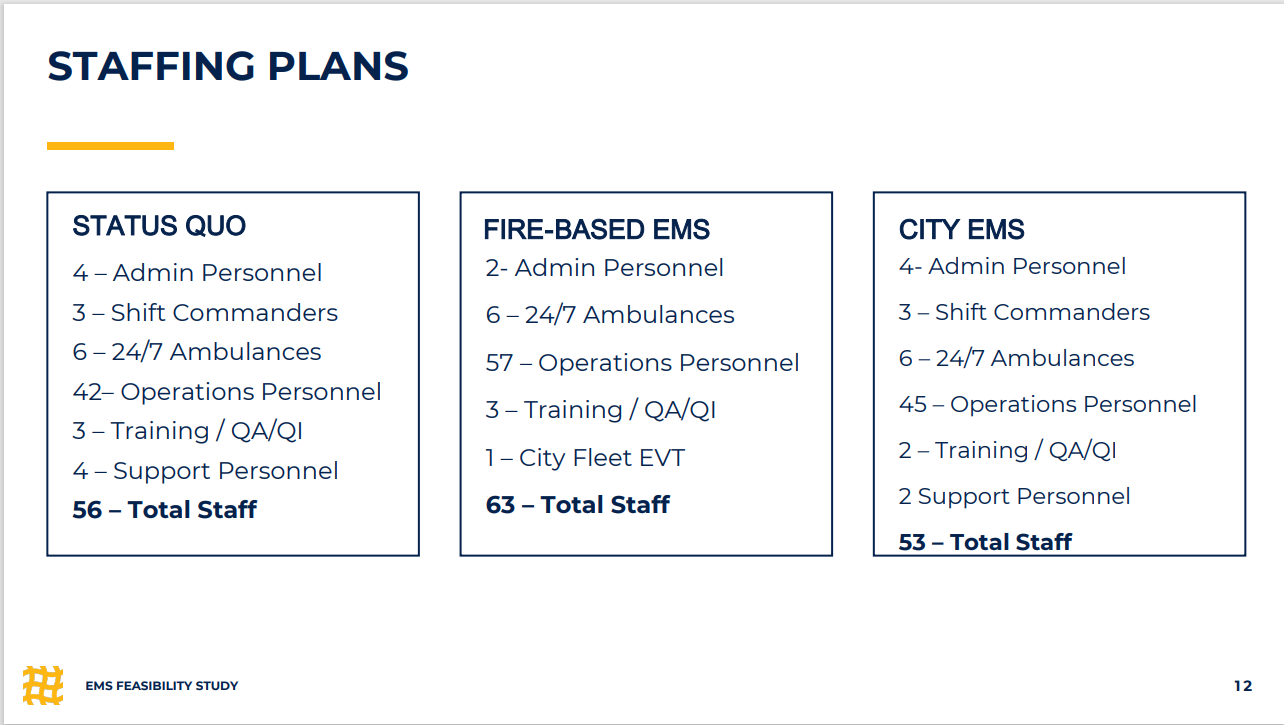
Here’s how much personnel is required under each model:
Here are the costs:
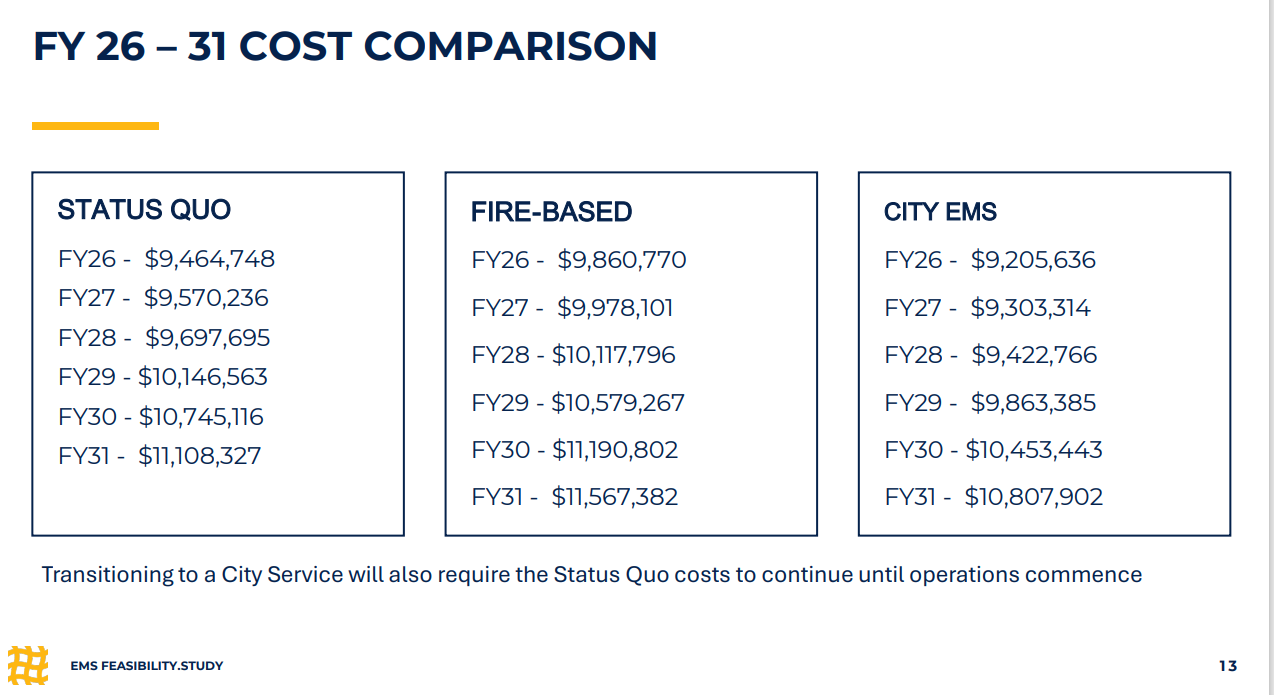
The reason City EMS is cheaper is partly because it requires less staff, but also because EMS workers would get paid less.
- Status quo? SMHC EMS is unionized. They can demand higher wages
- Fire-based EMS? Our fire department gets partial union perks, like collective bargaining. This is the whole “meet-and-confer” thing. So they can also arrange higher wages.
- City EMS: they’ll get paid along with all the other city employees.
San Marcos prides itself on paying its employees pretty well, but it’s just not the same as having a union. (And in Texas, it is basically illegal for public employees besides Fire and PD to unionize.)
…
Some extra details:
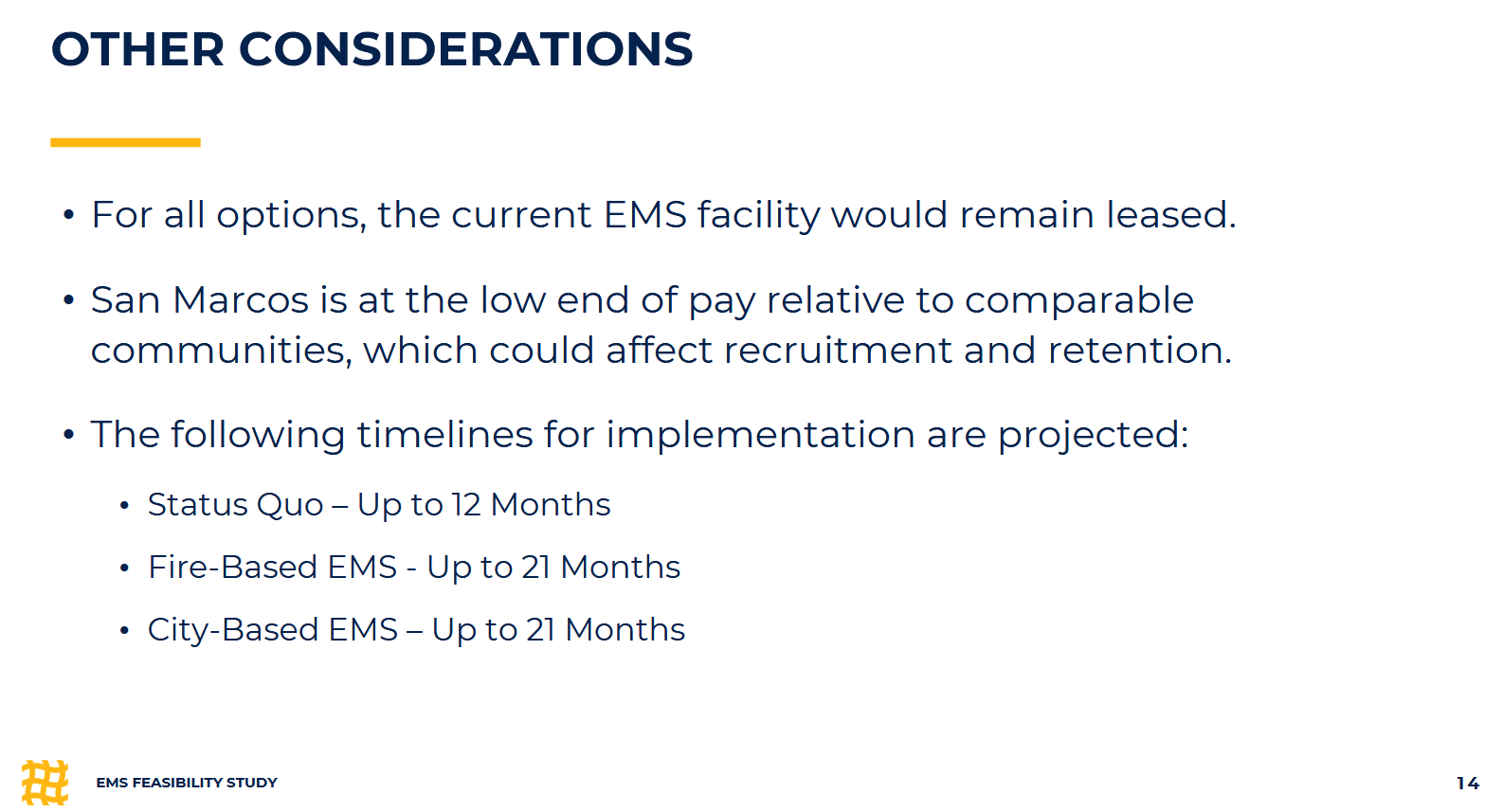
Here’s the summary table:
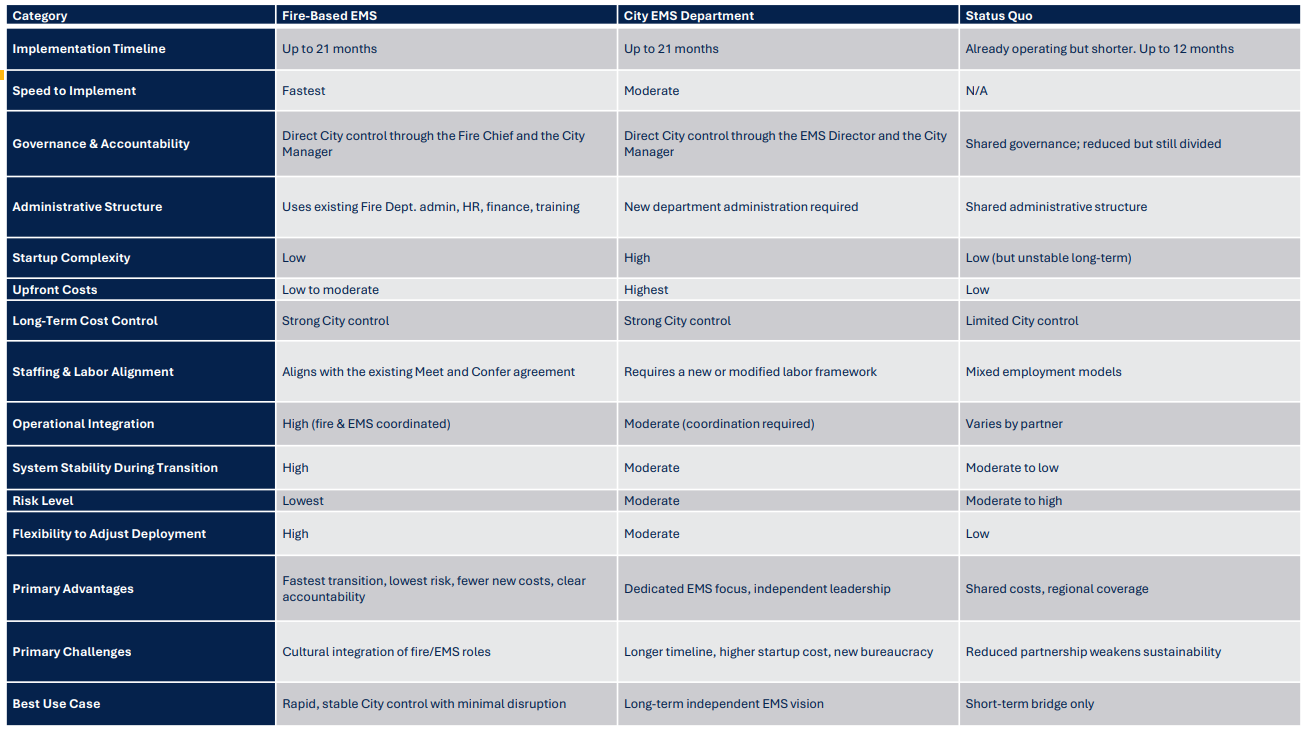
Sorry, I know it’s small. It’s slide 15 of this presentation, or page 153 on this PDF, if you want to scroll.
The consultants are recommending that we go with City EMS.
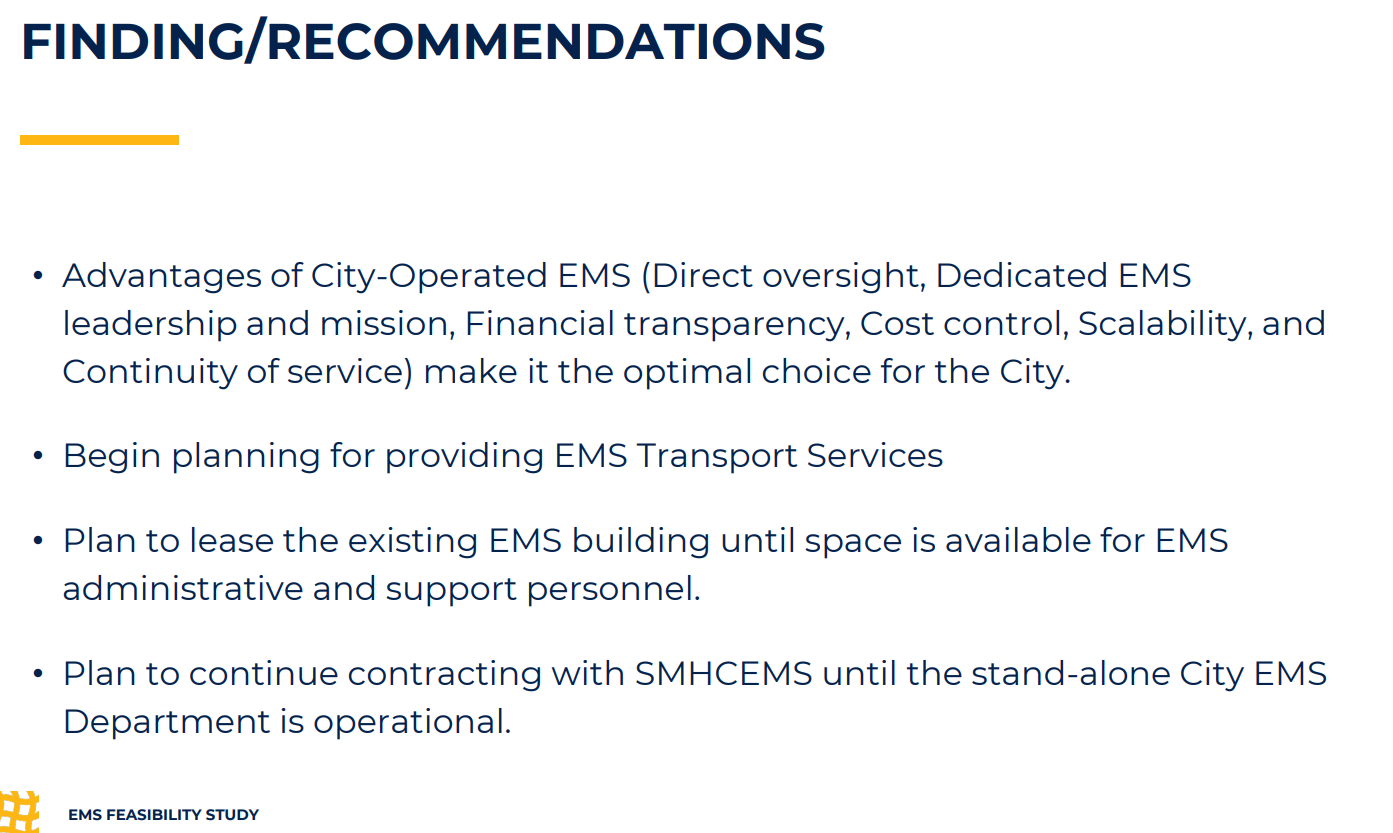
And, of course, this is all very urgent. As the contracts dissolve, everyone will start taking their supplies.
The first ambulances will start to leave in April, and the last of the ambulances will be gone by October.
….
What does everyone say?
Zach Phillips is the president of the SMHC EMS union. He says:
- There are inconsistencies in the EMS study. We’d like you to postpone.
- If postponing isn’t an option, our goal is workforce continuity.
- Our priority is providing high quality care. We can best do that by keeping the experience and expertise of our employees together. We know San Marcos really well.
What does Council say?
Amanda: I’m worried about the destabilization of the workforce. What transition process would be recommended?
Answer: The EMS workers would go through the normal city application process, but we’d work closely with them to align expectations and make it as smooth as possible.
Josh: My big concern is the transition.
– You can’t do good work without good people, but our salaries are lower.
– Taking on a whole company in-house is expensive
– We have to be fiscally responsible, but if we’re going to do this, we need it to be rock-solid.
– How would insurance and liability work?
Answer to that last bit: We get insurance through Texas Municipal League.
Shane: When Chief Stevens was hired back in 2009, the plan was to convert to Fire-based EMS. Chief, how do you feel about all of this?
Chief Stevens: Fire fighters do not want to be EMS, and EMS workers don’t want to run into burning buildings. When you talk to the people that work in these departments, they generally do not want to be merged.
Note: This is the biggest argument against fire-based EMS. Several different speakers say the same thing: Medical EMS people like doing the medical stuff, and fire fighters like doing the fire-fighting stuff. They do not want to merge.
Shane: Well, did we waste a bunch of money then preparing SMFD to be ready to convert to EMS?
Chief: No. It’s best practices to get fire-fighters trained as paramedics. We’re usually first on the scene, so we can start medical care while EMS gets here. We’re going to keep requiring paramedic certification.
…
Jane: How would the finances work out?
Answer: We’ve been paying $2.5 million to SMHC EMS. You all allocated an extra $2 million last September.
Jane: But that still leaves about $9 million?
Answer: Well, you bring in some money from patient care.
Mini-rant: the average cost of an ambulance ride is $2673. If we had socialized medicine, like the rest of the sane world, the bill to the consumer would be $0. But we pay twice as much for healthcare in the US and get significantly worse services. Ah, capitalism.
…
Alyssa: There are allegations of union-busting. I need more time before I decide.
Lorenzo: City EMS is cheaper because the workers get a worse deal. If we do Fire-based EMS, they’d get 4% raises every year, along with FD and SMPD. I’m against City EMS.
Amanda: What’s the time frame here?
Answer: We’re a little freaked out! Last July, we asked them to give us 12-18 months. But they’re going to start removing ambulances in April. The dissolution will be complete in October.
Amanda: I’m fine with the recommendation in the report.
Josh: Can I call the union president back up? Sir, what is the union’s position on transitioning to non-union jobs?
Union President Zach: One of our concerns is that all employees are able to transition, assuming they want to.
– Like Chief Stephens said, not all EMS want to be fire fighters. I personally prefer EMS and medical things, and not fire.
– We want to make sure all individuals can come over with their existing seniority.
– We’re worried about the timeline. If it drags out, you’ll lose people with a lot of local expertise because they’ll look for other jobs.
Josh: If you had a way to do it, what’s your preference on the transition? Assuming it’s options 2 or 3?
Zach: Right now, we have collective bargaining.
– The state does not allow public employees to collective bargain.
– But city councils can vote to allow meet-and-confer for City EMS.
– We just want to be able to negotiate.
– There’s no way we could go on strike, and we would not ever try to go on strike.
City Assistant Manager Anderson: I’ve been trying to figure this out. My read on state rules is that City EMS can have an employee association, but they aren’t allowed collective bargaining.
City Lawyer: I need to read up on some of these legal details. I don’t think collective bargaining is allowed. Some of the bigger cities have a similar thing to meet-and-confer between other employees. I just need to look stuff up.
City Manager Reyes: Each option carries budget consequences, so just be mindful.
…
Shane: I’m torn. I need more time, too.
Matthew: how do you transfer seniority?
Answer: We’d have to work it out. We’ve worked it out in other contexts, though.
Matthew: I’m for City EMS then. I want to explore these meet-and-confer options though.
Bottom line:
City EMS plus labor protections: Matthew, Josh, Amanda, Jane
Need more time: Alyssa, Lorenzo, Shane
So we’re going with City EMS, but city staff will bring back some details:
- the inconsistencies in the study that Zach referenced,
- Labor protections, whether we can do a meet-and-confer option
- Quality of care measures.
Hopefully things will get sorted!
…
One final note, just because it’s cute.
Fire Chief Les Stephens, last year when he was inducted into the Texas Fire Service Hall of Honor:
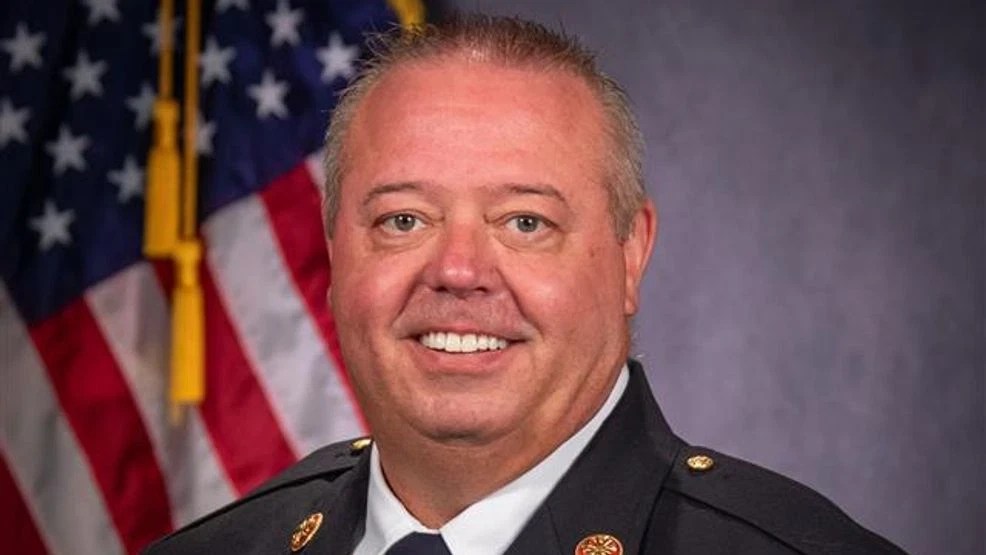
Les Stephens, on the San Marcos city staff webpage:
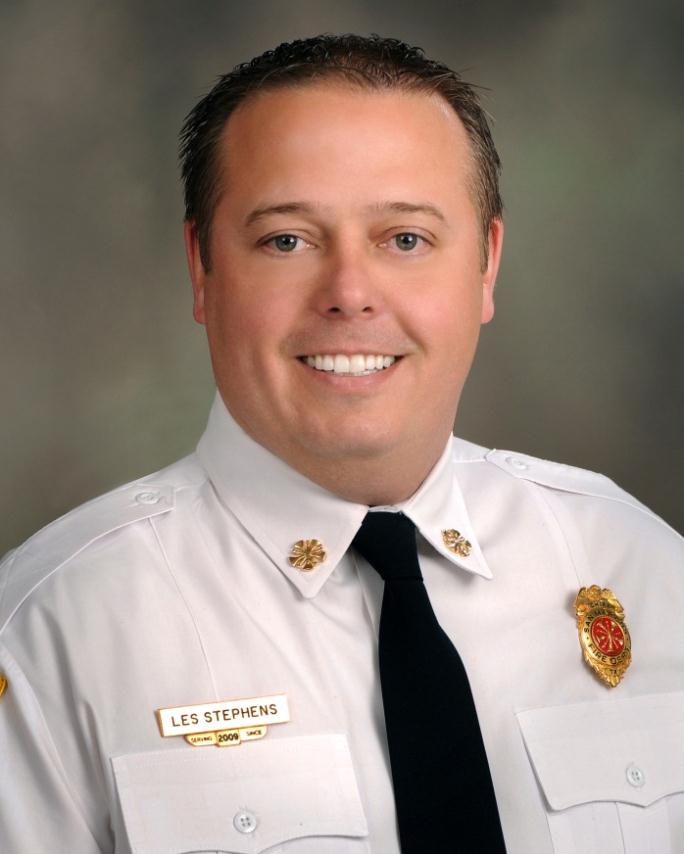
Did we…. Was he 12 years old when we hired him??
…
There were supposed to be two other workshops:
- the SMPD staffing study,
- an update on the comprehensive plan
But we ran out of time, so both were postponed.
 The San Marxist