
Citizen Comment:
Some years, citizens get fired up and angry at the budget. This year was the opposite.
Three people spoke on the budget, and they all praised council for increasing funding for the Human Services Advisory Board. (HSAB grants are how the city helps fund all the nonprofits that help kids, people in poverty, vets, the elderly, etc.)
It was pretty short!
…
Items 20-24: Welcome to our $371 million dollar budget!
It’s budget time. So far this year, we’ve talked about this back in February, then in March, again in May, and just now in August.
We’ve got several big problems:
- We’re bringing in less money from sales tax and property tax.
Sales tax peaked in 2023 and hasn’t returned. Property taxes have been flat. Actually, they’ve gone down on existing properties, but they’ve been propped up by new builds.
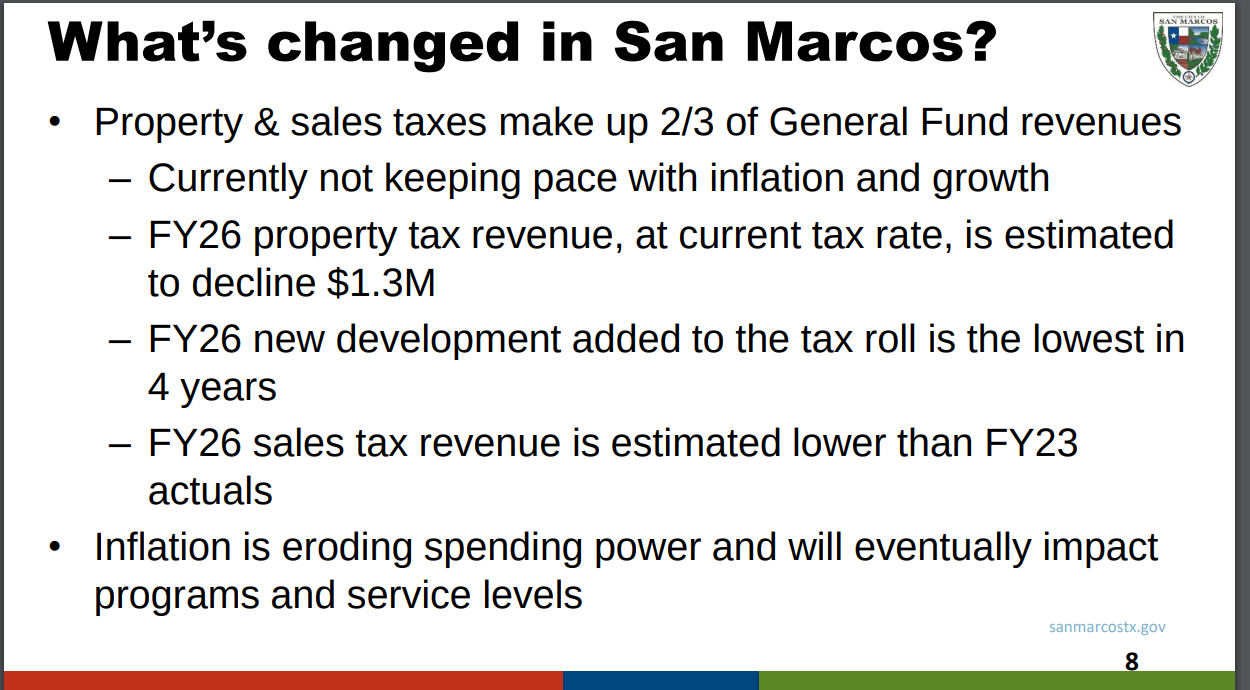
(That slide is from the May workshop.)
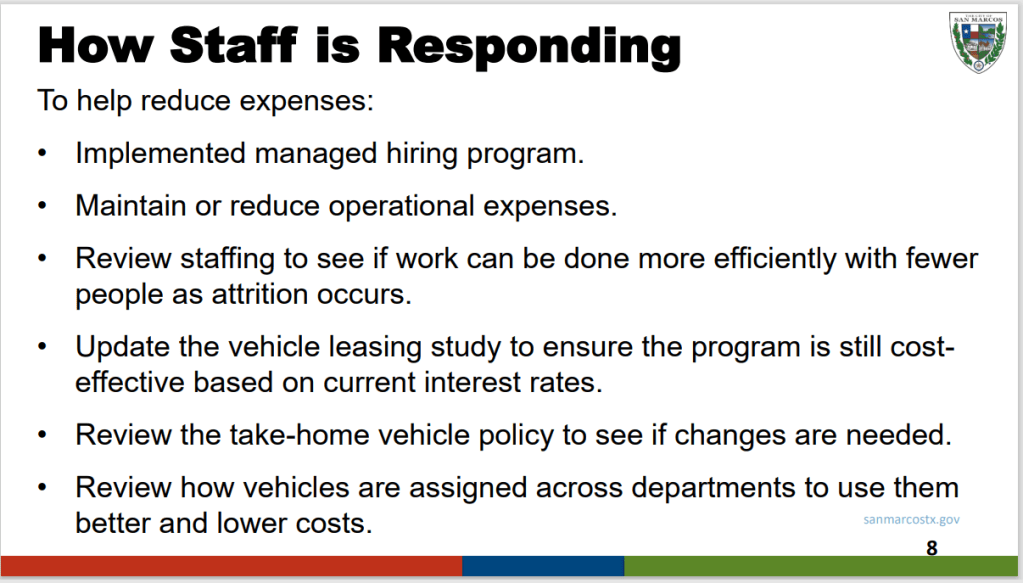
- Everything is more expensive, due to inflation.
City department budgets were flat two years ago. This past year, they cut $100K collectively. But everything is getting more expensive, so even holding things flat means you have less purchasing power.
- The State Legislature is always, always trying to knee-cap cities:
This past session it was House Bill 73 and Senate Bill 10. City staff implied that there were a few others. All of these cap city spending or cap city taxes.
The concept isn’t new – we already have caps on tax hikes. But these new bills are brutal in their severity.
All these bills were still up in the air last Tuesday, when city council met. Since then, the special legislative session ended. As far as I can tell, none of these passed? But Abbott could always call a 3rd session, or these could return in 2027. So this is always looming.
(Can you imagine how relaxing it would be if our state government wasn’t so hellbent on wrecking Texas cities?)
- We have three HFCs that are tied up in the courts
“HFC” stands for Housing Finance Corporations. These didn’t used to be scams, but they’ve become scams. For example: “Pissed” city leaders urge lawmakers to close loophole costing millions in tax revenue.
We’ve got three apartment complexes that were purchased by HFCs, and we’re losing about $630K in tax revenue from them. (They’re tied up in lawsuit appeals, so it could still tip our way.)
- There are almost $4 million worth of new expenses that are kicking in soon, over the next 1-2 years.

The ones with the checkmarks were funded from federal Covid money, which is expiring next year.
6. Council also has some new priorities, which cost money:
- Increasing HSAB funding by $200,000
- Increased funding for tenants rights and tenants legal support
- Start an office of community support and resource navigation.
- Probably more that I’m not remembering
…
Because of all this, tax rates are going up.
I mean, we don’t really have a choice, right?
If you own a $365K house, here’s how it affects you:

If you own a smaller house – say $200K assessed value – then you’d pay like so:
Last year: $1,115 per year, or $93 per month.
This year: $1,252 per year, or $104 per month.
We always focus on home owners here, because it’s easy to compute their tax costs. But rest assured: landlords cover the cost of property taxes by passing it on to their renters.
My back-of-envelope estimate is that an average renter pays about half as much: $640 per year towards their landlord’s property tax bill, or $53 per month.
…
Your utilities are also going up:

This is mostly based on CUAB recommendations. CUAB stands for Citizens Utility Advisory Boards.
Basically, if you don’t raise rates for a few years, you’ll get into a big financial hole. Then your bond ratings tank and it gets more expensive to borrow money, and you’re in even bigger financial trouble. To get out of it, you’d have to shock the community with a giant rate hike in order to right the ship.
So the idea is that it’s better to nudge prices up gently every year, to keep up with inflation. CUAB is the one that has to figure out the new rates. This is that.
…
One funny detail: The goal is to stabilize our budget going forward. We could have scrapped by this year, but then we’d be in a big hole next year. The looming expenses will kick in, and we’d have to raise taxes a lot, or cut services significantly, to handle it.
But because we’re being proactive, we actually will have $1.3 million of breathing room in the meantime.
City staff went to all the city departments, and asked about things like deferred maintenance projects or other ongoing needs. Here’s some possible ways to spend the money:
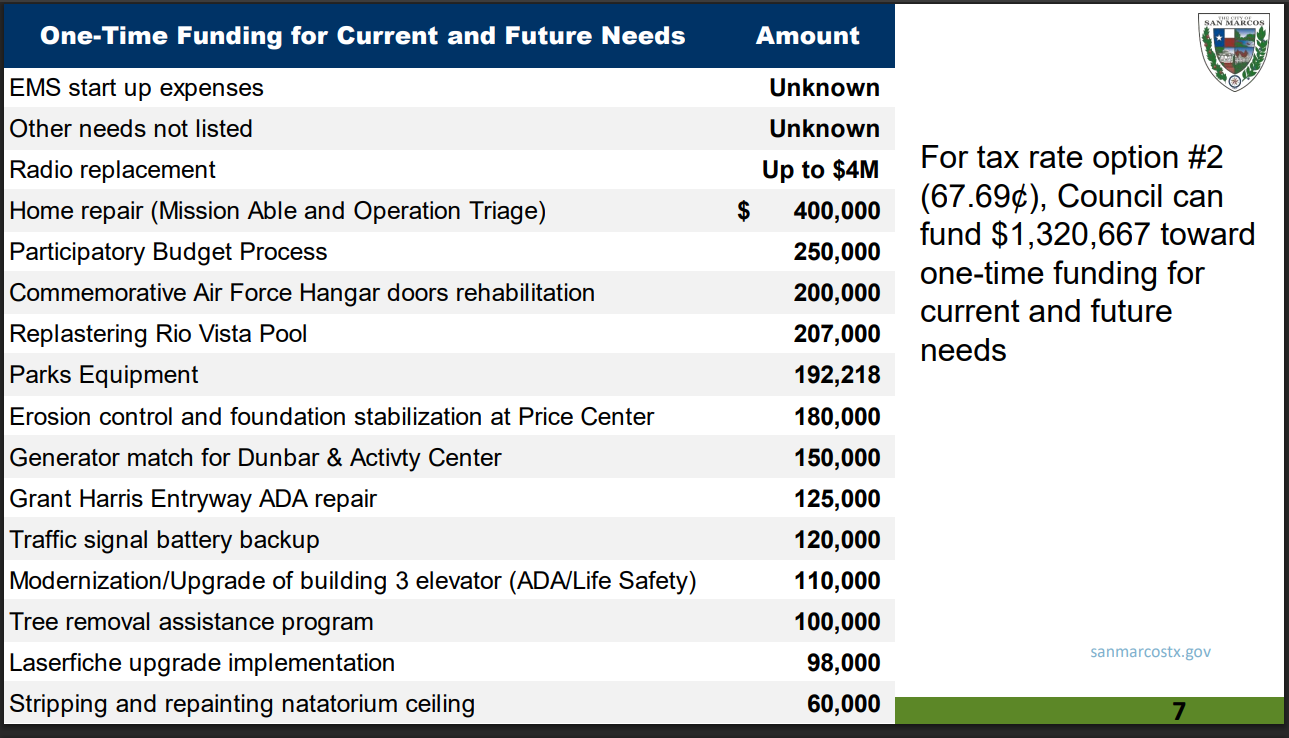
Council will hash this out later.
…
Finally: my yearly rant about taxes.
Taxes are good! This is how we can take care of our most vulnerable people. This is how we can solve collective problems, without someone trying to extract as much profit as possible.
The problem is that our taxes are not fair:

So yes: you do kind of pay way too much in taxes! We don’t charge our rich Texans their fair share.

(Also we Texans turn down about $5 billion every year by refusing to expand medicaid, and we turned down $350 million this past summer that would feed hungry kids.
We do this in order to prove a point, or something? The feds can’t force us to feed our kids or get medical care when we’re sick, dadgum. )
Look, the United States can easily afford for every person to have a safe home, free healthcare, and access to healthy food and education. This country is extremely wealthy. Collectively, we can afford to lift everyone out of basic poverty. We just choose not to.
Stop electing Republicans who are in the pocket of extremely wealthy Texans.
(End of rant. Thanks for playing along!)
…
Back to council. How did the votes go?
The votes on the tax rate and the budget:


Lock step, baby!
The votes on the various utility funds:
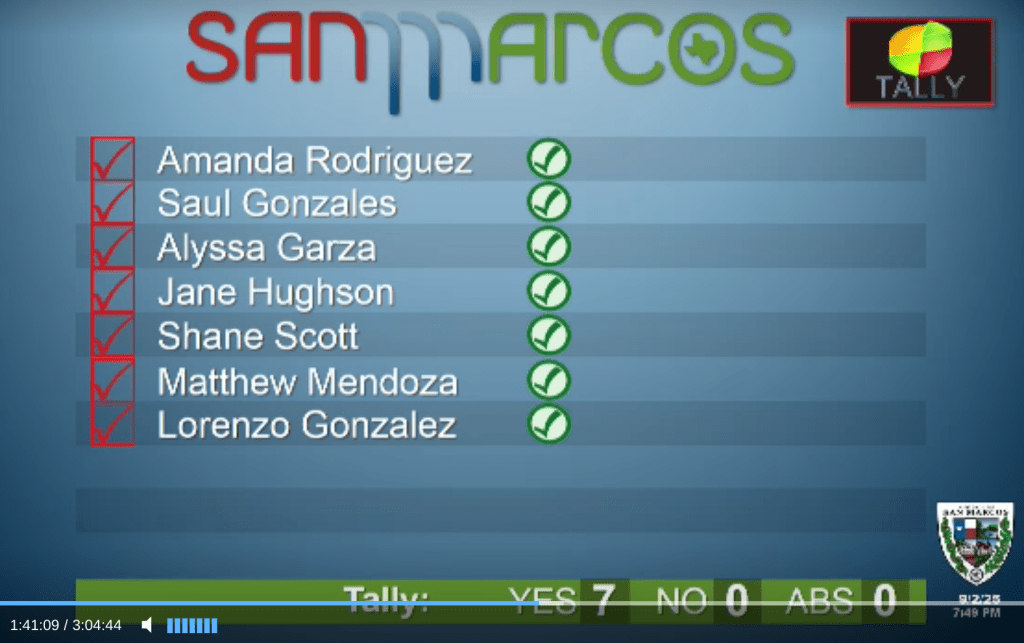

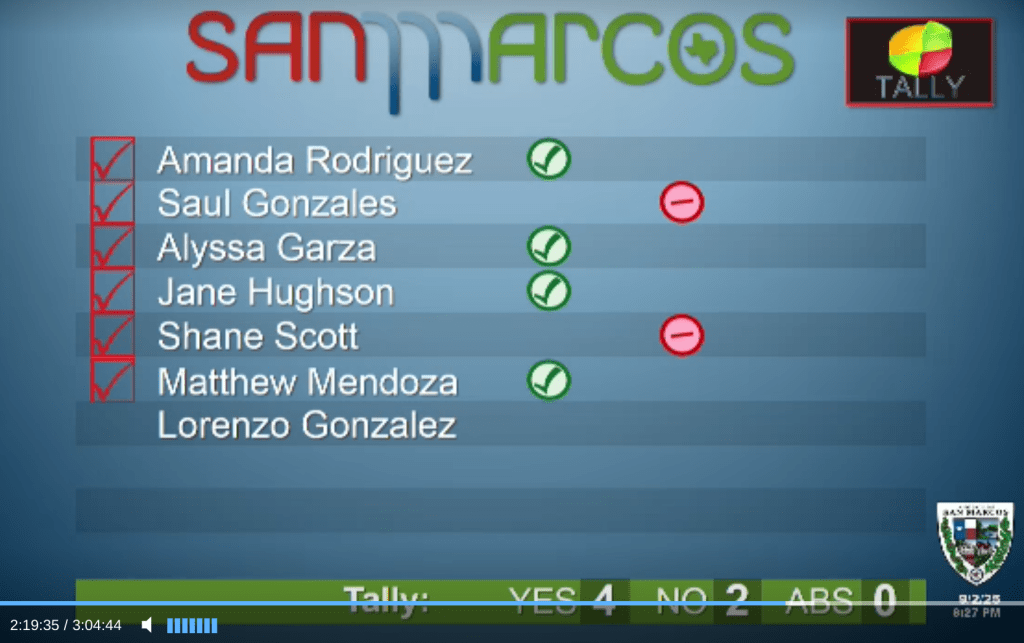
That’s the votes on Trash & Recycling rates, Electric Utility rates, and Water and Wastewater rates, respectively.
The votes are dropping like flies! Hang in there, councilmembers! They all passed, though.
….
Saul asked some interesting questions about our water supply:
Q: How much water do we sell to other cities?
A: We sell to Kyle, to County Line, and we sell reclaimed water to Buda and others.
(I don’t know what “County Line” means, and when I try to google it, I just get a bunch of BBQ joints and maps of counties. ¯\_(ツ)_/¯ )
[Updated to add: “County Line” is this special utility district. Thanks to Diane Insley for filling me in!]
Q: What happens if they don’t use the water they buy?
A: Our contracts are “50% take or pay”. So they have to pay for at least 50% of the water we’re setting aside for them, even if they don’t use it.
Q: Were we ever in danger of not getting our water from Canyon Lake, due to drought?
A: Both Canyon and Edwards water have tiered drought restrictions. So we always get some water, but they require us to use less water during a drought. Before the July floods, Canyon Lake was Stage 4, but now they’re Stage 1. Edwards Aquifer has been between Stages 3 – 5 all year long. They’re about to tip into Stage 5 again.
…
That’s all of the budget talk for today! The official, final vote will be at the September 16th meeting.
…
Item 25: Just one tiny rezoning!
This is 906 Chesnut St:

From the street, it looks like so:

That’s if you’re standing on Chesnut looking back towards LBJ. Vie Lofts is on the right.
The developer wants to rezone it as CD-4. (Basically, they want to tear it down and build small apartments.)
Everyone says okay.
I’m okay letting it go, as long as we take a moment to pour one out for this wallpaper:

I mean:

I’m not made of stone, people.
Also this window treatment:
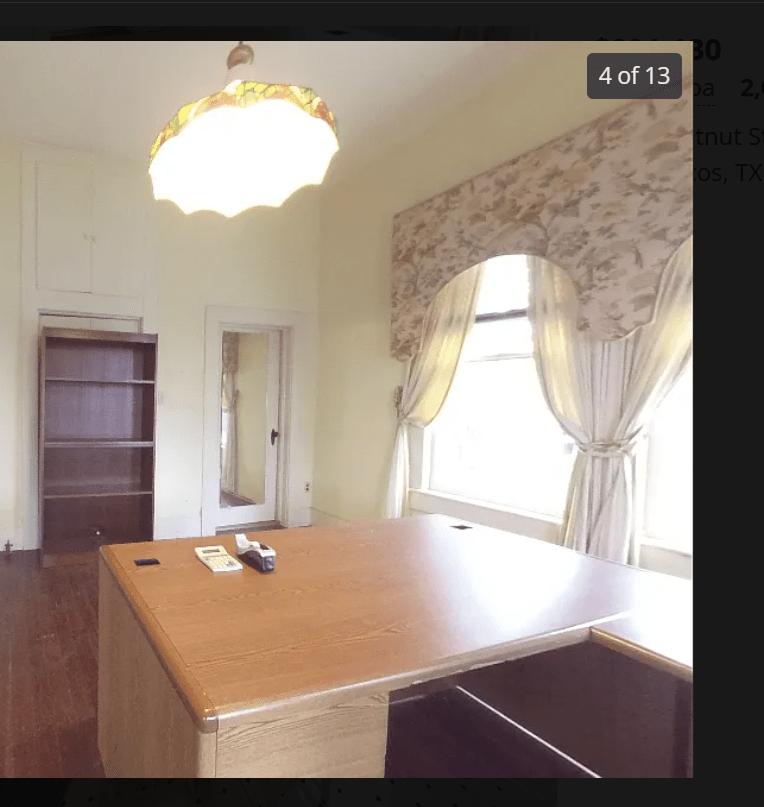
and maybe this pink trim:
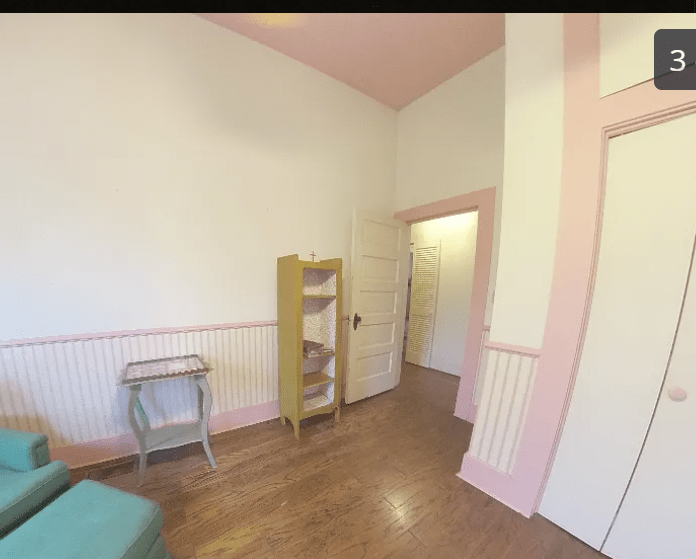
ok, and this built-in cabinetry and paneling:
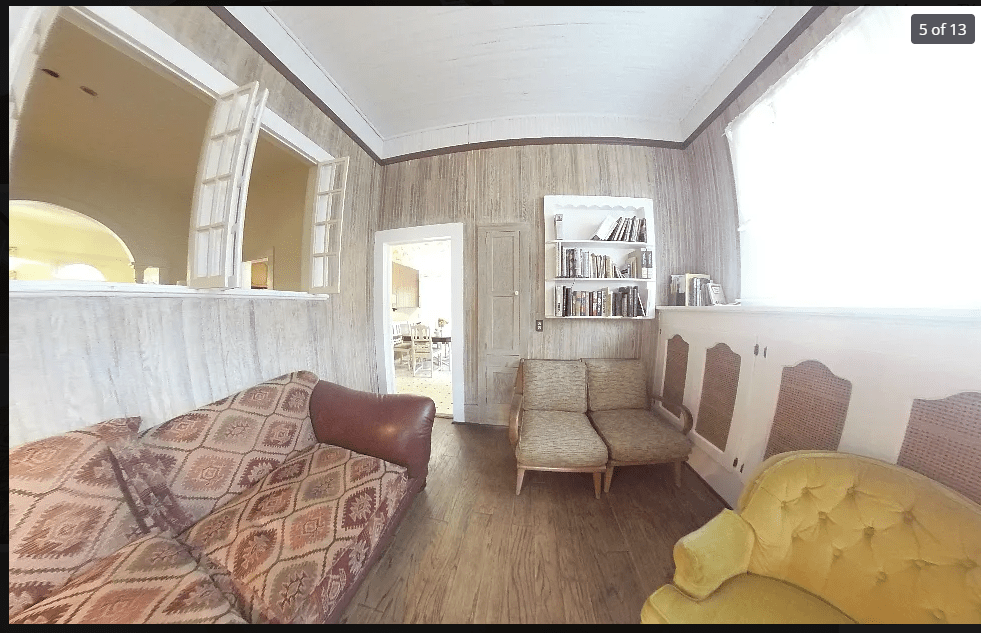
I take it back! Save this house! It’s too pure for this fallen world.
(Enjoy the full zillow tour here.)
…
Honestly, the rest of the meeting was pretty zippy. A few quick items:
- postponing the new development by the high school
- funding for the new water reclamation facility
- funding for CARTS
- setting some dates for elections and city council meetings next year.
On CARTS, we pay about $621K, and the federal and state government combined pay about $1.75 million. That’s great! Redistribution of wealth at work.
…
One last detail: Executive Session
Finally, Council discussed this land in executive session:
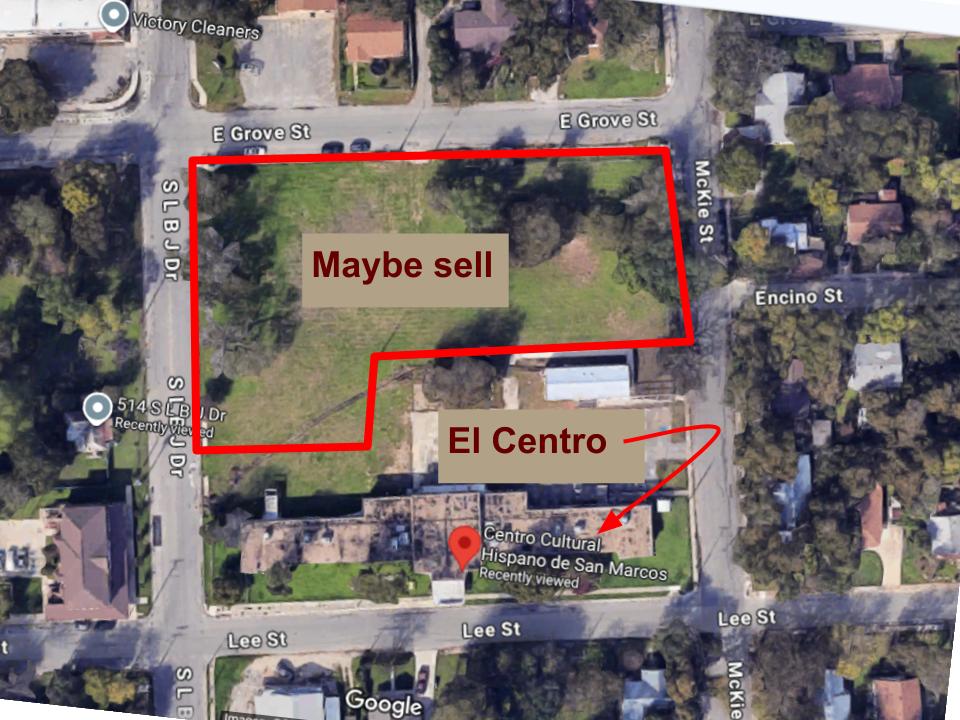
That’s the land that SMCISD is selling. There’s a big petition and movement in the community for the city to purchase the land, so that they can dedicate it towards the Mexican American and Indigenous Heritage and Cultural District.
So I don’t know what happened in Executive Session (obviously), but afterwards Council directed city staff to ask SMCISD about delaying the deadline of the sale, so that the city can get its ducks in a row.
I think it all comes down to timing:
- Can the city speed up enough to meet SMCISD’s budget crisis timeline?
- Can SMCISD delay long enough to accommodate the city’s due diligence and bureaucracy?
Also Hays county is somewhere in the mix, too. We’ll find out the details eventually!
 The San Marxist