Here’s the two big issues this week: Data Centers and Flock license plate reader cameras for SMPD. These kept Council up until 2:30 am, last Tuesday.
Wild. Let’s do this:
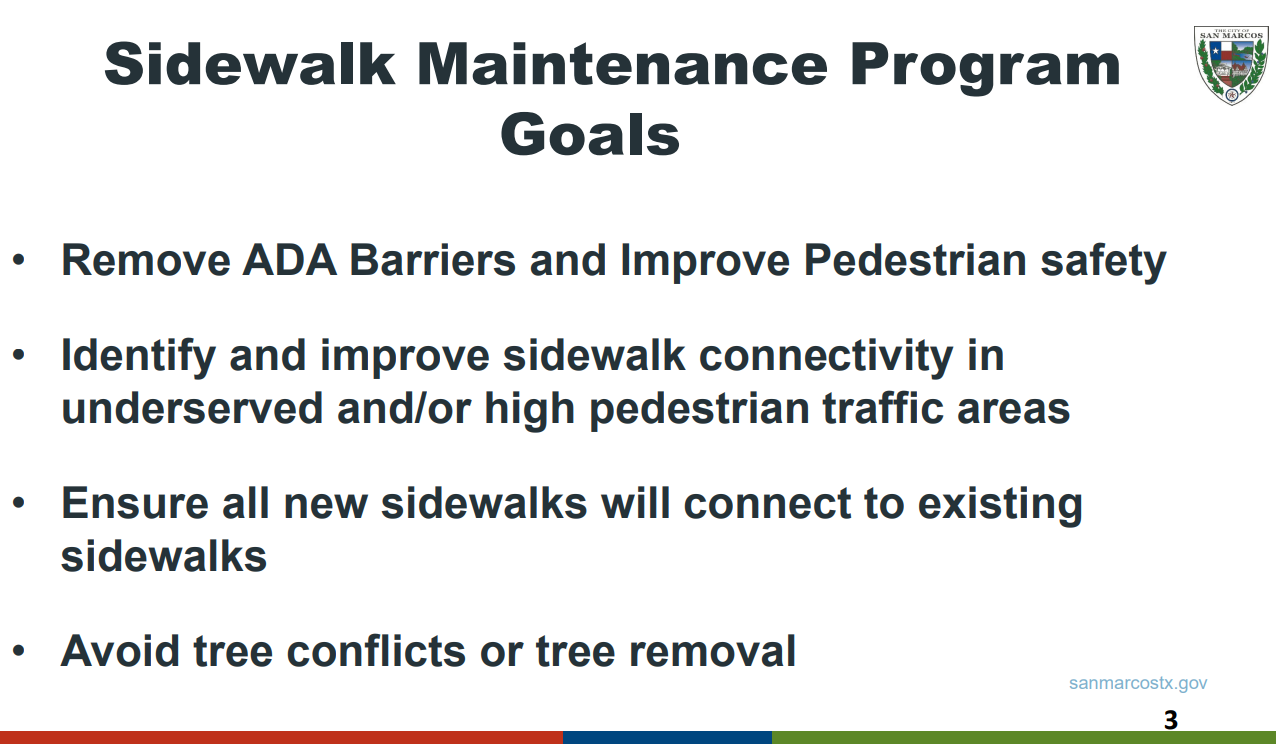
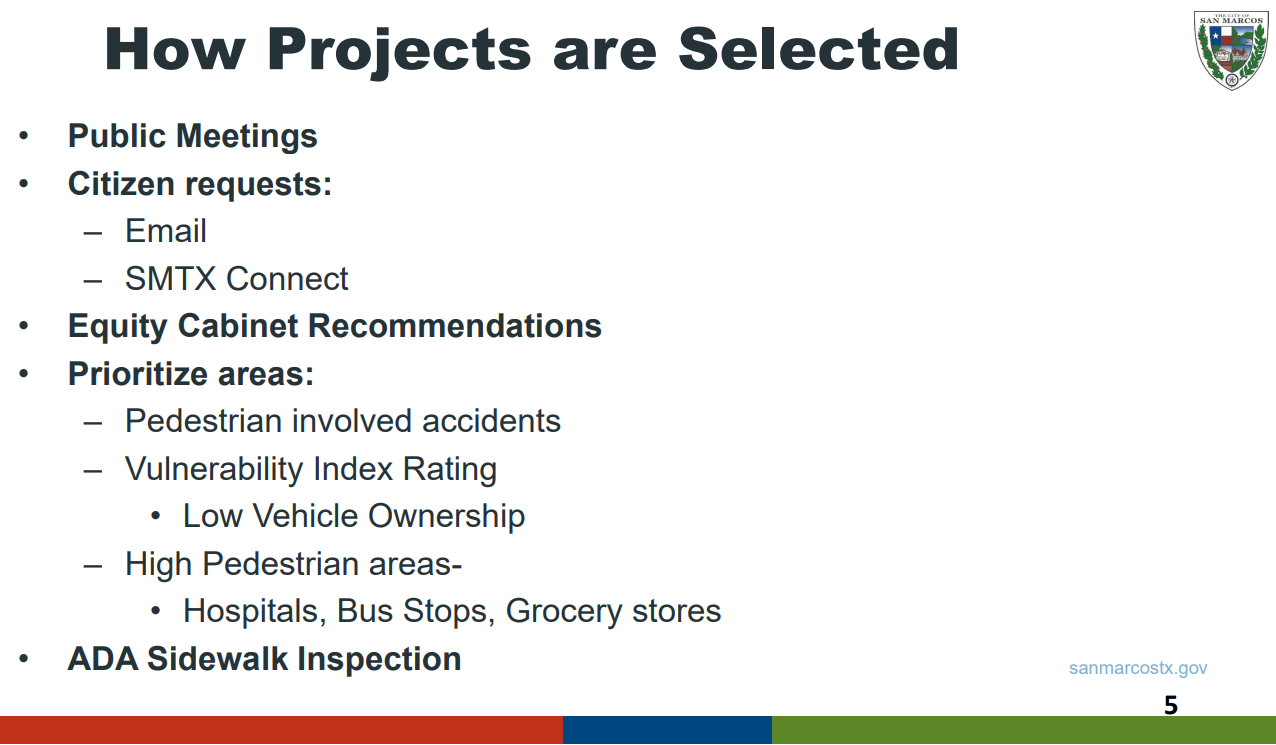
Hours 0:00 – 3:28: 2.5 hours of citizen comments! Also a bunch of small topics – street parking permits, sidewalks, CDBG funding.
Hours 3:28 – 6:47: Here’s your two biggies: the Data Center(s) and the Flock license plate readers. This is where all the action is. (Plus a teeny bit on scooters.)
Bonus! 3 pm workshops: The CIP list, and should SMPD officers be allowed to use their vehicles whenever they want?
There’s only one meeting in June, so try not to miss me too much. See you in July!
Last fall, we saw that Riverside Drive killed its street parking. They were sick of people parking in front of their houses and walking over to the river. Now you need a resident permit to park there on weekends.
This pink part of Rio Vista neighborhood wants to join the fun:
They don’t want rivergoers to park on their streets, either.
…
These guys live by one of the Spring Lake trail heads:
They also don’t like hikers parking in front of their houses. They want to require parking permits, too.
…
You know me: I’m a world-class scold on this topic. I did not like it when they did this in Blanco Gardens, I didn’t like it on Riverside, and I don’t like it now. I think this is all bullshit.
It’s a privilege to live walking distance from a major park. You’re very lucky! But the street does not belong to you. People should get to park there.
That said: it is super gross when park visitors leave trash behind in people’s yards! But surely there’s a better solution than quasi-privatization of public streets.
…
Anyway, Council approves both the Rio Vista streets and the Panarama streets:
It’s two different votes, but they both went the same way.
So now only residents get to park on those streets.
…
Item 26-27: CDBG money.
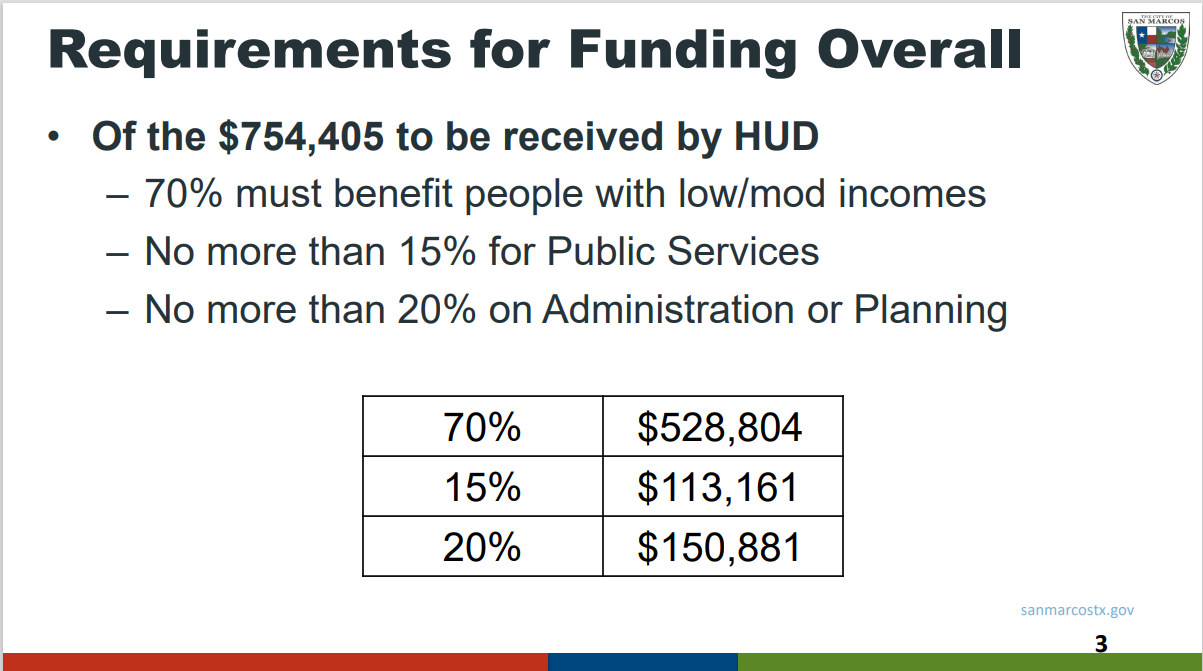
CDBG stands for Community Development Block Grant. This is money from HUD for local projects. This year we have $750K to distribute.
There are some rules:
Council has priorities, and they also had a survey and public outreach to see which categories to focus on.
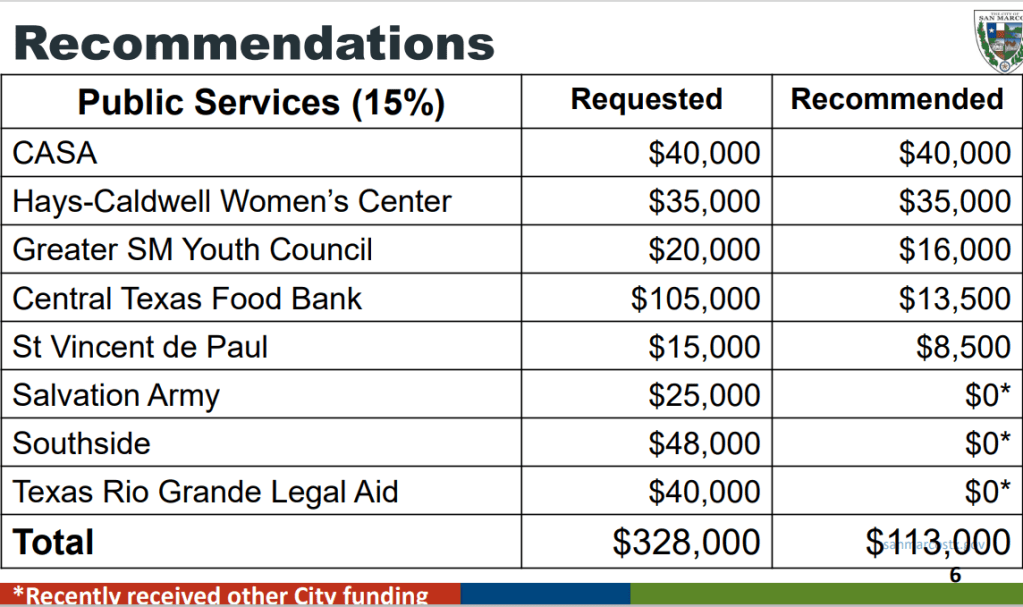
The committee waded through a bunch of recommendations, and is recommending these amounts:
There’s some explanation that goes with these amounts:
Salvation Army, Southside, and Texas Rio Grande Legal Aid are all getting other funding from the city.
Thorpe Lane just needs a little more funding to add to last year’s funding. They got $650K last year.
Long Street and Cuatehtemoc Hall are just too expensive for this particular fund, and Cuatehtemoc is getting some other city funding.
Calaboose is getting roof repairs instead of a new roof, and the city is paying for that instead.
There is no vote tonight. It is just a discussion item.
The vote is scheduled for the July 1st meeting
P&Z denied the request. So Council needs a 6-1 supermajority to overturn the P&Z vote.
There are 19 more speakers during the public hearing, along with the 35 from from the top of the meeting. (Some people speak twice, though.)
Here’s the main points that people make against the data center:
We’re in a drought, and this will destroy the San Marcos river
We’re in a drought, and this will destroy the San Marcos river
We’re in a drought, and this will destroy the San Marcos river
We’re in a drought, and this will destroy the San Marcos river
We’re in a drought, and this will destroy the San Marcos river
This really is the most important point. Climate change is pushing us towards permanent water shortages, and data centers use a massive amount of water for cooling.
And also:
This will drive up utility rates
There are reports from Granbury that these data centers are unhealthy to live near
Here are the arguments made in favor:
We’re going to get a lot of tax revenue
This does not cost the city much in terms of roads, utilities, and fire/police/emergency services.
These guys are offering to be more environmentally sustainable than the other six data centers. Take the regulated data center over the unregulated one.
Specifically, they’re going to use closed-loop cooling instead of open-loop evaporative cooling. This uses much less water.
Here is the developer’s basic pitch: “Data centers are definitely, 100% coming to central Texas. I’m the friendliest and the most cooperative one. I’m willing to do things environmentally and sustainably.”
He’s offering to put a bunch of concessions into a restrictive covenant. This is a contract that stays intact even if he sells the power plant. The next owner will still have to comply with it.
Here’s what he’s offering:
Closed loop, non-evaporative water cooling system. (This is very important.)
Limiting water use to an amount equivalent to 235 homes
Stricter than San Marcos Code on stormwater detention and impervious cover.
Sound and light mitigation
Getting water from Crystal Clear, not from San Marcos.
Getting electricity from Pedernales, not from San Marcos.
Only need San Marcos for waste water.
Here’s the obvious rebuttal to the last few points:
Who cares if it’s San Marcos city water or Crystal Clear water? It’s all coming from the same water table underground.
One speaker puts it like this: “These are straws pulling on the same water table”. Exactly.
Will this cause the San Marcos River to dry up???
Here’s what the developer said: they’ll need about 400-500K gallons of water to initially fill about 6-7 buildings. But after that, they don’t need much water until the buildings need to be re-filled in maybe 10 years.
100k of water is about what an average family of three uses in Texas a year (~88k). Won’t make the river run dry!
If it was an open loop cooling system (evaporative cooling) and an average system, it would be about 12.5% of San Marcos use. It wouldn’t take many of those to overwhelm local supplies.
So this is a big picture question. Can our river handle this one data center, on a closed loop system? Yes. Can it handle seven data centers on open loop systems? No.
…
So does ANYONE have control over how many data centers come to central Texas?!
This is an uncomfortable question! There’s only flimsy safeguards.
Can San Marcos block them? Only if they’re in city limits, and the developer needs the land to be re-zoned.
1. The overall situation is pretty bad for water use. 2. The San Marcos river has some unique legal protections, because of the Edwards Acquifer Authority. They have legal authority to sue if companies go over their allotted amounts. But still, do we need to test this? 3. We’re relying really heavily on ERCOT to gatekeep this situation.
…
What does Council say?
Everyone’s a little annoyed that the actual restrictive covenant is not already prepared and ready to read. But it’s not.
This is the basic argument that emerges: ERCOT is not going to approve all seven applications. They’ll probably only approve 1-2 applications. So if this data center gets approved by ERCOT, it might prevent an unregulated one from getting approved. That would be a net good.
Jane: It’s better to have these guys, who we can regulate, than the others who we can’t.
Shane: The wastewater from the center goes to the city system. How much extra clean up do we have to do to the wastewater, from the extra chemicals? Answer: We have a filter standard. They have to clean the wastewater up to our standards before they release it to our system.
Lorenzo: Are there going to be gas turbines or some sort of power plant? Answer: No, that’s Cloudburst. We’re not going to have a power plant.
Lorenzo: What happens if they violate the restrictive covenant? Answer: Two things: – Before we issue city permits, we’ll check to make sure they’ve built it the way they’re supposed to. So they can’t get up and running if they don’t build what they say they’ll build. – After it’s built, if they violate the covenant, we can get a court injunction. The court will order them to comply.
The developer is trying to be the most accommodating person ever. Would YOU like to talk to him? He’s got a whole website, and a whole shtick about how he’d like to talk to you.
(Honestly, he’s refreshing after the SMART-Axis Terminal jerks.)
Amanda: I’m concerned that we don’t know what company we’re actually talking about. Answer: I’m not allowed to say who it is yet. I promise I’ll say before the July meeting. They have facilities in Austin, Carrollton, and San Antonio, if you get my drift.
[Gentle reader, I got his drift. This appears to be the only Carrollton data center.]
A lot of citizen comments mentioned how utility and water rates will skyrocket. Alyssa asks about this? Answer: Council sets water rates. They don’t skyrocket unless you want them to.
[Note: This answer is a little disingenuous. Council sets water and electric rates for everyone on San Marcos utilities. So those won’t skyrocket. But if you live down south by all these proposed data centers, you might not be on San Marcos utilities. Who knows what Crystal Clear water and Pedernales Electric will do.]
…
Conversation turns to the P&Z denial. Right now, it takes 6 Council votes to overturn P&Z.
Should Council send this back to P&Z, to take another look? If P&Z changes their mind and approves it, then Council would only need 4 votes to pass this data center.
However, sending it back to P&Z will delay everything by 4-5 months. It might hurt their chances with ERCOT. Council does not want to risk the possibility that ERCOT denies this application, in favor of some other yahoo developer who throws up something worse, out in the county.
Bottom line: I think Council will approve this one data center at the July meeting.
We’re in a kinda terrible situation, but this one data center is probably the least-bad option.
They read all the license plates that go by, and record the date and time. Then if the police are trying to find someone, they can run a search on all that data and see if there’s any record of it.
“LPR” means “License Plate Reader”, and we first got some back in 2017. But we didn’t join the Flock network until 2022, when we bought 14 cameras:
(Also I note that they used seized funds for the first batch. Blech.)
…
Back in February, SMPD wanted to purchase 19 more Flock cameras. Council delayed approval in order to revisit our privacy policy. In March, we revisited our privacy policy and made some good improvements.
So now it’s time to vote on whether or not to approve the grant for these cameras.
What are the arguments for and against?
In favor: There are lots of examples of how Flock Cameras are used to solve crimes. From the packet:
Arguments against : They are tracking your every move. Do you want to live in a police surveillance state? The data gets merged nationwide to have one big nationwide network. Private companies can have Flock cameras. Neighborhoods can have Flock cameras. The ACLU does not like Flock one bit.
But it’s not just an abstract fear about loss of privacy: ICE has access to Flock data. We’ve got a federal administration that plays out revenge fantasies on brown people, and is in the business of deporting people as recklessly and broadly as possible.
Amanda: It’s the times we’re living in. People disappear off the streets because of this technology. – The policies aren’t strong enough to protect against a subpoena. Austin didn’t know until they did an audit that ICE was accessing their data. (Austin is now ending their license plate reader program.) – Senate Bill 9 would require Texas sheriffs to work with ICE. Our data will definitely get shared. Our policies will not protect us. – They’re rolling out new technology, like NOVA. – Please just don’t do this to people.
Saul goes next: I see the pros, but there are not enough safeguards yet. I’m a no.
Council spends the next hour trying to nail down exactly how much control you have over who sees your data. If Dallas PD is looking for a specific red car, can SMPD decide whether or not to release the data on that specific car?
Eventually the answer comes out: no. You do not get to decide on any specific request for data. Once you set up a reciprocal agreement with Dallas, they get access to all your data. Either the faucet is on, or it’s off.
…
The Flock representative keeps repeating “The city of San Marcos owns the data. Flock does not own the data. They’re just the guardians of the data!” Alyssa asks: Can you show me where in the contract that exclusive access is guaranteed to San Marcos? Your policy says that you “retain a perpetual, royalty-free license to use aggregated data for your purposes.” Flock rep answer: We promise that we use it only for anonymized training data.
Lorenzo: Does Flock own the physical servers? Or do you rent servers? What Lorenzo means is: where are the actual, physical computers where the data is stored? Does Flock have their own computer storage?
Answer: We use Amazon Webservices. This means, no, Flock does not own large-scale computer storage. Flock sends the data to Amazon for storage on Amazon computers.
Lorenzo: So Amazon is a third party that could also be subpoenaed for the data? You might not even know if they had to hand it over. What if they violate their agreement and fail to delete it? Answer: It’s in our contract with Amazon that they’d delete the data after 30 days. If they didn’t, they’d have to charge us extra! [Note: that answer does not make any sense. You didn’t misread it.] Lorenzo: Amazon is in the business of data collection. Jane: You’re not in control of that data.
…
Alyssa: This system is dangerous by design. – these claims are absurd! Like “license plates aren’t personal information”. You can track a person with it, can’t you? It’s personal information. – We own the data, but we don’t. They keep it. – They say ICE can’t access our data, but they do. – Anyone that we share our data with can then turn around and share it with whoever they want. – There are many cases of cops using it to stalk people. – Peter Theil is a backer of this, for god’s sake.
Chief Standridge: Look, I can only speak on behalf of what happens locally. In San Marcos, Flock helps solve specific crimes. Locally, I don’t have evidence of any privacy breaches. I am only able to speak to San Marcos.
Amanda: I have never thought that you all are the bad actors. We share with 600 agencies. Our policies don’t matter when we’ve already shared with them. Flock would not be in business without this network.
Jane: I was a software manager at the university. Here’s how it goes: you get a new technology, and you hammer out all the rules with the company. Then they get bought. All the rules with the first company go out the window, and the new company puts all new rules down. If Flock gets bought, all these rules go out the window.
Chief Standridge: What about all the safeguards and policies we discussed in March? Amanda: All we did is require agencies to follow all applicable rules and laws. But there are no federal rules! This technology is not regulated. Your policy ends the moment you share data with them. We share data with Houston! Houston openly says they work with ICE. Therefore we work with ICE.
…
Shane: What about the first 14 cameras we already bought? We still have those, right? Jane: Yes. But we could put it on the agenda to get rid of them. Alyssa: I guess we should revisit this!
Jane shares a little of her thinking: – Originally I thought these cameras were great. And if Flock were only used like in the examples, then it would be fine. – I’ve learned stuff tonight that’s giving me a really hard time saying Flock is good for the US. – Then I thought, “But there’s cameras everywhere. There’s Ring, etc, toll roads, smart phones, etc.” – But that’s different. This goes to government agencies. I’m not worried about our department, but I can’t say that about other departments – Maybe just at major intersections? Nope, nope, that doesn’t work. It’s the other departments. – We just don’t have enough guard rails for this. The more I learn about how the system is being used, it’s pretty scary.
…
Something has happened since the last discussion, because Chief Standridge does not seem surprised that it’s unfolding like this.
He makes one last bid: “What if we only share data within Hays County?”
Alyssa: What keeps Hays County from turning around and sharing it? Amanda: What about the Texas Senate Bill that requires sheriffs to cooperate with ICE?
City Manager Stephanie Reyes weighs in: It’s clear that you all are worried about where we are as a nation. It’s not an issue about SMPD. It’s not about our individuals. It’s about the policy decisions that we can control in the national scene. Everyone’s like: Yes! Correct!
…
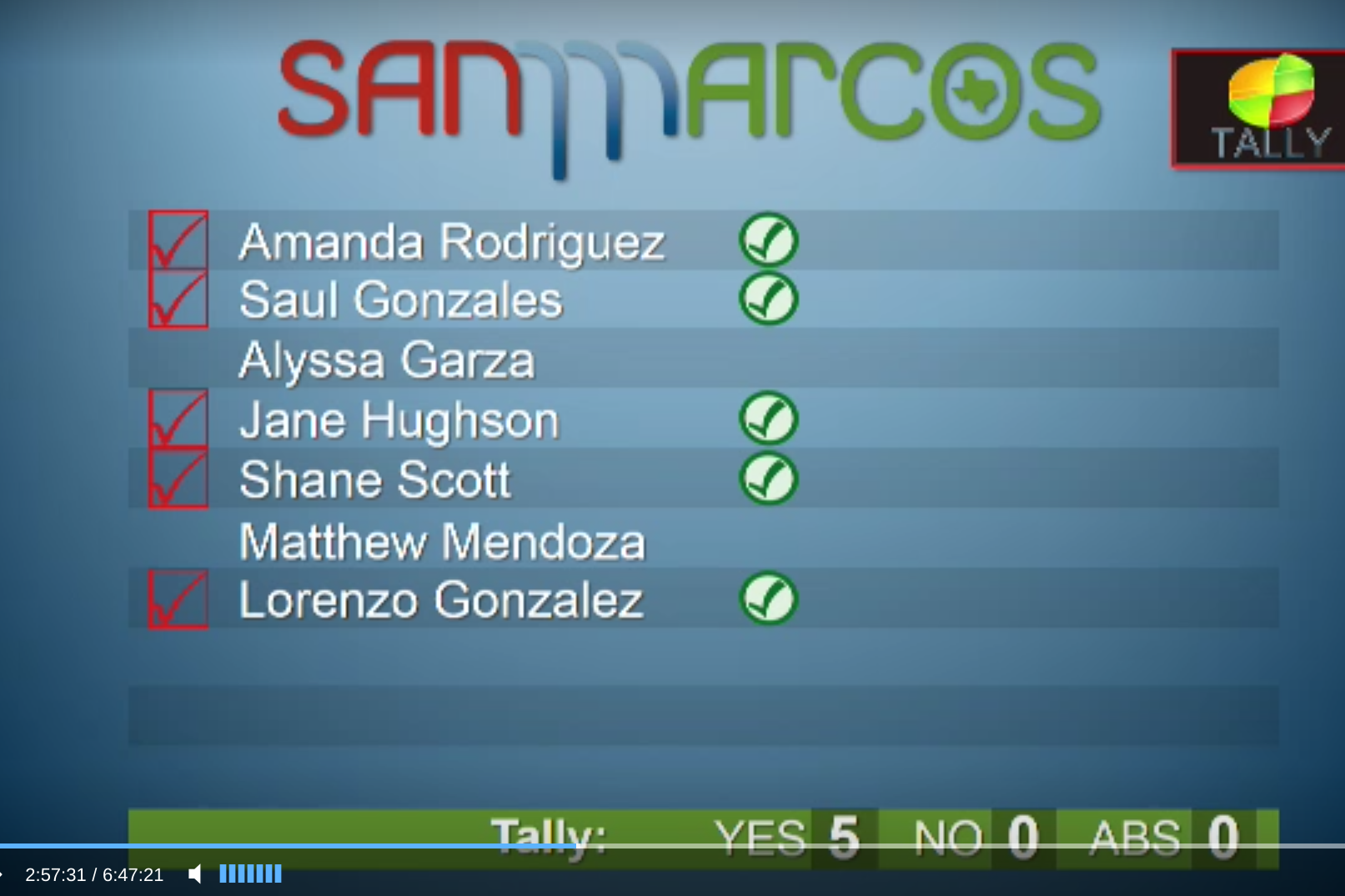
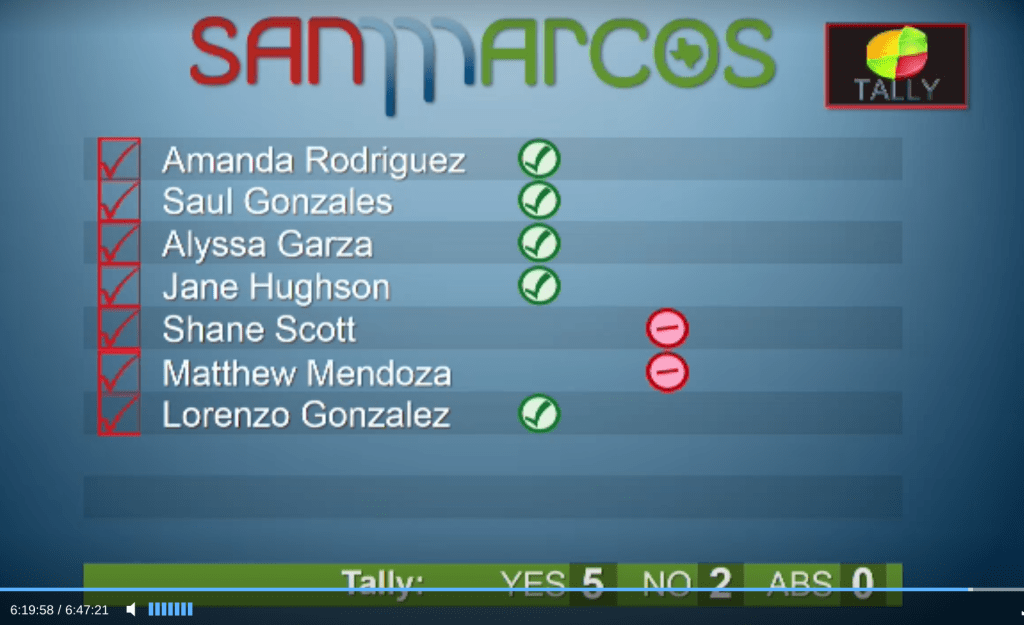
Finally, the vote: The motion is to deny. So a green check means no on the cameras, red dash means “yay Flock!”
Are you a NO on the cameras?
Amazing. Shane and Matthew are the only ones who still want them.
The council conversation was outstanding to listen to. It was just so sharp. Everyone made really great points.
It turns out they’re breaking up with us? Their contract is up on June 30th, and they don’t want to renew.
The reasons are:
Low ridership
Tariffs
Finding parts
Ouch.
Once they officially break things off, we’ll start looking for a different company who might enjoy our low ridership, tariffs, and lack of parts.
…
Item 24: More data centers!
So, recall there are seven data centers with applications in at ERCOT.
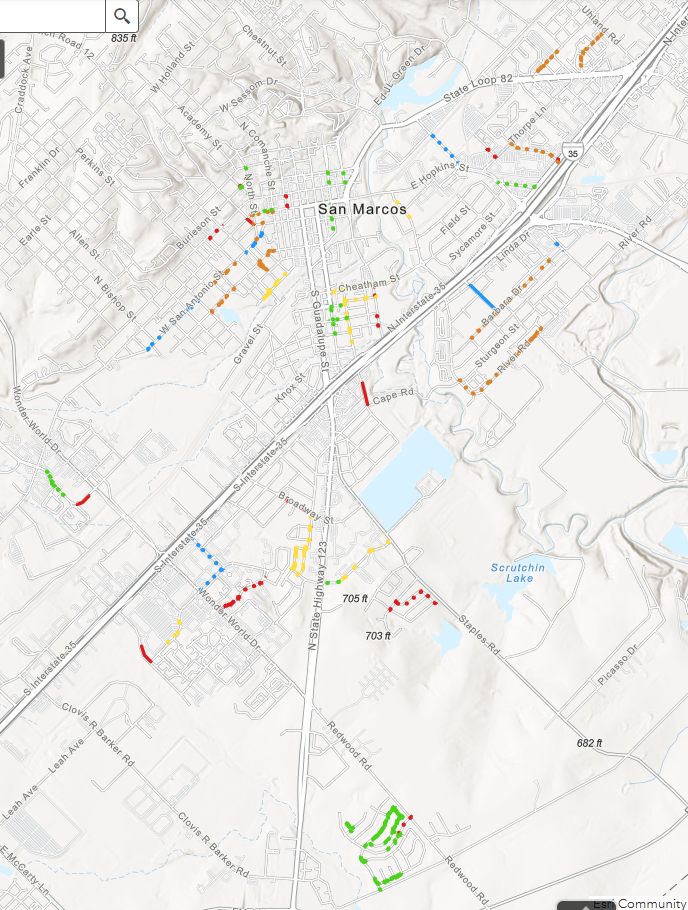
These are the three that I know about:
So now we’re on the pink one.
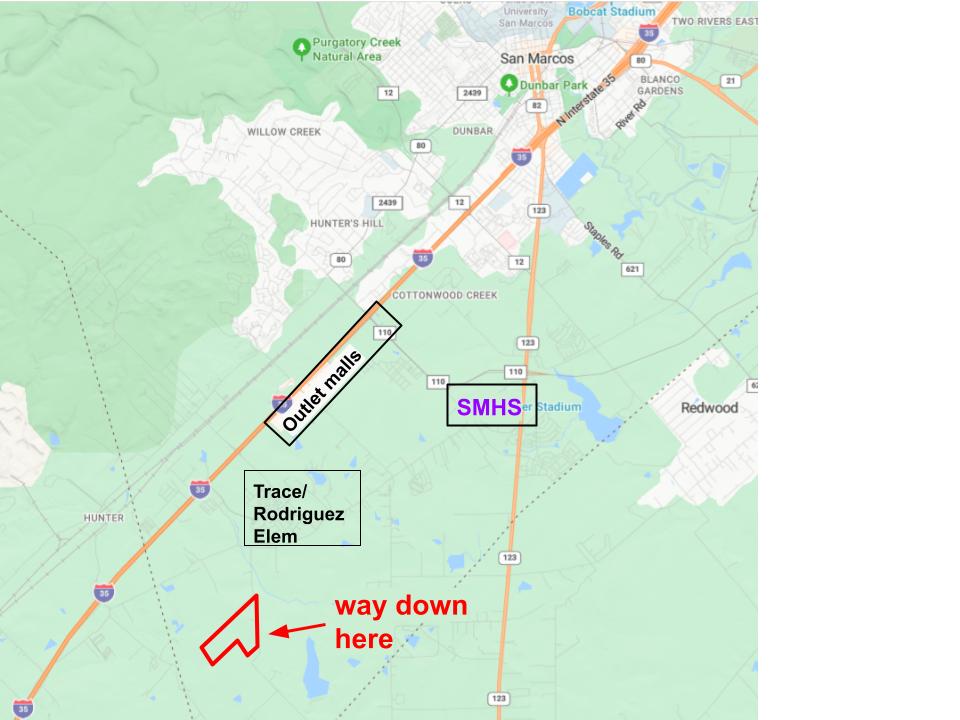
Yes, it’s gigantic. The red one from earlier is 200 acres, and this one is 785 acres. They’re saying it would also include housing. Unlike the one in red, the developer wants this one to be on San Marcos water.
It’s past midnight and everyone is exhausted. They decide to just form a council subcommittee to negotiate and discuss the issue further.
Council subcommittee: Jane, Amanda, Lorenzo.
I’m good with that.
…
Item 32: Proposed Charter Amendments for ballot
Here’s the legal language for everything that will show up in the November Ballot:
…
Q&A: Max Baker:
Matthew Mendoza again! Why do you think it’s appropriate to use swear words during the ceasefire conversation?! C, S, and A words?!
Would council consider revisiting EDSM policy and how we award benefits when GSMP knows before Council? Would you bring a discussion item that puts Council knowledge before biz privileges?
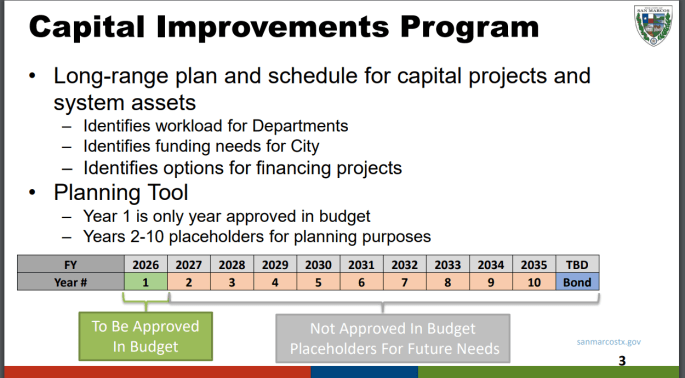
CIP stands for Capital Improvement Plan. These are all the big city projects – like, more than $100K – where you have to cover them with a bond and they span multiple years.
There’s basically a fuzzy 10 year plan, a better 5 year plan, a focused 3 year plan, and then an actual budget for the next year.
There are quick easy projects, long difficult projects, and some that are mid:
Loosely speaking, these are the categories for the projects:
Look, here’s some nice photos of projects that have gone great!
woo-hoo!
Here’s some of the bigger upcoming projects:
The hard part is wading through the hundreds of projects, and figuring out what you think about them. That’s what Council has to do.
So what does Council think about them? Not much! They’re eager to get to Workshop #2.
…
Workshop #2: SMPD Vehicles
How do police vehicles work when officers are off-duty? How much wear-and-tear gets put on them? What about when the officer picks up a second job?
Basically, we’ve been letting officers take their vehicles home since 1983:
…
What’s the benefit of letting police officers take their vehicles home?
I found the slides confusing, so I’m just going to summarize Chief Standridge’s arguments:
1. “If it ain’t broke, don’t fix it!” We’ve had a drop in crime since Covid, so don’t meddle with things that work.
2. 79 of SMPD employees are on-call sometimes, so it makes sense for them to have a vehicle at home. Otherwise they’d have to re-route to the station, check out a car, and go from there, which is a big delay.
Officers are supposed to keep their radios on, when they’re driving to or from work. He gives a lot of examples of cops that respond to calls nearby, when they happen to be commuting home.
3. Financial considerations:
a. If we tried to park all the vehicles in our lot, we’d run out of parking lot space at the station.
b. If we had cars in use 24 hours a day, we’d have to replace them every 3 years, instead of every 5 years, because they’d wear out more quickly. (This is kind of silly. The force is driving the same number of hours either way. Replace one car after 3 years, or replace two cars every 6 years – you aren’t changing anything.)
c. This slide:
I’ll definitely give the Chief this point. Having vehicles spread out over town is good when the station gets flooded in, which happens semi-frequently.
4. So much time would be wasted checking vehicles in and out. It would take an officer 30 minutes to do a check-out vehicle inspection, and then 30 minutes to do another check-in vehicle inspection at the end! That extra hour would add up to $25,000 in hourly pay per year.
(This one also seemed silly. Maybe check with the Parks Department or Maintenance Department, and see how they manage to make it work.)
5. Officers are a little kinder to the vehicle if they know they’re stuck with it for five years, instead of getting rid of it after each shift.
This one is easy to believe.
…
Chief Standridge never answers the main question: Is this cost-neutral? On the whole, if you compare a take-home fleet vs an on-site fleet, how does the total cost compare?
Here’s what I personally care about: Is this policy similar to the kind of frugality we expect from other departments? Are we keeping SMPD as lean as we keep Parks & Rec, or the library, or maintenance, or anyone else?
We never really got an answer to that, either.
….
Part 2, same workshop: SMPD Vehicles being used when cops have second jobs.
This is what Council cares about more. How much wear-and-tear is getting put on the vehicles when officers go on second jobs? Like SMCISD hires them to work a basketball game, or Amazon hires them to direct traffic? What about the wear and tear on the cars that occurs then?
This is pretty common:
The problem is the jobs that need the cop to keep his vehicle on and idling. For example, you get hired to direct traffic at Amazon. That ages a vehicle, and means that SMPD has to replace the car sooner.
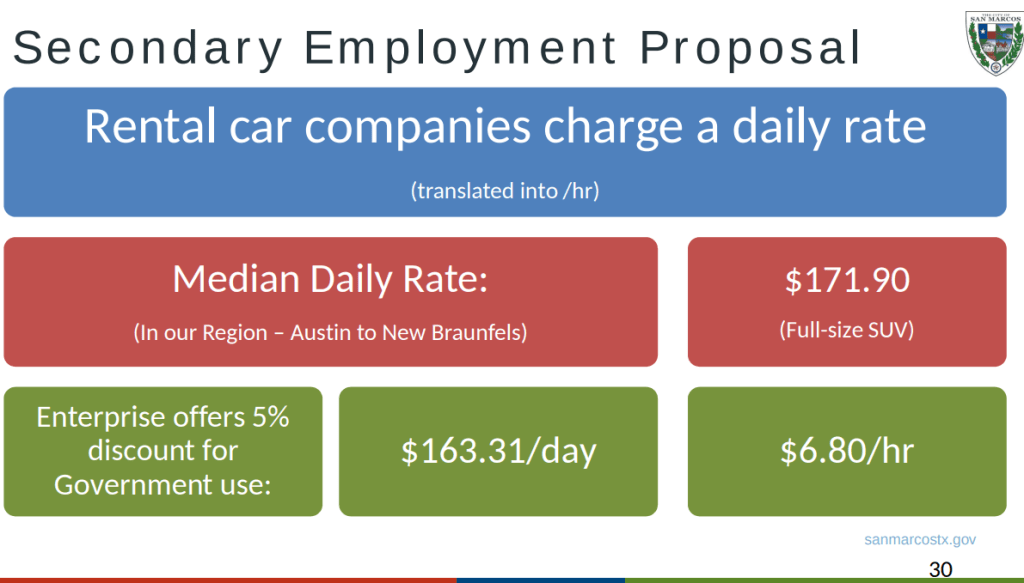
So they’re going to charge officers a little rental fee:
They figured that a rental car company would charge them $163 for 24 hours, so that works out to $6.80 per hour.
Here’s what we’re going to do:
Council is fine with this. They’re going to draw up a formal policy and go from there.
My two cents: Two hours of discussion was way too much for this topic. I lost interest in the finer details of which officer stops for an iced tea on the way to HEB or whatever.















 The San Marxist