
Three quick ones!
Workshop 1: Bicycle Friendly Communities.
The League of American Bicyclists hands out awards. We’re bronze! We’ve been bronze since 2018, actually. But we were renewed!

Overall, Texas is mid.
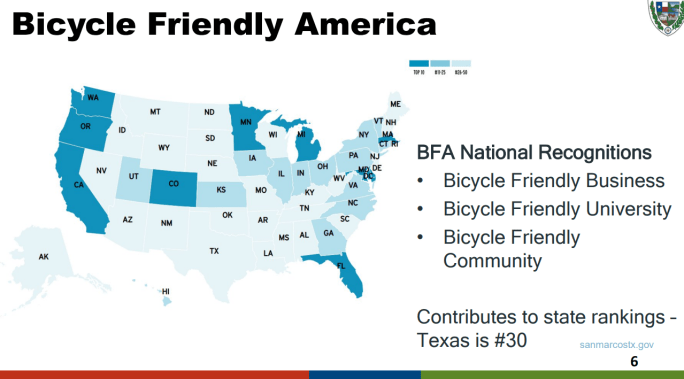
It takes a fair amount of work to get this designation. Along the way, we got some survey data:

They also gave us a report card:

Ouch. Hmm. Maybe I don’t know what “bronze” actually means. That we’re trying?
They included 17 recommendations. We’re a work in progress. Read ‘em all here.
Council asks a few questions:
– Bike incentives? Access? (no)
– Do we reach out to businesses? (no)
– Demographics of survey responses? (no)
I’m being pretty negative, but the city is doing good work on a shoestring budget.
Remember: on average, it costs about $1,015/month to own a car, whereas it’s about $29/month to commute by bike. San Marcos is full of people who might prefer to bike – but only if it feels safe, and only if they actually have a bike.
…
Workshop 2: Spin Scooters
These came up before, last July.
We’re talking about these:

They’ve been around since 2021.
You download an app, and it tells you where the closest one is, and you can rent it and ride around the Scooter Zone.
Originally they were contained to this blue area:

Last May, the Scooter People asked if they could grow. So we gave them a 9 month pilot period to extend to this region:

Also we allowed them to become 24/7. Before, they shut down overnight.
So how did the pilot program go?
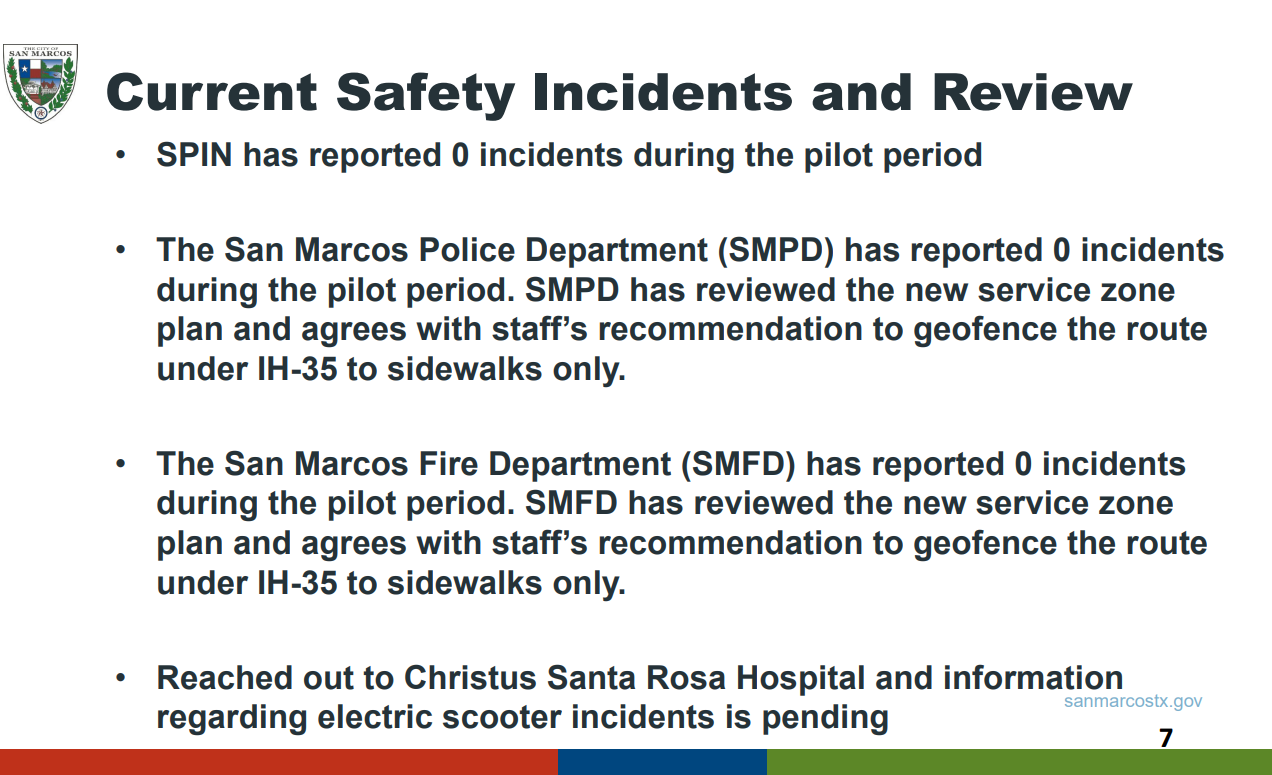
There haven’t been any incidents!
Everyone is fine making that region permanent.
Would we like to fire up a new pilot region, here?

Sure.
One final note: Are these actually affordable?
It costs $1 to unlock, and then $.30 plus taxes per minute. So let’s ballpark that it costs $6 for a 15 minute commute. That means that one daily trip would cost about $360/month.
That’s actually kinda pricey. Still cheaper than owning a car, but not, like, frugal.
…
Workshop 3: Edwards Aquifer Habitat Conservation Plan
Okay, this topic is always fascinating.
So back in 1991, there was a lawsuit by the Sierra Club against the U.S. Fish and Wildlife Service. The Sierra Club sued for neglect under the Endangered Species Act. Their case was that if the Edwards Aquifer drops too low, then the endangered species in the Comal and San Marcos rivers could go extinct. And they won!
So the Edwards Aquifer Authority was created, and they got some legal power. This is important!
(hey, look at this:
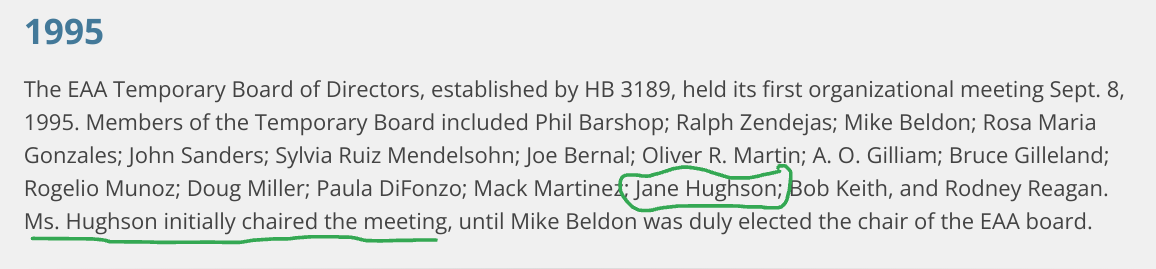
Probably some of you know all those names, but Jane’s jumped out at me. Good on her.)
Here’s the key: The EAA is allowed to cap much water gets used, and they are allowed to charge organizations to use the water. They sell credits to San Antonio, New Braunfels, San Marcos, Texas State University, Kyle, and so on. Then they use that revenue to fund conservation measures.
Today’s presentation is on the Edwards Aquifer Habitat Conservation Plan, or EAHPC. This is how they actual take care of the rivers.
So what do they do?
SO MUCH! They spent about $10 million on San Marcos alone.
They do a bunch of underwater gardening, to make sure there’s enough habitat for the little endangered fishies, and also the endangered wild rice:

They fence off the spots where the bank is getting eroded and trampled to death, and nurture it back to life:
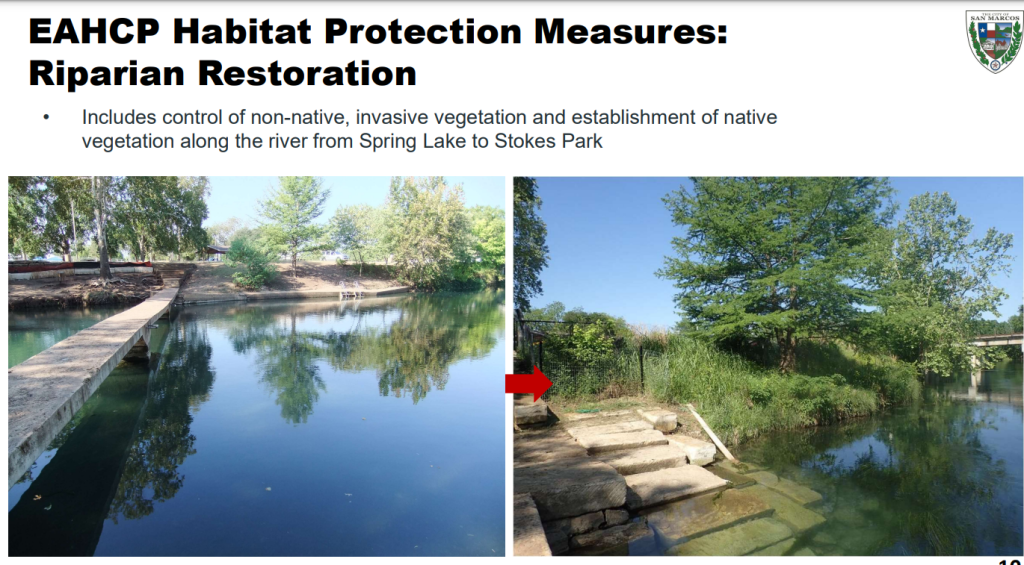
That photo is just upstream of the falls. It’s as if you’re standing on the island with the big cypress trees, looking back towards the bank.
They hire people to go spear-fishing for non-native species:

The one on the left is those little sucker-fishes that people put in their aquariums to eat the algae and keep in clean. The one on the right is tilapia.
Council asks: what happens to the fish?
Answer: The guy who does the spear-fishing holds a big fish fry and serves tilapia fish tacos, down at Ivar’s river pub.
Council: What about the sucker-fish?
Answer: Don’t eat those. Gross.
But also: the San Marcos Discovery Center has a fish shelter! Like they’ll take your old fish if you don’t want an aquarium any more, and if you are getting started, you can go adopt fish for free from them.
Don’t dump your old fish in the river, everybody. Take them to the fish library.
…
What else?
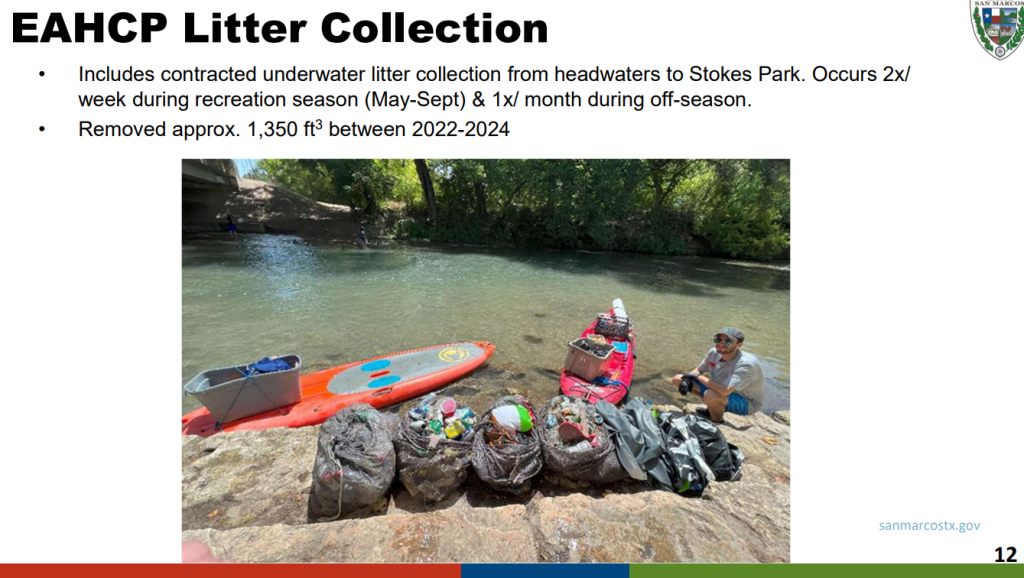
They pay for scuba divers and snorkelers to collect trash out of the river, twice a week, all summer long:
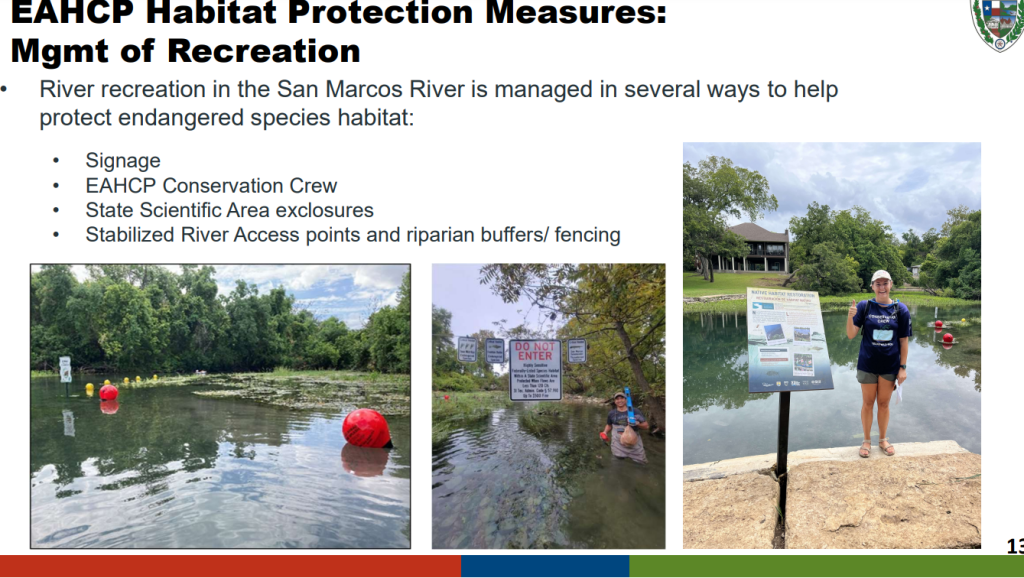
They keep those red bobbers around the wild rice and sensitive spots:
They put the big limestone rocks in at certain river swim spots, and then fenced off a bunch of the other spots:
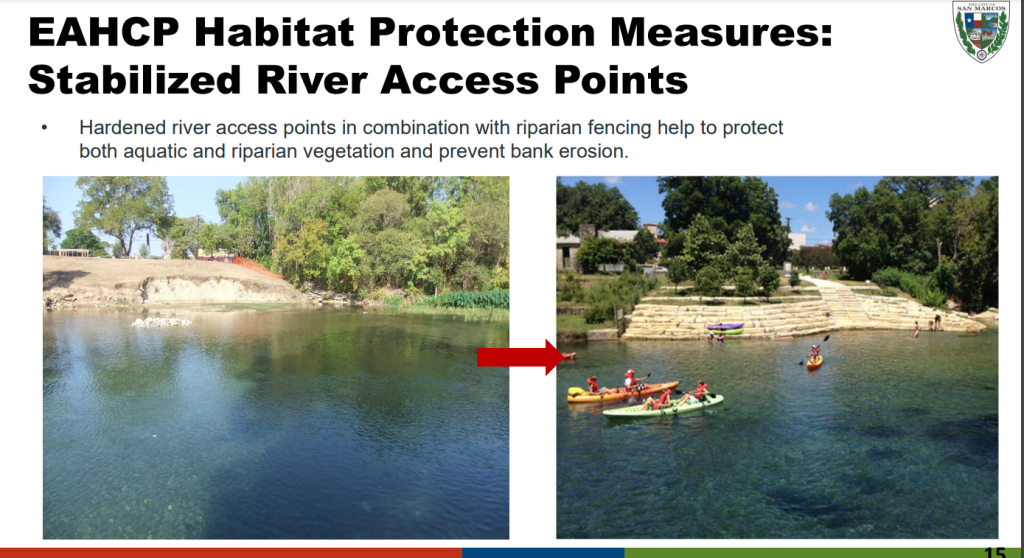
In other words, they were like “Let’s contain the swimming to a few really great swimming spots, and not worry about vegetation there. Then we’ll protect the rest of the river for vegetation.”
Also the limestone rocks keep the bank from eroding.
They did a bunch of stormwater detention that keep the nasty stuff from running into the river:

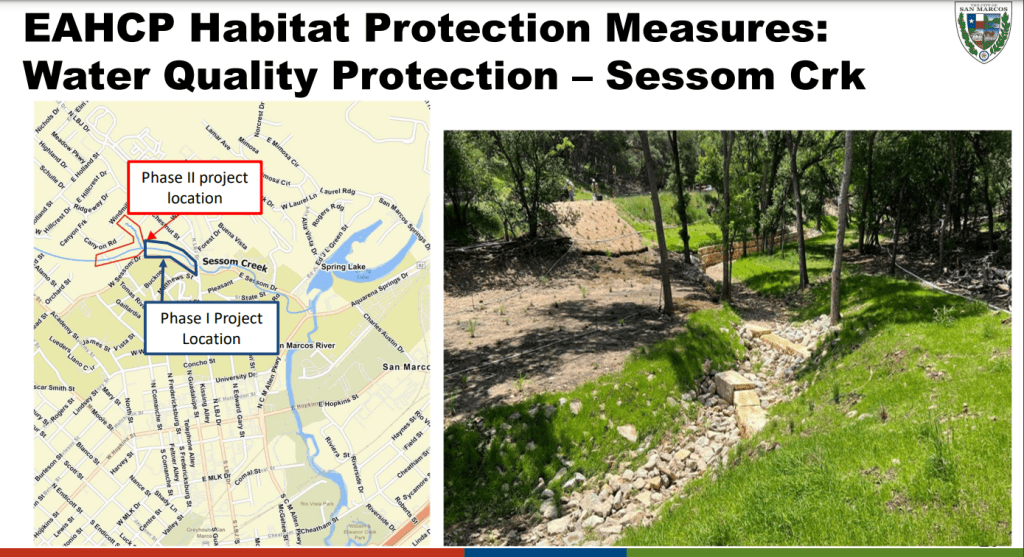
and they also fixed up Sessom’s Creek:
…
I mean, let’s pause here. This is wild, right? This is the Edward’s Aquifer:
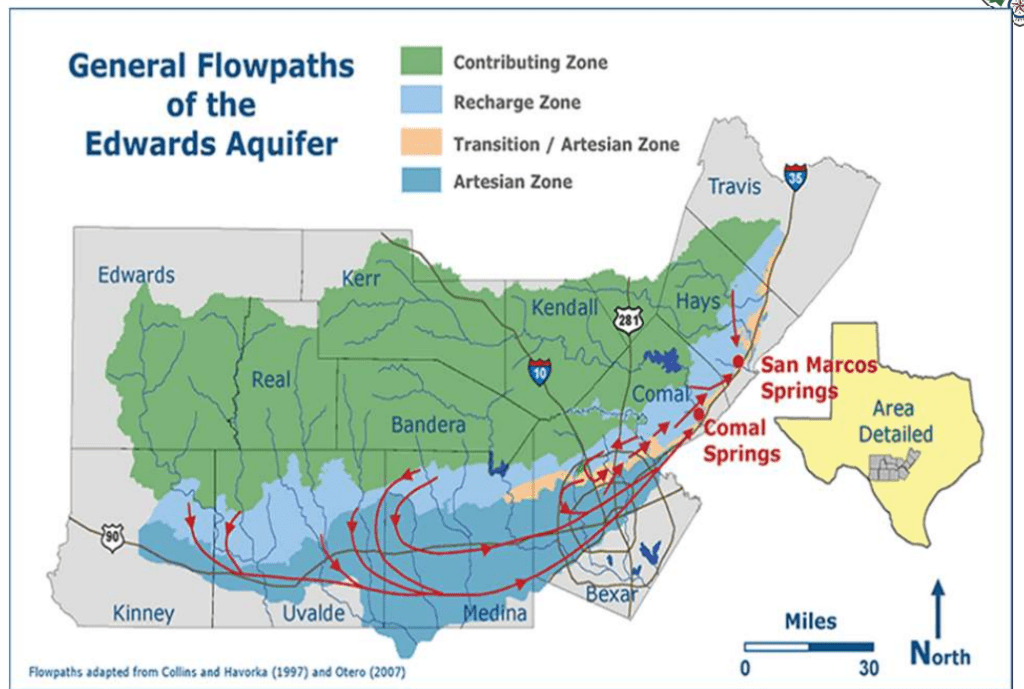
Everyone in that dark blue region would just be draining the aquifer dry, if the EAA wasn’t around. Instead there’s been this massive coordinated effort, resulting in $10 million worth of projects to protect our river?!
That’s insane and beautiful. You’ve got to cherish this and really breathe it in.
(Especially during this larger dark time. I hope this program is not dependent on federal funding.)
…
But wait, there’s more! You can’t hold these deals back!
The scientists study and monitor all the endangered critters:

They scoop them up and take them on field trips, over to McCarty Lane or down to Uvalde:
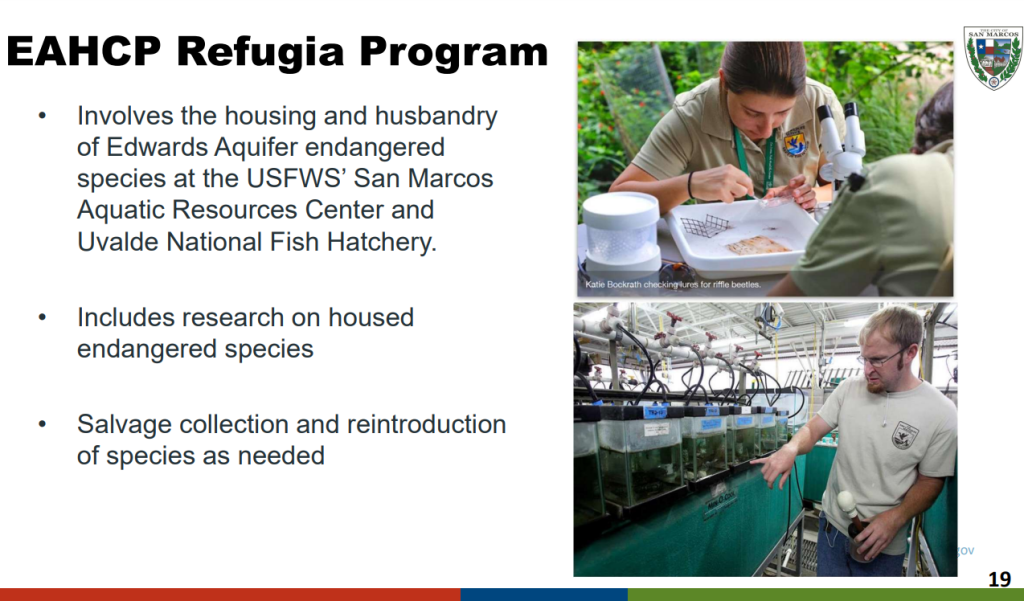
That way, if there was a massive natural disaster or chemical spill or something, they could re-introduce the species after the river was healthy and cleaned up again.
…
What’s next? The current EAHCP plan runs from 2013-2027. So it’s about to expire, and they’re mapping out the next one to run from 2028 – 2058.
They’ll do a lot of the same stuff – make sure the river stays flowing, make sure the people don’t destroy the environment, make sure the endangered species are still paddling around in healthy numbers. But they’ll also have to respond to a hotter, drier world, which makes this all harder.
There’s some technical details to the new plan, and honestly, you should just watch the whole presentation here. (Or read all the slides here.) 10/10, no notes.
 The San Marxist