
Two workshops this week!
Workshop #1: Update on Downtown plan
Workshop #2: Privacy policy on SMPD License Plate Scanners
….
Workshop #1: Listen, this was great. I just ran out of time to write it up properly, so it’s a little short.
We approved the Downtown plan in 2023.

So now we’re implementing it:

So far, we’ve done a bunch of great stuff!
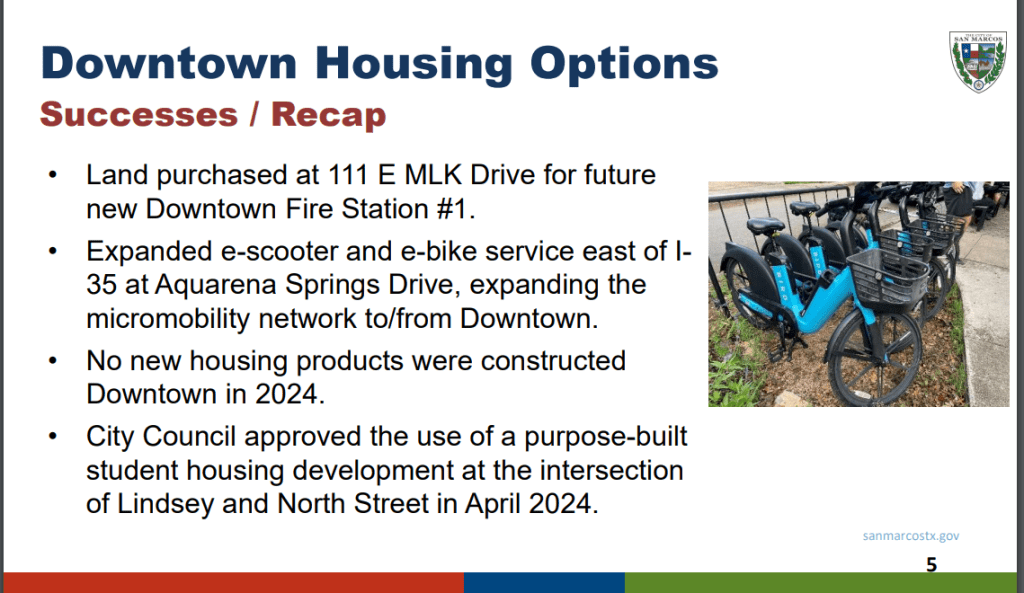


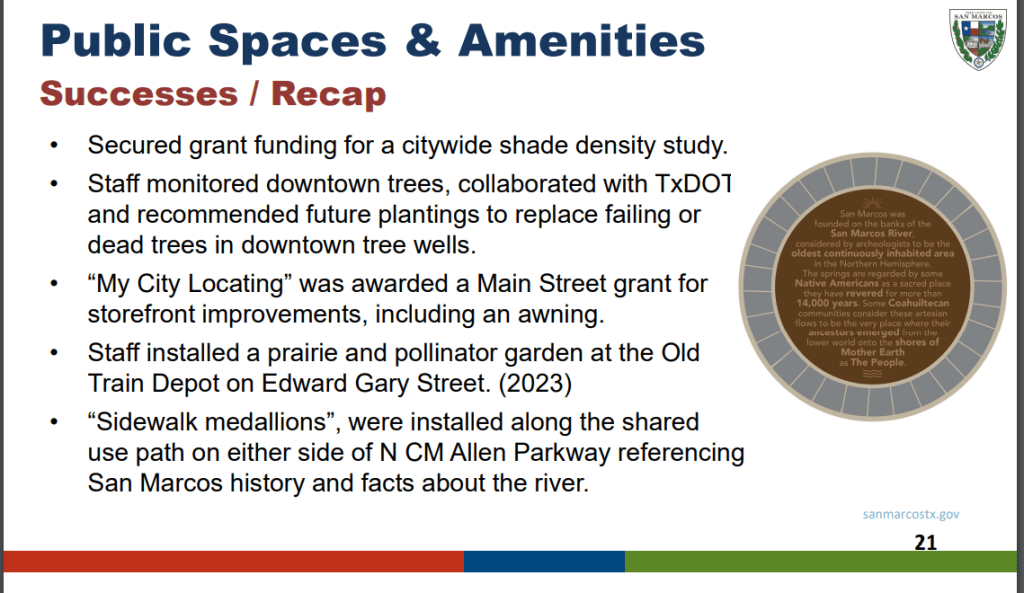
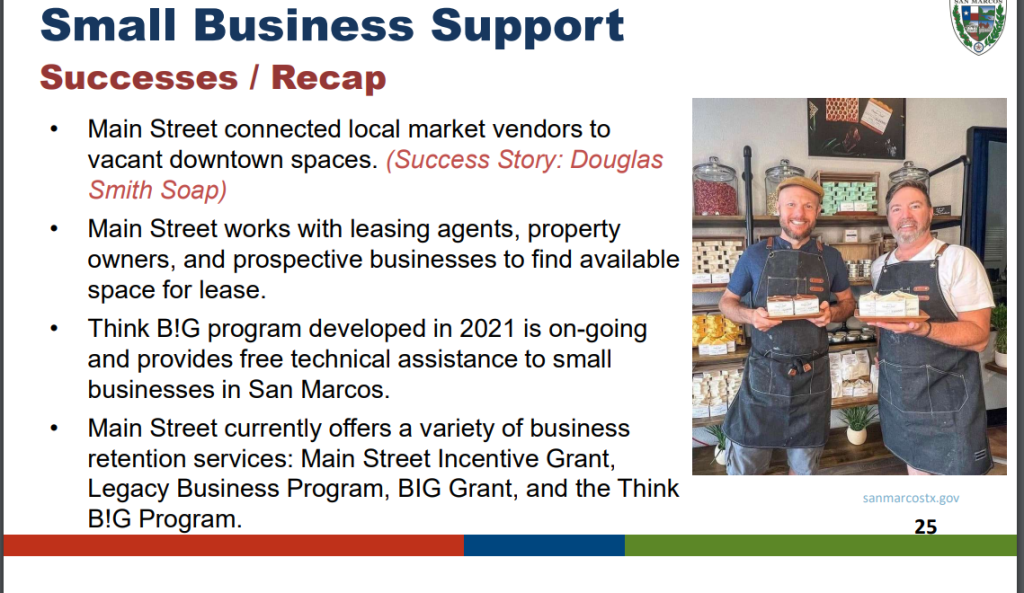

Here’s what we’re in the middle of doing:


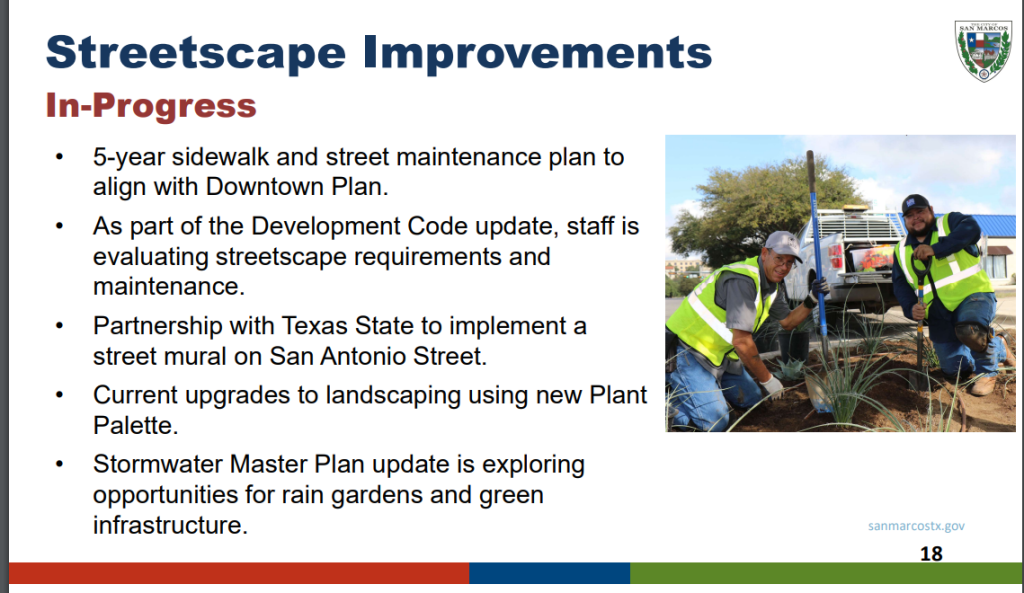
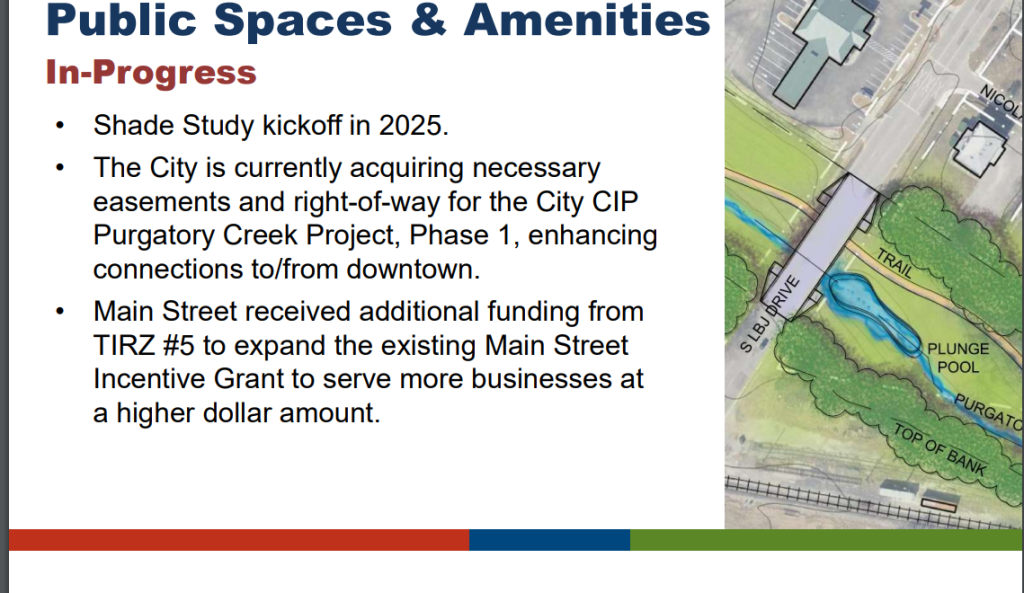
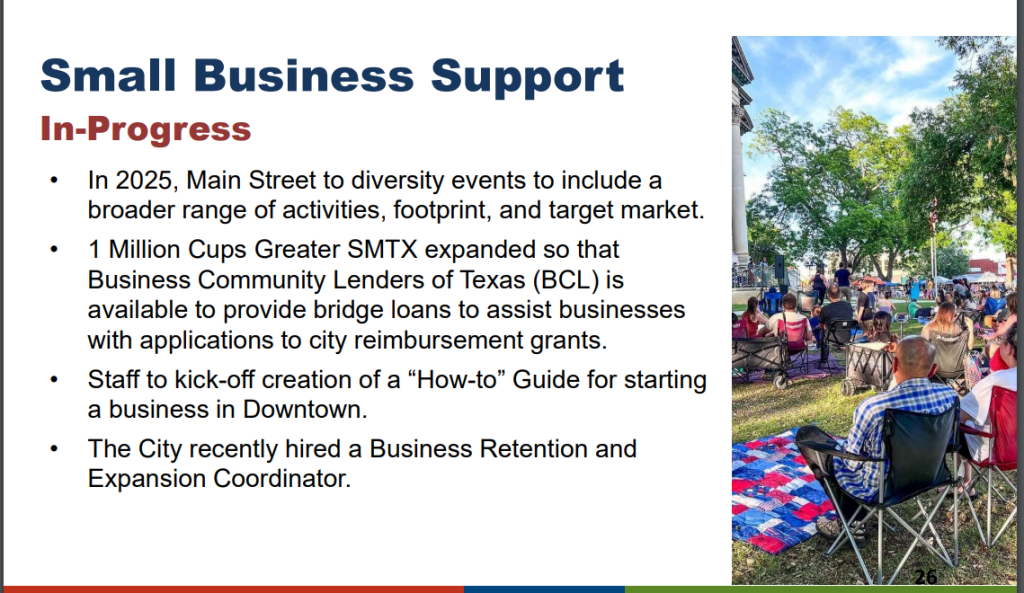

And here’s what we’re going to do next:

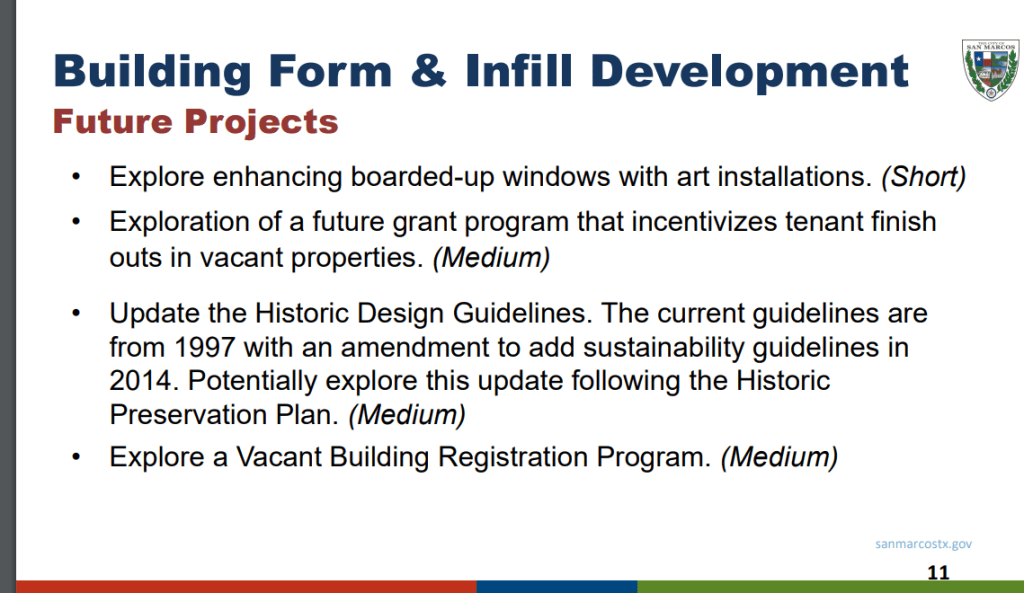
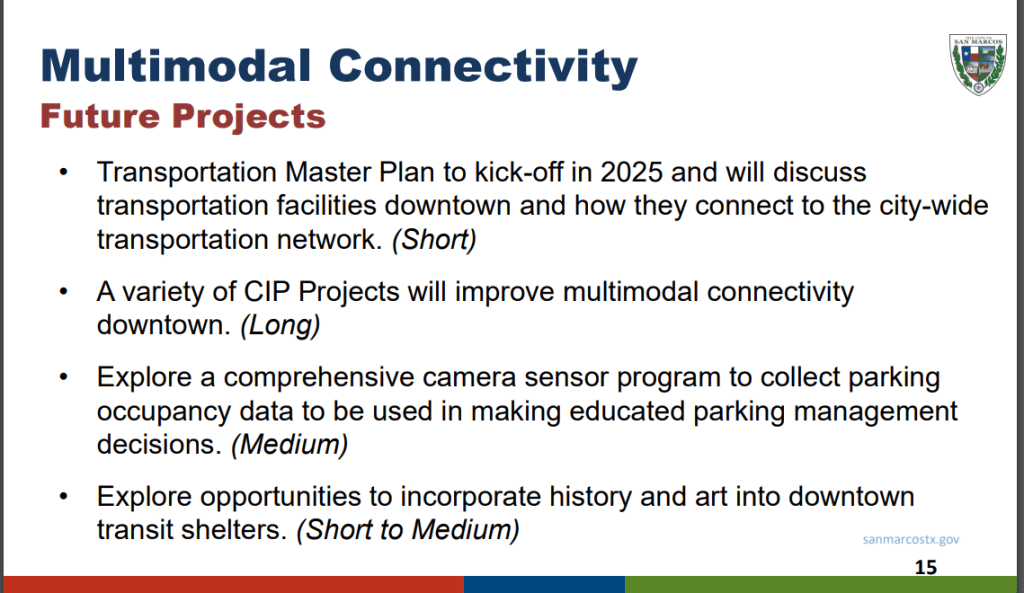


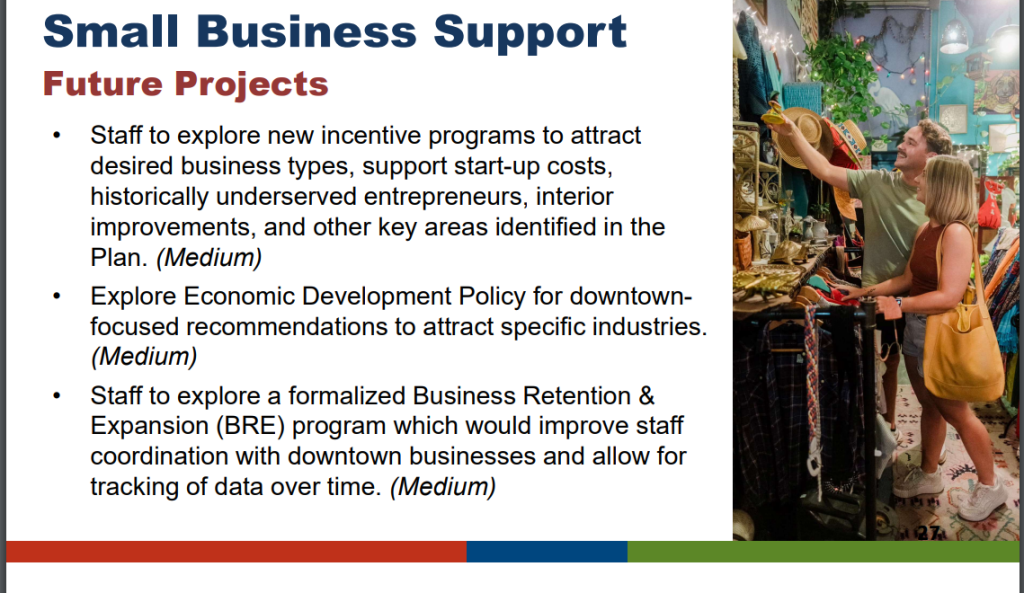
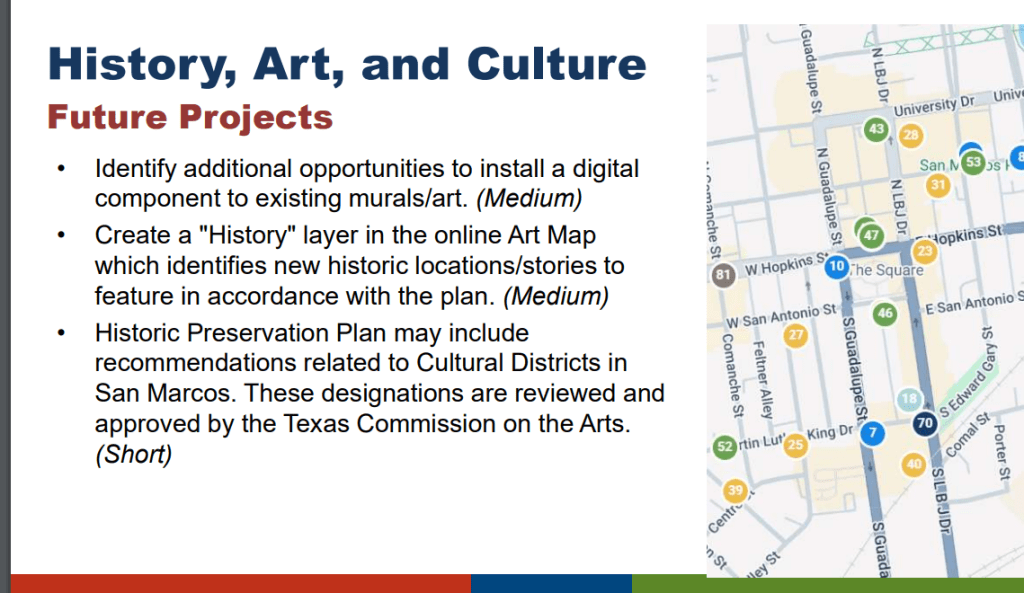
And here’s what we need, to do it:

Like I said, I’m shortchanging a really enjoyable presentation. Go listen!
…
Workshop #2: License Plate Readers
In February, SMPD asked Council to approve a bunch of license plate readers.
We had literally just talked about privacy with respect to technology, and these definitely require privacy protections. So we postponed the purchase until we had an updated privacy policy.
Here we are! Policy time.
…
What is FLOCK?

So in other words, there are seventeen intersections in San Marcos that are recording your license plate every time you drive by. (And soon there will be thirty locations.)
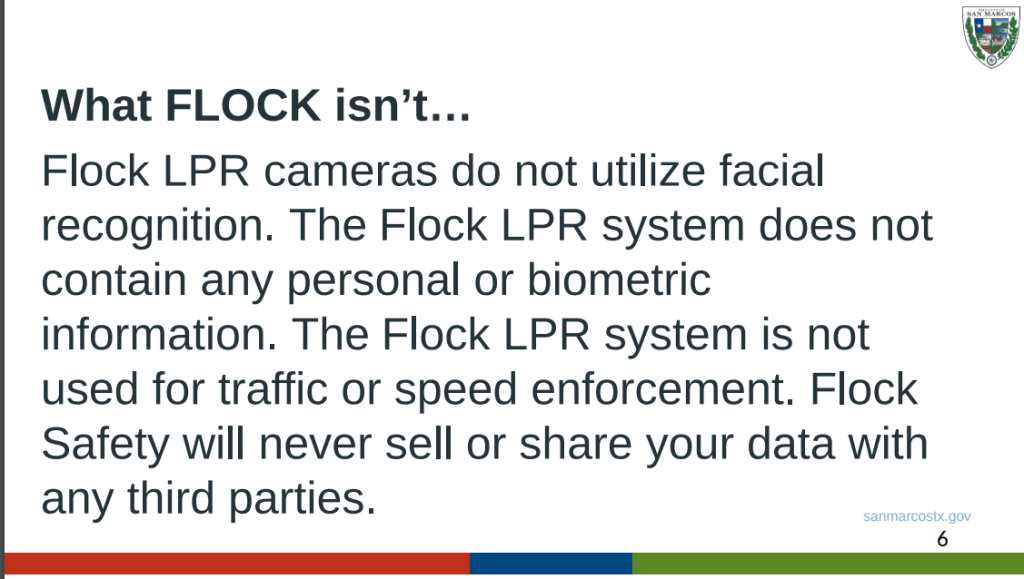
Is that reassuring? There’s still a lot of ways that this can go wrong.
How it works:
So basically, SMPD owns the data, but it’s located on the FLOCK system. If you have a crime in mind, you log in and run a query, and then it tells you which license plates were at that location, or it tells you all places a specific car went, or whatever.
Council had three big concerns:
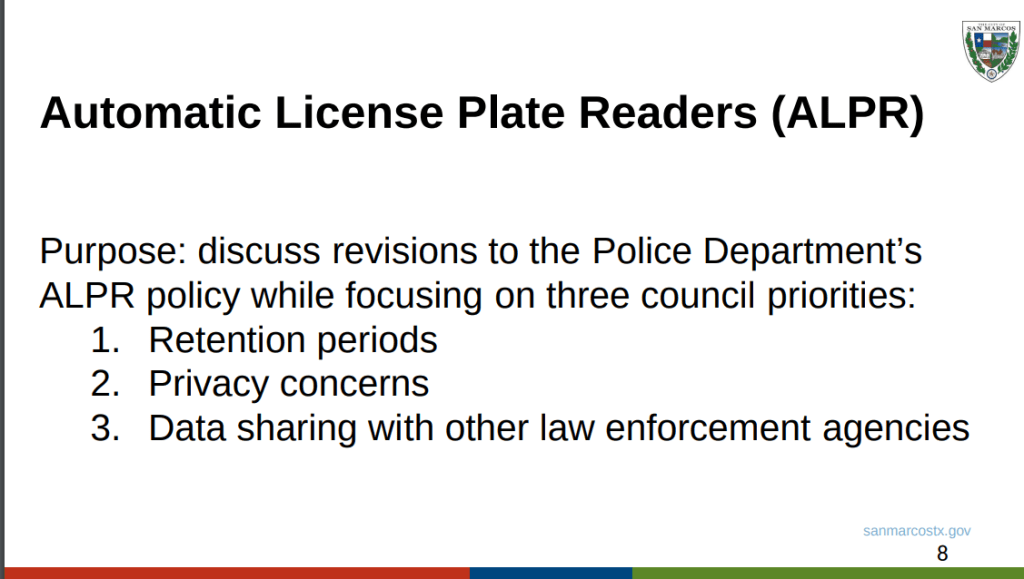
We’ll take these one at a time.
Retention periods: how long do they keep the data?

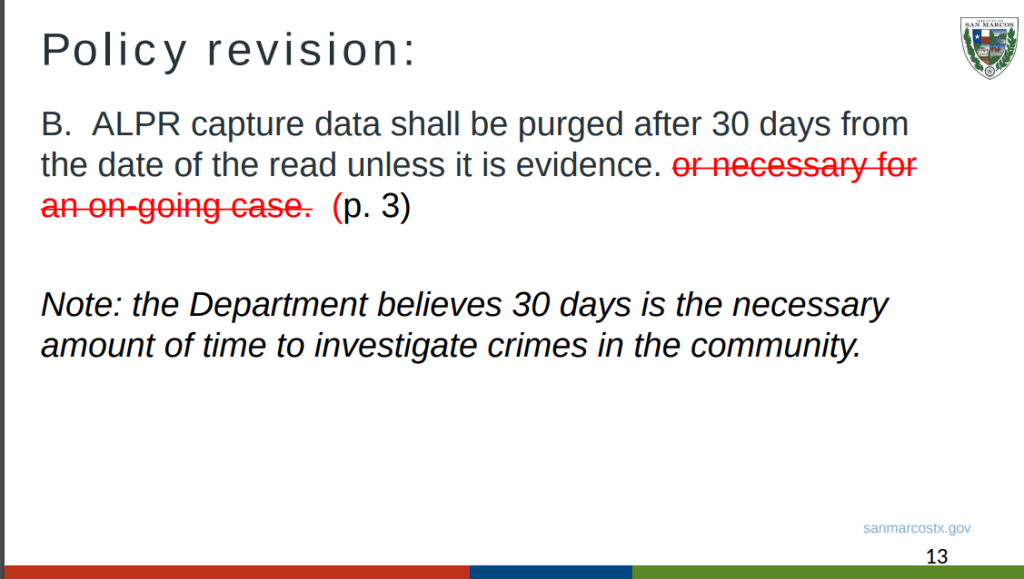
We’re currently 30 days, and Chief Standridge makes the case that we need to stay at 30 days.
There’s no slide for this part, but he’s basically saying, “People don’t report crimes right away. Sometimes the crime isn’t even discovered for a week or two. If you don’t have the crime reported for two weeks, that eats up a lot of your time to query the data base for the license plate.”
He had his crime analyst go back into the system and pull the average length of time people waited to report various crimes, in 2024 in San Marcos. He says:
- Criminal sexual contact: average 513 days delay
- Forcible rape: average 640 days delay
- Credit card ATM fraud (ie, steal your wallet or purse from your car and go to the nearest ATM): delay of 103 days
- Shoplifting: average 21 days delay.
(This is because stores submit the theft to corporate, and corporate decides whether or not it meets the threshhold to bring in the local SMPD.)
I mean, ok. This makes the case that the cameras aren’t actually helping you solve most of these crimes, but point taken on the delay in reporting.
…
Onto 2: Privacy Concerns:
They’re proposing a bunch of amendments to current policy.
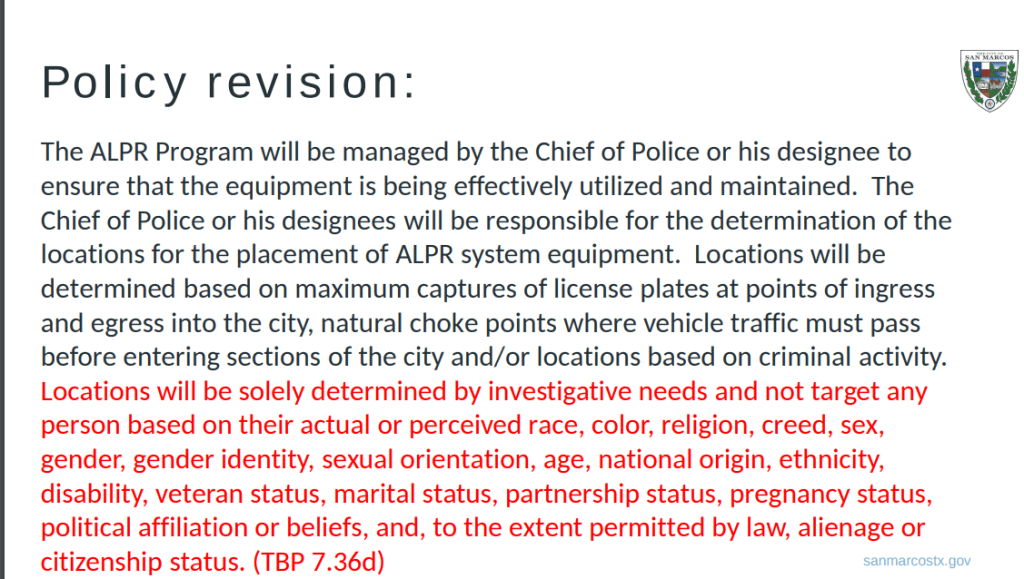
Great.
The “TBP” bit stands for “Texas Best Practices”, which is an accreditation thing.
Amanda asks if we can include “economic status” to the list of protected statuses? In other words, no targeting an intersection because it’s known that homeless people are camping near there.
Sounds great to me! Everyone is on board with this.
Next:
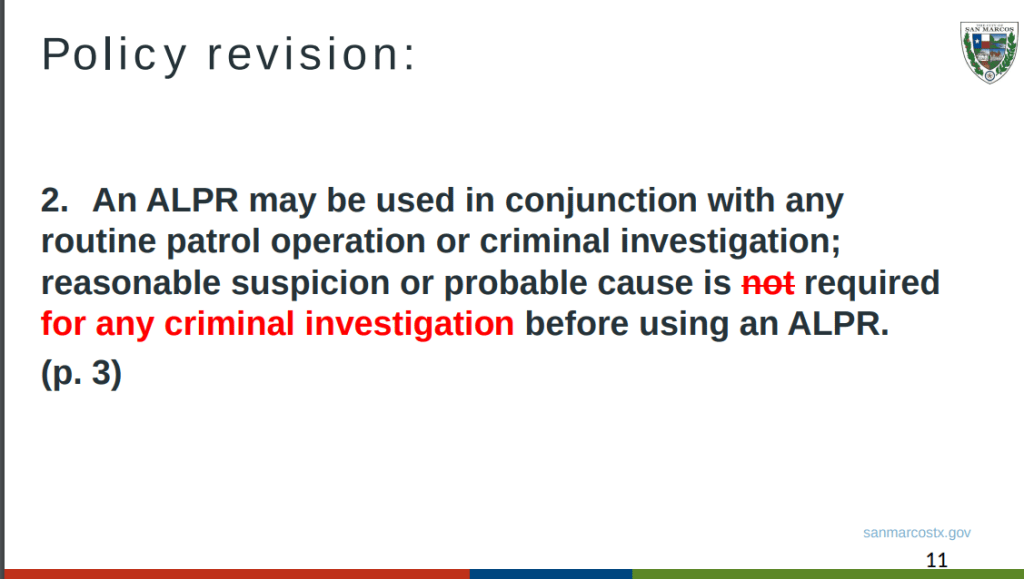
What the hell – until now, you didn’t need reasonable suspicion or probable cause to run a query?!
Anway, now you do.

There’s a bunch of details here!
- You get regular training.
- You have to supply a case number when you run a query.
- Later on, someone else in SMPD will be double-checking all the queries to make sure they make sense.
- SMPD will not give the data to any private entity.
These are definitely huge improvements.
…
We’re sticking with 30 days, but we’re no longer going to grant exceptions:
3. Data sharing with other organizations:
There’s going to be an MOU, or Memorandum of Understanding. Any other law agency that wants San Marcos data has to sign this MOU.
The MOU isn’t written yet. But it’s going to require that officers in other jurisdictions follow all the same rules as us. Specifically, there must be a case number. You can’t just be looking people up.

And there will be a portal with general information available to the community.
Finally, misusing the system is a crime:

and you can get punished for it:

…
One weird thing about Flock Cameras is that anyone can buy them and join in. The outlet malls probably have them, your apartment complex or HOA could have them. Anyone who cares enough about who is coming and going can buy one.
Will we share our data with any old HOA or shopping mall?
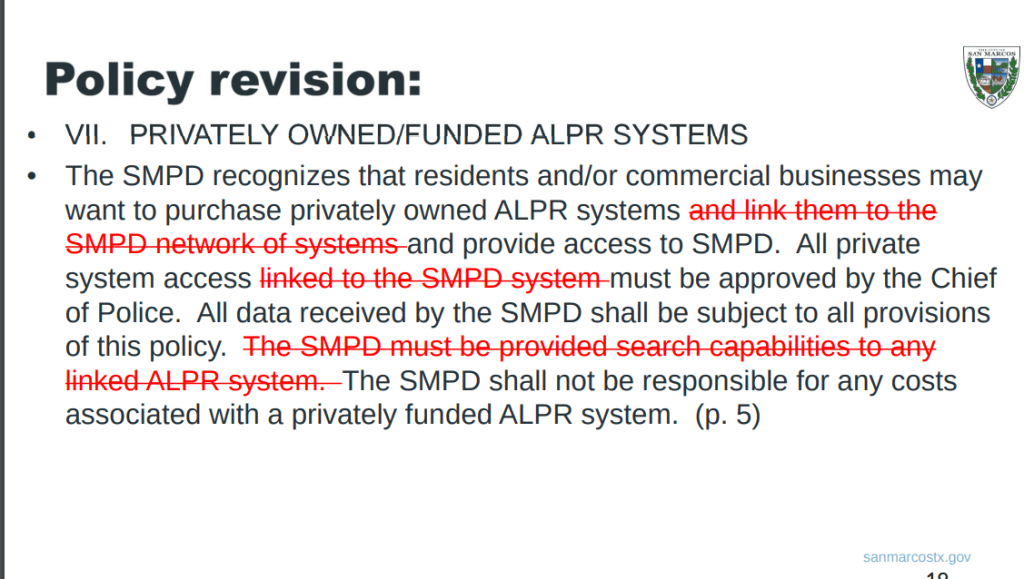
Not anymore!! (But JFC, we sure used to play fast and loose with this data. The deleted part in red is wild.)
There’s some discussion of ICE in all this. We’ve opted out of immigration tracking. But there are some laws (SB4) which may or may not make this more complicated.
…
My opinion: These are really big amendments that make the system safer. I am still wary about license plate readers and Flock Safety, but this is at least much better.
 The San Marxist