Cape’s Dam is BACK, baby, and we’re going to unpack it all. Also a bunch of shorter items: the budget, the SMCISD stormwater waiver, council compensation, Redwood, and the privacy policy for the SMPD license plate scanners.
Here we go!
Hours 0:00 – 2:50: Some small zoning projects, the budget policy statement, and a bunch of follow-ups: the SMCISD stormwater waiver, council compensation, and the septic problems in Redwood and Rancho Vista.
Hours 2:50 – 3:56: Nothing but Cape’s Dam, coming at you 24/7, baby! Let’s dive deep.
Bonus! 3 pm workshops: Downtown improvements and license plate readers. We’ve got a new privacy policy for the latter.
Malachi Williams: Seven speakers, including family members. They want justice for Malachi. Several of the speakers focus on the detail that Malachi ran because a cop pulled a gun on him. Before the videos were released, this detail wasn’t mentioned. It shows how the officer escalated the situation instead of de-escalating it, which then ended in tragedy.
Human Services Advisory Budget funding: Council is thinking about increasing HSAB funding for next year. Three speakers advocated for this.
Cape’s Dam and the Mill Race: Two people talk about how much they love the river, east of I-35 and want council to keep it. We’ll unpack all of this!
Tenants’ Bill of Rights: The San Marcos Civics Club made this a focus, and got Council to put this in their visioning statement. Now council will need to make it happen. Two speakers focus on this.
Ceasefire in Palestine: four speakers. They still want the city to pass a resolution calling for a ceasefire in Gaza.
…
Onto the meeting!
Items 1-4: A bunch of audits and investment reports.
We got the audit reports for CDBG funding and the 23-24 fiscal year. Plus the quarterly financial report and investment report.
Everything looks normal. No rude surprises. (Apparently we’ve gotten awards for excellence for the past 35 years, on our yearly fiscal audit. OH YEAH BABY.)
…
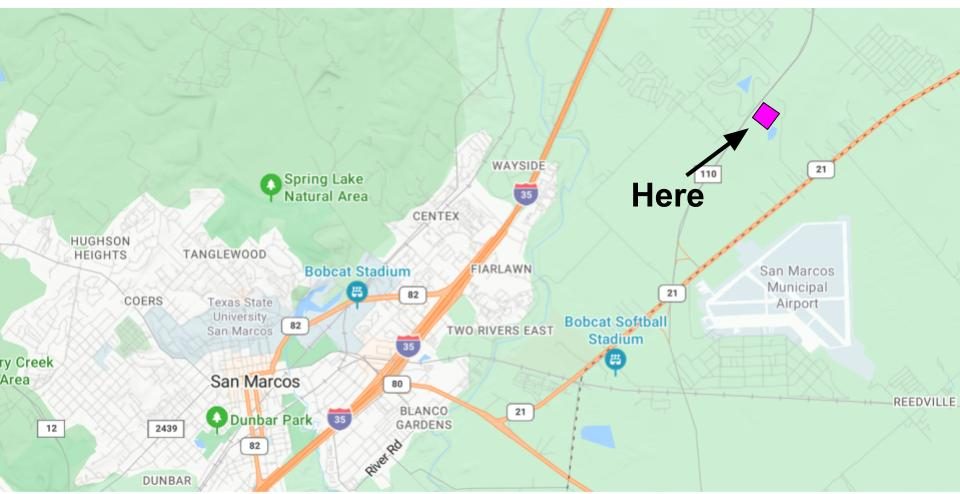
Item 18: Rezoning about 15 acres
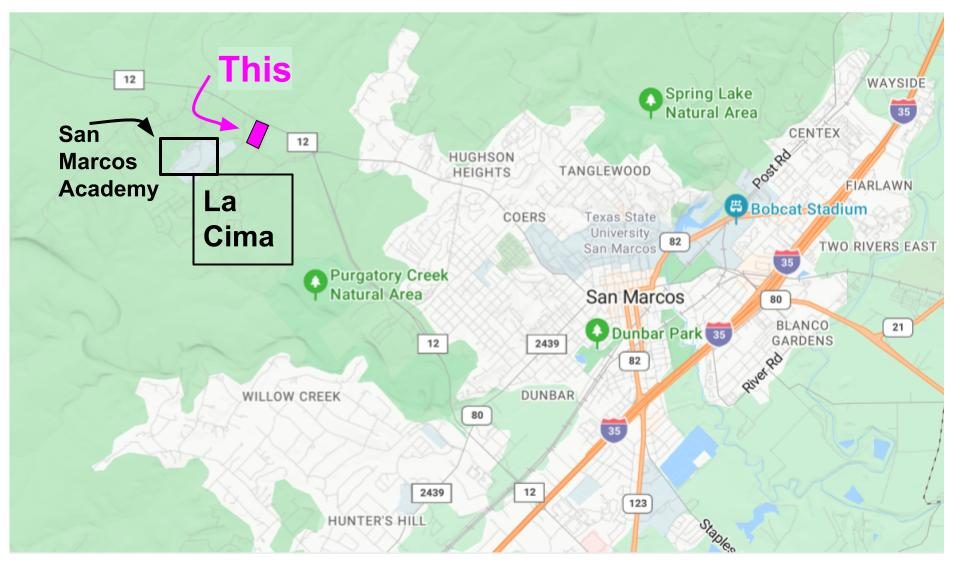
This property is way up north:
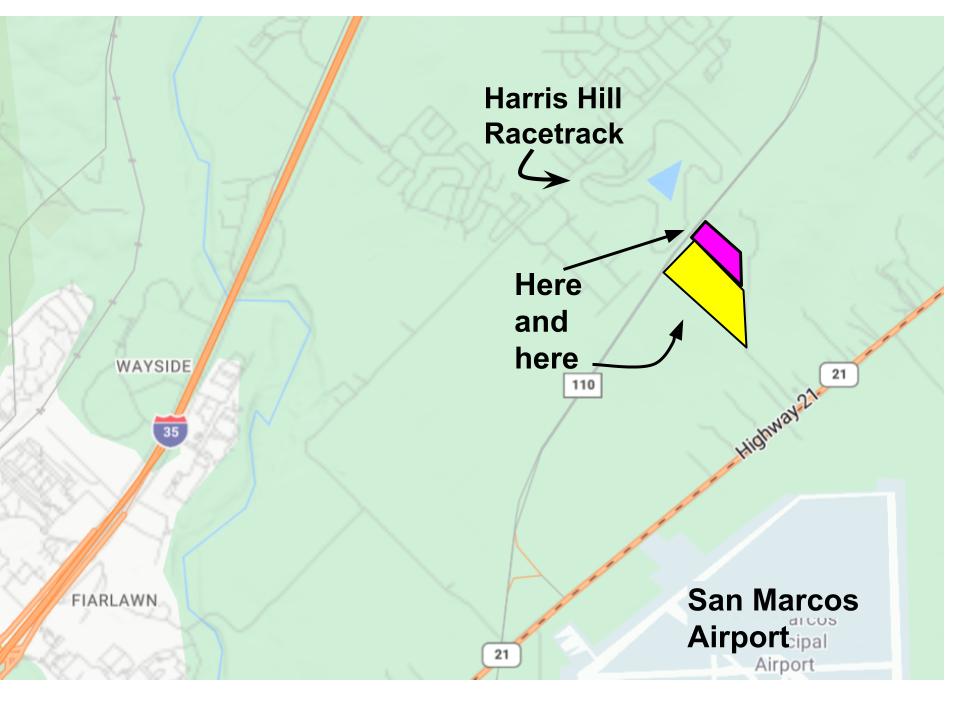
Back in 2020, we annexed this yellow and pink bit:
The yellow was zoned Manufactured Home, and the pink was zoned Light Industrial.
There were some concerns then – do we really want to make the folks in the mobile home community live right against an industrial park? But we let it ride.
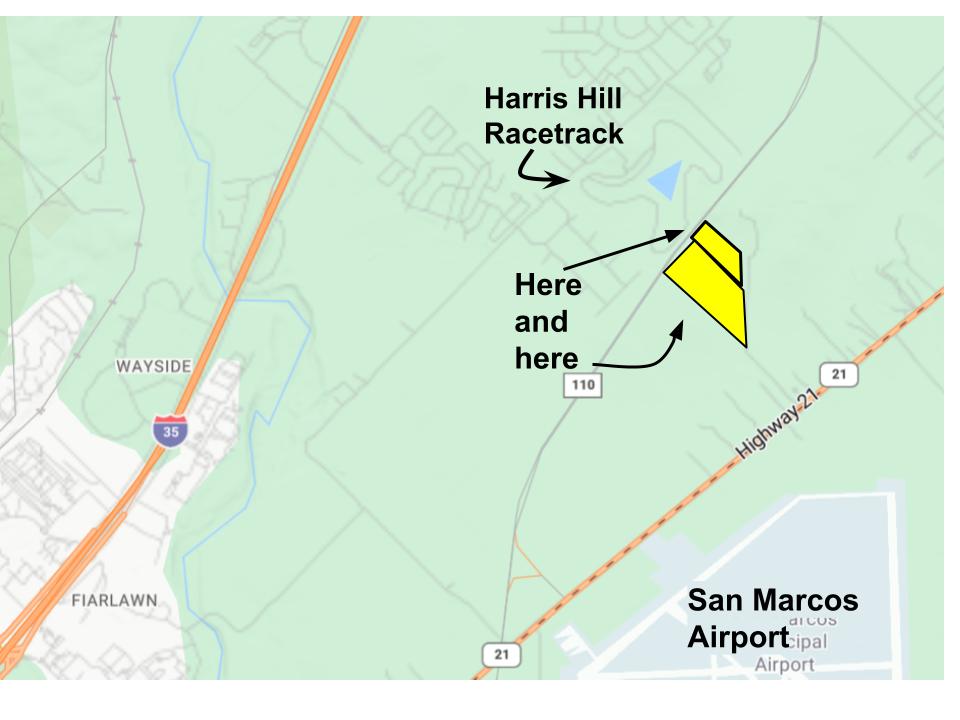
Now the pink part is coming back for a rezoning – they want to switch it from Light Industrial to Manufactured Home. In other words:
Great! Now nobody has to live near an industrial park.
…
Item 20: Budget Policy Statement
We’re working on the Fiscal Year 26 budget.
First: There was a two days Visioning workshop in January, which lead to approving the Strategic Plan.
The nex workshop was at the end of February. Today we’re approving the thing from that: the Budget Policy Statement.
What’s a Budget Policy Statement?
This is like the guard rails for building the budget over the summer. Most of it is pretty dry? Like “Do you want to budget to maintain 150 days worth of recurring operating expenses in the budget, or just 90?” “Are we okay using the General Fund for Stormwater projects over $5 million?” Etc.
There are two interesting bits:
Each year, the city sets the rate for electricity, water, sewer, trash, etc. To do this, they have to predict what their costs will be. Then they pick a rate that will cover all their costs.
From the Budget Policy Statement
What does this mean? If your utilities get turned off, you have to pay extra late fees to get your utilities back on. All of the late fees, taken together, add up to big chunk of revenue.
The question is: Suppose we are predicting that we’ll bring in $100K in late fees. (I’m making that number up.) Should we use that $100K to lower the rates for the rest of the customers?
Argument in favor: It’s more economical to include the late fees in your calculation. It allows you to set lower rates for the whole city.
Argument against: It’s kind of icky to count on late fees, for two reasons. First, you’re charging your most desperate customers – the ones who already can’t keep up – an extra fee, and then using that fee to help out all the other, less-desperate customers.
Second, it creates an incentive to creep up your late fees over time. When budgets are lean, it’s tempting to lean on late fees as an extra source of revenue you can tap, like cities that ticket their poorest residents into oblivion in order to balance their budgets.
The current council has already been going in the opposite direction. They are already trying to lower the late fees, to make it easier for residents to get their electricity turned back on.
To the original question: they decide that we are not going to use the late-fee revenue in computing utility rates. Then, when late fees come in anyway, they’ll put that money towards the Utility Assistance program.
It’s a small touch, but a good one.
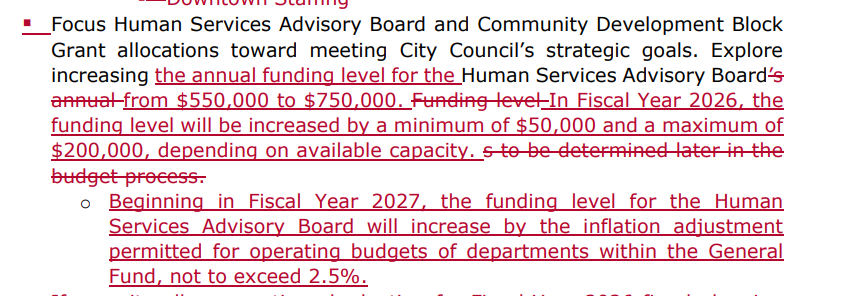
2. Here’s the other one worth paying attention to:
This is what the speakers during Citizen Comment were talking about.
Last December and January, HSAB funding was a total mess. There was too little funding, and Council ended up pitting nonprofits against each other. It was clear that we need to significantly ramp up city funding of nonprofits.
Right now, HSAB gets $550K. Council sets a range of additional funding, between $50K-$200K. When we find out what kind of money we’re getting from property taxes this July, then we’ll determine where we land in that range.
This part makes me extra happy:
Yes!! Peg the HSAB budget to inflation. We do it in contracts with for-profit entities all the time. It should be universal.
(The failure to peg minimum wage to inflation was one of the greatest policy near-misses of the 20th century. Having a federal minimum wage of $7.25/hour is such a mockery.)
…
Item 21: Cut-and-fill in La Cima
Pedernales Electric wants to build a substation here:
But it’s on a hill. Like we saw last time, it’s hard to build on a hill. So they also want to do a cut-and-fill.
This time, no one is worried about flooding.
Matthew Mendoza is a little worried that the people in La Cima might have to look at a substation, though.
Staff reassures him that there is another building, and then the La Cima apartment complex, all separating the substation from the houses. So their eyes won’t be hurt by the substation.
Shane Scott proposed doubling the flex money and travel money, and he wanted it effective IMMEDIATELY. Like, something lit a fire under his butt.
Last time, they went in circles forever, but ultimately landed here:
Travel budget
There’s plenty of travel money already. The total council travel doesn’t go over budget.
Council members can lend each other travel money if one is going over.
If they STILL go over, there can be an extra $15K in a special travel fund that any of them can apply for.
AND, they each get an extra $2K for travel.
Flex budget
Double the Flex amount from $7.5K to $15K.
In other words: right now, a council member earns $24.9K a year, if they choose to take their flex pay as income. This would increase it to $32.4K.
…
The item was put on the consent agenda, which means, “Staff thinks this will sail through.” After all, they hammered out all the votes last time.
Jane said nope! and pulled it off the council agenda. She gives a speech about how none of this is needed, there’s plenty of money in the travel budget. And how we certainly shouldn’t be doing this mid-year.
Amanda agrees on the mid-year part. More responsible to start it with the next fiscal year. She makes that amendment: Delay this until next year’s budget?
The vote: Postpone changes until next year’s budget?
(This is when I first thought, “What the hell is happening? Was this whole thing a ploy to get some quick money?”)
Jane sees her chance and makes a motion to kill both the travel increase and flex spending increase.
On the flex spending, Amanda pleads, “But why?”
Amanda has been quite open about having to resign her state job to take this position, and the impossibility of surviving on $24.9K per year.
Jane: “We don’t need it. We already raised it in 2023.”
What she means is that before 2023, council members got $23.4K per year, if they took their flex money as pay. They gave themselves a raise of $1500 then.
Amanda: I agree on the travel. But on the living expense, who here – anyone? – can live on this little?”
Jane: “It’s not supposed to be a fulltime job.”
Amanda: “Fully agree. But we both know that it is actually a fulltime job.”
Jane: “For some people it is. Not everybody.”
Amanda: “Oh trust me, I understand that too. And I wish everybody shared full interest.”
Jane: “I do too.”
Amanda: “But again, please tell me, who can survive on this? Would anybody in this room?
<crickets>
Then conversation dies.
…
The key issues is this: Is being a councilmember a fulltime job? We pretend it isn’t, but in order to do it well, it definitely is.
If we pay poverty wages, then council members have three options:
Be independently wealthy or have someone who can support you.
Try not to neglect your council job as you juggle multiple jobs
Live in poverty
This is not how you get the best possible council members. This is how you get mostly wealthy and/or distracted council members.
…
But anyway, then they vote:
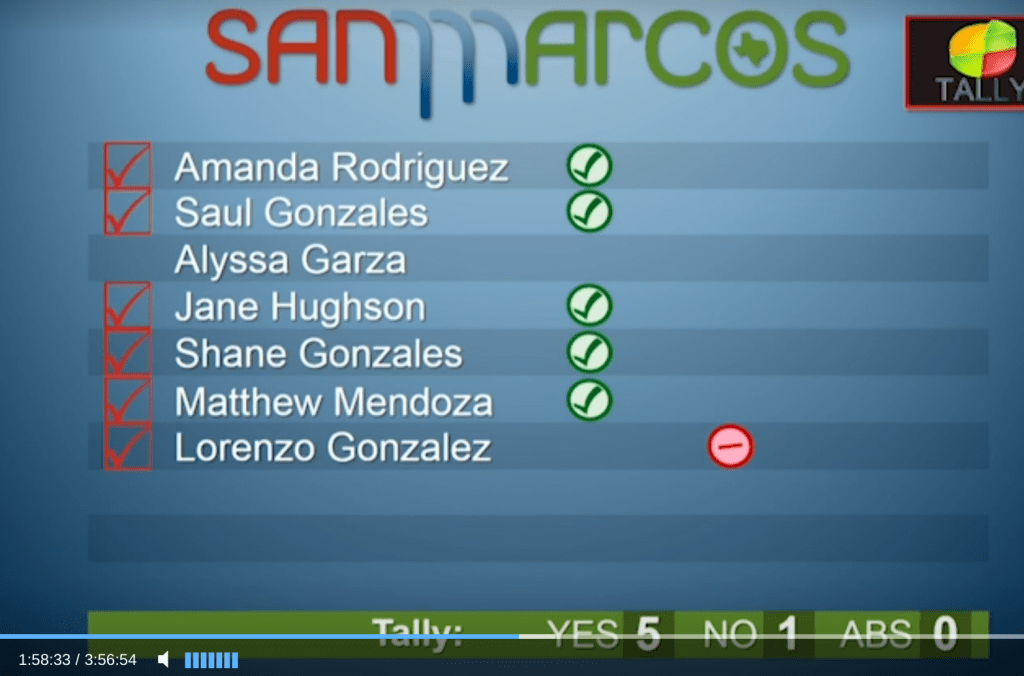
The vote: Should Councilmembers survive on $24.9K per year?
So yeah, no raise.
I’m so baffled. Two weeks ago, Shane and Lorenzo both thought it was reasonable to increase flex spending, and now they don’t? What the hell happened?
….
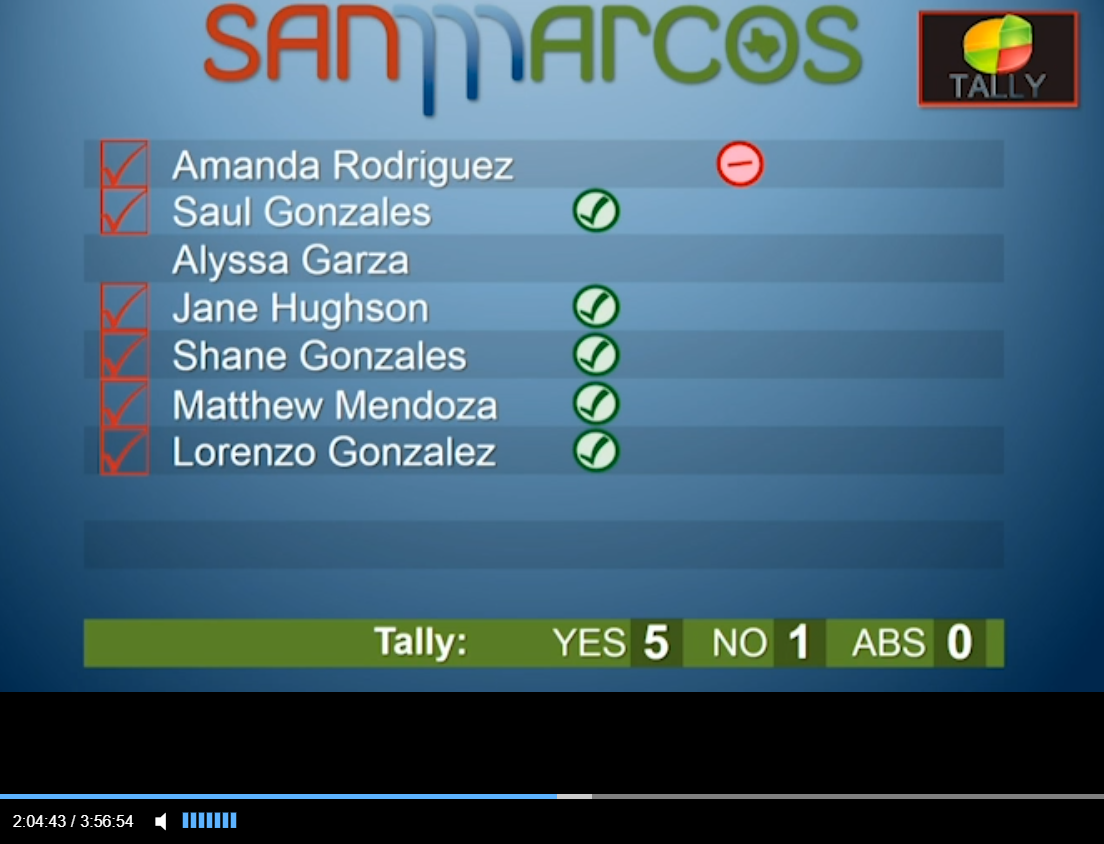
Then they vote to roll back the travel funds increase:
This one doesn’t bother me so much. There is plenty of travel money, if you allow people to donate funds to each other.
Bottom line: After all these meetings, everything is back where it started, aside from a special bonus travel fund.
Clearly I have no idea what happened, but it felt like petty bullshit, to be honest.
Statewide, the legislature is intentionally starving the school districts. This is not hyperbole. Abbott is hellbent force-feeding school vouchers down everyone’s throat. He’s denying funding to the public schools is a way of increasing the pressure on the state legislature to vote for his deal.
Funding hasn’t increased since 2019, but there have been several unfunded mandates that cost a lot. Plus inflation.
SMCISD is in a $9 million budget crisis. They’ve asked for the city for a stormwater waiver, which would save them about $350K.
Which brings us to today.
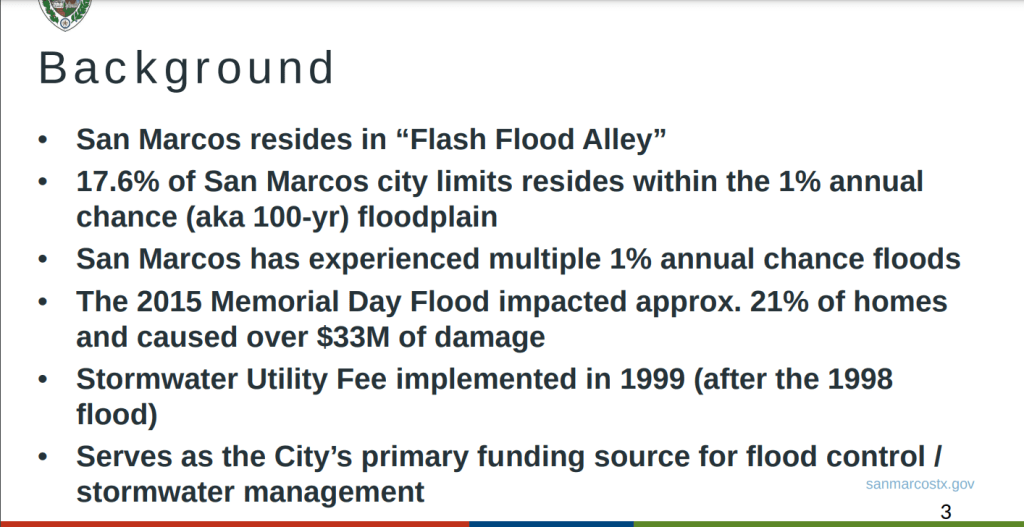
First there’s a presentation about the stormwater fund:
Immediately after San Marcos created the stormwater fund, Texas State University asked the State Legislature to grant them an exemption. They were the very first university in Texas to ask for one! What go-getters.
After that, all the other universities thought it was a pretty good idea.
Here’s the total list of state-wide exemptions:
So basically, empty lots, lakes, universities, and ….El Paso school district. Who knows.
…
The state law says that stormwater fees must be equitable. They go into a fair amount of detail about how we put ours together.
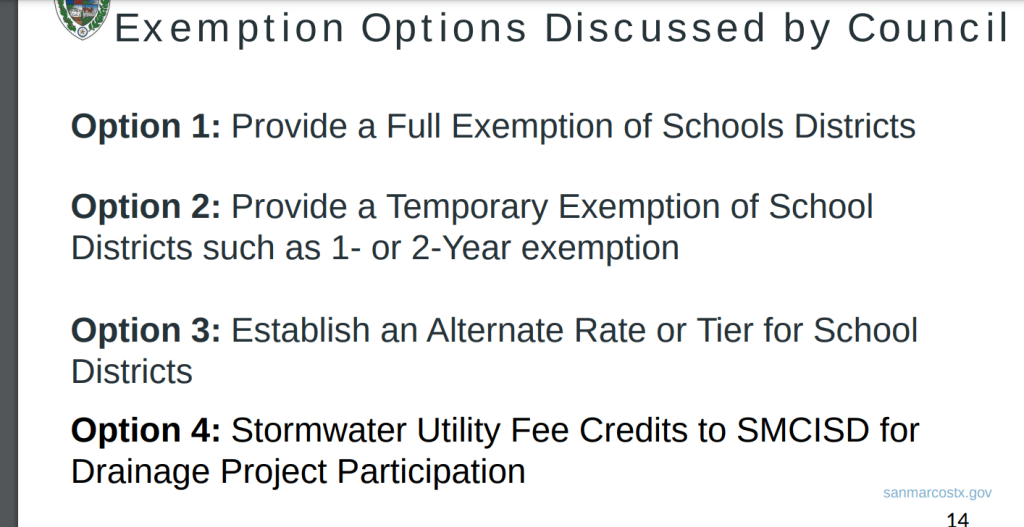
Basically, if we want to help out SMCISD, here are the four options:
Option 1 would cost a lot and open the door to other nonprofits asking for a waiver, too.
Option 2 would cost some, and open the door.
Option 3 might open us up to legal challenges of being non-equitable.
Option 4 is the one that Staff clearly favors. In fact, city staff and SMCISD staff have already met, and they’re both open to this.
Option 4 is about Mendez Elementary. Mendez is located in Sunset Acres, which has terrible flooding. The city wants to build a detention pond on Mendez property, to help with the flooding.
All the council members are on board with pursuing 4.
The only thing is that Mendez Elementary is being renovated. Until SMCISD knows the new footprint of the building, they can’t donate the land.
(Now, SMCISD has already submitted the Mendez plans to the city for permitting. So the city could literally go look right now at the Mendez plans. It’s not a mystery. We can see exactly how much space there might be for a drainage pond.)
…
There’s a long, weirdly circular conversation where Lorenzo and Amanda keep saying, “We should meet occasionally with the school board, just to stay informed on what we’re each up to.”
Jane keeps responding with, “It’s no use. Alyssa and I keep trying to think of a reason that all three entities – city, county, schools – should meet, and it’s very hard to think of issues that need attention from all three groups.”
Ok? That’s a different thing? That’s not what Amanda and Lorenzo are suggesting?
Anyway, they vote for 4.
…
Item 25: Redwood/Rancho Vista
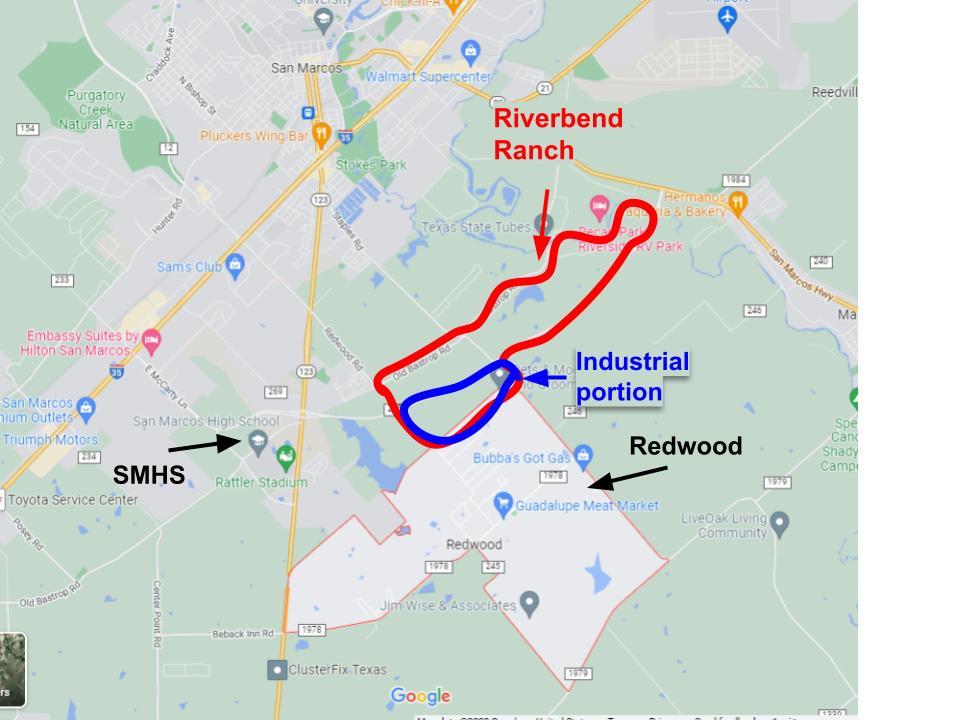
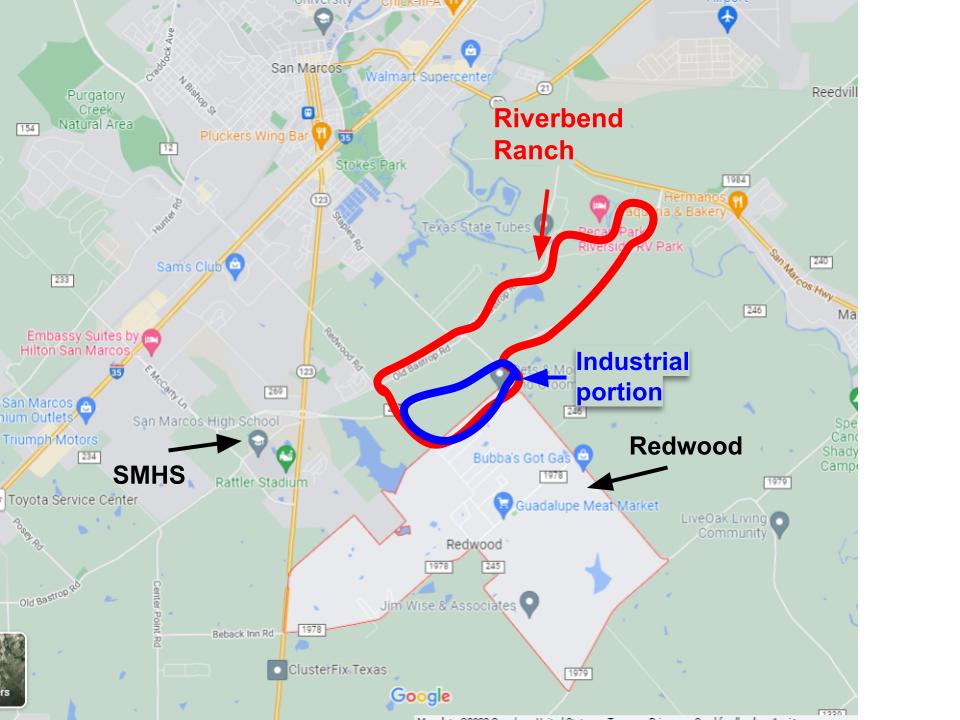
Last time, we discussed this property, immediately north of Redwood and Rancho Vista:
We were trying to figure out if that industrial portion would make flooding worse in Redwood.
Redwood and Rancho Vista have severe septic and flooding issues, which leads to a parasite living in the soil. It’s a big health issue, and it usually only happens in developing countries. But the community is quite poor and vulnerable, so it’s happening here. Any solution is going to be very expensive.
Last time Council tried to have it both ways: “We’ll let this development through, but we promise to take action on Redwood.”
So tonight is that action: A strongly worded letter to Guadalupe County about how the septic issue and parasites is a public health and safety issue, which has been going on for years and years.
Jane suggests that we let them know about the Texas Water Development Board, which has a specific Economically Distressed Areas Program. Maybe Guadalupe County could get some money from there.
City Manager Stephanie Reyes mentions looping in SMCISD – after all, these families go to our schools and are part of our community.
So staff will draw something up, and it will come back.
My two cents: this is fine as a first step, but not as a last step.
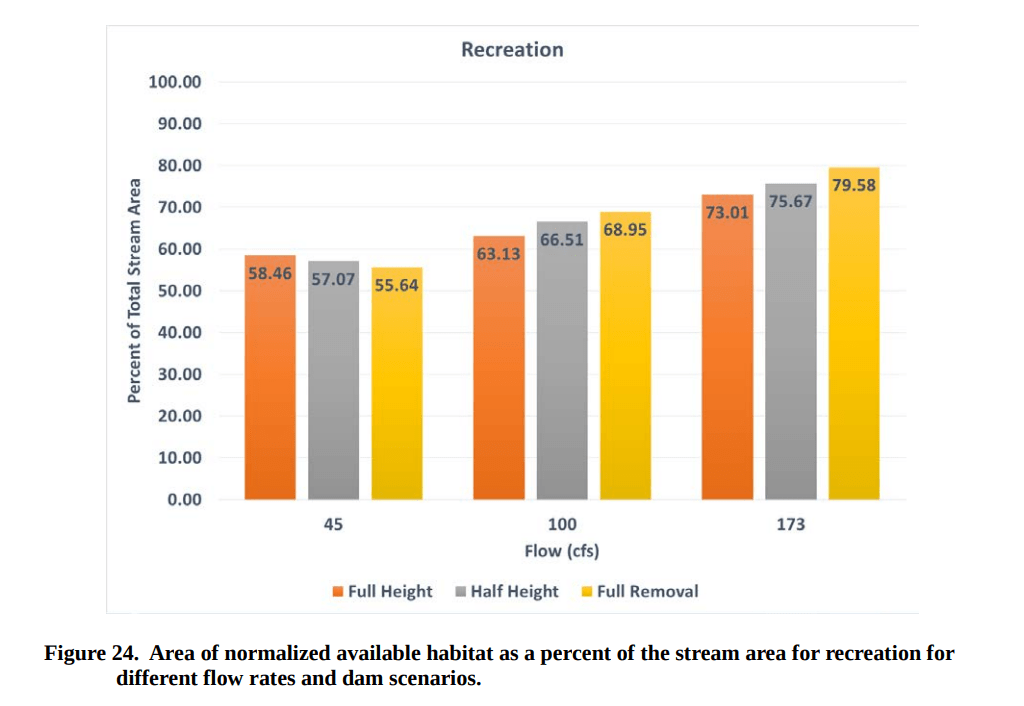
It is insanely thorough! I can tell that much. They look at three things: fountain darters, Texas wild rice, and recreation. They conclude that removing the dam is good for the fishies, good for the endangered wild rice, and not bad for recreation.
This is their graph on recreation:
The 45 means drought, 100 is normal river, and 173 is after a lot of rain. The bars represent how much of the river is deep enough for you to paddle on. Removing the dam doesn’t really change how much of the river you can paddle down.
In 2014, they reported all this to the Park’s Department. But before they talk to Council, we have…
The 2015 Floods
The 2015 Memorial Day floods come along. A 40 foot wall of water barreled down the Blanco River, 11 people are killed, and tons of homes are flooded.
In the course of all this, Cape’s Dam is destroyed.
I hunted for awhile, but I can’t find any photos of the dam from before it was destroyed.
…
2016: Council hears all of this for the first time
Now the city is trying to cope with post-disaster San Marcos. They’re assessing damage, applying for disaster funding, and so on. For Cape’s Dam, they’ve now got a liability mess on their hands.
The issue is presented: Should Council remove the dam and fill the Mill Race?
Wait, what’s the Mill Race?
I think it’s this:
It’s this little channel that was built back when this was an actual mill. It’s very calm and smooth because it’s got dams on both sides. I think you get this nice little loop around Thompson’s Island. So there are groups, like the scouts and disabled veterans, who have used this stretch for learning to kayak and rehab and growth.
It’s great for those groups!
But as far as I can tell, this is an amazing stretch that’s been kept hidden from public use. That part irritates me. People living east of I-35 have not been able to enjoy the Mill Race or the rest of the parks on that map very easily.
Back to 2016
As far as I can tell, this is the source of all our problems:
I actually went back and listened – you’re welcome – and here’s the problem: if you remove the dam, the Mill Race won’t have enough water 85%-90% of the time. Mostly it will have stagnant mosquito water, or dry up altogether.
So removing the dam wrecks the Mill Race. You could still canoe and paddle on the real river! Just not the Mill Race part.
…
So it’s 2016, the dam is now dangerous, and Council is given this choice:
Use free money from the Army Corp of Engineers to remove the dam.
Good for the health of the river!
Good for the endangered species!
Can still paddle on the regular half.
Use free money from the Army Corp of Engineers to remove the dam, and then use imaginary millions of dollars that we don’t have to rebuild the dam.
Imaginary money is not real. We don’t have it.
In March, 2016, Council votes to remove Cape’s dam.
So now the shit hits the fan. Massive controversy.
This organization springs up to save the Mill Race. They have some sympathetic points, but they also make some crappy arguments.
This is the part I have the least patience for. The argument that takes hold is that Cape’s Dam is so historically significant that we’ve got to save it. For the children! For the historians!
Look: if Cape’s Dam is so sacred, how come I cannot find one single photo of it anywhere, before it was destroyed? Didn’t we love it then?
I do even think there’s interesting history here! What was engineering like a hundred years ago? That’s worth studying.
The part that makes this bullshit is when you use it to say the dam must be preserved, in the river. Want to haul the broken pieces on the bank somewhere? Put up a nice plaque commemorating the dam? Knock yourself out! But don’t pretend that the historical significance means we need a functional dam in 2025.
Thus begins the next phase of the controversy, 2017-2024:
We begin kicking the can down the road. For the next eight years, everyone just punts. You can read a nice summary of all the dithering here!
Kick, kick, kick. We’re kicking the can. kick, kick, kick.
Two extra details from this part of the timeline:
The free disaster money to remove the dam expires. Now we’d have to apply for grant money. But like I mentioned, lots of organizations want old dams removed, so there’s money around.
In 2017, San Marcos River Foundation acquires the land on one side of the bank. They are a hard NO on rebuilding the dam.
They have always been very clear on their position: it is best for the health of the river to remove the dam. You can’t rebuild the dam unless you can access their side of the river. They will not agree to rebuilding the dam on their land. Therefore there is no dam.
So now, in 2025:
I’m no engineer, but I’m pretty sure this is the choice before us:
Find grant money to remove the dam.
Good for the health of the river!
Good for the endangered species!
Can still paddle on the regular half.
Current dam is dangerous and needs to be removed. (A recent tragedy.)
Find grant money to remove the dam.
Then find imaginary millions of dollars more to rebuild the dam
Find an imaginary way to get SMRF to consent to let us rebuild a dam that they are strongly opposed to.
Look, it’s not actually a choice. No matter what, it starts with removing the dam.
This brings us to Tuesday’s meeting!
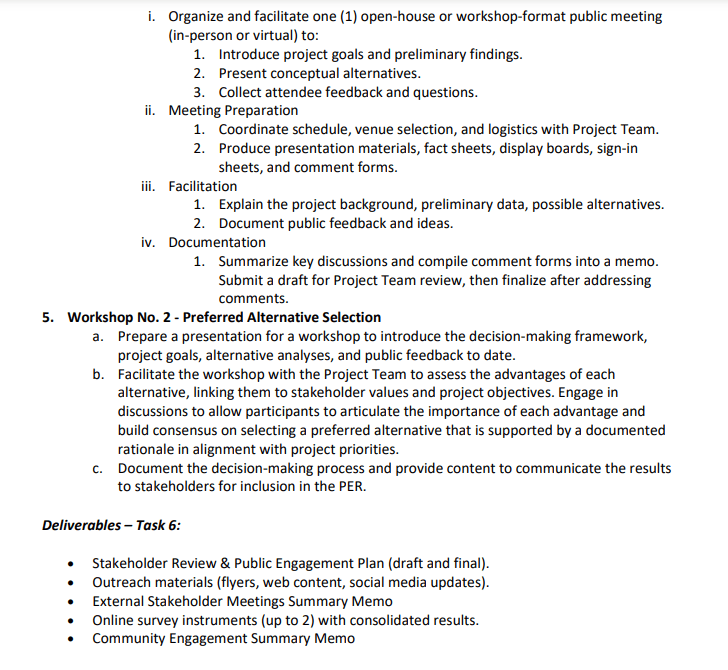
The issue at hand is spending $340K on a feasibility study. The study would do this:
So this study is going to answer all our questions: – What’s the current conditions of the dam and the whole area? – What would it take to rebuild it? Or partially re-build it? Or just remove it? – What’s the environmental situation? What’s the permitting process? – Do a bunch of public outreach and get public feedback.
….
What does Council say?
There are a few things to keep in mind during the Council discussion.
We need the feasibility study, no matter what. Every outcome requires permits. You need this study to get those permits.
The east side of San Marcos has been majorly neglected for river recreation. We need to develop this. Not necessarily the Mill Race – the public couldn’t access this anyway. They definitely deserve good river access and recreation.
Most likely, you have to remove the dam, no matter what. (I’m no engineer, but look, it’s a pile of rubble.)
Council has a lot of confusion. This is understandable – it’s a big, complicated topic. But you’ve already read 1000 words on this, and trust me, you don’t want to read about them going in circles. There are a LOT of circles, and they go round and round.
Some highlights:
Q: Can we skip the study and just put the money towards re-building? (Shane) A: No. You need it to get permits and apply for grant funding. Plus the re-building would be way more than $340K.
Saul Gonzales is quite clear-headed about keeping safety front-and-center in the conversation. Everyone is focused on this, but Saul is the one who repeatedly mentions it.
Q: What about liability, should someone get injured? A: Yes, we are exposed. This is a man-made thing in a public space, and we’re supposed to be in charge of it, even though the state owns the river. SMRF would maybe have some liability in court, and parks get a little immunity for being outdoors, but this is not a natural outdoorsy thing. It’s a big risk.
Q: Aren’t we partnering with the county on all this? A: Sort of, yes. They’re interested in rebuilding. Or they were, in 2021, when we last talked with them about this.
Several councilmembers point out: The east side needs some good river access!
I agree with that!
Shane, Jane, Matthew, Lorenzo, and Alyssa are all open to rebuilding the dam. They seem to be thinking that this is the way to support river access on the east side. They’re wrong about this, but it’s sympathetic.
Saul’s position: “I’d like us to make this safe, as quickly as possible. Let’s start with taking it out, and see if everyone likes it. After that, if everyone wants a dam, we can rebuild the dam.”
Amanda’s position: “Rip it out and let the river flow. Then create recreation on the East Side.”
This aligns most closely with my beliefs.
…
Jane and Amanda go off on a tangent about getting public input first. Now, the folks doing the feasibility study are already supposed to get a bunch of public input. And it’s a LOT:
But Jane and Amanda are proposing that the city get a bunch of public input, before the folks in the study get a bunch of input.
Look: No. That is just more kicking-the-can down the road.
Alyssa makes the exact right point here: “We have engaged with the public for YEARS. EVERYONE has an opinion. I know what the results will be.”
That is correct.
….
There’s discussion of partial rebuilds. Can the proposal consider that? Answer: Yes. It’s in there.
Jane says: The main problem is that the Mill Race needs more water. Can we fill it with reclaimed water? Answer: Uhhhhhhh…. you’re freaking us out. You want to release sewage into the Mill Race?
Jane: it’s treated, not raw sewage, and it gets released to the river downstream. So why not release it upstream? Answer: We’re feeling woozy just trying to imagine the permitting process involved in releasing reclaimed water into a recreation area. Oh god.
I admire Jane’s problem-solving ambitions!
…
Bottom line: The study should take about 10 months. Then we will have a lot more information!
My belief is that the dam should go, and we should focus on creating recreation access for the public on the East Side. The mill race has always been treated as a fancy, restricted portion of the river, and the exclusiveness is bullshit.
…
If you’re curious:
Here’s a great read from 2000, from an old-timer named Tom Goynes, who has been paddling the river since the 1970s.
And here’s someone’s video, showing what it looks like to kayak through all this stuff we’re talking about:
Workshop #1: Update on Downtown plan Workshop #2: Privacy policy on SMPD License Plate Scanners
….
Workshop #1: Listen, this was great. I just ran out of time to write it up properly, so it’s a little short.
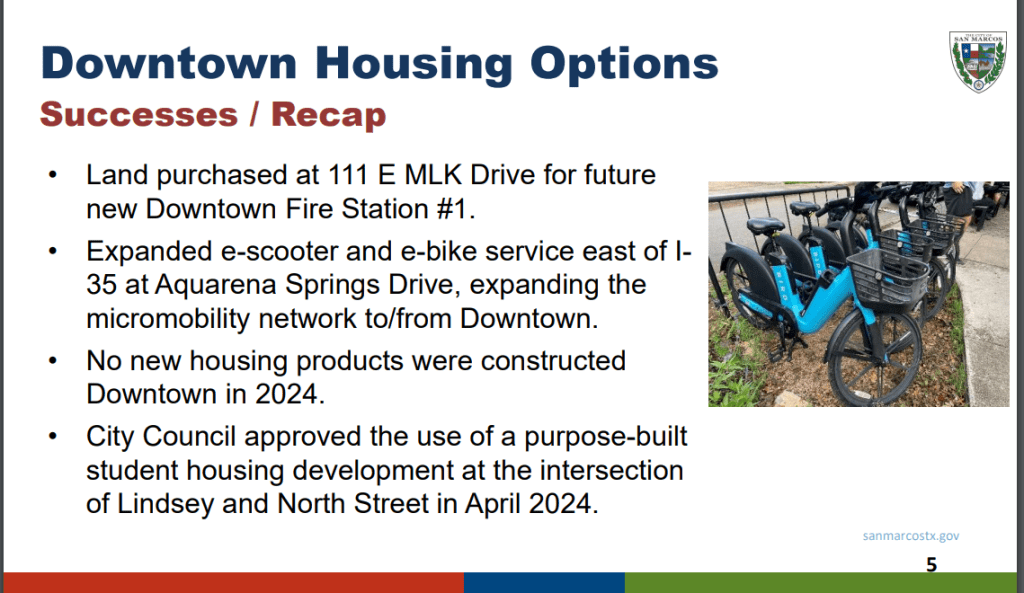
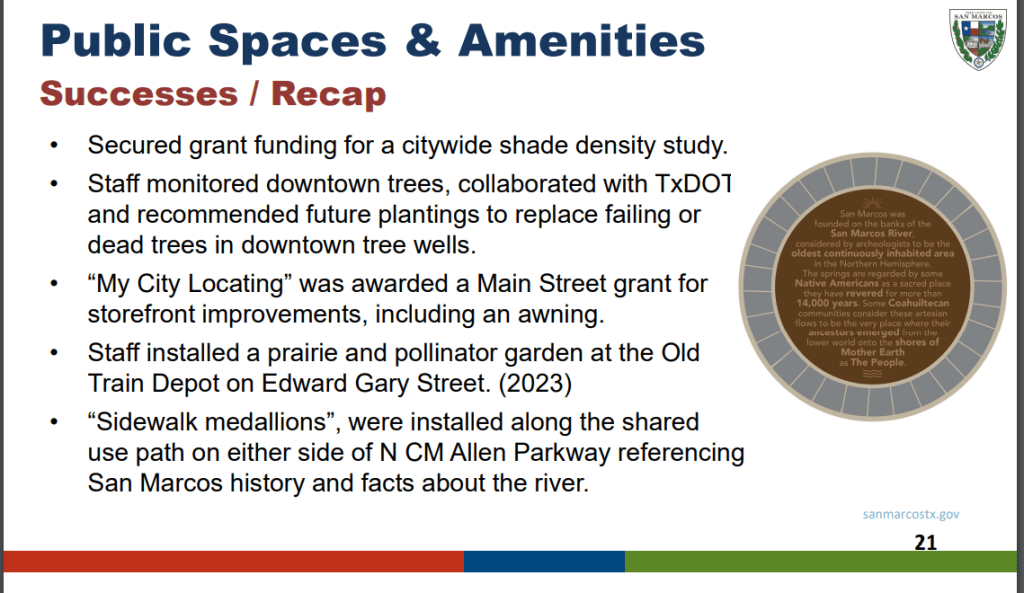
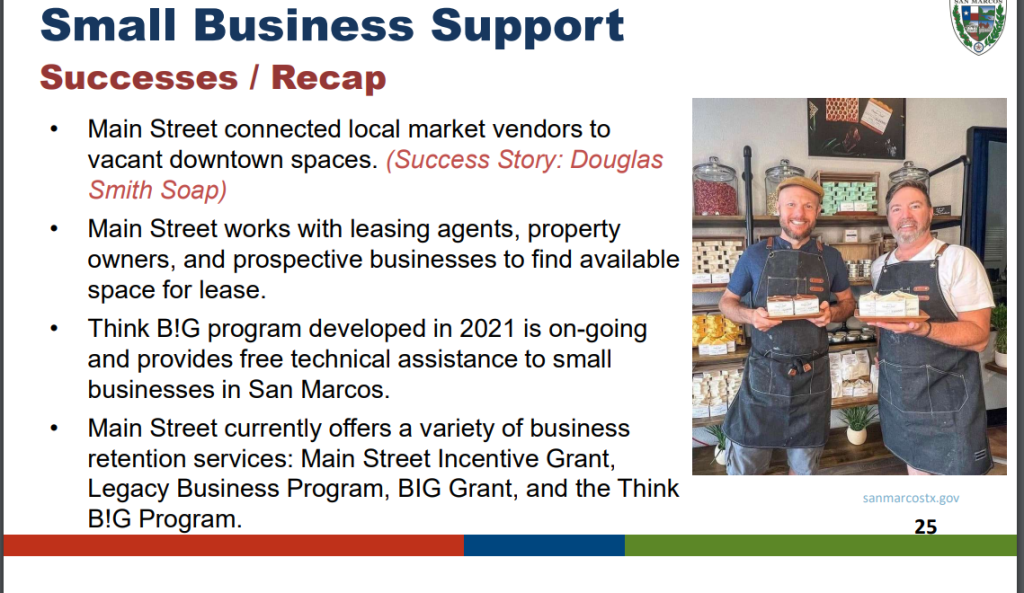
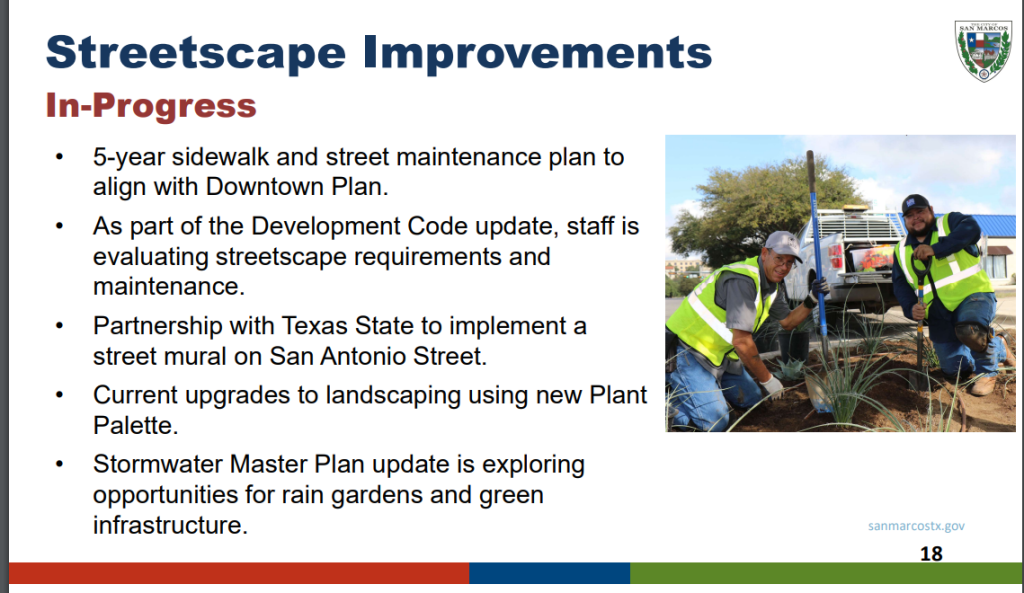
We approved the Downtown plan in 2023.
So now we’re implementing it:
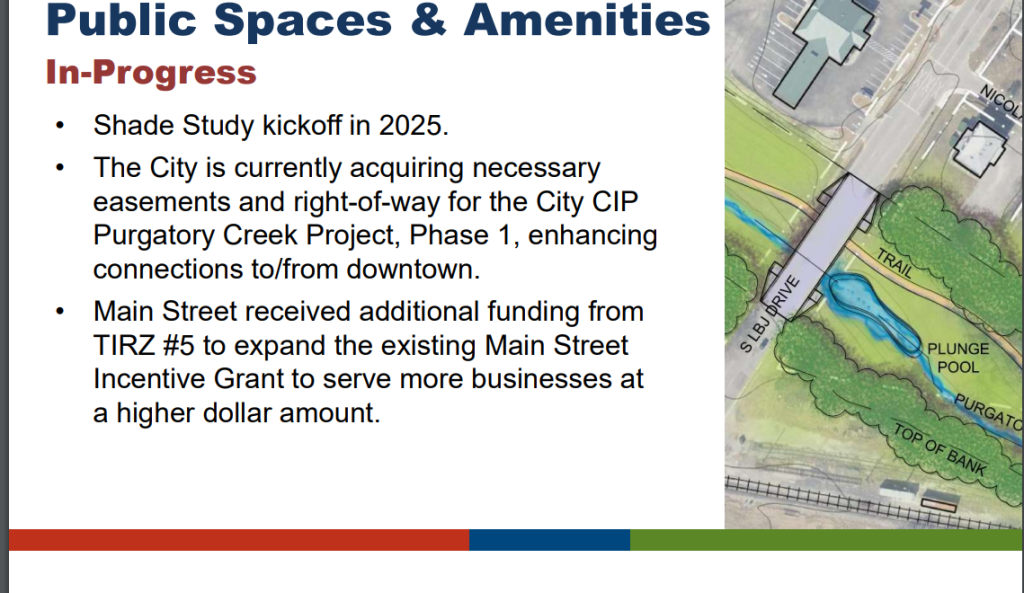
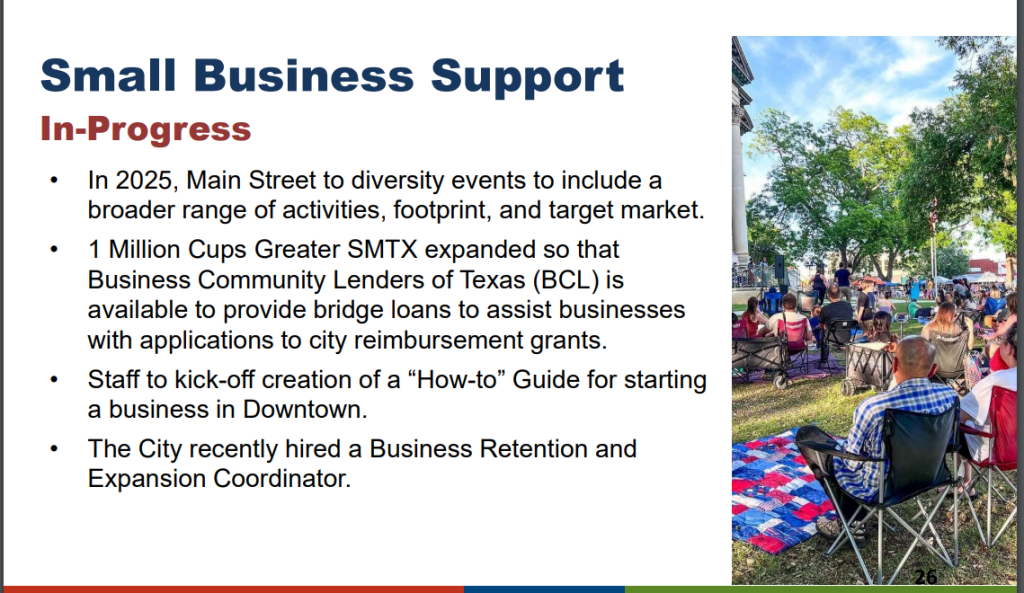
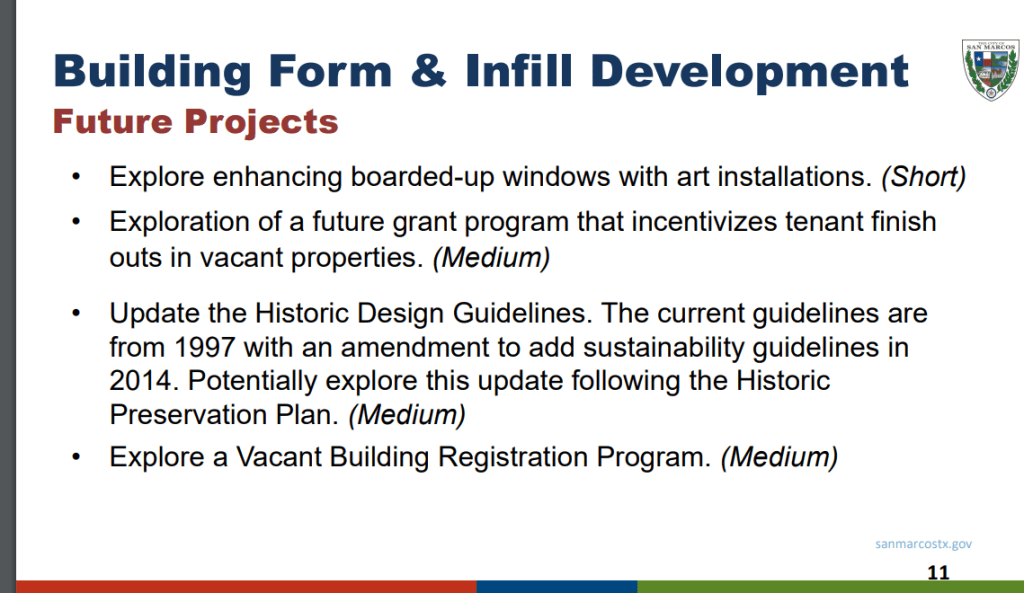
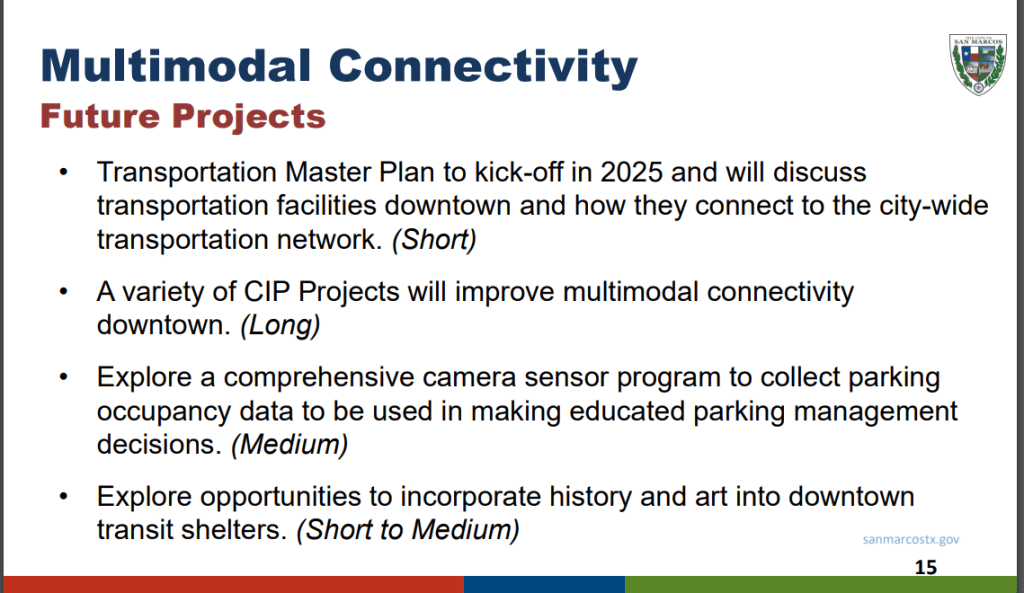
So far, we’ve done a bunch of great stuff!
Here’s what we’re in the middle of doing:
And here’s what we’re going to do next:
And here’s what we need, to do it:
Like I said, I’m shortchanging a really enjoyable presentation. Go listen!
…
Workshop #2: License Plate Readers
In February, SMPD asked Council to approve a bunch of license plate readers.
We had literally just talked about privacy with respect to technology, and these definitely require privacy protections. So we postponed the purchase until we had an updated privacy policy.
Here we are! Policy time.
…
What is FLOCK?
So in other words, there are seventeen intersections in San Marcos that are recording your license plate every time you drive by. (And soon there will be thirty locations.)
So basically, SMPD owns the data, but it’s located on the FLOCK system. If you have a crime in mind, you log in and run a query, and then it tells you which license plates were at that location, or it tells you all places a specific car went, or whatever.
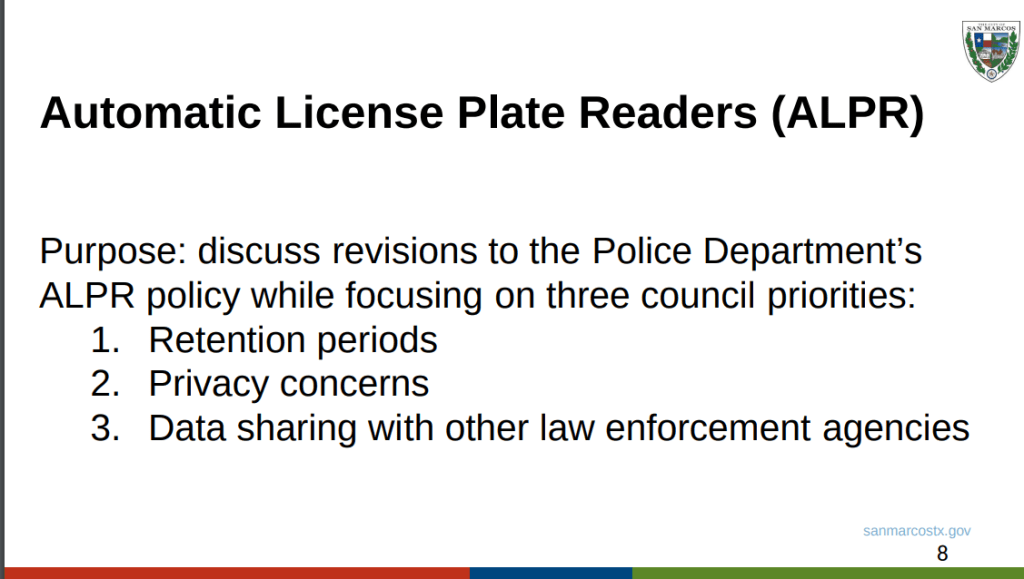
Council had three big concerns:
We’ll take these one at a time.
Retention periods: how long do they keep the data?
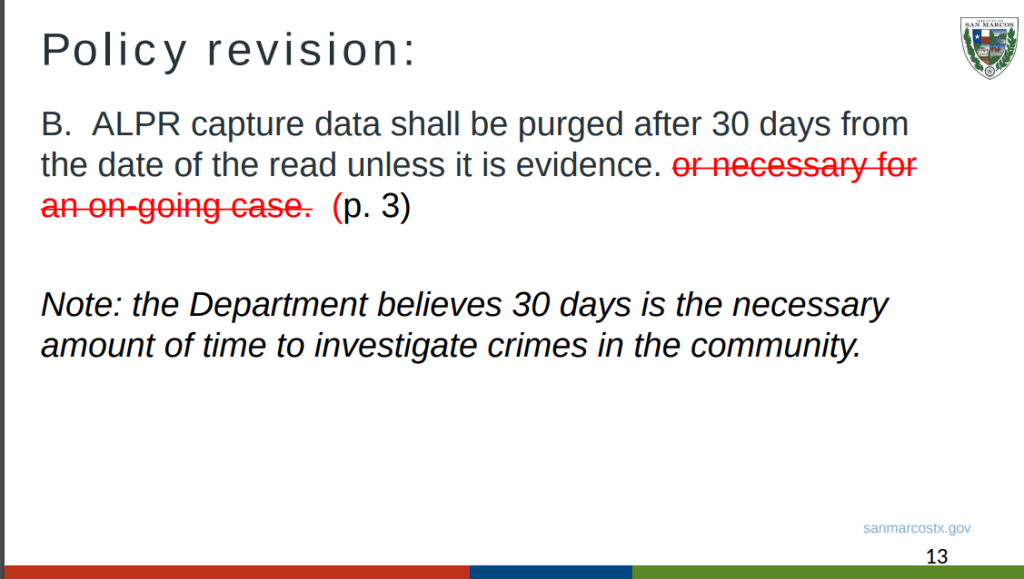
We’re currently 30 days, and Chief Standridge makes the case that we need to stay at 30 days.
There’s no slide for this part, but he’s basically saying, “People don’t report crimes right away. Sometimes the crime isn’t even discovered for a week or two. If you don’t have the crime reported for two weeks, that eats up a lot of your time to query the data base for the license plate.”
He had his crime analyst go back into the system and pull the average length of time people waited to report various crimes, in 2024 in San Marcos. He says:
Criminal sexual contact: average 513 days delay
Forcible rape: average 640 days delay
Credit card ATM fraud (ie, steal your wallet or purse from your car and go to the nearest ATM): delay of 103 days
Shoplifting: average 21 days delay. (This is because stores submit the theft to corporate, and corporate decides whether or not it meets the threshhold to bring in the local SMPD.)
I mean, ok. This makes the case that the cameras aren’t actually helping you solve most of these crimes, but point taken on the delay in reporting.
…
Onto 2: Privacy Concerns:
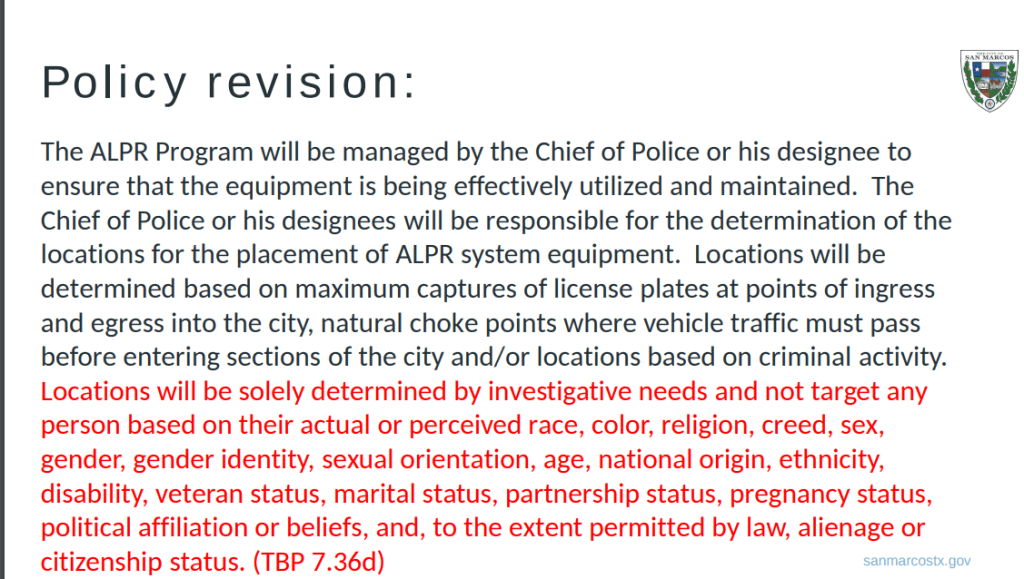
They’re proposing a bunch of amendments to current policy.
Great.
The “TBP” bit stands for “Texas Best Practices”, which is an accreditation thing.
Amanda asks if we can include “economic status” to the list of protected statuses? In other words, no targeting an intersection because it’s known that homeless people are camping near there.
Sounds great to me! Everyone is on board with this.
Next:
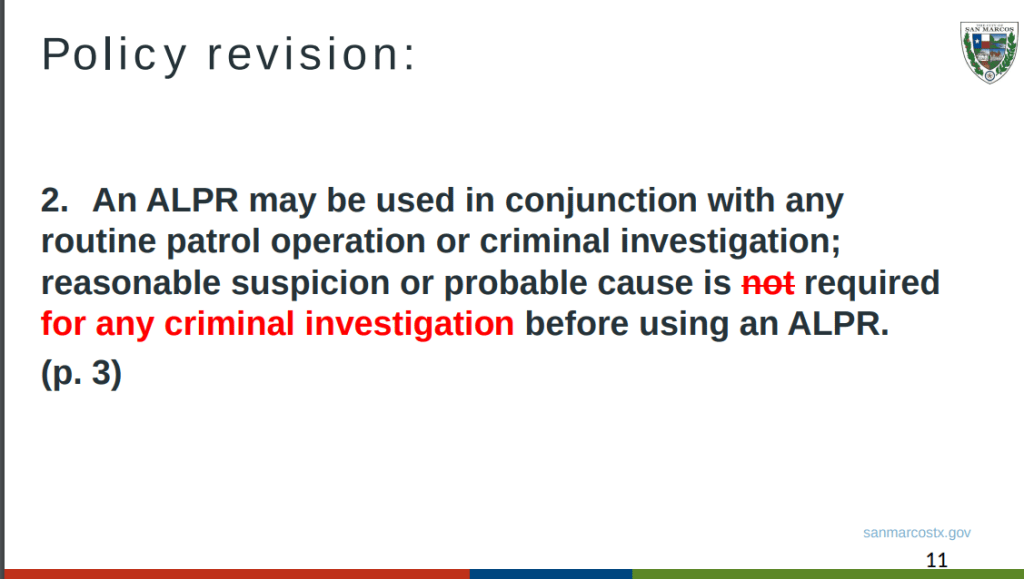
What the hell – until now, you didn’t need reasonable suspicion or probable cause to run a query?!
Anway, now you do.
There’s a bunch of details here!
You get regular training.
You have to supply a case number when you run a query.
Later on, someone else in SMPD will be double-checking all the queries to make sure they make sense.
SMPD will not give the data to any private entity.
These are definitely huge improvements.
…
We’re sticking with 30 days, but we’re no longer going to grant exceptions:
3. Data sharing with other organizations:
There’s going to be an MOU, or Memorandum of Understanding. Any other law agency that wants San Marcos data has to sign this MOU.
The MOU isn’t written yet. But it’s going to require that officers in other jurisdictions follow all the same rules as us. Specifically, there must be a case number. You can’t just be looking people up.
And there will be a portal with general information available to the community.
Finally, misusing the system is a crime:
and you can get punished for it:
…
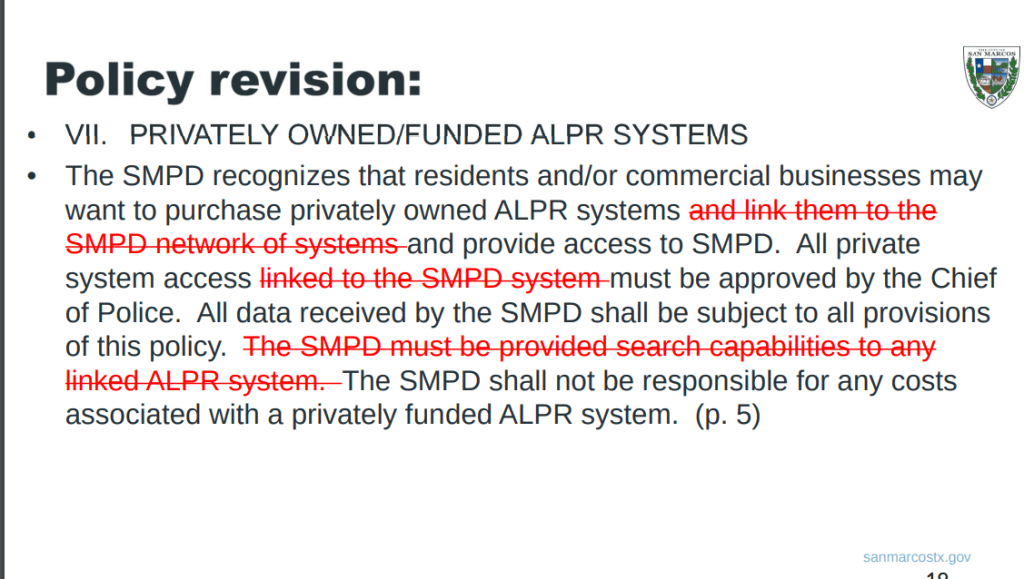
One weird thing about Flock Cameras is that anyone can buy them and join in. The outlet malls probably have them, your apartment complex or HOA could have them. Anyone who cares enough about who is coming and going can buy one.
Will we share our data with any old HOA or shopping mall?
Not anymore!! (But JFC, we sure used to play fast and loose with this data. The deleted part in red is wild.)
There’s some discussion of ICE in all this. We’ve opted out of immigration tracking. But there are some laws (SB4) which may or may not make this more complicated.
…
My opinion: These are really big amendments that make the system safer. I am still wary about license plate readers and Flock Safety, but this is at least much better.
Lots going on this week! Flooding fears in Redwood/Rancho Vista, the SMCISD budget crisis, council compensation, and a massive presentation from SMPD. There is a LOT. Enjoy?
The meeting was super long, and the workshop was also a full three hours. So I’ll do my best to be zippy, so that I don’t wear out my welcome.
Hours 0:00 – 2:16: The flooding problems of Redwood/Rancho Vista, grant money plans, Summer Fun, and maybe some speed bumps in Trace?
Hours 2:16 – 4:28: In which SMCISD is pitted against the flooding problems in town. And also council compensation gets hammered out.
Bonus! 3 pm workshops: One short, on Evoke Wellness. One extremely long, on what SMPD has been up to over the past four years.
Malachi Williams: his mother and sister both spoke about their loss. They will continue to fight for justice.
It’s always particularly heartbreaking to hear from the family, and it’s worth being grateful that they have not shied away from speaking on his behalf.
2. Redwood/Rancho Vista and Riverbend Ranch:
Basically, Riverbend Ranch will be a gigantic development that is immediately uphill from Redwood. The development agreement was approved in 2021.
Now, Redwood has huge problems with septic and flooding. Today the developers want to change up the agreement, in ways that might increase the flooding.
The two speakers are Veronica Reyes Ibarra and Monica Reyes Ibarra. Veronica is the president of both the Redwood/Rancho Vista Neighborhood Association and Water Supply Corporation, and Monica is a former resident and advisor to the organizations. They are both advocating on behalf of their community. They both explained about the flooding and challenges to Redwood/Rancho Vista, and the consequences on the people who live there.
We’ll unpack all of the details in Item 17!
Speedbumps in Trace:
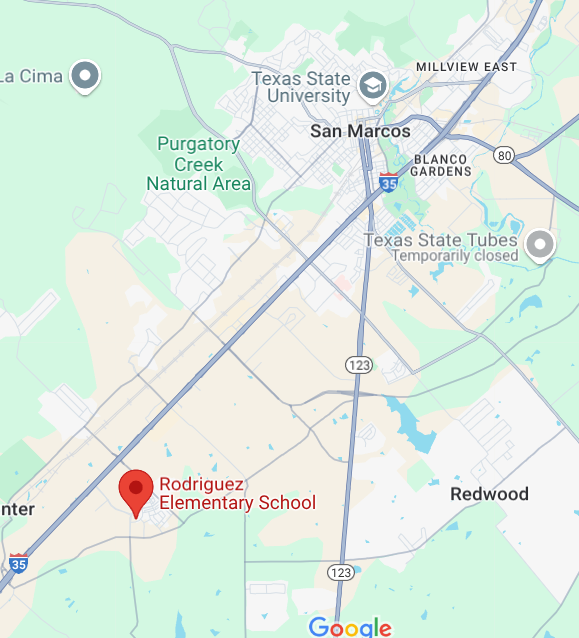
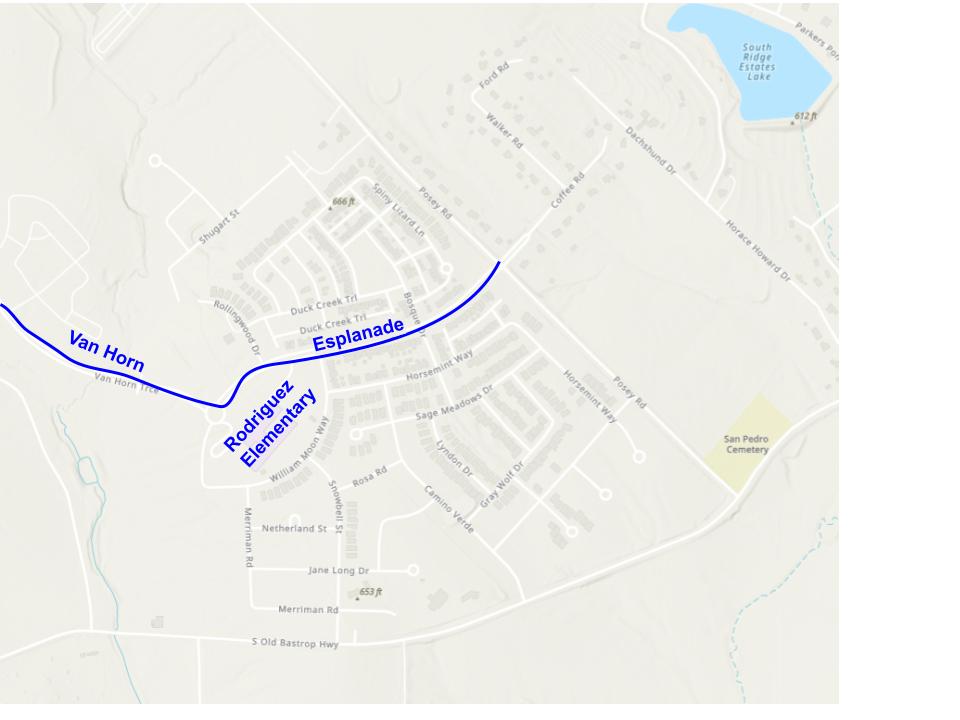
Rodriguez Elementary is here:
in the middle of Trace subdivision.
The speaker wants speedbumps on Van Horn and Esplanade, due to people tearing through the main road at unsafe speeds:
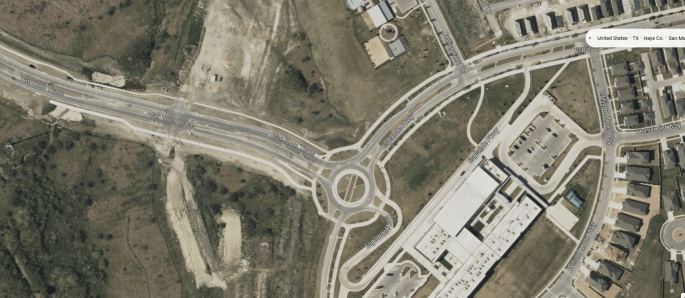
I can imagine that – it feels like a nice, big wide expressway:
Ok, that is a terrible photo. In reality, it has trees and houses and people living there.
(I got that photo is from Bing maps and it is obviously very outdated, but Google maps is even worse:
But I didn’t have a chance to go photograph it in person. Oh well.)
Anyway: yes. Speed bumps are probably a good idea.
…
Item 1: HUD grant money
We get federal grant money from HUD , (the department of Housing and Urban Development). Some of these grants we get regularly, and others we’d apply for if we have another flood or natural disaster.
HUD grants require a few things:
A citizen participation plan
A five year consolidated plan
So we’re updating these.
The Citizen Participation Plan:
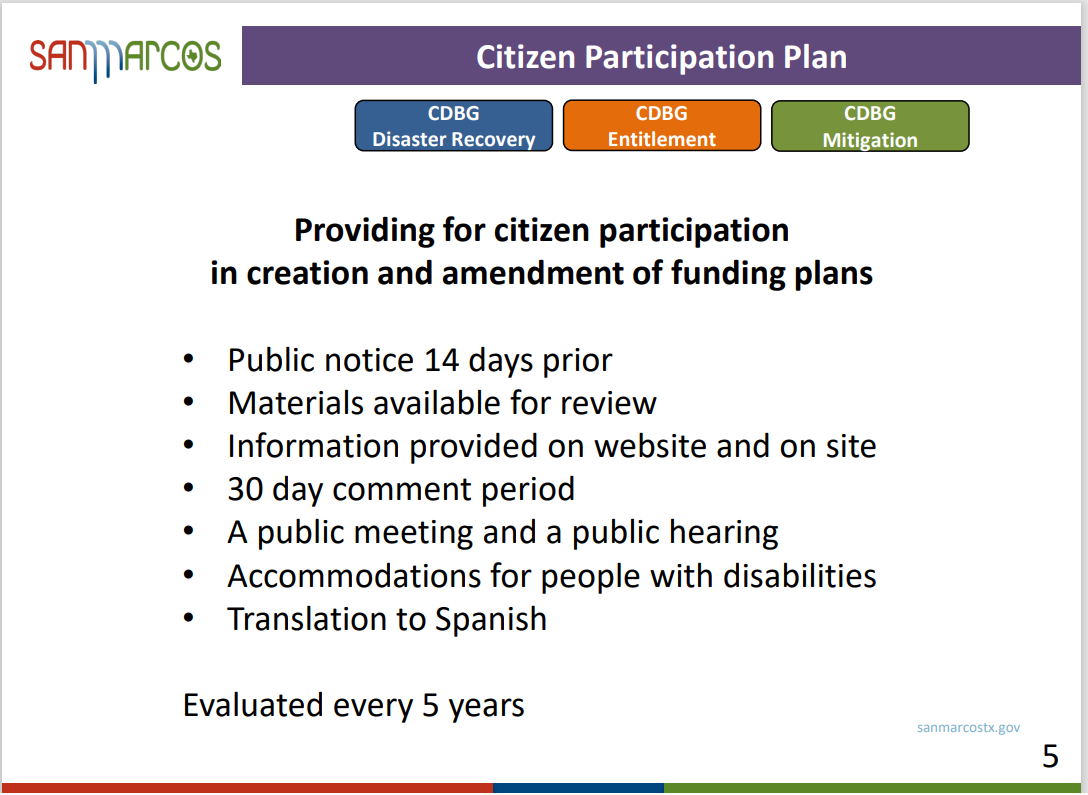
HUD requires you to have a plan on how citizens will be able to participate in the decision-making process for how the grant will be used. You have to update it every five years.
Here’s ours:
No one has any questions or concerns about this.
…
The Five Year Consolidated Plan:
This is a little more in-depth. Basically we need to pick some broad categories to prioritize.
Background
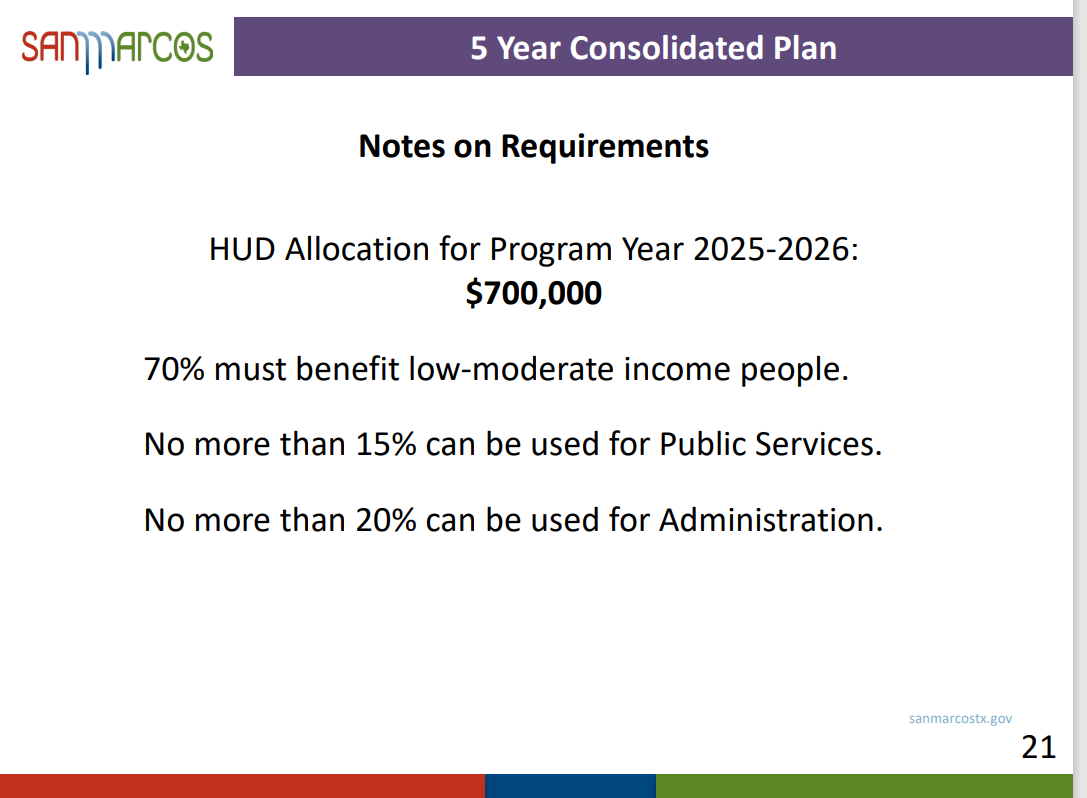
We generally get about $700K each year in Community Development Block Grant (CDBG) money.
HUD puts some rules on it:
During the past 5 years, these were our priority categories:
And here’s what we accomplished over the past five years with the CDBG money:
…
So what do we want to prioritize for the next five years?
Here’s what HUD directs us to do:
Staff held surveys and open houses to get public opinion.
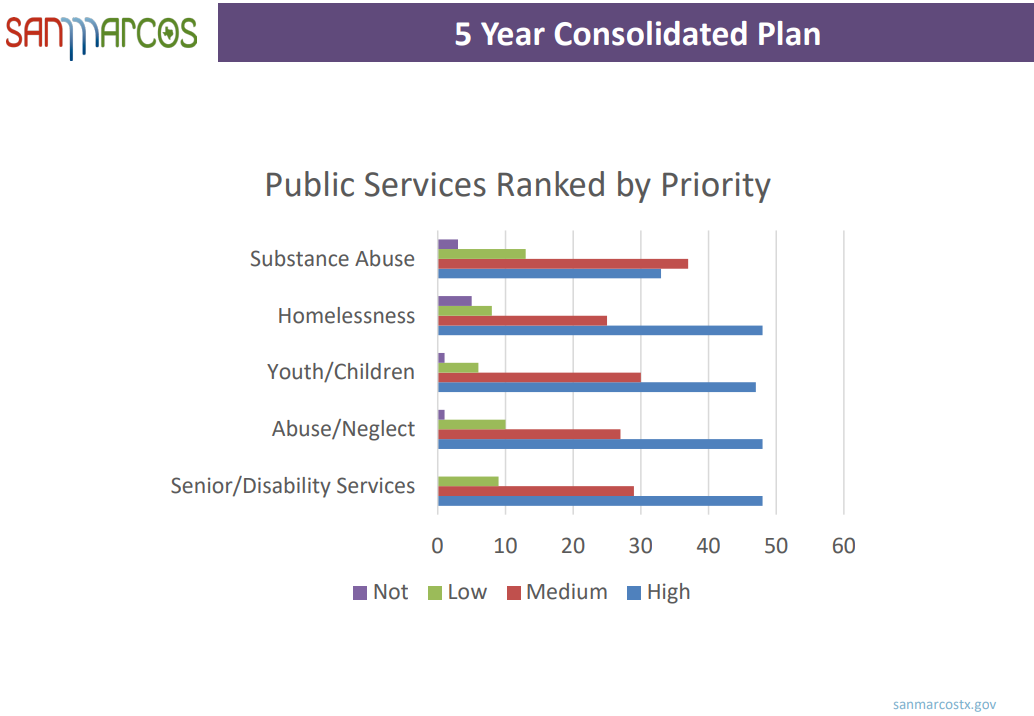
Survey results:
Feedback ranked along themes:
Based on all that, here’s what staff recommends that our priorities should be:
…
So what does Council think?
Amanda: What about sidewalks? Can we include sidewalk projects? Answer: They’re generally too expensive, but the gap sidewalk program has smaller, cheaper projects that are a good fit.
Alyssa: What kind of survey response numbers did we get? Answer: 86 online, and then in the 7 dream sessions we got another 50 responses.
Alyssa: Transit is clearly a big response. Can we include that as a priority? Answer: It is included under Public Services.
The city also gives out grants to nonprofits, under the Human Services Advisory Board, or HSAB.
Jane: Can we merge the application process of CDBG and HSAB? Answer: We’re going to align the applications in 2026, but we still have separate committees looking at the applications.
There’s some discussion of workforce skills and economic development. ACC offers HVAC courses at the library, for example, and Community Action picks up the tab using CDBG money.
Everyone is on board with these two plans.
…
Item 15: Summer Fun! And other fun.
We’re updating our Youth Programs Standards of Care for 2025. This means Summer Fun and Discovery Camp and any other kid-things that the city runs.
What is Summer Fun?
It’s a weeklong summer camp held for 8 sessions during the summer. The biggest point is that it is extremely affordable – $40 per week for city residents, including breakfast and lunch – and so it’s a real service to families who need affordable childcare. It’s hosted at different SMCISD campuses each year.
Before Covid, Summer Fun had 300 kids per week, across two different campuses. It dropped dramatically during Covid, and now we’re somewhat back, up to 120 kids per week. There’s usually a waitlist of about 50-60 kids each week, but we’re short on staffing.
There are a few questions about scholarships and residency and growing the program.
scholarships are available for anyone in SMCISD, even if you’re out of the city
City residents get priority registration, so it’s been filled with just city residents for the past few years.
They would like to grow the program and serve more families, yes.
Keep in mind: Back in 2021, development agreements did not trigger any notifications. So no one in Redwood would have been notified about this development.
This changed after SMART/Axis blew up in 2023. Now they notify people within 400 feet about an upcoming development agreement.
That’s better, but still not much. The notification radius should be proportional to the size of the development.
…
So as far as I know, no one noticed this massive tract of land was being discussed.
Just for funsies, here’s how the original vote went, back in 2021:
Yes, this looks AWESOME: Jane, Shane, Saul, and Mark Gleason and Jude Prather No, this seems terrible: Alyssa, Max Baker
Mm-hmm.
Redwood/Rancho Vista
Just south – and downhill! – of Riverbend Ranch is the Redwood/Rancho Vista community. They’re part of SMCISD and the greater San Marcos community, but they’re also kinda their own community. The Guadalupe-Hays county line runs right between Riverbend Ranch and Redwood.
Back in 2017, a study by UT-Austin uncovered widespread parasitic infections in the residents. This is due to septic problems and flooding. The soil is terrible for septic systems, so they break down and leak almost immediately. Anything that increases flooding risks will expose this vulnerable community to more adverse health effects.
Since then, the two speakers – Veronica Reyes Ibarra and Monica Reyes Ibarra – have mobilized the community around solving the septic, flooding, and parasite issues. The three issues are all intertwined, and all expensive to fix. (Veronica is the president of both the neighborhood association and Redwood/Rancho Vista water supply corporation.)
…
In August 2022, the development agreement came back for amendments. This time I noticed. They wanted a variance for a 30 foot cut-and-fill.
What’s cut-and-fill? I drew you some pictures!
Suppose you’re trying to develop along a hill:
Now, you can’t put a foundation on a slope – you have to level it out:
(I’m sorry. I wasted a lot of time doing this.)
So this is cut-and-fill:
Developers love this because now you can fit a lot of houses, or one big industrial building:
But now you’ve destroyed the natural drainage patterns, and this is going to make flooding much worse.
So the city code requires you to take little steps, like this:
You can’t fit as many houses though:
and you definitely can’t put a giant industrial warehouse on it anymore.
Back in 2022 at least, that was exactly what the developer wanted to do:
They want a bunch of amendments, but specifically they want the cut and fill. No one mentions if this is for an industrial portion anymore. (Sure do hope it’s not another AI Data Center!)
Here’s the deal they hammered out with staff:
So this is the question that’s before Council: Can they have their cut-and-fill if they agree to do all these other nice things?
….
What does Council say?
Matthew: It is shameful that Guadalupe County isn’t helping our neighbors! I dream of annexation! I am a simple man, and I like retention ponds. They’re a visual indicator that storm water is being detained. Can we have more of those?
(I’m really not trying to mock Matthew here – these are quotes! He literally said “I am a simple man!” Council members are just endearing goofballs sometimes.)
Answer: They’re going to have retention ponds. Those were already in the development agreement.
Matthew: But can we have more?
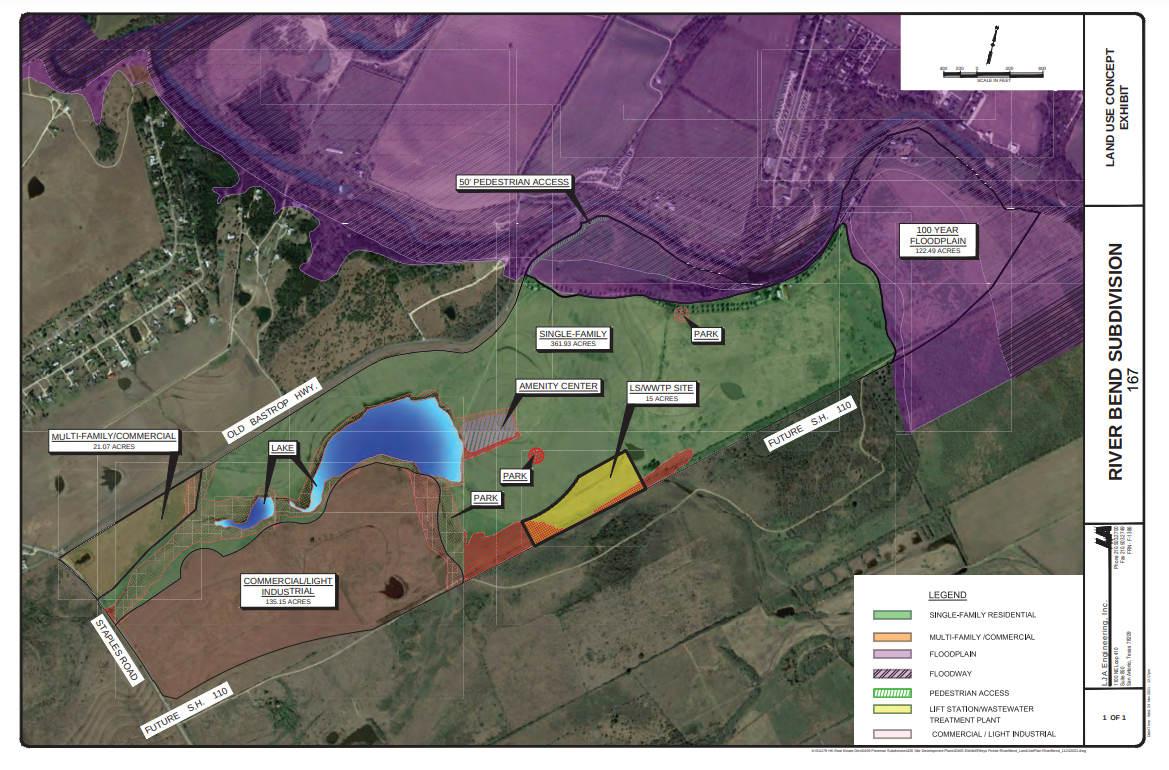
Answer: No? They’ll be there? Look at this map, there’s a lot of them:
It’s hard to see, but I believe it’s the two red hatchmark regions, on the left and lower right parts of the pond?
….
Jane is arguing hard for the deal. She keeps hammering the angle that if there were no development agreement, there’d be no protections at all. Therefore this is better than the alternative.
I am not so sure. Big cut-and-fill is generally banned for a reason. Jane doesn’t seem to be taking that into account – she’s only arguing that the mitigation strategies are great.
Shane comes out against the deal. “It’s like the Woods all over again. 15% increased retention is barely anything.”
Staff: They’ll divert the water and release it downstream of Redwood/Rancho Vista
Shane: Doesn’t matter. 15% is barely anything.
(I’m inclined to agree.)
Saul is worried about the parasites and the flooding. It floods really badly there.
Staff explains a bit: the soil is really bad for septic systems. They basically break very quickly and release sewage into the soil. The parasite lives in the sewage in the soil.
Several council members ask: Can Redwood be annexed and brought onto city sewage?
Answer: Redwood/Rancho Vista might not want this? Every home owner would have to individually request annexation. Annexation comes with lots of taxes and fees. Just the sewer would require connection fees and stormwater fees and other things. It’s not likely that Redwood would reach consensus on this.
Staff: The advantage of this development is that it will at least bring a sewer line much closer to Redwood.
Q: What’s all this about a M.U.D.?
Answer: M.U.D. stands for Municipal Utility District. This is like a city-lite. They charge taxes and have a board. They run utilities for people that live in the M.U.D, but they don’t do all the rest of the city government stuff.
(If you are curious about the insanity of the Cedar Park M.U.D, enjoy this blog which is their version of The San Marxist. Things are pretty bonkers.)
City Manager Stephanie Reyes weighs in with the following, which is worth quoting:
“That’s the hard part with a lot of decisions Council is faced with. Because, sometimes, it will look like you’re supporting a certain development, and a lot of times, it’s not about supporting the development – it’s about supporting the regulations on the development, that you would not otherwise have if you did not vote a certain way.
So that is something to contemplate, and it’s not lost on us that that is a very heavy decision… Some of the things can be developed by right, so even if you don’t vote for it, it’s still going to happen, but you lose the negotiating power to make some of these concessions and negotiations happen.”
So basically, no one likes this development any more, but we can’t stop it. (Well, I think Jane still likes it.)
…
Here’s my read: City staff and Jane Hughson are absolutely convinced of two things:
The benefits of the improvements outweigh the risks of cut-and-fill.
They will definitely develop the property anyway, if the cut-and-fill is denied.
The rest of council has to decide if they agree on those two things. Everyone feels very uneasy voting yes but also uneasy about voting no.
I will say this: Council seemed genuinely concerned about the residents of Redwood.
Jane makes one last point: This is a big environmental win, because they wanted to build a package plant, and we got them to agree to a lift station instead.
What this means is that the developer wanted to install a cheap little sewage treatment station that would then release to the river. This means it would have higher levels of phosphorous and lead to more algae blooms and other bad river outcomes. Also, package plants are not staffed, so it takes longer to notice when something malfunctions and it starts dumping untreated waste into the river.
Instead, we’ve gotten them to agree to a lift station, which brings the sewage back to San Marcos, to a higher quality treatment plant. So this is good!
(This win is independent of the welfare of the people in Redwood, though.)
The final point is that the Redwood parasite is already a problem that needs dire attention. And ultimately, Redwood is not in either San Marcos or in Hays County – it’s in Guadalupe County, which we have no jurisdiction over.
What Council decides is that they’ll to bring the issue of Redwood septics and flooding back, at a future meeting. They will discuss a resolution to send to Guadalupe County, to try to somehow get them to take action on the issue.
The vote:
Yes: Jane, Matthew, Alyssa, Saul, Amanda, Lorenzo
No: Shane Scott
My take: This is a really hard one.
I’m not convinced that the mitigation strategies will outweigh the cut-and-fill risks, but I’m also not convinced that they won’t?
The package plant thing seems like a win
Passing a resolution to get Guadalupe County to help Redwood seems likely to be empty, but maybe Council will be more persistent than that.
I felt like the current Council is sincere in their desire to help the residents of Redwood, but it’s not obvious how they should do that. It will require sustained attention and energy to help the residents out.
For the past few years, the state has been strangling the school districts out of funds, in order to get legislatures to approve Abbott’s vouchers plan. In other words, back in 2019, we received $6,160 per student. It has not been raised since. With inflation alone, it should be $7,774.18 per student now. (And since Uvalde, there’s been a massive increase in unfunded, mandatory safety measures.)
SMCISD is looking at a $4-5 million budget shortfall.
The reason that funding has been frozen is that Abbott is holding the public schools hostage. He wants a school voucher program. He didn’t get it in 2023, and so public schools were punished.
Furthermore! (My god, I’m going to hyperventilate.) FURTHERMORE!
Here’s Abbott’s voucher proposal: Increase per student funding from $6160 to $6380 at public schools, while private schools get $10,000 per kid from the state, plus whatever additional tuition above that. Everybody got that? Private schools – schools that can turn away kids with disabilities, kids with trauma, kids with behavior problems, and any other kid requiring extra TLC – get a lot more money per student than public schools.
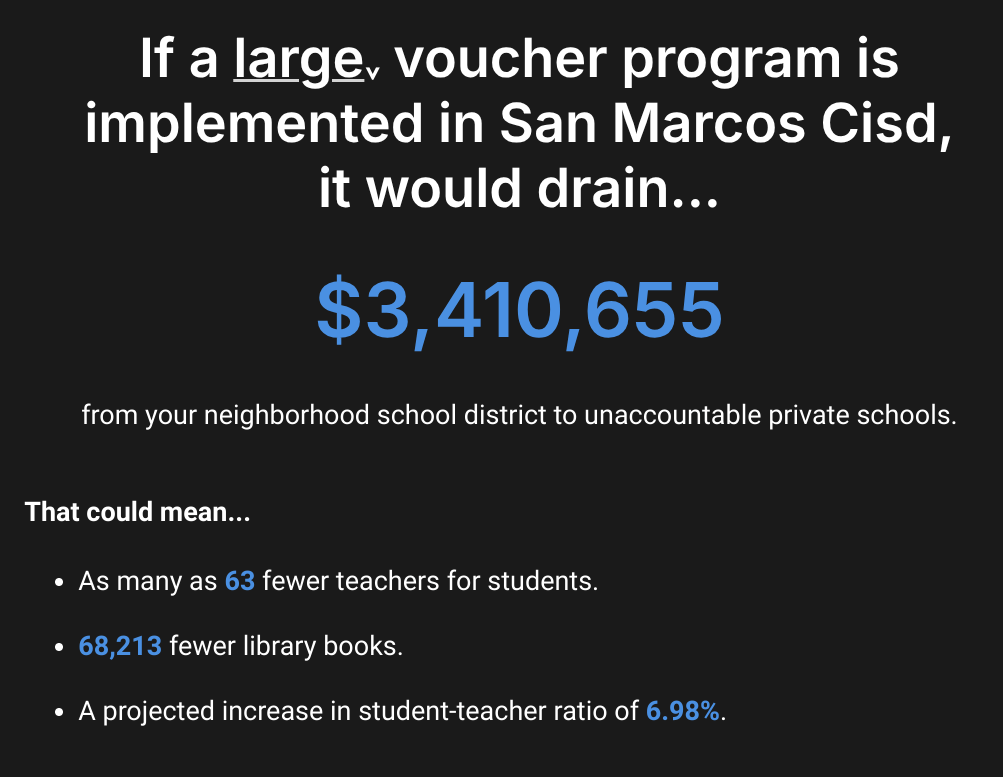
How much money will SMCISD lose if this passes? There’s a handy website here!
And what does it say?
Let’s be super clear: the villains in this whole story are Greg Abbott, Dan Patrick, and the state legislature.
…
Okay, so even before the vouchers scam passes, SMCISD is looking at a $4-5 million shortfall.
This is already going to make San Marcos kids lives harder. Teachers who love them to bits are going to lose their jobs. It’s very real and it’s very awful.
In this context, SMCISD spends $372K on stormwater drainage fees to the city every year. They’re asking for a waiver from the city.
What’s the city side of the equation?
The stormwater fund is $9 million. Stormwater money gets used on two things: big drainage projects and yearly maintenance. But the big projects are covered by debts, and so we’re obligated to keep making payments.
Giving SMCISD this waiver would cut yearly maintenance by 40%. Drains wouldn’t be inspected for clogs, ditches wouldn’t have debris removed, etc. Flooding would get worse.
Do other cities exempt ISDs from stormwater money?
Some do: Austin, San Antonio, and Round Rock all do. Some don’t: Seguin, New Braunfels, and Kyle all do not.
Remember how I said the state is the villain in this? They strike again! State buildings, federal buildings, schools, nonprofits: everyone pays stormwater fees, and your rate is based on how big your footprint is. More impervious cover means a higher stormwater fee.
But! There’s a specific state law that carves out public universities, and only public universities. So Texas State University has paved the top of San Marcos, and yet does not contribute towards the cost of the flooding, caused when it inevitably all rolls downhill.
(Sometimes I marvel at what this state could be like, if we weren’t constantly suffering from self-inflicted wounds. Stop voting for pricks, everyone.)(I am aware that readers of this site probably didn’t vote for Abbott.)
What does Council say?
First off, there’s no decision tonight. This is just testing the waters – would Council like to have a formal discussion next time?
Lorenzo: Can we look at a 2 year waiver instead of an indefinite waiver? And can we look at a middle option – some kind of discounted rate tier for SMCISD that’s outside of residential and commercial?
Alyssa: SMCISD fills big gaps in our service. They’re the ones that take care of Redwood, for example. Let’s consider this.
Matthew Mendoza: I’m angry on behalf of Sunset Acres. We’re trying to fix the drainage there, and SMCISD is holding it hostage.
Note: here’s my understanding of what Matthew means:
We came up with a semi-fast track solution to get it fixed. The fastest part of the solution hinges on enlarging a detention pond at Mendez Elementary.
The city made two offers SMCISD, in exchange for the easement – about $350K for the land, or a credit for stormwater fees. (Pretty similar to what they’re asking us for, now!)
SMCISD was interested and started to work with us. But then they realized they needed to renovate Mendez. Currently, they’re waiting on permits. Once they can see how big the footprint of the new Mendez will be, then they’ll come back and talk with us about the drainage pond.
So the “quick” solution to fix the flooding has now become yet another holding pattern, going on three years now. The neighborhood was already pessimistic about the city fixing anything, and this kind of thing makes it worse.
Amanda makes a few different points: – I would entertain two years, but definitely not in perpetuity. – The Texas Legislature is going to suck just as much in two years as they do now. I need to see what other cuts the school district is making, in order to balance its books on the other $4 million. – Lots of neighborhoods have lost faith in the city to fix their flooding problems. This money is for those projects. – If our rationale is that SMCISD covers gaps in our services, then this opens the door for every nonprofit to ask for a waiver as well. We need to be really careful with our precedents.
Jane: I don’t think we should even bring it back for discussion. But enough of you have said yes already. Definitely not just 2 years, because we’ll forget to enforce it.
So this will come back.
The most important thing to understand is that the state of Texas is the only villain here.
Flex money (you choose whether to take it as income or use it for expenses)
Right now, here’s what everyone gets:
So this is Shane Scott’s proposal, and he wants to double the travel and flex spending amounts.
Jane’s got amendments! “First,” she says, “We don’t need this. We’re not running out of travel funds. Some of us go over, some of us go under. We just need to lend each other our un-used amounts.”
Here’s what she means:
So $13,500 is the mayor last year, and $7,500 is each of the council members. (Jude is the $15K, because it includes his flex spending. He worked for the county, so he couldn’t accept a city paycheck.)
So you can see: some went over, some went under, but the total was $51,810, which was under budget.
Great! There’s no problem!
Here come the amendments
Jane Amendment 1: Keep the Flex money at $7,500, instead of doubling it to $15K.
The vote:
Keep at $7,500: Jane, Matthew, Saul Double to $15K: Alyssa, Shane, Lorenzo, Amanda
So this fails.
…
Jane Amendment 2: Keep the Travel money at $7,500, instead of doubling it to $15K.
The vote:
Keep at $7,500: Jane, Matthew, Saul, Amanda Double to $15K: Alyssa, Shane, Lorenzo
So this passes.
…
So now we’re looking at doubling the flex spending and leaving travel alone.
At this point, Alyssa balks at this piece-meal approach. She wants to go back and retract her yes vote for the Flex money, and instead double the Travel money.
There’s a lot of confusion around this. Flex money can be used for Travel, so why does it matter? There’s a lot of arguing about what’s easier, and whether the flexibility of Flex Money is too complicated. Ultimately there are not enough votes to reconsider the motion, so it stands.
…
Next: Shane amendment: Okay, just increase Travel money by $2K, then.
Keep at $7,500: Jane, Matthew, Saul Increase to $9,500: Alyssa, Shane, Lorenzo, Amanda
So this passes.
…
Jane amendment 3: If you want to borrow travel money from another councilmember, you have to get council approval at a meeting:
Yes: Amanda, Jane, Matthew No: Saul, Alyssa, Shane, Lorenzo
So this fails. Councilmembers can just lend each other money, and notify the finance committee accordingly.
…
Next: it turns out there’s a special travel fund that everyone’s forgotten about. It used to have $25K in it, for council members who went over budget. We let it drop during Covid, when no one was traveling, so now it has $5K in it.
Jane amendment 4: Increase the special travel fund to $15K, but you have to get council approval at a meeting.
Everyone is fine with this. The vote is 7-0.
…
The final vote on the whole thing:
Yes: Everyone but Matthew Mendoza No: Matthew Mendoza
So Council members will now get:
$17,400 paycheck
$15,000 flex spending
$9,500 travel and exspenses
I am fine with this. You want your council to be able to learn about governance and write good policy. They need time and resources to be good at their jobs.
(No one brought up an amendment about waiting for the next budget cycle. So it goes into effect mid-budget, immediately.)
…
Item 23: Delinquent Apartment Complexses
This is actually great governance in action.
Generally speaking, if you don’t pay your utility bill, your water/electric/etc gets disconnected. But what if you live in an apartment complex, and you pay a flat rate to your landlord, and the landlord doesn’t pay the utility bill? Do we really want to disconnect the electricity on a bunch of renters who didn’t cause the problem?
No, we don’t! So let’s not do that.
Instead we’ll put a municipal utility lien on the property. So only the owner gets affected, and not the tenants.
Everyone likes this. 7-0.
…
Finally there are some various appointments to various boards, and futzing with small rules to some boards and commissions.
This was a very, very long meeting, and there’s still a 3 hour workshop to go, so maybe let’s stop here.
There are two workshops: one very short and one very long.
Evoke Wellness.
Back in December, Council had a lot of questions for these guys. They offer mental health and addiction treatment for people referred over by the police. We’ve allocated 150K of Covid money for this. This is a follow up discussion with the director at Evoke.
Amanda: What’s it look like if you’re receiving services?
The director gives an extremely detailed answer!
Prescreen for eligibility. Detox? Residential? Intensive Outpatient?
Say we’re starting with detox. Then there’s an evaluation and intake process.
Then you’re seen by nursing staff to get orders from the medical director on the detox protocol, medication regimen
Detox lasts 5-7 days. Completely voluntary. You’re free to leave at any point.
Residential: 21-28 days. Could be detox and then residential.
In the residential part: first there’s a biopsych-social assessment: trauma history, drug use history, family relationships, everything. You need a full picture to treat the whole person.
Clinical team and medical team working together to monitor the patient 24/7.
During the day: like school, 6 hours a day. Learn about substance abuse and mental health conditions, tools, coping skills to hopefully achieve longterm sobriety.
Breakfast, meds, 9:30-5:30 programming, community involvement with 12-step panels holding meetings with clients.
You also get a therapist and case manager. The case manager will help with the discharge process.
Therapist meets weekly and as needed.
6 hours/day of group therapy.
Longer lengths of stay produce better outcomes. Typically 28-35 days.
Discharge plans: typically clients take the clinical recommendation for a sit down placement in a PHP (partial hospital hospitalization) – lower level of care, higher level of freedom, and so own down the levels of care.
Amanda: How often is the intake the first time the person’s ever run through their trauma? Answer: Depends if they’ve ever had treatment before. Could be first time, could have relapsed.
Amanda: Typical client to staff ratio? Answer: 8:1 ratio, plus nursing staff and on-call medical director and leadership team.
Amanda: On the discharge plan: If you don’t want to go through everything, can you still get a discharge plan? Answer: Yes. And if they won’t accept the discharge plan, our case managers will help connect them with resources that work for them.
Amanda: What about people that are indigent? How does medication work upon discharge? Answer: For all clients, detox meds are covered for free, for 5-7 days. They are responsible for their medications, but if they have no resources, we will keep providing it. The discharge coordinator will work with them to find the community resources to stay on their medications.
Alyssa: Last year, I asked for info about Evoke. They were in the process of getting a mental health license – did that happen? Answer: We are licensed for co-occuring disorders. There must be substance disorder with a mental health disorder. Actually pretty rare to have a substance issue without a mental health issue, so this is pretty much all our patients. We do not currently serve clients that only have a mental health issue and no substance abuse.
Alyssa: This helps San Marcos? Chief Standridge: The goal is jail diversion. We’re using funds from both San Marcos and Hays money. If they have insurance, we use that first. If they’re indigent, we try to use our funds. But only if they’re residents of San Marcos.
Everyone is really pleased by the high quality of the answers given by the director.
Alyssa: I’m very hopeful? There’s a lot of structural root causes and obstacles that have to be overcome, and we have to think about those when it’s time to budget. And the public defenders office has been really helpful in locating resources. But I am anxious about the rise in need for support services. We’re setting people up for failure if we don’t supply resources.
Shane: I’m tickled to death! How it all came together, as a team.
(This is Covid money, so we’ll have to figure out how to fund it going forward.)
…
Workshop 2: SMPD. This is a 2 hour presentation!
This is SMPD’s opportunity to put their best foot forward. This is a description of all the trainings and guard rails in place at SMPD. Everything is couched in really positive terms – “Do we make mistakes? Sure! But we then unpack it and learn from it.”
This isn’t bad! It’s totally fine. It’s what any other department would do. However, a police department requires an extra level of skepticism, because of the sordid history leading up to this moment in time.
Usually I’d use Council questions to look for cracks in the presentation. But they ran out of time, because the council meeting starts at 6 pm.
So this is a very glowing presentation, without any opportunity to give a counter-narrative. Anyway, I’m just the messenger. Don’t shoot me.
…
Chief Standridge came here four years ago. We’re kind of summarizing the internal protocols that he’s implemented over this time.
There are five different speakers.
Speaker #1: Internal changes
“ABLE” stands for Active Bystander for Law Enforcement. This is basically like “Friends Don’t Let Friends Drive Drunk.” How do you create an environment where cops will tattle on each other?
The goal is for the consequences of not intervening to be bigger than the consequences of intervening. They do some training around interventions as well.
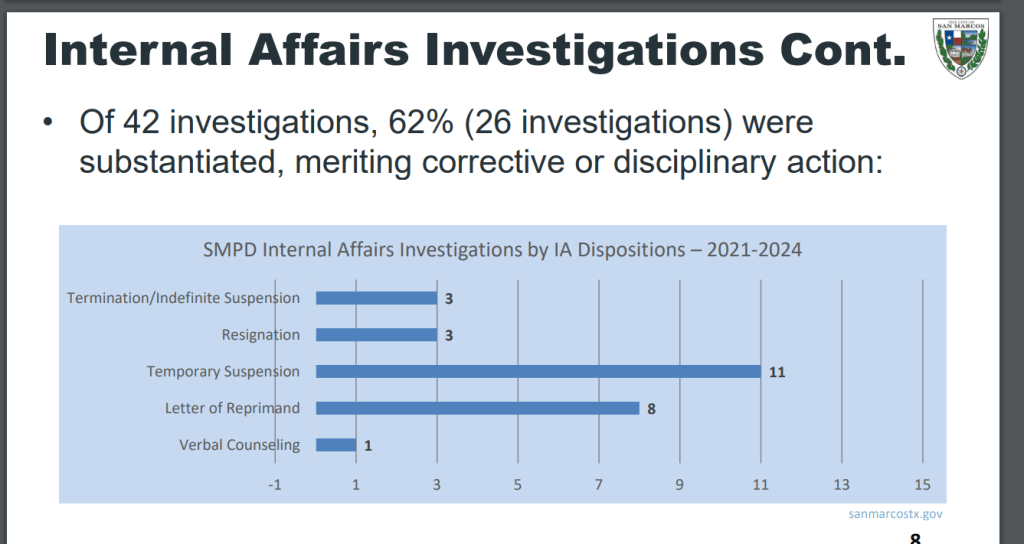
Here’s how many internal cases they’ve dealt with:
I mean, it’s absolutely impossible to interpret this. Is this a lot, or a little? How often are incidents going unreported? Would I agree with the outcomes if I knew all the details of the incidents?
There’s no way that PD could answer these questions! But it also means that we can’t really makes sense of this data.
It’s like if five people go to the doctor for measles, and the doctor treats three of them, and diagnoses one with allergies and one with mumps.
That doesn’t tell you much about the number of measles cases in the rest of the town
It also doesn’t tell you if the doctor is making correct diagnoses
Both those things would be much harder to figure out.
Here are the investigations that were found to be substantiated:
In 2021, we had one IA investigator. Now we have four. So that definitely helps have more eyes looking out for bad behavior.
…
The Event Review Board
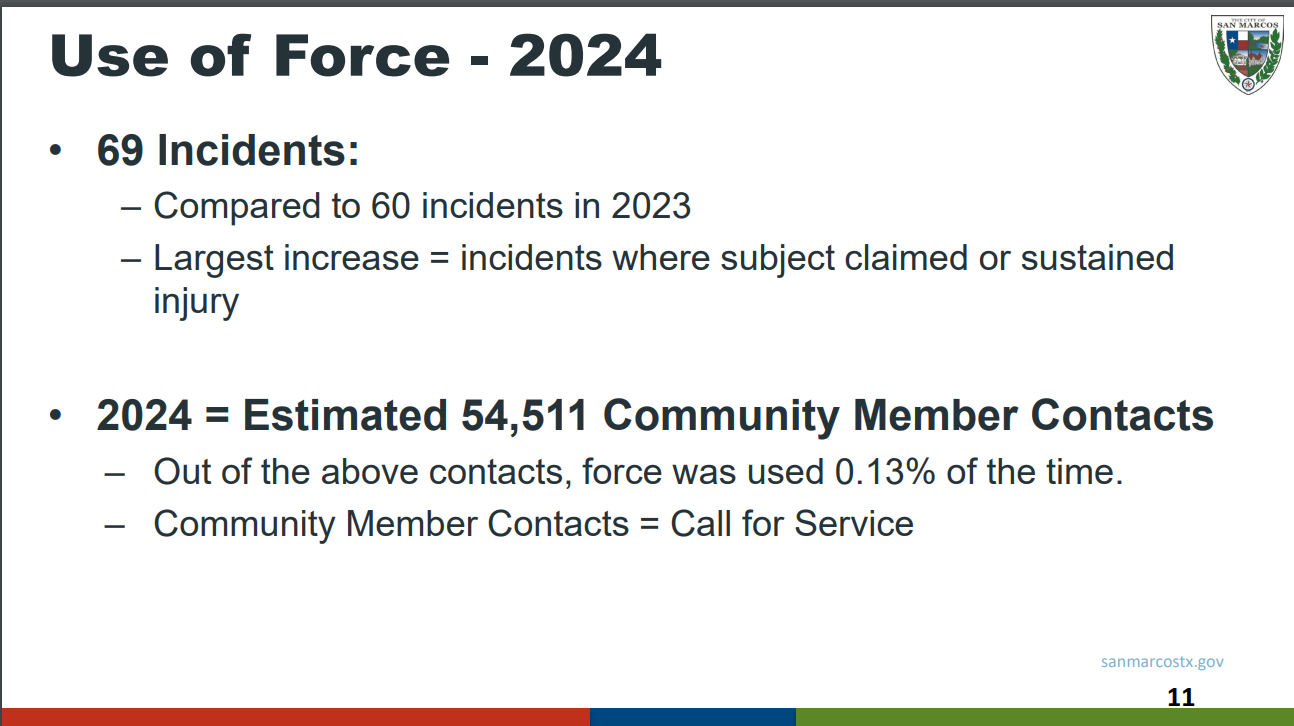
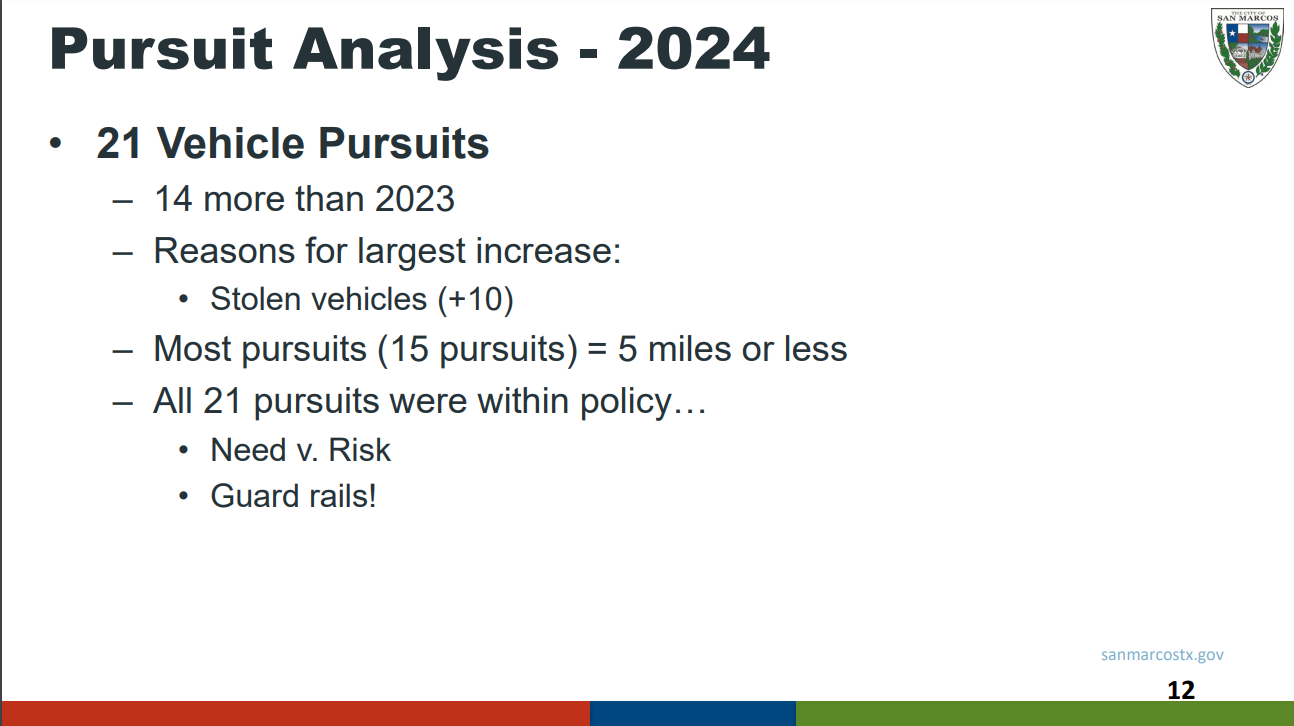
The Event Review Board reviews every incident, use of force, pursuit, and preventable accident. They try to see what the department could change to reduce these events.
It’s a broad group of people and they’re supposed to look at any potential event, no matter how minor.
Some data:
Again, I just don’t have enough context to make sense of these numbers.
The speaker might have said given good context! But this was a three hour presentation, and if she did, I didn’t jot it down in my notes.
Also:
None of these were available last April, when Malachi Williams was killed. Alyssa brings this up.
Amanda asks about the costs of these?
Taser 10: $343K for 123 officers, or about $2789 per officer, per year. (Includes the Taser 10, body cameras, unlimited video storage, training, and software licensing.) BolaWrap: $1,299.99 each, and $38.99 each for cartridgets 40 mm foam bullet launcher thing: $1,273.50 each
I don’t know if each officer gets each thing, but that would come to $5362 per officer. With 123 officers, it’s about $660K.
Look, I want the officers to use less lethal force. I’m just pointing out that SMPD spends bigger sums of money, and they do it much more quickly and easily than any other department.
…
This next thing is actually really great.
Suppose you stop someone and they don’t speak English. You open up this Voyce app, and there’s a live translator. You pay by the minute.
Notice they can provide sign language as well. (But it only works if officers remember that people can be deaf. This would not have helped John Kelley, the deaf man that was tased in 2019 for not responding when SMPD told him to stop.)
The speaker says that there was one time that they needed a Mandarin translater at 3 am. This is pretty invaluable for that. (It was originally designed for the medical community. Seems invaluable there, too.)
This app doesn’t help you figure out what language the other person is speaking though. You have to use google or something.
That was all the first speaker!
…
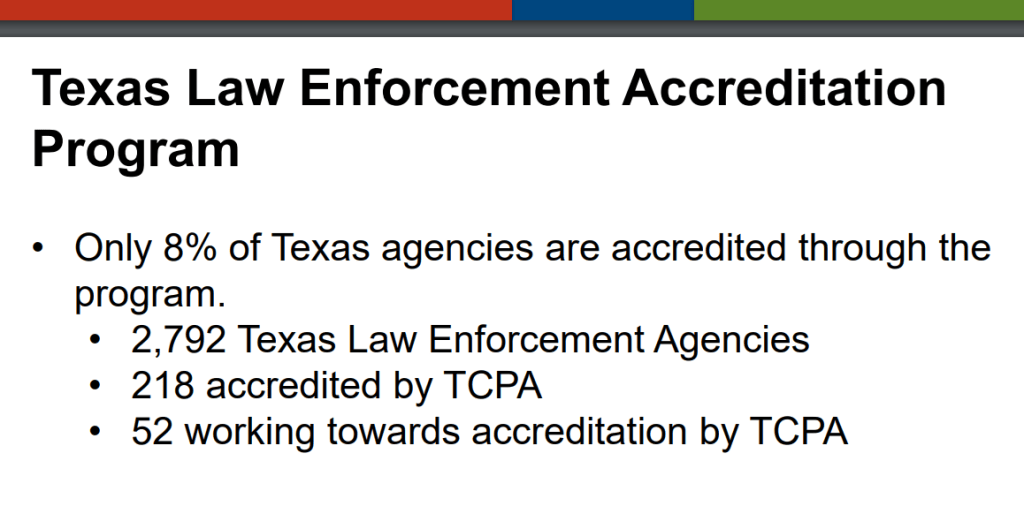
Next speaker: Accreditation
So I guess not all the PDs are accredited, but now we are?
We’re not there yet, but we’re working towards it.
Basically you have to come up with policies that satisfy the agency in these areas:
You have to show compliance with 173 best practices.
(This meeting was the day when it was super windy and there was all the spooky smoke and dust hanging over the city. Everyone’s alarms kept going off for the evacuations up in Kyle.)
Anyway, it sounds like it’s a ton of work:
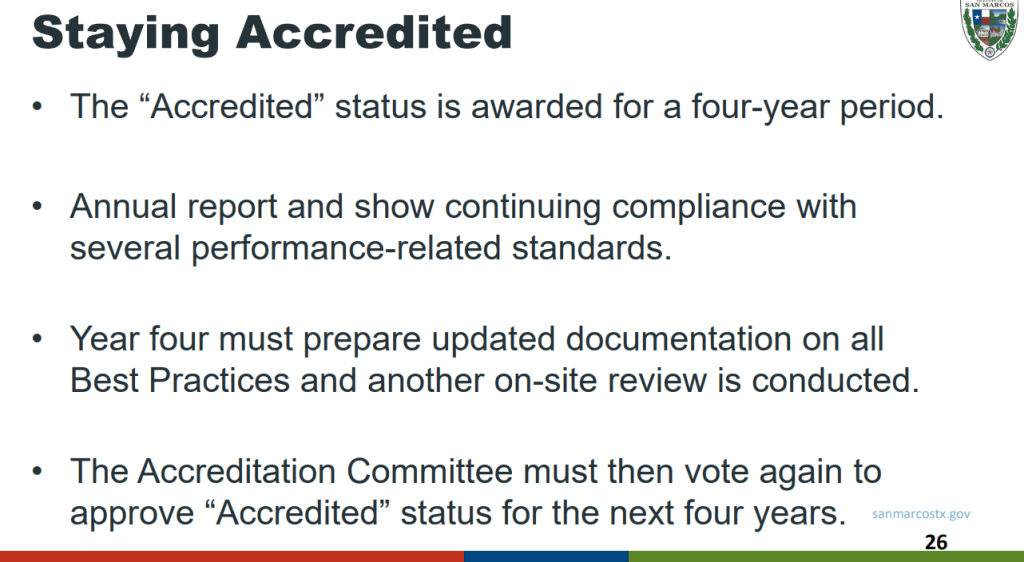
And then you have to stay accredited:
…
Onto the next speaker!
This one is super interesting – it’s on our 911 call center.
Basically, there’s a nationwide shortage of 911 dispatchers. We used to have 9 vacancies. We filled over half of them, and we’ve got a current batch of highers to fill the rest.
What happened is that we started paying a reasonable salary, and got a reputation as a good place to work. So we’re in a much healthier spot now.
911 callers also have language barriers. Instead of the VOYCE app, they use something called CyraCom:
Alyssa points out that this happened in the original 911 call involving Malachi Williams. The caller only spoke Spanish. While they were connecting with CyraCom, there was just this awful dead silence, where the caller had no idea whether or not they were going to get any help.
Alyssa suggests having a few pre-scripted lines like, “One moment while we connect with a translator” or something. This is a great idea.
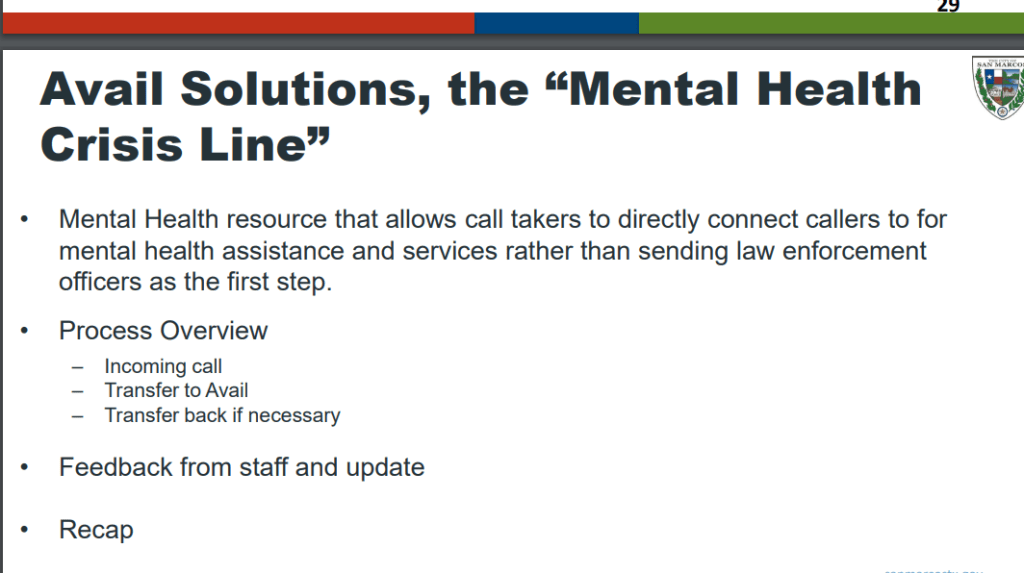
We’re also trying a new program:
This is a program where they transfer mental health calls out to trained mental health providers, who will connect the person with local resources, or stay on the line and talk the person through whatever’s going on.
They can also transfer the call back to 911, if they think we need to send out an emergency response, after all. The responder then goes right out, because the call is already in the system.
They’ve been doing it since November. It turns out that most of the calls do come back to us, after all? And we end up sending someone out. It’s a work in progress!
…
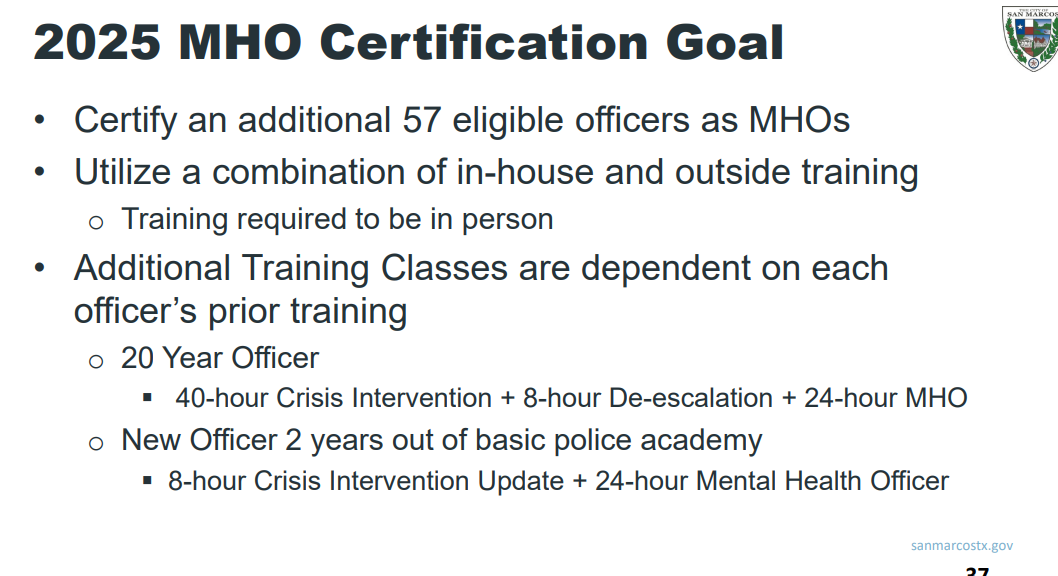
Next speaker! The SMPD Mental Health Unit.
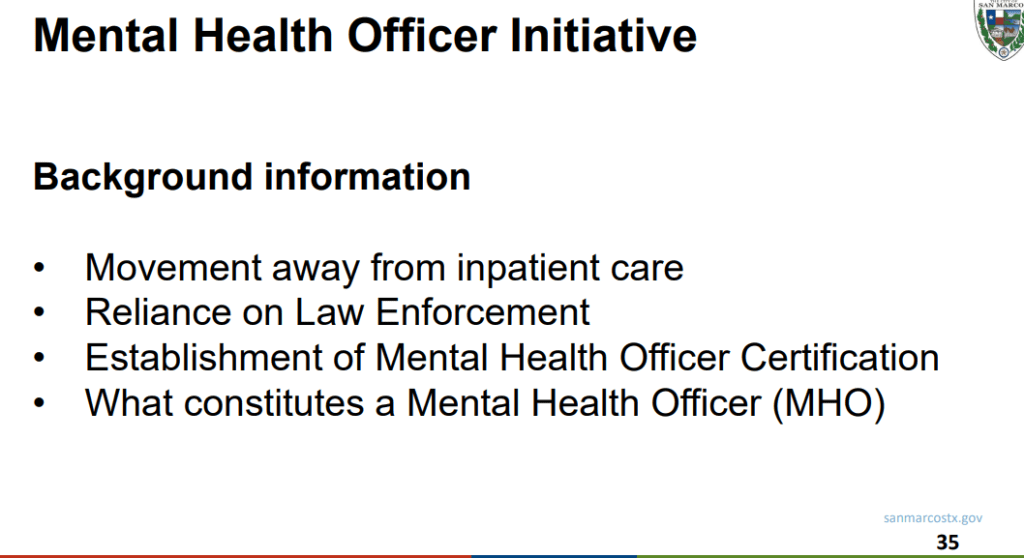
I don’t know what the training to be a Mental Health Officer really means. Is it a course? Is it multiple courses? Is it like a Master’s degree? Are you supervised by a mental health professional?
(I’m sure I could look it up, but I’m just trying to first get this whole entry out on time.)
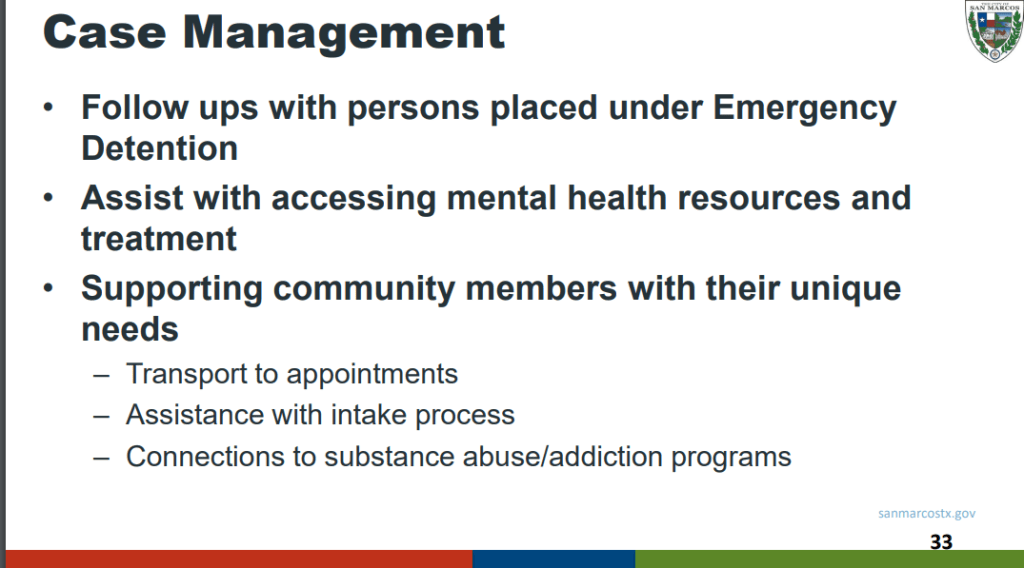
It sounds like they do good things: they sit with people who are scared and nervous before testifying or going to court. They get food boxes from Hays County Food Bank if someone needs it. They’re generally problem-solving and checking in on people’s well-being. They will sometimes stay with someone for months, making regular follow ups to help manage someone’s care.
Here, have some data:
An “emergency detainment” is if someone is an immediate danger to themselves of others. They try to avoid doing that, though. It may mean taking them to an ER or a substance abuse facility. (But not jail.)
…
Next speaker! What comes next with Mental Health Officers?
Here’s what the state is doing:
It used to be that officers had two options:
Take someone to an emergency room
Take someone to jail and go through courts.
Now we’ve got more options. The state created a big Mental Health Officer framework in 2015.
Here’s what we’ve got so far:
Here’s what we’re aiming for:
…
Next speaker! Context of Crime.
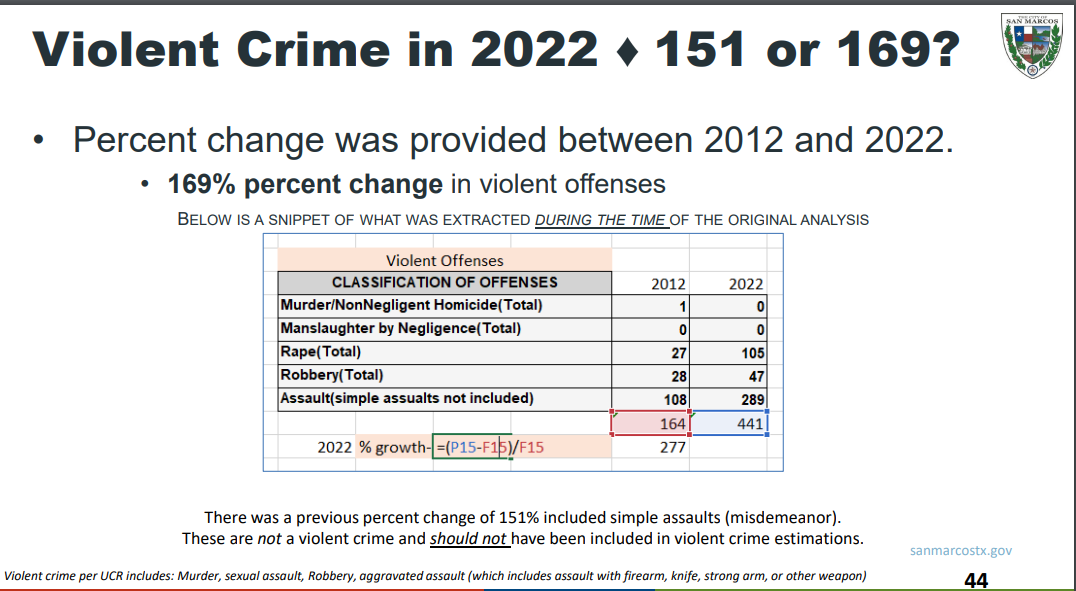
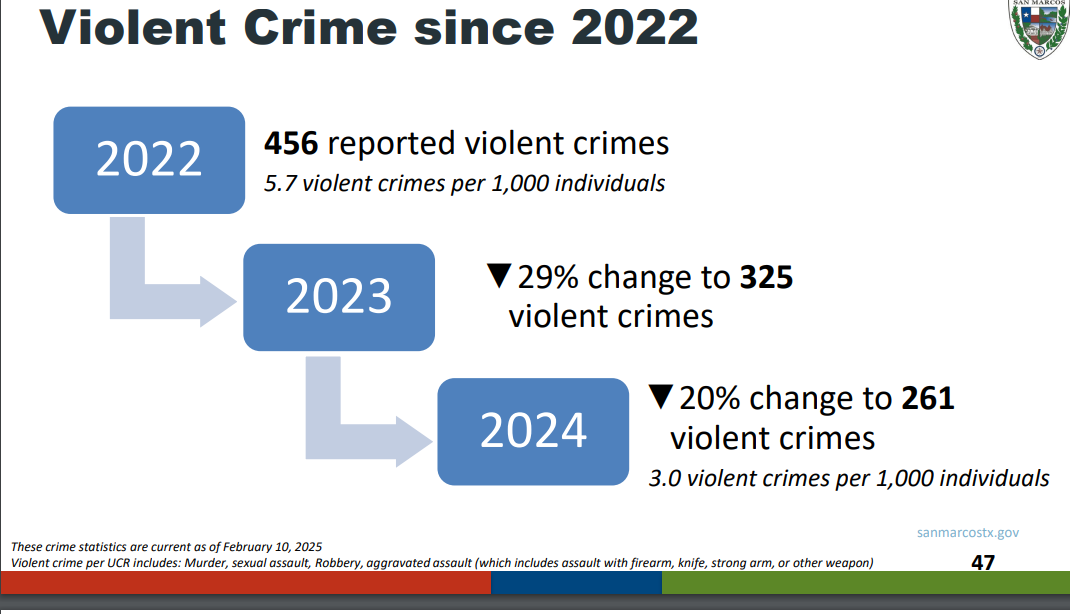
We report crime in two ways:
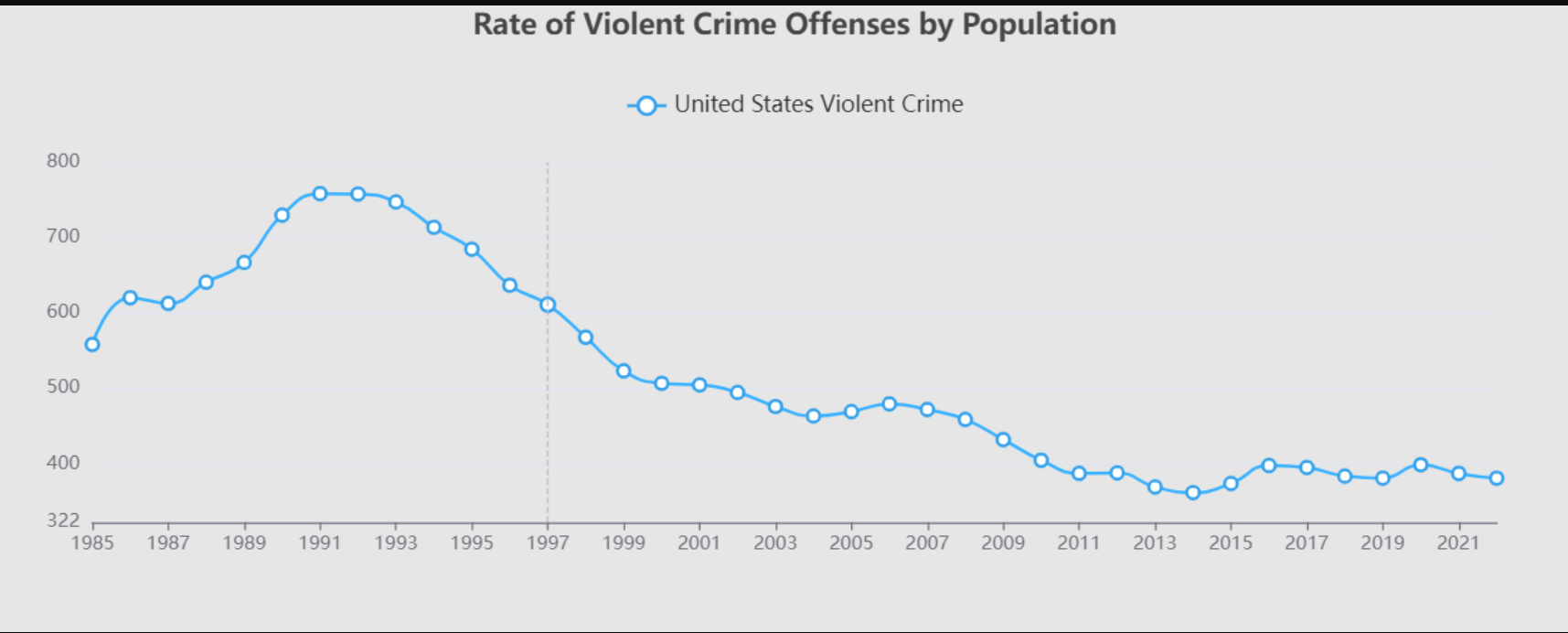
We are transitioned in 2018/2019 from UCR to NIBRS, which is better data. But any longterm comparison requires UCR data.
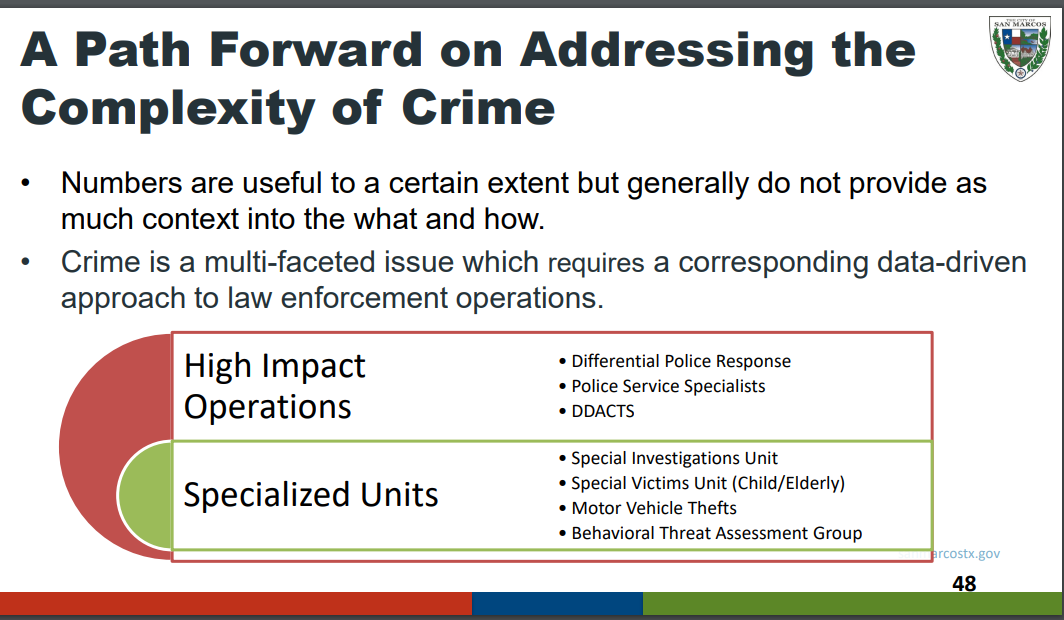
This recent data also corresponds time-wise with Chief Standridge arriving in 2021. So we are simultaneously implementing new strategies:
There’s a special victims unit:
They partner with Hays-Caldwell Women’s Shelter.
…
Next up is Chief Standridge! He is very apologetic.
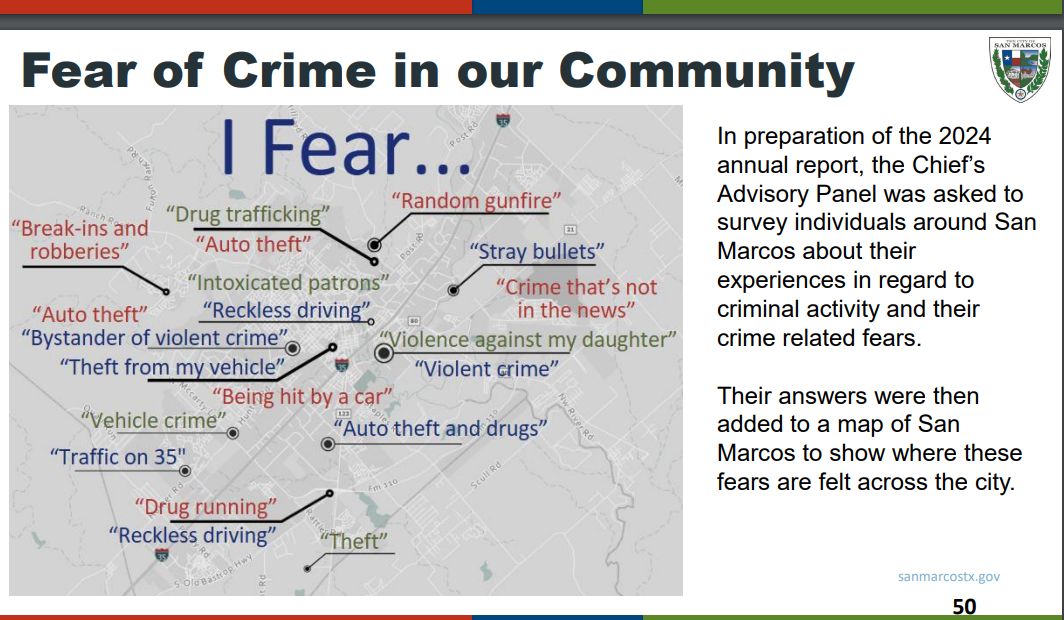
There is a specific Chief’s Advisory Panel. In order to get community feedback, they drew up some questions about the public’s crime-related fears.
The plan was for everyone on the panel to chat up their neighbor and get some informal feedback. Max Baker offered to digitize the survey and share it with the San Marcos Civics Club.
When staff got the responses, they threw out anything that didn’t seem relevant to the question at hand. Chief Standridge is extremely apologetic to this. He apologizes profusely and specifically to Max and the public.
Here are the remaining answers:
He promises to get the full data, including the extra answers, out as quickly as possible.
(My personal answer is car crashes on I-35. That terrifies me.)
…
By this point, it is 5:30, and the looming 6 pm meeting starts to take over the presentation.
Councilmembers have lots of questions, but there’s not really time for them.
…
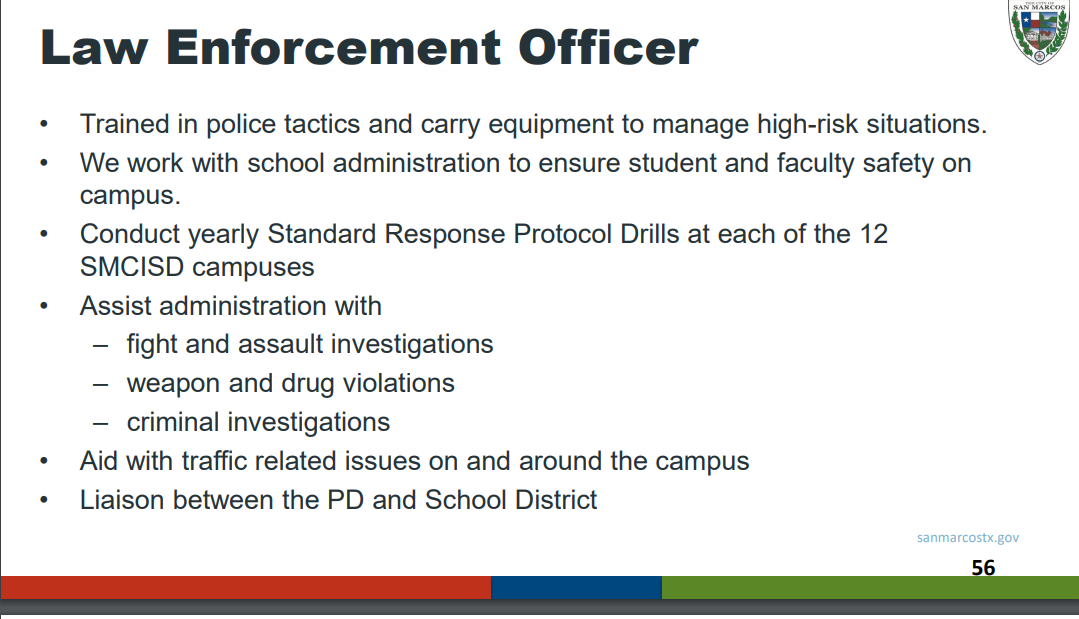
Next presentation! School Resource Officers.
SROs are supposed to be three things: Counselor, educator, and law enforcement:
But not these things:
We have five total:
We’ve been doing this since Columbine, and most of the community is pretty happy with it:
…
Back to Chief Standridge:
He sums up with this program for the next year:
At this point, they are almost out of time. There are slides on the Marijuana Decriminalization Dashboard, but he doesn’t get to them. But it’s all publicly available here.






























































 The San Marxist
.png)