Morning, everyone! This week’s meeting was only 26 minutes long. We’ve got the Blanco Gardens Area Plan, bike lanes on Sessom Drive, and we look at whether or not we have enough water for the next 50 years. That last one is the most interesting, for sure. Dive in!
The whole meeting was only 24 minutes! But the workshops were great, so those are here, too.
Hours 0:00 – 0:24: There’s literally just one topic: the Blanco Gardens Area plan. So I stretched it out and went deep. You know how I can be.
Workshop 1: Sessom and Academy got a make-over. Let’s check in to see how it’s doing.
Workshop 2: Do we have enough water to last us 50 years? Smart people are thinking hard about this question. I love this topic.
One last note: the round-ups and deportations have begun. Re-posting this list of organizations who can put your time and/or money to good use:
Local to San Marcos:
Mano Amiga is our homegrown organization. They are accepting donations, and will be able to use volunteers in mid-December. (Or they’ll send you to volunteer with a partnering organization.)
Regional Austin-San Antonio:
American Gateways: Their mission is “To champion the dignity and human rights of immigrants, refugees, and survivors of persecution, torture, conflict, and human trafficking through exceptional immigration legal services at no or low cost, education and advocacy.”
RAICES: From their website: “WE defend the rights of immigrant, refugee, and asylum-seeking people and families, empower communities, and advocate for liberty and justice.”
Texas Civil Rights Project: Has a specific Beyond Borders program, “From the banks of the Río Grande to the plains of rural Texas, we envision a border state that respects the right to migrate and supports human dignity for all people, no exceptions.”
Texas Immigration Law Council: “We work across the political spectrum to bring together diverse voices to catalyze consensus on practical immigration solutions for Texas and our nation.”
….
Final note: All of these came recommended to me. If I’ve left something off, let me know and I’ll add it on!
There were ZERO people at Citizen Comment on Tuesday! Probably because of this:
and the freezing temperatures.
Hope you all stayed warm!
….
Item 1: Blanco Gardens Area Plan
This is basically the only item of the meeting.
What is an Area Plan?
An area plan is a big study of your neighborhood. It’s supposed to document what makes your neighborhood feel special, so that it will keep feeling special over the next few decades. This is a really complicated topic, because there are both good reasons and dangers here.
Good reasons: Does your neighborhood need more sidewalks? Better safety? Park improvements? Community space? These are great things to put in the plan.
(Also, historically, developers have seen low-income neighborhoods as cheap real estate to plunder. Low-income neighborhoods get gentrified, or bulldozed for a highway. Area plans can deter this by encoding the current vibe.)
Bad reasons: Are you trying to micromanage everyone’s home appearance? Are you trying to prevent affordable housing by nixing things like small-scale apartment complexes, small houses, subdividing big houses into smaller rentals, condos, townhomes, 4-plexes, etc? These are bad things to put in a plan!
(Really, these rules already exist. They’re generally built into a city’s zoning rules and HOAs. An area plan can just lock down the class segregation for another generation.)
In addition, if you nix all the affordable housing, you’re left with only big, spread-out houses. This is sprawl. It’s bad for traffic, bad for the environment, and makes it way more expensive for the city to maintain pipes and roads and telephone lines.
…
So the planners have to thread the needle here: let’s capture what’s special, but without preventing affordable housing from being built in city limits ever again.
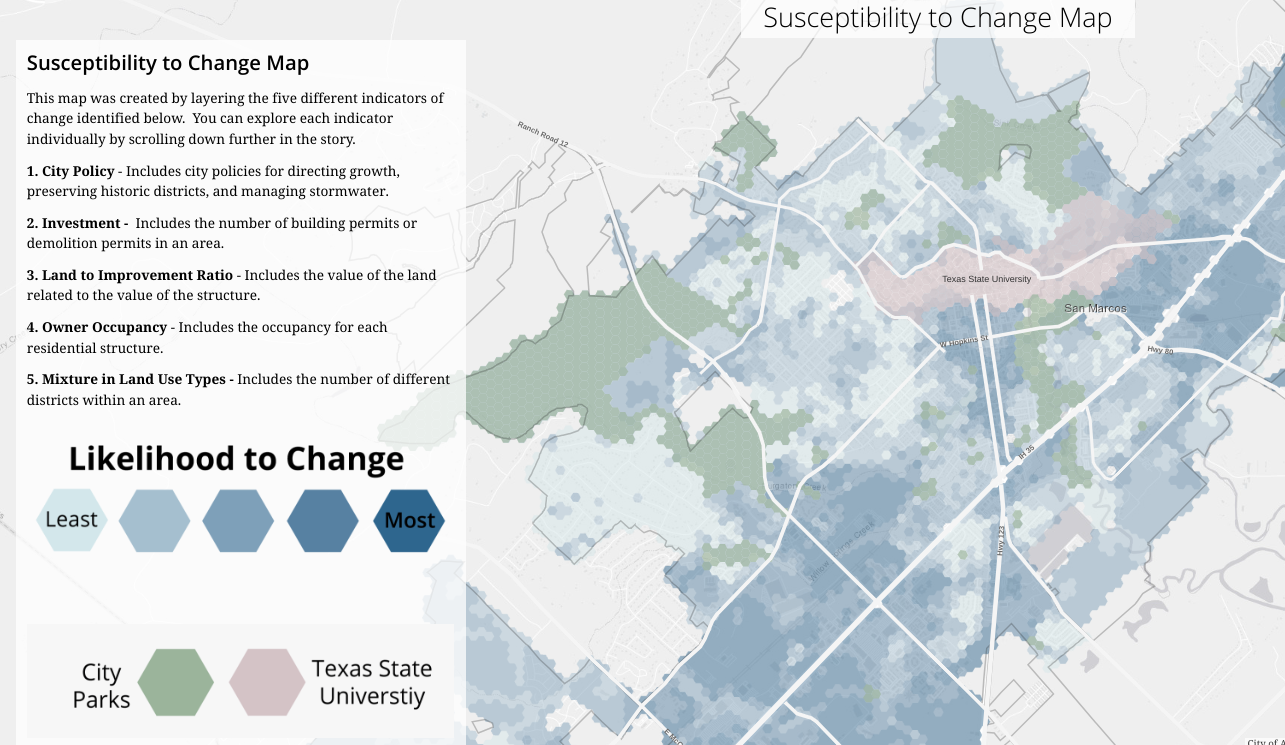
I know that’s tiny, but you can zoom in on the map to anywhere you want:
(There are a ton of interesting maps in that presentation – maps of rental houses vs. home owners, maps of area of stability vs change, maps of historic districts and maps of environmental sensitivity, etc. It’s worth a scroll.)
…
First up is Blanco Gardens!
Blanco Gardens is a great choice for an area plan, because of The Woods apartments:
(Now it’s called Redpoint.)
In 2012 the city had to decide whether to allow this apartment complex to be built. Blanco Gardens was furious.
In November 2012, there was a non-binding referendum on the issue:
Wow, 75% of the city wanted us to purchase the park land! Nevertheless, P&Z and Council greenlighted the apartment complex.
Bottom line: Blanco Gardens has gone through it, and deserves an area plan.
…
So how do you do an area plan?
They form a committee of eight residents, and then also do a ton of outreach:
One note: At P&Z, one of the commissioners (Lupe Costilla) said, “I live in this neighborhood, and I had no idea that any of this was going on.” And she’s very plugged in to the city.
This is what I mean when I say that outreach is really, really hard. Even when you do all of those things, even people who are paying attention still fall through the cracks. You’ve got to dedicate time to relationship-building with community leaders.
….
So what’s actually in the plan?
Here’s the actual plan draft. In the presentation on Tuesday, they gave a few examples of actual Blanco Gardens content, but mostly they talked more generally about what area plans are.
Examples:
If you want to read all the recommendations, by each topic, you should go to pages 17-72 here.
Final notes: There’s not any automatic funding that comes with all these recommendations. It’s just guidelines for the future. So if the city has money, they’ll follow the recommendations, and if a developer wants to build something, it has to be compatible.
….
Here’s the timeline for approval:
…
One final note: Who gets an area plan?
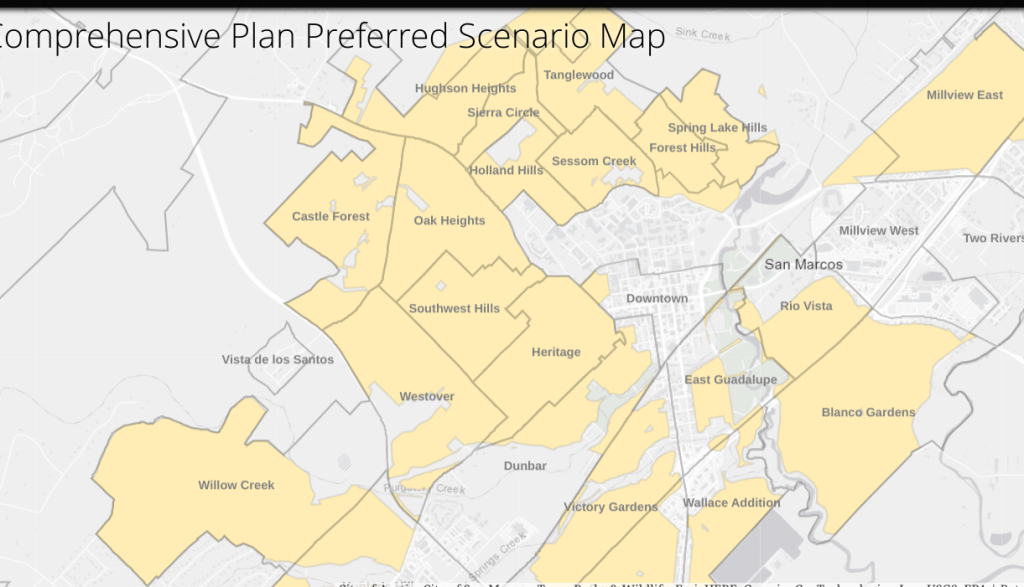
Here are the first five plans:
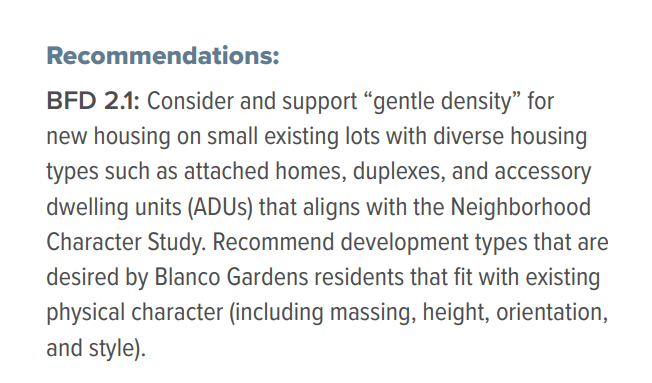
In Blanco Gardens, here’s one recommendation under “Building types”:
I think that’s really great! But notice who does NOT get an area plan:
Nobody is ever going to go to Willow Creek or La Cima and say, “Consider and support gentle density”. Those neighborhoods have entrenched protections that make sure that affordable housing will not be mixed in. This drives me batty.
…
Literally nothing else happened at the 6 pm meeting. It was only 24 minutes long!
(We were supposed to discuss the Kissing Tree TIRZ and Downtown TIRZ, but those got postponed until February.)
In 2018, we updated the Transportation Master Plan. We noted a bunch of dangerous intersections, and put in a bit about safe biking lanes. Since then, you’ve seen all sorts of bike lanes pop up.
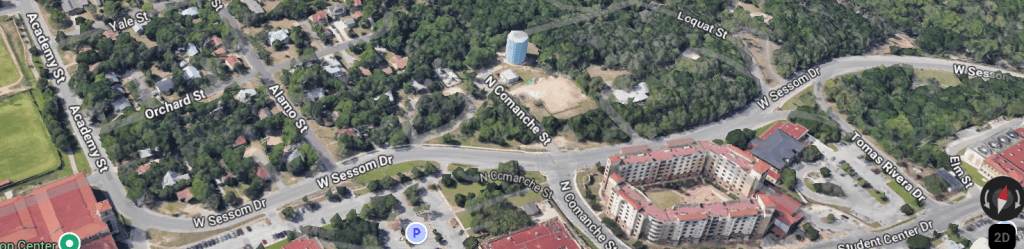
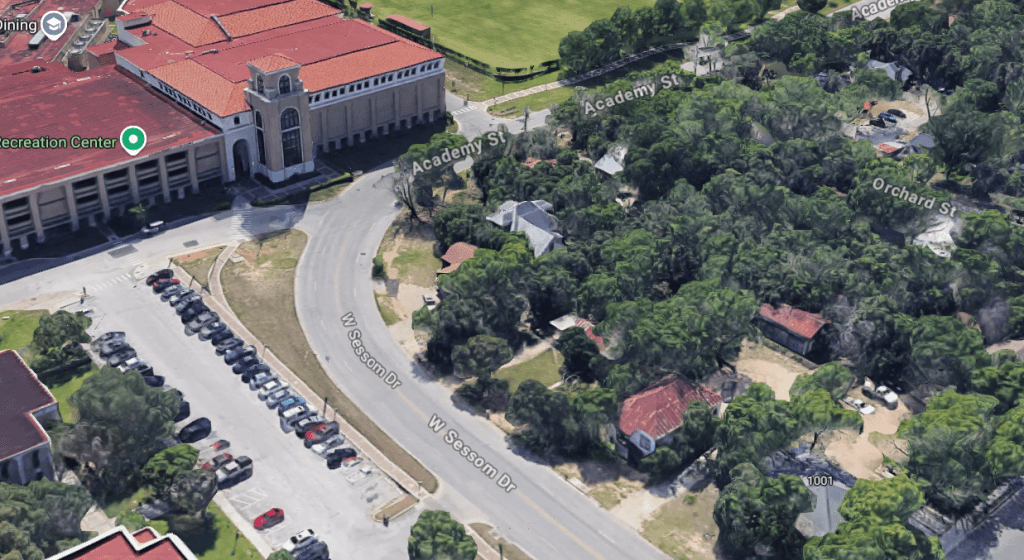
Academy and Sessom was flagged as one of the dangerous spots to improve. This is the stretch we’re talking about:
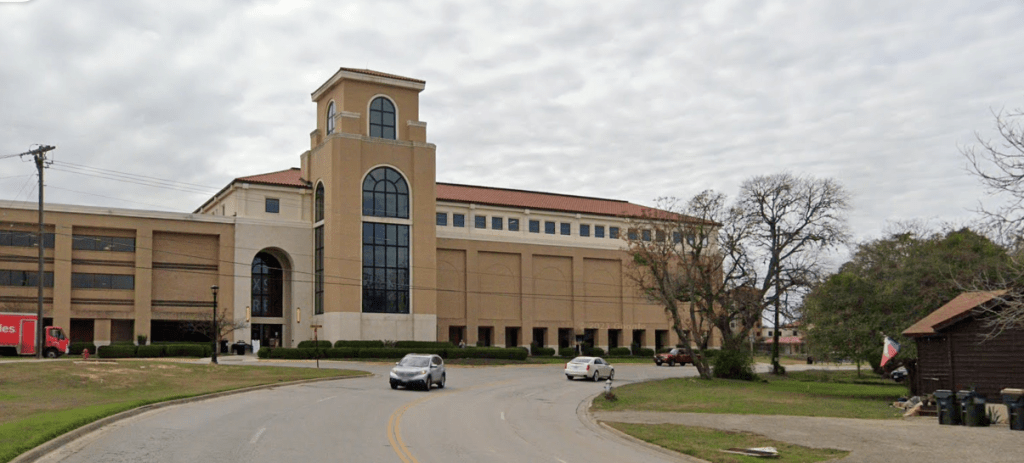
It’s always seemed super dangerous to me! Drivers are so zippy through this:
wheeeee!
Here’s what was done:
Here’s a little before and after. Four skinny zippy, windy lanes, in 2021:
I worry for all the bikers!
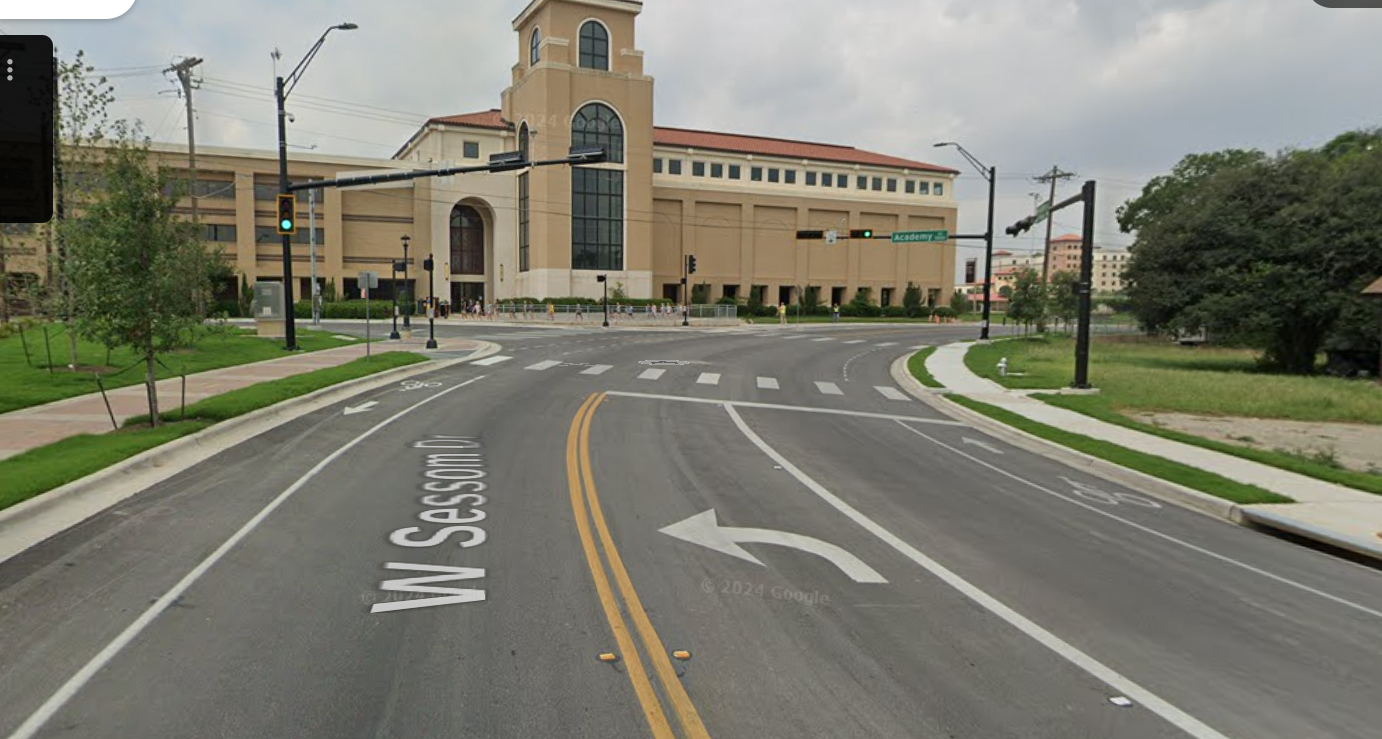
After:
A light, bike lanes, single lanes, a left turn lane: so much safer.
Here’s another before-and-after:
Hopefully bikers don’t feel like they’re going to be run over anymore!
…
Did it work?
Looks like it worked great! (“Level of Service” means how much traffic can you handle.)
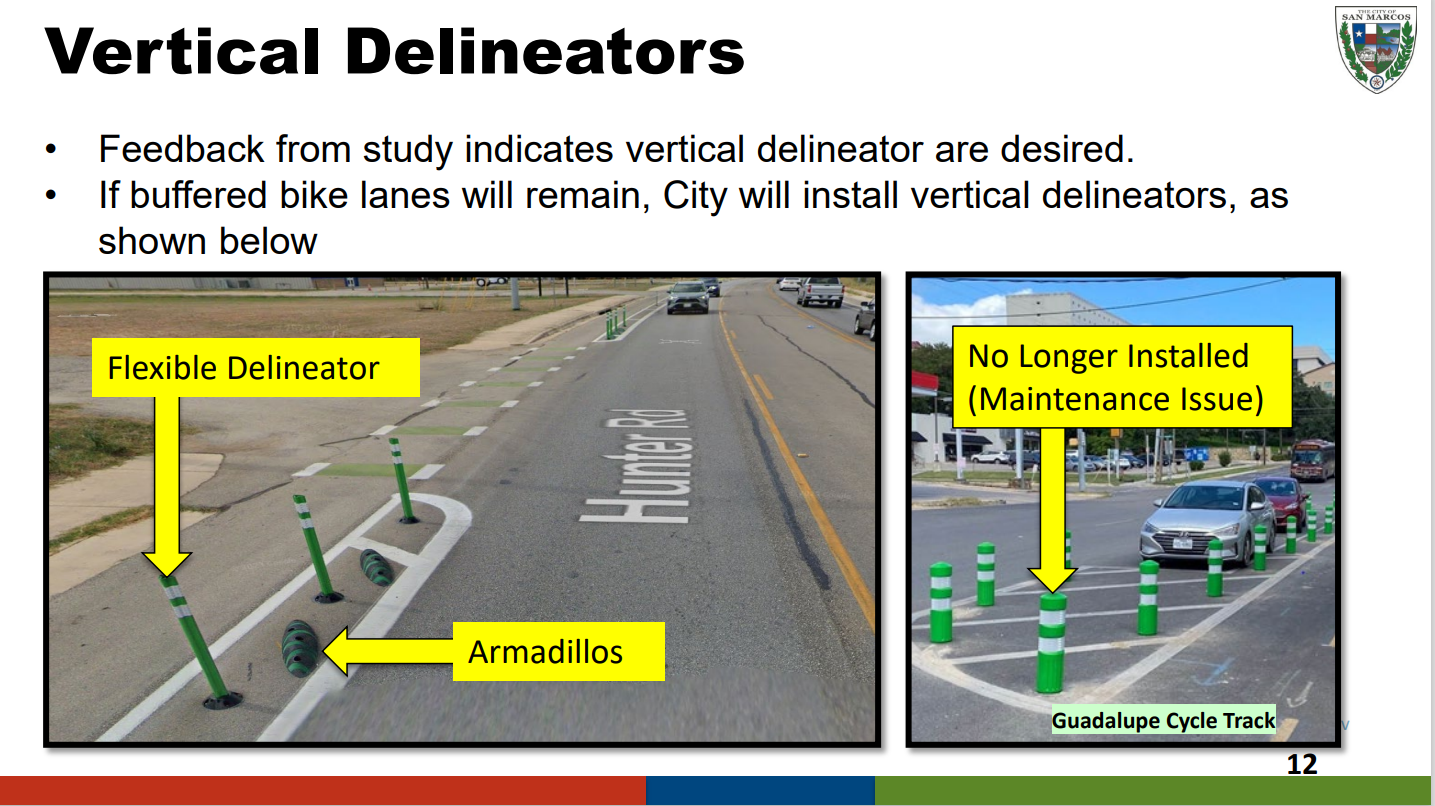
The bikers have concerns, though. What are “vertical delineators” that the cyclists want?
These things. You’ve seen them all over town.
The city was trying out different kinds, and it seems like the armadillos work best. (The other kinds require extra maintenance – they don’t pop back up after awhile, or they get torn off and leave bolts sticking up in the road, etc. The armadillos are just glued down.)
….
So this brings us to the next question! We’re going to be improving Sessom down to Aquarena:
We just completed the yellow part. We are about to work on the blue part to the right. We have some choices:
Go back and undo the bike lanes and safety measures in the yellow part.
Keep them, and extend them to the blue part.
[Updated to add: I got this part wrong – there’s no option to extend the bike lanes to the new part. They’re just deciding on the yellow part, and if they should add armadillos. Also fixed below.]
Jane Hughson reminisces about when they agreed to try bike lanes on the yellow part. (This was the very first meeting I blogged publicly, back in 2022! – Shane, Mark, and Saul all voted against the bike lanes on Sessom and Craddock. – Jane, Alyssa, Jude and Max Baker all voted to try the bike lanes out. Jane was reluctant, but she decided since it’s just paint and easily reversible, we might as well try them out.)
So what should we do?
Undo the old bike lanes: No one Keep the bike lanes and add armadillos: Everyone
Hooray! That was a test, Council, and you passed. Good job.
Until 2000, San Marcos exclusively got Edwards Aquifer water. Then we signed on to get some surface water from Canyon Lake, and in the mid 2000s, we joined ARWA water. (More on ARWA in a moment.)
“MGD” means a million gallons of water per day.
…
What is ARWA?
ARWA is kind of crazy. Basically, in 2006, San Marcos, Kyle, Buda, and the Canyon Regional Water Authority got together and tried to figure out a longterm plan. They formed ARWA, the Alliance Regional Water Authority.
The crazy part is that this started in 2006, and they knew they wouldn’t be delivering water until 2023. This was a very longterm plan! That is really good foresight by the councils that agreed to this.
There was all sorts of infrastructure that had to be built. I think this is the whole project:
So we’re getting all the water from the green oval on the far right. Then it has to be treated, at the blue dot, so that it’s drinkable. All those red lines are pipe that had to be laid down, and it gets run out to Lockhart, Buda, Kyle, San Marcos, and New Braunfels. That’s why it took so long.
But now it’s here! This is great!
….
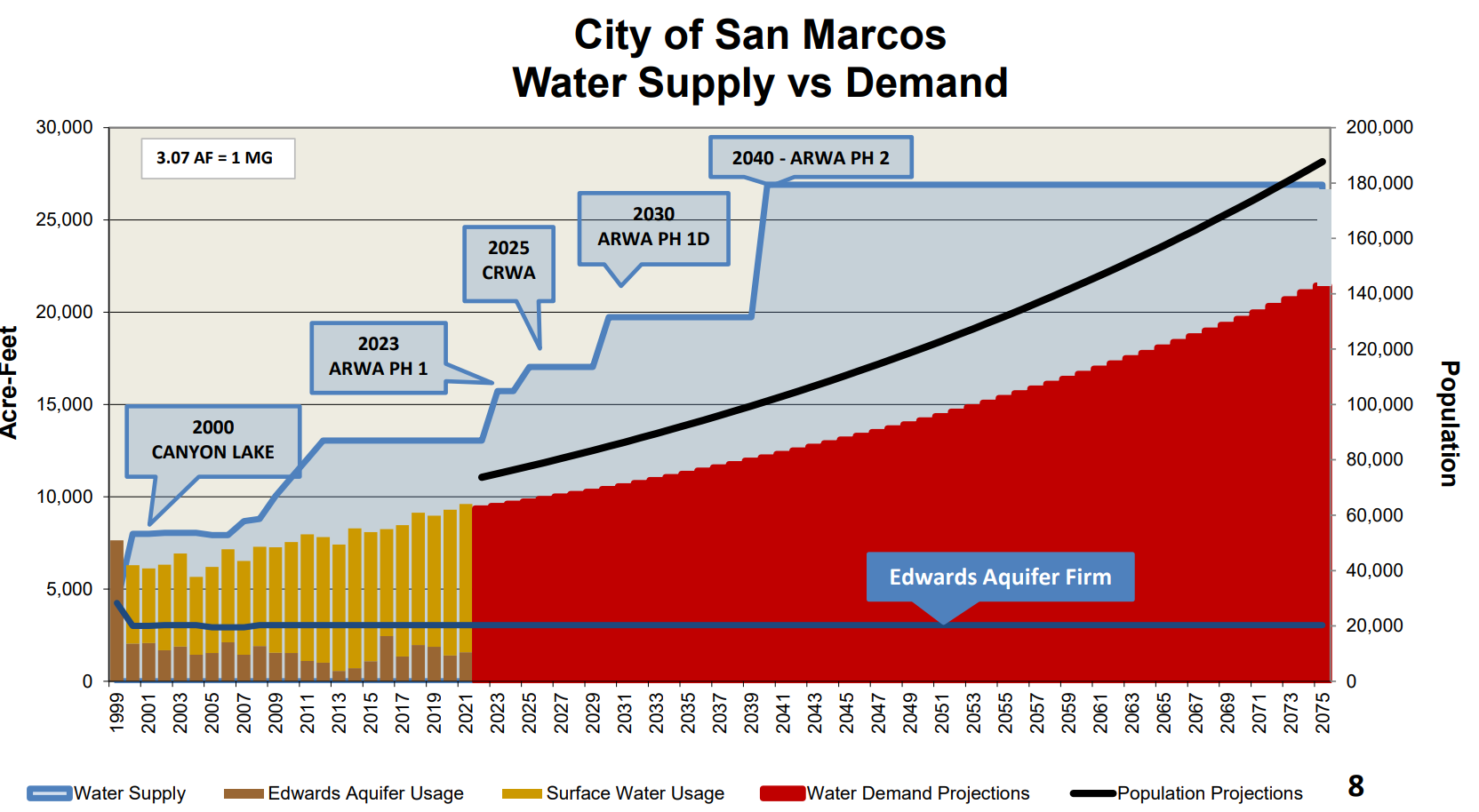
So we’ve got all this water – Edwards, Canyon, and now ARWA. Is it enough?
It depends! How many people are trying to use this water?
This is the population projection, based on 2017 data:
In other words, the black line is the projected population, and the red part is how much water we’d need. So in 2055, we’re expecting to have 140K people and need about 16K acre-feet of water each day. (An acre-foot means take an acre of land, and fill it with water that is 1 foot deep.)
Here’s the water supply, according to when each of those sources kicked in:
So this looks great! So in 2055, when we need 16K acre-feet of water, and we’ll have access to about 27K acre-feet of water. Through 2075, we’ve always got more water than we need.
This is great!
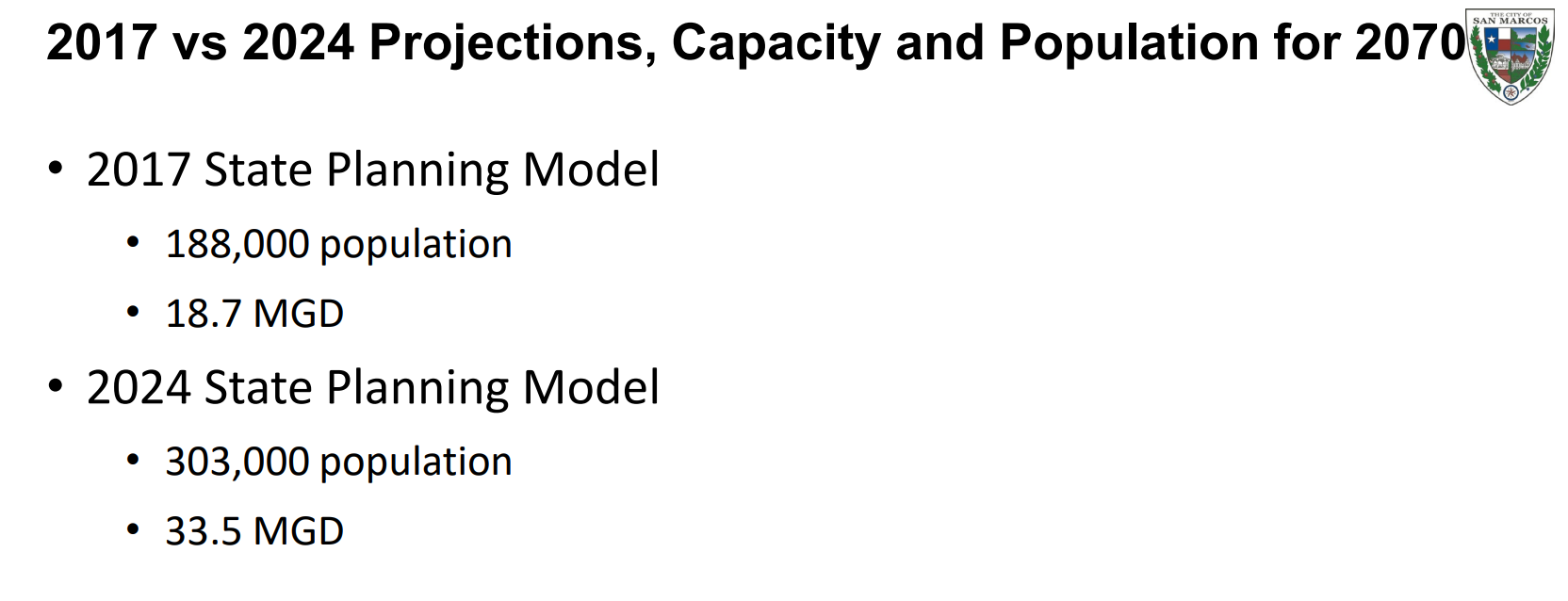
But then…. we had to update our projections. Between 2017 and 2024, this region grew even more than expected. So we had to ramp up our projections, accordingly:
So if we’ve got the same amount of water planned, but a ton more people, the graph now looks like this:
Whoops. Now we are scheduled to run short on water in 2047.
So what do we do?
The good news is that we’ve got plenty of planning time, and we’re putting it to good use. There are basically two ways to address this:
Find more water
Use less water
We’re going to do both.
First, more water:
Apparently Buda and Kyle are even shorter on water than we are. Everyone is interested in collaborating and shoring up supplies. An ARWA Phase 3? Maybe a different source?
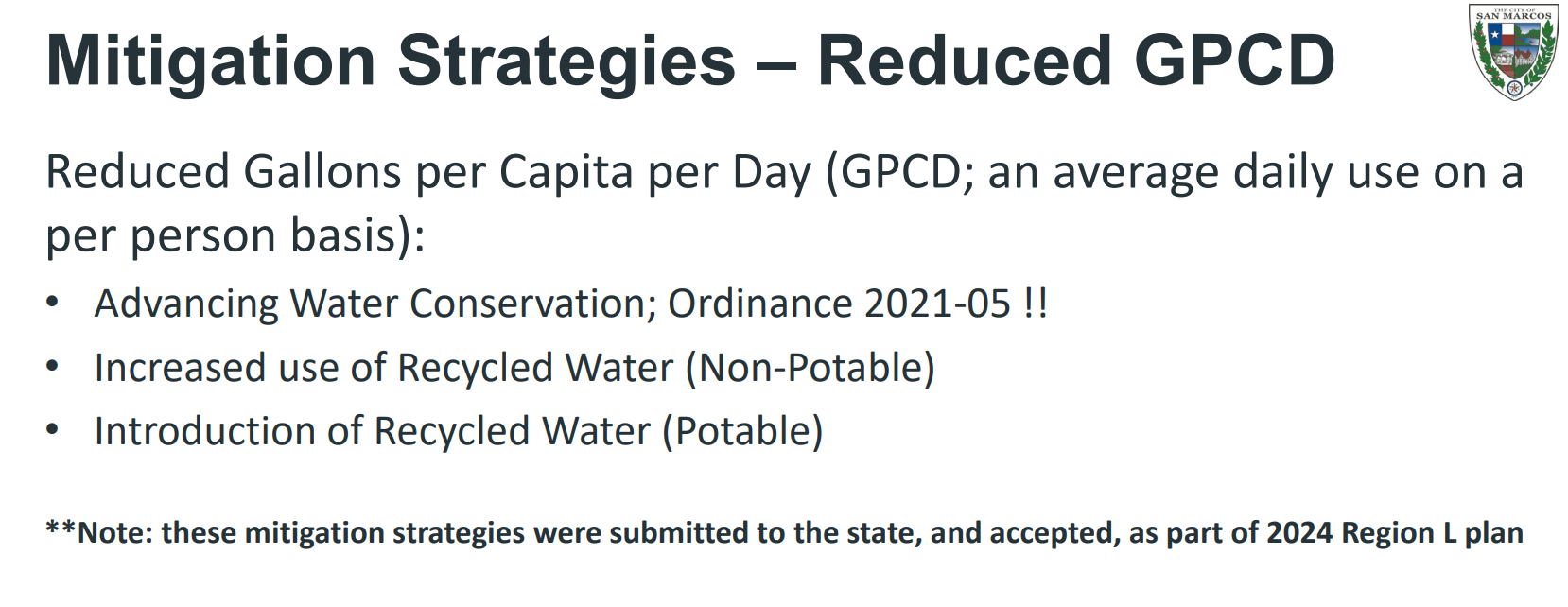
Second, reduce water usage:
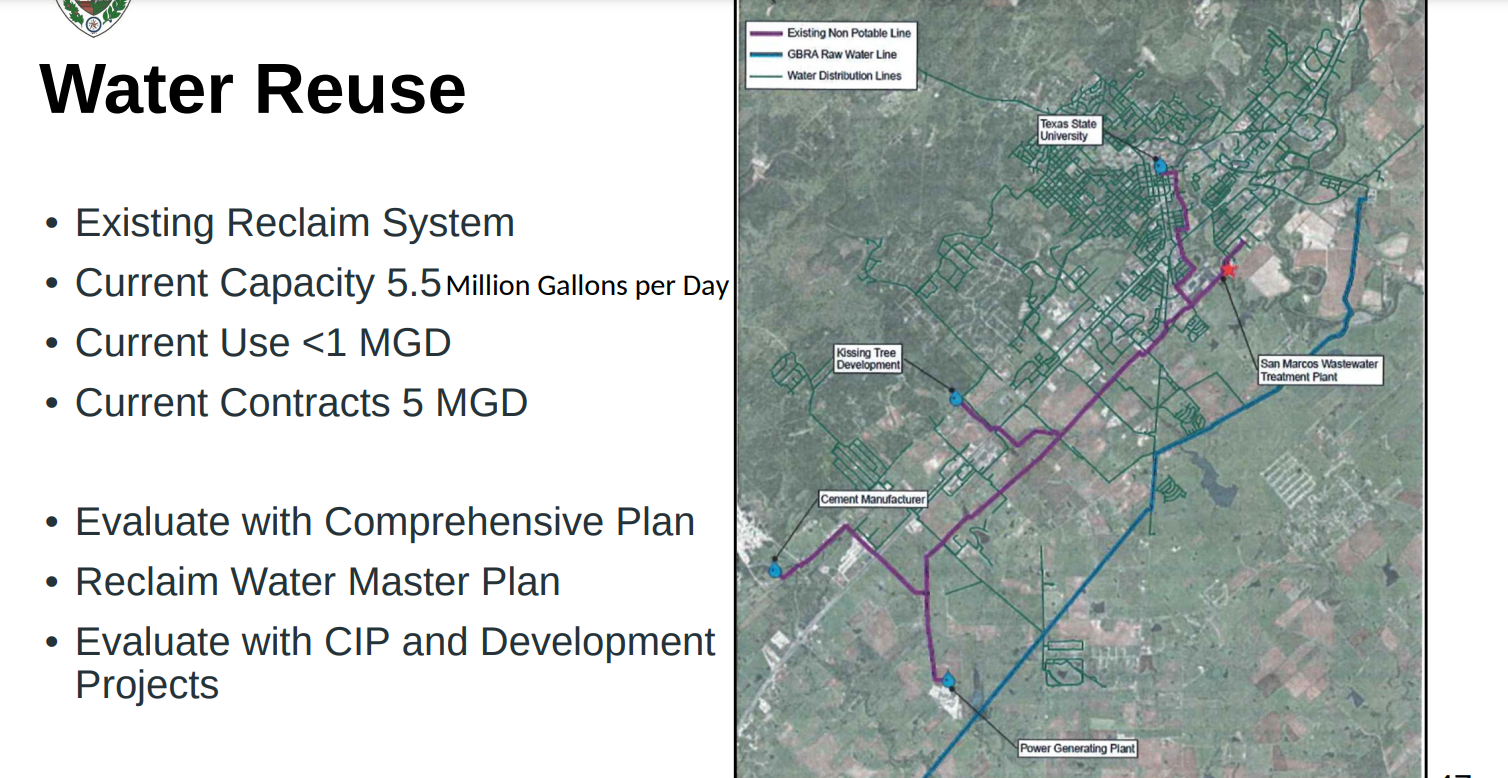
The second two bullet points are huge: reclaiming used water. We’ve already got some reclaimed water already:
(That slide is from a 2022 presentation, here.) All that purple is where we can send reclaimed water to. We currently have about 5.5 million gallons per day of reclaimed water.
The problem is that it’s not drinkable. So you can use it to water the golf course at Kissing Tree (which they do!) but you can’t send it to people’s houses.
The holy grail will be when we can get reclaimed water clean enough to drink. Then we can really ramp up our water re-use.
(I read once that one of the grand failures of midcentury America was not double-piping all the houses, so that we weren’t mixing our toilet water with our sink water. Then we wouldn’t be watering our lawns with drinking water, and we wouldn’t be trying to clean and re-use toilet water.)
Here’s what we think we can get to:
Notice that the water supply hasn’t changed. But the red part – our water use – is smaller. The red part dips down again around 2050 because we think we’ll be able to get the reclaimed water clean enough to drink by then.
What does Council say?
Amanda asks if we have a problem with water leakage from pipes? Answer: We’re actually pretty good on this. It happens, but we’ve got one of the lowest rates in the state.
Amanda: Can we get a graph of the top ten biggest water users? Answer: Yes! We don’t have it on hand, but we’ll email it to you.
(I love this question. Amanda said she’ll send the graph over when she gets it, but she hasn’t gotten it yet.)
Amanda: Do we still do rebates for rain barrels? Answer: Yes! Details here.
The City Manager Stephanie Reyes also mentions this: San Marcos water rates are a little higher than those around us, but it’s because of all this advance planning. We are in a much more secure longterm position that most others.
You did it! You’re here in this new year. So is Council, and they’re talking this week about HSAB grant money, shooting ranges, demolitions, and their wishlist for the Charter Review Commission.
Here we go:
Hours 0:00 – 2:25: HSAB money gets allocated, the lease with Ruben Becerra is finalized, and we buy a TOTAL BULLET CONTAINMENT TRAP.
Hours 2:25 – 4:26: Demolishing some old barracks in Dunbar, and Council’s wishlist for the Charter Review Commission.
(I didn’t write up the 3 pm workshops this week. The San Marcos Chamber of Commerce gave a presentation about their strategic goals, and answered some questions. Feel free to watch it here.)
The Human Services Advisory Board grant money. (HSAB)
Demolition of a little blue building at 734 Valley Street
Let’s take these one at a time.
HSAB grants: These are San Marcos city grants to nonprofits. Back in December, there was a bit of a stand-off between councilmembers supporting Salvation Army and councilmembers supporting HOME Center. Yes, it’s totally weird to pit nonprofits against each other.
It was postponed without resolution. So people showed up to this meeting, to advocate for their nonprofit. By the numbers:
Advocates for Salvation Army: 2 speakers
Advocates for HOME Center: 9 speakers
Nosotros la Gente, ACCEYSS, School Fuel: 1 each
The chair of HSAB (Yancy Arevalo) also spoke. She made the most important point: $550K is peanuts for social services. There were over $1 million requested in the applications, and the need in the community is far greater than that. We need to be allocating far more money to this cause.
(She is exactly right. This is the heart of all these problems. We should not be pitting HOME Center against Salvation Army – we should be increasing the size of the pie.)
If you want the most compelling speaker of the meeting, you want to listen to the man speaking at 17:48 here. He is a formerly homeless man on the brink of death, who was helped by HOME Center and now is in a stable home. It’s really incredible.
The other big issue is the demolition of a house at 734 Valley Street.
A speaker from the Historical Preservation Commission (HPC) talks in favor of delaying the demolition
The owner speaks against the delay
A representative from the Calaboose Museum says, “Please don’t use our name as a reason to delay the ordinance. We are fine with whatever the owner wants to do.”
We’ll unpack all this when we get there.
One final comment worth noting from the 3 pm workshop:
3. At the workshop, Max Baker spoke about the San Marcos Civics Club: they’re putting together a Tenants Bill of Rights.
They want to collaborate widely on this, so if you’re interested, let them know. And they want Council to incorporate this into their upcoming Visioning sessions.
…
Item 12: The HSAB Grant Money Saga
Brief background:
HSAB stands for Human Services Advisory Board. This is a committee that meets weekly for four months, and scrutinizes nonprofits who are applying for grant money from the city.
In December, council got the HSAB recommendations and started tinkering. First, they moved $10K from ACCEYSS to Salvation Army.
Then Jane Hughson tried to move all of HOME Center’s funding away. She reduced this to 75% of their funding. This was the issue that blew up.
The whole thing looked really, really bad. It looked partisan. (Full details here.)
This meeting:
Jane drops her motion about changing HOME Center’s funding.
She justifies the attempt like so: “I went back and watched the HSAB meetings. Originally Salvation Army was given $10K, and that was moved over to HOME Center since they were local. My feeling is that our local chapter of Salvation Army is also local, so I wanted to move that back.”
Amanda responds: “I also watched the meetings. You’re oversimplifying what they said. They didn’t just give it to HOME Center because they’re local. They noted that HOME Center has a 90% success rate and is one of the few organizations doing high quality longterm casework.”
There’s some more discussion, but things fizzle out pretty quick. So the only amendment that stuck is the one from last meeting, to move $10K from ACCEYSS to Salvation Army.
There will be a discussion about the HSAB grant process in the future, where Council can do some more tinkering. It’s a work in progress.
Amanda: If you want to get to the root, we – as a city – have created a system that relies on nonprofits to provide critical social services, right? We created that.
Jane: I don’t know that I agree that we created it, but I’ll agree that we have it.
Amanda: I mean, thank god someone’s doing it, to the level that they’re doing it. But I think all of the “thank yous”, the “we’ll work on the criteria”, and all of that – it’s really empty. One of the things that has been reiterated both in this meeting and in the previous one is that $550,000 was never going to be enough. If so, if we really want to address the issue to its core, we know budget season is coming up.
I mean we’re about to – probably later in this meeting! – approve $684,000 for something probably with no discussion, no pushback. That to me is a shame. And so if we really want to address the issue, it needs more money. They need capital.
Jane interjects about Covid money – one year we were able to double the HSAB budget, but only because we could use Covid money.
Amanda: That’s great. But we can find the money. We can find the money because we’ve found the money for so many other things. I don’t think it’s a plausibility issue. If we wanted to do it tomorrow, we could fund it. But it’s a matter of desire.
All I’m saying is if we want to really address the issue, this is the conversation we should have in budget season. We should put our money where our mouths are.
(lightly edited for clarity)
I AM SO EXCITED!! This is my new battle cry: “$550,000 was never going to be enough.” Rally the troops, we’ve got budget season coming up!
The vote:
$550,000 WAS NEVER GOING TO BE ENOUGH!
…
Item 3: The lease with Ruben Becerra
Back again to talk about this cute little building!
on LBJ, at the railroad tracks, across from Toma Taco.
Background:
Like we said last time, Council bought the property from Union Pacific in 2013, in order to maybe put a railstop there someday.
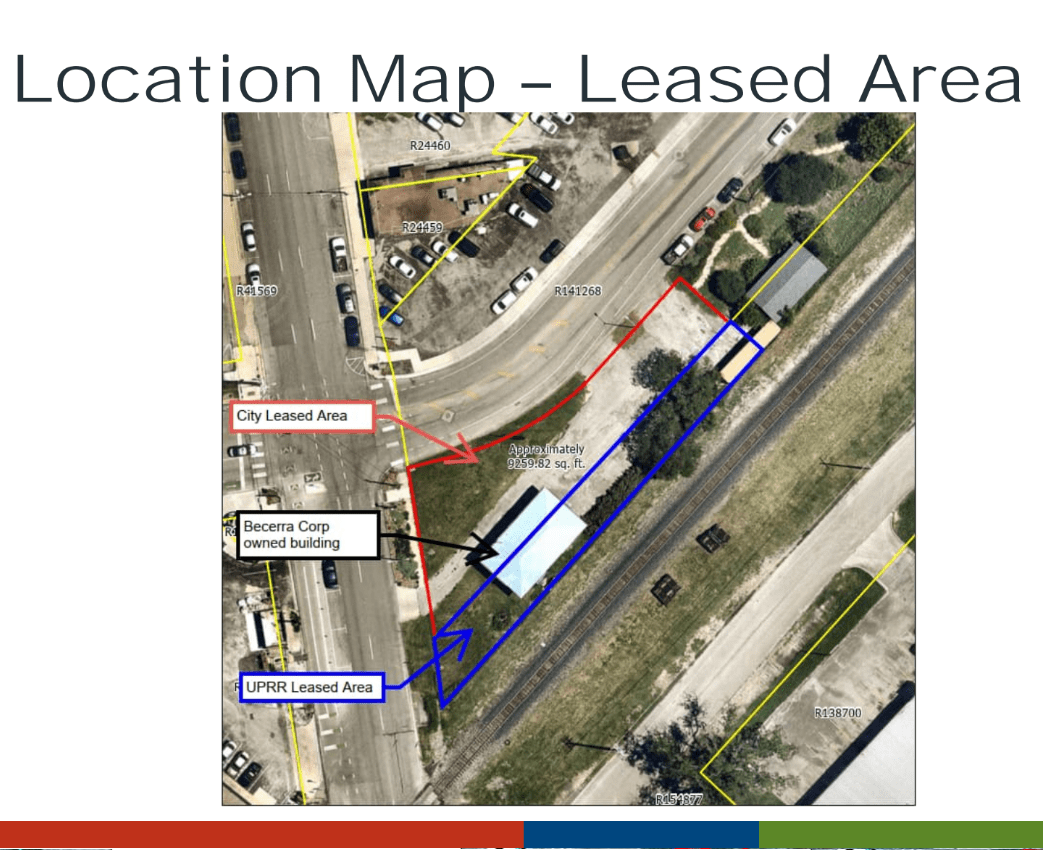
Ruben Becerra owns the building, but not the land. The building sits half on city land, and half on Union Pacific land. It’s very confusing!
You can see the little building there – it’s half on red land (San Marcos) and half on blue land (Union Pacific Rail Road).
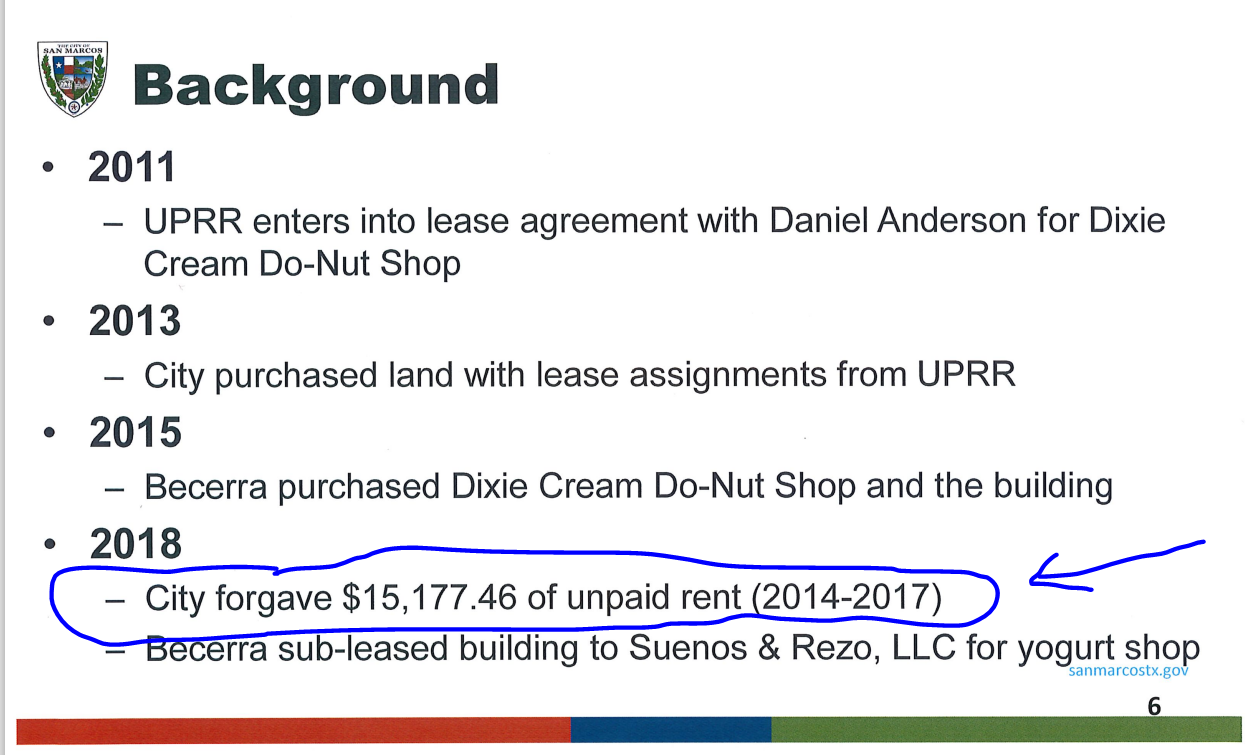
Last time, I wasn’t clear on the full backstory of why there is tension, but this time, city staff had a presentation that sheds some light on it:
Staff recommends tightening up the lease terms a bit:
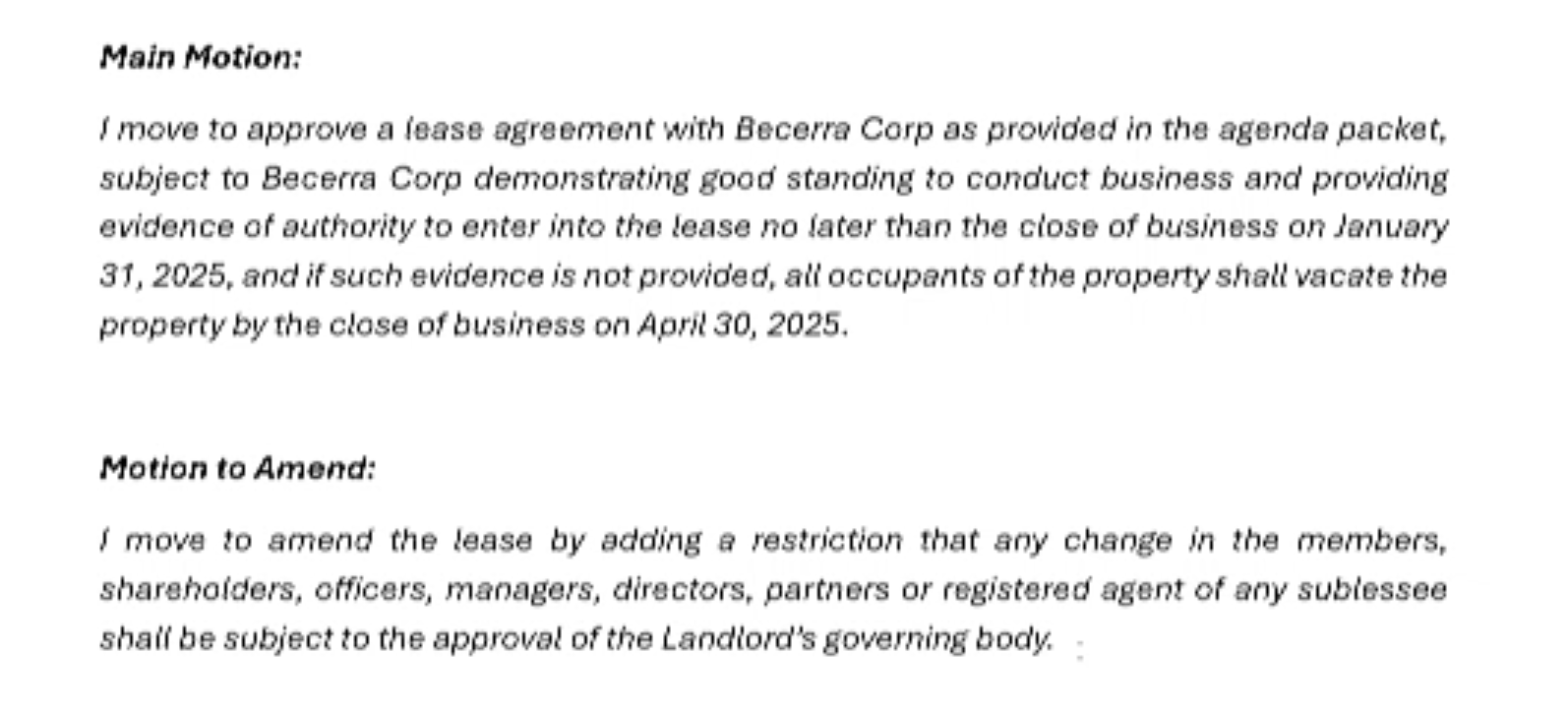
In addition, Jane Hughson reads a carefully scripted main motion and amendment:
That is legalese for “We met behind closed doors and are scrupulously following the advice of our lawyer.”
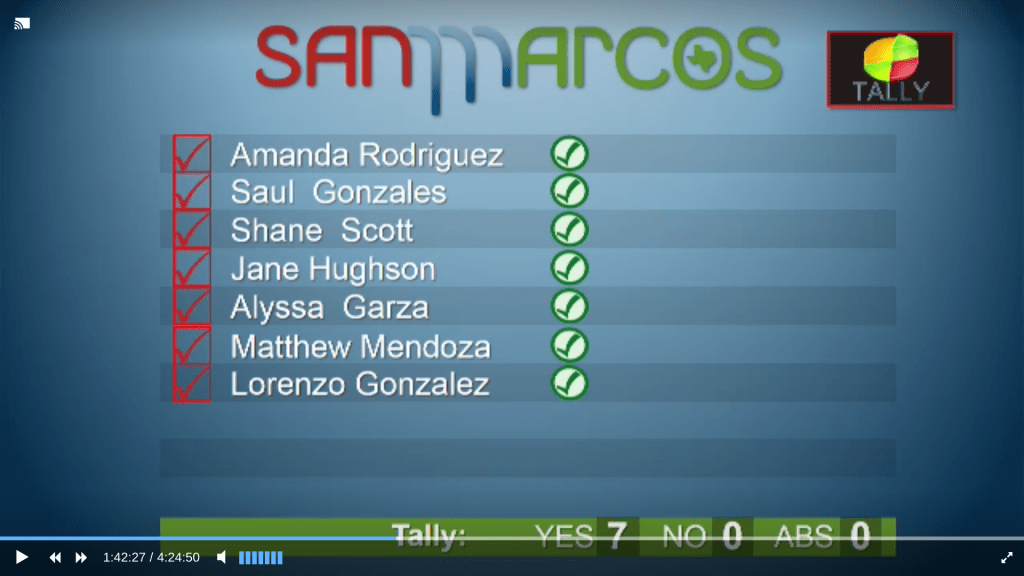
The vote:
Lorenzo is our brand new councilmember! The rumor mill generally holds that Lorenzo is Becerra’s candidate, in case you were looking askance at that vote.
On Thursday, Becerra sent a written statement to the Express-News accusing the city of “targeted interference,” and said that litigation is “the course that will likely be pursued.”
“This project seems to be unjustly targeted due to political motivations,” he wrote. “The city’s refusal to honor prior agreements or pursue reasonable business solutions underscores a deliberate effort by political adversaries to obstruct progress.”
So Becerra might sue the city over this? That linked article has way more details than I was able to find, so you should trust them over me.
…
Item 5: The SMPD shooting range
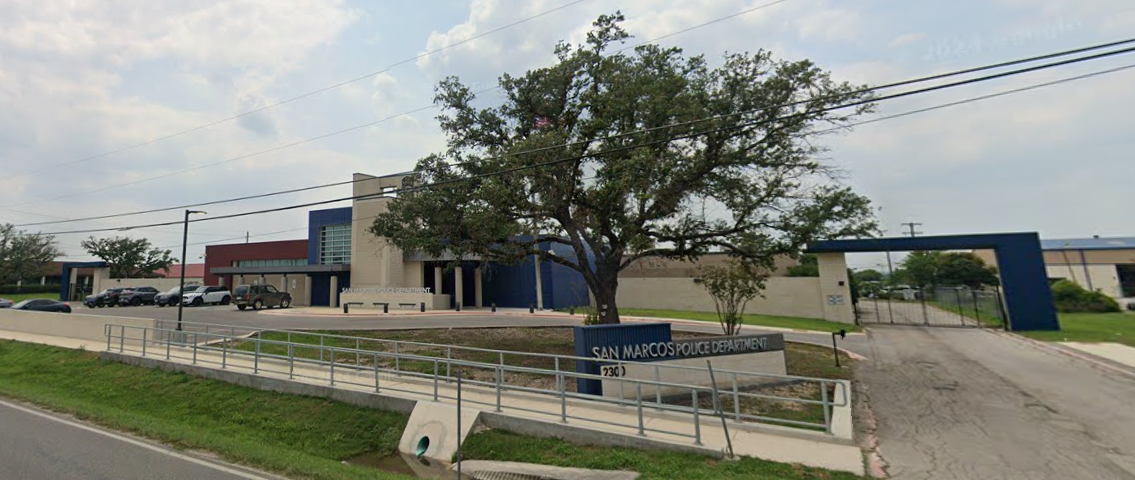
Here’s SMPD, located on I35:
SMPD has a shooting range. It was built in 1991.
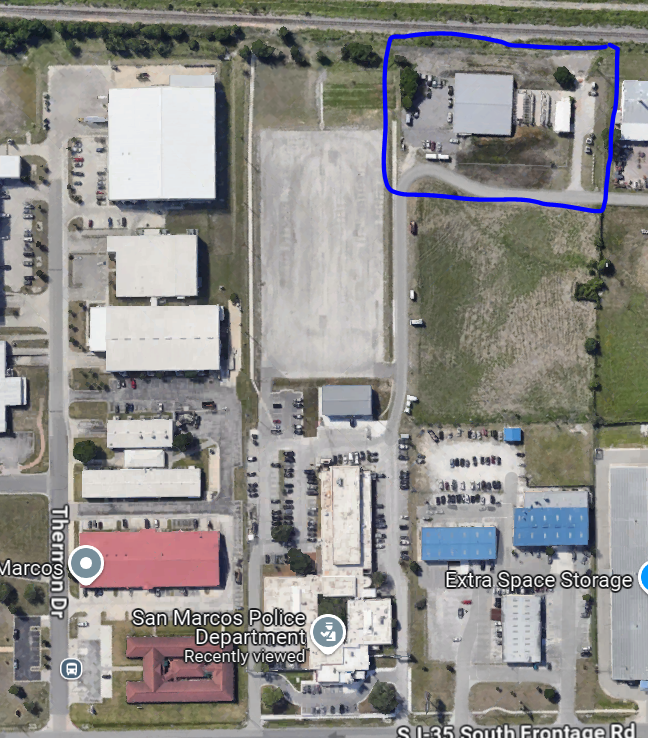
I’m guessing it is here?
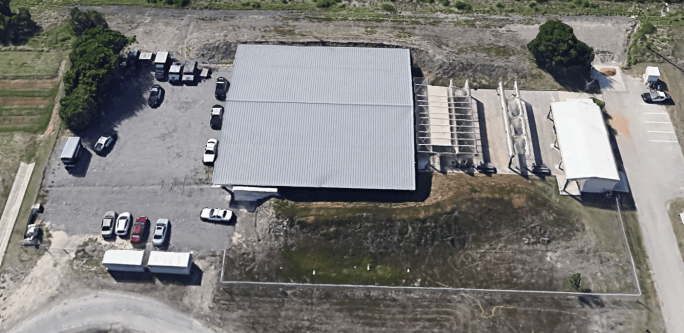
because they described it as a sand berm, and when I zoom in, it looks like this:
Which looks like a sand berm to me!
Here’s what it looks like on the inside:
That was built in 1991. Back then, they needed to be able to shoot pistols at 25 yards.
Since then, you now have to be able to shoot rifles at 50 yards. So officers were going offsite to shoot at ALERRT Shooting range at Texas State. That is free, but it’s often busy.
In 2021, they converted the SMPD range from 25 yards to 50 yards. They also put a roof overhead, to keep the sand from getting washed out and to prevent bits of projectiles from going all over the place. Great!
But the roof also contained all the dust, which has a lot of lead in it, from the bullets. So it’s now super toxic. Also, they have to mine the sand for the bullets every now and then, or else fragments start to bounce back at the officers.
And then the bullets get trapped in that round drum on the right:
Plus there’s a whole HVAC thing to help control the toxic dust.
How much does this thing cost?
The unit is $643,800.00. The total installation will be around $800K.
So what’s the issue?
This item was on the consent agenda. This means no discussion was planned. The only reason we’re discussing it is because Amanda requested that we pull this item off the Consent Agenda.
Remember how 15 people showed up to plead with Council on whether Salvation Army or HOME Center is more deserving of $10K? And ten minutes later, we are green-lighting $643K for a bullet containment system.
It’s even worse than that: it’s already been approved. The whole $800K was buried in the CIP list that got approved in 2023. There was a workshop in June of 2023, which covered the entire CIP list, and then the CIP list got approved in September 2023, along with the rest of the budget. Today is just authorizing the actual purchase.
It just happened automatically! There was literally never any discussion about this $800K, because of the sheer number of projects being addressed. No one single person is the bad guy – this is how systems operate on auto-pilot. But the outcome is unjust.
Look: officers should not be breathing lead-dust. Of course we want them to be safe! The point is the contrast: we greenlight $800K for SMPD without noticing it, and wring our hands over $10K for the homeless.
[Council has some dull side conversations on whether or not the lead and brass can turn a profit, when scrapped for resale.]
Amanda makes her key point: This is her fourth meeting. Over those four meetings, we’ve spent $1 million on SMPD. We can afford to double the HSAB budget – the money is there. We just have to choose to do so. Even people who are paying attention – like herself! – had no idea that $800K got set aside for this TOTAL BULLET CONTAINMENT SYSTEM last summer. It just happens invisibly.
The vote:
C’mon, Lorenzo. I’m rooting for you here, but this isn’t knocking my socks off.
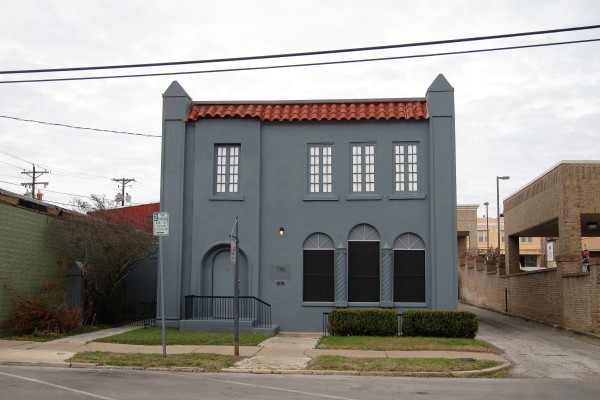
It’s really impossible to see from the street, but it’s this blue L-shaped building:
At least, it used to be blue. This is what the building looked like in 2019:
I’m unclear on the following order of events:
Squatters moved in and were kinda trashing the place
The owners purchased it and began demolition without getting proper permits.
In some way, we end up with it looking like this now:
Definitely not blue anymore. Not much left.
How does demolition work in San Marcos?
In order to know what’s going on, you have to know a little about demolitions of historic buildings in San Marcos.
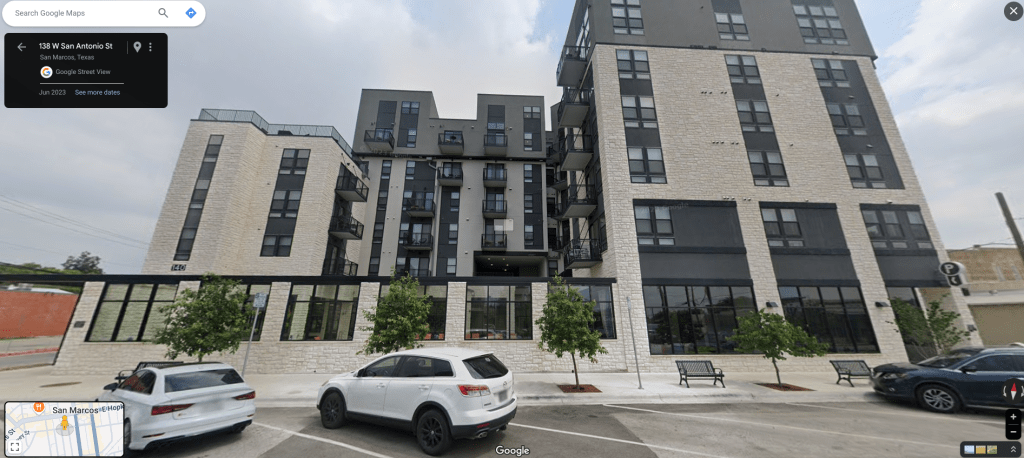
In 2019, the old telephone building was demolished:
to make way for The Parlor apartments.
People were told 3 days ahead of demolition, and they were upset. Protests, etc.
(I personally think the little telephone building was extremely cute, and felt sad over the whole thing.)
After that, the city put a demolition ordinance in place. The ordinance builds in delay and notification, but it doesn’t really prevent anything from being demolished:
For buildings with potential historical significance, there is now a 90 day demolition delay. This gives people time to research the building and figure out if it can be moved, or saved somehow.
If someone is trying to save the building, the Historical Preservation Commission can delay for another 90 days. But that’s it. After that, the owner can go through with the demolition.
“Saving the building” means making a deal with the owner. The owner can say no.
Basically, Texas state law means the city’s hands are mostly tied. There’s usually not much way to actually prevent a demolition. You can just stall a little bit.
…
So the owner applied for demolition, and the first 90 day clock started.
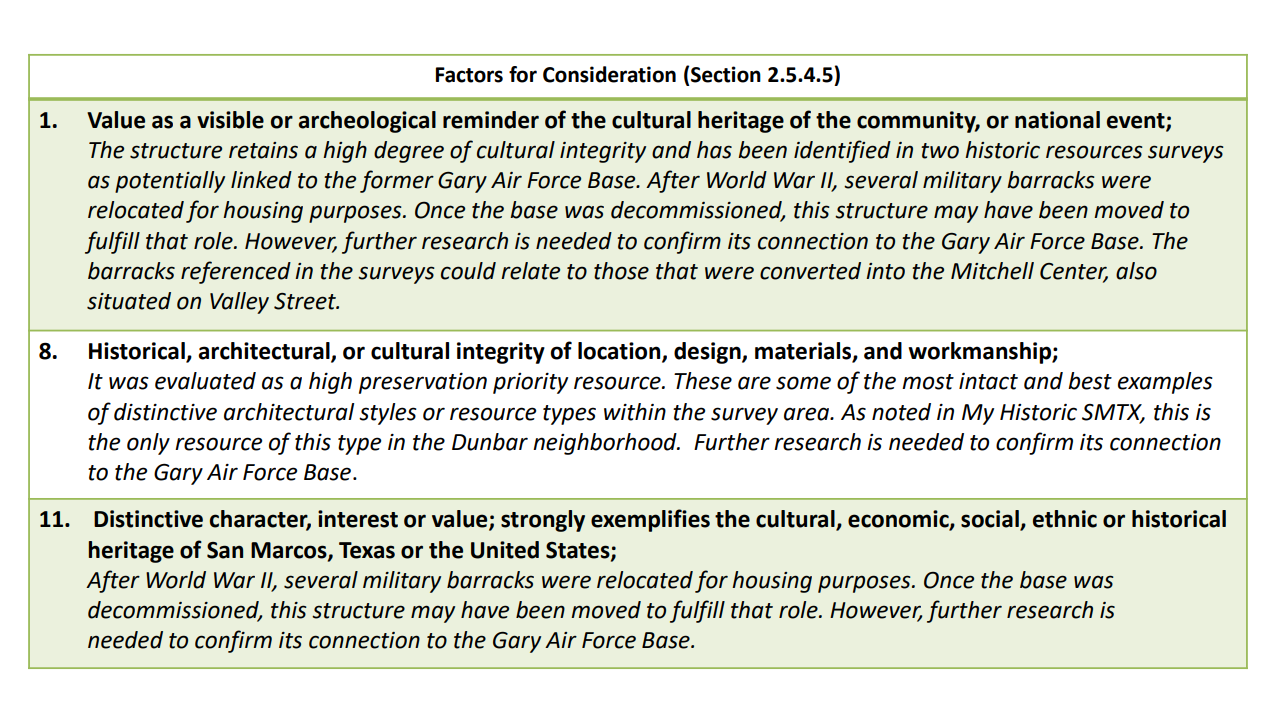
Here is the historical merit, as far as we know:
So this blue building was probably barracks from Gary Air Force base? It sounds like it was moved to Dunbar by the Armstead family to rent out as apartments.
It went to the Historical Preservation Commission, and HPC decided to extend the demo delay for another 90 days.
Which brings us up to speed!
The owners are appealing the demolition extension. They’d like to tear it down now, instead of waiting until April. They plan on building a small apartment building there, maybe 4 or 8 units.
Matthew Mendoza had some useful points. First, he reached out to Ms. Armstead. Apparently her parents are the ones that brought the barracks over from Gary Air Force? He asked her about the historical significance of the building.
She very clearly told me she does not feel that this particular complex needs to be associated with that family. In the last six years that they were in possession of this, they were only able to rent out a third of the rooms there, because they were so dilapidated…She feels that that her mom and dad bought this property just for making money. She made that very clear. They didn’t purchase it for any historical significance. They bought this because they wanted to make some money off it, and that’s also why they sold it. They got so far into debt as far as being able to replace the flooring, be able to add sprinkler systems, to make it up to code, which is when they said “We can’t do this.” And again, we all know the Armstead family and how strongly respected they are in this city of San Marcos. And for them to say “hey we don’t want this property” and not wanted it associated with their name says a lot. She was insistent that there is no historical value at all to this building and no historical value at all to this property.
(lightly edited for clarity)
And then Matthew gets to the best part:
And I can tell you: I partied in that place for like ten years back in the early 2000s. I fell on my fat ass right through that floor. I’m sorry to say it, but I fell through that bathroom floor in that place, and now I’m not the smallest guy in the world, but I shouldn’t be falling through there.
Honestly, that’s the most endearing thing I’ve ever heard Matthew say. He even lowered his voice and half-whispered “fat ass”, and I melted a bit.
He went on for awhile more, but that’s the gist of it. At the end, he said, “I will sit here and say that I am a huge preserver of historical anything here in this city, but this unfortunately this is something the owners are telling me we don’t want it. And that’s the reason why I was on the fence until I spoke with her.”
Overall, I basically agree with Jane Hughson on this one:
As much as I like historical preservation, I’m going to vote to not extend and let these folks who are trying to do something with the property move ahead. If this were something with a more historic appearance and in a place that people could actually see and appreciate, but in this particular case, I’m not seeing that there’s an upside to 90 more days. There’s been 90, and you say there’s not been any activity, nobody has come in with the superman cape to save the day, so that’s why I’m going to support not extending the delay.
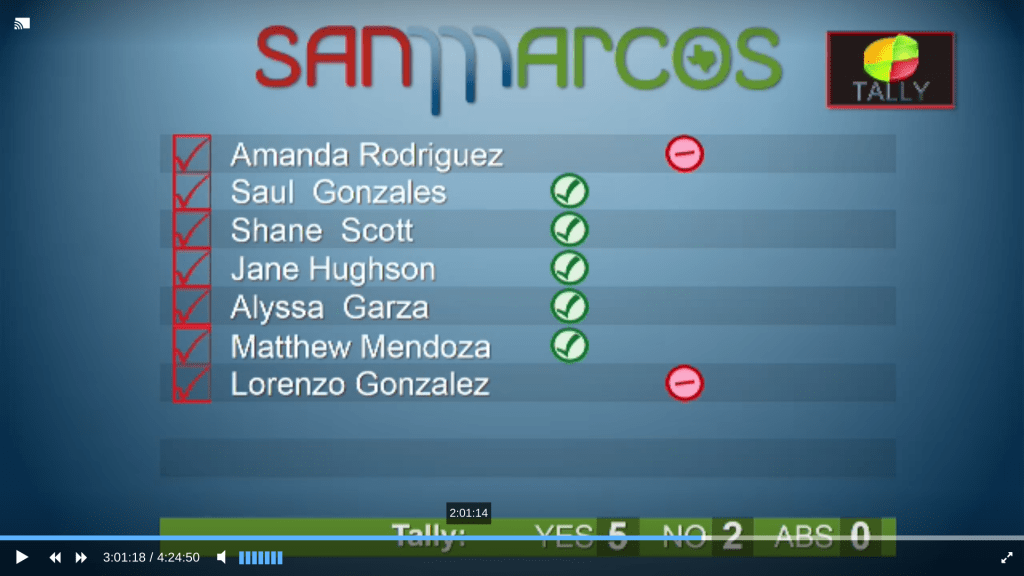
The vote:
The argument for voting no – Amanda and Lorenzo – is that it doesn’t hurt anything to wait three months and let the local community get their due process to save the building.
In this particular case, I’m with the pro-demolition folks.
…
Item 15: Charter Review Commission
Every four years, council appoints a committee to go over the City Charter with a fine tooth comb. This is that magical night!
First off, do any council members have any pet topics that they want the committee to discuss?
Note: none of these are guaranteed. Council is just asking the committee to discuss these items.
Jane: drop the minimum required number of council meetings from 22 per year to 20 per year.
Sometimes it gets hairy trying to have meetings working during election week and New Year’s Day – this would build in some flexibility.
Everyone likes this.
Shane Scott: You should have to be a resident for at least five years to be on council.
(Saul, Jane, and Matthew are all enthusiastic about this.)
Look, this is clearly about newbie Lorenzo Gonzalez. Seems a little rude to me!
But more importantly, it is super undemocratic. The whole point of an election is to let voters choose! If they don’t want a newbie, they don’t have to vote for that person.
I do not like this one!
Alyssa: We should have single member council districts.
This is a complicated topic. How should voters elect councilmembers? Right now, every council seat is an at-large seat. Should we carve up the city into sections, and have each section vote for its own single representative?
There are arguments for and against this.
For:
It takes fewer resources to run a campaign in a district than in the entire city. This means that more people can afford to run for council.
Historically, at-large council districts have been used to block minority groups from having representation on city councils. If a city is 30% black, for example, and if white people won’t vote for a black candidate, then a black candidate can never win a city-wide election.
Historically, single-member districts have been the solution. Lawsuits would be filed and judges would force towns to switch from at-large seats to single-member seats. (This is what happened to SMCISD in the 90s.) The idea is that you must draw minority-majority districts, and then within that district, minority groups form a majority and can elect a candidate of choice.
Against:
Single-member districts only somewhat solve the problem of underrepresented minority groups. Drawing the boundaries becomes a politically contentious issue, with people weaponizing it to work in favor of specific groups.
At times, there can be issues that pit a district against the whole city. Amanda reports this happening at the state level: representatives vote against a program that is good for the entire state, because their district doesn’t want to pay the taxes for other people to benefit. Right now, all councilmembers answer to all of San Marcos.
I’m pretty torn. I wrote a whole thing in favor of single-member districts in San Marcos, back in 2022. But I’m also sympathetic to the idea that single member districts can pit parts of the city against each other.
Council floats the idea of having a non-binding referendum on the ballot, so that they could find out what people think.
Amanda: Suppose council passes a shitty ordinance, and you’d like to petition to repeal it. Right now you have 30 days. Let’s extend this to 60 or 90 days, so that people have a little more time to organize.
Sounds great!! Would this only apply to ordinances, or also things like Chapter 380 agreements? (I’m thinking of things like the SMART Terminal/Axis developer agreement.)
5. I think Saul brings up rolling back the drinking hours in San Marcos again. It’s very hard to hear him.
Backstory: it used to be that bars closed at midnight in San Marcos. This means that all the kids got drunk here, and then at 11:30, drove up to Austin, and drank for two more hours on 6th Street. Then at 2 am, they all drove home. This always seemed like a terrible policy for keeping kids alive!
It got changed in 2009. Now bars can stay open until 2 am, and hopefully fewer kids are driving drunk on I-35. Great! (I’m sure the local bars prefer it this way, too.)
I think Saul wants to change it back to midnight? What a terrible idea! Keep kids alive. Don’t give them reasons to drive drunk.
This is not a charter item, so it will come back as a discussion item. Stay tuned.
6. Lorenzo: the language around petitions is inconsistent between initiatives and referendums.
Jane Hughson reminisces about the Great Fluoride Debacle of 2015, when the good citizens of San Marcos got a little muddled on the science, and voted to stop adding fluoride to the water.
The citizen wrote the initiative in a way that made it impossible for the city to carry out. Something like “no fluoride in the water!” when there’s some level of fluoride that occurs naturally in all water. The city had to negotiate in court with the author to get better wording. (They settled on “no added fluoride”.)
Basically it’s really difficult to write clear ordinances. This makes things tricky.
7. Amanda mentions reversing the fluoride charter amendment in passing, but no one stops and weighs in.
But guys: the ban on adding fluoride to the water is terrible. The science is really clear. We’ve got a lot of people in this town who can’t afford to see the dentist, and we could be helping save their teeth.
8. Shane: Mayor and council should move to 4 year terms, and council elections should be held in odd years, so that they’re not drowned out by presidential and governor elections.
This is about who your base is. Are your voters the old guard in town, who will reliably show up to vote when nothing else is on the ballot? These are the voters that have held the power in San Marcos since always.
Or are your voters less plugged in, because they are younger, or newer, or less well-connected, or generally low-information? These are the voters that generally don’t have power, and are less likely to show up to vote in odd years.
9. Amanda: Right now, P&Z terms are 3 years long. After two terms, you have to take a year off. Amanda proposes reducing P&Z to 2 year terms, and extending the length of the break before you can come back again. The goal is to increase turnover.
The rest of council does not buy into this. Part of the problem is that all the boards and commissions are on the same set of rules.
10. Matthew: zoom and attendance options for all boards and commissions
This gets ditched due to not being a charter issue. Also, Amanda and Alyssa are hard NOs, due to accessibility issues.
11. Amanda: Right now, P&Z gets the final vote on plats. A plat is the paperwork where a developer carves up a neighborhood, and says where the streets will go and where the boundaries of the properties will go. Amanda wants people to be able to appeal the decision to Council.
We’re kinda stuck with the current system, for a few reasons:
State law mandates 30 day approval for plats. If you add in City Council as a second appeals procedure, you’re going to run out of time.
There’s not actually any decision or judgement when it comes to platting. Legally, you’re not allowed to deny a plat, if it checks all the boxes. It’s not like zoning, where you’re allowed to make a judgement call. This is more black and white. So it doesn’t matter very much.
So this did not get traction.
12. Revoke or suspend CUP may not be appealed: remove this.
Yes: Shane, Jane, Lorenzo,
[I wrote this down in my notes, and now I can’t find it in the meeting anymore. So I can’t remember who proposed it or any other details. whoops]
Final note: These are all just suggestions for the Charter Review Commission. Nothing is binding here.
…
Item 16: Each councilmember picks their special person for the Charter Review Commission.
The picks: Michelle Burleson, Jim Garber, Rob Roark, Daniel Ayala, John Thomaides, Yancy Arevalo, Amy Meeks
I will just note that three of those – Michelle Burleson, Jim Garber, and Amy Meeks – are on P&Z. There’s nothing exactly wrong with that, but it’s most likely going to preserve the status quo.
…
Item 17: Boards and commissions
Now that Jude Prather and Mark Gleason are off council, there are a bunch of vacancies to fill. I’m not going to go through this, because it’s tedious and you can find most of the subcomittee memberships here.
I mostly just want to include this bit:
Jane: I’m going to volunteer to be on the Alcohol Committee. The reason being that I’ve got more experience with this than probably all y’all put together. I was on one once before, and I think I can provide a lot of benefit to this committee.
Shane: Plus you’re a solid drinker.
The room erupted into giggles. Jane didn’t sweat it, and just said mildly quipped “Yeah. That’s the important part.”
I mostly include it because it made me laugh. The vibe of this new council is much lighter and jokier than the last one. I’m here for it.




















 The San Marxist