
This week’s workshop was all about the river and parks. It was both so interesting and so depressing.
The big question is: How’d the can ban go?!
The big answer is: We broke our river. We were so overwhelmed with record-breaking crowds that we couldn’t even get to the can ban. The river got really damaged.
Out-of-town crowds were too big. Bad behavior was high. There was more trash and destruction than ever before. We might have to fence in the river parks and start charging admission. It’s all very depressing!
Let’s dive in.
- Preparations. We planned on doing the can ban! (There was a can ban plan.)
Here’s what we did ahead of time to prepare:
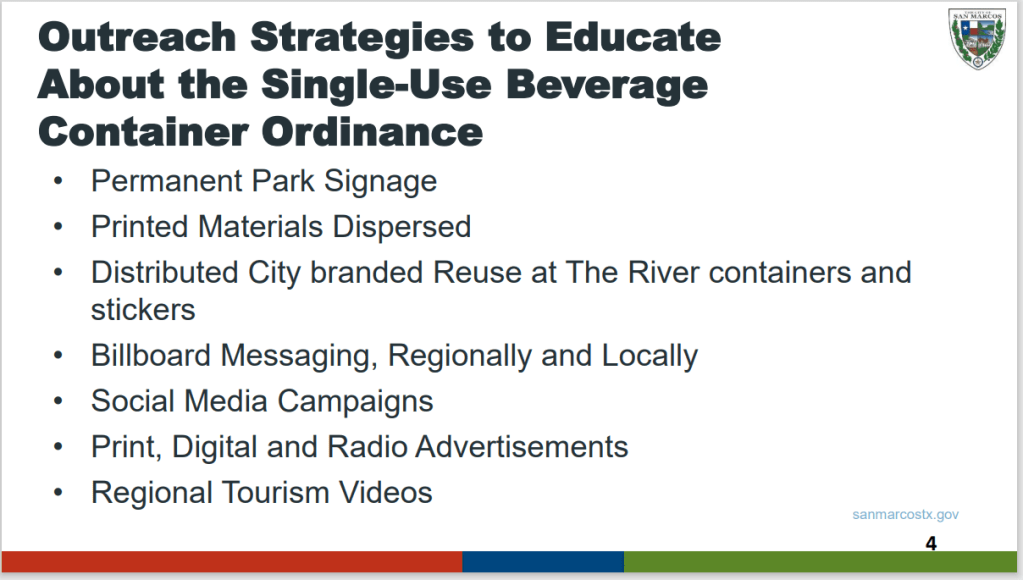
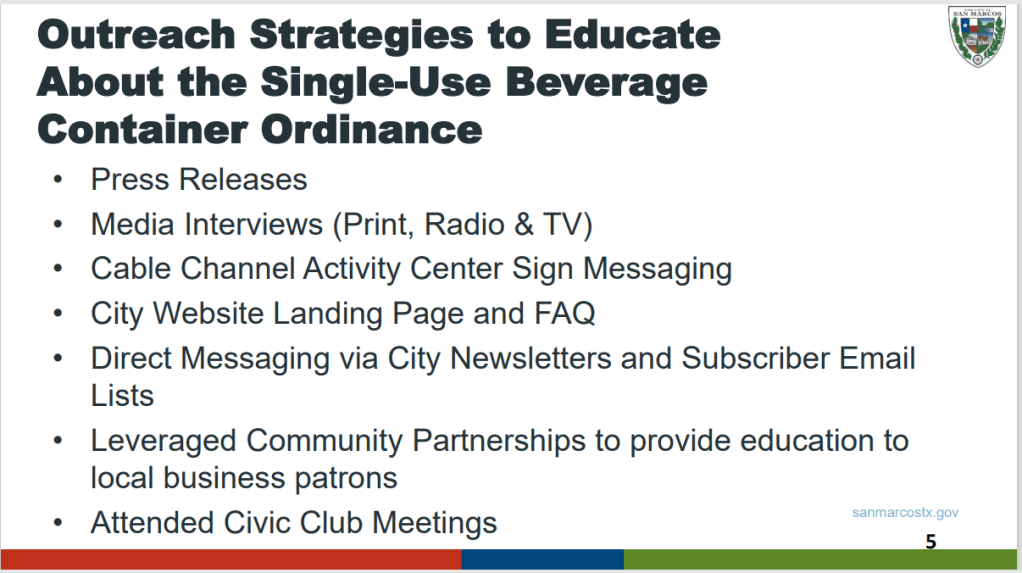
We tried to promote the ban every way we knew how, ahead of time.
We put these signs up in the park:

There were also sidewalk stickers, pointing towards the Go Zones and the No Zones.
You could quibble that the signs and stickers weren’t great at demarcating the Go Zones and No Zones, but this was supposed to be the trial year, where we try things and see what works. ♫ Life’s a dance you learn as you go ♪, and all that.
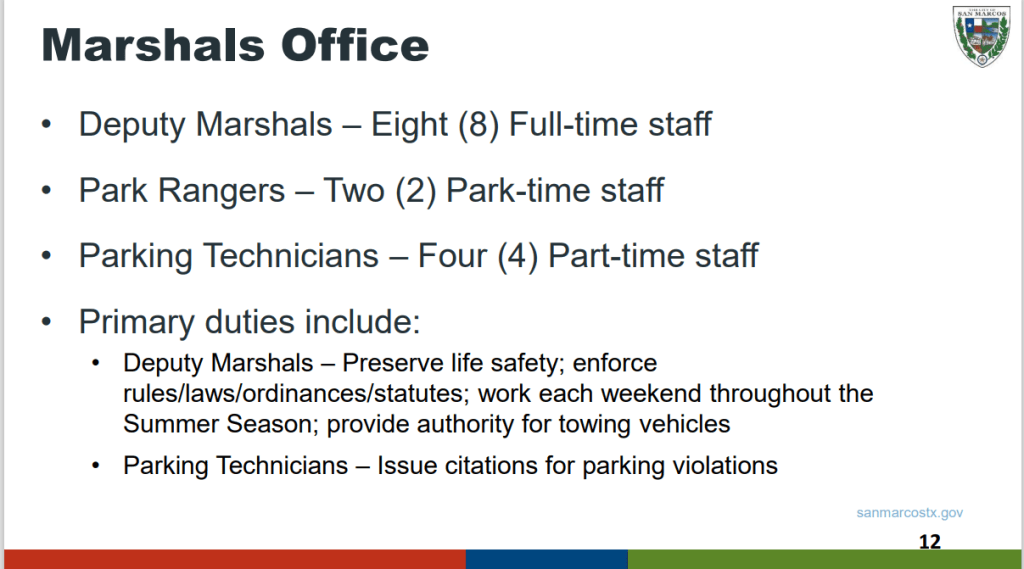
Generally there are both marshals and park ambassadors at the park:
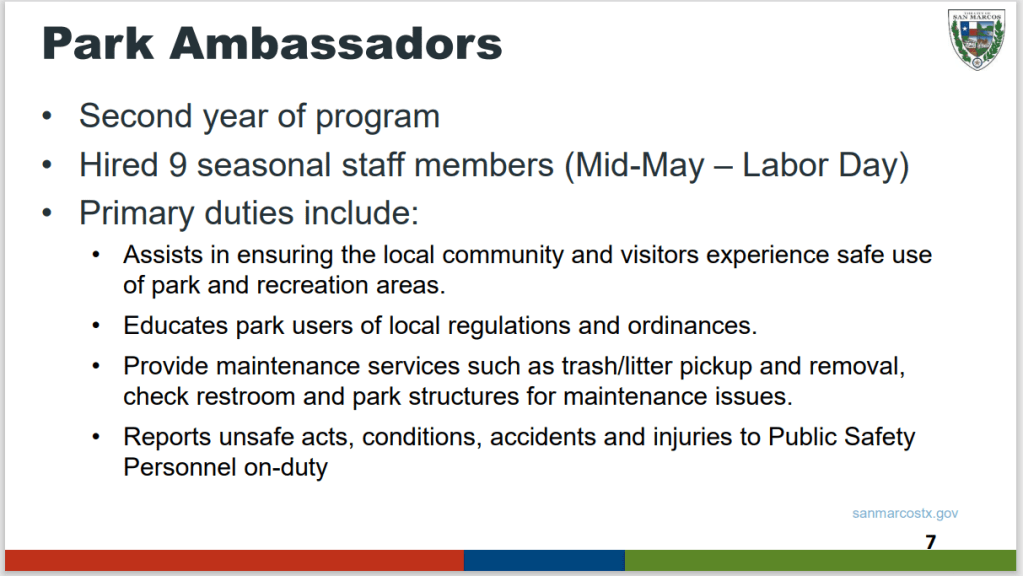
And marshals:
(The can ban plan began.)
- But things went really badly:

The big problem is drunk people – they fight, they trip and fall and hurt themselves, they get heatstroke or other medical issues from the heat. Just lots of safety issues that preoccupy city marshal attention. No one has any bandwidth to get to the can ban.
Overparking is a problem, too. And there’s lots of litter that gets left wherever people go to find parking.
Memorial day was a particular disaster:

So in response to Memorial Day, they changed things up for 4th of July weekend and Labor Day weekend.
Mainly, they shut down Cheatham street. This helped with the drop-off and pick-up mess, and the aggressive U-turns that cars make. They had to staff both ends of the street, so that used up more staffing.

The other big thing was contracting with off-duty police officers. We pulled $100K out of Covid money and spent it on extra staffing.
Finally, they blacked out the dates for the baseball fields, so we weren’t hosting a baseball tournament at the same time. This freed up some parking for the rivers.
…
So how bad did things go?
Deputy Marshals have a dashboard:

This is the total for the whole summer. Highlights:
- 329 park evictions.
- 48 citations. You can see that the most common one is alcohol, by far, and next is parking violations.
- Only 2 arrests! But that’s because a marshal has to then leave with the person, which leaves the park even more understaffed. So ususally they just kick the person out of the parks.
- 69 medical incidents. Most of those are drunk people who succumb to the heat.
It sounded pretty grim. They were so understaffed. All the marshals and park ambassadors worked every single weekend, no exceptions, all summer long, no vacations.
Staff also said that most of the behavior problems are out-of-towners. Local residents are less likely to cause problems.
This is the main reason the can ban kinda died – we were in survival mode for making sure that everyone stayed alive and safe.
3. So why???
Why is all of this happening? What changed in the past few years?
The problem is all the other river parks. The other cities have fenced in their parks and started charging admission. We’re the only free river park left, in the San Antonio-Austin general region.
I hate all of this so much. It pits two things I care deeply about against each other:
- Recreation should be available to all people.
- You must take care of your river.
So who exactly uses the river parks so much? We hire these guys to track cell phone data. Here’s what they tell us:

First:
Area A is downstream – the falls, near the baseball fields, near the children’s park.
Area B is upstream – near the Lion’s Club and the general Sights and Sounds part of the park.
(I don’t know what Overall Destination means.)
Next, the colors:
Teal means they are San Marcos residents.
Blue means they come from this radius:

Orange means they’re from outside of that circle.
So roughly 60% out-of-towners. I’m kinda surprised by how many people drive in from Houston:

So how many people actually are showing up on these busy weekends? It wasn’t in the presentation, so I emailed city staff to see if we knew.
They kindly answered: Nope, unfortunately, we don’t. You can’t get that data from this company, because they’re just sampling cell phone data. To know the total number of people, you’d have to have staff literally out there counting by hand.
Crowds looked a little different on the 4th of July weekend, but you get the picture:
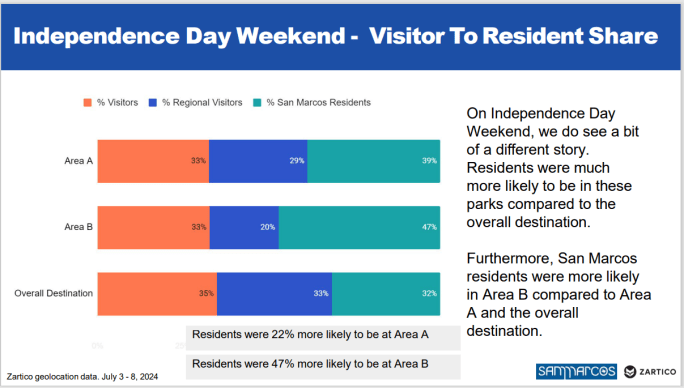
Anecdotally, the speakers said the vast majority of the drug/alcohol/behavior problems were out-of-towners. Also depressing!
…
4. Onto the poor river.
First up, litter:
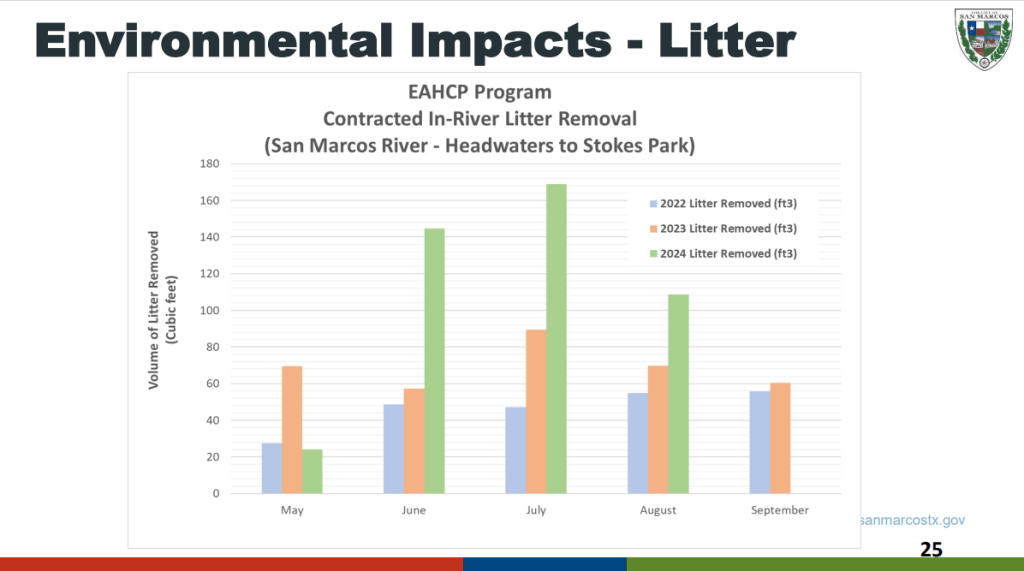
It looks like it went through the roof. But staff said that this graph is misleading, because we doubled our clean up efforts to twice weekly instead of once a week. Some of that is old trash from years past.
It’s still depressing!
Also, that’s mostly volunteers out there, doing major clean ups 2x a week. (Like The Eyes of the San Marcos River and Keep San Marcos Beautiful.) So they deserve some big kudos.
We’ve also got those litter boats for tubers:

So maybe some of the tubers were bringing re-usable containers after all? And the can ban helped? Who knows.
Look at this stuff. Ugh ugh ugh.
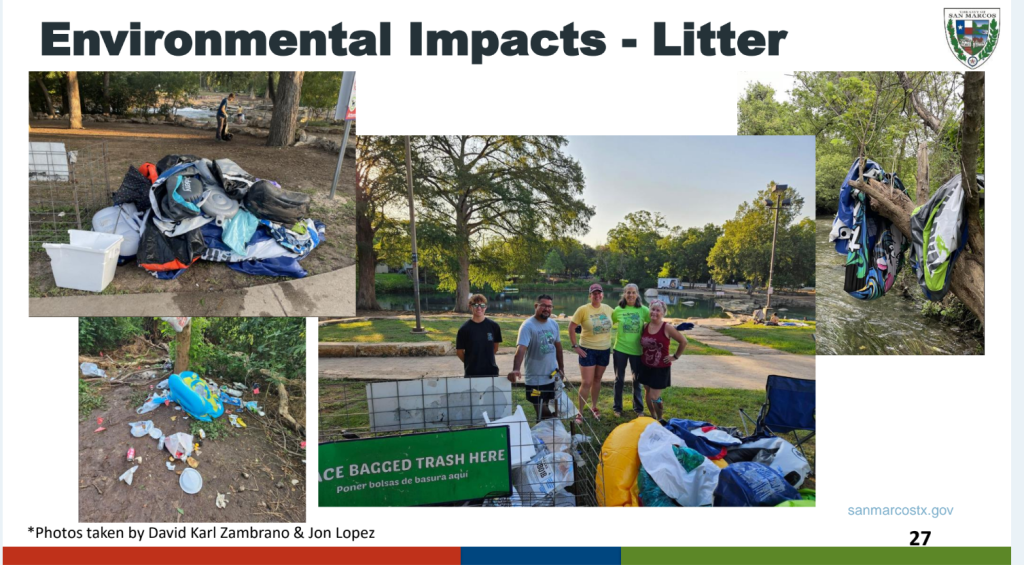
They said that usually on Saturdays and Sundays, they pulled about 50 old dead tubes out of the water each day.
Apparently Lion’s Club rentals were way down, too. Two years ago, they rented 48,000 tubes. This year they rented 36,000 tubes. Same with shuttle service. People are buying tubes from stores and walking back up to the top of the river, instead.
…
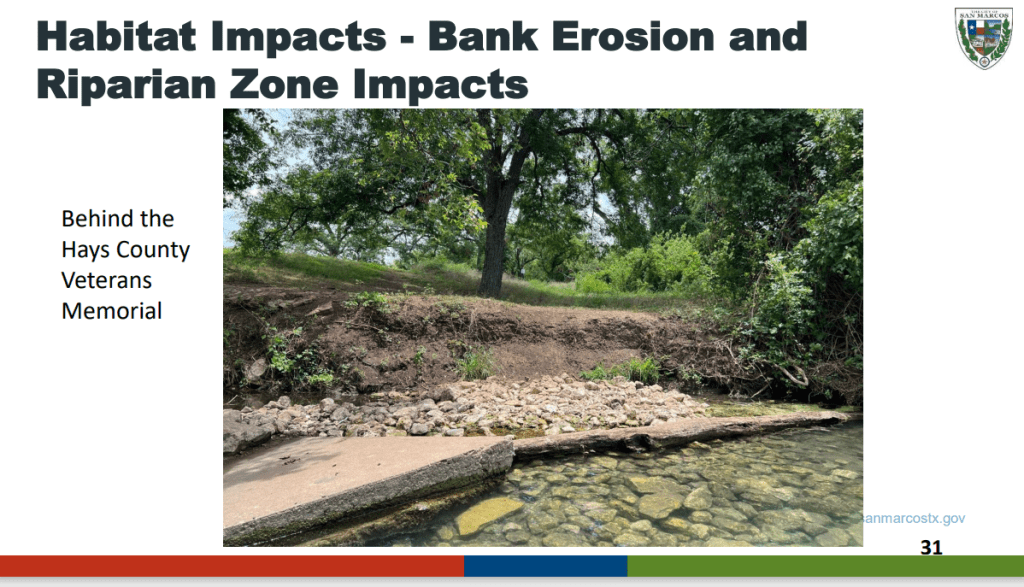
A really big problem is that people find new ways to get into the river, and then they destroy the river at these access points.
The bank erosion looks like this:

And the wild rice, ecosystem, etc everything gets destroyed.
I told you it was depressing.
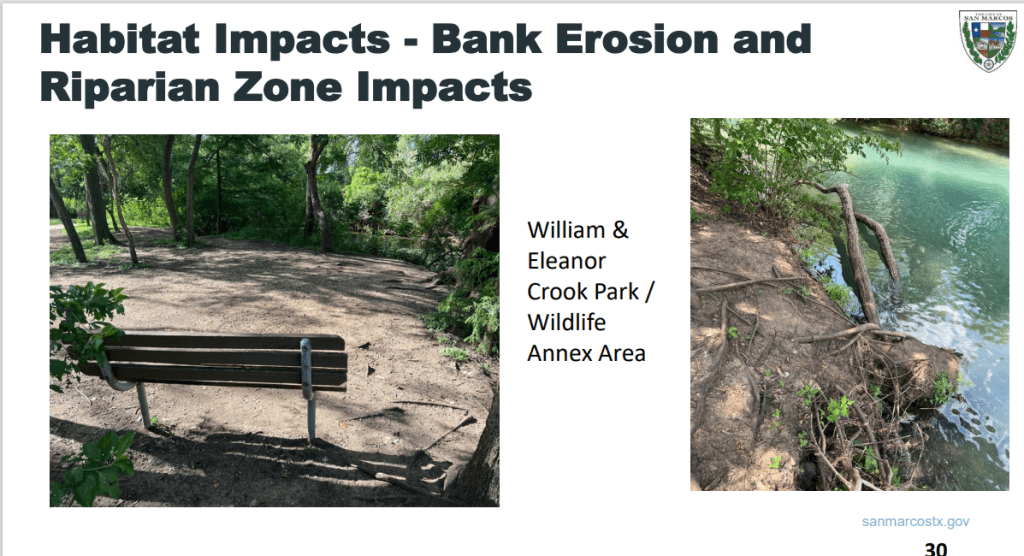
They put lots of photos in, so I’ll pass them along:
This presentation was a major bummer. You only get one river!
My $0.02:
This is a classic example of a tragedy of the commons:

It just makes me very sad.
Solutions:
Staff only has one proposal: You fence in your parks, you charge nonresidents for admission, and you use the revenue to hire more staff.

Apparently New Braunfels brings in enough money to pay for it’s entire parks system. That’s a lot more financially sustainable than redirecting $100K of Covid money to contract out with off-duty police officers.
Here’s the thing: inevitably, it will limit access poorer people with fewer resources more than it limits access for wealthier people. Even if you make it free for residents, there will be hoops to jump through.
But what else can you do? I have no other good ideas, either.
So now we turn to Council discussion.
(Only Mark, Matthew, Saul and Jane were here.)
Mark Gleason goes first: he has serious reservations about fencing in the park and charging admission.
- There’s no such thing as “aesthetically pleasing” perimeter fencing.
- It might be inevitable, but it’s got such a cost associated with it.
- Can we fully implement paid parking and the can ban first, and see if that helps?
- Fences become dams in a flood! They clog with leaves and debris and prevent water flow.
I am really sympathetic to him here. I also want anything but blocking off the parks.
Staff responds to some of these: paid parking is not going to generate the kind of income stream we need to staff these crowds.
Jane Hughson: “Yes on managed access. This is breaking my heart.”
What would a perimeter fence and managed access look like?
There’s nothing concrete to talk about yet. Staff wanted to check with Council before beginning research. So we can’t say where the fences would go, or where the entrances would be, or anything.
How far up would it start? Texas State is having problems at Sewell and the headwaters, and so they want to coordinate with us on this.
How far down would it go? Probably to I-35, at first. Mark Gleason points out that this will drive people to over-use the river on the east side of 35. Staff responds that they’ll have more staff available to cover these other areas, once we get a stable revenue stream.
Apparently New Braunfels does have a problem with people slashing the fence, to sneak in. They have to constantly pay for repairs. So we’d probably have that problem, too.
Some possibilities to explore:
- Free for residents
- Free during the week
My read on the mood in the room was that this is inevitable. We will have to fence off the river parks and charge admission.
…
Top Secret Executive session: Another ridiculous code name: Project Jolly Rancher!
- Is it a sticky factory?
- Is it a happy rancher?
- Is it a green giant?
Who knows!
 The San Marxist