
Great workshops this week. Best part of the meeting.
We had three presentations this time:
Presentation 1: Purgatory Creek Flood Mitigation project
This is really cool. We last saw it in November 2023, when we bought land for the project.
Purgatory Creek runs from the Purgatory Natural Area over to the San Marcos river. Basically, we’re going to geo-engineer Purgatory Creek to flood less.

So that’s Wonderworld Extension on the far left, where the yellow and blue meet. Then they cross Hopkins and run behind Dunbar, along the railroad tracks, and then cross the edge of downtown, over to the river.
90 buildings are going to have to be removed, because they’re at risk for flooding:

That’s a lot of buildings! Are these houses with people living in them? Are they historic? I could have used more details here.
Correction: I’m an idiot. The structures are being removed from the floodplain. Not removed altogether. It’s safer now for the people living in them.
But on the plus side, it’s going to have a neat little hike-and-bike trail through it.

I love that.
It’s gonna be hella expensive, and we don’t yet have the money:
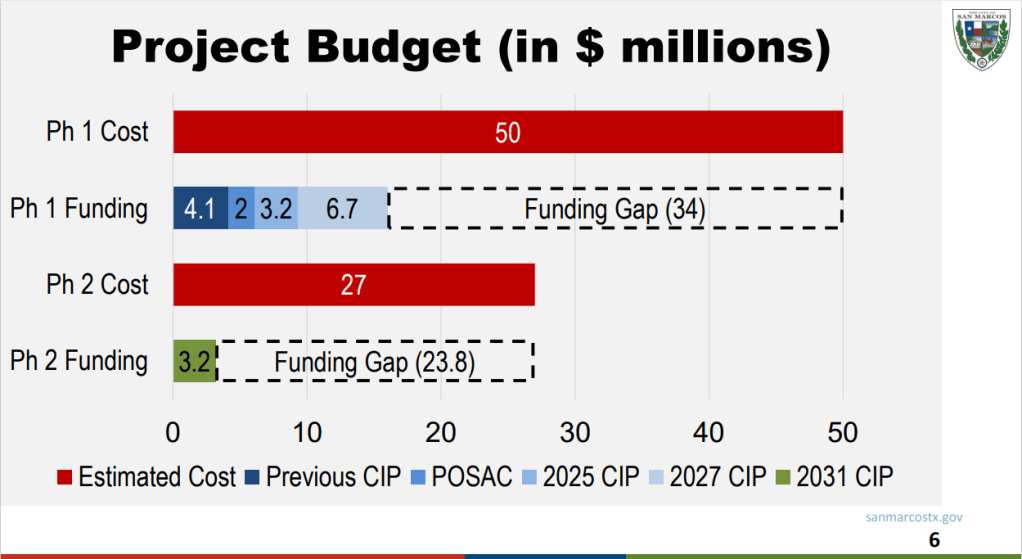
We’re going to apply for a bunch of grants.
If we get grant funding, we could begin construction in 2026. If we don’t, we could maybe begin construction in 2030. It’ll take about two years to finish.
One last detail: On the far right, you can see where Purgatory Creek meets the San Marcos river:

There’s a pale green Spillway, for when it floods. The spillway is in between the Children’s Park and the railroad tracks, so it’s letting into the river right where the sidewalk goes under the railroad tracks.
In other words, you’d see it from here:
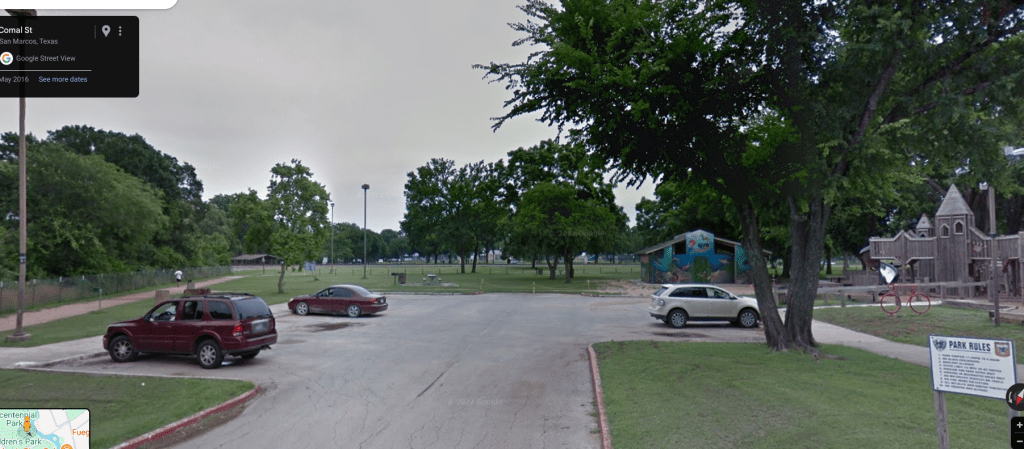
This photo from Google Streetview is so old that the Children’s Park is still the old wooden structure!
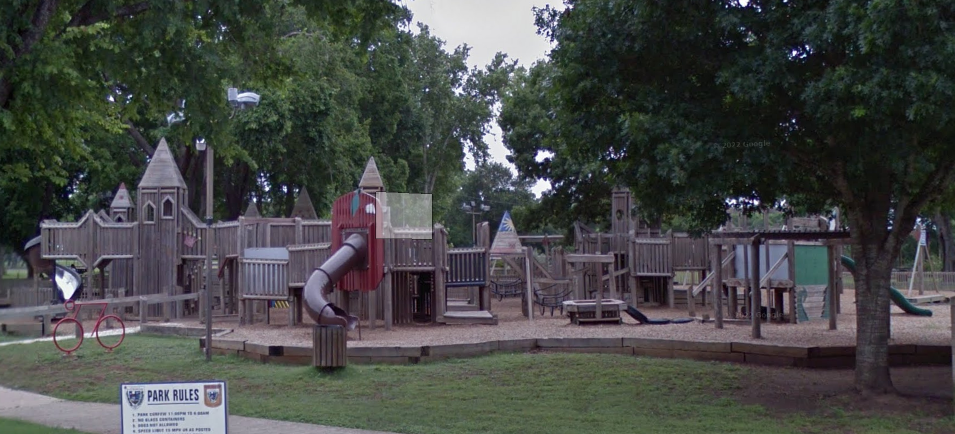
Awwww. Makes me a little nostalgic.
Anyway! In the original plan, they were going to use this spillway as an access point for people to easily get in and out of the river.
But the people from the Parks Department and the river experts are all saying this is a terrible idea, please don’t do this.
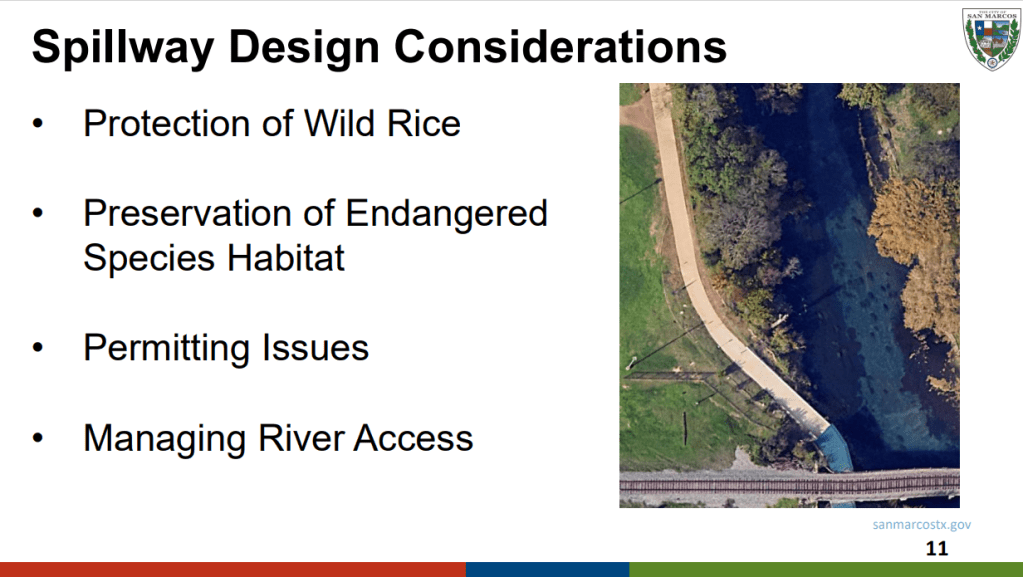
There’s a big patch of endangered wild rice there and endangered species that live in the wild rice. And also it’s deep with a brisk current, so it’s not that safe for little kiddos, either. Just leave this area alone, please.
So the spillway will still end up there, but they’ll make it uninviting for people.
….
Presentation 2: Capital Improvement Projects (CIP)
These are all the major city repairs going on around town. The Purgatory Creek project that we just heard about is one. They get approved alongside the budget. Council saw the current list of projects back in May. (I didn’t really say much about it at the time.)
There’s only one major change since May – we’re adding one new project:
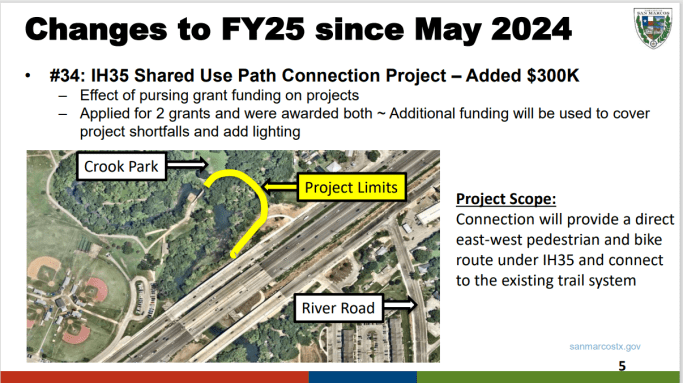
What are we looking at here? Let’s back up.
…
So, I35 has been torn up around the river for years now. TXDoT redid both the access roads, they’re adding I35 lanes across the river, it’s a whole thing.
One part of that is that they removed the old underpass along the river:

So on the right hand side, you can see where they’ve torn up the road that used to go under I35, along the river.
Here’s a photo I took, back in 2020, during lockdown:
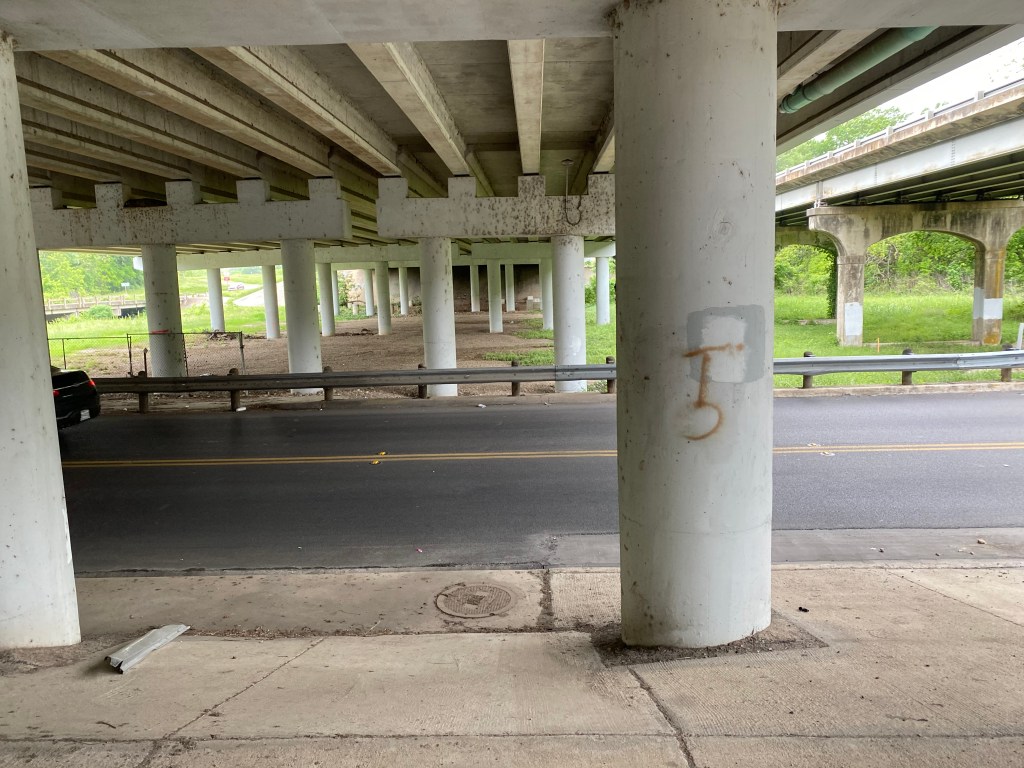
So that’s what the underpass looked like at peak pandemic.
Removing it was a major bummer for the good people in the Blanco Gardens neighborhood. They lost their best connectivity across I35. Now they have to go up to Hopkins-80, or down to Guadalupe-123, and deal with a big, busy intersection.
Since then, TXDot has replaced it with a hike and bike trail.
It looks like this:
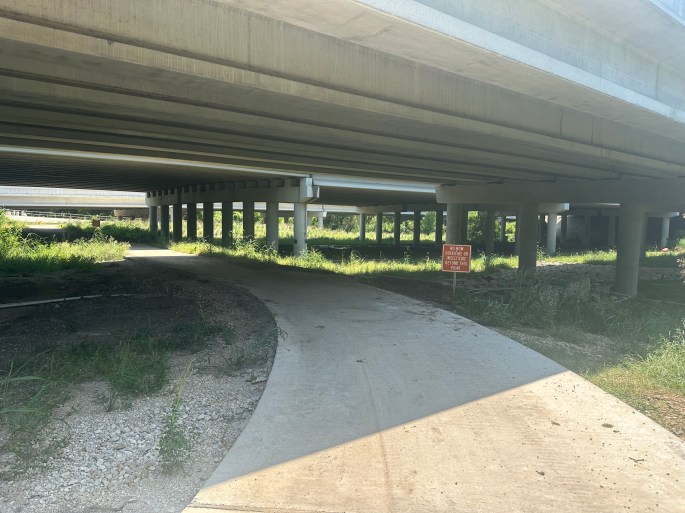
So you can easily bike from Blanco Gardens over to Riverside, and you end up by Herberts. That part is great!
So what are we doing now? Pink is the route you can currently take on your bike:

Yellow is what’s being proposed. It would connect the east and west sides of the park trails. Great!
This was not in the budget back in May. But since then, we’ve been awarded two grants to cover the cost. The total cost for that little yellow sidewalk is $2 million dollars.
TWO MILLION DOLLARS? Well, yes. Here’s why:

Blue is the main river that you swim in. But there’s this little side channel, in purple, from an old dam built in 1904:

In fact, here’s some of the machinery from the mill:

So that tiny little yellow sidewalk is $2 million dollars, because you have to build a bridge to get across this little side channel.

Now, San Marcos is not paying $2 million for that bridge. What we did was apply for a bunch of grants, and we got almost all the money covered. We just have to pay $300K for that bridge in matching funds. Great!
Mark Gleason is uncomfortable with this $2 million. He lives in Blanco Gardens and actually walks and bikes all over the place, so he’s constantly using this path. He’s just not sure if the cost justifies the increased connectivity that you get. Even though the $2 million is mostly federal money, he just feels weird about it.
I see his point. It’s such a disproportionate cost, compared to the shoestring that San Marcos usually runs on.
But then I just tell myself, “Hey, don’t forget we’re spending $1.2 million on Kissing Tree this year!” Then the $2 million bridge for everyone doesn’t seem so bad. Especially since most of it is covered with federal money.
Plus, once the east side of the river parks gets built out, the parks system will need to be connected, so we might as well do it now.
….
We’ve got a big utility assistance program in San Marcos, but it doesn’t always work very smoothly. Let’s talk about it.
How many people are we talking about?
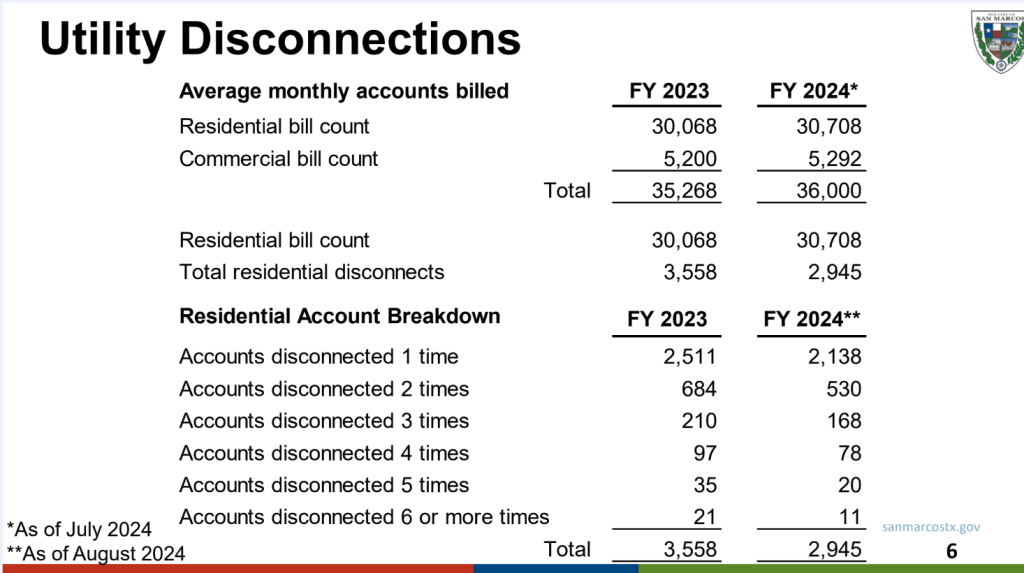
So there are about 30,000 residential accounts, and almost 3000 accounts have been disconnected so far this year. (Some multiple times.)
Here’s how it’s supposed to go. Suppose you get a disconnect notice on your electricity or water. You call the city. The city does two things:
- Offers you a late payment plan
- Connects you with the nonprofits that offer utility assistance.
How often does it work like that?

So far this year, we’ve given 580 accounts utility assistance, but 107 of those were still disconnected anyway. There have been 1,948 accounts that have gotten extensions – some of them multiple times – and 586 have still been disconnected.
So out of the 3000 disconnections this year, most people aren’t getting into the system to get help ahead of time. For the people who get in the system, about 75% avoid disconnections.
…
Ok, so let’s talk about the assistance side of things. San Marcos kicks in $231K to utility assistance. The biggest chunk of that goes to Community Action:

But Community Action also gets some federal money, so there’s actually about $435K available for assistance:

Community Action gets $120K from the city. But when someone comes in for assistance, Community Action tries to spend federal money first. So only $14K of the $120K was spent. However, the federal water assistance program has ended, so Community Action will need to spend more city money to cover that need.
The biggest problem is that federal money is slow. You have to fill out a ton of paperwork. But people need money immediately – cars need to be repaired, babies need diapers, the lights need to stay on, etc – or else small crises spiral into giant crises. So we need a way to get money to people fast.
A few things get discussed:
- Do we have to charge a 10% fee on late payments? Can we just make it a flat $10 fee instead?
- Should we spread out city money among different agencies?
- Would the other agencies actually have enough staffing to get the money out quickly?
- What about San Marcos residents that are on Pedernales electric?
Answer: they can get federal assistance, but agencies can’t use the credits from San Marcos electric specifically.
Here’s what we’re talking about doing:
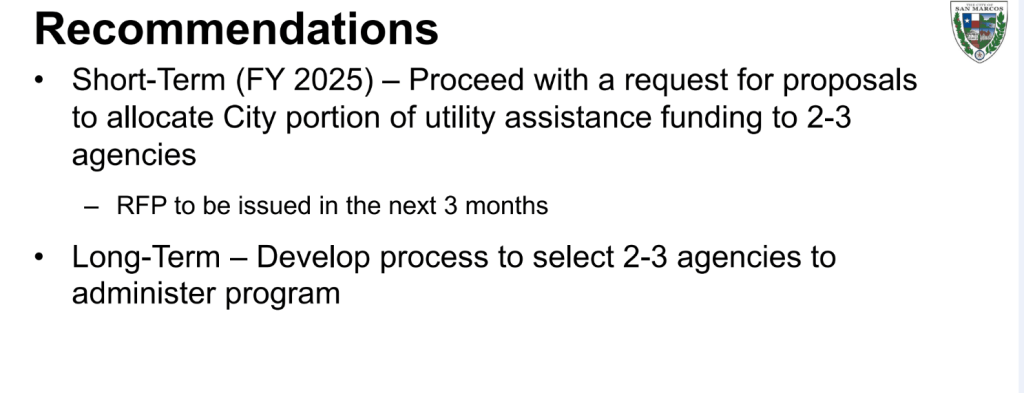
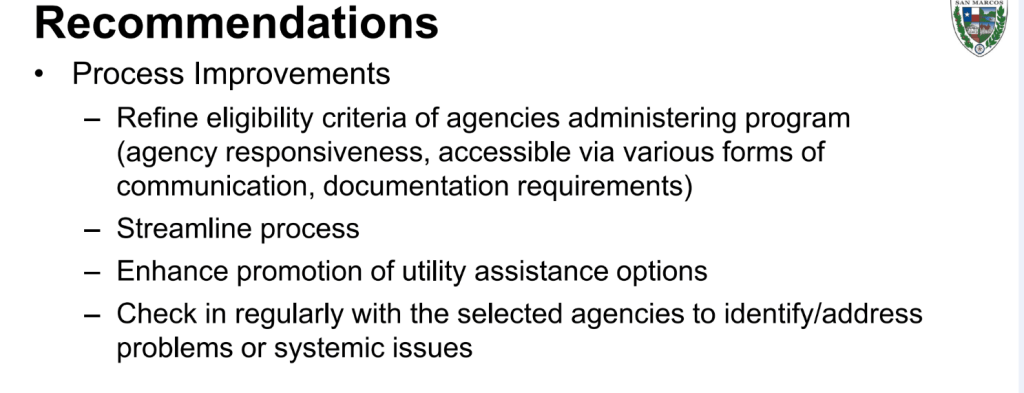
We’re also going to look at our fees and see if we can afford to reduce them.
Here’s my two cents: It is really hard to administer programs to the public well. It’s hard to find people, get their ear, get them to respond, get them to bring in paper work, find funding, and connect all the dots to get the assistance to people.
We tend to see overhead spending as wasteful, but it’s really not. Thoughtfully designed programs that aren’t running on fumes can serve people better.
Finally: if spending $231K of tax dollars on utility assistance gives someone heartburn, just remind them that we’re spending $1.2 million dollars on Kissing Tree this year.
 The San Marxist