
Item 18: Updating the San Marcos Development Code
This is big and interesting. It has four parts:
- Compliance with State Laws
- Business Park Zoning
- Process Improvements
- Clarification and Corrections
Part 1: Compliance with State Laws
The state just passed a bunch of laws, like repealing all curfews. What else do we need to fix to be legal?
- Plats: A plat is the drawing that shows things like roads, bus stops, parks, parking lots, and things like that. Everything but the details of the actual building.
Right now plats get approved by P&Z. But P&Z is legally not allowed to make a judgement call. They’re only allowed to consider if the plat meets the conditions in the land development code.
In the future, plats won’t go to P&Z anymore. City staff will approve them. We’re told this is because the state legislature tightened the shot clock, so we have less time to approve applications. We need to streamline processes to comply. They will publish the plats on a website
Okay: this is a small thing, but city staff is mildly bullshitting their case to City Council here. The shot clock was tightened back in 2019 to 30 days. This most recent bill says it’s okay to skip P&Z approval. So P&Z approval used to be required by the state, but now we’re allowed to let staff approve plats.
What else?
- More appeals procedures added in to land at City Council, and we modified the timeline
- Private schools must be zoned just like public schools.
City staff is misleading us a teeny bit here, too. This says “Municipalities will be required to treat charters as they would an independent school district for the purposes of permitting, zoning, etc.” It does not say private schools. Just charter schools. We’re allowed to zone private schools however we want, but don’t pretend that the state is making us do this.
Listen: the city staff work hard and they’re good people. I’m just being persnickety here.
Part 2: A new zoning district, called “Business Park”.
To me, this is a business park:

That’s not what we’re talking about. What Jane Hughson means is, “Hey, if you want to put industrial next to residential, it has to be super mild and chill.”
I think she actually means little warehouses, like this:
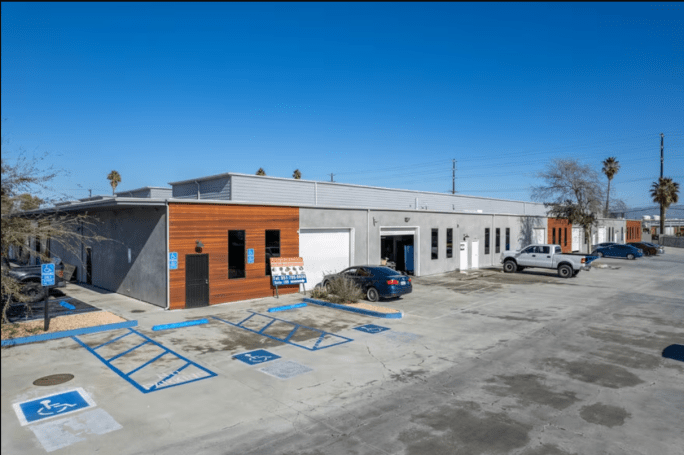
I would call it “Good Neighbor Industrial”.
Either way, it’s going to be capped at 35′ high, and excludes a lot of bad neighbor uses. If you wanted it higher than 35′ or to include warehouse and delivery, you’d have to get a Conditional Use Permit from P&Z.
Part 3: Process improvements
City council keeps getting bit in the butt over Development Agreements. They pass something in the dead of night, and then when everyone finds out the details, they’re furious.
In recent memory:
- La Cinema. Council modified the Development Agreement with La Cima to allow for movie studios back in December 2021. There were no notifications sent out and no one noticed. Then it came time to negotiate tax credits, and everyone got super mad that movie studios were allowed over the aquifer. But it was too late.
- The SMART Terminal. They doubled the size of the SMART Terminal back in January. But there were no notifications to the public. Afterwards, everyone was furious. I would have to link to every single meeting from the past six months to flesh this out.
Clearly we need to mail out notifications for Development Agreements and for amendments. We’re finally going to start doing this.
How many people should get notified? They’re proposing a 400 foot radius – everyone who lives within 400′ gets mailed a notification. That matches what we do for zoning changes.
Listen: It should not be 400′. It should be proportional to the size of the project. Tiny projects get a tiny notification radius. Giant projects need a larger notification radius.
If you’re looking at the 2000 acre SMART/Logistics park, 400 feet is a tiny sliver around it. If you’re talking about a little 4-plex, 400 feet is plenty.
Note to Council: Since you’re tinkering with Development Agreements, why not also add in tree remediation?
Other changes
- Historical Preservation Commission (HPC) can postpone things now.
- Timeline for Demolition by Neglect is increased from 30 to 45 days
- Park land dedication – this one is a bit weird. Let’s spend a moment here.
Right now, if you want to build anything residential, you have to set aside some land for parks. The equation is 5.7 acres per 1000 people.
The old code says this: “A minimum of 50% of the parkland required under this ordinance shall be dedicated to the City of San Marcos as a neighborhood or regional park under Section 3.10.2.1. The remaining 50% may be owned and managed by one of the entities under Section 3.10.1.6.”. Those entities are the city, a land conservancy or land trust, an HOA, or a public easement.
The new code says: “Appropriate plat notes describing the ownership and maintenance of all proposed parks are provided on the plat.”
In other words, maintenance is expensive and we want to pawn it off onto HOAs. But then the city doesn’t actually own the land. We could just make the developers and HOAs cover the costs, but we still own the land. But that’s not what’s proposed.
Jane Hughson asks: Will the park still be open to the public?
Answer: Yes, dedicated parkland is required to be open to the public.
Mark Gleason asks: What can we do if it’s not maintained?
Answer: We withhold their final permits until the park looks good.
Mark: No, I mean like five years later. What if the bathrooms are all broken and there’s garbage all over the place? What can we do?
Answer: [squirming in the uncomfortable silence]
Looking in the code, I see this bit:

That doesn’t quite apply here.
No one offers a motion and the motion passes.
See? This is the Council Dance again:
– Here, we identified a problem.
– Let’s all sit uncomfortably for a sec
– Rather than fix it, just pat it on the head and go on our merry way.
- Occupancy restrictions: let’s dish on this.
We have an occupancy ban in San Marcos. No more than two unrelated people can live in the same house. This is an extremely shitty policy that punishes poor people, out of fear that college students will throw wild keggers next door. There is a housing crisis, and people need to be able to move in with each other. (Furthermore, this dumb policy is totally unenforceable, so it only gets trotted out when someone has an axe to grind. It’s the worst!)
Listen: you cannot govern San Marcos solely out of fear of beer cans from college kids. That is a code compliance issue. That is not the basis for good policy.
Back in April ’22, Alyssa Garza fought hard to get everyone to consider relaxing the occupancy ban. Eventually she built consensus: council asked city staff to bring back a policy loosening the restriction to 3 unrelated people. Hooray, sort of.
Somehow it took city staff 15 months to bring it back, so here we are. However, during that 15 months, Max Baker was voted out and Matthew Mendoza was voted in. And Matthew Mendoza is very salty on this issue.
The more he talks, the more conservative Matthew seems. He sees this all the time in his neighborhood: a bunch of unrelated people live together, and it reduces home values for families in his neighborhood, which is how you buld generational wealth. He was calling this New Urbanism and claiming this was a gateway for big apartment complexes. It was kind of unhinged.
Everyone reassured him that there’d been a big conversation. Matthew did not get any traction re-opening the topic. But it was still a weird rant.
- Awnings can be now be 7′ clearance instead of 9′ minimum clearance. This is in response to the owner of Chances R Bar downtown, who pointed out that the building literally isn’t tall enough for a 9′ awning.
- Mark Gleason is super mad at his neighbor.
Apparently there’s a house in Mark’s neighborhood which is lifted off the ground and is two stories high. It’s got a flat roof, and they made a little patio up there. Mark is livid that they can see into other people’s backyards, but you can’t really legislate that, so instead he is livid that there is a structure up there – “with shingles!” – that allows them to hang out and see into people’s backyards.
Shane Scott says, “Our house in Mexico is like that. It sounds pretty cool.”
This is the Shane I like best, when he needles Mark for being a prig. You can practically see them in the same high school cafeteria, circa 1991: Shane wearing a Metallica t-shirt and black jeans, Mark wearing the same khakis and golf shirts that he wears to city council meetings. Shane leaves his lunch trash behind on the table when he leaves, and Mark urgently flags down the teacher to let them know that it was Shane.
Amanda Hernandez, the planning department director, strongly suspects that this house is probably already violating city code. The top of a house can’t be more than 35′ off the ground. If this is elevated and two stories already, you’ve got to be pretty close. Mezzanine structures count if they’re at least 30% of the area.
Mark makes a motion to measure height from the ground to top of rooftop structures.
Yes: Everyone besides Shane Scott.
No: Shane Scott
(Jude Prather is absent.)
I prefer to live in a world that facilitates rooftop patios and rejects Mark’s killjoy tendencies. So I’m a “no”, if anyone asks.
 The San Marxist