
Hour 1:30 – Annexing and Rezoning
Item 21: This is a proposal for 470 houses, way out past the outlet mall and past the Trace development. This is sprawl. In general, I do not like isolated subdivisions plopped down in the middle of nowhere. It requires way more mileage of pipes and wires to get them hooked up to the city, it causes more wear and tear on the roads than closer developments, it works against having a functional public transit, and so on. It takes a toll.
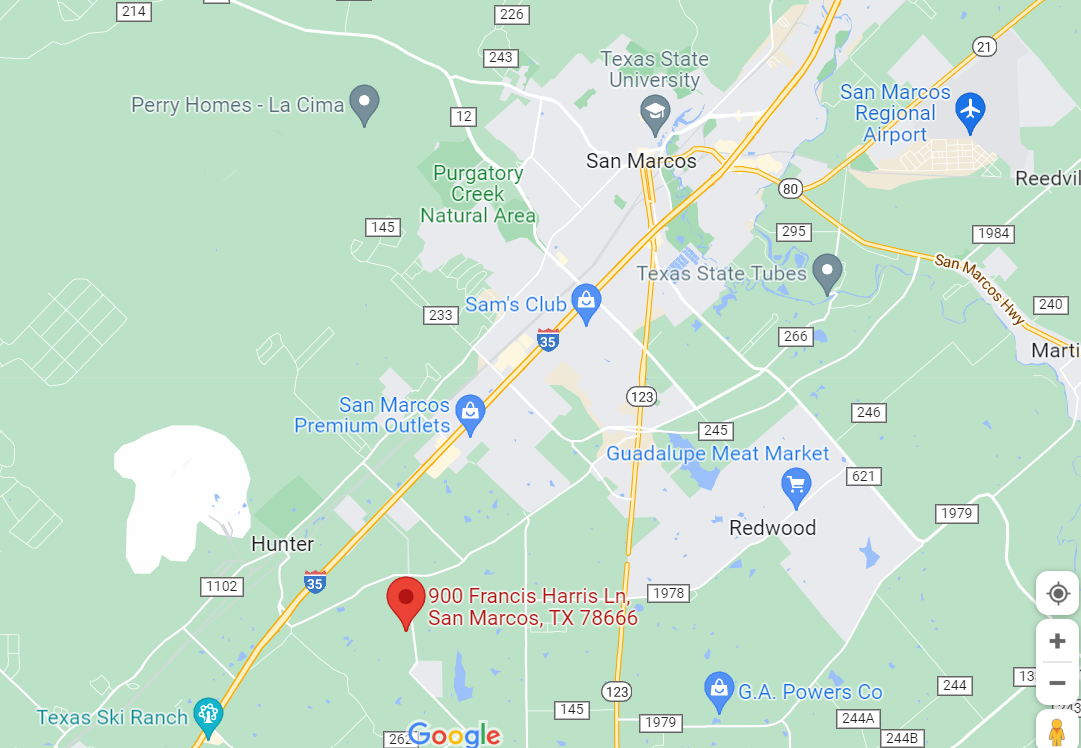
It’s that little red pin dropped way at the bottom.
Saul Gonzalez asks my favorite question: Will this pay for itself?
This is a really important question. Approving a development costs the city a lot of money. Much is shared by the developer, who hopes to turn a profit, but not all. Like I said above, a new development needs water lines, wastewater service, electric lines, emergency services, access to city services and facilities, and contributes to wear and tear on streets and infrastructure.
So developments cost the city money. Developments also bring in tax revenue. So will the tax revenue eventually cover the costs? And this bit is crucial: will it cover the lifecycle of the streets/power lines/pipes, as they age and need repairs in 20 years? Have we accounted for this in our budgeting? (Usually not. But we should.)
So that is important question #1: Will this pay for itself, not just costs incurred during the immediate build but also estimating life cycle repairs to infrastructure?
Here is important question #2: When is the estimated time of completion, and what is our predicted housing deficit at that time?
We have mountains of housing that has been approved, but not built. The city staff need to continuously be explaining to council (and P&Z) what our current housing deficit is, and what it is predicted to be in the future, as different developments are built and more people move to town. (Ideally broken out by affordability.)
Important question #3 is: Is this environmentally responsible? Is it on the aquifer? Is it suburban sprawl? Does it incorporate duplexes and 4-plexes and 8-plexes throughout the single-family region? How much driving will residents be required to do?
This one isn’t the worst, insofar as it’s not in the aquifer. But I still resent far-flung communities, and I resent that it’s uniformly going to be single-family.
(We can’t mandate duplexes and townhomes and things like that. This came up at P&Z. We used to be able to, when we had PDDs, and then we threw them away for mysterious reasons.)
Important question #4: Is it mixed income? Is it near amenities?
We have very little meaningfully mixed income housing in San Marcos. Even when new builds like La Cima include multi-family, they segregate it from the single family portion. That’s not great. It is much better for everyone when there is a wide diversity of income levels in a neighborhood, kids attending schools together, different social classes forging connections and co-mingling their lives.
Similarly, developments get built without thinking about where people will shop for groceries, or go for dinner, or whatever. The idea is that the free market will save the day, and you won’t have a food desert. Then you get a food desert, because the free market does not save the day. (Fortunately, city code guarantees access to parks and some public spaces. Because the free market will not save the day.)
So Council should always ask those four questions, in order to evaluate a proposal. As is, we do not have the answers to any of these questions.
Listen: I actually think really highly of city staff. I think they work hard, and I’ve particularly thought that the interim city manager, Stephanie Reyes, seems to be doing a great job. However, on developments, they’re trapped by their forms. The form for the information they put together for P&Z and Council probably hasn’t been updated in at least 15 years. The form needs to be massively revised to provide P&Z and Council with the answers to these four questions.
To recap:
- Will it pay for itself, over the lifespan of the infrastructure? (Denser development will score better.)
- When is it estimated to be built, and what is the forecasted housing deficit at that point?
- Are we looking at sprawl? Is this on the aquifer? Is it uniformly single-family homes?
- Is it meaningfully mixed income? Is it near existing amenities?
Answers: who knows, who knows, yes, and no.
….
But wait! There’s more! Back to that red pin at the bottom of the map, above.
One final thing that makes this particular tract unpleasant is that it contains the Hays Electrical Power Plant. A rural neighbor shows up and describes what happens when the boilers are cleaned: for 3-4 days, it sounds like you’re living next to an airport, 24/7.
Is it bad for your health to live very close to an industrial power plant? In my quick look at what counts as environmental health risk factors, I’m seeing things like this: “presence of hazardous waste sites and facilities (landfills, incinerators, Superfund sites)” but I’m not seeing power plants in those kinds of lists. So I’m tentatively thinking it’s a nuisance and not a health hazard.
Here’s what does not count as evidence: the fact that the state of Texas allows it, and there are examples of neighborhoods next to power plants in Austin and Seguin.
Overall, I still don’t like the subdivision.
The vote:
Yes: Mayor Hughson, Shane Scott, Mark Gleason
No: Alyssa Garza, Max Baker
Abstain: Saul Gonzalez, wanting to find out more about the health risks.
But then Saul switches to “yes” in order to bring it back for a second reading. He is clear that he’s just doing this to get more information, and not because he’s made his decision.
…
Items 23-27: Several items about Whisper Tract, the ginormous development going in on the east side of 35, up north across from Blanco Vista.
One has gone back and forth to P&Z and to a committee, about zoning one part Light Industrial, right near the Saddlebrook mobile home community. The problem is that while we notify the owners of property, we don’t notify the renters. And mobile home residents generally don’t own the land under their home, so they weren’t notified. We’re being jerks here.
Council carves out some bad-neighbor exceptions to light industrial, and passes it. The other Whisper items all pass, too. Whisper is huge.
…
Item 28: There’s a little patch of land west of I-35, between I-35 and Blanco Vista that gets re-zoned. It’s at this red pin:

This is right near the apartment complexes tucked in that same little tract of land. It had been General Commercial, and now it will be CD-4.
CD-4 is fairly dense – picture apartments or townhomes. You’re allowed to put some corner stores in. It’s pretty reasonable for that location.
Item 39:
Suppose you’re driving up from Seguin, on 123.
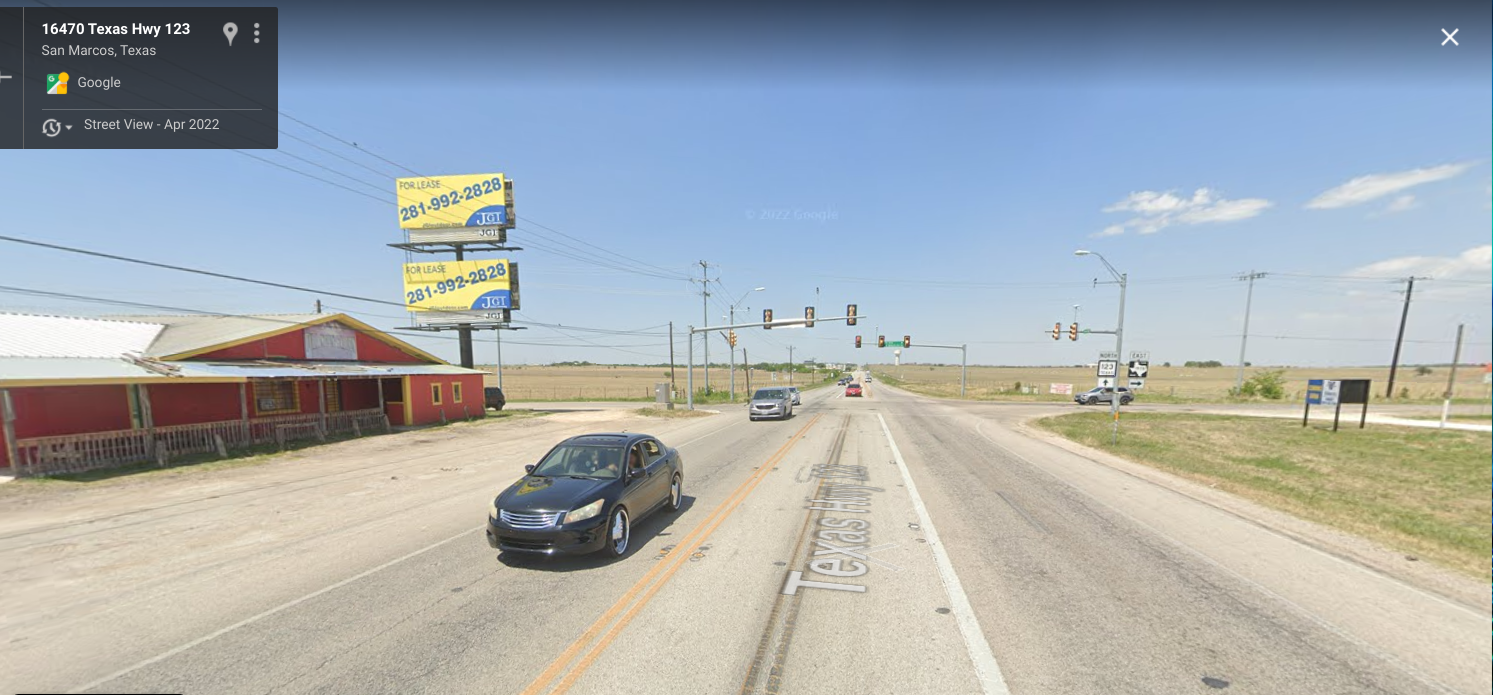
This is the intersection of 123 and Beback Inn Road, which is a really great name for a road. That red house on your left is the Full Moon Saloon. That giant expanse of empty flat space on your right, starting at the light, is the topic for Item 39.
It’s too early to really answer the four questions above, but that’s certainly way out in the middle of farm land. And the presentation claims it will be “predominantly single family with some commercial.”
Council decided to put together a committee to work with the developer. Max Baker, Shane Scott, and Mark Gleason will be on it. Those three make for a highly combustible group, and Max is outnumbered. We shall see how this goes.
 The San Marxist